The effect of inlammatory response modulator agents on gingivitis and
periodontitis
Efeito do uso de agentes moduladores de resposta inlamatória em gengivites e periodontites
Juliano CAVAGNI1
Francisco Wilker Mustafa Gomes MUNIZ1
Cassiano Kuchenbecker RÖSING1
ABSTRACT
Periodontal diseases are infecto-inlammatory diseases. Literature, has tried to elucidate the infections component of gingivitis and periodontitis, for several years. In recent years, much has been discussed about the role of the host response modulators to periodontal therapeutic procedures. The aim of the present literature review was to evaluate the effect of host response modulating agents (anti-inlammatories) on the pathogenesis of gingivitis and periodontitis. A search in the main databases was performed and human and animal studies were selected. The majority of studies was performed in humans and non-steroidal anti-inlammatory drugs in different dosages were used. The results have shown a potential beneit of the non-steroidal anti-inlammatory drugs concerning the microbial challenge. However, this beneit seems not to occur in the long term, thus not supporting it as a periodontal therapeutic approach. Few studies evaluated the effect of steroidal anti-inlammatory drugs on the pathogenesis of periodontal diseases. Moreover, the results in humans and animals are controversial, pointing to a possible deleterious effect of steroidal anti-inlammatory drugs on periodontal structures.
Indexing terms: Anti-inlammatory agents. Gingivitis. Periodontal diseases. Periodontitis.
RESUMO
Doenças periodontais são doenças de natureza infecto-inlamatória. A literatura, por muitos anos, preocupou-se em elucidar somente o aspecto infeccioso de gengivites e periodontites. Nos últimos anos, muito tem-se debatido quanto ao papel da modulação da resposta do organismo como medida terapêutica periodontal. Nesse sentido, o objetivo da presente revisão de literatura foi avaliar o efeito de agentes moduladores da resposta inlamatória (antiinlamatórios) na patogênese de gengivites e periodontites. Foi realizada uma busca nas principais bases de dados sendo selecionados estudos em humanos e em modelo animal. Observou-se que a maioria dos estudos foi realizada em humanos e utilizou antiinlamatórios não-esteróides) em diferentes posologias. Os resultados dos estudos apontam para um potencial efeito benéico dos antiinlamatórios não-esteróides frente ao desaio microbiano. Entretanto, esse benefício parece não ocorrer a longo prazo não sendo justiicado seu uso como medida terapêutica periodontal. Poucos estudos avaliaram o efeito dos antiinlamatórios esteróides na patogênese das doenças periodontais. Além disso, os resultados dos estudos tanto em humanos quanto em animais são controversos, mas apontam para um possível efeito deletério dos antiinlamatórios esteróides sobre as estruturas periodontais.
Termos de indexação: Anti-inlamatórios. Gengivite. Doenças periodontais. Periodontite.
INTRODUCTION
The Periodontal science has undergone many changes related to the way of acting and thinking, in the last decades. For instance, the surgical-restorative paradigm, which ignored the prevention concept, and the treatment modalities based exclusively on the professional experiences have been changed to a model based on health promotion and the conscious usage of the best scientiic
evidence available1. Therefore, in agreement with this
evolutionary process, many models were proposed in order to explain the health-disease process in the periodontal tissues, and currently the most acceptable one has been proposed by Page & Kornman2.
which is responsible for the connective tissue metabolism and osteoclast activation that is responsible for the bone tissue metabolism. This process produces clinical signals of periodontal inlammation, inducing alveolar bone loss and consequently clinical attachment loss.
For several years, the treatment strategies for the periodontal diseases were based solely in the complete removal of the dental bioilm and its components of the dental-gingival area and of the sulcus/periodontal pockets. However, the concern with factors related to the inlammatory response has been increasing mainly due to new techniques related to Molecular Biology
and Microscopy3. A gram-negative bacterial infection is
necessary, although not suficient, to promote a periodontal pocket formation.
Therefore, the host response mediates the periodontal destruction when these microorganisms are present2. It is crucial, in this context, the importance
of studying the effects of the host response modulator agent including steroidal (SAIDs) and nonsteroidal anti-inlammatory drugs (NSAIDs), since their potential in the management of the periodontal disease etiopathogenesis has been demonstrated.
Different studies have shown the role of these medications in the disease development, more speciically with a view to understanding the pathogenesis and, in the future, as prevention and/or treatment modality. The NSAIDs have been extensively studied in Periodontology4-10. On the
other hand, evidences on steroidal anti-inlammatory drugs are scarce11-12. Therefore, the objective of this study was
to review the literature about the effect of these drugs in the gingivitis and periodontitis pathogenesis. The analyzed studies were grouped in tables, subdivided by drug type (steroidal/nonsteroidal) and study model (animal/human) in order to promote better understanding.
Nonsteroidal anti-inlammatory drugs and periodontal disease
Animal evidences
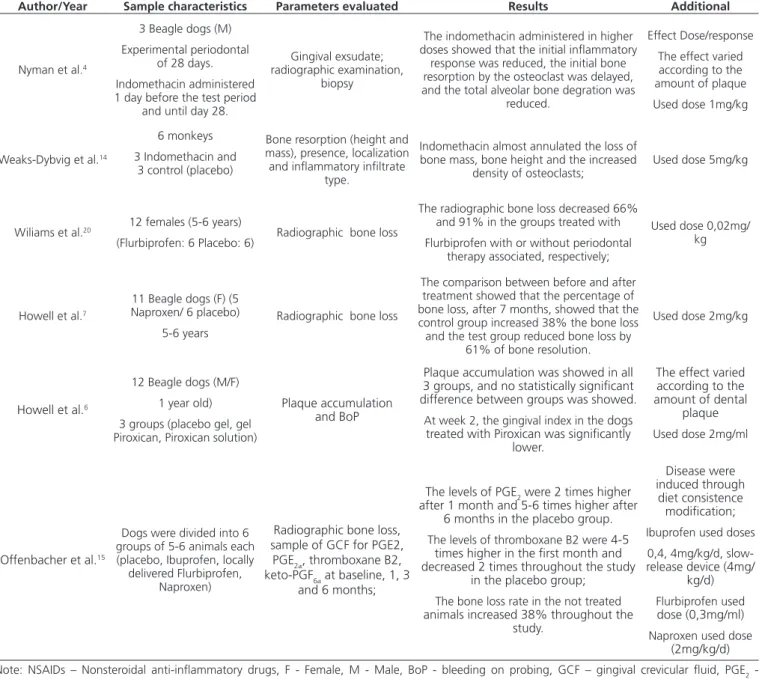
Since the end of the 1970, several studies, using animal models, have assessed the role of NSAIDs in the periodontal tissues injured by the dental bioilm (Table 1). Although it is dificult to extrapolate the results of animal studies to humans, it is equally unwise to ignore the many similarities that scientists have
demonstrated in these models13. Many animal models
using NSAIDs of experimental periodontal disease have been proposed throughout the years, such as ligature
induced periodontitis4,14 and periodontitis induced by
diet consistence modiication5-7,15. These are the most
effective methods to accumulate plaque and induce periodontal disease (Table 1). Several NSAIDs were evaluated, such as indomethacin, lurbiprofen, and naproxen. Additionally, comparisons between those drugs and between different administrations (locally delivered and systemically) were performed.
Nyman et al.4 have evaluated the use of indomethacin
(1mg/kg) in reducing the inlammatory response followed by bone resorption in Beagle dogs for a period of 28 days. The results demonstrated a reduction in the initial inlammatory response, delaying the alveolar bone resorption. Additionally, when the subgingival plaque was higher, the indomethacin showed the worst effect in comparison to the animals with well-controlled plaque in the gingival margin. It is suggested that, similarly to the humans, the supragingival bioilm inluence the subgingival area.
During 2 weeks Weaks-Dybvig et al.14 evaluated,
a higher dose of indomethacin (5mg/kg) in monkeys and compared to a control group (placebo). Similarly to the study of Nyman et al. the use of indomethacin almost annulled the loss of bone mass, decreasing considerably the density of osteoclast in the experimental period.
The use of Flurbiprofen (0.02 mg/kg), associated with surgical periodontal therapy, was evaluated by Williams et al.5. In the groups treated with Flubiprofen, the
rate of radiographic bone loss was lower, 91% and 66%, respectively, either with or without adjuvant periodontal therapy. Therefore, the groups treated with Flubiprofen, either with or without surgical procedures, showed a smaller rate of alveolar bone loss when compared to a placebo group with or without surgical periodontal therapy.
Likewise, Howell et al.7 evaluated the effect of
Howell et al.6 and Offenbacher et al.15 evaluated
different NSAIDs and their different administration forms in the gingival bleeding parameters and rate of bone loss.
Offenbacher et al.15 veriied higher arachidonic acid
by-products (ciclooxygenase and thromboxane B2) in the groups not under NSAIDs therapy, indicating a positive correlation between these products and a periodontal homeostasis disruption in Beagle dogs.
Although all the evidences of this review showed beneicial effects of the NSAIDs, the results should be cautiously interpreted since each model presents advantages
and disadvantages and a model which could be considered ideal, still does not exist.
Human evidences
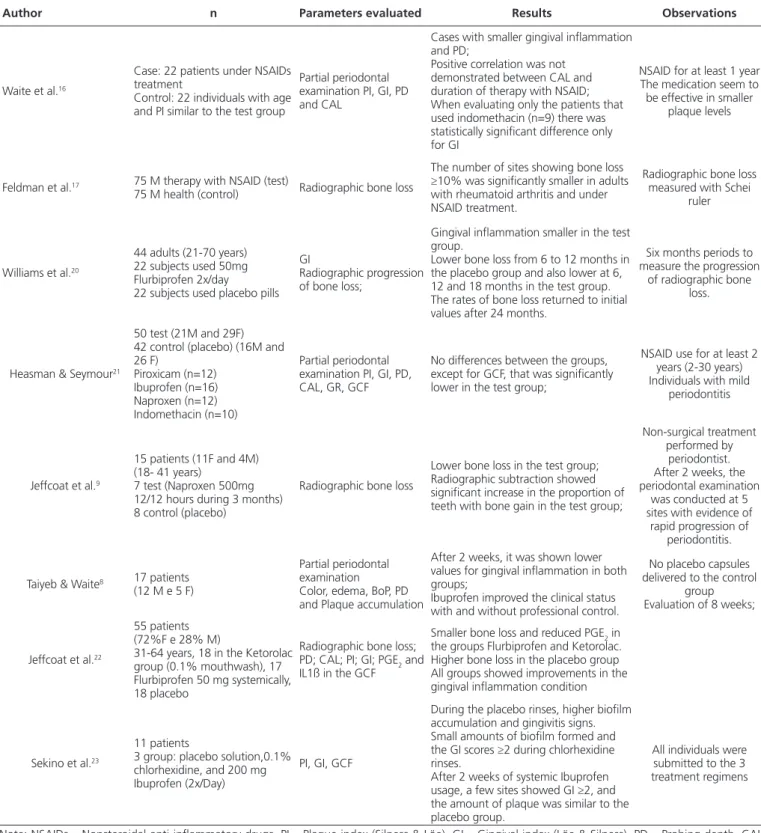
Table 2 demonstrates the 07 studies selected in this literature review regarding the effect of NSAIDs in human periodontal tissues.
Waite et al.16 and Feldman et al.17 performed two
retrospective studies aimed to evaluate the prevalence of periodontal disease in patients using NSAIDs compared to a control group. Age, Plaque Index18, Gingival Index19, probing
Table 1. The action of NSAIDs in the periodontal tissues in animal studies. Porto Alegre, 2011.
Author/Year Sample characteristics Parameters evaluated Results Additional
Nyman et al.4
3 Beagle dogs (M) Experimental periodontal
of 28 days. Indomethacin administered 1 day before the test period
and until day 28.
Gingival exsudate; radiographic examination,
biopsy
The indomethacin administered in higher doses showed that the initial inlammatory
response was reduced, the initial bone resorption by the osteoclast was delayed, and the total alveolar bone degration was
reduced.
Effect Dose/response The effect varied according to the amount of plaque Used dose 1mg/kg
Weaks-Dybvig et al.14
6 monkeys 3 Indomethacin and
3 control (placebo)
Bone resorption (height and mass), presence, localization and inlammatory iniltrate
type.
Indomethacin almost annulated the loss of bone mass, bone height and the increased
density of osteoclasts; Used dose 5mg/kg
Wiliams et al.20 12 females (5-6 years)
(Flurbiprofen: 6 Placebo: 6) Radiographic bone loss
The radiographic bone loss decreased 66% and 91% in the groups treated with Flurbiprofen with or without periodontal
therapy associated, respectively;
Used dose 0,02mg/ kg
Howell et al.7
11 Beagle dogs (F) (5 Naproxen/ 6 placebo)
5-6 years
Radiographic bone loss
The comparison between before and after treatment showed that the percentage of bone loss, after 7 months, showed that the control group increased 38% the bone loss and the test group reduced bone loss by
61% of bone resolution.
Used dose 2mg/kg
Howell et al.6
12 Beagle dogs (M/F) 1 year old) 3 groups (placebo gel, gel Piroxican, Piroxican solution)
Plaque accumulation and BoP
Plaque accumulation was showed in all 3 groups, and no statistically signiicant difference between groups was showed. At week 2, the gingival index in the dogs treated with Piroxican was signiicantly
lower.
The effect varied according to the amount of dental
plaque Used dose 2mg/ml
Offenbacher et al.15
Dogs were divided into 6 groups of 5-6 animals each (placebo, Ibuprofen, locally delivered Flurbiprofen,
Naproxen)
Radiographic bone loss, sample of GCF for PGE2,
PGE2α, thromboxane B2,
keto-PGF6α at baseline, 1, 3
and 6 months;
The levels of PGE2 were 2 times higher after 1 month and 5-6 times higher after
6 months in the placebo group. The levels of thromboxane B2 were 4-5
times higher in the irst month and decreased 2 times throughout the study
in the placebo group; The bone loss rate in the not treated animals increased 38% throughout the
study.
Disease were induced through
diet consistence modiication; Ibuprofen used doses
0,4, 4mg/kg/d, slow-release device (4mg/
kg/d) Flurbiprofen used dose (0,3mg/ml) Naproxen used dose
(2mg/kg/d) Note: NSAIDs – Nonsteroidal anti-inlammatory drugs, F - Female, M - Male, BoP - bleeding on probing, GCF – gingival crevicular luid, PGE2 -
depth, clinical attachment loss, and radiographic bone loss were evaluated. The results showed that subjects using NSAIDs presented smaller gingival inlammation, probing depth, clinical attachment loss and radiographic alveolar
bone loss. However, there was no relation between clinical attachment loss and the duration of the NSAIDs therapy, indicating that a longer usage of these medicines would not represent additional beneits in the periodontal health.
Table 2. Human studies regarding the effect of NSAIDs in the periodontal tissue. Porto Alegre, 2011.
Author n Parameters evaluated Results Observations
Waite et al.16
Case: 22 patients under NSAIDs treatment
Control: 22 individuals with age and PI similar to the test group
Partial periodontal examination PI, GI, PD and CAL
Cases with smaller gingival inlammation and PD;
Positive correlation was not demonstrated between CAL and duration of therapy with NSAID; When evaluating only the patients that used indomethacin (n=9) there was statistically signiicant difference only for GI
NSAID for at least 1 year The medication seem to be effective in smaller
plaque levels
Feldman et al.17 75 M therapy with NSAID (test)
75 M health (control) Radiographic bone loss
The number of sites showing bone loss ≥10% was signiicantly smaller in adults with rheumatoid arthritis and under NSAID treatment.
Radiographic bone loss measured with Schei
ruler
Williams et al.20
44 adults (21-70 years) 22 subjects used 50mg Flurbiprofen 2x/day
22 subjects used placebo pills GI
Radiographic progression of bone loss;
Gingival inlammation smaller in the test group.
Lower bone loss from 6 to 12 months in the placebo group and also lower at 6, 12 and 18 months in the test group. The rates of bone loss returned to initial values after 24 months.
Six months periods to measure the progression
of radiographic bone loss.
Heasman & Seymour21
50 test (21M and 29F) 42 control (placebo) (16M and 26 F)
Piroxicam (n=12) Ibuprofen (n=16) Naproxen (n=12) Indomethacin (n=10)
Partial periodontal examination PI, GI, PD, CAL, GR, GCF
No differences between the groups, except for GCF, that was signiicantly lower in the test group;
NSAID use for at least 2 years (2-30 years) Individuals with mild
periodontitis
Jeffcoat et al.9
15 patients (11F and 4M) (18- 41 years)
7 test (Naproxen 500mg 12/12 hours during 3 months) 8 control (placebo)
Radiographic bone loss
Lower bone loss in the test group; Radiographic subtraction showed signiicant increase in the proportion of teeth with bone gain in the test group;
Non-surgical treatment performed by
periodontist. After 2 weeks, the periodontal examination
was conducted at 5 sites with evidence of
rapid progression of periodontitis.
Taiyeb & Waite8 17 patients
(12 M e 5 F)
Partial periodontal examination
Color, edema, BoP, PD and Plaque accumulation
After 2 weeks, it was shown lower values for gingival inlammation in both groups;
Ibuprofen improved the clinical status with and without professional control.
No placebo capsules delivered to the control
group Evaluation of 8 weeks;
Jeffcoat et al.22
55 patients (72%F e 28% M)
31-64 years, 18 in the Ketorolac group (0.1% mouthwash), 17 Flurbiprofen 50 mg systemically, 18 placebo
Radiographic bone loss; PD; CAL; PI; GI; PGE2 and IL1ß in the GCF
Smaller bone loss and reduced PGE2 in the groups Flurbiprofen and Ketorolac. Higher bone loss in the placebo group All groups showed improvements in the gingival inlammation condition
Sekino et al.23
11 patients
3 group: placebo solution,0.1% chlorhexidine, and 200 mg Ibuprofen (2x/Day)
PI, GI, GCF
During the placebo rinses, higher bioilm accumulation and gingivitis signs. Small amounts of bioilm formed and the GI scores ≥2 during chlorhexidine rinses.
After 2 weeks of systemic Ibuprofen usage, a few sites showed GI ≥2, and the amount of plaque was similar to the placebo group.
All individuals were submitted to the 3 treatment regimens
These results have not considered the type of medication and therapeutic procedure used in each patient, however, when only the patients under indomethacin therapy (n=9) were considered, statistically signiicant differences were found only for Gingival Index17.
Similarly, Heasman & Seymour20 also performed a
retrospective study, evaluating the periodontal parameters of patients under NSAIDs treatment of at least 2 years (mean of 9 years) and compared to a control group. It was not found statistically signiicant differences in the following parameters: Plaque Index18, Gingival Index19, probing depth,
clinical attachment loss, and gingival recession. Statistically signiicant differences were found only for low of gingival crevicular luid, which was higher in the control group.
These cross-sectional studies raise the hypothesis that the use of NSAIDs is related to smaller periodontal inlammation. Several longitudinal studies, with different evaluation periods, were guided in order to assess the effect of NSAIDs in patients with destructive periodontal disease9, 21-22. A summary of these studies is shown in Table 2.
Williams et al.20 evaluated the effect of 50mg
Flurbiprofen, twice daily, in the rate of radiographic
alveolar bone loss and Gingival Index19, during 2.5 years,
and compared to a placebo group. It was shown that both groups presented a decrease in the bone loss. On the other hand, the patients under Flurbiprofen therapy showed a smaller gingival inlammation. The rate of bone loss in the placebo group improved signiicantly 6 and 12 months after therapy when compared to baseline. The Flurbiprofen group showed signiicantly improvement at 6, 12 and 18 months. At the end of 24 months, there is no difference in the rate of alveolar bone loss between test and placebo groups, indicating that the use of Flurbiprofen, associated with periodontal therapy, has a limited effect on preventing radiographic alveolar bone loss.
Regarding the comparison of different use of NSAIDs (topically and systemically), Jeffcoat et al.22 showed that the
groups treated with NSAIDs presented lower bone loss and
PGE2 level reductions in the gingival crevicular luid when
compared to the placebo group. Additionally, it is suggested that a mouthwash with Ketorolac preserved more bone tissue when compared to the Flurbiprofen administered systemically. This result indicates that the use of Ketorolac would bring additional beneits in the periodontal disease treatment.
Jeffcoat et al.10 evaluated, for 3 months, the
eficacy of Naproxen in patients with rapid progression periodontitis. It was shown that, in comparison to the placebo group, the test group showed a signiicant lower
bone loss and an increase in ratio of teeth showing bone gain, evaluated through digital radiographic subtraction method. It is indicated that the Naproxen use, as an adjuvant to periodontal therapy, promotes additional improvement. Some studies, such as those performed by Taiyeb & Waite8 and
Sekino et al.23, evaluated the gingival margin inlammation in
combination with scaling and root planing procedures and the experimental gingivitis model, respectively. The results demonstrate that Ibuprofen promotes additional beneits to the professional control of bioilm and in experimental gingivitis induced by dental plaque. However, the drug did not inluence the new dental plaque formation and the inlammation control for longer periods.
Based on these results, it is evident that nonsteroidal anti-inlammatory drugs present a potential to modify the inlammatory response triggered by a bacterial challenge in humans. On the other hand, these results are not predictable at longer periods, and not justiied to be used as a therapeutic agent.
However, periodontal literature needs further studies with greater control of variables such as smoking and diabetes in order to explain the actual effect of NSAIDs in the etiopathogenesis of destructive periodontal disease.
Steroidal anti-inlammatory drugs (SAIDS) and periodontal disease
Animal evidences
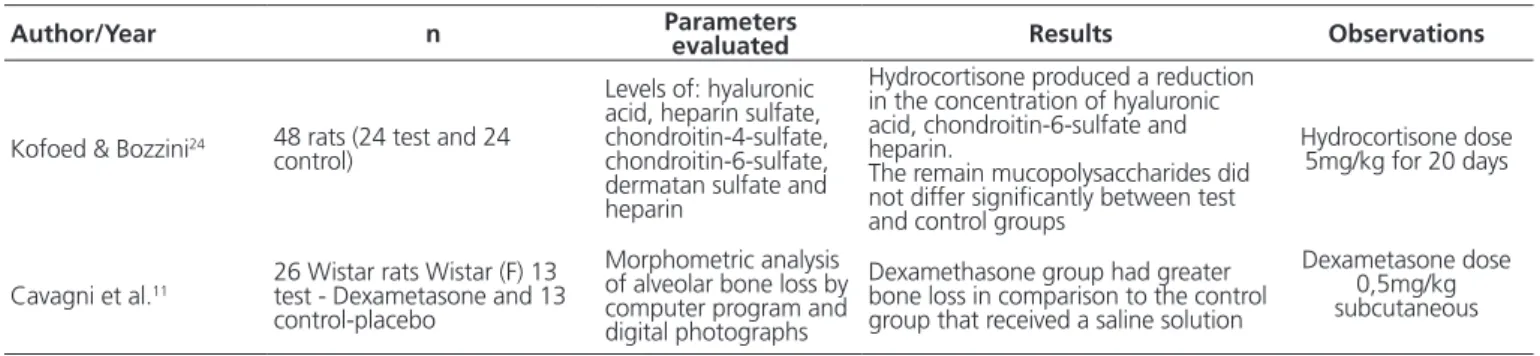
The role of SAIDs on the etiopathogenic process of periodontal disease was studied less extensively when compared to the NSAIDs. In this context, only two studies were identiied (Table 3). The lack of these studies in the literature limits major generalizations, even within the analysis in rats, the animal model used in both studies.
The study of Kofoed & Bozzini24, published in 1970,
showed that in rats the administration of corticosteroid produce a signiicant reduction in the concentrations of the amorphous intercellular substance components (chondroitin-sulfuric acid and hyaluronic acid), indicating a negative effect on the periodontal homeostasis maintenance, as the tissue loss may occur. However, other mucopolysaccharides analyzed (dermatan sulfate and heparitin sulfate) did not bring differences between the exposed and not exposed groups to corticoid.
Although there is a limitation when translating the results obtained in animal to human studies, both evidences support the concept that the presence of SAIDs, in higher doses, may have a negative role in the periodontal health. The results obtained from the clinical studies in human are responsible for the complementation of this information.
Human evidences
Similarly to the animal studies, a few studies were found about the role of SAIDs on humans. The three studies considered to be more meaningful for this review are in Table 4, and they were conducted in 1980 and 1990.
Table 3. Animal studies regarding the effect of SAIDs in the periodontal tissues. Porto Alegre, 2011.
Author/Year n Parameters evaluated Results Observations
Kofoed & Bozzini24 48 rats (24 test and 24 control)
Levels of: hyaluronic acid, heparin sulfate, chondroitin-4-sulfate, chondroitin-6-sulfate, dermatan sulfate and heparin
Hydrocortisone produced a reduction in the concentration of hyaluronic acid, chondroitin-6-sulfate and heparin.
The remain mucopolysaccharides did not differ signiicantly between test and control groups
Hydrocortisone dose 5mg/kg for 20 days
Cavagni et al.11 26 Wistar rats Wistar (F) 13 test - Dexametasone and 13 control-placebo
Morphometric analysis of alveolar bone loss by computer program and digital photographs
Dexamethasone group had greater bone loss in comparison to the control group that received a saline solution
Dexametasone dose 0,5mg/kg subcutaneous
Note: SAIDs – Steroidal anti-inlammatory, F - Female.
Table 4. Human studies regarding the effect of SAIDs in the periodontal tissues Porto Alegre, 2011.
Author/Year N Parameters evaluated Results Observations
Safkan & Knuutilla12 Grupo I (27 patients) Grupo II (26 patients) Grupo III (62 patients)
VPI, GI, PD, GR, calculus and alveolar bone height
VIP, GI: statistically signiicant difference between groups I and III; group I presented more gingivitis Calculus: group III showed the smallest percentage
PD and GR: there is no different among the 3 groups
Alveolar bone height: there is no difference between groups I and II. The group III showed the highest alveolar bone in comparison to the other groups
Group I MS under corticoid effect Group II MS without
corticoid Group III Control
Alveolar bone height measured
in panoramic radiographs
Markitziu et al.25
19 adults patients (7 without medicines and 12 under Prednisone therapy) (mean dose of 25.41mg) from 3 to 13 years
Partial periodontal examination Salivary cortisol
PI, MBI, PD, calculus, GR, alveolar bone height.
The salivary cortisol levels were reduced in the patients under corticoid therapy;
Signiicantly differences between groups on MGB and GR;
No alteration in the alveolar bone height.
Patients examined twice within 6 months.
von Wowern et al.26
17 patients with acute nephritis (4F and 13M) Comparison with a control group (50 F and 50 M) (20 to 42 years)
Jaw and forearm bone mineral content at the beginning, 6 and 12 months of treatment; VPI, MBI e CAL ate the beginning (n=17) 6 (n=10) and 12 months (n=10)
No difference in the loss of bone mineral content in 2 sites, among Prednisone and Delazacort groups, on 2 experimental periods. No difference in the bone mineral content between groups, but both groups lost signiicantly bone mineral content.
No signiicant difference in the periodontal parameters and mineral bone loss content of the jaw and periodontal conditions.
Partial periodontal examination
In a cross-sectional study, Safkan & Knuutilla12
have shown that subjects using corticosteroid presented more gingivitis. However, the subjects in the control group presented less dental calculus. Additionally, the subjects in the control group showed less alveolar bone loss. Despite all the bias found in this study, there are evidences that subjects who have used corticosteroid, for at least one year, have presented more periodontal disease signs.
On the other hand, Markitziu et al.25 evaluated
patients with pemphigus vulgaris who were under therapy with corticosteroids. The research showed that the periodontal status of these patients was not statistically signiicant different regarding the alveolar bone height. Furthermore, a decrease in the levels of salivary cortisol, which is a reduction in the hypothalamic-pituitary-adrenal axis activity, was shown. Regarding the clinical parameters, such as bleeding and gingival recession, statistically signiicant differences were found between groups. It is important to highlight that, differently from Safkan & Knutilla12, this study evaluated the results before and after
the periodontal therapy, which included scaling and root planing and oral hygiene instructions.
Von Wowern et al.26 analyzed the alterations in
the gingival and bone level of the marginal periodontium related to the mineral bone content of the forearm, measured by scanner, in patients with acute nephritis. The patients were considered skeletally healthy at the beginning of the treatment, and they were divided in two groups according to the medicine used, Prednisone or Delazacort, which are capable of eliminating smaller calcium quantities in the urine. No signiicantly differences were found between groups (prednisone and Delazacort) in the loss of bone mineral content in both forearm and jaw after 6 and 12 months, although, both groups had signiicant mineral bone loss during the study. Regarding the periodontal parameters (visible plaque index, gingival index, and clinical attachment loss), there were no statistically signiicant differences between groups.
Therefore, based on these results, in patients with longer corticoid usage, osteopenia is a common inding. However, this alteration did not produce effect on periodontal clinical parameters, including alveolar bone height.
The results of these studies related to the effect of SAIDs in the periodontium homeostasis remain controversial. While a few authors found clinical signiicance to some periodontal clinical parameters12,25, others did not
show this relation26. Further studies are suggested in order
to elucidate this relationship.
CONCLUSION
Through the analyses of the included studies in this review, it is possible to conclude:
The use of NSAIDs, either topically or systemically, may improve the inlammatory parameters in both gingivitis and periodontitis. However, more studies are necessary in order to establish whether these drugs are preventive/ therapeutic agents in the Periodontology.
Evidences in the literature are scarce related to the role of SAIDs in the pathogenesis of gingivitis and periodontitis. However, the studies conducted so far have indicated that these medicines would have deleterious effects on the periodontium. It seems important to study this relationship, once the cortisol – also a glucocorticoid can change the balance in the periodontal health-disease process, mainly as a result of the hypothalamic-pituitary-adrenal axis activation.
Collaborators
J CAVAGNI was responsible for the study selection, data extraction and the manuscript writing. FWMG MUNIZ helped in the literature review, revised and approved the inal version of the manuscript. CK RÖSING was responsible for the study orientation, supervision and selection, data extraction and writing.
REFERENCES
1. Susin C, Rösing CK. Praticando Odontologia baseada em evidências. Canoas: Editora da Ulbra; 1999.
2. Page RC, Kornman KS. The pathogenesis of human periodontitis: an introduction. Periodontol 2000. 1997;14:9-11.
3. Paquette DW, Williams RC. Modulation of host inlammatory mediators as a treatment strategy for periodontal diseases. Periodontol 2000. 2000;24(1):239-52. doi: 10.1034/j.1600-0757.2000.2240112.x
5. Williams RC, Jeffcoat MK, Wechter WJ, Johnson HG, Kaplan ML, Goldhaber P. Non-steroidal anti-inlammatory drug treatment of periodontitis in beagles. J Periodontal Res. 1984;19(6):633-7. doi: 10.1111/j.1600-0765.1984.tb01330.x
6. Howell TH, Fiorellini J, Weber HP, Williams RC. Effect of the NSAID piroxicam, topically administered, on the development of gingivitis in beagle dogs. J Periodontal Res. 1991;26(3 Pt 1):180-3. doi: 10.1111/j.1600-0765.1991.tb01641):180-3.x
7. Howell TH, Jeffcoat MK, Goldhaber P, Reddy MS, Kaplan ML, Johnson HG, et al. Inhibition of alveolar bone loss in beagles with the NSAID naproxen. J Periodontal Res. 1991;26(6):498-501. doi: 10.1111/j.1600-0765.1991.tb01801.x
8. Taiyeb Ali TB, Waite IM. The effect of systemic ibuprofen on gingival inlammation in humans. J Clin Periodontol. 1993;20(10):723-8. doi: 10.1111/j.1600-051X.1993.tb00697.x
9. Jeffcoat MK, Page R, Reddy M, Wannawisute A, Waite P, Palcanis K, et al. Use of digital radiography to demonstrate the potential of naproxen as an adjunct in the treatment of rapidly progressive periodontitis. J Periodontal Res. 1991;26(5):415-21. doi: 10.1111/ j.1600-0765.1991.tb01731.x
10. Jeffcoat MK, Reddy MS. A comparison of probing and radiographic methods for detection of periodontal disease progression. Curr Opin Dent. 1991;1(1):45-51.
11. Cavagni J, Soletti AC, Gaio EJ, Rosing CK. The effect of dexamethasone in the pathogenesis of ligature-induced periodontal disease in Wistar rats. Braz Oral Res. 2005;19(4):290-4. doi: 10.1590/S1806-83242005000400010
12. Safkan B, Knuuttila M. Corticosteroid therapy and periodontal disease. J Clin Periodontol. 1984;11(8):515-22. doi: 10.1111/j.1600-051X.1984.tb00903.x
13. Susin C, Rosing CK. O rato como um modelo para o estudo das repercussões do estresse nas doenças. Rev Periodontia. 2002;13:5-10.
14. Weaks-Dybvig M, Sanavi F, Zander H, Rifkin BR. The effect of indomethacin on alveolar bone loss in experimental periodontitis. J Periodontal Res. 1982 Jan;17(1):90-100.
15. Offenbacher S, Williams RC, Jeffcoat MK, Howell TH, Odle BM, Smith MA, et al. Effects of NSAIDs on beagle crevicular cyclooxygenase metabolites and periodontal bone loss. J Periodontal Res. 1992 May;27(3):207-13.
16. Waite IM, Saxton CA, Young A, Wagg BJ, Corbett M. The periodontal status of subjects receiving non-steroidal anti-inlammatory drugs. J Periodontal Res. 1981 Jan;16(1):100-8.
17. Feldman RS, Szeto B, Chauncey HH, Goldhaber P. Non-steroidal anti-inlammatory drugs in the reduction of human alveolar bone loss. J Clin Periodontol. 1983 Mar;10(2):131-6.
18. Silness J, Loe H. Periodontal Disease in Pregnancy. Ii. Correlation between Oral Hygiene and Periodontal Condtion. Acta Odontol Scand. 1964 Feb;22:121-35.
19. Loe H, Silness J. Periodontal Disease in Pregnancy. I. Prevalence and Severity. Acta Odontol Scand. 1963 Dec;21:533-51.
20. Williams RC, Jeffcoat MK, Howell TH, Rolla A, Stubbs D, Teoh KW, et al. Altering the progression of human alveolar bone loss with the non-steroidal anti-inlammatory drug lurbiprofen. J Periodontol. 1989 Sep;60(9):485-90.
21. Heasman PA, Seymour RA. An association between long-term non-steroidal anti-inlammatory drug therapy and the severity of periodontal disease. J Clin Periodontol. 1990 Oct;17(9):654-8.
22. Jeffcoat MK, Reddy MS, Haigh S, Buchanan W, Doyle MJ, Meredith MP, et al. A comparison of topical ketorolac, systemic lurbiprofen, and placebo for the inhibition of bone loss in adult periodontitis. J Periodontol. 1995 May;66(5):329-38.
23. Sekino S, Ramberg P, Lindhe J. The effect of systemic administration of ibuprofen in the experimental gingivitis model. J Clin Periodontol. 2005 Feb;32(2):182-7.
24. Kofoed JA, Bozzini CE. The effect of hydrocortisone on the concentration and synthesis of acid mucopolysaccharides in the rat gingiva. J Periodontal Res. 1970;5(4):259-62.
25. Markitziu A, Zairopoulos G, Flores de Jacoby L, Pisanty S. Periodontal alterations in patients with pemphigus vulgaris taking steroids. A biannual assessment. J Clin Periodontol. 1990 Apr;17(4):228-32.
26. von Wowern N, Klausen B, Olgaard K. Steroid-induced mandibular bone loss in relation to marginal periodontal changes. J Clin Periodontol. 1992 Mar;19(3):182-6.