CSR
and
M
i
l
lenn
ia
l
Job
A
t
trac
t
ion
:
The
Case
of
Academ
ia
BAI
&
To
ta
l
Marce
lo
Cohen
dos
San
tos
Freeman
D
isser
ta
t
ion
wr
i
t
ten
under
the
superv
is
ion
of
P
ie
tro
Versar
i
D
isser
ta
t
ion
subm
i
t
ted
in
par
t
ia
l
fu
lf
i
lmen
t
of
requ
iremen
ts
for
the
MSc
in
In
terna
t
iona
l
Managemen
t
:
S
tra
tegy
&
Consu
l
t
ing
,
a
t
the
Un
ivers
idade
Ca
tó
l
ica
Abstract:
The relationship between corporate social responsibility and millennial job attraction, is one that is extremely insightful to managers all around the world. A rapidly changing economic climate has exacerbated the need for managers to attract the best talent available, and equally important, retain that talent. This dissertation will focus on two corporations operating in Angola; Academia BAI & Total EP. Both companies are established in the Angolan market, and already have some form of internal CSR policies. These existing policies will be examined in order to better comprehend how they can be leveraged in order to intensify the desired impact (increased millennial attraction). When attempting to justify the relationship, social identity theory is used to explain the importance of shared values between an organization and a prospective job seeker. Signalling theory complements social identity theory by expressing the importance of communicating said values. In addition, the dissertation also tackles this problem from the perspective of Angolan university students. A series of interviews were conducted in order to better comprehend millennial preferences in terms of CSR and job attraction. Overall this dissertation shows that in the case of the two Angolan companies, a combination of new CSR initiatives with adjustments to pre-existing policies can be effectively used to increase the appeal of working at either firm.
Keywords: Corporate Social Responsibility, Organizational Attractiveness, Social Identity Theory, Signalling Theory, Millennials
Title: CSR and Millennial Job Attraction: The Case of Academia BAI & Total Author: Marcelo Cohen dos Santos Freeman
Sumário:
A relação entre a responsabilidade social das empresas e a o recrutamento de
millennials é extremamente ilustrativa para os gestores em toda a parte. O atual clima de
mudança económica exacerbou a necessidade de os gestores recrutarem o melhor talento disponível, assim como a necessidade de retenção desse talento. A presente dissertação tem como escopo duas empresas que conduzem a sua atividade em Angola; Academia BAI & Total EP. Ambas empresas estão estabelecidas no mercado angolano e têm já políticas de responsabilidade social em vigor. As políticas existentes serão analisadas de forma a compreender como estas podem ser utilizadas para intensificar o impacto desejado, i.e., a atração de millennials. Ao justificar a relação entre estes dois conceitos, utilizamos a teoria da identidade social para destacar a importância da partilha de valores entre uma empresa e um potencial funcionário. A signalling theory complementa a teoria da identidade social ao expressar a relevância da comunicação dos suprarreferidos valores. Esta dissertação aborda a problemática em questão do prisma de alunos universitários angolanos. Realizaram-se uma série de entrevistas que são agora expostas, com o objetivo de compreender as preferências de millennials no que tange à relação entre a atratividade de postos de trabalhos e a
responsabilidade social das empresas. Em suma, esta dissertação demonstra que, no caso das empresas angolanas analisadas, uma combinação de iniciativas de responsabilidade social e de ajustamentos às políticas existentes pode ser utilizada para tornar mais apelativo um emprego em qualquer das empresas.
Acknowledgments:
I would like to dedicate this dissertation to Cristiane Ferreira, your
support and companionship was fundamental not only to my completion of this
dissertation, but throughout the entirety of my masters degree at Catolica.
In addition I’d like to acknowledge the support and guidance of my
advisor Pietro, thank you for having the patience to guide me to the end of this
dissertation.
Table of contents:
Chapter 1: Introduction
6
1.1 Introduction
6-7
1.2 Data Collection
7-8
Chapter 2: Case Study
9
2.1 Economic Uncertainty in Angola
9-10
2.2 Academia BAI
10
2.2.1 Background
10
2.2.2 CSR Activities of Academia BAI
10
A) Library
10-11
B) Cultural Programs
12
C) Employee Relationship
13
D) Communication of Activities
13-14
E) Impact of Activities
14-15
2.3 Total EP
15
2.3.1 Background
15-16
2.3.2 CSR Activities of Total EP
16
A) Educational Programs
16-17
B) Communication of Activities
17-18
C) Relationship between CSR and Recruitment
18
2.4 Millennial Preferences
18-25
2.5 Attracting Angolan Millennials
25-26
Chapter 3: Literature Review
26
3.1 Corporate Social Responsibility
26-27
3.2 Organizational Attractiveness
27-28
3.3 Relationship between CSR & Organizational Attractiveness 28-31
3.4 Social Identity Theory
31-32
3.5 Signalling Theory
32-33
Chapter 4: Teaching Note
33
4.1 Learning Objectives
33-34
4.2 Target Audience
34
4.3 Teaching Plan
34
4.4 Assignment Questions
35-41
Works Cited
42-44
Appendix
44-59
Chapter 1: Introduction
1.1 Introduction
In the current Angolan economic climate, the concept of social responsibility is still seen heavily though a traditional perspective, the concept of CSR is associated with
philanthropy, rarely is it seen as a method of value creation. The notion that CSR comes with a tradeoff in relation to profitability is still commonly perpetuated. The business world in Luanda tends to approach CSR through a cynical lens, perceiving it as a cosmetic addition as opposed to actually creating value. Corporations generally engage in CSR activities when pressured to do some by the government and are quick to cut said projects when faced with difficult economic times. This situation has been further exacerbated by the recent economic hardship Angola has faced due to a combination of falling oil prices and questionable
monetary policies of the Angolan Central Bank. As the country attempts to move forward corporations are faced with the task of recruiting qualified workers who may help them navigate the current landscape.
Interestingly, the current pool of employees is becoming younger as millennials are increasingly joining the existing work force. The relationship between millennials and CSR will be the primary focus of this managerial case study, as we believe that this relationship can be a fundamental aspect of increasing organizational attractiveness for millennials. Furthermore, the analysis of said relationship, will provide the framework for solving the managerial problem firms are facing: how to improve recruitment of Angolan millennials? Two organizations currently operating in Angola were chosen for the case study; Total EP and Academia BAI. The former being representative of an established foreign presence operating in the oil sector and the latter a domestic company focused on providing training and education for the professional sector. Both companies are established in the Angolan market and are generally considered as attractive job destinations for millennials.
Angolan companies need to distinguish themselves among their competitors and selective hiring is more important than ever. Finding and recognizing candidates who identify socially with their employers may be the difference between firms who survive the current economic hardship and those who become cautionary tales. The importance of social identification between employee and employer is enhanced by the notion that production of
employees may be lower if this relationship deteriorates. Successfully communicating their CSR policies allows firms to give potential employees the information needed to make an educated decision about where to work.
By building on two main theories related to CSR - social identity theory and
signaling theory- this body of work will show how firms may use signaling theory to attract candidates with a stronger social fit, and also that young Angolan students are not necessarily attracted to the same job traits as the previous generation and are actively looking to identify socially with where they work.
1.2 Data Collection
The data collection process for this thesis can be divided between external and internal data. The external data was collected predominantly to provide context for the case and to develop the theories used in the literature review. This includes articles about the current economic climate in Angola, and information published online about the two firm’s CSR initiatives. In addition, a deep analysis of journals published about the relationship between organizational attractiveness was used to establish and further study how increased levels of CSR may in fact increase organizational attractiveness. Furthermore, existing journals highlighting the differences between millennials and previous generation’s job trait preferences, were also used to develop the conclusions later stated.
The internal data collected can be further separated into two distinct groups, data from the perspective of the two companies selected for the case study, and data collected from Angolan students who are looking to join the workforce in the near future. With regards to the selected companies; I traveled to Angola in order to visit the companies on site. This allowed me to have interviews in person with the employees responsible for recruitment, and who have knowledge of their companies CSR initiatives. By visiting the companies in person I was also able to gain a more comprehensive understanding of the importance these
companies have in their local communities, a perspective I wouldn’t have been able to have gained having contacted the companies simply via phone or email. Not only did I collect information via the interviews conducted, once there I was also able to request internal documents regarding their CSR initiatives (documentation not publicly published). From a
general perspective the interviews tried to understand the nature of the existing relationship between existing employees and the CSR policies of each company.
The second group of the external data is relevant to the interviews conducted with Angolan students. The objective of these interviews was to obtain an understanding of how important social identification with a potential employer was from the perspective of millennials looking to enter the workforce. The group of interviews were conducted at the Catolica University of Angola, where I had the opportunity to talk to both undergraduate and master level students, from varying academic fields.
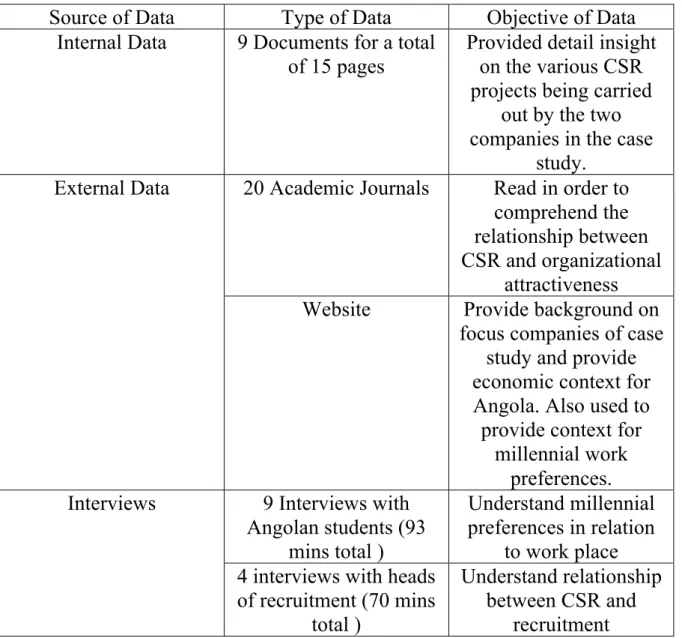
Table 1: Data Sources and Their Use in this Analysis
Source of Data
Type of Data
Objective of Data
Internal Data
9 Documents for a total
of 15 pages
Provided detail insight
on the various CSR
projects being carried
out by the two
companies in the case
study.
External Data
20 Academic Journals
Read in order to
comprehend the
relationship between
CSR and organizational
attractiveness
Website
Provide background on
focus companies of case
study and provide
economic context for
Angola. Also used to
provide context for
millennial work
preferences.
Interviews
9 Interviews with
Angolan students (93
mins total )
Understand millennial
preferences in relation
to work place
4 interviews with heads
of recruitment (70 mins
total )
Understand relationship
between CSR and
Chapter 2: Case Study
2.1 Economic Uncertainty in Angola
The current state of the Angolan economy is one covered in uncertainty and doubt, mainly due to governmental decisions made by the previous ruling party, and reservations as to how the current president will deal with the aforementioned decisions. The economy is currently facing an economic crisis mainly due to falling oil prices, oil has historically been the predominant component of the Angolan economy, this is exemplified by approximately 95% of foreign earnings coming from petrodollars. In January of 2018, in response to the economic underperformance the governor of the Angolan central bank announced that it would no longer be pegging its currency to the US dollar, analysts have predicted this could result in a further devaluation of 20% in the local currency, the Kwanza (Pilling 2018).
The current state of uncertainty can perhaps be best exemplified by news surrounding Isabel dos Santos, the daughter of the previous Angolan president, and according to Forbes; the richest woman in Africa. Mrs. Dos Santos was appointed head of Sonangol (the Angolan state owned oil company) in 2016 in a move many people associated to nepotism. She fought back these claims by stating her competencies, and went on to run the company until she was removed in November of 2017 by the new president. The new administration opened an investigation on the procedures in place during her tenure, and have implied she has allegedly used the state owned company to further increase her personal fortune. She has vehemently denied these accusations and has retaliated by stating that the new administration is
attempting to rewrite history and return the company to its previous culture of fraudulence. (Eisenhammer, 2018)
The economic uncertainty in the country has impacted all aspects of Angolan life, and the social consequences are abundant yet unfortunately mostly negative. Although this case will focus on the consequences faced by managers, and specifically the hiring of talented millennials, it would be naïve to not reference the severe social consequences as well. In addition, the social conditions in Angola provide an indicator for the quality of job applicants in general, and underlines the importance of selective hiring and the ability to attract the best millennials. Approximately 40% of all Angolans still live below the poverty line, with only roughly 70% of the male population being literate, a statistic that falls to 60% for women.
The fertility rate in Angola is about 5 children per a single woman, however less than half of Angolan women have children assisted with the appropriate medical support, which
contributes to an alarmingly high maternal and infant mortality rate (CIA Factbook, 2018).
2.2 Academia BAI
2.2.1 Background
Academia BAI was initiated in 2012, and began to operate in 2013. The concept of the Academy was incepted from a training program already established at BAI. The original notion was to give continuation to the already existing project. However, the executives at BAI, “wanted to create an institution that could provide both education and executive training,” (Fernando Alves, BAI interview). It is vital to note that BAI operates in various different sectors of the Angolan economy; construction, micro credits and insurance. The Academy was an opportunity for BAI to achieve tangible social impact within the society. The goal was to create an institution that would be capable of providing both executive training and to provide higher education. The activities at the BAI Academy can be separated between the executive training and the higher education, currently the executive training consists of three levels of difficulty allowing the client to progress if she desires and if capable. Currently Academia BAI offers two undergraduate programs, in banking and accounting. Academia BAI is also “the only institution in Angola that certifies real estate appraisers, even foreign companies who come to operate in Angola need to be certified by us (real estate appraiser). We also have a partnership with the Order of Angolan Accountants and the certification needed to be an accountant in Angola is also provided by our
institution,” (ibid). The Academy physically consists of, 26 classrooms with a capacity of 570 students, a library specializing in business, finance, accounting and banking, two auditoriums with 120 and 68 seats respectively and 30 rooms (40 beds) for guests.
2.2.2 CSR Activities of Academia BAI
A) Library
The library at the BAI academy represents the most ambitious CSR project to date. The library is safe space where students and citizens can enjoy a quiet location (soundproof) to read and study. Its open to the public and is free of charge. Users however are not allowed
to take books/materials home. This is due to the environment around the library, allowing users to take books home could potentially represent a considerable risk of theft. The capacity of the library is limited to approximately 70 people at any given time; 45 spots for general reading/studying, 10 for internet use and 15 in the newspaper/magazine section. The library is open from 08:00-20:00 Monday through Friday and open Saturday mornings from nine to noon. When the library first opened the majority of the users where university students in the neighboring area, over time this profile has slightly changed, as it is more common now to see middle schoolers and high school students in the library. In addition, the library provides a search service for information not readily available on site. For example; if a student were looking for information regarding a specific subject, she could contact the library and the staff would research documents for the student, this is also free of charge. A limitation of the library is the academic areas it represents. Due to the nature of BAI’s main business
(banking) and the financial constraints of a non for profit endeavor such as a library, only economic and business topics are currently available.
B) Cultural Programs
At the Academia BAI there are a series of cultural programs that have been developed over the last five years with varying levels of success. Currently there are four programs established at the BAI Academy, The Book of My Life, A Conversation With, Great Works Great Movies and Poetry on Wednesdays. Each program provides a different method for people in the community to not only experience new pieces of culture, but also to debate different interpretations. In the program The Book of my Life, an individual is selected to choose a book that profoundly influenced them, that book is then read by the people who choose to participate in the program. Additionally, the person who selected the book will share why he chose that book with the room. In the case of the program A Conversation With, a theme is selected by the organizers, and speakers are found to address the theme. Some of the examples of themes covered in this program are; ethics, tourism, healthcare and architecture. Great Works Great Movies, is a program that initially started as a movie
watching session, where movies that were based on books were selected to be watched. It then progressed to cultural movies from different parts of the world. Lastly “Poetry on Wednesdays” is a new initiative where people come together to read and interpret poetry as a community. In all of these programs there is space for debate, this is a vital component of the programs, as it allows people from different parts of society to share their views. This is enhanced by all of the programs being free and open to anyone who is interested.
Figure 3: Great Works Great Movies, source: Academia BAI
C) Employee Relationship
The treatment of employees within an organization is a fundamental component of the construct known as corporate social responsibility. At the BAI Academy, they pride
themselves in relation to how their workers are treated. A clear example of this would be their healthcare coverage. The Academy provides full coverage for their employees and for their dependents. There is also a sense of solidarity at the institution, as it is not uncommon for colleagues to help each other in dire situations, workers have set up funds for funeral expenses of colleagues for example. A more practical example of the employee relationship would be the new work life balance program that is being initiated at the Academy. This program aims to compensate workers for extra hours even when not obligated by Angolan law. The program would work as the following: for every additional 100 hours logged by an employee, they would then be entitled to one day off without need of justification. Initiatives such as these, in addition to the vast opportunities to develop professionally, are some of the leading causes for the BAI Academy having such a high retention rate (in the last 5 years only two people quit the company). Interestingly, when it comes to maternal and paternal leave, the Academy does not go above the legal requirements; one day off for the father, and 3 months for the mother.
D) Communication of Activities
At the BAI Academy, CSR activities are communicated through a cultural agenda which is distributed both electronically and physically. The activities and programs are all
planned with a years notice, and then scheduled accordingly. The cultural agenda is
distributed both internally and externally. For single events, the information is communicated both physically and digitally, through pamphlets distributed at other events and with use of Facebook to share event details.
Figure 4: Schedule for 1
sttrimester 2017, source: Academia BAI
E) Impact of Activities
In relation to the impact of the library, an initiative such as this one really helps combat one of the biggest issues facing millennials in Angola, access to information. Not only is the knowledge available at the library free, the search service offered by the library truly demonstrates an attempt to go beyond the required standard set by the society. At the BAI Academy they have a slogan “culture is also education” and the library is a physical demonstration of that slogan.
The attendance of the events has been consistently growing since inception, and provides a solid indicator of the programs’ value. However when asked about BAI employee’s participation at events the director of human capital answered “We try to
encourage our employees to participate however if I am being honest I think I am able to get more people from outside the company to participate.” Whilst this may seem troubling, she also went on to add that “…more importantly I feel the community as a whole appreciates
what we are doing. An example of this could be seen in the various requests we receive for support. Almost every company that comes to us for support tend to reference our work in the community.” Lastly, when asked if he believed that the CSR policies at the BAI Academy resulted in a competitive advantage in terms of recruitment, the coordinator of human capital answered, “Yes I can definitively answer that it results in an advantage. The value of the employee is fundamental in terms of recruitment, even if there is a high level of
unemployment in the country, if your company isn’t a nice place to work at, people will leave.”
Figure 5: Participants in CSR activities 2013-2016, source Academia BAI
2.3 Total EP
2.3.1 Background
Total EP represents the most dominant company, in Angola’s most vital economic sector; the oil industry. Total is the number 1 operator in Angola, with an average daily production of 600,000 barrels per day, representing approximately 35% of the country’s total production. With an employee total north of 1,500 workers and a 78% rate of national
workers, Total plays a fundamental role in the Angolan economy. The company already has 4 FSPOs in operation and plan to launch 2 more this year. More importantly, Total has invested nearly 42 million USD in social projects between 2012 and 2016, showing that the company is ever committed to its social obligations and responsibilities.
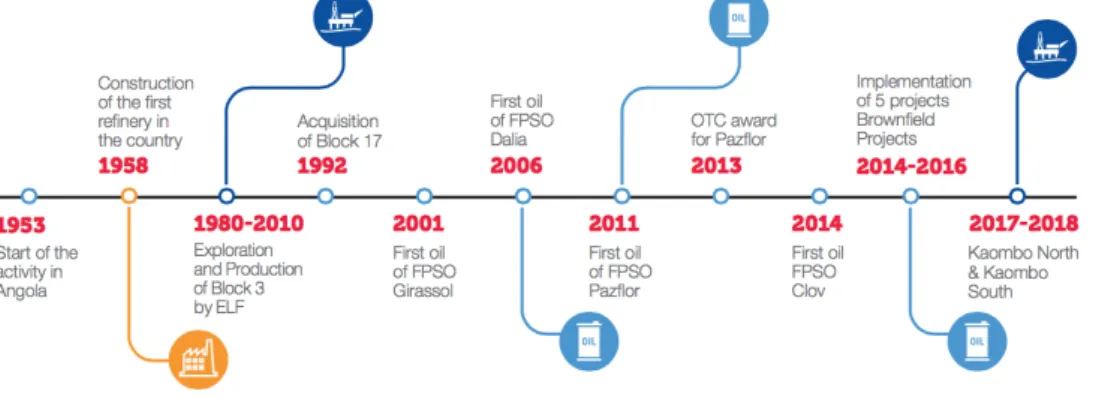
Figure 6: Timeline of Total’s History in Angola, source Total
2.3.2 CSR Activities at Total EP
A) Educational Programs
The best example of Total’s commitment to education and training can be seen in its involvement if the creation of the Eiffel Schools. In May of 2008, a cooperation protocol was signed by Total, The Ministry of Education, and the French Secular Mission. The aim of this protocol was to build 4 high schools in the Angolan provinces of; Bengo, Kuanza North, Cunene and Malanje. The agreement planned for an eventual transfer of management duties from Total EP to the Angolan Ministry of Education by 2017. These Eiffel schools have become a positive reference for the Angolan Educational system, as continued support from Total has allowed the schools to develop and flourish. The best performing students have access to scholarships both domestically and abroad. The teachers benefit from a continuous training program that they later share with other public schools in the province. Between 2011 and 2016 the 4 schools combined, managed to graduate 90% of the students they took in (1045 students). In that same time period, approximately 338 students went on to pursue their higher education at a university level. There are currently 103 of these students enrolled at Universidade Agostinho Neto. There are also circa 45 students who received Total
Scholarships to study in France, Angola and Burkina Faso. The impact of these schools can be exemplified through the National Math Olympiad, which is held by the Ministry of Education every year. The challenge aims to find Angolan talent in the math field, and students from the Eiffel schools have won this competition both in 2013 and 2016. Total’s
commitmenttothe education sectoris also felt on a universitylevel, with strategic
partnerships with 3 Angolaninstitutes; INP – National Oil Institute, ISPTEC – Technologies and Sciences Polytechnic High Institute, and UAN - Agostinho Neto University.
F
igure
7:
Bengo
E
iffe
l
Schoo
l
,
source
Tota
l
B)
Re
lat
ionsh
ip
between
CSR
and
Recru
itment
In accordance withtheinterview undertaken with Carla Afonso (head oftheRecruitment Department), Totalis an attractive employer for an abundance of reasons. The main attractionto Totalis duetoits professionalism regarding payment of salaries and medical support providedtoits employees. Not only does Total provide healthcare forits employees,it has a medical post on site forits workers. Inthe first years of Total’s operations in Angola, employees would actually have operations atthe post as opposedto seeking a private clinic or hospital. Mrs. Afonso also claimedthatthe company’s attraction was helped byits history with providing employeesloans for home purchases. Withouttheintermediary of a bank, Total hasinthe past provided directloans forits employeesto purchase homes, loansthat were not requiredto be paid backin full. In additionto providing support for employees’ children’s educational costs, Totalis alsoinvolvedin various scholarship programs for Angolan students. The scholarships cover both domestic studies and abroad, withthe caveat ofthe receiving student havingto apply for a position at Total. The company then decidesifit wantsto hire said student or not. Mrs. Afonso believesthese factors,the working conditions andthe CSRinitiatives, combineto make Total a very attractive place for young Angolansto pursuetheir careers. When asked which CSR dimensions are more frequently mentionedininterviews,the answer wasinternal dimensions,those regardingthe
lives of the employees. Candidates focus on employee relations as they are curious as to how working for Total will better their lives and what opportunities for growth are available. However, Mrs. Afonso did mention that Total being in the oil sector did result in many questions regarding the environmental dimension. Candidates, especially younger ones, are curious as to what negative externalities are being caused by Total’s environmental footprint. Furthermore, she differentiated among younger and older candidates when it came to
preferences. Senior applicants tended to be more focused on stability, the position they would hold and what challenges were associated to the job, whilst younger applicants seemed more concerned about the working conditions. Lastly, when asked which CSR project she was most proud of, Mrs. Afonso answered, “At Total we have social development scholarships which work in partnership with Sonangol University, and have no formal obligation for the recipients having to work at Total. We have graduated 30 students and this is something we are very proud of.”
C) Communication of Activities
When commenting on the communication of CSR policies Mrs. Afonso stated in order to receive the best signals regarding work conditions a prospective candidate should use a combination of the Total website and Total’s Facebook page. The website contains all the latest information regarding CSR projects, and the Facebook page provides valuable insight as to work culture. In terms of internal communication of CSR policies, this is done with a combination of physical and digital media. The physical side consists of newsletters and pamphlets, whilst the digital side is mainly done through WAT (Working At Total) the internal company intranet.
2.4 Millennial Preferences
A millennial can generally be defined as someone who becomes an adult in the 21st century, however for the purpose of this thesis we will use the definition by Pew Research Centre; those born between 1981-1996.
Drawing on the 2016 Deloitte Millennial Survey, there are a series of preferences which hold extreme relevance to our case, and the general context of employing millennials.
The first preference that should be noted, is that millennials are willing to change their place of work if they deem necessary. “During the next year, if given the choice, one in four Millennials would quit his or her current employer to join a new organization or to do something different. That figure increases to 44 percent when the time frame is expanded to two years. By the end of 2020, two of every three respondents hope to have moved on, while only 16 percent of Millennials see themselves with their current employers a decade from now, ” (Deloitte, 2016). The most alarming fact regarding the statistic provided by Deloitte, is that the willingness to quit their jobs, increases for millennials in emerging markets. Obviously, when examined through the lens of the Angolan context, the retention of millennials is even more important. Operating in one of the most economically relevant emerging markets in sub-Saharan Africa, Angolan managers must find a way to fight the trend of millennials quitting their jobs.
The notion that a business entity should not be limited to profit maximization, is one heavily supported by millennials. More specifically the survey found that 87% of the
millennials believed the success of a business should not be limited to merely chasing profit. This belief was supported by the interviews conducted at the Catolica University in Luanda Angola. In the answers obtained from students we can see not only the drive millennials have for making a positive contribution, but also the acknowledgement that corporations should share this responsibility for positive change. The Deloitte survey also found that the slight majority of millennials (54%) believe that business corporations only care about profit maximization.
Question: To what extent do you feel personally responsible for making a positive change in
Angola?
A: We all have this responsibility, especially as I mentioned before, as Christians we
should be looking to help others. I personally feel that I have a bigger responsibility to help others because I always studied in Catholic schools, and seeing that I was helped throughout my education, one day I hope to have a job that allows me to help others, (Student 4 Interview).
A: When you think of the term “Construction of a nation” we cant achieve that
without the contribution of the individual, therefore I believe that we do have this personal responsibility to better our country, (Student 5 Interview).
A: I think that this varies from person to person, as there are people that have a more
selfish perspective, who think they are only going to help themselves and the people closest to them. I think that everyone should be focused on helping others, however many people don’t feel this, (Student 6 Interview).
A: I feel personally responsible to better the environment around me, and I feel this
responsibility is shared, or should be shared with every Angolan. (Student Interview
9)
Question: To what extent do you feel this responsibility also falls on corporations operating
in Angola?
A: I feel this responsibility falls on all the companies that are operating in the
Angolan market, if companies are willing to invest in people’s lives then they will stand to gain not only from a better pool of potential candidates but also from a better environment overall. (Student 9 interview).
A: Corporations have this responsibility as well, it’s not uncommon for individuals to
abide by the rules and corporations don’t. So it’s important for corporations and individuals to interact in order to achieve a better result, (Student 2 interview).
A: I think this responsibility also falls on the corporation. Because their workers come
from Angolan families, so if they want to maximize their human capital they should be interested in providing a better society for those same families, (Student 5
interview).
Understanding the values of millennials and how they impact business related decisions is a fundamental aspect of our study. When the Deloitte Survey asked millennials, which values they associated to long term business success they answered, “…businesses should put employees first, and they should have a solid foundation of trust and integrity. Customer care and high-quality, reliable products also ranked relatively high in importance. Attention to the environment and social responsibility were also mentioned by a significant
number of Millennials.” We can combine this answer to that from the interviews conducted, in order to paint a better picture of millennial’s values.
Question: Which characteristics would you associate to your ideal job?
A: Responsibility is especially important to me, and to have the opportunity to
develop my own human capital, and have the opportunity to provide jobs for other people, (Student 3 Interview)
A: firstly, the most important thing would be for me to be able to work somewhere
where I could use the knowledge from my university degree. I don’t feel that I am that motivated to seek the highest paying job, as long as I was paid a fair wage for my work, and I had the ability to use my law degree to make a change in the current legal structure in Angola, (Student 6 interview).
A: For me its fundamentally important to work somewhere that matches my ethical
standards. Secondly, I want to work somewhere where people respect each other and are willing to help each other. I’d like to imagine I would work somewhere where people would be willing to help the newcomers integrate into the team, (Student 7
interview).
We can clearly see the alignment of thoughts between the answers provided by the Deloitte survey and those obtained through interviews in Angola. In both cases there is a focus on the personal development component as well as the underlying urge to improve the environment around them. Perhaps more interestingly, in regards to the Deloitte Survey, when answering the question related to long term business success, only 8% of the millennials listed CSR as a factor of long term success, however 26% listed employee
satisfaction. Employee satisfaction is considered by many an integral component of CSR, and when the Angolan students were asked to define CSR on their own, both job opportunities and employee relations were mentioned.
Question: How would you define CSR?
A: I think of programs that raise awareness for diseases, such as health fairs that are
A: Helping others, developing job opportunities for younger people especially. More
equality in society through job opportunities, (Student 3 interview).
A: I think of the internal obligation companies have to contribute to the
socio-economic development of the country. It’s the altruistic component of the companies, who operate to compensate for failures of governmental initiatives. I think that there is a difference between the companies that are doing these things due to external obligations, for example the government, and those that are working from an altruistic point of view, (Student 6 interview).
A: The responsibility that companies have to their society, that responsibility includes
not only the environment around them but also to their workers, (Student 9 interview)
Furthermore, due to the Deloitte survey, we now know that millennials are more likely to work in places they identify with. Approximately 70% of the Deloitte survey
responders stated that they work in a place they identify with. In addition, 56% of those same respondents have previously chosen not to work somewhere because of the organization’s values, and approximately 50% have rejected doing a task following the same reasoning. This concept was also supported by the field work conducted at the Catolica University in Angola.
Question: How important is it for you to identify socially with the place you work?
A: it’s very important for me to socially identify with the place I work. If I am unable
to help the people that I identify with, how will I be able to help the future people of the country, its very complicated, (Student 1 Interview)
A: Having read the social contract I think its fundamental to give back to the society
we live in. For me that can be measured by the impact of our work. So I would say that for me it would be of the upmost importance to feel that my work was impactful in one way or another, (Student 5 Interview).
A: We can, and should be worried about others. The benefits we might have in life are
not just for us, but should be shared with others. The world is dynamic and ever changing, today I might be doing well and not need help, but tomorrow I could need
the same help that others need of me today. Therefore, I think it’s important to incentivize people who come after us to not limit themselves to only helping
themselves but also helping others. I think there is nothing more satisfactory then the feeling of giving a part of what is yours to help someone else. That’s why social identification with where I work is so important to me, it helps cultivate a spirit of benevolence among workers, which should be practiced by everyone, (Student 6
Interview).
How millennial preferences affects decision making is also crucial to our
understanding of how they operate. As previously mentioned we saw that millennials are willing to forgo tasks and even jobs if they feel there is a misalignment of values.
Furthermore, the Deloitte survey also stated that personal values ranked first among millennial’s decision-making process. This was proved in the Angolan context with a two-part hypothetical scenario presented to the Angola students:
Question: I’d like you to imagine a hypothetical scenario, imagine two companies, Company
A & Company B, the salary is the same in both companies, 2000$ per month, the only difference is that Company B provides financial support for a local public school in the neighbourhood near the hypothetical office, which company do you feel more attracted to as a potential employer?
A: All nine of the students interviewed said they would take the job with Company B.
Question: Now imagine if you had to take pay cut to work for Company B, lets say a 25%
reduction so the salary is now only 1500$ how would this affect your decision?
A: I would choose the second company, because helping others doesn’t have a price,
and the means can justify the ends. At the end we might have gains we were not even expecting, (Student 2 Interview).
A: I would still be attracted to company B, because of the help we would be providing
to other people and families. Recently in one of my law classes, where we analyse job contracts, the teacher said that most people when they are looking for work are only focused on the aspect of their salary. And many people don’t realise that there are
other benefits besides the financial gain, which should also be considered, (Student 5
Interview).
A: The salary of job is not the only significant component when choosing a job. I
could have a job that pays me well, but the work conditions are horrible, and that wouldn’t attract me. Knowing that my work helps those less fortunate would be enough for me to accept to work for Company B. tomorrow it could be me that needs this help, (Student 6 Interview).
A: I would still want to work for Company B. However, this decision would be
affected by how much I personally needed the money. If I felt I could sustain myself with the salary of Company B I would happily make the sacrifice for Company B.
(Student 9 Interview).
Lastly, by asking Angolan students Angolan students which corporations stand out due to their attractive CSR programs we are able to gain further insight on what millennials in the Angolan job market seek. The companies listed by the students have been successful in leveraging their CSR programs into a positive standing within the community, which may very well be the first step in effectively attracting and retaining millennials.
Question: Is there any particular firm that comes to mind when you think of a firm with an
attractive CSR record?
A: When I think of firms, the one that comes to mind is Total, a firm I hope to one
day work at. As far as institutions I think of the brothers Maristas who have helped a lot of people here, (Student 4 Interview).
A: When I think of a positive CSR record I think more of institutions as opposed to
firms operating in the public sector. For example The Agostinho Neto Foundation and FAS (Fundo de apoio social), (Student 5 Interview).
A: I think of UNITEL, because they are the company in Angola that most invests in
the younger generation. They have a lot of programs that share information about diseases that can be easily treated. I feel attracted to companies that invest in younger
people. (Student 6 Interview).
A: Total comes to mind, I’ve participated in a program of theirs’s before and they
were very accommodating. The program took young Angolans to historical sites in Angola and I felt overall that it was a very positive experience. Projects like these would definitely make Total a more attractive employer, (Student 7 Interview).
A: The company that comes to mind is Cuca, because on top of being a company that
truly knows the Angolan market, they have invested a lot of money and time in youth sports. For example they have helped develop youth leagues for football in some of the poorer provinces and municipalities. Initiatives such as these make Cuca a more attractive employer in my mind, (Student 8 Interview).
2.5 Attracting Millennials in Angola
The economic uncertainty combined with the vast social problems facing the country, have resulted in a severe pressure placed on the Angolan manager. Recruitment has become a crucial aspect of survival, as the country enters uncharted waters. Hiring young and talented millennials is of the utmost importance, and companies are under pressure to recruit locally. This is in part due to the difficulties Angolan companies face paying foreigners in foreign currencies and the difficulties in acquiring transfers at the commercial banks. Since the local talent pool is in part affected by the various social issues facing the country, managers have to be able to attract the best talent available. However where previously attractive financial rewards were enough, the millennials entering the job market now are not limited to these rewards. In addition, the new economic reality means that salaries aren’t as attractive as they were in the previous decade, which leads us to the following problem: how can Angolan
managers use CSR to attract the best talent when job applicants aren’t only looking for financial compensation and when the companies can’t rely on offering above market packages?
To successfully answer this question one must break down the question into three subsequent parts. Firstly, we must identify the relationship between corporate social responsibility and organizational attractiveness for millennials. This will be done by attempting to solve the assignment question: How can CSR increase organizational
attractiveness for millennials? Next, it is vital to comprehend the nature of social identity
theory and how it pertains to attracting millennials to a desired company. In doing so one would also have to gain understanding of which values are of particular importance to millennials when looking for a job. This will be solved by answering the assignment question: What are the values companies can use to increase millennial attraction? Lastly, in order to solve the main question we are required to investigate how the communication of millennial preferred values plays into signaling theory, and more specifically how companies can leverage these values to their best desired outcomes. This will be solved by answering the assignment question: How to best communicate these
values effectively? Once all three sub questions are answered, we will begin to have an
understanding of the overall question.
Chapter 3: Literature Review
3.1 Corporate Social Responsibility
The concept of Corporate Social Responsibility (CSR) is a social construct, therefore there are different definitions and interpretations regarding it, Bowen (1953) made the case that CSR was the requirement that top management should consider the interests of society when making firm related decisions, (Story et al, 2016). The concept in itself has changed since 1953, however “Although the general idea maintains, scholars and practitioners alike agree that CSR involves business practices that support economic, ethical and legal behavior of a firm while respecting or paying attention to stakeholders’ concerns,” (Story et al, 2016: 486). Following this argument, we can depict CSR in terms of actions firms do that result in a positive externality to its stakeholders (Turker, 2009). Here it is important to differentiate among the internal and external stakeholders of the firm. This will also be of importance when we later consider the different dimensions of CSR.
Examples of internal firm stakeholders are the employees, managers and
shareholders. Examples of external stakeholders are the environment, consumers, community and suppliers,” (Story et al, 2016: 486). When considering CSR practices that can have a positive impact on internal stakeholders, examples are seen in work life balance policies, potential for personal development, career progression opportunities and diversity
management. Internal CSR policies however should not be limited to the psychological working environment, as investment in the physical quality/standards of the workplace can also be an example. Practices that affect external stakeholders are behaviors that positively affect the “environment, community development, sustainability and philanthropic activities” (Turker, 2009). It should also be noted that policies related to external stakeholders can also have a positive impact on internal stakeholders: a clear example of this would be sustainable practices that firms might use as a result of their exposure to external practices, (ibid).
As was previously mentioned, CSR is a social construct, there is no certified standard when it comes to the dimensions of CSR. The literature points to various studies that have come up with slightly differing dimensions. The work done by Dahlsrud (2006) defined CSR in five separate dimensions: a) community relations, b) diversity activities, c) employee relations, d) environmental activities and lastly e) product quality/sustainability.
As the name implies, community relations refer to activities that involve the firm in question and the society, this can be in the form of projects that directly address a community need or through the integration of social concerns in the firm’s professional activities.
Diversity activities is considered a voluntariness dimension, and relates to the moral and ethical voluntary actions of the firm. Interestingly enough the activities we associate with this dimension (commitment statements, quotas, diversity reports etc.) are not mandatory in most firms, however discriminatory employment practices are commonly illegal (Ersoy &
Aksehirli, 2015: 508). The dimension employee relations, “…activities help shift the focus of business activities from financial performance serving the shareholder to even-‐footed
interactions with employees and suppliers as well. As such, guidance geared towards minority groups, work-‐life balance activities, employer initiated support groups would fall within this dimension of CSR,” (ibid). The environmental dimension is most commonly associated to projects that firm undertakes to develop and protect the environment. The last dimension in product/service sustainability, and addresses the distribution of resources within the company, in a socially responsible fashion.
3.2 Organizational Attractiveness
Organizational attractiveness is a vital component when considering attracting qualified potential future employees. The definition of organizational attractiveness is
“applicants’ willingness to pursue jobs and to accept job offers in an organization,” (Story et
al, 2016: 487). The concept of organizational attractiveness was always of importance in the
academic world, however it gained particular popularity back in 1997 when McKinsey consultants introduced the term, “War for Talent,” (Michaels et al., 2001). Attracting and retaining proficient employees is one of the major present day issues regarding human resource management, attracting talent is key to any firm’s long-term survival, and we also know that CSR strategies undertaken by firms may be a significant way to increase
organizational attraction (Deloitte, 2016). The influence study of Turban & Greening (1997) found that a positive relationship between the corporate social perception of a firm and organizational attraction might exist. Studies building on the work of Turban & Greening (1997), such as Albinger and Freeman (2000) tried to add literature to this subject. Their findings however only showed a positive relationship when potential employees had a high chance of getting the job. When people had less choices in terms of employment, the relationship was insignificant.
When discussing organizational attraction, it is important to introduce organizational reputation, as it is one of the most fundamental aspects of any organizations level of
attractiveness. Organizational reputation can be expressed as a stakeholder’s perceptions and attitudes toward a firm, and these assessments about the firm are generally made by
stakeholders outside the organization (Schwaiger, 2004;). The worth of a firm’s reputation is difficult to quantify in terms of a monetary value, however we know that job seekers tend to use reputation as a signal of working conditions, (Schnietz and Epstein, 2005). This concept will be further analyzed when looking in to the implications of signaling theory.
3.3 Relationship between CSR & Organizational Attractiveness
In attempt to solve the managerial problem of recruiting talented millennials of the Angolan workforce, we must first start by establishing the connection between CSR and organizational attractiveness. The general relationship between the two, will serve as the basis of our argument. By providing evidence that the relationship is in fact positive we can begin to address our managerial problem. Furthermore, the literature points to different dimensions of CSR having differing impacts on organizational attractiveness, which is also fundamental to our approach with the managerial problem. In addition, knowing whichdimensions speak more to millennials can be of particular use to the Total and Academia BAI’s recruitment policy, as it would allow them to narrow their focus on dimensions with a greater return. However, when dealing with the managerial problem of millennial
recruitment, simply establishing a relationship between CSR and organizational
attractiveness does not suffice. Once the relationship is established we must move on to how Total and Academia BAI use this relationship to their advantage. Here, we must focus on the two theories which best explain the relationship: social identity theory and signaling theory. The literature points to both these theories as being significant in the process of applicants pursuing companies based on their perceived CSR levels.
Various studies have established a positive relationship between the CSR activities of a firm and its reputation (Brown et al., 2006), “people’s associations directed toward
corporate activities (in this case, CSR) have been regarded as critical elements in the development of what people believe about an organization,” (Story et al, 2016: 488-489). Furthermore (Glavas and Godwin, 2013) make the argument that how people perceive socially responsible behavior may have more importance than the actual behavior. From this we can clearly conclude that the firm’s reputation is an essential component of any firm’s organizational attraction.
An attempt to understand the nature of the relationship between CSR and employer attractiveness, was undertaken by the research of Ersoy & Aksehirli, (2015), where they focused on the Turkish market. These researchers not only studied if CSR activities increased the organizational attractiveness of firms, but they also attempted to answer which
dimensions of CSR had the most significant affect. Drawing on the work of Dahlsrud, (2008) they defined CSR in the following five dimensions: community relations, diversity activities, employee relations, environmental activities, and product quality/sustainability. The study did find a general positive relationship between overall CSR and organizational
attractiveness, however not all dimensions had the same impact. The dimension of employee relations was the most positive, whilst sustainability, community and diversity relations all had partial positive effects on organizational attractiveness as well. Alarmingly, the
environmental relations dimension failed to translate a positive impact on organizational attractiveness in this Turkish market study.
The concept that there is a general positive relationship between CSR and organizational attractiveness is supported by the work of (Lis, 2012), who not only
established a positive relationship, but also came to the conclusion that different dimensions had different levels of impact. By also using a policy capturing method, focused on university level students in Germany, and a study focused on four dimensions of CSR: product,
diversity, environment and employee relations. In relation to the results of the study, the dimensions employee relations and diversity had the most significant impact. Interestingly the dimensions environment and product relations scored relatively low. In addition, (Evans & Davis, 2011) concluded that applicants are more likely to accept jobs at organizations they deem are having a positive image in relation to CSR implementation and activities.
Similarly, the work done by (Duarte et al, 2014) pursued an examination of the relationship between CSR and its effects on both a job seekers belief about a company, and their willingness to apply to that company. The study selected three main dimensions of CSR: employee, community and environmental relations. By capturing both the beliefs and the intentions of the prospective employees, the study is able to make more accurate assumptions about which dimensions are in fact more significant in this relationship. This study also proposed that the dimension related to employee relations would have the most significant effect on organizational attractiveness. In relation to the results of the study, following the trend of the previously mentioned works, a positive relationship was found between the multidimensional construct of CSR and organizational attractiveness. The relationship was positive both in terms of the beliefs of potential candidates and their willingness to apply to firms. In addition, the positive relationship was independent of a specific dimension of CSR, “This effect is independent of the specific CSR dimension under consideration. A high engagement in CSR practices always results in a higher attractiveness and IAJV than a low engagement in the same practices,” (Duarte et al, 2014: 251). Whilst all of the dimensions recorded a positive impact independent of each other, the dimension for environment recorder a considerable smaller effect, than the dimensions for employee and economic relations. This is in line with the previous studies, highlighting the particular lack of significance of the dimension environment relations in comparison to other dimensions.
Another example of a study finding a positive relationship between CSR and organizational attractiveness can be seen in the work of (Story et al, 2016). By defining organizational attractiveness as “applicants’ willingness to pursue jobs and to accept job
offers in an organization,” (Story et al, 2016: 487), the study did not limit itself to
establishing a general relationship among the two variables, but also attempted to prove that both the internal and the external CSR policies of a firm affected organizational attractiveness positively. The positive relationship was also further explained by both the signal theory and social identity theory. In relation to the perception of internal and external CSR practices, whilst both had a positive impact on organizational attractiveness, the internal practices were more significant, as external practices were only a determinant factor when they were
“mediated by ratings of organizational reputation.” The nature of the examined relationship, calls for the need of differentiation among employers, this can be achieved through
“successful firms may profess their CSR strategies in their recruitment branding and marketing programs, promoting the benefits of working within a values-based culture,“ (Story et al, 2016: 497). Timberland offers a successful example of a how a company can successfully use their CSR policies as a competitive advantage. “As illustrated in the company’s Employee Global Survey, 67 per cent of employees said they strongly agreed or agreed that the company’s commitment to the community and its Path of Service TM program played a strong role in their decision to work at Timberland,” (ibid).
3.4 Social Identity Theory
Social identity theory may be used to justify the relationship between the CSR activities of a firm and that same firm’s level of attractiveness to potential employees. As stated by Ersoy & Aksehirli, (2015) “Social Identity Theory is used as well to understand the relationship between firm’s CSR and employee’s attraction to the firm. According to the Social Identity Theory, individuals classify themselves and others into different categories such as organizational membership, religious affiliation, gender and age.” (p. 508) The theory further suggests that people are drawn more to activities led by people with whom they identify with, and will support institutions that also express these identities. (Brammer et al, 2007).
In addition, the theory implies that an employee’s self perception can be influenced by their employer’s reputation. This is particularly of interest due to the fact that one of the various social categories people put themselves in as a result of social identification, is organizational membership (Lis, 2012: 285). Organizational membership is a vital aspect of one’s own self-perception, and her identification within society.
As a result of a company having an attractive perceived identity, people who associate with that company may improve their own self esteem. In companies that are socially
responsible or are making efforts to be perceived as socially responsible, this has the potential to be even more significant. In addition, the theory suggest that as a result of the
multidimensional aspect towards CSR, different dimensions should have appreciably different levels of effect on the level of gain a potential employee might perceive as a result of a company’s CSR activities.
An obvious result of social identity theory is that people will naturally see themselves as being affiliated to particular social categories. The self-perception of the individual is correlated to the social organization’s the individual identifies with, including the place of work. “Individuals attempt to establish or enhance their positive self-concept through the comparison of the characteristics of themselves and the groups they belong to with other individuals and groups” (Brammer et al, 2007: 1704). Furthermore, if said comparison were to be favorable than the individual’s self-perception would be improved, the opposite being true for an unfavorable comparison. Therefore, the theory implies that “individuals are happiest when they associate themselves with organizations that have positive reputations, because it is association with those organizations that will enhance their self-concept,” (Brammer et al, 2007: 1704).
3.5 Signalling Theory
Signaling theory is of significant importance when attempting to comprehend the relationship between CSR and organizational attractiveness (Lis, 2012: 285). Signaling theory, “addresses information asymmetries between two parties where the sources of asymmetric information are mainly concerned with information about quality or information about intent,” (Su, et al, 2014: 2). The theory implies that job seekers will read certain aspects of an organization as a signals they use in relation to that organization’s attractiveness. The effect of these signals are largely felt in three areas, “job seekers’ anticipated pride due to identifying with a reputable firm; perceived value fit between firm and oneself; and expected positive treatment inferred through firm’s community involvement and pro-‐environmental practices, ” (Ersoy & Aksehirli, 2015: 509).
Jones et al, (2014) attempted to use signaling theory not only to further observe the relationship between CSR and organizational attractiveness, but also to comprehend what
mechanisms are used in this process. The work in this study limited itself to two main components of CSR, community involvement and environment relations. More specifically they focused on three signal based mechanisms: “job seekers’ anticipated pride from being affiliated with the organization, their perceived value fit with the organization, and their expectations about how the organization treats its employees,” (Jones et al, 2014: 384). The results of the study showed that job seekers were in fact more attracted to companies with higher levels of CSR, both in a job fair setting and in a survey manipulating companies web pages. More importantly, the study found a positive correlation between the three signaling mechanisms. However, it should be noted that the correlation between the CSR dimension “environment” and organizational attractiveness, whilst positive, was considerably less than that of “community.”
The significance of the theory is enhanced in the initial stage of the recruitment process, when there is a substantial lack of information on both sides of the table, albeit the lack of information seems to be superior on the side of the job seeker. Applicants in the job market are expected to be attracted to organizations which share the same values they do. As applicants are dependent on basic research and whichever artefacts they can see when they visit an organization. (Mcshane & Glinow, 2010: 432). The importance to CSR is
considerable, companies that have an image associated being socially conscious will send more attractive signs as opposed to a company that has a relatively weak CSR perception.
(Greening & Turban, 2000).
Chapter 4: Teaching Note
4.1 Learning Objective
The objective of this case study is to show how managers can leverage corporate social responsibility to the hire and retain millennial employees in emerging markets such as Angola. Upon completion of this case the student should be able to not only identify the relationship between CSR and organizational attractiveness, but also understand the
mechanisms behind it, and how to best improve the desired relationship. More specifically, the student will learn how to leverage millennials’ preferences with business initiatives that result in a productive two-way relationship between the employer and the employee. In addition, the student will comprehend the importance of both social identity and signalling
theory in how they relate to millennial job attraction. By doing so the student will learn which values are important, how to best increase the scope of the values and lastly how to best communicate them.
4.2 Target Audience
The target audience for this case study is both undergraduate and master level students, who are studying management related courses. Ideally this case would be useful in the context of managing organizations in emerging markets. However, whilst the context of the case specifically pertains an emerging market, the key point of the case can be
generalized to all markets, as the hiring and retention of millennials is relevant in any given market. In addition, prior knowledge related to CSR would be a useful tool in solving this case, ideally students should have taken courses similar to business ethics or managing social innovation before attempting to solve the case. Any class that distinguishes between
corporate social responsibility and corporate social value can suffice as substitutes.
4.3 Teaching Plan
Ideally this case should be covered in a time period between 60-90 minutes. Before reading the case, the teacher should conduct a relatively quick discussion regarding the first assignment question: does CSR increase organizational attractiveness for millennials? After having this discussion without the context of the case, the class should proceed to address the first question again. During the second discussion regarding the first assignment question, the students should aim to match the relevant aspects of the literature review with the
characteristics of the two focus companies. The same process should be applied to the remaining assignment questions. By doing so, students will be able to separate their
preconceived notions regarding the issue and the information they extracted from the case. In the end of the case the teacher should call on the students to comment on the differences regarding the assignment question’s answers before reading the case and after.
4.4 Assignment Questions
Assignment 1: How can CSR increase organizational
attractiveness for millennials?
Understanding the relationship between CSR and organizational attractiveness is the first piece to solving this puzzle. The instructor can emphasize this point by summarizing the arguments in favour of a positive relationship, its fundamental that the students buy into this premise, as it is the basis of the entire case. Not only does the literature review show a positive relationship, it also shows the important of the perception of the firm, and more specifically how perception of socially responsible behaviour may be in fact more relevant than the actual behaviour in question. The work of (Ersoy & Aksehirli, 2015) is also instrumental as they showed a positive relationship between CSR & organizational attractiveness in the Turkish market, and equally important, found that the dimension employee relationship was the most critical factor. Various examples of the positive relationship are expressed in detail in section 3.3 of the literature review.
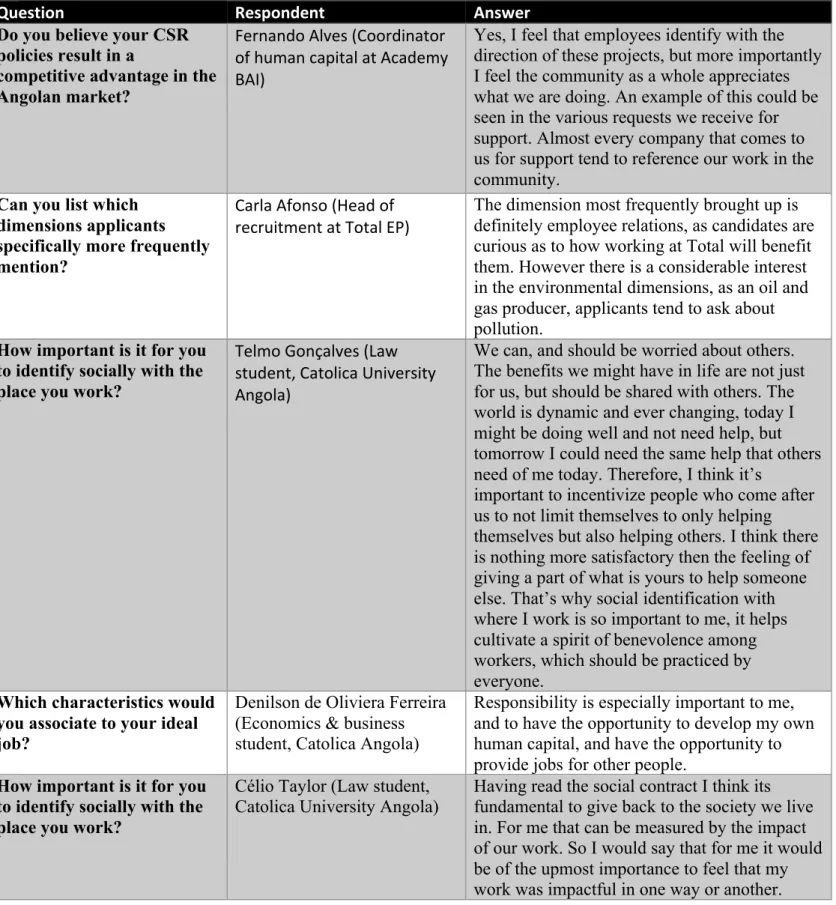
Once the students are able to identify that the relationship is positive based on the literature review, they will need to support the same premise based on the information in the case study. Here students can justify the relationship being positive from two different perspectives, from the employer and the potential employee. The students shouldn’t limit themselves to looking for examples of a positive relationship, they should also attempt to understand which dimensions are more significant, given the interviews provided in the case. The table below summarizes some of the key quotes students can use to justify the
relationship and provide insight on which dimensions should be highlighted.
Looking at the table below we can empirically establish that in the context of the Angolan market, CSR does in fact increase organizational attractiveness. In addition, the answers provided also demonstrate some of the dimensions that are particularly of importance to millennials seeking jobs in Angola. Fernando Alves showed that the commendable work of BAI not only translates to increased attraction from potential employees, but is also felt on a community level, and has helped other facets of their business. The quote provided by Carla Afonso is a prime example of the importance of the employee dimension of CSR in the Angolan job market, this is in line with the theory