Determinants of consumers’
acceptance of insects as food and
feed: A cross-cultural study.
Ane Telles Sposito Gonçalves Neves
Masters Degree in Consumption Science and Nutrition
Department of Geosciences, Environment and Territory Planning2015
Advisor
Doctor Luís Miguel Cunha, Associate Professor, Faculty of
Sciences, University of Porto
Todas as correções determinadas
pelo júri, e só essas, foram efetuadas. O Presidente do Júri,
Acknowledgements
I would like to use this opportunity to express my sincere gratitude to everyone who has supported me through these two years of study. This would have been much more difficult without your help and, for that, I am very thankful.
Firstly and foremost, I am greatly thankful to my advisor Prof. Luis Miguel Cunha for his aspiring guidance, knowledgeable advices, invaluably constructive criticism, and sustained motivation throughout this project. I am extremely grateful for all the knowledge he has transmitted to me. I would like to thank him for making possible for me to participate in such an inspiring project. I would also like to express my gratitude for his kindness and patience with me at all times.
Likewise, I would like to thank all my other Professors: Prof. Marial Daniel Vaz de Almeida, Prof. Pedro Moreira, Dr. Pedro Graça, Dr. Ada Rocha, Dr. Sara Rodrigues, Dr. Jorge Queiroz, Dr. Susana Fonseca, Prof. Olivia Pinho, Dr. Mário Cunha for all the knowledge transmitted during these two memorable years.
I also thank my friend Diana Pereira for her companionship during these 2 years. She has most definitely made this time less lonely and more pleasant. Together we have shared all the good and difficult times, endless hours of study and numerous group assignments together. Thank you for being such a reliable friend at all times.
Additionally, I would like to express my sincere gratitude to Maria Helena Barbosa and Bárbara Barbosa Neves for helping me overcome some of the difficult times during these years. Thank you for listening to my numerous outpourings and for all the advices and kind words.
Also, I would like to thank my parents for all the support, not only throughout this year but also throughout my whole life. None of this would have been possible without you, and for that I am eternally thankful. Thank you also for always believing in me and most essentially thank you for your unconditional love.
Most importantly, I would like to express my endless gratitude to my husband. Who was everyday during this year with me, carefully listening to my worries, concerns and breakdowns. Among all the special things you mean to me, you also show me
Abstract
The production of sufficient poultry, fish and livestock represents a serious challenge for the future, based on a fast growing world population and increasingly demanding consumers. This rapidly rising industry is generating a variety of environmental problems such as land degradation, deforestation and water pollution. A scenario in which can negatively affect food security in a global scale. In this sense, insects for food and feed are a practical solution in terms of sustainability due to numerous reasons including high feed conversion ratios, low emission of greenhouse gas and ammonia. Likewise, insects are highly nutritious, being a good source of high value proteins, fiber, good fats, calcium, vitamins, and energy. Yet, consumers’ acceptance of insects as food and feed has not been established.
The main objective of this study is to evaluate the determinants of consumers’ of insects as food and feed. To assess this information, a questionnaire was developed and was applied through a web-based survey in Norway (n=363) and Portugal (n=303) to attain different perspectives within Western societies. Cluster analysis was applied based on the degree of acceptance of the different forms of insects as food (direct and indirect) to identify different consumer segments. These segments were labeled as: Disgusted (C1), Rejecters (C2), Feed acceptors (C3) and Acceptors (C4). For the prediction of perceived acceptance of insects as food and as feed, application of binary logistic regression was executed for each of the countries. Results show that, for Portugal and Norway, disgust was confirmed to decrease the likelihood of acceptance of insects as food and feed. Contrarily, participants that accept sushi are more likely to accept insects as food and feed. Moreover, this study has also profiled consumers with high levels of acceptance of edible insect as food and feed. This profile is younger males, who are interested in the environmental impact of their food choices, showing low levels of neophobia and disgust, and high familiarity with edible insects.
These results can create input for insect based product development, market positioning of edible insects and insect based products, and communication of strategies in Western societies.
Keywords: edible insects; entomophagy; sustainable food choices; alternative food sources; acceptance of novel foods.
Resumo
O crescimento rápido da população mundial associado ao facto de os consumidores se mostrarem cada vez mais exigentes nas suas escolhas, representam um desafio sério para os setores da avicultura, piscicultura e pecuária. Na tentativa de fazer face a estes desafios, estes sectores económicos têm vindo a causar graves problemas ambientais, como são disso exemplo a degradação dos solos, o desmatamento e a poluição da água. Esta situação terá certamente impacto negativo em termos de segurança alimentar numa escala global. Neste sentido, a inclusão de insetos na alimentação humana e animal surge como uma solução prática em termos de sustentabilidade por várias razões incluindo emissões reduzidas de gases com efeito de estufa. Os insetos são também altamente nutritivos sendo uma boa fonte de proteínas, fibras, gorduras boas, cálcio, vitaminas e energia. No entanto, a aceitação por parte dos consumidores da utilização de insetos na alimentação humana e animal não foi ainda estabelecida.
O principal objetivo deste estudo foi a avaliação dos determinantes da aceitação de insectos como alimento humano e animal. Para recolha de informação, foi desenvolvido e aplicado um questionário online na Noruega (n=363) e em Portugal (n=303), de forma a obter diferentes perspetivas em diferentes sociedades ocidentais. Foi aplicada uma análise de clusters com base no grau de aceitação de diferentes formas de insetos como alimento humano (direto e indireto), de forma a identificar diferentes segmentos de consumidores. Os segmentos foram estabelecidos como: “Enojados” (C1), “Os que rejeitam” (C2), “Os que aceitam como alimento animal” (C3) e “Os que aceitam como alimento humano e animal” (C4). Para a previsão da aceitação de insetos como alimento humano e animal foi aplicada uma regressão logística binária para cada país. Os resultados mostram que para Portugal e Noruega, o nojo reduz a probabilidade de aceitação de insetos como alimento humano e animal. Contrariamente, os participantes que aceitaram o sushi têm uma maior probabilidade de aceitação de insetos como alimento humano e animal. Adicionalmente, este estudo traçou o perfil dos consumidores com maior nível de aceitação de insetos como alimentação humana e animal. Este perfil define-se como, jovens do sexo masculino, com alto interesse nos impactos ambientais das suas escolhas alimentares, demonstrando baixos níveis de neofobia alimentar e nojo e elevada familiaridade com insectos comestíveis.
de insetos, definição de posicionamento de insetos e produtos à base de insetos no mercado e para novas estratégias de comunicação nas sociedades ocidentais
Palavras-chave: insetos comestíveis, entomofagia, escolhas alimentares sustentáveis, fontes alimentares alternativas, aceitação de novos alimentos.
Table of Contents
List of Abbreviations ... vi
List of Tables ... vii
List of Figures ... ix
1 Introduction ... 1
2 Literature Review ... 4
2.1 Entomophagy ... 4
2.1.1 Edible Species ... 6
2.1.2 Regions of the world ... 7
2.1.3 Benefits ... 12
2.1.3.1 Nutritional and medicinal value ... 12
2.1.3.2 Insect farming ... 15
2.1.3.3 Insects as feed ... 17
2.1.3.4 Aquaculture sector ... 19
2.1.3.5 Agro space ... 20
2.1.4 Food Safety, Legislation and Policy ... 21
2.1.5 New Trends ... 25
2.2 Consumers’ Acceptance ... 27
2.2.1 Sushi Acceptance ... 30
2.2.2 The Disgust ... 31
2.2.4 Food Choices ... 37
2.2.4.1 Sustainable food choices ... 39
3 Materials and Methods ... 41
3.1 Questionnaire and Scaling ... 41
3.2 Data collection and sample ... 46
3.3 Data analysis ... 46
4 Results ... 49
4.1 Sample characterization ... 49
4.2 Evaluation of constructs ... 50
4.3 Acceptance of insects as food and feed ... 55
4.4 Determinants of acceptance ... 60
5 Discussion ... 66
6 Conclusion ... 73
References ... 74
List of Abbreviations
PRI – Population Reference Intake EdS – Encosternum delegorguei Spinola
FAO – Food and Agricuture Organization of the United Nations WHO – World Health Organization
UN – United Nations EU – European Union
USA- United States of America UK – United Kingdom
NEIMAN – Medicinal and Edible Insects of Manipur INSFEED – Insect Feed for Poultry and Fish
BLSS – Bio Regenerative Life Support System SANCO – South African National Civic Organization TSE – Transmissible Spongiform Encephalopathy PAP – Processed Animal Protein
FNS – Food Neophoby Scale FCQ – Food Choice Questionnaire SDT – Self-Determination Theory IFT – Institute of Food Technologists KMO – Kaiser Meyer Olkin
List of Tables
Table 1 – Number of edible insect species reported in the world. Source: Ramos-Elorduy (2005) ... 7
Table 2 - Number of edible insects recorded per continent and number of consuming countries. Source: Ramos-Elorduy (2006) ... 7
Table 3 - Nutritional value of edible insects species (g/100g dry weight). Source: Ramos-Elorduy (2005) ... 13
Table 4 - Socio-demographic characteristics of the sample (N=666) ... 50
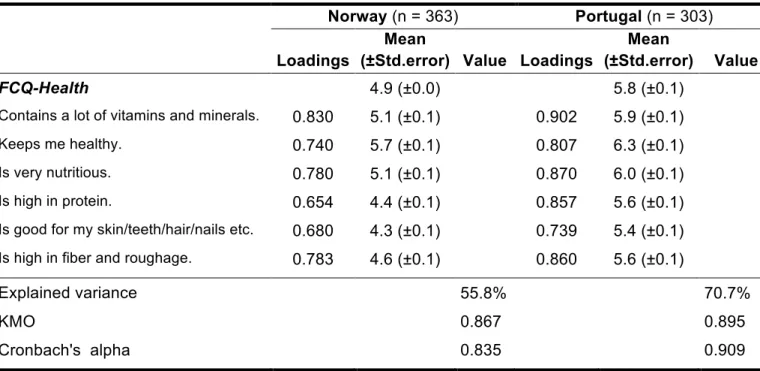
Table 5 - Factorial structure and consistency for the construct FCQ-Health, obtained for each country under comparison ... 51
Table 6 - Factorial structure and consistency for the construct FCQ-Convenience, obtained for each of the countries under comparison ... 52
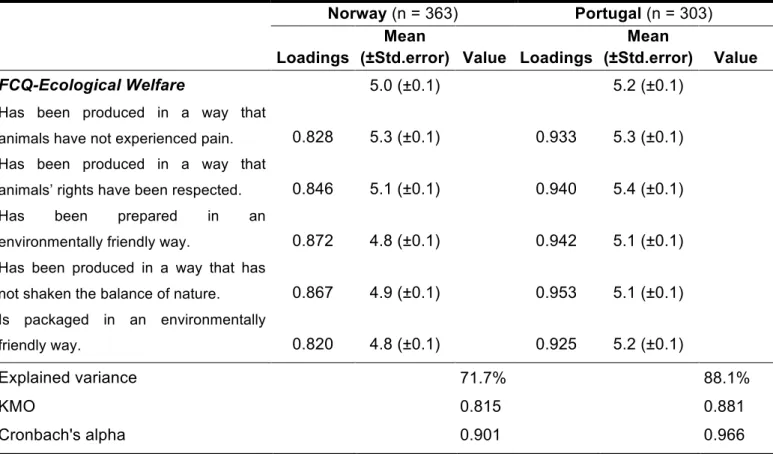
Table 7 - Factorial structure and consistency for the construct FCQ-Ecological Welfare, obtained for each of the countries under comparison ... 53
Table 8 - Factorial structure and consistency for the construct FNS6 adapted, obtained for each of the countries under comparison ... 54
Table 9 - Factorial structure and consistency for the construct Disgust, obtained for each of the countries under comparison ... 55
Table 10 - Mean (±SE) of acceptance values for each of the different forms of entomophagy and for suchi, for each of the countries under comparison. ... 56
Table 11 - Acceptance levels for different forms of entomophagy as a function of the consumer segmentation within countries ... 57
Table 12 - Comparison among cluster groups identified and social demographic characteristics and constructs and sushi ... 59
Table 13 - Reduction of different variables of acceptance of insetcs as food and feed for Portugal and Norway ... 60
as food for Norway and Portugal ... 64
Table 15 - Coefficient estimates from binary logistic regression of acceptance of insects as feed for Norway and Portugal ... 65
List of Figures
Figure 1- Food neophobia scale (FNS). Source: Pliner and Hobden (1992) ... 35
Figure 2 - Overall acceptance of insects as food for each country (mean) ... 61
Figure 3 - Overall acceptance of insects as feed for each country (mean) ... 62
1 Introduction
Trends towards 2050 anticipate a stable increase of the worlds’ population to 10 billion people (von Koerber and Leitzmann 2011, Ray, Mueller et al. 2013, Donatiello 2015), imposing an increase on food/feed production from existing agro-ecosystems, resulting in an even greater pressure on the environment (Van Itterbeeck and van Huis 2012). The impacts stem from factors such as greenhouse gas emissions from animals and manure (Van Rooyen 2014), cultivation and fertilization of feed crops and pasture (Leibensperger, Mickley et al. 2012), deforestation and grassland conversion (Kjellstrom, Lemke et al. 2013), and emissions caused by the production of inputs (such as fertilizers), transporting and processing (Popp, Lotze-Campen et al. 2011).
Due to the continued growth of both per capita per income and worlds population, the demand for livestock products is projected to grow by 70% by 2050 (de Boer, Schosler et al. 2014). On the one hand, in developing countries, the serious problem of food security is worsen everyday by this increase in the worlds´ population (van Huis 2013). On the other hand, in industrialized countries, where the problem of food security is a minor worry, problems associated with food refer to 2 main factors: environmental sustainability of food production and food safety (Premalatha, Abbasi et al. 2011). For these purposes, new ways must be found to increase production while preserving natural habitats, food quality and biodiversity since scarcities of agricultural land, water, forest, fishery, biodiversity resources, nutrients and non-renewable energy are foreseen (Klunder, Wolkers-Rooijackers et al. 2012).
These trends towards 2050 are also likely to reinforce other problems, especially for public health, since livestock products, in particular red meat and processed meat, have been appointed as risk factors for cardio vascular disease, some types of cancer, type 2 diabetes and other non-communicable diseases, among western culture (Klink 2014, Guo, Wei et al. 2015, Van Hoof, Hemeryck et al. 2015).
In the United States, a very high average consumption of red meat (48kg without bones) per capita per year is estimated (Machovina and Feeley 2014, Bastide, Chenni et al. 2015). The most representative data in Europe have been collected in the Netherlands,
where red meat consumption is soothing at around 39.2 kg (meat with bones) per capita per year (Hawkes 2014). Additionally, data shows that actual daily meat protein intakes among adults in Europe stands at, or more frequently above, the Population Reference Intake (PRI) of 0.83g/kg body weight (Belluco, Losasso et al. 2013). Expectations are that in the next decades, 40% of traditional meat consumption will be substituted by other protein sources (Verkerk, Tramper et al. 2007, McCusker, Buff et al. 2014). In this sense, the use of alternative protein sources such as insects is a viable solution (Klunder, Wolkers-Rooijackers et al. 2012).
It has been suggested that the consumption of edible insects can be promoted for three reasons: health, environment, and livelihood (economic and social factors) (Nadeau, Nadeau et al. 2015). For instance, insect harvesting and rearing can offer livelihood opportunities for poorer sections of society since insect harvesting/rearing is a low-tech and low-capital investment option (van Huis 2013, Lensvelt and Steenbekkers 2014).
As we know, some insects are considered pests to the agriculture. In the tropics, there are numerous examples of “pests” being used as food and feed (van Huis 2013). The utmost irony is that all over the world billions of money are spent every year to save crops that contain no more than 14% of plant protein by killing another food source (insects) that may contain up to 75% of high quality animal protein (Premalatha, Abbasi et al. 2011).
Still, although being a practical solution, the consumption of edible insects has declined in many societies (Rumpold, Katz et al. 2014). Deeply embedded in the Western psyche is a view of insects as dirty, disgusting, or even dangerous (Belluco, Losasso et al. 2013, Megido, Sablon et al. 2014). It has been suggested that insect cuisine is, for Westerners, emblematic of the unknown, a threat to our psychological and cultural identity (Ryan 2014). In contrary, in some developing countries, where consuming insects is still a common practice, the changes in life-style and habits are causing the slow disappearance of this traditional custom (Looy, Dunkel et al. 2014).
As the fast-paced world is facing numerous problems, it is sometimes easy to lose sight of valuable traditional knowledge and practices (Harris and Mohammed 2003). We have the propensity to think of traditional customs and habits as obsolete or primitive
(Shackleton, Shackleton et al. 2002). Nevertheless, experience throughout numerous fields has emphasized the value and benefits to be gained from combining customary
knowledge and methods with modern understanding and science, such is the case of edible insects (Motte-Florac and Ramos-Elorduy 2002).
As we know, humans are very unique in the sense they can have access to a variety of food sources. Nevertheless, mainly in developed countries, humans have chosen a limited number of animals and plants from which they can acquire their energy and nutrients (Belluco, Losasso et al. 2013).
One of the key features of globalization in recent decades has been the creation of what is leaning on a near universal cultural system based essentially on Western values, customs and habits (Illgner and Nel 2000). Inevitably, globalization is leading to the spread of the Western dietary habits to developing countries, with a consequent loss of food diversity and traditional habits (Belluco, Losasso et al. 2013).
For instance, in many north-east Indian tribes, the increased “westernization” of traditional wisdom is leading the use of insects as food and medicine to be at risk to be lost (Chakravorty, Ghosh et al. 2013). In this sense, the Western attitude is very important because acculturation towards western lifestyles tends to cause a reduction of edible insects’ use and acceptance, frequently in populations that are economically marginal, without affording the means by which the lost nutrition can be replaced (DeFoliart 1999).
The main objective of this study is to evaluate the determinants of consumers’ acceptance of insects as food and feed. Some specific objectives are: (1) To characterize different consumers’ segments regarding their acceptability of insects as food and feed; (2) To evaluate the relationship between the insects’ acceptance as food and feed and neophobia, disgust level, and other psychographic or personality traits; (3) To draw a cross-cultural study comparison on the acceptance of insects as food and feed within western cultures.
2 Literature Review
2.1 Entomophagy
Insects are described as a class of invertebrates within the arthropod phylum that have a
chitinous exoskeleton, three pairs of jointed legs, a three-part body (head, thorax, and
abdomen), compound eyes, one pair of antennae and, generally, one or two pairs of
wings (Stork, Grimbacher et al. 2008).
The scientific term for insect consumption is “entomophagy” however the term “insectivory” is also used (O'Malley and Power 2014). Animals that eat insects are identified as insectivores (Webster, McGrew et al. 2014). Moreover, certain species of carnivorous plants can also obtain nutrients from insects (McGrew 2014).
Although many animals eat insects, the term entomophagy is usually applied when referring to human consumption of insects (Harris and Mohammed 2003). This term is favored when the consumed arthropods symbolize only one constituent of a diet, which typically includes many other food groups as well (Rothman, Raubenheimer et al. 2014). Therefore, an omnivorous organism, feeding on vegetables, eggs, fruits, meat and fish may also be entomophagous, i.e. an eater of insects (Navon, Keren et al. 1998).
Some fungi (Domnas and Warner 1991) , nematodes (Mauleon, Barre et al. 1993) and insects (Thompson 1999) can attain their nutrition from other insects. In this case they are also termed entomophagous, this includes specially the case of biological control application (Wille 1951). More specifically, they could be also categorized into predators, parasites and parasitoids, while viruses, bacteria and fungi that are grown on or inside insects can also be characterized "entomopathogenic" (Naranjo-Lazaro, Mellin-Rosas et al. 2014).
Occasionally, entomophagy is described largely involving the consumption of arthropods that are not insects, myriapods (centipedes mainly) and as arachnids (tarantulas mainly) (Modesto, Scott et al. 2009). Entomophagy does not refer to the consumption of other
arthropods, specially crustaceans such as lobster, shrimp and crab (Rumpold, Katz et al. 2014).
Although a few earlier publications have dealt with human entomophagy (von Ihering 1930, Dalduf 1938), it was in 1951 that Fritz Simon Bodenheimer, with a book entitled as Insects as human food positioned the study of entomophagy on a scientific path (Bodenheimer 1951). Bodenheimer pointed out that nearly every group of insects is eaten among numerous cultures of the world and that the use of insects for human consumption certainly goes back to the beginning of humanity. It was the first time a global analysis on insects as food was presented and discussed in a historic context (Van Itterbeeck and van Huis 2012).
Before humans began to farm, insects may have signified an essential part of their diet and a significant role in human nutrition (Dufour 1990). It is evident from fossilized feces analysis that humans have historically eaten insects (Katayama, Ishikawa et al. 2008). For instance, evidence of coprolites from caves in the Ozark Mountains was proven to contain, mites, ticks, ants, lice and beetle larvae (Dodd, Lacki et al. 2011). It has also been suggested that evolutionary precursors of Homo sapiens were also entomophagous (Aigbodion, Egbon et al. 2012).
Amongst primates such as tamarins and marmosets, insectivory is also identified to numerous levels, and it has been suggested that the earliest primates were nocturnal, arboreal insectivores (Skinner 1994). Likewise, most existing apes are now a days insectivorous to a certain extent (Bass 1991).
In north of Spain, cave paintings in Altamira probably from between 30,000 and 9,000 BC, illustrate the gathering of wild bee nests and edible insects, implying an apparent entomophagous culture (Schabereiter-Gurtner, Saiz-Jimenez et al. 2002) . In China, cocoons of wild silkworm (Theophilia religiosae) from around 2,000 to 2,500 years BC were discovered in the ruins of Shanxi. They were found with big holes, implying that its population consumed the pupae (Kato 1987).
A lot of the research on prehistoric diets concentrated on the idea of finding meat, i.e. hunting of large animals (Bryant 1974, Becker, Alfonso-Durruty et al. 2014, Hoover and Williams 2015). This has been thought to be a vital socio-cultural feature in ancient times (Betsingerl and Smith 2007). Contrarily, in regards to animal protein, archaeological
evidence points to an extensive diet that included birds, fish, rodents, lizards, turtles, rabbits, mollusks, crabs, shellfish and insects (Sutton 1995). An analysis of hunter-gatherer diets suggested that invertebrates such as insects accounted for up to 20% of consumed calories in various traditional cultures (Kaplan, Hill et al. 2000).
Ancient entomophagy practice has changed very little over time in terms of the way insects are consumed (Reinhard, Johnson et al. 2012). Many regions of the world stopped practicing it for various reasons such as the development of agriculture, changes in habits, leading entomophagy to a practice usually associated with fear, disgust, and obsolete (Megido, Sablon et al. 2014). Today, entomophagy is a practice common mainly some parts of Africa, Asia and South America, in areas where food security is very low and people cannot afford to choose their source of nutrients (Nadeau, Nadeau et al. 2015).
Sill, little research has focused on the reasons why entomophagy has declined in many areas of the world. Additionally, more research is needed in terms of what factors can contribute to its practice in other parts of the world, especially in Western societies. Since insects are commonly eaten for a long time in many parts of the world, entomophagy is a possibility to question our own cultural conditioning, and expand our opinions of what the word “food” can be (Gahukar 2012).
2.1.1 Edible Species
Research on edible insects shows that some of the most commonly consumed insects and arachnids include dragonfly, lice, cicadas, crickets, grasshoppers, ants, various beetle grubs (e.g. mealworms) (Johnson 2010), the larvae of the darkling beetle or rhinoceros beetle (Rothman, Raubenheimer et al. 2014), various species of caterpillar (e.g. mopani worms, bamboo worms, waxworms and silkworms) (Mbata, Chidumayo et al. 2002), tarantulas and scorpions (Gorham 1979). Only a few insect species are poisonous and inedible, such as blister beetle, birdwings, milkweed butterfly, battus butterfly (Ramos-Elorduy 2005)
It is predicted that over 2000 insect species are consumed by 3071 different ethnic groups in the world, adding up to around 2 billion consumers (Megido, Sablon et al.
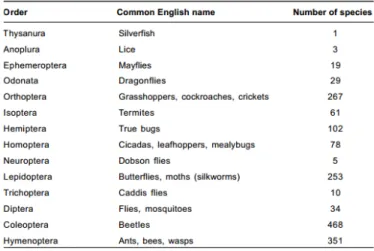
2014). Furthermore, possibly, there are hundreds or maybe thousands more that have not been sampled or discovered yet (Kelemu 2015). Table 1 ordinates the most commonly eaten insects based on taxonomic orders, common English names and number of species.
Table 1 – Number of edible insect species reported in the world. Source: Ramos-Elorduy (2005)
2.1.2 Regions of the world
Edible insects are generally consumed in developing countries in subtropical and tropical regions. A study conducted in Mexico identified Africa, Asia, Central and South America as the areas with the highest records of places where insect species are eaten (Table 2) (Ramos-Elorduy 2006).
Table 2 - Number of edible insects recorded per continent and number of consuming countries. Source: Ramos-Elorduy (2006)
The importance of entomophagy within the context of food security and indigenous’ technical knowledge has been recently explored in Africa. The results indicate the contribution in which insects make to the diet of rural Africans. It was also concluded that insects have a considerable potential for alleviating nutritional inadequacies in poor rural communities and can be used, in some instances, as a vehicle for economic empowerment (Illgner and Nel 2000).
Research indicates that termites (winged sexuals) and caterpillars are the most extensively eaten and marketed insects in Africa, and countless other insects are also important from the food perspective, economically, ecologically, and/or nutritionally. (DeFoliart 1999).
In South Africa, data on entomophagy has been collected from different areas. Data for one village in KwaZulu-Natal Province and two in Limpopo Province revealed that 68% of 150 households consumed edible insects (Shackleton, Shackleton et al. 2002). In Mametjam 93% of 110 households consumed 19 insect species including flying ants, termites and grasshoppers (Twine, Moshe et al. 2003). Research has also stated that in Bushbuckridge entomophagy was predominant in 72% of 300 households (Dzerefos and Witkowski 2014).
It has been suggested that in southern Africa one of the generally desired edible insects is the Encosternum delegorguei Spinola (EdS), a species of stinkbug. In southeastern Zimbabwe, this species is eaten by the Karanga population as a delicacy (Gardiner and Gardiner 2003) as well as by two ethnic groups in South Africa, the Vhavenda and the Mapulana (Shackleton, Shackleton et al. 2002) which are geographically apart from each other. In Vhavenda, stinkbugs have been recognized as a high-value food product that generates considerable revenues (Dzerefos, Witkowski et al. 2009).
During the winter dry season in southern Africa, stinkbugs are collected from trees in plantations and woodlands when the insects group together into football-sized clusters (Shackleton, Dzerefos et al. 1998). This is very handy for collectors since at this period of the year wild edible plants and homegrown produce are limited (Harris and
Mohammed 2003). The growing availability of stinkbugs for sale has raised a worry of whether or not harvesting could actually be sustainable in South Africa (Shackleton, Dzerefos et al. 1998)
Around 250 edible species have been reported in rural regions of the sub-Saharan Africa, and can be easily accessed in case plant crops fail to prosper and certain zones become drought-stricken (Harris and Mohammed 2003).
Research conducted in 3 different ethnic groups of Papua and New Guinea determined that insects were eaten in both places as source of food. It has also concluded that (a) entomophagy has advanced in Papua and New Guinea autonomously from African and Australian influences; (b) the number of species consumed is related to the population density; and (c) the threats of malnutrition could be lightened by a wider use of insects food (Meyerroc.Vb 1973).
It has been documented that Cameroonians that live near forested areas typically collect wild plants and insects (Pimentel, McNair et al. 1997). Research suggests that many wild/traditional foods are physically available in Cameroonian cities most of the time, including fruits, vegetables, spices, and insects (Sneyd 2013).
The population in Congo appears to consent the idea of consuming of insects. In Congo, more than 65 species of insects in at least 222 families have been stated as food. Moreover, it is estimated that insects provide 10% of the animal protein produced annually in Congo, in comparison with 47% for fishing, 30% for game, 10% for grazing animals, 2% for poultry and only 1% for fish culture (Illgner and Nel 2000).
Research conducted in Zimbabwe determined that insects are the most inexpensive source of animal protein for the humble rural communities. Furthermore, it states that insect consumption avoided many probable cases of kwashiorkor (a form of severe protein-energy malnutrition), and that their use as food should be stimulated (DeFoliart 1999).
In Zambia it has been established that caterpillars are accessible everywhere during the wet season (Meyer-Rochow 1973). Caterpillars are the single most significant source of nutrients during “hunger months,” which are from November to February (Obopile and Seeletso 2013). Equally, on the Lala tribe caterpillars are a large part of the diet for three
or four months of the year (40% of the relishes from November to January) (Nachay 2013). Moreover, they can be sold for a good price to traders from the Copper Belt or exchanged for salt, grain, beads, tobacco, clothes or soap (Meyerrochow 1975).
Research states that Nigerians have had a direct or an indirect experience with entomophagy, although it is more prevalent in rural than in urbanized areas (Banjo, Lawal et al. 2006). As elsewhere in Africa, the more educated people are, the more reluctant to admit that indigenous customs, including the eating of insects, still exist (Illgner and Nel 2000).
In different parts of Asia, the high consumption of grasshoppers/locusts has matched with decreased pesticide use in India, Nepal and the Philippines (Raksakantong, Meeso et al. 2010). In Manipur, northeastern India, people from various ethnic origins collect and eat numerous insect species situated in rivers, lakes, ponds and puddles. It is a usual habit in the area (Shantibala, Lokeshwari et al. 2014).
In India (Chakravorty, Ghosh et al. 2011) and Mexico (Melo, Chavez et al. 2004), Pentatomidae and EdS stinkbugs are gathered and consumed cooked or raw. Research on the stinkbugs Atizies taxcoensis A, Euchistus sufultus S and EdS reveal good nutritional value which is crucial for some undernourished citizens of the area (Melo, Chavez et al. 2004).
In Manipur, because of its high availability and flavor, aquatic insects, among edible insects, are one of the most favorite within consumers. There is an abundance of aquatic insects in various inland water bodies during the rainy season. In the valley region of the state, there are various inland freshwater lakes that perform as a source of aquatic edible insects (Shantibala, Lokeshwari et al. 2014)
Thailand is probably the leading country in consuming and producing insects as animal feed (YhoungAree, Puwastien et al. 1997). Some insects such as bamboo caterpillars, crickets, wasps, and locusts are sold as delicacies in the best food shops and restaurants (Yang, Siriamornpun et al. 2006). These edible insects are wild harvested, semi-cultivated or farmed (Halloran, Vantomme et al. 2015). The Thai government has played a part in encouraging insect consumption, particularly during locust plagues, and, as a consequence, fried locusts and locust fritters appear extensively in city markets
(Meyerrochow 1975). In urban areas, insects are well accepted and bought as food by people from various economic levels (DeFoliart 1999).
The most commonly eaten insects in Japan have been the rice-field grasshoppers (mainly Oxya yezoensis), also eaten fried and slightly seasoned with soy sauce, version popularly known as Inago (Payne and Nonaka 2014). After a large reduction, populations of these grasshoppers have finally enlarged recently as the consequence of the reduced pesticide use (Yoshida, Suzuki et al. 2013). Inago, an insect based food, is now re-emerging in supermarkets, dinner tables and restaurants, even though it is still sold as a luxury item (Mitsuhashi, Mizuno et al. 2013). Insect based foods such as inago, zazamushi, and hachinoko, are found on menus in restaurants all around Tokyo (Raksakantong, Meeso et al. 2010).
Similarly, in South Korea it has been documented that the reduced use of pesticides was followed by an increase in sales of the rice-field grasshopper (Oxya velox, known as Metdugi) (Moon, Kim et al. 2009). Pupae canned silkworms (Bombyx mori) are also popular, as they are elsewhere in East Asia, and are found in most markets in Seoul. They are also exported for many other international countries (Kang, Kim et al. 2012).
In Central and South America, entomophagy is a very common practice (Dar 2014, de Boer, Schosler et al. 2014). For instance, in Mexico, it has been proposed that the “industrialization” of insects (the establishment of small industries in the countryside for the mass-culture of insects as food) works for the benefit of rural economies and for the nutritional stability in the country as a whole (Ramos-Elorduy 2008). Research has also concluded that in Brazil, insects play an important role for the diet of the indigenous populations (costa-Neto 2010). In Colombia, the Colombian leafcutter ants (Atta spp.) are a considered a national delicacy, corresponding in price and gastronomic importance to the Russian caviar or the French truffles. This type of ant is consumed across country in many different regions (Ramos-Elorduy 2006).
Clearly, there has been a lot of research focusing on mapping the consumption of insects in distinct parts of the world. Still, very little research has focused its attention on the reasons why entomophagy has declined in some specific areas of developing countries. Suggestions imply that the answer to that is in the westernization of many
cultures in developing countries (Lensvelt and Steenbekkers 2014, Megido, Sablon et al. 2014, Nadeau, Nadeau et al. 2015) Still, more research is needed on why this practice has decreased throughout the years and what are the factors contributing to this decrease in order to understand why entomophagy remain a traditional custom is some habitual areas and is becoming obsolete in others (DeFoliart 1999).
2.1.3 Benefits
2.1.3.1 Nutritional and medicinal value
Research has pointed that edible insects, as a nutrient-rich food source, can contribute to a balanced diet and have the potential to promote human health (Gorham 1979, Raubenheimer, Rothman et al. 2014), while improving food and income security, (Belluco, Losasso et al. 2013, Yates-Doerr 2015) especially among economically disadvantaged populations (Christensen, Orech et al. 2006, Chakravorty, Ghosh et al. 2011, Gahukar 2012).
Being highly nutritious (Belluco, Losasso et al. 2013, Neuerburg 2014, Ryan 2014, Nadeau, Nadeau et al. 2015), insects are rich in protein, particularly in the dried form (40–75 g/100g dry weight), commonly stored or sold in village markets of developing countries (Defoliart 1995). Insects can offer to a diet a high quality protein, which has a high concentration of essential amino acids (46–96% of the nutritional profile) and a high digestibility (77–98%) (Verkerk, Tramper et al. 2007).
They have been pointed as a viable source of good fats and provide lipids of easily digestible fatty acid composition (Bednarova, Borkovcova et al. 2014). Insects are also a great source of fiber, accounting for about 10% of the whole dried insect (Rumpold, Katz et al. 2014), due to its high chitin content (a fibrous substance comprising of polysaccharides, which is the main component in the exoskeleton of arthropods)
(Merzendorfer 2011).
Research has shown that insects also have reasonable amounts of carbohydrates (Komprda, Zornikova et al. 2013) and provide a valuable and balanced admixture of minerals such as Calcium and trace elements such as Iron and Zinc to a diet (Christensen, Orech et al. 2006, Verkerk, Tramper et al. 2007). They are also known for
containing various vitamins such as B12 (Melo-Ruiz, Sanchez-Herrera et al. 2013) and a high energy contributing to a high caloric diet particularly needed in famine-stricken areas of the world (Rumpold and Schluter 2013, Shantibala, Lokeshwari et al. 2014).
It is frequently suggested that insects can meet a function equivalent to the more conventional vertebrate-derived meats (Premalatha, Abbasi et al. 2011, Nadeau, Nadeau et al. 2015) and compositional analyses of insects appear to support this (Johnson 2010, Melo-Ruiz, Sanchez-Herrera et al. 2013, Rumpold and Schluter 2013). Many insect species comprise as much (or more) protein than fish or meat (Melo-Ruiz, Sanchez-Herrera et al. 2013, Verbeke 2015). Table 3 provides the nutritional value of some edible insects traditionally eaten in Mexico compared to meat. When compared to meat, grasshoppers have a superior protein, mineral and carbohydrate content (Ramos-Elorduy 2005).
Table 3 - Nutritional value of edible insects species (g/100g dry weight). Source: Ramos-Elorduy (2005)
The nutritional potential of short-horned grasshoppers, insects commonly used as food for tribes in Arunachal Pradesh in India, has been recently analyzed. Comparisons between their meat and conventional meat type have shown that the mineral content on them was generally higher than conventional meat types. (Chakravorty, Ghosh et al. 2014). Their protein content is constituted of 18 amino acids, including all of the essential ones, except for methionine. It has been suggested that these insects could be recommended as a replacement of vertebrate animal food items when needed (Rumpold and Schluter 2013, Nadeau, Nadeau et al. 2015)
More research have also related comparisons between conventional vertebrate-derived meats and insects in fatty acid and amino acid profiles, vitamin and mineral composition,
as well as energy and protein levels (Raubenheimer and Rothman 2013, Wehi, Raubenheimer et al. 2013, Raubenheimer, Rothman et al. 2014, Rothman, Raubenheimer et al. 2014).
The nutritive content of potentially edible aquatic insects has been evaluated lately to notify consumers in India concerning its nutritional qualities and recommended intake quantities. A high gross energy and a good amount of protein content were reported among these insects. High levels of calcium, magnesium and sodium were found present in these insects, proposing that they are a suitable source of minerals. Anti-nutritional properties were under 0.52%, indicating a non-toxic level. In terms of antioxidant activity, aquatic insects, such as C. tripunctatus, presents a strong antioxidant activity of 110 µg/mL. It has been suggested that these insects may have a positive impact in environment management health and food security (Shantibala, Lokeshwari et al. 2014).
Besides their highly nutritional value, insects have also been suggested to be “healthy foods” (Nachay 2013, Chakravorty, Ghosh et al. 2014). Insects collected from forest spaces are normally free from chemicals and clean, and are considered to be an “organic food”. Some species are also believed to also have valuable medicinal properties (Srivastava, Babu et al. 2009).
The term Entomotherapy is defined as the application of insects for medicinal purposes (Chakravorty, Ghosh et al. 2011). Insects and the substances extracted from them have been used as medicinal means by many cultures (Meyer-Rochow and Chakravorty 2013). Medicinal and Edible Insects of Manipur (MEIMAN) is a unique database on medicinal and edible insects recently developed, which comprises 51 insect species. It has been developed through a collection only in that region, over a period of 2 years (Shantibala, Lokeshwari et al. 2012). This database has the purpose not only to help people who seek for an alternative type of aid, but also to hope that other insects from other parts of the world will be added in the future.
2.1.3.2 Insect farming
Research points out that in many places insects are plentiful and widely available (Popp, Lotze-Campen et al. 2011, Ryan 2014), and can be easily cultivated (van der Spiegel, Noordam et al. 2013, van Huis 2013), demanding minimal space, needing far less breeding space than larger animals (Vogel 2010) and producing far less pollution (Dar 2014). Furthermore, the whole insect can be used or processed into food, contrarily to larger domestic food animals, whose offal, bones and blood are almost never used as food (Melo-Ruiz, Sanchez-Herrera et al. 2013).
Since meat production contributes to between 14 to 22% of all greenhouse gases sent into the atmosphere every year (Scholtz, Schonfeldt et al. 2014), it has been suggested that insects can offer specific benefits over conventional livestock for those who want to reduce their environmental footprint such as diminished greenhouse gas and ammonia emission (Looy, Dunkel et al. 2014, Ryan 2014).
Additionally, research shows that insects are known for their capacity to survive under a diversity of ecological circumstances (Garrouste 2009). They have short life cycles and can be grown very quickly from an egg to a standard selling size in around 45 days (Gahukar 2012).
It has also been shown that, unlike mammals, insects have a high reproductive ability (Henry, Gasco et al. 2015). Some species, such as house crickets, can lay around 1,200 to 1,500 eggs in a period between 3 to 4 weeks (Illgner and Nel 2000).
Research indicates that insects feed on a far broader variety of plants than conventional livestock (Rumpold and Schluter 2013). It has been suggested that they can also efficiently incorporate waste and side streams into the production systems since numerous insects, such as beetles, grasshoppers, crickets and flies are able to eat agricultural waste or plants that humans and traditional livestock are not able to (Klunder, Wolkers-Rooijackers et al. 2012). By converting biomass that humans are not able to consume into edible insect mass, it has been suggested that insects do not compete with the human food supply, as do vertebrate livestock such as chickens and cows, which are mainly fed with corn and grain (Li, Kwon et al. 2014).
Research on ‘minilivestock’ operations indicates that feed conversion ratios for edible insects are significantly more efficient than for swine (Hardouin 1997), poultry (Paoletti and Bukkens 1997) and beef (Branckaert 1995, Defoliart 1995, Pellett 1997). For instance, cows typically eat 8 g of feed to gain 1g in weight, while insects may demand less than 2 g of feed for the equivalent weight gain (Pellett 1997).
This is partly because of the fact that insects are “cold-blooded” or poikilothermic (use less energy to sustain body temperature) (May 2005). Furthermore, that insects are exothermic (they acquire their heat from the surrounding environment), whereas birds and mammals are endothermic having to heat themselves up, requiring lots of energy and, therefore, a bigger impact on the environment and natural resources (Dar 2014).
Research suggests that, comparatively speaking; the fact that insects can live on a fifth of the amount of food needed of familiar livestock is a key benefit when taking in consideration the impact of our footprint on the environment (Halloran, Vantomme et al. 2015).
This efficiency lowers the quantity of animal feed required to produce the same amount of “meat,” by lessening the need for area of land for producing food for livestock; and the usage of pesticides (that can be high-priced, damaging to the environment and pose a hazard to human health) and the quantity of water used for irrigation;(Premalatha, Abbasi et al. 2011).
Research shows that insects consume much less water than vertebrate livestock by gaining hydration straight from food (Boardman, Sorensen et al. 2013). Crickets, for instance, only demand a tiny quantity of food and water to mature. For example, it is necessary to have around 1 gallon of water to grow 1 pound of crickets and 200 gallons of water to grow simply one cow (Ivy, Johnson et al. 1999).
Because insects are so dissimilar to humans, they have less risk of producing pathogens threatening to human health when compared to livestock production (van Huis 2013, Looy, Dunkel et al. 2014) Furthermore; in general, they also cost little to source when compared to other animals (Illgner and Nel 2000, Dzerefos and Witkowski 2014)
In this sense, aside from their nutritional and environmental benefits, experts also see an extensive prospect for edible insects to offer income and jobs for rural people who
capture, rear, process, transport, and market insects as food (Belluco, Losasso et al. 2013, Henry, Gasco et al. 2015, Kelemu 2015).
2.1.3.3 Insects as feed
Although the European Union (EU) is self-sufficient in animal protein for human consumption, its dependency on the import of plant-based protein for use in animal feed is estimated around 70 percent (Makkar, Tran et al. 2014). Feed costs account for 50–70 percent of the total cost in animal production, and therefore, price changes of animal feed ingredients have a major impact on livestock farming profitability (FEFAC 2012). These economic issues (dependencies) highlight the strategic importance of building alternative protein strategies using novel protein sources in animal feed sector (van Huis 2013).
There is an emerging interest in exploring the use of insect as feed. The environmental benefits of producing and using insects as animal feed are undeniable (Premalatha, Abbasi et al. 2011), and considerable advantages have been accredited to the consumption of insects in animal diets (Verbeke, Spranghers et al. 2015). While the total environmental effect of insect rearing is still debated (Makkar, Tran et al. 2014), e.g. depending on rearing systems in consideration, the value of substrates used and of the final products (Ryan 2014), there is a agreement that insects may be raised on organic waste or low valuable by-products from agriculture and the food industry (Klunder, Wolkers-Rooijackers et al. 2012), generating valuable protein with a nutritive value equivalent to the commonly used alternative soybean meal (Henry, Gasco et al. 2015).
As previously mentioned, insects are a good source of fatty acids, amino acids and micronutrients (Rumpold and Schluter 2013). The leftover from insect rearing may be applied as an organic fertilizer, with a result of a closed circle principle (Oonincx, van Itterbeeck et al. 2010). When comparing to livestock for human consumption, insects can more efficiently convert feed into biomass; they can be reared on smaller spaces with a consequent higher yield per hectare than usual (e.g. soybeans), and produce an emission of greenhouse gasses and ammonia per kg meat that is much lower than for cattle or pigs (Oonincx, van Itterbeeck et al. 2010).
Insect meals in industrial quantities are now being produced by some companies such as AgriProtein and EnviroFlight (Rumpold and Schluter 2013).Some insect species are currently being used in developing countries, as feed for certain fish species, pigs, poultry and pets, such as the housefly (Musca domestica), the black soldier fly (Hermetia illucens), crickets and grasshoppers (e.g., the house cricket Acheta domesticus), and mealworms (e.g., Tenebrio molitor) (van der Spiegel, Noordam et al. 2013).
There have been a few projects launched and sponsored in order to aid this growing sector. For instance, Insect Feed for Poultry and Fish (INSFEED), is an recently funded International Development Research Centre project, which offers support to improve income-generation, food and nutritional security in Uganda and Kenya by creating insect-based feeds for safe, cost-effective and sustainable fish and poultry production (Kelemu 2015).
On-going research on insect as animal feed is concentrating on issues such as diet formulation, type of feed substrate to grow the insects, nutritional values of the insects produced, performance of animals that are fed with the insects and protein quality (van der Spiegel, Noordam et al. 2013).
For instance, protein quality of insects as feed for cats and dogs has been recently compared to other feed sources such as poultry fishmeal, soybean meal and meat meal. Insects such as housefly pupae, black soldier fly, house crickets and cockroaches were recognized to be very high in protein and an adequate option as feed for dogs and cats (Bosch, Zhang et al. 2014).
Additionally to the quality of the protein, it has been recognized that other topics such as feasibility of mass-production, efficiency of conversion of organic side streams, product safety, and pet owner perception are essential for future dog and cat food application of insects as alternative protein source (Bosch, Zhang et al. 2014).
2.1.3.4 Aquaculture sector
The aquaculture sector, in particular, is viewed as a segment with a significant prospective for using insects as feed (Makkar, Tran et al. 2014, Mlcek, Rop et al. 2014, Henry, Gasco et al. 2015, Verbeke, Spranghers et al. 2015), and this sector has been raising discussions around the most appropriate insect species in feed formulas (van Huis 2013).
The reduction in the availability and the consequent rise in the prices of fish oil and fishmeal have urged the pursuit for sustainable alternatives for aquaculture feeds (Henry, Gasco et al. 2015). Insects, which are naturally a part of the diet of fishes, are a viable solution since they have a limited need for arable land and leave a small ecological footprint (Makkar, Tran et al. 2014).
In terms of expenses for production, aquaculture feeds is 40–70% of the total expense of the fish produced (Bendiksen, Johnsen et al. 2011, Buentello, Jirsa et al. 2015) and is particularly high in the aquaculture of carnivorous fish that demand large quantities of fishmeal (Manzano-Agugliaro, Sanchez-Muros et al. 2012). To substitute fish oil and fishmeal, soy and other terrestrial plants rich in lipids and proteins have been used as an alternative in the diet of aquaculture fish (Gatlin, Barrows et al. 2007, Tacon and Metian 2008, Bowzer and Trushenski 2015). Yet, the decline in palatability of the meal (Rodriguez-Miranda, Ramirez-Wong et al. 2014), the occurrence of anti-nutritional factors in plant meals (Berntssen, Julshamn et al. 2010, Berntssen, Ornsrud et al. 2015) and the possible complications of the inflammation of the digestive tract (Tacon and Metian 2008, Soares, Coutinho et al. 2011) are of significant worry.
Furthermore, since the fast growing human population has put pressure on the use of arable land (Doos 2002), and the ecological footprint of these protein-rich plants, in terms of the quantity of energy and water necessary for their production, this may alter the sustainability of such alternatives to fishmeal and fish oil (Henry, Gasco et al. 2015).
As insects are constituents of the natural diet of both marine and freshwater fish (Ganga, Tibbetts et al. 2015, McMahon, Thorrold et al. 2015) and since they are rich in lipids, amino acids, minerals and vitamins (van Huis 2013) and leave a small ecological
footprint (low need for water and energy, no need for arable land) (Oonincx and de Boer 2012), they have been appointed as prospective alternatives to Fish oil and Fishmeal (Kaliba, Engle et al. 2010, Shepherd and Jackson 2013).
Moreover, insect larvae can quickly transform low quality organic waste into good quality fertilizer, decreasing the final mass of manure by 50%, of phosphorus waste by 61–70% and of nitrogen waste by 30–50% (van Huis 2013). Insects also decrease the load of pathogenic bacteria in the micro flora of manure (Liu, Tomberlin et al. 2008). Additionally, the end product of this very effective bioconversion of manure is an enormous quantity of insect larvae or pre-pupae rich in lipids (30%) and proteins (40%) (Park, Kim et al. 2015).
Various insects such as Odonata, Hymenoptera, Diptera, Trichoptera, Coleoptera, Lepidoptera and Hemiptera also demonstrate antibacterial peptides and/or antifungal activity (Boulanger, Bulet et al. 2006), and that can extend the shelf life of insect-containing feeds (Zhao, Lu et al. 2010).
Clearly insects as animal feed are a viable solution. There is a hope that the appreciation and dependence on insects as valued food and feed sources will improve environmental awareness and help to adopt positive conservation attitudes (Belluco, Losasso et al. 2013).
2.1.3.5 Agro space
Nearly 70–75% of all animal species existing on earth are insects and, together, they play a significant role in recycling materials in the terrestrial biosphere (Katayama, Ishikawa et al. 2008). Insects have been considered a key element to space agriculture (Tong, Yu et al. 2011).
In a space-based agro-ecosystem insects can process waste, recycle materials, pollinate plants, and serve as food and feed. They can perform a number of functions without conflicting with plant production. The design of agro-eco systems could also offer insight into improving the management of Earth’s biosphere and long-term sustainability. Space agriculture can be enhanced by integrating insects as constituents and is a
favorable approach to meet human nutritional needs in space. (Katayama, Ishikawa et al. 2008).
Research has recently investigated the prospect of using insect food for feeding astronauts in space. When space exploration period surpasses two years, bio regenerative life support system (BLSS) is viewed as a viable possibility to assure a sustainable habitat for astronauts. During the experiment, the insects were fed with stem lettuce leaves and mulberry during the first three instars and the last two instars, in that order. The conclusion was that feeding silkworms with plants biomass inedible to humans is a hopeful method to the production of high-quality animal protein and processing of waste in the BLSS, as well as for people living in extreme and/ or agro-ecologically impoverished environments (Tong, Yu et al. 2011).
2.1.4 Food Safety, Legislation and Policy
It is acknowledged that western legislation is very conservative about new ingredients or foods (Belluco, Losasso et al. 2013). The rising interest in the use of insects for food and feed has directed to a strong concern from researchers, companies and organizations to evaluate the legal context that regulates production, processing, sales and consumption of insects (van der Spiegel, Noordam et al. 2013).
In the vast majority of countries in the world, standards for the trade and protection of insects and insect products in food and feed do not exist (Belluco, Losasso et al. 2013). The development of regulation is urgently needed to provide the industry with clear rules. In order to permit consumers to make knowledgeable decisions, certification schemes can play a role together with labeling to safeguard consumers’ safety (van Huis 2013).
Although entomophagy is a usual custom in many areas of the world, there are only a few cases of national regulations that govern insects for human consumption. In countries where insects collaborate to local diets, nature conservation is frequently a matter of great importance. Where entomophagy is not usual, the existing regulatory discourse concentrates mainly on consumer protection and food safety (Halloran, Vantomme et al. 2015).
In Europe, the sale of edible insects is currently subject to regulation. The Commission now requires parts or extracts of insects sold as food, such as crickets' wings, to be certified for safety and approved as novel foods. Still, the sale of whole edible insects, such as an entire cricket (wings intact) is governed by national regulations (Yates-Doerr 2015).
Belgium became the first EU country to officially approve the sale of 10 species of insect at the end of 2013, and one of the main supermarkets in Netherlands began stocking insect products towards the end of 2014 as the Netherlands liberalized its laws. Other countries, such as Luxembourg, have been unwilling to loosen laws on edible insects and require all insect products to undergo extensive testing and attain EU authorization before being sold (Halloran, Vantomme et al. 2015).
Only lately insects have been added to the sustainable food discourse. Nevertheless they have been mostly ignored from regulatory frameworks and have not yet been included to policy documents. Additionally, even in countries where there is a common practice of eating a diversity of insect species, they do not display clearly in dietary guidelines (Yates-Doerr 2015).
Research shows that food safety is a common worry but it can underestimate the significance of traditional food culture, nature conservation, potential economic development and food security. Consequently, entomophagy should be perceived holistically and elaboration of prospect legislation must take into account its multidimensional picture. (Halloran, Vantomme et al. 2015)
Van der Spiegel et al. (2013) states that some of the major obstacles to the advance of an edible insect sector are the use and trade of insects as both animal feed and food and the absence of a comprehensive legislation that governs the production (van der Spiegel, Noordam et al. 2013).
As an answer to the rising amount of enterprises commercially exploiting the growing demand for insects as food, Thailand has been trying to regulate insects as food. Yet, supplementary stock of insect species is received from other countries (such as Lao PDR) since the demand for certain insect species is so vast that national production cannot be met (Yates-Doerr 2015) .
This could impose nature conservation laws less strictly. For instance, Thailand and Kenya can illustrate that fulfilling the interests of various investors may be a challenging task. In Western countries, several local and national governments have governed the gathering of wild foods (e.g. mushrooms) and the equivalent can be accepted for insects. As is the case of Thailand, regulation of wild harvesting as well as semi-domestication of farmed insects has been stimulated in order to inspire sustainable diets and food security (Halloran, Vantomme et al. 2015).
In terms of formalization of local economy, there is a shortage of legal framework governing insects as food in Kenya and Thailand. Conversely, this is not a main obstacle to the development of the insect food sector. In those countries where entomophagy is a common practice, insects as food have always been a part of the informal economy. Contrarily, in western cultures, where entomophagy has not been a constituent of food culture, their corresponding governments did not have the precaution to anticipate the future necessity to integrate insects into legislation. For this reason, there is frequently little control of this resource (Mlcek, Rop et al. 2014).
On one hand, local informal economy can be threatened by formalization through regulation. On the other hand, it offers income and employment, particularly in places where unemployment levels are very high. Informality gives economic opportunities to the underprivileged, where the majority will certainly not be able to incorporate the expenses of formalization and also because it gives others a low cost scenario for trialing that can direct to business development (Belluco, Losasso et al. 2013).
Research suggests that Microbiological safety, toxicity, pathogens and insect diseases should also be acknowledged in this novel sector and a stronger link among natural science and policy making has to be established in order to certify safe processing methods and production (Rumpold and Schluter 2013). Entities such as the European Commission are currently investigating how to frame legislation (van Huis 2013).
Microbiological quality of food in particular has been a frequently discussed topic among researchers. Mainly because there are a variety of traditionally different methods to cook and eat insects but frequently they are eaten as whole, including their gut microflora (which can disturb the microbiological quality of food) (van der Spiegel, Noordam et al. 2013).
A recent exploratory evaluation of the microbiological material of processed, stored and fresh edible insects was carried out with emphasis on farmed house crickets (Acheta domesticus) and mealworm larvae (Tenebrio molitor). As observed, brief heating phase was enough to remove Enterobacteriaceae, yet a few sporeforming bacteria will outlive in cooked insects. Simple conservation methods, without use of a refrigerator, such as drying/acidifying were verified and reflected as favorable. Lactic fermentation of composite flour/water mixtures comprising 10, or 20% powdered roasted mealworm larvae resulted in effective acidification and was proven efficient in protecting safety and shelf life by the control of bacterial spores and Enterobacteria (Klunder, Wolkers-Rooijackers et al. 2012).
Proof of allergenic components in insects is available and seems to be similar to allergies of consuming crustaceans (van der Spiegel, Noordam et al. 2013). Research also suggests that attention should be also called for people allergic to house dust mites, mollusks or shellfish (Barre, Caze-Subra et al. 2014).
Besides allergies related to consuming insects, research also calls attention to a few incidents of allergies due to interaction with insects used as feed. For instance, Protein Contact Dermatitis, a condition triggered by a various insects as a consequence to sensitivity to insect proteins has been described among anglers and zookeepers (Wilkinson, Fregert et al. 1970, Camarasa and Serra-Baldrich 1993, Virgili, Ligrone et al. 2001, Usamentiaga, Rodriguez et al. 2005). The clinically described signs of this allergy are chronic eczema with episodic acute urticarial or vesiculous exacerbation appearing in minutes after contact with the allergen (Bregnbak, Friis et al. 2014).
Due to the absence of knowledge when it comes to consuming insects and the possible adverse health effects and standardization of rearing methods, Switzerland has engaged a protective attitude towards addressing insects as food and feed. Comparable to Switzerland, Kenyan legislation has also adopted a defensive attitude when it comes to addressing insects as food and feed. Contrarily, Canada handles food safety matters in terms of the sanitary standards of the places dealing with food products. Thus, insects are handled in the same way as the majority of other food products. A similar attitude happens in Thailand (Halloran, Vantomme et al. 2015).
In the Netherlands for example, numerous feed companies have committed to incorporate insects in their livestock feed and have everything arranged and ready to launch once the EU legislation permits to do so (Mlcek, Rop et al. 2014). Still, there is no prediction about the way stakeholders, citizen/consumers and farmers will react to the use of insects in animal feed (Verbeke, Spranghers et al. 2015).
These reactions will possibly define the potential success of the use insect-based feed for distinctive species and the marketplace approval of foods that comes from animals grown on insect-based feed. Although studies have revealed that the approval of insects and insect-based foods by consumers cannot be underestimated (Lensvelt and Steenbekkers 2014, Megido, Sablon et al. 2014, Verbeke 2015, Verbeke, Spranghers et al. 2015). At present, there is not enough knowledge regarding the intentions to embrace insect-based feed in livestock production and the subsequent livestock products (Verbeke, Spranghers et al. 2015). There is also not enough knowledge when it comes to the acceptance of insects as food and feed by prospect consumers and sellers.
2.1.5 New Trends
Although entomophagy is still a practice most common in some African, Asian, South and American countries, it is slowly spreading to some European countries and USA (Megido, Sablon et al. 2014). Still remaining very limited, mainly for psychological reasons, entomophagy is emerging with companies dedicated to mass production of edible insects and the opening of restaurants focusing on presenting menus containing insect based dishes (Barre, Caze-Subra et al. 2014).
In general, there are three most common ways in which insects are consumed. Firstly, insects can be eaten as whole, identifiable as such; secondly, whole insects are processed into paste or powder; thirdly, insects can be eaten as an extract (e.g. protein isolate) (Klunder, Wolkers-Rooijackers et al. 2012). In many developing countries, whole identifiable insects are frequently eaten as a fried snack or as portion a meal, for example, with rice. Boiled or live insects as well as ready-to-eat insect dishes are frequently sold at local markets (Melo-Ruiz, Sanchez-Herrera et al. 2013).