HOW CAN STORE ATMOSPHERE BE APPLIED IN
SONASOL BRAND?
Inês Ferreira Lourenço Pinto
Project submitted as partial requirement for the conferral of MSc. Marketing
Supervisor: Prof.a Doutora Hélia Gonçalves Pereira, ISCTE Business School,
Department of Marketing, Operations and Management
Spine
-HO W C AN S TO R E A TMOSP HE R E B E A P P LI ED IN S ON ASOL BR A ND ? In ês Fe rr ei ra L ou re n ço Pin to"Life is a journey to be experienced, not a problem to be solved."
ACKNOWLEGMENTS
The thing I value the most in life, is to have someone I can rely on.
At the end of the last 5 years at ISCTE, I am thankful to all of you who were part of this journey.
First of all, my family for allowing me to have this opportunity and pursue my ambitious dreams. Thank you for always being available to share my wins and to backup my falls. A huge thank you to my mom Guiomar Lourenço, to my step dad José Salgado, to my little sis Margarida Salgado and to my grandma Conceição Lourenço.
Second, my supervisor, Hélia Pereira, for not only helping me in the concretization of this thesis with gold advices, but also for being a role model concerning the marketing world during my academic years.
Third, my friends and boyfriend. I have no doubts about how lucky I am to be able to rely on you throughout my life! I am especially grateful to Filipa Evangelista, Edmundo Jardim, Inês Menezes, Joana Duarte, João Gomes, Mariana Costa, Marta Sousa, Mariana Rodrigues, Paulo Anes, Ricardo Tavares and Rita Alvito. From Ericeira, my all time friends that always did this walk with me since we were kids: Duarte Rolim, Filipe Sérgio, Inês Santos and Joana Revés, thank you! To my boyfriend, André Calado, for always being an example for me, for being always a synonymous of strength and dedication, a thousand thanks are not enough. To AEISCTE, NEG and to academic praxe of ISCTE, the organizations I had the pleasure to work and the friends I made, crucial to my growth.
I can not leave without thanking to Henkel Ibérica Portugal, this company was part of my great and tough ride to achieve this. Thank you very much for all the learnings!
RESUMO
O presente caso pedagógico tem como objetivo estudar a importância da nova tendência de atmosfera de lojas numa marca de grande consumo, Sonasol, em Portugal.
Atualmente as grandes marcas de grande consumo estão a viver uma realidade dramática no que diz respeito à competitividade de preço. Desde o dia 1 de Maio de 2014, onde uma das principais cadeias do país avançou com uma estratégia de 50%, que o mercado tem vindo a ficar cada vez mais agressivo.
Será o marketing convencional suficiente para reter e atrair consumidores? Tem, uma marca com 65 anos, capacidade para se diferenciar versus a concorrência?
Uma análise qualitativa e quantitativa permitiu concluir que a marca Sonasol não tem capacidade para instalar uma guerra de preços e que esta estratégia deve ser repensada. Num mercado onde já se encontram estudos sobre o marketing experiencial, e as suas principais vantagens, surge a oportunidade de fazer diferente – e melhor!
Tendo como objetivo a retenção dos consumidores mais antigos da marca e, também, o recrutamento de uma geração mais jovens e ativa na sociedade, foram desenvolvidas diferentes recomendações na área do marketing focadas na capacidade da marca em promover uma experiência distintiva.
A área do marketing experimental, e das atmosferas de loja, é uma área com pouca investigação cientifica, mas que já demostra bastantes vantagens quando implementada. Neste sentido, serve este estudo para demostrar como uma marca tradicional e com tendência envelhecida, poderá renascer no mercado e trazer uma nova era para o mercado de fast moving consumer goods.
Palavras -Chave: marketing, atmosfera de loja, grande consumo, detergentes JEL Classification System: M31 Marketing
ABSTRACT
The presented pedagogical case study aims to study the importance of the new store atmosphere trend in a fast moving consumer good brand, Sonasol, in Portugal.
Nowadays, in Portugal, fast moving consumer good’s brands are experiencing a dramatic reality regarding price competitiveness. Since May 1st 2014, when one of the major chains
of the country has advanced with a strategy of 50% price cut off, the market has been getting more aggressive.
Is conventional marketing enough to attract new and existing consumers? Has, a brand with 65 years, ability to grow and differentiate itself versus the competition?
A qualitative and quantitative analysis allowed to conclude that Sonasol has not the capacity to install a price war and that this strategy must be rethought. In a market where is possible to find some studies about marketing experiential and its main advantages, comes the opportunity to do different - and better!
Having as main objective the retention of the oldest consumers of the brand and also the recruitment of a younger generation more uncomplicated and more active in society, different proposals were developed in the area of marketing focused on the brand's ability to promote a distinctive experience.
The area of experimental marketing and store atmosphere is an area with a scarce scientific investigation, but already showing many advantages and successes when implemented. In this sense, this study serves to demonstrate how a traditional and aging brand can be reborn in the market and bring a new era to the fast moving consumer goods market.
Keywords: marketing, store atmosphere, fast moving consumer goods, detergents JEL Classification System: M31 Marketing
INDEX
ACKNOWLEGMENTS ... II RESUMO ... III ABSTRACT ... IV
1. CASE STUDY CONTEXT ... 1
1.1. Henkel group ... 3
1.1.1. The business ... 3
1.1.2. Laundry and home care ... 4
1.1.3. Home care ... 5 1.1.4. Sonasol brand ... 5 1.2. Marketing mix ... 6 1.2.1. Product ... 6 1.2.2. Price ... 8 1.2.3. Place ... 8 1.2.4. Promotion ... 9 1.3. Competition ... 11 1.3.1. Cif ... 11 1.3.2. Ajax ... 12 1.3.3. Domestos ... 13 1.3.4. Pato ... 14 2. QUESTIONS ... 17 3. APPENDIXES... 19 4. TEACHING NOTES ... 25
4.1. Case study target ... 25
4.2. Pedagogical objectives ... 25
4.3. Literature review ... 26
4.3.1. Market overview ... 26
4.3.2. What store atmosphere is? ... 27
4.3.2.1. The concept ... 27
4.3.2.2. Stimulus-organism-response model (s-o-r) ... 27
4.3.3. What influence store atmospheres and how important is it? ... 28
4.3.3.1. Vision ... 28
4.3.3.2. Hearing ... 29
4.3.3.3. Smell ... 29
4.3.3.4. Touch ... 30
4.3.4. The importance of a good planed store atmosphere ... 31
4.3.5.1. Storytelling ... 32
4.3.5.2. New ways of payment ... 33
4.3.5.3. Co-creation ... 34
4.3.5.4. Customer employee interaction ... 35
4.3.5.5. Hybrid stores ... 36
4.3.5.6. Retailtainment ... 37
4.3.5.7. Store mood zones ... 37
4.3.5.8. Interactive screens ... 38
4.3.5.9. Reverse channels ... 39
4.4. Action plan ... 41
4.5. Analitic framework presentation ... 42
4.6. Animation questions ... 42
4.7. Case study resolution proposal ... 43
4.8. Case study resolution slides ... 58
5. MANAGEMENT LESSONS ... 63
6. BIBLIOGRAPHY ... 67
INDEX OF FIGURES Fig. 1 Henkel Laundry & Home Care Brand Logos ... 4
Fig. 2 Promo and Standard Sales Evolution... 6
Fig. 3 Illustrative Sonasol Portfolio by Segment ... 6
Fig. 4 Point of Sale Material (POSM) ... 9
Fig. 5 Evolution of Butler's appareance since 2004 ... 9
Fig. 6 CIF's TVC and Facebook page ... 12
Fig. 7 Animated Germs used in Domestos Communication ... 14
Fig. 8 Duck character ... 15
Fig. 9 Influence of music and aroma ... 30
Fig. 10 Effect of product touch in products purchase and money spent ... 30
Fig. 11 Perceptual map in terms of price and quality ... 47
Fig. 12 Gold Triangle ... 49
Fig. 14 Illustrative Interactive Screen for Sonasol ... 55
Fig. 14 The "butler explains" application to implet in supermarkets ... 55
1. CASE STUDY CONTEXT
There are several things all human has to do to survive. Breath, eat, sleep. But then, when it comes to dirty? We really never think about it but cleanness can be one of the things that everyone does with more frequency. We shower and we want our clothes fresh and clean. We want our houses with a good fragrance and shiny. In a Nielsen online survey, about home care cleaning and laundry habits, 31% of the respondents say that they clean and do their laundry daily. (Nielsen, 2016)
People have less time; women are still the main target for these categories. When it comes to home cleanness, the society is being evolved but not yet to the equity of genders. In this way, women are the main target for laundry and home care products. These women are nowadays modern and busy. They have a work, a family and their hobbies to manage. Can they have time for dishes? Is the market evolving enough to this new generation? The market of laundry and home care valued 494,8 millions of euros in 2016 (Nielsen, PT+Lidl, 2016). This value is increasing in the last years, showing a higher tax of penetration during this time (Kantar, 2017). This solid growth is related with brands and their companies that continually innovate and give new products to consumers. The evolution of formulas and R&D technology also contributes to a stronger and healthy market (Henkel, 2017).
In this sense, and with this importance, this case study was focused in the study of new trends in stores for laundry and home care market in a world and in a market full of products and different brands. How can a brand be highlighted in a shelf full of chooses? The war is nowadays being lived inside promotions and these are nowadays the big trend and the mainly element inside the decision making process in consumers’ minds. Promotions! Oh, promotions… what is the future of this kind of activity? Will it last forever? If not, what is the new big thing that will come up?
According to recent studies, the price perception had always an impact in consumer’s preferences, but nowadays this behavior is much more creased in consumers that in fact do not buy products with higher prices than others competitors (Venu, 2009). So the pressure is being made not only by players in the market but also by consumers that nowadays are complete comfortable with the idea that frequently there will be price discounts (Bolton et al., 2010).
environmental friendly concept is growing faster that we ever imagine. Recent studies, confirm that environmental friendly products in detergents and laundry care does not only benefit the environment but also benefits consumers. The aggressiveness in the ingredients leave families with a high chemical exposure that can have risks associate (DE Hygienic, 2017). Also, in the supermarkets, stores are being able to start differentiate themselves from competitors not only by price. More and more is being seen a change in environments related with image restructure and senses activation (Chen et al., 2011)
In this sense, this case study is base in 3 major objectives: analyze what is happening in Portuguese home care market in terms of brands and their positioning, study what will be the next new trends for stores and how consumers will react to it and finally, define a better strategy for Sonasol brand to give a better experience to future consumers.
This case was developed based on data available by Henkel Ibérica Portugal, Lda as well as external analysis made to the market.
1.1. HENKEL GROUP
“Henkel operates worldwide with leading innovations, brands and technologies in three
different business units: Adhesive Technology, Beauty Care and Laundry & Home Care.”
(Henkel, 2017). Henkel, Lda is a worldwide company that celebrated 140 years old in 2016. It was created by Fritz Henkel in German, with more two partners.
The company was initially created when launching a new and innovative ingredient for detergents. Since them, 50,000 collaborators are now working at Henkel worldwide. Henkel, Lda is present in more than 75 countries, 120 nationalities.
Henkel is accelerating growth. In 2016, it generates +3.1% of organic sales versus the year before, representing +16.3% of adjusted return of sales (EBIT). Acquisitions are being the main growth pillar in order to satisfy consumers of different ages, genre, social status and taste. This development associated with a lot of investment in research is being another key of Henkel to sustain the worldwide leadership.
For 2020, Henkel defined 4 basic strategies that are being lived as the main pillars of the company. Being Henkel a Germany company, efficiency and effectiveness are always the most important values to be followed. Based on this, the 4 new pillars for the company are: drive growth, increase agility, accelerate digitalization and fund growth. Base on this 4 pillars, Henkel ambitions to successfully shape the future of the company.
1.1.1. The business
The group is divided in three different business according to the type of product which one sells.
Adhesives Technologies is the biggest business worldwide at Henkel. It valued 8.961 millions of euros in 2016, growing +10.6% versus 2015. This business is focus in different distributed channels, as automotive and transportation, construction, professionals, electronics and also mass market with products used at home, school and office.
Laundry and Home Care valued 5,795 millions of euros in 2016, being the second business of the group worldwide. The department grew +4.7% versus 2015; brands inside this business have tendentially more awareness than in adhesive market; it is a mass business, only focus on final consumers.
Finally, Beauty Care represented 3,838 millions of euros in 2016. It is a business divided into mass market and professional products (focus in salons and hairstyles). This market
represented a growth of sales of +2.1% versus 2015. The three businesses are managed differently; each business has their own director and teams. Just in Germany it is possible to find the board of directors for Henkel total company, in other countries there is not a general manager for all business, just individually.
In Portugal, Laundry and Home is the only business managed locally. Adhesives Technologies and Beauty care have Iberian directors per business unit.
1.1.2. Laundry and Home Care
Laundry and Home Care markets are already very solid but, still, there are many ways to evolve and innovate in the industry.
It is a market very targeted for woman and not so modernize as it could be. Digital is being developed in the last years but the experience of the consumer is not being the focus of the main companies.
Aware of this, Henkel is launching new products and categories in the last years. Acquisitions are being the main growth pillar in order to satisfy consumers of different ages, genre, social status and taste. This development associated with a lot of investment in research is being another key of Henkel to sustain the worldwide leadership (Henkel, 2017).
In Portugal, this market valued 326M€ in 2016 (with a variation of growth of +3.9% vs 2015). It is driven essentially by Unilever, Reckitt Benckiser, P&G, Colgate, SCJohnson and Henkel. Is it a very competitive market, where market share is being disputed every day (Nielsen Report, P07 2017). This market of fast moving consumer goods (FMCG) is very competitive. Promotions and extra visibility in stores are the main drivers for more sales and more reputation. Based on this, the experience of the consumers is being left out of the game. Henkel Iberian has, in Laundry and Home Care portfolio, 6 brands. Persil, X-tra, Vernel, Sonasol, Sonasol WC and Dum Dum.
Fig. 1 Henkel Laundry & Home Care Brand Logos
1.1.3. Home Care
Home Care is a market that values 117M€ in Portugal. This market is smaller than Laundry Care market, although these brands have higher awareness and reputation near consumers. Brands like Sonasol and Dum Dum have their history in Portugal and are year after year recognized as trusted Portuguese brands (“Marca de Confiança”).
In Home Care department, Henkel works with brands that take care of each part of the consumers’ house and have additional value for consumer’s life. Sonasol and Sonasol WC are being working as two different brands in terms of personality and communication although in a consumer view they are under the same. This segmentation is especially important when comparing market share and market position (Sonasol WC is a clear leader in WC market with 49.9% of segment share in YTD P07 2017 instead of Sonasol that is a second player with 17.7% of segment share in YTD P07 2017).
1.1.4. Sonasol Brand
With more than 65 years in the market, Sonasol is the benchmark for domestic cleaning. Over the years the brand has always been introducing new products that would revolutionize the world of household cleaning.
It all started in 1951, with Sonasol Activated Soap for cleaning clothes. Later it, this soap evolved to Sonasol all propose cleaner with the power of the ammonia and the iconic green bottle, that became the face of the mark. Today, Sonasol Amoniacal continues to be the number one product in the Portuguese market of all propose cleaners (Nielsen, 2017).
Always focused on the needs of the consumers, Sonasol has been enriching its offer through the introduction of innovative products such as Brilliant Range. This range has in its formula a polymer that fills and repairs cracks and wear, responsible for the lack of gloss on the surfaces. The quality and excellence of Sonasol has been recognized year after year by consumers and by the market. All over the years, the brand won several awards in different areas and categories, demonstrating the preference of experts and consumers, who recognized their cleaning products as the most innovative and efficient on the market. Sonasol continues to consolidate its position of reference in the domestic cleaning market, but year after year promotions is being felt in FMCG and this factor is transforming the market and making consumers choose their products just for the price.
This promotion felt inside stores causes a more careful and delicate marketing. Brands like Sonasol that have a high level of awareness may not necessarily be the market leader (so much that in fact, it is not). Given this, and because the brand do not have the ability to fight with promo discounts, Sonasol invests in other points of sales materials: extra visibility in stores, that consequently generate more sales of products, activities with gifts and contests can also be used to energize the brand.
1.2. MARKETING MIX 1.2.1. Product
Sonasol has under portfolio more than 50 references, there are several benefits, formats and fragrances for each type of product. First of all, the brand is divided into 5 different segments: traditional all purpose cleaners, new shinny generation, specialists, ammonia and rim block (WC).
Fig. 3 Illustrative Sonasol Portfolio by Segment
Source: Developed by the author, 2017 Source: Nielsen, P07 June 2017
57,1% 69,6% 60,9% 72,7% 61,3% 73,2% 64,1% 75,7% 42,9% 30,4% 39,1% 27,3% 38,7% 26,8% 35,9% 24,3% Total Market Henkel Total Market Henkel Total Market Henkel Total Market Henkel 2015 2016 YTD 2016 YTD 2017
Promo Sales Standard Sales
Traditional range is the base business inside Sonasol. It is a product very easy to use and very popular inside Portuguese housewives. It is available in 3 different formats (500ml, 750ml and 1200ml) and in different fragrances: lavender, chamomile, flowers and aloe vera. The concept is very simple: hot water with Sonasol and the floor will be clean and shiny. The same concept is applied to New Shinny Generation floor cleaners. This range has the same propose but with a higher value proposition, this is a premium range more focus in floor repair and shinny effect. New shinny generation is available in 1100ml and in 4 different fragrances: fresh vitality (lime), universal, euphoria (flowers) and one for wood.
Specialists, as the name indicates for itself, is a more specific range with only 2 variants: bleach and bathroom. This can be used directly in the surface desire or also with hot water. These two products are available in 650ml and 1300ml format. They are very powerful and more directed to consumers that appreciate deep cleaning.
Sprays are a range extension of New Shinny Generation that were created for a more modernize generation that want and desire everything more quick and simple. The concept of sprays is based on the small free time consumers have nowadays and how they can manage cleanness in an easy way. It is available in just one format with 4 different purposes: kitchen cleaner (anti degreaser), bath (with anti limestone components), windows (with water repellent substances) and hygiene (killing 99.9% of bacteria). Finally, in house cleaning segment, Sonasol Ammonia (Sonasol Amoniacal Verde, as it is recognized in Portugal) - this product is a reference icon in the Portuguese market. It is very strong in terms of substances and smell, ensures a perfect cleaning and disinfection in all surfaces. Since its launch is being consistently growing in terms of sales, being nowadays a segment more stable due to the several new, quicker and more pleasurable solutions that are in the market (e.g. sprays). Although this product is the face and the point of start of the brand, that requires attention and recognition.
Going to WC segment, rim blocks were introduced in the market in 2001. Since then, this segment inside Sonasol brand is being able to develop the brand and market and today Sonasol WC is a clear leader of rim blocks segment with 49.5% of segment share (only considering rim blocks products). This kind of product is more targeted for consumers with high economic stability, which valorize a long term cleaning in their toilet.
This market is divided in liquid and solid rim blocks where the main benefit is an active foam and fragrance with every flush. This range is available in pine (best seller), marine,
flower, lavender and lemon. All these fragrances are available in single packs (1 unit), double packs (2 units) and triple packs (3 units).
1.2.2. Price
There are several factors to be taking into account when defining the price polity. First, profitability: profitability has to be guarantee and this is the first rule to be applied when defined a price for a Henkel new product. After studying the estimated costs of manufacturing, transportation and packaging, Henkel applies the defined percentage of average margin. Later this calculation, the price is compared with competitors. In FMCG market, Henkel has to be aware of the strong competition and easy exchange by consumers for other substitute products during the search in shelf. Always aware of the quality of the product, in Sonasol price definition, the competition is studied and the price is defined according it. The third factor of price definition is new in Sonasol: after defining the standard shelf price; sales and marketing team have to take into consideration the promo menu to be applied during the year. Is the price adequate for the promo being felt in stores nowadays? If we do 50% price off, what margin will we have? How are we positioning comparing with the competition?
If some years ago, these calculations and analyses could not be done but, nowadays, they are fundamental.
Sonasol has a price aligned with the principal competitors. Prices in detergents area are very well consolidated and there is no space for big movements. – strategic of
competition.
Products within the brand are all in the same average price, between 1,99€ and 3,69€. Sonasol is perceived as a quality brand and this perception allows that faithful clients prefer Sonasol’s products even when it has a higher price than competition.
1.2.3. Place
Distribution is an essential pillar in FMCG products. Ensuring that the deliver to consumers is made in the correct amount, place, time and with a good quality is the key to a successful brand. Sonasol’s distribution is made via two different channels: direct (provider directly to big retailers and its centrals) and indirect distribution (wholesales and Cash&Carry). This workflow is very important and nothing should fail over all the process. Having the right contracts with principal clients and guarantee that small stores
in every single village have the correct portfolio is essential for the brand reputation. The strategy is to be everywhere where the main target consumers are, so teams have to be focus in also trade marketing strategic (presence in leaflets and point of sale materials adequate to the brand and to the space of the stores). Moreover, the relationship between internal sales team and business retailer’s partners are crucial, just with this connection n the brand can establish mutual profits for both supplier and distributor.
1.2.4. Promotion
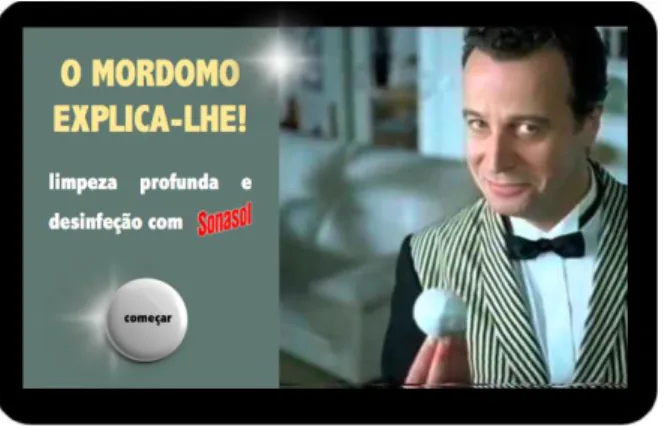
Communication is the base for a good brand awareness and quality recognition. Sonasol keep the recognizable claim “O algodão não engana!”(“the cotton does not lie”) in their communication. This claim was created in 1951 when the brand appears in the market. The main communication strategy used nowadays is above the line, where TV is evidently where there is more investment. The TV commercials communicates the quality and performance of the products and also the butler character, so recognized among Portuguese consumers. This butler is being developed in terms of appearance and benefits. Nowadays it is communicated as the “perfect date” for a woman and a cleaning genius. Additionally, it is being seen a sexiest change is this character. If in the beginning the persona was old and clever, nowadays is young and charming. This is happening also because of the new era lived in the world - target for Sonasol is no longer just housewives with a huge family but also young woman with an active life.
Fig. 5 Evolution of Butler's appareance since 2004
Source: Henkel 2017
Fig. 4 Point of Sale Material (POSM)
Today the main target for Sonasol is active women, since 25 years old – when women start in media living alone - till being disabled. Additionally, Sonasol communicate also in digital platforms, with banners and small videos, mainly in information websites (media capital, sapo, SIC, etc.) and in retailers’ websites (Continente online, Jumbo and Intermaché). This presence is really important in the digital transformation that is happening. Sonasol do not have presence yet in social media so this banners are an approach of currently full fill this gap. It is used normally when the brand has a new launch or re launch in their brand or in special moments of the year like Carnaval, Easter of Christmas time. Furthermore, the brand uses public relations to increase awareness and confidence with press. Usually are sent to notorious journalist, TV channel, magazines directors and publishers a paper with the brand presentation, product launch/relaunch and the principal benefit of it. A product sample is also sent to increase the affinity and the willingness to publish something about it. This communication normally causes word of moth and free articles in important media channels.
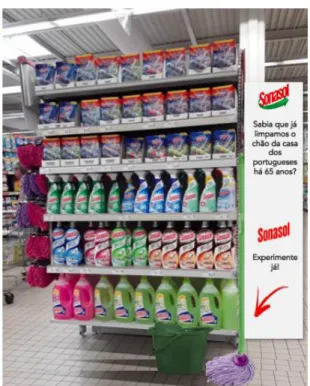
In below the line marketing strategy, Sonasol invests in sales promotion and trade marketing activities. As already mentioned, promotions are a tool very used nowadays inside fast moving consumer goods. In this way, there is a part of the communications focus in this promotions, usually with 25%, 35% or 50% price off. Associated with this discounts, there are several trade marketing activities occurring. For year, are usually implemented more than 20.000 displays in total Portugal stores that have a huge direct impact in sales.
The website just already exists for WC market. This tool and digital channel was not yet created for the whole brand of Sonasol because of international rules. However, this project is in back office and start being developed to a soon publish. So, for now, the only information online that exists is about Rim blocks products (Fig. 6 Sonasol WC Website) and in retailer’s online websites. The website of Sonasol WC contains the portfolio and benefits of the product as well as some frequently asked questions (FAQ) made by consumers. Fig. 6 Sonasol WC Website
1.3. COMPETITION
This case study would not be about FMCG products if there were not a strong competition. Inside mass market, the competition is part of the day to day brand living; it is essential to every move and decision. In home care business there are four main competitors to be taken into consideration daily (appendix 1 and appendix 2). This selection was made through the level of brands’ notoriety, the results that they are being able to achieve and the companies behind them.
1.3.1. Cif
Cif was created in 1969 in France by Unilever company as a multi purpose product for a daily cleaning. Initially introduced with the concept of “powerful cleaning without stretching” and just with products directed to kitchens and bathrooms purpose.
Cif was introduced in Portugal in 1979, having in the Portuguese market 38 years of experience. Even being a brand with lower awareness when comparing with Sonasol, Cif is being clever to develop the brand and win positioning in the market. Nowadays, Cif portfolio is huge and with multiple purposes. Unilever knowledge and investment are being the key success factor for this brand during these years.
Regarding the portfolio, the brand is divided in 4 different segments:
Pastes: with 6 references inside this range, Cif pastes offer a 100% perfect cleaning in 6 different fragrances. This range is one of the oldest of the brand, is the more traditional that requires more time and persistence. (Appendix 3) All purpose floor cleaners: available in 8 fragrances. This product allows a shiny
and clean floor. To use: hot water, the product and a mop or cloth. This range is available in 3 different fragrances, in wood purpose (2 references) and in bleach (2 references). (Appendix 4)
Sprays: sprays are the new growth platform for house cleaning so this range is being the focus of all market and consequently for Cif. There are available 12 different references for diverse purposes (ovens, kitchen, bathroom, anti-limestone, windows, stainless, bleach, etc.). This is an easy solution for cleaning and very attractive for younger consumers. (Appendix 5)
Dish detergent: this is a smaller segment inside the brand. Dish detergent is used for manual dishwashing and in Cif there are available 3 different references which defer only by its fragrance (lemon, lime green and grapefruit). (Appendix 6)
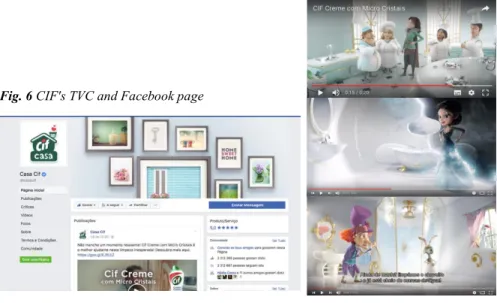
Cif is the leader of home care market with 21.9% of market share in YTD P07 2017 (Nielsen, 2017). It is the brand with higher media and digital investment (MEC, 2017). In 2017, Cif started with a new strong campaign in Portugal, focus in cartoons who explain the benefits of the products. This new campaign came up also with a new signature for the brand “always a beautiful ending”. This is a strategic applied not only in home care products; it is being built as well in WC and laundry brands of Unilever. Following the media investment, Cif created in 2014 a Facebook page where the brand interacts with consumers and also post new news or tutorial videos for a better cleaning. This Facebook page – Casa Cif – already have 2,213,365 likes internationally and some content in their feed.
1.3.2. Ajax
Ajax is a smaller brand than Cif and Sonasol but is still very relevant for the market. Ajax counts with 9.9% of market share in YTD P07 and bellows to Colgate Palmolive company (Nielsen, 2017). Colgate Palmolive company was born in 1806 in New York with a soaps and candles business. Ajax was introduced in Colgate portfolio in 1947. Since this date, Ajax has been able to develop itself and be on time in the market with good innovations and solutions for consumers.
Fig. 6 CIF's TVC and Facebook page
Ajax portfolio is mainly divided into 2 segments:
All purpose cleaners: in this range, Ajax has 5 references with different fragrances (lavender, ocean, mint, flowers and freshness) and one reference for wood. (Appendix 7)
Sprays: Ajax is the only brand that works with sprays and its refills. There are 10 different references inside this range but the product it is only available in 5 different purposes: kitchen, bathroom, windows, multi purposes and windows & shiny surfaces. The other 5 references are the correspondent refills. (Appendix 7)
Ajax does not have a high brand communication investment. There is no media communication in Portugal and in digital just some in retailers’ websites or together with other Colgate Palmolive brand activation. It seems that this brand is not strategically for Colgate Palmolive, however the brand has results just with some promo investment.
1.3.3. Domestos
Domestos is a recent brand of Unilever group. This brand was born in 2015 in Portugal inside three different segments: specialists for toilet cleaning, bleach and rim blocks (WC). Since the launch in 2015, the brand was able to achieve 6.3% of segment share (inside WC market) in YTD 2017 P07. (Appendix 2)
Domestos portfolio is very balanced (few references but strong ones) and, as mentioned above, divided in:
Specialists for toilet care: Domestos Toilet Gel is used for cleaning the bathroom. Offers a fresh fragrance, kills the germs, contains a powerful gel shield to eliminate the limestone preventing its appearance. It is available in two fragrances: ocean and lime (Appendix 8)
Bleach: Domestos Gel Bleaches contains active anti-scale molecules, which act even below the toilet water line, removing dirty and preventing lime scale’s appearance. This bleach is available in 3 different fragrances: pink (flower), original, ultra whiteness (more active to a shiny white). (Appendix 9)
Rim blocks: In rim blocks there are 3 ranges available; the promise and purpose of the usage is identical around the 3. 3en1 range: basic rim blocks available in 3 fragrances: ocean, lime and pine. The formula has anti germs and anti calcareous
with a fresh fragrance. Turbo fresh range: available in 2 fragrances: ocean and lime. With a rotary system, the product promises no germs and no calcareous as well. Power 5: this range is what the brand considers as its pillar of growth where there is being seen a huge focus and investment. This product appears as a copy of Sonasol WC range in all Europe and it is available in ocean, pine, pink and lime. (Appendix 10)
Even with a short history in the market, Domestos has been showing a lot of investment and desire to win. There is a focus on the improving of its image near consumers and also a desirability to increasing the awareness and market penetration of the brand.
To achieve the vision, the brand is investing heavily in media (every month with television commercials) and in point of sales communication. Their tone of voice is fun and explanatory. The brand uses animated germs as the key element in their media communication to explain the concept and key benefits of their products.
Domestos is present in digital channels with a website and Facebook international page. In the website domestos.pt is it possible to find all ranges and product explanations as well as cleaning guides and tips. In the Facebook page the information has a more social intention, being united with UNICEF. With this cooperation, Domestos help disadvantages countries sponsoring organizations that will improve the toilet access and prevention of hygienic diseases.
1.3.4. Pato
Pato is a historical brand inside WC market. This brand started its activity being the first brand in WC market, what brings awareness and recognition for the brand. SCJohnson is the company that marketed this brand, the firm was created in 1886 in Racine, Wisconsin
Fig. 7 Animated Germs used in Domestos Communication
near Chicago in America and in 1970 enters in Portugal.
Pato has just bathroom care products, divided into two segments: specialists with bleach and rim blocks. In 2009, the brand was the market leader with 32.0% of segment share (in WC market) and nowadays the brand only has 17.6% in YTD P07 2017, with falling tendency (Nielsen, 2017).
Specialist for toilet care: 13 references inside this segment with different fragrances and types of clean power. The specialist cleaners of Pato have the bottle with a duck format, what actully gave the name to this brand. Fragrances available are ocean, mint, lavender, freshness and bleach. Products with bleach are divided in different types of power. (Appendix 11)
Rim blocks: there are more than 25 references in this segment. Pato has a huge portfolio with diversified fragrances (lime, lavender, marine, eucalyptus, etc.). There is available a basic range, a 5in1 range with a better design and also a big innovation created by the brand – cageless segment – called discos activos where the product is inserted directly in the toilet surface without a support. Discos
activos are the most premium range inside the segment that gave to Pato an ability
to win versus other competitors. (Appendix 12)
Regarding Pato communication and tone of voice: Pato uses the duck animal since its existence. The duck is used in all TV ads, digital communications and point of sales materials. The duck is a very familiar character which transmitted safety and trust. This brand has a strong support in TV campaigns, mainly focus in product specialists for toilet (bleach) and less in rim blocks segment. In digital, there is no presence, neither on Facebook or on a corporate website.
Fig. 8 Duck character
Competition is being felt massively, in this market a euro for a competitor means less market share and less market share can origin less attention from retailers. The principal retailers in Portugal have a huge importance in the visibility of each product and brand; if something go wrong with one of them, the future of the brand can be in risk. Each brand has their company behind and this factor is very important to determine brand reputation and potential but each second and specific sale, counts. Because of that, is being felt an aggressive environment in fast moving consumer goods that will imply several changes in the future. Principal companies do not believe more in this price competition strategy where year after year the discounts offered are higher and higher. A 100% discount will not be possible, so what will be next?
The big question is: if we took out every discount and every price different, what product will consumer choose? The brand awareness and quality associated are elements that in the future will sustain brand strength.
2. QUESTIONS
1. Starting with the contextualization of the case, develop a dynamic SWOT analysis of Sonasol brand
2. In your opinion, what are the most relevant issues in Sonasol’s strategy, specifically segmentation, target and positioning?
3. Taking into consideration the very aggressive promotional context in supermarkets nowadays; different distribution and implementation strategies should be applied. Within this four human senses - vision, touch, smell and hearing - mention which ones can make sense to be developed and deepened in a perspective of a new store atmospheres creation and why.
4. Do some personal research regarding innovative store atmospheres that are emerging nowadays and identify at least 2 that can be used in the future for detergent category at supermarkets. (Give one example of other brand implementation as benchmark and explain the main advantages)
3. APPENDIXES
Appendix 1: Market Share Home Care | Source: Nielsen P07 2017
Appendix 2: Market Share WC segment | Source: Nielsen P07 2017
18,7 18,8 18,9 17,7 18,2 19,2 19,5 18,3 18,1 17,3 20,0 17,7 17,3 17,1 18,2 18,0 17,8 17,9 20,2 21,8 22,5 21,9 21,9 20,0 21,6 22,5 19,8 22,9 19,8 22,4 21,8 24,3 20,5 21,1 21,5 21,6 3,8 2,9 3,2 2,6 2,6 3,0 2,3 2,7 2,7 2,2 2,5 3,1 2,2 2,3 2,4 2,1 3,3 2,7 4,1 4,0 3,5 4,7 3,3 3,5 4,4 5,2 4,6 4,4 5,9 4,9 5,5 4,9 4,9 4,5 4,4 4,2 9,9 9,7 9,6 9,9 10,0 9,7 10,7 9,4 9,7 9,5 9,1 10,0 9,9 9,2 10,1 10,0 10,4 9,8 0,51,30,41,9 0,41,40,32,1 0,31,90,52,60,32,50,42,60,32,30,22,20,42,10,32,40,22,10,32,00,32,00,31,90,32,10,32,0 32,2 30,7 30,7 30,6 31,8 32,4 29,9 28,5 31,9 30,6 30,3 29,7 30,8 29,8 31,7 31,4 30,5 30,5 0,0 5,0 10,0 15,0 20,0 25,0 30,0 35,0 2015 2016 YTD YA YTD TY P7 16 P8 16 P9 16 P10 16 P11 16 P12 16 P13 16 P1 17 P2 17 P3 17 P4 17 P5 17 P6 17 P7 17
Sonasol Cif Cillit Bang Mistolin Ajax Mr Muscle Neoblanc Private Label
31,9 34,2 32,3 36,5 32,0 35,6 33,8 35,6 37,2 34,7 35,1 39,4 33,5 36,2 38,5 35,2 37,1 22,6 18,7 19,8 17,6 19,5 19,3 17,9 17,1 16,6 17,9 16,5 17,1 17,5 20,1 18,1 16,5 17,6 16,8 11,3 10,0 10,2 8,9 11,9 10,3 10,9 11,2 9,3 8,8 8,0 11,1 8,3 10,3 8,0 8,2 6,5 9,5 2,2 3,0 2,7 3,0 2,2 3,3 3,4 3,6 3,2 3,3 2,7 3,5 2,8 3,0 2,8 3,2 3,1 2,5 1,8 6,2 6,5 6,3 6,0 4,8 6,8 6,5 5,8 6,1 5,1 5,8 4,9 6,5 6,2 5,6 7,9 6,9 27,0 24,9 25,6 24,9 25,5 23,8 24,6 22,9 24,5 26,0 24,3 24,3 24,4 23,9 25,6 25,1 26,5 24,4 0,0 5,0 10,0 15,0 20,0 25,0 30,0 35,0 40,0 2015 2016 YTD YA YTD TY P7 16 P8 16 P9 16 P10 16 P11 16 P12 16 P13 16 P1 17 P2 17 P3 17 P4 17 P5 17 P6 17 P7 17
Appendix 3: Cif Pastes Portfolio | Source: Cif Corporate Website
Appendix 5: Cif Sprays Portfolio | Source: Cif Corporate Website
Appendix 7: Ajax Portfolio | Source: Continente Online
Appendix 8: Domestos Specialist for Toilet Care Portfolio | Source: Domestos Corporate Website
4. TEACHING NOTES 4.1. Case study target
This case study was developed mainly for bachelor and master students inside management or marketing area that aims to develop their knowledge inside fast moving consumer goods and its challenges in the future. Also, this case study is focused in students that want to learn more about store atmosphere and its benefits in a market full of promotions and discounts. Distribution channels are an important pillar of marketing and because of it, it is important to be aware of the trends and challenges in the category. Finally, this case can be valuable for product managers and brands who wish to power their business and construct a differentiating strategy in offline stores.
4.2. Pedagogical objectives
The main goal of this case study is to demonstrate the fast and hard reality that fast moving consumer goods are facing with. Brands are nowadays being corroded by the promotional environment and the identity and awareness are fewer and fewer an element inside decision-making process. In this sense, this case study was developed with the following educational objectives:
Understand Henkel Group and its brands inside Laundry & Home Care markets; Better understanding the market of detergents in Portugal;
Understand the concepts used during the case study and specific market characteristics;
Study the actual importance of specific clusters of consumers and understand its relevance inside a brand;
Learn and apply a traditional tool, using it from a dynamic point of view, to easily understand the brand – “as is” and how “to be”
Research relevant articles and online information about future store atmosphere and its importance inside a FMCG market;
Develop creative capabilities of the students, after having the ability to analyse a market and solve problems.
4.3. Literature Review 4.3.1. Market overview
What really is attracting consumers nowadays? The answer can be doubtful. In fact, there are many factors: the price, the product or service itself, the advertising, communication, public relations, etc. Nowadays, attracting consumers can be more than just that. Experiences are growing and consumers are becoming more demanding. According to Kotler (1974: 48), “people, in their purchase decision-making, respond to more than
simply the product or service being offered.”
In fact, consumers are leaving their rational side away and they are living and experiencing more brand moments (Schmitt, 2010). Marketing is seeing a consumer behaviour change due to five different elements (Basoc, 2015) that will be explained hereafter. The globalization and the easy access to information allow consumers to naturally know more and have more choices. During time, and with the evolution of technologies, it was being created a new type of consumer that give more importance to holistic than to utilitarian satisfaction (Rayburn et al., 2013; Basoc, 2015). This type of consumer allows a consumer to consumer communication that exposes their opinion by using the word-of-month methodology. Consumer to consumer interaction will provides an effectiveness and efficiency of marketing if they perceive the experience positively (Grubor et al., 2015). It was studied that when consumers share positive feedback through social media or personal communication about their experience, they are reacting according attitudinal factors. Otherwise, when negative feedback is shared, they are being driven by social pressure. Finally, the consumerism is increasing the need of differentiation; market is currently saturated, there a lot of brands designed for the same (Basoc, 2015).
Summing up, as mentioned above, consumers are changing, and they change mainly because of globalization, access to information, new type of consumer, consumer to consumer communication and the consumerism (Basoc, 2015).
With this market generation, retailers started looking forward to new ways of experiential marketing. The global business scene has nowadays more importance and store atmosphere began as the solution to meeting products and services and personal consumers needs in offline stores (Farias et al., 2014).
4.3.2. What store atmosphere is? 4.3.2.1. The concept
Aligning innovation and evolution present nowadays in retail markets and stores and the desire for finding new ways of experience in shoppers, store atmosphere is being created and defined by Kotler (1974, 50) as “the air surrounding a shere”. It is everything that can be included on it. It is part of the design but it is more than that. Atmosphere in marketing can be defined as everything that creates stimulus, emotional effects and reactions in consumers – described as the energies lived in one space (Kotler, 1973). The importance of store atmosphere is increasing; through the environment, consumers can evaluate store as depress, busy, happy, relaxing, etc. and, in fact, this can change the perception of one brand to them.
It is recognized that people not only react to certain products or services itself but also to what they feel about it, influencing shopper cognitions and emotions (Helmefalk, 2017). To manipulate and control this feelings, store atmosphere appears in order to inspire and create loyalty in consumers. Store Atmosphere is suggested as a tool of marketing that can change opinions and create people needs through different components that affect the 4 senses – vision, hearing, smell and touch (Kotler, 1973). Visual stimulus is the most used nowadays but if it was combined with gustatory, olfactory and auditory elements, there would be a multi-sensory experience (Ballantine et al., 2015; Helmefalk, 2017).
The concept is associated with a term used by Donovan and Rossiter (1982) that describe environmental psychology as the heart of interpretation of the effect of consumer experience. Environmental psychology takes into account “(1) the direct impact of
physical stimuli on human emotions and (2) the effect of the physical stimuli on a variety of behaviours, such as work performance or social interaction” (Mehrabian & Russell,
1974: 4).
4.3.2.2. Stimulus-Organism-Response model (S-O-R)
Mehrabian & Russel (1974) suggested a model of customer behaviour response named S-O-R (Stimulus-Organism-Response). In this model, the authors mentioned that an environment is just completed when there is a stimulus that can change the consumer’s organism state and result in a behaviour/response (Kusumowidagdo et al., 2012; Mehrabian-Russel, 1978). In this studied, Mehrabian & Russel (1978) provided three dimensions that allow a description in emotional states: pleasure, arousal and dominance.
The idea is that with this three different elements, consumers can define a behaviour and a specific attitude (approach or avoidance) about the experience (Chen et al., 2011). Customer’s behaviour depends on the type of environment perception felt. Once existing an approach behaviour, consumers tend to explore, stay, interact and feel identify. This attitude will provide a positive impression and a will to repeat. On the other hand, avoidance happen when the environment creates a disappointment, boringness or irritableness to what is surround the consumer. This attitude will create the wish of leave with no returning desires (Chen, 2011).
This analysis is very important to expect possible future attitudes and to manage the environment according the type of consumer stores and brands expect.
4.3.3. What influence Store Atmospheres and how important is it?
The main 4 senses of human beings are the principal characteristics that can influence and manipulate the consumer’s perception about a store. The instant when consumers make their decision (buy/not buy) is strongly affected by what they see, smell, hear and touch around (Kang et al., 2011). So the main 4 senses are important and should be taken into account when constructing a different store atmosphere.
4.3.3.1. Vision
Nowadays, brands are using symbols and colours to capture and generate attentions. Marketers are using brightness and sizes, darkness and mirrors. These elements are becoming so important to marketing that are several tests rolling up about this topic. About colours, Tantanatewin in 2016 tested the impact of red and blue in a environment; it was tested the different between this two shades in people’s minds and how it is perceive. The results were clear; red is perceived negatively and blue perceived positively. This type of test is just one example of how different colour and lightning affect the impression of space and the feelings in stores (Tantanatewin, 2016).
Light and lighting dictate our everyday activity. It represents our lifestyle and can indicate our mood and the way we understand things surround us (Brooker, 2013). The lighting used in stores is very persuasive and it can evidence what retailers want. It is possible to create a great environment where clients feel comfortable during their shops using just this feature (Farias et al., 2014; Bercík et al., 2016).
The light that is felt around (meaning colour temperature, intensity) can influence consumer perspective and also the physical state and feelings about a brand. This factor is so important that researches find that the highlighter product should be at least 5 times brighter than the rest of the products in a store in order to capture the right attention of consumers (Bercík et al., 2016).
4.3.3.2. Hearing
Morison, et al. (2003: 559), affirm that music “have the ability to affect shoppers’
emotional states”. The sound used in a space may cause a potential change in consumer
behaviours and attitudes. The volume and rhythm affect consumer’s minds and this changes are reflected in consumer’s feelings. In an economic view, sound in stores increase shop time and purchase intention, which will directly increase the volume of sales. Farias et al. (2014: 91) refer that music has “various features (emotional and
physical) that has the potential to evoke desired behaviours in individuals.”
Here it is interesting to search for types of music and its influences. It was founded and tested that when implemented classical music in a store, the space is perceived as having more quality and more premium (Baker et al., 1992; Grewal et al., 2003). However, when implemented a pop music genre, the store and its atmosphere is perceived as more young, cheap and casual (North et al., 2015).
4.3.3.3. Smell
Regarding smell, there are two different situations to take into account: the smell of the product itself and the smell of the environment. In the first case, depending of the type of product and smell’s importance attributed to it: should transmits quality and safety. This type of smell secures a greater importance when talking about food, cosmetic and cleaning products (Farias et al., 2014).
Concerning the environment; in order to manipulate reactions and buying decisions, businesses should understand how to spread their freshness and scent through their store/space (Farias et al., 2014; Kotler, 1973). Morrison et al., 2011 studied sound together with the effect of aroma in store atmosphere. It was founded a positive increase in approach behaviours, time and money spent in stores and also in the overall satisfaction of consumers.
4.3.3.4. Touch
In tactile dimension, the main elements are temperature, smoothness and softness (Kotler, 1974). Studies find that 85% of consumers say they prefer to shop in stores because they appreciate the feeling of touch in the products instead of just buying it online (Retail Touch Points, 2015).
According this, there are absolutely some products types where the process of touch and fell are very important in the purchase process. Products like clothes and eyeglasses are the ones that people usually like to try on and examine details more before buying. Also, in groceries, the touch and feel have a high importance for consumers (Kahn, 2015). In terms of temperature, it was found that there is a “scale” of ideal temperature inside a store, and if it was not pleasant for consumers, it will leave a negative affective state.
Fig. 9 Influence of music and aroma
Source: Adopted by the author from Morrison et al. (2011)
Music (Volume-Soft/Loud) Emotions-Pleasure Aroma (Present/Absent) Emotions-Arousal Approach beahaviours
Time spent in store
Money spent in store
Overall satisfaction
Source: Adopted by the author from Otterbring (2015)
There are some researchers made to find the ideal temperature while in store but the fact is that no one is considered as perfect because consumer’s opinion change depending on individual preferences and clothes dressed (Pras, 2010).
4.3.4. The importance of a good planed store atmosphere
The senses and their relation with the store atmosphere facilitate the easy memorability that consumers can have with certain products/services. Although, use this element sometimes can be hard and can confuse consumers’ minds. According to the conceptual framework for an extraordinary retail experience, constructed by Farias et al. (2014) and based on Verhoef et al. (2009), a customer experience is influenced by three elements (and not just by the senses), resulting, after that, in a shopping behaviour. The three elements are:
The situation moderators - as the type of store, location, convenience, economic climate and time of the year. These elements will have an impact in the experience and satisfaction of the consumer.
The retail atmosphere – already mentioned above and part of the four senses. The 4 senses have to be worked together and with moderation in order to maximise the experience.
The consumer moderatos - Consumer moderatos refer to the kind of buying process and kind of product/service the company has. This process can be more rational or experimental. Here, brands have to study if their consumers are in shopping because of necessity or if they are engaging with no necessity but with inherent satisfaction in this activity. The first statement will conclude in a more rational process and the second one in a more emotional one. (Farias et al, 2014)
Atmosphere is something present in every local; it is becoming in a key success factor to some brands. Through stores ambient, consumers are allowed to take their conclusions and understandings about products or services. If firms want to transmit a good utilitarian and hedonic value to their clients, they have to spread their good perceived overall atmosphere. Figuring out all the organization, style and modernization of a store, consumers can perceive an overall atmosphere and then, according to their opinion, they can have a store experience that will have a direct influence in buying decision-makings (Rayburn et al., 2013).
Store Atmosphere provides a competitive differentiation and a brand interaction that is important to retailers in order to form a good relationship with clients. Establishing this approach, brands construct an experience immersion where clients increase their concentration and time spent in a store (Foster et al., 2015). Constructed an overall atmosphere and activating consumer’s senses, stores are able to form long-term and loyal relationships with consumers full of infinite benefits.
But how and what types of Store Atmospheres can companies build?...
4.3.5. Future Store Atmospheres
The literature review explained the need of an upgrade in consumer’s experience when in stores. The online and mobile market is increasing everyday and the offline have to follow the trend (Pantano, 2012). Brands must have a 360o experience and connect
features like e-commerce, social media and digital world with all the physical process and buying offline process.
Once created one exceptional experience within a market or brand, the consumer will be satisfied, willing to try and willing to come back (Pantano, 2012).
There are several ways and future trends in store atmosphere that will be explained below.
4.3.5.1. Storytelling
In stories, there is always a more effective communication. Telling a story around a brand product or service (storytelling) can transmit a lot of information regarding the product or service that the company want to sell, which will significantly increase sales communication and sales performance (Gilliam et al., 2013).
This technique can be considered content marketing for brands when in stores or in online platforms and it is very important because people will always remember a story better than an actual fact. This kind of stories are normally very emotion and inspirational. According Guilliam, et al. (2013), storytelling is crucial in three categories of behaviour. Firstly, staff category – all the staff will be more productive if they have and if they identify themselves in a mutual interest with the story that the company has/wants to transmit and in their own personality. In this process, it will happen instantly a connection between employees and the business; this connection is part of the second category of behaviour presented by Guilliam et al. (2014). If employees were connected they will
have a different behaviour in terms of humour, pleasant conversations and interactions between people. Finally, what is described in this model, is that employees can contribute adding some knowledge and experience, becoming the stories much more rich and with impact.
Build a bear is an example of how this store atmosphere can be applied:
Build a Bear
Children can now not only have a new toy but effectively construct it. The client passes by the different steps through their interactive bear-making stations, creating a very own full personalized animal. With more than 30 fluffy friends to make and hundreds of accessories and outfits to choose each build a bear experience is a new one.
This brand born in USA and nowadays is distributed in 14 different countries; in Europe just in Germany. This brand has the concept of creation a bear and generate their own story around it together with the consumer – the child. The all process is full of “magic” and real decisions for the main target, that turns the process enthralling (Build a Bear, 2016).
4.3.5.2. New ways of payment
Money is our coin of change. New payment methods involve more easy, fast and safety ways of transfer and pay for product or services. With the evolution of technology, new ways of payment have also to have an upgrade; mobile features and internet are the key for evolution. Traditional payment method is getting old through the time. People lead with mobile versions of everything and it is in this direction that the world in growing. There are several trends being study in this topic already. Contactless payment is being developed for several brands and investigators. In USA is already being applied a method of payment that consists in a physical contact between mobile phone and payment machines; this contact, automatically allows the transfer of the amount of money necessary (Osborne, 2016).
Amazon is also developing a new payment method based on selfies. In this example, the face works as the acceptance pin to the transference. This method is save and fast and also very simple and intuitive (Rao, 2014).
As well, in Portugal, is being seen a huge investment by MB Way that is insert in this concept:
MB Way
MB WAY is the first mobile payment solution in the Portuguese banking system that allows to pay for purchases and make immediate transfers using only the mobile phone number. This service allows customer to associate their banking cards (credit and debit) with their mobile number and thus pay for their purchases or make transfers in a simple, fast and secure way through their smartphone or tablet (Santander Totta, 2017; MB Way, 2017).
4.3.5.3. Co-creation
Co-creation is a process that allows a more active and personal involvement of the customer to create a valued experience (Prahalad et al., 2004). Co-creation as definition is an activity that involves at least two “actors” engaging, encounters and sharing information, resulting it in a shared creation value (Frow el al. 2012). In this process, companies use their brand idea and value proposition and permit consumer to create their own value involvement in the process (Prahalad et al., 2004).
Co-creation process has been studied and demonstrate a lot of benefits when implemented in stores: higher level of customer value, customer satisfaction, employees’ satisfaction and performance (Chan, et al., 2010; Im, J et al., 2017). According to a Forbes article written by Crandell (2016), “the more customers realize their vendor is committed to
listening, embracing and delivering their precise requirements, the more they want to be involved in that organization.”.
Companies like Pizza Hut, Swatch and Coca-Cola have good practices with this store atmosphere concept.
Pizza Hut (2014)
Pizza Hut implemented in their restaurant a huge digital screen in tables that allows a better experience in the ordering and creating pizza process. When arriving in stores, consumers are able to select size, ingredients and the arrangement of all of it. After that, the ordering is done and consumers can play games, making waiting time more enjoyable (Kooser, A).
Swatch (2017)
Swatch, after 34 years in the market decides to launch a new product that allows consumers to design their own model. The idea is clear and simple, when in store or online platform, consumers can choose their stylish straps, watch heads, loops and pins. There are available hundreds of combinations in different colours (Swatch, 2017). This new model leaves everything in the hand and creativity of consumers, being a watch much more special and appreciated by them than others already constructed.
Coca-Cola (2009)
In 2009, Coca-Cola introduced in USA a new machine called Freestyle. The concept was based on a mix of flavours and brands in one single drink. Coca-Cola brand has under its mother brand, a lot of very well-known brands (Fanta, Coca-Cola, 7up, flavoured water, etc.). Together with an interactive display, consumers were able to create a fantastic mix based on their favourite drinks. This concept also helped Coca-Cola team with data metrics to select the best assortment of their brands.
4.3.5.4. Customer Employee Interaction
One of the key successful factors to deliver a pleasant customer experience is the Interaction Company Customer. Many times, frontline employees who are the nearest to customers, are seen as spokespeople for the company in this interaction (Cambra-Fierro
et al., 2014).
This type of connection is very importance because it can define the level of satisfaction and engagement, especially when applied in services or complaint management (Cambra-Fierro, 2014). There are many ways to engage people; workers’ actions jointly with customer’s responds are a great way of communication and a great way of construct trust and loyalty between them (Laer et al., 2010). One good example of this is Apple and what is possible to experience in their stores.
Apple
The Apple Store’s magic formula: “Building relationships is the secret to selling more
products.” said Gallo (2012) in an article written for Forbes. In this article it is possible
to learn that what Apple has in their store are not just the products, are the people inside it that contaminate (in a good sense) the environment and turns the experience into a good