w w w . j c o l . o r g . b r
Journal of
Coloproctology
Review Article
Ligation of the intersphincteric fistula tract
procedure and its modifications
Ahmed Mohamed Elsayed Metwalli Ali Gendia
a,∗, Mahmmad Ahmad Abd-erRazik
b,
Hanna Habib Hanna
baNew Cairo Hospital, Cairo, Egypt
bAin Shams University, Faculty of Medicine, Cairo, Egypt
a r t i c l e
i n f o
Article history:
Available online 24 May 2018
Keywords:
Ligation of intersphincteric fistula tract
Fistula Fistula-in-ano Anal fistula Review
a b s t r a c t
Purpose:Treatment of anal fistulae is regarded as a challenge due to the diverse nature of this disease and its countless complications. Ligation of the intersphincteric fistula tract procedure and its modifications have been popularized among many surgeons worldwide due to their simplicity and promising outcomes. The main purpose of this article was to con-duct a comprehensives review of the published literature on ligation of the intersphincteric fistula tract procedure and its modifications.
Method:PubMed, the Cochrane database and Ovid were searched from January 2007 to June 2017. Fully published peer-reviewed studies which applied ligation of the intersphincteric fistula tract procedure and its modifications for the treatment of anal fistulae of crypto-genic origin with follow-up of median 12 months were eligible. Uncompleted studies, case reports, reviews, abstracts, letters, short communication, comments, and studies which did not fulfill inclusion criteria were excluded. The primary outcome was to measure primary healing, overall healing, failure, and recurrence of ligation of the intersphincteric fistula tract procedure and its modifications.
Results:Twenty-two studies were identified with only ten studies meeting criteria of inclu-sion. Original ligation of the intersphincteric fistula tract was performed in five studies with a population of 199 patients while the remaining five studies showed four different modifi-cations of the ligation of the intersphincteric fistula tract with a total number of 147 patients. Both original LIFT and its modifications have promising as well as potentially similar out-comes; primary healing in the original ligation of the intersphincteric fistula tract (73.95%) (95% CI 60.3–85.6) performed less than the modifications (82.3%) (95% CI 64.8–94.7). Overall healing in the original ligation of the intersphincteric fistula tract (78.9%) (95% CI 58.5–93.7) performed relatively less than in the modifications (93.6%) (95% CI 81.4–99.6). Failure in the original ligation of the intersphincteric fistula tract (17.9%) (95% CI 4.9–36.5) performed almost the same as the modifications (17.7%) (95% CI 5.3–35.2). Recurrence in the original ligation of the intersphincteric fistula tract was 9.7% (95% CI 1.7–23.2). However, there was no recurrence in the modifications.
∗ Corresponding author.
E-mail:[email protected](A.M. Gendia).
https://doi.org/10.1016/j.jcol.2018.05.001
j coloproctol (rio j).2 0 1 8;3 8(4):324–336
325
Conclusion: Ligation of the intersphincteric fistula tract and its modifications are effective and simple procedures in treating simple anal fistulae, especially high transsphincteric ones. However, more trials should be performed to evaluate its effectiveness regarding complex fistulae.
© 2018 Sociedade Brasileira de Coloproctologia. Published by Elsevier Editora Ltda. This is an open access article under the CC BY-NC-ND license (http://creativecommons.org/ licenses/by-nc-nd/4.0/).
Procedimento de ligadura de trato de fístula interesfincteriana e suas
modificac¸ões
Palavras-chave:
Ligac¸ão do trato da fístula interesfincteriana Fístula
Fístula no ânus Fístula anal Revisão
r e s u m o
Objetivo:O tratamento de fístulas anais é considerado um desafio devido à natureza diversa dessa doenc¸a e suas incontáveis complicac¸ões. O procedimento de ligadura do trato da fístula interesfincteriana e suas modificac¸ões foi popularizado entre cirurgiões em todo o mundo devido a sua simplicidade e desfechos promissores. O principal objetivo deste artigo foi conduzir uma revisão abrangente da literatura publicada sobre o procedimento de ligadura do trato da fístula interesfincteriana e suas modificac¸ões.
Método: as bases de dados PubMed, Cochrane e Ovid foram pesquisadas de janeiro de 2007 a junho de 2017. Estudos publicados com revisão por pares que aplicaram o procedimento de ligadura do trato da fístula interesfincteriana e suas modificac¸ões para o tratamento de fístulas anais de origem criptogênica com acompanhamento de mediana de 12 meses foram elegíveis. Estudos incompletos, relatos de casos, revisões, resumos, cartas, comunicac¸ão breve, comentários e estudos que não preenchiam os critérios de inclusão foram excluídos. O desfecho primário foi medir a cicatrizac¸ão primária, a cicatrizac¸ão geral, falhas e recorrência do procedimento de ligadura do trato da fístula interesfincteriana e suas modificac¸ões.
Resultados:Vinte e dois estudos foram identificados com apenas dez estudos atendendo aos critérios de inclusão. A ligadura original do trato da fístula interesfincteriana foi realizada em cinco estudos com uma populac¸ão de 199 pacientes, enquanto os cinco estudos restantes apresentaram quatro modificac¸ões diferentes da ligadura do trato da fístula interesfincte-riana com um total de 147 pacientes. Tanto o LIFT original quanto suas modificac¸ões têm resultados promissores e desfechos potencialmente semelhantes; cicatrizac¸ão primária na ligadura original do trato da fístula interesfincteriana de 73,95% (IC 95% 60,3-85,6) menos realizada que as modificac¸ões de 82,3% (IC 95% 64,8-94,7). Cicatrizac¸ão geral na ligadura original do trato da fístula interesfincteriana de 78,9% (IC 95% 58,5-93,7) realizada rela-tivamente menos do que as modificac¸ões (93,6%, IC 95% 81,4-99,6). A falha na ligadura original do trato da fístula interesfincteriana (17,9%; IC 95% 4,9-36,5) realizada quase tanto quanto as modificac¸ões (17,7%; IC 95% 5,3-35,2). Recidiva na ligadura original do trato da fístula interesfincteriana em 9,7% (IC 95% 1,7-23,2). No entanto, não houve recorrência nas modificac¸ões.
Conclusão: A ligadura do trato da fístula interesfincteriana e suas modificac¸ões são pro-cedimentos eficazes e simples no tratamento de fístulas anais simples, especialmente as transesfincterianas altas. No entanto, mais estudos devem ser realizados para avaliar sua eficácia em relac¸ão às fístulas complexas.
© 2018 Sociedade Brasileira de Coloproctologia. Publicado por Elsevier Editora Ltda. Este ´e um artigo Open Access sob uma licenc¸a CC BY-NC-ND (http://creativecommons.org/ licenses/by-nc-nd/4.0/).
Introduction
Anal fistula, fistula-in-ano, or perianal fistula is a hollow tract lined with granulation tissue, connecting a primary opening inside the anal canal or rectum to a secondary opening in the perianal skin.1
Over the centuries, the probing of the fistula tract has been the procedure of choice for final identification of its anatomy
and planning the treatment. Laying open a fistulous tract (fis-tulotomy) is the treatment of choice.2However, this treatment
In 2007, Rojanasakul, a Thai colorectal surgeon, and his coworkers presented a new novel approach called “liga-tion of Intersphincteric Fistula Tract” or LIFT procedure. The procedure included identification and exposure of the inter-sphincteric tract; then, the tract was ligated and divided. The main idea of LIFT is that ligation and excision of the intersphincteric tract could block the entrance for fecal parti-cles into the tract, therefore, eliminating the intersphincteric sepsis.3
Although its simplicity and high success rates in its ini-tial results, many recent studies had recorded lower healing rates and higher recurrences; this was mainly due to nonstan-dardized operative techniques and nonstannonstan-dardized inclusive criteria of patients.
Many researchers tried to add modification to the LIFT tech-nique targeting better results, insertion of a bioprosthetic in the intersphincteric plane to reinforce the closure of the fistula tract BioLIFT,4 and adding a transanal advancement flap to
evaluate the effect of an additional ligation of the fistula tract on the outcome of transanal advancement flap repair.5LIFT
with partial coreout fistulectomy (LIFT plus)6and insertion of
bioprosthetic plug (LIFT Plug).7
The main aim of this review is to outline healing rates, pri-mary and overall of the original LIFT procedure and compare them with the healing rates of LIFT modification described in literatures. Failure, recurrence rates, incontinence status, and other main complications were also outlined. Complications included wound dehiscence, hematoma, secondary bleed, and purulent discharge at the intersphincteric wound.
Methods
This study was a systematic review and meta-analysis of lig-ation of intersphincteric fistula track or LIFT procedure as a management of perianal fistula. This review was conducted according to the Preferred Reporting Items for Systematic Reviews and Meta-Analyses (PRISMA) guidelines.8
Search strategy
Two independent reviewers searched PubMed (from January 2007 to June 2017), the Cochrane database and Ovid (January 2007 to June 2017). The keywords used were “fistula, fistulas, fistula-in-ano, perianal fistula, anal fistula, ligation of inter-sphincteric fistula tract, LIFT procedure and LIFT”. Searches were limited to English articles.
The abstracts of all potentially relevant studies were exam-ined to identify suitable studies for inclusion. The full texts of all eligible articles were obtained. Additional searching of the cited references of selected studies for unidentified articles was also done.
Inclusion criteria
All randomized/non-randomized, controlled/non-controlled clinical trials, retrospective and prospective studies involving the procedure, and its modification were eligible. Full original peer-reviewed studies and fully published in English were
eligible. The trials had to have a minimal median follow-up of one year.
Exclusion criteria
Case reports, reviews, abstracts, letters, short communication, and comments were excluded. Incomplete studies or stud-ies with primary results were excluded. Studstud-ies with median follow-up less than 12 months were excluded. Studies which include fistulas of noncryptogenic origin were excluded. Stud-ies which did not have a clear view of not including fistulas in HIV patients, tuberculosis, inflammatory bowl diseases, and recto-vaginal origin were excluded. Studies with unclear results or results favoring the procedure were excluded to eliminate the fall in the trap of authors’ bias.
Study selection and study quality
Two independent reviewers identified the relevant studies. All of the abstracts were initially reviewed for potential inclusion; selected articles were then reviewed, categorized as meeting or not meeting the inclusion criteria, and scored according to the level of evidence using the Oxford Centre for Evidence-Based Medicine 2011 Levels of Evidence system.9
Data extraction
Data were extracted from the included articles by an indepen-dent reviewer. Data included; authors, period of study, year of publication, study design, operative technique, patient crite-ria and number, types and complexity of fistula, and all data related to the defined in the outcomes.
Data analysis
Meta-analysis was done using the open source software “OpenMetaAnalyst”.10The outcome studies are proportions
of primary healing, overall healing, failure and recurrence in both original LIFT and modified LIFT. The last group included more than one modification of the operation. The program output included the pooled estimate with the 95% confidence interval for both the fixed effect and random effect models. A test of homogeneity of the outcomes was performed and when proved statistically significant the random effect model estimates should be used, otherwise the fixed effect model is satisfactory.
Search outcome
The literature search identified 208 results for further review-ing. After careful reviewing of articles, a total of 10 studies were included, according to the review criteria for analysis (Fig. 1).
Results
j coloproctol (rio j).2 0 1 8;3 8(4):324–336
327
Records identified through database searching (n = 208)
Records after duplicates removed
(n = 101) Records excluded (n = 59)
28 irrelevant, 18 reviews 1 Video review, 3 comments and explanation,
9 non-English studies Records screened based
on titles
Records excluded (n = 20)
19 not meeting criteria,
1 uncompleted study Records screened based on
reviewing abstracts (n = 42)’
Full- text articles assessed for eligibility (n = 22)
Articles excluded (n=12) 9 not meeting criteria, 2 unclear out comes
Fig. 1 – Flow diagram of the search strategy.
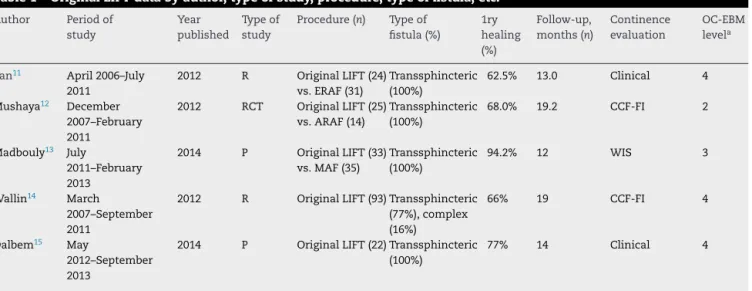
Table 1 – Original LIFT data by author, type of study, procedure, type of fistula, etc.
Author Period of
study
Year published
Type of study
Procedure (n) Type of fistula (%)
1ry healing (%)
Follow-up, months (n)
Continence evaluation
OC-EBM levela
Tan11 April 2006–July
2011
2012 R Original LIFT (24)
vs. ERAF (31)
Transsphincteric (100%)
62.5% 13.0 Clinical 4
Mushaya12 December
2007–February 2011
2012 RCT Original LIFT (25)
vs. ARAF (14)
Transsphincteric (100%)
68.0% 19.2 CCF-FI 2
Madbouly13 July
2011–February 2013
2014 P Original LIFT (33)
vs. MAF (35)
Transsphincteric (100%)
94.2% 12 WIS 3
Wallin14 March
2007–September 2011
2012 R Original LIFT (93) Transsphincteric
(77%), complex (16%)
66% 19 CCF-FI 4
Dalbem15 May
2012–September 2013
2014 P Original LIFT (22) Transsphincteric
(100%)
77% 14 Clinical 4
R, retrospective; RCT, randomized controlled; P, prospective; LIFT, ligation of intersphincteric tract; ERAF, endorectal advancement flap; ARAF, anorectal advancement flap; MAF, mucosal advancement flap; CCF-FI, Cleveland Clinic Florida Fecal Incontinence score; NR, not reported; WIS, Wexner Incontinence Score; OCEBM, Oxford Centre for Evidence-based.
studies included LIFT with partial coreout with intraoperative Seton, LIFT with partial coreout with advancement flap, and the LIFT-plug.
Original LIFT outcomes
Regarding original LIFT, a total of 5 studies were included with a population of 199 patients (Fig. 2 andTable 1),11–15 all of
cryptoglandular origin and mostly transsphincteric.
The pooled data of primary healing were 73.95% (95% CI 60.3–85.6) (Table 2), median healing time was 3.8 to 4 weeks when reported, and median follow-up period varied from 12 months to 19.2 months.
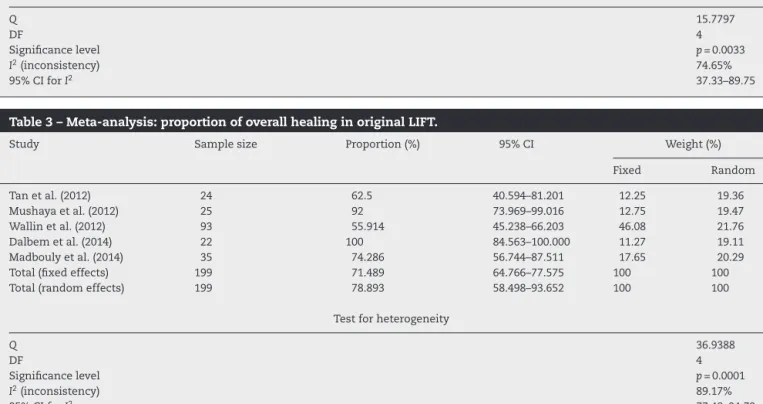
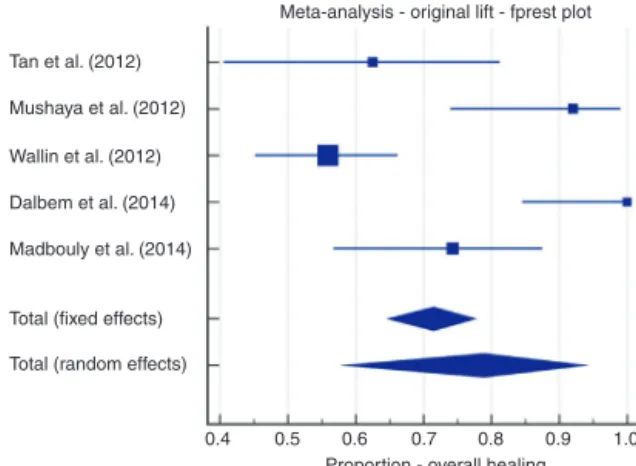
On the other hand, overall healing rates of the pooled data were 78.9% (95% CI 58.5–93.7) (Table 3). Overall heal-ing rates increased in 2 studies: 92% (95% CI 73.969–99.016) and 100% (95% CI 84.56–100.0).13,15 However, overall healing
92% 8%
Transsphincteric Complex
63.30% 36.70%
Males Females
B
A
Fig. 2 – Population of original LIFT: (A) type of fistula; (B) gender.
and 74.3% (95% CI 56.744–87.511).14,15Rates did not have any
change in one study regarding overall healing (62.5%) (95% CI 40.594–81.201).11
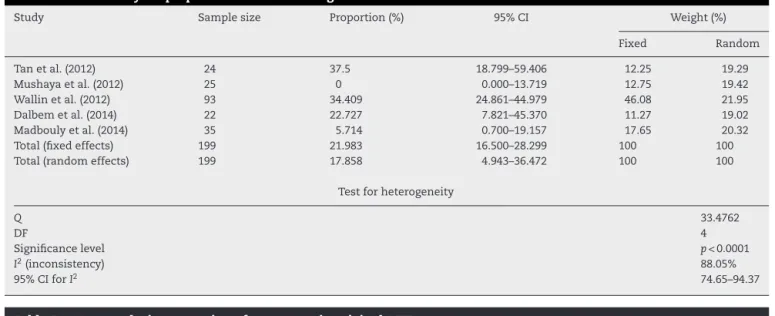
Failure rates from the pooled data were 17.9% (95% CI 4.9–36.5) (Table 4). Causes and management of failure were only mentioned in 3 studies11,13,15 (Table 6). However, it is
noticeable that 2 studies14,15 with 37 failures showed that
14 failed transsphincteric fistulas were converted into inter-sphinteric fistulas and were treated successfully by simple
fistulectomy and one of these studies mentioned that all its failure and management were of similar pattern.15
Recur-rences data from the pooled studies were 9.7% (95% CI 1.7–23.2). Recurrences occurred in only 3 studies with 8% (95% CI 0.984–26.031),1220% (95% CI 8.441–36.938),13(and 25.8% (95%
CI 17.287–35.923)14with median time to recurrence of 3.5, 4,
and 7 months respectively (Table 5).
Other notable complications when mentioned were, sec-ondary bleeding in 1 patient,11one patient had hematoma in
a study with 93 patient,13and finally wound dehiscence and
infection in intersphinteric wound of 7 patients in 2 studies with 47 patient.12,15
In all five studies, there was no change in continence func-tion, except in one study which reported that 1 patient had incontinence for liquid and gas, and 4 patients reported incon-tinence for gas.15
Three of those 5 trials compared LIFT with other procedures.11–13 One retrospective study by Tan11compared
ligation of the intersphincteric fistula tract with endorec-tal advancement flap with healing rates of 62.5% and 93.5% respectively. Failure rates of the former (37.5%) were almost five times higher than the latter (6.5%).
Table 2 – Meta-analysis: proportion of primary healing in original lift.
Study Sample size Proportion (%) 95% CI Weight (%)
Fixed Random
Tan et al. (2012) 24 62.5 40.594–81.201 12.25 18.46
Mushaya et al. (2012) 25 68 46.500–85.050 12.75 18.7
Wallin et al. (2012) 93 65.591 55.021–75.139 46.08 24.37
Dalbem et al. (2014) 22 77.273 54.630–92.179 11.27 17.94
Madbouly et al. (2014) 35 94.286 80.843–99.300 17.65 20.53
Total (fixed effects) 199 72.414 65.739–78.426 100 100
Total (random effects) 199 73.95 60.255–85.605 100 100
Test for heterogeneity
Q 15.7797
DF 4
Significance level p= 0.0033
I2(inconsistency) 74.65%
95% CI forI2 37.33–89.75
Table 3 – Meta-analysis: proportion of overall healing in original LIFT.
Study Sample size Proportion (%) 95% CI Weight (%)
Fixed Random
Tan et al. (2012) 24 62.5 40.594–81.201 12.25 19.36
Mushaya et al. (2012) 25 92 73.969–99.016 12.75 19.47
Wallin et al. (2012) 93 55.914 45.238–66.203 46.08 21.76
Dalbem et al. (2014) 22 100 84.563–100.000 11.27 19.11
Madbouly et al. (2014) 35 74.286 56.744–87.511 17.65 20.29
Total (fixed effects) 199 71.489 64.766–77.575 100 100
Total (random effects) 199 78.893 58.498–93.652 100 100
Test for heterogeneity
Q 36.9388
DF 4
Significance level p= 0.0001
I2(inconsistency) 89.17%
j coloproctol (rio j).2 0 1 8;3 8(4):324–336
329
Table 4 – Meta-analysis: proportion of failure in original LIFT.
Study Sample size Proportion (%) 95% CI Weight (%)
Fixed Random
Tan et al. (2012) 24 37.5 18.799–59.406 12.25 19.29
Mushaya et al. (2012) 25 0 0.000–13.719 12.75 19.42
Wallin et al. (2012) 93 34.409 24.861–44.979 46.08 21.95
Dalbem et al. (2014) 22 22.727 7.821–45.370 11.27 19.02
Madbouly et al. (2014) 35 5.714 0.700–19.157 17.65 20.32
Total (fixed effects) 199 21.983 16.500–28.299 100 100
Total (random effects) 199 17.858 4.943–36.472 100 100
Test for heterogeneity
Q 33.4762
DF 4
Significance level p< 0.0001
I2(inconsistency) 88.05%
95% CI forI2 74.65–94.37
Table 5 – Meta-analysis: proportion of recurrence in original LIFT.
Study Sample size Proportion (%) 95% CI Weight (%)
Fixed Random
Tan et al. (2012) 24 0 0.000–14.247 12.25 19.06
Mushaya et al. (2012) 25 8 0.984–26.031 12.75 19.22
Wallin et al. (2012) 93 25.806 17.287–35.923 46.08 22.61
Dalbem et al. (2014) 22 0 0.000–15.437 11.27 18.72
Madbouly et al. (2014) 35 20 8.441–36.938 17.65 20.39
Total (fixed effects) 199 14.784 10.213–20.410 100 100
Total (random effects) 199 9.711 1.723–23.165 100 100
Test for heterogeneity
Q 25.429
DF 4
Significance level p< 0.0001
I2(inconsistency) 84.27%
95% CI forI2 64.71–92.99
Table 6 – Showing anatomy of failure recurrence of original LIFT.
Author Time to recurrence Failure n (%) Recurrence n (%) Treatment of failure
Tan11 NA 9 (37.5%) 0 Incision and drainage1
Fistulectomy 4 Seton 4 ERAF 2 LIFT 1
Mushaya12 4 months 0 2 (8%) NA
Madbouly13 3.5 months 2 (5.7%) 7 (20%) NA
Wallin14 7.0
months
32 (34.4%) 24 (25.8%) 9 intersphincteric by fistulectomy
2 transsphincteric by fistulectomy 20 by Seton
13 by LIFT 2 by PLUG
1 by advancement flap 9 by drainage
Dalbem15 NA 5 (23%) 0 5 intersphincteric by fistulectomy
A prospective study by Madbouly comparing LIFT with Mucosal Advancement Flap (MAF) showed that primary heal-ing was 94.2% in LIFT vs. 91.4% in MAF,13with median healing
time in first group (26.6 days) significantly less than the sec-ond group (38.1 days). Failure rates were 5.8% in LIFT group and 8.5% in MAF group. After complete healing, 7 out of 35
(21.2%) patients showed recurrence after LIFT while 9 out of 35 (28.1%) patients after MAF. Overall, all healing were higher in LIFT (74.3%) in comparison to MAF (65.7%).
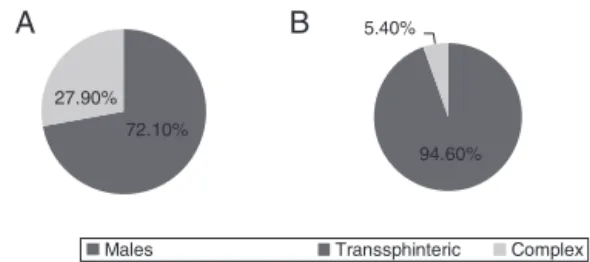
72.10% 27.90%
Males
A
94.60% 5.40%
Transsphinteric Complex
B
Fig. 3 – Population of LIFT modification group: (A) gender; (B) type of fistula.
after 16 weeks in patients who underwent lift, but 2 patients who underwent MAF showed insentience to (1) gas and (1) liquid.
A controlled randomized study by Mushaya12comparing
LIFT with Anorectal Advancement Flap (ARAF) concluded that the major findings were that the LIFT technique can be per-formed more rapidly with less pain, a better satisfaction score, and faster resumption of normal activities than the ARAF tech-nique. Although the overall recurrence rate was low in both procedures (7% and 8% respectively), there was no difference in recurrence rate between the 2 procedures. However, one patient in the ARAF group reported a slight incontinence (a CCF-FI score of 4) which had resolved in a few weeks.12
LIFT modifications results
Regarding LIFT modifications, 5 trials were included in this review, with population of 147 patients with demographic val-ues according to Fig. 3. Four modifications were identified (Table 3).
First modification of original LIFT procedure included cor-ing out of fistula tract from the external opencor-ing of the fistula tract to the lateral border of the external sphincter. It was described by Sirikurnpiboon “LIFT PLUS” in 2013.7 Two
studies, included in this review, applied this technique, one prospective16and another retrospective,17with total numbers
of 61 patients with 22 low transsphincteric fistulas and 39 with transsphincteric fistula respectively (Table 7).
Primary healing rates of this variation were reported as 81.8% (95% CI 59.715–94.813) and 87.17% (95% CI 72.570–95.703). Overall, all healing rates reached 100% (95% CI 84.563–100.000) in both studies. Median follow-ups were 19.5 and 15 months. There were no changes in continence levels in both studies.
There was no recurrence; however, an interesting fact was that both studies reported 9 failures only in the form of inter-sphincteric fistulas rather than the original transinter-sphincteric and they were treated successfully with simple fistulectomy.
Other complications also were wound dehiscence (6 out of 39 patients) mentioned in one study.17
A second modification included in this review was LIFT with partial coring out fistulectomy and an additional transanal advancement flap. Only one study was included in this review with primary healing rates of 51.2% (95% CI 35.134–67.122) in 41 patients with 73.1% (95% CI 57.056–85.779) overall healing rates.6
There was no recurrence after median follow-up of 15 months. 20 patients had failure of procedure; however, in 8 (40%) patients, transsphincteric fistulas were converted into intersphincteric treated with simple fistulectomy.
There was no change in continence levels. Other compli-cations also were purulent discharge at the intersphincteric wound resolved spontaneously in 4 patients.
LIFT Plug, a third alternation, which involve insertion of a plug in the external portion of the track. One prospective study was included, and primary healing rates were 95.2% (95% CI 76.184–99.880) in total of 21 patients, with failure in one patient and no recurrence. Only 1 (5%) patient reported rare incontinence for gas postoperatively.4
A final modification was included in this review which was left with partial coring out fistulectomy and insertion of Seton during operation. Only one study was included with 20 patients, and 12 of them were with low transsphincteric fistulas and 8 were complex transsphincteric. Healing rates were 95% (95% CI 75.127–99.873). With no recurrence and one reported failure, however, there was no explanation of the failure. No change in the continence levels was observed. Additionally, other complications included were 1 patient with wound dehiscence.18
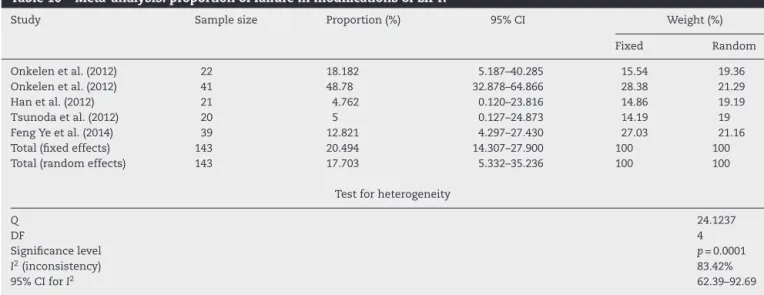
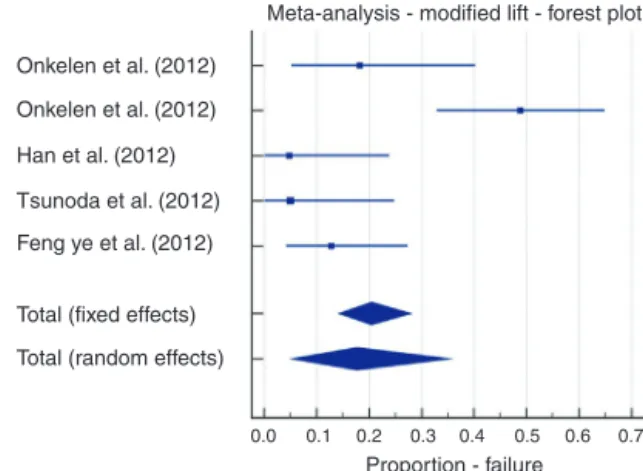
Overall, pooled data from LIFT modifications included pri-mary healing rates of 82.3% (95% CI 64.8–94.7) (Table 8), overall healing rates of 93.6% (95% CI 81.4–99.6) (Table 9), failure rates of 17.7% (95% CI 5.3–35.2) (Table 10), and 0 recurrences.
In conclusion, when comparing the original LIFT and its modification, it can be seen that primary healing rates in the original LIFT were 73.95% (95% CI 60.3–85.6), which per-formed less than that in the modified LIFT with 82.3% (95% CI 64.8–94.7). Overall healing rates in the original LIFT were 78.9% (95% CI 58.5–93.7), which performed less than that in the modified LIFT with 93.6% (95% CI 81.4–99.6). Failure rates in the original LIFT were 17.9% (95% CI 4.9–36.5), which per-formed almost the same as the modified LIFT with 17.7% (95% CI 5.3–35.2). Recurrence rates in the original LIFT were 9.7% (95% CI 1.7–23.2), which performed less than the modified LIFT with zero recurrence.
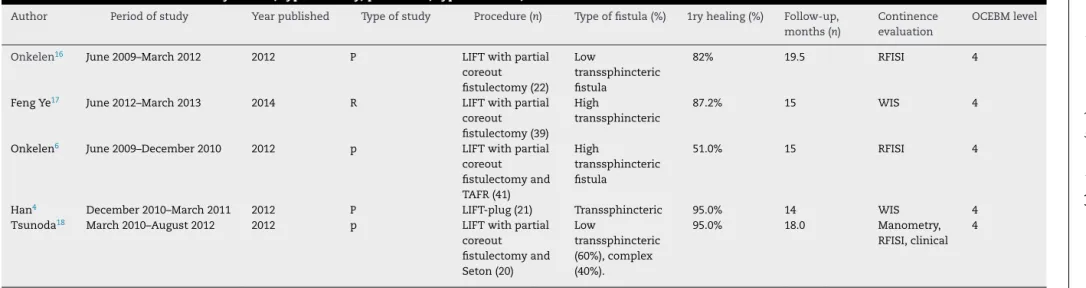
Funnel plots for all estimates of original LIFT showed equal balanced distribution of the estimates of different studies around the pooled estimate. However, Funnel plots of the modified LIFT showed some bias toward higher values around the estimates (Figs. 4–17).
Discussion
j
coloproctol
(rio
j).
2018
;
3
8(4)
:324–336
331
Table 7 – LIFT modifications data by author, type of study, procedure, type of fistula, etc.
Author Period of study Year published Type of study Procedure (n) Type of fistula (%) 1ry healing (%) Follow-up,
months (n)
Continence evaluation
OCEBM level
Onkelen16 June 2009–March 2012 2012 P LIFT with partial
coreout fistulectomy (22)
Low
transsphincteric fistula
82% 19.5 RFISI 4
Feng Ye17 June 2012–March 2013 2014 R LIFT with partial
coreout fistulectomy (39)
High
transsphincteric
87.2% 15 WIS 4
Onkelen6 June 2009–December 2010 2012 p LIFT with partial
coreout fistulectomy and TAFR (41)
High
transsphincteric fistula
51.0% 15 RFISI 4
Han4 December 2010–March 2011 2012 P LIFT-plug (21) Transsphincteric 95.0% 14 WIS 4
Tsunoda18 March 2010–August 2012 2012 p LIFT with partial
coreout fistulectomy and Seton (20)
Low
transsphincteric (60%), complex (40%).
95.0% 18.0 Manometry,
RFISI, clinical 4
Table 8 – Meta-analysis: proportion of primary healing in Modifications of LIFT.
Study Sample size Proportion (%) 95% CI Weight (%)
Fixed Random
Onkelen et al. (2012) 22 81.818 59.715–94.813 15.54 19.36
Onkelen et al. (2012) 41 51.22 35.134–67.122 28.38 21.29
Han et al. (2012) 21 95.238 76.184–99.880 14.86 19.19
Tsunoda et al. (2012) 20 95 75.127–99.873 14.19 19
Feng Ye et al. (2014) 39 87.179 72.570–95.703 27.03 21.16
Total (fixed effects) 143 79.506 72.100–85.693 100 100
Total (random effects) 143 82.297 64.764–94.668 100 100
Test for heterogeneity
Q 24.1237
DF 4
Significance level p= 0.0001
I2(inconsistency) 83.42%
95% CI forI2 62.39–92.69
Table 9 – Meta-analysis: proportion of overall healing in modifications of LIFT.
Study Sample size Proportion (%) 95% CI Weight (%)
Fixed Random
Onkelen et al. (2012) 22 100 84.563–100.000 15.54 19.28
Onkelen et al. (2012) 41 73.171 57.056–85.779 28.38 21.44
Han et al. (2012) 21 95.238 76.184–99.880 14.86 19.09
Tsunoda et al. (2012) 20 95 75.127–99.873 14.19 18.88
Feng Ye et al. (2014) 39 100 90.975–100.000 27.03 21.3
Total (fixed effects) 143 92.853 87.442–96.436 100 100
Total (random effects) 143 93.62 81.420–99.577 100 100
Test for heterogeneity
Q 21.5523
DF 4
Significance level p= 0.0002
I2(inconsistency) 81.44%
95% CI forI2 56.92–92.01
Table 10 – Meta-analysis: proportion of failure in modifications of LIFT.
Study Sample size Proportion (%) 95% CI Weight (%)
Fixed Random
Onkelen et al. (2012) 22 18.182 5.187–40.285 15.54 19.36
Onkelen et al. (2012) 41 48.78 32.878–64.866 28.38 21.29
Han et al. (2012) 21 4.762 0.120–23.816 14.86 19.19
Tsunoda et al. (2012) 20 5 0.127–24.873 14.19 19
Feng Ye et al. (2014) 39 12.821 4.297–27.430 27.03 21.16
Total (fixed effects) 143 20.494 14.307–27.900 100 100
Total (random effects) 143 17.703 5.332–35.236 100 100
Test for heterogeneity
Q 24.1237
DF 4
Significance level p= 0.0001
I2(inconsistency) 83.42%
j coloproctol (rio j).2 0 1 8;3 8(4):324–336
333
Tan et al. (2012) Mushaya et al.(2012) Wallin et al.(2012) Dalbem et al.(2014) Madbouly et al.(2014) Total (fixed effects) Total (random effects)
0.4 0.5 0.6 0.7 0.8 0.9 1.0 Meta-analysis - original lift - forest plot
Proportion - primary healing
Fig. 4 – Meta-analysis; original LIFT, primary healing forest plot.
Meta-analysis - modified lift -forest plot
Onkelen et al. (2012)
Onkelen et al. (2012)
Han et al. (2012)
Tsunoda et al. (2012)
Feng ye et al. (2014)
Total (fixed effects)
Total (random effects)
0.3 0.4 0.5 0.6 0.8 0.9 1.0
Proportion - primary healing
Fig. 5 – Meta-analysis; LIFT modifications, primary healing forest plot.
regarding saving sphincters unlike other procedure, also to provide better healing and lower recurrence rate. And since then it has been popularized among many surgeons’ world-wide, thanks to its simplicity and its promising outcomes, comparing its result to other procedures.
The original LIFT procedure appeared most frequently in the literature. Rojanasakul initially reported 94% healing rates, and healing rates from pooled data were 73.95% (95% CI 60.3–85.6) for primary healing and 78.9% (95% CI 58.5–93.7) for overall healing in original LIFT in this review. Other reviews reported healing rates in 759 patients that ranged from 51% to 94%.19Another review showed success rates from 40% to 95%,
in 352 of 495 patients.20
Additionally, healing rates from the pooled data of LIFT modification were 82.3% (95% CI 64.8–94.7) for primary heal-ing and 93.6% (95% CI 81.4–99.6) for overall healheal-ing. Overall, healing rates of LIFT and its modifications showed better results than other sphincter-preserving procedures, for exam-ple, 10–67% for fibrin glue,21 <50% for fistula plug22 and
25–95% for advancement flap.22All of the studies in our review
included a standard definition of healing whether primary healing or overall healing.11,14 However, a clear definition of
failure or recurrence has not been universally described yet. What is interesting is that time to heal after surgery in given studies ranged from 2 weeks17 to 7 weeks,18 however, time
for healed fistulae to reoccur were around 3 to 7 months in
Tan et al. (2012) Mushaya et al. (2012) Wallin et al. (2012) Dalbem et al. (2014) Madbouly et al. (2014)
Total (fixed effects) Total (random effects)
0.4 0.5 0.6 0.7 0.8 0.9 1.0 Proportion - overall healing Meta-analysis - original lift - fprest plot
Fig. 6 – Meta-analysis; original LIFT, overall healing forest plot.
Meta-analysis - modified lift - forest plot
Onkelen et al. (2012)
Onkelen et al. (2012)
Han et al. (2012)
Tsunoda et al.(2012)
Feng ye et al. (2014)
Total (fixed effects)
Total (random effects)
0.5 0.6 0.7 0.8 0.9 1.0
Proportion - overal healing
Fig. 7 – Meta-analysis; original LIFT, overall healing forest plot.
Meta-analysis - original - forest plot
Tan et al. (2012) Mushaya et al. (2012) Wallin et al. (2012) Dalbem et al. (2014) Madbouly et al. (2014)
Total (fixed effects) Total (random effects)
0.0 0.1 0.2 0.3 0.4 0.5 0.6
Proportion - failure
Fig. 8 – Meta-analysis; original LIFT, failure forest plot.
reported studies.12–14This means that long follow up is
Meta-analysis - modified lift - forest plot
Onkelen et al. (2012)
Onkelen et al. (2012)
Han et al. (2012)
Tsunoda et al. (2012)
Feng ye et al. (2012)
Total (fixed effects)
Total (random effects)
0.0 0.1 0.2 0.3 0.4 0.5 0.6 0.7
Proportion - failure
Fig. 9 – Meta-analysis; LIFT modification, failure forest plot.
Meta-analysis - original lift forest plot
Tan et al. (2012) Mushaya et al. (2012) Wallin et al. (2012) Dalbem et al. (2014) Madbouly et al. (2014)
Total (fixed effects) Total (random effects)
0.0 0.1 0.2 0.3 0.4
Proportion - recurrence
Fig. 10 – Meta-analysis; original LIFT, recurrence forest plot.
Meta-analysis - orininal fir - funnel plot
0.0
0.1
0.2
0.3
0.2 0.4 0.6 0.8 1.0 1.2
Proportion - primary healing
Standard error
Fig. 11 – Meta-analysis; original LIFT, primary healing, funnel plot.
months. Also, most of the reviews regarding this procedure did not compare original results with LIFT modifications results. However, more studies are needed to compare the techniques to fulfill better understanding of a superior approach.
Systemic risk factors did not play any major role in stud-ies. In addition, preservation of continence levels play a key in favoring LIFT and its modulations over other sphincter
Meta-analysis - modified lift - funnel plot
0.0
0.1
0.2
0.3
0.2 0.4 0.6 0.8 1.0 1.2 1.4
Proportion - primary healing
Standard erroe
Fig. 12 – Meta-analysis; LIFT modification, primary healing, funnel plot.
Meta-analysis - original lift - funnel plot
0.0
0.1
0.2
0.3
0.2 0.4 0.6 0.8 1.0 1.2 Proportion - overall healing
Standard error
Fig. 13 – Meta-analysis; original LIFT, overall healing, funnel plot.
Meta-analysis - modified lift - funnel plot
0.0
0.1
0.2
0.3
0.4 0.6 0.8 1.0 1.2 1.4
Standard error
Proportion - overall healing
Fig. 14 – Meta-analysis; LIFT modification, overall healing, funnel plot.
j coloproctol (rio j).2 0 1 8;3 8(4):324–336
335
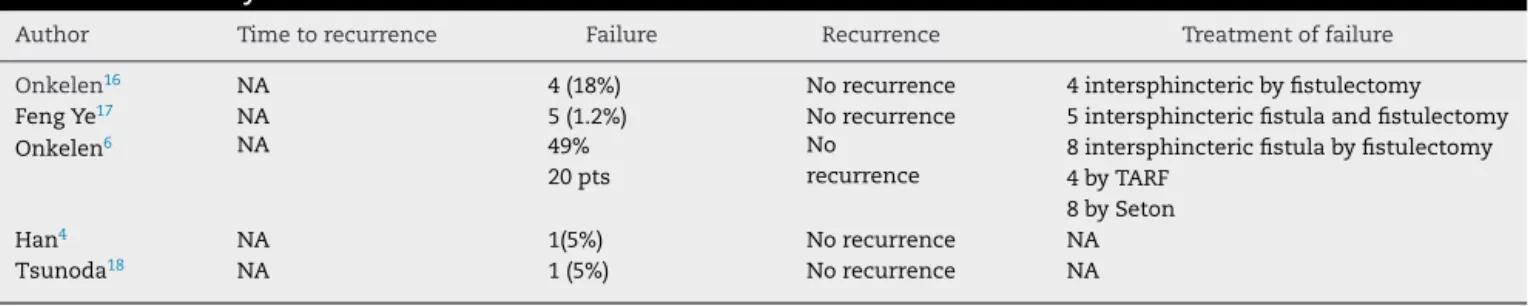
Table 11 – Anatomy of failure and recurrence in LIFT modifications.
Author Time to recurrence Failure Recurrence Treatment of failure
Onkelen16 NA 4 (18%) No recurrence 4 intersphincteric by fistulectomy
Feng Ye17 NA 5 (1.2%) No recurrence 5 intersphincteric fistula and fistulectomy
Onkelen6 NA 49%
20 pts
No recurrence
8 intersphincteric fistula by fistulectomy 4 by TARF
8 by Seton
Han4 NA 1(5%) No recurrence NA
Tsunoda18 NA 1 (5%) No recurrence NA
NA, not given.
Meta-analysis - original lift - funnel plot
0.0
0.1
0.2
0.3
-0.2 0.0 0.2 0.4 0.6 0.8
Proportion - failure
Standard error
Fig. 15 – Meta-analysis; original LIFT, failure, funnel plot.
Meta-analysis - modified lift - funnel plot
0.0
0.1
0.2
0.3
-0.4 -0.2 0.0 0.2 0.4 0.6 0.8
Proportion - failure
Standard error
Fig. 16 – Meta-analysis; LIFT modification, failure, funnel plot.
On the other hand, other sphincter-preserving procedures turned out to have greater impact on it. For example, vari-ous studies of advancement flap repairs have reported rates of incontinence ranging from 0% to 35%.22 The impact on
continence appears to be minimal; also, most of studies included had a formal assessment of incontinence (8 out of 10 studies)4,6,12–14,16–18(Tables 1 and 7). Therefore, we may
con-clude complete results of the rates and nature of continence changes after this procedure from this review.
This review also highlighted other minor complica-tions following surgery, the main and most notable one
Meta-analysis - original lift - funnel
0.0
0.1
0.2
0.3
-0.4 -0.2 0.0 0.2 0.4 0.6
Proportion - recurrence
Standard error
Fig. 17 – Meta-analysis; original LIFT, recurrence, funnel plot.
is wound dehiscence and surgical site infection or dis-charge in intersphinteric incision, 18 patients of 340; however, all patients resolved spontaneously with proper dressing, wound care and sometime antibiotics, with no further intervention.6,4,12,15,17
Regarding preoperative Seton insertion in original and modified LIFT, its result was irrelevant and did not promote better healing. Nevertheless, one study included preopera-tive Seton to enforce or enhance fibrosis in the tracts to make them well defined.15 Therefore, further future studies
Conclusion
Ligation of the intersphincteric fistula tract is a feasible, min-imally invasive, cheap, and relatively easy procedure, which is safe and effective at the same time. LIFT and its modi-fications can be ideal for treating straightforward high anal fistulas in patient with no previous intervention. Addition-ally, more studies should be conducted to compare results regarding different approaches of this procedure with longer follow-up and randomization of patients. Finally, a universal explanation of failure and recurrence should be applied with a proposition that failure should be explained as an unsuc-cessful achievement of primary healing and recurrence as a failure after successful primary healing.
Conflicts of interest
The authors declare no conflicts of interest.
r e f e r e n c e s
1. Oxforddictionaries.com. Fistula – definition of fistula in English from the Oxford dictionary; 2015. Available at:
http://www.oxforddicti onaries.com/definition/english/fistula
2. Mangual RN, Tudu DN, Pattnaik SP, Mohanty SS, Prusty KP. The sphincter preserving perianal fistulectomy: a better alternative. Ind J Surg. 2004;66:31–5.
3. Rojanasakul A, Pattanaarun J, Sahakitrungruang C, Tantiphlachiva K. Total anal sphincter saving technique for fistula-in-ano; the ligation of intersphincteric fistula tract. J Med Assoc Thai. 2007;90:581–6.
4. Han JG, Yi BQ, Wang ZJ, Zheng Y, Cui JJ, Yu XQ, et al. Ligation of the intersphincteric fistula tract plus a bioprosthetic anal fistula plug (LIFT-Plug): a new technique for fistula-in-ano. Colorectal Dis. 2013;15:582–6.
5. Song KH. New techniques for treating an anal fistula. J Korean Soc Coloproctol. 2012;28:7–12.
6. van Onkelen RS, Gosselink MP, Schouten WR. Is it possible to improve the outcome of transanal advancement flap repair for high transsphincteric fistulas by additional ligation of the intersphincteric fistula tract? Dis Colon Rectum.
2012;55:163–6.
7. Sirikurnpiboon S, Awapittaya B, Jivapaisarnpong P. Ligation of intersphincteric fistula tract and its modification: results from treatment of complex fistula. World J Gastrointest Surg. 2013;5:123–8.
8. Liberati A, Altman DG, Tetzlaff J, Mulrow C, Gøtzsche PC, Ioannidis JP, et al. The PRISMA statement for reporting systematic reviews and meta-analyses of studies that
evaluate health care interventions: explanation and elaboration. PLoS Med. 2009;6:e1000100.
9. Howick J, Chalmers I, Glasziou P, Greenhalgh P, Heneghan C, Liberati A, et al. Explanation of the 2011 Oxford Centre for Evidence-Based Medicine (OCEBM) levels of evidence.
http://www.cebm.net/index.aspx?o=5653[accessed 13.02.15]. 10. Wallace BC, Dahabreh IJ, Trikalinos TA, Lau J, Trow P, Schmid CH. Closing the gap between methodologists and end-users: R as a computational back-end. J Stat Soft. 2012;49:5. 11. Tan KK, Alsuwaigh R, Tan AM, Tan IJ, Liu X, Koh DC, et al. To
LIFT or to flap? Which surgery to perform following Seton insertion for high anal fistula? Dis Colon Rectum. 2012;55:1273–7.
12. Mushaya C, Bartlett L, Schulze B, Ho YH. Ligation of intersphincteric fistula tract compared with advancement flap for complex anorectal fistulas requiring initial Seton drainage. Am J Surg. 2012;204:283–9.
13. Madbouly KM, El Shazly W, Abbas KS, Hussein AM. Ligation of intersphincteric fistula tract versus mucosal advancement flap in patients with high transsphincteric fistula-in-ano: a prospective randomized trial. Dis Colon Rectum.
2014;57:1202–8.
14. Wallin UG, Mellgren AF, Madoff RD, Goldberg SM. Does ligation of the intersphincteric fistula tract raise the bar in fistula surgery? Dis Colon Rectum. 2012;55:1173–8.
15. Dalbem CS, Danilo S, Tomiyoshi T, Henrique C. Assessment of LIFT (ligation of the intersphincteric fistula tract) technique in patients with perianal transsphincteric fistulas. J Coloproctol. 2014;34:250–3.
16. van Onkelen RS, Gosselink MP, Schouten WR. Ligation of the intersphincteric fistula tract in low transsphincteric fistulae: a new technique to avoid fistulotomy. Colorectal Dis. 2013;15:587–91.
17. Ye F, Tang C, Wang D, Zheng S. Early Experience with the modificated approach of ligation of the intersphincteric fistula tract for high transsphincteric fistula. World J Surg. 2015;39:1059–65.
18. Tsunoda A, Sada H, Sugimoto T, Nagata H, Kano N. Anal function after ligation of the intersphincteric fistula tract. Dis Colon Rectum. 2013;56:898–902.
19. Kontovounisios C, Tekkis P, Tan E, Rasheed S, Darzi A, Wexner SD. Adoption and success rates of perineal procedures for fistula-in-ano: a systematic review. Colorectal Dis. 2016;18:441–58.
20. Yassin NA, Hammond TM, Lunniss PJ, Phillips RKS. Ligation of the intersphincteric fistula tract in the management of anal fistula. A systematic review. Colorectal Dis. 2013;15: 527–35.
21. Steele SR, Kumar R, Feingold DL, Rafferty JL, Buie WD, Standards Practice Task Force of the American Society of Colon and Rectal Surgeons. Practice parameters for the management of perianal abscess and fistula-in-ano. Dis Colon Rectum. 2011;54:1465–74.