356 356356 356
356 Rev Saúde Pública 2001;35(4):356-61
www.fsp.usp.br/rsp
Evaluation of a program to reduce back
pain in nursing personnel*
Avaliação de programa para reduzir dores nas
costas em trabalhadores de enfermagem
Neusa Maria C Alexandrea, Marco Antonio A de Moraesb, Heleno R Corrêa Filhoc
and Silvia Angélica Jorged
aDepartamento de Enfermagem da Faculdade de Ciências Médicas, Universidade Estadual de
Campi-nas (Unicamp). CampiCampi-nas, SP, Brasil. bCentro de Saúde da Comunidade da Unicamp. Campinas, SP, Brasil. cDepartamento de Medicina Preventiva e Social da Faculdade de Ciências Médicas da Unicamp. Campinas, SP, Brasil. dHospital das Clínicas da Unicamp. Campinas, SP, Brasil
Correspondence to: Heleno R Corrêa Filho
Departamento de Medicina Preventiva e Social Faculdade de Ciências Médicas, Unicamp 13084-270 Campinas, SP, Brasil E-mail: [email protected]
*Supported by FAPESP (Process n. 1997/05744-3). Presented to 4th International Conference on Ocupational Health for Health Care Works, Montreal, 1999.
Received on 11/8/2000. Reviewed on 12/4/2001. Approved on 22/5/2001.
Keywords
Back pain, therapy.# Occupational
health program.# Exercise.# Nurses
aides.# Program evaluation.
Ergonomics (environmental health). Occupational diseases, prevention and control.
Descritores
Dor nas costas, terapia.# Programa
de saúde ocupacional.# Exercício.#
Auxiliares de enfermagem.# Avaliação
de programas. Ergonomia (saúde ambiental). Doenças ocupacionais, prevenção e controle.
Abstract
Objective
To evaluate the effectiveness of a program designed to reduce back pain in nursing aides.
Methods
Female nursing aides from a university hospital who had suffered episodes of back pain for at least six months were included in the study. Participants were randomly divided into a control group and an intervention group. The intervention program involved a set of exercises and an educational component stressing the ergonomic aspect, administered twice a week during working hours for four months. All subjects answered a structured questionnaire and the intensity of pain was assessed before and after the program using a visual analogue scale (VAS). Student’s t-test or the Wilcoxon Rank Sum Test for independent samples, and Chi-square test or the Exact Fisher test for categorical analysis, were used. The McNemar test and the Wilcoxon matched pairs test were used to compare the periods before and after the program. Results
There was a statistically significant decrease in the frequency of cervical pain in the last two months and in the last seven days in the intervention group. There was also a reduction in cervical pain intensity in the two periods (2 months, 7 days) and lumbar pain intensity in the last 7 days.
Conclusions
The results suggest that a program of regular exercise with an emphasis on ergonomics can reduce musculoskeletal symptoms in nursing personnel.
Resumo
Objetivo
Avaliar o efeito de um programa na redução de dores nas costas em auxiliares de enfermagem.
Métodos
357 357 357 357 357 Rev Saúde Pública 2001;35(4):356-61
www.fsp.usp.br/rsp
Back pain in nursing personnel Alexandre NMC et al.
de trabalho, duas vezes por semana, em um período de quatro meses. As participantes foram divididas aleatoriamente em grupo tratado e grupo controle. A intensidade das dores foi avaliada pela escala visual analógica. Foram utilizados os testes t de Student ou de Wilcoxon, para amostras independentes e os testes Qui-quadrado ou Exato de Fisher, para as categóricas. Para comparar as proporções do início e final do programa utilizou-se o teste de McNemar.
Resultados
Ocorreu diminuição estatisticamente significativa na freqüência de dor cervical durante os últimos dois meses e durante a ultima semana no grupo tratado. Houve também redução na intensidade da dor cervical em ambos os períodos (2 meses; 7 dias) e da dor lombar na última semana.
Conclusões
O estudo sugere que programa regular de exercícios, acompanhado por abordagem instrucional ergonômica, pode reduzir sintomas músculo-esqueléticos em trabalhadores de enfermagem.
*The study was approved by Ethics Committee and hospital personnel were informed notified about it.
INTRODUCTION
Musculoskeletal disorders are an important public health problem. Among them are back conditions, a complex problem for certain occupational groups, such as nursing personnel.10 Historically, back pain has been
a major complaint, and nursing professionals are one at the highest risk.3
Risk factors for back pain can be either of individual origin or related to the workplace. The main occupational risk factors are: lifting and handling of patients, uncom-fortable and immobile postures, inadequate equipment, improper workplace design, heavy physical work, and inadequate work organization.2,12 Other studies include
factors such as physical activity, muscular weakness, smoking, obesity and psychological factors.6 Back pain
most often has a multifactorial origin. Therefore, strate-gies to reduce musculoskeletal disorders have included an ergonomic approach, which attempts to integrate equipment, tasks, personnel, and the work environment. The most common strategies include education, training in patient transfer and handling techniques, use of me-chanical devices, stretching and exercise programs, learn-ing relaxation techniques, better work conditions, and changes in work organization and life style.
Given that, it was established a specific exercise pro-gram with an educational ergonomic approach for nurs-ing personnel at a university hospital. The purpose of the study was evaluated whether this program re-duced the frequency and intensity of back pain in female nursing aides.
METHODS
Subjects and setting*
The study was conducted in a 412-bed public
teach-ing hospital. Volunteers were selected and did not rep-resent a probabilistic sample of each hospital unit.
Enrolled personnel were first evaluated to assure they were qualified to participate in the program.
The study participants were female nursing aides who had back pain for at least six months. The reference population consisted of nursing aides who had one year of nursing education. The sample population in-cluded all nursing aides working at the hospital’s sup-ply service division, intensive care unit and inpatients and outpatients clinical, surgical and emergency facili-ties (except for obstetrics and gynecology care). Their main activities were patient care, transportation, bed-side drug administration, and handling of medical in-struments. Inclusion criteria were: age less than 50 years; shift-work in the selected areas; self-reporting of back pain; and interest in volunteering for the study. Exclu-sion criteria were either severe spinal disorder with medical restriction to exercising or history of spinal surgery. A public call for enlisting in the study was made and the list was closed once the calculated sam-ple size was reached. The samsam-ple population was 670 nursing aides. All participants signed informed sent forms, and they were randomly divided into con-trol group (n=29) and intervention group (n=27). The control group received only a 45-minute class during working time on subjects such as anatomy of the spine and patient transfer technique.
Educational program
The educational approach was based on previous studies and research in ergonomics.1-3,14 The
358 358358 358
358 Rev Saúde Pública 2001;35(4):356-61
www.fsp.usp.br/rsp
Back pain in nursing personnel Alexandre NMC et al.
hour each, twice a week for four months. Two of the study’s authors were in charge of giving a fifteen-minute slide presentation, followed by a set if exer-cises and relaxation. The program content was:
General advice
Recommendations about back conditions were given, the importance of regular exercise, pain relieve measures, and the effects of sports on the muscu-loskeletal system were stressed.
Specific ergonomic orientation
Photographs were used to orient nursing personnel about their workplace: work surface height, workspace, and height of reach.8 The purpose was to offer elevant
information regarding the anatomy of the spine; Body mechanics; Situations that may cause back pain. Pho-tographs were taken of the nursing personnel at work, while they were performing their main tasks at their units. Then ergonomic findings were associated with musculoskeletal disorders. Complicated situations were presented to them to develop a critical sense about the effect of the workplace environment on their health. The presentation was divided in two sections: main general factors causing musculoskeletal disor-ders; and ergonomic risk factors specifically related to hospital equipment and environment.
Patient handling
First, the patient’s condition was evaluated, then the equipment, the environment, and nursing person-nel were prepared and then the task of moving and transferring the patient was performed.
Exercise program
Randomized treatment allocation was done in an attempt to reduce unbalanced risk factors between the work settings. During the study, the treatment group underwent a 45 minute exercise program, twice a week, including strength and flexibility exercises, conducted during working hours for four months. It also included a set of exercises to be performed after working hours. Two authors were in charge of teach-ing sessions, which were offered at the beginnteach-ing of the program at the university’s community health
center that provides comprehensive care to the uni-versity’s employees, academic staff, and students.
Data collection
A questionnaire was prepared and assessed in a pilot survey.3,13 Pain intensity was assessed through
self-reporting of symptoms, and visual analogue scale (VAS). The questionnaire was completed before and after completing the program. Back pain frequency and intensity was checked at two distinct retrospec-tive periods (the last two months and the last seven days) and in different regions of the spine: neck (cer-vical), upper back (thoracic), and lower back (lumbar).
Statistical analysis
The Epi Info program was used in the descriptive analysis to characterize the groups. Student’s t-test or the Wilcoxon Rank Sum Test for independent sam-ples were used to compare the variables between groups of independent samples. Chi-square test or exact Fisher test was applied for categorical analy-ses. The McNemar test and Wilcoxon matched pairs test were used to compare data before and after the program.
RESULTS
One of the participants in the intervention group dropped out due to an unexpected surgery. The study ended with 26 individuals in the intervention group and 29 in the control group.
Both groups were homogeneous for the three vari-ables shown in Table 1 (p>0.05). There was no differ-ence in the proportion of married personnel between the groups (p = 0.11; Chi-square test).
Table 2 exhibits the difference in cervical and lum-bar back pain.
Before starting the program, back pain frequency in different regions of the spine in the last two months and the last seven days was assessed in both groups.
Cervical and lumbar complaints were more common than thoracic ones. Alexandre et al3 (1996) studied a
hospital nursing team and observed that these
indi-Table 1 - Age, number of children and years of employment in nursing (months) in the control (N=29) and treated (N=27) groups.
Treated group (n=27) Control group (n=29)
Variables Mean S.D. Min. Max. Mean S.D. Min. Max. Test p-value
Age (years) 36.9 8.0 22 50 37.5 6.1 25 49 t 0.74
Children number 1.6 1.3 0 4 1.7 1.3 0 5 w 0.70
Years of employment (months) 119.8 81.0 6 312 144.2 86.9 5 300 t 0.28
t = Student’s t-test
359 359 359 359 359 Rev Saúde Pública 2001;35(4):356-61
www.fsp.usp.br/rsp
Back pain in nursing personnel Alexandre NMC et al.
Table 2 - Back pain in the control and treated groups in different regions of the spine before and after the program.
Period Back pain Group N p-value*
Before After
Last 2 months
Cervical Control 15 16 1.000
Treated 15 7 0.008
Thoracic Control 4 3 1.000
Treated 4 1 0.500
Lumbar Control 19 14 0.180
Treated 14 10 0.290
Last 7 days
Cervical Control 11 13 0.730
Treated 11 2 0.004
Thoracic Control 2 3 1.000
Treated 3 0 0.500
Lumbar Control 8 12 0.340
Treated 8 2 0.070
*McNemar’s Test
Control group: started with n=29 and ended with n=29 Treated group: started with n=27 and ended with n=26
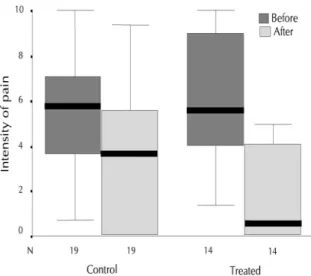
Figure 2/a – Intensity of lumbar pain during the last two months before and the end of the program.
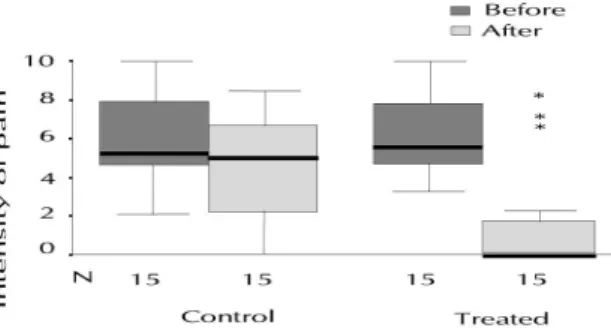
Figure 1/b – Intensity of cervical pain during last seven days before and at the end of the program.
Figure 1/a – Intensity of cervical pain during the last two months before and at the end of the program.
viduals suffered mainly from lower back and cervical pain, as well as from diffuse back pain. This fact is particularly relevant since most studies focus only on lower back pain.
Back pain complaints was similar in both groups prior to the program, but after its completion, there was a significant difference in relation to cervical pain in the last two months and in the last seven days, and lumbar pain in the last seven days.
The frequency of back pain in the intervention group was reduced in all regions of the spine, but there were no changes in the control group either in the last two months or in the last seven days. There was a statistically significant reduction in the fre-quency of cervical pain in the last two months and in the last seven days in the intervention group.
Before the program, control and intervention groups referrred similar pain intensities as assessed using the Wilcoxon Rank Sum Test for independent samples. However, at the end of the program, there was a sig-nificant difference in cervical pain for both periods. Lumbar pain in the last seven days showed a p-value of 7%, which could be attributed to the significance value in the 93% confidence interval.
Figures 1 and 2 show that nursing aides in the inter-vention group had a significant reduction in pain in-tensity in the cervical and lumbar spine regions at the end of the program.
Table 3 presents indicators of the severity of back pain referred, associated with other aspects involving the participants’ working life during the study.
DISCUSSION
This study established an education program with
360 360360 360
360 Rev Saúde Pública 2001;35(4):356-61
www.fsp.usp.br/rsp
Back pain in nursing personnel Alexandre NMC et al.
Table 3 - Frequency of positive answers in the treated and control groups during the last two months, before and after the program.
Back pain Group N p-value*
Before After
Take medication
Control 15 14 1.0000
Treated 19 5 0.0002
Reduction in work activities
Control 11 3 0.0200
Treated 8 2 0.0700
Reduction in the home and/or leisure activities
Control 19 11 0.0800
Treated 24 4 0.0000
Visit to a physician
Control 12 4 0.0200
Treated 8 2 0.0300
Work loss
Control 5 2 0.3800
Treated 5 1 0.1300
Work back injuries
Control 0 1 1.0000
Treated - -
-*McNemar’s Test
Figure 2/b – Intensity of lumbar pain during the last seven days before and the end of the program.
center. Back pain complaints decreased significantly, and the subjects reported a feeling of well being dur-ing the program.
The main limitations of the study were the difficul-ties found with a non-probabilistic sample due to vol-unteering, and the need to work sometimes with test power below 80% (60-75%). The inclusion criteria did not provide a balanced distribution for the three sub-sets of cervical, thoracic and lumbar pain. Therefore lumbar back pain could not reach a significant 5% alpha error threshold for retrospective report for the both the period of the last seven days and the last two months. Despite that, the point estimate for lumbar pain at the last treatment day is significant, and it is possible to have a better understading of the non-parametric retrospective difference between the groups when evaluating the box-plots.
The sparcity of clinical trial studies on back pain among nursing professionals in Brazil impaired the comparability aspects, due to lack of validated meth-ods in Portuguese for standardizing diagnosis and classification of spinal disorders and back pain. An-other difficulty was the practice of controversial pre-vention methods described in the literature. Back pain is, by definition, symptomatic and definite diagnoses are rarely possible. Pain assessment is complex and may be possible through measures of its severity, frequency and disability caused. This study tried to overcome these limitations by estimating severity using the VAS.
Gates7 (1988) stated that muscular disability is one
of the main causes of back pain among nursing per-sonnel. Physical activity and exercise are known to have beneficial effects on the musculoskeletal system.Training in patient lifting procedures and edu-cation in body mechanics were initially proposed to avoid back pain in nursing personnel. Stubbs et al16
(1983) emphasized that training alone would not solve the problem since the training effectiveness cannot be assessed without knowing the environment and individual’s concerns.
Few studies have dealt with programs consisting only of exercises designed to reduce back pain. Gundewall et al9 (1993) reported a decrease in lower back pain
com-plaints and pain intensity in a group of nurses after implementing an exercise program during working hours. Skargren & Oberg15 (1996) suggested that a moderate
weekly exercise program directed to nursing personnel can modify the physical capacity and reduce muscu-loskeletal symptoms in non-regular exercisers, and prob-ably in subjects over 40 years of age.
The current tendency is to combine different ap-proaches in a single program since various inter-re-lated factors may cause spinal lesions. Thus, recent studies have evaluated programs that simultaneously use different strategies, such as training in lifting and handling patients, with work alteration, life style ori-entation, organizational changes at the workplace, use of mechanical devices, exercises and relaxation.5,18
The prevalence of back pain among nursing profes-sionals stresses the need for further studies to better understand the problem and provide effective ap-proaches for dealing with this condition.
Programs based on ergonomics and postural aspects for patient’s lifting and handling can prevent back im-pairment and improve patient management skills.11,17
361 361 361 361 361 Rev Saúde Pública 2001;35(4):356-61
www.fsp.usp.br/rsp
Back pain in nursing personnel Alexandre NMC et al.
In Brazil, schools and health institutions are not par-ticularly concerned about training nursing personnel in moving and transferring patients and there is no spe-cific legislation relating nursing personnel education.
The present study indicates that there is a need of an educational program with emphasis on ergonomics for health workers. Its results should also encourage more research on the evaluation of specific training projects to reduce back pain among nursing personnel.
Researchers and organizations worldwide are
look-ing for solutions regardlook-ing musculoskeletal disorders seen in nursing personnel. In Brazil, this is a particu-larly important problem and active measures are needed.3,4
As a conclusion, this study indicated that the fre-quency and intensity of back pain among nursing aides, mainly in the cervical (p<0.05), and lumbar re-gions (p=0.07) decreased more significantly in the in-tervention group. This suggests that a program of exercises conducted twice a week with an ergonomic approach could reduce musculoskeletal symptoms in nursing personnel.
REFERENCES
1. Alexandre NMC, Moraes MAA, Mahayri N, Cunha SHF. Ergonomics and postural aspects in a central supply unit. Rev Esc Enf USP 1992;26:87-94.
2. Alexandre NMC, Angerami ELS. Ergonomics aspects in patient transport. Rev Bras Saúde Ocup
1993;21:81-90.
3. Alexandre NMC, Angerami ELS, Moreira Filho DC. Back pain and nursing. Rev Esc Enf USP
1996;30:267-85.
4. Alexandre NMC, Benatti MCC. Occupational accidents affecting the spinal vertebrae: a study among nursing workers of a university hospital. Rev Latino-am Enferm 1998;6:65-72.
5. Cooper JE, Tate RB, Yassi A, Khokar J. Effect of an early intervention program on the relationship between subjective pain and disability measures in nurses with low back injury. Spine 1996;21:2329-36.
6. Fuortes LJ, Shi Y, Zhang M, Zwerling C, Schootman M. Epidemiology of back injury in university hospital nurses from review of workers’ compensation records and a case-control survey. J Occup Med
1994;36:1022-6.
7. Gates SJ. Muscle weakness in leading cause for nurses lower back injuries, pain. Occup Health Saf 1988;57:57-61.
8. Grandjean E. Fitting the task to the man. 4th ed. London:Taylor & Francis; 1988.
9. Gundewal B, Liljeqvist M, Hansson T. Primary prevention of back symptoms and absence from work. Spine 1993;18:587-94.
10. Guo HR, Tanaka S, Cameron LL, Seligman PJ, Behrens VS, Ger J et al. Back pain among workers in the United States: national estimates and workers at high risk. Am J Ind Med 1995;28:591-602.
11. Hellsing AL, Linton SJ, Andershed B, Bergman C, Liew M. Ergonomic education for nursing students. Int J Nurs Stud 1993;30:499-510.
12. Knibbe JJ, Frielie RD. Prevalence of back pain and characteristics of the physical workload of community nurses. Ergonomics 1996;39:186-98.
13. Kuorinka I, Jonsson B, Kilbom A, Vinterberg H, Biering-Sorensen F, Andersson G et al. Standardised Nordic questionnaire for the analysis of musculoskeletal symptoms. Appl Ergon 1987;18:233-7.
14. National Back Pain Association. Royal College of Nursing. The guide to the handling of patients. London; 1997.
15. Skargren E, Oberg B. Effects of an exercise program on musculoskeletal symptoms and physical capacity among nursing staff. Scand J Med Sci Sports 1996;6:122-30.
16. Stubbs DA, Buckle PW, Hudson MP, Rivers PM. Back pain in the nursing profession II. The effectiveness of training. Ergonomics 1983;26:767-79.
17. Videman T, Rauhala H, Asp S, Lindstrom K, Cedercreutz G, Kamppi M et al. Patient handling skill, back injuries and back pain: an intervention study in nursing. Spine 1989;14:148-56.