1
Universidade Federal de Ouro Preto, Núcleo de Pesquisas em Ciências Biológicas, Programa de Pós-Graduação em Ciências Biológicas. Ouro Preto, MG, Brasil.
2
Fundação Hospitalar do Estado de Minas Gerais, Hospital Infantil João Paulo II. Ouro Preto, MG, Brasil.
3
Universidade Federal de São João Del Rei, Departamento de Medicina. Divinópolis, MG, Brasil.
4
Universidade Federal de Ouro Preto, Escola de Nutrição, Departamento de Nutrição Clínica e Social. Campus Universitário Morro do Cruzeiro, Bairro Bauxita, 35400-000, Ouro Preto, MG, Brasil. Correspondência para/Correspondence to: RN FREITAS. E-mail: <[email protected]>.
Prevalence of iron-deficiency anemia in
children aged less than 60 months: A
population-based study from the state
of
Minas Gerais
, Brazil
Prevalência de anemia ferropriva em crianças
menores de 60 meses
:
estudo de base
populacional no Estado de
Minas Gerais, Brasil
Maria Beatriz Monteiro de Castro LISBÔA1
Edilson Ornelas OLIVEIRA2
Joel Alves LAMOUNIER3
Camilo Adalton Mariano SILVA4
Renata Nascimento FREITAS1,4
A B S T R A C T
Objective
To identify the prevalence of iron-deficiency anemia in children aged less than 60 months and the conditioning factors in Minas Gerais, Brazil.
Methods
of anemia and its association with socioeconomic, demographic, and food security-related variables. The model was adjusted by multivariate logistic regression. The significance level was set at 5% (p<0.05).
Results
The prevalence of anemia was 37.4%. The greatest prevalence occurred in the age group 6 to 24 months (43.0%). The associated variables were being female (PR=1.43; p<0.026); age (PR=1.53; p<0.024); and not frequenting a daycare center (PR=2.41; p<0.001). In the multivariate regression model, the variables being female and not frequenting a daycare center remained in the model.
Conclusion
The present population-based study found that in Minas Gerais, one-third (37.5%) of the children aged less than 60 months have iron-deficiency anemia. The results show that not frequenting a daycare center and being female are risk factors for anemia.
Keywords: Anemia iron-deficiency. Food security. Prevalence. Risk factors.
R E S U M O
Objetivo
Identificar a prevalência de anemia em crianças menores de 60 meses e seus fatores condicionantes, em Minas Gerais.
Métodos
Estudo transversal com amostra probabilística de 725 crianças menores de 60 meses de idade, de ambos os sexos, realizado entre fevereiro de 2007 e julho de 2008, em Minas Gerais. Por meio de inquérito domiciliar aplicado aos responsáveis pelas crianças, foram obtidas informações sobre as condições socioeconômicas, demográficas e situação de segurança alimentar, bem como obtidas as medidas antropométricas. A dosagem de hemoglobina foi analisada em hemoglobinômetro portátil, considerando-se como anemia valor <11,0 g/ dL. A análise estatística estimou a prevalência da anemia e sua associação com condições socioeconômicas, demográficas e segurança alimentar. O modelo foi ajustado por regressão logística multivariada. Adotou-se p<0,05 como nível crítico para definir significância estatística.
Resultados
A prevalência de anemia foi de 37,4%. A maior prevalência ocorreu na faixa etária de 6 a 24 meses (43,0%). As variáveis associadas foram: sexo feminino (RP=1,43; p<0,026); idade (RP=1,53; p<0,024) e não frequentar creche (RP=2,41; p<0,001). No modelo de regressão multivariada, permaneceram as variáveis sexo feminino e não frequentar creche.
Conclusão
O presente estudo, de base populacional, mostrou que em Minas Gerais um terço das crianças (37,5%) com menos de 60 meses de idade apresentava anemia ferropriva. Os resultados revelaram que não frequentar creche e ser do sexo feminino configuram situações de risco à ocorrência de anemia.
Palavras-chave: Anemia ferropriva. Segurança alimentar e nutricional. Prevalência. Fatores de risco.
I N T R O D U C T I O N
Anemia caused by iron deficiency, iron-deficiency anemia, is the most important nutrition problem in the world1. Despite the considerable
economic and scientific development seen in the last decades regarding anemia, its global prevalence decreased only marginally. Estimates of the World Health Organization (WHO) indicate that 24.8% of the world population, that is,
almost one-fourth of the population, is anemic2.
Iron-deficiency anemia is defined as a serum hemoglobin level below 11.0 g/dL. The highest prevalences are found in children younger than 5 years of age and pregnant women1. In developing
countries, 47.4% of the children in the 0-4 years’ age group are anemic1.
iron absorbed from food and the body’s requirement. It represents the final manifestation of iron deficiency, characterized by small red blood cells because of inadequate hemoglobin, significant reduction in the body’s iron reserves, and low hematocrit2. Iron is involved in many
metabolic and oxidation reactions and is essential for mitosis. Once the deficiency during childhood sets in and remains for a long time, the health consequences are severe. The following changes have been observed: late psychomotor development, difficulties in language acquisition, significant loss of cognition, greater susceptibility to infections, fatigue, and irritability3.
In Brazil the National Survey of Child and Woman Demography and Health4 identified a
prevalence of anemia of 20.9% in children aged less than 59 months, and the highest prevalence was in children aged less than 24 months (24.1%) followed by children aged 24-59 months (19.5%). A study conducted in the state of Pernambuco5
with urban and rural representativeness found a prevalence of 32.8% in children aged 6 to 59 months without a significant difference between areas. In another population-based study in an urban area of the municipality of Criciúma (SC) with children aged less than 36 months, the prevalence of anemia was 54.0% and according to the authors, the highest prevalence was found in the 12-18 month age group6.
In Minas Gerais studies conducted in different municipalities found prevalences that varied from 26.0% in two-year-olds7 to 60.8% in
infants aged 6-12 months8. However, there is no
population-based data for children aged less than 60 months. Hence, the objective of this study was to identify the prevalence of iron-deficiency anemia in this age group and the associated factors.
M E T H O D S
This is a subproject of a wider study called “Health and nutritional status of women aged 15 to 49 years and children aged less than 60
months from Minas Gerais: prevalence of obesity, iron-deficiency anemia, food security, and their economic determinants”. A descriptive cross-sectional study was conducted with a probabilistic sample of children aged less than 60 months and women aged 15 to 49 years by the Food and Nutrition Coordination of the State Department of Minas Gerais.
The state of Minas Gerais is located in the southeastern region of Brazil. It has a population of 20,593,366 inhabitants, of which 85.6% live in urban areas9. The mean percapita income in
2009 was R$773.41, ranking the state eleventh among Brazilian states9.
The municipalities were chosen based on the decision to work with the same municipalities included in the “Project SB2000: A perspective for the consolidation of epidemiology in public oral health”, a study done in 2000 by the Ministry of Health10. The said study followed the logic of
stratification proposed by Roncalli et al.10,
dependent on population size. The 853 municipalities of Minas Gerais were stratified and their contribution to the total inhabitants of the state, calculated. Next the number of municipalities were selected randomly for each population stratum, that is, eight municipalities with up to 5,000 inhabitants were selected, representing 29.6%; five municipalities with 5,001 to 10,000 inhabitants were selected, representing 18.8%, and 14 municipalities with up to 10,000 inhabitants of a total of 27 municipalities.
Representative samples of women aged 15 to 49 years and children aged less than 60 months were calculated for the 27 municipalities. Since there are no representative population-based studies about iron-deficiency anemia for the state of Minas Gerais, we considered an expected prevalence of 50% for this morbidity for children aged less than 60 months with a significance level of 95%. The effect of the sampling plan was given by expressions published by Katz11, resulting in a minimum sample of 600
to 1.8 was used to make up for sample losses such that the maximum stipulated sample was of 1,000 children and 1,200 women, with an error margin smaller than 4%.
Next the number of census tracts in each municipality was systematically drawn, proportional to the rural and urban population, with a total of 200 census tracts. This number was then used to define the number of households per tract, that is, each municipality has a total number of census tracts (N) and a number to be sampled (n), so that the sampling factor is K=N/n, reaching a total of 10 households per sector. To get to the household, we first obtained from the Brazilian Institute of Geography and Statistics the census tract maps to number the blocks from left to right and the respective outlines (beginning at the left and continuing clockwise). After numbering the blocks in each
census tract, the blocks were drawn, three blocks from each sector. In the field all households in the selected block were counted and numbered. From this total (N), we found the multiple value (K) to perform the systematic sampling: K=N/10, drawing a number between 1 and K to be the first sampled household. We add K to this first number to get the next household and so on until ten households were sampled. If a household had no children or women aged 15 to 49 years, the household right next to it was selected, always in a clockwise fashion. If a block did not have ten households, we would go to the second previously drawn block, and if necessary, up to the third also previously selected. The children eligible for the study were those in good general condition aged less than 60 months.
The data were collected from February 2007 to July 2008 using a questionnaire about food security and forms for recording information about the household, economic aspects, the child (frequenting a daycare center and having meals at the facility), anthropometry, and hemoglobin level. After presenting the study objectives and obtaining signed consent from the child’s parents or guardians, the team supervisor interviewed
them, and nursing/nutrition students performed the other procedures at the child’s home. The entire field team was trained for the study. The socioeconomic data collected were: family income in Minimum Salaries (MS), education level of the family head (in years), number of rooms, and number of people in the household.
Food security was assessed by the Escala Brasileira de Insegurança Alimentar (EBIA, Brazilian Scale of Food Insecurity). EBIA is a subjective method for assessing how the families feel and react before the expectation of food (in)security, that is, before the risk of experiencing hunger12.
It consists of a standardized questionnaire with 15 questions for the household’s cook, measuring the concept of food security/food insecurity at different levels according to the interviewee’s perception13. The scale allows the
determination of the family’s food security level by quantifying the total number of affirmative answers, that is, each affirmative answer receives a score of one. The scale score is given by adding the answer scores so it ranges from zero to fifteen points: zero (0): food security; 11-15 points: severe food insecurity.
The question regarding Exclusive Breastfeeding (EB) followed the recommendation of the Pan American Health Organization/World Health Organization (WHO): exclusive feeding with breast milk complemented with no other fluid or solid, except vitamins, minerals, or medications14.
The anthropometric data were collected as recommended by Jellife15. Nutritional status was
classified according to the child’s weight-for-age and height-for-age in Z-scores, as proposed by the WHO16. The child’s weight-for-age was
classified as follows: -3 ≤Z-score <-2 as underweight for age; -2≤ Z-score ≤2 as normal weight for age; and 2 <Z-score ≤3 as overweight for age. The child’s height-for-age was classified as follows: Z-score <-3 as severely stunted; -3≤ Z-score <-2 as stunted; and Z-score ≥-2 as adequate height.
The hemoglobin level was determined by drawing blood by skin puncture and analyzing it with a high precision portable photometer of the brand HemoCue AB AngelholmnSweden (Blood Hemoglobin Photometer). Anemia was defined as a hemoglobin level smaller than 11 g/dL, as recommended by the WHO1.
In order to identify possible age-related risk factors for the occurrence of anemia, the sample was stratified into the following age groups: 0 to 6 months; 6 to 24 months; and 24 to 60 months.
The questionnaires were digitized and stored in the database Access 2008. Before the analyses, the database was verified for consistency and possible typing errors. In the case of inconsistencies (validation was done by Access), the original files were consulted for corrections. Nutritional status was assessed by the software Anthro, distributed by the WHO using WHO-2006’s anthropometric standard.
The statistical analysis was performed by the program R. The global prevalence of iron-deficiency anemia was estimated according to socioeconomic variables, crude and adjusted prevalence ratios, and their respective confidence intervals. Confounding factors were controlled by adjusting the model by unconditional multivariate regression, making anemia the dependent variable.
The variables that presented statistical association with p<0.20 in univariate regression and some variables that the literature considered
important risk factors for anemia, such as number of persons in household, breastfeeding, income, and education level, were selected for multivariate analysis to verify their independent effect on the study condition.
In multivariate analysis a complete model was composed, incorporating all variables previously selected and excluding those that were successively discarded by the initial model. In this
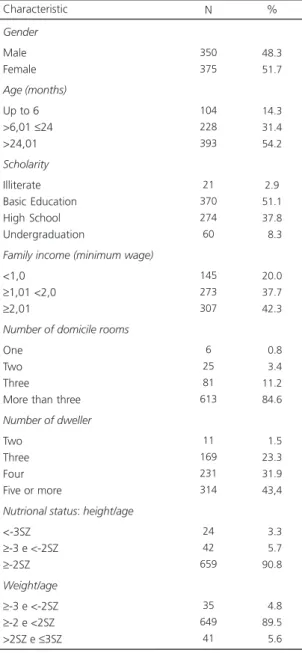
Table 1. Description of the sample according to socioeconomic, demographic, nutritional status, and living condition characteristics. Minas Gerais (2007).
Gender
Male Female
Age (months)
Up to 6 >6,01 ≤24 >24,01 Scholarity Illiterate Basic Education High School Undergraduation
Family income (minimum wage)
<1,0 ≥1,01 <2,0 ≥2,01
Number of domicile rooms
One Two Three
More than three
Number of dweller
Two Three Four Five or more
Nutrional status: height/age
<-3SZ ≥-3 e <-2SZ ≥-2SZ
Weight/age
≥-3 e <-2SZ ≥-2 e <2SZ >2SZ e ≤3SZ
350 375 104 228 393 21 370 274 60 145 273 307 6 25 81 613 11 169 231 314 24 42 659 35 649 41 48.3 51.7 14.3 31.4 54.2 2.9 51.1 37.8 08.3 20.0 37.7 42.3 00.8 03.4 11.2 84.6 01.5 23.3 31.9 43,4 03.3 05.7 90.8 04.8 89.5 05.6
process the variables whose prevalence ratios and confidence intervals did not change significantly were maintained until a final model was obtained. This model was assessed by Prevalence Ratio (PR) and a Confidence Interval of 95%.
The study followed the regular research norms involving human beings, Resolution nº 196/ 96 from the National Health Council, and was authorized by the Research Ethics Committee of
Hospital Eduardo de Menezes of the Hospital Foundation of the State of Minas Gerais under Protocol number 109/07.
Table 2. Prevalence of anemia in children aged less than 60 months according to demographic and socioeconomic variables. Minas Gerais (2007). Gender Male Female Total Age (months)
Up to 6 >6,01 ≤24 >24,01
Household scholarity responsible
Illiterate
Basic Education complete/incomplete High School
Undergraduation
Family income (minimum wage)
<1,0 ≥1,1 <2,0 ≥2,1
Number of domicile rooms
One Two Three
More than three
Number of dweller
Two Three Four Five or more
117 154 271 44 98 129 11 142 97 21 55 110 106 4 10 30 227 3 58 89 121 33.4 41.1 37.4 42.3 43.0 32.9 52.4 38.4 35.4 35.0 37.9 40.3 34.5 66.7 40.0 37.0 37.0 27.3 34.3 38.5 38.5 233 221 454 60 130 263 10 228 177 39 90 163 201 2 15 51 386 8 111 142 193 66.6 58.9 62.6 57.7 57.0 67.1 47.6 61.6 64.6 65.0 62.1 59.7 65.5 33.3 60.0 63.0 63.0 72.7 65.7 61.5 61.5 Variables n % Yes n % No Anemia 0.038* 0.024 0.437 0.355 0.560 0.693 1.00 1.38 1.49 1.53 2.04 1.15 1.01 1.00 1.15 1.28 1.00 3.40 1.13 1.00 1.00 1.00 1.39 1.67 1.67
1.02 - 1.87
0.96 - 2.32 1.09 - 2.15
0.74 - 5.59 0.65 - 2.04 0.56 - 1.82
0.76 - 1.74 0.91 - 1.79
0.61 - 18.71 1.50 - 2.26 0.61 - 1.61
0.35 - 5.45 0.43 - 6.46 0.43 - 6.42
p-value PR 95%CI
Note: *Fischer’s exact test.
PR: Prevalence Ratio; 95%CI: 95% Confidence Interval.
The children with hemoglobin level below 11 g/dL were sent, along with their record, to the health unit nearest to their home for treatment.
R E S U L T S
(Standard Deviation-SD=17.3 months), and the percentage of males was slightly smaller (48.3%) (Table 1).
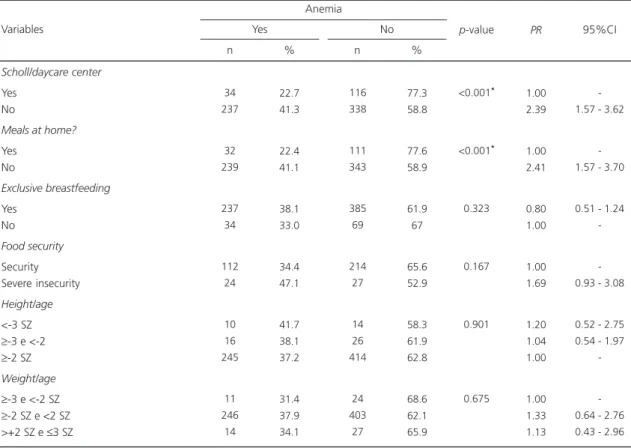
The prevalence of anemia in the total sample was 37.4%. The highest prevalence was 43.0% in the age group 6-24 months (Table 2). Some (4.8%) children were underweight for their age according to the weight-for-age indicator, and 5.7% were overweight. According to the weight-for-height indicator, 7.9% of the children were overweight. The nutritional indicators were not associated with anemia regardless of situation (Table 3).
The final model was constructed by selecting the variables statistically (p<0.05) associated with anemia, namely gender, age group, and not frequenting a daycare center, and
the variables with p<0.20 (food security and weight-for-height).
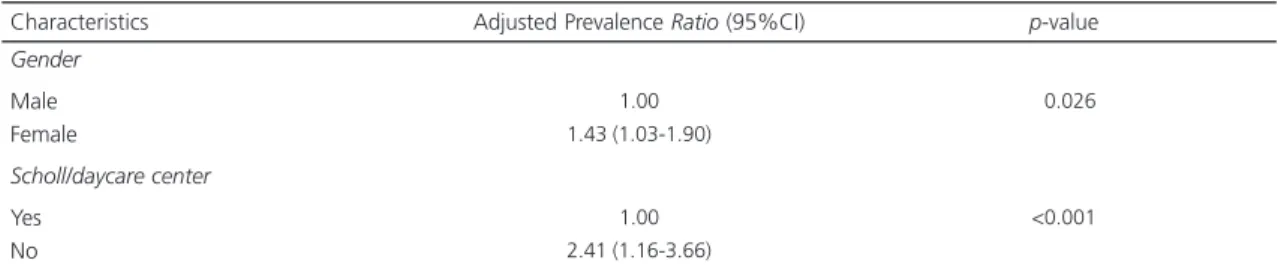
Table 4 shows the variables that remained in the adjusted multivariate regression model. After adjustment for the variables of the same level, age lost its statistical significance, and being female and not frequenting a daycare center remained associated with anemia.
D I S C U S S I O N
The present population-based study showed that more than one third (37.4%) of the children under 60 months of age from the state of Minas Gerais are anemic. Although deficiency of other nutrients may determine anemia, iron-deficiency is by far the most common cause in
Table 3. Prevalence of anemia in children aged less than 60 months according to frequenting a daycare center status, breastfeeding status, food security level, and nutritional status. Minas Gerais (2007).
Scholl/daycare center
Yes No
Meals at home?
Yes No Exclusive breastfeeding Yes No Food security Security Severe insecurity Height/age <-3 SZ ≥-3 e <-2 ≥-2 SZ
Weight/age
≥-3 e <-2 SZ ≥-2 SZ e <2 SZ >+2 SZ e ≤3 SZ
34 237 32 239 237 34 112 24 10 16 245 11 246 14 22.7 41.3 22.4 41.1 38.1 33.0 34.4 47.1 41.7 38.1 37.2 31.4 37.9 34.1 116 338 111 343 385 69 214 27 14 26 414 24 403 27 77.3 58.8 77.6 58.9 61.9 67 65.6 52.9 58.3 61.9 62.8 68.6 62.1 65.9 Variables n % Yes n % No Anemia <0.001* <0.001* 0.323 0.167 0.901 0.675 1.00 2.39 1.00 2.41 0.80 1.00 1.00 1.69 1.20 1.04 1.00 1.00 1.33 1.13 -1.57 - 3.62
-1.57 - 3.70
0.51 - 1.24
-0.93 - 3.08
0.52 - 2.75 0.54 - 1.97
-0.64 - 2.76 0.43 - 2.96
p-value PR 95%CI
Note: *Fischer’s exact test.
regions where the prevalence of anemia is high17.
Therefore, the terms anemia and iron-deficiency anemia are used interchangeably in public health; according to the WHO, anemia is synonymous with iron-deficiency anemia18
. With parameters
defined by the WHO, this prevalence represents a moderate public health problem in the state19.
Studies in different Brazilian municipalities found similar results, with anemia being significantly associated with more individuals per household and worse education level of the family
head20,21.However, in this study, these variables
were not associated with anemia. The study concludes that frequenting a daycare center or similar institutions in Minas Gerais during the study age (first 60 months of life) was protective because the prevalence of anemia in children who did not frequent a daycare center (41.3%) was almost double of those who did (22.7%) and had meals in schools.
Daycare centers are institutions that care for children aged zero to three years and preschoolers aged four to six years. They are an option for the population given the new socioeconomic reality of the last decades. Since children remain in a daycare center from eight to ten hours a day, this facility has an important role in the child’s formation, improving their health since in addition to education, the children receive basic health care and quality meals that satisfy their nutritional needs22. Studies conducted in the
state of Paraíba and in the municipality of Viçosa
(MG), with children aged 24 to 72 months who frequent daycare centers found a relatively low
prevalence of anemia: 11.2%23 and 15.4%24,
respectively.
The prevalence of anemia among children who are exclusively breastfed was of 38.1%. Important for preventing childhood anemia, breastfeeding for more than six months increases the risk of anemia since 90.0% of the iron requirement of the child comes from complementary foods25.A recent study on exclusive breastfeeding
and iron-deficiency anemia found that 26.1% of the breastfed children were iron deficient, and 23.9% had iron-deficiency anemia26. Improving
the iron reserves of the mother is an alternative to improve the iron reserves of breastfed children. Iron reserves at birth are smaller when the mother’s reserves are low, reflecting the limited ability of the fetus to acquire iron. A study done in Indonesia with breastfed children aged four to six months found a prevalence of anemia of 37.0% (Hb <10.0 g/dL), having as associated factor the mother’s hemoglobin level27-29.
Among children aged 6 to 24 months, the prevalence of anemia was 43%, and the association was statistically significant.
Above six months, the high prevalence can be explained by the depletion of the body’s iron reserves acquired during intrauterine life along with the higher nutritional requirement due to faster growth. Together with a delayed introduction of high-iron foods, this constitutes a scenario that facilitates the development of anemia in this life stage30.
Qualitative or quantitative deficiency of dietary iron stemming from low iron intake or low
Table 4. Prevalence ratio of anemia adjusted for multivariate regression model. Minas Gerais (2007).
Gender
Male Female
Scholl/daycare center
Yes No
1.00 1.43 (1.03-1.90)
1.00 2.41 (1.16-3.66)
<0.026
<0.001
Note: 95%CI: 95% Confidence Interval.
bioavailability in foods has been pointed out as the most common cause of anemia31. In this
perspective, we assessed exposure to food insecurity at the household, a hypothesis in the scenario of social inequalities that can explain the high prevalence of iron-deficiency anemia. The result, regardless of the statistically insignificant association, indicated that a slight improvement in the food insecurity situation of the family decreased the risk of anemia.
The concept of Food and Nutrition Security (FNS) in Article 3 of the Food and Nutrition Security Law is defined as:
The realization of everyone’s right to regular and permanent access to quality foods, in adequate amounts, without compromising access to other essential needs, based on food practices that promote health, respect cultural diversity, and that are socially, economically, and environmentally sustainable (National Food Security Council, Law nº 11.346/15/ 09/2006)32.
Food security is first and foremost a right to life and being exposed to an inappropriate diet or not having the means to acquire an appropriate diet is an affront and a violation of an established right. If on the one hand proper food is an individual right and ensuring FNS a state obligation, on the other hand identifying food insecurity of population groups in different locations is imperative, since it allows the planning of actions that materialize the condition for citizenship33,34
.
The situation of food security, that is, a situation in which there is no food restriction of any kind in the household, was identified in 44.8% of the households13,34. However, children
living in these households presented a prevalence of anemia of 34.5%.
Severe food insecurity, a situation in which food restriction is such that the children in the household also experience hunger, was identified in 7.0% of the study households, with a
prevalence of anemia of 47.1%. In this scenario people live in a state of restriction, resulting from inadequate economic resources to allow a minimum level of consumption12.
The results regarding the food security situation, even though not statistically associated with anemia, show that anemia has disseminated throughout all social classes and in families from different income strata. However, the prevalence tends to be highest in the most socioeconomically vulnerable groups, as seen in a study conducted in a municipality located in the Brazilian Northeast region12.
Guarantee of income availability is unarguably one of the determinants of the level of food and nutrition security. However, finding that iron-deficiency anemia was present in 34.5% of the food-secure children evidences the importance of studying the singularities of its social distribution more thoroughly. As stated by Szarfarc35: “It is essential to know exactly how
socioeconomic condition impacts dietary iron and the mechanisms in which this nutrient determines its organic reserves and consequently, the blood hemoglobin level” (p.6).
In this sense, the results provide consistent data for new studies since desirable information, such as identification of the social determinants of anemia in children under 60 months of age, was not found. The study factors related to the outcome indicate that certain interventions outside of the health sector are possible, such as in the field of food security. Regarding the health area, the performance of studies at regular intervals with the same age group allows the creation of temporal series that help to discover effective interventions for the prevention of iron-deficiency anemia in this group. The present study can be a first step in this direction.
C O N C L U S I O N
and perversely compromise the child’s development. The study revealed a risky scenario that assumes different forms regarding iron-deficiency anemia: age (children younger than two years old), gender (being female), and not frequenting a daycare center are important factors that should be considered during these children’s lives.
A C K N O W L E D G E M E N T S
The authors thank Prof. Dr. Enrico Colossimo for designing the sampling strategy. This study was sponsored by the Health Department of the State of
Minas Gerais, State Coordination of Food and Nutrition and General Coordination of the National Policy of Food and Nutrition, Ministry of Health.
C O N T R I B U T I O N S
MBMC LISBÔA conceived and designed the study, collected data, performed the statistical analyses, interpreted the results, and wrote the manuscript. EO OLIVEIRA performed the statistical analyses and interpreted the results. JA LAMOUNIER J reviewed the manuscript. CAM SILVA performed the statistical analyses, interpreted the results, and reviewed the manuscript. RN FREITAS interpreted the results and reviewed the manuscript.
R E F E R E N C E S
1. World Health Organization. Worldwide prevalence of anaemia 1993-2005: WHO Global Database on Anaemia. Geneva: WHO; 2008.
2. Rappaport S. Hematologia: introdução. São Paulo: Roca; 1990.
3. Braga J, Vitalle MS. Deficiência de ferro na criança. Rev Bras Hematol Hemoter. 2010; 32(Supl. 2):38-44. 4. Brasil. Ministério da Saúde. Pesquisa Nacional de Demografia e Saúde da Criança e da Mulher: relatório final. Brasília: Ministério da Saúde; 2008 [acesso 2009 maio 4]. Disponível em: www.saude. gov.br/pnds2006
5. Leal L, Batista Filho M, Lira P, Figueiroa J, Osório M. Prevalência da anemia e fatores associados em crianças de seis a 59 meses de Pernambuco. Rev Saúde Pública. 2011; 45(3):457-66.
6. Neuman N, Tanaka O, Szarfarc S, Guimarães P, Victora C. Prevalência e fatores de risco para a anemia no Sul do Brasil. Rev Saúde Pública. 2000; 34(1):56-63.
7. Netto M, Rocha D, Franceschini S, Lamounier J. Fatores associados à anemia em lactentes nascidos a termo e sem baixo peso. Rev Assoc Med Bras. 2011; 57(5):550-8.
8. Silva DG, Franceschini SCC, Priore SE, Ribeiro SMR, Szarfarc SC, Souza SB, et al. Anemia ferropriva em crianças de 6 a 12 meses atendidas na rede pública de saúde do município de Viçosa, Minas Gerais. Rev Nutr. 2002; 15(3):301-8. http://dx.doi.org/ 10.1590/S1415-52732002000300006
9. Fundação João Pinheiro. Belo Horizonte; 2013 [acesso 2013 ago 20]. Disponível em: www.fjp. gov.br
10. Roncalli AG, Frazão P, Pattussi MP, Araújo IC, Ely HC, Batista SM. Projeto SB2000: uma perspectiva para a consolidação da Epidemiologia em Saúde Pública. Rev Bras Odont Saúde Colet. 2000; 1(2):9-25. 11. Katz J. Sample-size implications for population-based cluster surveys of nutritional status. Am J Clin Nutr. 1995; 61(1):155-60.
12. Oliveira J, Lira P, Andrade S, Sales A, Maia S, Batista Filho M. Insegurança alimentar e estado nutricional de crianças de São João do Tigre, no semiárido do Nordeste.Rev Bras Epidemiol. 2009; 12(3):413-23. 13. Segall-Corrêa AM, Pérez-Escamilla R, Maranha LK, Sampaio MFA, Yuyama L, Alencar F, et al. Relatório Técnico (versão preliminar). Acompanhamento e avaliação da segurança alimentar de famílias brasi-leiras: validação de metodologia e de instrumento de coleta de informação. Campinas: Unicamp; 2004.
14. Organizacion Panamericana de la Salud. Indicadores para evaluar las practicas de lactancia materna. Genebra: OMS; 1991.
15. Jellife DB. The assessment of the nutritional status of the community. Geneva: WHO; 1968.
16. World Health Organization.Bulletin of the World Health Organization. Geneva: WHO; 2006 [cited 2008 June 1]. Available from: www.who.int/bulletin 17. Duarte LS, Fujimori E, Minagawa AT, Schoeps FA, Monteiro RMJM. Aleitamento materno e níveis de hemoglobina em crianças menores de 2 anos em município do estado de São Paulo, Brasil. Rev Nutr. 2007; 20(2):149-57. http://dx.doi.org/10.1590/ S1415-52732007000200004
18. World Health Organization. 3rd Report on the world
19. World Health Organization, United Nations Children’s Fund, United Nations University. Iron deficiency anaemia: Assessment, prevention and control. A guide for program managers. Geneva: WHO; 2001.
20. Castro T, Silva-Nunes M, Conde W, Muniz P, Cardoso M. Anemia e deficiência de ferro em pré--escolares da Amazônia Ocidental Brasileira: preva-lência e fatores associados. Cad Saúde Pública. 2011; 27(1):131-42.
21. Vieira R, Ferreira H, Costa A, Moura F, Florencio T, Torres Z. Prevalência e fatores de risco para a ane-mia em crianças pré-escolares do Estado de Alagoas, Brasil. Rev Bras Saúde Mater Infant.2010; 10(1):107-16.
22. Oliveira DR, Miguel ASB. A nova concepção de creche pós - LDB (Lei de Diretrizes e Bases da Edu-cação Nacional - Lei nº 9.394/96). Revista Fafibe. 2012 [acesso 2013 dez 8]; 5(5). Disponível em: http://www.unifafibe.com.br/revistafafibeonline 23. Castro TG, Novaes JF, Silva MR, Costa NB,
Franceschini SCC, Tinoco ALA, et al. Caracterização do consumo alimentar, ambiente socioeconômico e estado nutricional de pré-escolares de creches municipais. Rev Nutr. 2005; 18(3):321-30. http:// dx.doi.org/10.1590/S1415-52732005000300004 24. Pedraza DF, Rocha ACD, Sousa, CPC. Crescimento e deficiências de micronutrientes: perfil das crianças assistidas no núcleo de creches do governo da Paraíba, Brasil. Ciênc Saúde Colet. 2013; 18(11):3379-90.
25. Agostoni C, Decsi T, Fewtrell M, Goulet O, Kolacek S, Koletzko B, et al. Complementary feeding: A commentary by the ESPGHAN Committee on Nutrition. J Pediatr Gastroenterol Nutr. 2008; 46(1):99-110.
26. Marques RFSV, Taddei JAAC, Lopez FA, Braga JAP. Breastfeeding exclusively and iron deficiency anemia during the first 6 months of age. Rev Assoc Med Bras. 2014; 60(1):18-22.
27. Bortolini G, Vitolo M. The impact of systematic dietary counseling during the first year of life on prevalence rates of anemia and iron deficiency at 12-16 months. J.Pediatr. 2012; 88(1):33-9. 28. Teixeira M, Lira P, Coutinho S, Eickmann S, Lima M.
Influence of breastfeeding type and maternal anemia on hemoglobin concentration in 6-month-old infants. J Pediatr. 2010; 86(1):65-72.
29. De Pee S, Bloem MW, Sari M, Kiess L, Yip R, Kosen S. The high prevalence of low hemoglobin concentration among Indonesian infants aged 3-5 months is related to maternal anemia. J Nutr. 2002; 132(8):2215-21.
30. Netto MP, Rocha DS, Franceschini SCC, Lamounier JA. Fatores associados à anemia em lactentes nascidos a termo e sem baixo peso. Rev Assoc Med Bras. 2011; 57(5):550-8.
31. Silva S, Batista Filho M, Miglioli, T. Prevalência e fa-tores de risco de anemia em mães e filhos no Estado de Pernambuco. Rev Bras Epidemiol. 2008; 11(2):266-77.
32. Brasil. Presidência da República. Lei nº 11.346, de 15 de setembro de 2006. Cria o Sistema Nacional de Segurança Alimentar e Nutricional - SISAN com vistas em assegurar o direito humano à alimentação adequada e dá outras providências. Diário Oficial da União. 2006; 18 set.
33. Valente FL. Direito humano à alimentação. São Paulo: Cortez; 2002.
34. Souza-Esquerdo VF, Bergamasco SMPP, Oliveira JTA, Oliveira ES. Segurança alimentar e qualidade de vida em assentamentos rurais. Segur Aliment Nutr. 2013; 20(1):13-23.
35. Szarfarc, SC.Políticas públicas para o controle da anemia ferropriva. Rev Bras Hematol Hemoter. 2010; 32(Supl. 2):2-7.