DOI: http://dx.doi.org/10.5007/1980-0037.2013v15n2p193
original article
RBCDH
Licence Creative Commom
CC
1 Universidade de Pernambuco. Curso graduação em Fisioterapia. Petrolina, PE. Brasil.
2 Universidade de Pernambuco. Programa Associado de Pós--graduação em Educação Física UPE/UFPB. Recife, PE. Brasil.
3 Universidade de Pernambuco. Departamento de Fisioterapia. Petrolina, PE, Brasil.
4 Universidade de Pernambuco. Programa de Mestrado em Hebia-tria. Recife, PE. Brasil.
Received: 13 April 2012 Accepted: 09 August 2012
Electromyographic activity and scapular
dyskenesia in athletes with and without
shoulder impingement syndrome
Atividade eletromiográica e discinesia escapular em
atletas com e sem síndrome do impacto no ombro
Valéria Mayaly Alves de Oliveira1
Laísla da Silva Paixão Batista1
André Luiz Torres Pirauá2
Ana Carolina Rodarti Pitangui3,4
Rodrigo Cappato de Araújo2,3,4
Abstract– he objective of this study was to evaluate the presence of scapular dyskinesis and pain, satisfaction and function levels, as well as analyze the activation of scapular stabilizing muscles during isometric tasks of shoulder abduction in athletes with and without SIS. hirty men athletes were divided into two groups: SIS group and Control group. he volunteers answered the Penn Shoulder Score questionnaire translated into Portuguese, which evaluates pain, dysfunction, and satisfaction with the shoulder. hey were also evaluated for the presence of scapular dyskinesis through the Slide Scapular Lateral Test. he electromyographic activity of the upper trapezius (UT), middle trapezius (MT), lower trapezius (LT), and serratus anterior (SA) muscles was evaluated during the isometric shoulder abduction in the frontal and scapular planes at angles of 45º, 90°, and 120°. he SIS group had a higher indication of pain and scapular dyskinesis when compared to control group. In the SIS group, higher values of electromyographic ratios between UT/LT and UT/SA were observed in the frontal plane in relation to the scapular plane. he conclusion can be made that pain, scapular dyskinesis, and altered muscle activation pattern was more frequent in the SIS group compared to the Control group. herefore, exercises that emphasize the scapular muscles should be considered when planning rehabilitation programs for the SIS.
Key words: Electromyography; Scapula; Impingement syndrome.
INTRODUCTION
he combined movements of the scapula, humerus, and clavicle during arm elevation meet a balanced and coordinated rhythm of muscle actions, called scapulothoracic rhythm. hrough the action of scapular muscles, the scapula acts as a stable base for the rotator cuf muscles and allows
maximum eiciency of the shoulder during movement1. Any change in
this rhythm may predispose a condition known as scapular dyskinesis2.
Scapular dyskinesis, in turn, has been associated with complaints of shoulder pain. his pain mainly afects individuals who perform physi-cal activities that involve overload and/or repetitive overhead activities3,4.
Moreover, changes in the scapular kinematics may result in another painful condition, especially during activities that go beyond the 90° of elevation of the arm: the shoulder impingement syndrome (SIS). he SIS is deined as the compression of the sot tissues contained in the subacromial space during movements that reduce the space between the coracoacromial arch and the greater tubercle of the humerus5-8.
Several authors suggest that abnormalities in the shoulder and scapular movement are most commonly caused by the imbalance of the scapular muscles9-12. In asymptomatic individuals during the movement of shoulder
abduction, the upward rotation and posterior tilt of the scapula progres-sively increase with arm elevation, since there is greater muscle activity of the serratus anterior and lower trapezius during the movement, although the activation of the upper trapezius in the last degrees of amplitude is also necessary2,13. However, in symptomatic individuals, the upper trapezius is
more active due to the compensatory strategy that these individuals per-form due to decreased activation of the serratus anterior muscle. his im-balance found in individuals with SIS results in decreased upward rotation of the scapula, increased anterior tilt of the scapula, and consequently less maintenance of the subacromial space11,14. hus, the abnormal kinematics
of the shoulder increases propensity to impact during arm elevation8,11.
Considering the clinical importance that shoulder impingement syn-drome has, the objective of this study was to analyze the pain, satisfac-tion, and function levels of the shoulder, as well as analyze the presence of scapular dyskinesis and the activation of scapular stabilizing muscles dur-ing isometric tasks of arm elevation in athletes with and without shoulder impingement syndrome.
METHODOLOGICAL PROCEDURES
Study Design and Sample
presenting the project, 17 athletes reported that they felt pain in the shoul-der joint and expressed desire to participate in the study. However, only 15 athletes met the inclusion and exclusion criteria to form the SIS group. From this, another 15 asymptomatic athletes were selected to compose the control group, thus ensuring two equal groups.
Volunteers in the control group needed to present the dominant asymp-tomatic shoulder, whereas in the SIS group volunteers were included that had signs, symptoms, and a conirmed diagnosis of SIS, reporting shoulder pain for at least six weeks and presenting pain on palpation and positive results in at least two of the tests (Neer, Hawkins, and Jobe)15. he volunteers
who had a history of surgery, fractures, or degenerative joint diseases in the upper limb were not included in the study. All volunteers needed to practice physical activity for at least six months with a minimum frequency of four times per week and weekly duration of more than six hours of training. Furthermore, the SIS group only included volunteers that had not done physical or medication therapies (use of anti-inlammatory drugs) for at least six months. All signed a Term of Free and Clear Consent and the study was approved by the Research Ethics Committee of the University of Pernambuco under protocol 274/10.
heir height was determined using a scientiic portable stadiometer (Seca, Hamburg, Germany), and the total body mass was measured on a mechanical scale properly calibrated (Filizola, São Paulo, SP, Brazil) with all procedures in accordance with the standards of the International Society for the Advancement of Kinanthropometry (ISAK).
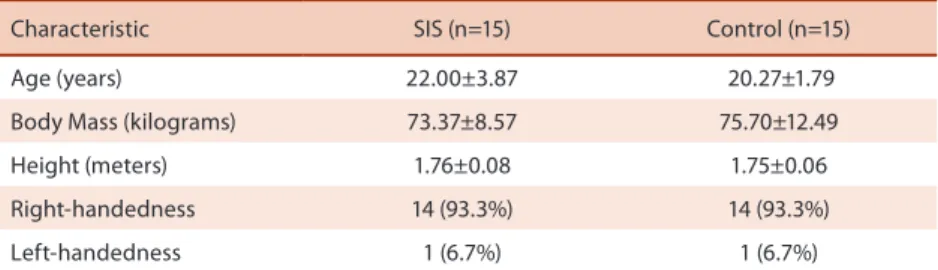
Table 1. Standard mean and deviation of anthropometric data, age, as well as absolute and relative frequency
of the functional dominance of groups evaluated
Characteristic SIS (n=15) Control (n=15)
Age (years) 22.00±3.87 20.27±1.79
Body Mass (kilograms) 73.37±8.57 75.70±12.49
Height (meters) 1.76±0.08 1.75±0.06
Right-handedness 14 (93.3%) 14 (93.3%)
Left-handedness 1 (6.7%) 1 (6.7%)
Evaluation Procedures
Each volunteer underwent an initial assessment to determine to which group he would belong. hen, the volunteer was asked to ill out a ques-tionnaire that assesses the pain, satisfaction, and function of the shoulder using the Penn Shoulder Score in Portuguese (PSS-Brazil). he score ranges from zero to 100 points, the maximum score being indicative of no pain, high satisfaction, and good function16.
occurs when the diference between the measurements of let and right exceeds 15 mm3.
From these data, the order of tasks was drawn, and then trichotomy, antisepsis with alcohol, and mild abrasion of the skin was carried out in places where the diferential electrodes and the reference electrode would be positioned. Surface electrodes of the trapezius muscle - upper ibers (UT), middle ibers (MT), and lower ibers (LT) - were positioned with tape, longitudinally over the muscle belly, approximately in the direction of the muscle ibers, according to the recommendations of SENIAM17. However, to
place the electrode in the serratus anterior muscle (SA), recommendations proposed by Hintermeister et al.18 were followed. he reference electrode
was positioned on the ulnar styloid process of the contralateral limb of the one being evaluated.
Later, the volunteer was asked to perform three maximum voluntary isometric contractions (MVIC) with the shoulder positioned at 90° of ab-duction in the scapular plane, holding a load of 2 kg in both hands for 6 s. A two-minute interval was allowed between each contraction to avoid fatigue. To normalize the data, instead of maximum voluntary isometric contrac-tion, the maximum amplitude recorded during three MVICs was used due to fewer variations between the values for each person, less risk of muscle strain and fatigue, and better control of diferences in muscle activation19,20
.
The activity proposed to the volunteer was to maintain, by means of isometric muscle contraction, the arm abduction in the scapular and fron-tal planes for eight seconds at different angles (45°, 90°. and 120°). The volunteers performed the unilateral movement with the dominant limb in all activities and in MVICs. A universal goniometer was used for accurate determination of the various angles of arm abduction and for scapular plane orientation. There was a 2-minuteinterval between each activity to minimize the effects of muscle fatigue.
Electromyography
To collect the trapezius (UT, MT, and LT) and SA muscles’ electromyo-graphic signal, four channels connected to the electromyograph Myosystem Br-1 (DatahominisTecnologia Ltda®, Uberlândia - Brazil) were used, which
caught the myoelectric activity through surface, differential, and simple electrodes with a gain of 20 times, consisting of two parallel rectangular pure silver bars (10 x 2 x 1 mm with a distance of 10 mm between bars) (DatahominisTecnologia Ltda®, Uberlândia - Brazil).
The software Myosystem Br-1 version 3.5 (DatahominisTecnologia Ltda®, Uberlândia - Brazil) was used for the EMG signal processing. Just
Electromyographic ratio
he ratio of muscle activity between UT/LT and UT/SA in each task could be assessed by calculating the EMG ratio. For this, the normalized value of UT was divided by the normalized value of LT and SA, respectively. he ratio would be considered low if it was less than 0.3, which means the activation of LT or SA is three times higher compared to UT. If the value of the ratio was close to or greater than 1, it is interpreted as a similar muscle activation between the two muscles or greater predominance of UT over SA and LT21.
Statistical analysis
Statistics were analyzed using the SPSS version 16.0 sotware. he normality of the data was veriied through the Shapiro-Wilk test. he chi-square test was used to compare the dyskinesis and the t test of unpaired Student for the scores of the PSS-Brazil. In the intragroup analysis, ANOVA repeated measures and post hoc Tukey was used for EMG activity and comparisons between groups were analyzed by the t test of unpaired Student. All of them had a signiicance level of 5%.
RESULTS
PSS-Brazil and dyskinesis
he intergroup comparison revealed diferences between the total scores of the PSS-Brazil as well as the values of the areas of pain, satisfaction, and function (p < 0.02). Greater scapular dyskinesis was observed in the SIS group when compared to the control group (p = 0.01). (Table 2).
Electromyography - Scapular plane
he results for the control group indicated that the EMG activity of all muscles evaluated was greater at angles of 90° and 120° in relation to 45° (p < 0.03), and EMG activity of the SA was greater at 120° when compared to 90° (p < 0.01). For the SIS group, the results showed that the EMG activity of all muscles evaluated, with the exception of LT, was greater at angles of 90° and 120° in relation to 45° (p < 0.03). Moreover, it was observed that at 120° of abduction, the MT had lower EMG activity compared to other muscles (p = 0.02) (Table 3). No statistical diference was observed in the intergroup comparison (p > 0.09).
Table 2. Absolute and relative frequency of scapular dyskinesis and mean scores of the PSS-Brazil of the control and SIS group.
Dyskinesis PSS-Brazil
Present Absent Pain Satisfaction Function Total Score
SIS group 14 (93.3%) 1 (6.7%) 19.73±7.18 6.13±2.85 47.20±6.42 73.07±12.75
Control group 6 (40%) 9 (60%) 26.73±4.57 8.13±2.07 56.13±5.44 91.00±11.51
Frontal plane
For both groups, increased scapular muscle activation was observed dur-ing elevation at 90° and 120° in relation to the angle of 45° (p < 0.02). In the control group, the MT was more active in abduction at 45° and 90° compared to the LT and SA muscles (p < 0.03). However, when compar-ing the muscle activity in the angles of 90° and 120°, it can be seen that all the muscles are most active at 120° (p < 0.02), except for the MT (p = 0.06). In SIS group, the UT indicated greater muscle activity than the LT at a 45° elevation (p = 0.001) and greater activation than SA during 90° of elevation (p = 0.01) (Table 3). No statistical diference was observed in the intergroup comparison (p > 0.07).
Frontal plane vs. Scapular plane
For the control group, the results showed that the tasks in the frontal plane yielded increased activity of the UT, LT, and SA muscles at 120° (p < 0.03) and of the MT muscle at 90° and 120° (p < 0.02). However, for the LT muscle at 45°, a decrease in electromyographic activity in the frontal plane (p = 0.01) was observed.
The results for the SIS group showed increased activity of UT and MT muscles at angles of 90° and 120° (p < 0.01), while performing tasks in the frontal plane in relation to the scapular plane. Further-more, lower activity was observed in the SA muscle when elevating the arm at 45° in the frontal plane (p = 0.03) when compared to the scapular plane.
UT/SA and UT/LT ratio
he results for the control group showed that the ratio UT/SA had lower values at 90° and 120° compared to 45° in both planes of task execution (p < 0.05). No diference was observed in the values of the ratio UT/LT in comparing the angles (p > 0.12). However, it was observed that the values of the ratios UT/SA and UT/LT were higher when carrying out the tasks in the frontal plane (p < 0.02).
DISCUSSION
Several studies1,2,22 have evaluated the relationship between dyskinesis,
pain, and muscle activation pattern during arm elevation in order to identify possible changes in symptomatic individuals and their rela-tionship with diferent degrees of abduction, whether on the frontal or scapular plane.
The dynamic stability of the scapula comes from the muscle action of
the trapezius and SA ibers23, where any impairment in the activation of
these muscles can trigger abnormalities in shoulder kinematics and conse-quently dysfunction of this joint24,25. The results of this study showed higher
incidence of pain and dyskinesis in individuals with SIS, corroborating with other texts, since changes in scapular motility and positioning are found in 68 to 100% of individuals that have an injury in their shoulder26.
Complaints of pain are reported in 80% of the cases26.
Analyzing the results of PSS-Brazil, it can be seen that signiicant differences were found in the total score and levels of pain, degree of
Table 3. Normalized electromyographic records of the Trapezius - upper ibers (UT), middle ibers (TM), and lower ibers (LT) - and Serratus Anterior (SA)
muscles during Open Kinetic Chain (OKC) activities on frontal and scapular planes
Scapular plane
SIS group Control group
45° 90° 120° 45° 90° 120°
UT 0.38±0.13 0.51±0.11fǂ 0.63±0.11a,gǂ 0.39±0.13 0.54±0.14f 0.62±0.12gǂ
MT 0.26±0.12 0.39±0.12fǂ 0.44±0.14gǂ 0.34±0.15 0.48±0.15fǂ 0.53±0.21gǂ
LT 0.47±0.56 0.52±0.14 0.63±0.20b 0.37±0.13ǂ 0.57±0.21f 0.67±0.24gǂ
SA 0.29±0.10ǂ 0.64±0.43f 0.74±0.15c,g 0.42±0.51 0.52±0.13f 0.77±0.18g,hǂ
Frontal plane
UT 0.34±0.14d 0.62±0.13e,f 0.82±0.16g 0.33±0.15 0.57±0.13f 0.87±0.20g,h
MT 0.32±0.21 0.65±0.27f 0.80±0.21g 0.44±0.20b,c 0.86±0.39b,c,f 1.05±0.42g
LT 0.20±0.08 0.49±0.19f 0.88±0.42g,h 0.22±0.11 0.48±0.20f 0.88±0.37g,h
SA 0.23±0.06 0.45±0.10f 0.76±0.18g,h 0.22±0.10 0.46±0.11f 0.85±0.19g,h
P < 0.05; (a) indicates the statistical diference between UT and MT, (b) between LT and MT, (c) between SA and MT, (d) between UT and LT, (e) between UT and SA, (f) indicates the diference between 45° and 90°, (g) between 45° and 120° and (h) between 90° and 120°. (ǂ) Indicates the statistical diference between the EMG activity in the scapular plane and frontal plane.
Table 4. Ratio between the activity of the Upper Trapezius and Serratus Anterior (UT/SA) and Upper Trapezius and Lower Trapezius (UT/LT) muscles during
Open Kinetic Chain (OKC) activities on frontal and scapular planes
Scapular plane
SIS group Control group
45° 90° 120° 45° 90° 120°
UT/SA 1.35±0.51 1.41±1.80 0.88±0.20ǂ 1.36±0.53 1.05±0.26aǂ 0.83±0.16bǂ
UT/LT 1.21±0.60ǂ 1.02±0.22ǂ 1.13±0.62 1.19±0.56ǂ 0.99±0.18ǂ 1.05±0.50
Frontal plane
UT/SA 1.50±0.41 1.41±1.21 1.12±0.24b,cǂ 1.87±1.12ǂ 1.32±0.52aǂ 1.05±0.33bǂ
UT/LT 1.88±1.10ǂ 1.44±0.53ǂ 1.05 ± 0.23b,c 1.57±0.55ǂ 1.35±0.51ǂ 1.18±0.62ǂ
satisfaction, and shoulder function. However, aspects of pain and func-tion, as well as total score, gain prominence because besides the statistical difference, all these aspects differ between groups and are higher than the levels reported in other texts and are considered clinically signiicant (6.51 for pain, 8.16 for function and 12.1 for total score)27. In the present study,
we found mean differences of 7.00, 8.93, and 17.3 points in the assessment of pain, function, and total score, respectively.
These indings are extremely important because they demonstrate that many individuals who practice different sports live with signiicant deicits in function and relevant levels of pain without any follow-up be it therapeutic or preventive. This reinforces the importance of greater at-tention by different health professionals in monitoring this public in order to act not only in the early detection and treatment, but also in preventing this problem, thus ensuring improved health and functional performance.
In the present study, there was a progressive increase in the activity of all muscles according to the degree of elevation of the arm when analyzing the tasks in the scapular plane of asymptomatic individuals. When Ludewig et al.10 compared the kinematics and activity of the scapular muscles in
asymptomatic individuals and with SIS, they also found that asymptomatic individuals had increased electromyographic activity concurrent with the increase of the angle, especially between the angles of 90° and 120°. Fur-thermore, in this study it was observed that the SA became more active at 120° of abduction in individuals without SIS, proving thus a greater need for stabilization, upward rotation, and posterior tilt of the scapula in this angle. In the SIS group, a progressive increase in the activation of all mus-cles was also seen with the increase in angle on the scapular plane, with the exception of LT. The LT muscle is antagonistic to the UT. Thus, the imbalance in the activation of these muscles may contribute to alterations in scapular kinematics and consequently reduce the subacromial space10.
The MT, in turn, plays an important role in stabilizing and controlling the scapular position. Cools et al.20 state that this muscle is active during
shoulder abduction because it acts as a stabilizer while contracting eccentri-cally to control the change of position of the scapula produced by UT and SA. However, it was seen in their study that changes in MT activation can be found in individuals with SIS, agreeing with the results of this study in which the MT showed less activation in the last degrees of abduction in relation to other muscles.
Tucker et al.23 observed that the MT has different muscle activation
between individuals with and without SIS. The MT tends to ix the scapular shaft to allow the controlled upward rotation of the scapula, but changes in the activity of this muscle can compromise the function of scapular positioning and possibly trigger scapular dyskinesis.
al.20 reported that different trapezius ibers react differently. As the SA
contracts, the scapula tends to lateralization, but this displacement tends to be resisted by the LT, which is continuously changing in length to stabilize the rotation axis. The UT in turn exerts higher rotational movement around the axis, complementing the action of the SA. Therefore, although the MT is very strong, it is located near the scapula’s axis of rotation, and therefore, its ability to generate torque is decreased, especially in the last degrees of scapular abduction, which explains the behavior of the MT in this study.
As to individuals in the SIS group, the elevation in the frontal plane showed an increase in activity of the UT in relation to the LT at 45°. Cools et al.20 found delay in the UT activation in individuals with SIS during
the irst degrees of elevation when comparing the relative latency of the three ibers of the trapezius in people with and without SIS. Thus, the delay in the activation of the LT can lead to a relative increase of the UT. However, the results of this study found that at 90° of abduction, the UT showed higher muscle activity when compared to SA. This behavior can also be seen in the studies of Lin et al.28that reported an increase in the
activity of the UT and a decrease of the SA by analyzing the pattern of muscle activation in individuals with SIS. The increased UT activation results in the elevation of the clavicle and anterior tilt of the scapula and can be seen as a compensatory strategy used by individuals with SIS in an attempt to raise the arm.
When comparing the muscle behavior between frontal and scapular plains, individuals with SIS showed increase in EMG activity of the UT and MT and lower activation of the SA when compared to the scapular plane. Additionally, analysis of EMG ratios could show the scapular muscle imbalance in individuals with SIS. The proportion of activation between the UT and LT during the 45° and 90° and between UT and SA at 120° was signiicantly higher in the frontal plane when compared to the scapular plane. The exercises of arm elevation are widely used during rehabilitation by promoting a strengthening of glenohumeral muscles29. However, it is
important to consider rebalancing the scapular stabilizing muscles prior to glenohumeral strengthening. The exercises in the scapular plane are more indicated to ensure the rebalancing of scapular muscles before a greater activation of the SA and LT.
Limitations -The analysis of the EMG signal and dyskinesis were performed during the execution of isometric tasks, not allowing thus the generalization of the results for dynamic activities. However, isometric contractions provide more reliable results regarding the EMG analysis. Furthermore, this study emphasized the presence of imbalances even while performing tasks considered simple and easy, indicating that additional overload may worsen this condition. However, this hypothesis remains to
be tested. Through these results, future studies can investigate speciic ex
CONCLUSION
Individuals with SIS showed diferences in pain, dyskinesis, and muscle activation levels when compared to asymptomatic individuals. Moreover, it was observed that muscle imbalance is present in tasks considered sim-ple for trained athletes and that this is most evident in the frontal plane. herefore, strengthening scapular muscles must be stressed initially in the SIS treatment and performed preferably in the scapular plane.
REFERÊNCIAS BIBLIOGRÁFICAS
1. Santana EP, Ferreira BC, Ribeiro G. Associação entre discinesia escapular e dor
no ombro de praticantes de natação. Rev Bras Med Esporte 2009;15(5):342-46.
2. Phadke V, Camargo PR, Ludewig PM. Scapular and rotator cuf muscle activity
during arm elevation: a review of normal function and alterations with shoulder impingement: review. Rev Bras Fisioter 2009;13(1):1-9.
3. Kibler WB, McMullen J. Scapular dyskinesis and its relation to shoulder pain. J
Am Acad Orthop Surg 2003;11:142-51.
4. Ruotolo C. Shoulder pain and the overhand athlete. Am J Orthop 2003;32:248-58
5. Ebaugh DD, McClure PW, Karduna A. Efects of shoulder muscle fatigue caused
by repetitive overhead activities on scapulothoracic and glenohumeral kinematics. J Electromyogr Kinesiol 2006;16(3):224-35.
6. Neer CS II. Anterior acromioplasty for chronic impingement in the shoulder: a
preliminary report. J Bone Joint Surg Am 1972;54A:41.
7. Bigliani LU, Levine WN. Current concepts review – Subacromial impingement
syndrome. J Bone Joint Surg 1997;(79)12:1854-66.
8. Endo K, Ikata T, Katoh S, Takeda Y. Radiographic assessment of scapular rotational tilt in chronic shoulder impingement syndrome. J Orthop Sci 2001;6(1):3-10
9. Michener, LA, McClure PW, Karduna AR. Anatomical and biomechanical
mecha-nisms of subacromial impingement syndrome. Clin Biomech 2003;18(5):369-79.
10. Ludewig PM, Cook TM. Alterations in shoulder kinematics and associated
muscle activity in people with symptoms of shoulder impingement. Phys her 2000;80: 276-91.
11. Cools AM, Dewitte V, Lanszweert F, Notebaert D, Roets A, Soetens B, et al.
Reha-bilitation of scapular muscle balance: which exercises to prescribe? Am J Sports Med 2007;35(10):1744-51.
12. Sporrong H, Palmerud G, Kadefors R, Herberts P. he efect of light manual
precision work on shoulder muscles an EMG analysis. J Electromyogr Kinesiol 1998;8:177-84.
13. Ludewig, PM, Cook TM, Nawoczenski, DA. hree-dimensional scapular
orienta-tion and muscle activity at selected posiorienta-tions of humeral elevaorienta-tion. J Orthop Sports Phys her 1996;24(2):54-65.
14. Lukasiewicz, AC, McClure P, Michener L, Pratt N, Sennett B. Comparasion of
3-dimensional scapular position and orientation between subjects with and without shoulder impingement. J Orthop Sports Phys her 1999;29(10):574-86.
15. Corso G. Impingement relief test: Na adjunctive procedure to traditional assessment of shoulder impingement syndrome. J Orthop Sports Phys her 1995;22(5):183-92
16. Napoles BV, Hofman CB, Martins J, Oliveira AS. Tradução e adaptação cultural
do PSS para Língua Portuguesa. Rev Bras Reumatol 2010;50(4):389-407.
17. Hermens HJ, Freiks B, Disselhorst-Klug C, Rau G. Development of
Corresponding author
Rodrigo Cappato de Araújo Universidade de Pernambuco, Campus Petrolina.
Departamento de Fisioterapia. BR 203 Km 2 S/N, Vila Eduardo CEP 56300-000 - Petrolina, PE. Brasil e-mail: [email protected]
18. Hintermeister RA, Lange GW, Schultheis JM, Bey MJ, Rawkins RJ.
Electromyo-graphic activity and applied load during shoulder rehabilitation exercises using elastic resistance. Am J Sports Med 1998;26:210-220.
19. Ekstrom RA, Soderberg GL, Donatelli RA. Normalization procedures using
maximum voluntary isometric contractions for the serratus anterior and trapezius muscles during surface EMG analysis. J Electromyogr Kinesiol 2005;15:418-28.
20. Cools AM, Witvrouw EE, Declercq GA, Danneels LA, Cambier DC. Scapular
mus-cle recruitment patterns: trapezius musmus-cle latency with and without impingement symptoms. Am J Sports Med 2003;31(4):542-9.
21. Martins J, Tucci HT, Andrade R, Araújo RC, Bevilaqua-Grossi D, Oliveira AS.
Electromyographic amplitude ratio of serratus anterior and upper trapezius mus-cles during modiied push-ups and bench press exercises. J Strength Cond Res 2008;2(22):477-84.
22. Cools A, Witvrouw E, Mahieu N, Danneels L. Isokinetic scapular muscle
per-formance in overhead athletes with and without impingement symptoms. J Athl Train 2005;40:104-10.
23. Tucker WS, Armstrong CW, Gribble PA, Timmons MK, Yeasting RA. Scapular
muscle activity in overhead athletes with symptoms of secondary shoulder im-pingement during closed chain exercises. Arch Phys Med Rehabil 2010;91(4):550-6.
24. Park SY, Yoo WG. Diferential activation of parts of the serratus anterior muscle during push-up variations on stable and unstable bases of support. J Electromyogr Kinesiol 2011;21(5):861-7.
25. Kiss RM, Illyés A, Kiss J. Physiotherapy vs. Capsular shit and physiotherapy in
26. multidirectional shoulder joint instability. J Electromyogr Kinesiol 2010;20:489–501.
27. McKenna L, Cunningham J, Straker L. Inter-tester reliability of scapular position in junior swimmers. Phys her Sport 2004;(5):146-55.
28. Michener LA, Snyder AR, Leggin BG. RFesponsiveness of the numeric pain rating
scale in patients witj shoulder pain and the efect of surgical status. J Sport Rehabil 2011;20:115-28.
29. Lin JJ, Hanten WP, Oslon SL, Roddey TS, Soto-Quijano DA, Lim HK, et al.
Functional activity characteristics of individuals with shoulder dysfunctions. J Electromyogr Kinesiol.2005;15(6):576-86.
30. Morrison DS, Greenbaum BS, Einhorn A. Shoulder impingement. Orthop Clin