Continuum Modelling and Numerical Simulation
of Hexagonal Close-Packed Materials
Dissertation presented to the Faculty of Engineering, University of Porto, as a requirement to obtain the PhD degree in Mechanical Engineering, carried out under the supervision of Professor Francisco Manuel Andrade Pires, Assistant Professor, Faculty of Engineering, University of Porto, Professor Abel Dias dos Santos, Assistant Professor, Faculty of Engineering, University of Porto, Professor Augusto Duarte Campos Barata da Rocha, Associate Professor, Faculty of Engineering, University of Porto.
Shenghua Wu
Faculdade de Engenharia da Universidade do Porto
Porto 2013
I
Hexagonal Close-Packed (HCP) metals exhibit a very unconventional mechanical behaviour compared with other metallic materials. This is due to the limited number of slip systems and twining mechanisms. A very pronounced strength asymmetry between yielding in tension and compression is observed at low strain levels and cold rolled sheets also show a strong planar anisotropy. Therefore, it is extremely challenging to develop accurate constitutive models and robust numerical integration algorithms to predict the behaviour of these materials. This has been a major motivation of this thesis. Within the present work, a constitutive model proposed by Cazacu and Barlat is numerically treated and implemented within an implicit time integration scheme. The return mapping algorithm is based on the Closest Point Projection Method (CPPM) combined with an inexact line search strategy. Three interpolation methods are employed to overcome numerical instabilities and to enlarge the bowl of convergence.
To be able to handle regions of high rate-sensitivity to rate independent conditions, an elastic-viscoplastic model is developed by extending the formulation with the viscoplastic formulation proposed by Perzyna. The stability and accuracy of the numerical implementation is illustrated for high strain rates, which are characterized by very high power-exponents, under different stress states.
The identification of material parameters is addressed for an AZ31 alloy. Five optimization strategies are used to identify the parameters of the material constitutive model proposed by Cazacu and co-workers, which employs the principal values of the linearly transformed stress deviator. The ability to avoid local minima and obtain the global optimization value is assessed and discussed.
An extended yield criterion that can describe both the anisotropy of the material and the yielding asymmetry between tension and compression is also proposed. The yield function extends the Barlat´89 criterion to capture the behaviour of orthotropic HCP metal sheets under plane stress. The proposed criterion can capture very well the complex behaviour of HCP metal sheets with a limited number of material parameters.
The prediction of springback effects in sheet metal forming operations is extremely important. Therefore, a generic analytical solution is proposed for arbitrary elasto-plastic materials when subjected to external forces. Attention is also dedicated to the numerical simulation of springback. Four different yield criteria are used and two kinds of hardening law are considered.
Due to the fact that rate effects on HCP materials not only affect the magnitude of the yield surface but also its shape, an extended elasto-viscoplastic constitutive model is proposed. The yield surface of the model is obtained through a bilinear interpolation method and the numerical integration algorithm, which includes two stages, has been developed. The merit of the approach is analysed and discussed.
The efficiency and robustness of all the developments is illustrated by numerical examples, which are compared with results obtained by other authors.
III
Os metais com uma estrutura hexagonal compacta apresentam um comportamento mecânico muito pouco convencional. Isto fica a dever-se ao número limitado de sistemas de deslizamento e a mecanismos de maclagem. Uma assimetria pronunciada é observada entre a tensão de escoamento à tração e compressão para baixos níveis de deformação. Simultaneamente, as chapas laminadas a frio evidenciam uma forte anisotropia planar. Deste modo, é particularmente desafiante o desenvolvimento de modelos constitutivos precisos e algoritmos de integração numérica robustos capazes de prever o comportamento deste tipo de materiais. Tal foi, precisamente, a motivação e o desígnio fundamental que estiveram na base dos trabalhos desta tese.
No presente trabalho, um modelo constitutivo proposto por Cazacu e Barlat é numericamente tratado e implementado dentro de um esquema de integração implícito. O algoritmo de integração das tensões baseia-se no método da Projeção do Ponto Mais Próximo, combinado com uma estratégia de pesquisa local. Três métodos de interpolação são utilizados com o objetivo de superar as instabilidades numéricas e aumentar o domínio de convergência .
Para poder lidar com regiões de elevada e baixa taxa de deformação, um modelo elasto - viscoplástico foi desenvolvido efetuando a extensão da formulação viscoplástica proposta por Perzyna. A estabilidade e a precisão da implementação numérica é ilustrada para altas taxas de deformação, que se caracterizam por expoentes elevados, sob diferentes estados de tensão.
A identificação dos parâmetros do material é executada para uma liga de alumínio AZ31. Cinco estratégias de otimização são usadas para identificar os parâmetros do modelo constitutivo do material que foi proposto por Cazacu e colaboradores, que utiliza os valores prinicpais do tensor das tensões de desvio após transformação linear. A capacidade para serem evitados mínimos locais e obter o valor de otimização global é avaliada e discutida .
É igualmente proposto um critério de cedência, capaz de descrever simultaneamente a anisotropia do material e a assimetria do escoamento à tração e à compressão. A função de cedência estende o critério Barlat'89 para descrever o comportamento de chapas de metal ortotrópico com estrutura hexagonal compacta sob um estado plano de tensão. O critério proposto é capaz de captar com exatidão o comportamento complexo de chapas de metal com estrutura hexagonal compacta recorrendo a um número limitado de parâmetros.
A previsão de efeitos de retorno elástico em operações de conformação plástica de chapa é extremamente importante. Portanto, uma solução analítica genérica é proposta para materiais elasto - plástico arbitrários quando sujeitos a forças externas. A simulação numérica do efeito de retorno elástico é também alvo de atenção. Quatro
IV
Uma vez que o efeito da taxa de deformação para materiais com estrutura hexagonal compacta afeta não só a magnitude da superfície de cedência, mas também a sua forma, é proposto um modelo constitutivo elasto - viscoplástico alargado. A superfície de cedência do modelo é calculada através de um método de interpolação bilinear e foi desenvolvido um algoritmo de integração numérica que inclui duas fases. O mérito da abordagem proposta é analisado e discutido.
A eficiência e robustez de todos os desenvolvimentos é ilustrada através de exemplos numéricos. Por seu turno, estes são comparados com resultados numéricos e experimentais obtidos por outros autores.
V
First and foremost, I wish to express my greatest gratitude for Professor Francisco Manuel Andrade Pires for his intellectual guidance, continuous support, enthusiasm and encouragement towards my work, and for his patience and constant availability toward technical discussions and correction of my thesis. I consider myself to be very fortunate to work under his supervision and learn from him in discipline, knowledge and character.
I also wish to thank Professor Abel Dias dos Santos for the opportunity given to work in its field, and for proof reading and correcting my thesis.
I would like to thank Professor Augusto Duarte Campos Barata da Rocha and Professor Ana Rosanete Lourenço Reis appreciate their encouragement and their effort to provide the best conditions for the realization of this thesis.
I also want to express my sincere gratitude to all those who directly or indirectly contributed their effort and support.
Finally, thanks the Foundation for Science and Technology for the financial support through PhD Scholarship PTDC/EME—TME/105688/2008.
IX
Abstract ... I Resumo ... III Acknowledgement ... V List of Figures ... XV List of Tables ... XIX List of Abbreviations and Acronyms ... XXI List of Symbols and Operations ... XXIII
Chapter 1 Introduction ... 1
1.1 Background ... 1
1.2 Outline of this thesis ... 4
1.3 References ... 9
Chapter 2 Hexagonal Close-Packed Materials: Physical Aspects and Constitutive Modeling ... 13
2.1 Review of the crystal microstructure and plastic behavior of HCP materials ... 13
2.1.1 The crystallography of HCP metals ... 13
2.1.2 Plastic behavior and deformation mechanism of HCP materials ... 15
2.2 Review of continuum phenomenological constitutive models ... 21
2.2.1 Yield criteria ... 22
2.2.2 Hardening rule ... 35
2.2.3 Flow rule ... 38
2.3 References ... 39
Chapter 3 Continuum Mechanics and Finite Element Method ... 43
3.1 Kinematics of deformation ... 43
3.1.1 Material and Spatial Description of Motion ... 43
3.1.2 The deformation gradient and polar decomposition ... 44
3.1.3 Strain measures ... 45
X
3.2 Kinetics of deformation ... 46
3.2.1 Conservation of mass ... 47
3.2.2 Momentum balance ... 47
3.2.3 The first principle of thermodynamics ... 48
3.2.4 The second principle of thermodynamics ... 48
3.2.5 The Clausius-Duhen inequality ... 49
3.2.6 Constitutive theory ... 49
3.3 Finite Element Formulation ... 51
3.3.1 Spatial discretization... 52
3.3.2 Temporal discretization ... 52
3.3.3 Newton-Raphson method ... 53
3.4 References ... 54
Chapter 4 The Application of Line Search Strategies in Closest Point Projection Method (CPPM) to Cazacu´04 Model ... 55
4.1 Introduction ... 55
4.2 Formulation of constitutive model ... 56
4.2.1 Cazacu´04 yield criterion... 56
4.2.2 Associated flow rule ... 57
4.2.3 Hardening rule ... 57
4.3 Integration algorithm for Cazacu´04 model ... 58
4.3.1 State variable update ... 58
4.3.2 Consistent tangent modular matrix ... 64
4.4 Line search strategy ... 66
4.4.1 Inexact conditions ... 67
4.4.2 Line search direction ... 68
4.4.3 Interpolation ... 68
4.5 Results and discussion ... 74
4.5.1 Single element validation ... 74
4.5.2 Comparisons among different integration algorithms ... 77
XI
4.8 Conclusions ... 100
4.9 References ... 101
Chapter 5 An Elasto-Viscoplastic Model for Hexagonal Close Packed Materials: Formulation and Numerical Implementation ... 105
5.1 Introduction ... 105
5.2 Formulation of elasto-viscoplastic model... 105
5.2.1 Cazacu´04 yield criterion... 107
5.3 Stress integration of elasto-viscoplastic model ... 108
5.4 Numerical examples ... 110
5.4.1 Single element tests ... 111
5.4.2 3D iso-error maps of elasto-viscoplastic model ... 116
5.5 Conclusions ... 123
5.6 References ... 123
Chapter 6 Material Parameters Identification of Phenomenological Constitutive Equations by Deterministic and Evolutionary Approach ... 125
6.1 Introduction ... 125
6.2 Constitutive theory ... 126
6.3 Identification procedure and optimization methods ... 127
6.3.1 Classical gradient method ... 128
6.3.2 Genetic Algorithm (GA) method ... 129
6.3.3 Particle Swarm Optimization (PSO) method ... 131
6.3.4 Hybrid method of evolutionary optimization and gradient optimization ... 133
6.4 Results and discuss of identification ... 134
6.4.1 Yield surface of equivalent plastic strain ( =0.1) ... 134
6.4.2 Yield surface of equivalent plastic strain ( =0. 01) ... 136
6.4 Conclusions ... 140
6.5 References ... 140
Chapter 7 An Extended Yield Criterion for Orthotropic Metallic Sheets under Plane Stress ... 143
XII
7.2 Fundamental review on anisotropic yield functions ... 145
7.2.1 Hill´48 yield criterion ... 146
7.2.2 Barlat´89 model ... 146
7.2.3 Cazacu´06 model ... 146
7.2.4 New proposed constitutive model ... 147
7.3 The assessment of the new proposed model ... 148
7.4 Identification procedure for AZ31 Alloy... 150
7.4.1 Determination of the yield stress and the anisotropy parameters at different directions ... 151
7.4.2 Calibration procedure ... 153
7.5 Results and discussion of calibrated yield surfaces ... 154
7.6 Integration algorithm under plane stress ... 160
7.6.1 Stress and state variable updates ... 160
7.6.2 Elasto-plastic tangent operator ... 166
7.7 Numerical examples ... 168
7.7.1 Single element tests ... 169
7.7.2 Cup drawing test ... 171
7.8 Conclusions ... 173
7.9 References ... 174
Chapter 8 Analytical and Numerical Analysis of Springback for Hexagonal Close-Packed Materials ... 179
8.1 Introduction ... 179
8.2 Analytical theory of springback ... 180
8.2.1 Strain calculation ... 182
8.2.2 Positioning the elastic and plastic region ... 183
8.2.3 Force and moment calculation ... 185
8.2.4 Uploading and springback phase ... 186
8.3 Analytical algorithm description ... 188
8.4 Validation of the proposed analytical method ... 190
XIII
8.5.2 The influence of curvature on the force distribution ... 196
8.5.3 The influence of curvature on the moment distribution ... 198
8.5.4 The comparison of the strain distribution between symmetrical and unsymmetrical material ... 200
8.5.5 Influence of strain rate on the bending ... 203
8.5.6 Influence of thickness on the bending ... 206
8.5.7 Influence of in-plane tension on springback... 209
8.6 Numerical simulation of springback... 213
8.7 Fundamental review of constitutive model ... 214
8.7.1 Yield criteria review ... 214
8.7.2 Hardening law ... 216
8.8 Implementation of the constitutive model ... 217
8.9 Numerical results on the unconstrained cylindrical bending simulation ... 219
8.9.1 Analysis of the plastic deformation ... 220
8.9.2 Effect of Number of Integration Point (NIP) through thickness ... 221
8.9.3 Influence of yield criteria on springback ... 223
8.10 Conclusions ... 225
8.11 References ... 226
Chapter 9 An Extended Elasto-Viscoplastic Model: Formulation and Numerical Implementation ... 229
9.1 Introduction ... 229
9.2 Determine the flow curves at different strain rates... 231
9.2.1 Identification of the material parameters of flow rules ... 233
9.2.2 Tensile flow curve ... 233
9.2.3 Compressive flow curves ... 236
9.3 Constitutive formulation of elasto-viscoplastic model ... 237
9.3.1 Kinematic and flow rule for elasto-viscoplasticity ... 238
9.3.2 Cazacu´06 yield formulation ... 238
XIV
9.5 Implementation of extended elasto-viscoplastic model... 241
9.6 Numerical verification and examples ... 250
9.6.1 Single element test ... 250
9.6.2 Square box drawing ... 253
9.7 Conclusions ... 255
9.8 References ... 256
Chapter 10 Conclusions and Future Work ... 259
10.1 Conclusions ... 259
10.2 Suggestions for future work ... 264
Appendix AEquivalent Plastic Strain Rate of Cazacu’04 Model ... 267
Appendix BProof of the Convexity of the Proposed Yield Function ... 269
Appendix CDerivatives of Cazacu´04 Constitutive Model ... 273
Appendix DDerivatives of New Constitutive Model ... 275
Appendix EDerivatives of Barlat´89 model ... 279
XV
List of Figures
Figure 2.1: Hexagonal Close-Packed crystal structures. ... 13
Figure 2.2: a) The primitive hexagonal unit cell illustrating the axes ̅ ̅ ̅ and corresponding angles ̅ ̅ , ̅ ; b) the Hexagonal Close-Packed structures; the thick solid line in b) delineate the primitive hexagonal unit cell . ... 14
Figure 2.3: Slip deformation mechanisms. ... 16
Figure 2.4: Frequently observed deformation modes in HCP metals: Basal 〈 〉, prismatic 〈 〉, and pyramidal 〈 〉 slip system in HCP materials ... 16
Figure 2.5: Critical Resolved Shear Stress (CRSS) is plotted against temperature for basal slip, prismatic slip, pyramidal slip, and twinning in magnesium. ... 18
Figure 2.6: Crystallographic elements of twinning. ... 19
Figure 2.7: Twinning modes for HCP materials. ... 21
Figure 2.8: The schematic diagram of yield surface. ... 23
Figure 3.1: Configurations of a deformable body. ... 44
Figure 3.2: Schematic diagram of the Cauchy stress... 47
Figure 3.3: Problem domain and boundaries. ... 52
Figure 4.1: Graphical interpretation of stress return corresponding to the Closest Point Project Method (CPPM). ... 59
Figure 4.2: Single element test: (a) uniaxial tensile test in rolling direction; (b) uniaxial tensile test in transverse direction; (c) biaxial tensile test; (d) uniaxial compressive test in rolling direction; (e) uniaxial compressive test in transverse direction; (f) biaxial compressive test. ... 75
Figure 4.3: Stress-strain curves at different stress states. ... 76
Figure 4.4: The yield surface evolution of pure titanium. ... 77
Figure 4.5: Schematic diagram of representative stress state. ... 78
Figure 4.6: Iterative number contours obtained from different integration schemes under different stress states at ̅ . ... 86
Figure 4.7: Iterative number contours obtained from different integration schemes under different stress states at ̅ . ... 89
Figure 4.8: Representative stress state at yield surface A ((Equivalent plastic strain ̅ )) and B ((equivalent plastic strain ̅ )). ... 91
XVI
Figure 4.9: Iso-error maps when ̂ is equal to identity tensor and ̂ vanishes. ... 92
Figure 4.10: Iso-error maps of yield surface at equivalent plastic strain ̅ . ... 93
Figure 4.11: Iso error maps of yield surface at equivalent plastic strain ̅ . ... 95
Figure 4.12: Schematic view of circular cup deep drawing. ... 96
Figure 4.13: Cup drawing test finite element model. ... 97
Figure 4.14: Equivalent plastic strain contour. ... 98
Figure 4.15: Equivalent stress contour after drawing. ... 98
Figure 4.16: The plot of the punch displacement in the drawing direction vs. the prescribed edge path. ... 99
Figure 5.1: Uniaxial tensile tests. ... 111
Figure 5.2: Uniaxial tensile stress-strain curves. ... 113
Figure 5.3: Uniaxial compressive test. ... 114
Figure 5.4: Uniaxial compressive stress-strain curves. ... 115
Figure 5.5: Schematic diagram of stress states on the yield surface. ... 116
Figure 5.6: Iso-error maps under uniaxial tensile stress state with ̂‖ ‖ .. ... 118
Figure 5.7: Iso-error maps under uniaxial-tensile test with ̂‖ ‖ .. ... 120
Figure 5.8:Iso-error maps under uniaxial compressive stress state with ̂‖ ‖ .. ... 121
Figure 5.9: Iso-error maps under uniaxial compressive stress state with ̂‖ ‖ .. . 122
Figure 6.1: Flow chart of GA algorithm. ... 130
Figure 6.2: Flow chart of PSO algorithm. ... 132
Figure 6.3: Stress-strain curve of AZ31 alloy at room temperature. ... 133
Figure 6.4: The error comparison among different optimization methods... 135
Figure 6.5: Yield locus of =0.1 in the space determined by different optimized methods. ... 136
Figure 6.6: The final error comparison among different optimization methods. ... 137
Figure 6.7: Yield locus of =0.01 in the space determined by different optimized methods. ... 138
Figure 6.8: Error value contours. ... 139
Figure 7.1: Yield surface of =2. ... 148
Figure 7.2: Yield surface of =4. ... 149
Figure 7.3: Yield surface of =6. ... 150
Figure 7.4: Yield surface evolution—Hill´48 yield criterion. ... 154
XVII
Figure 7.7: Yield surface evolution—Cazacu´06 yield criterion with ̃=4. ... 156
Figure 7.8: Yield surface evolution—the proposed model. ... 157
Figure 7.9: Schematic illustration of the yield surface decomposition by deformation mechanism. ... 158
Figure 7.10: Uniaxial yield stress predicted by different yield criteria versus experimental data. ... 159
Figure 7.11: Single element tests ... 170
Figure 7.12: Stress-strain curves. ... 170
Figure 7.13: Schematic section view of cup test drawing. ... 171
Figure 7.14: Finite element model of cup drawing test. ... 172
Figure 7.15: Equivalent plastic strain contour. ... 172
Figure 7.16: Equivalent Stress contour... 172
Figure 7.17: Displacement along the cup edge after stamping... 173
Figure 8.1: A schematic diagram of bending in the longitudinal section. ... 181
Figure 8.2:The strain and stress distribution diagram of bending in the cross section... 182
Figure 8.3: Distributions of stress and strain within a beam before and after application of a moment sufficiently large to cause plastic deformation. ... 188
Figure 8.4: Flow chart of analytical program for the bending process. ... 189
Figure 8.5: Comparison of moment evolution obtained from the theoretical method and the proposed analytical method. ... 192
Figure 8.6: Comparison of the strain distribution in the cross section between analytical solution, experiments and numerical results... 192
Figure 8.7: Position distribution for symmetrical and unsymmetrical material. ... 194
Figure 8.8: Force distributions for the symmetrical material and the unsymmetrical material. ... 197
Figure 8.9: Bending moment distribution for the symmetrical material and the unsymmetrical material. ... 199
Figure 8.10: Strain distribution inside the sheet cross section. ... 201
Figure 8.11: Circumferential stress distribution inside the sheet cross section. ... 202
Figure 8.12: Position vs bending cuvature with different strain rates. ... 203
Figure 8.13: Force vs bending curvature with different strain rates. ... 204
Figure 8.14: Moment vs bending curvature with different strain rates. ... 205
XVIII
Figure 8.16: Position vs bending cuvature with different thicknesses. ... 207
Figure 8.17: Force vs bending curvature with different thicknesses. ... 207
Figure 8.18: Moment vs bending curvature with different thicknesses. ... 208
Figure 8.19: Springback factor vs bending curvature with different thicknesses. ... 209
Figure 8.20: The schematic diagram of bending under external stretch tension. ... 210
Figure 8.21: Position vs bending curvature with different in-plane tension forces. ... 210
Figure 8.22: Moment vs bending curvature with different in-plane tension forces. ... 212
Figure 8.23: Springback factor vs bending curvature with different in-plane tension forces. ... 213
Figure 8.24: The geometric model of springback test for simulation. ... 219
Figure 8.25: The strain contour in the top and bottom of the plate. ... 220
Figure 8.26: The springback angle simulated by von Mises with different NIP through thickness. ... 221
Figure 8.27: The springback angle simulated by the proposed yield model with different NIP through thickness. ... 222
Figure 8.28: The comparison of two integration methods... 223
Figure 8.29: Springback back simulated by different yield criteria. ... 224
Figure 9.1: Microstructures of AZ31B magnesium alloy sheet under different strain rates . ... 230
Figure 9.2: Stress-strain relations for AZ31 under tensile test at RD direction. ... 235
Figure 9.3: Error comparisons among different flow laws. ... 236
Figure 9.4: Stress-strain relations for AZ31 under compressive test at RD direction. ... 237
Figure 9.5: Yield surface evolutions with different strain rates at plastic strain of 0.01. ... 240
Figure 9.6: Yield surface evolution with different strain rates at plastic strain of 0.03. .... 240
Figure 9.7: Yield surface evolutions with different strain rates at plastic strain of 0.06. ... 241
Figure 9.8: Schematic diagram of bilinear interpolation. ... 247
Figure 9.9: Finite element model of square box. ... 253
Figure 9.10: Contours of equivalent plastic strain. ... 254
XIX
List of Tables
Table 2.1: Summary of Slip system for HCP materials. ... 17
Table 4.1: Material parameter of Titanium . ... 74
Table 4.2: Material parameters used in the simulation. ... 74
Table 4.3: Comparisons of Iterative number at ̅ , ̅ . ... 80
Table 4.4 Comparisons of Iterative number at ̅ , ̅ . ... 82
Table 5.1: Material properties for pure titanium. ... 110
Table 5.2: Anisotropy coefficient values of pure titanium corresponding to the yield surface evolution... 110
Table 6.1: Experimental values of the yield stresses and -values under different loading conditions. ... 134
Table 6.2: The material parameters of the yield surface ( =0.1) determined by different optimized methods. ... 135
Table 6.3: The material parameters of the yield surface ( =0.01) determined by different optimized methods. ... 137
Table 7.1: Material parameters of AZ31B at quasi-static condition. ... 168
Table 7.2: Anisotropy coefficient values of AZ31 corresponding to the proposed yield surface evolution... 169
Table 8.1: Material parameters at different strain rates for tensile and compressive tests. 190 Table 9.1: Material parameter of AZ31B. ... 250
Table 9.2: Residual norm of one-iterative return mapping algorithm for biaxial tensile test. ... 251
Table 9.3: Residual norm of two-iterative return mapping algorithm for biaxial tensile test. ... 251
Table 9.4: Residual norm of one iterative return mapping algorithm for biaxial compressive test. ... 252
Table 9.5: Residual norm of two-iterative return mapping algorithm for biaxial compressive test. ... 252
XXI
List of Abbreviations and Acronyms
The following table describes the significance of various abbreviations and acronyms used throughout the thesis.
Abbreviation Meaning
AOF Aggregate Objective Function
BCC Body Centered Cubic
CP-FEM Crystal Plasticity Finite Element Method CPPM Closest Point Projection Method
CRSS Critical Resolved Shear Stress
DD Orientation of 45◦ to the rolling direction of the sheet
DSD Directed Search Domain
EBSD Electron Back Scatter Diffraction
FCC Face Centered Cubic
GA Genetic Algorithm
Grad Gradient optimization
HCP Hexagonal Close Packed
IBVP Initial Boundary Value Problem IPE Isotropic Plasticity Equivalent
K-B Karafillis and Boyce
LQ Line Search with Quadratic Interpolation
LQ3 Line Search with Three Point Quadratic Interpolation LC Line Search with Cubic Interpolation
N-R Newton-Raphson method
NIP Number of Integration Point NBI Normal Boundary Intersection ODF Orientation Distribution Function PSO Particle Swarm Optimization
PTR Twin Reorientation
RD Rolling Direction
XXII
SPO Successive Pareto Optimization
TD Transverse Direction
VFT Volume Fraction Transfer
VPSC Visco-Plastic Self-Consistent
Yld89 Barlat and Lian (1989) yield criterion Yld91 Barlat 91 yield criterion
Yld 94 Barlat 94 yield criterion Yld 97 Barlat 97 yield criterion Yld2000 Barlat 2000 yield criterion
XXIII
List of Symbols and Operations
The specific meaning of some important symbols and operations is listed below. , Lattice lengths of HCP structure
〈 〉 , 〈 〉 Slip directions
, , , , Barlat-Lian yield criterion parameters , , ,
Yld94 yield criterion parameters , , Hill´90 yield criterion parameters
, , , , , , ̂ Cazacu´04 yield criterion parameters , , , and New proposed yield criterion parameters
Body force
Global discrete symmetric gradient matrix
Drucker criterion parameter
, Karafillis and Boyce´93 yield criterion parameters , , , , , , ,
, , ̃
Cazacu´06 yield criterion parameters ̅ , ̅ , ̅ , ̅ , ̅ , ̅ , ̅
, ̅ , ̅
and ̅
Yld2000–2d yield criterion parameters
Consistent tangent modulus
Elastic tangent modular matrix Elastoplastic tangent modular matrix Elasto-viscoplastic tangent modular matrix
Young’s modulus
Distance between neutral surface and mid-plane
Deformation gradient
Elastic deformation gradient Plastic deformation gradient
Global external force vector
Global internal force vector , , , ,
, ,
XXIV , , ,
, ,
Hill48 criterion anisotropic parameters
shear modulus
Merit function
Hardening modulus
Second order identity tensor
Determinant of the deformation gradient
, Second and third invariants of deviatoric stress tensor , Second and third invariant of deviatoric transformed
stress , , ,
, , , ,
Deformation twinning crystal parameters
Global tangent stiffness matrix
Bulk modulus
Springback ratio
IPE tensor for K-B´93 yield criterion IPE stress tensor for Yld criteria
̂ Transformed tensor of Cazacu´04 yield criterion ̃ Transformed tensor of Cazacu´06 yield criterion Yld91 yield criterion parameters
Flow vector
( ) Shape function associated with node Global interpolation matrix
̂ Unit normal vector to the yield surface First Piolla-Kirchhoff stress tensor
Line search direction
Global finite element residual force vector , , Rotation, Right stretch and Left stretch tensor
, , Lankford anisotropic coefficients ̅ Residual of constitutive equations sets
Entropy
XXV
̂ Unit tangent vector to the yield surface
Displacement
internal variables
, , Hexagonal unit cell parameters Line search step length
Backstress tensor in kinematic hardening
̇ Plastic multiplier
Strain
Elastic strain Plastic strain
Viscoplastic strain
Equivalent plastic strain
̂, ̂ Perzyna viscoplastic parameters
Springback factor
Relative stress tensor in kinematic hardening plasticity models
Temperature
̃ Lode angle
̂ Angle to the rolling direction
Bending angle
, Lamé coefficients
Poisson ratio
Material density
radius of curvature in the mid-plane
Radius of curvature in the neutral surface plane Six components of the stress tensor
Yield stress obtained from a simple test
Equivalent stress
, , , Yield stresses along the anisotropic axes
Yield function
XXVI
Helmholtz specific free energy
Elastic component of helmholtz specific free energy Plastic component of helmholtz specific free energy Four-order symmetric identity tensor
( ) Determinant of ( )
( ) Divergence of ( )
( ) Trace of ( )
( ) Gradient of ( )
( ) Derivative of ( ) with respect to
( ) The transpose of ( )
‖ ‖ Euclidean norm of tensors and vectors
1
Chapter 1
Introduction
1.1 Background
Currently there is a strong green awareness over sustainability, resources, energy and environment impacts. Concerning CO2 emissions, transportation represents 22% of total emissions in world [1] or 28% in USA [2], from which road transports make up the vast majority of emissions from this sector.
In an effort to improve fuel efficiency for energy saving, an eventually competent way for reducing the climate-changing CO2 emissions is provided by the application of lightweight materials that reduce the overall weight of vehicles in defense, aerospace, and automotive industries applications, etc. Although composites, particularly fiber-reinforced ones, are currently heavily investigated and developed for such purposes, lightweight metals, such as titanium alloys and magnesium alloys, remain as the most frequently chosen materials, partly due to their low density and high specific strength [3]. The United States Automotive Materials Partnership (USAMP) estimates that vehicle weight can be reduced by 290 lbs (131 kg) using magnesium alloys instead of steel or aluminum alloys [4].
Rather than time-consuming experiments, numerical techniques provide fast and cost-effective means to analyze and optimize the mechanical performance of products, having seen an increasing trend in various steps of sheet forming processes, from design to testing, over the last three decades [5-10]. The accuracy of metal forming simulation depends not only on the forming conditions (friction, tool geometry, etc.), but also on the choice of the constitutive model material and its numerical implementation into finite element programs. This consequently requires an in-depth knowledge of material constitutive models to describe the material behaviour, and methods to implement these into user-friendly numerical tools.
For polycrystalline materials, anisotropic metal plasticity has been a hot topic for many decades, and numerous constitutive models have been proposed based on two distinct approaches. The first approach, which is referred as crystal plasticity, describes the material constitutive behavior at the microstructural level. The polycrystalline behavior is described based on the behavior of each individual crystal. The theory of crystal
2
plasticity was developed to study material’s heterogeneous plastic deformation based on modeling the slip of dislocations on discrete slip systems within the crystal. The method of crystal plasticity works well for solving problems of heterogeneous mechanical behavior, and it was extensively developed to study heterogeneous plastic deformation, lattice rotation and texture evolution when metals are subjected to large deformation. Therefore, this approach is usually conducted to understand the micromechanisms involved and to capture the macro mechanical behaviour. Although some studies [11-15] employed crystal plasticity to solve practical related problems met in manufacturing processes, like metal rolling and forming, simulation and analysis of metal forming operations using direct implementation of crystal plasticity approaches is still limited, due to the higher computational cost of the analysis. In the second approach, called phenomenological approach, the average behavior of all grains directly determines the global material behavior and the analysis are performed at the macroscopic level. A large number of phenomenological yield functions [16-20] have been developed for plastic anisotropy of metals with cubic crystal structure after the original development of Hill (1948) [21]. However, the above mentioned constitutive models cannot be used directly to capture the behavior of materials with Hexagonal Close-Packed (HCP) crystal structure. Constitutive modelling of HCP materials, like magnesium alloys, is a rather challenging task because they exhibit a unique behaviour compared to cubic metals. Their HCP crystallographic structure promotes a very different mechanical behaviour when compared to other metals with Face Centered Cubic (FCC) and Body Centered Cubic (BCC) structures, such as steel, aluminium, etc. At room temperature, metals with HCP crystalline lattices have a reduced number of available slip systems, which makes the accommodation of arbitrary plastic deformation difficult. Therefore mechanical twinning goes along with dislocation slip during plastic deformation and plays an important role to accommodate the deformation. Mechanical twinning, unlike slip, is sensitive to the sign of the applied stress, i.e., if a particular twin can be formed under a shear stress, it will not be formed by a shear stress of opposite direction. Because of the directionality of twinning, a very pronounced strength asymmetry between yielding in tension and compression, usually known as strength differential (SD) effect, is observed at room temperature. In addition, the cold rolled sheet also shows a strong anisotropy because of the evolution of crystallographic texture as a consequence of the rolling process. Hence, it is inevitable to study in detail the mechanical behaviour of HCP materials and to find a constitutive model which is able
3
to describe their unconventional stress-strain response. Owing to the unconventional yield surface evolution, the shape of the yield surface changes during deformation, which may lead to problems on the numerical implementation of the related constitutive model with the classical return mapping algorithm within an implicit finite element program. It is well-known that Newton´s method can fail to converge if the initial values are too far from the solutions due to the change on the shape of the yield surface. Thus, the numerical strategy implemented for these kinds of yield locus evolution should be investigated.
The dynamic behavior of HCP materials must also be determined to support their introduction into vehicle body structures and high speed forming process. Even for the conventional sheet metal forming process, strain rate effects occur during practical forming process, although they are usually neglected in many simulations. When the deformation is accelerated, the strain rate effect becomes significant. Therefore, it is essential to study and be able to predict the strain rate behavior of HCP materials. A large number of research works [22-26] have been carried out on the experimental investigation of the mechanical behavior of materials under different strain rates and presented the stress-strain response with mathematical flow equations. However, for materials with HCP crystal structure, the above method may not be sufficient to capture the mechanical behavior at different strains, due to the fact that deformation twinning is remarkably affected by the deformation strain rate [23, 24]. As a consequence, it is necessary to model the constitutive behavior and develop new numerical algorithms for different strain rates.
The elastic recovery of HCP materials, commonly known as springback, is also an important phenomenon in sheet metal forming operations. Due to the low elastic modulus of these materials, the prediction of springback can be critical in many industries, where the final shape has to comply with strict dimensions. It has been one of the major concerns in sheet metal forming for decades. Finite element simulation of sheet metal forming is a well-established tool which is used in industrial practice to evaluate geometrical defects caused by elastic springback. A reliable numerical procedure can eliminate the need for experimental try-outs, and hence drastically reduce the lead time and manufacturing costs. The low accuracy of springback prediction is attributed to the lack of understanding of this phenomenon and to the use of oversimplified models that describe, for example, the material behavior or contact conditions during the deformation. Since materials with HCP crystal structure
4
demonstrate unconventional mechanical behavior, it is necessary to develop and apply accurate constitutive models to improve the prediction of springback behavior in HCP materials.
1.2 Outline of this thesis
The ambition of this dissertation is to contribute to the advancement of fundamental knowledge in the field of modeling and numerical simulation of plastic anisotropy and strength differential effects in HCP metals, to the development of strain rate dependent viscoplastic material model, and to the analysis of the springback behavior in HCP metals. This thesis is divided into ten chapters. Each chapter, except Chapter 1 and Chapter 10, addresses one specific topic. In the majority of the situations, the chapters are self-contained as they address one topic at a time and have already been prepared for publication. The output of this work is to offer enhanced simulation tools to be used for the sheet metal forming of HCP metals.
Chapter 2
This chapter briefly reviews the underlying deformation mechanisms and the mechanical behavior of HCP materials. It is divided into two sections. Section 2.1 presents the crystal structures of HCP materials. The deformation features of slip systems and deformation twinning in HCP metals are introduced. Section 2.2 presents a review of the most well-known phenomenological material constitutive models. Macroscopic plasticity models are discussed including isotropic and orthotropic yield criteria that describe the onset of the plastic behavior, plastic flow rule, and hardening laws which model subsequent plastic deformation.
Chapter 3
In this chapter, the basic concepts of standard continuum mechanics and thermodynamics are summarized for the constitutive model developments addressed in the following chapters. This chapter also recalls briefly the principles of quasi-static infinitesimal finite element methods.
Chapter 4
In this chapter, the Cazacu´04 constitutive model is used to describe the mechanical behavior for titanium alloys. The formulation of numerical algorithms with the Closest Point Projection Method (CPPM) for Cazacu´04 model under the usual assumption of convexity and associativity is addressed. The accuracy of this implicit integration
5
algorithm for Cazacu´04 model is assessed with iso-error maps at different stress states and accumulated plastic strain levels. Since the yield surface of titanium evolves from a nearly elliptical to a triangular-like shape with the increase of the accumulated plastic strain, the maximum curvature of the whole yield surface increases. This leads to the increase of nonlinearity of the set of constitutive equations. Aiming to expand the radius of convergence of Newton-Raphson scheme and increase the robustness of the CPPM algorithm, this chapter introduces inexact line search strategies into the classical CPPM implicit scheme. In the line search procedure, an iterative step size for update is determined by minimizing a prescribed objective function, such as the square of L2-norm of residual. The Goldstein´s conditions are used to determine whether the iterative step is terminated avoiding excessive iterations with small steps. Three interpolation methods for step-length update are investigated, namely quadratic, three points quadratic and cubic interpolation method. Results indicate that the line search method with CPPM scheme is very useful not only to expand the convergence region, but also to improve the computational efficiency, particularly for the line search method with a cubic interpolation.
Chapter 5
In order to include viscoplastic mechanical behavior, in Chapter 5, an extension of the Cazacu´04 elasto-plastic anisotropic model that includes the effect of strain-rate is proposed. The Perzyna overstress method is used to model rate effects in the inviscid (elasto-plastic) model. A fully implicit elastic predictor return mapping method, coupled with line search, is implemented within an implicit quasi-static finite element environment. The closed form of the associated consistent tangent operator is presented. The resulting implementation can deal with small and large power-law exponents. The uniaxial tensile and uniaxial compressive tests are performed to evaluate the asymmetric mechanical behavior at different normalized strain rates. Finally, iso-error maps are used to estimate the accuracy and stability of the model at different strain rates and stress states.
Chapter 6
Due to the large number of material parameters that need to be determined simultaneously for the Cazacu´06 constitutive model, the identification strategy needs to be carefully selected in order to avoid local minima in the solution. This Chapter presents five optimization methodologies to calibrate the material parameters for an
6
AZ31 alloy. In particular, the gradient method, a Genetic Algorithm (GA), a Particle Swarm Optimization (PSO) method, a GA combined with the gradient method, and the PSO combined with gradient method [27-29]. All the above algorithms are based on the use of an error minimization function for computing the anisotropic coefficients, which allows to consider the constraints of the solution. The comparison of these strategies is presented and discussed. These five optimization strategies are applied to the identify material parameters of Cazacu´06 model at two typical accumulated plastic strain levels, where the shape of the yield surface is, respectively, elliptical and triangular-like. The final errors between theoretical and experimental values are compared. The yield locus of these two levels obtained from the above five identified strategies are also drawn. Finally, the error contour nearby the global optimized result is drawn to better understand the selection of identification strategy.
Chapter 7
An extended new yield criterion under plane-stress conditions for HCP sheet metal forming operations is proposed in Chapter 7. This yield function is able to simultaneously capture the tension/compression strength asymmetry effect and the anisotropic behavior of HCP materials. This yield criterion is developed by introducing an additional asymmetrical parameter into the anisotropic Barlat´89 yield criteria. The additional material parameter represents the ratio between the yield stress in tension and the yield stress in compression. All material parameters are calibrated for a typical magnesium alloy AZ31 with the hybrid Particle Swarming Optimization (PSO) algorithm mentioned in Chapter 6. The proposed model is assessed and compared with several commonly used anisotropic yield criteria, such as Hill et al.(1948) [19], Barlat
et al. (2003) [16] and Cazacu et al. (2006) [17]. The evolutions of the yield surfaces
calibrated by the above yield criteria are drawn. Two benchmark tests are used to validate the proposed model. The comparison between the experimental results and finite element simulations indicates that the proposed constitutive model provides very accurate predictions for the material response under multi-axial loading. The model is also able to describe very well strength differential effects and the anisotropic mechanical behavior. The deep drawing of a cylindrical cup, which is a well-established benchmark test, is presented to further verify the planar anisotropic behaviour through the prediction of the earing profile.
7
Chapter 8
In order to compensate for the material elastic recovery under sheet metal forming operations, it is necessary to quantitatively predict springback. This chapter analyses the springback behavior of HCP materials by analytical methods and numerical methods, respectively. In the first part of this chapter, the mechanics of plane strain bending in combination with axial tension of an elastic-plastic sheet material is considered. A generic analytical solution for arbitrary elasto-plastic material is proposed under different external tensile conditions. The analytical solution has been implemented computationally and is avaiable by running a user developed program. The calculated strain distribution through thickness is also compared with experimental results. The results showed that the proposed analytical model predicts the main trends of the springback behavior of magnesium alloy sheets reasonably well considering the simplicity of the analytical approach. In addition, the generic analytical evolution of deformation region, including the neutral surface position, the tensile yield critical position, the compressive yield critical position, bending force, and bending moment– curvature relationships for various deformation stages is presented and analyzed. Sensitivity tests are also conducted for the effect of an applied tensile force, strain rate, and sheet thickness on the springback of asymmetric metals. Besides, the conventional symmetric constitutive equations are compared with the asymmetric constitutive equations from our model.
Although the use of analytical models is advantageous because of their simplicity, the application of these models is limited to simple geometries. The amount of springback also depends upon many process variables such as friction, temperature, variations in the thickness and mechanical properties of the incoming sheet material. Moreover, complex strain histories and highly nonlinear deformation of the material during the forming process increase the difficulty of predicting springback. Therefore, the most widely used approach for predicting springback is to carry out computer simulations that rely on accurate material constitutive models. In the second part of this chapter, the effect of hardening laws and yield function types on spring-back is investigated for the AZ31 magnesium alloy. Four different yield criteria of different complexity are evaluated in the present investigation: von Mises, Hill, Barlat, and Cazacu´06 criteria. Two hardening laws are considered. One is the classical isotropic hardening; and the other employs the separated stress-strain response under tension and compression as hardening law. Since Cazacu´06 is able to capture the SD effect, only the other three
8
yield criteria were used in conjunction with separated hardening laws. All constitutive models were implemented in a fully-implicit finite element scheme by developing user material subroutines for ABAQUS commercial software. Numerical integration through the thickness of shell elements creates an additional source of error in the springback prediction [30], particularly when the material undergoes elastic plastic deformations. All traditional integration rules require a significant number of integration points to capture a nonlinear stress profile, especially for materials with high asymmetrical mechanical behavior. Therefore, in this chapter, the Number of Integration Points (NIP) used in conjunction with the asymmetrical constitutive model is investigated to understand the influence of NIP on the springback response. Finally, the springback of an unconstrained cylindrical bending test is simulated for all the constitutive models. From the results of these simulations, some conclusions regarding the influence of the constitutive model for springback simulations are drawn.
Chapter 9
The flow behavior of the AZ31B magnesium alloy for extended range of strain rates is studied in this chapter. Aiming to describe the flow behavior under tensile stress states with different strain rates, three commonly used hardening laws are extended based on Perzyna´s theory of viscoplasticity, which are Ludwik, Swift and Você. By comparison of the error value between the fitted true stress and experimental stress at each true strain, the extended Você strain rate sensitivity formulation is able to provide a considerable agreement with experimental curves. In order to describe the mechanical behavior under compressive stress states, a new mathematical model is studied. The related material parameters are obtained by fitting the proposed equation with the corresponding experimental data. The gradient method has been used to obtain the global optimal fitting parameters. All these experimental results are used to identify the material parameters in Cazacu´06 model at different strain rates. The yield loci at several levels of accumulated plastic strains are drawn. The material coefficients inside the yield function, as well as the size of the elastic domain, are considered to be functions of both the accumulated plastic strain and strain rate. A bilinear interpolation technique is introduced to determine the evolution of the yield surface based on the results from experimental results. The identified constitutive model was implemented within the implicit finite element code ABAQUS and used to simulate the benchmark test-square cup drawing subjected to different loading conditions. The analysis of the
9
results is helpful to understand the behavior of HCP metal sheets in high speed impact or forming process technology.
Chapter 10
In this chapter, the main topics addressed in the thesis are briefly summarized and the conclusions of this work are drawn from the results obtained in the preceding chapters. Furthermore, this thesis also gives further recommendations for future research.
1.3 References
[1] United States Department of State, "U.S. climate action report 2010", 2010. [2] IEA International Energy Agency, "CO2 emissions from fuel combustion
highlights", 2012.
[3] Ian Polmear, "Light alloys: from traditional alloys to nanocrystals, Edition 4", Butterworth-Heinemann , 2005.
[4] United States Automotive Materials Partnership (USAMP), "Magnesium vision
2020: a north american automotive strategic vision for magnesium", 2006.
[5] E. J. Obermeyer and S. A. Majlessi, "A review of recent advances in the
application of blank-holder force towards improving the forming limits of sheet metal parts", Journal of Materials Processing Technology, vol. 75, pp. 222-234,
1998.
[6] N. Alberti and L. Fratini, "Innovative sheet metal forming processes: numerical
simulations and experimental tests", Journal of Materials Processing Technology, vol. 150, pp. 2-9, 2004.
[7] M. Tisza, "Numerical modelling and simulation in sheet metal forming", Journal
of Materials Processing Technology, vol. 151, pp. 58-62, 2004.
[8] T. Hama, T. Nagata, C. Teodosiu, A. Makinouchi, and H. Takuda,
"Finite-element simulation of springback in sheet metal forming using local interpolation for tool surfaces", International Journal of Mechanical Sciences,
vol. 50, pp. 175-192, 2008.
[9] G. Ingarao, R. Di Lorenzo, and F. Micari, "Sustainability issues in sheet metal
forming processes: an overview", Journal of Cleaner Production, vol. 19, pp.
337-347, 2011.
[10] L. Ben Ayed, C. Robert, A. Delamézière, M. Nouari, and J. L. Batoz, "Simplified numerical approach for incremental sheet metal forming process",
10
[11] A. Izadbakhsh, K. Inal, R. K. Mishra and M. Niewczas, "New crystal plasticity
constitutive model for large strain deformation in single crystals of magnesium", Computational Materials Science, vol. 50, pp. 2185-2202, 2011.
[12] S. R. Kalidindi, "Incorporation of deformation twinning in crystal plasticity
models", Journal of the Mechanics and Physics of Solids, vol. 46, pp. 267-290,
1998.
[13] H. Wang, P. D. Wu, J. Wang and C. N. Tomé, "A crystal plasticity model for
hexagonal close packed (HCP) crystals including twinning and de-twinning mechanisms", International Journal of Plasticity, vol. 49, pp. 36-52, 2013.
[14] T. Hama and H. Takuda, "Crystal plasticity finite-element simulation of
work-hardening behavior in a magnesium alloy sheet under biaxial tension", Computational Materials Science, vol. 51, pp. 156-164, 2012.
[15] I. J. Beyerlein1, and C. N. Tomé, "A probabilistic twin nucleation model for
HCP polycrystalline metals", Proceedings the Royal of Society, vol. 466, no.
2121 pp.2517-2544
[16] F. Barlat, J. C. Brem, J. W. Yoon, K. Chung, R. E. Dick, D. J. Lege, F. Pourboghrat, S. H. Choi and E. Chu, "Plane stress yield function for aluminum
alloy sheets—part 1: theory", International Journal of Plasticity, vol. 19, pp.
1297-1319, 2003.
[17] O. Cazacu, B. Plunkett and F. Barlat, "Orthotropic yield criterion for hexagonal
closed packed metals", International Journal of Plasticity, vol. 22, pp.
1171-1194, 2006.
[18] R. Hill, "the Mathematical Theory of Plasticity". London: Oxford University Press, 1950.
[19] R. Hill, "Constitutive modeling of orthotropic plasticity in sheet metals", Journal
of the Mechanics and Physics of Solids, vol. 38, pp. 405-417, 1990.
[20] A. P. Karafillis and M.C. Boyce, "A general anisotropic yield criterion using
bounds and a transformation weighting tensor", Journal of the Mechanics and Physics of Solids, vol. 41, pp. 1859-1886, 1993.
[21] R. Hill, "A theory of the yielding and plastic flow of anisotropic metals", in
proceedings the royal of society 1948, pp. 281-297.
[22] A. S. Khan, Amit Pandey, Thomas Gnäupel-Herold and Raja K. Mishra, "Mechanical response and texture evolution of AZ31 alloy at large strains for
11
different strain rates and temperatures", International Journal of Plasticity, vol.
27, pp. 688-706, 2011.
[23] I. Ulacia, N. V. Dudamell, F. Gálvez, S. Yi, M. T. Pérez-Prado and I. Hurtado, "Mechanical behavior and microstructural evolution of a Mg AZ31 sheet at
dynamic strain rates", Acta Materialia, vol. 58, pp. 2988-2998, 2010.
[24] I. Ulacia, M. T. Pérez-Prado S. Yi, N. V. Dudamell, F. Gálvez, D. Letzig and I. Hurtado, "Evolution of texture and microstructure of AZ31 Mg alloy sheet at
high strain rates", Materials Science Forum, vol. 706, pp. 1255-1260, 2012.
[25] E. Karimi, A. Zarei-Hanzaki, M. H. Pishbin, H. R. Abedi, and P. Changizian, "Instantaneous strain rate sensitivity of wrought AZ31 magnesium alloy",
Materials & Design, vol. 49, pp. 173-180, 2013.
[26] F. Feng, S. Huang, Z. Meng, J. Hu, Y. Lei, M. Zhou, D. Wu, and Z. Yang, "Experimental study on tensile property of AZ31B magnesium alloy at different
high strain rates and temperatures", Materials & Design, vol. 57, pp. 10-20,
2014.
[27] Jan Brinkhuis Vladimir Tikhomirov, "Optimization: insights and applications:
insights and applications", Princeton University Press, 2011.
[28] Ajith Abraham Robert Goldberg, " Evolutionary multiobjective optimization:
theoretical advances and applications", Springer Press, 2006.
[29] Said M. Mikki Ahmed A. Kishk, " Particle swarm optimizaton: a physics-based
approach", Morgan & Claypool Press, 2008.
[30] C. J. Burgoyne, "Numerical integration strategy for plates and shells",
International Journal For Numerical Methods In Engineering, vol. 29,
13
Chapter 2
Hexagonal Close-Packed Materials: Physical
Aspects and Constitutive Modeling
If I have been able to see further, it was only because I stood on the shoulders of giants. ---Isaac Newton The whole chapter has been divided into two main sections. In the first section, some basic knowledge of crystal structure and deformation mechanisms of Hexagonal Close-Packed (HCP) structured metals was reviewed. In the second section, the phenomenological constitutive model was discussed. Several commonly used yield criteria in metal forming were summarized. The plastic flow rule and hardening rule were also discussed. The review of all above section will be given to provide some background to this research project.
2.1 Review of the crystal microstructure and plastic behavior of HCP materials
2.1.1 The crystallography of HCP metals
Three relatively simple crystal structures are found for most of the common metals: Face-Centered Cubic (FCC), Body Centered Cubic (BCC) and Hexagonal Close-Packed (HCP) [1]. The unit cell of the HCP structure is a hexagonal prism with atoms at its corners and atoms at the centers of its upper and lower faces.
14
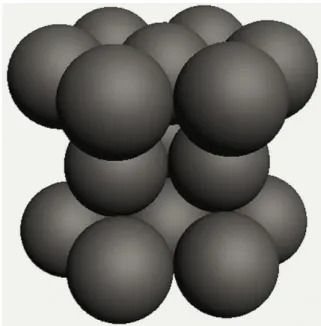
There are also three atoms in a triangular configuration in a plane at half the height of the unit cell; each of these atoms is located directly above the center of an equilateral triangle of atoms in the basal plane, as shown in Figure 2.1. Since each of the corner atoms in the hexagon is shared by six adjacent cells and each of the face atoms is shared by two cells, the total number of atoms per unit cell in the HCP structure is six.
A comprehensive review of crystallography in HCP materials has been carried out by Partridge [2]. The primitive hexagonal unit cell (Figure 2.2 (a)) has axes and corresponding angle , ; The symmetry of the hexagonal lattice can be illustrated by the hexagonal prism which can be constructed from three primitive hexagonal unit cells, such as shown in Figure 2.2 (b). In the HCP structure the atoms are stacked in a sequence of ABABAB…, as demonstrated in Figure 2.2 b.
Figure 2.2: a) The primitive hexagonal unit cell illustrating the axes and corresponding
angles , ; b) the Hexagonal Close-Packed structures; the thick solid line in b) delineate the primitive hexagonal unit cell [3].
An ideal close packing of spherical atoms in this sequence generates a structure that is characterized in terms of lattice dimensions with a ratio of 1.632, where and represent, respectively, the short and long unit cell dimensions of Figure 2.2 a. None of these metals in their pure form has an ideal ratio. HCP metals are usually classified into two groups: those with and those with . The former group contains only cadmium and zinc, the latter includes Mg, Ti and Zr etc. Magnesium and cobalt have a ratio within 1% of the ideal. However, the coordination number and the atomic packing factor for the HCP crystal structure are the same as for FCC: 12 and 0.74, respectively.
15
In the case of HCP metals, important crystallographic planes and directions of the hexagonal lattice can be described with a four index Miller-Bravais notation related to a coordinate system of three basal vectors and the longitudinal axis .
2.1.2 Plastic behavior and deformation mechanism of HCP materials
Deformation mechanisms of metal can be categorized as crystallographic slip, deformation twinning and grain boundary sliding. Grain boundary sliding is negligible, except for a specific deformation condition such as superplasticity. Therefore, crystallographic slip and deformation twinning are two fundamental deformation mechanisms accommodating plastic deformation. These two deformation modes compete against each other when solid metals deform plastically under applied stresses and at a temperature where individual atoms are not mobile [2-4].
According to von Mises [5], five independent slip systems are needed to accommodate an arbitrary homogenous plastic deformation. Slip often dominates for high symmetry cubic crystal whereas deformation twinning is important for metals with lower symmetry HCP metals, where the five independent slip systems necessary for arbitrary shape change are not easily activated at room temperature. For instance, in FCC metals, the twelve 〈 〉 slip systems provide five independent systems and satisfy this condition. However, the situation in HCP metals is much more complex owing to the following reasons: first, the deformation of HCP metals typically involves both slip and twinning, each slip and twinning system having different Critical Resolved Shear Stresses (CRSS); second, different families of slip systems and twin systems become activated depending on texture, loading, temperature and grain size. In order to know further, these two deformation mechanism are summarized in the next subsection.
a) Slip in HCP Crystals
Slip is one of the most important plastic deformation mechanisms in crystalline materials. It involves the motion of dislocations on a specific crystallographic plane along a specific crystallographic direction. The planes on which slip occurs are called slip planes, and the directions of the shear are the slip directions, which can be seen in Figure 2.3.
16
Figure 2.3: Slip deformation mechanisms [6].
These are crystallographic planes and directions that are characteristic of the crystal structure. Often, slip planes are the close packed planes and slip directions in the slip planes are the close packed directions. The magnitude and the direction of shear displacement on a particular plane are given by the Burgers vector [6].
For metals with Hexagonal Closed Pack (HCP) structure, the close-packed basal planes and close-packed directions 〈 〉 forms slip systems. At low temperatures, the three dominant sets of planes which contain this close-packed slip direction are: the basal plane, the three prismatic planes, and the six pyramidal planes.
Figure 2.4: Frequently observed deformation modes in HCP metals: Basal 〈 〉, prismatic 〈 〉, and pyramidal 〈 〉 slip system in HCP materials [7].
Crystallographic slip in HCP single crystals is commonly observed to occur on the basal- 〈 〉 or prismatic- 〈 〉 systems. The activation of pyramidal slip systems in polycrystalline aggregates occurs primarily due to the large stresses generated in
![Figure 2.4: Frequently observed deformation modes in HCP metals: Basal 〈 〉, prismatic 〈 〉, and pyramidal 〈 〉 slip system in HCP materials [7]](https://thumb-eu.123doks.com/thumbv2/123dok_br/15461509.1031087/44.892.146.760.697.965/figure-frequently-observed-deformation-metals-prismatic-pyramidal-materials.webp)
![Figure 2.5: Critical Resolved Shear Stress (CRSS) is plotted against temperature for basal slip, prismatic slip, pyramidal slip, and twinning in magnesium [9]](https://thumb-eu.123doks.com/thumbv2/123dok_br/15461509.1031087/46.892.218.670.130.471/figure-critical-resolved-temperature-prismatic-pyramidal-twinning-magnesium.webp)