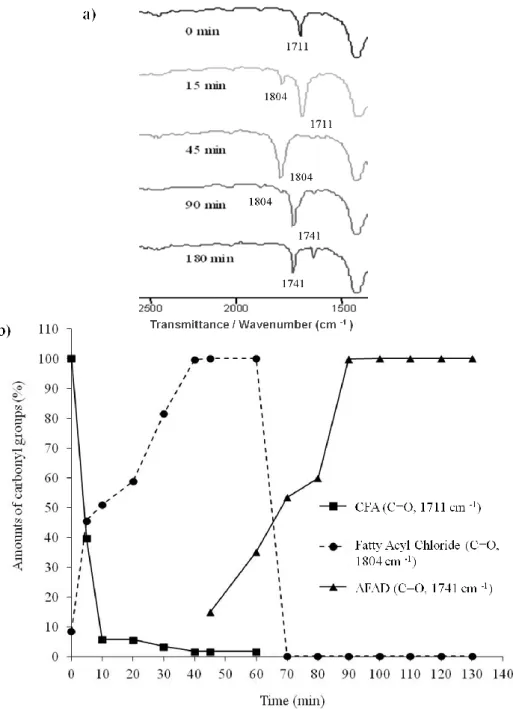
Development of monomers for production of
high performance paints
Joana Vieira de Freitas Barbosa
Dissertation presented for the degree of Doctor in Chemical and Biological Engineering by the
University of Porto
Supervisors
Margarida M.S.M. Bastos, Auxiliar Professor Co-Supervisors
Adélio Miguel Magalhães Mendes, Associated Professor Fernão Domingos de Magalhães, Auxiliar Professor
LEPAE - Laboratory of Engineering Processes, Environment and Engineering
Chemical Engineering Department Faculty of Engineering – University of Porto
I would like to acknowledge to Portuguese Foundation for Science and Technology (FCT) for my Ph.D. grant (SFRH/BDE/15623/2006), CIN-Corporação Industrial do Norte and Resiquímica S.A. for providing financial support.
My sincere thanks to my supervisors Professor Margarida Bastos, Professor Fernão Magalhães and Professor Adélio Mendes for making this project possible, providing me scientific and technological knowledge. I also thank you, for giving me the opportunity to do this work, believing in me and in my capabilities.
A word of gratitude also goes to ARCP-Association Competence Network in Polymers, for giving the necessary resources to conduct this work, and an especially thanks to Sarah and Eva who always tried to solve problems that arise.
I would like to thank my colleagues from E201, specially, Joana (for the sympathy, support, for sharing knowledge, the “hotte” and “fats”), Berta, Salomé, Rui, Elisabete, Maria and Maria João for helping me with my work, and all my colleagues from E108 for the support. An especially thanks to Ângela Daniela and Joana Fidalgo, for the support and for sharing with me the good and bad moments and to Ratola, for all the good talks and advices.
I would like to express my gratitude to the Chemical Engineering Department at FEUP, LEPAE-Laboratory for Process, Environmental and Energy Engineering.
Thanks to Fátima, Sr. Serafim, Arminda, Sónia, Zé Luís and Luís Martins. I would like to thank D. Fátima, D. Maria José and Joana Azeredo for their help with secretary work.
I am very thankful to Mariana Andrade from Materials Center of the University of Porto (CEMUP), for her support during data processing of many nuclear magnetic resonance spectra.
My gratitude goes to my family: my parents who show me the real values and principles that I intend to follow throughout my life. An especial thanks to my Mom and my Brother (my best big brother) for all the love, support, advices, encouragement, and
possible. Thanks to Ana, Maria and Inês for all the happiness and wonderful moments and, particular to the little girls for always make me smile. Thank to my cousin Teresa, for the support and for always being there for me. I am also grateful to my uncle Pinha for the laptop. An especial big kiss to my grandparents Zé, Avó Juju and Avó Pinha...you are always with me!
Finally, to Pedro… Thank you for always being there, for your patience, support, comprehension and encouragement.
Contents
FIGURE CAPTIONS TABLE CAPTIONS NOMENCLATURE ABSTRACT RESUMO SOMMAIRE CHAPTER 1 ‐ Introduction ... 3 1.1. Vegetable oils ... 61.1.1. Composition of vegetable oils ... 6
1.1.2. Synthesis of derivatives from vegetable oils ... 7
1.2. Polymerization ... 13 1.2.1. Solvent polymerization ... 15 1.2.2. Emulsion polymerization ... 15 1.3. Paints ... 23 1.4. Dissertation outline ... 27 References ... 29
CHAPTER 2 - Synthesis and Characterization of Allyl Fatty Acid Derivatives as Reactive Coalescing Agents for Latexes ... 37
Abstract ... 37 2.1. Introduction ... 38 2.2. Experimental ... 39 2.2.1. Materials ... 39 2.2.2. Characterization Methods ... 40 2.2.3. AFAD Synthesis ... 41
2.3. Results and Discussion ... 45
2.3.1. Synthesis Monitoring ... 45
2.3.2. FT-IR characterization ... 47
2.3.3. GC-FID and GC-MS characterization... 48
2.3.4. NMR spectroscopy ... 50
2.3.5. Film-forming behaviour ... 52
2.3.6. Oxidative cure behaviour ... 53
2.4. Conclusions ... 56
Acknowledgments ... 56
References ... 57
CHAPTER 3 - Synthesis and characterization of acrylic fatty acid derivative and use as reactive coalescing agent ... 63
Abstract ... 63 3.1. Introduction ... 64 3.2. Experimental ... 65 3.2.1. Materials ... 65 3.2.2. Characterization methods ... 65 3.2.3. AcFAD synthesis... 67
3.3. Results and discussion ... 67
3.3.1. Synthesis and AcFAD characterization by FT-IR... 68
3.3.2. GC–MS characterization ... 71
3.3.3. Characterization of AcFAD by NMR spectroscopy ... 72
3.3.4. Film forming and oxidative cure performance ... 78
3.4. Conclusions ... 81
Acknowledgments ... 81
CHAPTER 4 - Incorporation of an acrylic fatty acid derivative as comonomer for
oxidative cure in an acrylic emulsion ... 87
Abstract ... 87
4.1. Introduction ... 88
4.2. Experimental ... 89
4.2.1. Materials ... 89
4.2.2. Characterization methods ... 89
4.2.3. Solution polymerization of AcFAD ... 90
4.2.4. Emulsion copolymerization of AcFAD... 91
4.3. Results and discussion ... 93
4.3.1. Solvent homo- and copolymerization ... 93
4.3.2. Emulsion polymerization ... 93
4.3.2.1. Characterization of optimized acrylic emulsion ... 96
4.4. Conclusions ... 101
Acknowledgments ... 102
References ... 103
CHAPTER 5 - Low VOC self-crosslinking waterborne acrylic coatings incorporating fatty acid derivatives ... 109
Abstract ... 109
5.1. Introduction ... 110
5.2. Experimental ... 111
5.2.1. Materials ... 111
5.2.2. Characterization methods ... 111
5.2.3. Fatty acid derivatives synthesis and copolymerization ... 113
5.2.4. Coating formulations ... 114
5.3. Results and discussion ... 117
5.3.1. Acrylic resins copolymerized with AFAD and AcFAD ... 117
5.4. Conclusions ... 122
Acknowledgments ... 123
References ... 124
CHAPTER 6 – General Conclusions and Future Work ... 129
6.1. General Conclusions ... 129
Figure Captions
Fig. 1. 1 – Reactions involved in AFAD and AcFAD synthesis process. ... 8
Fig. 1. 2 – Oxidative cure process of unsaturated fatty acid in vegetable oils [31]... 10
Fig. 1. 3– General radical reactions involved in oxidative cure of vegetable oils derivatives. ... 11
Fig. 1. 4– Radical reactions involved in oxidative cure in catalysts presence [31.] ... 13
Fig. 1. 5– Reactions involved in free radical polymerization (In represents the initiator and R represents a monomers). ... 14
Fig. 1. 6– Emulsion polymerization scheme ( O represents an emulsifier molecule, M a monomer molecule, P a polymer molecule and R a free radical [36]. ... 17
Fig. 1. 7– Coalescence film forming process. ... 24
Fig. 2. 1- General scheme of the reactions involved in the AFAD synthesis process. ... 45
Fig. 2. 2- FTIR spectra of a) conjugated fatty acids (CFA), b) AFAD from CFA, c) soybean oil, d) AFAD from soybean oil, e) palmitic acid and f) allyl palmitate. ... 46
Fig. 2. 3- AFAD reactions monitored by a) infrared and b) evolution of absorptions bands during the formation of fatty acyl chloride (first step) and AFAD (second step). 47
Fig. 2. 4- GC chromatogram of a) fatty acid methyl esters (FAME) from CFA, b) AFAD from CFA, c) mass spectrum of allyl palmitate. ... 49
Fig. 2. 5- 1H-NMR spectrum of a) conjugated fatty acid (CFA), b) AFAD from CFA, c) allyl palmitate. ... 50
Fig. 2. 6- 13C-NMR spectrum of a) conjugated fatty acid (CFA), b) AFAD from CFA, c) allyl palmitate. ... 51
Fig. 2. 7- Glass transition temperature of mixtures of acrylic resin with 5 wt % AFAD from CFA as a function of drying time. The dashed line indicates the Tg for the pristine acrylic resin. Error bars represente standard deviations computed from 3 measurements ... 53
Fig. 2. 8- Rubbing resistance of acrylic resin and AFAD from CFA mixtures using two solvents a) xylene without driers, b) xylene with drier agents, c) acetone without driers, d) acetone with driers. ... 55
Fig. 3. 1– Reactions involved in AcFAD synthesis process. ... 68
Fig. 3. 2- Monitoring acid value of the reaction product during the esterification reaction (first step) (i) and FAGE reaction (second step) by IR ii): (a) t = 0 h (FAGE); (b) t = 1 h and (c) t = 2 h. ... 69
Fig. 3. 3- 1H NMR spectra of (a) AcFAD, (b) FAGE and (c) FAME. ... 70
Fig. 3. 4- 13C NMR spectrum of (a) AcFAD and attached proton test extension spectra between d 125 and 134 ppm of (b) FAGE, (c) FAME and (d) AcFAD. ... 74
Fig. 3. 5 - Acrylic fatty acid derivative (AcFAD) 1H-C13 HSQC spectrum: a) region assigned to acrylic and conjugated aliphatic double bonds and b) region between δ 3.5 and 4.5 ppm. ... 76
Fig. 3. 6 - Acrylic fatty acid derivative (AcFAD) 1H-C13 HMBC spectrum. ... 77
Fig. 3. 7– Rubbing resistance of acrylic resin and AcFAD mixtures with or without driers, using xylene (a) and propanone (b). ... 80
Fig. 4. 1- 1H-NMR spectrum of a) AcFAD, b) resin copolymerized with AcFAD and c) reference acrylic resin. ... 97
Fig. 4. 2- Gel content of resin E (copolymerized with AcFAD) and reference acrylic resin along drying time. ... 98
Fig. 4. 3 - Polymeric chains synthesis and crosslinking by one peroxide bond. ... 99
Fig. 4. 4 - Rubbing resistance of resin E (copolymerized with AcFAD) and reference acrylic resin, using a) xylene and b) propanone solvents. ... 100
Fig. 5. 1– Allyl fatty acid derivative (AFAD) and acrylic fatty acid derivative (AcFAD) structures. ... 113
Fig. 5. 2– Gel content of acrylic resins and acrylic resins incorporating AFAD and AcFAD. ... 118
Fig. 5. 3– Rubbing resistance of acrylic resins and acrylic resins incorporating AFAD and AcFAD with driers, using xylene a) and propanone b). ... 119
Fig. 5. 4– Reduction in through-drying time for paints A-E relative to the reference. The through-dry time for the reference was 107 min. ... 120
Table captions
Table 1. 1 - Classification of drying oils according to the iodine value [21]. ... 6
Table 1. 2 – Examples of some unsaturated fatty acids frequently found in vegetable oils. ... 7
Table 1. 3 – Hard and soft monomers. ... 18
Table 1. 4– Some examples of anionics, cationics, non-ionics and zwitterionics surfactants used in emulsions [40]... 20
Table 1. 5– Some examples of paints additives and functions. ... 26
Table 2. 1- Composition of fatty acid methyl esters (FAME) and allyl fatty acid derivative (AFAD) from conjugated fatty acids (CFA). ... 43
Table 2. 2 – Minimum film-forming temperature (MFT) of acrylic resins mixtures with allyl fatty acid derivative (AFAD) from CFA. ... 52
Table 2. 3- Drying times of physical mixtures of acrylic resin with 5 wt.% of allyl fatty acid derivative (AFAD). ... 54
Table 3. 1- Molar ratio and conversions percentages of the CFA esterification reaction products, determined by 1H NMR analyses... 70
Table 3. 2- Drying times of AcFAD and CFA mixed with driers. ... 78
Table 3. 3- Drying times, MFT and film appearance of physical mixtures of acrylic resin with 5 wt.% of AcFAD and CFA, mixed with driers. ... 78
Table 4. 1 – Properties of emulsions formulated according to a commercial acrylic formulation: reference and emulsion with AcFAD as comonomer. ... 94
Table 4. 2 – Optimization and characterization of the acrylic emulsion formulation using 10 wt. % of AcFAD as comonomer. ... 95
Table 5. 1– Resins formulations. ... 114
Table 5. 2– Coating formulations. ... 116
Table 5. 3– Resins characterization. ... 117
Abbreviations and symbols
AA – acrylic acid
AC - acryloyl chloride
AcFAD - acrylic fatty acid derivative
AFAD – allyl fatty acid derivative
BA – butyl acrylated
BP - benzoyl peroxide
13
C – NMR – carbon 13 nuclear magnetic resonance
CAM – castor acrylated monomer
CDCl3 – deuterated chloroform
CFA - conjugated fatty acids
CLA - conjugated linoleic acid
COSY- correlated spectroscopy
CMC - critical micelle concentration
DBSA - dodecyl benzene sulfonic acid sodium salt
FAAC – intermediate reactive product
FAES – fatty alcohol ether sulfosuccinate disodium sal
DMA - dynamic mechanical analysis
DSC - differential scanning calorimetry
EG - ethylene glycol
FAD – fatty acid derivatives
FAGE - fatty acid glycol ester
FAME - fatty acid methyl ester
FID - flame ionization detector
FT-IR – fourier transformed infrared
GC - gas chromatography
GC-MS - gas chromatography–mass spectroscopy
1
H-NMR - proton nuclear magnetic resonance
HEMA - (Hydroxyethyl)methacrylate
HLB - hydrophilic – lipophilic balance
HMBC - heteronuclear multiple bond correlation
HSQC - heteronuclear single quantum correlation
IR - infra red
IV – iodine value
KOH – potassium hydroxide
MFT - minimum film-forming temperature
MMA - methyl methacrylate
MS - mass spectroscopy
NaOH – sodium hydroxide
NMR - nuclear magnetic resonance
N2 - nitrogen
o/w – oil in water
PCl3 – phosphorous trichloride
Tg - glass transition temperature
TG - triglyceride
VOC – volatile organic compound
UV – ultraviolet
Abstract
Due to implementation of the Directive 42/2004/CE that requires a reduction in volatile organic compounds (VOC) emissions, the paint industry made special efforts for developing high performance coatings. The introduction of high amounts of soft monomers in acrylic resins, allow obtaining minimum film-forming temperature (MFT) of approximately 0 ºC. Thus, the paints incorporated with these resins do not require the addition of coalescing agents.
Acrylic resins based in soft polymers have the disadvantage that the applied films lose performance in the application (mechanical properties and chemical resistance). Though, the copolymerization of soft monomers, which are capable of reacting with traditional vinyl or acrylic monomers, increase the mechanical and chemical resistance of the film. The monomers derived from fatty acids with a defined degree of unsaturation, are the most suitable for this application since they can be functionalized by the addition of acrylic, vinyl and styrene functions. If on one hand the aliphatic chain works as plasticizer lowering the glass transition temperature (Tg) and the minimum film formation temperature (MFT), on the other hand, double bonds present in the aliphatic chain lead to oxidative cure. Thus, the formed polymer will have a low Tg and may coalesce without using coalescent agents.
In this study, the use of these compounds derived from fatty acids as reactive coalescing agents was also evaluated. During film formation these agents keep the behavior previously described, remaining in the film, instead of evaporating into the atmosphere during the curing process, minimizing in this way VOC emissions.
The need to develop know-how in this area was the major motivation of this thesis. During the present work two compounds: an allyl fatty acids derivative (AFAD) and an acrylic fatty acids derivative (AcFAD), were prepared and characterized by FT-IR, NMR and GC. After the optimization of the synthesis processes, both its performance as reactive coalescing agents and as comonomers was tested on acrylic resins and in water-based paints. It was also necessary to optimize the resin incorporated with AcFAD formulation, starting from a commercial acrylic resin.
As reactive coalescing agents, it was proved that both have particular interest as non-volatile additives in paints, since when compared to the commercial resin an increase in the Tg, a considerable reduction in MFT and an increase in rubbing resistance test were observed. Thus, and due to the presence of conjugated double bonds, they can be used as auto-oxidative crosslinking agents.
The results obtained for the resins copolymerized with AFAD AcFAD were compared with a commercial acrylic resin. Improvements in the final resins properties were observed. The resin with AcFAD showed better performance than the resin with AFAD, particularly in the film mechanical properties (MFT and rubbing resistance test). In the films produced with AFAD the polymerization mainly occurs by the conjugated double bonds, since the terminal allylic double bond is less reactive. The paints produced with resins incorporating AFAD and AcFAD also demonstrated better performances, namely in the improvement of solvent resistance and decreases in MFT and in through-drying times.
Resumo
Devido à implementação da diretiva 42/2004/CE que obriga a uma diminuição da emissão dos compostos orgânicos voláteis (COV), a indústria das tintas tem procurado desenvolver tecnologias que permitam obter tintas de elevado desempenho. Uma possível forma de consegui-lo é formular resinas com maior quantidade de monómeros macios que permitem obter uma temperatura mínima de formação de filme (TMF) de aproximadamente 0 ºC. Desta forma, as tintas incorporadas com essas resinas não necessitam da adição de agentes coalescentes.
As resinas acrílicas baseadas em polímeros macios têm o inconveniente, de o filme aplicado perder desempenho na aplicação (propriedades mecânicas ou resistência química). A solução passa por copolimerizar monómeros macios, que tenham capacidade de reagir com monómeros acrílicos ou vinílicos tradicionais, aumentando as resistências mecânica e química do filme. Os monómeros derivados de ácidos gordos, com um grau de insaturação definido, são os mais indicados para esta aplicação, já que podem, posteriormente, sofrer reações de funcionalização – por adição de funções acrílicas, vinílicas e estireno. Se por um lado, a cadeia alifática funciona como plastificante, baixando a temperatura de transição vítrea (Tg) e a TMF, por outro, as duplas ligações presentes na cadeia alifática permitem a cura oxidativa. Assim, o polímero formado terá uma baixa Tg, podendo coalescer sem recorrer aos agentes coalescentes.
Neste estudo foi também avaliado o uso destes compostos como coalescentes reativos, isto é, mantêm o comportamento descrito anteriormente, durante a formação de filme, mas em vez de evaporarem para a atmosfera durante o processo de cura, permanecem no filme, diminuindo também a emissão de COV.
A necessidade de desenvolver conhecimento nesta área foi a grande motivação desta tese.
Durante este estudo, foram produzidos e caracterizados por FT-IR, RMN e GC, dois compostos: um derivado de ácidos gordos alílico (AFAD) e outro derivado de ácidos gordos acrílico (AcFAD). Depois de otimizados os processos de síntese, tanto o seu desempenho como coalescentes reativos quer como co-monomeros foi testado em resinas acrílicas e em tintas de base aquosa. Foi também necessário otimizar a formulação da resina com AcFAD, partindo de uma resina acrílica convencional.
Relativamente ao seu desempenho como coalescentes reativos, foi provado que ambos têm especial interesse como aditivos não voláteis em tintas, uma vez que, quando comparados com a resina comercial foi observado um aumento na Tg, uma redução considerável da TMF e um aumento na resistência à esfrega. Assim, devido à presença de duplas ligações conjugadas, podem ser utilizados como agentes reticulantes auto-oxidativos.
Os resultados obtidos para as resinas co-polimerizadas com AFAD e AcFAD foram comparados com os de uma resina comercial, tendo-se verificado uma melhoria nas características finais da resina. A resina com AcFAD obteve melhor desempenho do que a resina com AFAD, nomeadamente nas propriedades mecânicas do filme (TMF e resistência à esfrega). No AFAD a polimerização ocorre maioritariamente pelas duplas ligações conjugadas, já que a dupla terminal alílica é menos reativa. As tintas produzidas com resinas incorporando AFAD e AcFAD também demonstraram melhores resultados, nomeadamente o aumento da resistência ao solvente e uma acentuada diminuição da TMF e dos tempos de secagem em profundidade.
Résume
En raison de la politique mise en œuvre 42/2004/CE qui exige une réduction des émissions de composés organiques volatils (COV), l'industrie de la peinture a cherché à développer des technologies qui permettent d'atteindre les revêtements de haute performance. Une manière possible d'y parvenir est formulée des résines avec plus monomères mous qui peuvent atteindre une température minimale de formation de film (TMF) de l'ordre de 0 °C. Ainsi, les colorants incorporés avec ces résines ne nécessitent pas l'ajout d'agents de coalescence.
Les résines acryliques à base de polymères mous ont l'inconvénient de perdre les performances du film appliqué dans l'application (résistance chimique et propriétés mécaniques). La solution est le copolymérisation de monomères mous, qui sont capables de réagir avec du vinyle ou des monomères acryliques traditionnels, l'augmentation de la résistance mécanique et chimique de la pellicule. Les monomères dérivés d'acides gras ayant un degré d'insaturation définie, sont les plus appropriés pour cette application, une fois qu’ils peuvent ensuite souffrir des réactions de fonctionnalisation. D'une part, la chaîne aliphatiques fonctions comme plastifiant, abaissement de la température de transition vitreuse (Tg) et le TMF, d'autre part, les doubles liaisons présentes dans la chaîne aliphatique permis le oxydatif cure. Ainsi, le polymère formé aura une faible Tg et peuvent fusionner sans utiliser d'agents coalescents.
Dans cette étude, nous avons également évalué l'utilisation de ces composés comme agents de coalescence réactifs, à savoir, qui maintenir le comportement décrit précédemment, dans la formation du film, mais au lieu de s'évaporer dans l'atmosphère pendant le processus de durcissement, restent dans le film, réduisant les émissions COV.
La nécessité de développer une connaissance dans ce domaine a été la motivation principale de cette thèse.
Au cours de cette étude, ont été produits et caractérisé par FT-IR, RMN et GC, deux composés: une dérivée à partir d'acides gras d'allyle (AFAD) et autres dérivés de
l'acide gras acrylique (AcFAD). Après avoir optimisé les procédures de synthèse, à la fois sa performance comme agents de coalescence réactifs ou en tant comme co-monomères a été testé sur des résines acryliques et peintures à l'eau. Il est également nécessaire d'optimiser la formulation de la résine AcFAD, à partir d'une résine acrylique classique.
En ce qui concerne sa performance comme agents de coalescence réactifs, il a été prouvé que les deux sont d'un intérêt particulier comme additifs non volatils dans les peintures, par rapport à la résine commerciale était une augmentation de la Tg, une réduction considérable de la TMF et une augmentation de la résistance à l’abrasion. Ainsi, en raison de la présence de doubles liaisons conjuguées, peuvent être utilisés comme agents de réticulation auto-oxydation.
Les résultats obtenus pour les résines co-polymérisées avec le AFAD et AcFAD ont été comparés avec une résine commerciale, et il ya eu des améliorations dans les caractéristiques finales de la résine. La résine avec AcFAD de meilleurs résultats que la résine avec AFAD, en particulier dans les propriétés mécaniques du film (TMF et résistance à l'abrasion). Dans AFAD la polymérisation se fait principalement par des liaisons doubles conjuguées, parce que la double liaison allylique terminale est moins réactif. Les peintures produites avec des résines incorporant AFAD et AcFAD également montré les meilleurs résultats, à savoir l'amélioration de la résistance aux solvants et une diminution marquée de la MFT et le temps de séchage en profondeur.
In recent years there has been a global awareness towards environment issues, in particular with air quality and therefore the concern with the emission of volatile organic compounds (VOC) into the atmosphere, either by that natural reasons - forests, agro-livestock, etc - or as a result of transport activities, use of household products, use of glues and adhesives, paints and varnishes, etc. These emissions undergo chemical reactions in the atmosphere leading to the formation of photochemical oxidants. The sunlight action on NOx (nitrogen oxides) released by petrol and diesel vehicles and the VOC also released by these vehicles and the other activities previously mentioned, leads to the formation of ozone in troposphere. The ozone formed at this level might reduce the resistance to infection of living organisms, cause eyes irritation and breathing difficulties. By affecting photosynthesis, the ozone can also cause damage to crops reducing yields and cause damage to forests.
Usually high levels of ozone are observed, in calm and sunny days of summer when air is already polluted with nitrogen oxides and VOC. The "photochemical smog" resulting from the reaction of these compounds and the formation of ozone may persist for several days and can be transported over long distances because ozone formation often occurs in areas downwind for the sources of pollution [1].
The European Commission responsible for studying this problem recognized that tropospheric ozone pollution is a widespread and chronic problem in the European Community. Given the cross-border dimension of the tropospheric ozone occurence, the Commission proposed a directive on national emission ceilings, according that the national emissions of sulfur dioxide, nitrogen oxides, volatile organic compounds and ammonia can not exceed certain limits in each Member State, in 2010 [1].
As already mentioned, the use of paints and varnishes contribute to the total emission of VOC. However, these emissions decreased considerably after the implementation of Directive 1999/13/CE, of 11 March 1999 concerning the limitation of VOC in certain activities and installations. This Directive has a direct impact on many sectors of paint industry but not in the decorative paints since these are generally applied to structures and installations in work and not in fixed workshops. Despite, the
use of decorative paints contributes to the emission of VOC into the atmosphere and it is calculated that gives rise to about 550,000 tons of emissions, which represents ca. 3 % of total emissions in the European Union. As a consequence the paint industry has been driving many of its research and development efforts to reduce the use of VOC [2]. This includes the gradual discontinuation of painting systems with film-formers that can only be used in paints with high VOC content such as chlorinated rubber, vinyl and acrylic resins soluble in solvents, etc. and the study of new products which satisfy all of the procedures proposed by the European Commission, Directive 1999/13/CE and Directive 2004/42/CE [3] that require the reduction of solvent emissions to the atmosphere and the solvent content of products.
The main options for reducing VOC in decorative paints are: - substitution of solvent-based products for aqueous products;
- reduction of solvent content in water-based products that already exist;
- reducing the solvent content of solvent based products, when aqueous products do not reach the quality required by consumers.
To reduce solvents in water-based paints it is necessary to develop polymers that allow the formulation of products whose films are formed at room temperature without the need of coalescing agents. These agents are solvents and therefore contribute to increase the emissions of VOC into the atmosphere [4-6]. The knowledge in alkyd resins drying mechanisms allowed the developing of monomers with similar oxidative drying mechanisms. Thus, the polymer would have a low glass transition temperature (Tg) value, allowing it to coalesce without the addition of any coalescing agents.
The monomers derived from fatty acids, with a defined degree of unsaturation, are indicated to this type of application since the fatty acid chain acts as a plasticizer lowering the Tg and hence the minimum film-forming temperature (MFT).
In this study it was given particular attention to coalescing agents and reactive coalescing agents. Coalescing agents are often used to lower the MFT and obtain a uniform film. Indeed, in a first stage, they act as plasticizers and then evaporate into the atmosphere, contributing to increase VOC emissions. Reactive coalescing agents are also responsible for film formation, remaining in the film even after drying and, as
esters, mono-functional epoxy acrylates and aliphatic epoxides containing polar groups to act as coalescent agents in UV formulations, resins, adhesives [10, 11].
During the last years, there has been a demand for this type of monomers and studies converge to the development of CAM (Castor Acrylated Monomer), a monomer obtain by modification of existing conventional polymers, which allows to obtain paints with desirable characteristics [12, 13].
Several studies have focused on unsaturated vegetable oils functionalization by adding acrylic, vinyl and styrene functions, however its use was proposed in coatings and textile [14, 15]. Besides, there are many studies being conducted on acrylate esters or methacrylate alkenols of long fatty acid chain derivatives, typically involving an esterification reaction of an ethylenically unsaturated carboxylic acid [16].
These studies consider the use of functionalized vegetable oils in coatings and lacquers, as comonomers or polymers, and not as a coalescing or reactive coalescing agents [17, 18].
Thus, the work described in this thesis intended to study the synthesis of monomers with oxidative cure that would allow the production of free VOC paints.
To achieve this, two different compounds derived from conjugated fatty acids, AFAD and AcFAD, were synthesized. These derivatives have characteristics which contribute to reduce VOC, since promote oxidative cure, when used as additives in the paint formulation or as comonomers in the synthesis of the film former polymer emulsion, and consequently improve the performance of paints.
1.1. Vegetable oils
1.1.1. Composition of vegetable oils
Vegetable oils are mainly made of triglycerides, which are three long hydrocarbon chain esters linked to one glycerol molecule. These, also called fatty acids, can be divided into unsaturated or saturated acids, according to the presence or not of double bonds. The degree of unsaturation is characterized by the iodine value (IV) where high IV indicates more unsaturated fatty acids. Fatty acids can also be classified as drying, semi-drying and non-drying according to their ability to dry into a solid film (Table 1.1) [19, 20].
Table 1. 1 - Classification of drying oils according to the iodine value [21].
Oil classification Iodine value
Drying >150
Semi-drying 100 – 150 Non-drying <100
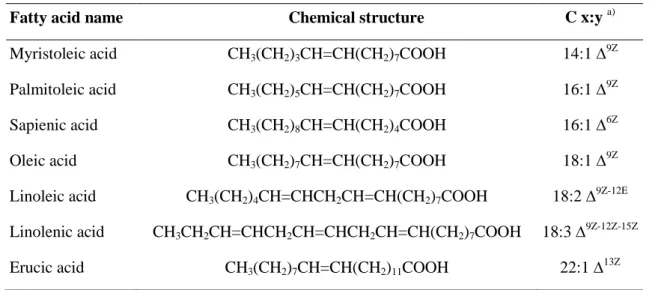
Vegetable oils have origin in several sources and the differences are related to the fatty acids chains length and the number, orientation and position of double bonds in the aliphatic chain [22]. Depending on the raw material, different fatty acids can be part of the constitution of vegetable oils; some examples are shown in Table 1.2.
Table 1. 2 – Examples of some unsaturated fatty acids frequently found in vegetable oils.
Fatty acid name Chemical structure C x:y a)
Myristoleic acid CH3(CH2)3CH=CH(CH2)7COOH 14:1 ∆ 9Z
Palmitoleic acid CH3(CH2)5CH=CH(CH2)7COOH 16:1 ∆ 9Z
Sapienic acid CH3(CH2)8CH=CH(CH2)4COOH 16:1 ∆6Z
Oleic acid CH3(CH2)7CH=CH(CH2)7COOH 18:1 ∆ 9Z
Linoleic acid CH3(CH2)4CH=CHCH2CH=CH(CH2)7COOH 18:2 ∆ 9Z-12E
Linolenic acid CH3CH2CH=CHCH2CH=CHCH2CH=CH(CH2)7COOH 18:3 ∆
9Z-12Z-15Z
Erucic acid CH3(CH2)7CH=CH(CH2)11COOH 22:1 ∆ 13Z a)
x means the number of carbon and y means the number of double bonds.
1.1.2. Synthesis of derivatives from vegetable oils
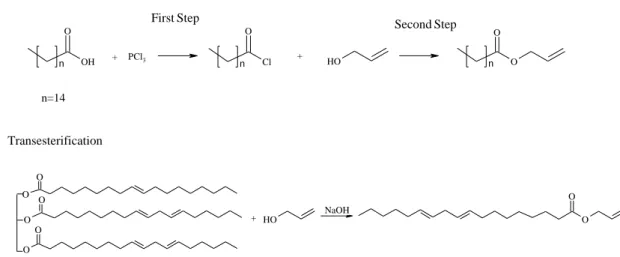
In the present study, an allyl fatty acid derivative (AFAD) and an acrylic fatty acid derivative (AcFAD), both derived from vegetable oils, were synthesized by two different processes: two-step esterification and transesterification. The two-step esterification was accomplished by two different via; i) the conjugated fatty acid (CFA) was reacted with phosphorous trichloride (PCl3) forming an intermediate reactive
product (FAAC) that was reacted with an alcohol (AA) leading to the final product, AFAD, (Fig. 1.1); ii) the second via considered, the CFA to react with ethylene glycol (EG) followed by esterification with acryloyl chloride (AC) (Fig. 1.1). In both cases the final products are easy to obtain with high conversions and in short reactions time. In oil transesterification, the triglyceride reacts with an alcohol (AA) in the presence of a homogeneous catalyst (usually NaOH or KOH) and an ester (AFAD) and glycerol are formed (Fig. 1.1). The disadvantage of this process is the formation of secondary products, namely soaps that are responsible for the formation of emulsions during the purification process [23, 24].
O H O O O H O O O O O O O H OH Cl O OH O O O OH O O O O O O Cl O PCl3 FirstStep Indirect esterification + Transesterification + NaOH + + Second step CFA EG FAGE AC AcFAD AA AFAD FAAC + AFAD TG AA
Fig. 1. 1 – Reactions involved in AFAD and AcFAD synthesis process.
1.1.2.1. Oxidative cure
AFAD and AcFAD might be used as additives or comonomers in emulsion or in paints, due to their structural characteristics that are similar to vegetable oils and allow for oxidative cure.
The drying oils process (Fig. 1.2) is a reaction that involves the double bonds of the aliphatic chain and is related to the number of double bonds; oils with higher unsaturations dry faster and if those are conjugated the drying process is even faster [25]. The drying does not occur with water evaporation, although it begins during this process. In fact, during the film drying, when water begins to evaporate, the particles get
molecules are more predisposed for the oxidative cure – chemical drying. In the whole process, this is the most important reaction that takes place - the spontaneously reaction with the atmospheric oxygen. During the oxidative cure process (Fig. 1.3), the allylic
hydrogen from the double bond is subtracted and the radical formed (R.) reacts with
atmospheric oxygen leading to the formation of hydroperoxides. This happens at the same time the conjugation of double bonds occurs. Then a metal-catalyzed reaction
occurs and the hydroperoxides start to decompose in peroxy (ROO.) and alkoxy (RO.) [26-30]. Addition of driers may be necessary to catalyse the decomposition of hydroperoxides allowing the formation of crosslinked hardener films.
R O O O R O O OH R1 R2 R1 R2 O O R2 R1 R1 R2 O R1 R2 O R2 R1 R1 R2 O R1 R2 O O R2 R1 R1 R2 O R1 R2 O O O R2 R1 OH O H O O OH O O O O O O O O R O O O R O O O OH O O R O R Hydroperoxide formation Hydroperoxide decomposition O. O. Radical recombination Radical addition Oxidation Degradation Crosslinking Network formation n
.
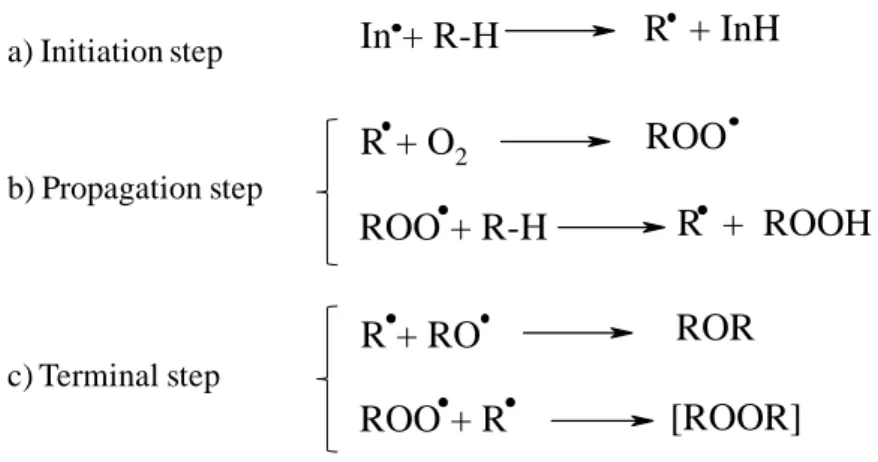
Furthermore, these free radical chain reactions occur in three steps; i) initiation; ii) propagation and; iii) termination, generically sketched in Fig. 1.3.
a) Initiation step b) Propagation step c) Terminal step In + R-H R + InH ROO + R [ROOR] R + RO ROR R + O2 ROO + R-H ROO R + ROOH
Fig. 1. 3– General radical reactions involved in oxidative cure of vegetable oils derivatives.
In initiation step the initiator free radical (In.) induces the abstraction of an allylic
hydrogen atom from the fatty acid (R-H) leading to the formation of a radical (R.) (Fig.
1.3a). This reaction can take place through thermal hydroperoxide decompositions, by the action of driers or via some initiating species on the substrate. During this stage viscosity increases and superficial drying occurs [31].
The propagation step involves two reactions (Fig. 1.3b). The first usually starts
with the attack of the molecular oxygen to the radical (R.), while in the second the
peroxy group (ROO.) promotes the abstraction of the hydrogen R-H, from another fatty
acid chain and another radical (R.), and the hydroperoxides species (ROOH) are
formed. However, propagation step is not as simple as previously described; usually the steps involved in free radical chain process include radical coupling with oxygen, atom or group transfer, fragmentation, rearrangement and cyclization [31].
The termination step occurs by radical recombination to give peroxy, ether or carbon-carbon crosslinking (Fig. 1.3c). These reactions are responsible for the films hardness. Besides, in the presence of conjugated double bonds, radical recombination
can lead to the propagation of double bonds to form crosslinked networks. Rearrangement of the double bonds can move the radicals further down the chain. Oxygen can go on to react with the carbon radicals to form peroxy radicals.
1.1.2.2. Driers
Drying oils usually take some time to dry and the addition of catalysts, frequently called driers, might be necessary to accelerate the oxidative cure. Driers are metal soaps of carboxylic groups used as additives materials which contain metals of variable oxidation states. The drying process occurs through a succession of oxidation and reduction reactions.
Usually they are combinations of different metals that are categorized as primary, secondary and auxiliary driers. Primary driers, also known as active or oxidation driers, are able to catalyse the atmospheric oxygen reaction and the decomposition of hydroperoxide to form free radicals, due to variable valencies of metals (Fig. 1.4) [31, 32]. The most common metals of this type are cobalt and manganese. Cobalt, for example, becomes inactive after the fast oxidation step, which leads to a very slow drying of the deeper layers. Cobalt leads to more rapid drying at the surface of the film than in the bulk. The paint surface can wrinkle if it dries faster than the lower layers as the film retracts as it hardens. For this reason, through-driers are added with the cobalt to aid the drying of the bulk of the film. In these cases it is desirable the introduction of secondary driers, also called as through-driers, to improve peroxide decomposition [27]. As the name indicate, they are responsible for drying the deep layers of the film and consequently for the crosslinking. Barium, zirconium and bismuth are the most used metals [33]. Auxiliary driers are responsible for improve the activity of the primary driers, leading to films with better performance and quality. Calcium, zinc and lithium are common used as auxiliary driers. Since the function of this type of driers is not well known, they are often used as secondary driers. The term “auxiliary” should then be discontinued and all the driers that are not categorized as primary driers can be classified as secondary driers.
ROOH + Mn+ [(ROOH)M]n+ [(ROOH)M]n+ RO. + [M(n+1)+(OH-)]n+ ROOH + M(n+1)+ [(ROOH)M](n+1)+ [(ROOH)M](n+1)+ ROO. + Mn+ + H+ [M(n+1)+(O 2). -)]n+ O2 + Mn+ [M(n+1)+(O 2). -)]n+ + RH [M(n+1) (OOH-)]n+ + R. [M(n+1)+ + RH Mn+ + H+ + R.
Fig. 1. 4– Radical reactions involved in oxidative cure in catalysts presence [31].
Furthermore, the use of driers should be controlled and requires special attention, namely zirconium and manganese might change the desired colour while cobalt and calcium can lead to premature drying which can reduce oxygen diffusion to the deeper layers leading to the formation of wrinkling [32].
1.2. Polymerization
The aim of the present study was to use allyl fatty acid derivative (AFAD) and acrylic fatty acid derivative (AcFAD) not only as a paint additive, but also as a comonomer in radical polymerization.
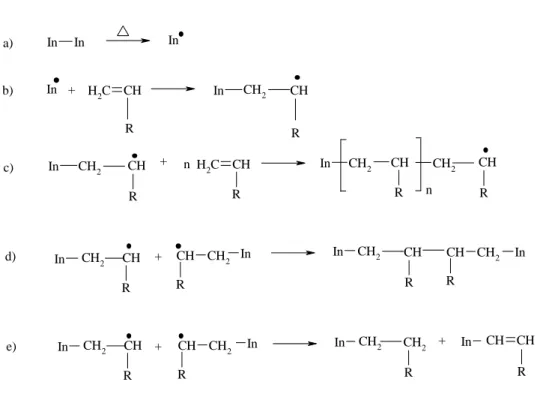
In the free radical polymerization mechanism, the monomers are added to a terminal reactive site, usually called active center, increasing the polymeric chain. As a result of the addition of each monomer, the active center is transferred to the end of the chain newly created. This process can be divided in three steps: initiation, propagation and termination [34].
The initiation step can occur spontaneously by heat absorption or UV light, but typically occurs when small amounts of initiators (In-In) are added. These are organic compounds capable to be thermally decomposed forming free radicals and the most
common are peroxide and azo compounds. The free radicals are very reactive and have unpaired electrons. The reaction involves two steps: first, in presence of monomers, the initiator decomposes into free radicals (Fig. 1.5a) and then the radical addition to the monomer takes place (Fig. 1.5b) [35].
During propagation step, the polymeric chains grow by quick addition of the monomer to the active center, i.e., the free radical attacks the monomer double bond and another radical is formed (Fig. 1.5c). This step stops when the termination reaction starts [35, 36]. C H2 CH In CH2 CH R CH2 CH CH2 CH R R CH2 CH CH2 CH R R CH CH CH2 CH2 R C H2 CH R In CH2 R CH In In R CH2 CH CH2 CH R In In In In In In In In In In CH2 CH2 In CH R CH R R + R + + + + b) c) d) e) a) n n
Fig. 1. 5– Reactions involved in free radical polymerization (In represents the initiator and R represents a
monomers).
Termination step can occur by combination (Fig. 1.5d) or disproportionation
reactions (Fig. 1.5e). In combination, two growing polymer chains react forming a single molecule, while in disproportionation – a less common process - a hydrogen atom is moved from one radical to another and a double bond is formed in one polymeric chain [36].
1.2.1. Solvent polymerization
In this particular polymerization process the monomer is dissolved in a non-reactive solvent in the presence of a catalyst and all reagents are in the same phase.
The degree of polymerization is also affected by the solvent, which reduces the viscosity of the system. The low monomer concentration causes a decrease in the rate and in polymerization degree.
In conventional free radical polymerization is difficult to control the polymer chain length but solvent polymerization can be used to prepare polymers with low molecular weight. The molecular weight of polymers can be controlled by the addition of a chain transfer agent to the solvent, i.e., chain transfer agents can control the termination process (usually mercaptans are used). This is very important since some of the mechanical and physical polymers properties depend on the chain length [36].
To obtain pure polymer, it is necessary to remove the solvent, which implies precipitation and separation of the polymer. Therefore, this type of polymerization is often used when a polymer in solution is desired [35].
1.2.2. Emulsion polymerization
Emulsions are unstable systems with two liquid phases, where small droplets are dispersed into another liquid present in excess, named continuous phase [37, 38]. However, when stirring is stopped and if the dispersed droplets are not charged – unstable emulsion - emulsion starts to collapse. This occurs due to the creaming, aggregation and coalescence of particles. To make an emulsion stable, it is necessary to decrease the dispersed particles size, to reduce the dispersion density difference and to protect the surface of oil droplets.
Commonly, emulsions are composed of water (polar phase) and oil (non-polar phase) and can be classified as oil in water (o/w) or water in oil (w/o). In the first case, oil phase is dispersed as droplets in an aqueous continuous phase; in the other case, are
water droplets that are dispersed in the oil phase. On the other hand, if water is yet dispersed in oil droplets that are in turn dispersed in water or if the oil is dispersed in water droplets which are dispersed in oil, the expression multiple-phase emulsions is indicated [37].
The emulsion type is formed according to the stability of the surfactant layer that involves the droplets. If a water-stable layer is formed around the oils droplets an o/w emulsion is formed, whereas if an oil-stable layer is formed around the water droplets a w/o emulsion is formed.
Therefore, to obtain stable emulsions, it is necessary to select the surfactants. When two liquids are immiscible, surfactant molecules will stabilize the droplets of one liquid in the other [39]. Further, if the oil droplets coalesce faster than the water droplets, a w/o system is formed, therefore the rate that droplets coalesce is decisive. Besides, in a w/o emulsion, hydrocarbon chains protect the water droplets from coalescing [37].
During the emulsion polymerization, the monomers must be emulsified in a continuous aqueous phase and stabilized by a surfactant (Fig. 1.6a). A water soluble free radical initiator (R˙) is added to start the polymerization (Fig. 1.6b).
Fig. 1. 6– Emulsion polymerization scheme ( O represents an emulsifier molecule, M a monomer
molecule, P a polymer molecule and R a free radical [36].
Polymerization process can be divided into three distinct stages. The first one is the initial stage where the monomer (M) reacts with free radicals (R˙) and the monomer diffuses to the micelles from the droplets beginning the polymerization into the micelles, leading to the formation of polymer particles (Fig. 1.6b, c). In the second one, the polymerization occurs only in monomer-swollen polymer particles by diffusion of monomer from droplets [36]. All the emulsified micelles disappear and the surfactant is no longer available to form new particles (Fig. 1.6c). The last stage starts when monomer droplets disappear and finishes when the monomers in the particles and in the water phase are exhausted (Fig. 1.6d, e) [37, 40-42].
The obtained product - latex - is a colloidal dispersion of polymer particles, usually with particle sizes between 50–300 nm. Particle size is influenced by the surfactant
concentration – high concentration leads to small particles sizes and agitation conditions [38].
Acrylates, styrene, vinyl chloride and vinyl acetate are some of the monomers that can be copolymerized by emulsion polymerization. These comonomers are usually used in combinations of hard and soft monomers (Table 1.3). The combination of different functional monomers allows obtaining polymers with certain adhesion, cohesion and crosslinking properties.
Table 1. 3 – Hard and soft monomers.
Hard monomers Name Structure
Methyl methacrylate O O Styrene Vinyl chloride CH2 CH Cl Vinyl acetate O O Acrylonitrile CH2 CH CN Soft monomers Butyl acrylate O O Ethylene CH2 CH2 Butadiene
Efficient heat transfer (due to the low viscosity of the continuous phase), higher monomer consumption and fast polymerization rates are great advantages of emulsion polymerization, wherein the polymer can be recovered by film formation or coagulation [35, 42]. On other hand, the polymer contamination with surfactants and additives is one
1.2.2.1. Reactants for free radical emulsion polymerization
An emulsion is constituted by a continuous phase (usually water), monomers, initiator, surfactants, salts, pH controllers and chain transfers agents.
The monomers are usually insoluble or sparingly soluble in water and polymerizable by free radical mechanism. The most common are acrylates and methacrylates, acrylic acid, styrene, vinyl acetate and vinyl chloride. The initiator must be soluble in water; the most common are sodium, potassium and ammonia persulfate salts. Redox systems might be used when polymerizations require low temperatures (<50 ºC). High concentrations of initiator can increase the number of instability particles in the aqueous phase [44]
The surfactants are added in small quantities (usually 1 – 1.5 %) and are responsible for monomers droplets stabilization, micelles formation and for the developing polymer particles stabilization. They are classified according to the hydrophilic group [40]. The most common in emulsion polymerization are the anionics which are low solubility in water, due to their hydrophobic tails, leading to the formation of micelles.
1.2.2.2. Importance of the surfactant
Surfactants are responsible for the emulsion stability, improving kinetic stability, during the polymerization and the shelf life of the resin [45]. These are molecules with two different portions, usually called “head” and “tail” that differ in polarity and in solubility. Depending on the basis of the polar head group can be divided as anionics, cationics, non-ionics and zwitterionics (or amphoteric) (Table 1.4).
Anionic surfactants are the mostly used and the largest existing class. The
hydrophilic polar groups are carboxylate, sulphate, sulfonate and phosphate. The counterions mostly used are sodium and potassium – provide water solubility - and calcium and magnesium – confer oil solubility [46]. Usually, they are incompatible with cationic surfactants (there are some exceptions) and sensitive to hard water.
Table 1. 4– Some examples of anionics, cationics, non-ionics and zwitterionics surfactants used in
emulsions [40].
Surfactant type Surfactant name Structure example
Anionics
Alkoxycarboxylates n O COONa
Sulfated fatty acid amides OSO3Na n CONH Sodium dodecylbenzenesulfonate SO3- Na+ Phosphates of alcohols, phenols or their polyglycol ethers OP(OH)2 Cationics Quarternary alkyl ammonium salts N+ CH3 H Cl Quaternary amidoamino compounds CONH NH3 Cl + Non-ionics Ethoxylated alcohols O O H n m Zwitterionics
Substituted betaines and
sulfobetaines CONH N
+
CH3
CH2 COO-CH3
The most common cationic surfactants are the quaternary ammonium and amine based compounds. The first ones are not sensitive to pH and the second ones only act as
compatible with non-ionic surfactants, but incompatible with most anionic surfactants. When, they have only one alkyl group, cationic surfactants are generally soluble in water. Their principal application is the surface modification since they adsorb to must surfaces [47].
Non-ionic surfactants are usually ethoxylated compounds, exhibiting very sensitive
temperature physicochemical properties - with high temperatures they became more hydrophobic, i.e. less water soluble. Usually they are compatible with other classes of surfactants and are not sensitive to water. Electrolytes do not affect their physicochemical properties [47].
Zwiterionic surfactants are the smallest surfactants class and comprise both anionic
and cationic charge. The most common zwiterionic surfactants are the N-alkyl betaines. Depending on pH solution, this surfactant can obtain positive charges in acid solutions – behaving as cationic surfactant, or negative charge in alkaline solutions, behaving as an anionic surfactant. Zwitterionic surfactants are not sensitive to water and are compatible with all the other groups of surfactants, forming mixed micelles [40].
Another possibility is combinations of surfactants and emulsions are prepared to use combination of different surfactants types, generally with different hydrophilic – lipophilic balance (HLB) values. The HLB concept was introduced by Griffin [48, 49] and is only applicable for non-ionics surfactants. Later, Davies [50] introduced a method for determining the HLB value by the contribution composition groups.
O/w emulsions are favoured by hydrophilic surfactants with high HLB. On the other hand, hydrophobic surfactants with low HLB are more appropriate to prepare w/o emulsions.
Obviously, the selection of surfactants should not be made only on the basis of HLB value. First of all, an oil soluble surfactant usually forms w/o emulsions, and water soluble surfactants form o/w emulsions. In addition, surfactants should have tendency to migrate for the oil-water interface. Finally, it is important to note that the combination of surfactants with different HLB values, usually lead to emulsions with the most appropriate characteristics [40].
Furthermore, surfactants with high molecular weight have tendency to be more hydrophobic, leading to higher solubility in a polymeric film [51].
To complete this section, it is important to note that surfactants can also have negative effects. After film formation, surfactants can migrate through the surface affecting some surface properties, such as gloss and water sensitivity [47]. Furthermore they can lixiviate and cause environmental problems. One promising way to resolve that is the use of reactive surfactants, which are chemical bonded to the polymer preventing their migration to the film surface [47].
1.2.2.3. Emulsions characterization
Many techniques to characterize resins produced by emulsion polymerization are available, namely:
- FTIR (Fourier Transform Infrared) (IR) which allows characterizing the functional groups present in emulsions and following their progress throughout the reaction;
- NMR (Nuclear Magnetic Resonance) allows identifying the structure of the
polymer;
- MFT (minimum film-forming temperature) is an essential parameter to determine
the lower temperature from which the polymer can form a coherent film. It is a measure that depends on the monomer composition and the amount of plasticizer present in the emulsion;
- DMA (Dynamic Mechanical Analysis), enables to study the viscoelastic
properties, allowing obtain the glass transition temperature;
- DSC (Differential Scanning Calorimetry), yields information about physical and
chemical changes that involve endothermic or exothermic reactions. In the current work DSC was used to measure the glass transition temperature.
- Solids contents, is an important parameter, because it enables control the polymerization, since it allows quantifying the polymer dispersion. When solids content value is low there is a strong indication that some unreacted monomer is present;
- Particle size distribution (PSD), is another important parameter that affects the
film forming properties of the resin;
- Viscosity, is one of the relevant parameters since it influences the latex
applicability in the final product. Although it does not depend on the polymer molecular weight it is directly associated to the type of emulsifier system used and the particle size.
1.3. Paints
A paint or coating film is a product based on organic or inorganic binders, which when applied to a substrate produces a cohesive, protective and possibly decorative film [21]; a paint is constituted by a solid and a liquid phases. After applying the paint film, the volatile compounds start to evaporate and a solid and opaque film is formed. In fact, the film formation process in waterborne paints occurs upon evaporation of water and subsequent coalescence of the binder particles. [52, 53]. This process is sketched in figure (1.7).
Water evaporation and particles concentration
Particles deformation and coalescence Cohesive film
Fig. 1. 7– Coalescence film forming process.
Paints result from the mixture of several compounds whose order of addition is relevant to the paint final properties. The main functions of paints are to protect and to decorate the substrate. A paint to be classified as decorative paint should have the following characteristics: appropriate gloss level, colour and hiding power (optical properties), excellent applicability and levelling (roller or brush marks should disappear shortly after the application) [54].
Paint components include: pigments, fillers, film-formers, solvents/dispersants, volatile and non volatile additives [54].
Pigments are fine solid particles, stable, non-toxic and insoluble in vehicle and
solvents, usually they comprise 65-85 % of the weight paint. The hiding power is influenced depending if they are white (very low light is absorbed), black (light is completely absorbed) or coloured (light is selectively absorbed, reflecting complementary light). Pigments have decorative and protective functions, but above all they are responsible for conferring opacity and colour, gloss, environment resistance, improve film adhesion and afford strength to the film. Both chemical composition and physical properties, as crystalline structure and crystals shape and size, have influence on paint properties such as, gloss, colour intensity, transparency and hiding power [21].
Chemically, they can be classified as oxides (TiO2, ZnO), oxides hydroxides (iron and
chromium oxide pigments) and sulphides (ZnS).
Fillers are responsible for increasing solids volume and improve some
characteristics. They have low refractive index, thus not contributing significantly to film opacity. Although they are frequently confused with pigments, the major difference is the particle size, which is higher for the fillers [21]. Do the connection between the pigments, ensuring the cohesion of the paint and are often used due to the paint costs reduction.
The amount and type of filler also influence the elasticity, chemical resistance, gloss, rheology, blocking and environmental resistance. Carbonates (calcite and aragonite), silicates (talc, mica and kaolin) and sulphates (barium sulphate) are some examples of fillers.
Film-formers, often called binders, are responsible for the formation of a solid film
and for inlay the pigments and fillers [21]. These are non-volatile high molecular weight polymers, of synthetic or natural origin, like polyester, epoxy, polyurethanes or, alkyd, acrylic, vinyl-acrylics resins. These are responsible for mechanical and chemical properties of the coating film, like adherence to the substrate and durability, flexibility, toughness, gloss and waterproofness to the film.
Additives are added to the paint in small quantities, and mostly intend to improve
film final appearance. According to their function in paints, there are different types of additives and some examples are shown in Table 1.5 [21].
Table 1. 5– Some examples of paints additives and functions.
Additive Function/ Prevent changes on Examples
Catalysts (driers) Accelerate crosslinking reactions Metal salts (such Co, Mn, Zr, Ca and Ba) of natural organic acids Dispersants Gloss, power binder and stability Polyphosphates
Thickeners
Paint rheology and applicability (for example, prevent pigments and fillers settling during storage)
Cellulose derivatives, acrylic copolymers polyurethanes and
inorganics thickeners Flatting agents Gloss and transparency Silicon dioxide and polyethylene
waxes Coalescing agents Good film formation, evaporate
during film drying
Diesters, Glycols, hydrocarbon (white spirit)
Reactive coalescing agents
Good film formation, remain in
the film after drying Fatty acids derivatives Anti-foaming Eliminate foam formation, by
decreasing surface tension
Silicones, mineral oils and organics
Anti-skinning Prevent skin formation during storage
Ketoximes, aldoximes and substituted phenols
Biocides Prevent the development of bacteria, fungi and algae
isothiazolinone and imidazolcarbamate derivatives,
formaldehyde Flow control agents Wetting of the substrate Acrylate copolymers pH control agents Influence the latex, thickeners and
dispersants properties
NaOH, KOH, ammonia and amines
Light stabilisers Gloss, yellowing, cracking and blistering
HALS and hydroperoxide decomposer
Solvents (or thinners), which are capable of dissolving the paint film-formers
reducing its viscosity and facilitating its application. The solvents have influence on film appearance defects, adhesion to the substrate and anti-corrosive effect [21]. They also can increase elasticity and influence the drying.
Dispersants does not dissolve the film-formers, but remain in a fine dispersion.
1.4. Dissertation outline
The thesis is divided into six main chapters: chapter 1 presents an introduction and covers the objective and scope of the work.
Chapter 2 reports the synthesis and characterization of allyl fatty acid derivative (AFAD) and its use as reactive coalescing agent in latexes. The synthesis was done by two different processes and evaluated by FT-IR and NMR. The potential of AFAD as reactive coalescing agent in a reference acrylic emulsion was characterized by measuring the minimum film-forming temperature (MFT), the glass transition temperature (Tg), drying time and evaluating rubbing resistance to solvents.
Chapter 3 describes the synthesis and characterization of a novel acrylic reactive coalescing agent, derived from vegetable oils and their use in resins. The acrylic fatty acid derivative (AcFAD) was synthesized by esterification, which was monitored by the acid value and FT-IR spectroscopy and was characterized by GC–MS and NMR. The behaviour of a standard acrylic emulsion added with AcFAD was characterized by measuring the drying times, minimum film-forming temperatures and solvent rubbing resistance.
Chapter 4 comprises the AcFAD polymerization in solution and in emulsion. Initially, the homo-polymerization of AcFAD, its co-polymerization with MMA and polymers characterization are described. Then, an emulsion based on a commercial acrylic formulation and incorporating the monomer AcFAD was synthesized. As the AcFAD was not efficiently co-polymerized with the other monomers it was necessary to optimize the emulsion formulation.
Chapter 5 includes the synthesis of latexes copolimerized with AFAD and AcFAD. Viscosity, pH, solid content, MFT, zeta potential, gel content and rubbing resistance test were evaluated. High gloss VOC free acrylic paints incorporating those latexes were produced and compared with paints mixed with 5 wt.% of AFAD and AcFAD. The aim was to understand the behavioural differences between AFAD and AcFAD as comonomers and as reactive coalescing agents.
Finally, chapter 6 summarizes the main conclusions of this work and some suggestions for future work.
References
[1] CEPE Technical Committee Decorative Paints, Guia para a redução de COV nas Tintas Decorativas.
[2] Information Research Limited, A profile of the West European Paint and Coatings Industry, 2002.
[3] Directive 2004/42/CE of the European Parliament and of the Council, 21 April 2004, Official Journal of the European Union, L 143/87 - L 143/96.
[4] C. H. Hare, Anatomy of Paint, Journal of Protective Coatings and Linings, Outubro 1990.
[5] M. Schwartz, R. Baumstark, Waterbased Acrylats for Decorative Coatings, Ulrich Zorll, 2001.
[6] K.T Peter (1998) Waterborne & Solvent Based Surface Coating Resins and Their Applications. New York, Wiley.
[7] A. Wood, Archer Daniels midland starts shipments of zero-VOC coalescing agent, Chem Week. 165 (5), 2003, 22–22.
[8] Y. Yang, R. Sheerin, L.C. Shavel, U.S. Patent 20090149591 A1 (2009), Paint Compositions with Low-or Zero-VOC Coalescence Aids and Nano-Particle Pigments.
[9] L. Zhou, D. Pakenham, J. Ruiz, Chen, Aymes, K. Veres, Koltisko, U.S. Patent 8106239 (2012) Low VOC coalescing agents.
[10] W.D. Weir, U.S. Patent WO 2005/090501 A1 (2003), Reactive Coalescent Agents.
[11] ACE™ The Reactive Diluent for UV Curing Applications 2011 Momentive Specialty Chemicals Inc.
[12] S.F. Thames, Castor-Acrylated Monomer 1H- and 13C- Nuclear Magnetic Resonance Spectral Assignments, J Appl Polym Sci, 82, 2001, 1850-1854.
[13] S.F. Thames, ”CAM”, a new technology for low odor, low VOC paints. Technical Audience, 2000.
[14] H. Pelletier, A. Gandini, Preparation of acrylated and urethanated triacylglycerols, Eur J Lipid Sci Technol. 108, 2006, 411–420.
[15] S. F. Thames, J.W. Rawins, S.K. Mendon, E.N. Johnson, Z. Yu, U.S. Patent 0236467 (2006), Functionalized vegetable oil derivatives, latex compositions and textile finishes.
[16] S. F. Thames, K.G. Panjnani, O.S. Fruchey, U.S. Patent 6001913 (1999), Latex compositions containing ethylenically unsaturated esters of long-chain alkenols.
[17] C. Quintero, S.K. Mendon, O.W. Smith, S.F. Thames, Miniemulsion polymerization of vegetable oil macromonomers, Prog Org Coat. 57, 2006, 195–201.
[18] G. Booth, D.E. Delatte, S.F. Thames, Incorporation of drying oils into emulsion polymers for use in low-VOC architectural coatings, Ind Crop Prod. 25, 2007, 257–265.
[19] J.V. Koleske, Paint and Coating Testing Manual, Fourteenth Edition of the Gardner-Sward.
[20] G. Toscano, G. Riva, E. Foppa Pedretti, D. Duca, Vegetable oil and fat viscosity forecast models based on iodine number and saponification number, Biomass Bioenerg, 2012, 1-6.
[21] T. Rock, M. Groteklaes, P. Mischke (2000) European Coatings Handbook, Vincentz Verlag, Hannover.
[22] R.D. Misra, M.S. Murthy, Straight vegetable oils usage in a compression ignition engine - A review, Renew Sust Energ Rev. 14, 2010, 3005–3013.
![Fig. 1. 4– Radical reactions involved in oxidative cure in catalysts presence [31].](https://thumb-eu.123doks.com/thumbv2/123dok_br/15721204.1070493/39.892.251.680.104.386/fig-radical-reactions-involved-oxidative-cure-catalysts-presence.webp)
![Fig. 1. 6– Emulsion polymerization scheme ( O represents an emulsifier molecule, M a monomer molecule, P a polymer molecule and R a free radical [36]](https://thumb-eu.123doks.com/thumbv2/123dok_br/15721204.1070493/43.892.258.669.103.679/emulsion-polymerization-represents-emulsifier-molecule-monomer-molecule-molecule.webp)
![Table 1. 4– Some examples of anionics, cationics, non-ionics and zwitterionics surfactants used in emulsions [40]](https://thumb-eu.123doks.com/thumbv2/123dok_br/15721204.1070493/46.892.117.775.136.1010/table-examples-anionics-cationics-ionics-zwitterionics-surfactants-emulsions.webp)