EXTRACTION OF Al–Si MASTER ALLOY AND ALUMINA FROM COAL FLY ASH
A. Liua, Z. Shia,*, K. Xie a, X. Hu a, B. Gao a, M. Korenko b, Z. Wang a a School of Metallurgy, Northeastern University, Shenyang, China
b Institute of Inorganic Chemistry, Slovak Academy of Sciences, Bratislava, Slovakia
(Received 16 June 2016; accepted 16 January 2017)
Abstract
Coal fly ash from coal power plants is a potential raw material for the production of alumina. An objective aluminothermic reduction method for the preparation of Al-Si master alloy and alumina from coal fly ash was investigated. The kinetic analysis using non-isothermal differential scanning calorimetry indicated that the reduction of Al6Si2O13, Fe2O3, and TiO2 by aluminum in coal fly ash occurs at 1618 K, 1681 K, and 1754 K, respectively. Moreover, the influence of reaction temperature on product composition was studied. The phases and morphologies of the products obtained by the aluminothermic reduction of coal fly ash at 1373-1773 K were analyzed by X-ray diffraction, scanning electron microscopy, and energy-dispersive spectroscopy, respectively. The results from X-ray diffraction show that no oxide reduction has taken place at 1373 K and 1473K, the compositions of the product obtained by aluminothermic reduction of fly ash at 1573K-1673 K are Al2O3, mullite, Al and Si, while the compositions of the product at 1773 K are Al2O3, Al, and Si. In addition, the chemical compositions of Al-Si alloy obtained at 1773 K are 86.81 wt% Al and 13.19 wt% Si.
Keywords: Coal fly ash; Aluminothermic reduction; Al–Si master alloy; Alumina enrichment
*Corresponding author: [email protected]
S e c t i o n B : M e t a l l u r g y
DOI:10.2298/JMMB160616006L 1. Introduction
With the rapid development of the energy and power industry, the coal power plants of China are spewing out huge amounts of fly ash every year. The irregular accumulation and inappropriate disposal of coal fly ash will not only take up quantities of farmland but also highly pollute the environment. At present, the application of coal fly ash in the manufacturing of construction and road-building materials are the most widespread use of coal fly ash in China; however, the economic benefits of coal fly ash remain under-exploited.
On the other hand, with the expansion of alumina production and the excessive consumption of bauxite resources, especially in China, bauxite resources cannot meet the increasing aluminum industry demand. The coal fly ash produced by coal power plants in the northern Shanxi and Shaanxi provinces as well as in southern Inner Mongolia in China contain 40–45 % alumina; in contrast, bauxite, a naturally occurring alumina ore, contains about 30–60 % alumina [1,2]. Therefore, it is imperative to extract alumina from coal fly ash to use this waste material and develop a new aluminum source. To date, a large number of laboratory studies have been performed on the extraction of alumina from coal fly ash and complicated oxides similar to coal fly ash; these
methods can be classified into acidic methods (including sulfuric acid, hydrochloric and nitric acid), alkali sintering methods, acid-alkali methods, and electrochemical reduction methods [3-8].
2. Experiment
2.1 Materials
The raw coal fly ash material used in this investigation was obtained from the Datang International Recycling Resource Development Company Limited (Inner Mongolia, China). The chemical composition of the coal fly ash was analyzed by X-ray fluorescence (XRF; ZSX 100e; Rigaku Corporation, Tokyo, Japan), and the major oxides of the coal fly ash are Al2O3(52.75 wt%), SiO2(38.05 wt%), CaO (3.88 wt%), TiO2(1.97 wt%), Fe2O3(1.86
wt%), and K2O (0.51 wt%). The mineralogy of the coal fly ash material was analyzed by X-ray diffraction (XRD; PW3040/60; PANalytical, Almelo, The Netherlands) operated with Cu-Kα radiation generated at a pip voltage of 40 kV and a current of 100 mA. As shown in Fig. 2, the main phases of the coal fly ash are mullite (Al6Si2O13) and alumina.
As coal fly ash is compounds of Al2O3, SiO2, TiO2, and Fe2O3, the process of coal fly ash reduction by
aluminum is complicated. Therefore, it is necessary to
investigate the aluminum reduction of single oxide (SiO2, TiO2, and Fe2O3). Silica (SiO2, 99.9% pure, size 100 mesh), iron oxide (Fe2O3, 99.9% pure, size 100
mesh), titanium dioxide (TiO2, 99.9% pure, size 100 mesh), and aluminum powder as reducing agent (grade-C, 99.9% pure, size 100 mesh) were purchased from Sinopharm Chemical Reagent Company Limited (Shanghai, China). The above oxides and coal fly ash were heated at 673 K for 24 h to drive off moisture and other volatile impurities. The dehydrated oxides were then used as materials for aluminothermic reduction. Aluminum block (99.9% pure) was obtained from the Fushun aluminum smelter of China.
2.2 Experimental process
Differential scanning calorimetry (DSC) was performed on an STA 409 CD simultaneous thermal analyzer (Netzsch, Germany) with the sample and reference crucibles made of α-Al2O3. The temperature was calibrated using copper [17]. The reductant Al powder was mixed thoroughly with SiO2, Fe2O3, TiO2,
and coal fly ash by ball milling. Considering that Al is oxidized instantly, the powders were mixed inside a glove box filled with inert argon (99.999 % pure). To accelerate the process of aluminothermic reduction, excess reductant Al powder was used; the ratio of actual Al dosage to theoretical Al dosage was three. Reactant mixture samples with masses between 3 mg and 10 mg were placed into crucibles with hermetic lids and then placed into the DSC cell using an auto sampler. The reference sample was an empty hermetically sealed α-Al2O3 crucible. Heating was
performed from room temperature to 1773 K at a heating rate of 10 K/min under argon flow (30 mL/min, argon purity of 99.999 %). Cooling was conducted at 20 K/min. All records were corrected by the subtraction of a baseline determined from a run without pans under the same conditions.
The reactant mixture composed of coal fly ash and reductant Al powder were mixed thoroughly and then poured into a hermetically sealed α-Al2O3 crucible.
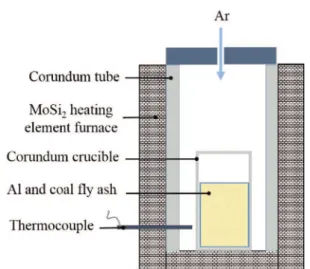
The reactant mixture was then rammed mildly to improve the solid-to-solid contact. The α-Al2O3 crucible was then placed inside a stainless-steel crucible with continuous argon circulation during the experiment. As seen in Fig. 3, the aluminothermic reduction process was performed in a MoSi2
resistance furnace for 30 min at temperatures of 1373 K, 1473 K, 1573 K, 1673 K, and 1773 K. After natural cooling, the products were characterized by XRD, scanning electron microscopy (SEM; SSX-550; Shimadzu corp., Kyoto, Japan) and energy-dispersive spectrometer (EDS, Shimadzu corp.) to identify the phases and microscopic morphology.
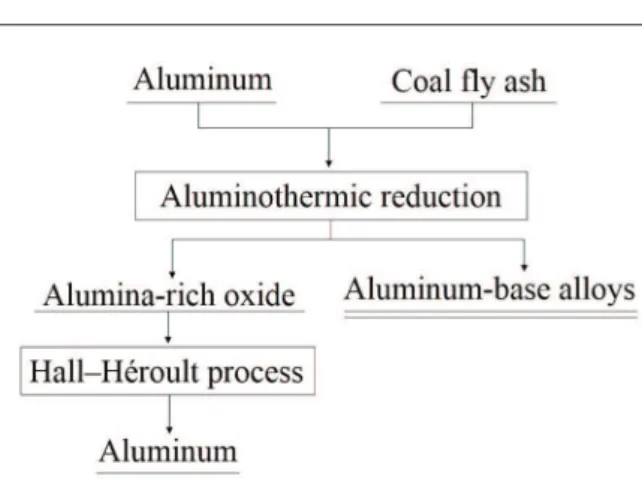
Figure 1. Flow chart of metal and oxygen extraction from mixed oxides by aluminothermic reduction and molten salt electrolysis
3. Results and discussion
3.1 Thermal evaluation
The coal fly ash is composed of CaO, Al6Si2O13,
Fe2O3, and TiO2. According to phase diagrams (Al2O3 -SiO2, CaO-Al2O3, CaO-Fe2O3, Al-Ti, and Al-Fe)
calculated by FactSage 6.4, mullite (Al6Si2O13) is stable below 1973.15 K, and Al alloy such as Al3Fe
and Al3Ti could be produced by reaction between Al and coal fly ash. Moreover, complicated oxides such as CaFe2O4 and CaAl12O19 may be intermediate products during the reduction reaction. Since the melting point of aluminium is 933.15 K and its boiling point is 2792 K, while the melting points of CaO, Al6Si2O13, Fe2O3, and TiO2 are above 1773 K, reduction reaction between liquid Al and solid oxides were discussed. The possible chemical reactions involved in the aluminothermic reduction of coal fly ash can be represented by the following set of equations
Al(l) + 3/2CaO(s) = 3/2Ca + 1/2Al2O3(s) (1) Al(l) + 3/8Al6Si2O13(s) = 3/4Si + 13/8Al2O3(s) (2)
Al(l) + 3/8Al6Si2O13(s) + 13/48CaO(s) = 3/4Si + 13/48CaAl12O19(s) (3)
Al(l) + 1/2Fe2O3(s) = Fe + 1/2Al2O3(s) (4) Al(l) + 1/8Fe2O3(s) = 1/4Al3Fe + 1/8Al2O3(s) (5)
Al(l) + 1/2CaFe2O4(s) = 1/2CaO(s) + Fe + 1/2Al2O3(s) (6)
Al(l) + 3/4TiO2(s) = 3/4Ti + 1/2Al2O3(s) (7) Al(l) + 3/13TiO2(s) = 3/13Al3Ti + 2/13Al2O3(s) (8)
The standard Gibbs free energy changes of the above equations were calculated by FactSage 6.4 and shown in Fig. 4. From thermodynamic point of view, it is thermodynamically desirable for a chemical reaction with a large negative change in standard Gibbs free energy to proceed autogenously. The
standard Gibbs free energy changes associated with equations (2)-(8) are negative, indicating that from the thermodynamic point of view, these reactions occur spontaneously at temperatures ranging from 1373 K to 1773 K; in contrast, the reaction between CaO and Al is not thermodynamically favorable. In addition, Fig. 4 suggests that the reduction of TiO2to Ti is more difficult than the reduction of Fe2O3to Fe because the
standard Gibbs free energy changes associated with equations (4) are more negative. Moreover, it was reported that Si and Ti could be prepared from their oxides via aluminothermic reduction in molten salts such as NaCl–KCl–AlCl3[9] and NaF-AlF3[11, 18]. According to the negative standard Gibbs free energy changes associated with equations (5) and (8), the reduced silicon and titanium can dissolve in molten aluminum and form alloys such as Al3Ti and Al3Fe. Thus, Al can be used as a reducing agent to extract metals (Si, Fe, and Ti) and enrich Al2O3from coal fly ash using suitable reactant combinations and temperatures.
In addition, Ellingham diagram of metal oxides involved in the system of coal fly ash can be seen in Fig. 5. The position of the line for a given reaction on the Ellingham diagram shows the stability of the oxide as a function of temperature. Reactions closer to
Figure 3. Schematic diagram of the MoSi2 resistance furnace used for aluminothermic reduction of fly ash
Figure 4. Standard Gibbs free energy changes of possible chemical reactions involved in the system of coal fly ash and Al
the top of the diagram are more“noble” metals, and their oxides are unstable and easily reduced. In addition, the 4/3Al + O2= 2/3Al2O3line in Fig. 5 lies below other lines exclude the 2Ca + O2= CaO line.
Therefore, metals (Si, Fe, and Ti) and oxides (mostly Al2O3 and residual CaO) can be obtained by
aluminothermic reduction of coal fly ash, which agree well with the results from Fig.4.
3.2 Kinetic analysis
The DSC curves of the Al-coal fly ash system, Al– Fe2O3system, Al–SiO2system, and Al–TiO2system at heating rate 10 K/min are shown in Fig. 6. The endothermic signal at approximately 933 K (660oC) is
obvious attributed to the melting of aluminum. The exothermic peaks at 1628 K (Fig. 6, peak F), 1493 K (Fig. 6, peak D), and 1583 K (Fig. 6, peak E) are believed to be associated with the aluminothermic reduction of Fe2O3, SiO2, and TiO2, respectively.
More interestingly, three exothermic signals were
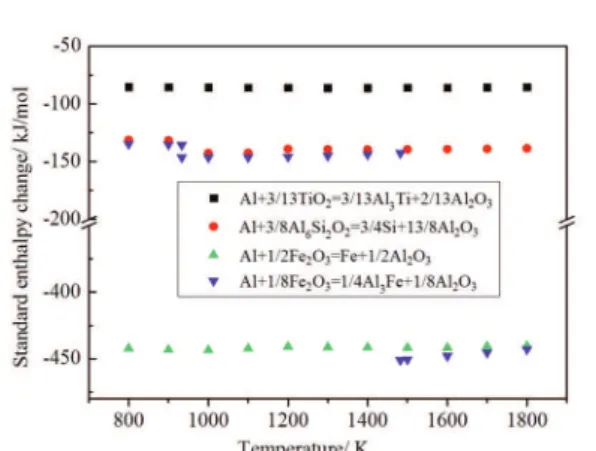
observed in the DSC curve of the Al-coal fly ash system (Fig. 6a). To identify the reactions corresponding to the exothermic peaks of Fig. 6a, the peak area was evaluated with the reaction enthalpy. A comparison of the standard reaction enthalpies (Fig. 7) shows that the standard reaction enthalpy of the aluminothermic reduction of TiO2is slightly smaller
than that of Al6Si2O13, while the standard reaction enthalpy of the aluminothermic reduction of Fe2O3is
almost three times larger than that of Al6Si2O13. Moreover, through comparison of the standard Gibbs free energy changes of equation (2) with (5) and (8), the reduction of TiO2to Al3Ti is more difficult than
the reduction of Fe2O3to Al3Fe, while the reduction of Fe2O3to Al3Fe is more difficult than the reduction of
Al6Si2O13 to Si. Therefore, the reactions responsible for the exothermic signals peak A (1618 K), peak B (1681 K), and peak C (1754 K) can be expressed as
Eq. (2), Eq. (5), and Eq. (8), respectively.
Compared to the Al–Fe2O3, Al–SiO2, and Al–TiO2
systems, the initial temperatures of the corresponding reactions in the Al -coal fly ash system are higher, and the areas of the exothermic peaks are smaller. These phenomena are primarily attributed to the fact that the stability of the SiO2component in Al6Si2O13is higher than that in SiO2. Therefore, a higher temperature is
required for the chemical reactions involved in the aluminothermic reduction of coal fly ash than for those involved between Al and single oxides. Compared to the reduction of pure Fe2O3(s) and
TiO2(s), the order of exothermic peak temperatures of Fe2O3(s) and TiO2(s) in coal fly ash is changed, which
is primarily attributed to the fact that the reduction of TiO2to Al3Ti is more difficult than the reduction of
Fe2O3 to Al3Fe. In addition, the initial reaction temperature of the reduction of pure Fe2O3(s) is lower
than that of pure TiO2(s).
The kinetic analysis of the DSC curve is based on a combination of a formal kinetic equation and the empiric Arrhenius expression [19], and it is universally described as
(9)
where α = ΔH(t)/ΔHis the fraction of conversion at time t, ΔH(t)is the partial heat of reaction at time t,
ΔH is the total heat of reaction, A is the frequency factor, nis the order of reaction, E is the activation energy of the reaction, and Ris the gas constant. By inserting the constant heating rate, β = dT/dt, into equation (9), equation (9) can be expressed as
(10)
Using the integral method developed by Freeman and Carroll [20], the reaction order n and the activation energy E can be determined from the equation
Figure 6. DSC curves of (a) coal fly ash system, (b) Al-Fe2O3system, (c) Al-SiO2system, and (d) Al-TiO2 system at heating rate 10 K/min
Figure 7. Standard enthalpy change of reactions involved in the system of (a) Al-Al6Si2O13, (b) Al-TiO2, and (c) Al-Fe2O3at temperature range of 800-1800K
d dt
A e
E
RT α
α =
− ( - )1 n
d dt
A e
E RT α
α
(11)
It is apparent that kinetic parameters E and n can be calculated from the intercept and the slope of the regression plot of Δlg(dα/dT)/Δlg(1-α) versus Δ(1/T)/Δlg(1-α), respectively. The Freeman–Carroll curves of the Al and coal fly ash system at exothermic peaks A, B, and C are shown in Figs. 8-10, and the results of the kinetic analysis are shown in Table 1. The obtained kinetic parameters are E= 89.38 kJ/mol and n= 2.4 for equation (2), E= 73.77 kJ/mol and n
= 1.4 for equation (5), and E= 380.16 kJ/mol and n= 0.9 for equation (8). These apparent activation energies were huge, indicating that aluminothermic reactions between coal fly ash and aluminum were mainly controlled by chemical reaction. Moreover, the reaction enthalpy of the reaction associated with Peak B (Fig. 6) is about 2.26 times larger than that of the reaction associated with Peak C (Fig. 6); this finding is in agreement with the results shown in Fig. 7 along with the associated discussion.
3.3 Influence of Reaction Temperature on Product Composition
The phases of initial mixture of Al and coal fly ash before heat treat, and the products obtained by the aluminothermic reduction of coal fly ash were identified by XRD (Fig. 11). The XRD patterns of the powder blends isothermally heated at 1373 K and 1473 K for 30 min are nearly identical to that of the as-blended sample. This implies that in this temperature range, the phase structure was largely retained, and no oxide reduction took place (Figs. 11a and b). On the other hand, silicon was detected for the first time in the XRD pattern of the powder sample isothermally heated at 1573 K (Fig. 11c), indicating that an exchange of oxygen atoms between Si and Al occurred (i.e. mullite was reduced by Al at this temperature). According to Al-Si binary diagram [21], the maximum solubility of Si in Al occurs at the eutectic temperature (850.15 K) and is 12.6 wt%. When the percent of silicon in Al-Si alloy ranges between 0.1 wt% and 12.6 wt%, Al-Si alloy can be produced at temperature of 1573 K-1773 K. The formation of Al-Si alloy can be expressed as Eq. (12). Al (l) + Si (l) = Al-Si (l) (12) The peak of Al2O3at 1773 K (Fig. 11e) is stronger than that at 1673 K (Fig. 11d), while the peak of Al6Si2O13at 1673 K (Fig. 11d) is weaker than that at 1573 K (Fig. 11c). Moreover, no Al6Si2O13peaks were observed in the XRD pattern of the powder sample
dα dT E
α −
= − lg
1 1
∆
∆
( / )
lg( ) 99 144
1 1 .
( / )
lg( )
∆
∆
T n
− + α
Figure 8. Freeman-Carroll curve of Al and coal fly ash system at exothermic peak A
Figure 9. Freeman-Carroll curve of Al and coal fly ash system at exothermic peak B
Figure 10. Freeman-Carroll curve of Al and coal fly ash system at exothermic peak C
Peak temperature
(K )
ΔH
(kJ/mol) n E(kJ/mol)
Peak A 1618 24.27 2.4 89.38
Peak B 1681 41.04 1.4 73.77
Peak C 1754 18.19 0.9 380.16 Table 1. Kinetic parameters calculated by Freeman-Carroll
isothermally heated at 1773 K, which suggests that Al6Si2O13 is completely reduced at this temperature
(Fig. 11e). Therefore, as the heating temperature increases, the coal fly ash and Al powder react more thoroughly. In addition, no peaks were observed for Fe or Ti or their compounds, possibly due to their low contents in the alloys.
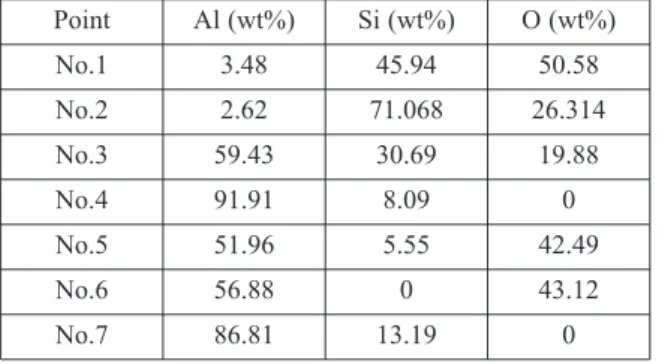
SEM and EDS were used to examine the general distribution of elements in the Al and coal fly ash powders blends that were isothermally heat treated at 1373–1773 K for 30 min (Fig. 12 and Table 2). The EDS results of points No. 1 (Fig. 12a) and No. 2 (Fig. 12b) taken from the white areas indicate that no
individual metals or alloys were produced in this temperature range. These results agree well with the XRD results. The small gray particles (points Nos. 5 and 6) are Al2O3, and the excess is aluminum. The
composition at point No. 4 (Fig. 12d) is 91.91 wt% Al and 8.09 wt% Si, while that at point No. 7 (Fig. 12e) is 86.81 wt% Al and 13.19 wt% Si. The content of Si increases with increasing temperature. Therefore, it is reasonable to induce that the higher the temperature is, the more completely the aluminothermic reduction reaction proceeds.
3.4 The comparison of different alumina exctraction technologies
During the process of coal fly reduction by aluminum, the alumina in the raw fly ash does not react with aluminum, while alumina-rich oxides can be produced by aluminothermic reduction of other oxides in fly ash (as shown in Eqs. (2)- (8)). After
Figure 11. XRD patterns of Al and coal fly ash powders isothermally heat treated at (a) 1373K, (b) 1473K, (c) 1573K, (d) 1673K, and (e) 1773K for 30 minutes
Figure 12. SEM microstructure of Al and coal fly ash powders isothermally heat treated at (a) 1373K, (b) 1473K, (c) 1573K, (d) 1673K, and (e) 1773K for 30 minutes
(a) 1373 K
(d) 1673 K (e) 1773 K
(b) 1473 K (c) 1573 K
Table 2. EDS mapping analysis of samples obtained by aluminothermic reduction of coal fly ash
Point Al (wt%) Si (wt%) O (wt%)
No.1 3.48 45.94 50.58
No.2 2.62 71.068 26.314
No.3 59.43 30.69 19.88
No.4 91.91 8.09 0
No.5 51.96 5.55 42.49
No.6 56.88 0 43.12
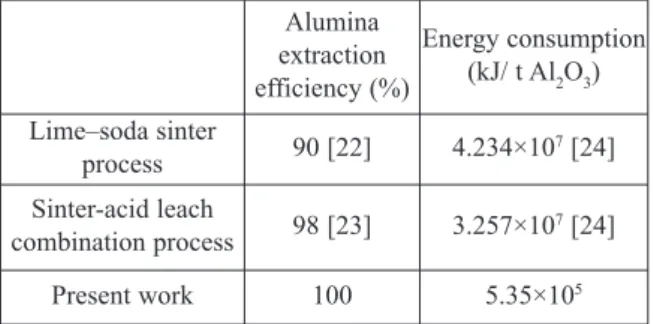
mechanical separation from aluminum-based alloys, the alumina-rich oxides containing a few amount of CaO and K2O can be utilized for aluminum production using the Hall–Héroult process. Therefore, the alumina extraction efficiency of aluminothermic reduction process at 1773 K can be believed to be 100 % because no evidence of mullite was found in the product. On the other hand, Bai et al. [22] calcined fly ash with lime-soda at 1473.15K, and the final alumina extraction efficiency was 90 %. Ji et al. [23] calcined fly ash with soda at 1137.15 K and then leached with sulfuric acid, which is known as the sinter-acid leach combination process. The extraction efficiency reported by Ji et al. reached as high as 98 %.
As for the energy consumption of the process of coal fly reduction by aluminum, the electric power consumption of the MoSi2resistance furnace (1773K) that heated aluminum and coal fly ash from room temperature (298K) to experimental temperature (1773K) should be considered. In order to simplify the calculation, mullite (Al6Si2O13) was used to substitute complex coal fly. According to Kirchhoff's Law, the enthalpy change ΔH can be expressed as Eq. (13)
ΔH = a ×(T - 298) + 1/2 b ×(T2- 2982) – c
×105
(1/T – 1/298) (13)
Where a, b, and c are thermodynamic temperature coefficient, as shown in Table 3; T is the final temperature of heating.
Taking all parameters into Eq. (13), the calculated ΔH of heating aluminum and coal fly ash from 298 K to 1773 K are 56.36 kJ/mol and 747.06 kJ/mol, respectively. In order to produce 1t alumina (refer to Eq. (2)), the required aluminum and mullite are 603.55 mol and 226.33 mol, respectively. In addition, aluminum was used as raw materials. The electrolytic reaction of aluminum production can be expressed as Eq. (14), and the enthalpy change ΔH equal to 549.42 kJ/mol (1223 K, endothermic). Therefore, the total energy consumption is 5.35×10⁵ kJ/t Al
2O3.
According to this analysis, the theoretical energy consumption during the aluminothermic process is lower than that in the lime–soda sinter process and sinter-acid leach combination process, as shown in Table 4.
Al2O3(s) + 1.5C (s) = 2Al (l) + 1.5CO2(g) (14)
5. Conclusions
Al–Si master alloy was prepared, and alumina was enriched by the aluminothermic reduction of coal fly ash. The Gibbs free energy changes associated with the aluminothermic reduction of SiO2, Fe2O3, and TiO2at 1373–1773 K are negative, which predicts that
the reduction of coal fly ash by aluminum is thermodynamically feasible. The reduction of Al6Si2O13, Fe2O3, and TiO2by aluminum in coal fly ash occurs at 1618 K, 1681 K, and 1754 K. The components of the product obtained by the aluminothermic reduction of fly ash at 1573 K are Al2O3, Al6Si2O13, Al, and Si, while the components of the product obtained at 1773 K are Al2O3, Al, and Si.
The composition of the alloy obtained at 1673 K is 91.91 wt% Al and 8.09 wt% Si, while the composition obtained at 1773 K is 86.81 wt% Al and 13.19 wt% Si. With increasing heating temperature, the coal fly ash and Al powder react more thoroughly.
Acknowledgement
The authors would like to acknowledge the financial support from the National Natural Science Foundation of China (Nos. 51322406), the Program for New Century Excellent Talents (NCET-13-0107), Ministry of Education of China, and the Fundamental Research Funds for the Central Universities (No.N140205001). The author (Aimin Liu) would like to express his gratitude for awarding a scholarship to purse his study in The United States of America as a visiting student by China Scholarship Council (CSC).
References
[1] M. Authier-Martin, G. Forte, S. Ostap, and J. See, JOM, 53 (2001) 36-40.
[2] G.H. Bai, W. Teng, X.G. Wang, J.G Qin, P. Xu, and P.C. Li, Trans. Nonferrous Met. Soc. China, 20 (2010) 169-175.
[3] A. Shemi, S. Ndlovu, V. Sibanda, and L.D. Van Dyk, Int. J. Miner. Process, 127 (2014) 10-15.
[4] C.Y. Wu, H.F. Yu, and H.F. Zhang, Trans. Nonferrous Met. Soc. China, 22 (2012) 2282-2288.
Temperature/K a b c
Aluminum (s) 298.15-933 31.376 -16.393 -3.607
Aluminum (l) 933-2767 31.748 -
-Mullite (s) 298.15-600 233.593 633.876 -55.856
Mullite (l) 600-2023 503.461 35.104 -230.12 Table 3. The calculation datasheet of ΔH of aluminum and
mullite
Alumina extraction efficiency (%)
Energy consumption (kJ/ t Al2O3)
Lime–soda sinter
process 90 [22] 4.234×10 7[24]
Sinter-acid leach
combination process 98 [23] 3.257×10 7[24]
Present work 100 5.35×10⁵ Table 4. The comparison of different alumina recovery
[5] N. Nayak, R. and Panda Chitta, Fuel, 89 (2010) 53-58. [6] R.H. Matjie, J.R. Bunt, and J.H.P. Van, Miner. Eng, 18
(2005) 299-310.
[7] A.M. Liu, L.X. Li, J.L. Xu, Z.N. Shi, X.W. Hu, B.L. Gao, Z.W. Wang, J.Y. Yu, and G. Chen, JOM, 60 (2014) 635-638.
[8] A.M. Liu, Z.N. Shi, J.L. Xu, X.W. Hu, B.L. Gao, and Z.W. Wang, JOM. 68(6) (2016) 1518-1524.
[9] M. Ueda, Y. Abe, and T. Ohtsuka, Mater. Lett, 60 (2006) 635-638.
[10] S. Kentaro, M. Hideyuki, S. Yoshinari, and S. Kunio, Chem. Eng. J, 198 (2012) 61-64.
[11] A.M. Liu, J.Z. Guan, K.Y. Xie, and Z.N. Shi, Northeast. Univ. (Nat. Sci.), 37 (4) (2016) 521-525. [12] Y.W. Wang, J. You, J.P. Peng, Y.Z. Di, JOM. 68(6)
(2016) 1728-1736.
[13] Y.M. Lytvynenko, JOM, 62 (2010) 46-48.
[14] V.M. Sokolov, V.D. Babyuk, Y.A. Zhydkov, and Y.Y. Stok, Miner. Eng, 21 (2008) 143-149.
[15] B. Wang, K.R. Liu, J.S. Chen, T.Y. Gao, and J.L. He, Trans. Nonferrous Met. Soc. China, 22 (2012) 1507-1512.
[16] R. Wei, Z. Lun, X. Lv, T. Hu, C. Bai, J. Min. Metall. Sect. B-Metall. 51 (1) B (2015) 1- 6.
[17] B. Li, G. Chen, H. Zhang, and C.D. Sheng, Fuel, 118 (2014) 385-391.
[18] A.M. Liu, K.Y. Xie, L.X. Li, Z.N. Shi, X.W. Hu, J.L. Xu, B.L. Gao, and Z.W. Wang, TMS Annual Metting, 2015, pp.239-246.
[19] G. Chen, Z.N. Shi, J.Y. Yu, Z.W. Wang, J.L. Xu. B.L. Gao, and X.W. Hu, Thermochimi. Acta, 589 (2014) 63-69.
[20] N.A. Liu, and W.C. Fan, Thermochim. Acta, 338 (1999) 85-94.
[21] J.L. Murray, and A.J. McAlister, Bull. Alloy Phase Diagrams, 5 (1) (1984) 74-84, 89-90.
[22] G.H. Bai, W. Teng, X.G. Wang, J.G. Qin, P. Xu, and P.C. Li, Trans. Nonferrous Met. Soc. China, 20 (2010) 69-75.
[23] H.M. Ji, H.X. Lu, X.G. Hao, and P. Wu, J. Chin. Ceram. Soc., 35 (2007) 1657-1660.