Dement Neuropsychol 2018 March;12(1):1-11
1
Pavarini et al. P300 in healthy aging
Views
&
Reviews
On the use of the P300 as a tool for cognitive
processing assessment in healthy aging
A review
Sofia Cristina Iost Pavarini1,2,4, Allan Gustavo Brigola1,Bruna Moretti Luchesi1, Érica Nestor Souza1, Estefani Serafim Rossetti1, Francisco José Fraga3, Letícia Pimenta Costa Guarisco4, Marélli Terassi1,
Nathalia Alves Oliveira1, Priscilla Hortense1, Renata Valle Pedroso5, Ana Carolina Ottaviani1
ABSTRACT. Changes in patterns of performance for the cognitive functions of memory, processing speed, and focused attention are expected in old age. Objective: The main goal of this systematic review was to analyze the use of ERP in healthy elderly in studies evaluating the P300 components. Methods: A systematic review was carried out based on recommendations for nursing research on the databases LILACS, PsycINFO, PubMed, SCOPUS and Web of Science. Results: 26 studies involving 940 healthy elderly were identified, most of which sought to identify and determine the influence of age on the P300. Conclusion: Although there is consensus in the literature that P300 latency is significantly longer in elderly with psychiatric disorders compared to healthy elderly, it was not possible to conclude P300 associations with gender, education and other cognitive tests.
Key words: aging, neuropsychological function, event-related potentials, P300, healthy elderly.
O USO DO P300 COMO FERRAMENTA PARA AVALIAÇÃO DO PROCESSAMENTO COGNITIVO EM ENVELHECIMENTO SAUDÁVEL RESUMO. São esperadas mudanças nos padrões de desempenho nas funções cognitivas de memória, velocidade de processamento e atenção concentrada durante o processo de envelhecimento. Objetivo: O objetivo principal desta revisão sistemática é analisar o uso de ERP em idosos saudáveis nos estudos que avaliaram os componentes do P300.
Métodos: Realizou-se uma revisão sistemática com recomendações de estudo para enfermagem nos bancos de dados LILACS, PsycINFO, PubMed, SCOPUS and Web of Science. Resultados: Foram identificados 26 estudos com 940 idosos
saudáveis, a maioria procurava identificar e encontrar a influência da idade no P300. Conclusão: Embora haja consenso na literatura de que em idosos com transtornos psiquiátricos a latência P300 é significativamente maior, em relação aos idosos saudáveis não foi possível concluir as associações P300 com gênero, escolaridade e outros testes cognitivos.
Palavras-chave: envelhecimento, função neuropsicológica, potencial relacionado a eventos, P300, idosos saudáveis.
S
ome age-related changes in brain func-tion are expected. Therefore, changes in attention, concentration and memory may influence cognitive processing1 and becausethey are associated with these functions, endogenous event-related potentials (ERP) have been used to supplement neuropsy-chological evaluation. Endogenous ERP do not depend only on the individual’s
physi-cal attributes, but also on brain reactions.2
The ERP are magnetic waves (measured by magnetoencephalography – MEG), where the third positive wave is known as P3 or P300, since it occurs around 300 milliseconds (ms) after the presentation of the stimulus. Two variables are used to quantify the P300: latency, which is related to information pro-cessing time, and amplitude, which is related
This study was conducted at Federal University of São Carlos (UFSCar), SP, Brazil.
1PhD, Federal University of São Carlos (UFSCar), Graduate Program in Nursing, São Carlos, SP, Brazil. 1MS, Federal University of São Carlos (UFSCar), Graduate Program in Nursing, São Carlos, SP, Brazil. 2PhD, Federal University of São Carlos (UFSCar), Graduate Program in Gerontology, São Carlos, SP, Brazil. 3PhD, Federal University of ABC (UFABC), Engineering, Modeling and Applied Social Sciences Center (CECS), Santo André, SP, Brazil. 4PhD, Federal University of São Carlos (UFSCar), Gerontology Department, São Carlos, SP, Brazil. 5PhD, São Paulo State University (UNESP), Physical Activity and Aging Lab, Rio Claro, SP, Brazil. Sofia Cristina Iost Pavarini. Graduate Program in Gerontology / Federal University of São Carlos (UFSCar) – Rodovia Washington Luís Km 310 – 13565-905 São Carlos SP – Brazil. E-mail: [email protected]
Disclosure: The authors report no conflicts of interest.
Received August 23, 2017. Accepted in final form October 26, 2017.
Dement Neuropsychol 2018 March;12(1):1-11
2 P300 in healthy aging Pavarini et al.
to attention level.3 To evaluate the classic P300 (P3b),
the oddball paradigm is usually used, by which subjects are instructed to discriminate the rare stimulus while irrelevant stimuli are also being presented. Tasks can be auditory, with stimuli at different sound frequencies, for instance, or visual, entailing presentation of figures.4,5
The variation in cognitive processing in the elderly, according to the literature, ranges from 300 ms to 400 ms or longer. There is evidence that a reduction in cogni-tive processing speed occurs with aging, characterized by increased latency and decreased amplitude.2,5-9
The literature indicates that cognitive processing can be influenced by factors such as age, gender, education, reading habits, cognitive performance, the presence of depressive symptoms, level of social and cultural inter-action, among other aspects.10,11 A meta-analysis study
found that P300 is a sensitive tool for monitoring cogni-tion and may be an indicator in the analysis of cognitive deterioration.4
Given the above, the need to know and systematize the data on the use of the P300 for cognitive processing assessment in healthy elderly was recognized, consid-ering that reviews published to date have focused on the association between age and cognitive processing in elderly with cognitive impairment.
The main goal of this systematic review was to ana-lyze the use of ERP in healthy elderly in studies evaluat-ing the P300 components, primarily the classical P300, with a focus on attention and cognitive processing speed. The intention was to identify the most relevant and recent output on the subject and provide informa-tion that can help guide the use of the P300 in elderly as a tool for cognitive processing assessment, both for clin-ical practice and research. Besides the above-mentioned objective, this study also aimed to identify evidence of the relationship between P300 and associated factors (age, gender, and education) in healthy aging.
METHODS
This was a systematic review of the literature, carried out according to the stages recommended in the litera-ture.12 The guiding questions that underpinned this
review were “What are the characteristics about the recent output using the P300 for cognitive processing assessment in healthy elderly?” and “Can individual associated factors such as age, gender and education influence P300 in healthy elderly? What is the scientific evidence?”.
The inclusion criteria were studies that used the P300 as a tool for evaluating cognitive processing in the elderly and that included at least one group of
cog-nitively healthy elderly in the sample; studies with a publication date of between January 2011 and Janu-ary 2017; and articles written in Portuguese, English or Spanish. Although the P300 has been studied over the last 50 years, in this study the analysis was focused on the recent and relevant output regarding its use as a tool for cognitive processing speed and attention assess-ment, since numerous good reviews have been published on early P300 studies in general.
The exclusion criteria were articles that used types of event-related potentials other than the classic P300, studies that did not include a cognitively healthy elderly group and those not having a focus on cognitive process-ing speed and attention.
Search strategy
We selected studies through electronic searches on five health databases: LILACS; PsychINFO; PubMed; SCOPUS and Web of Science, using the following combi-nation of descriptors and filters: (“P300” OR “electrophy
siological” OR “evoked cognitive potentials” OR “evoked
potential” OR “auditory evoked potentials”) AND
“elderly”; Activated filters: Research in humans, Aged: 65+ years, 80 and over: 80+ years.
Study selection
Two independent “blind” reviewers conducted the search for titles and abstracts in July 2016. The studies that addressed the guiding questions were selected for full reading using a selection protocol previously created in Microsoft Excel®2010. In addition, a strategy of cross-reference searching was performed, by which all the references from the selected studies that addressed the guiding questions and met the inclusion criteria were selected for full reading. Reading and discussion of the studies were carried out intensively in a consensus meeting held on February 05, 2017 with the presence of authors.
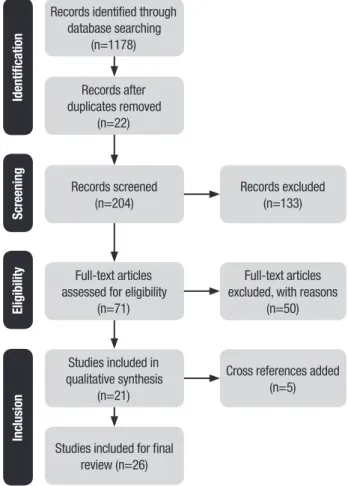
Figure 1 depicts a summary of the steps for the study identification and selection procedure with numerical data.
Data collection, analysis and synthesis of results
Dement Neuropsychol 2018 March;12(1):1-11
3
Pavarini et al. P300 in healthy aging
the highest was 75.8 years.14 The majority (n = 10) had
a mean age of between 70 and 74 years.2,15-20 Two
stud-ies did not cite the mean age, only the age range of the participants, which was 15-85 years21 for one study and
42-78 years for the other.22
With regard to the type of stimulus used for obtain-ing the P300, 50% used auditory stimulation and 50% visual stimulation, and each study used different set-tings for recording the ERP. Most studies (92.3%) used complementary evaluations and 23% also included electrophysiological evaluation of waves other than the P300.
P300 evaluation
The evaluation of P300 was used in 53.8% of the articles to identify the influence of age on cognitive processing performance.5,15-17,19,21,23-29 In 19.2% of the studies, the
P300 was used to compare the electrophysiological evaluation of healthy and cognitively impaired partici-pants,6,13,14,30,31 15.4% used electrophysiological
evalu-ation to monitor the effects of therapies in clinical trials,32-35 one study evaluated the P300 according to
age, depression, and cognition,2 one evaluated
depres-sion in post-stroke patients22 and one paper studied
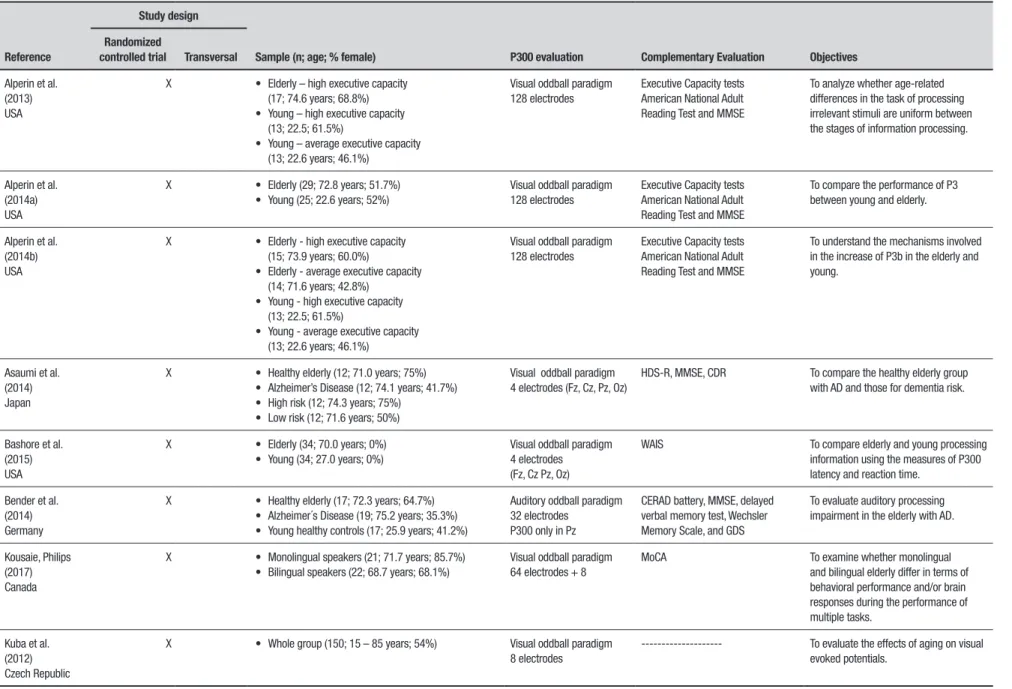
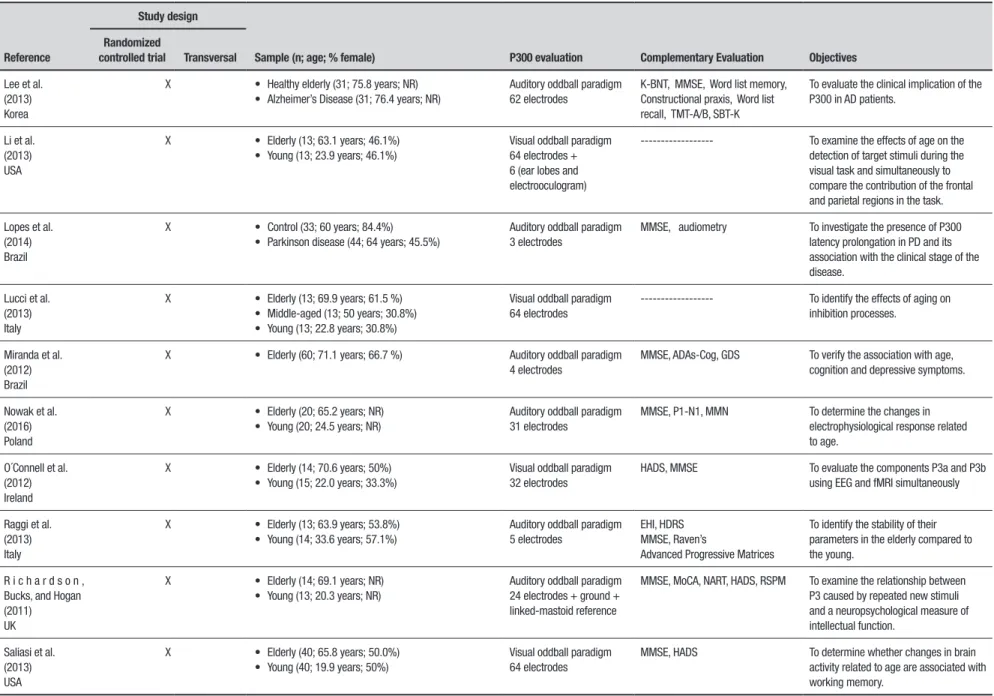
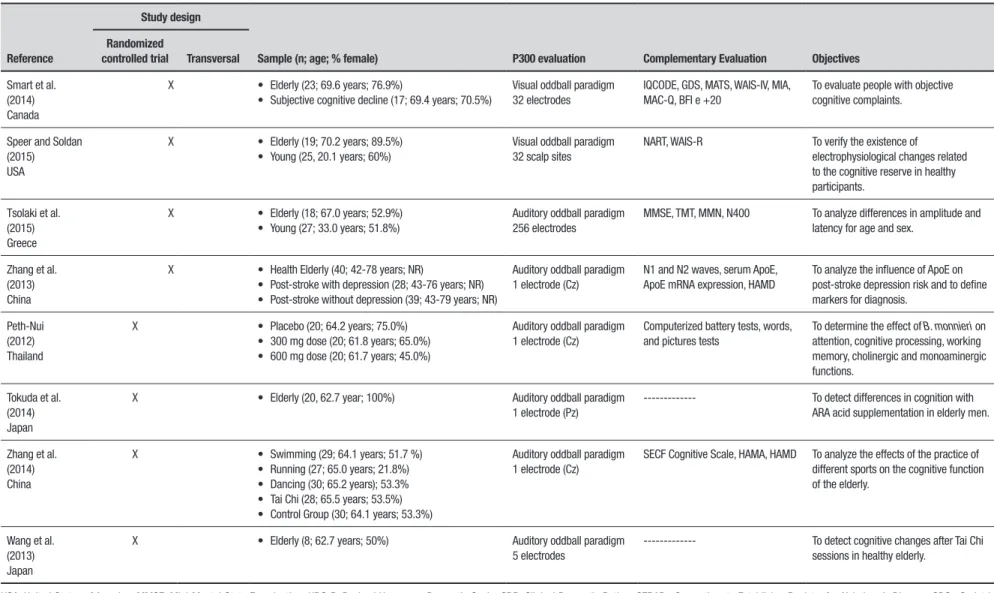
the difference between older monolingual and bilingual adults.18 A summary of the results is given in Table 1.
P300 values
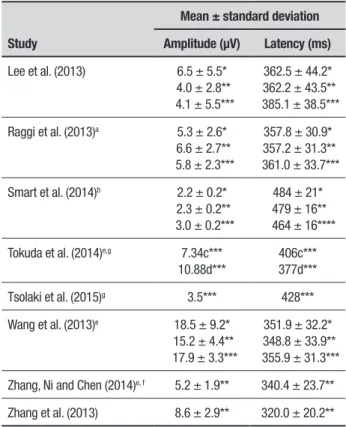
Of the 26 studies, eight reported means and standard deviations of the P300 values (amplitude and latency), as summarized in Table 2. These values are only for the healthy elderly groups, serving as a reference for discus-sion of the subsequent studies.
The statistical procedures most used for the treat-ment of P300 data were those recommended when the data adhere to normality. The variance analysis by ANOVA was the most used (61.5%), the t-test was the
most used procedure for comparison of groups and therapy effects (28%), and the non-parametric option predominantly used to compare the ranking between groups was the Mann-Whitney test. The Spearman (16%) and Pearson (8%) correlation coefficients were used for correlation analyses.
Regarding the most evident findings, half of the articles found an influence of age on P300 values. In 19.2% of the studies, associations between neurocog-nitive impairment and worse electrophysiological evalu-ation6,13,14,30,31 were found. Education was an item
com-monly not associated with P300 evaluation.2,16,27 Two
articles presented contrasting results for the association between sex and P300 values – the first study found that
Identification
Screening
Eligibility
Inc
lusion
Records identified through database searching
(n=1178)
Records after duplicates removed
(n=22)
Records screened (n=204)
Records excluded (n=133)
Full-text articles assessed for eligibility
(n=71)
Full-text articles excluded, with reasons
(n=50)
Studies included in qualitative synthesis
(n=21)
Cross references added (n=5)
Studies included for final review (n=26)
Figure 1. Summary of the study search and selection procedure. São Carlos, 2017.
simple frequency, percentage and mean. The qualitative analyses of the studies were carried out together with all the authors and presented in text and tables.
As a secondary and complementary result, the stud-ies that reported amplitude and latency information for the healthy elderly were described and summarized in the review.
RESULTS
General characteristics of the studies
Of the 26 articles selected, 22 were cross-sectional studies and four randomized clinical trials. Regarding the publication date, most were published in 2014 (30.8%) and 2013 (30.8%). The studies were conducted in 12 different countries, 26.9% in the United States, and 11.6% in Japan, Italy, Brazil, Canada, and China.
Dement Neuropsyc
hol 2018 Mar
ch;12(1):1-11
4
P300 in health
y aging
Pa
v
arini et al.
Table 1. Details of the 26 articles regarding authors, year, country, sociodemographic characteristics, P300 evaluation, complementary evaluation and use of P300. São Carlos, 2017.
Reference
Study design
Sample (n; age; % female) P300 evaluation Complementary Evaluation Objectives
Randomized
controlled trial Transversal
Alperin et al. (2013) USA
X • Elderly – high executive capacity
(17; 74.6 years; 68.8%) • Young – high executive capacity
(13; 22.5; 61.5%)
• Young – average executive capacity (13; 22.6 years; 46.1%)
Visual oddball paradigm 128 electrodes
Executive Capacity tests American National Adult Reading Test and MMSE
To analyze whether age-related differences in the task of processing irrelevant stimuli are uniform between the stages of information processing.
Alperin et al. (2014a) USA
X • Elderly (29; 72.8 years; 51.7%)
• Young (25; 22.6 years; 52%)
Visual oddball paradigm 128 electrodes
Executive Capacity tests American National Adult Reading Test and MMSE
To compare the performance of P3 between young and elderly.
Alperin et al. (2014b) USA
X • Elderly - high executive capacity
(15; 73.9 years; 60.0%)
• Elderly - average executive capacity (14; 71.6 years; 42.8%)
• Young - high executive capacity (13; 22.5; 61.5%)
• Young - average executive capacity (13; 22.6 years; 46.1%)
Visual oddball paradigm 128 electrodes
Executive Capacity tests American National Adult Reading Test and MMSE
To understand the mechanisms involved in the increase of P3b in the elderly and young.
Asaumi et al. (2014) Japan
X • Healthy elderly (12; 71.0 years; 75%)
• Alzheimer’s Disease (12; 74.1 years; 41.7%) • High risk (12; 74.3 years; 75%)
• Low risk (12; 71.6 years; 50%)
Visual oddball paradigm 4 electrodes (Fz, Cz, Pz, Oz)
HDS-R, MMSE, CDR To compare the healthy elderly group
with AD and those for dementia risk.
Bashore et al. (2015) USA
X • Elderly (34; 70.0 years; 0%)
• Young (34; 27.0 years; 0%)
Visual oddball paradigm 4 electrodes (Fz, Cz Pz, Oz)
WAIS To compare elderly and young processing
information using the measures of P300 latency and reaction time.
Bender et al. (2014) Germany
X • Healthy elderly (17; 72.3 years; 64.7%)
• Alzheimer´s Disease (19; 75.2 years; 35.3%) • Young healthy controls (17; 25.9 years; 41.2%)
Auditory oddball paradigm 32 electrodes
P300 only in Pz
CERAD battery, MMSE, delayed verbal memory test, Wechsler Memory Scale, and GDS
To evaluate auditory processing impairment in the elderly with AD.
Kousaie, Philips (2017) Canada
X • Monolingual speakers (21; 71.7 years; 85.7%)
• Bilingual speakers (22; 68.7 years; 68.1%)
Visual oddball paradigm 64 electrodes + 8
MoCA To examine whether monolingual
and bilingual elderly differ in terms of behavioral performance and/or brain responses during the performance of multiple tasks.
Kuba et al. (2012) Czech Republic
X • Whole group (150; 15 – 85 years; 54%) Visual oddball paradigm
8 electrodes
--- To evaluate the effects of aging on visual
evoked potentials.
Dement Neuropsyc
hol 2018 Mar
ch;12(1):1-11
5
Pa
v
arini et al.
P
300 in health
y aging
Table 1. Details of the 26 articles regarding authors, year, country, sociodemographic characteristics, P300 evaluation, complementary evaluation and use of P300. São Carlos, 2017 (continuation).
Reference
Study design
Sample (n; age; % female) P300 evaluation Complementary Evaluation Objectives
Randomized
controlled trial Transversal
Lee et al. (2013) Korea
X • Healthy elderly (31; 75.8 years; NR)
• Alzheimer’s Disease (31; 76.4 years; NR)
Auditory oddball paradigm 62 electrodes
K-BNT, MMSE, Word list memory, Constructional praxis, Word list recall, TMT-A/B, SBT-K
To evaluate the clinical implication of the P300 in AD patients.
Li et al. (2013) USA
X • Elderly (13; 63.1 years; 46.1%)
• Young (13; 23.9 years; 46.1%)
Visual oddball paradigm 64 electrodes + 6 (ear lobes and electrooculogram)
--- To examine the effects of age on the
detection of target stimuli during the visual task and simultaneously to compare the contribution of the frontal and parietal regions in the task.
Lopes et al. (2014) Brazil
X • Control (33; 60 years; 84.4%)
• Parkinson disease (44; 64 years; 45.5%)
Auditory oddball paradigm 3 electrodes
MMSE, audiometry To investigate the presence of P300
latency prolongation in PD and its association with the clinical stage of the disease.
Lucci et al. (2013) Italy
X • Elderly (13; 69.9 years; 61.5 %)
• Middle-aged (13; 50 years; 30.8%) • Young (13; 22.8 years; 30.8%)
Visual oddball paradigm 64 electrodes
--- To identify the effects of aging on
inhibition processes.
Miranda et al. (2012) Brazil
X • Elderly (60; 71.1 years; 66.7 %) Auditory oddball paradigm
4 electrodes
MMSE, ADAs-Cog, GDS To verify the association with age,
cognition and depressive symptoms.
Nowak et al. (2016) Poland
X • Elderly (20; 65.2 years; NR)
• Young (20; 24.5 years; NR)
Auditory oddball paradigm 31 electrodes
MMSE, P1-N1, MMN To determine the changes in
electrophysiological response related to age.
O´Connell et al. (2012) Ireland
X • Elderly (14; 70.6 years; 50%)
• Young (15; 22.0 years; 33.3%)
Visual oddball paradigm 32 electrodes
HADS, MMSE To evaluate the components P3a and P3b
using EEG and fMRI simultaneously
Raggi et al. (2013) Italy
X • Elderly (13; 63.9 years; 53.8%)
• Young (14; 33.6 years; 57.1%)
Auditory oddball paradigm 5 electrodes
EHI, HDRS MMSE, Raven’s
Advanced Progressive Matrices
To identify the stability of their parameters in the elderly compared to the young.
R i c h a r d s o n , Bucks, and Hogan (2011) UK
X • Elderly (14; 69.1 years; NR)
• Young (13; 20.3 years; NR)
Auditory oddball paradigm 24 electrodes + ground + linked-mastoid reference
MMSE, MoCA, NART, HADS, RSPM To examine the relationship between
P3 caused by repeated new stimuli and a neuropsychological measure of intellectual function.
Saliasi et al. (2013) USA
X • Elderly (40; 65.8 years; 50.0%)
• Young (40; 19.9 years; 50%)
Visual oddball paradigm 64 electrodes
MMSE, HADS To determine whether changes in brain
activity related to age are associated with working memory.
Dement Neuropsyc
hol 2018 Mar
ch;12(1):1-11
6
P300 in health
y aging
Pa
v
arini et al.
Table 1. Details of the 26 articles regarding authors, year, country, sociodemographic characteristics, P300 evaluation, complementary evaluation and use of P300. São Carlos, 2017 (continuation).
Reference
Study design
Sample (n; age; % female) P300 evaluation Complementary Evaluation Objectives
Randomized
controlled trial Transversal
Smart et al. (2014) Canada
X • Elderly (23; 69.6 years; 76.9%)
• Subjective cognitive decline (17; 69.4 years; 70.5%)
Visual oddball paradigm 32 electrodes
IQCODE, GDS, MATS, WAIS-IV, MIA, MAC-Q, BFI e +20
To evaluate people with objective cognitive complaints.
Speer and Soldan (2015) USA
X • Elderly (19; 70.2 years; 89.5%)
• Young (25, 20.1 years; 60%)
Visual oddball paradigm 32 scalp sites
NART, WAIS-R To verify the existence of
electrophysiological changes related to the cognitive reserve in healthy participants.
Tsolaki et al. (2015) Greece
X • Elderly (18; 67.0 years; 52.9%)
• Young (27; 33.0 years; 51.8%)
Auditory oddball paradigm 256 electrodes
MMSE, TMT, MMN, N400 To analyze differences in amplitude and
latency for age and sex.
Zhang et al. (2013) China
X • Health Elderly (40; 42-78 years; NR)
• Post-stroke with depression (28; 43-76 years; NR) • Post-stroke without depression (39; 43-79 years; NR)
Auditory oddball paradigm 1 electrode (Cz)
N1 and N2 waves, serum ApoE, ApoE mRNA expression, HAMD
To analyze the influence of ApoE on post-stroke depression risk and to define markers for diagnosis.
Peth-Nui (2012) Thailand
X • Placebo (20; 64.2 years; 75.0%)
• 300 mg dose (20; 61.8 years; 65.0%) • 600 mg dose (20; 61.7 years; 45.0%)
Auditory oddball paradigm 1 electrode (Cz)
Computerized battery tests, words, and pictures tests
To determine the effect of B. monnieri on attention, cognitive processing, working memory, cholinergic and monoaminergic functions.
Tokuda et al. (2014) Japan
X • Elderly (20, 62.7 year; 100%) Auditory oddball paradigm
1 electrode (Pz)
--- To detect differences in cognition with
ARA acid supplementation in elderly men.
Zhang et al. (2014) China
X • Swimming (29; 64.1 years; 51.7 %)
• Running (27; 65.0 years; 21.8%) • Dancing (30; 65.2 years); 53.3% • Tai Chi (28; 65.5 years; 53.5%) • Control Group (30; 64.1 years; 53.3%)
Auditory oddball paradigm 1 electrode (Cz)
SECF Cognitive Scale, HAMA, HAMD To analyze the effects of the practice of
different sports on the cognitive function of the elderly.
Wang et al. (2013) Japan
X • Elderly (8; 62.7 years; 50%) Auditory oddball paradigm
5 electrodes
--- To detect cognitive changes after Tai Chi
sessions in healthy elderly.
Dement Neuropsychol 2018 March;12(1):1-11
7
Pavarini et al. P300 in healthy aging
latency in the male group was greater with advancing years21 whereas the second found that response to the
stimulus in the frontal region was faster in men.5 Four
studies performed an association analysis between neu-ropsychological and cognitive tests with P300 values, although two of these failed to identify a relationship between the two variables. In both studies that dem-onstrated this association, the authors confirmed a relationship between P300 and the working memory domain in healthy elderly29 and for general scores on
word list recognition, constructional praxis, and word fluency neuropsychological tests of the MMSE and CERAD-K in elderly with Alzheimer’s disease.14 Finally,
one study examined the difference between monolingual and bilingual elderly in terms of brain response during the performance of multiple tasks.18
The amplitude and latency values of P300 in healthy elderly are given in Table 2, showing no pattern of response to the stimuli among the studies described. The amplitude values ranged from 2.2 µV (±0.2)31 to 18.5
µV (±9.2)34 and latency values from 320 ms (±20.2)22 to
484 ms (±21),31 independently of the channel (electrode)
used to capture the response to the stimulus.
DISCUSSION
P300: sociodemographics and values in healthy elderly
Of the cross-sectional studies that included a control group, 14 evaluated the effects of healthy aging on endogenous evoked potentials.5,15-17,19-21,23-29 In all
studies, age influenced cognitive processing. These data corroborate a review study that indicated a decrease in P300 amplitude at advanced ages.9 Another
integra-tive review reported that latency tends to increase, and amplitude to decrease, with advancing age.36
On average, the P300 latency increases by around 2 ms per year, as wave amplitude is linearly reduced in older people.21 The data found corroborates the findings
of a study that estimated the latency effect of P300 in 62 healthy elderly subjects and subdivided them into three groups according to age: 60-64 years, 65-69 years and 70-74 years. The researchers found a linear significant increase of 2.85 ms per year in the age groups 65-69 years and 70-74 years.8
The articles also showed that the P300 amplitude values ranged from 2.2 µV to 18.5 µV and the latency values from 320 ms to 484 ms. These variations found may be related to the characteristics of the samples stud-ied, the variables analyzed and the methods adopted in each study.
The increase in wave amplitude may result in increased use of frontal executive functions as a
com-Table 2. P300 values in healthy elderly. São Carlos, 2017.
Study
Mean ± standard deviation
Amplitude (µV) Latency (ms)
Lee et al. (2013) 6.5 ± 5.5*
4.0 ± 2.8** 4.1 ± 5.5***
362.5 ± 44.2* 362.2 ± 43.5** 385.1 ± 38.5***
Raggi et al. (2013)a 5.3 ± 2.6*
6.6 ± 2.7** 5.8 ± 2.3***
357.8 ± 30.9* 357.2 ± 31.3** 361.0 ± 33.7***
Smart et al. (2014)b 2.2 ± 0.2*
2.3 ± 0.2** 3.0 ± 0.2***
484 ± 21* 479 ± 16** 464 ± 16****
Tokuda et al. (2014)e,g 7.34c***
10.88d***
406c*** 377d***
Tsolaki et al. (2015)g 3.5*** 428***
Wang et al. (2013)e 18.5 ± 9.2*
15.2 ± 4.4** 17.9 ± 3.3***
351.9 ± 32.2* 348.8 ± 33.9** 355.9 ± 31.3***
Zhang, Ni and Chen (2014)e, f 5.2 ± 1.9** 340.4 ± 23.7**
Zhang et al. (2013) 8.6 ± 2.9** 320.0 ± 20.2**
aValues related to the ISI 800ms evaluation; bValues related to the Go stimulus; cValues related
to healthy elderly with low arachidonic acid concentration; dValues related to healthy elderly
with high arachidonic acid concentration; eValues related to baseline; fControl group; g
stud-ies did not report standard deviation from the mean. *Fz electrode; **Cz electrode; ***Pz electrode; ****FCz electrode.
pensatory mechanism to adequately perform the tasks.16
The reaction time to the stimuli differed between elderly and adults groups. For the elderly, it was a mean of 555 ms, in middle-age adults 515 ms while the average among the young was 480 ms.25 In one of the studies,
poor performance on tasks involving working memory was associated with a higher latency value in elderly, and in relation to the amplitude, compared to the young, the elderly had higher values in frontal regions and smaller values in posterior regions.29 In the elderly, the activity
is more distributed in the temporal and superior tempo-ral lobes.5 Besides the changes related to age, differences
were identified in the parietal and frontal regions.24,28
One of the articles analyzed showed that the changes in P300 are more pronounced in men, where latency increased by 2.3 ms/year in men and 1.6 ms/year in women.21 However, on topographic imaging exams,
elderly men had greater distribution in the frontal region compared to women, responding to the stimu-lus faster.7
Dement Neuropsychol 2018 March;12(1):1-11
8 P300 in healthy aging Pavarini et al.
on the MMSE17 and had over 10 years more education
than the elderly,27 a factor which may have influenced
age-related P300 results. These findings corroborate the results of the study by Miranda et al. (2012)2 in which
no correlation was found between increase in P300 latency and education in elderly with hearing loss. A study carried out in Colombia of healthy elderly revealed an inverse relationship between latency and amplitude values; and, regarding gender and education, no differ-ences were observed for the latency and amplitude of the P300 wave.37 One study found that bilingual elderly
performed better than monolingual elderly on the elec-trophysiological measures during cognitive tasks.18
P300: comparison between healthy elderly and those with mental disorders
Regarding the use of P300 in mental disorders, most of the studies had used event-related potentials to eval-uate whether differences existed between cognitively healthy elderly and subjects with cognitive loss and/or Alzheimer’s disease (AD).
Three studies found that patients with AD had lower amplitude of the P300 wave when compared to healthy elderly.6,14,30 Although latency did not differ between the
two groups in the study by Lee et al.,14 it was higher
for elderly with AD compared to healthy elderly with high and low risk of dementia in the study of Asaumi et al. (2014).6 In addition to these investigations, another
study observed better latency and amplitude values for the group without subjective memory complaints than the group with complaints.31 In contrast, another
investigation,2 despite identifying greater latency with
increasing age, found no correlation of the P300 results with cognitive evaluation tests and depressive symp-toms in elderly with hearing loss.
The relationship of P300 with cognitive loss and AD has been previously described in other studies. Since the P300 response is related to fundamental elements of cognitive function, it may be useful in the early diag-nosis of dementia, serving as a complementary tool to existing instruments.11
A literature review evaluated whether the P300 was able to estimate the risk of progression from mild cognitive impairment (MCI) to AD. Eight studies were evaluated and found that the electrode positioned in the parietal region is the most effective to evaluate this progression, evidencing increased latency and decreased amplitude. However, despite being a promising method for evaluating this progression, such investigations remain scarce, with small samples and heterogeneous results. This demonstrates a need for further studies so
that this tool can be used in clinical practice.38 Another
meta-analysis of 13 papers investigated whether the P300 can serve as a useful neurophysiological marker to discriminate MCI and predict its progression. Differ-ences were identified in P300 latency of patients with MCI when compared to controls and to patients with AD, indicating that the this may be useful for identifying early cognitive impairment and its progression, includ-ing for AD.4 A meta-analysis of twenty studies sought
to characterize the P300 in probable AD compared with healthy controls and found that the amplitude was lower in individuals with AD.39 Another systematic review of
eight investigations found a consensus that the P300 latency is increased in elderly with AD, but no consensus on amplitude (which may also be due to the method-ological variations of the studies assessed).36
One of the evaluated articles in this review analyzed the association of P300 latency with the clinical stage of Parkinson’s disease (PD). Latency values of the elderly with PD that exceeded two units from the standard devi-ation of the latency values of the healthy subjects were considered altered. In the group at initial stages of PD, 10% were considered altered and 31% at the advanced stages, showing an association between PD severity and increased P300 latency.13 The fact that the P300 serves
as a possible predictor of PD evolution based on higher latency has been described previously.40
Another mental disorder found in the present review was depression. Zhang et al. (2013)22 evaluated stroke
patients with and without depression versus a control group. The P300 latency values were higher, and ampli-tude values lower, in post-stroke patients with depres-sion compared to the no depresdepres-sion and healthy groups. These data corroborate a study conducted in Australia that found greater amplitude and lower latency in patients with depression compared to those without depression,41 and also another in India, that found a
delay in latency among patients with depression com-pared to healthy controls, which was proportional to disease severity.42
P300 in clinical trials with healthy elderly
Four trials with a total of 232 participants32-35 used the
P300 measurement to identify the effects of the use of Bacopa monnieri32 and arachidonic acid,33 Tai Chi
practice34 and several sports modalities35 on cognitive
inter-Dement Neuropsychol 2018 March;12(1):1-11
9
Pavarini et al. P300 in healthy aging
rupted, the P300 values returned to similar values to those before treatment began.32 During the therapy
period, the control group of elderly continued to show increased latency and decreased amplitude compared to the elderly undergoing intervention,35 the
electrophysi-ological evaluation may be improved with the use of other waves, such as Mismatch Negativity (MMN).34
One of the trials indicated that Pz would be a more sensitive electrode for detecting the effects of cognitive processing interventions.34 One of the articles reported
information only for the electrode Pz33 while another
only for the electrode Cz.35 Perhaps the sensitivity of
the electrodes for detecting the effects depends on the characteristics of the sample of participants and type of intervention used. Therefore, it is up to the authors to decide what information from which electrode should be analyzed. Future studies could focus on the sensitivity of each electrode.
In the literature, other studies involving participants with different characteristics used the P300 to detect effects on cognitive processing of drug therapies, such as levetiracetam in the treatment of epilepsy,43 use of
perospirone in people with schizophrenia44 and
done-pezil in the elderly with vascular dementia type.45 The
P300 has also proved sensitive in clinical trials involving additional and complementary therapies, such as vita-min B12 supplementation46 and acupuncture.47
In clinical trials for the diagnosis of disorders, the P300 appears to be useful for identifying cognitive loss, age-related or otherwise, cognitive changes after com-plex surgical procedures and diagnoses for Alzheimer’s disease.36 In other types of controlled clinical trials,
the P300 was effective in identifying the influence of unhealthy habits, such as smoking.48 In summary, the
electrophysiological evaluation by P300 seems to be a useful and sensitive tool to detect effects on cognitive processing in therapies with clinical trials and in studies of accuracy for diagnosing disorders.
Main findings of the study
This review aimed to systematize the latest informa-tion related to the use of P300 as a tool for cognitive processing assessment in healthy elderly. We found that:
• Most of the cross-sectional studies sought to iden-tify the influence of age on endogenous ERP and showed an increase in latency and a decrease in amplitude with increasing age, due to the natural aging process. In elderly with cognitive loss, Alzheimer’s disease, Parkin-son’s disease and depression, the increase in latency is more pronounced, including progressive decline accord-ing to the degree of cognitive impairment. There was no
consensus on the reduction in amplitude in these cases. • No relationship between the P300 and education was observed. Moreover, bilingual elderly performed better than monolingual elderly. However, there were no subjects with low education in the articles analyzed. • The association between gender and P300 val-ues is not well described in the literature. Some results indicate that men have greater latency with advancing years and faster response to frontal stimulus compared to women.
• This review was unable to indicate the norma-tive values of amplitude and latency in healthy elderly. Among the eight studies that reported this information, the values ranged from 2.2 µV to 18.5 µV for amplitude, and from 320 ms to 484 ms for latency.
• Regarding visual and auditory evaluation, there are marked differences in the number of channels, electrode locations, impedance values, the number of rare and fre-quent stimuli used, stimulation differences regarding images (color, distance, type, size) or sounds (frequency, duration), among others.
• The focus of this review was healthy elderly. It was observed in all the articles that this group was used as a control for another group: young; elderly with mild cognitive impairment, Alzheimer’s disease, Parkinson’s disease, depression; or elderly receiving some interven-tion. Therefore, there is a lack of studies that specifically evaluated healthy elderly as the main focus.
Based on these results, further investigations should be conducted in order to:
• Evaluate the relationship between education and the P300 in elderly with different levels of literacy.
• Clarify the relationship of gender and education with variations in evoked potentials.
• Standardize the parameters used to evaluate and capture endogenous evoked potentials, allowing greater comparison between studies.
• Include healthy elderly as the main investigation group (and not only as a control group), following the evolution of this group over the years through longitu-dinal studies.
differ-Dement Neuropsychol 2018 March;12(1):1-11
10 P300 in healthy aging Pavarini et al.
ences in stimulation procedures. Thus, there is no evi-dence on the association between gender, education and the P300 in healthy elderly. In clinical trials, the P300 has proven a useful tool to evaluate the effects of inter-ventions in the elderly, but most studies used healthy elderly only as a control group.
Based on these results, it is suggested that further investigations should be conducted to evaluate the true relationship between age, education, gender and the P300 in elderly. Finally, as this review identified a lack of studies designed to specifically investigate cognitive processing in healthy aging using the P300, it is recom-mended that future studies include healthy elderly as the main investigation group.
Author contribution. All authors drafted and critically
revised the manuscript.
Acknowledgments.
We extend our thanks to the Conselho Nacional de Desenvolvimento Científico e Tecnológico (CNPq) [Grant number 304068/2015-6] and Fundação de Amparo à Pesquisa do Estado de São Paulo (Grant number 2017/04129-9) for funding the Project . The funders had no role in the study design, data collection and analysis, decision to publish, or preparation of the manuscript.
REFERENCES
1. Salthouse TA. Selective review of cognitive aging. J Int Neuropsychol Soc. 2010;16:754-60.
2. Miranda EC, Pinheiro MMC, Pereira LD, Iorio MCM. Correlation of the P300 evoked potential in depressive and cognitive aspects of aging. Braz J Otorhinolaryngol. 2012;78(5):83-9.
3. Rossini PM, Rossi S, Babiloni C, Polich J. Clinical neurophysiology of aging brain: From normal aging to neurodegeneration. Prog Neurobiol. 2007;83:375-400.
4. Jiang S, Qu C, Wang F, Liu Y, Qiao Z, Qiu X, et al. Using event-related potential P300 as an electrophysiological marker for differential diagnosis and to predict the progression of mild cognitive impairment: a meta-analysis. Neurol Sci. 2015;36(7):1105-12.
5. Tsolaki A, Kosmidou V, Hadjileontiadis L, Kompatsiaris I, Tsolaki M. Brain source localization of MMN, P300 and N400: Aging and gender differ-ences. Brain Res. 2015;1603:32-49.
6. Asaumi Y, Morita K, Nakashima Y, Muraoka A, Uchimura N. Evaluation of P300 components for emotion-loaded visual event-related potential in elderly subjects, including those with dementia. Psychiatry Clin Neurosci. 2014;68:558-67.
7. Brickman AM, Meier IB, Korgaonkar MS, Provenzano FA, Grieve SM, Siedlecki KL, et al. Testing the white matter retrogenesis hypothesis of cognitive aging. Neurobiol Aging. 2012;33(8):1699-715.
8. Cóser M, Cóser P, Pedroso FS, Rigon R, Cioqueta E. P300 audi-tory evoked potential latency in elderly. Braz J Otorhinolaryngol. 2010;76(3):287-93.
9. Dinteren R, Arns M, Jongsma MLA, Kessels RPC. P300 development across the lifespan: A systematic review and meta-analysis. PLoS One. 2014;9(2):1-13.
10. Parente MA de MP, Fonseca RP, Scherer LC. Literacy as a determining factor for brain organization: From Lecours’ contribution to the present day. Dement Neuropsychol. 2008;2(3):165-72.
11. Vecchio F, Määttä S. The use of auditory event-related potentials in Alzheimer’s disease diagnosis. Int J Alzheimers Dis. 2011;1-8. 12. Whittemore R, Knafl K. The integrative review: Updated methodology.
Vol. 52, Journal of Advanced Nursing. 2005. p. 546-53.
13. Lopes M da S, Melo ADS, Nóbrega AC. Delayed latencies of auditory evoked potential P300 are associated with the severity of Parkinson’s disease in older patients. Arq Neuropsiquiatr. 2014;72(4):296-300. 14. Lee M-S, Lee S-H, Moon E-O, Moon Y-J, Kim S, Kim S-H, et al.
Neuro-psychological correlates of the P300 in patients with Alzheimer’s disease. Prog Neuropsychopharmacol Biol Psychiatry. 2013;40:62-9. 15. Alperin BR, Haring AE, Zhuravleva TY, Holcomb PJ, Rentz M, Daffner
KR. The dissociation between early and late selection in older adults. J Cogn Neurosci. 2013;25(12):2189-206.
16. Alperin BR, Mott KK, Rentz DM, Holcomb PJ, Daffner KR. Investi-gating the age-related “anterior shift” in the scalp distribution of the P3b component using principal component analysis. Psychophysiology. 2014;51:620-33.
17. Alperin BR, Mott KK, Holcomb PJ, Daffner KR. Does the age-related “anterior shift” of the P3 reflect an inability to habituate the novelty response? Neurosci Lett. 2014;577:6-10.
18. Kousaie S, Phillips NA. A behavioural and electrophysiological investiga-tion of the effect of bilingualism on aging and cognitive control. Neuro-psychologia. 2017;94:23-35.
19. O’Connell RG, Balsters JH, Kilcullen SM, Campbell W, Bokde AW, Lai R, et al. A simultaneous ERP/fMRI investigation of the P300 aging effect. Neurobiol Aging. 2012;33(10):2448-61.
20. Speer ME, Soldan A. Cognitive reserve modulates ERPs associated with verbal working memory in healthy younger and older adults. Neurobiol Aging. 2015;36(3):1424-34.
21. Kuba M, Kremlacek J, Langrova J, Kubova Z, Szanyi J, Vit F. Aging effect in pattern, motion and cognitive visual evoked potentials. Vision Res. 2012;62:9-16.
22. Zhang Z, Mu J, Li J, Li W, Song J. Aberrant apolipoprotein E expression and cognitive dysfunction in patients with poststroke depression. Genet Test Mol Biomarkers. 2013;17(1):47-51.
23. Bashore TR, Wylie SA, Ridderinkhof KR, Martinerie JM. Response-specific slowing in older age revealed through differential stimulus and response effects on P300 latency and reaction time. Neuropsychol Dev Cogn B Aging Neuropsychol Cogn. 2014;21(6):633-73.
24. Li L, Fabiani M, Knight RT. Age-related frontoparietal changes during the control of bottom- up and top-down attention: an ERP study. Neurobiol Aging. 2013;34(2):477-88.
25. Lucci G, Berchicci M, Spinelli D, Taddei F, Di Russo F. The Effects of Aging on Conflict Detection. PLoS One. 2013;8(2):1-14.
26. Nowak K, Oron A, Szymaszek A, Leminen M, Näätänen R, Szelag E. Electrophysiological indicators of the age-related deterioration in the sensitivity to auditory duration deviance. Front Aging Neurosci. 2016;8:1-10.
27. Raggi A, Tasca D, Rundo F, Ferri R. Stability of auditory discrimina-tion and novelty processing in physiological aging. Behav Neurol. 2013;27:193-200.
28. Richardson C, Bucks RS, Hogan AM. Effects of aging on habituation to novelty: An ERP study. Int J Psychophysiol. 2011;79(2):97-105. 29. Saliasi E, Geerligs L, Lorist MM, Maurits NM. The Relationship between
P3 Amplitude and Working Memory Performance Differs in Young and Older Adults. PLoS One. 2013;8(5):1-9.
30. Bender S, Bluschke A, Dippel G, Rupp A, Weisbrod M, Thomas C. Audi-tory post-processing in a passive listening task is deficient in Alzheimer’s disease. Clin Neurophysiol. 2014;125:53-62.
31. Smart CM, Segalowitz SJ, Mulligan BP, MacDonald SWS. Attention capacity and self-report of subjective cognitive decline: A P3 ERP study. Biol Psychol. 2014;103:144-51.
Dement Neuropsychol 2018 March;12(1):1-11
11
Pavarini et al. P300 in healthy aging
both cholinergic and monoaminergic systems in healthy elderly volun-teers. Evidence-based Complement Altern Med. 2012;2012:10 pages. 33. Tokuda H, Kontani M, Kawashima H, Akimoto K, Kusumoto A, Kiso Y, et al. Arachidonic acid-enriched triacylglycerol improves cognitive func-tion in elderly with low serum levels of arachidonic acid. J Oleo Sci. 2014;63(3):219-27.
34. Wang W, Qiu C, Ota T, Swada M, Kishimoto N, Kishimoto T. Effects of Tai Chi Exercise on the healthy elderlt as measured by event-related potentials. J Nara Med Assoc. 2013;64(5):87-94.
35. Zhang X, Ni X, Chen P. Study about the effects of different fitness sports on cognitive function and emotion of the aged. Cell Biochem Biophys. 2014;70:1591-6.
36. Pedroso RV, Fraga FJ, Corazza DI, Andreatto CAA, Coelho FG de M, Costa JLR, et al. Latência e amplitude do P300 auditivo na doença de Alzheimer: uma revisão sistemática. Braz J Otorhinolaryngol. 2012; 78(4):126-32.
37. Gutiérrez Giraldo N, Rangel Galvis CE, Tovar C. JR. Cognitive Evoked Potential Measurement, P300, in a group of healthy Colombian indi-viduals. Rev Ciencias la Salud. 11(2):195-204.
38. Cintra MTG, Silva Tavares MC, Gomes SA, Gonçalves TO, Cunha LCM, Gonçalves DUG, et al. P300 Evoked Potential and Risk of Mild Cognitive Impairment Progression to Alzheimers Dementia: A Literature Review. Gomes SA, editor. Vol. 6, Journal of Neurology & Neurophysiology. OMICS International.,; 2015. p. 1-5.
39. Hedges D, Janis R, Mickelson S, Keith C, Bennett D, Brown BL. P300 Amplitude in Alzheimer’s Disease: A Meta-Analysis and Meta-Regres-sion. Clin EEG Neurosci. 2016;47(1):48-55.
40. Chen KJ, Lin RT, Liu CK, Tai CT, Lai CL. Relationship between
event-related potentials and frontal-subcortical dysfunction in Parkinson’s disease. Park Relat Disord. 2006;12(7):453-8.
41. Patterson JL, Barber JB, O’Connor DW, Toukhsati R. Electrophysi-ological Profiling of Depression in the Elderly. Arch Depress Anxiety. 2016;2(1):31-6.
42. Tripathi SM, Mishra N, Tripathi RK, Gurnani KC. P300 latency as an indicator of severity in major depressive disorder. Vol. 24, Industrial Psychiatry Journal. India; 2015. p. 163-7.
43. Tumay Y, Altun Y, Ekmekci K, Ozkul Y. The effects of levetiracetam, carbamazepine, and sodium valproate on P100 and P300 in epileptic patients. Clin Neuropharmacol. 2013;36(2):55-8.
44. Sumiyoshi T, Higuchi Y, Itoh T, Matsui M, Arai H, Suzuki M, et al. Effect of perospirone on P300 electrophysiological activity and social cognition in schizophrenia: a three-dimensional analysis with sloreta. Psychiatry Res. 2009;172(3):180-3.
45. Paci C, Gobbato R, Carboni T, Sanguigni S, Santone A, Curatola L. P300 auditory event-related potentials and neuropsychological study during donepezil treatment in vascular dementia. Neurol Sci Off J Ital Neurol Soc Ital Soc Clin Neurophysiol. 2006;26(6):435-7.
46. Kalita J, Agarwal R, Chandra S, Misra UK. A study of neurobehavioral, clinical psychometric, and P3 changes in vitamin B12 deficiency neuro-logical syndrome. Nutr Neurosci. 2013;16(1):39-46.
47. Liu F, Li Z-M, Jiang Y-J, Chen L-D. A meta-analysis of acupuncture use in the treatment of cognitive impairment after stroke. J Altern Complement Med. 2014;20(7):535-44.