Engineering
ISSN: 1809-4430 (on-line)
_________________________
1 Tecnóloga Ambiental, discente de doutorado, Programa de Pós-Graduação em Engenharia Agrícola, UNIOESTE/Cascavel – PR,
Fone (45) 3220-3265, [email protected]
2 Tecnóloga Ambiental, Profa Doutora, Programa de Pós-Graduação em Tecnologias Ambientais, UTFPR/Medianeira – PR,
3 Farmacêutica Bioquímica, Profa Doutora, Programa de Pós-Graduação em Engenharia Agrícola, UNIOESTE/Cascavel – PR,
4 Engª Civil, Profa. Doutora, Departamento Acadêmico de Construção Civil, UTFPR/Curit iba - PR, [email protected] 5 Engº Agrícola, Prof Doutor, Programa de Pós-Graduação em Engenharia Agrícola, UNIOESTE/Cascavel - PR,
EFFECT OF CYCLE TIME AND AIRFLOW IN BIOLOGICAL NITROGEN REMOVAL FROM POULTRY SLAUGHTERHOUSE WASTEWATER USING SEQUENCING BATCH
REACTOR
Doi:http://dx.doi.org/10.1590/1809-4430-Eng.Agric.v35n3p 567-577/2015
CARLA L. LOPES1, JULIANA B. R. MEES2, LUCIANE SENE3, KARINA Q. DE
CARVALHO4, DIVAIR CHRIST5, SIMONE D. GOMES6
ABSTRACT: This study aimed to evaluate the influence of airflow (0.25, 0.50 and 0.75 L.L-1.min-1) and cycle time (10.45 h, 14.25 h and 17.35 h) on a sequencing batch reactor (SBR) performance in promoting nitrification and denitrification of poultry slaughterhouse wastewater. The operational stages included feeding, aerobic and anoxic reactions, sedimentation and discharge. SBR was operated in a laboratory scale with a working volume of 4 L, keeping 25% of biomass retained inside the reactor as inoculum for the next batch. In the anoxic stage, C: N ratio was maintained between 5 and 6 by adding cassava starch wastewater. A factorial design (22) with five repetitions was designed at the central point to evaluate the influence of cycle time and airflow on total inorganic nitrogen removal (N-NH4++N-NO2-+N-NO3-) and in the whole process (nitrification
and denitrification). The highest total inorganic nitrogen removal (93.3%) was observed for airflow of 0.25 L.L-1.min-1 and a cycle time of 14.25 h. At the end of the experiment, the sludge inside the reactor was characterized by fluorescent in situ hybridization (FISH), indicating the presence of ammonia and nitrite oxidizing bacteria.
KEYWORDS: nitrification, denitrification, response surface methodology, fluorescent in situ hybridization.
EFEITO DO TEMPO DE CICLO E DA VAZÃO DE AR NA REMOÇÃO BIOLÓGICA DE NITROGÊNIO DE EFLUENTE DE ABATEDOURO DE AVES UTILIZANDO REATOR
EM BATELADAS SEQUENCIAIS
RESUMO: Este trabalho teve por objetivo avaliar a influência da vazão de ar (0,25; 0,50 e 0,75 L.L-1.min-1) e do tempo de ciclo (10h45; 14h25 e 17h35) no desempenho de um reator em
bateladas sequenciais (RBS) em promover a nitrificação e a desnitrificação de água residuária de abatedouro de aves. A operação contemplou as etapas de alimentação, reação aerada e anóxica, sedimentação e descarte. O RBS foi operado em escala de bancada com volume útil de 4 L, mantendo-se 25% do volume do reator como inóculo em cada batelada. Na fase anóxica, a relação C:N foi mantida entre 5 e 6, adicionando-se água residuária do processo de obtenção de fécula de mandioca. Elaborou-se um planejamento fatorial (22) com cinco repetições, no ponto central, para
verificar a influência dos fatores, o tempo de ciclo e a vazão de ar, na variável resposta remoção de nitrogênio inorgânico total (N-NH4++N-NO2-+N-NO3-), no processo completo (nitrificação e
desnitrificação). A maior remoção de nitrogênio inorgânico total (93,3%) foi observada quando se utilizou vazão de ar de 0,25 L.L-1.min-1 e tempo de ciclo de 14h25. No final do experimento, o lodo do reator foi caracterizado através de hibridização fluorescente in situ (FISH), indicando a presença de bactérias oxidadoras de amônia e de nitrito.
INTRODUCTION
Poultry slaughterhouses in Brazil present great economic importance, occupying the third position on world chicken meat’s production with 12.23 millions of tons in 2010 (ABEF, 2010). However, the sector is characterized by generation of large volumes of wastewater, the equivalent to 18 L.chicken-1 (KIST et al., 2009), composed of high organic matter loads and nutrients, such as nitrogen (DEL POZO & DIEZ, 2005).
The removal of nitrogen compounds is an important aspect of wastewater treatment, once these nutrients cause several inconveniences, with subsequent damages to human health and to the environment (METCALF & EDDY, 2003; WU et al., 2008; SADEQ et al., 2008; DE NARDI et al., 2011).
A biological nitrogen removal by composed systems, such as sequencing batch reactors (SBR), contemplates aerobic and anoxic stages with sequencing operations throughout the time. The nitrification occurs, in aerobic conditions, under action of chemoautotrophic bacteria that oxidize ammoniacal nitrogen to nitrite and nitrate, sequentially. During denitrification, heterotrophic bacteria reduce nitrogen-oxidized forms to gaseous nitrogen, using an organic carbon source as electron donor, in anoxic condition (METCALF & EDDY, 2003).
Research in laboratory scale has applied SBR as post-treatment of industrial wastewater of animal raw material processing. Such studies inspected information about operational parameters that influence biological nitrogen removal, such as initial concentration of ammoniacal nitrogen, the ratio carbon: nitrogen, airflow and cycle time.
ZENATTI et al. (2009), ANDRADE et al. (2010) and KUMMER et al. (2011) evaluated SBR with immobilized biomass, for nitrogen removal of wastewater from fish slaughterhouse. DALLAGO et al. (2012) and MEES et al. (2011) applied SBR in the wastewater removal from poultry slaughterhouse and refrigerated warehouse, contributing with noteworthy database about dimensioning parameters of this treatment unity.
Accordingly, the aim of this study was to assess the influence of airflow (0.25; 0.5 and 0.75 L.L.-1.min-1) and cycle time (10h45; 14h25 and 17h35) on biological removal of total inorganic nitrogen of poultry slaughterhouse wastewater in SBR, applying response surface methodology, which enables investigation of factors’ influence as well as the interaction between them (RODRIGUES & IEMMA, 2009).
Moreover, phylogenetic characterization of nitrifying microbial community found in biological sludge, using the fluorescent in situ hybridization technique. The knowledge about microbial flora established in reactor is of utmost importance for wastewater treatment systems, as it can provide relevant information about reactor performance (HIRASAWA et al., 2008).
MATERIAL AND METHODS Wastewater
The wastewater used as substrate derived from poultry slaughterhouse located in Western region of Paraná, and was collected at the exit of anaerobic ponds. The substrate was homogenized in a single recipient and, subsequently conditioned in polyethylene packages of 2L, stored at temperature of -5 ºC, until the moment of its use in reactor.
The wastewater from processing to obtain starch used as carbon source, in anoxic stage, was collected in a starch industry located in Western region of Paraná.
TABLE 1. Physical-chemical characterization of poultry slaughterhouse wastewater and cassava starch industry.
Parameter Wastewater of slaughterhouse Wastewater of cassava starch
industry
Total solids (mg.L-1) 342.8±108.7 -
Volatile suspended solids (mg.L-1) 103.8±32.01 -
pH 6.75±0.2 5.45±0.38
Temperature (o C) 22.2±1.06 -
Total alkalinity (mg.L-1) 340.9±68.3 76.17±3.7
DQO (mg.L-1) 174.3±27.3 6863.12±1813.2
NTK (mg.L-1) 111.1±9.5 -
N-ammoniacal (mg.L-1) 81.9±11.9 -
N-Nitrite (mg.L-1) 3.0±1.5 -
N-Nitrate (mg.L-1) 3.6±0.0 -
Values: average ± standard deviation.
Characterization of treatment system and ope rational conditions
The sequencing batch reactor (SBR), in laboratory scale, was manufactured in polyethylene with cylindrical format (185 mm of diameter and 205 mm of height) and 4 L working volume. The reactor was operated following the stages of feeding, aerobic reaction, anoxic reaction, sedimentation and discharge.
In order to start the reactor, 1 L of inoculum derived from another SBR was added, used by MEES et al. (2011), containing 12,888 mg.L-1 of VSS and 3 L of poultry wastewater, obtaining concentration of VSS in liquid mass (SSVML) of 3,299.85 mg.L-1.
The aeration system consisted of an aerator coupled to a flow meter, from which the airflow was manually adjusted. Air diffusion in liquid mass was conducted with the use of two porous stones. In this stage, the alkalinity was adjusted with sodium bicarbonate solution 1 M (GAPES & KELLER, 2009), in order to maintain the ratio alkalinity/ammoniacal nitrogen near the recommended by JANG et al. (2004), which is of 0.61 mg of NaHCO3 per mg of oxidized N-NH4+.
In the anoxic stage, a mechanic mixer was kept with speed between 25 to 30 rpm (DALLAGO et al., 2012), to promote biomass and substrate contact, by incorporating air in the liquid environment. In the beginning of this stage, an external source of inorganic carbon was added (wastewater of cassava starch), adjusting the ratio DQO: (N-NO3- + N-NO2-) between 5 and 6
(MEES et al., 2011).
After sedimentation stage, the removal of clarified wastewater was promoted (supernatant) of reactor by sonication. At each batch, 25% of total volume was retained (1 L) (sedimented biomass) for the next batch, therefore the volume of discharged wastewater and of re-feeding was of 3 L.
In order to control biomass concentration in reactor, at the end of each batch, volatile suspended solids concentration (VSS) was determined in sedimented sludge by measuring optical density in spectrophotometer at 700 nm (DAMASCENO et al., 2003).
Analytical monitoring
Effect evaluation of cycle time and airflow
In order to verify the influence of cycle time and airflow factors on total inorganic nitrogen removal (N-NH4++N-NO2-+N-NO3-), a factorial design was conducted 22 with 5 repetitions at the
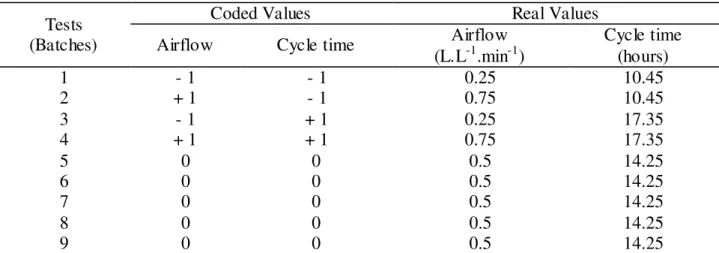
central point, resulting in 9 tests. The factors with coded and real values are presented on Table 2.
TABLE 2. Factorial design matrix (22) with coded and real factors and values.
Tests (Batches)
Coded Values Real Values
Airflow Cycle time Airflow Cycle time
(L.L-1.min-1) (hours)
1 - 1 - 1 0.25 10.45
2 + 1 - 1 0.75 10.45
3 - 1 + 1 0.25 17.35
4 + 1 + 1 0.75 17.35
5 0 0 0.5 14.25
6 0 0 0.5 14.25
7 0 0 0.5 14.25
8 0 0 0.5 14.25
9 0 0 0.5 14.25
To analyze data obtained through experiments via statistics, the software STATÍSTICA for Windows version 7.0 was employed (STATSOFTT M, 2004).
Evaluation of linear effect of cycle time with constant airflow
Sequentially, due to results obtained with experimental planning, in which only the cycle time factor was significant, linear regression with plateau response was elected, in which a linear equation of response to increment regarding cycle time is undertaken, up to a point where reactor no longer presents increasing response. The point between linear equation and plateau, presents the great level of time.
The linear-plateau regression model (LPR) enables comparison among alternative combinations of straight lines and plateaus and then chooses, as the best adjusting option, the combination that presents the lowest sum of variance squares.
In this stage, six cycle times were evaluated, with reactor submitted to, in aerobic stage, constant airflow of 0.25 L.L-1.min-1. Eighteen tests of whole cycle were conducted, distributed in 6 treatments (levels of CT), with 3 repetitions each (Table 3).
TABLE 3. Treatments of Linear-Plateau regression.
Tests (Batches) (L.LAirflow -1.min-1) Cycle time (hours)
1 0.25 10.45
2 0.25 14.25
3 0.25 17.35
4 0.25 22.25
5 0.25 27.10
6 0.25 32.10
TABLE 4. Cycle time distribution over the operational stages during the experiment.
Operational stages 10.45 h 14.25 h 17.35 h Cycle Times (CT) 22.25 h 27.10 h 32.10 h Nutrition Instantaneous Instantaneous Instantaneous Instantaneous Instantaneous Instantaneous
Aerobic reaction 7.35 h 10.15 h 12.25 h 15.75 h 20 h 24 h
Anoxic reaction 2 h 3 h 4 h 5 h 6 h 7 h
Sedimentation 1 h 1 h 1 h 1 h 1 h 1 h
Discharge 0.1 h 0.1 h 0.1 h 0.1 h 0.1 h 0.1 h
The efficiency results of total inorganic nitrogen removal were submitted to variance analysis at 5% of probability and, in the case of significant difference evidence, the Linear-Plateau regression analysis was applied, with 5% of probability. The software employed to conduct statistical analysis was the SAEG - System for Statistical Analysis (UFV, 2007).
Phylogenetic characte rization of microbial community through fluorescent in situ hybridization (FISH)
The microbial characterization of reactor biological sludge was conducted through the fluorescent in situ hybridization technique (FISH), using specific oligonucleotides probes for the members of Bacteria Dominium (EUB338), ammonia oxidizing bacteria (NSO190), Nitrospira spp. (NSR1156) and nitrite oxidizing bacteria Nitrobacter spp. (NIT3).
The FISH technique involved the following stages: cellular detachment, washing and fixation of cells, filtration, hybridization, fluoresce microscopy and microorganisms quantification, according to methodology described by HIRASAWA et al. (2008).
The phylogenetic probes labeled with the fluorescent dye Cyanine (Cy3) were synthesized by Eurofins MWG Operon (Ebersberg, Germany). The list of probes used and their characteristics are presented on Table 5.
TABLE 5. Sequences of the phylogenetic probes used.
Probe Sequence 5´ to 3´ Stringency Target Molecule Organism
EUB 338 GCT GCC TCC CGT AGG AGT 0-50% 16S rRNA Bacteria Dominium
EUB338 II GCA GCC ACC CGT AGG TGT 0-50% 16S rRNA Bacteria Dominium
EUB338 III GCT GCC ACC CGT AGG TGT 0-50% 16S rRNA Bacteria Dominium
NSR1156 CCC GTT CTC CTG GGC AGT 30% 16S rRNA Nitrospira spp.
NSO190 CGA TCC CCT GCT TTT CTC C 55% 16S rRNA β-Proteobacteria
NIT3 CCTGTGCTCCATGCTCCG 40% 16S rRNA Nitrobacter spp.
The samples stained with DAPI were excited with UV light and the fluorescence was recovered with the aid of the filter U-MWU2, while probes labeled with Cy3 were excited with green light and the fluorescence recovered with the filter U-MSWG2 using an Olympus BX 60 Pro-Plus 6 microscope.
Ten counts were carried out in random fields, with the percentage of hybridized cells in each field calculated in relation to total number of cells stained with DAPI. The counting was conducted with the aid of the “freeware” program Image Tool-UTHSCA (University of Texas Health Science Center, San Antonio – Texas/USA).
RESULTS AND DISCUSSION
Effects of cycle time and airflow factors on the total inorganic nitrogen re moval
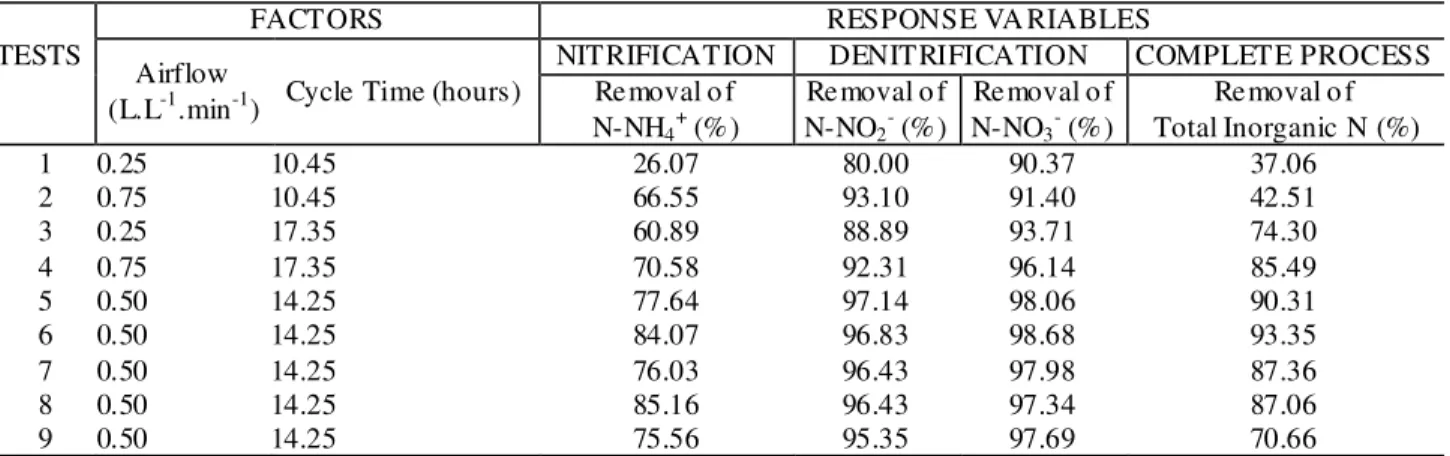
TABLE 6. Factorial design matrix (22) with independent variables and their responses on nitro gen removal.
TESTS
FACTORS RESPONSE VA RIABLES
Airflow
(L.L-1.min-1) Cycle Time (hours)
NITRIFICATION DENITRIFICATION COMPLETE PROCESS Removal o f
N-NH4+ (%)
Removal o f N-NO2- (%)
Removal o f N-NO3- (%)
Removal o f Total Inorganic N (%)
1 0.25 10.45 26.07 80.00 90.37 37.06
2 0.75 10.45 66.55 93.10 91.40 42.51
3 0.25 17.35 60.89 88.89 93.71 74.30
4 0.75 17.35 70.58 92.31 96.14 85.49
5 0.50 14.25 77.64 97.14 98.06 90.31
6 0.50 14.25 84.07 96.83 98.68 93.35
7 0.50 14.25 76.03 96.43 97.98 87.36
8 0.50 14.25 85.16 96.43 97.34 87.06
9 0.50 14.25 75.56 95.35 97.69 70.66
As airflow affects the removal of ammoniacal nitrogen, but do not affect the removal of
N-NO2- or of N-NO3-, only the total inorganic nitrogen removal
(N-NH4+ + N-NO2- + N-NO3-) was considered for statistical analysis, which represents the whole
cycle performance (nitrification and denitrification).
Table 7 presents estimated effects for response variable of total inorganic nitrogen removal.
TABLE 7. Estimated effects of total inorganic nitrogen removal efficiency.
Parameter Effect Standard deviation p-value
Interceptor 74.23 2.93 0.000015
Airflow(L.L-1.min-1) 8.32 8.81 0.398521
CT (h) 40.11 8.81 0.010402
Airflow x CT 2.87 8.81 0.760970
The parameters that presented p-value lower than 0.05 are significant in the confidence interval of 95%.
It can be interfered that, at 5% level of significance, only the cycle time factor was significant. Cycle time effect presented noteworthy and positive value, indicating that the process of total inorganic nitrogen removal was favored with the greatest applied cycle times; therefore, the removal efficiency tends to increase with the raise of reaction time. Regarding effects of airflow and interaction between variables, they do not presented significant value for tested conditions (p-value > 0.05), indicating the possibility of applying lower airflows, with the same removal efficiency, causing reduction of energy consumption for this purpose.
ZENATTI et al. (2009), when evaluating nitrification in SBR for treatment of tilapia slaughterhouse wastewater, obtained average efficiency of 81.90% on ammoniacal nitrogen removal when the reactor was operated with 12 h of reaction, airflow of 6 L.min-1 and working volume of 2.5 L; however, it is observed that the conversion is only significantly affected by reaction time.
During the first experimental stage, tests 1 and 2 presented the lowest responses for total inorganic nitrogen removal; therefore, in these cases, there was no significant alkalinity consumption in aerobic stage, neither its generation in anoxic stage, probably due to cycle time. The remaining tests demonstrated alkalinity consumption during the oxidation of N-NH4+ with average
value of 82%, and increase of alkalinity value at the end o f denitrification stage, with recovery of approximately 69%.
Among the levels of evaluated factors, the best result regarding efficiency of total inorganic
0.5 L.L-1.min-1 and cycle time of 14h25, validating the results from BROWN et al., (2011) and DALLAGO et al. (2012).
MEES et al. (2011) also observed positive effect of cycle time factor, when evaluating the ratio carbon: nitrogen (3; 6 and 9) and cycle time (8h, 12h and 16h) on nitrogen removal of poultry slaughterhouse wastewater, in SBR (working volume of 5 L). The authors obtained optimized values of total inorganic nitrogen removal (84.32%), when the SBR was operated with cycle time of 16h (10h15, aerobic stage and 4h35, anoxic stage). Concerning the C: N ratio, authors observed a value of 6, which is similar to this study, with cycle time of 14h25 (10h15, aerobic stage and 3h, anoxic stage), ratio C:N of 5.28 and airflow of 0.5 L.L-1.min-1, which resulted in concentration of
3.1 mg.L-1 of dissolved oxygen.
The pH during the nitrification process, in all conducted tests, varied from 6.78 to 6.82. WEF et al. (2005) suggested great pH nitrification ranging from 6.5 to 8.0. During denitrification, pH varied from 5.73 to 6.72, with the industrial wastewater of cassava starch contributing to pH decrease reaching critical values, which was reestablished during the process.
The observed average temperatures were of 19.5 °C in the beginning of the nitrification stage of and of 22.4 °C at the end of denitrification stage.
The most efficient tests at removing total inorganic nitrogen, with cycle time of 14h25 and airflow of 0.5 L.L-1.min-1, presented average concentration of ammoniacal nitrogen in reactor’s
wastewater of 13.69 mg.L-1. This result meet the maximum limit allowed to wastewater release, which is 20 mg.L-1, defined on Conama Resolution no 430 (BRASIL, 2011).
Evaluation of plateau effect on total inorganic nitrogen removal
The airflow factor was conclusive in the previous experiment stage, demonstrating that, for
studied conditions, and of 95% de confidence, the airflow of
0.25 L.L-1.min-1 was sufficient to promote aeration of nitrification stage. Therefore, the addition of greater concentrations would represent unnecessary energy expenditure.
In sequence, a planning referring to regression was chosen, setting the airflow at 0.25 L.L-1.min-1 and increasing cycle times, progressively, until the constant value of nitrogen
removal efficiency is observed.
In this experimental stage, the airflow of 0.25 L.L-1.min-1 maintained the dissolved oxygen concentration, in average, 2.64 mg.L-1 in aerobic stage and 0.51 mg.L-1 at the end of anoxic stage. The average temperature was of 23.6±1.19 o C, and the average concentration of VSS of sedimented biomass (sludge) was of 9,886.37±103.48 mg.L-1. The pH during nitrification was kept around 6.7±0.35, and in denitrification, it was of 6.4±0.38.
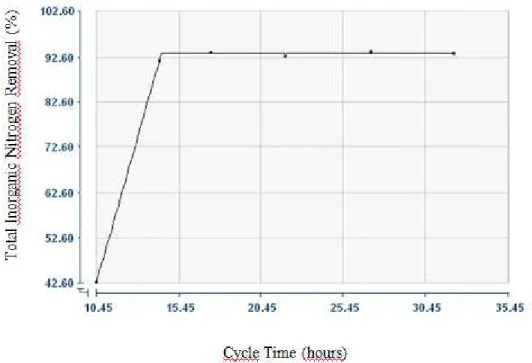
Through regression analysis with plateau response, the maximum point of inflexion of generated curve corresponds to cycle time of 14h25, a level recommended for obtaining maximum total inorganic nitrogen removal, verified in 93.3%.
FIGURE 1.Linear-plateau response between total inorganic nitrogen removal and cycle time.
In Table 8, the results of linear plateau regression analysis are presented.
TABLE 8. Linear-plateau regression analysis results to predict total inorganic nitrogen removal. Calculated parameters
Parameter Intercept Coefficient Data SQD SQD-Total
Straight Line -92.3 12.9 2 0.00 0.92
Plateau 93.3 4 0.92
Meeting of straight lines
Variable Value
Cycle time (h) 14h25
Removal efficiency of total Inorg- N (%) 93.3
r=0.9996
The equation of estimated regression is represented by:
Ŷ= -92.3+12.9*X, for cycle time of 10.4≤14.25 (1)
Y= 93.3, for 14.25≤X≤32.1 (2)
These values corroborate the results obtained during factorial design and indicate that the application of greater cycle times did not promote increase of nitrogen removal.
Phylogenetic characterization of the microbial community by FISH
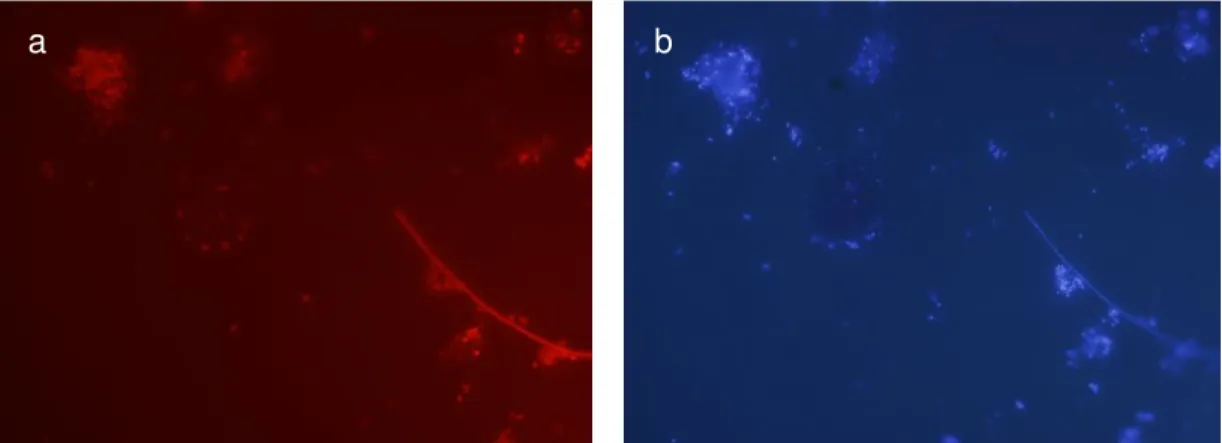
FIGURE 2. In situ identification of Bacteria Dominium after hybridization with Cy3 labeled probes (a). Identical microscopic field was observed for cells stained with DAPI (b).
MISSAGIA et al. (2007) evaluated microbial flora in biofilms in a percolator biological filter installed after UASB reactor, with 90 days of operation. Based on probe specificity, the authors could detect, at least, four different populations of ammonia oxidizing bacteria, such as: (i) two different populations of Nitrosomonas oligotropha, (ii) N. europaea and (iii) N. communis. The probe resulted in a positive sign for all samples, differing in the relative abundance. The
community’s relative abundance was verified by the ratio between all bacteria stained with DAPI and total bacteria labeled with NSO190 probe, with the highest value of 18.3% found in support of plastic rings.
In a study of HASEBORG et al. (2010), nitrifying bacteria and archaebacteria were fed in fixed-bed biofilm reactors, with different concentrations of ammonia and nitrite in synthetic and real wastewaters, and the bacteria were detected by FISH. In high concentrations of nitrite (5 to 10 mg.L-1), the abundance of Nitrobacter spp. species was of 88%. When the ammonia concentration
was of 60-80 mg.L-1, the obtained value of Nitrosomonas spp. was of 31%.
In the present study, the ammonia concentration was 81.9 mg.L-1. The quantification of ammonia oxidizing bacteria, belonging to β-Proteobacteria group (detected by NOS and NSR 1156 probes) and of nitrite oxidizing bacteria (detected by NIT 3 probe) resulted, respectively, in 32.8% and 24.3% of abundance relative to DAPI, which corroborates the previously cited studies.
CONCLUSIONS
According to obtained results, it is possible to conclude that, in conditions established during factorial design, the effect of cycle time presented significant and positive value, while effects of airflow and interaction between variables did not present significant values for tested conditions. However, throughout linear-plateau regression tests, the best result regarding efficiency of total inorganic nitrogen removal was of 93.3%, obtained with airflow of 0.25 L.L-1.min-1 and cycle time of 14h25, demonstrating applicability of SBR for biological nitrogen removal.
This study enabled the identification of microbial flora composition that participates in treatment processes, demonstrating that the FISH tool can be very useful in evaluating the bioreactors performance, in which the stability and efficiency are highly dependent of microbial communities interactions.
ACKNOWLEDGEMENTS
The authors want to thank the Itaipu Technological Park Foundation for financial support.
REFERENCES
ABEF - ASSOCIAÇÃO BRASILEIRA DOS EXPORTADORES DE FRANGO. Relatório Anual
2009/2010. 2010. Disponível em: <http://www.abef.com.br>. Acesso em: 30 mar. 2011.
APHA - AMERICAN PUBLIC HEALTH ASSOCIATION Standard methods for the
examination of water and waste water. 20th ed., Washington, DC: APHA, 1998.
ANDRADE, L.; KUMMER, A.C.B.; FAZOLO, A.; DAMASCENO, S.; HASAN, S.D.M.
Influência de nitrogênio amoniacal e vazão de ar no processo de nitrificação, etapa de tratamento de efluente de abatedouro de peixe. Engenharia Agrícola, Jaboticabal, v.30, n.1, p.160-167, jan/fev. 2010.
BRASIL. Ministério do Meio Ambiente. Conselho Nacional do Meio Ambiente. Resolução nº 430 de 13 de maio de 2011. Dispõe sobre condições e padrões de lançamento de efluentes, complementa e altera a Resolução no 357, de 17 de março de 2005. Diário Oficial da República Federativa do Brasil, Poder Legislativo, Brasília, DF, 2011.
BROWN, P.; ONG, S.K.; LEE, Y-W. Influence of anoxic and anaerobic hydraulic retention time on biological nitrogen and phosphorus removal in a membrane bioreactor.
Desalination, Amsterdam, v. 270, p. 227-232, 2011.
DALLAGO, R.C., GOMES, S.D., MEES, J.B.R., ASSIS, T.M., HASAN, S.D.M., KUNZ, A. Nitrification and denitrification of a poultry slaughterhouse wastewater according to cycle time and ammoniacal nitrogen concentration using surface response methodology. Journal of Food,
Agriculture & Environme nt, Helsinki, v.10, n. 2, p. 856-860, 2012.
DAMASCENO, S.; CEREDA, M.P; PASTORE, G.M.; OLIVEIRA, J.G. Production of volatile compounds by geotrichum fragrans using cassava wastewater as substrate. Process Biochemistry, NewYork, n. 39, p.411-414, 2003.
DE NARDI, I.R.; DEL NERY, V., AMORIM, A.K.B.; DOS SANTOS, N.G.; CHIMENES, F. Performances of SBR, chemical–DAF and UV disinfection for poultry slaughterhouse wastewater reclamation. Desalination, Amsterdam, n. 269, p. 184-189, 2011.
DEL POZO, R.; DIEZ, V. Integrated Anaerobic-Aerobic Fixed-Film Reactor For Slaughterhous Wastewater Treatment. Water Research, Amsterdam, n. 39, p.1114-1122, 2005.
FONTENOT, Q.; BONVILLAIN, C.; KILGEN, M.; BOOPATHY, R. Effects of Temperature, Salinity and Carbon nitrogen ratio on sequencing bath reactor treating shrimp aquaculture wastewater. Bioresource Technology, Amsterdam, n. 98, p.1700-1703, 2007.
GAPES, D.J.; KELLER, J. Impact of oxygen mass transfer on nitrification reactions in suspended carrier reactor biofilms. Process Biochemistry, New York, n. 44, p. 43-53, 2009.
HASEBORG, E.; ZAMORA, T.M.; FRÖHLICH, J.; FRIMEL, F.H. Nitrifying microorganisms in fixed-bed biofilm reactors fed with different nitrite and ammonia concentrations. Bioresource Technology,New York, 101, 1701-1706, 2010.
HIRASAWA, J.S.; SARTI, A.; DEL AQUILA, N.K.; VARESCHE, M.B. Application of molecular techniques to evaluate the methanogenic archaea and anaerobic bacteria in the presence of oxygen with different COD:Sulfate ratios in a UASB reactor. Anaerobe, London, n. 14, p.209–218, 2008. JANG, J. D.; BARFORD, J. P.; LINDAWATI; RENNEBERG, R. Application of biochemical oxygen demand (BOD) biosensor for optimization of biological carbon and nitrogen removal from synthetic wastewater in a sequencing batch reactor system. Biosensors and Bioelectronics, New Delhi, 19, 805-812, 2004
KUMMER, A. C. B.; ANDRADE, A.; GOMES, S.D.; FAZOLO, A.; HASAN, S.D.M.;
MACHADO, F.Tratamento de efluente de abatedouro de tilápia com adição de manipueira na fase anóxica. Engenharia Agrícola, Jaboticabal, v. 31, n. 1, p. 150-157, jan/fev. 2011.
MEES, J. B.R.; DAMASCENO, S.; VILAS BOAS, M.; GOMES, B. M.; PASSIG, F. H. Kinetic behavior of nitrification in the post-treatment of poultry wastewater in a sequential batch reactor. Engenharia Agrícola, Jaboticabal, v.31, n.5, p.954-964, set./out. 2011.
METCALF; EDDY. Wastewater Engineering: treatment, disposal and reuse. 3 ed.; New York: Mc Graw Hill, 2003.
MISSAGIA, B.S.; SILVA, S.Q.; ALMEIDA, P.G.S.; CHERNICHARO, C.A.L. Comparação da microbiota presente no biofilme de quarto tipos de meio suporte de filtros biológicos percoladores utilizados no pós-tratamento de efluentes de reatores UASB. In: CONGRESSO BRASILEIRO DE
ENGENHARIA SANITÁRIA E AMBIENTAL, 24., 2007, Belo Horizonte. Anais...
RODRIGUES, M. I; IEMMA, A. F. Plane jamento de experime ntos e otimização de processos. 2. ed. Campinas: Editora Casa do Espírito Amigo Fraternidade Fé e Amor, 2009.
SADEQ, M., MOE, C.L.; ATTARASSI, B.; CHERKAOUI, I.; AL AOUAD, R.; IDRISSI, L. Drinking water nitrate and prevalence of methemoglobinemia among infants and children aged 1-7 years in Moroccan areas. Inte rnational Journal of Hygiene and Environme ntal Health,
Heildelberg, 211, 546–554, 2008.
SAEG - Sistema para análises estatísticas. Versão 9.1. Viçosa: UFV, Fundação Arthur Bernardes, 2007.
STATSOFT. Statistica for Windows versão. 7.0. Tulsa, 2004.
WEF - Water Environment Federation; ASCE - American Society of Civil Engineers; EWRI - Environmental Water Resources Institute. Biological nutrient re moval (BNR) ope ration in wastewater treatment plants (Asce Manual and Reports on Engineering Practice). New York:
McGraw-Hill, 2005.
WU, G; RODGERS, M; ZHAN, X. Nitrification in Sequencing Batch Reactors With and Without glucose addition at 11°C. Bioche mical Engineering Journal, Amsterdam, n. 40, p.373-378, 2008. ZENATTI, D. C.; GOMES, S.D.; FAZOLO, A.; COSTANZI, R. N.; HASAN, S.D.M.;