A Work Project, presented as part of the requirements for the Award of a Masters Degree in Economics from the Nova – School of Business and Economics
Health Systems Efficiency after the Crisis in the OECD
Ana Beatriz Mateus D’Avó Luís
648
A Project carried out with the supervision of:
Professor Pedro Pita Barros
Health Systems Efficiency after the Crisis in the OECD
Abstract
This work evaluates the efficiency position of the health system of each OECD country. It identifies whether, or not, health systems changed in terms of quality and performance after the financial crisis. The health systems performance was calculated by fixed-effects estimator and by stochastic frontier analysis. The results suggest that many of those countries that the crisis affected the most are more efficient than the OECD average. In addition, some of those countries even managed to reach the top decile in the efficiency ranking. Finally, we analyze the stochastic frontier efficiency scores together with other health indicators to evaluate the health systems’ overall adjustments derived from the crisis.
I. Introduction
The impact of the 2008 crisis on health care has heightened the need to make
appropriate investment in health quality and to reinforce financial sustainability of the
health care systems. Of particular interest is the health care systems efficiency and
health care restructurings and improvements in order to cope with the impact of the
economic crisis.
Health systems efficiency has been studied for a period before the crisis by Joumard et
al. (2010). They found that in the OECD countries higher health care expenditures did
not necessarily mean better health status. There was indeed efficiency shortage in some
countries. Based on the results, recommendations for improvements were specified for
each country’s health system.
However, it is not clear whether the budgetary constraints and health reforms resulting
from the crisis changed those findings.
The purpose of this research is to analyze how health systems efficiency in the OECD
countries have adjusted after the crisis. Answering the main question will imply
evaluating the recent relative position of each country in the OECD health system
efficiency ranking. An analysis similar to Joumard et al. (2010) was done using
2005-2011 data, for 33 OECD countries. Moreover, it is important to observe in which
aspects health care systems are doing better and in which they are doing worse than
before 2008, so that weaknesses that prevent a better performance can be identified.
The results show that several countries changed their efficiency score after the crisis.
Some of those countries that the crisis affected the most increased their relative position
in the efficiency ranking. Moreover, the results show that if all countries improve the
system performance to the level of the most efficient county, the OECD average life
This paper is structured in the following way. Section II presents some previous
empirical work in assessing health care systems efficiency, section III describes the
methodology and data which is used. Then, the health status determinants, the
efficiency results as measured by both fixed-effects estimator and stochastic frontier
approaches, the health indicators comparison by groups of countries and the change on
the health care profile of each country are presented in section IV. Finally, we present
work limitations and conclusions in section V.
II. Literature Review
As the main objective is to have a direct comparison with the work of Joumard et al.
(2008, 2010), these studies are the starting point. They calculated health care systems
efficiency scores of 30 OECD countries by two methods: fixed-effects estimator, over
the period of 1981-2003, and data envelopment analysis, using data for 2007. They
found that on average, OECD countries could increase life expectancy at birth by 2
years if all became as efficiency as the best performer. The efficiency scores were
compared with other health indicators, particularly with those reflecting the activity and
quality of the health care system.
By cluster analysis, countries were grouped, in 6 groups, based on their health care
system’s characteristics in the form of several indicators transformed from the answers
of 29 countries to the OECD Survey on Health Systems Characteristics 2009. So that,
all health indicators would be analyzed by comparing each country not only with the
OECD average, but also with its group of countries with similar health system
characteristics. It was also found that there was no health system type considerably
better than the others. The efficiency level had a higher variance within each group than
between groups.
and international system level, as well as at hospital level within countries, by taking
different approaches. The Canadian Institute for Health Information (2014) also
measured the health care efficiency and its determinants for the different regions in
Canada using data envelopment analysis. And they found that there were regional
differences in performance and that by maximizing their efficiency, regions could on
average reduce treatable causes of death by 18% to 35%. They also found that less
smoking, obesity and chronic conditions, shorter lengths of stay, more equity in health
access and more primary care investment have significant impact on regional efficiency.
Alternative approaches to measure performance of health care have been taken in other
studies. WHO (2000) and Evans et al. (2000) studied the health care system efficiency
of 191 countries for 1997, by a stochastic frontier analysis, taking the
Disability-Adjusted Life Expectancy as health status of the population. Murray and Evans (2003)
pointed out that the stochastic frontier analysis is more appropriate in efficiency
measurement than the data envelopment analysis, since the latter method attributes all
the distance to the frontier as inefficiency, not taking into account random factors.
Jourmard et al. (2008) created a health production function and found that health
spending is the factor that affects the most the health status of a population, followed by
education. They found that a 10% increase in health spending increases life expectancy
at birth by 3 to 4 months, keeping everything else constant. On the other hand, Thornton
(2002) presented empirical evidence for the USA that socioeconomic status, such as
education, income and married households have more impact on the health status of the
country, in this case, age-adjusted death rate, than health spending.
III. Data and Methodology
Given that it was not feasible to use the exact same variables as in Joumard et al. (2008,
was removed from the original model of Joumard et al (2008, 2010). The efficiency was
estimated by two approaches: 1) regressions using panel data and estimated by
fixed-effects and 2) stochastic frontier analysis, SFA (as opposed to data envelopment
analysis that was used in the above-mentioned literature). Moreover, three OECD
countries, Estonia, Israel and Slovenia were not analyzed by Joumard et al. (2008,
2010), but they are included in this paper.
Similarly to the work of Joumard et al. (2010), the efficiency scores were analyzed
together with those indicators that reflect the quality of preventive and out-patient care
sectors (vaccination, avoidable hospital admission and acute myocardial infarction and
stroke fatality rates), the hospital output efficiency (in-patient average length of stays,
acute care occupancy and turnover rates, cataract surgeries and consultations per
doctor), equity in health status, amenable mortality rates (those deaths due to causes that
could potentially be avoided with the effective treatment at the right time) and
administration costs, which are useful to assess the health system efficiency of each
country. Other indicators included in the country profiles are related to health care
prices and spending per capita and to GDP, number of health professionals and their
respective income, hospital physical resources (high-tech equipment and hospital beds),
hospital activity (doctor consultations per capita, hospital discharges and some surgery
procedures), pharmaceutical consumption, nature of health care financing (public,
private insurance, of-pocket) and spending destination sectors (in-patient,
out-patient, medical goods). All these indicators (Table 1) were not considered as inputs in
the health production function, because these indicators are hospital’s output-based
efficiency indicators. Yet they are a complement in the study of the system
(outcome-based) efficiency determinants.
developed by calculations for this paper. For comparison purposes, the same proxy for
health status equity was calculated as in Joumard et al. (2010), by the inverse of the
standard deviation in the age of death for population aged above 10, using data on
number of deaths by age from the Human Mortality Database. This age dispersion was
proposed by Edwards and Tuljapurkar (2005) as a proxy for health inequalities in health
status. An output efficiency indicator, the acute care turnover rate, was also calculated,
by dividing the number of acute discharges by the number or available acute care beds.
Table 1 - Health care indicators by area
Efficiency and quality Amenable mortality
SFA efficiency score
Equity score
Average length of stay
oAll in-patient; Colorectal cancer; Lung cancer; Breast cancer; Acute myocardial infarction; Femur fracture
Acute occupancy rate
Acute turnover rate
Cataract surgery
Consultations per doctor
Expenditure in health administration
Vaccination rates
oDiphtheria, tetanus and pertussis; Measles; Influenza
Avoidable hospital admission rates oAsthma; Bronchitis; Heart Failure
In-hospital case fatality rates
oAcute myocardial Infarction; Ischemic stroke
All causes
Infectious diseases
Cancers
Endocrine, nutritional and metabolic diseases
Diseases of nervous system
Diseases of circulatory system
Diseases of genitor-urinary system
Diseases of respiratory system
Diseases of digestive system
Perinatal mortality
Prices and physical resources Activity and consumption Financing and spending
Total health expenditure
Practicing physicians
Practicing nurses
Medical graduates
MRI units
Computed tomography scanners
Number of acute care beds
Remuneration of hospital nurses
Remuneration of general practitioners
Remuneration of specialists
Relative health prices to GDP
Doctor consultations
Hospital discharges
Hip replacement
Knee replacement
Appendectomy
Caesareans sections
Antidepressants
Anxiolytics
Analgesics
Anti-inflammatory, antirheumatism
Antibacterials for systemic use
Cardiovascular system
Drugs for diabetes
Public spending
General government funding
Social security funding
Private health insurance funding
Out-of-pocket payments
Expenditure on medical goods
Expenditure on out-patient care
Expenditure on in-patient
Expenditure on collective services (public health services and health administration)
Source: Joumard at al. (2010)
To calculate the efficiency of the health systems, a production function was designed for
the health care at the system level.
The production function’s output and input data were retrieved from OECD Health Data
and 2011, for the majority of the variables. The purpose was to get as many years before
as after the financial crisis of 2008.
As the output at the system level, life expectancy at birth, for females, males and both,
and life expectancy at age 65 for each gender were the variables used as proxy for the
health status of each countries’ population. Life expectancy at birth for both genders
was considered the dependent variable for the efficiency calculations, by both
fixed-effects estimator and stochastic frontier approaches. Other proxies could be thought as
more desirable as one assumes that it is important to take into account the quality of life
of the population (Joumard et al., 2008). However, regarding all possible health status
indicators, longevity data was the most complete one.
Health status depends on the quantity of medical care services that is offered to the
population, thus the variable used as its proxy was total health expenditure per capita
US$ PPP rates. Moreover, the health care that the population receive over the years also
influence the current health status. Therefore, a variable with the cumulative value of
health investment was also considered as a variable of health stock of the previous three
years. It has been debatable whether a discount rate for healthcare should be taken into
account, and at what value (Acharya and Murray, 2003; Stahl, 2004), therefore the
ad-hoc discount rate of 10% was chosen.
Two population’s lifestyle indicators (alcohol and diet) were used as control variables in
the fixed-effects estimator. Alcohol consumption in liters per capita was introduced as a
1-year lag variable, as the current level of alcohol consumption may have an impact in
health status, but alcohol data for all countries is only complete until 2010. A proxy for
diet, consumption of fruits and vegetables in kilograms was also taken into account in
the production functions.
not possible to do it since ten of the thirty-four OECD countries could not be analyzed.
Data for tobacco consumption in grams per capita is nonexistent for Chile, Estonia,
Luxembourg, Mexico, Slovakia and Slovenia and is missing for several other countries,
either in recent years or in lagged values. Other alternative measures of tobacco
consumption (e.g. share of daily smokers; number of cigarettes smoked per day) also
present missing data for many countries.
The exogenous variables’ set also included one environmental factor affecting
population’s health: emissions of nitrogen oxide in kilograms per capita. This factor
represents air pollution in each country which especially affects the respiratory system,
and so may affect life expectancy.
Education and income are the two socioeconomic variables taken into account in the
models. The education variable is measured by the share of adult population with at
least upper secondary school. Income is measured by the GDP per capita US$ PPP rate.
The regressions by fixed-effects estimator were the first approach used to calculate the
efficiency ranking,1 allowing for a direct comparison with Joumard et al. (2008, 2010).
And were also the main approach used to verify the impact of health expenditure on the
health status of the population of each country, while controlling for other lifestyle and
socioeconomic variables (alcohol consumption, diet, pollution, education and GDP).
Life expectancy at birth for females, males and both, and life expectancy at age of 65
for females and males were the dependent variables for the analysis of impact of each
independent variable. However, to get the efficiency score only life expectancy at birth
for total population was taken as the dependent variable. Moreover, all variables
included in the regressions were transformed in logarithms.
The assumption of this method by fixed-effects estimator is that what is not accounted
1
for by the model reflects the health care system efficiency of the country (Joumard et
al., 2008). This efficiency score was calculated by adding up the country fixed-effects to
the residuals of the latest year in study. This sum measures the distance to the
production frontier. Thus, it was assumed that the country fixed-effects are part of the
country inefficiency, and are not revealing a different production frontier for each
country.
The alternative methodology of this paper to calculate the inefficiency score is the
Stochastic Frontier Analysis (SFA).2 The frontier is the maximum outcome (health
status) that is possible to reach given the level of inputs in use. This method allows to
make the distinction between the part of the residual that is due to random factors and
the part of the residual that accounts for the country inefficiency. The production
function used was the same one as in the regressions with fixed-effects estimator
referred above. The same output and inputs transformed in logarithms were included.
Modeling the production frontier with panel data increases the number of observations
and accuracy of estimates. This way, it is feasible to calculate the system inefficiency by
analyzing the frontier with country fixed-effects incorporated into the inefficiency
equation, which is compatible with the previous approach by fixed-effects estimator.
Besides, with a stochastic frontier model using fixed-effects there is no need to make
any assumptions about the inefficiency term’s distribution, which makes this method
less restrictive (Murray and Evans, 2003).
Although the efficiency was calculated for 2011 by both methods, there were two
exceptions that had different latest years available: for Korea and Mexico the score was
calculated for 2010 and 2008, respectively.
2Coelli, Timothy J., D.S. Prasada Rao, Christopher J. O'Donnell, and George E. Battese. (2005).
For Chile, education data is missing for 2005 and 2006 and data of nitrogen oxide
emissions is missing for the rest of the studied years, therefore it is the only OECD
country not being analyzed here.
In this work it was assumed as reasonable to compare efficiency scores and other health
indicators within and across the group of countries with similar health care system
characteristics that are resulting from the Survey on Health Systems Characteristics
2008-2009 analysis made by Joumard et al. (2010). Although there is some new data for
countries’ health policy and institutions, from the Survey on Health Systems
Characteristics 2012, this data was not as complete. More recently, other authors (e.g.
Pisu, 2014 and Tchicaya and Lorentz, 2014) analyzed health care sectors and systems
using the indicators of system characteristics that result from Joumard et al. (2010) and
other data from the Survey on Health Systems Characteristics 2008-2009.
IV. Results
The economic crisis in mid-2008 had a visible impact on the OECD average health
spending per capita, US$ PPP. On average the health spending growth decreased after
2008, especially between 2009 and 2010 when the average growth rate was close to
zero. However, some countries actually decreased their total health spending per capita
after the crisis, namely Czech Republic, Estonia, Greece, Iceland, Ireland, Portugal,
Slovak Republic, Slovenia, Spain, Turkey and United Kingdom. Some of those still had
negative health spending growth in 2011: Greece, Ireland, Portugal, Slovak Republic
and Spain (Morgan and Astolfi, 2014).
Now we know how the main health sector input evolved, therefore it is important to
understand the impact of this and other non-health sector inputs on the health status, as
well as, what happened to the efficiency of these countries individually.
IV.1 Health status determinants
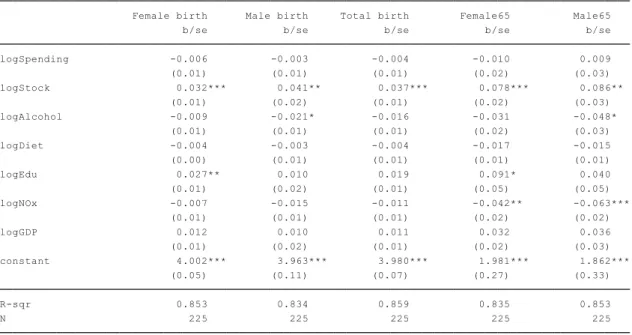
standard errors.3
Table 2 indicates that a country has higher life expectancy at birth of total population if
it spends more in health care, has more adults with at least upper secondary education
and less air pollution. These coefficients are statistically significant, at the 1% or 5%
level, for life expectancy at birth of total population, i.e. for both female and male.
Table 2– Fixed-effects estimator output: Health status determinants
The variables’ coefficients in the regressions have the expected signs. The exception is
the coefficient for diet, consumption of fruits and vegetables, which has a negative
impact in health status. However its impact is not statistically significant.
In this period of 2005-2011, the regressions output reveal that for total population
income per capita and the lifestyle variables, alcohol and fruits and vegetables
consumption, are not significantly different from zero and that education is the variable
with the highest elasticity. This may be due to higher education meaning more access to
health information and a better understanding of it by the patients which may have
impact on the efficacy of medical services (Thornton, 2002). Nevertheless, the OECD
3
There may be some endogeneity effect, as the level of total healthcare expenditure is a function of the income level. Table A.2 in appendix shows that by excluding the variable of GDP in the fixed-effects estimator regressions, the coefficient of health spending increases, suggesting that the variable of spending includes the income effect not related to health, which may lead to biased estimators. For this reason and for the lack of reliable instrumental variables, Joumard et al. (2008) included both health spending and GDP variables in their model. In this paper, we also included them for comparison reasons.
* p<0.10, ** p<0.05, *** p<0.01
average of life expectancy at birth of total population may increase 2.86 months if the
average spending increases by 10%, keeping everything else constant.
Table A.3 in appendix presents another specification of the model including a variable
of health stock. However, the stock of investment in health is highly correlated with the
current health spending (Table A.4 in appendix). Thus, the variable of health stock was
not included in the main model of efficiency measure.
IV.2 Fixed-effects estimator – Efficiency ranking
By taking life expectancy at birth for total population as the dependent variable, the
fixed-effects and the residuals specify the years of life gained or lost compared to those
years of life expectancy that were expected if the country had the same efficiency as the
OECD average. Which means that, by these assumptions, Austria has the average
efficiency, while Spain’s high efficiency allows it to get 4 more years compared to the
(average) output that was expected by the model. On the other hand, the United States
of America is the OECD country with the least efficient healthcare system, according to
the fixed-effects estimator method, losing 4 years of life expectancy compared to the
expected output. Figure 1 presents these deviations in years of life expectancy at birth
for total population, resulting in the ranking of countries’ health system efficiency.
Figure 1 - Country fixed-effects and residuals deviation from OECD average, 2011: Years of life expectancy not accounted for by the model (Fixed-effects estimator)
Comparatively to the 2003 efficiency results from Jourmard et al. (2008, 2010),
measured by fixed-effects estimator under the same assumptions (Figure A.1 in
appendix), it is possible to notice that, for 2011, there were some changes on the relative
position of this efficiency ranking. The results displayed in Figure 1 indicate that, taking
into account only those 23 countries studied by fixed-effects estimator in Joumard et al.
(2008, 2010), Poland and Sweden went down considerably in the ranking, while United
Kingdom and Austria became more efficient than the average.
IV.3 Stochastic Frontier Analysis – Efficiency scores
By the second method, the stochastic frontier analysis, the resulting inefficiency scores
were converted into years of life expectancy that the country can potentially gain if it
increases its efficiency to the level determined by the frontier (Table A.5 in appendix
shows the SFA coefficients). By incorporating country fixed-effects into the model,
typically one or more countries are in the frontier and assumed as being totally efficient,
while the other countries are analyzed by comparison to those efficient ones
(Kumbhakar and Lovell, 2000).
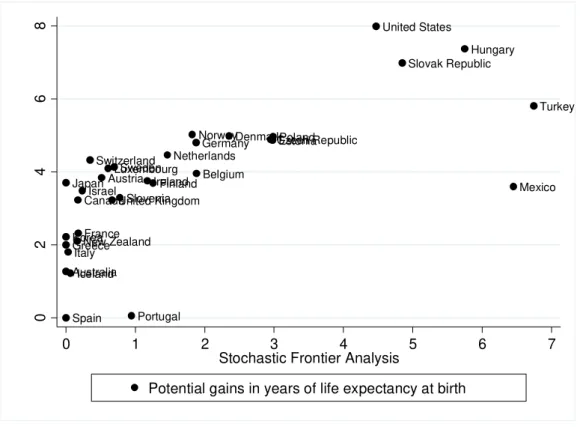
Figure 2 - Potential gains in years of life expectancy (Stochastic Frontier Analysis)
In this case, the countries that are completely efficient are, Japan, Spain, Greece, Korea
and Australia, their observed output is placed on the production frontier. While Turkey,
Mexico and Hungary could increase their total population life expectancy at birth by
approximately 6 years if they were as efficient as the most efficient countries.
IV.4 Fixed-effects estimator vs Stochastic frontier
For the calculations of the potential gains in life expectancy by both methods, the
reference is the most efficient country. These scores result from comparing each country
with the most efficient one.
Figure 3 - Potential gains in years of life expectancy at birth: Fixed-effects estimator and Stochastic Frontier analysis plot
Although there are some changes on efficiency ranking places, the results are similar in
terms of which countries are the most efficient ones and which ones are the least
efficient (Figure 3). However, the maximum number of years a country can potentially
increase its life expectancy is 1 year lower by the stochastic frontier method than by the
fixed-effects estimator method. Additionally, by the stochastic frontier analysis, the
potential gains of life expectancy at birth are, on average, 1 years and 8 months, but by
the fixed-effects estimator, the average potential gains is 3 years and 8 months.
From those countries with negative health spending growth in 2011, Spain, Portugal,
Greece and Ireland have above OECD average efficiency, while Slovak Republic is the
only one which has below average efficiency, as measured by both efficiency
Australia
Austria Belgium Canada
Czech Republic DenmarkEstonia Finland
France
Germany
Greece
Hungary
Iceland
Ireland Israel
Italy Japan
Korea
Luxembourg
Mexico Netherlands
New Zealand
Norway Poland
Portugal
Slovak Republic
Slovenia
Spain
Sweden Switzerland
Turkey
United Kingdom
United States
0
2
4
6
8
0 1 2 3 4 5 6 7
Stochastic Frontier Analysis
approaches.
IV.5 Changes within and across groups
From those six groups of countries with similar health systems characteristics resulting
from the work of Joumard et al. (2010),4 the same analysis comparing efficiency scores,
as measured by the stochastic frontier, within and between groups was done. The
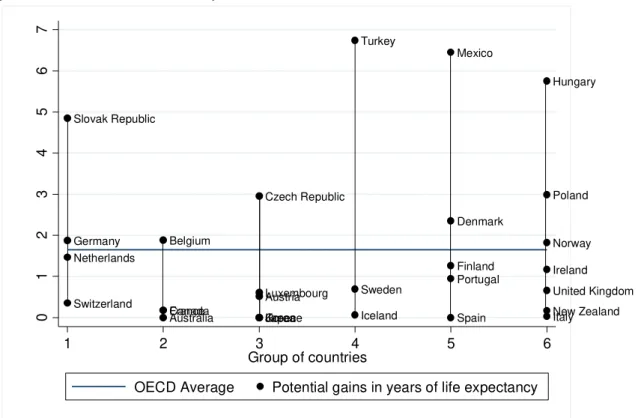
analysis showed that there are efficient and inefficient countries (above and below
OECD average efficiency) in every group (Figure 4). Moreover, as presented in Table 3,
the number of years of life expectancy a country could gain by increasing its efficiency
to the frontier level has higher variance within groups than between groups. These
conclusions correspond to the results for 2007, from Joumard et al. (2010), emphasizing
once again that no health system type has necessarily better performance than the
others.
From the 2011 results in Figure 4 and Table 3, it is possible to compare the 2007 results,
presented in Figure A.2 in appendix, from similar work done by Jourmard et al. (2010).
Yet, some OECD countries which efficiency was analyzed for 2011, can still not be
included in the analysis of this section. This is the case of Estonia, Israel, Slovenia and
United States of America, since they did not participate in the Survey on Health
Systems Characteristics 2008-2009, therefore it was not possible to group them for their
health system characteristics like the other countries.
Within group 1 (Germany, Netherlands, Slovak Republic, Switzerland), only the
4
Group 1 is composed by countries that rely on market mechanisms at the provider level and a high share of private basic insurance.
Group 2 is composed by countries that rely on market mechanisms at the provider level, public basic insurance, private over-the-basic insurance and gate-keeping.
Group 3 is composed by countries that rely on market mechanisms at provider level, public basic insurance, little private over-the-basic insurance and no gate-keeping.
Group 4 is composed by countries that rely mostly on public provision and insurance, no gate keeping and wide choice of providers.
Group 5 is composed by countries that rely on public provision and public insurance, gate-keeping, limited choice of providers and soft budget constraint.
Netherlands’ efficiency score shifted to above average, but the group mean efficiency
after the crisis is still worse than the OECD average. Switzerland still has the highest
efficiency, while the least efficient country is represented by Slovak Republic.
Figure 4 - Potential gains in life expectancy at birth across and within country groups plot (Stochastic Frontier Analysis)
Table 3 - Potential gains in life expectancy at birth within and across groups: mean and variance (Stochastic Frontier Analysis)
Group of countries with similar system characterisitics
Potential gains in years of life expectancy Mean Variance
1: Germany, Netherlands, Slovak Republic, Switzerland 2,1 3,7
2: Australia, Belgium, Canada, France 0,6 0,8
3: Austria, Czech Republic, Greece, Japan, Korea, Luxembourg 0,7 1,3
4: Iceland, Sweeden, Turkey 2,5 13,6
5: Denmark, Finland, Mexico, Portugal, Spain 2,2 6,4
6: Hungary, Ireland, Italy, New Zealand, Norway, Poland, United Kingdom 1,8 4,1
Total 1,6 3,9
Intra-group - 4,4
Inter-group - 0,5
Group 2 (Australia, Belgium, Canada, France) has seen some small changes where
Canada and France improved their performance and are now in quite high and very
close relative positions. Yet, Australia and Belgium are still the most and the least
Australia Austria Belgium Canada Czech Republic Denmark Finland France Germany Greece Hungary Iceland Ireland Italy Japan Korea Luxembourg Mexico Netherlands New Zealand Norway Poland Portugal Slovak Republic Spain Sweden Switzerland Turkey United Kingdom 0 1 2 3 4 5 6 7
1 2 3 4 5 6
Group of countries
efficient countries, respectively. This group keeps having a better mean performance
than the OECD average and has now the highest performance among the groups.
The third group (Austria, Czech Republic, Greece, Japan, Korea, Luxembourg) had
efficiency improvements in general, especially the major increase of Greece’s
efficiency, that in 2011 is the highest of the group together with Japan and Korea.
Austria is also performing well and Luxembourg improved and is now very close to
Austria’s efficiency level. The worst performer of this group is now Czech Republic
that keeps below average after the crisis.
The forth group, composed by Iceland, Sweden and Turkey, had the highest mean
efficiency, in 2007. However, it has now a lower mean efficiency and is the group with
the highest score variance. Iceland and Sweden continue performing well, however after
the crisis, Turkey had a great decrease of performance and goes from the highest to the
lowest efficiency score of this group.
Concerning group 5 (Denmark, Finland, Mexico, Portugal, Spain), Spain and Portugal
continue to have high efficiency levels and Finland has improved its performance since
2007. Denmark is still performing below the OECD average. Mexico has the most
extreme change of position as it goes from being the most efficient country to the least
efficient one of the fifth group. This leads to a low group mean efficiency.
The countries of group 6 (Hungary, Ireland, Italy, New Zealand, Norway, Poland,
United Kingdom) are still performing worse than the OECD average. Although Italy
and Hungary continue being the highest and the lowest performers, respectively, there
were some shifts in this group after the crisis. In 2011, Ireland, United Kingdom and
New Zealand have above average scores, while Norway and Poland are performing
worse than before.
comparing them with the OECD average and with the previous results measured by data
envelopment analysis (Figure A.2 in the appendix) from Jourmard et al. (2010), it is
possible to verify that, after the crisis, most of those countries with high or low
efficiency keep similar relative positions. Moreover, Spain and Italy became even more
efficient than in 2007. Nevertheless, some other countries changed from their inefficient
situation and became more efficient than the average, namely Greece, Ireland, New
Zealand, Austria, Finland, Netherlands Luxembourg and United Kingdom. While
Mexico, Turkey, Poland and Norway decreased their position and became inefficient.
IV.6 Other health indicators – group comparison
On average, the inequalities in health status, measured by the standard deviation of the
age of death for population aged above 10, increased almost 1 standard deviation after
the crisis (Figure 5). The group with the lowest average of inequalities is now group 1,
composed by Germany, Netherlands, Slovak Republic and Switzerland. While group 2
still has on average the highest level of inequalities. Comparatively to 2007, there were
some changes within groups. In group 1, the country with the highest level of
inequalities continues to be Slovak Republic, however the one with the lowest level is
now Germany. In 2011, group 2 has Australia as the country with the most inequalities
and Belgium with the lowest. In group 3, Luxembourg became the country with the
highest inequalities, however, Japan passed from having the highest level to the lowest
of the group. In group 4 it is now possible to notice the highest within group variation,
between the high level of inequalities of Iceland and the low level of Sweden. Group 5
appears as the only group without changes in inequalities ranking. While in the sixth
group, Italy keeps having the lowest inequality levels, but Ireland became the country
with the highest level.
In 2011, the OECD average life expectancy at birth is 80 years (Figure 6). With the
higher than the OECD average, every group have wide within variations, since they
include countries with both above and below average life expectancy.
Figure 5 - Inequalities in health status across country groups of health system characteristics, 2011 (or latest year available)
Source: Human Mortality Database.
Figure 6 - Total population life expectancy at birth across country groups of health system characteristics, 2011 (or latest year available)
Source: OECD Health Data 2014.
Figure 7 - Total Health expenditure per capita, US$ PPP across country groups of health system characteristics, 2011 (or latest year available)
Source: OECD Health Data 2014.
Figure 8 - Administrative costs across county groups of health system characteristics, 2011 (or latest year available)
Source: OECD Health Data 2014.
12 14 16
DEU NLD SVK CHE
Gro
u
p
1
AUS BEL CAN FRA
Gro
u
p
2
AUT CZE GRC JPN KOR LUX
Gro u p 3 IS L S WE TUR Gro u p 4 DNK F IN M
EX PRT ESP
Gro
u
p
5
HUN IRL ITA NZL NOR POL GBR
Gro
u
p
6
Inequalities OECD average
73 78 83
DEU NLD SVK CHE
Gro
u
p
1
AUS BEL CAN FRA
Gro
u
p
2
AUT CZE GRC JPN KOR LUX
Gro u p 3 IS L S WE TUR Gro u p 4 DNK F IN M
EX PRT ESP
Gro
u
p
5
HUN IRL ITA NZL NOR POL GBR
Gro
u
p
6
Life expectancy at birth OECD average
0 2000 4000 6000 DE U NL D S VK CHE Gro u p 1
AUS BEL CAN FRA
G
ro
u
p
2
AUT CZE GRC JPN KOR LUX
Gro u p 3 IS L S
WE TUR
Gro u p 4 DNK F IN M
EX PRT ESP
Gro
u
p
5
HUN IRL ITA NZL NOR POL GBR
Gro
u
p
6
Total Health Expenditure per capita, US$ PPP OECD average
0 2 4 6 8
DEU NLD SVK CHE
Gro
u
p
1
AUS BEL CAN FRA
Gro
u
p
2
AUT CZE GRC JPN KOR LUX
Gro u p 3 IS L S WE TUR Gro u p 4 DNK F IN M
EX PRT ESP
Gro
u
p
5
HUN IRL ITA NZL NOR POL GBR
Gro
u
p
6
Total health expenditure per capita continues to be higher on average in groups 1 and 2.
The forth group has the lowest spending on average, with contribution of Iceland’s great
health expenditure decrease in 2010 (Figure 7).
In general, in 2011 the OECD average administrative costs in percentage of total health
spending decreased. The countries that in 2007 had this percentage much higher than
the average decreased it considerably after the crisis. For instance, Luxembourg had the
second highest percentage of administration costs before, however, it is now among the
countries with the lowest percentage (Figure 8).
IV.7 Health indicators comparison between 2007 and 2011
To complement the countries’ profile, the stochastic frontier efficiency scores were
analyzed together with other health indicators. In this section, we compare the recent
levels of the health indicators with those 2007 levels studied by Joumard et al. (2010).
In Table 4, we compare each country against the OECD average, pointing out the main
changes occurring after the crisis. Some of the recommendations presented in the
previously referred work were taken into account to verify whether they were followed
by the countries or not. Moreover, we present the potential total health savings per
capita, US$ PPP, for the countries that are not totally efficient. The potential health
savings were estimated by the change on health spending that leads the country to the
efficiency frontier, keeping the same life expectancy level and the other inputs constant.
The health care indicators are divided by areas, the same ones as those in Joumard et al.
(2010): efficiency and quality; amenable mortality; health prices and physical resources;
activity and consumption; financing and spending.
Besides a high efficiency score, one would consider the ideal health care system as the
one having low inequalities in health status, low amenable mortality rates, low
administrative costs, short average length of stay, high quality of service provision, an
balanced share of resources between sectors.
Table 4– Main changes on countries’ profile and potential health savings per capita
Country (SFA Rank) Efficiency and quality; Amenable mortality Prices and physical resources Activity and consumption Financing and spending Previous recommendations status;
Potential total health savings/ capita (US$ PPP)5
Australia (5) High efficiency; Higher inequalities; Shorter in-patient stays; Mixed quality More doctors, nurses and medical students; Lower prices More hospital discharges Achieved:
- Reducing length of stay of in-patient care Austria (13) Higher efficiency; Longer stays; More consultations/ doctor Higher prices Low pharmaceuticals consumption/ capita Higher spending share on out-patient care
Not achieved: - Increasing quality Not totally achieved: - Rebalancing in-patient and out-patient resources Potential savings: 1198.15$ (25.7% of health spending)
Belgium (24) Low efficiency; Less inequalities; More consultations/ doctor Less doctors and nurses; Higher income of health professionals Not achieved:
- Increase hospital efficiency; - Reducing number of doctor consultations;
- Reducing administrative costs Potential savings: 2782.79$ (65.8% of health spending)
Canada (9) High efficiency; High inequalities; More consultations/ capita; Low pharmaceuticals consumption Not achieved: - Reducing inequalities
Czech Republic (26) Low efficiency; Lower amenable mortality; Long stays More students; Above average income of general practitioners Higher spending on out-patient care Not achieved:
- Reducing number of doctor consultations;
- Improving quality Potential savings: 1667.58$ (82.2% of health spending)
Denmark (25) Low efficiency; Less consultations/ doctor; Less inequalities More scanners High income of general practitioners Less consultations/ capita Achieved:
- Decreasing the excessive demand to general practitioners Potential savings: 3358.31$ (73.9% of health spending)
Estonia (27) Low efficiency; Low equity; Low amenable mortality; Low hospital efficiency; Low quality of care Few human and physical resources; Very low remuneration of health professionals Low hospital activity; Low pharmaceuticals consumption Low spending on in-patient; High spending on out-patient and on medical goods
Potential savings: 1126.79$ (83% of health spending)
Finland (20) Higher efficiency; Lower amenable mortality; Low in-patient efficiency More medical students Achieved:
- Increasing spending share on out-patient care
Not achieved:
- Decreasing inequalities; - Improving out-patient care quality
5
Country (SFA Rank) Efficiency and quality; Amenable mortality Prices and physical resources Activity and consumption Financing and spending Previous recommendations status;
Potential total health savings/ capita (US$ PPP)5 Potential savings: 1777.20$ (51.4% of health spending)
France (10) High efficiency; Higher amenable mortality; Shorter stays Low remuneration of health professionals Higher pharmaceuticals consumption Not achieved:
- Decreasing health status inequalities;
- Reducing administrative costs
Germany (23) Low efficiency; High equity; Higher amenable mortality; More consultations/ doctor, but lower hospital efficiency More consultations/ capita Not achieved:
- Adjusting policies to avoid excessive hospital activity Potential savings: 3023.68$ (65.6% of health spending)
Greece (3) Higher efficiency; Lower amenable mortality; Low administrative costs Few consultations/ capita; More hospital discharges Higher spending on in-patient care; Low spending on out-patient care Hungary (31) Low efficiency; Less inequalities; Lower amenable mortality; Low hospital efficiency Achieved:
- Decreasing inequalities Not achieved:
- Rebalancing resources from medical goods to in-patient and out-patient care
Potential savings: 1744.54$ (96.9% of health spending)
Iceland (7) High efficiency; More inequalities; Short stays; Lower preventive care quality Lower remuneration of nurses and general practitioners Lower spending to GDP; More spending on medical goods and on out-patient care
Not achieved:
- Control health care spending; - Reducing spending on in-patient care;
- Reducing number of human resources and increase quality of care Ireland (19) Higher efficiency; More inequalities; Lower amenable mortality Less doctors; Higher income of nurses Few consultations/ capita Lower public spending
Potential savings: 1830.69$ (48.9% of health spending)
Israel (11) High efficiency; Low equity; Low amenable mortality; Rather high hospital efficiency Few physical resources; More doctors; High income of nurses; Low health prices High private health insurance and out-of-pocket financing
Potential savings: 198.82$ (9% of health spending)
Italy (6) High efficiency; Higher amenable mortality; Rather low hospital efficiency Below average remuneration of nurses and specialist
Not achieved:
- Improving efficiency on the in-patient care sector Potential savings: 6.17$ (0.19% of health spending)
Japan (1) High efficiency; Higher amenable mortality; High equity; Higher spending to GDP Not achieved:
Country (SFA Rank) Efficiency and quality; Amenable mortality Prices and physical resources Activity and consumption Financing and spending Previous recommendations status;
Potential total health savings/ capita (US$ PPP)5 Higher
preventive care quality
consultations Partially achieved: - Improving quality Potential savings: 490.47$ (14.2% of health spending)
Korea (4) High efficiency; Higher preventive care quality Not achieved:
- Reducing the number of doctor consultations Luxembourg (14) Higher efficiency; Mixed quality; Lower administrative costs Not achieved:
- Improving in-patient care efficiency;
- Increasing out-of-pocket payments
Achieved:
- Reducing administrative costs Potential savings: 1353.62$ (29% of health spending)
Mexico (32) Lower efficiency; High amenable mortality; Short stays; Rather low quality of care
Lower prices Few hospital discharges Lower spending on medical goods; Very low spending on in-patient care Not achieved:
- Improving health status of the population;
- Reducing administrative costs Potential savings: 861.82$ (98.3% of health spending)
Netherlands (21)
Average efficiency
Potential savings: 2937.78$ (56.3% of health spending)
New Zealand
(8) Higher efficiency
Less hospital beds; Higher income of specialists Less consultations/ capita Not achieved:
- Reducing inequalities; - Reducing high administrative costs;
- Improving hospital efficiency Potential savings: 313.51$ (9.9% of health spending)
Norway (22) Lower efficiency; Few consultations/ doctor Less nurses Few consultations/ capita Not achieved:
- Reducing number of doctors for the needs of the population Potential savings: 3695.81$ (64.3% of health spending)
Poland (28) Lower efficiency; Lower amenable mortality; Longer stays; Below average remuneration of health professionals Less hospital discharges Not achieved:
- Decreasing inequalities; - Increasing hospital efficiency; - Increasing quality of care Potential savings: 1239.46$ (82.9% of health spending)
Portugal (18) High efficiency; Less inequalities; Lower amenable mortality More medical students/ capita Lower public spending Not achieved:
- Improving efficiency of in-patient sector;
- Increasing number of consultations/ doctor; - Improving quality of care Potential savings: 1102.35$ (41.7% of health spending)
Slovak Republic (30) Low efficiency; Lower amenable mortality; Rather low quality of care
Not achieved:
- Increase remuneration of health professionals to increase quality of care
Potential savings: 1888.70$ (94.5% of health spending)
Slovenia (17) High efficiency; High equity; Low amenable Few human and physical resources; Low health spending/ capita; More hospital High social and private insurance;
Country (SFA Rank) Efficiency and quality; Amenable mortality Prices and physical resources Activity and consumption Financing and spending Previous recommendations status;
Potential total health savings/ capita (US$ PPP)5 mortality Low health
prices; High income of general practitioners discharges; Low pharmaceuticals consumption High spending share on in-patient and medical goods Spain (2) High efficiency; Rather high amenable mortality; More administrative costs Higher health prices; High income of nurses Not achieved:
- Improving hospital efficiency
Sweden (16) High efficiency; Higher preventive care quality Less medical students Partially achieved: - Improving quality Not achieved:
- Reducing number of doctors for the low number of doctor consultations
Potential savings: 1318.64$ (33.3% of health spending)
Switzerland (12) High efficiency; High administrative costs Lower health care prices Achieved:
- Containing health care prices Potential savings: 852.24$ (15% of health spending)
Turkey (33) Lower efficiency; High amenable mortality; Mixed quality High remuneration of health professionals More consultations/ capita; More hospital discharges Higher public spending Not achieved:
- Containing level of public health spending
Potential savings: 921.09$ (98.3% of health spending)
United Kingdom (15) Higher efficiency; Higher amenable mortality Lower remuneration of general practitioners High pharmaceuticals consumption Not achieved: - Improving quality Potential savings: 1016.29$ (31.6% of health spending)
United States of America (29) Low efficiency; Very high amenable mortality; High administrative costs More high-tech equipment Very high spending/ capita; Less consultations and discharges/ capita High private insurance financing; Low spending on out-patient care
Potential savings: 7842.58$ (92.5% of health spending)
Source: OECD Health Data 2014; Human Mortality Database; Joumard et al. (2010)
V. Conclusions and Limitations
The levels of adult education and of health expenditure are highly associated with the
health status of the population. Keeping everything else constant, a ten percent increase
on the OECD average of total health expenditure increases life expectancy at birth of
total population by almost 3 months, on average.
The economic crisis has appeared for many countries as a challenge for the health care
increasing the same level of quality and coverage of health care services. Therefore, the
crisis was an opportunity to create reforms that changed several health care systems
efficiency. Six OECD countries, Greece, Ireland, Austria, New Zealand, United
Kingdom, Finland, Netherlands and Luxembourg increased their position relative to the
average, while four countries, Norway, Poland, Mexico and Turkey decreased it.
Southern European countries, like Spain and Greece, economies where the crisis had a
great socioeconomic impact and where expenditure controls were essential, show up as
countries that reached the top health care system efficiency. Although, these countries
decreased the total health spending per capita after the crisis, there was no immediate
effect on the health status of their population. Nevertheless, if all countries increase
their efficiency to the efficiency level of the best performer, the OECD average life
expectancy at birth of total population can still increase by almost two years.
However, the non-inclusion of tobacco consumption, due to lack of data, on the health
production function can have some efficiency implications. This can be especially
challenging in the fixed-effects estimator approach, since the assumption of including
the residuals in the efficiency score disregards the possibility of measurement errors or
other random factors.
Moreover, both methods of efficiency calculation, imply the comparison of the
countries to the best performing country. Though, the best health system derived from
the calculations does not necessarily have the best achievable performance in theory.
This means that the efficiency scores are overestimated and the top performer can
improve and reach even higher levels of efficiency and quality in the health care.
However, higher accessibility of health data, namely lifestyle and quality indicators
would improve the precision of the estimates and allow a better understanding of
VI. References
Acharya, A., and Christopher JL Murray. (2000). "Rethinking discounting of health benefits in cost effectiveness analysis." Goodness and Fairness: Ethical Issues in Health Resource Allocation. Geneva: World Health Organization.
Cameron, A. Colin, and Pravin K. Trivedi. (2005). “Linear Panel Models: Basics”
Microeconometrics: methods and applications, 697-726. Cambridge University Press.
Canadian Institute for Health Information. (2014). Measuring the Level and Determinants of Health System Efficiency in Canada. Ottawa, ON: CIHI.
Coelli, Timothy J., D.S. Prasada Rao, Christopher J. O'Donnell, and George E. Battese. (2005). “Stochastic Frontier Analysis”. An introduction to efficiency and productivity analysis, 141-61. New York: Springer.
Evans D., Tandon A., Murray C., and Lauer J. (2000). “The Comparative Efficiency of
National Health Systems in Producing Health: An Analysis of 191 Countries.”
World Health Organization, GPE Discussion Paper, No. 29.
Ferrier, G.D. (2014). “The "usefulness" of stochastic frontier analysis for health care”,
Economics and Business Letters, 3(1): 27-34.
James Thornton. (2002). “Estimating a health production function for the US: some new
evidence”, Applied Economics, 34:1, 59-62.
Joint Research Centre-European Commission. (2008). Handbook on constructing composite indicators: methodology and user guide. OECD Publishing.
Joumard, I., C. André and C. Nicq. (2010). “Health Care Systems: Efficiency and
Institutions”, OECD Economics Department Working Papers, No. 769, OECD Publishing.
Joumard, Isabelle, Christophe André, Chantal Nicq, and Olivier Chatal. (2008). “Health Status Determinants: Lifestyle, Environment, Health Care Resources and
Efficiency”, OECD Economics Department Working Papers, No. 627, OECD Publishing.
Kumbhakar, S.C., and C.A. Knox Lovell. (2000). Stochastic Frontier Analysis, Cambridge University Press, U.K.
Morgan, D. and R. Astolfi. (2014). “Health Spending Continues to Stagnate in Many
OECD Countries”, OECD Health WorkingPapers, No. 68, OECD Publishing. Paris, V., M. Devaux, and L. Wei. (2010). “Health System Institutional Characteristics:
a Survey of 29 OECD Countries”, OECD Health Working Paper, No. 50.
Pisu, M.. (2014). “Overcoming Vulnerabilities of Health Care Systems”, OECD Economics Department Working Papers, No. 1132, OECD Publishing.
Stahl, Michael J. (Ed.) (2004). Encyclopedia of health care management. Sage Publications.
Health Systems Efficiency after the Crisis in the OECD
Appendix
Ana Beatriz Mateus D’Avó Luís
648
Table A.1 – Definition of the health indicators
Efficiency and quality indicators Definition
SFA efficiency score The inefficiency translated in years of life expectancy, resulting from the stochastic frontier analysis with one output (life expectancy at birth) and six inputs (health spending, alcohol consumption, diet, education, pollution and income).
Equity score The inverse of the standard deviation of the age of death for population aged above 10
Average length of stay – All, in-patient The ratio between number of bed-days and number of discharges
Average length of stay – Colorectal cancer The ratio between number of bed-days and number of discharges – cases of malignant neoplasm of colon, rectum and anus
Average length of stay – Lung cancer The ratio between number of bed-days and number of discharges – cases of Malignant neoplasm of trachea, bronchus and lung
Average length of stay – Breast cancer The ratio between number of bed-days and number of discharges – cases of malignant neoplasm of breast Average length of stay – Acute myocardial infarction The ratio between number of bed-days and number of
discharges – cases of acute myocardial infarction Average length of stay – Femur fracture The ratio between number of bed-days and number of
discharges – cases of fracture of femur
Acute occupancy rate Percentage of the curative care beds that are occupied
Acute turnover rate The ratio between number of acute discharges and the number of available acute care beds
Cataract surgery Total number of surgical procedures
Consultations per doctor Number of consultations per doctor
Expenditure in health administration Percentage of the total health expenditure that is addressed to administrative cost
Vaccination rates – Diphtheria, tetanus and pertussis Percentage of children immunized against diphtheria, tetanus and pertussis
Vaccination rates – Measles Percentage of children immunized against measles
Vaccination rates – Influenza Percentage of population aged 65 and over immunized against influenza
Avoidable hospital admission rates – Asthma Hospital admission rates for cases of asthma of population aged 15 and over. (These admissions are considered avoidable, because it is assumed that most asthma cases could be handled without hospitalization.)
Avoidable hospital admission rates – Bronchitis Hospital admission rates for cases of chronic obstructive pulmonary disease of population aged 15 and over. (These admissions are considered avoidable, because it is assumed that most bronchitis cases could be handled without hospitalization.)
Avoidable hospital admission rates – Heart Failure Hospital admission rates for cases of congestive heart failure of population aged 15 and over. (These admissions are considered avoidable, because it is assumed that most congestive heart failure cases could be handled without hospitalization.)
In-hospital case fatality rates – Acute myocardial Infarction (AMI)
The ration between the number of deaths that occurred within 30 days of hospital admission with acute myocardial infarction and the number of admissions of AMI cases
In-hospital case fatality rates – Ischemic stroke The ration between the number of deaths that occurred within 30 days of hospital admission with ischemic stroke and the number of admissions of ischemic stroke cases
All causes Number of deaths by all causes
Infectious diseases Number of deaths caused by infectious diseases Cancers Number of deaths caused by cancers
Endocrine, nutritional and metabolic diseases Number of deaths caused by endocrine, nutritional and metabolic diseases
Diseases of nervous system Number of deaths caused by diseases of nervous system Diseases of circulatory system Number of deaths caused by diseases of circulatory system Diseases of genitor-urinary system Number of deaths caused by diseases of genitor-urinary
system
Diseases of respiratory system Number of deaths caused by diseases of respiratory system Diseases of digestive system Number of deaths caused by diseases of digestive system Perinatal mortality Number of perinatal deaths per 1000 total births
Prices and physical resources Definition
Total health expenditure Total health expenditure per capita, USD PPP Practicing physicians Density of practicing physicians per 1000 population Practicing nurses Density of practicing nurses per 1000 population Medical graduates Density of medical graduates per 1000 population MRI units Number of magnetic resonance imaging units, per million
population
Computed tomography scanners Number of computed tomography scanners, per million population
Number of acute care beds Number of acute care beds per 1000 population Remuneration of hospital nurses Nurses’ income per capita GPD
Remuneration of general practitioners General practitioners’ income per capita GDP Remuneration of specialists Specialists’ income per capita GDP
Relative health prices to GDP Relative health price levels on GDP, 2008 PPP benchmark. (It indicates the level of health price relative to the general price level in the country)
Activity and consumption indicators Definition
Spending to GDP Total health expenditure per capita, percentage of GDP Doctor consultations Number of doctor consultations per capita
Hospital discharges Number of hospital discharges of all causes, per 100000 population
Hip replacement Number of hip replacement procedures, per 100000 population
Knee replacement Number of knee replacement procedures, per 100000 population
Appendectomy Number of appendectomy procedures, per 100000 population
Caesareans sections Number of caesareans procedures, per 1000 live births Antidepressants Consumption of antidepressants, defined daily dosage per
1 000 inhabitants per day
Anxiolytics Consumption of anxiolytics, defined daily dosage per 1 000 inhabitants per day
Analgesics Consumption of analgesics, defined daily dosage per 1 000 inhabitants per day
Antiinflamatory, antirheumatism Consumption of antiinflammatory and antirheumatic products non-steroids, defined daily dosage per 1 000 inhabitants per day
Antibacterials for systemic use Consumption of antibacterials for systemic use, defined daily dosage per 1 000 inhabitants per day
Cardiovascular system Consumption of pharmaceuticals for the cardiovascular system, defined daily dosage per 1 000 inhabitants per day Drugs for diabetes Consumption of drugs used in diabetes, defined daily
dosage per 1 000 inhabitants per day
Financing and spending indicators Definition
Public spending Percentage of total health expenditure that is financed by the general government
Social security funding Percentage of total health expenditure that is financed by social security funds
Private health insurance funding Percentage of total health expenditure that is financed by private health insurance
Out-of-pocket payments Percentage of total health expenditure that is financed by private households out-of-pocket
Expenditure on medical goods Percentage of total health expenditure that is spent on medical goods
Expenditure on out-patient care Percentage of total health expenditure that is spent on out-patient curative and rehabilitative care (the out-patient that is not day case or over-the-night case), on home-care services and on ancillary services
Expenditure on in-patient Percentage of total health expenditure that is spent on in-patient care (when in-patients are formally admitted and stay for at least one night) and day care (when patients are formally admitted for health care and are discharged on the same day)
Expenditure on collective services Percentage of total health expenditure that is spent on prevention, public health services, health administration and health insurance
Source: Joumard et al. (2010); OECD Health Data 2014
Table A.2 – Fixed-effects estimator output: model without the variable of GDP
* p<0.10, ** p<0.05, *** p<0.01
Table A.3– Fixed effects estimator model with a variable of health stock
Table A.4– Correlations of health inputs
Figure A.1– Years of life not explained by the model of fixed-effects estimator (2003)
Source: Joumard, I. et al. (2008)
* p<0.10, ** p<0.05, *** p<0.01
N 225 225 225 225 225 R-sqr 0.853 0.834 0.859 0.835 0.853 (0.05) (0.11) (0.07) (0.27) (0.33) constant 4.002*** 3.963*** 3.980*** 1.981*** 1.862*** (0.01) (0.02) (0.01) (0.02) (0.03) logGDP 0.012 0.010 0.011 0.032 0.036 (0.01) (0.01) (0.01) (0.02) (0.02) logNOx -0.007 -0.015 -0.011 -0.042** -0.063*** (0.01) (0.02) (0.01) (0.05) (0.05) logEdu 0.027** 0.010 0.019 0.091* 0.040 (0.00) (0.01) (0.01) (0.01) (0.01) logDiet -0.004 -0.003 -0.004 -0.017 -0.015 (0.01) (0.01) (0.01) (0.02) (0.03) logAlcohol -0.009 -0.021* -0.016 -0.031 -0.048* (0.01) (0.02) (0.01) (0.02) (0.03) logStock 0.032*** 0.041** 0.037*** 0.078*** 0.086** (0.01) (0.01) (0.01) (0.02) (0.03) logSpending -0.006 -0.003 -0.004 -0.010 0.009 b/se b/se b/se b/se b/se Female birth Male birth Total birth Female65 Male65
gdp 0.7710 0.7789 0.1321 0.0093 0.1793 0.2620 1.0000 nox 0.2505 0.2598 -0.1014 0.0356 -0.0236 1.0000
education 0.2229 0.2137 0.2397 -0.5935 1.0000 diet -0.0614 -0.0498 -0.4569 1.0000
alcohol 0.0973 0.0785 1.0000 stock 0.9939 1.0000
spending 1.0000
Table A.5 - Stochastic Frontier Analysis output with fixed-effects incorporated1
1
country 1 = Australia; country 2 = Austria; country 3 = Belgium ; country 4 = Canada; country 5 = Czech Republic; country 6 = Denmark; country 7 = Estonia; country 8 = Finland; country 9 = France; country 10 = Germany; country 11 = Greece; country 12 = Hungary;
country 13 = Iceland; country 14 = Ireland; country 15 = Israel; country 16 = Italy ; country 17 = Japan; country 18 = Korea; country 19 = Luxembourg; country 20 = Mexico; country 21 = Netherlands;
country 22 = New Zealand; country 23 = Norway; country 24 = Poland; country 25 = Portugal; country 26 = Slovak Republic; country 27 = Slovenia; country 28 = Spain; country 29 = Sweden;
country 30 = Switzerland; country 31 = Turkey; country 32 = United Kingdom; country 33 = United States of America
(1083.59) group(country)=14 32.121 (1083.59) group(country)=13 26.539 (1083.59) group(country)=12 34.682 (12955.87) group(country)=11 -8.993 (1083.59) group(country)=10 32.539 (1083.59) group(country)=9 29.409 (1083.59) group(country)=8 32.193 (1083.59) group(country)=7 34.270 (1083.59) group(country)=6 33.351 (1083.59) group(country)=5 33.473 (1083.59) group(country)=4 29.086 (1083.59) group(country)=3 32.491 (1083.59) group(country)=2 31.057 (.) group(country)=1 0.000 lnsig2u (0.25) constant -11.473*** lnsig2v (0.10) constant 4.407*** (0.01) logGDP 0.010 (0.00) logNOx -0.008*** (0.00) logEdu -0.018*** (0.00) logDiet -0.028*** (0.00) logAlcohol -0.017*** (0.01) logSpending 0.022*** logLEtotal b/se SFA
Figure A.2 - Potential gains in life expectancy at birth across and within country groups plot (DEA), 2007
Source: Joumard, I., C. André and C. Nicq (2010)
Table A.6– Descriptive statistics of inputs and outputs
Figure A.3 - Health indicators: Australia, 2011 (or latest year available)2
2