153
Rev Soc Bras Med Trop 50(2):153-160, March-April, 2017 doi: 10.1590/0037-8682-0475-2016
Review Article
Corresponding author: Dr. Gunanidhi Dhangadamajhi.
e-mail: [email protected]
Received 14 December 2016
Accepted 23 February 2017
A meta-analysis of TLR4 and TLR9 SNPs implicated
in severe malaria
Gunanidhi Dhangadamajhi
[1], Avishek Kar
[1], Ronnaly Rout
[2]and Prabin Dhangadamajhi
[3][1]. Department of Biotechnology, North Orissa University, Baripada, Odisha, India. [2]. Regional Medical Research Centre (ICMR), Bhubaneswar, Odisha, India. [3]. School of Life Sciences, Ravenshaw University, Cuttack, Odisha, India.
Abstract
Toll-like receptors (TLRs) are critical mediators of the inlammatory response to malarial infection, and gene polymorphisms
affecting TLR function may be partially responsible for inter-individual variation in disease manifestation. However, there are inconsistencies in the associations of common genetic variants of TLR4 (D299G) and TLR9 (T-1237C and T-1486C) with malaria outcome. A comprehensive search was conducted to identify relevant and independent Plasmodium falciparum-infected case-control studies, and meta-analysis including six studies for each SNP was performed to obtain more precise estimates of the
pooled effects of these variants. The results showed signiicant associations of the -1486C allele with the risk of severe malaria in
allele contrast (T vs. C, p = 0.004, OR = 1.26) and homozygous (TT vs. CC, p = 0.03, OR = 1.51) genetic models. There was no association between the D299G or T-1237C variants and uncomplicated or severe malaria using any of the genetic models tested.
However, in stratiied analysis, -1237C was associated with the risk of severe malaria in Indian adults (TT vs. TC, p = 0.06, OR
= 2.13; TT vs. TC+CC, p <0.00001, OR = 2.65), suggesting that our results must be considered preliminary. The robustness of -1486C as a risk factor warrants investigation into its functionality in malaria pathogenesis. Further, the lack of an association with the T-1237C variant was weak, and future studies examining more detailed individual data from different ethnic groups are
essential for conirmation of its genetic contribution to malaria.
Keywords: Malaria.Toll like receptors. Meta-analysis. Polymorphisms.
INTRODUCTION
Malaria, one of the most deadly infectious diseases in
humans, is caused by ive species of Plasmodium (Plasmodium
falciparum, Plasmodium vivax, Plasmodium malariae, Plasmodium ovale, and Plasmodium knowlesi) with an estimated 198 million cases and 584,000 deaths in 20131. Of these, infection
due to P. falciparum is often associated with a life-threatening spectrum of discrete as well as overlapping symptoms of malaria2, contributing to about 80-90% of the total global
malarial mortality. Despite its high incidence, the low mortality rate (1-2%) in malaria-infected patients even after effective clinical management highlights the importance of host factors, in addition to parasite factors and environmental determinants. The host response to malarial infection is immediate and is mediated by pattern recognition receptors of the innate immune system3,4. Among these, the Toll-like receptors (TLRs) are well
studied in malaria5-9and are stimulated by infected red blood
cells (RBCs) and/or parasite-derived metabolites, culminating
in the release of pro-inlammatory cytokines such as IFN-γ, IL-12, and TNF-α, as well as nitric oxide8,9, which are important
for controlling the acute blood-stage infection. However, an
excessive or deregulated inlammatory response may result in
severe malaria.
Of the ten TLRs in humans, the most notable are TLR4 and TLR9, whose activation and changes in expression are thought to potentially affect the clinical outcome of malaria4-7. While
TLR4 may interact with extra-cellular ligands (such as PfGPI;
Plasmodium falciparum Glycosylphosphatidylinositol) as well as intracellular ligands as it is located both on the cell surface and on endosomes, TLR9 interacts only with intracellular ligands owing to its endosomal localization8,10-12. Interestingly, both
TLR4 and TLR9 are inluenced by hemozoin (Hz) from ruptured schizonts in malaria. More speciically, Hz facilitates the entry
of parasite DNA into the host cell and thereby stimulates TLR99,
whereas, by interacting with host ibrinogen, Hz activates
TLR4 in human monocytes12. Since both TLR4 and TLR9 are
localized to the endosome and stimulated by Hz, they may share
a common inluence on the clinical manifestation of malaria.
However, genetic association studies analyzing variants in TLR4
The TLR4 gene, located on the long arm of chromosome 9, has three exons spanning up to 10kb. The two most prevalent non-synonymous SNPs in TLR4, D299G (rs4986790) and T399I (rs4986791), have been studied in different malarial endemic regions and are often co-segregating. A recent study suggested
that the D299G SNP inluenced TLR4 signaling and was thus
functionally important13.The D299G variant has been associated
with reduced surface expression of TLR4, altered binding of
PfGPI, and varying cytokine responses to lipopolysaccharides (LPS)14-16. The TLR9 gene, located on chromosome 3p21.3,
spans up to 5kb and consists of two exons. Although the
inhibition of TLR9 activation by its antagonist or deiciency
in mice confers protection against cerebral malaria17,18, the two
most common promoter variants of TLR9, T-1237C (rs5743836) and T-1486C(rs187084), have a cis-regulatory effect on TLR9
expression19, with various consequences for disease outcome
or altered cytokine levels in malaria20.
In spite of the publication of several genetic association studies, no clear consensus on the effect of TLR4 or TLR9
variants on the clinical manifestation of malaria has thus far been obtained. This could be attributed to the inclusion of
incorrectly deined or partially matched controls, different study designs, relatively small sample sizes, population stratiication,
or genetic heterogeneity. Therefore, it is essential to perform a comprehensive search and meta-analysis of these studies in order to verify whether these SNPs are associated with the risk or severity of malaria. Meta-analysis is a powerful tool that has been employed to reach a consensus by analyzing data addressing the same research problem in global malarial settings with different ethnic populations. Although in the majority of previous studies, TLR variants have been compared between healthy controls and either severe malaria (SM) or uncomplicated malaria (UM) patients to determine the severity of or susceptibility to malaria, respectively, there have been limited studies comparing variants in severe cases of malaria with
P. falciparum-infected controls [mild or asymptomatic (reviewed in ref. 2)]. However, in regions hyper-endemic for malaria it is hard to obtain endemic controls for two reasons. First, although an individual may be healthy at the time of blood draw, he/she might have had previous infections with the malaria parasite and suffered from clinical symptoms; in fact, repeated antigen exposure from infective bites might have led to premunition. Second, because of the strategic control of mosquito-human contact (use of insecticides, bed-nets, etc.), individuals who appear to be healthy are not essentially endemic controls because they may not have been exposed to malaria at all; there remains the possibility that they may develop clinical symptoms upon exposure. The screening of mutations in these apparently healthy individuals and the inclusion of their data, therefore,
may not truly fulill the requirements for controls. Therefore, in
order to obtain more precise estimates of the pooled effects of TLR variants with increased statistical power, we carried out a meta-analysis combining relevant data from several independent
P. falciparum-infected case-control studies conducted to evaluate the association between the TLR4 D299G and TLR9 T-1237C and T-1486C polymorphisms and the risk of severe malaria.
METHODS
Identiication of eligible studies and data extraction
Published articles in the English language as of the middle of October, 2016 were retrieved from literature search databases such as PubMed, Google Scholar, Science Direct, and MEDLINE using the following key words:TLR4 variants/polymorphism
and TLR9 variants/polymorphism combined with malaria or Plasmodium. Two authors independently searched for literature and extracted data in duplicate. Discrepancies were adjudicated until consensus was reached after consultation with another author.
References in identiied studies were also examined to include
any additional studies not indexed by the databases. The selection criteria were then applied to all potentially relevant studies. The criteria for inclusion in the meta-analysis were: I) independent
P. falciparum-infected case-control or cohort studies conducted to evaluate the association of the TLR4D299G and/or TLR9T-1237C and T-1486C polymorphisms with the risk of severe malaria in order to exclude the possibility of repeated data from two or
more studies from the same region, if any; II) suficient published
data on the genotypes or allele frequencies for determining odds
ratios (OR) and conidence intervals (CIs); and III) the study was
published as a full paper, not as a meeting abstract or review. The exclusion criteria included: I) non-case-control studies; II) studies containing duplicate data; III) studies based on incomplete raw data or with no reported useable data; IV) studies without clearly
deined cases and control, and V) case reports, letters, reviews,
and editorial articles. For each included study, data such as the
irst author, year of publication, ethnicity, type of population described (adults,children ≤ 14 years, and pregnant women),
polymorphisms tested, genotyping methods, number of cases and controls, number of individuals with different genotypes, and evidence of Hardy-Weinberg equilibrium (HWE) were collected.
Statistical analysis
The genotype distributions of included studies under HWE
were assessed by χ2 tests using an online tool (http://www.oege.
org/software/hwe-mr-calc.shtml). The OR of each study was considered the point estimate of risk and was calculated along with the 95% CI. The extent of heterogeneity across studies was
determined by χ2 test based on Cochran’s Q statistic and the
inconsistency index (I2). A cut-off point of I2>50% was based
on Cochrane reviews and represented substantial heterogeneity
across studies. When a signiicant Q-test (P < 0.10) or an I2>50%
indicated heterogeneity across studies, a pooled OR and 95% CI were estimated using the random-effects model; otherwise
the ixed-effects model was used, and the statistical signiicance
was determined based on a P-value < 0.05 using the Z-test. All P-values were two-sided. Begg’s funnel plots were created to investigate potential publication bias and small study effects.
To assess the inluence of a study on the stability of the results,
sensitivity analysis was performed by excluding one study at a time whose genotype distributions were not in HWE. For all
analyses, statistically signiicant results were determined to be
those with a P-value <0.05, except for tests of publication bias
and the Q-test, where P <0.1 was used as the signiicance level.
155 Rev Soc Bras Med Trop 50(2):153-160, March-April, 2017
Records identified through
databa-se databa-searching (n = 123; 55 for TLR4
and 68 for TLR9)
Additional records identified through
other sources (n = 0)
Duplicates removed (n = 60)
Records screened (n = 63)
Records excluded (n = 44)
(abstract, review article, non-relevant
polymorphism studies, functional
studies)
Full-text articles assessed
for eligibility (n = 19)
Studies included in qualitative
synthesis (n = 5)
Studies included in quantitative
synthesis (meta-analysis)
(n = 6)
Full-text articles excluded(n = 14):
Case-control not well defined (3), controls
not infected with P.falciparum (8),
co-infection with other plasmodia (1),
non-case-control study (2)
One included study (Sawain et al., 2013)
had two sets of data for two ethnic
groups of different origins, which were
considered separately.
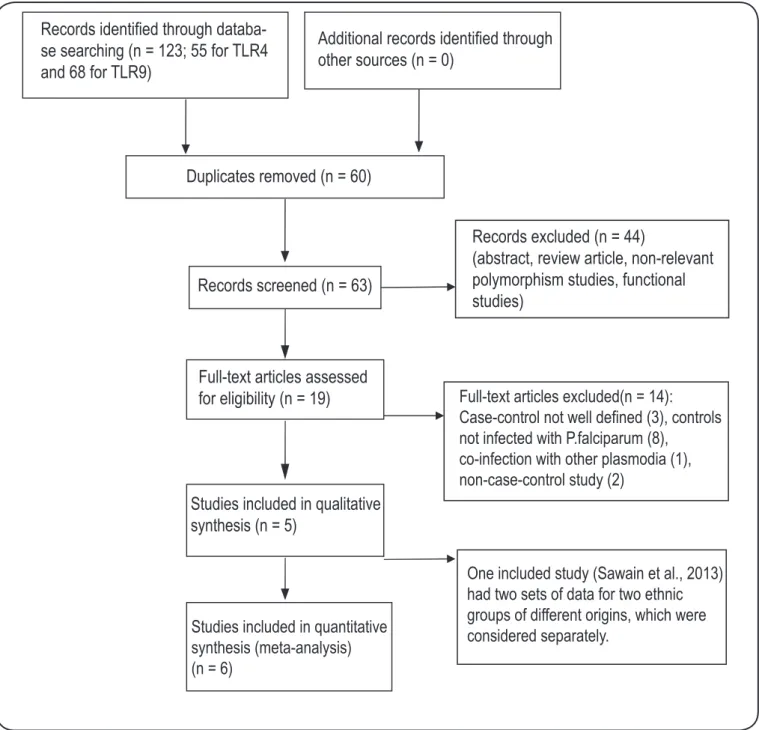
FIGURE 1 - Flow chart for selection of publications included in the meta-analysis.TLR: Toll-like receptor.
RESULTS
A total of 19 studies investigating the association of the TLR4
D299G and/or TLR9T-1237C and T-1486C polymorphisms
with the risk of severe malaria were identiied for potential inclusion in the meta-analysis. Of these, ive studies (two Indian and three African) fulilled the inclusion criteria after detailed
evaluation (Figure 1 and Table 1). Interestingly, in each of these included studies, all three SNPs were investigated for their association with malaria. However, the study by Sawain et al.21 from Assam, India had two sets of data for two different
ethnic groups (Tibeto-Burman and Austro-Asiatic), which were included as two separate studies in the meta-analysis (Table 2).
In other words, six studies were evaluated for each of the SNPs. A summary of the meta-analysis results regarding the associations of TLR gene polymorphisms and the risk of severe malaria is shown in Table 2. The HWE analysis of genotype
distributions showed signiicant deviations of the studied SNPs
from HWE only in the Indian studies. While TLR4 D299G deviated from HWE in Sawain et al. in both ethnic populations (Tibeto-Burman and Austro-Asiatic), the TLR9 promoter variants showed deviations in both the Sawain et al.21 and Kar
et al.2studies. The African studies did not show any deviation
Author Age Control MAF D299G HWE
χ2
MAF T-1237C HWE
χ2
MAF T-1486C HWE
χ2
Findings Country
Cases DD DG GG TT TC CC TT TC CC
Mockenhaupt et al., 22
Children UM 0.12 224 64 2 1.27 0.46 85 144 61 0 0.28 152 114 24 0.16 TLR4 D299G conferred increased risk of severe malaria compared to healthy controls,
TLR9promoter variants did not show a clear association with malarial severity
Ghana, Africa
SM 0.12 220 65 5 0.01 0.42 94 148 48 0.64 0.34 129 126 35 0.24
Sam-Agudu et al., 20 Children UM 0.04 47 5 0 0.13 0.29 24 25 3 1.15 0.25 28 21 3 0.13 -1237CC was more
common in CM and associated with high IFNγ. D299G and T-1486C had no effect.
Uganda, Africa
SM 0.06 57 8 0 0.28 0.4 25 28 12 0.68 0.26 34 27 4 0.2
Sawian et al.,21
(A-A)
Adults UM 0.09 40 5 2 6.99 0.27 21 26 0 6.87 0.37 18 23 6 0.1
T-1237C was associated with complicated and frequent malaria
India (A-A)
SM 0.14 24 5 2 3.8 0.44 4 30 0 21.19 0.26 14 13 1 0.95
Sawian et al.,
21(T-B)
Adults UM 0.09 38 4 2 8.91 0.35 14 30 1 9.31 0.46 9 32 6 6.34
The -1486T/C genotype was protective against severe malaria
India (T-B)
SM 0.09 26 4 1 2.13 0.39 7 21 1 7.63 0.51 9 11 10 2.12
Esposito et al., 7 Children UM 0.06 481 70 2 0.1 0.37 226 243 84 1.93 0.24 316 201 36 0.28 SM cases were SOD
patients. T-1237C was risk factor for susceptibility, not severity.299G was more common in UM, and T-1486C had no effect on susceptibility or disease severity
Burundi, Africa
SM 0.02 47 2 0 0.02 0.36 19 24 6 0.14 0.27 26 19 4 0.04
Kar et al., 2 Adults UM 0.13 146 49 3 0.24 0.14 160 24 16 50.33 0.36 76 101 23 1.49 -1237C and -1486C
wererisk factors for SM. -1237CC wasprotective against MODS.
Odisha, India
SM 0.16 141 52 6 0.2 0.10 159 37 2 0.01 0.45 38 139 21 34.01
TABLE 1
Characteristics of studies included in the meta-analysis.
T-B: Tibeto-Burman; A-A: Austro-Asiatic; M: months; Y: years; UM: uncomplicated malaria; SM: severe malaria; MAF: minor allele frequency; CM: cerebral malaria. TRL: Toll-like receptor;
MAF: minor allele frequency; HWE: Hardy-Weinberg equilibrium; T-B: Tibeto-Burman; A-A: Austro-Asiatic; M: months; Y: years; UM: uncomplicated malaria; SM: severe malaria; SOD: single organ dysfunction; MODS: multi-organ dysfunction.
157
categorized into UM (controls) and SM (cases) varied for each SNP in the analysis, as shown in Table 2.
The indings of the meta-analysis revealed a signiicant
association between the TLR9-1486C allele and the risk of severe malaria under both allele contrast (T vs.C, p = 0.004, OR = 1.26, 95% CI = 1.05-2.2) and homozygous (TT vs.CC, p = 0.03, OR = 1.51, 95% CI = 1.11-1.87) genetic models (Figure 2A and B). Although, the T-1237C variant was not found
to be signiicantly different between UM and SM subjects under
any of the genetic models, the TT vs. TC+CC comparison showed
a borderline signiicant association between -1237C and severe
malaria (p = 0.08, OR = 1.59, 95% CI = 0.95-2.69; Table 2).
However, signiicant heterogeneity between studies (I2 = 76%)
was observed for this comparison. When subgroup analysis was
performed, stratiication of studies into age groups (adults and children) automatically stratiied the subjects by ethnicity [Asian
(India) vs. African] because of the non-availability of studies of
reciprocal ages in Asia and Africa. In the stratiied analysis, while the -1237C allele was signiicantly associated with the risk of
severe malaria in Indian adults (TT vs. TC, p = 0.06, OR = 2.13, 95% CI = 0.97-4.68; TT vs. TC+CC, p <0.00001, OR = 2.65, 95%
CI = 1.79-3.91), the -1486C allele was signiicantly associated
in African children (T vs. C, p = 0.03, OR = 1.25, 95% CI = 1.02-1.53; TT vs. CC, p = 0.06, OR = 1.58, 95% CI = 0.98-2.55). Heterogeneity between studies was observed only for the
TLR9 promoter variants. None of the models for the genotype and allele distributions of the TLR4D299G variant, including
stratiied analysis, were found to be signiicantly different between UM and SM subjects. We did not ind any signiicant
difference in the distributions of the studied SNPs between UM and SM subjects after sensitivity analysis (data not shown), indicating that the results of the meta-analysis were reliable and stable. The presence of publication bias and small study effects were assessed by funnel plots and Begg's tests, and no
signiicant biases were observed.
SNPs Genetic Model Sample Size Model Heterogeneity Association Overall effect
Cases Controls I2 (%) P-value OR 95% CI Z-value P-value
TLR9T-1237C TT vs. CC 377 695 Random 65 0.02 0.81 0.34–1.95 0.47 0.64
TT vs. TC 596 1022 Random 50 0.08 1.34 0.91–1.99 1.48 0.14
TT vs. TC+CC 665 1187 Random 76 0.001 1.59 0.95–2.69 1.75 0.08 TT+TC vs. CC 665 1187 Random 66 0.02 0.79 0.34–1.83 0.56 0.58
T vs. C 1330 2374 Random 57 0.04 1.06 0.80–1.41 0.44 0.66
TLR9T-1486C TT vs. CC 325 697 Fixed 0 0.6 1.51 1.05–2.2 2.19 0.03
TT vs. TC 585 1091 Random 70 0.005 1.17 0.73–1.87 0.66 0.51
TT vs. TC+CC 660 1189 Random 63 0.02 1.23 0.82–1.85 1 0.32
TT+TC vs. CC 660 1189 Fixed 23 0.26 1.26 0.90–1.78 1.34 0.18
T vs. C 1320 2378 Fixed 6 0.38 1.26 1.08–1.48 2.9 0.004
TLR4D299G DD vs. GG 529 987 Fixed 0 0.95 1.86 0.81–4.27 1.46 0.14
DD vs. DG 651 1173 Fixed 0 0.56 1.02 0.78–1.34 0.17 0.87
DD vs. DG+GG 665 1184 Fixed 0 0.53 1.06 0.82–1.38 0.46 0.64
DD+DG vs. GG 665 1184 Fixed 0 0.94 1.81 0.79–4.16 1.41 0.16
D vs. G 1330 2368 Fixed 0 0.52 1.10 0.87–1.38 0.77 0.44
TABLE 2
Association of TLR SNPs (TLR4D299G, TLR9T-1237C, and TLR9 T-1486C) with risk of severe malaria in meta-analysis.
OR: odds ratio; CI: conidence interval; I2: inconsistency index; TLR: toll like receptor.
DISCUSSION
The Toll-like receptors (TLRs) are critical mediators
of the inlammatory response to malarial infection3,4 and in
endemic areas of the disease, gene polymorphisms affecting TLR function may be partially responsible for inter-individual variation in disease manifestation. However, there have been inconsistencies in the results of association studies of the common genetic variants of TLR4 (D299G) and TLR9 (T-1237C and T-1486C) on the clinical outcomes of malaria. In order to verify the genetic contributions of these variants to malaria with more precision, we performed a comprehensive search and pooled the results of independent studies for meta-analysis. Our meta-analysis results for the TLR4D299G variant were consistent with those of previous studies on diverse ethnicities from different malarial endemic regions2,20,22, with no difference
in the genotype or allele frequency distributions of the D299G polymorphism between UM and SM subjects. Although the contribution of the 299G minor allele has been controversial in children7,20,22,23, adult studies show no association2,21,24 with the
exception of maternal anemia in pregnant women25. This could
be due to a lack of adequate studies, ethnic differences, or the fact that the effect of 299G may vary with age groups. However,
we did not ind any association between this polymorphism and
severe malaria, even after stratifying the meta-analysis by age and ethnicity, though a substantial amount of heterogeneity was observed in children (data not shown). Moreover, many genetic association studies of the TLR4 D299G variant show no evidence for its association with malaria, either in terms of malarial susceptibility or resistance26-28. These observations
strongly suggest that the TLR4 D299G polymorphism is a non-biomarker for malaria.
Although, the -1237C allele of TLR9 has been associated with disease susceptibility7 and risk of severe malaria2,20,21, our
meta-analysis results did not reveal a signiicant association.
FIGURE 2 - Forest plots for the association of TLR9T-1486C with the risk of severe Plasmodium falciparum malaria. (A). Result under allele contrast
(T vs. C) model. (B). Result under homozygous genotype model (TT vs. CC). A ixed-effects model was used. The squares and horizontal lines represent the
study-speciic OR and 95% CI, respectively. The diamond represents the pooled OR and 95%CI. TLR: Toll-like receptor; SM: severe malaria; UM: uncomplicated
malaria; 95% CI: conidence interval 95%;.
A
B
However, the signiicant heterogeneity between studies of
the TT vs. TC+CC comparison and its borderline association with the risk of severe malaria suggests that the estimate of the contribution of the -1237C allele may have been affected.
Further, the stratiied meta-analysis result of a signiicant
association between the -1237C allele and severe malaria in Indian adults indicates that the estimate of the potential contribution of the -1237C allele to malaria could have been
affected by confounding biases like population stratiication
or a varying age effect. In addition, our recent observation of opposing associations of the -1237C allele with different sub-clinical severe malarial phenotypes such as single organ dysfunction (SOD) vs. multi-organ dysfunction (MODS)2
suggests that phenotype misclassiication in malaria could also
lead to a reduction in the power to detect the contribution of this variant. This may explain the lack of observed associations between the T-1237C variant and susceptibility or resistance to malaria22,27,29,30, in addition to other factors. Therefore, future
studies examining large sample sizes of malaria-infected patients
categorized into required phenotype classes from different ethnic populations and belonging to different age groups are eagerly
awaited for conirmation.
Similarly, no clear consensus has been obtained for the involvement of the T-1486C polymorphism in malaria. Although some studies have reported no association between T-1486C and malaria susceptibility or severity7,20,22,24,27,30, we
observed that the -1486C allele was a risk factor for severe malaria and high parasite load, which is in line with previous
indings21,24. Moreover, -1486C has been associated with an
increased risk of low birth weight in term infants born to
P. falciparum-infected pregnant women25.Consistent with these
indings, the meta-analysis of the T-1486C variant revealed a signiicant association with SM under the allele contrast
(T vs. C) and homozygous (TT vs. CC) genetic models. Despite
the fact that the stratiied analysis did not detect a statistically signiicant association in Indian adults, its association in African
children, both in T vs. C and TT vs. CC models, suggests
159
the -1237C variant, -1486C could also be affected by population
stratiication or varying age effects. In addition, the existence
of linkage disequilibrium between TLR9 promoter SNPs and
cis-acting regulatory variants inluencing TLR9 expression19
suggests an inluence of the host genetic makeup on malaria risk
and could lead to discrepancies in the association observed in different studies. Interestingly, in the absence of considerable publication bias, the deviation of the TLR9 promoter variants from HWE, which was found to be associated with the risk of severe malaria in meta-analysis, suggests the operation of natural selection processes at these loci. Although all three studied SNPs showed deviations from HWE in Sawain et al.21
(which could be due to the small sample size), the distribution of
TLR4 D299G at par with HWE in all other studies was apparent because of its neutral role as observed in meta-analysis.
To the best of our knowledge, this is the irst meta-analysis
assessing the associations of the TLR4D299G and TLR9T-1237C and T-1486C polymorphisms with risk of severe malaria. However, there are certain limitations that should be noted while interpreting these results. First, the eligible studies in the present meta-analysis were mainly from Asian adults and African children, which may prevent us from obtaining robust estimates for the associations. Data from other populations were limited or publication constraints precluded their inclusion in the meta-analysis, and there were no studies with reciprocal ages of subjects in Asia and Africa. Second, only a few studies were included in this analysis, all with relatively small sample sizes, and there was no categorization of the severe malaria group into sub-clinical groups, which might
have limited the statistical power to reveal signiicant associations.
Third, the genotyping methods were different among studies, which might lead to heterogeneity and hence may have affected the accuracy of the results. Fourth, a linkage disequilibrium analysis could not be performed because of insufficient
individual information on genotypes, which makes it dificult to
speculate on the combined interactions of the studied variants. Despite these limitations, the strength of the present study lay in the fact that the analysis was based on P.
falciparum-infected malarial samples belonging to SM and UM groups, which avoids any errors in the selection of healthy controls.
Further, most of the associations were observed in ixed-effects models, indicating that the inluence of heterogeneity between
studies on the power of the meta-analysis was low. In cases
where signiicant heterogeneity was observed among studies,
we tried to explore the source of the heterogeneity by examining factors such as age group and/or ethnicity. In these cases, a random-effects model was used to derive the overall effect. Of
note, the indings of the present study shed light on the possible
association of TLR9 promoter variants with the risk of severe malaria. However, our meta-analysis results must be considered preliminary and interpreted with caution in the context of its limitations. Consequently, future studies with large sample sizes
from global malarial settings and with well-deined cases and controls should be performed to verify the present indings.
Conlicts of interest
The authors declare that there is no conlict of interest.
REFERENCES
1. World Health Organization. Factsheet on the World Malaria Report 2014.Available on: http://www.who.int/malaria/media/world_ malaria_report_2014/en/
2. Kar A, Panigrahi S, Tripathy S, Mohapatra MK, Tayung K,
Dhangadamajhi G. Inluence of common variants of TLR4 and
TLR9 on clinical outcomes of Plasmodium falciparum malaria in Odisha, India. Infect Genet Evol. 2015;6:356-62.
3. Eriksson EM, Sampaio NG, Schoield L. Toll-Like Receptors and
Malaria – Sensing and Susceptibility. J Trop Dis. 2013;2:126.
4. Corr SC, O'Neill LA. Genetic variation in Toll-like receptor
signalling and the risk of inlammatory and immune diseases.
Innate Immun. 2009;1(4):350-7.
5. Franklin BS, Parroche P, Ataíde MA, Lauw F, Ropert C, de Oliveira RB, et al. Malaria primes the innate immune response due to interferon-gamma induced enhancement of toll-like receptor expression and function. Proc Natl Acad Sci USA. 2009;106(14):5789-94.
6. Loharungsikul S, Troye-Blomberg M, Amoudruz P, Pichyangkul S, Yongvanitchit K, Looareesuwan S, et al. Expression of toll-like receptors on antigen-presenting cells in patients with falciparum
malaria. Acta Trop. 2008;105(1):10-5.
7. Esposito S, Molteni CG, Zampiero A, Baggi E, Lavizzari A, Semino M, et al. Role of polymorphisms of toll-like receptor (TLR) 4, TLR9, toll-interleukin 1 receptor domain containing adaptor protein (TIRAP) and FCGR2A genes in malaria susceptibility and severity in Burundian children. Mal J. 2012;11:196.
8. Krishnegowda G, Hajjar AM, Zhu J. Induction of proinlammatory
responses in macrophages by the glycosylphosphatidylinositols of Plasmodium falciparum: cell signaling receptors, glycosylphosphatidylinositol (GPI) structural requirement, and regulation of GPI activity. J Biol Chem. 2005;280(9):8606-16.
9. Parroche P, Lauw FN, Goutagny N, Latz E, Monks BG, Visintin A, et al. Malaria hemozoin is immunologically inert but radically enhances innate responses by presenting malaria DNA to Toll-like receptor 9. Proc Natl Acad Sci USA 2007;104(6):1919-24.
10. Husebye H, Halaas Ø, Stenmark H, Tunheim G, Sandanger Ø, Bogen B, et al. Endocytic pathways regulate TollLike receptor 4 signaling and link innate and adaptive e immunity. EMBO J. 2006;25(4):683-92.
11. Kagan J, Su T, Horng T, Chow A, Akira S, Medzhitov R. TRAM couples endocytosis of Toll-like receptor 4 to the induction of
interferon-β. Nat Immunol. 2008;9(4):361-8.
12. Barrera V, Skorokhod OA, Baci D, Gremo G, Arese P, Schwarzer
E. Host ibrinogen stably bound to hemozoin rapidly activates
monocytes via TLR-4 and CD11b/CD18- integrin: a new paradigm of hemozoin action. Blood. 2011;117(21):5674-82.
13. Long H, O'Connor BP, Zemans RL, Zhou X, Yang IV, Schwartz DA. The Toll-Like Receptor 4 Polymorphism Asp299Gly but Not
Thr399Ile Inluences TLR4 Signalling and Function. PLoS One.
2014;9(4):e93550.
14. Arbour NC, Lorenz E, Schutte B, Zabner J, Kline J. TLR4 mutations are associated with endotoxin hyporesponsiveness in humans. Nat Genet. 2000;25(2):187-91.
15. Lorenz E, Mira J, Frees K, Schwartz D. Relevance of mutations in the TLR4 receptor in patients with gram negative septic shock. Arch Int Med. 2002;162(9):1028-32.
16. Ferwerda B, McCall MB, Verheijen K, Kullberg BJ, van der Ven AJ, Van der Meer JW, et al. Functional consequences of toll-like receptor 4 polymorphisms. Mol Med. 2008;14(5-6):346-52.
17. Coban C, Ishii KJ, Uematsu S. Pathological role of Toll-like receptor signalling in cerebral malaria. Int Immunol. 2007;19(1):67-79.
18. Franklin BS, Ishizaka ST, Lamphier M, Gusovsky F, Hansen H, Rose J, et al. Therapeutical targeting of nucleic acid-sensing Toll-like receptors prevents experimental cerebral malaria. Proc Natl Acad Sci USA 2011;108(9):3689-94.
19. Campino S, Forton J, Auburn S, Fry A, Diakite M, Richardson A, et al. TLR9 polymorphisms in African populations: no association with severe malaria, but evidence of cis-variants acting on gene expression. Malar J. 2009;8:44.
20. Sam-Agudu NA, Greene JA, Opoka RO, Kazura JW, Boivin MJ, Zimmerman PA, et al. TLR9 polymorphisms are associated with altered IFN-gamma levels in children with cerebral malaria. Am J Trop Med Hyg. 2010;82(4):548-55.
21. Sawian CE, Lourembam SD, Banerjee A, Baruah S. Polymorphisms and expression of TLR4 and 9 in malaria in two ethnic groups of Assam, northeast India. Innate Immun. 2013;19(2):174-83.
22. Mockenhaupt FP, Cramer JP, Hamann L, Stegemann MS, Eckert J, Oh NR, et al. Toll-like receptor (TLR) polymorphisms in African children: Common TLR- 4 variants predispose to severe malaria. Proc Natl Acad Sci USA 2006;103(1):177-82.
23. da Silva Santos S, Clark TG, Campino S, Suarez-Mutis MC, Rockett KA, Kwiatkowski DP, et al. Investigation of host candidate malaria-associated risk/protective SNPs in a Brazilian Amazonian population. PLoS One. 2012;7(5):e36692.
24. Leoratti FM, Farias L, Alves FP, Suarez-Mútis MC, Coura JR, Kalil J, et al. Variants in the toll-like receptor signalling pathway and clinical outcomes of malaria. J Infect Dis. 2008;198(5):772-80.
25. Mockenhaupt FP, Hamann L, von Gaertner C, Bedu-Addo G, von Kleinsorgen C, Schumann RR, et al. Common Polymorphisms of Toll-Like Receptors 4 and 9 Are Associated with the Clinical Manifestation of Malaria during Pregnancy. J Infect Dis. 2006;194(2):184-8.
26. May L, van Bodegom D, Frölich M, van Lieshout L, Slagboom PE, Westendorp RG, et al. Polymorphisms in TLR4 and TLR2 genes, cytokine production and survival in rural Ghana. Eur J Hum Gen. 2010;18(4):490-5.
27. Zakeri S, Pirahmadi S, Mehrizi AA, Djadid ND. Genetic variation of TLR-4, TLR-9 and TIRAP genes in Iranian malaria patients. Malaria J. 2011;10:77.
28. Pirahmadi S, Zakeri S, Abouie Mehrizi A. Multiple Genotypes of the Commonly Co- Segregating Toll-Like Receptor 4 Asp299Gly and Thr399Ile in Baluchi Malaria Patients from Iran. Cell J. 2013;15(2):182-9.
29. Basu M, Maji AK, Chakraborty A, Banerjee R, Mullick S, Saha P, et al. Genetic association of Toll-like-receptor 4 and tumor necrosis factoralpha polymorphisms with Plasmodium falciparum blood infection levels. Infect Genet Evol. 2010;10(5):686-96.