INTRODUCTION
Article/Artigo
1. Radiology Unit, Sao Paulo Cancer Institute, Sao Paulo, SP, Brazil. 2. Medical School, University of Sao Paulo, Sao Paulo, SP, Brazil. 3. Dermatology Department, Denver and Health Sciences Center, University of Colorado, Aurora, CO, USA. 4. Internal Medicine Department,Sarah Kubitschek Hospital, Salvador, BA, Brazil. 5. Radiology Unit, Hermes Pardini Institute, Belo Horizonte, MG, Brazil. 6. Propedeutics Department, Medical School, Federal University of Minas Gerais, Belo Horizonte, MG, Brazil. 7. Radiology Unit, University Hospital, Federal University of Minas Gerais, Belo Horizonte, MG, Brazil. 8. Pediatrics Department, Medical School, Federal University of Minas Gerais Belo Horizonte, MG, Brazil. 9. Internal Medicine Department, Medical School, Federal University of Minas Gerais, Belo Horizonte, MG, Brazil. 10. Tropical Medicine and Infectious Diseases Post-graduation Program, Medical School, Federal University of Minas Gerais, Belo Horizonte, MG, Brazil.
Addres to: Dr. Ricardo Miguel Costa de Freitas. Deptº Radiologia/ICESP. Av Dr. Arnaldo 251, 01246-000
São Paulo, SP, Brazil. Tel: 55 11 3893-2945
e-mail: [email protected] Received in 09/06/2010 Accepted in 16/09/2010
Pulmonary paracoccidoidomycosis: radiology and clinical-epidemiological
evaluation
Paracoccidioidomicose pulmonar: radiologia e avaliação clínico-epidemiológica
Ricardo Miguel Costa de Freitas
1,2, Renata Prado
3, Fábio Luis Silva do Prado
4, Ivie Braga de Paula
5, Marco Túlio Alves
Figueiredo
6, Cid Sérgio Ferreira
7, Eugenio Marcos Andrade Goulart
8and Enio Roberto Pietra Pedroso
9,10ABSTACT
Introduction: he purpose of this study was to compare respiratory signs and symptoms between patients with and without chest X-ray abnormalities in order to establish the meaning of radiographic indings in pulmonary PCM diagnosis. Methods: he epidemiological, clinical and radiological lung indings of 44 patients with paracoccidiodomycosis (PCM) were evaluated. Patients were divided into two groups of 23 and 21 individuals according to the presence (group 1) or absence (group 2) of chest X-ray abnormalities, respectively, and their clinical data was analyzed with the aid of statistical tools. Results: As a general rule, patients were rural workers, young adult males and smokers - group 1 and 2, respectively: males (91.3% and 66.7%); mean age (44.4 and 27.9 year-old); smoking (34.7% and 71.4 %); acute/subacute presentation (38.1% and 21.7%); chronic presentation (61.9% and 78.3%). he most frequent respiratory manifestations were - group 1 and 2, respectively: cough (25% and 11.4%) and dyspnea (22.7% and 6.8%). No statistical diference was observed in pulmonary signs and symptoms between patients with or without radiographic abnormalities. he most frequent radiological inding was nodular (23.8%) or nodular-ibrous (19%), bilateral (90.5%) and difuse iniltrates (85.7%). Conclusions: Absence of statistical diference in pulmonary signs and symptoms between these two groups of patients with PCM indicates clinical-radiological dissociation. A simpliied classiication of radiological lung PCM indings is suggested, based on correlation of these data and current literature review.
Key-words: Paracoccidioidomycosis. Epidemiology. Chest X-ray. Classiication.
RESUMO
Introdução: Comparar sinais e sintomas respiratórios entre pacientes com e sem alterações à radiograia de tórax para se estabelecer o signiicado dos achados radiográicos no diagnóstico da paracoccidioidomicose pulmonar. Métodos: Os achados epidemiológicos, clínicos e radiológicos de 44 pacientes com paracoccidioidomicose (PCM) foram avaliados. Os pacientes foram divididos em dois grupos de 23 e 21 indivíduos de acordo com a presença (grupo 1) ou ausência (grupo 2) de anormalidades à radiograia de tórax, respectivamente, e seus dados clínicos foram analisados com auxílio de ferramentas estatísticas. Resultados: Como regra geral, os pacientes eram trabalhadores rurais do sexo masculino, tabagistas e em idade adulta jovem - grupo 1 e 2, respectivamente: homens (91,3% e 66,7%); média de idade (44,4 e 27,9 anos); tabagismo (34,7% e 71,4 %); forma aguda/subaguda (38,1% e 21,7%); forma crônica (61,9% e 78,3%). As manifestações respiratórias mais frequentes foram - grupo 1 e 2, respectivamente: tosse (25% e 11,4%) e dispnéia (22,7% e 6,8%). Nenhuma diferença estatística foi observada nos sinais e sintomas respiratórios entre pacientes com ou sem anormalidades radiográicas. Os achados radiológicos mais frequentes foram o padrão nodular (23,8%) ou nodular-ibrótico (19%), bilateral (90,5%) e iniltrado difuso (85,7%). Conclusões: A ausência de diferença estatística nos sinais e sintomas pulmonares entre estes dois grupos de pacientes com PCM sugere dissociação clínico-radiológica. Uma classiicação simpliicada dos achados radiológicos pulmonares da PCM é sugerida, com base na correlação destes dados e revisão da literatura atual.
Palavras-chaves:Paracoccidioidomicose. Epidemiologia. Radiograia de tórax. Classiicação.
Paracoccidioidomycosis (PCM), an inlammatory granulomatous systemic disease irst reported by Lutz in 1908, is endemic in Latin America and is caused by
Paracoccidioides brasiliensis1. Mucous and skin lesions
are usually common, and lung involvement may be extensive and may cause severe respiratory symptoms. Prolonged asymptomatic periods allow patients to travel far from the endemic areas before development of clinical disease2.
A l t h o u g h i m a g i n g m e t h o d s s u c h a s high resolution computed tomography or pulmonary scintilography provide more detailed information, conventional chest radiography is still a valuable tool in evaluating PCM lung involvement, especially in countries where costs of more sophisticated imaging methods may be prohibiting3-7. Chest X-ray is frequently abnormal
in patients with PCM and shows non-specific lung changes. However, the correlation of radiological abnormalities with respiratory symptoms in patients with PCM is not well known8,9.
Available radiological classification of PCM-induced chest X-ray abnormalities is heterogeneous in the specific literature10-12 and sometimes
complex, as one based in the Pneumoconiosis Radiography Classification of the International Labor Office (ILO)13. This heterogeneity
indicates that none of the published radiological classifications is currently universally accepted. A clinically relevant standardized radiological classification of chest X-ray abnormalities in PCM is needed, as it may allow better communication among physicians further our understanding on the prognostic implications of specific findings, and ultimately improve patient care.
METHODS
RESULTS
TABLE 1 - Epidemiological data of a group of 44 patients with paracoccidiodomycosis from the southeast region of Brazil.
Altered chest Normal chest x-ray x-ray
n % n % X¬ 2 value p value Gender
male 21 47.7 14 31.8 2.72 0.09
female 2 4.5 7 15.9
total 23 100.0 21 100.0
Age (years old)
12-18 2 4.5 7 15.9 7.69 0.02
19-40 8 18.2 10 22.7
40-74 13 29.5 4 9.1
total 23 100.0 21 100.0
Ethnic group
caucasian 3 6.8 3 6.8 0.025 0.99
black 7 15.9 6 13.6
bietnhic (african-brazilian/caucasian) 11 25.0 10 22.7
not mentioned* 2 4.5 2 4.5
total 23 100.0 21 100.0
School level
illiterate 2 4.5 0 - 4.12 0.25
elementary school 0 - 2 4.5
middle and junior high school 7 15.9 9 20.4
high school 3 6.8 3 6.8
not mentioned* 11 25.0 7 15.9
total 23 100.0 21 100.0
Occupation
agriculture worker 14 31.8 8 18.2 5.43 0.14
unemployed 1 2.3 4 9.1
student 0 - 2 4.5
other 8 18.2 7 15.9
total 23 100.0 21 100.0
Smokers
smokers 8 31.8 15 18.2 4.53 0.03
non-smokers 15 2.3 6 9.1
total 23 100.0 21 100.0
*data excluded from chi-square analysis
Medical records and imaging studies from 61 patients with a diagnosis of PCM followed at our University Hospital from 1976 to 2005 were reviewed retrospectively with the approval of our institutional human studies review board (protocol 0082/00). Inclusion criteria were patients who received the diagnosis of PCM and who had a chest X-ray performed at the time of the irst consultation. he diagnosis of PCM was performed by direct visualization of the microorganism (in tissue, using histopathology, or in fresh material such as sputum or lymph node aspiration). Exclusion criteria were other lung diseases, such as previous medical history of tuberculosis, asthma, chronic obstructive pulmonary disease (COPD), mining work, exposure to free silica particles and granulomatous diseases such as sarcoidosis. When indicated, major infectious or non-infectious granulomatous diseases were excluded by clinical examination and follow-up with serum, microbiologic or pathological indings. Since a large number of the patients were
smokers, patients with proven or suspected chronic obstructive pulmonary disease could not be excluded from the study.
Clinical and epidemiological data were collected from the medical records, with special atention to gender, age, race, education level, occupation, contact with rural areas, presence of weight lost, weakness, fever, sweating, lymph node enlargement, mucosal or skin lesions, dyspnea, cough, expectoration, and chest fremitus, percussion or auscultation abnormalities.
Anterior-posterior and lateral chest radiographies were blindly reviewed by two radiologists (MTAF and CSF) with more than 30 years of experience in thoracic imaging. he radiographies were analyzed according to Magalhães’ classiication12. A third radiologist opinion
was taken in three occasions (IBP), when signiicant divergence between the two firsts was observed. Patients were then divided in two groups, according to the presence or absence of chest X-ray abnormalities. Clinical and demographic data was compared between both groups. Radiological classiication analysis was carried out in the group of chest X-ray abnormalities.
Data were collected and analyzed using SPSS for Windows® sotware (8.0.0 version, 1997, Chicago, IL).
Statistical analysis was performed with frequency tables, Pearson’s chi-square test (X2) and Yates’ correction for continuity (X2CC) in 2 x 2 tables. A p value less or equal to 0.05 was considered statistically signiicant. Odds Ratio pointed the direction of association, in case of a representative X2 (2x2 tables).
Sixty-one patients met our inclusion criteria and were selected for this study. Of these, seventeen patients were excluded due to previous tuberculosis (nine patients); asthma (three patients); COPD (two patients); history of mining work (two patients); and exposure to free silica particles (one patient).
PCM diagnosis was made by a positive Gomori-Groccot stain of skin or mucosal biopsies (88.6%), by direct visualization of the microorganism in KOH stained sputum (6.8%) or lymph node aspiration (2.3%), or by a positive Gomori-Groccot stain of liver biopsy (2.3%).
TABLE 2 - Most frequent general and respiratory signs and symptoms and initial clinical presentation of a group of 44 patients with paracoccidiodomycosis coming from the southeast region of Brazil.
Altered chest Normal chest x-ray x-ray
Signs and symptoms n % n % X¬ 2 value p value General
weight loss 17 38.6 13 29.5 0.73 0.39
lymph node enlargement 11 25.0 17 38.6 5.20 0.02
weakness 14 31.8 10 22.7 0.77 0.37
fever 8 18.2 12 27.3 2.21 0.13
pallor 9 20.4 8 18.2 0.005 0.94
mucosal lesions 14 31.8 10 22.7 0.77 0.38
skin lesions 6 13.6 9 20.4 1.37 0.24
Sweating 5 11.4 2 4.5 0.48 0.48
dizziness 4 9.1 3 6.8 0.08 0.77
dysphonia 2 4.5 4 9.1 0.99 0.32
hoarseness 4 9.1 2 4.5 0.57 0.45
nasal obstruction 1 2.3 3 6.8 1.31 0.25
lower extremity edema 1 2.3 2 4.5 0.46 0.49 Respiratory
cough 11 25.0 5 11.4 1.79 0.18
expectoration/productive cough 11 25.0 4 9.1 2.86 0.09
dyspnea 10 22.7 3 6.8 3.20 0.07
rales 5 11.4 2 4.5 0.48 0.4
abnormal fremitus 4 9.1 1 2.3 0.71 0.39
thorax deformity 3 6.8 2 4.5 0.00 1.00
limited thoracic expansibility 3 6.8 1 2.3 0.18 0.66
pleural friction rub 2 4.5 0 - 1.91 0.16
wheezes 2 4.5 0 - 1.91 0.16
abnormal thorax percussion 1 2.3 0 - 0.93 0.33 Clinical presentation
acute/subacute 8 38.1 5 21.7
chronic (unifocal) 5 23.8 0 -
chronic (multifocal) 8 38.1 18 78.3
Total 21 100.0 23 100.0
(23 patients) or normal thorax X-ray films (21 patients). There were no statistical significant differences in the demographic characteristics between the two groups, except for patient’s age
(Table 1). Chest X-ray lung abnormalities were
signiicantly more frequent in oldest patients (p < 0.05). In the group with pulmonary radiographic abnormalities, eight were smokers (34%), while the group with normal initial chest X-rays had 15 (65%, p < 0.03) smokers. General or respiratory signs and symptoms were similar between patients with or without lung radiological abnormalities. Dyspnea and cough were more frequent in patients with chest X-ray abnormalities, but this diference did not reach statistical significance. Comparison of the other signs and symptoms between the two groups also showed no signiicant statistical diference, a part from lymph node enlargement, more frequent observed in patients with normal chest X-rays (Table 2).
Twenty-six patients presented with respiratory signs and symptoms: one group with chest X-ray abnormalities (n = 16) and other group with normal chest X-rays (n = 10); eighteen patients had no respiratory signs and symptoms: the group with chest X-ray abnormalities (n = 7) and the other with normal chest X-rays (n = 11); each group had patients with oropharyngeal or upper respiratory tract lesions and no statistical diference between respiratory signs and symptoms and chest X-ray abnormalities was observed (Pearson Chi-square value = 2,187; p < 0.139).
Initial clinical presentation is listed in Table 2. Most (70.5%) patients had chronic multifocal presentation. Half of the patients presented with respiratory symptoms.
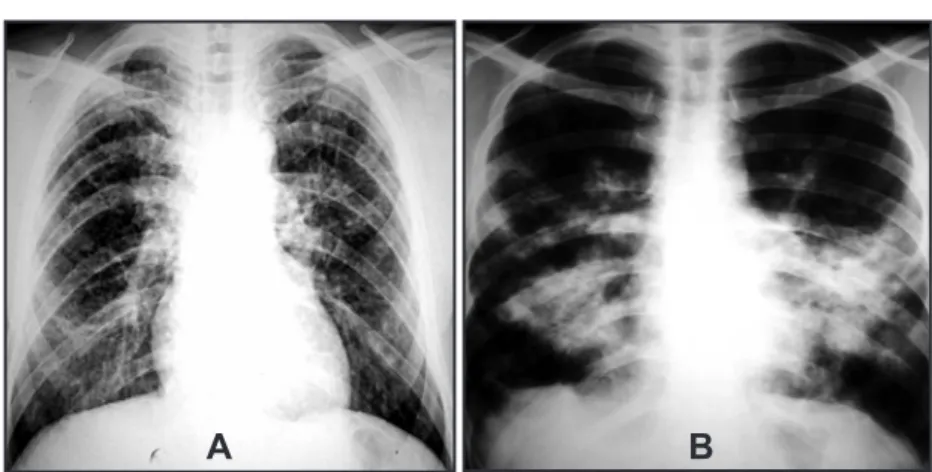
he radiographic lung abnormalities of 21 patients are presented in Table 3. Bilateral involvement was seen in 90.5% of the images, and most patients had abnormal indings afecting more than one third of the lungs (85.7%) with no predilection for upper or lower lobes. An isolated radiological lung patern (nodular, micronodular, ibrous, iniltrative or lung consolidation) was present in 52.2%. Nodular patern was the most (23.8%) frequent, followed by ibrous (9.5%) and micronodular (9.5%). A radiological mixed pattern was defined as any simultaneous combination of the above patterns. In these radiographs, it was noted that the nodular patern was always present, and the combination of nodular and ibrous patern was the most (19%) frequent mixed patern observed. Pneumothorax, cardiomegaly, or bone abnormalities were not observed. he most representative radiographies with PCM lung paterns were presented in Figures 1A and 1B. Two patients with mediastinal enlargement or pleural effusion at chest radiographies were excluded from the radiological analysis, as we aimed to evaluate the speciic radiological abnormalities of the lung parenchyma.
FIGURE 1 - A) Postero-anterior chest x-ray. Case #2, male, 49 year-old: reticular-nodular patern. B) Postero-anterior chest X-ray. Case #10, male, 36 year-old: lung consolidation patern.
TABLE 3 - General chest X-ray abnormalities and lung opacities paterns of 21 patients with paracoccidiodomycosis in a group of 44 patients coming from the southeast region of Brazil.
Abnormality Number Percentage
Distribution
unilateral 2 9.5
bilateral 19 90.5
Extension
≤ 1/3 of lung area 3 14.3
> 1/3 of lung area 18 85.7
Localization
upper, middle and basal zones 10 47.6
upper and middle zones 6 28.5
middle and basal zones 2 9.5
basal zones alone 2 9.5
middle zones alone 1 4.7
upper zones alone 0 0.0
Isolated patern
nodular 5 23.8
ibrous 2 9.5
micro-nodular 2 9.5
iniltrative 1 4.7
lung consolidation 1 4.7
Sub-total 11 52.2
Mixed patern
nodular-ibrous 4 19.0
nodular-iniltrative 2 9.5
nodular-micro-nodular 1 4.7
nodular-lung consolidation 1 4.7
nodular-lung consolidation-ibrous 1 4.7
nodular-ibrous-cavity 1 4.7
Sub-total 10 47.8
Total 21 100.0
DISCUSSION
PCM, formerly known as South-American blastomycosis, is a speciic endemic entity in Latin America. As a chronic systemic mycosis it carries a high morbidity and mortality, especially in cases of difuse systemic involvement14 or when associated with immune compromising
conditions15-17, as also noticed with other endemic fungal diseases18-20.
he prevalence of PCM in Brazil is estimated by regional serological surveys or epidemiological mortality reviews2,21-23. PCM was the 8th
cause of mortality by chronic infectious diseases in Brazil, causing 3,181 deaths between 1980 and 1995. Agriculture and civil construction workers represented 55.8% and 19.2% of deaths by PCM, respectively21.
In our study, patients with PCM were predominantly young adult men, agriculture workers in the economically active population, and/or with previous contact to rural areas – which is similar to the epidemiologic data found in the literature2,8,9,11,13,21,22,24-27. Interestingly,
our male to female ratio was 3.9:1, and it has varied from 5.4-10:1 in other studies8,22. As PCM literature is updated, women prevalence
rises as their work prevalence increases in rural or urban regions28,
as well as their increasing participation in the smokers population29.
Women’s protection by hormonal or genetic factors30 may actually
be less important than previously thought.
he low education level and the biethnic origin predominance of our patients is data not previously well explored8,9,13,22,24,26,27 and it agrees
with the consensus that PCM has an occupational character, being more frequent in the rural and poor Brazilian population. Southeast, south and mid-west Brazil regions aggregate the majority of patients, although new cases have been reported in the past years in forest frontiers, such as in the Amazon region, infecting Indians and immigrants (e.g. mining or agriculture workers)21. With increasing international
traveling, people from non-endemic countries may become exposed to this yeast, rendering this disease an entity to be promptly recognized and included as a diferential diagnosis in many clinical situations. Chest X-ray lung abnormalities were signiicantly more frequent in oldest patients (p < 0.05), which correlates with the increase of pulmonary abnormalities found in the chronic presentation of the disease (Table 1). However, the impact of duration of smoking in the radiographic alterations was not evaluated in this study, and cannot be excluded. In our study, 52.3% of patients were smokers, but only the minority of these patients (34.7%) had radiographic lung abnormalities. Smoking is a signiicant intervenient variable among PCM patients, with a prevalence of 65.5% to 90.3% in the literature8,13,26.
In a case control study by Santos et al, smoking was found to be an important risk factor to the development of chronic PCM. he number of cigaretes smoked per day was also found to be inversely correlated with the age of the patient at the disease onset29. However,
a comparative study of chest X-ray abnormalities between smokers and no smokers with pulmonary PCM has not yet been performed.
he most common general signs and symptoms found in our study were weight loss, lymph node enlargement, mucous lesions, weakness, and fever. Cough, expectoration and dyspnea were the most common reported respiratory symptoms, which is consistent with the literature8,11,13,22,27. Our study demonstrates that respiratory
symptoms were similar in patients with or without chest X-ray abnormalities, indicating a clinical-radiological dissociation. Lymph node enlargement was more frequently seen in patients with normal chest x-rays (p < 0.05), and this was probably due to clinical presentations (Table 2), where lymph node involvement was observed in 59.1% of all patients from this study but only 11.4% had associated pulmonary PCM; otherwise the mucocutaneous presentation associated with lymph node enlargement was observed in 36.3%. Although pulmonary PCM has been exhaustively studied in other Brazilian regions, very litle is known about the correlation between respiratory symptoms and radiographic abnormalities in patients with this disease. Gomes et al reports clinical radiological dissociation in a study with 40 patients, although the data presented suggests a trend towards an association with respiratory symptoms and more severe radiologic abnormalities in the chest X-ray31.
However, as in our study, the limited number of patients, as well as other intervening factors such as smoking, limits more deinitive conclusions. Despite the diiculties to study patients with PCM in which all intervening variables are excluded, our results are in agreement with the trend found in the current literature and published studies, and indicate the presence of a clinical radiological dissociation in the chest x-ray of patients with PCM. We are currently conducting studies using more sensitive techniques to further investigate the efects of PCM in the lung.
ACKNOWLEDGMENTS
he authors declare that there is no conlict of interest.
CONFLICT OF INTEREST
FINANCIAL SUPPORT
REFERENCES
abnormalities, when present, were bilateral in 90.5% and involved more than one third of the lungs (85.7%), similarly to the current literature10,11,13. he pulmonary radiological indings of PCM have
been extensively explored in previous studies. Formerly, the patern
miliary grouped was thought to be predominant10. In 1966, Ferreira11
presented the following classiication and the frequency of lesions:
predominant nodular pattern (48.2%); exclusive miliary pattern
(22.2%); predominant miliary patern (14.8%); predominant reticular patern (11.1%) and bronchopneumonic patern (3.7%)11. Many other
studies have reported predominance of interstitial opacities, but in a heterogeneous fashion. Martins et al27 reported a high percentage of
consolidated lesions (30%), mixed paterns (21.5%), as well as cavity lesions (27.2%) in a series of 121 patients with PCM chest X-ray abnormalities. his data was not well correlated with the literature, likely because patients with previous or concomitant tuberculosis were not excluded27. A review of 170 cases of chest x-ray abnormalities
due to PCM and interpreted with the aid of speciic classiication12,33,
showed reticular (26%) and reticular-nodular (23%) paterns, followed by reticular-nodular-cavity patern (13%), to be the more common radiologic lung paterns, although chest x-ray ilms choice criteria included the most signiicant presentations in any moment of the disease25. Results from analysis of 64 chest x-rays of patients with only
extra-respiratory PCM signs and symptomswere briely reported in another study: conluent or non-conluent alveolar active opacities (25%), interstitial opacities ibrosis or pleural pulmonary adherences suggesting chronic lesions (40.6%), or both (23.4%)34. More
recently, an analysis of 270 chest x-ray ilms of PCM patients showed interstitial opacities and mixed paterns, mainly observed in chronic presentations instead of in acute or sub-acute forms. No information concerning if they were taken at the irst consultation was available8.
Two studies involving chest x-ray analysis of 173 and 139 patients with PCM9,35 showed predominance of interstitial opacities, but
with diferent incidence in the pneumonic-interstitial bat wings mixed patern (50% and 16.6%, respectively) as well as in the ibrous patern (18.2% and 5%, respectively).
he classiication of chest x-ray PCM abnormalities based upon ILO’s Pneumoconiosis Standards showed an interstitial pattern predominance (50%), followed by a reticular-nodular patern (39.6%); alveolar patern (13.7%); and the mixed patern (interstitial and alveolar) in 29.3%13. ILO’s methodology may not be a prompt useful tool to the
internist although the inal result is a convergence of abnormalities into three great paterns (interstitial, alveolar and mixed paterns).
It is recommended that the initial diagnostic analysis of PCM should include anterior-posterior and lateral chest x-ray ilms, and the exam should be repeated during follow up of PCM patients under medical treatment36. Although there are many different
methodological reports as previously mentioned, thoracic PCM radiography abnormalities are in general bilateral, symmetric, with a nodular-interstitial patern34,35. PCM chest radiography classiication,
as the one used in our study12 is morphologically elucidative. However
it is not known if this classiication provides the clinician information regarding disease severity or prognosis. Our statistic results show a trend towards independency between chest x-ray indings and clinical disease presentation. Extensively detailed and complex radiographic PCM lung classiication plays, therefore, a limited role in the clinical seting, as long as other diferential diagnosis such as tuberculosis, are excluded. In this seting, we propose to limit chest x-ray reports to alveolar, interstitial or mixed paterns,
when approaching PCM patients, initially and under antimicrobial therapy follow up. A simpler radiographic description may facilitate communication between radiologist and internists, and may allow comparison between studies.
The classification of chest x-ray film abnormalities in PCM patients remains very important whenever the diferential diagnosis is required, since tuberculosis and PCM are frequently polymorphic at thoracic imaging. Most importantly, it is essential to recognize that PCM is a disease that can cause a large variety of pulmonary radiographic alterations, and should be included in the diferential diagnosis of patients with history of exposure to endemic areas.
Several factors limit our study. he real proile of PCM in State of Minas Gerais must not be concluded from our data, as milder forms of the disease are oten followed in the primary care centers. he limited number of patients in our study does not allow us to make deinitive statistical conclusions, but shows a trend towards clinical-radiological dissociation. Further studies would be required to confirm this hypothesis. Smoking is still a signiicant intervenient variable. Currently, litle is known about anatomopathological and radiological correlation in PCM, and such studies are needed to increase our knowledge on the pathophysiology of this disease, as well as on its radiological expression in diferent moments of the inlammatory process.
Clinical, epidemiological and chest x-rays records from 44 adult patients with PCM from State of Minas Gerais, Brazil, were presented. Nodular-interstitial, bilateral and difuse lung iniltrate was the main chest x-ray abnormalities in chronic PCM. his is the irst report of a non-parametric statistical analysis indicating a trend towards independency between respiratory PCM manifestations when compared two groups of patients with or without radiographic lung abnormalities. Since it is yet unknown the relation of initial diferent morphologic chest x-ray paterns and diferences in outcome of patients with PCM after treatment, a simplified PCM chest x-ray pattern classiication reporting alveolar, interstitial or mixed lung abnormalities is proposed as a result, in order to allow a practical initial approach and follow up of these patients by the internist. Further studies evaluating initial radiological indings with mortality, cure rate and post treatment lung functional capacity would be desirable and clinically relevant.
We thank Professor Giovanni Guido Cerri for reviewing this manuscript and Tropical medicine and Infectious diseases post-graduation program from Federal University of Minas Gerais by institutional support.
Fundação de Amparo à Pesquisa do Estado de Minas Gerais.
2. Martinez R . Blastomicose sul-americana (Paracoccicioidomicose). Etioepidemiologia e ecologia. In: Veronesi R, Focaccia R, editors. Tratado de Infectologia. Rio de Janeiro: Atheneu; 1997. p. 1081-1083.
3. Funari M, Kavakama J, Shikanai-Yasuda MA, Castro LG, Bernard G, Rocha MS, et al. Chronic pulmonary paracoccidioidomycosis (south american blastomycosis): high-resolution CT indings in 41 patients. AJR Am J Roentgenol1999; 173:59-64. 4. Teixeira ABMJ, Etchebehere ECSC, Lima MCL, Santos, MCL, Pires, AO, Valença
Junior BC, et al. Gallium-67 imaging in a patient with paracoccidioidomycosis: a case report. Rev Inst Med Trop São Paulo 2000; 42:167-170.
5. Achenbach R , Negroni R , Khaski S, Lococo L, Beresñak A, Gai L. Paracoccidioidomycosis: unusual clinical presentation and utility of computerized tomography scanning for diagnosis. Int J Dermatol 2002; 41:881-882. 6. Muniz MAS, Marchiori E, Magnago M, Moreira LBM, Almeida Junior JG.
Paracoccidioidomicose pulmonar: aspectos na tomograia computadorizada de alta resolução. Radiol Bras 2002; 35:147-154.
7. Gasparetto EL, Escuissato DL, Davaus T, Cerqueira EMFP, Souza Junior AS, Marchiori E, et al. Reversed halo sign in pulmonary paracoccidioidomycosis. AJR Am J Roentgenol 2005; 184:1932-1934.
8. Paniago AMM, Aguiar JIA, Aguiar ES, Cunha RV, Pereira GROL, Londero AT, et al. Paracoccidioidomicose: estudo clínico e epidemiológico de 422 casos observados no Estado de Mato Grosso do Sul. Rev Soc Bras Med Trop 2003; 36:455-459. 9. Trad HS, Trad CS, Elias Jr J, Muglia VF. Revisão radiológica de 173 casos
consecutivos de paracoccidioidomicose. Radiol Bras 2006; 39:175-179. 10. Gonçalves AP, Bardy C. Aspectos clínicos e radiológicos da blastomicose brasileira
pulmonar. O Hospital 1946; 20:213-243.
11. Ferreira LC. O comprometimento pulmonar na blastomicose sul-americana. Arq Bras Tuberc Doenç Torax 1966; 25:41-60.
12. Magalhães A. Paracoccidioidomicose (blastomicose sul-americana), aspectos radiológicos. Rev Hosp Clin Fac Med Sao Paulo 1980; 35:147-155.
13. Leme LM. Aspectos radiológicos da paracoccidioidomicose pulmonar. Rev Pat Trop 1989; 18:219-298.
14. Prado FLS, Prado RS, Gontijo CCV, Freitas R, Pereira M, Paula I, et al. Lymphoabdominal paracoccidioidomycosis simulating primary neoplasia of the biliary tract. Mycopathol 2005; 160:25-28.
15. Reis M, Costa RS, Ferraz AS. Causes of death in renal transplant recipients: a study of 102 autopsies from 1968 to 1991. J Royal Soc Med 1995; 88:24-27. 16. Silletti RP, Glezerov V, Schwartz IS. Pulmonary paracoccidioidomycosis
misdiagnosed as Pneumocystis pneumonia in an immunocompromised host. J Clin Microbiol 1996; 34:2328-2330.
17. Godoy P, Lelis SSR, Resende UM. Paracoccidioidomicose e síndrome da imunodeficiência adquirida: relato de necropsia. Rev Soc Bras Med Trop 2006; 39:79-81.
18. Boyars MC, Zwischenberger JB, Cox Jr CS. Clinical manifestations of pulmonary fungal infections. J horac Imaging 1992; 7:12-22.
19. Winer-Muram HT, Rubin SA. Pulmonary blastomycosis. J horac Imaging 1992; 7:23-28.
20. Conces Jr. DJ. Endemic fungal pneumonia in immunocompromised patients. J horac Imaging 1999; 14:1-8.
21. Coutinho ZF, Silva D, Lazéra M, Marcia PV, Oliveira RM, Sabroza PC, et al. Paracoccidioidomycosis mortality in Brazil (1980-1995). Cad Saude Publica 2002; 18:1441-1454.
22. Blotta MHSL, Mamoni RL, Oliveira SJ, Nouer SA, Papaiordanou PM, Gouveia A, et al. Endemic regions of paracoccidioidomycosis in Brazil: a clinical and epidemiologic study of 584 cases in the southeast region. Am J Trop Med Hyg 1999; 61:390-394.
23. Maluf MLF, Pereira SRC, Takahashi G, Svidzinski TIE. Prevalência de paracoccidioidomicose-infecção determinada através de teste sorológico em doadores de sangue na região Noroeste do Paraná, Brasil. Rev Soc Bras Med Trop 2003; 36:11-16.
24. Azevedo JF, Lisboa CSG. Paracoccidioidomicose - estudo de 106 casos. J Pneumol 1980; 6:30-33.
25. Cruz MFA, Santos Filho A, Cardoso RC, Prando A, Pereira RM. Aspectos radiográicos intratorácicos da paracoccidioidomicose. Revisão de 170 casos. Radiol bras 1989; 22:169-177.
26. Verli FD, Marinho SA, Souza SC, Figueiredo MAS, Yurgel LS. Peril clínico-epidemiológico dos pacientes portadores de paracoccidioidomicose no Serviço de Estomatologia do Hospital São Lucas da Pontifícia Universidade Católica do Rio Grande do Sul. Rev Soc Bras Med Trop 2005; 38:234-237.
27. Martins S, Gerhardt Filho G, Monteiro DJ. Aspectos clínicos e radiológicos da paracoccidioidomicose. JBM. 1984; 46:71-79.
28. Instituto Brasileiro de Geografia e Estatística. [database online]. Pesquisa Nacional de Amostra em Domicílios. Rio de Janeiro 2005. 26:1-125. 29. Santos WA, Silva BM, Passos ED, Zandonade E, Falqueto A. Associação entre
tabagismo e paracoccidioidomicose: um estudo de caso-controle no Estado do Espírito Santo, Brasil. Cad Saude Publica 2003; 19:245-253.
30. Aristizabal BH, Klemons KV, Cock AM, Restrepo A, Stevens DA. Paracoccidioides brasiliensis infection in mice: inluence of the hormonal status of the host on tissue responses. Med Mycol 2002; 40:162-178.
31. Gomes E, Wingeter MA, Svidzinski TIE. Dissociação clínico-radiológica nas manifestações pulmonares da paracoccidioidomicose. Rev Soc Bras Med Trop 2008; 41:454-458.
32. Ferreira MS. Blastomicose sul-americana (paracoccicioidomicose): Imunopatogênese. In: Veronesi R, Focaccia R, editores. Tratado de Infectologia. Rio de Janeiro: Atheneu; 1997. p. 1083-1087.
33. Machado Filho J, Miranda JL. Considerações relativas à blastomicose sul-americana: localizações, sintomas iniciais, vias de penetração e disseminação em 313 casos consecutivos. O Hospital 1960; 58:129-181.
34. Correa AL, Restrepo A, Franco L, Gomez I. Paracoccidioidomicosis: coexistencia de lesiones extrapulmonares y patología pulmonar silente: descripción de 64 pacientes. Acta Med Colomb 1991; 16:304-308.
35. Valle ACF, Guimarães RR, Lopes DJ, Capone D. Aspectos radiológicos torácicos na paracoccidioidomicose. Rev Inst Med Trop São Paulo 1992; 34:107-115. 36. Shikanai-Yassuda MA, Telles Filho FQ, Mendes RP, Colombo AL, Moreti ML,