*Correspondence: Zhenmin Mao. School of Pharmacy. Shanghai Jiaotong University. Shanghai 200240, P. R. China. E-mail: [email protected]
A
vol. 51, n. 2, apr./jun., 2015 http://dx.doi.org/10.1590/S1984-82502015000200015
Formulation and evaluation of transdermal drug-delivery system of
isosorbide dinitrate
Xiaoping Zhan
1, Zhenmin Mao
1,*, Sijing Chen
1, Shaoxiong Chen
2, Liqun Wang
21School of Pharmacy, Shanghai Jiaotong University, Shanghai, P R China, 2Strategic Alliance of Biomedical Technology, Shanghai, P R China
The purpose of this study was to develop a reservoir-type transdermal delivery system for isosorbide dinitrate (ISDN). The developed patch consisted of ive layers from bottom to top, namely, a temporary liner, an adhesive layer, a rate-controlling membrane, a reservoir and a backing. The effects of chemical penetration enhancers, reservoir materials and rate-controlling membranes on the release behaviour of ISDN from the transdermal patch were studied, and the in vitro release of ISDN from the developed patch was studied and compared with the commercially available ISDN patch. The results showed that there was no signiicant difference in permeation rates between the developed reservoir-type patch and the commercially available ISDN patch (p > 0.05). Moreover, the cumulative release ratio of the commercially available ISDN patch in 48 h was up to 89.8%, whereas the developed patch was only 34.9%, which meant the sustained release time of the developed patch was much longer than the commercially available ISDN patch, and would promote the satisfaction of the patient.
Uniterms: Isosorbide dinitrate/transdermal drug-delivery system. Transdermal patches/in vitro release. Transdermal patches/sustained release. Controlling membrane/drugs release rate. Skin penetration/ drugs release.
O objetivo do presente estudo foi desenvolver um sistema de liberação transdérmico do tipo reservatório para o dinitrato de isossorbida (ISDN, abrevitura em Inglês). A formulação transdérmica desenvolvida constou de cinco camadas de baixo para cima, ou seja, um revestimento temporário, uma camada adesiva, uma membrana controladora da taxa de liberação, um reservatório e um reforço. Estudaram-se os efeitos dos potenciadores de penetração química, materiais do reservatório e membranas de controle da taxa de liberação no comportamento da formulação transdérmica de dinitrato de isossorbida. A liberação in vitro
da formulação transdérmica de dinitrato de isossorbida desenvolvida foi estudada em comparação com a formulação de dinitrato de isossorbida disponível comercialmente. Os resultados mostraram que não existem diferenças signiicativa nas taxas de permeação entre o tipo de reservatório desenvolvido e o de dinitrato de isossorbida desenvolvido comercialmente (p>0,05). Ademais, a taxa de liberação cumulativa da formulação de dinitrato de isossorbida disponível comercialmente em 48 horas foi de até 89,8% e a da formulação desenvolvida, de apenas de 34,9%, o que provou que a liberação sustentada da formulação desenvolvida foi muito maior do que a de dinitrato de isossorbida desenvolvida comercialmente, o que promoveria a satisfação do paciente.
INTRODUCTION
Transdermal-patch technology has advanced tremendously since the first scopolamine patch was introduced into the market in 1979. It can be attributed to today’s advanced patch-making technology, through which nearly a billion patches are manufactured every year (Prausnitz, Langer, 2008). These transdermal patches
are classiied into three types: drug in adhesive (the drug
is directly dispersed into the adhesive polymer), reservoir (consists of a drug reservoir between a backing membrane and rate-controlling membrane, with a skin-contacting adhesive layer) and matrix (consists of a drug reservoir in the centre with a peripheral adhesive ring around the
edges) (Tan, Pister, 1999; Subedi et al., 2010).
Isosorbide dinitrate (ISDN) is commonly used for the therapy of stable angina pectoris and is traditionally administrated via oral or sublingual routes. However, loss of consciousness appears in patients when angina pectoris
breaks out, and thus it is dificult for patients to take the
medicine by themselves. Additionally, administrated orally ISDN has low bioavailability, owing to its high first-pass metabolism in the gastrointestinal tract and liver. Moreover, the critical point of anti-anginal therapy depends, to a certain extent, on the ability of the drug to produce an immediate effect (Johnson, Gladigau, Schnelle,
1981; Fung, 1985; Taylor et al., 1985). Thus, transdermal delivery may be an appropriate administration route for ISDN.
Among the ISDN transdermal patches designed and reported previously, the drug-in-adhesive patches are the simplest and the most commonly used design. Zhao
et al. (2007) developed single-layer drug-in-adhesive transdermal patches, in which the adhesive layer not only serves as an adhesion layer to the skin, but also is responsible for the release of the drug. The in vitro
release results show that the release kinetics of ISDN is a
irst-order process, suggesting that the outwards moving
of ISDN from the adhesive is associated with a passive diffusion process.
Drug release from a drug-in-adhesive patch depends directly upon the drug concentration in the patch and follows first-order kinetics. However, reservoir-type transdermal drug delivery could be observed the zero-order kinetics. The rate controlling membrane, as a most important component in the reservoir-type transdermal patch, was responsible for controlling drug delivery. The rate-controlling membranes reported in previous publications included ethyl cellulose (Lewis, Pandey, Udupa, 2006), collagen and chitosan (Thacharodi, Rao, 1996), ethylene-vinyl acetate (EVA) (Shen et al., 2013)
and acrylate polymers (Zhan et al., 2007a, b, c). Previous work in our lab has proven that acrylate polymers, as a new type of rate-controlling membranes, could control clonidine HCl solution release with zero order (Zhan et al., 2007a, b, c). But, such ilm-like acrylate polymers
have not been applied in the production of patches to date. The aim of this study was to develop a reservoir-type transdermal patch of ISDN with acrylate polymer as the rate-controlling membrane, which could keep drug release at a constant rate for at least 48 h. The effects of chemical penetration enhancers, reservoir materials and rate-controlling membranes on the release behaviour of ISDN permeation across the transdermal patch were studied. Consequently, the in vitro release of ISDN from such a patch was studied in comparison to commercially available ISDN patches.
MATERIAL AND METHODS
Material
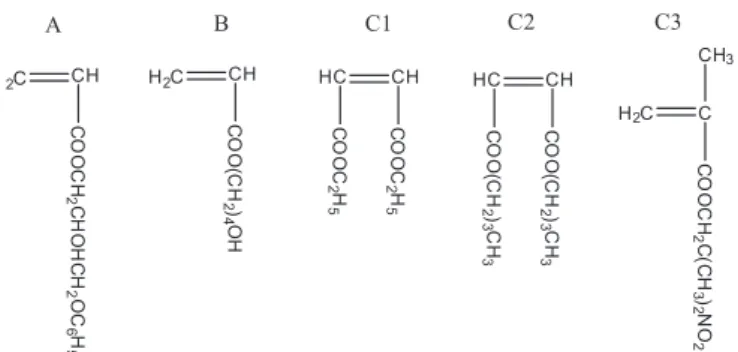
2-Hydroxy-3-phenoxypropylacrylate (marked A), 4-hydroxybutyl acrylate (marked B), diethyl maleate (marked C1), dibutyl maleate (marked C2) and 2-methyl-2-nitropropyl methacrylate (marked C3) were purchased from Aldrich (USA). Benzoyl peroxide, ethyl cellulose (EC), polyethylene glycol 400 (PEG400), methylene chloride, ethanol absolute, oleic acid, urea, propylene glycol and polyvinyl alcohol 17-88 (PVA17-88) were purchased from National Medicine Corporation (CHN). Isosorbide dinitrate (ISDN) was purchased from Shanghai Yuanji Chemical Co., Ltd. Polyvinyl alcohol 05-88 (PVA05-88) was purchased from Shanghai Jin Wei Trading Co., Ltd. Polyvinyl pyrrolidone K90 (PVP K90) was presented by Boai New Kaiyuan Pharmaceutical Co., Ltd. Methanol was of HPLC grade. Frandol® tape was purchased from Yamanuchi Pharm (JP) (40 mg in 40 cm2). All other chemicals were of reagent grade and
used as received.
Fabrication of a reservoir-type transdermal patch of ISDN
The structure of the transdermal patch consisted of
ive layers, namely, a temporary liner, an adhesive layer,
a rate-controlling membrane, a reservoir and a backing (Figure 1). First, the adhesive solution was coated onto the temporary liner (3M, ScotchpakTM 1022) and was allowed
rate-controlling membrane. Last, the polyester ilm laminate
(3M, ScotchpakTM 9732), as a backing layer, covered the
reservoir. The temporary liner and the backing layer were then heat-sealed and cut to the appropriate sizes. The patch was stored in a sealed aluminium pouch to minimise the loss of solvent.
Preparation of the pressure-sensitive adhesives (PSAs)
PSAs with ISDN (0.96 g PVP K90, 0.18 g PEG400, 0.06 g gelatin and 100 mL deionised water) were put into a three-necked boiling flask and stirred at 80 ºC
until the solid reagents dissolved completely; this was
then refluxed for 2 h 120 ºC to decrease the strength and viscosity of the gelation solution. The solution was cooled before adding 0.06 g ISDN and stirring until the ISDN was homogeneously dispersed. The mixture was cast onto the temporary liner in 200 cm2 areas and dried at
60 ºC; 0.3 mg of ISDN per cm2 was obtained in the PSAs.
The preparation process of PSA without ISDN was the same procedure, except no ISDN was added.
Preparation of the rate-controlling membranes
We used a previously reported method that had already been used in our lab to prepare three rate-controlling membranes (Figure 2), that is, membrane M1 made of monomers A, B and C1 (Zhan et al., 2007a), membrane M2 made of monomers A, B and C2 (Zhan et
2C CH
C O O C H 2C H O H C H 2O C 6H 5
H2C CH
C O O (C H 2) 4O H HC CH C O O C 2H 5
A B C1
C O O C 2H 5 HC CH C O O (C H 2) 3C H 3 C O O (C H 2) 3C H 3
H2C C
C O O C H 2C (C H 3) 2N O 2 C2 C3 CH3
FIGURE 2 - The structure of acrylate monomers.
FIGURE 1- The construction of the ISDN transdermal patch.
al., 2007b), and membrane M3 made of monomers A, B and C3 (Zhan et al., 2007c). The ratio of the monomers in each membrane was 4:4:2 (w/w/w). We used 3% (w/w) benzoyl peroxide as the photo-initiator reagent. The mixture of monomers with the photo-initiator was treated under UV light in UV-curing equipment (Beijing Aishibo Machinery Electronic Equipment Centre, China). The thickness of all resultant membranes was 14µm.
Preparation of the drug reservoir
ISDN in EC reservoir: 5.1 g of EC were completely dissolved in methylene chloride, and then 0.54 g of ISDN was added and dissolved. The mixed solution was casted onto a glass plate with 200 cm2 areas; the plate was then
put in an air-conditioned chamber at room temperature for 24 h under 60–70% relative humidity in order to evaporate the methylene chloride, and a 2.7 mg ISDN layer (per cm2
EC) was formed. The drug reservoir layer was separated carefully from the glass plate, and then pressed tightly on the rate-controlling membrane.
ISDN in PVA reservoir: 5.1 g of a PVA mixture (PVA0588/ PVA1788=1:2.5 mol/mol) was dissolved in water/ethanol (1:1 v/v) solution, and then 0.54 g of ISDN was added and dissolved. The mixed solution was casted onto a glass plate with 200 cm2 areas, and then the plate
was put in an oven (Hanzhou Huier Equipment Co., Ltd., China) at 65 °C for 24 h in order to evaporate H2O and ethanol, and a 2.7 mg ISDN layer (per cm2 PVA) was
formed. The drug reservoir layer was carefully separated from the glass plate and tightly attached to the rate-controlling membrane.
Preparation of the drug reservoir containing penetration enhancer
The preparation of the drug reservoir with a penetration enhancer followed the same procedure as the preparation of the PVA reservoir layer. When ISDN was dissolved in PVA solution, 15% (w/w) oleic acid, 15% (w/w) 1,2-propylene glycol and 5% (w/w) urea were used as penetration enhancers, which were added into the PVA reservoir layer, stirred and homogeneously dispersed in the reservoir.
Characterisation of optimised formulation
Thickness
The patch thickness was measured using a digital meter (Shanghai Measuring andCutting Tools Factory,
deviation of ive readings were calculated for three batches
of the optimised formulation with an area of 1 cm2.
Weight
Three different patches from three batches, each with an area of 1 cm2, were weighed individually, and the
average weight and standard deviation was calculated.
Drug content
Three individual patches from three batches, each with an area of 1 cm2, were cut into small pieces and
dissolved in 100 mL of methanol/water solution (54:46 v/v). The solution was filtered, diluted suitably and measured by HPLC.
Skin for permeation studies
Hairless rat skin was used to evaluate the effects of penetration enhancers on the permeation and to evaluate the permeation of ISDN release from the optimised developed patch. The skin was isolated from hairless rats (male, 8-10 weeks old and 350-400 g in weight) that were obtained from Slac Lab. Animal (Shanghai, China). All studies were performed as per the protocol approved by the Institutional Animal Care and Use Committee (IACUC) at Shanghai Jiaotong University. Hairless rats were euthanised by carbon dioxide asphyxiation prior to the permeation experiment and its abdominal skin was carefully excised using scissors and forceps. The underlying subcutaneous fat was removed from the excised skin and the thus-obtained abdominal skin (ca. 1 mm thick) was used for permeation experiments.
Permeation studies
Permeation experiments were carried out to evaluate the rate-controlling membrane, the drug reservoirs, the penetration enhancers and the integral developed patch. The tested component was cut into appropriate sizes and mounted on a modified Franz diffusion assembly (Ng et al., 2010) produced at Huanghai Medicine & Drug Testing Instruments (China). When the tested component was the integral developed patch, the temporary line should be removed, and the dermis side of the skin faced the receptor compartment. The effective diffusion area was 0.785 cm2. The receptor
compartment was illed with 25.0 ± 0.1 mL of PEG400
and normal saline in the volume ratio of 4:6, and the sink conditions were maintained during the permeation experiment. The receptor medium was maintained at
37.0 ± 0.1 ºC and stirred constantly at 200 ± 2 rpm. At pre-determined time intervals 0.5, 1.5, 3, 4.5, 6.5, 8.5, 10.5, 12 and 24 h, 200 μL of the receptor solution was
taken out and replaced with an equal volume of fresh receptor medium. The samples were analysed by HPLC.
HPLC analysis of ISDN
The HPLC system (Waters, USA) consisted of a 1525 binary pump, a 717 plus auto-sampler and a 2487 dual-wavelength UV absorbance detector. Data acquisition and processing were dealt with by Waters Empower professional software. The mobile phase was a mixture of methanol and water in the volume ratio of 54:46. The
mobile phase was iltered through a 0.45 mm porosity ilter
and degassed. The liquid chromatograph was equipped with a 80 Å, 5 µm, 4.6 mm×250 mm C18 column (Agilent
Zorbax Extend) with a low rate of 1 mL/min. The volume
of each injected sample was 20 µL, the wavelength of the UV detector was set at 220nm, and the run time was 15 min (USP 32, 2009).
Validation studies of the HPLC method
Linearity and range
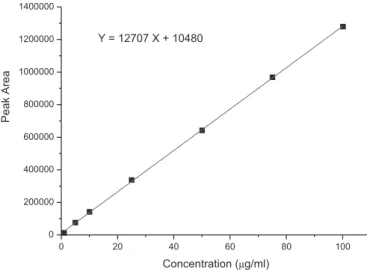
A stock solution of ISDN (1 mg/mL) was prepared in the mobile phase. Seven standard solutions (1 to 100 μg/mL) were diluted from this stock solution using the mobile phase for the assessment of linearity. The peak areas for ISDN (n=5) versus concentrations were plotted
and itted to be linear over the entire concentration range.
Accuracy
The accuracy was determined by recovery studies. The samples were analysed at three concentrations of 5, 25 and 100 μg/mL by the proposed method. The experiments were conducted in triplicate.
Precision
The intra-day variability was checked at three time points on the same day, and the inter-day variability was checked on three consecutive days. The samples were analysed at three concentrations of 5, 25 and 100 μg/mL by the proposed method. The results were expressed as the percent relative standard deviation (% RSD) of concentration.
Specificity
A set of sample solutions were prepared to ascertain
the speciicity of the method. The blank solution was the
1 solution contained PSAs (50 μg/mL PVP K90 and 50 μg/mL gelation dissolved in the receptor medium and
then iltered), placebo 2 solution contained penetration
enhancers (50 μg/mL oleic acid, 50 μg/mL 1,2-propylene glycol and 50 μg/mL urea dissolved in the receptor medium and then filtered) and placebo 3 was for the drug reservoir (50 μg/mL EC, 50 μg/mL PVA0588 and 50 μg/mL PVA1788 dissolved in the receptor medium and
then iltered).
Detection and quantitation limits
The LOD (limit of detection) and LOQ (limit of quantitation) were defined as the concentrations that yielded a measured peak with a S/N (signal-to-noise ratio) of 3 and 10, respectively.
Test of sink conditions
Assuring the sink conditions in the in vitro
release experiment is very important. According to the requirements of the sink conditions, the volume of the receptor medium was generally greater than 5-10 times that of the saturation point of ISDN in this medium. Thus, the saturated solubility of ISDN in the receptor medium
needed to be quantiied. ISDN was added to the lask with
25.0 mL of the receptor medium and sonicated for 24 h at 20 °C until no more solid dissolved. The saturated solution
was iltered and then measured by HPLC.
Data analysis
The cumulative amount of ISDN was calculated as follows:
1
1
i n
n i i
i
C V C V
Q
A
= −
=
+ =
∑
(Eq. 1)
where Q is the cumulative amount of the drug (μg/cm2),
V is the receptor solution volume (mL), Vi is the sample volume (mL), Cnand Ciare the drug concentrations in the receptor cells and the concentration of the extraction
samples (μg/mL), respectively, and A is the transporting area (cm2).
The cumulative drug amount (Qt, μg/cm2) was
plotted versus time (T, h). The slope of the linear portion of the plot was presented as the permeation rate (Jss,
μg/cm/h). The intercept on thex-axis was taken as the lag time (TL, h). All of the release experiments were repeated three times from independent batches, and mean values of the permeation rates with standard deviations were calculated. Student’s t-test and analysis of
variance (ANOVA) were used to statistically determine
signiicant differences. The p value used in this study was 0.05.
RESULTS AND DISCUSSION
Method validation of HPLC
Linearity and range
The calibration curve for ISDN obtained from the developed HPLC method was displayed in Figure 3. As shown, the peak areas of the drugs were obtained to be
strictly linear in the concentration range of 1 to 100 μg/mL; the correlation coeficient value was 0.9999.
Accuracy
The percentage recoveries of the three concentrations
from low to high were found to be 102.07 ± 0.63, 102.75 ± 0.21 and 99.78 ± 0.32%, respectively, which conirms that the method was accurate.
Precision
The % RSD of the developed intra-day HPLC method was 0.44 ± 0.28, and the % RSD of inter-day
method was 0.52 ± 0.22, which suggests the excellent
precision of the developed HPLC method.
Detection and quantitation limits
The LOD and LOQ values were found to be 100 and 350 ng/mL, respectively.
Specificity
The method speciicity was assessed by comparing
the chromatograms obtained from the sample solutions
0 20 40 60 80 100
0 200000 400000 600000 800000 1000000 1200000 1400000
P
e
a
k
A
re
a
Concentration (µg/ml)
Y = 12707 X + 10480
(Figure 4); the retention time of ISDN observed from the
HPLC was 6.147 min.
Evaluation of sink conditions
The solubility of ISDN in the PEG400/normal saline solution (4:6 v/v) at 20 °C was 1.85 ± 0.03 mg/mL (n=3). The solubility of ISDN in water at 20 °C was 1.45 ± 0.01 mg/mL (n=3). The solubility of ISDN in PEG400/normal saline solution increased slightly compared to its solubility in water. The highest drug content in our research was 5 mg (the concentration in donor compartment: 5 mg/mL,
volume: 1 mL), and the receptor media volume was 25 mL;
the concentration was 0.2 mg/mL if 5 mg of ISDN was completely dissolved in 25 mL of media. Thus, the receptor media volume was nine times greater than the saturation point and the sink conditions were achieved during the permeation experiment. In fact, other researchers also used water as the receptor media for the purpose of simulating a human physiological environment (Zhao et al., 2007).
Effect of the rate-controlling membrane on the permeation
To screen a suitable rate-controlling membrane, different concentrations of ISDN in 1,2-propylene glycol
solution (1.0, 2.0, 3.0, and 5.0 mg/mL) were used as donor solutions in the modified Franz cells with a volume of 1 mL. The release behaviours of ISDN across different rate-controlling membranes were studied over 24 h. It was found that the rate-controlling membrane marked M1 showed the highest value of permeation rates under the same drug-donor concentration, as shown in Figure 5. This result could be explained by the pore sizes of membrane M1, which was fabricated randomly by polymer chains. As polyacrylates are non-degradable polymers, they are controlled drug molecules across the pores in the membrane instead of degradation, erosion or dissolution of the polymer. The shorter side chain of monomer C1 would occupy the pore’s inner space less compared with C2 and C3, as a result of the drug molecules release across the membrane M1 more easily. Membrane M1 also showed higher permeation rates compared to M2 and M3 when the tested drug was clonidine HCl (Zhan et al., 2007a,b,c).
Effect of the drug reservoir on the permeation
Two types of drug reservoir, EC and PVA, were designed. The permeation of ISDN from the drug reservoir across rate-controlling membrane M1 was studied. Table I
FIGURE 4 – Chromatograph from HPLC obtained from different
sample solutions.
TABLE I - The permeation of ISDN releasing from the drug reservoir across M1
Formulation Reservoir Jss (μg/cm2/h)
Cumulative amount of release at 24 h
(μg)
Correlation
factor (r2) TL (h)
Cumulative ratio of release
at 24 h (%)
F1 EC 1.7 ± 0.1 30.7 ± 1.1 0.9967 8.1 1.3 ± 0.03
F2 PVA 43.2 ± 1.8 957.2 ± 54.3 0.9817 - 40.1 ± 0.8
1 2 3 5
0 20 40 60 80 100 120 140 160 180
P
er
m
ea
ti
o
n
ra
te
(
µ
g
/c
m
2 /h
)
ISDN concentration in donor cell (mg/ml) M1
M2 M3
FIGURE 5 - The permeation of ISDN through different
TABLE II - Physicochemical properties of penetration enhancers
Penetration enhancers
Molar mass
(g/mol) logP*
Oleic acid 282.46 7.7
Propylene glycol 76.05 –0.92
Urea 60.06 –2.11
* Experimental data
TABLE III - Permeation of ISDN in PVA reservoir with different penetration enhancers transporting through the M1
Formulation Penetration enhancer Jss (μg/cm2/h)
Cumulative amount of release at 24 h
(μg)
Correlation factor (r2)
Cumulative ratio of
release at 24 h (%)
F3 15% Oleic acid 44.5 ± 0.7 1040.4 ± 53.9 0.9942 39.4 ± 2.2
F4 15% 1,2-Propylene glycol 44.3 ± 0.5 1000.1 ± 19.0 0.9917 40.4 ± 0.6
F5 5% Urea 44.8 ± 0.8 1017.9 ± 54.1 0.9889 41.1 ± 1.6
shows that PVA had a better permeation compared with EC, which increased the permeation rate 25.4 fold, a 31.1-fold cumulative release after 24 h, and a 30.8-fold cumulative ratio of release at 24 h. Moreover, ISDN releasing from PVA were not observed in the lag time, but EC had serious lag time of 8.1 h. So, the PVA was chosen to perform latter experiment.
Effect of the penetration enhancers on the permeation
To screen the penetration enhancers, three penetrations covering a broad range of lipophilicity values (logP values of penetrations amounted to –2.11, –0.92 and 7.7 for urea, propylene glycol and oleic acid, respectively) (Table II) (Yangali-Quintanilla et al., 2009) were chosen to investigate the impact of the partitioning characteristic of penetrations on the permeation. The weight ratio of the penetration enhancers were reported in a previously
published paper (Halina; Krzysztof; Stanislaw, 2000;
Chen et al., 1992). The release behavior of ISDN in the PVA reservoir with the penetration enhancer transporting across the M1 was evaluated (Table III). It was found that there was no significant promotion on the permeation rates among the groups of drug reservoirs with or without penetration enhancers (p > 0.05) (Table IV).
Although the penetration enhancers had no effects when the drug transported across the rate-controlling membrane, M1, it was well known that the penetration enhancers had serious effects on the skin in general. To
further illustrate how the penetration enhancers affected the permeation rates, the release behaviours of ISDN in the formulation groups F2, F3, F4 and F5 transporting across the rats’ ex-vivo skin were studied. It was found that formulation F5, of which urea was the penetration enhancer, had a higher permeation rate, cumulative amount of release and cumulative ratio of release compared to oleic acid and propylene glycol (p<0.05) (Figure 6). The fastest rate of permeation in the case of urea was explained by it having the lowest molecular weight when compared to the more lipophilic penetrations (Table II), as well as by its permeation-enhancing potential for the hydrophilic drugs because the value of logP of ISDN was 0.95, as calculated using Advanced Chemistry Development (ACD/Labs) Software V 11.02 (Ochalek et al., 2012).
Actually, the excised animal skin could not represent the real permeation of drugs transporting through human skin. But, the animal skin is frequently used as a replacement for human skin, because the human skin
is dificult to acquire under ethical principles. Schmook
et al (2001) compared the penetration properties of human skin with animal (pig and rat) skin for four topical dermatological drugs (salicylic acid, hydrocortisone, clotrimazole and terbinafine) with widely varying polarity. The results revealed that the order of permeation rates was rat > pig > human (terbinafine), rat > pig ~ human (clotrimazole), rat>human>pig (hydrocortisone), rat>human>pig (salicylic acid). Thus, we could surmise the permeation rates of the drug transporting through the human skin would be less than the values of rat skin.
Effect of the pressure sensitive adhesive on the permeation
TABLE IV - Comparison of the p values from the permeation rates in four formulation groups
Comparison formulation groups p value
F2 F3 0.33
F4 0.38
F5 0.24
F3 F4 0.75
F5 0.62
F4 F5 0.41
FIGURE 6 -In vitro release of ISDN in four formulations with
different penetration enhancers across through the rats’ ex-vivo
skin.
Formulation 2 Formulation 3 Formulation 4 Formulation 5
0 5 10 15 20 25 30 35 40 45 C u m u la ti v e a m o u n t a t 2 4 h rs ( µ g ) P er m ea ti o n ra te ( µ g /c m 2 /h )
Permeation rate (µg/cm2/h)
Cumulative amount (µg)
0 300 600 900
TABLE V -In vitro release of formulations with different pressure sensitive adhesives
Formulation PSA Jss
(μg/cm2/h)
Cumulative amount of release at 48 h
(μg)
Correlation factor (r2)
Cumulative ratio of
release at 48 h (%)
F5 - 24.4 ± 0.1 1045.7 ± 19.5 0.9974 42.8 ± 1.1
F6 PSA without ISDN 16.7 ± 0.7 713.5 ± 35.4 0.9937 28.9 ± 1.2
F7 PSA with ISDN 19.9 ± 0.2 861.4 ± 3.3 0.9972 34.9 ± 0.5
Controlling group 19.0 ± 0.6 852.9 ± 9.6 0.9945 89.8 ± 1.0
used in the formulation (p<0.05). To increase the value of
Jss, 5% (w/w) ISDN was added into the PSA, as shown in formulation F7, and promotion effects of permeation were observed in formulation F7 compared with formulation F6 (p<0.05) (Table V).
Pharmaceutical equivalent evaluation
Commercially available Frandol® Tape was used a controlling group. Comparing in vitro releasing behavior of formulation group F7 and Frandol® Tape, it was found
that both groups could control drug release at a sustained
rate for up to 48 h. There were no signiicant differences
in the permeation rates between formulation F7 and the controlling group (p>0.05). The cumulative release ratio at 48 h of the developed patch was only 34.9%, but up to 89.8% in the Frandol® Tape (Figure 7), which meant that the developed patch would release at a constant rate for a longer time than the controlling group. The reason for the
signiicant difference in cumulative release ratio of the two
patches was that the amount of ISDN in the developed patch was up to 3 mg/cm2 but in the Frandol® Tape it was only
1 mg/cm2. In comparison with Frandol® Tape, which was
a single-layer adhesive-type patch, the developed reservoir-type patch showed advantages, whereby the permeation rates were controlled by the rate-controlling membrane and the drug-release time was decided by the amount of drugs in the reservoir layer. Thus, it was easy to tune the release rate and release time to achieve the prediction.
Physical evaluation of optimised patches
The optimised formulation, F7, with an area of 1 cm2
Formulation 7 Controlling group
0 5 10 15 20 P er m ea ti o n ra te ( µ g /c m 2 /h ) Permeation rate
Cumulative ratio at 48hrs
0 20 40 60 80 C u m u la ti v e ra ti o a t 4 8 h rs (% )
FIGURE 7 – Comparison release of the developed patch with
HALINA, G.; KRZYSZTOF, C.; STANISLAW, J. Effect of penetration enhancers on isosorbide dinitrate penetration through rat skin from a transdermal therapeutic system. Int. J. Pharm., v.199, n.1, p.1-6, 2000.
JOHNSON, K.I.; GLADIGAU, v.; SCHNELLE, K. Relationship between the pharmacodynamics and pharmacokinetics of two oral sustained-release formulations of isosorbide dinitrate in normal man. Arzneim.-Forsch., v.31, p.1026-1029, 1981.
LEWIS, S.; PANDEY, S.; UDUPA, n.Design and evaluation of matrix type and membrane controlled transdermal delivery systems of nicotine suitable for use in smoking cessation.
Indian. J. Pharm. Sci., v.68, n.2, p.179-184, 2006.
NG, S.W.; ROUSE, J.J.; SANDERSON, F.D.; MEIDAN, v.; ECCLESTON, G.M. Validation of a static Franz diffusion cell system for in vitro permeation studies. Aaps Pharmscitech, v. 11, n.3, p.1432-1441, 2010.
OCHALEK, M.; PODHAISKY, H.; RUETTINGER, H.H.; NEUBERT, R.H.H.; WOHLRAB, J. SC lipid model membranes designed for studying impact of ceramide species on drug diffusion and permeation, Part III: Inluence of penetration enhancer on diffusion and permeation of model drugs. Int. J. Pharm., v.436, n.1-2, p.206-213, 2012.
PRAUSNITZ, M.R.; LANGER, R. Transdermal drug delivery.
Nat. Biotechnol., v.26, n.11, p.1261-1268, 2008.
SCHMOOK, F.P. ; MEINGASSNER, J.G.; BILLICH, A. Comparison of human skin or epidermis models with human and animal skin in in-vitro percutaneous absorption. Int. J. Pharm., v.215, n.1-2, p.51-56, 2001.
SHEN, T.; XU, H.; WENG, W.; ZHANG, J. Development of a reservoir-type transdermal delivery system containing eucalyptus oil for tetramethylpyrazine. Drug Deliv., v.20, n.1, p.19-24, 2013.
SUBEDI, R.K.; OH,S. Y.; CHUN, M.K.; CHOI, H.K. Recent advances in transdermal drug delivery. Arch. Pharm. Res., v.33, n.3, p.339-351, 2010.
TAN, H.S.; PFISTER, W.R. Pressure-sensitive adhesives for transdermal drug delivery systems. Pharm. Sci. Technol. Today, v.2, n.2, p.60-69, 1999.
was tested for various physical parameters. The thickness
of formulation F7 was found to be 256.4±11.8 μm. The weight of formulation F7 was 43.7±1.3 mg. The drug
content in formulation F7 was 2954.7±20.3 mg. Compared
to the calculated drug content of 3 mg/cm2, the percent
loss of drug in the preparation process was below 2%. The results indicated that the reservoir-type transdermal patch of ISDN developed in this study possessed uniform thickness, weight and drug content.
CONCLUSION
A reservoir-type transdermal patch of ISDN was prepared in this paper. The developed patch was fabricated by a temporary liner, an adhesive layer, a rate-controlling membrane, a reservoir and a backing. In the developed patch, the optimised drug reservoir
included 75% PVA, 10% ISDN and 5% urea; the
optimised rate-controlling membrane was synthesised by 2-hydroxy-3-phenoxypropylacrylate, 4-hydroxybutyl
acrylate and diethyl maleate; the optimised PSA was 5%
ISDN dispersed in the mixture of PVP K90, PEG400 and gelatine. Compared with the commercial patch, the developed patch presented a longer release time at a sustained release rate and would promote patient satisfaction. Such a reservoir-type transdermal patch had more advantages over the adhesive-type patch, including sustained release rate, owing to the rate-controlling membrane, and a higher loading-drug amount, owing to the separated drug reservoir layer. Thus, it was easy to tune release rate and release time to achieve the prediction.
ACKNOWLEDGEMENTS
T h i s w o r k w a s s u p p o r t e d b y t h e n a t i o n a l
signiicant and special project of new created drugs (No. 2010ZX09401-404).
REFERENCES
CHEN, G. L.; SHI, X. Z.; ZHANG, Z. H.; ZHANG, F. Q.; WANG, C. M.; LI, Y. C. Study on percutaneous therapeutic system of isosorbide dinitrate effect of penetration enhancers on in vitro permeability through rat skin. Chin. J. Pharm., v.23, n.10, p.449-451, 1992.
TAYLOR, T.; CHASSEAUD, L.F.; MAJOR, R.M.; LEAF, F.C.; BONN, R.; DARRAGH, A.; LAMBE, R.F. Bioequivalence of a sustained-release isosorbide dinitrate formulation at steady-state. Biopharm. Drug Dispos., v.6, n.2, p.119-129, 1985.
THACHARODI, D.; RAO, K.P. Rate-controlling biopolymer membranes as transdermal delivery systems for nifedipine: development and in vitro evaluations. Biomaterials, v.17, n.13, p.1307-1311, 1996.
UNITED STATES PHARMACOPEIAL CONVENTION. USP. USP 32 NF 27: United States Pharmacopeia [and] National Formulary. Rockville: United States Pharmacopeial Convention, 2009. v. 2, p.2712-2718.
YANGALI-QUINTANILLA, v.; VERLIEFDE, A.; KIM. T.U.; SADMANI, A.; KENNEDY, M.; AMY, G. Artiicial neural network modes based on QSAR for predicting rejection of neutral organic compounds by polyamide nanoiltration and reverse osmosis membranes. J. Membrane Sci., v.342, n.1-2, p.251-262, 2009.
ZHAN, X.P. ; CHEN, S. J.; TANG, G.C.; MAO, Z.M.A new poly (2-hydroxy-3-phenoxypropylacrylate, 4-hydroxybutyl acrylate, diethyl maleate) membrane controlled clonidine linear release in the transdermal drug delivery system. Eur. Polym. J., v.43, n.4, p.1588-1594, 2007a.
ZHAN, X.P. ; CHEN, S.J.; TANG, G.C.; MAO, Z.M. Poly (2-hydroxy-3-phenoxypropylacrylate, 4-hydroxybutyl acrylate, dibutyl maleate) membrane controlled clonidine zero-order release. Eur. J. Pharm. Biopharm., v.66, n.3, p.429-434, 2007b.
ZHAN, X.P. ; CHEN, S.J.; TANG, G.C.; MAO, Z.M. TWO new types of copolymer membranes controlling clonidine zero-order release. J. Appl. Polym. Sci., v.106, n.5, p.3016-3022, 2007c.
ZHAO, J.H.; FU, J.H.; WANG, S.M.; SU, C.H.; SHAN, Y.; KONG, S.J.; WANG, Y.; LU, W.L.; ZHANG, H.; ZHANG, S.; LI, L.; ZHANG, E.H.; WANG, L.; PEI, Q. L.; WANG, J.C.; ZHANG, X.; ZHANG,Q. A novel transdermal patch incorporating isosorbide dinitrate with bisoprolol: in vitro and in vivo characterization. Int. J. Pharm., v.337, n.1-2, p.88-101, 2007.
Received for publication on 27th March 2014