Systematic Review
Revisão Sistemática
ISSN 2317-1782 (Online version)
This is an Open Access article distributed under the terms of the Creative Commons Attribution License, which permits unrestricted use, distribution, and reproduction in any medium, provided the original work is properly cited.
Surface electromyographic biofeedback for
behavioral dysphonia in adult people:
a systematic review
Biofeedback eletromiográfico de superfície
para disfonia comportamental em adultos:
revisão sistemática
Vanessa Veis Ribeiro1 Jhonatan da Silva Vitor1 Heitor Marques Honório2 Alcione Ghedini Brasolotto1 Kelly Cristina Alves Silverio1
Keywords
Dysphonia Feedback Therapeutics Voice Voice Training
Descritores
Disfonia Retroalimentação Terapêutica Voz Treinamento Vocal
Correspondence address: Kelly Cristina Alves Silverio Departamento de Fonoaudiologia, Faculdade de Odontologia de Bauru – FOB, Universidade de São Paulo – USP
Al. Dr. Octávio Pinheiro Brisolla, 9-75, Bauru (SP), Brasil, CEP: 17012-901. E-mail: [email protected] Received: April 06, 2018 Accepted: May 16, 2018
Study conduct at Departamento de Fonoaudiologia, Faculdade de Odontologia de Bauru – FOB, Universidade de São Paulo – USP - Bauru (SP), Brasil.
1 Departamento de Fonoaudiologia, Faculdade de Odontologia de Bauru – FOB, Universidade de São Paulo –
USP - Bauru (SP), Brasil.
2 Departamento de Odontopediatria, Ortodontia e Saúde Coletiva, Faculdade de Odontologia de Bauru – FOB,
Universidade de São Paulo – USP - Bauru (SP), Brasil.
Financial support: Foundation for the Support of Research of the State of São Paulo (case number 2015/06918-5).
Conflict of interests: nothing to declare. ABSTRACT
Purpose: To review systematically the literature and to analyze the effectiveness of surface electromyographic biofeedback in the rehabilitation of adults with behavioral dysphonia. Research strategies: Two authors performed an independent search in the following databases: Clinical Trials, Cochrane Library, Embase, LILACS, PubMed,
and Web of Science. A specific search strategy was developed for each database. Selection criteria: The review
included studies that examined the effectiveness of surface electromyographic biofeedback compared to other direct
vocal therapy intervention in adults with behavioral dysphonia. There were no restrictions in regard to language or date of publication. Data analysis: Analysis of the risk of bias, heterogeneity, quantitative and qualitative data, sensitivity, subgroups, and publication bias. Results: 51 studies were identified, but only two cohort studies remained as prospects for analysis. The studies showed 100% uncertain risk of selection, performance, and detection bias. There was a high degree of clinical heterogeneity. The descriptive analysis showed a reduction in muscle electrical activity and improvement in vocal self-assessment using electromyographic biofeedback;
however, it was not possible to calculate the effect size of the interventions. The present study was limited by
the fact that it was unable to show a consensus for the majority of data analyzed. Conclusion: The available
literature does not support a conclusive finding about the effectiveness of surface electromyographic biofeedback
compared to other direct interventions used in the rehabilitation of adults with behavioral dysphonia. The studies analyzed vary widely in their clinical procedures and methodology, making it impossible to determine the
procedure’s effectiveness.
RESUMO
Objetivo: Revisar sistematicamente a literatura e analisar a efetividade do biofeedback eletromiográfico de superfície na reabilitação de adultos com disfonia comportamental. Estratégia de pesquisa: Dois autores realizaram uma busca independente nas bases de dados: Clinical Trials, Cochrane Library, Embase, LILACS, PUBMED
e Web of Science. Elaborou-se uma estratégia de busca específica para cada base. Critérios de seleção: Foram incluídos estudos que analisaram a efetividade do biofeedback eletromiográfico de superfície comparado com
outras intervenções de terapia vocal direta em adultos com disfonia comportamental. Não houve restrição de idioma e data de publicação. Análise de dados: Análise do risco de viés, heterogeneidade, dados quantitativos e qualitativos, sensibilidade, subgrupos e viés de publicação. Resultados: foram identificados 51 estudos, sendo que apenas dois estudos coorte prospectivos foram analisados. Os estudos apresentaram 100% de risco incerto de viés de seleção, performance e detecção. Houve alta heterogeneidade clínica. A análise descritiva mostrou redução da atividade elétrica muscular e melhora da autoavaliação vocal com o uso do biofeedback eletromiográfico, porém,
não foi possível calcular o tamanho do efeito das intervenções. O presente estudo apresentou limitações por não conseguir apresentar um consenso para a maioria dos dados analisados. Conclusão: A literatura disponível não permite gerar uma evidência conclusiva acerca da efetividade do biofeedback eletromiográfico comparado
INTRODUCTION
Behavioral dysphonias are vocal changes arising from one or more changes in the way the voice is produced or used, and it can be related to improper vocal habits or techniques, excessive muscle tension, or vocal misuse and abuse(1). These
dysphonias are commonly associated with voice disorders, such as upper airway disorders; increased tension or mass in the vocal folds that causes postural changes or benign lesions on these folds; tense, rough, whispery, or unstable voice quality; laryngeal or pharyngeal resonance; and restricted articulation(1-5). They can also be related to alterations in the
tension or function of the shoulder girdle or perilaryngeal muscles(3-12).
Vocal rehabilitation of behavioral dysphonia can take two forms: direct or indirect(13-15). The purpose of the indirect
approach is to help the individual to understand the use of his or her voice and to develop strategies that minimize risk factors and promote healthy vocal use, as well as to understand the psychodynamic aspects of the voice and the effect that his or her voice has on the listener. The direct approach is employed in order to change vocal behavior through practicing vocal techniques and exercises, ranging from production by itself to its association with function, with the goal of achieving an efficient, normative use of the voice.
One example of a direct approach to vocal rehabilitation for behavioral dysphonia is surface electromyographic biofeedback(16-18). Surface electromyographic biofeedback
was first used in the 1960’s as a therapeutic resource in the field of physical therapy, and the first reports of studies applying the procedure to vocal therapy appeared in 1978(19).
This technique motivates the participant to (re)learn the muscle coordination of the phono-articulatory organs, making permanent changes to this neuromuscular behavior by monitoring, visualizing, and controlling the signs of the electrical activity of muscles displayed on a screen for the patient, who attempts to achieve a target set by the therapist. It is believed that this occurs due to the plasticity of the central nervous system, which allows an individual to adapt to a new demand through neuro-functional reorganization and then transfer this new behavior to his or her daily life(20,21).
In vocal rehabilitation, the practice of vocal exercises is combined with surface electromyographic biofeedback to help participants visually and kinesthetically self-monitor their vocal production(18). It is believed that this combination
can facilitate a change in vocal behavior and encourage medium- and long-term maintenance of well-balanced vocal production(18).
In general, therapeutic programs that applied biofeedback to vocal therapy showed a reduction in electrical activity
of muscles in the region of the extrinsic laryngeal muscles and shoulder girdle(16,18,20,22-25) and improvements in voice
quality(17,22), vocal self-assessment(16), and laryngeal anatomy
and physiology, with resorption of benign nodular lesions(22).
The literature indicates that the procedure can aid in
maintenance of therapeutic effects over the medium-(17,22) and
long-term(16). However, there is no consensus regarding the
duration, number, and frequency of treatment sessions using surface electromyographic biofeedback, or regarding the activities to be undertaken during its application, hindering its clinical applicability.
Thus, there is a demonstrated need for an analysis of the best scientific evidence available in the literature regarding the application of surface electromyographic biofeedback in the treatment of adults with behavioral dysphonia, providing a general overview of the procedure’s applicability and effectiveness from a clinical point of view and from the patient’s perspective, comparing it to other direct vocal therapy procedures. It is believed that this data may aid clinical decision-making and guide speech therapy in cases of adults with behavioral dysphonia.
OBJECTIVES
To review systematically the literature and to analyze
the effectiveness of surface electromyographic biofeedback
in vocal rehabilitation of adults with behavioral dysphonia.
RESEARCH STRATEGIES
The study consists of a systematic review. The present methodology followed the recommendations of the Cochrane Library and PRISMA. The underlying clinical question that structured the present study is the following: “How effective is surface electromyographic biofeedback compared to other direct vocal therapy interventions in the vocal rehabilitation of adults with behavioral dysphonia?”
SELECTION CRITERIA
The inclusion criteria considered were as follows:
Design: the study was designed to include the greatest possible amount of data that had at least one study available, including randomized clinical trials and prospective cohort and retrospective cohort studies.
Participants (P): adults with behavioral dysphonia - voice disorders that has its etiology related to the use of voice(1).
Intervention (I): surface electromyographic biofeedback. Control group (C): other direct vocal therapy interventions - interventions applied directly to the voice production apparatus(13).
Outcomes (O): (1) Surface electromyography: electrical activity of the infrahyoid, suprahyoid, trapezoid, sternocleidomastoid, thyroid region, cricothyroid region, and orofacial region muscles is measured as a continuous quantitative variable. The mean
values of the electrical activity of muscles were quantified
in root mean square (RMS) during the activity of phonation. (2) Perceptual evaluation of voice quality using the parameter
of overall level of vocal deviation: dichotomous classification as
better (voice improved after the intervention) or unchanged/worse (voice remained the same or worsened after the intervention). To homogenize the data, they were transformed into dichotomous categorical variables: better or unchanged/worse. On a Likert scale, a one-degree reduction was considered better, maintenance of the same degree was considered unchanged, and a one-degree increase was considered worse. On a visual analogue scale,
a ten-point difference was considered a change(26); that is, an
increase of at least 10 points was considered worse, a reduction
of at least 10 points was considered better, and a difference
of less than 10 points was considered unchanged. (3) Vocal
self-perception: a dichotomous classification as better (reduction in
the intensity of pain following the intervention or unchanged/worse (vocal self-perception remained the same or worsened following the intervention). For the data analyzed using a Likert scale, a one-degree reduction was considered better, maintenance of the same degree was considered unchanged, and a one-degree increase was considered worse. When a measurement was taken more than once pre- and post-therapy, a degree was considered for each time the question was answered.
DATA ANALYSIS
The selection of studies was carried out by two authors working independently in February 2017. The order of procedures for identifying potentially relevant studies and applying the present study’s selection criteria was the following: reading the titles, reading the abstracts, and reading the articles in their entirety. The analysis of concordance between the authors’ selections showed 94.74% concordance (Kappa= 0.77). In situation of disagreement, analysis was made by consensus. The two articles over which the authors disagreed were entirely reread and discussed by the authors, resulting in their exclusion from the study by consensus.
Chart 1. Search strategy for identifying studies
Database Uniterms Search strategies
Clinical Trials MeSH
((“Dysphonia” OR “Voice Disorders”) AND (“Therapeutics” OR “therapy” OR “Rehabilitation” OR “Exercise Therapy” OR “Rehabilitation of Speech and Language Disorders” OR “Voice Training”) AND (“Biofeedback, Psychology” OR “Feedback” OR “Neurofeedback” OR “electromyographic biofeedback”))
Cochrane Library MeSH
(((“clinical” AND “trial”) OR “clinical trials as topic” OR “clinical trial” OR “random*” OR “random allocation” OR “therapeutic use”) AND (“Dysphonia” OR “Voice Disorders”) AND (“Therapeutics” OR “therapy” OR “Massage” OR “Musculoskeletal Manipulations” OR “Rehabilitation” OR “Rehabilitation of Speech and Language Disorders” OR “Voice Training”))
LILACS DeCS
dysphonia OR voice disorders AND therapeutics OR rehabilitation OR rehabilitation of speech and language disorders OR voice training AND feedback OR biofeedback, psychology OR electromyography OR biofeedback electromyography
PUBMED MeSH
((((((clinical[Title/Abstract] AND trial[Title/Abstract]) OR “clinical trials as topic”[Mesh] OR (clinical trial [Publication Type]) OR “random”*[Title/Abstract] OR “random allocation”[Mesh] OR “therapeutic use”[MeSH Subheading])))) AND ((“Voice Disorders”[Mesh] OR “Dysphonia”[Mesh]))) AND ((“Therapeutics”[Mesh] OR “therapy”[Subheading] OR “Rehabilitation”[Mesh] OR “rehabilitation” [Subheading] OR “Exercise Therapy”[Mesh]) OR “Rehabilitation of Speech and Language Disorders”[Mesh] OR “Voice Training”[Mesh]))) AND ((“Biofeedback, Psychology”[Mesh] OR “Feedback”[Mesh] OR “Neurofeedback”[Mesh] OR “electromyographic biofeedback”[Title/Abstract])))
Web of Science MeSH
(“clinical” AND “trial”) OR “clinical trials as topic” OR “clinical trial” OR “random*” OR “random allocation” OR “therapeutic use” AND “Dysphonia” OR “Voice Disorders” AND “Therapeutics” OR “therapy” OR “Rehabilitation” OR “Exercise Therapy” OR “Rehabilitation of Speech and Language Disorders” OR “Voice Training” AND “Biofeedback, Psychology” OR “Feedback” OR “Neurofeedback” OR “electromyographic biofeedback”
Embase Emtree
The data analysis was conducted in the following order: analysis of the risk of bias; assessment of heterogeneity (statistical and clinical); analysis of the quantitative data (descriptive analysis of data regarding the outcomes and assessment of the degree to which the treatment was responsible for the outcomes); analysis of the qualitative data (descriptive analysis of the qualitative data: authors, database, journal, year, design, country, sample, pathology, gender, age, number of sessions, frequency of sessions, duration of sessions, muscles targeted by surface electromyographic biofeedback, format in which the surface electromyographic biofeedback was presented, and the activities carried out during the surface electromyographic biofeedback process); and analysis of sensitivity, subgroups, and publication bias. Methodological heterogeneity was not analyzed, as all the studies selected were similarly designed.
The risk of bias was analyzed using the classification proposed
by the Cochrane Library(27) and the Cochrane Review Manager
5.3 software. The analysis of clinical heterogeneity was based on two variables: the combination of surface electromyographic biofeedback therapy with direct vocal therapy (vocal function exercise) and the combination of surface electromyographic biofeedback therapy with indirect vocal therapy (vocal counseling and psychodynamic aspects).
RESULTS
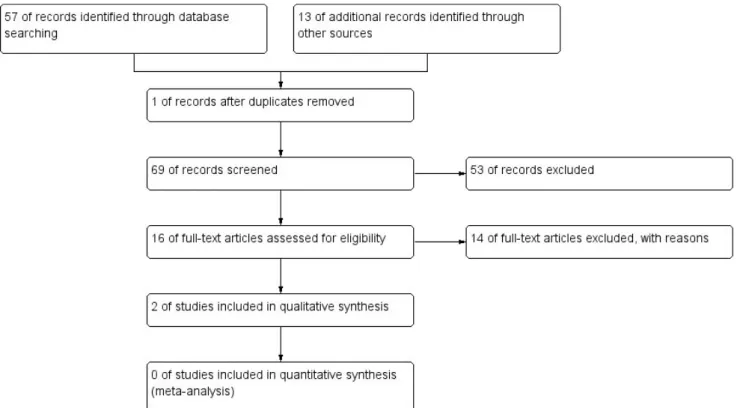
Figure 1 shows that 57 studies were identified in the databases (Central Cochrane: 22; Clinical Trials: 4; Embase: 19; LILACS: 3; PubMed: 8; Web of Science: 1), and 13 were
identified through a manual search, totaling 70 studies. During the first stage, 53 studies were excluded based on the title and
abstract, and one duplicate study was eliminated. A total of 16 studies relevant to the topic were found, of which 11 were excluded due to their design and three were excluded due to their population. Thus, two studies on the use of surface electromyographic biofeedback in the vocal rehabilitation of adults with behavioral dysphonia were chosen.
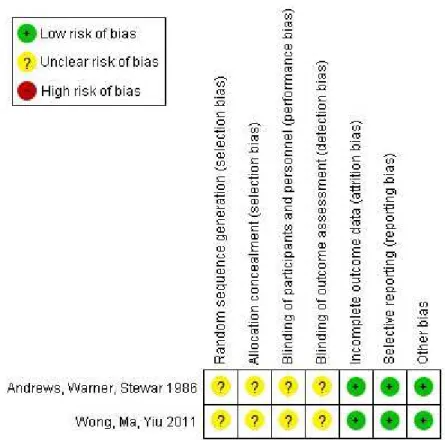
In the authors’ judgement, the risk of bias of each included study demonstrated that both studies showed uncertain risk of bias in the randomization and allocation of participants, the masking of the patients and personnel, and the masking of the assessors (Figure 2). Thus, the present study shows 100% uncertain risk of bias regarding selection, performance, and detection biases (Figure 3).
The assessment of heterogeneity in clinical practices shows that all the studies (100%; n= 2) combined surface electromyographic biofeedback with vocal functions, 50% (n= 1) combined it with vocal exercises, 50% (n= 1) conducted vocal counseling, and none of the studies worked with psychodynamic vocal aspects (n= 0; 0%) (Table 1).
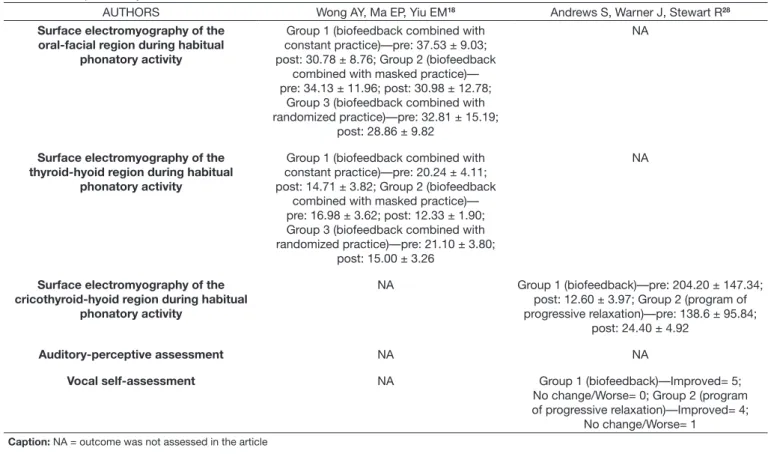
A descriptive analysis of data on the outcomes (Table 2) shows that there was reduction of the electrical activity of muscles and improvement of vocal self-evaluation, but it was not possible to perform a meta-analysis of the data since there was no common outcome between the studies, which made it impossible to
calculate the degree of the interventions’ effectiveness or the
statistical heterogeneity. No studies were found that assessed outcomes related to the electrical activity of the infrahyoid, suprahyoid, trapezius, and sternocleidomastoid muscles, nor to auditory-perceptual analysis of the voice.
Chart 2 shows the qualitative analysis of the characteristics of the publication, the sample, and the intervention.
Figure 2. Risk of bias summary: review of the authors’ judgements about each risk of bias item for each included study
Figure 3. Risk of bias graph: review of the authors’ judgements about each risk of bias item presented as percentages across all included studies
Table 1. Assessment of the clinical heterogeneity of the studies
Parameters analyzed Subgroups n %
Surface electromyographic biofeedback program combined with direct vocal therapy
Exercise 1 50.00
Function 2 100.00
Surface electromyographic biofeedback program combined with indirect vocal therapy
Vocal counseling 1 50.00
Vocal psychodynamics 0 0.00
Descriptive analysis of the frequency of occurrence
Chart 2. Qualitative analysis of the data
Authors Wong AY, Ma EP, Yiu EM18 Andrews S, Warner J, Stewart R28
Database Cochrane and PubMed Manual search
Journal Journal of Voice British Journal of Disorders of Communication
Year 2011 1986
Design Prospective cohort Prospective cohort
Country China England
Sample
Group 1 (biofeedback combined with constant practice): 7 participants; Group 2 (biofeedback combined with practice): 7 participants; Group 3 (biofeedback combined with randomized practice):
7 participants
Group 1 (biofeedback): 5 participants; Group 2 (program of progressive relaxation): 5 participants
Pathology Hyperfunctional dysphonia Hyperfunctional dysphonia
Gender Both sexes Female
Age 18-48 years 20-54 years
Number of sessions 8 sessions 4-15 sessions
Frequency of sessions Twice per week Once per week
Duration of session ND 45 minutes
Muscles of electromyographic
biofeedback
Muscle of the thyroid-hyoid region Muscle of the cricothyroid region
Format of electromyographic biofeedback presentation
Visual feedback in the form of the electrical activity reading in RMS appearing on the computer screen
after every two sentences
Visual feedback in the form of electrical activity reading as registered by a needle on a scale
Activity performed during the electromyographic
biofeedback
Reading aloud a set of 24 sentences in three ways: constant number, increasing number, and random
number of characters
Reading with maximum electrical activity below 30 µV in four of five consecutive tests to pass to phonation tasks; in subsequent stages, reading with electrical activity varying by no more than 10µV from
a resting state in four of five tests
Caption: ND = no data in the article
Table 2. Descriptive analysis of outcomes data
AUTHORS Wong AY, Ma EP, Yiu EM18 Andrews S, Warner J, Stewart R28
Surface electromyography of the oral-facial region during habitual
phonatory activity
Group 1 (biofeedback combined with constant practice)—pre: 37.53 ± 9.03; post: 30.78 ± 8.76; Group 2 (biofeedback
combined with masked practice)— pre: 34.13 ± 11.96; post: 30.98 ± 12.78;
Group 3 (biofeedback combined with randomized practice)—pre: 32.81 ± 15.19;
post: 28.86 ± 9.82
NA
Surface electromyography of the thyroid-hyoid region during habitual
phonatory activity
Group 1 (biofeedback combined with constant practice)—pre: 20.24 ± 4.11; post: 14.71 ± 3.82; Group 2 (biofeedback
combined with masked practice)— pre: 16.98 ± 3.62; post: 12.33 ± 1.90; Group 3 (biofeedback combined with randomized practice)—pre: 21.10 ± 3.80;
post: 15.00 ± 3.26
NA
Surface electromyography of the cricothyroid-hyoid region during habitual
phonatory activity
NA Group 1 (biofeedback)—pre: 204.20 ± 147.34; post: 12.60 ± 3.97; Group 2 (program of progressive relaxation)—pre: 138.6 ± 95.84;
post: 24.40 ± 4.92
Auditory-perceptive assessment NA NA
Vocal self-assessment NA Group 1 (biofeedback)—Improved= 5;
No change/Worse= 0; Group 2 (program of progressive relaxation)—Improved= 4;
No change/Worse= 1
Due to the uncertain risk of bias, the high degree of clinical heterogeneity and the lack of common outcomes among the studies, it was not possible to perform a sensitivity analysis of subgroups and publication bias.
DISCUSSION
A total of 51 studies were identified (Figure 1), of which, 16(16-20,23-25,28-35) were relevant to the topic. When the complete
articles were read and the selection criteria for this study were applied, the study’s design excluded 11 articles(16,17,19,24,29-35). Of the
five prospective cohort studies found(18,20,23,25,28), two examined
vocally healthy individuals(20,25) and another examined singing
students, without mentioning their vocal health(23); therefore,
these did not meet the eligibility requirements for inclusion in the present study. Consequently, only two studies that examined dysphonic individuals were included(18,28).
The assessment of the risk of bias is a subjective analysis of
methodological considerations that are of sufficient magnitude
to impact the study’s conclusions(27). Therefore, this analysis
indicates the reliability of the findings and the risk posed by generalizing the scientific evidence of the reviews and basing
decisions regarding clinical procedures on them. The studies selected for this review(18,28) showed uncertain risk of selection,
performance, and detection biases (Figure 2).
The older study(28) demonstrates an uncertain risk of selection
bias because the authors describe a combination of ten individuals
who make up the sample in five pairs. Subsequently, they were
randomly allocated in two groups, and the pairs were separated, with one assigned to each group. No detail is provided about the method used to carry out and mask the allocation process. The uncertain risk of performance bias occurred because the study reports that patients were blinded to the existence of another program of treatment, but it does not specify whether the study personnel were similarly blinded. The uncertain risk of detection bias was due to the lack of information regarding how the outcome assessors were blinded in regard to the intervention.
In the more recent study(18), the uncertain risk of selection
bias occurred because the authors wrote that the participants were equally and randomly assigned to groups, but they included no information about the method used to perform and mask the allocation of the participants. The uncertain risk of performance bias occurred because the study does not report whether the participants and personnel were blinded regarding the intervention’s methods. The uncertain risk of detection bias was due to the absence of information related to the implementation and method of blinding outcome assessors in the various interventions.
Thus, the present literature review presents a 100% uncertain risk of selection, performance, and detection biases (Figure 3). Thus, it is observed that in addition to the scarcity of studies regarding use of surface electromyographic biofeedback in rehabilitation of adults with behavioral dysphonia, the available
studies have a low level of scientific evidence. Consequently, despite the limitations, it is important to analyze the scientific
evidence available on the topic.
The assessment of clinical heterogeneity (Table 1) shows that the only common elements between the studies were the combination of surface electromyographic biofeedback with tasks of phonatory function and no association with treatment
involving vocal psychodynamic. The studies differed in their
combination of biofeedback with vocal exercises and in procedures of vocal counseling, which were performed by only one study(28).
A high degree of clinical heterogeneity was observed in regard to the tasks associated with the use of surface electromyographic biofeedback in the rehabilitation of adults with dysphonia.
There were no common outcomes shared by the studies, which made it impossible to calculate their statistical heterogeneity
and the degree of effectiveness of the interventions (Table 2). Descriptive analysis of the outcomes reveals a reduction in the electrical activity in the thyroid(18), orofacial(18) and cricothyroid
region(28), and improvement in vocal self-assessment(28),
both in biofeedback and control groups. However, it is not possible to perform meta-analysis to determine if the surface
electromyographic biofeedback is more effective than other
procedures of direct vocal therapy in rehabilitation of adults with behavioral dysphonia.
A recent review of the literature(15) on the effectiveness of
vocal therapy showed that only 15 of the 3,290 studies identified
were clinical trials that met the selection criteria. The studies covered behavioral and organic dysphonias and seven behavioral
approaches using specific vocal therapies. Most of the studies showed significant improvement following the intervention, but the clinical significance of the results was usually not
discussed. Moreover, the study also found discrepancies in
the outcomes analyzed, which made it difficult to compare the
studies. Accordingly, the study(15) found results similar to those
of this systematic review, so there seems to be a complete lack of
clinical trials and methodologically rigorous studies in the field
of voice therapy. The heterogeneity of procedures found in the
few available studies hampers efforts at systematic reviews in the field, which reduces the possibility of creating a scientifically
rigorous protocol of clinical and therapeutic procedures to aid
clinical care in the field of voice, and, in this case, specifically
for the therapeutic use of surface electromyographic biofeedback. It was observed that one of the studies was found in two databases(18), and one was found through a manual search(28).
These results demonstrate the importance of conducting a broad search of the most important databases and supplementing it with a manual search, primarily by scanning the references in the studies found. This supplementary search is important to identify additional relevant articles, especially older articles that are unlikely to show up in search strategies or are not available in electronic databases(27). This is the only way to conduct a
broad systematic review of the literature that includes all the available data on the subject.
The more recent article(18) was published in the Journal of
Voice in 2011, and the older(28) one was published in 1986 in the
British Journal of Disorders of Communication, currently the International Journal of Language & Communication Disorders. Both are designed as prospective cohort studies(18,28), with one
conducted in China(18) and the other in England(28). The prospective
field with the highest level of scientific evidence, surpassed only
by large-scale trials and randomized clinical trials; no studies of this nature that addressed the key question of this review were found(36). Beyond the design, however, a number of other
methodological precautions are necessary to ensure that there
is no risk of bias in the findings obtained(27).
The characteristics of the sample show that both studies(18,28)
examined adults with hyperfunctional dysphonia. One of the studies examined three groups of seven individuals of both genders(18), and the other(28) analyzed two groups of five
individuals, all female. Thus, homogeneity was observed in the characteristics of both study samples. Both studies show that biofeedback is a procedure recommended for the treatment of vocal behavior disorders, which are characterized primarily by muscular hyperfunction or hypertension(16-18,22,30). These
findings are confirmed by a review of the literature(33) that sought
to identify the effects of all types of biofeedback therapy on
phonatory disorders and phonatory performance. The study(33)
showed that, in general, biofeedback is effective in improving dysphonia or is more effective than traditional voice therapy.
The authors conclude that the method seems to aid in the
reduction of laryngeal tension and is effective for cases arising
from muscle tension. However, it does not seem to help in cases of healthy participants or when the problem is associated with psychological components(19), since this is a procedure based on
the modification of neuromuscular behavior. The authors believe
this occurred because there is no direct relationship between surface electromyographic biofeedback and vocal quality, but rather between surface electromyographic biofeedback and hyperfunction of the muscles involved in phonation.
The small number of subjects in each group analyzed limits
the findings, since the smaller the sample, the less likely it is that significant statistical difference between the procedures will
be found. Regarding gender, studies that analyze only females are common. This may be explained by the ease of recruiting female participants, since women are more likely to seek health services and more likely to complain of voice disorders due to their anatomical and physiological predisposition(3,8).
One study consisted of eight sessions(18), and the number of
sessions in the other study varied from 4 to 15(28), according to
the degree of dysphonia. The 45-minute sessions(28) occurred
once(28) or twice(18) per week. One of the studies did not report the
duration of the sessions(18). Thus, one can observe no uniformity
in the temporal variables related to surface electromyographic
biofeedback therapy. Although clinical reality confirms that
the time of a session varies by individual and is directly related to the degree of dysphonia(28), no other studies have yet been
found that grouped and analyzed individuals who underwent
a different number of sessions. These differences adversely affect the analysis of the data, particularly when the study has
such a small sample. The absence of important information such as the duration of the sessions(18) also makes it difficult to
replicate the study.
In general, there is a lack of standardization among studies of the use of biofeedback in voice rehabilitation treatment, with the number of sessions varying from 8 to 16(17). One study(20)
recommended four sessions of direct vocal therapy using
traditional techniques, followed by three sessions of biofeedback with cognitive-behavioral therapy(16). The frequency of sessions
varied from twice a week(20) to twice a month(17), and the duration
varied from 25(17) to 90 minutes(16).
Although heterogeneous, the present study’s data resemble
the findings of a synthesis of the literature(37) and a systematic
review of the literature(15) on vocal rehabilitation. The synthesis
of the literature(37) analyzed 140 studies, totaling 2,596 cases,
published between 1975 and 2013 in the scientific literature of the field of voice, showing that the process of vocal rehabilitation
includes, on average, 10.87 sessions. Studies involving weekly 30-minute sessions were most common. The systematic review of the literature(15), on the other hand, analyzed 15 studies,
totaling 672 cases, and showed that, on average, they consisted of 10.5 sessions of 45 to 60 minutes twice per week.
A study that compared individuals who concluded the therapeutic program to others who quit treatment before completing the
rehabilitation program showed a difference between the two
groups. Individuals who concluded the therapeutic program had a shorter interval between referral and therapy and underwent a greater average of number of sessions. The study found that individuals who underwent an average of 4.8 sessions or more had a greater chance of completing therapy, which lasted 11 sessions at most(38). Thus, therapeutic programs that include
more than five sessions have a greater chance of success, such
as the more recent study of biofeedback(18) analyzed in this
review. Moreover, considering that the main goal of biofeedback is to (re)learn vocal behavior, it takes longer to adapt to a new demand, which begins as a voluntary process. Thus, depending on the plasticity of the central nervous system, a neurofunctional reorganization occurs, and the individual starts to perform the vocal behavior automatically(18,21).
In regard to the application site of electrodes for biofeedback, in one of the studies, the electrode was applied in the thyroid region(18), and in the other study, it was applied in the cricothyroid
region(28) (Chart 2). In one of the studies, the visual feedback
was provided on a computer screen which, at two-sentence intervals, showed the value of the electrical activity in RMS(18).
The other study used a scale with a needle indicating the value of the electrical activity(28), but the studies did not report how
the value of the electrical activity of muscles was calculated. One of the studies used biofeedback while the patient read
a set of 24 sentences aloud in three different ways, varying the
number of characters of the sentences(18). The other study set
a goal of maximum electrical activity readings below 30 µV
in four of five consecutive tests, with the patient performing
phonation exercises; the goal of the subsequent stage was maximum electrical activity readings below 10 µV in four of
five tests with the patient at rest(28) (Chart 2).
In one of the studies(18), participants in the constant practice
group read aloud stimuli consisting of four Chinese characters. The participants in the masked group were instructed to read
aloud stimuli of increasing length, consisting of two to five
characters. The participants of the random practice group read
sentences of varied length, ranging from two to five characters,
region on a monitor and asked to use this visual feedback to reduce these values by relaxing their neck muscles.
The other study(28) began with oral directions to all participants.
In this study, the groups differed regarding the method of relaxing
their laryngeal muscles. To achieve relaxation, the participants using biofeedback were instructed to perform a reading activity, during which they were shown the electrical activity registered by a needle on a scale, with instructions to maintain it steadily
with a maximum reading below 30 µV in four out of five
consecutive attempts. They were given no guidance on how to stabilize or reduce the electrical activity. In subsequent stages, the reading could have a variation of up to 10 µV compared to readings of electrical activity obtained at rest, in addition to other procedures of continuous feedback recommended by Gaarder(39). Each stage and session were concluded with a test
without biofeedback to ensure that the muscle control had been consolidated at that level. After achieving relaxation, both groups received vocal training in which they performed exercises by themselves and in combination with phonation tasks (Chart 2).
Just as the present study found variations in the ways biofeedback was presented and monitored, other studies that used the procedure similarly showed no standardization of the activities conducted during the biofeedback sessions. Some studies used reading aloud from a set of 24 sentences(20,25),
while others used singing activities with variation in pitch and volume(23,24,31,32), vocal rest, number counting, or spontaneous
speech(17). One case study included not only the recommendation
to reduce muscular activity but also a detailed description of the therapeutic goals set, namely, to reduce the activity by
5μV below the average of the three previous sessions, aiming for a reduction of 5μV per session(17). The study provided no
explanation for the parameters adopted based on muscle function or on the physiology of the exercise.
Considering that evidence-based medicine is a scientific
practice aimed at answering clinical questions and providing data to guide clinical decision-making, the task is made more
difficult by studies with small samples, heterogeneous clinical
procedures, variations in musculature, forms of control, implementation and presentation of results, and the absence of important methodological information. Thus, the present study is believed to be limited by its inability to present a consensus on most of the data analyzed due to a lack of studies and the heterogeneity of the few existing data.
Controlled and randomized clinical tests are therefore needed
to analyze the effects of applying the surface electromyographic
biofeedback in cases of adults with behavioral dysphonia and to provide data to further the discussion on whether this procedure is advisable in vocal rehabilitation.
CONCLUSION
This study concludes that it is not possible to analyze the
effectiveness of surface electromyographic biofeedback compared
to other direct interventions in the rehabilitation of adults with behavioral dysphonia due to the limited number of studies on surface electromyographic biofeedback. The studies found vary widely in their clinical procedures and methodology, making it
impossible to analyze the degree of the procedure’s effectiveness.
REFERENCES
1. Behlau M, Zambon F, Moreti F, Oliveira G, Barros Couto E Jr. Voice self-assessment protocols: different trends among organic and behavioral dysphonias. J Voice. 2017;31(1):112.e13-27. http://dx.doi.org/10.1016/j. jvoice.2016.03.014. PMid:27210475.
2. Silverio KCA, Siqueira LTD, Lauris JRP, Brasolotto AG. Muscleskeletal pain in dysphonic women. CoDAS. 2014;26(5):374-81. http://dx.doi. org/10.1590/2317-1782/20142013064. PMid:25388070.
3. Van Houtte E, Van Lierde K, Claeys S. Pathophysiology and treatment of muscle tension dysphonia: a review of the current knowledge. J Voice. 2011;25(2):202-7. http://dx.doi.org/10.1016/j.jvoice.2009.10.009. PMid:20400263.
4. Roy N, Leeper HA. Effects of the manual laryngeal musculoskeletal tension reduction technique as a treatment for functional voice disorders: perceptual and acoustic measures. J Voice. 1993;7(3):242-9. http://dx.doi. org/10.1016/S0892-1997(05)80333-9. PMid:8353642.
5. Zheng Y-Q, Zhang B-R, Su W-Y, Gong J, Yuan M-Q, Ding Y-L, et al. Laryngeal aerodynamic analysis in assisting with the diagnosis of muscle tension dysphonia. J Voice. 2012;26(2):177-81. http://dx.doi.org/10.1016/j. jvoice.2010.12.001. PMid:21550774.
6. Mathieson L, Hirani SP, Epstein R, Baken RJ, Wood G, Rubin JS. Laryngeal manual therapy: a preliminary study to examine its treatment effects in the management of muscle tension dysphonia. J Voice. 2009;23(3):353-66. http://dx.doi.org/10.1016/j.jvoice.2007.10.002. PMid:18036777. 7. Sauder C, Roy N, Tanner K, Houtz DR, Smith ME. Vocal function
exercises for presbylaryngis: a multidimensional assessment of treatment outcomes. Ann Otol Rhinol Laryngol. 2010;119(7):460-7. http://dx.doi. org/10.1177/000348941011900706. PMid:20734967.
8. Menoncin LCM, Jurkiewicz AL, Silvério KCA, Camargo PM, Wolff NMM. Alterações musculares e esqueléticas cervicais em mulheres disfônicas. Arq Int Otorrinolaringol. 2010;14(4):461-6. http://dx.doi.org/10.1590/ S1809-48722010000400014.
9. Paoletti OA, Fraire ME, Sanchez-Vallecillo MV, Zernotti M, Olmos ME, Zernotti ME. The use of fibrolaryngoscopy in muscle tension dysphonia in telemarketers. Acta Otorrinolaringol. [Internet]. 2012 May [cited 2017
Feb 6]. 63(3):200-5. Available from: http://linkinghub.elsevier.com/retrieve/
pii/S2173573512000555
10. Liang FY, Yang JS, Mei XS, Cai Q, Guan Z, Zhang BR, et al. The vocal aerodynamic change in female patients with muscular tension dysphonia after voice training. J Voice. 2014;28(3):393.e7-10. http://dx.doi.org/10.1016/j. jvoice.2013.11.010. PMid:24495428.
11. Tomlinson CA, Archer KR. Manual therapy and exercise to improve outcomes in patients with muscle tension dysphonia: a case series. Phys Ther. 2015;95(1):117-28. http://dx.doi.org/10.2522/ptj.20130547. PMid:25256740.
12. Cielo CA, Christmann MK, Ribeiro VV, Hoffmann CF, Padilha JF, Steidl EMS, et al. Musculoskeletal stress syndrome, extrinsic laryngeal muscles and body posture: theoretical considerations. Rev CEFAC. 2014;3(5):1639-49. http://dx.doi.org/10.1590/1982-0216201410613.
13. Jani R, Jaana S, Laura L, Jos V. Systematic review of the treatment of functional dysphonia and prevention of voice disorders. Otolaryngol Neck Surg. [Internet]. 2008 May [cited 2017 Feb 6]. 138(5):557-65. Available
from: http://journals.sagepub.com/doi/10.1016/j.otohns.2008.01.014 14. Gartner-Schmidt JL, Roth DF, Zullo TG, Rosen CA. Quantifying component
parts of indirect and direct voice therapy related to different voice disorders. J Voice. 2013;27(2):210-6. http://dx.doi.org/10.1016/j.jvoice.2012.11.007. PMid:23352061.
15. Desjardins M, Halstead L, Cooke M, Bonilha HS. A systematic review of voice therapy: what “Effectiveness” really implies. J Voice. 2017;31(3):392. e13-32. http://dx.doi.org/10.1016/j.jvoice.2016.10.002. PMid:27863745. 16. Sime WE, Healey EC. An interdisciplinary approach to the treatment of a
17. Watson TS, Allen SJ, Allen KD. Ventricular fold dysphonia: application of biofeedback technology to a rare voice disorder. Behav Ther. 1993;24(3):439-46. http://dx.doi.org/10.1016/S0005-7894(05)80216-3.
18. Wong AYH, Ma EPM, Yiu EML. Effects of practice variability on learning of relaxed phonation in vocally hyperfunctional speakers. J Voice. 2011;25(3):e103-13. http://dx.doi.org/10.1016/j.jvoice.2009.10.001. PMid:20456910.
19. Henschen TL, Burton NG. Treatment of spastic dysphonia by EMG biofeedback. Biofeedback Self Regul. 1978;3(1):91-6. http://dx.doi. org/10.1007/BF00998566. PMid:667194.
20. Ma EPM, Yiu GKY, Yiu EML. The effects of self-controlled feedback on learning of a “relaxed phonation task.”. J Voice. 2013;27(6):723-8. http:// dx.doi.org/10.1016/j.jvoice.2013.04.003. PMid:24075527.
21. Lopes PG, Vasconcelos JCP, Ramos ADM, Moreira MCS, Lopes JAF. The effects of biofeedback therapy by surface electromyography on knee flexion in hemiparetic gait. Acta Fisiátrica. 2004;11(3):125-31. 22. Allen KD, Bernstein B, Chait DH. EMG biofeedback treatment of pediatric
hyperfunctional dysphonia. J Behav Ther Exp Psychiatry. 1991;22(2):97-101. http://dx.doi.org/10.1016/0005-7916(91)90004-O. PMid:1757596. 23. Pettersen V, Westgaard RH. Muscle activity in the classical singer’s
shoulder and neck region. Logoped Phoniatr Vocol. 2002;27(4):169-78. http://dx.doi.org/10.1080/140154302762493225. PMid:12608742. 24. Pettersen V, Westgaard RH. The activity patterns of neck muscles in
professional classical singing. J Voice. 2005;19(2):238-51. http://dx.doi. org/10.1016/j.jvoice.2004.02.006. PMid:15907438.
25. Yiu EM-L, Verdolini K, Chow LPY. Electromyographic study of motor learning for a voice production task. J Speech Lang Hear Res. [Internet]. 2005 Dec [cited 2017 Feb 6];48(6):1254-68.
http://dx.doi.org/10.1044/1092-4388(2005/087). PMID: 16478369.
26. Eadie TL, Kapsner M, Rosenzweig J, Waugh P, Hillel A, Merati A. The role of experience on judgments of dysphonia. J Voice. 2010;24(5):564-73. http://dx.doi.org/10.1016/j.jvoice.2008.12.005. PMid:19765949. 27. Higgins JPT, Green S. Cochrane handbook for systematic reviews of
interventions [Internet]. London: The Cochrane Collaboration; 2011. [cited
2017 Feb 6]. Available from: http://handbook.cochrane.org/
28. Andrews S, Warner J, Stewart R. EMG biofeedback and relaxation in the treatment of hyperfunctional dysphonia. Br J Disord Commun. 1986;21(3):353-69. http://dx.doi.org/10.3109/13682828609019847. PMid:3307882. 29. Watanabe H, Komiyama S, Ryu S, Kannae S, Matsubara H. Biofeedback
therapy for spastic dysphonia. Auris Nasus Larynx [Internet]. 1983 Jan
[cited 2017 Feb 6];9(3):183-90.
http://dx.doi.org/10.1016/S0385-8146(83)80020-0.
30. Prosek RA, Montgomery AA, Walden BE, Schwartz DM. EMG biofeedback in the treatment of hyperfunctional voice disorders. J Speech Hear Disord. 1978;43(3):282-94. http://dx.doi.org/10.1044/jshd.4303.282. PMid:692095. 31. Pettersen V, Westgaard RH. The association between upper trapezius activity and thorax movement in classical singing. J Voice. 2004;18(4):500-12. http://dx.doi.org/10.1016/j.jvoice.2003.11.001. PMid:15567051. 32. Pettersen V, Westgaard RH. Muscle activity in professional classical
singing: a study on muscles in the shoulder, neck and trunk. Logop Phoniatr Vocology. 2004;29(2):56-65. PMID: 15260181.
33. Maryn Y, De Bodt M, Van Cauwenberge P. Effects of biofeedback in phonatory disorders and phonatory performance: a systematic literature review. Appl Psychophysiol Biofeedback. 2006;31(1):65-83. http://dx.doi. org/10.1007/s10484-006-9005-7. PMid:16514557.
34. Allen KD. EMG Biofeedback treatment of dysphonias and related voice disorders. J Speech Lang Pathol Appl Behav Anal. 2007;2(2):149-57. http://dx.doi.org/10.1037/h0100213.
35. Stemple JC, Weiler E, Whitehead W, Komray R. Electromyographic biofeedback training with patients exhibiting a hyperfunctional voice disorder. Laryngoscope. 1980;90(3):471-6. http://dx.doi.org/10.1002/ lary.5540900314. PMid:7359968.
36. Atallah AN, Trevisan V, Valente O. Tomada de decisões terapêuticas com base em evidências científicas. In: Atallah AN, editor. Atualização terapêutica - manual prático de diagnóstico e tratamento. São Paulo: Artmed; 2001. p. 6-7.
37. De Bodt M, Patteeuw T, Versele A. Temporal variables in voice therapy. J Voice. 2015;29(5):611-7. http://dx.doi.org/10.1016/j.jvoice.2014.12.001. PMid:25795350.
38. Portone-Maira C, Wise JC, Johns MM 3rd, Hapner ER. Differences in temporal variables between voice therapy completers and dropouts. J Voice. 2011;25(1):62-6. http://dx.doi.org/10.1016/j.jvoice.2009.07.007. PMid:20236797.
39. Gaarder K. Control of states of consciousness attainment through external feedback augmenting control of psychophysiological variables. In: Peper E, Ancoli S, Quinn M, editors. Mind/body integration. Boston: Springer; 1979. p. 47-56. http://dx.doi.org/10.1007/978-1-4613-2898-8_3.
Author contributions