UNIVERSIDADE DA BEIRA INTERIOR
Engenharia
3D Computational Simulation and
Experimental Characterization of
Polymeric Stochastic Network Materials:
Case Studies in Reinforced Eucalyptus Office Paper and
Nanofibrous Materials
Joana Maria Rodrigues Curto
Tese para a obtenção do Grau de Doutor em
Engenharia do Papel
(3o ciclo de estudos)
Orientador: Professor Doutor Rogério Manuel dos Santos Simões Co-orientador: Professor Doutor António Torres Garcia Portugal
Dedication
To Miguel, Carolina and Nuno.
To my Parents, Maria José and José Curto.
Acknowledgements
It would not have been possible to write this thesis without the help and support of Universidade da Beira Interior and Professor Manuel José Santos Silva, Coordinator of the Textile and Paper Materials Research Unit.
I am deeply grateful to Professor Rogério Simões and Professor António Portugal for the thesis supervision and valuable lessons.
I want to thank Professor Eduardo Trincão Conceição for his outstanding work developing the 3D Simulator, computational model implementation and fruitful discussions.
I also want to thank Professor Drean from ENSISA for the collaboration and nanowebs production.
My gratitude for the generous contribution of Eng. Cristina Gil, as well as for the friendly work environment in Paper, Chemistry and Textile Departments.
Acknowledgments to my Professors, especially Professors Silvy, Ana Paula, Nasceur and Almiro, references in my learning process.
Abstract
The properties of stochastic fibrous materials like paper and nanowebs are highly dependent on those fibers from which the network structure is made.
This work contributes to a better understanding of the effect of fiber properties on the network structural properties, using an original 3D fibrous material model with experimental validation, and its application to different fibrous materials used in reinforced Eucalyptus office paper and nanofibrous networks.
To establish the relationships between the fiber and the final structural material properties, an experimental laboratorial plan has been executed for a reinforced fibrous structure, and a physical based 3D model has been developed and implemented. The experimental plan was dedicated to an important Portuguese material: the reinforced Eucalyptus based office paper. Office paper is the principal Portuguese paper industry product. This paper is mainly produced from Eucalyptus globulus bleached kraft pulp with a small incorporation of a softwood pulp to increase paper strength. It is important to access the contribution of different reinforcement pulp fibers with different biometry and coarseness to the final paper properties. The two extremes of reinforcement pulps are represented by a Picea abies kraft softwood pulp, usually considered the best reinforcement fiber, and the Portuguese pine Pinus pinaster kraft pulp.
Fiber flexibility was determined experimentally using the Steadman and Luner method with a computerized acquisition device. When comparing two reinforcement fibers, the information about fiber flexibility and biometry is determinant to predict paper properties. The values presented correspond to the two extremes of fibers available as reinforcement fibers, regarding wall thickness, beating ability and flexibility values. Pinus pinaster has the thickest fiber wall, and consequently it is less flexible than the thinner wall fibers: Pinus sylvestris and Picea abies. Experimental results for the evolutions of paper properties, like paper apparent density, air permeability, tensile and tear strength, together with fiber flexibility for the two reinforcement fibers, constitute valuable information, also applicable for other reinforcement fibers, with fiber walls dimensions in this range.
After having quantified the influence of fiber flexibility, we identified that this is as a key physical property to be included in our structural model. Therefore, we chose to develop a 3D network model that includes fiber bending in the z direction as an important parameter. The inclusion of fiber flexibility was done for the first time by Niskanen, in a model known as the KCL-Pakka model. We propose an extension of this model, with improvements on the fiber model, as well as an original computational implementation. A simulator has been developed
from scratch and the results have been validated experimentally using handmade laboratory structures made from Eucalyptus fibers (hardwood fibers), and also Pinus pinaster, Pinus Sylvestris and Picea abies fibers, which are representative reinforcement fibers. Finally, the model was modified and extended to obtain an original simulator to nanofibrous materials, which is also an important innovation.
In the network model developed in this work, the structure is formed by the sequential deposition of fibers, which are modeled individually. The model includes key papermaking fiber properties like morphology, flexibility, and collapsibility and process operations such as fiber deposition, network forming or densification. For the first time, the model considers the fiber microstructure level, including lumen and fiber wall thickness, with a resolution up to 0.05µm for the paper material case and 0.05nm for the nanofibrous materials.
The computational simulation model was used to perform simulation studies. In the case of paper materials, it was used to investigate the relative influence of fiber properties such as fiber flexibility, dimensions and collapsibility. The developed multiscale model gave realistic predictions and enabled us to link fiber microstructure and paper properties.
In the case of nanofibrous materials, the 3D network model was modified and implemented for Polyamide-6 electrospun and cellulose nanowebs. The influence of computational fiber flexibility and dimensions was investigated. For the Polyamide-6 electrospun network experimental results were compared visually with simulation results and similar evolutions were observed. For cellulose nanowebs the simulation study used literature data to obtain the input information for the nanocellulose fibers. The design of computer experiments was done using a space filling design, namely the Latin hypercube sampling design, and the simulations results were organized and interpreted using regression trees.
Both the experimental characterization, and computational modeling, contributed to study the relationships between the polymeric fibers and the network structure formed.
Keywords
3D Network Materials Modeling, Flexibility, Eucalyptus, Reinforcement Fibers, Paper, Nanofibrous Materials Simulation, Polyamide-6 nanofibers
Resumo
As propriedades de materiais estocásticos constituídos por fibras, tais como o papel ou nanoredes poliméricas, dependem fortemente das fibras a partir das quais a estrutura em rede se forma.
Este trabalho contribui para uma melhor compreensão da influência das propriedades das fibras nas propriedades estruturais das redes, utilizando um modelo original 3D para materiais constituídos por fibras, com validação experimental, bem como a sua aplicação aos materiais utilizados no papel de escritório de Eucalyptus, com fibras de reforço, e a redes de nanofibras.
Para estabelecer as relações entre a fibra e as propriedades estruturais do material, executou-se um planeamento experimental para uma estrutura fibrosa reforçada, e desenvolveu-se e implementou-se um modelo 3D de base física. O plano experimental teve como objecto um material relevante em Portugal: o papel de escritório de Eucalyptus com fibras de reforço. O papel de escritório é o produto principal da indústria de papel Portuguesa. Este tipo de papel é produzido a partir da pasta kraft branqueada de Eucalyptus globulus, com incorporação de uma pequena quantidade de pasta de reforço, “softwood”, para melhorar a resistência do papel. É importante avaliar a contribuição de diferentes fibras de reforço, com biometria e massas linear distinta, nas diferentes propriedades finais do papel. Os dois extremos das fibras de reforço estão representados pela pasta kraft de Picea abies, usualmente considerada a melhor fibra de reforço, e a pasta kraft Portuguesa de Pinus pinaster.
A flexibilidade da fibra determinou-se experimentalmente utilizando o método de Steadman e Luner, com um dispositivo de aquisição automatizado. A informação relativa à flexibilidade e biometria da fibra é fundamental para inferir sobre as propriedades do papel. Os valores determinados correspondem a valores dos extremos, paras as fibras de reforço disponíveis no mercado, no que diz respeito a espessura de parede, refinabilidade e valores de flexibilidade. Pode considerar-se a fibra de Pinus pinaster num extremo, sendo a fibra de paredes mais espessas, e consequentemente menos flexível que as fibras de paredes mais finas: Pinus sylvestris e Picea abies. Desta forma, os resultados experimentais obtidos para estas fibras, relativos à evolução de propriedades do papel, nomeadamente densidade, permeabilidade ao ar, resistência à tracção e ao rasgamento, entre outros, constituem informação importante que pode ser aplicada a outras fibras de reforço, que se situem nesta gama.
Como consequência lógica da identificação da flexibilidade da fibra como uma propriedade física determinante, e após a quantificação experimental, a escolha do modelo de papel recaiu sobre um modelo que inclui a flexibilidade como propriedade chave. Assim, desenvolvemos um modelo 3D que inclui a flexão das fibras na direcção transversal, isto é, a direcção da espessura do papel, também reconhecida como direcção da coordenada z. A inclusão da flexibilidade da fibra baseia-se no modelo de Niskanen, conhecido como o modelo
KCL-Pakka. Apresenta-se uma extensão deste modelo, com modificações no modelo da fibra, bem como uma implementação computacional original. Desenvolveu-se um simulador para matérias em rede, que se validou com resultados experimentais. Efectuaram-se, também, as modificações necessárias para obter um simulador para nanomateriais, o que constitui uma inovação relevante.
No modelo deste trabalho, desenvolvido para materiais fibrosos em rede, as fibras modelam-se individualmente e a estrutura forma-modelam-se modelam-sequencialmente pela sua deposição e conformação à estrutura existente. O modelo inclui propriedades das fibras determinantes, tais como morfologia, flexibilidade e colapsabilidade. Bem como etapas do processo, nomeadamente a deposição das fibras e a formação da rede, isto é, a densificação da estrutura. De uma forma original, o modelo da fibra inclui a espessura do lúmen e da parede da fibra, com uma resolução de 0.05µm para as fibras do papel e 0.05nm no caso das nanofibras.
O modelo computacional desenvolvido utilizou-se na realização de estudos de simulação. No caso dos materiais papeleiros, utilizou-se para investigar a influência das propriedades das fibras, tendo-se obtido previsões realistas.
No caso dos nanomateriais, o modelo foi modificado e implementado para as fibras electrofiadas de Poliamida-6 e redes de nanocelulose.
O plano de experiencias computacionais utilizou uma distribuição no espaço “Latin hypercube” e os resultados das simulações organizaram-se recorrendo a árvores de regressão. Tanto a caracterização experimental, como a modelação computacional, contribuíram com valiosa informação para o estudo das relações entre as fibras poliméricas e as estruturas em rede por elas formadas.
Palavras chave
Modelação 3D de materiais em rede, Flexibilidade, Eucalyptus, Fibras de reforço, Papel, Simulação de nanomateriais, Nanofibras de poliamida-6
Table of Contents
Page
1. Introduction 1
1.1 Motivation and objectives 2
1.2 Document organization 4
2. Natural cellulosic fibers 6
2.1 Cellulose 7
2.2 Hemicelluloses 7
2.3 Lignin 8
2.4 Morphology 8
3. 3D network materials modeling 9
4. List of Publications 14
4.1 The Influence of Eucalyptus and reinforcement fibers flexibility on paper
properties: experimental and 3D paper model evaluation 16 4.2 Comparative study of fibres for Eucalyptus globulus based paper using
experimental characterization and 3D paper modeling 29 4.3 Estudo comparativo de incorporação de fibra de Pinus pinaster
branqueada no papel de Eucalyptus globulus 41 4.4 Three dimensional modeling of fibrous materials and experimental
validation 54
4.5 Coding a simulation model of the 3D structure of paper 65 4.6 Parallelization of a parameter estimation problem in a 3D model of paper 79 4.7 Three dimensional polyamide-6 nanowebs modeling and simulation 85 4.8 The fiber properties influence on a three dimensional web model:
reinforced office paper and cellulose nanowebs case studies (Abstract) 101
5. Conclusions and future work 102
List of publications
1. CURTO, J.M.R., CONCEIÇÃO, E.L.T., PORTUGAL, A.T.G. and SIMÕES, R.M.S., 2011d. The Influence of Eucalyptus and reinforcement fibers flexibility on paper properties: experimental and 3D paper model evaluation. In Proceedings of the 5th ICEP International
Colloquium on Eucalyptus Pulp held in May 9-12, Porto Seguro, Brazil (2011).
2. CURTO, J.M.R, CONCEIÇÃO, E.L.T., PORTUGAL, A.T.G. and SIMÕES, R.M.S., 2010a. Comparative study of fibres for Eucalyptus globulus based paper using experimental characterization and 3D paper modeling. In Proceedings of the 2nd “Simpósio de Materiais
Texteis e Papeleiros”, Universidade da Beira Interior, Covilhã, Portugal (2010). ISBN: 978-989-654-074-6.
3. CURTO, J.M.R, GIL, C., CONCEIÇÃO, E.L.T., PORTUGAL, A.T.G. and SIMÕES, R.M.S., 2009a. “Estudo comparativo de incorporação de fibra de Pinus pinaster branqueada no papel de Eucalyptus globulus”. Revista Pasta e Papel (2009): pp. 52-57.
4. CURTO, J.M.R, CONCEIÇÃO, E.L.T., PORTUGAL, A.T.G. and SIMÕES, R.M.S., 2011c. Three dimensional modeling of fibrous materials and experimental validation. Materialwissenschaft und Werstofftechnik, Materials Science and Engineering Technology, Wiley-vch, Germany, Wiley-Blackwell, USA, vol.42 no.5 (2011): pp. 370-374. ISSN: 0933-5137 (Print). ISSN 1521-4052 (Online). ISI IDS no.: 762EM.
5. CONCEIÇÃO, E.L.T., CURTO, J.M.R, SIMÕES, R.M.S and PORTUGAL, A.T.G., 2010. Coding a simulation model of the 3D structure of paper. In Proceedings of the 2nd International
Symposium on Computational Modeling of Objects represented in Images, CompIMAGE 2010, USA. Lecture Notes in Computer Science, Barneva; R.P. et al. (Eds.), Springer-Verlag Berlin, vol.60 no.26 (2010): pp. 299–310. ISBN: 978-3-642-12711-3. ISI Document Delivery No.: BPJ99.
6. CONCEIÇÃO, E.L.T., CURTO, J.M.R., SIMÕES, R.M.S. and PORTUGAL, A.T.G, Parallelization of a parameter estimation problem in a 3D model of paper. In Proceedings of the “Congresso de Métodos Numéricos de Engenharia”, CMNE, APMATC, Coimbra, Portugal, 14-17 July, vol.1 (2011).
7. CURTO, J. M. R., HEKMATI, A.H., DREAN, J.Y, CONCEIÇÃO, E.L.T., PORTUGAL, A.T.G., SIMÕES, R.M.S. and SANTOS SILVA, M.J., 2011b. Three dimensional polyamide-6 nanowebs modeling and simulation. In Proceedings of the 11th World Textile Conference, AUTEX
2011 (Association of Universities for Textiles), Mulhouse, ENSISA (École Nationale Supérieure d’Ingénieurs Sud Alsace), France, June, vol.2 (2011): pp. 639-643. ISNB: 978-2-7466-2858-8.
8. CURTO, J.M.R, CONCEIÇÃO, E.L.T., PORTUGAL, A.T.G. and SIMÕES, R.M.S., 2011a. The fiber properties influence on a three dimensional web model: reinforced office paper and cellulose nanowebs case studies. In Proceedings of the 5th International Conference on
Advanced Computational Engineering and Experimenting, ACE-X2011, Algarve, Portugal (2011). Abstract.
Chapter 1 Introduction
In the science and engineering of materials there has been increasing interest in the design and production of enhanced materials, especially materials based on multi scaled structure organization. Traditional fibrous stochastic materials like paper, advanced materials like composites, and new materials like nanowebs are structured materials, its study can beneficiate from an integrative approach, where the physical knowledge of different scales is considered.
Following this philosophy, our work is focused on the structural properties of materials at different scales, departing from the fiber and building the network, for macro and nanomaterials. Our goal was to use experimental characterization and computational modeling, to study the relationships between polymeric fiber raw materials, process and final material properties.
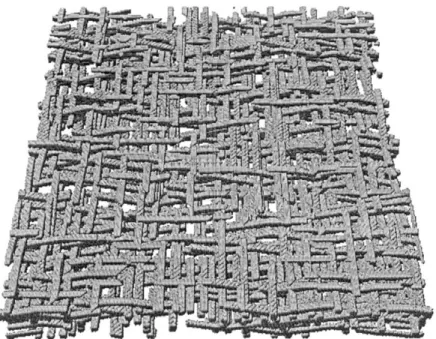
Initially, in this work, we will concentrate on the properties of paper as the most common stochastic fibrous material used in society and industry, but there is a larger family of materials that exhibit similar structural characteristics. To illustrate these network materials micrographs several stochastic fibrous materials, including paper, are shown in Figure 1. From left to right and top to bottom: carbon fiber web, used in fuel cell applications (Eichhorn and Sampson, 2005); glass fiber network, used in laboratory filter applications (Eichhorn and Sampson, 2005); 60g/m2 Eucalyptus laboratory handmade ISO Standard paper sheet, produced
for this work at UBI; electrospun polyamide-6 network, produced by Ensisa for this work.
1.1 Motivation and Objectives
Paper is a material present in our daily life that has great importance in communication and transmission of human knowledge. That is one of the reasons why paper consumption is used as an indicator of the economic development of a country. In the case of Portugal, both forest and cellulose pulp and paper industries play a prominent role on the Portuguese economy.
The research scope of this work is inserted in the research activities of Textile and Paper Research Unity of Beira Interior University and Research Center for Chemical Process Engineering and Forest Products of University of Coimbra and focus in raw materials and processes that are important to the national industry. In this domain, we have identified several research questions related to the way fibers respond to various operations of the papermaking process and how their properties influence the network structure. As a contribution to link fiber properties and paper structural properties our research goal was to develop a model that simulates the fibrous network structure present in paper materials. In this structure each fiber is modeled individually using an innovating fiber model that includes fiber structure (fiber length, fiber width, fiber wall and fiber lumen), and also the fiber mechanical behavior, this is, the bending in z direction and adjustment to the structure. The modeling of materials is nowadays an important tool in developing and designing materials with enhanced performance and/or new functionalities. In the developing process of new materials this kind of tools can reduce significantly the experimental work, enabling better design of the experimental tests, and simulating the contribution of new components on the global performance or on specific properties. Despite the recognition of its importance and progresses that have recently been made in the area of fibrous materials modeling, there is no code available, and some key parameters of the fibers and/or formation process are not included in the models presented in literature. So, the objective of the present thesis is to develop a model, using a versatile programming language (MatLab), able to be extended to include additional parameters. The goal is to simulate the structure of paper materials, using as inputs the morphological properties of fibers, and also including the mechanical response of the fibers to compression and flexion (such as fiber collapsibility and fiber flexibility). Initially, in its basic form, the output of the model, chosen to be representative of the paper structure, was paper thickness (at a given grammage), paper porosity, and relative bonded area of fibers in paper. In the present, other structural properties like coverage, inter fiber and intrafibre porosity, number of crossings per fiber and local thickness have been introduced. Also two extensions have been accomplished deriving from the first implementation. The model has been extended to simulate paper formation, with the inclusion of sedimentation rules, and also has been extended to other fibrous materials, such as nanowebs.
To accomplish these general objectives, a combined experimental and computational simulation approach was used. The experimental part aims to provide information about the
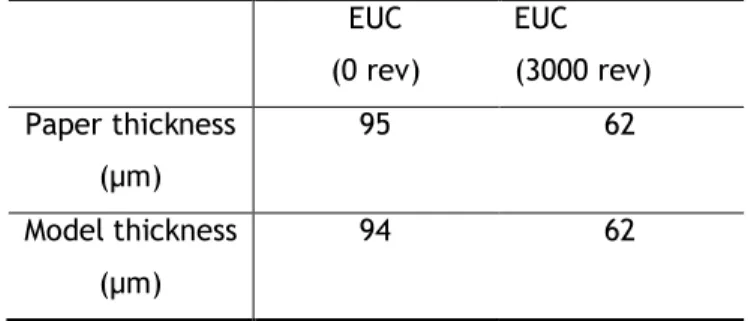
key fiber parameters, their corresponding range of variation, and their influence on the structural and mechanical properties of the papers. To achieve this goal, experimental work was carried out, using pulp fibers with markedly different morphological and mechanical properties (Eucalyptus globulus, Pinus pinaster, Pinus sylvestris and Picea abies). Office paper is mostly formed by hardwood fibers, for example Eucalyptus fibers, with a small percentage of reinforcement fibers, usually softwood fibers. Eucalyptus globulus is well recognized as a good quality fiber for office paper and has consequently been chosen to be the hardwood pulp fiber of this work. At the beginning of this work, in spite of having around 32% of Pinus pinaster forest, Portugal didn’t produce bleached softwood fibers and needed to import all the reinforcement fibers to be included in office paper. Accordingly, there was a scientific and industrial interest in studying Pinus pinaster bleached fibers and compare it with reference reinforcement fibers available on the market. From previous studies (Curto et al., 2007; Curto and Simões, 2005; Curto et al., 2003a) we were able to conclude that Pinus pinaster has the thickest fiber wall, presenting the highest coarseness. The other reinforcement fibers were selected because they were considered ideally reinforcement fibers and presented thinner fiber walls (Pinus sylvestris and Picea abies). In the present thesis, experimental work was carried on to quantify the influence of several stock fiber preparation operations, particularly beating, on fiber flexibility, measured by the Steadman and Luner method. Experimental results were used to provide realistic input ranges for the model, and also for validation. Paper thickness (at a given basic weight), or the corresponding apparent porosity (based on paper apparent density and assuming a value of 1.53 for polysaccharides density) were compared with the paper model outputs.
As the market papers are made from a mixture of fibers, as it is the case of office paper, it is of industrial and scientific interest, to investigate the topic of fibers mixture. Relevant experimental work was carried out, using mixture of Eucalyptus globulus pulp fibers and softwood pulp fibers in different proportions. The next step will be to use them to define input ranges and also compare with simulation results. In this thesis we didn´t include simulations of pulp mixtures. These simulations, as well as the comparison with experimental data already obtained will, deserve our attention in a near future. Also for the future, additional advantage will occur if the model could be extended, in order to simulate the corresponding mechanical performance of the paper materials. At this respect, the relative bonded area (ratio between the fibers bonded area and the total surface area of the fibers) will be a crucial structural parameter, and also de number of crossings per fiber (parameter recently added to the model) to simulate the stress distribution between fibers in the structure.
Concerning the extension to other materials, the goal for this thesis is to present the model extension for fibrous nanomaterials, and to realize a simulation study that is indicative of its possibilities. If paper had a major contribution to the advance of knowledge and culture in
phenomena at the nanoscale will have a profound impact on our economy and society in the near future. The research and development in nanotechnology will lead to potential breakthroughs in areas such as nanoelectronics, medicine and healthcare, energy, biotechnology, information technology and national security, in a revolution comparable to the industrial revolution (Kornev et al, 2009; Barnes et al, 2007; Paiva et al, 2007; Ma et al., 2005; Jayaraman et al, 2004; Silva et al., 2011).
1.2 Document organization
Chapter 1 contains the introduction, including objectives and motivation, and also the document organization. Chapter 2 describes the cellulose materials with all the structural levels contributing to fiber properties, from the organization of polymeric chains to the higher structural levels, like microfibrils, fiber walls, etc. Chapter 3 reviews and discusses the literature of 3D network materials modeling. Chapter 4 includes the list of Publications and also the Publications presented as a part of this thesis. Chapter 5 is dedicated to conclusions and future work. The thesis document finalizes with the list of References.
The objective of this work was to study how different fiber properties influence the network properties, for paper (Publications 1, 2, 3 and 4) and nanofibrous materials (Publication 7 and the Abstract of the 8th Publication). Publications 5 and 6 present the developed web model
and the most relevant programming code.
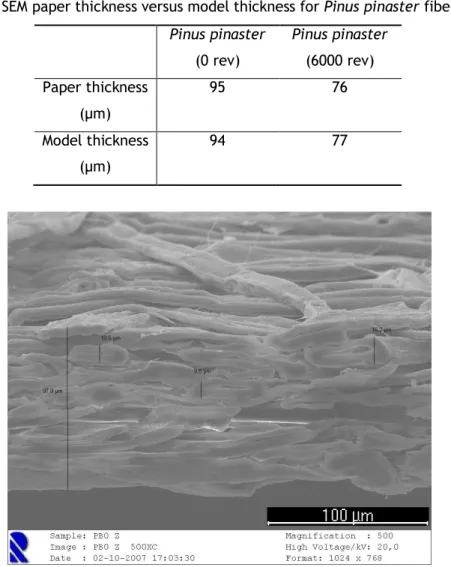
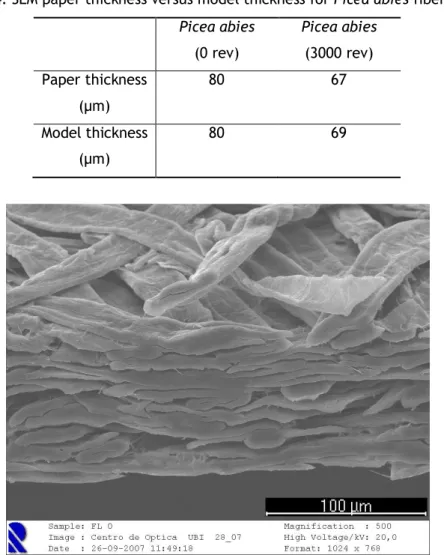
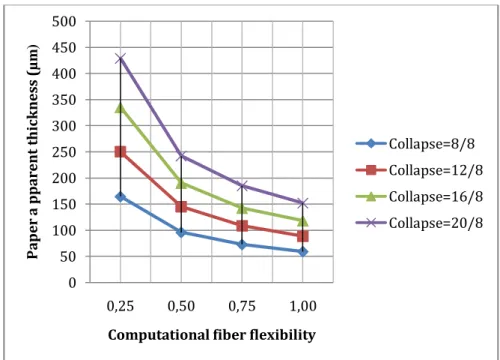
The determination of relationships between the fibers and the structure built by them was done, both experimentally and, with the simulation model for paper fibers (Publications 1, 2 and 4). The experimental part aims to provide information about the key fiber parameters, including fiber flexibility and fiber collapse, their corresponding range of variation, and their influence on the structural and mechanical properties of the papers. To achieve this goal, experimental work was carried out, using pulp fibers with markedly different morphological and mechanical properties (Eucalyptus globulus, Pinus pinaster, Pinus sylvestris and Picea abies). Publication 1 is dedicated to fiber flexibility: the methodology for measuring fiber flexibility; experimental results for Eucalyptus fibers and the two extremes of reinforcement fibers; and the use of fiber flexibility in the paper model. Publication 2 is dedicated to the influence of fiber properties on web structure. The SEM is used to obtain information about the transversal or Z dimension of paper. The degree of collapse is determined and used as input in the paper model to predict the paper thickness. A simulation study is presented to separate the influence of fiber flexibility and fiber collapse on paper thickness. Publication 3 presents the experimental characterization for the reinforced Eucalyptus globulus office paper with the mixture of reinforcement fibers on different proportions and the determination of structural and mechanical paper properties. At the present stage Publication 3 consists exclusively of an experimental characterization but we intend to use this experimental data as input on the paper model, and to validate the model for pulp
mixtures, in future work. Publication 4 presents the paper model, its inputs, outputs and extensions, as well as experimental validation and simulation studies. Publication 5 complements the model presentation with Matlab implementations and the extension that includes formation parameters and sedimentation rules. Publication 6 presents the programming code to the parallelization approach. Publication 7 presents the model extension to electrospun nanofibrous materials and a simulation study to a nanofibrous material: the polyamide-6 nanofibrous network. Publication 8, from which we present the Abstract, is dedicated to cellulose nanowebs.
Chapter 2 Natural cellulosic fibers
Natural cellulosic fibers are the most important raw materials of paper and paperboard, as well as of many hygiene products. The most usual source is wood. These fibers are obtained from woods using chemical, mechanical or chemo-mechanical processes. Wood raw material provenience has a very significant effect on the properties of the received fibers, as does the process used in their separation and pulp and paper manufacturing. The main chemical components of fibers are cellulose, hemicelluloses and lignin. Fibers are structured materials where the polymeric components have spatial arrangements in different scales (Figure 2).
Figure 2. Structural hierarchy of cellulose fibers (Djerbi, 2005)
Of these components cellulose is the main strength delivering component. It is a long linear polymer and has a strong tendency for intra- and intermolecular hydrogen bonding, which leads to formation of microfibrils. These have excellent mechanical properties due to ordered structure. Microfibrils further aggregate into fibrils or fibril aggregates. These fibrils are wound at an angle called microfibrillar angle around fiber axis, and can be thought to form several distinct layers. It can be identified a primary wall and secondary wall, which consist
of three separate sub-layers (S1, S2 and S3). Middle lamella is the material between fibers. Fiber layers have different chemical compositions and microfibrillar angles. In addition to defects in fibers, the microfibrillar angle of the thickest secondary wall layer, the S2-layer, has been shown to have the most significant effect on fiber strength (Page et al., 1985; Page et al., 1977).
2.1 Cellulose
Cellulose is the main load bearing component in fibers. It is a linear polymer composed of glucose units joined together by β-1,4 glycosidic bonds. The degree of polymerization, DP, or the number of glucose units in a cellulose chain of a native softwood fiber is above 10000, dropping in chemical pulping to around 500-2000 (Fengel and Wegner, 1989).
There are two different crystalline forms of native cellulose, cellulose I, designated as Iα and Iβ (Fengel and Wegner, 1989). The proportion of Iα and Iβ forms depends on the cellulose origin. Primary walls of conifer tissue contain more cellulose Iα, secondary walls more cellulose Iβ. There are other crystalline forms of cellulose, such as cellulose II, but also other forms have been characterized.
The next larger structural unit from single cellulose chains is elementary fibril or microfibril, which consists of 30-40 parallel cellulose chains. As an example, a microfibril with 36 chains would have dimension of around 3.5 x 3.2nm, but this dimensions can vary (Wägberg and Annergren, 1997) Recently, for Eucalyptus globulus fibers, Atomic Force Microscopy has been used to measure the microfibril diameter, and a value of 4-5 nm has been obtained (Paiva et al, 2007). Microfibrils again aggregate into what are called fibrils or fibril aggregates, with the size of around 20nm. Usually it is considered that microfibrils consist of crystalline structure but some disorder is present and some cellulose in fibrils exists in amorphous or less ordered form.
2.2 Hemicelluloses
Hemicelluloses constitute about 25-40% of wood material. Hemicelluloses are polysaccharides with a DP of 50-300 (Fengel and Wegner, 1989). Hemicelluloses found in hardwoods are different from those found in softwoods. The major hardwood hemicellulose is a partially acetylated 4-O-methylglucurono xylan with a minor proportion of glucomannan also present. Partially acetylated galactoglucomannans are the most common softwood hemicelluloses. Xylan is also present in softwood, where it is substituted by furanosidically linked arabinose units in addition to 4-O-methylglucuronic acid groups (Fengel and Wegner, 1989).
There are evidences that hemicelluloses affect fiber structure and strength but the mechanisms involved are not completely understood. Hemicelluloses affect the strength of the final fiber network formed, due to the hydroxyl groups in hemicelluloses that are responsible for to the swelling of wet fibers. Besides internal organization that occurs with swelling, the main effect comes when a wet fiber network is dried. Swollen fibers shrink in drying, and while doing so, they activate segments in other fibers, that are connected via inter-fiber bonds (Alava and Niskanen, 2006). This is a favorable effect on the fiber network strength properties, and the more swollen the fibers are, the more favorable the effect. This phenomena can be associated with the Jentzen-effect (Sirvio, 2008 cit. Jentzen, 1964), the improvement of single fiber strength properties when dried under tension.
2.3 Lignin
Around 15-30% of wood fibers are composed of lignin. Its role is to act as cement between fibers and to protect against the enzymatic degradation of the cell wall.
Lignins consist of phenylpropane units and forms cross linked structures. Softwood and hardwood lignins differ in methoxyl content and in the degree of cross linking. Lignin is largely removed in chemical pulping, making wet fibers porous and flexible. When delignification occurs the tensile stiffness of fibers is affected (Paavilainen, 1994; Paavilainen, 1990). Many factors play a role in the final web structure and strength properties (Paavilainen, 1998; Paavilainen, 1993a; Paavilainen, 1993b; Seth and Page, 1988; Page, 1969). The formation of discontinuities, this is, dislocations and pores in cooking and papermaking operations also affect the final web resistance.
2.4 Morphology
Morphological properties include fiber length, fiber width and cell wall thickness. These vary between wood species, within annual growth rings, different stem parts and are also affected by the growing conditions (Paavilainen, 1994).
Fiber length affects the tensile strength, breaking strain and fracture toughness of dry paper, and is especially important for wet web strength (Seth and Chang, 1999a; Seth and Page, 1988).
Chapter 3
3D Network Materials Modeling
Meaningful work has been done in the modeling of fiber materials, the greatest part focusing on two dimensional geometry. Professors C.T.J. Dodson and W.W. Sampson from University of Manchester (UK) have dedicated a considerable amount of work to this field of materials modeling (Dodson and Sampson, 2009a; Sampson, 2009a; Sampson, 2009b; Dodson and Sampson, 2008; Sampson, 2008; Sampson and Urquhart, 2008; Dodson and Sampson, 2007; Dodson and Sampson, 2005; Sampson and Sirvio, 2005; Sampson, 2004). A list of previous Dodson and Sampson publications, also including publications with other authors, have been listed in References. Statistical geometry models started with the Kallmes and Corte (1960) model and a pedagogical revision can be found in the Deng and Dodson (1994) revision book. Studies with three-dimensional network models constitute the latest innovation. In this approach the third dimension is introduced, considering the variations in the z direction, this is, along the thickness of the material, where fibers are allowed to bend out-of-plane to account for the interwoven geometry of paper. This 3D approach has been introduced by Niskanen and Alava (1994) with the KCL-Pakka model. We can find in the literature examples of other structures called 3D, where there is no fiber bending in the z direction. These structures should have a different name, because they are built from the pilling of 2D structures; in fact there is only a change of position in the plane, and third dimension is obtained by the layering of several 2D planes. Several examples can be presented, like the one proposed in the statistical geometry theory by Kallmes and Cortes (1962) consisting of several 2D layers forming a multi-planar structure made from rigid fibers. Other example with rigid fibers is the case of the simulation model by Wang and Shaler (1998), where an artificial fiber sobreposition has to be considered, meaning that it is accepted that two different fibers are occupying the same space, fact that is physically impossible but necessary to obtain the simulated structure. And recently, for the case of nonwoven materials the presented models are either 2D, or 3D but with rigid fibers (Hosseini and Tafreshi, 2010; Maze et al., 2007; Pourdeyhimi et al., 2006; Wang et al., 2006; Kim et al., 2005). In the effective 3D structures there is a variation of the fiber position not only in the plane, but also in the third dimension; the fiber is bending in the z dimension, so a different name should be adopted to distinguish them from the other so called 3D structures. In the following years, some modifications of the initial KCL-Pakka model have been presented. Originally fibers only had two possible directions and were only crossing perpendicularly (figure 3.1), but in the most recent presented structures, fibers were already randomly deposited (Hellén et al., 2002). A three-dimensional model for fibrous fluff materials has been proposed by Heyden and Gustafsson (1998). In this model, every fiber is represented by a single circle arc and placed in a box forming a periodic network. The advantage of the arc model is that it is relatively
already formed structure. Another 3D implementation based on SEM images has been done in France (Vincent, Rueff and Voillot, 2009). In this case the fiber bending is defined using an angle that is fixed for each material. An important review of three-dimensional structural analysis has been done by Bloch and Roscoat (2009).
Figure 3.1 – An example of a fiber network structure simulated by the Niskanen and Alava model (Alava and Niskanen, 2006). Reproduced respecting the Journal Permission copyright.
The model implemented in this work is based on the KCL-Pakka model proposed by Niskanen and Alava (1994) but has several innovations. In our work the fiber model includes the fiber internal structure and the possibility to change it and have it collapsing in the z direction. Also two major extensions have been developed: an extension that incorporates other fiber sedimention possibilities, and an extension to other fibrous materials. In this type of model, the three-dimensional structure of paper is simulated using a sedimentation-like or growth process. The sedimentation model of paper assumes that the sheet is formed from a dilute suspension under the influence of an uniform flow field. In its initial assumption all fiber interactions are ignored. The model proposed by Niskanen and Alava was the first to include fiber flexibility. Besides the standard KCL-PAKKA model an extension of this model which incorporates a formation control parameter is implemented by us (Curto et al., 2011; Conceição, 2010). This modification is based on the sedimentation rule developed by Provatas and Useaka (2003).
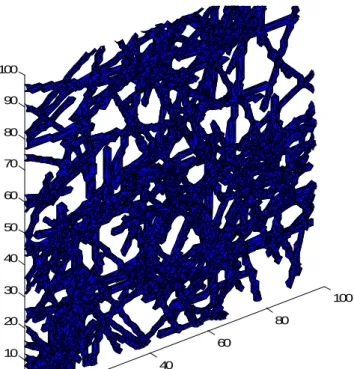
2009). At the present stage, the network model is able to predict structural paper properties (Curto et al., 2011c; Curto et al., 2010a). Figure 3.2 shows an example of a fiber network structure simulated by the presented model.
Figure 3.2 – An example of a fiber network structure simulated by the presented model.
Regarding the paper model it is important to remark that the fiber and paper structure is defined using a voxel approach, where each elemental structure is three dimensional. Each voxel can be filled with material, in the case of the being a fiber cell wall, or empty, for a void fraction of the paper or the fiber lumen. To implement the model, the fiber physical quantities should be, in some way, converted into the corresponding computational quantities. In the simplest original version, the fiber width corresponded to the voxel width, but in the latest version this limitation was overcome. In the fiber thickness, or z direction, the fiber is represented by a chosen number of layers, for example 12, resulting in a detailed fiber structure in z direction, with a voxel definition of fiber lumen and fiber collapse. The computational fiber flexibility is obtained using cellular automata, in an innovative computational implementation (figure 3.3).
20 40 60 80 100 5 10 15 20 10 20 30 40 50 60 70 80 90 100
Figure (3.3). Fiber deposition in the 3D matrix followed by plane extraction and fiber bending to conform to the underlying structure.
The computational simulation can be described as follows (figure 3.3): • Generation of a fiber in the in-plane direction.
• Testing particle deposition rule. If the fiber is not accepted, the generation trial is repeated.
• Extraction of the out-of-plane slice from the 3D network where the bending procedure occurs.
• Fiber deposition according to fiber flexibility and conformation to the underlying surface.
• Updating of the 3D network.
Fibers are modeled according to their dimensions, flexibility, and collapsibility. The input parameters are: length, width, wall thickness, lumen thickness, fiber flexibility, and number of layers in the thickness direction. Length values can be averages or distributions. Fines and fillers can also be introduced.
The computational fiber flexibility is based on the Niskanen approach (Niskanen et al.,1997) but has a novel implementation using cellular automata (Curto et al., 2011; Conceição, 2010). The space is discretized into a Cartesian uniform grid of cells so that each fiber in the model is represented by a sequence of cells. A “bending” flexibility or dimensionless computational flexibility gives the largest allowed vertical deflection for the fiber (Niskanen et al., 1997). So, any two nearest neighboring cells on the fiber can make, at most, the maximum fiber flexibility.
The paper is formed by the deposition of single fibers, one at a time. Depending on its position, dimensions, and flexibility, the fiber conforms to the underlying structure. In the present work, fibers are randomly positioned and oriented in the x-y plane to simulate the
formation of isotropic handsheets (the ones used to validate the model). The paper machine orientation can be simulated by using an appropriate spatial distribution.
The model output is a 3D structure formed with occupied voxels and empty voxels, where the information concerning each fiber is kept. From this formed structure several model outputs are calculated: paper thickness (local and average), porosity (interfiber and global), relative bonded area, coverage and number of crossings per fiber.
In addition, the model was implemented with an accessible programming language (MatLab) and is based on cellular automata. These model features enable its easy upgrade, in the future. The model application to nanofibrous materials constitutes, also, an important advantage (Curto et al., 2011a; Curto et al., 2011b).
Chapter 4 List of Publications
1. CURTO, J.M.R., CONCEIÇÃO, E.L.T., PORTUGAL, A.T.G. and SIMÕES, R.M.S., 2011d. The Influence of Eucalyptus and reinforcement fibers flexibility on paper properties: experimental and 3D paper model evaluation. In Proceedings of the 5th ICEP
International Colloquium on Eucalyptus Pulp held in May 9-12, Porto Seguro, Brazil (2011).
2. CURTO, J.M.R, CONCEIÇÃO, E.L.T., PORTUGAL, A.T.G. and SIMÕES, R.M.S., 2010a. Comparative study of fibers for Eucalyptus globulus based paper using experimental characterization and 3D paper modeling. In Proceedings of the 2nd “Simpósio de
Materiais Têxteis e Papeleiros”, Universidade da Beira Interior, Covilhã, Portugal (2010). ISBN: 978-989-654-074-6.
3. CURTO, J.M.R, GIL, C., CONCEIÇÃO, E.L.T., PORTUGAL, A.T.G. and SIMÕES, R.M.S., 2009a. “Estudo comparativo de incorporação de fibra de Pinus pinaster branqueada no papel de Eucalyptus globulus”. Revista Pasta e Papel (2009): pp. 52-57.
4. CURTO, J.M.R, CONCEIÇÃO, E.L.T., PORTUGAL, A.T.G. and SIMÕES, R.M.S., 2011c. Three dimensional modeling of fibrous materials and experimental validation. Materialwissenschaft und Werstofftechnik, Materials Science and Engineering Technology, Wiley-vch, Germany, Wiley-Blackwell, USA, vol.42 no.5 (2011): pp. 370-374. ISSN: 0933-5137 (Print). ISSN 1521-4052 (Online). ISI IDS no.: 762EM.
5. CONCEIÇÃO, E.L.T., CURTO, J.M.R, SIMÕES, R.M.S and PORTUGAL, A.T.G., 2010. Coding a simulation model of the 3D structure of paper. In Proceedings of the 2nd
International Symposium on Computational Modeling of Objects represented in Images, CompIMAGE 2010, USA. Lecture Notes in Computer Science, Barneva; R.P. et al. (Eds.), Springer-Verlag Berlin, vol.60 no.26 (2010): pp. 299–310. ISBN: 978-3-642-12711-3. ISI Document Delivery No.: BPJ99.
6. CONCEIÇÃO, E.L.T., CURTO, J.M.R., SIMÕES, R.M.S. and PORTUGAL, A.T.G, Parallelization of a parameter estimation problem in a 3D model of paper. In Proceedings of the “Congresso de Métodos Numéricos de Engenharia”, CMNE, APMATC, Coimbra, Portugal, 14-17 July, vol.1 (2011).
7. CURTO, J. M. R., HEKMATI, A.H., DREAN, J.Y, CONCEIÇÃO, E.L.T., PORTUGAL, A.T.G., SIMÕES, R.M.S. and SANTOS SILVA, M.J., 2011b. Three dimensional polyamide-6 nanowebs modeling and simulation. In Proceedings of the 11th World Textile
Conference AUTEX 2011 (Association of Universities for Textiles), Mulhouse, ENSISA (École Nationale Supérieure d’Ingénieurs Sud Alsace), France, June, vol.2 (2011): pp. 639-643. ISNB: 978-2-7466-2858-8.
8. CURTO, J.M.R, CONCEIÇÃO, E.L.T., PORTUGAL, A.T.G. and SIMÕES, R.M.S., 2011a. The fiber properties influence on a three dimensional web model: reinforced office paper and cellulose nanowebs case studies. In Proceedings of the 5th International
Conference on Advanced Computational Engineering and Experimenting, ACE-X2011, Algarve, Portugal (2011). Abstract.
The Influence of Eucalyptus and Reinforcement
Fibers Flexibility on Paper properties:
Experimental and 3D Paper Model evaluation
Curto, J.M.R. 1, Conceição, E. L.T.2, Portugal, A.T.G.2 and Simões, R.M.S.1 1Textile and Paper Materials Research Unit,
Chemistry Department, University of Beira Interior (UBI)
2 Research Centre for Chemical Processes Engineering and Forest Products,
Chemical Engineering Department, University of Coimbra (UC)
Abstract
There is a lack of information about fiber flexibility and its evolution along the pulping process and stock preparation. Among the many factors that influence final paper properties, fiber flexibility is considered a key factor. Fiber flexibility depends on wood species and pulp treatment. The aim of this study was to quantify the change of fiber flexibility inflicted by the most relevant fiber process operations, these being, bleaching, beating and drying, and its influence on paper properties. The quantification of fiber flexibility, as well as the range of variation for fiber and paper properties constitutes valuable experimental data that will be used as input in a paper model developed to simulate paper structures. To achieve this goal, experimental work was carried out, using pulp fibres with markedly different morphological and mechanical properties (Eucalyptus globulus, Pinus pinaster and Pinus sylvestris).
This study uses Eucalyptus globulus fiber as a representative hardwood fiber and two extremes of representative softwood fibers used on Eucalyptus based office paper as reinforcement fibers (Pinus pinaster and Pinus sylvestris). To evaluate the papermaking potential, the wood chips were screened and Kraft cooked in a pilot controlled reactor. The resulting pulps were bleached, using a chlorine free sequence, beaten in PFI mill, ISO standard handsheets were made and dried under controlled temperature and humidity conditions. Structural, mechanical, and optical paper properties were measured (ISO standards).
Pinus pinaster reinforcement fibers presented thicker fiber walls with higher coarseness (47%) and length (9%) when compared with Pinus sylvestris fibers. Results indicated that beating had a major effect on fiber flexibility. Pinus pinaster having the thickest fiber wall presents the major change with a rise of 14x1011N-1m-2, while increasing 4x10¹¹N-1m-2 with bleaching
and diminishing 3x10¹¹N-1m-2 with drying.
The influence of fiber flexibility on structural and strength paper properties was determined for the two reinforcement fibers under analysis. These fibers correspond to the two extremes of fibers available as reinforcement fibers, regarding wall thickness, beatability and flexibility
values. Pinus pinaster has the thickest fiber wall, with a fiber wall near to the double of the Pinus sylvestris fiber wall, and consequently presents less flexible fibers. This work presents experimental results for the evolutions of paper properties, like paper apparent density, air permeability, tensile and tear strength, with fiber flexibility, for the two reinforcement fibers under study. These data constitute valuable information, also applicable for other reinforcement fibers, with fiber wall thickness in between, and also as reference input values for the development of the 3D paper model.
The article will finish with an example of the use of 3D Paper Model to study the influence of fiber flexibility on paper densification, for Eucalyptus fibers. The used innovating 3D paper model, was developed and implemented by this research team, and is explained in detail in other publications. The influence of computational fiber flexibility was investigated for Eucalyptus fibers. Experimental results were compared with simulation results and similar evolutions were observed.
Keywords: Fiber Flexibility, Eucalyptus globulus, Reinforcement Fibers, Kraft Pulp, 3D Paper
Model
Introduction
When producing and optimizing an Eucalyptus based office paper it is an important to understand how to choose or to adapt to the reinforcement fibers used in its production. Long fibers from softwood pulps are expensive, and if used in excess, can damage formation and printability. However, its use is necessary to make the paper strong enough for processing. For the sake of competitiveness, it is important to have experimental data to optimize the type and a quantity of reinforcement fiber in paper furnish.
The general difference between softwood and hardwood pulps, and also softwood pulps from different species and proveniences, arises from multifactor causes, being difficult do reduce them to simple relationships. Ultimately, paper strength depends on the competition between fiber failure and bond failure. It is known, but not fully understood, that fiber length affects the fiber behavior in the web forming, because the contact number between fibers increase width this dimension. Other biometry values are also important, for instance, fiber wall thickness has an impact on fiber ability to bend, impacting the degree of bonding between fibers and paper cohesiveness. In spite of its importance, there is not, till today, a clear relation between fiber properties and paper properties. Many factors contribute to the final paper properties and some fiber properties don’t change separately, what makes it difficult to interpret traditional laboratory pulp studies. Our three dimensional paper model
previous publications [1-3]. In this 3D paper model fiber flexibility has a major importance. This kind of model was considered, for the first time, by Niskanen and Alava [4]. The definition of computational fiber flexibility allowed paper representation to upgrade from the two dimensional to the, more realistic, three dimensional configurations. Our model not only uses fiber computational flexibility but, for the first time, includes fiber microstructure. The more detailed fiber model, with the inclusion of fiber lumen, can be used to study the influence of fiber collapse and intra fiber porosity [5].
Fiber flexibility plays an important role on paper properties. Fiber flexibility influences apparent sheet density, strength, porosity as well as smoothness and optical properties [6-8]. Several different methods to measure fiber flexibility have been developed [9-15]. All these methods demanded single fibers evaluation and were time consuming if no automated device was present. For example, Samuelson used an hydro-dynamic method in a viscometer where fibers were suspended in a liquid and subjected to laminar shear fields. Then, he studied their rotational orbits and bending using a microscope [9]. Mohlin proposed a conformability method [10], further developed by Steadman and Luner [12] with a successful automatization implemented by Cresson [14] that is the one used in the present study. Recently Yan and Li used the same method with a confocal laser scanning microscope [15].
Definition of Wet Fiber Flexibility (WFF) and experimental methodology
The flexibility of a fiber is physically defined by the inverse of the product of the modulus of axial elasticity (E) by the inertia moment (I) of the fiber section:
Considering the fiber as a solid beam exposed to an uniform load (see Figure 1), the Wet Fiber Flexibility (WFF) is determined using the length of the fiber segment not supported by the glass, as well as the operation conditions, in accordance with the expression deduced from the flexibility definition [8,12].
Where d is the diameter of the support wire, P the pressure made in the act of pressing, e the projected width of the fiber and s the bending fiber segment.
The goal is to submit the wet fibers to the same type of mechanical deformations that occur in the formation of paper. Thus, the fibers are deposited in glass slides that have metallic wires in a way that is possible to quantify its deformation or flexibility. Figure 1 shows a fiber placed on a metallic wire on a glass slide. A more flexible fiber will be better adjusted to the wire.
EI
y
Flexibilit
1
472
Pes
d
y
Flexibilit
Figure 1. Electronic microscope photography of a fiber supported in a metallic wire as used in our sample preparation. Reproduced with permission (Cresson, 1995).
The goal of the present work is to study the fiber flexibility influence on paper structure and mechanical properties, for relevant Eucalyptus based office paper fibers, and to investigate the corresponding influence using a computational 3D paper model.
Experimental
Industrial wood chips were used to produce the following pulps: • Eucalyptus globulus bleached Kraft pulp,
• Pinus sylvestris bleached Kraft pulp, North Europe reinforcement pulp, • Pinus pinaster bleached Kraft pulp, South Europe reinforcement pulp.
Roundwood softwood chips were screened and Kraft cooked with an active alkali charge of 20%, sulfidity 30% and H factor equals to 1800. For Eucalyptus globulus chips the cooking conditions were milder. The obtained kraft pulps were bleached using a D0E1D1E2D2 bleaching
sequence. The morphological properties of pulp fibers were determined automatically by image analysis of a diluted suspension (20mg/L) in a flow chamber from Morfi® equipment (measurement device developed by TECHPAP, Grenoble, France). The reinforcement pulps were beaten in a PFI mill at 4000, 6000 and 8000 revolutions under a refining intensity of 3.33 N/mm. The Eucalyptus globulus unbleached and bleached pulps were beaten in a PFI mill at 1000, 3000 and 4000 revolutions. Wet fiber flexibility (WFF) was determined according to the Steadman and Luner procedure [8,12], using CyberFlex® from CyberMetrics. The experimental method includes the formation of thin oriented fiber network on top of a glass slide with parallel wires. The fiber suspension is deposited on a textile wire using a paper machine head-box, simulating the paper formation. Thereafter, the fibers are transferred from the textile wire to a glass slide, with metal wires, under controlled pressure conditions. An image analysis software is used to determinate fiber flexibility. To complete the
characterization, paper handsheets were prepared according to ISO Standards, and tested regarding structural, mechanical and optical properties.
Results and Discussion
Fiber morphology and coarseness
Table 1 presents the main biometric characteristics for the three pulp fibers analyzed, important for the production of office paper. For the two reinforcement fibers under study, Pinus pinaster reinforcement fibers presented the thickest fiber wall, with higher coarseness (47%) and length (9%) when compared with Pinus sylvestris fibers. Eucalyptus globulus pulp has short fibers with relatively high coarseness, which impart bulk to the paper and constitute a major advantage of the Eucalyptus fibers.
Table 1.Fiber length and coarseness measured using Morfi® equipment Eucalyptus
globulus
Pinus pinaster Pinus sylvestris
Fiber length weighted in length
(mm)
0.80 2.5 2.3
Coarseness
(mg/m) 0.07 0.22 0.15
Bleaching, beating and drying influence on Fiber Flexibility
Reinforcement pulps
Bleaching increases the average flexibility of a pulp. Table 2 presents an example of the bleaching effect (D0E1D1E2D2) on never dried pine pulps, all PFI beaten at 4000 revolutions.
The extraction of some polyssacharides of low molecular weight and the residual lignin has a marked effect on the pulps response to beating.
Table 2. Bleaching effect Unbleached pulp WFF (1011N-1m-2) Bleached pulp WFF (1011N-1m-2) WFF variation (1011N-1m-2) Variation (%) Pinus pinaster 7.2 11.5 4.3 60 Pinus sylvestris 9.1 13.4 4.3 47
Figure 2 shows the evolution of fiber flexibility with beating for the two pine species under analysis. It is verified that Pinus sylvestris fibers are more flexible presenting a maximum difference around 4000 PFI revolutions (oSR of 18). Experimental information about fiber
ability to bend and adjust to the structure at different levels of beating is relevant to optimize de development of fiber properties during beating for each raw material.
Figure 2. Effect of beating on Fiber Flexibility for the two reinforcement pulps
Drying Effect
Drying reduces the average flexibility of a pulp. Table 3 presents an example of the drying effect in a never dry PFI beaten pulp at 4000 revolutions.
0 2 4 6 8 10 12 14 16 0 2000 4000 6000 8000 10000 Fi b er F le xi b ilit y (1 0 11 N -1m -2)
PFI Beating (rev)
Pinus pinaster Pinus sylvestris
Table 3 – Drying effect Never dried pulp
WFF (1011N-1m-2) Dried pulp WFF (1011N-1m-2) WFF Variation (1011N-1m-2) Variation (%) Pinus pinaster 7.2 3.9 3.3 46%
Eucalyptus pulps
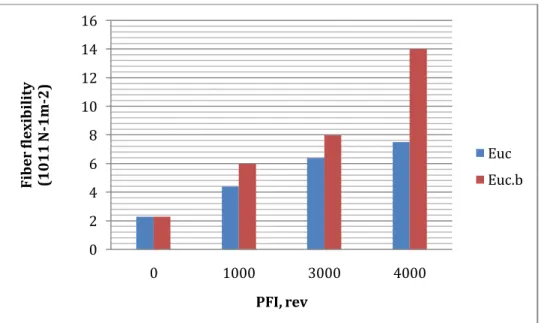
In the case of fibers, these fibers develop fiber properties with beating sooner, consequently the experimental plan was designed to obtain more information in the initial part of the curve (Figure 3).
Figure 3. Effect of beating and bleaching on fiber flexibility for Eucalyptus globules (Euc – unbleached; Euc.b –bleached)
Figure 3 illustrates the importance of beating and bleaching in changing fiber flexibility for Euclyptus fibers. Beating is the process operation that has a major impact on fiber flexibility and the bleaching has a major effect when fiber properties are already fully developed (note that at 4000 PFI rev the 0SR is 50)
0 2 4 6 8 10 12 14 16 0 1000 3000 4000 Fi b er fle xi b ilit y (1 0 1 1 N -1m -2) PFI, rev Euc Euc.b
The Fiber Flexibility influence on Pulp and Paper Properties
The influence of fiber flexibility on structural and strength paper properties was determined for the two reinforcement fibers under analyses (Figures 4, 5, 6 and 7) for the unbleached pulps.
Figure 4. Variation of Schopper Riegler degree with fiber flexibility
These fibers correspond to the two extremes of fibers available as reinforcement fibers, regarding to fiber wall thickness. Pinus pinaster is the thickest fiber wall, and consequently less flexible. Analysing the experimental results for the evolution of paper apparent density and air permeability we can conclude that Pinus pinaster fibers originates a structure that is more porous and permeable. The evolution of ºSR indicates that the drainability resistance is similar for both pulps, being slightly better for the Pinus pinaster fibers.
0 5 10 15 20 25 30 35 40 45 0 5 10 15 20 Sc hoppe r R ie gle r ( oSR ) Fiber Flexibility (1011N-1m-2) Pinus pinaster Pinus sylvestris
Figure 5. Variation of paper density with fiber flexibility
Figure 6. Variation of paper air permeability with fiber flexibility. 0 0,1 0,2 0,3 0,4 0,5 0,6 0,7 0,8 0 5 10 15 20 D en si ty ( g/ cm 3) Fiber Flexibility (1011N-1m-2) Pinus pinaster Pinus sylvestris 0 5 10 15 20 25 30 35 40 45 50 0 5 10 15 20 A ir P er m ea b ilit y ( m m /P a. s) Fiber Flexibility (1011N-1m-2) Pinus pinaster Pinus sylvestris
Figure 7. Variation of breaking length with fiber flexibility
Figure 7 shows that Pinus sylvestris fibers have the potential to procuce slightly stonger papers, at a given fiber flexibility. This fact is in good agreement with the higher density of the paper structure. Considering the lower coarsenenss of these fibers, it is probable that both, higher fiber collapsibility and higher fiber specific surface area, play a role in obtaining a more dense structure.
For the Eucalyptus fibers, the influence of fiber flexibility on the structure of paper was done both experimentally (table 4) and using a 3D Paper Model (figure 8). The good agreement between the two approaches is revealed in figure 8.
Table 4 – Effect of Eucalyptus globulus fiber flexibility on paper density PFI (revolutions) 0 1000 3000 Fiber flexibility ( 1011N-1m-2) 2.3 6.0 8.0 Paper density, (g/cm3) 0.56 0.68 0.85 0 2 4 6 8 10 12 0 5 10 15 20 B re ak in g Le n gt h (K m ) Fiber Flexibility (1011N-1m-2) Pinus pinaster Pinus sylvestris
Figure 8. Evolution of paper thickness versus fiber flexibility for real and computational Eucalyptus paper. Reprinted from (Curto et al., 2011c) Materialwissenschaft und Werstofftechnik, Materials Science and Engineering Technology, Wiley-Vch, vol.42 no.5
(2011): pp. 370-374 [1].
The 3D paper model that we developed and implemented [1-3] includes relevant fiber properties, like fiber flexibility and morphology, and proved to be a useful tool to study several structural paper aspects.
Conclusions
Pinus pinaster reinforcement fibers presented thicker fiber walls with higher coarseness (47%) and length (9%), when compared with Pinus sylvestris fibers.
Experimental results indicated that beating had a major effect on fiber flexibility. Pinus Pinaster having the thickest fiber wall presents the major change with a rise of 14x1011N-1m-2,
while increasing 4x10¹¹N-1m-2 with bleaching and diminishing 3x10¹¹N-1m-2 with drying.
The influence of fiber flexibility on structural and strength paper properties was quantified for the two reinforcement fibers under analyses. These fibers correspond to the two extremes of fibers available as reinforcement fibers, regarding to fiber wall thickness, beatability and flexibility values. Pinus pinaster is the thickest fiber wall, and consequently less flexible, and Pinus sylvestris is the thinnest fiber wall. Experimental results for the evolution of paper properties, such as paper apparent density, air permeability, and breaking length, with fiber
0 50 100 150 200 250 0,00 0,50 1,00 1,50 P ape r e ff ec ti ve thi ck n es s (µ m ) Flexibility virtual paper Experimental paper
flexibility, for the two reinforcement fibers, constitute valuable information, also applicable for other reinforcement fibers, with fiber wall thickness or flexibility in between.
For Eucalyptus globulus the experimental data for paper density was compared with simulation results and the same evolutions were observed, which shows the potential of the paper model.
References
[1] CURTO, J.M.R, CONCEIÇÃO, E.L.T., PORTUGAL, A.T.G. and SIMÕES, R.M.S., 2011. Three dimensional modeling of fibrous materials and experimental validation. Materialwissenschaft und Werstofftechnik, Materials Science and Engineering Technology, Wiley-Vch, Germany, Wiley-Blackwell, USA, vol. 42 no.5 (2011): pp. 370-374.
[2] CONCEIÇÃO, E.L.T., CURTO, J.M.R, SIMÕES, R.M.S and PORTUGAL, A.T.G., 2010. Coding a simulation model of the 3D structure of paper. In Proceedings of the 2th international symposium on computational modeling of objects represented in images, Comp Image 2010, USA. Springer-Berlin, Lecture Notes in Computer Science, Barneva; R.P. et al. (Eds.), Springer-Verlag Berlin, vol.60 no.20 (2010): pp. 299–310. ISBN: 978-3-642-12711-3. ISI Document Delivery No.: BPJ99.
[3] CURTO, J.M.R, CONCEIÇÃO, E.L.T., PORTUGAL, A.T.G. and SIMÕES, R.M.S., 2009. The fiber coarseness and collapsibility influence on a three dimension paper model. In Proceedings of the 63rd Appita annual Conference and Exhibition, Melbourne,
Australia, 19-22 April (2009): pp. 303-310. ISBN:9780975746952.
[4] NISKANEN, K. AND ALAVA, M., 1994. Planar random networks with flexible fibers Phys. Rev. Lett., vol.73 no.25, (1994): pp. 3475-3478.
[5] CURTO, J.M.R, CONCEIÇÃO, E.L.T., PORTUGAL, A.T.G. and SIMÕES, R.M.S., 2010. The fiber properties influence on a three dimensional paper model. In Proceedings of the XXIII Tecnicelpa conference and exhibition / VI CIADICYP, vol.1 (2010): pp. 123. [6] PAAVILAINEN, L., 1993b. Conformability – flexibility and collapsibility – of sulphate
pulp fibers. Paperi ja Puu – Paper and Timber, vol.75 no.9-10 (1993): pp. 689-702. [7] PAAVILAINEN, L., 1992. The possibility of fractionating softwood sulphate pulp
according to cell wall thickness. Appita Journal vol.45 no.5 (1992): pp. 319-326. [8] STEADMAN, R.K. and LUNER, P., 1986. Wet Fiber Flexibility as an Index of Pulp and
Paper properties, PIRA International Conference on Advances in Refining Technologies, Birmingham, England, vol.1, Session 1, Paper 3, 23 pages (1986). [9] SAMUELSON, L.G., 1963. Measurement of the stiffness of fibers, Svensk
[10] MOHLIN, U.-B., 1975. Cellulose fiber bonding: Part 5. Conformability of pulp fibers. Svensk Papperstidning, vol.78 no.11 (1975): pp. 412-416.
[11] TAM DOO, P.A. and R.J. KEREKES, 1981. A method to measure wet fiber flexibility. TAPPI Journal, vol.63 no.3 (1981): pp. 113-116.
[12] STEADMAN, R.K. and LUNER, P., 1992. An Improved Test to Measure the Wet Fiber Flexibility of Pulp Fibers. Empire State Paper Research Institute Report 79, Chapter V (1992): pp. 69-85.
[13] KUHN, D., et al., 1995. A dynamic wet fiber flexibility measurement device. Journal of Pulp and Paper Science, vol.21 no.10 (1995): pp. J337-J342 (1995).
[14] CRESSON, T., 1995. Wet fiber flexibility: a measurement whose time has finally come, World Pulp and Paper Report (1995).
[15] YAN, D. and LI, K., 2008. Measurement of wet fiber flexibility by confocal laser scanning microscopy, J.Mater Sci., vol.43 (2008): pp. 2869-2878.