Mechanical and Thermo-Physical Properties of Short Glass Fiber Reinforced Polybutylene
Terephthalate upon Aging in Lubricant/Refrigerant Mixture
Guilherme Cybis Pereiraa*, Felipe Darabas Rzatkia, Luca Mazzaferroa, Daniel Maldonado Forina, Guilherme Mariz de Oliveira Barraa
Received: April 30, 2016; Revised: July 23, 2016; Accepted: September 04, 2016
In this study, the relationship between structure and mechanical properties of aged PBT composite was investigated. Short glass iber reinforced PBT composites were subjected to aging tests in environments typically found in hermetic compressors. Difusion kinetics were addressed by a periodic control of samples weight, and samples aged in oil presented mass variation of 1.2–1.6%, depending on test temperature. Most difusion curves followed Fickian behavior, and the difusion coeicient for each condition was obtained. Aging efect was investigated by 3-point bending tests, where samples aged at 180°C presented a signiicant reduction in all evaluated properties. Control environment induced minor variations, supposedly related to physical aging and increase in crystallinity. Imaging analyses through scanning electronic microscopy (SEM) technique allowed observation of the predominant fracture mechanism. Aged samples presented few or no localized plastic deformation at all, which is in accordance with the lower strain observed in mechanical tests. Diferential scanning calorimetry (DSC) analyses proved degree of crystallinity increase for all aged samples, depending mainly on temperature of exposure. Infrared (FTIR) analysis proved the presence of oil absorbed in PBT chemical structure, and it was proposed a method for comparing degree of crystallinity, based on the absorbance bands ratio A0(1458 cm-1)/A0(956 cm-1).
Keywords: Polybutylene terephthalate, aging, short glass ibers, degradation, difusion.
* e-mail: [email protected]
1. Introduction
Polymeric materials are already widely used in the production of disposable and short-life-cycle products. Nowadays, however, there is a tendency of employing these materials in high-tech, structural and enduring applications, especially concerning the automotive and aerospace industry. The main advantages of polymers and its composites are many: irstly, they have a high strength/weight ratio, meaning that it is possible to conceive way lighter parts than those made of steel, for example, to attend similar stress requirements. Most polymers present high damping properties, are good thermal and electrical insulators and less susceptible to corrosion. In addition, they allow more freedom of design and ease of processability, usually accompanied with reduction of production costs.
On the other hand, the exposure of polymers to chemical- and thermally aggressive environments may lead to a gradual alteration of molecular conformation, chain size distribution and chemical composition, among others1,2. In other words, it
occurs a time-dependent properties degradation, also known as aging. In some applications, the engineer will select a grade of polymer that does not react, or that have minimum interaction with the work environment; one example is the fabrication of fuel tanks made of high density polyethylene
(HDPE), a polymer that presents high chemical resistance against oil, diesel, alcohol and gasoline.
In diferent scenarios, though, other variables may be just as relevant for the material selection, for example, weight, mechanical properties, maximum work temperature, thermal conductivity, cost, and so forth3. For instance, the
employment of polymers in refrigeration systems and hermetic compressors shows a huge potential in terms of overall eiciency improvement. In these particular cases, however, an important issue to be addressed is the chemical media in which the polymer will be located. Therefore, it is mandatory to characterize aging behavior and to understand mechanisms responsible for the polymer degradation in order to estimate properties loss in function of time, generating reliable data to aid the project of the component in a compatible way.
Degradation mechanisms of aromatic polyesters such as polyethylene terephthalate (PET) and polybutylene terephthalate (PBT) have been extensively studied over the past few decades4-10. Notwithstanding, just recently these polymers began to be aimed for engineering and structural applications. In these instances, it is common the addition of inorganic phases to the matrix in order to enhance mechanical properties. For these thermoplastic polymers, glass ibers are by far the most widely used type of reinforcements. Short glass ibers reinforced PBT is already used to produce some internal components in hermetic compressors, mainly due to
a Department of Mechanical Engineering, Federal University of Santa Catarina - UFSC, Florianopolis,
its good temperature and chemical resistance, mechanical properties, thermal insulation and low cost. The potential of using PBT, however, is still limited by the lack of knowledge regarding its long-term behavior in contact with aggressive environments present inside hermetic compressors.
Cavestri3, in 1993, was one of the irst authors to study
the compatibility of typical refrigerants and lubricants with engineering plastics. In the report prepared for the Air-Conditioning and Refrigeration Technology Institute (ARTI), it was tested up to 23 types of polymers in diferent environments, with the objective to create data referring to degradation of mechanical properties. It was found out that the most aggressive environment for PBT was the mixture of gaseous tetraluoroethane and polyolester oil in high temperatures, and classiied it as “worthy of further analyses”. It was not studied, however, the mechanisms by which these polymers have their properties reduced, nor were addressed kinetic parameters of the difusion process occurring during immersion tests. In addition, even though the author commented about the probable inluence of reinforcements and illers in the aging process, none of the 23 polymers tested was a composite.
Oréice et al.11 airms that the interface between ibers
and matrix might be the preferable pathway for solution migration. Even if no chemical attack takes place, the presence of oil in the interface deteriorate reinforcement mechanisms by load transfer from polymer matrix to ibers. Mohd Ishak et al.12 studied the efects of hygrothermal aging
on short glass iber reinforced PBT, and discovered that a silane coupling agent helped prevent mechanical properties loss due to interface degradation. It was used in their study Fick’s single-phase difusion model to analyze the data. According to the authors, deviations from Fickian behavior are sometimes related to damage of the interface or resin degradation. Likewise, Bergeret13 have tested samples of
glass-iber reinforced PBT and PET exposed to aqueous environment. In that work, difusion models were used to it the experimental data. It was noticed an increase of acidic end-groups (COOH) of aged samples due to hydrolysis, determined through a speciic titration at high temperature. It was also detected a higher degree of crystallinity of the samples, measured by diferential scanning calorimetry. It was observed mechanical properties reduction due to the matrix-iber interface damage. Other authors11,14 have also
proposed residual resistance tests as a method for evaluation of damage degree due to aging process.
Furthermore, it is well established that temperature plays one of the most important roles in aging phenomena. Ray15
proved the inluence of the test temperature in aging phenomena of epoxy samples reinforced with glass and carbon ibers. The author stated that the increase of the temperature afects not only the kinetics of liquid absorption by the polymer, but also alters its mechanical resistance for a given swelling level. Hutchinson16 also airms that the temperature has a
strong inluence, mainly due to the increasing molecular mobility, hence accelerating aging processes.
On the other hand, the use of reinforced thermoplastic polymers in the refrigeration industry is still limited by the lack of knowledge regarding their long-term behavior in contact with aggressive environments. The major factors inluencing aging phenomena are temperature, time, ainity between polymer and environment, stress state, thickness of the sample and interface efects between two dissimilar phases (e.g. composites). There are several studies in the open literature concerning on aging of diferent kind of polymers subjected to aqueous environments or weathering (O2, UV
radiation, etc.). However, most of them are focused in either evaluating the inluence of diferent variables on the resulting mechanical properties, or on difusion kinetics and aging mechanisms assessments. In our knowledge there are no studies dealing the inluence of aging tests on the mechanisms which PBT composites have their properties reduced, nor were addressed kinetic parameters of the difusion process occurring during aging tests in environments typically found in hermetic compressors. Therefore, in this study the relationship between structure and mechanical properties of PBT composite upon aging in lubricant and refrigerant mixture used in hermetic compressors was investigated
2. Materials and Methods
2.1. Materials
The chemical media used in the tests consisted in a mixture of an ester-based lubricant oil and tetraluoroethane refrigerant gas. The inert atmosphere used as a control environment was argon with 99.999% purity degree. The polymer tested was a polybutylene terephthalate commercial resin from Ticona (PBT CELANEX® grade 3300), reinforced
with 30 wt.% of short glass ibers.
2.2. Preparation of the samples
The samples were produced via injection molding in an Allrounder 320S – Arburg machine, following the procedure described in the supplier datasheet. It was used an injection speed of 20 mm/s, pressure of 400 bar and temperature of 250°C. The mold was kept at 60°C under 20 kN of clamping force. The samples were produced according to the norm ASTM D790, which recommends the geometry for three-point bending tests.
After injection, all samples passed through an annealing process at 180°C during two hours, in order to erase thermal history and eliminate possible residual stresses arising from the molding process3,17,18. For the measurement of initial
For difusivity and mechanical analyses, it was tested a minimum of ive samples for each condition, while for DSC, TGA and FTIR it was used three samples per condition.
2.3. Aging tests
Aging tests were conducted based on ASTM D543, in a Carl-Roth autoclave with working capacity of 275 mL, equipped with temperature and pressure control systems. In each round, ive samples were placed into the autoclave and lubricant oil was added until total submersion of the test bars. The oil was previously dehumidiied by vacuum (~0.9 mbar) during 3 hours. In sequence, refrigerant gas was injected until the interior pressure reached 3 bar, then the temperature was ramped to the pre-deined value and kept constant (uncertainty of ± 1ºC) using a commercial resistive heater apparatus connected to a N1200 Novus PID controller. The pressure had to be constantly adjusted (in order to maintain 3 bar) during the irst two hours of test, due to efects of gas absorption by the oil and pressure increase due to temperature augment. After 28 days, the samples were moved to another recipient containing the same lubricant oil at 21°C during sixty minutes for cooling. Finally, samples were rinsed quickly in acetone, wiped dry with a paper tissue and then immediately measured their weight.
It was conceived three conditions of testing varying temperature inside the autoclave, 140, 160 and 180°C. In order to address pure temperature-induced efects, it was performed an additional aging process in an inert atmosphere, using a tubular oven illed with argon at 180°C, during 14 days.
Both processes, in autoclave and in tubular oven, were previously validated with several repeated runs in order to obtain processes standard deviation. These values are already embedded to the values of error for the results presented in the next section.
2.4. Difusivity
Oil absorption by the polymer was estimated by weight variation measurements, performed in a high precision analytical balance XS205 DualRange – Mettler Toledo. For immersion tests, it was ixed a duration of 28 days, which was chosen considering the results of previous tests, in order to guarantee that saturation would be achieved.
Based on similar studies, it was observed that the far most used approach for luidic media absorption modeling was Fick’s irst law, applied for single free-phase difusion1,11,12.
Mass variation resultant from the media absorption in a given time t, (Δm)t,can be expressed in terms of difusion coeicient D and saturation limit (Δm)∞, related in equations 1 and 2. According to this model, the mass gain due to solute absorption increases linearly with the square root of time, and gradually decelerate until equilibrium is reached.
For short times, where Dt/h2 < 0.05, it was applied the
equation 11,11,12:
( )
m
m
t
h
Dt
4
1
23
r
D
D
=
Q
Q
V
V
where h is the sample thickness. For longer times (Dt/h2
> 0.05), the most adequate mathematical expression is1,12:
( )
exp
m
m
t
h
Dt
1
8
2 22
2
3
.
r
r
D
D
-
-Q
Q
V
V
T
Y
The difusion coeicient is proportional to the slope of the linear portion of the normalized (Δm)t /(Δm)∞ vs th
curve, and was obtained from equation 1. The saturation limit was taken as the maximum value of mass variation measurements.
2.5. Mechanical analysis
The mechanical analysis was done following the three-point bending method described in ASTM D790, using an EMIC DL2000 universal testing machine. The span length was adjusted to 60.8 mm, and the crosshead speed was kept constant at 1.5 mm/min until the breaking of the sample. Values of stress and strain were calculated by equations 3 and 4, respectively.
( )
lh
FL
2
3
3
f 2v
=
( )
L
h
6
4
2f
=
d
where σf is the lexural resistance, ε is the strain, F is the applied force, δ is the crosshead displacement, L is the span length and l and h represent sample’s width and thickness,
respectively.
Values of lexural resistance and total strain were calculated in form of an arithmetic average between tested samples. In order to correct total strain values for initial slipping and clamping efects, it was necessary to use the “toe compensation” technique described in ASTM D790. Flexural modulus was assumed as the slope of the straight itting of the linear elastic part of the curves (from 0.2% to 0.4%).
2.6. Fracture surface characterization
2.7. Thermal analyses
Diferential scanning calorimetry (DSC) and thermogravimetry (TG) analyses were carried out in a DSC-50 – Shimadzu equipment and in a simultaneous thermal analyzer Jupter
F3 – Netzsch, respectively.
Thermal proile of DSC runs consisted in heating from 25°C to 280ºC with a 10°C/min rate and 50 mL/min nitrogen lux. It was used sealed aluminum crucibles, and samples mass of about 14 mg. Crystallinity degree was calculated from equation 5, based on a theoretical 100% crystalline PBT heat of fusion of 140 J/mol19,20.
By difusion coeicient results, it appears that temperature accelerates difusion kinetics exponentially, and hence promotes a more rapidly saturation of oil inside the polymer, which is conirmed in Figure 1.
%
Crystallinity
% ( )
H
H
H
100
5
f
f c
#
D
D
D
=
-
%whereΔHf is the measured heat of fusion, ΔHc is the cold crystallization enthalpy and ΔHf° is the 100% crystalline heat of fusion.
TG isothermal runs were done in order to study thermal stability of the polymer. Isothermal temperature was 260°C, maintained for 50 hours, and the atmosphere inside the chamber consisted of argon with a 70 mL/min low.
2.8. Spectroscopy analysis
Fourier transform infrared spectroscopy (FTIR) analysis was performed in a Tensor 27 – Bruker equipment using the Attenuated Total Relectance (ATR) method. It was used a ZnSe crystal with depth of penetration of 2.04 µm. The spectra were acquired from an average of 32 scans with a 4 cm-1 resolution, ranging from 4000 to 600 cm-1. Transmittance data were converted in absorbance by the relation [A = - log(T)], followed by the spectrum intensity normalization based on a reference band in 1408 cm-1, which refers to C-C stretch of the PBT aromatic ring. FTIR analyses were performed in several time span during the aging tests, in order to analyze the variation in crystallinity-related bands. The ratio between 1458 cm-1 (crystalline phase) and 956 cm-1 (amorphous phase) bands was chosen to represent the degree of crystallinity index, which allowed quantitative comparison among samples21,22.
3. Results and Discussion
3.1. Weight variation
After aging tests of samples in autoclave, it was observed an increase ranging from 1.2 to 1.6 wt.%, depending on test temperature. This variation is assigned mainly to oil absorption by the polymer. Control samples presented a 0.2 wt.% loss, due probably to humidity extraction. Difusion coeicient and maximum oil absorption results can be found in Table 1.
Figure 1: Oil uptake vs aging time for three temperature conditions.
The lines correspond to theoretical values calculated by Fick’s
Law equations.
Table 1: Difusion coeicient and maximum oil absorption results.
Temperature (°C) Difusion coeicient (cm2/s) x 10-8
Max. oil absorption (wt.%)
140 2.81 ± 0.62 1.23 ± 0.05
160 3.71 ± 0.56 1.42 ± 0.05
180 6.78 ± 0.54 1.56 ± 0.05
The experimental data shows good it with theoretical values calculated by equations 1 and 2, except in the intermediate region, of about 70-85% of the maximum point of the curves. One possible explanation is the occurrence of solubilization and extraction of oligomers by the environment, which can also explain the inversion in the curve slope at 180°C after 500 hours.
Some authors reported the independence between saturation limit and temperature12, while others have found that this
value could vary23-25. In the present study, the maximum oil absorption appears to vary linearly with temperature (Table 1). Nevertheless, it is necessary to state that 28 days might not have been time enough to allow saturation of the system, and that oil absorption measurements could reach the same value over a long period of time, independently of the test temperature.
3.2. Three-point bending tests
Table 2: Mechanical properties in bending test.
Condition σf (MPa) E (GPa) εmax. (mm/mm)
Virgin 181.8 ± 3.4 8.21 ± 0.13 (3.23 ± 0.12)%
Aged (140°C)1 170.9 ± 5.9 6.91 ± 0.43 (3.33 ± 0.16)%
Aged (160°C)1 152.2 ± 4.9 6.96 ± 0.37 (2.87 ± 0.11)%
Aged (180°C)1 96.3 ± 5.6 6.66 ± 0.48 (1.93 ± 0.14)%
Control (180°C)2 197.6 ± 6.7 8.62 ± 0.21 (3.18 ± 0.19)%
1 Aged for 28 days in lubricant/refrigerant mixture. 2 Aged for 14 days in inert atmosphere.
samples. Aging temperature afected considerably strength and maximum strain values, while it did not change signiicantly the elastic modulus.
On the other hand, samples that passed through the control aging process in an inert atmosphere presented higher properties even than virgin samples (see Figure 2), indicating that the degradation of the polymer properties occurred mainly due to interaction with the chemical media, instead of solely high temperature exposure. Nevertheless, temperature is likely to hasten aging process by accelerating possible chemical reactions and also due to the increase of free volume between polymer molecules, which leads to a higher oil difusion rate through the material15,16.
Figure 2: Plot of three-point bending test curves.
One possible explanation for the presented results is that the oil inside the polymer acted as a plasticizer, hence decreasing modulus and strength. It can also be conjectured that some kind of degradation reaction occurred, lowering molecular weight by breaking polymer chains, which would cause a decay in mechanical properties. A third assumption, referenced by Oréice et al.11, is that the interface between ibers
and matrix is the preferable pathway for solution migration. Even if no chemical attack takes place, the presence of oil in the interface deteriorates reinforcement mechanisms by load transfer from the polymer matrix to the ibers. All three mentioned efects could be acting simultaneously to cause the properties drop. Moreover, control samples may have presented enhanced mechanical properties due to augmented crystallinity degree and physical aging.
3.3. Fracture surface characterization
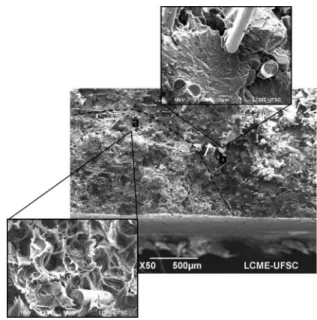
SEM images allowed the characterization of the fracture surface morphology. It was observed that the predominant fracture mechanism consisted on the formation of a region with localized plastic deformation and iber debonding, followed by a bigger region showing characteristics of fragile cleavage rupture (Figure 3).
Figure 3: SEM micrograph (x50) of virgin sample, showing the regions of plastic deformation (a) and fragile rupture (b) in detail (x1,000).
Both virgin and control samples showed similar behavior, with a localized plastic deformation region covering about 1/6 of the fracture surface total area. Aged samples, on the other hand, presented few or no localized plastic deformation at all, which is in accordance with the lower strain observed in 3-point bending tests. This clear reduction in matrix ductility is likely to be caused by some kind of degradation reaction of PBT macromolecules, leading to an overall mechanical properties decrease.
amorphous material during thermal treatment. The reason why these new crystals have lower melting points ones is that they are formed in lower temperatures and therefore they organize in thinner lamellae structures, which are less thermodynamically stable.
From Table 3 it is possible to notice that the lower peak melting point is dependable on the aging temperature, as well as the degree of crystallinity. Moreover, control samples showed a similar behavior to those aged at 180°C, which indicates that the crystalline structure may not sufer much inluence by the environment. The slightly lower crystallinity degree observed in control samples could be consequence of the short duration of thermal treatment (14 days against 28 days for aged samples). However, it could also be a result of a chemi-crystallization process during autoclave aging, induced by the break of amorphous chains and subsequent crystallization of the smaller and more mobile segments6,7.
Isothermal runs at 260°C revealed an interest degradation behavior of the samples aged at 180°C. As it is shown in Figure 6, mass loss ratios after 600 or so minutes of test are really similar for the three conditions. In the earlier stages, though, the aged sample loses mass much more rapidly than the other two. At 600 minutes of test, the mass variation gap between them is almost 6 wt.%. As the weight gained by the polymer by oil absorption is about 1.6 wt.%, this means that, either the oil absorption measurements were not accurate, or there are other compounds of lower molecular weight being degraded at early stages of the TG runs. The equipment balance error is 0.0025 wt.%.
3.5. FTIR spectroscopy
FTIR spectra of aged and virgin PBT are illustrated in Figure 7. Typical IR bands of non-aged PBT appear at wavenumbers of 1707 cm-1 (carbonyl stretch), 1456 cm-1 (C–H bending in CH2 group), 1407 and 1018 cm-1 (aromatic ring), 1241 cm-1 (CO–O stretch in esters), 1115 cm-1 (O–CH2), and 723 cm-1 (aromatic C–H bending)19,28. As shown in Figure
7, no major changes between diferent PBT spectra can be noticed. In aged samples, however, it was detected the rise of a band around 1160 cm-1 and the appearance of a shoulder approximately at 1740cm-1. After analyzing samples of pure ester oil droplets, it was able to attribute these changes to the presence of the oil in PBT structure. The ester oil has two main absorption bands, located exactly at 1157 and 1738 cm-1, which are related to C-O-C and C=O groups axial vibrations, respectively.
Deconvolution methods were employed in order to obtain the single contribution of the bands of interest to the integrated absorbance. Crystallinity-related bands in 1458 cm-1 (crystalline phase) and 956 cm-1 (amorphous phase) were integrated and then used to calculate the degree of crystallinity index, stipulated as the dichroic ratio A0(1458 cm-1)/A0(956 cm-1).
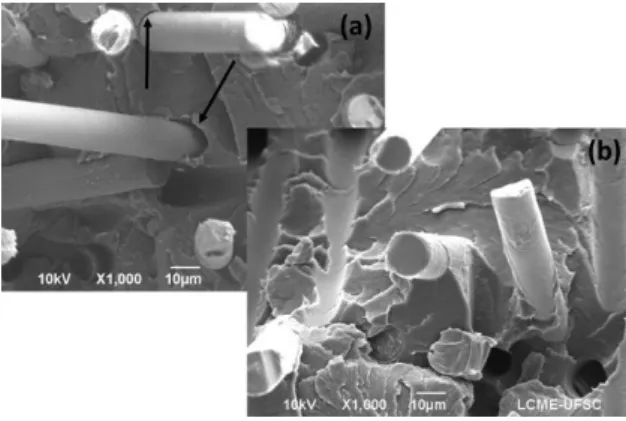
Figure 4: SEM micrograph (x1,000) of aged (a) and virgin (b)
samples, indicating the irst poorer interfacial bonding between ibers and matrix.
of oil difused through the interfaces. This phenomenon would also contribute to the reduction of the mechanical properties, since it deteriorates reinforcement mechanisms by load transfer from polymer matrix to ibers11.
3.4. DSC/TG analyses
DSC thermograms are consistent with previous literature results from PBT20. The higher the aging temperature, the
more intense and shifted to higher temperatures is the secondary melting peak. This second peak appears on the left side of the original one in the thermogram in Figure 5. This new melting peak is also observed in the control samples DSC thermogram.
Figure 5: DSC curves showing melting peaks of PBT samples.
It is well known from literature19,26 that multiple peaks
phenomenon is usual from PBT calorimetry analyses and can be attributed mainly to thermal history of the polymer. According to Hobbs27, the appearance of a second peak
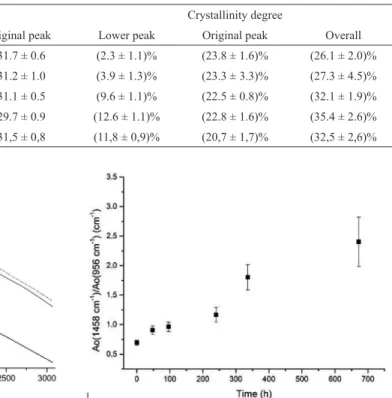
Table 3: Melting point and crystallinity degree of the samples measured by DSC.
Condition Tm (°C) Crystallinity degree
Lower peak Original peak Lower peak Original peak Overall
Virgin 195.5 ± 0.7 231.7 ± 0.6 (2.3 ± 1.1)% (23.8 ± 1.6)% (26.1 ± 2.0)%
Aged (140°C) 208.2 ± 0.5 231.2 ± 1.0 (3.9 ± 1.3)% (23.3 ± 3.3)% (27.3 ± 4.5)%
Aged (160°C) 214.1 ± 1.0 231.1 ± 0.5 (9.6 ± 1.1)% (22.5 ± 0.8)% (32.1 ± 1.9)%
Aged (180°C) 219.9 ± 0.5 229.7 ± 0.9 (12.6 ± 1.1)% (22.8 ± 1.6)% (35.4 ± 2.6)%
Control (180°C) 220,1 ± 0,8 231,5 ± 0,8 (11,8 ± 0,9)% (20,7 ± 1,7)% (32,5 ± 2,6)%
Figure 6: TG isothermal curves of mass loss in function of time, at 260°C.
Figure 7: Comparison of PBT and ester oil FTIR spectra.
By periodically measuring this ratio, it was possible to plot the graph in Figure 8, which shows the developing of the crystallinity index during aging tests. This index, though not an absolute value, aims to represent the increase of the crystallinity degree in function of aging time. One can observe that the residual crystallization in aging tests is greatly dependent not only on temperature, as it was shown in DSC analyses, but also on time, proving that it is a phenomenon driven by molecular mobility. It is expected that the degree of crystallinity eventually stabilizes, but it is not possible to state that it has, within 28 days.
As stated before, there was no evidence of any important structural change that could indicate the occurrence of some
Figure 8: Developing of A0(1458 cm
-1)/A0(956 cm-1) ratio, relating
to the increase in crystallinity during aging tests.
degradation process during aging. A hypothesis is that the active degradation mechanisms do not generate any new end-group in PBT structure. This is the case, for example, of transesteriication reactions, in which simply occurs an exchange between radicals attached to ester and alcohols groups of diferent compounds. It would be possible, therefore, the occurrence of chain scission reactions with exchange of ester groups between the PBT and oil, with no signiicant change in terminal groups signals. The veriication of this hypothesis will be subject of a future work in the area.
4. Conclusions
analysis, it was evidenced the increase of the crystallinity degree. This residual crystallization is characterized by the formation of thinner lamellae crystals, and consequently lower melting temperature than original ones. SEM images revealed the predominant fracture mechanism, consisting on the formation of a region with localized plastic deformation and iber debonding, followed by a bigger region showing characteristics of fragile cleavage rupture. It was not possible, via the characterization analyses performed in this study, to identify the actual cause of the observed mechanical properties degradation. It was hypothesized the occurrence of degradation due to transesteriication reactions between PBT the ester oil. This hypothesis will be subject of further studies, but it is reinforced by thermogravimetry analyses (TGA), which show a steeply mass loss rate in the early stages of thermal degradation.
5. Acknowledgements
The authors would like to thank the FAPESC, CNPq and Embraco for providing inancial and technical assistance. Also, we thank Celanex/Ticona for kindly providing the PBT resin used in the experiments.
6. References
1. Lagouvardos PE, Pissis P, Kyritsis A, Daoukaki D. Water sorption and water-induced molecular mobility in dental composite
resins. Journal of Materials Science: Materials in Medicine.
2003;14(9):753-759.
2. Afolter S. Long-term behaviour of thermoplastic materials.
Buchs: Interstate University NTB; 2008.
3. Cavestri RC. Compatibility of refrigerants and lubricants with
engineering plastics. Dublin: Imagination Resources; 1993.
4. Maxwell AS, Broughton WR, Dean G, Sims GD.Review of
accelerated ageing methods and lifetime prediction techniques
for polymeric materials. Teddington: National Physical
Laboratory; 2005.
5. Eipper A, Hanley S, Natarajan KM, Reinfrank K. Hydrolytically
Stable PBT: Testing Gets Tougher. Kunststofe International.
2008;5:64-66.
6. Allen NS, Edge M, Mohammadian M. Hydrolytic degradation of poly(ethylene terephthalate): Importance of chain scission versus crystallinity. European Polymer Journal. 1991;27(12):1373-1378.
7. Ballara A, Verdu J. Physical aspects of the hydrolysis of polyethylene terephthalate. PolymerDegradation and Stability.
1989;26(4):361-374.
8. Beyler CL, Hirschler MM. Thermal decomposition of polymers. In: DiNenno P, ed. SFPE Handbook of Fire Protection Engineering. 3rd ed. Quincy: Springer; 2002.
9. Montaudo G, Puglisi C, Samperi F. Primary thermal degradation
mechanisms of PET and PBT. PolymerDegradation and
Stability. 1993;42(1):13-28.
10. Jang S, Yang EK, Jin SI, Cho YD, Choe EK, Park CR.
Characterization of thermal degradation of polytrimethylene
terephthalate by MALDI-TOF Mass Spectrometry. Bulletin of
the Korean Chemical Society. 2012;33(3):833-838.
11. Oréice R, West J, Latorre G, Hench L, Brennan A. Efect of
long-term in vitro testing on the properties of bioactive
glass-polysulfone composites. Biomacromolecules. 2010;11(3):657-665.
12. Mohd Ishak ZA, Ariin AA, Senawi R. Efects of hygrothermal
aging and a silane coupling agent on the tensile properties of
injection molded short glass iber reinforced poly(butylene
terephthalate) composites. European Polymer Journal.
2001;37(8):1635-1647.
13. Bergeret A, Ferry L, Ienny P. Influence of the fibre/ matrix interface on ageing mechanisms of glass ibre reinforced thermoplastic composites (PA-6,6, PET, PBT)
in a hygrothermal environment. Polymer Degradation and
Stability. 2009;94(9):1315-1324.
14. Hulme A, Cooper J. Life prediction of polymers for industry.
Sealing Technology. 2012;2012(9):8-12.
15. Ray BC. Temperature efect during humid ageing on interfaces
of glass and carbon ibers reinforced epoxy composites. Journal
of Colloid and Interface Science. 2006;298(1):111-117.
16. Hutchinson JM. Physical aging of polymers. Progress in Polymer
Science. 1995;20(4):703-760.
17. Kim J, Nichols ME, Robertson RE. The annealing and thermal analysis of poly(butylene terephthalate). Journal of Polymer
Science Part B: Polymer Physics. 1994;32(5):887-899. 18. Yeh JT, Runt J. Fatigue crack-propagation in annealed
poly(butylene terephthalate). Journal of Materials Science.
1989;24(7):2637-2642.
19. Deshmukh GS, Pathak SU, Peshwe DR, Ekhe JD. Efect of
uncoated calcium carbonate and stearic acid coated calcium carbonate on mechanical, thermal and structural properties of poly(butylene terephthalate) (PBT)/calcium carbonate composites.
Bulletin of Materials Science. 2010;33(3):277- 284.
20. Wu C. Preparation and characterization of an aromatic polyester/
polyaniline composite and its improved counterpart. Express
Polymer Letters. 2012;6(6):465-475.
21. Holland-Moritz K, Siesler HW. Characterization of deformation phenomena in polymers by rapid-scanning fourier transform IR
(FTIR) spectroscopy and mechanical measurements. Polymer
Bulletin. 1981;4(3):166-170.
22. Kalkar AK, Siesler HW, Pfeifer F, Wadekar SA. Molecular
orientation and relaxation in poly(butylene terephthalate)/ polycarbonate blends. Polymer. 2003;44(23):7251-7264.
23. Mousa A, Ishiaku US, Mohd Ishak ZA. Oil Resistance
of Dynamically Vulcanized Poly(Vinyl Chloride)/Nitrile Butadiene Rubber Thermoplastic Elastomers. Polymer Bulletin.
2005;53(3):203-212.
24. Peniche C, Cohen ME, Vázquez B, Román JS. Water sorption
of lexible networks based on 2-hydroxyethyl
methacrylate-triethylenglycol dimethacrylate copolymers. Polymer.
25. Royer JR, Desimone JM, Khan SA. Carbon dioxide-induced
swelling of poly(dimethylsiloxane). Macromolecules.
1999;32(26):8965-8973.
26. Kong Y, Hay JN. The enthalpy of fusion and degree of crystallinity of polymers as measured by DSC. European Polymer Journal.
2003;39(8):1721-1727.
27. Hobbs SY, Pratt CF. Multiple melting in poly(butylene
terephthalate). Polymer. 1975;16(6):462-464.
28. Xiao J, Hu Y, Yang L, Cai Y, Song L, Chen Z, et al. Fire retardant synergism between melamine and triphenyl phosphate in poly(butylene terephthalate). Polymer Degradation and