RBCCV 44205-1666 DOI: 10.5935/1678-9741.20150043
Short-term inspiratory muscle training potentiates
the beneits of aerobic and resistance training in
patients undergoing CABG in phase II cardiac
rehabilitation program
Treinamento muscular inspiratório de curto prazo potencializa os benefícios do treinamento aeróbico e
resistido em pacientes após CRM na fase II de programa de reabilitação cardíaca
Bárbara Maria Hermes
1, PT; Dannuey Machado Cardoso
2, PT, MSc; Tiago José Nardi Gomes
3, PT,
MSc; Tamires Daros dos Santos
1, PT; Marília Severo Vicente
1, PT; Sérgio Nunes Pereira
4, MD,
PhD; Viviane Acunha Barbosa
5, PT, PhD; Isabella Martins de Albuquerque
5, PT, PhD
1Universidade Federal de Santa Maria (UFSM), Santa Maria, RS, Brazil. 2Department of Physiotherapy. Universidade de Santa Cruz do Sul (UNISC), Santa Cruz do Sul, RS, Brazil.
3Department of Physiotherapy. Centro Universitário Franciscano (UNI -FRA), Santa Maria, RS, Brazil.
4Cardiac Rehabilitation Program. Hospital Universitário de Santa Maria (HUSM), Santa Maria, RF, Brazil and Universidade Federal de Santa Maria (UFSM), Santa Maria, RS, Brazil.
5Department of Physiotherapy and Rehabilitation. Universidade Federal de Santa Maria (UFSM), Santa Maria, RS, Brazil.
Work carried out at the Department of Physiotherapy and Rehabilitation of
the Universidade Federal de Santa Maria (UFSM), Santa Maria, RS, Brazil.
Financial support: Programa de Auxílio à Pesquisa de Recém-Doutores da Universidade Federal de Santa Maria/Universidade Federal de Santa Ma-ria’s Research Support to Young Researchers Program
Correspondence Address: Isabella Martins de Albuquerque
Avenida Roraima, 1000, Cidade Universitária - Bairro Camobi, Santa Maria, RS, Brazil - Zip code: 97105-900
E-mail: [email protected]
Article received on March 23rd, 2015 Article accepted on June 21st, 2015
Abstract
Objective: To investigate the eficiency of short-term
inspira-tory muscle training program associated with combined aerobic and resistance exercise on respiratory muscle strength, functional capacity and quality of life in patients who underwent coronary ar-tery bypass and are in the phase II cardiac rehabilitation program.
Methods: A prospective, quasi-experimental study with 24
patients who underwent coronary artery bypass and were ran-domly assigned to two groups in the Phase II cardiac rehabilita-tion program: inspiratory muscle training program associated with combined training (aerobic and resistance) group (GCR + IMT, n=12) and combined training with respiratory exercises group (GCR, n=12), over a period of 12 weeks, with two sessions per week. Before and after intervention, the following measure-ments were obtained: maximal inspiratory and expiratory pres-sures (PImax and PEmax), peak oxygen consumption (peak
VO
2) and quality of life scores. Data were compared between
pre- and post-intervention at baseline and the variation between the pre- and post-phase II cardiac rehabilitation program using the Student’s t-test, except the categorical variables, which were compared using the Chi-square test. Values of P<0.05 were
con-sidered statistically signiicant.
Results: Compared to GCR, the GCR + IMT group showed
larger increments in PImax (P<0.001), PEmax (P<0.001), peak
VO
2 (P<0.001) and quality of life scores (P<0.001).
Conclusion: The present study demonstrated that the
ad-dition of inspiratory muscle training, even when applied for a short period, may potentiate the effects of combined aerobic and resistance training, becoming a simple and inexpensive strategy for patients who underwent coronary artery bypass and are in phase II cardiac rehabilitation.
Descriptors: Myocardial Revascularization. Rehabilitation.
INTRODUCTION
Cardiovascular diseases are the leading cause of death
and disability in Brazil and worldwide. According to the World Health Organization, 7.3 million deaths worldwide were due to coronary artery disease (CAD) in 2008[1].
Ac-cording to Datasus, in Brazil in 2009 there were 209,029 hos-pital admissions due to CAD, totaling 12,619 deaths with a
mortality rate of 6.04%[2].
Despite advances in clinical therapy and percutaneous
inter-ventions, coronary artery bypass grafting (CABG) is still widely used in the treatment of patients with CAD because it can con -trol persistent ischemia and its progression to acute myocardial
infarction, as well as provide symptomatic relief and prevent
ischemic complications[3]. However, cardiac surgery is a
com-plex procedure that triggers major organ repercussions, which
changes the physiology of patients in many ways[4].
In this sense, it has been suggested that respiratory
mus-cle dysfunctions associated with decreased functional capac
-ity contribute to the prolonged period of lung function recov
-ery and the occurrence of physical deconditioning, which can
last several weeks in patients submitted to CABG[5,6].
Several studies have demonstrated the effectiveness of inspiratory muscle training (IMT) in restoration of ventilato
-ry function, decrease in the length of hospital stay, and im
-provement of functional capacity and quality of life (QoL) of
patients who underwent CABG and are in phase I cardiac re-habilitation program (CRP)[7-10]. Onishi et al.[11] found that the
Abbreviations, acronyms & symbols
CABG Coronary artery bypass CAD Coronary artery disease CRP Cardiac rehabilitation program GCR Group of cardiac rehabilitation IMT Inspiratory muscle training Peak VO2 Peak oxygen consumption PEmax Maximal expiratory pressure PImax Maximal inspiratory pressure RMS Respiratory muscle strength
inclusion of resistance training combined with aerobic training for six months during phase II CRP was beneicial to patients
with metabolic syndrome submitted to CABG. However, the
short-term effects of IMT in patients in phase II CRP after
CABG and its association with aerobic and resistance train-ing have been largely unexplored in the literature and require
further elucidation. Therefore, the aim of this study was to investigate the eficiency of short-term IMT associated with
combined aerobic and resistance training on respiratory
mus-cle strength (RMS), functional capacity, and QoL in patients
who underwent CABG and are in phase II CRP. METHODS
Study design
A prospective quasi-experimental study was conducted
among patients who underwent CABG and were recruited from the waiting list for a phase II CRP at the Outpatient Cardiology Clinic of Hospital Universitário de Santa Maria (HUSM), Santa
Maria, RS, Brazil. The eligibility criteria included patients
under-going CABG up to three weeks before the initiation of the study at
HUSM, a clinical course without complications during
hospital-ization, the absence of smoking (previous or current), and agree -ment to participate. Patients with chronic obstructive pulmonary
disease, unstable angina, acute decompensated heart failure, acute
pericarditis or myocarditis, complex arrhythmias, uncontrolled hypertension, severe orthopedic or neurological disorders, uncon-trolled diabetes, and labyrinthitis were excluded.
Resumo
Objetivo: Avaliar os efeitos de um programa de
treina-mento muscular inspiratório em curto prazo associado ao exercício aeróbio e resistido na força muscular respiratória, capacidade funcional e qualidade de vida de pacientes sub-metidos à cirurgia de revascularização do miocárdio, na Fase II da Reabilitação Cardíaca.
Métodos: Trata-se de um estudo quase-experimental,
pros-pectivo, com amostra de 24 pacientes submetidos à cirurgia de revascularização do miocárdio alocados aleatoriamente para Fase II da Reabilitação Cardíaca em dois grupos: grupo de treinamento muscular inspiratório associado ao treinamento
combinado (aeróbio e resistido) (GRC + TMI, n=12) e grupo treinamento combinado e exercícios respiratórios (GRC, n=12) durante um período de 12 semanas, com 2 sessões semanais. Antes e após a intervenção, as seguintes mensurações foram ob-tidas: pressão inspiratória e expiratória máxima (PImáx e PE-máx), consumo de oxigênio de pico (VO2pico) e escore de
qua-lidade de vida. Os dados foram comparados entre o momento pré e pós-intervenção na linha de base e a variação entre o pré e pós-programa de reabilitação cardíaca com uso do teste t de Student, exceto as variáveis categóricas, que foram comparadas pelo teste de qui-quadrado. Foi considerado um P<0,05.
Resultados: Comparado ao GRC, o GRC + TMI
apresen-tou maior incremento tanto na PImáx (P<0,001) quanto na
PE-máx (P<0,001), no VO2pico (P<0,001) e na qualidade de vida
(P<0,001).
Conclusão: Demonstrou-se que a adição do programa de
treinamento muscular inspiratório, mesmo quando aplicada por um curto período, pode complementar os efeitos do exer-cício aeróbio combinado ao resistido, tornando-se uma estratégia benéica para pacientes submetidos à cirurgia de revascularização do miocárdio na Fase II da reabilitação cardíaca.
Descritores: Revascularização Miocárdica. Reabilitação.
The study was approved by the Research Ethics
Com-mittee of Universidade Federal de Santa Maria (UFSM) un -der protocol no. 16149813.3.0000.5346 and was conducted in accordance with the Guidelines and Norms Regulating Research Involving Humans established by Resolution no.
466/2012 of the National Health Council.
Patients and Intervention
Patients eligible for the study were initially assessed via anamnesis, physical examination, and evaluation of inspi -ratory muscle strength. Subsequently, these patients were
randomly allocated to phase II of the CRP into two groups: a group subjected to CRP+IMT (GCR+IMT) followed the
IMT protocol in addition to the combined training (aerobic and resistance training) and a group subjected to CRP (GCR)
followed the combined training protocol and performed breathing exercises for 12 weeks. An RMS test was conduct
-ed before and after the intervention, and the functional capac
-ity and QoL were evaluated. All evaluations were conducted by investigators blinded to the allocation of patients into the
intervention groups.
Cardiac Rehabilitation Program
All patients participated in the CRP for a period of 12
weeks, with two sessions per week (24 sessions). Each session lasted 60 minutes, and all sessions were under
the direct supervision of a physical therapist. The train
-ing program consisted of a combination of aerobic and resistance exercises, 30 minutes of aerobic exercise on a treadmill and exercise bike, 20 minutes of resistance ex
-ercises for the arms (latissimus dorsal m.,biceps brachii
m., triceps brachii m., deltoid m., trapezius m., pectoralis major m., pectoralis major m., and rhomboid m) and legs
(femoral quadriceps m., hip adductors m. and hip abduc -tors m.) with dumbbells, ankle weights, or elastic bands
(3 sets of exercises for each muscle group performed with 10 repetitions with the intensity adjusted to 50% of the load of one maximum repetition - 1MR), and 10 minutes of stretching and relaxation. Heart rate, blood pressure,
and peripheral oxygen saturation were measured at the
beginning, during, immediately after, and five minutes after each session.
The exercise intensity was based on the percentage of heart rate reserve, calculated as the difference between the
maximum heart rate obtained in the exercise stress test and
the resting heart rate, with the establishment of an intensity of 55%–65%[12] and a score of 4-6 on the modiied Borg scale
(ranging between 0 and 10).
In addition to the CRP, the participants performed dia
-phragmatic stimulation and fractionated breathing patterns
(short inspirations during three intervals with a mild inspi-ratory pause) to achieve a diaphragmatic breathing pattern
similar to that performed by the GCR+IMT.
Inspiratory Muscle Training
The participants assigned to the GCR+IMT group were subjected to IMT, using the IMT Threshold® equipment
(Threshold Inspiratory Muscle Trainer, Health Scan Products
Inc., Cedar Grove, NJ, USA) in 3 sets of 10 repetitions with an inspiratory load of 30% of the maximal inspiratory pressure
(PImax)[13]. During training, the participants remained
seat-ed with the nose occludseat-ed by a nose clip and were advisseat-ed to maintain a diaphragmatic breathing pattern and a respirato-ry rate between 15 and 20 cycles per minute. Each week, the
training load was adjusted to maintain 30% of the PImax.
Assessment of Respiratory Muscle Strength
PImax and maximal expiratory pressure (PEmax) were mea-sured using a digital manometer (MVD-300, Globalmed, Porto Alegre, RS, Brazil)[14]. A 2-mm oriice in the system kept the glot
-tis open and prevented any interference from pressure produced by facial muscles. First, the subjects were instructed to remain in a seated position. A demonstration of how the maneuvers should be carried out was given and then performed by the subject af
-ter the placement of a nose clip. The subjects were instructed
to keep their lips sealed tightly around the mouthpiece so no air
could escape. PImax values were obtained by inspiration from re -sidual volume[14], which was repeated at least three times with a
one-minute interval between repetitions. PEmax was obtained by
expiration from total lung capacity, using the same methodology
applied in inspiration. During the PImax maneuver, the subject kept the mouthpiece in the oral cavity only during the inspiration, and in the PEmax maneuver, only during expiration.
The maneuvers were sustained at maximal force for ap -proximately one second and the highest value was computed
from a minimum of three repetitions for each maneuver, with a maximum difference of 10% between values and they were
then compared to the predicted values according to the equa-tions proposed by Neder et al.[15].
Assessment of Functional Capacity
Functional capacity was evaluated by exercise testing (ET) using a standard Bruce protocol and assessed with peak oxygen consumption (peak VO2). The values of peak VO2 were
ob-tained by use of a treadmill stress test (Imbramed® KT 10200,
Sao Paulo, Brazil), and the analysis of peak VO2 was carried
out using the Ergo PC version 2.2 (MicromedTM, Brazil) soft
-ware. The ET was performed according to the guidelines of the Brazilian Society of Cardiology/Department of Exercise,
Ergometry, and Cardiovascular Rehabilitation[16].
Evaluation of Quality of Life
QoL was assessed with the Portuguese version of the Min
-nesota Living with Heart Failure Questionnaire (MLwHFQ)[17].
Sample size calculation
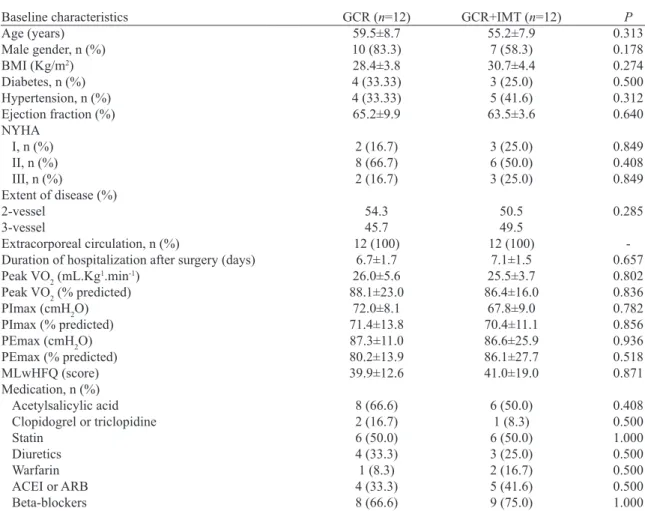
Table 1. Demographic and clinical characteristics of patients participating in the study.
Baseline characteristics Age (years)
Male gender, n (%)
BMI (Kg/m2)
Diabetes, n (%) Hypertension, n (%) Ejection fraction (%)
NYHA
I, n (%) II, n (%) III, n (%)
Extent of disease (%)
2-vessel 3-vessel
Extracorporeal circulation, n (%)
Duration of hospitalization after surgery (days)
Peak VO2 (mL.Kg1.min-1)
Peak VO2 (% predicted) PImax (cmH2O)
PImax (% predicted)
PEmax (cmH2O)
PEmax (% predicted) MLwHFQ (score) Medication, n (%)
Acetylsalicylic acid Clopidogrel or triclopidine Statin
Diuretics
Warfarin
ACEI or ARB Beta-blockers
GCR (n=12) 59.5±8.7 10 (83.3) 28.4±3.8 4 (33.33) 4 (33.33) 65.2±9.9 2 (16.7) 8 (66.7) 2 (16.7) 54.3 45.7 12 (100) 6.7±1.7 26.0±5.6 88.1±23.0 72.0±8.1 71.4±13.8 87.3±11.0 80.2±13.9 39.9±12.6 8 (66.6) 2 (16.7) 6 (50.0) 4 (33.3) 1 (8.3) 4 (33.3) 8 (66.6)
GCR+IMT (n=12) 55.2±7.9 7 (58.3) 30.7±4.4 3 (25.0) 5 (41.6) 63.5±3.6 3 (25.0) 6 (50.0) 3 (25.0) 50.5 49.5 12 (100) 7.1±1.5 25.5±3.7 86.4±16.0 67.8±9.0 70.4±11.1 86.6±25.9 86.1±27.7 41.0±19.0 6 (50.0) 1 (8.3) 6 (50.0) 3 (25.0) 2 (16.7) 5 (41.6) 9 (75.0) P 0.313 0.178 0.274 0.500 0.312 0.640 0.849 0.408 0.849 0.285 -0.657 0.802 0.836 0.782 0.856 0.936 0.518 0.871 0.408 0.500 1.000 0.500 0.500 0.500 1.000
Data are expressed as mean ± standard deviation or absolute values and percentages.
ACEI=angiotensin-converting enzyme inhibitor; ARB=angiotensin II receptor blocker; BMI=body mass index; GCR=cardiac rehabilitation group; GCR+IMT=cardiac rehabilitation group + inspiratory muscle training program; MLwHFQ=Minnesota living with heart failure questionnaire; NYHA=New York Heart Association; Peak VO2=peak oxygen consumption; PEmax=maximal expiratory pressure; PImax=maximal inspiratory pressure
using a protocol identical to that described above in a group
of ive patients. A sampling error of 2%, a two-sided alpha of 5%, a statistical power of 80%, and a difference of 20.6±9.6
cmH2O in variation of PImax between the groups were con
-sidered as well as a 10% loss to follow-up, thus resulting in the inclusion of at least nine patients per group.
Statistical Analysis
Data were analyzed using the statistical software SPSS version 20.0. The normality of the variables was assessed
with the Shapiro-Wilk test. Categorical data are presented
as absolute frequencies and percentages. Continuous data
with normal distribution are expressed as means and
stan-dard deviations. Student’s t-test for paired samples was used to compare the data before and after the intervention. The
baseline data and the variation between pre- and post-CRP
values between groups were compared using the independent
Student’s t-test, except for the categorical variables, which were compared by the Chi-square test. A value of P<0.05 was
considered statistically signiicant.
RESULTS
Of the 28 eligible patients, four were excluded for not meeting the inclusion criteria. Therefore, 24 patients were
included in the study.Of these, 12 patients were allocated to the GCR and 12 were allocated to the GCR+IMT.No adverse events were observed during the CRP and adherence to the program was considered excellent.
The demographic, anthropometric, and clinical
Fig. 1 - Comparison of peak oxygen consumption (peak VO2 ) between groups.
Fig. 2 - Comparison of peak oxygen consumption (% predicted) between groups.
Table 2. Comparison of respiratory muscle strength between groups.
Variables
PEmax (cmH2O)
PEmax (% predicted)
PImax (cmH2O)
PImax (% predicted)
GCR (n=12) Pre
87.3±11.0 80.2±13.9 72.0±8.3 71.4±13.8
Post 89.8±10.5 82.2±15.6 77.0±5.8 76.4±12.8
Variation 2.3±0.8 2.5±0.8 4.9±0.2 4.7±0.9
P* 0.004 0.038 <0.001 <0.001
GCR+IMT (n=12) Pre
86.6±25.9 86.1±27.7 67.8±9.0 70.4±11.1
Post 108.1 ±17.1 108.1±21.1
96.7±21.3 99.6±16.7
Variation 21.5±8.5 22.0±7.7 28.9±7.9 29.1±5.6
P* <0.001 <0.001 <0.001 <0.001
P** <0.001 <0.001 <0.001 <0.001
Data are expressed as mean ± standard deviation.
GCR=cardiac rehabilitation group; GCR+IMT=cardiac rehabilitation group + inspiratory muscle training program; PEmax=maximal expiratory pressure; Pimax=maximal inspiratory pressure
*P-value derived using paired Student’s t-test, after checking for normal distributions.
**P-value derived using independent Student’s t-test for comparison of variation between the groups.
A signiicant increase in PImax and PEmax was observed after CRP in both groups. However, the variation between pre- and post-CRP values was signiicantly higher in the
GCR+IMT (Table 2).
Regarding functional capacity, it was observed that in the pre-CRP phase, the GCR group achieved approximately 88% of predicted peak VO2 whereas patients in the GCR+IMT
achieved approximately 86% (Table 1). After intervention, patients in the GCR + IMT improved signiicantly their peak
VO2. Additionally, the variation of peak VO2 was signiicant -ly higher in the GCR+TMI compared to the GCR, and a
sim-ilar result was demonstrated for the percent-predicted peak
VO2 (% predicted peak VO2) (Figures 1 and 2).
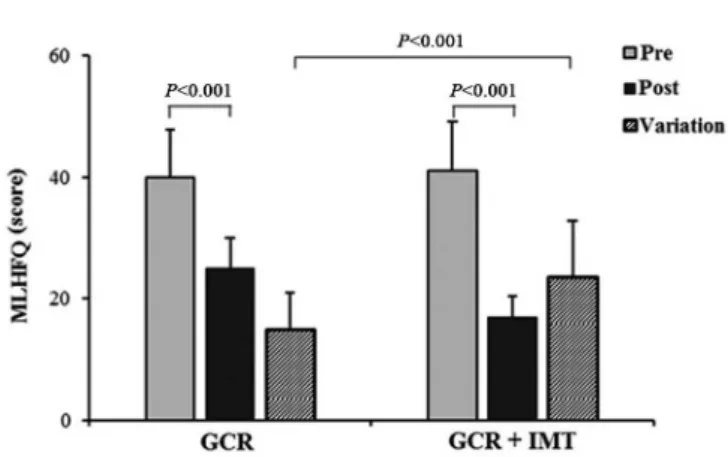
The total MLwHFQ scores decreased signiicantly in both groups, indicating improvement in QoL, however, the variation in MLwHFQ scores was signiicantly higher in the
GCR + IMT (Figure 3).
DISCUSSION
The present study found that a short-term IMT program
associated with combined aerobic and resistance training had
a more pronounced effect on respiratory muscle strength, func
-tional capacity and QoL than combined aerobic and resistance
training alone in patients who underwent CABG surgery and
are in phase II CRP. To the best of our knowledge, this is the irst study to address the additional short-term effects of IMT
associated with combined training in this patient population.
Despite the current lack of evidence demonstrating the beneits of IMT in patients who underwent CABG surgery
and are in phase II CRP, it is important to mention the
pi-oneering study of Winkelmann et al.[18], which also
study demonstrated that the addition of IMT to aerobic exer -cise resulted in additional improvement in PImax compared to aerobic exercise alone, and these results were similar to those reported in this study. Recently, Laoutaris et al.[19],
us-ing a protocol similar to ours, showed that IMT associated with combined aerobic and resistance training in 27 patients
with CHF, without inspiratory muscle weakness, is safe, and resulted in incremental beneits in PImax compared with the effects of aerobic training alone.
Studies have been conducted to evaluated the effects of combined aerobic and resistance training on functional ca
-pacity of patients undergoing CABG. Onishi et al.[11] and
Sumide et al.[20] showed that combined training induced
sig-niicant improvement in peak VO2 in this patient population.
In contrast, Arthur et al.[21], in a randomized controlled trial
to compare the effect of 6 months of combined aerobic and
resistance training vs aerobic training alone in women
under-going CABG, reported that after the exercise training pro
-gram both groups showed statistically signiicant improve -ments in peak VO2.
In the present study, even over a relatively short-term pe-riod, it was observed that IMT associated with combined
aer-obic and resistance training provides a signiicant improve
-ment in functional capacity when compared to combined training. These results indicate that the addition of IMT may have complementary effects to those obtained with combined training on functional capacity of patients who underwent
CABG and are in phase II CRP. One potential explanation
of this inding is that the IMT program, even over a short-term period, improves systemic vasodilation and perfusion of
peripheral muscles[22], promoting a more pronounced effect
on functional capacity in these patients. Laoutaris et al.[23]
showed that addition of IMT program to aerobic training in
patients with ventricular assist device resulted in an addition-al improvement in peak VO2, compared with the effects of aerobic training alone.
Fig. 3 - Comparison of change in QoL score, assessed with Minnesota Living with Heart Failure questionnaire (MLwHFQ), between groups.
Regarding QoL, the values of MLwHFQ scores improved signiicantly in both groups. However, the IMT group showed a higher variation in MLwFQ scores. These changes may ex
-plain the additional improvement in QoL with IMT associat -ed with combin-ed training. Few studies have evaluat-ed the
impact of IMT associated with aerobic and resistance train
-ing on QoL speciically in patients who underwent CABG and are in phase II CRP. The addition of IMT to training pro -grams is becoming more widespread as a potential
non-phar-macological therapeutic intervention to improve QoL of
patients with CHF[18,19]. Recently, Adamopoulos et al.[24], in
a 12-week prospective randomized multicenter study, have reported that IMT associated with aerobic training improves
QoL in patients with CHF.
We consider that our results are relevant because even a
short-term IMT program performed just twice a week with
a lower inspiratory resistive loading intensity improved the variables analyzed, although it was carried out in patients without respiratory muscle weakness. Furthermore, these
indings are consistent with results of previous studies con -ducted with patients with CHF subjected to the IMT
pro-gram, though performed at higher weekly frequency and with
a higher inspiratory loading intensity training protocol. Some study limitations should be considered. First, our sample included only 24 patients submitted to CABG.
How-ever, it is of note that the number of patients who participate
in phase II CRP in Brazil is extremely low. Second, an
in-spiratory muscle endurance testing was not performed. The third limitation is related to learning the technique of assess
-ment of respiratory muscle strength. This test depends on the understanding and cooperation of participating individuals. Therefore, the technique can have a determinative positive effect on the outcome. This aspect can be considered as qualitatively inluencing the results of the present study.
CONCLUSION
This study demonstrates that a short-term IMT program associated with aerobic and resistance training in patients
undergoing phase II of a CRP after CABG resulted in signii
-cantly large increments in respiratory muscle strength, func
-tional capacity, and QoL. Our single-center indings also in
-dicate that the addition of IMT, even when applied for a short period, can complement and enhance the effects of combined
aerobic and resistance training and could become a simple
and inexpensive adjuvant treatment, improving the eficiency of phase II cardiac rehabilitation programs within the public
health system. Future large multicenter studies are needed to
provide deinitive proof of these beneits.
Source of funding
This study was inancially supported by the Research
Authors’ roles & responsibilities
BMH Analysis and/or interpretation of data; inal approval of the manuscript; study design; implementation of projects and/ or experiments; manuscript writing or critical review of its content
DMC Analysis and/or interpretation of data; statistical analysis; i-nal approval of the manuscript; manuscript writing or critical review of its content
TJNG Final approval of the manuscript; study design; implemen-tation of projects and/or experiments; manuscript writing or critical review of its content
TDS Final approval of the manuscript; implementation of projects and/or experiments; manuscript writing or critical review of its content
MSV Final approval of the manuscript; implementation of projects and/or experiments; manuscript writing or critical review of its content
SNP Final approval of the manuscript; study design; manuscript writing or critical review of its content
VAB Final approval of the manuscript; study design; manuscript writing or critical review of its content
IMA Analysis and/or interpretation of data; Statistical analysis; inal approval of the manuscript; study design; manuscript writing or critical review of its content
REFERENCES
1. World Health Organization. Global atlas on cardiovascular disease prevention and control. Geneva: World Health Organization; 2011.
2. Brasil. Ministério da Saúde. Datasus. Banco de dados do Sistema
Único de Saúde. 2010 [Cited 2015 Jul 20]. Available from: http://
www.datasus.gov.br
3. Sociedade Brasileira de Cardiologia. Guidelines for Unstable Angina and Non-ST-Segment Elevation Myocardial Infarction of the Brazilian Society of Cardiology (II Edition, 2007). Arq
Bras Cardiol. 2007;89(4 Suppl 1):e89-131.
4. Smetana GW. Postoperative pulmonary complications: an update on risk assessment and reduction. Cleve Clin J Med. 2009;76 Suppl 4:S60-5.
5. Borges-Santos EB, Genz IC, Longo AF, Hayashi D, Gonçalves
CG, Bellinetti MB, et al. Comportamento da função pulmonar, força muscular respiratória e qualidade de vida em pacientes
submetidos às toracotomias eletivas. Rev Col Bras Cir. 2012;39(1):4-9.
6. Ades PA, Savage PD, Brawner CA, Lyon CE, Ehrman JK, Bunn JY, et al. Aerobic capacity in patients entering cardiac rehabilitation. Circulation. 2006;113(23):2706-12.
7. Barros GF, Santos CS, Granado FB, Costa PT, Límaco RP, Gardenghi G. Respiratory muscle training in patients submitted
to coronary arterial bypass graft. Rev Bras Cir Cardiovasc.
2010;25(4):483-9.
8. Savci S, Degirmenci B, Saglam M, Arikan H, Inal-Ince D, Turan
HN, et al. Short-term effects of inspiratory muscle training in coronary artery bypass graft surgery: a randomized controlled
trial. Scand Cardiovasc J. 2011;45(5):286-93.
9. Ferreira PEG, Rodrigues AJ, Évora PRB. Efeitos de um programa de reabilitação da musculatura inspiratória no pós-operatório de
cirurgia cardíaca. Arq Bras Cardiol. 2009;92(4):275-82.
10. Matheus GB, Dragosavac D, Trevisan P, Costa CE, Lopes MM, Ribeiro GC. Inspiratory muscle training improves tidal volume
and vital capacity after CABG surgery. Rev Bras Cir Cardiovasc.
2012;27(3):362-9.
11. Onishi T, Shimada K, Sunayama S, Ohmura H, Sumide T,
Masaki Y, et al. Effects of cardiac rehabilitation in patients with metabolic syndrome after coronary artery bypass grafting. J
Cardiol. 2009;53(3):381-7.
12. Mahler DA; American College of Sports Medicine. ACSM’s guidelines for exercise testing and prescription, 5th ed. Baltimore:
Williams & Wilkins; 1995.
13. Dall’Ago P, Chiappa GR, Guths H, Stein R, Ribeiro JP. Inspiratory
muscle training in patients with heart failure and inspiratory
muscle weakness: a randomized trial. J Am Coll Cardiol. 2006;47(4):757-63.
14. American Thoracic Society/European Respiratory Society. ATS/ ERS Statement on respiratory muscle testing. Am J Resp Crit Care Med. 2002;166(4):518-624.
15. Neder JA, Andreoni S, Lerario MC, Nery LE. Reference values for lung function tests. II. Maximal respiratory pressures and
voluntary ventilation. Braz J Med Biol Res. 1999;32(6):719-27.
16. Meneghelo RS, Araújo CGS, Stein R, Mastrocolla LE, Albuquerque PF, Serra SM, et al; Sociedade Brasileira de Cardiologia. III Diretrizes sobre teste ergométrico. Arq Bras Cardiol. 2010;95(5 supl 1):1-26.
17. Carvalho VO, Guimarães GV, Carrara D, Bacal F, Bocchi EA. Validação da versão em português do Minnesota Living with Heart Failure Questionnaire. Arq Bras Cardiol. 2009;93(1):39-44.
18. Winkelmann ER, Chiappa GR, Lima CO, Viecili PR, Stein R,
Ribeiro JP. Addition of inspiratory muscle training to aerobic
training improves cardiorespiratory responses to exercise in
patients with heart failure and inspiratory muscle weakness. Am
Heart J. 2009;158(5):768.e1-7.
19. Laoutaris ID, Adamopoulos S, Manginas A, Panagiotakos DB,
Kallistratos MS, Doulaptsis C, et al. Beneits of combined
aerobic/resistance/inspiratory training in patients with chronic
heart failure. A complete exercise model? A prospective
randomised study. Int J Cardiol. 2013;167(5):1967-72.
strength following cardiac rehabilitation: comparison of patients after cardiac surgery and patients with myocardial infarction. J
Cardiol. 2009;54(2):273-81.
21. Arthur HM, Gunn E, Thorpe KE, Ginis KM, Mataseje L,
McCartney N, et al. Effect of aerobic vs combined
aerobic-strength training on 1-year, post-cardiac rehabilitation outcomes
in women after a cardiac event. J Rehabil Med. 2007;39(9):730-5.
22. Chiappa GR, Roseguini BT, Vieira PJ, Alves CN, Tavares A, Winkelmann ER, et al. Inspiratory muscle training improves
blood low to resting and exercising limbs in patients with chronic heart failure. J Am Coll Cardiol. 2008;51(17):1663-71.
23. Laoutaris ID, Dritsas A, Adamopoulos S, Manginas A,
Gouziouta A, Kallistratos MS, et al. Benefits of physical training on exercise capacity, inspiratory muscle function, and quality of life in patients with ventricular assist devices
long-term postimplantation. Eur J Cardiovasc Prev Rehabil. 2011;18(1):33-40.
24. Adamopoulos S, Schmid J, Dendale P, Poerschke D, Hansen D, Dritsas A, et al. Combined aerobic/inspiratory muscle training vs. aerobic training in patients with
chronic heart failure: The Vent-HeFT trial: a European