Paulo Ricardo Correia Mota de Almeida
Licenciado em Ciências da Engenharia do Ambiente
Evaluation of the exploitation potential of
red swamp crayfish (
Procambarus clarkii
)
in Portugal
Dissertação para obtenção do Grau de Mestre em Engenharia do Ambiente, perfil de Ordenamento do Território e Impactes
Ambientais
Orientador: João Pedro Salgueiro Gomes Ferreira,
Professor Associado com Agregação, Faculdade de Ciências
e Tecnologia, Universidade Nova de Lisboa
Júri:
Presidente: Prof. Doutor João Miguel Dias Joanaz de Melo Arguente: Prof. Doutor Pedro Manuel Silva Gentil Anastácio Vogal: Prof. Doutor João Pedro Salgueiro Gomes Ferreira
Evaluation of the exploitation potential of red swamp crayfish (
Procambarus clarkii
) in
Portugal
Copyright © Paulo Ricardo Correia Mota de Almeida, Faculdade de Ciências e Tecnologia da Universidade Nova de Lisboa e Universidade Nova de Lisboa
“A Faculdade de Ciências e Tecnologia e a Universidade Nova de Lisboa têm o direito, perpétuo e
sem limites geográficos, de arquivar e publicar esta dissertação através de exemplares impressos reproduzidos em papel ou de forma digital, ou por qualquer outro meio conhecido ou que venha a ser inventado, e de a divulgar através de repositórios científicos e de admitir a sua cópia e distribuição com objetivos educacionais ou de investigação, não comerciais, desde que seja dado crédito ao autor e
To my grandfather Manuel, who first introduced me to crayfish many years ago.
Give a man a fish and you feed him for a day. Teach a man to fish and you feed him for a lifetime.
Acknowlegements
To my advisor, nowadays a friend, João Gomes Ferreira. He initially told me that I have been five years being taught in the University, but he was there to unteach me. And thank goodness he did it.
To professors Ray McClain and Robert Romaire, from Louisiana State University Agricultural Center, for all the help they gave me with crayfish, always answering my specific questions with important information to my work and kindness.
To António Miguel, rice producer from Coruche, who explained me many details about rice culture and with whom I discussed interesting views about the theme.
Abstract
The red swamp crayfish (Procambarus clarkii) is a freshwater crustacean that was introduced in
Portugal and became an invasive species. It brought several problems to ecosystems, causing serious environmental and economic damage, especially for rice farmers. It presents large populations and invaded all Portuguese territory. Currently there is no plan to control the species or any management
plan that reduces the problems caused by it. However P. clarkii has a high commercial value in the
various countries where it is consumed as an exquisite food. It is produced in aquaculture integrated with paddy fields in the United States, China and Spain, generating important amounts of annual sales and profit.
Several methods were used to identify the best crayfish production areas in Portugal, using a geographic information system, according to crayfish characteristics and ecology. It was created an individual growth model for the species and it was concluded that this model is well calibrated for Louisiana but presented a higher individual growth rate when in comparison with other studies for crayfish Portuguese populations. This individual model allowed to create a general population model to conclude about the biomass yields produced in paddy fields. The population model validation concluded that the final yields are according with the range of values produced in Louisiana and in southern Spain, but a bit higher than other Portuguese models.
The model suggests that Portugal can generate annually in aquaculture around 20000 tons of crayfish produced in nearly 23000 hectares of paddy fields. The average production of each paddy field can attain 870 kg ha-1 year-1 of crayfish. The best areas to produce P. clarkii are located in the paddy fields
in the valleys of the rivers Mondego, Tagus, Sorraia and Sado, due to the availability of water and also to the proximity of the coast, which leads to milder temperatures. It is recommended that the species is used as a valuable economic resource, which culture can be made between December and April, when the paddy fields are fallow.
Crayfish aquaculture in Portugal can bring environmental and economic benefits. The population can be controlled and reduced through harvest. This can avoid the continuous spread of P. clarkii
throughout the country because crayfish aquaculture method demands an annual restocking of the species in the paddy fields, which can be done using crayfish withdrawn from wild populations, improving the ecosystems quality by removing this harmful crustacean. Economically crayfish can generate important financial benefits to rice farmers. The product has a considerable market price in many countries, which can lead to an increase of the exportations and allow the creation of direct and indirect jobs, namely during the harvest, transformation and transportation of the product. Crayfish aquaculture industry can generate a total of 35 million € year-1 in Portugal.
Keywords:invasive species, environmental problem, use of resources, geographic information system,
Resumo
O lagostim vermelho da Louisiana (Procambarus clarkii) é um crustáceo de água doce que foi
introduzido em Portugal e se tornou uma espécie invasora. Trouxe vários problemas para os ecossistemas, causando graves danos ambientais e económicos, principalmente para os produtores de arroz. Apresenta grandes populações e invadiu todo o território nacional. Atualmente não existe qualquer plano de controlo da espécie ou forma de aproveitamento que reduza os prejuízos por esta
causados. No entanto P. clarkii possui um elevado valor comercial em vários países que o consomem
como alimento requintado e por isso é produzido em aquacultura integrada com arrozais nos Estados Unidos, na China e em Espanha, gerando anualmente importantes quantidades de vendas e lucros.
Foram utilizados vários métodos para identificar as melhores áreas de produção de lagostim em Portugal, recorrendo a um sistema de informação geográfica, de acordo com as características e ecologia do lagostim. Foi criado um modelo de crescimento individual para a espécie e concluiu-se que este modelo está bem calibrado para a Louisiana mas apresenta uma maior taxa de crescimento individual quando comparada com outros estudos sobre populações portuguesas de lagostins. Este modelo individual permitiu criar um modelo populacional geral para concluir acerca das quantidades de biomassa produzidas nos arrozais. Com a validação do modelo populacional concluiu-se que as quantidades finais estão de acordo com a gama de valores produzidos na Louisiana e no sul de Espanha, mas um pouco mais elevadas do que outros modelos portugueses.
O modelo sugere que Portugal pode gerar anualmente em aquacultura cerca de 20000 toneladas de lagostim, produzidas em pouco menos de 23000 hectares de arrozais. A produção média de cada arrozal pode atingir 870 kg ha-1 ano-1 de lagostim. As melhores áreas para produzir P. clarkii
localizam-se nos arrozais dos vales dos rios Mondego, Tejo, Sorraia e Sado, devido à disponibilidade de água e também devido à proximidade da costa, o que leva a temperaturas mais amenas. Recomenda-se que a espécie seja aproveitada como um recurso económico valioso, cuja cultura pode ser feita entre Dezembro e Abril, quando os arrozais estão em pousio.
A aquacultura do lagostim vermelho da Louisiana em Portugal pode trazer benefícios ambientais e económicos. A população pode ser controlada e reduzida através da apanha para consumo humano. Isto evita a expansão contínua de P. clarkii por todo o País porque o método de aquacultura do
lagostim necessita de uma introdução anual da espécie nos arrozais, que pode ser feita recorrendo a lagostins retirados de populações selvagens, melhorando a qualidade dos ecossistemas ao remover este crustáceo prejudicial. Economicamente o lagostim pode gerar importantes benefícios financeiros para os produtores de arroz. O produto tem um considerável valor comercial em vários países, o que pode levar ao aumento das exportações e permitir a criação de postos de trabalho diretos e indiretos, nomeadamente durante a apanha, transformação e transporte do produto. A indústria de produção de lagostim em aquacultura pode gerar no total 35 milhões de euros por ano em Portugal.
Table
of Contents1. Introduction ... 1
1.1. Problem definition ... 1
1.2. Goals and scope ... 2
1.3. Master Thesis layout ... 3
2. State of the Art ... 5
2.1. Framework ... 5
2.2. General notes on the species ... 8
2.2.1. Ecology ... 8
2.2.2. Crayfish aquaculture and culture practices ... 11
2.2.3. Crayfish as an economic resource and its market ... 15
2.3. Status of the species in Portugal ... 17
2.3.1. Introduction, expansion and current situation ... 17
2.3.2. Invasive species status ... 17
2.3.3. Comparison between Spanish and Portuguese situations ... 18
2.3.4. Environmental and economic impacts ... 20
2.4. Rice production and rice cycle in Portugal ... 22
2.5. Study area characterization – the climate ... 24
3. Methods ... 27
3.1. Tools and methods ... 27
3.2. Methodological scheme ... 27
3.3. Selection of the best locations using GIS ... 28
3.4. Temperature model for Portugal ... 29
3.5. Crayfish population model ... 31
3.5.1. Temperature as a forcing function for growth ... 36
4. Results ... 39
4.1. Selection of the best locations using GIS ... 39
4.2. Best production areas ... 47
4.3. Growth dependence on temperature ... 48
4.3.1. Differences between real and modeled temperatures for Portugal... 50
4.4. Individual model application to Louisiana ... 52
4.5. Individual model application to Portugal ... 53
4.7. Application of the population model to Louisiana ... 58
4.8. Final results and discussion ... 58
4.8.1. Comparison with other authors ... 59
4.8.2. Sensitivity analysis ... 59
4.8.3. Potential control of the species... 60
4.8.4. Economic benefits and job opportunities ... 61
5. Conclusions ... 65
5.1. Final considerations ... 65
5.2. Recommendations ... 67
5.3. Future developments ... 68
References ... 71
Annex 1 – Crayfish aquaculture cycle... i
Annex 2 – Changes in Portuguese paddy fields area ... iii
Annex 3 – Rice production areas in Portugal ... v
Annex 4 – Portuguese paddy fields area in 2011 ... vii
Annex 5 – Portuguese climate classification ... ix
Annex 6 – Total annual precipitation in Portugal ... xi
Annex 7 - Temperatures in the Setúbal and Santarém ... xiii
Annex 8 – Daily temperature variation equation ... xv
List of Figures
Figure 2.1 –Procambarus clarkii distribution in Europe ... 6
Figure 2.2 - Crayfish weight (g) and total body length (cm) relation ... 10
Figure 2.3 - Global aquaculture production of Procambarus clarkii in the world ... 12
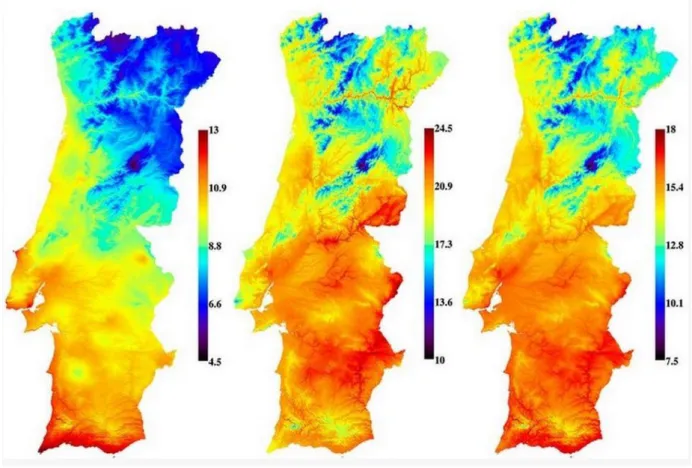
Figure 2.4 - From left to right: minimum mean temperature, maximum mean temperature and mean temperature in Portugal (ºC) ... 25
Figure 3.1 – Methodological scheme ... 27
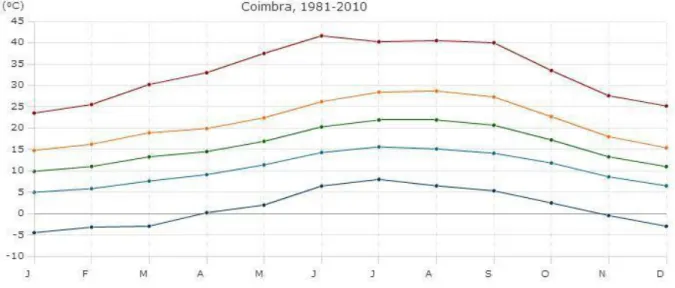
Figure 3.2 – From top to bottom: higher maximum temperature, mean maximum temperature, mean temperature, mean minimum temperature and lowest minimum temperature in Coimbra ... 30
Figure 3.3– Individual growth model ... 34
Figure 3.4 - Crayfish population model scheme ... 35
Figure 4.1 – Paddy fields identified in CLC 2006... 40
Figure 4.2 – Paddy fields and protected areas identified in CLC 2006 ... 41
Figure 4.3 - Paddy fields identified in CLC 2006 and hydrography ... 42
Figure 4.4 - Paddy fields identified in CLC 2006, mean air temperatures and major cities near the paddy fields ... 43
Figure 4.5 - Paddy fields identified in CLC 2006 and total precipitation ... 44
Figure 4.6 – Best paddy field areas for crayfish production ... 46
Figure 4.7 - Linear regression growth curve and equation ... 48
Figure 4.8 - Linear regression growth curve and equation for the adult population ... 49
Figure 4.9 – Daily variation of growth rate (g d-1) in Portugal... 49
Figure 4.10 – Annual temperature variation in the three selected cities ... 50
Figure 4.11 - Annual modeled mean temperature in the three selected cities ... 51
Figure 4.13 - Crayfish individual growth in Louisiana ... 53
Figure 4.14 – Crayfish individual growth in Portugal ... 54
Figure 4.15 - Number of crayfish in each weight class ... 55
Figure 4.16 – Total biomass (g) ... 56
Figure 4.17 – Crayfish production diagram, jobs and benefits ... 63
Figure A1.1 – Crayfish aquaculture cycle in the United States... i
Figure A2.1 – Changes in Portuguese paddy fields area ... iii
Figure A3.1 – Rice production areas in Portugal ... v
Figure A4.1 – Portuguese paddy fields area by municipality and region in 2011... vii
Figure A5.1 – Portuguese climate classification ... ix
Figure A6.1 – Total annual precipitation (mm) 1960-1991 ... xi
Figure A7.1 – From top to bottom: higher maximum temperature, mean maximum temperature, mean temperature, mean minimum temperature and lowest minimum temperature in Setúbal and Santarém ... xiii
Figure A8.1 – Equation created in Insightmaker for daily temperature variation ... xv
List of Tables
Table 2.1 – Physical characteristics of the red swamp crayfish ... 9
Table 2.2 – Rice and crayfish integrated culture cycle ... 12
Table 2.3 - Crayfish aquaculture carachteristics ... 14
Table 2.4 – Nutritional value of the red swamp crayfish ... 16
Table 3.1 - Coldest and warmest mean temperatures in the three selected cities ... 30
Table 3.2 – Crayfish weight classes present in the model ... 31
Table 3.3 - Table of parameters ... 33
Table 3.4 – Harvest rate early season ... 34
Table 3.5 - Harvest rate late season ... 34
Table 3.6 - Crayfish instantaneous growth and temperatures for the general population ... 37
Table 3.7 - Crayfish instantaneous growth and temperatures for an adult population ... 37
Table 4.1 - Final regions and areas selected for crayfish production ... 47
Table 4.2 – Mean temperatures in the individual model and differences to original data ... 52
Table 4.3 – Crayfish weight and age relation in Louisiana ... 52
Table 4.4 - Crayfish stocks in the first days of the model run ... 57
Table 4.5 - Crayfish stocks in the last days of the model ... 57
Acronyms list
ANIA – Associação Nacional dos Industriais de Arroz
APA – Agência Portuguesa do Ambiente
ARH – Administração da Região Hidrográfica
CLC 2006 - CORINE Land Cover 2006
FAO – Food and Agriculture Organization
GIS – Geographic information system
GSI - Gonadosomatic Index
ICNF – Instituto de Conservação da Natureza e das Florestas
INE – Instituto Nacional de Estatística
1.
Introduction
1.1.
Problem definition
The red swamp crayfish (Procambarus clarkii) is a freshwater crustacean, native to the southern
United States which is currently present in almost every continent, being only absent from Oceania and the Poles (Anastácio, 1993; McClain & Romaire, 2007). It has been introduced in several countries, among them Portugal, due to its importance as food product (Fishar, 2006). P. clarkii is a
highly harmful species to ecosystems it colonizes, due to its resistance, adaptation capacity and ability to reach new areas, competing directly with native species (Anastácio, 1993; Correia, 2002; Leitão, 2009).
The species was first introduced in 1973 in the area of Badajoz, in central Spain and in the Guadiana river basin. In 1974 a new introduction was made in the paddy fields of Seville, in southern Spain (Anastácio, 1993). The aim of this introduction was to produce a crayfish and rice double culture, as is done in the United States, resulting in extra money for the rice farmers and producing two cultures in one year in the same field. In 1979, crayfish populations in southern Spain increased without control, invading all the paddy fields in the region (Fishar, 2006). The population expanded to Portugal and became one of the largest worldwide. Thereafter the species began an effective expansion and colonized almost the entire Iberian Peninsula. In 2006 it had already reached the Salamanca region, in northern Spain (Anastácio, 1993; Fishar, 2006; Gil-Sanchez & Alba-Tercedor, 2002; Leitão, 2009).
After its introduction in Portugal, crayfish has expanded very quickly throughout the country, having become a dominant species and causing significant changes in many kinds of different ecosystems. As a consequence of the introduction of a new species and the great increase in its population, which occupies multiple habitats, there were serious problems caused directly by P. clarkii large populations
(Cruz & Rebelo, 2006; Geiger et al., 2005; Leitão, 2009). Economically, rice producers recorded
significant losses and several problems in the paddy fields invaded by the species, where crayfish developed huge populations (Anastácio, 1993). Crayfish also brought many environmental problems and several impacts on native species, although there are favorable environmental conditions due to their presence, such as the change of the feeding regime of some important animals from the Portuguese fauna, now based on crayfish. On the whole, the impacts caused by the species are rather complex (Correia, 2002; Cruz, 2001; Cruz & Rebelo, 2006; Leitão, 2009). All around the world there are contention measures and many limitations to the imports and transport of live crayfish. In Europe the species occurs mainly in the lowest latitudes, with large populations living in the Iberian Peninsula, France and Italy (Fishar, 2006; Geiger et al., 2005; Gherardi, 2006).
Crayfish invaded paddy fields and all types of aquatic environments in Portugal. Some years after the introduction, the uncontrolled situation of the species led to the development of control measures. Initially, rice farmers resorted to chemicals with the aim of eliminating the crayfish from paddy fields but due to the resistance of the species, the situation has not changed, resulting in environmental damage due to the chemicals used. The chemicals used to eliminate the species killed other native species and polluted the ecosystems, while the crayfish survived (Anastácio et al., 1999b). In 1999, the
The abundance of crayfish in the Iberian Peninsula is mainly due to the mild temperatures of the air, the warmest area of Europe. This results in warmer water temperature and allows for better living conditions to the crayfish, which grows quickly and reproduces faster (FAO, 2013; McClain, 2010). Initially the species had no natural predators in this region, which contributed to the fast growth and expansion. Currently the situation has changed and many native animals started preying crayfish (Anastácio, 1993; Florêncio, 1993).
Nowadays crayfish remains a serious environmental problem in Portugal which lacks an effective solution, because so far, nothing specific has been done (Anastácio et al., 1999b). Although economic
exploitation such as aquaculture is forbidden, the species is harvested and fished in rivers, paddy fields and lagoons and sent to Spain. There, crayfish is resold at higher prices or used to restock Spanish production fields (Gutierrez-Yurrita et al., 1998). Although the species is considered a plague in
Portugal, Spain and other countries, Spanish authorities take control measures but also allow the harvesting and sale. Spaniards buy Portuguese production at low prices because it is not globally appreciated in this country and there is no legal crayfish industry and management, so the production has not a high commercial value (Anastácio et al., 1999b; Gutierrez-Yurrita et al., 1998; Ministerio de
Agricultura Alimentación e Medio Ambiente, 2012).
Against this background, the introduction of an invasive species with disastrous environmental results and economic losses is a significant problem which leads directly to several other complex problems. Considering that the introduction of the species and its permanence in Portuguese territory appears to be irreversible, it is concluded that, given the impossibility of eradicating it, a solution that enables a correct management of the red swamp crayfish must be found, in order to minimize the damage caused by the species and obtain improvements over the current situation. At present, there is no plan for the use or management of the species in Portugal. This prevents effective control and fighting its territorial expansion and invasion of new areas and ecosystems, and also economic benefits.
1.2.
Goals and scope
This dissertation aims to assess the potential value in aquaculture production integrated with paddy fields of the red swamp crayfish in Portugal, in order to understand whether it is suitable for economic exploitation and how it could be developed. Although this is the main aim of the work, the following specific objectives have been identified:
Study the current distribution of the species in Portugal in order to conclude about the potential for control of the same as invasive species.
Determine the capacity for production of the species at a national level, defining the best way to
crop it and the most suitable production areas, using GIS.
Develop a model to simulate crayfish population, growth and production in a paddy field.
Propose a management strategy in order to harmonize the conflicts among production, economic
1.3.
Master Thesis layout
The work plan is divided into five steps. The first chapter is an introduction to the subject and aims to define the problem under study, presenting the objectives of the assignment and the scope in which it is inserted.
The second chapter provides a literature review on the topic. This chapter is divided into five main parts: the first part presents a framework to define the main themes in the current situation, showing its relevance, the second part presents general notes on the species, while the third part aims to define the current situation of it in Portugal. Its main objective is to better understand the ecology of the species, also reviewing aquaculture methods used and culture practices, in addition to defining the value and uses of the product in the current market. The fourth and fifth parts of this chapter present some references to Portuguese paddy fields and their most important aspects and a brief description on the study area and the climate.
The third chapter presents the methodology used to achieve the thesis goals. At this stage, it is intended to define a methodology to identify the best production areas of the species and the best way to proceed to its culture, using specific tools and methods. Initially the best production areas of the species at the national level will be identified, using GIS, and then it will be presented a population model for the exploitation of the species in these areas, depending on the modeling of various important factors selected to the survival and production of the species.
The fourth chapter presents the results and targets them to understand the best approach to the problem, in order to conclude whether the species is economically profitable to exploitation. This chapter also presents some critics to the results and comparisons with studies by other authors.
2.
State of the Art
2.1.
Framework
The introduction of exotic species into new regions has occurred for thousands of years with the aim of benefiting man, though in different ways: usually due to food production, the attempt to control dangerous native species and pests or to meet the demand for exotic species by humans (Decree 565/99; Leitão, 2009). However the introduction of these species is now one of the biggest obstacles to the conservation of nature, bringing numerous impacts on ecosystems, significant changes in them and in the trophic relationships among species. It is currently one of the main causes of biodiversity loss worldwide. These species can also carry diseases and pests. The damage caused by invasive species costs many millions annually to each country to reduce its impacts, trying to eradicate the new generations and protect native species (Cruz & Rebelo, 2006; Decree 565/99; Leitão, 2009).
This problem is currently under study by the European Union, which plans to take measures to prevent the expansion and surpass of new borders by invasive species and also prevent the introduction of exotic plants and animals brought from other parts of the world. Invasive species are causing in Europe an annual loss estimated at least of 12 billion €, according to a 2010 study (Greensavers, 2013).
An invasive species is a non-native species that was introduced, through human transport, in a new geographical area, where it is not natural, having managed to stabilize and expand territorially. These species pose serious and diverse threats, damaging native flora and fauna, and affecting human health and economy. It is important to emphasize that the effects of these species on native species are significant and that has increased the number of species brought from their habitats to new geographical areas. Today it is very difficult to find areas that are not occupied by invasive species (Decree 565/99; Leitão, 2009).
Freshwater systems are extremely vulnerable to these issues and to be colonized by new invasive species, due to the numerous uses that man applies to them and also due to the easy dispersion in water (Leitão, 2009). Around the world numerous freshwater systems have dramatic ecological situations due to the introduction of exotic species, resulting in huge financial costs to attempt to recover them (Cruz & Rebelo, 2006; Fishar, 2006; Leitão, 2009). These systems were particularly damaged by the introduction of species of freshwater crustaceans, which caused numerous environmental problems in freshwater ecosystems worldwide because of their ecological characteristics (Cruz & Rebelo, 2006; Fishar, 2006; Leitão 2009). Although there have been different crayfish species introduced for the purpose of food production, red swamp crayfish is the species with the largest distribution worldwide, causing more problems due to its very specific ecological characteristics (Cruz & Rebelo, 2006; Fishar, 2006; Leitão 2009; Lodge et al., 2012).
The success of the red swamp crayfish as an ideal species for aquaculture is also the reason of the environmental problems caused by it: in both cases this is the result of strong biological characteristics, causing impacts throughout the food chain, becoming a dominant species in freshwater ecosystems, causing significant changes and affecting their conditions due to its rapid growth and massive reproduction rates (Ficetola et al., 2012). Attempts to eliminate the species using chemicals
slightly sensitive to other factors (Anastácio, 1993; Cruz & Rebelo, 2006; Leitão, 2009). The success of the species is based on the great adaptability to new areas and variable environmental and climatic parameters and the consequent development of resistance to variations in the environment and external factors. The species is extremely adaptable and physically strong at many different environments and has a very successful reproduction strategy (Cruz & Rebelo, 2006; Leitão, 2009). This guaranteed rapid dispersion throughout the Iberian Peninsula shortly after its introduction, developing large populations and bringing numerous problems for ecosystems (Anastácio et al., 1999b; Cruz & Rebelo,
2006; Fishar, 2006; Geiger et al., 2005; Leitão, 2009).
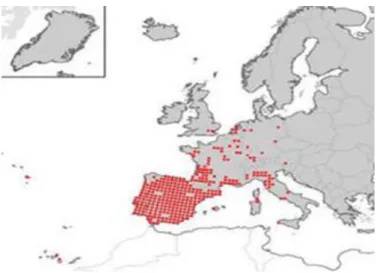
Figure 2.1 –Procambarus clarkii distribution in Europe
(Ministerio de Agricultura Alimentación e Medio Ambiente, 2012)
However, all these particular characteristics, very harmful to freshwater ecosystems, can be used to human benefit, making this species ideal for aquaculture. P. clarkii is the mostly produced worldwide
freshwater crustacean (Fishar, 2006). The culture of the species is mainly made in the United States and China. These countries produce crayfish in two different ways: intensive monoculture in land ponds, where the species is produced all year round, and also in an integrated system, involving rice and crayfish double culture (FAO, 2013; Louisiana State University Agricultural Center, 2010). Due to the preference of the species for paddy fields, the aquaculture production of red swamp crayfish is done seamlessly with rice production, based on annual cycles. Rice and crayfish are a common culture in Louisiana and other United States southern states (FAO, 2013; Louisiana State University Agricultural Center, 2010). This method of production protects the paddy fields from damage done by crayfish burrowing activity, while using the natural range of crayfish biology, such as spawning and growth of the species, using the same field to produce two economic resources instead of one (Anastácio, 1993; FAO, 2013; Louisiana State University Agricultural Center, 2010).
Although economic activities with invasive species are forbidden in Portugal, an increase in harvesting of crayfish in the most productive paddy fields and ecosystems, and the consequent reduction of the populations, would help to reduce the large amounts of crayfish. This should be well received by the environmental management because one of the major goals of Portuguese environmental organizations is to combat invasive species in the country. One of the most important Portuguese non-governmental and environmental organization, Quercus, claims that nothing has been done by the authorities to eliminate these species, which costs millions of euro to the country (Greensavers, 2013).
Numerous profitable crops are species introduced by man that were not originally present in the territory of cultivation (Decree 565/99). Tomato, for example, is a species from Central and South America but is now cultivated throughout the world. It is one of the main agricultural products grown in Portugal (Expresso, 2013). The tomato is an introduced species, like almost all profitable crops, whose only difference is being no serious danger to ecosystems, while the red swamp crayfish is. Other introduced species became important resources to Portuguese agriculture and economic growth, such as potatoes and corn (Decree 565/99; Instituto Nacional de Estatística, 2012).
Crayfish can reach considerable market prices. It is an appreciated food in many countries and is a product with a high demand both in the European and the United States markets (Barbaresi & Gherardi, 2000; Fishar, 2006; Gutierrez-Yurrita et al., 1998; Louisiana State University Agricultural
Center, 2010). The economic market of the species to export to other countries may be considerable. This can bring extra wealth to the producing countries.
Portuguese economy presents serious financial and production problems and it might be very important to exploit new resources with external markets, capable of generating wealth through national food production and allowing the creation of new jobs. In addition to the environmental benefits, Portugal can generate a new economic resource and valuable food, resulting in a reduction of food imports from abroad. It also could be exported a product with great market, helping to equalize the balance of trade of the country and reducing the excessive deficit. It is therefore essential to invest in the primary sector, able to directly create tradable goods. Regarding the crayfish, it is important to develop a truly national system of exploitation of the species, which may go beyond the current fishing and processing, without any planning or management. Serious exploitation can provide much larger amounts of crayfish and a better final product. The Portuguese government defined the aquaculture sector as a key priority for economic development. Portugal has a deficit trade balance in food and sea products. A goal of the Portuguese government is doubling the aquaculture production by 2015. Portugal currently produces only 3% of its consumption in aquaculture, contributing to the increase of sovereign debt and imports (Visão, 2013). One of the national priorities is the supply of the domestic market with national products, especially food and agricultural products. Currently, Portugal imports more food products of agricultural origin than exports (RTP, 2013).
2.2.
General notes on the species
2.2.1.
Ecology
Red swamp crayfish is a highly adaptable species. It tolerates a wide range of environmental conditions, has high growth rates, and a very successful reproductive strategy, which helps to create large populations and significant changes in ecosystems (Anastácio et al., 1999b; Geiger et al., 2005).
The main characteristics of the species and success factors that enable such a broad distribution and invasion of habitats, which can be used to promote a good aquaculture process, are:
• Broad range of diet - It is an omnivorous species, feeding on living or dead plants and meat (Anastácio, 1993; FAO, 2013). Crayfish are not active and fast predators because it cannot catch fish or insects that move rapidly. About 20% of the diet consists of worms and larvae, and the remaining 80% of plants (Martins et al., 2009). The species may consume animal or plant detritus, vegetation and
living animals. It presents a great variability in the diet, this being one of the key factors for its great success in adapting to new environments. Crayfish are scavengers, which mean they feed on debris, whether plant or animal (Ficetola et al., 2012; Geiger et al., 2005; McClain & Romaire, 2007). The
animals preyed are molluscs, insects, worms, larvae and some fish (Anastácio, 1993; FAO, 2013). However the species consumes mainly plant foods and some authors report an increase in the consumption of plant material throughout life (Ficetola et al., 2012; Geiger et al., 2005; McClain &
Romaire, 2007).
• Short life cycle - The life span of the species also varies with the climate: in tropical and warm temperate climates lives between 12 and 18 months, while in cold temperate climates can reach more than 36 months (Anastácio, 1993). There are individuals known to have reached ages over six years in nature (anecdotal references). Generally the species presents high mortality rates, a maximum longevity of 4 years, and a low mean life-time of less than a year (Scalici & Gherardi, 2007).
• Large populations due to a very effective reproduction strategy - In Louisiana each female can reproduce up to three times a year and up to 500 juveniles each time. However the smaller females spawn only 200 or more eggs (FAO, 2013; McClain & Romaire, 2007). The species can produce between one and three generations per year, with the largest number of generations found in populations near the equator, due to high annual average temperature and the absence of seasons (FAO, 2013; McClain & Romaire, 2007). In 40 ° north latitude the number of generations is usually reduced to one, but can be more, dependent on the environment conditions. In Louisiana and Portugal the species mates during the summer and spawns in the autumn, but juveniles can be found all year. The number of annual generations is one in Portugal, while in Louisiana may be between one and three (Anastácio, 1993; Geiger et al., 2005; McClain & Romaire, 2007). This is due to Portugal’s
latitude because, in general, the average annual temperature is higher at lower latitudes. Portugal is located approximately 10 º north of Louisiana, so it is expected that crayfish grow more slowly and reach sexual maturity later in Portugal, producing less generations per year. Some studies state that crayfish reproduction cycle may change and adapt after its introduction in different regions (Anastácio & Marques, 1995; Anastácio et al., 1999b).
• High tolerance to varied climatic conditions – The species is able to tolerate a wide range of environmental conditions, including low oxygen levels (it is not a limiting factor for growth rate), polluted water and high temperatures (D’Abramo et al., 2004).The life cycle of the red swamp
United States southern swamps. During the summer it digs a burrow, waits there for the first rains and spawns safely in the protection of the burrow (FAO, 2013; McClain, 2010; McClain & Romaire, 2004). Around October or November, when the rain comes, they leave the burrow to seek for food. Crayfish spends periods of drought or cold safely protected within the burrow (FAO, 2013; McClain, 2010; McClain & Romaire, 2004). The species also adapted this way in Portugal and in the Mediterranean region (Florêncio, 1993; Ministerio de Agricultura Alimentación e Medio Ambiente, 2012). There is a direct relation between temperature and molting. Water temperature is a major determination of growth rate (Chen et al., 1995). The species is very tolerant to different ranges of
water temperature, ranging from 10ºC to more than 30ºC (Anastácio, 1993; Geiger et al., 2005;
McClain & Romaire, 2007).
• Extremely fast growth - Both males and females reach sexual maturity around 80 mm (total body
length) (Anastácio 1993; Eversole & Mazlum, 2002). At the optimum temperature of 22 ° C embryonic development is extremely fast and can last between two and three weeks. In adequate conditions larvae are born after 21 days of incubation, growing 80 mm in 3 months (FAO, 2013; McClain, 2010). Temperature is an important growth factor for crayfish. Higher temperatures mean faster growth but also higher mortality too (Anastácio et al., 2009; Chen et al., 1995; Fidalgo et al.
2001; Martins et al., 2007; McClain, 2010).
This specific characteristic, which are the reason for the environmental problems caused by the species are also the key factor for its success in aquaculture production, being the most desirable and produced freshwater crustacean worldwide, mainly due to its extremely fast growth (Fishar, 2006).
Red swamp crayfish physical characteristics are summarized in Table 2.1, based on data provided by FAO and the works by Anastácio (1993), Dorr et al. (2006) and Florêncio (1993).
Table 2.1 – Physical characteristics of the red swamp crayfish
Common total body length
Maximum total body length
Common body weight
Maximum body weight
10.5 – 12 cm 20 cm 35 – 56 g Over 60 g
P. clarkii is found in every kind of freshwater ecosystems, although it prefers lentic habitats such as
slow rivers and streams, flooded fields, marshes, ponds with vegetation and leaf protection and human habitats such as irrigation channels and reservoirs. It avoids rivers and streams with a strong flow (FAO, 2013; Leitão 2009).
The species is native to Louisiana swamps, where it usually mates and spawns between July and October. The highest recruitment peak occurs in the months of September, October and November. Other geographical regions exhibit different patterns of reproduction (Anastácio, 1993; FAO, 2013; McClain, 2010; McClain & Romaire, 2007).
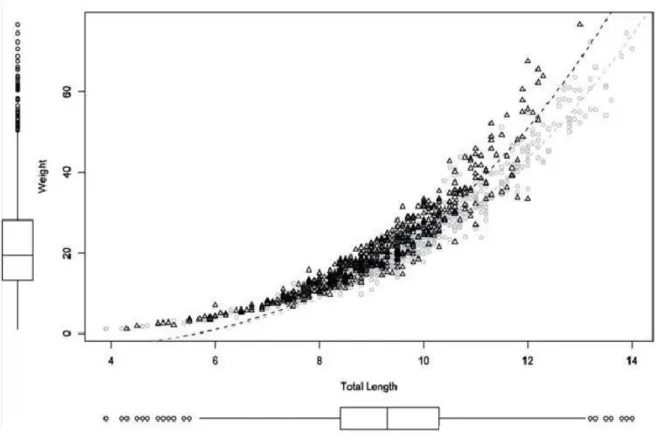
Figure 2.2 - Crayfish weight (g) and total body length (cm) relation
(Dorr et al., 2006)
Portuguese crayfish populations’ recruitment may occur throughout most of the year but with seasonal peaks occurring between October to December, with a smaller period occurring in April to May and late summer (Anastácio, 1993; Anastácio et al., 2009). The species growth rates found in a study
conducted in the Mondego valley were low, about 1.16 mm per week (Anastácio & Marques, 1995).
This might be due to cold temperatures, but they are similar to the ones obtained by another authors for other areas of Portugal. When compared to another studies and authors from different part of the world it is clear that low growth rates can difficult the aquaculture of the species in Portugal (Anastácio, 1993; Anastácio et al., 2009; Fidalgo et al., 2001).
There seems to be a direct relationship between higher latitudes and higher female predomination, such as in Portugal. There is some contradiction in the literature: references to a greater number of males than females in Louisiana and in Kenya. Portuguese authors refer female predomination. (Anastácio, 1993; Anastácio et al., 2009; Anastácio et al., 1999b; Fidalgo et al., 2001).
In Portugal paddy fields and marshes are the areas preferred by the species. Crayfish have higher population densities, minor mortality rates and the life span of the species is higher in paddy fields and marshes, when in comparison to other habitats (Anastácio et al., 2009). Low densities in crayfish
flow of water, essential to the species life cycle, and food. Temperature and hydrology are fundamental to the structure of the population (Anastácio, 1993; Anastácio et al., 2009). Low
population densities increase individual growth, so crayfish reach higher individual weights and grow faster, due to less competition (Anastácio et al., 2009; McClain, 2010; McClain & Romaire, 2009).
A study in a protected area in central Portugal, Paúl do Boquilobo, concluded that the relative abundance of crayfish individuals varies greatly throughout the year. The life cycle of crayfish is very dependent on the water level and temperature. There is an abundance of adults in the spring related to mating in the summer. There is a reduction of adults in summer related to burrowing activity, where the crayfish shelter to prevent dehydration in dry habitats and to spawn. In the winter there are low densities of the species, related with little activity and burrowing due to cold temperatures. Crayfish populations in this area shows a high density of juveniles in the winter, because when spawning occurs in early winter low temperatures delay development until the following spring and individuals grow very slowly (Florêncio, 1993).
2.2.2.
Crayfish aquaculture and culture practices
Aquaculture is the cultivation and production of aquatic organisms for use and consumption by man (Kenyon College, Department of Biology). Aquaculture is increasing in importance due to the overexploitation of resources, which brings environmental changes and degradation of many ecosystems. According to FAO, in 2011 aquaculture equaled fisheries in terms of total production of fish and other aquatic species. The trend is for an increase in aquaculture and stabilization in fisheries (Ferreira et al., 2007; Ferreira et al., 2012). Aquaculture is currently one of the sectors of food
production which had the highest growth in recent years, providing approximately 47% of world production of fish and other species from aquatic ecosystems (Silva et al., 2011).
Rice and crayfish integrated culture is done in the United States since the 18th century and in China
since the last decades of the 20th century (McClain & Romaire, 2004). In the United States crayfish
production usually attains very high yields: in 1985 the country produced 55000 tons, about 85% of the world market volume. In 2007, the United States produced 49500 tons of crayfish, which worth 85 million dollars (Fishar, 2006; McClain, 2010).
Crayfish and rice double culture is a common practice in the United States and China nowadays. In the United States, in 10 rice producers 7 also produce crayfish (Purina Mills, 2010). Although the greatest yields of crayfish are achieved when produced in large and specific earth ponds, rice and crayfish integrated production also produces large amounts of the crustacean (FAO, 2013; Louisiana State University Agricultural Center, 2010). This way of extensive aquaculture introduces the species in the paddy fields and respects an annual cycle for the growth of the plant and the crayfish. Both species
Figure 2.3 - Global aquaculture production of Procambarus clarkii in the world
(FAO, 2013)
Extensive aquaculture introduces crayfish at low densities, has no artificial inputs such as feed and has very little management by man (FAO, 2013). There are tables that define the periods of cultivation and harvesting of rice, as well as the introduction of crayfish, in addition to modeling temperature and water (Louisiana State University Agricultural Center, 2010). Currently the economic exploitation of the red swamp crayfish is done in the United States, China and in the marshes and paddy fields of the Guadalquivir river, in southern Spain. These three countries are the biggest worldwide producers (FAO, 2013; Gutierrez-Yurrita et al., 1998; McClain & Romaire, 2004).
In Louisiana, crayfish aquaculture practices are quite simple, using an annual calendar (Annex 1). Crayfish are restocked in paddy fields with natural recruitment from indigenous populations (FAO, 2013; Louisiana State University Agricultural Center, 2010). Recruitment can occur in any month during several months, always after flooding up the fields, but the bulk occurs usually from November to February. This happens because the spawning is not synchronized and occurs over several months and so there are multiple weight classes during the production season and the recruitment period is long (FAO, 2013; Louisiana State University Agricultural Center, 2010; McClain, 2010; McClain and Romaire, 2007).
Table 2.2 – Rice and crayfish integrated culture cycle
In April rice is sown and the fields are flooded. About 6 weeks later, in May or early June, medium crayfish are stocked into the fields. Crayfish are withdrawn from rivers and other water bodies. When the water level is low in the summer crayfish will burrow in irrigation channels to protect and reproduce themselves (FAO, 2013; Purina Mills, 2010). The rice harvest starts in August or September. In September and October the fields need to be artificially flooded, allowing the regrowth of foliage which serve as food resource for growing crayfish and protection. The fields must be flooded with a small layer of water around half meter tall (Auburn University & USDA-Natural Resources Conservation Service, 2004; Louisiana State University Agricultural Center, 2010; McClain & Romaire 2004). Crayfish leave their burrows and return to the fields where the remains of rice straw will serve as a natural food resource. The females leave the burrow with the newborn crayfish attached to them. During the harvest season, from November to March or April, crayfish will grow faster and bigger, due to better environmental conditions (McClain & Romaire, 2007; Purina Mills, 2010). This is a type of extensive aquaculture. Crayfish are removed from aquatic environments and are introduced in a field where it will grow and reproduce much faster, mainly due to the availability of food. This calendar can present some differences each year (FAO, 2013; McClain & Romaire, 2007; Purina Mills, 2010).
Although rice farmers in Portugal have recorded some serious damage to cultures, in the United States the production method allows the growth and harvest of crayfish, preventing any damages to the rice plants. In an email conversation with two American teachers who work with integrated production of crayfish and rice in Louisiana, professors Ray McClain and Robert Romaire, they stated that in
Louisiana’s paddy fields crayfish digs but do not cause serious problems. This personal communications led to the following conclusions about crayfish aquaculture in the United States:
The losses in rice production can be avoided if big crayfish are totally absent from the paddy
fields and separated from the rice seeds and young plants when the rice is sown. This can happen if before April the larger majority of crayfish was harvested for sell.
When adult crayfish are stocked in the fields in May and June, usually 6 weeks to 8 weeks after
the rice sow, the rice plants have grown 30 to 40 cm in height, and crayfish do very little or have no measurable damage to rice plants that large. There are other organisms in the flooded paddy fields that crayfish prefer to eat such as snails, aquatic insects, and other types of vegetation.
Soon after crayfish are stocked in the flooded paddy fields, the mature crayfish seek levees where it can burrow for reproduction, usually one month after it have been stocked. Farmers don't prevent them from burrowing because it is in burrows where spawning occurs. Also the high density of rice plants relative to the low density of crayfish that are stocked (usually around 50 kg ha-1) all collectively combine to have no adverse affect on the growing rice crop in
Louisiana.
There are no complaints from rice farmers in Louisiana of crayfish damaging rice production.
Crayfish yields produced in the United States vary with the kind of culture and depends on the inputs and the management (FAO, 2013). Table 2.3 presents crayfish aquaculture characteristics based on data provided by FAO.
Table 2.3 - Crayfish aquaculture carachteristics
Crayfish monoculture Rice and crayfish integrated
culture
Common yields 225 kg ha-1 - 1300 kg ha-1 Lower than monoculture
Maximum yields 2800 kg ha-1 Over 1000 kg ha-1
Disadvantages
Need to construct large ponds.
Costs of the land.
Crayfish overcrowding, which leads to huge yields of small crayfish, difficult to sell.
Need to restock every year
Late-season harvest, which is done when prices are in
decline because of the
abundant supplies.
Vantages Stocking is only needed in new ponds, where crayfish are introduced in the spring between 45 – 89 kg ha-1.
Low population densities,
which lead to higher
individual sizes and heavier weights.
Crayfish only dig in the levees and irrigation channels. Many rice farmers in Louisiana often
re-build levees each year using specialized equipment and repair any damage crayfish may have done. The need for repair or re-build small levees each year is usually associated with erosion from wind and wave action and not from the burrowing activity of crayfish.
If crayfish happen to be in the fields when rice is growing (in the water and not in burrows) and insecticides are applied to control insects, then most of those insecticides will kill crayfish that are in the water. If crayfish are in burrows when insecticides are applied then crayfish are not harmed.
Few crayfish in Louisiana attain sizes over 40 g. The density of crayfish has to be very low for
them to attain this size, because growth and size of maturity is density dependent. Larger crayfish are more valuable and desirable for live market sales.
Crayfish usually damage the rice crop in only 2 ways: they eat the seeds or seedlings and their
Trap density can range from 20-60 ha-1, depending on intensity of the operation. Harvesting begins as soon as the catch is justifiable - usually 2 to 4 months after flooding, depending on the meteorological conditions. Trapping frequency and duration also varies. Traps are emptied 2-7 days week-1, often
intermittently for 3 to 8 months. Frequency and duration of the harvest are influenced largely by cost of harvesting, marketing, price and catch. The daily catch rarely exceeds 1.0 kg trap-1 on a sustainable
basis (FAO, 2013; Purina Mills, 2010).
Most ponds larger than 2 or 3 hectares are harvested with the aid of a motorized, flat-bottom boat designed for shallow-water propulsion (FAO, 2013; Louisiana State University Agricultural Center, 2010; Purina Mills, 2010). Several boat types and propulsion designs are available, but the most widely used apparatus consists of an aluminium boat equipped with a hydraulically driven metal wheel that extends beyond the boat and either pushes or pulls it through the pond. The boat circulates through the irrigation channels in paddy fields. The traps are placed in the irrigation channels, where the boat can circulate (D’Abramo et al., 2004; FAO, 2013; Louisiana State University Agricultural
Center, 2010; McClain & Romaire 2004; Purina Mills, 2010).
Commonly, the boat travels down the lanes of traps and a fisherman will empty and re-bait each trap from one side of the boat, often without stopping at the traps, placing harvested crayfish in a box in the boat (Louisiana State University Agricultural Center, 2010; Purina Mills, 2010). Two categories of bait are used to attract crayfish to the trap - natural baits of dead fish, and manufactured baits of proprietary formulations. A wire-mesh, 3-sided 'pyramid-shaped' trap is designed for use in shallow water and is effective and efficient to operate (D’Abramo et al. 2004; FAO, 2013; McClain &
Romaire, 2004; Purina Mills, 2010).
To make the final product more appealing to the market some producers insert the crayfish in an indoor tank between 12 and 24 hours. During this period crayfish are not fed, allowing to clean the body, mud, debris and other impurities (Louisiana State University Agricultural Center, 2010; Purina Mills, 2010). More than 24 hours is not advised because mortality increases greatly. Anecdotal references state that crayfish can be inserted alive in tanks with weakly brackish water for some hours, which makes the flavor of the final product better (Louisiana State University Agricultural Center, 2010; Purina Mills, 2010; Romaire et al., 2005).
Using agricultural sub-products, such as rice straw and soybean, crayfish production can be increased between 1.5 and 2 times, which makes the paddy fields the best area to produce it (Martins et al.,
2009). After the rice harvest the straw left in the fields serve as a food to crayfish populations. Rice is the best diet for crayfish growth, but only with low crayfish densities (FAO, 2013; Louisiana State University Agricultural Center, 2010). The greatest weight gain in crayfish individuals is achieved with soybeans, rice and potatoes, a good source of protein and carbon hydrates (McClain & Romaire, 2009). The best form of aquaculture production of the species is integrated in the paddy fields, because they are a natural food for crayfish, capable of a high body mass increase and preferred by the species (FAO, 2013; Louisiana State University Agricultural Center, 2010; Martins et al., 2009).
2.2.3.
Crayfish as an economic resource and its market
than 20 g are desired in the United States market, but individuals greater than 30 g are preferred and have the highest value (McClain, 2010; personal communication). Martins et al., (2009) concluded
that each 100 g of raw wild crayfish has the proximate composition value presented in Table 2.4:
Table 2.4 – Nutritional value of the red swamp crayfish
Calories Total fat
Total
protein Fatty acid Cholesterol Sodium
77 cal 0.95 g 15.9 g 0.17 g 114 mg 58 mg
The commercial exploitation of the species may be used not only for food production but also for other industries. In market terms, the species can be used for:
• Production of substances for dermal pharmaceutical interest and cosmetics from the animal's shell (chitin, chitosan and collagen).
• Extraction of pigments (astaxanthin) which can be used in cosmetics or as antioxidant.
• Production of animal protein in large quantities, which can be used for animal feed or human food. Crayfish are also used in industry, for the production of fish flour, among others (Martins et al., 2009).
The following box presents
a simple summary about chitin, chitosan, astaxanthin and collagen:
Chitin is a polysaccharide which can be found in the exoskeleton of crustaceans. Chemical treatment results in the production of chitosan, a polysaccharide widely used in the pharmaceutical and biomedical investigation areas due to possess unique characteristics in several respects. Astaxanthin is a red pigment that occurs in many living organisms. It is used in aquaculture of fish and shellfish and is added to animal feed to compensate the lack of a natural dietary source. Is essential for growth and survival. Astaxanthin is used as an antioxidant in the main developed countries for therapeutic and other uses (Martins et al., 2009).
Collagen is the designation of a set of proteins which are tough and fibrous which are the main
2.3.
Status of the species in Portugal
2.3.1.
Introduction, expansion and current situation
The red swamp crayfish was first identified near the border between Portugal and Spain in Caia river, a tributary of the Guadiana river, in 1979, probably arriving from natural dispersion through the Guadiana river basin after a fast expansion in the southern Spain (Anastácio, 1993; Fishar, 2006; Leitão, 2009). From there it expanded quickly through all water lines and in 1986 had already been registered in almost all the southern Portugal, namely in the Guadiana, Tagus and Sado river basins. In 1987 it was first identified in the lower Mondego, causing the first serious damage to paddy fields in this area in 1990 (Anastácio, 1993; Fishar, 2006; Leitão, 2009).
Decree 565/99 confirms the presence of P. clarkii in Leça, Douro, Vouga, Mondego, Lis, Tagus, Sado,
Mira and Guadiana river basins and also in ribeiras do Oeste and ribeiras do Algarve. In 1999, red swamp crayfish was already spread among almost all the Portuguese territory, being absent only in the extreme northern region of the country (ARH Centro, 2012; Leitão, 2009). However, in 2012, the species was present in Minho river basin, in the north border with Spain, so it may be assumed that crayfish has already invaded all Portuguese territory, being present in all river basins (Caminhense, 2012).
Portuguese hydrographic regions reports from the last years also indicate the presence of the species in all territory (ARH Centro, 2012). Portuguese populations are very variable. They can be huge and then present a reduction of 50% in one dry year (Leitão, 2009). This is mainly due to climatic factors, being extremely important the precipitation and amounts of water available in the ecosystems, which is essential to crayfish spawn and protection. The species has a strong preference for paddy fields and marshes, where it is always present at much higher densities than in other ecosystems (Anastácio, 1993; Anastácio et al., 2009; Florêncio, 1993).
2.3.2.
Invasive species status
Portuguese law defines in Decree 565/99 that the introduction of non-indigenous species in nature can lead to situations of predation or competition with native species, transmission of pathogens or parasites and seriously affect biological diversity, economic activities or public health, with irreversible damage, difficult to quantify. Furthermore, when necessary, control or eradication of an introduced species that has become invasive is particularly complex and expensive. However, the introduction of some non-native species and their exploitation proved to be important factors for the development of the national economy, in particular to increase the variety and availability of food resources, as historical examples are potato, tomato and corn. Many non-native species were introduced in Portugal with benefits. However, many others can be very harmful, such as the perch (Lepomis gibbosus), water hyacinth (Eichhornia crassipes), highway ice plant (Carpobrotus edulis)
and crayfish non-native species.
Forbidden restocking
It is prohibited to transfer, sale, purchase and the transportation, cultivation, breeding or detention in a confined space, economic exploitation and use as an ornamental plant or animal companion as a way of preventing introduction into the wild, or restocking.
Portuguese law also defines measures to control invasive species and states that the ones already introduced in nature are subject to a national plan with the aim of its eradication or control, promoted by the Ministry of Environment (Decree 565/99). Currently there is not any plan for management or eradication of crayfish, as defined by law. However there are important exceptions predicted by law. New introductions in the nature can be exceptionally allowed if verified each of the following situations:
a) There are clear advantages to humans;
b) There is no indigenous species suitable for the intended purpose;
c) Be preceded by the preparation of an environmental assessment, meticulously planned, with the conclusions being relevant to the authorization.
In other words, the dissemination or release of specimens of invasive species in nature is forbidden, with or without the purpose of establishing wild populations. The only exception, subject to authorization, is the spread or release in nature of invasive species specimens, for the establishment of wild populations, when there are clear advantages to humans, since there is no indigenous species suitable for the same purpose. A study of the environmental impact of the introduction must be elaborated before. It is covered by this exception the use of non-indigenous species for aquaculture and apiculture (Decree 565/99).
Currently fishing is allowed but the exploitation of the species in aquaculture production is not. It is also banned any kind of introduction in the nature. These points are also applicable to the economic exploitation of non-native species, including in aquaculture. If it is proved that crayfish aquaculture in Portugal would bring economic benefits and environmental improvements this could lead to a change: according to the law, it is currently possible to produce crayfish in aquaculture if it is established that there are clear advantages and great economic benefits, this being one of the most important goals of the work.
2.3.3.
Comparison between Spanish and Portuguese situations
Much of the information about crayfish in Portugal came from anecdotal references, due to the law prohibition status. Some references such as local journals and blogs were used to meet the needs of information about the real current situation such as Jornal do Fundão (2010) and Abrangente (2003). Fishing activity is currently well documented in Portugal, mainly in Alqueva dam, Castelo de Bode dam, Mondego river and Sorraia river rice fields and river Tagus, mainly in central and southern Portugal. The final destination of every load is always Spain (Gutierrez-Yurrita et al., 1998; personal
communication).
The factory manager affirms that crayfish fished in Tagus river is one of the best quality crayfish in Portugal. He claims that in the summer it is the best because it is clean, heavy and there is no hollow. The company buys crayfish to about twelve fishermen and in 2009 bought 300 tons of crayfish to the local fishermen only during the summer. They state that during the winter they buy crayfish to other fisherman, namely to the Figueira da Foz region (Mondego valley), in central Portugal but near the coast, because the local crayfish is very weak. They also say that if there were crayfish all the year they would buy it because the sell is assured in Spain, where it is a product with a very high demand (Jornal do Fundão, 2010).
In 2009 this company claims to have bought in Portugal 20000 tons of crayfish. As there is not currently any crayfish aquaculture this value is only referring to fisheries in aquatic environments without any planning or management. There are many fishermen who catch crayfish in this area all year, although the best months are from May to September (Jornal do Fundão, 2010). In the winter crayfish seek for shelter deeper in the river due to the strong flow and low temperatures. These fishermen sell the crayfish to the company for around 1.5 € kg-1 and each one can catch around 15 kg
week-1 during the summer. There are also crayfish fishermen who make their only earning and life
activity on fishing and selling the crustacean to the Spanish company (Jornal do Fundão, 2010). These fishermen can catch during the summer an average amount of 160 kg of crayfish week-1. The
importance of this activity is recognized by the direction of the Spanish company, which developed a good relation with the local fishermen because they know that there are whole families dependent on them and on the richness of the river to survive (Jornal do Fundão, 2010). Crayfish prices can be very variable, depending on the years, size and available amounts, but generally goes from 2 to 6 € kg-1,
although in Spain it can reach higher prices (Abrangente, 2003). Actually the price paid in Portugal for the crayfish is much lower than the one paid in Spain, where crayfish can be sold in the big cities much more expensive than the prices paid to Portuguese fishermen (Gutierrez-Yurrita et al., 1998).
There are also food festivals in Portugal that serve it as a delicacy, organized by the local community to promote local economy. These festivals have been a success in recent years, which should lead the way to the appreciation of this resource and extend to other areas of the country. Crayfish gradually have grown into a more appreciated specialty food. There is a crayfish festival in Ferreira do Zêzere, a village near Castelo de Bode dam. This festival has been growing every year since 2008 occurs always in April (RTP, 2010; Sapo, 2012).
In Spain, only the Guadalquivir valley has an important P. clarkii industry, able to support big
markets. Data from 1986 refers yearly captures of 3000 tons of crayfish in Seville paddy fields, in southern Spain. It is also the only specific crayfish production zone in the Iberian Peninsula (Fishar, 2006; Gutierrez-Yurrita et al., 1998). In Portugal the species exploitation has been very weak, reduced
to fisheries so, when in 1995 occurred a strong reduction in the production of Spanish crayfish, a businessman showed interest in installing a factory in the Mondego valley, to produce and sell frozen and canned crayfish to northern Europe, but the project did not go further. In 1997 Spaniards bought around 700 tons of crayfish from the Mondego valley, but it was calculated that the production from that region could reach 3000 tons (Gutierrez-Yurrita et al., 1998).
In November 2005 Spanish producers reported some problems in crayfish sells due to China’s
exportation to Louisiana, replacing crayfish produced in Spain. In this year, crayfish had a production higher than 3000 tons, only in Andalucía, with an industry of 8 companies, exporting internationally and also selling to the national market (Gutierrez-Yurrita et al., 1998; Seafood, 2005). It is important
to note that due to the severe drought which affected southern Spain in the earl’s 90’s, the annual