Revista Gaúcha
de Enfermagem
Vascular access complications in patients
undergoing percutaneous procedures in
hemodynamics: a scoping review
Complicações do acesso vascular em pacientes submetidos a procedimentos percutâneos em hemodinâmica: revisão de escopo
Las complicaciones del acceso vascular en pacientes sometidos a procedimientos percutáneos en hemodinámica: revisión de escopo
Rejane Reicha,b
Eneida Rejane Rabelo-Silvaa,b,c
Simone Marques dos Santosa,b
Miriam de Abreu Almeidaa,b,c
ABSTRACT
Objective: To map the production of knowledge on vascular access complications in patients undergoing percutaneous procedures in hemodynamic laboratories.
Methods: Scoping review study. The search strategy was developed in three stages, considering the period from July 2005 to July 2015 in the PubMed, CINAHL, Scopus, and LILACS databases. The collected data were analyzed and summarized in a narrative form.
Results: One-hundred twenty-eight publications that made it possible to map the contexts of study of complications, occurrence according to access routes, as well as an understanding of diagnosis and clinical management, were included. Three theme categories were identified: complications; predictive factors; and diagnosis/treatment.
Conclusion: Vascular access site complications range according to the access route used. Knowledge of factors that perme-ate the occurrence of these events may contribute to early detection, planning, and monitoring of the care implemented.
Keywords: Endovascular procedures. Hematoma. Hemorrhage. Patient care.
RESUMO
Objetivo: Mapear a produção de conhecimento acerca das complicações do acesso vascular em pacientes submetidos a procedimen-tos percutâneos em Laboratório de Hemodinâmica.
Métodos: Estudo do tipo revisão de escopo. Elaborou-se estratégia de busca em três etapas, considerando o período entre julho de 2005 e 2015, nas bases de dados PubMed, CINAHL, Scopus e LILACS. Os dados extraídos foram analisados e sintetizados de forma narrativa.
Resultados: Foram incluídas 128 publicações que permitiram mapear os contextos de estudo das complicações, a ocorrência de acordo com as vias, bem como a compreensão do diagnóstico e manejo clínico. Como síntese da análise identificou-se três categorias temáticas: Complicações; Fatores preditores; e Diagnóstico/tratamento.
Conclusão: As complicações no local do acesso vascular são de ocorrência variável conforme a via de acesso utilizada. O conhecimen-to dos faconhecimen-tores que permeiam a ocorrência destes evenconhecimen-tos podem auxiliar no reconhecimenconhecimen-to precoce, planejamenconhecimen-to e moniconhecimen-torização dos cuidados implementados.
Palavras-chave: Procedimentos endovasculares. Hematoma. Hemorragia. Assistência ao paciente.
RESUMEN
Objetivo: Mapear la producción de conocimiento acerca de las complicaciones del acceso vascular en pacientes sometidos a proce-dimientos percutáneos en el Laboratorio de Hemodinámica.
Métodos: Estudio de tipo revisión de escopo. Se elaboró la estrategia de búsqueda en tres etapas, considerando el período comprendido en-tre julio 2005 y 2015, en las bases PubMed, CINAHL, Scopus y LILACS. Los datos extraídos fueron analizados y sintetizados de forma narrativa.
Resultados: Fueron incluidas 128 publicaciones que permitieron mapear los contextos de estudio de las complicaciones, la ocur-rencia de acuerdo con las vías, así como la comprensión del diagnóstico y manejo clínico. Como síntesis del análisis se identificó tres categorías temáticas: Complicaciones, Factores predictores y Diagnóstico/tratamiento.
Conclusión: Las complicaciones en el sitio del acceso vascular son de ocurrencia variable de acuerdo con la vía de acceso utilizada. El conocimiento de los factores que están presentes en la ocurrencia de estos eventos puede auxiliar en el reconocimiento temprano, planeamiento y control de la atención implementados.
Palabras clave: Procedimientos endovasculares. Hematoma. Hemorragia. Atención al paciente.
How to cite this article:
Reich R, Rabelo-Silva ER, Santos SM, Al-meida MA. Vascular access complications in patients undergoing percutaneous procedures in hemodynamics: a scoping review. Rev Gaúcha Enferm. 2017;38(4):e68716. doi: http://dx.doi. org/10.1590/1983-1447.2017.04.68716.
doi: http://dx.doi.org/10.1590/1983-1447.2017.04.68716
a Hospital de Clínicas de Porto Alegre (HCPA). Porto Alegre, Rio Grande do Sul, Brasil.
b Universidade Federal do Rio Grande do Sul (UFRGS), Escola de Enfermagem, Programa de Pós-gradua-ção em Enfermagem. Porto Alegre, Rio Grande do Sul, Brasil.
INTRODUCTION
Despite technological evolution and interventionist te-chniques, complications resulting from vascular access still occur in patients undergoing percutaneous procedures in hemodynamic laboratories. Therefore, studies to evaluate clinical outcomes associated with puncture sites in the di-fferent diagnostic and therapeutic options follow advances in the area(1-4).
Femoral vessels are still used as the most common access site for the different specialties performed in hemodynamic la-boratories, especially in percutaneous procedures that require the use of large-caliber introducers such as in endovascular correction of aneurysms and valvuloplasties, which further increases the potential for access site complications(5). Among
femoral approach complications, the most frequently des-cribed are bleeding, hematoma, and pseudo-aneurysm(6-7).
The trans-radial approach is gaining popularity, espe-cially in diagnostic and therapeutic cardiac procedures, as data regarding the safety and effectiveness of the technique emerge, associating it with lower rates of vascular complica-tions and bleeding(8-9). A well-known complication is radial
artery occlusion, with incidence ranging from <1% 33%(2),
but this rarely leads to clinical events, due to collateral per-fusion of the hand and because it is often asymptomatic.
Another access route that stands out as an alternative for cardiac catheterization and percutaneous coronary in-tervention (PCI) in selected cases is the ulnar artery appro-ach, when the radial technique may not be viable or when the trans-femoral technique is not an option(10). With regard
to the risk of complications associated with this access, si-milar results were found when comparing ulnar access with radial access(11).
However, brachial artery access, although little used by some specialties, is an option in peripheral vascular procedu-res and an alternative access in case of failure of other routes. Although the risk of complications is low for experienced in-terventionists, patients must be carefully evaluated regarding signs and symptoms of bleeding and nerve compression(12).
Access site complications lead to longer periods of hospitalization, additional treatments, and higher costs, in addition to being associated with increased morbidity and mortality(6). In the face of these repercussions,
complica-tions must be identified and monitored to prevent, mini-mize, or resolve potential harm to patients. Review studies have corroborated by reporting main vascular access site complications, their diagnosis, and treatment(13-14), thus
enabling the planning of actions in clinical practice. Scoping review studies(15) that enable a broad mapping
of knowledge on this theme were not found in the literatu-re. Therefore, with the purpose of increasing knowledge on
the available evidence, the objective of the present study was to map the production of knowledge on vascular ac-cess complications in patients undergoing percutaneous procedures in hemodynamic laboratories.
METHODS
The study was outlined as a scoping review that ori-ginated from a dissertation(16). The objective of a scoping
study is to map the main concepts of a specific area of knowledge, as well as to evaluate the extension, reach, and nature of the research, summarize and report the research data, and also make it possible to identify gaps in existing studies(15). The study followed the methodology proposed
by the Joanna Briggs Institute(17) in the following stages:
identification of the research question; identification of re-levant studies; selection of studies; mapping of data; and grouping, synthesis, and report of results. It is recommen-ded that at least two researchers work independently for the selection of the studies(18).
The following guiding questions were identified: Whi-ch vascular access site complications have been reported after percutaneous procedures in hemodynamic labora-tories? What are the risk factors and predictors of vascu-lar access site complications? How are vascuvascu-lar access site complications clinically evaluated and treated?
The studies were eligible for inclusion if published in English, Portuguese, or Spanish, in the period between July 2005 and July 2015, and available in full for online access. Studies that did not approach the relevant concept for the achievement of the objective; duplicate studies; letters to the publisher, editorials, and abstracts published in annals were excluded. The scoping review did not anticipate the exclu-sion of articles according to methodological quality criteria(17).
For identification of relevant studies, an initial electronic search was carried out in the following databases: the U.S. National Library of Medicine (PubMed) and the Cumulative Index to Nursing and Allied Health Literature (CINAHL with full text). Descriptors chosen were: endovascular procedu-res; percutaneous coronary intervention; and cardiac cathe-terization, according to Health Sciences Descriptors (DeCS) and the keywords vascular complications and vascular ac-cess site. The Boolean operators (OR and AND) were used to carry out the cross-checking of descriptors and keywords.
site complications, with the Boolean operators OR and AND. For the search in the Latin American and Caribbean Health Sciences Literature (LILACS), the following terms were used: “complicações vasculares” (acesso femoral OR acesso radial); “cateterismo cardíaco”; “complicações vasculares;” and “ inter-venção coronária percutânea” and “complicações vasculares.” To search the Scopus data base, the following terms were used: endovascular procedures; percutaneous coronary in-tervention; cardiac catheterization; and access site compli-cations, with the Boolean operator OR.
For the third search strategy, the list of references of each article selected was evaluated. The articles conside-red relevant in the context studied were researched as additional studies and accessed through PubMed and the Coordination for the Improvement of Higher Education Personnel (CAPES) publication portals.
The references selected were then entered into the EndNote bibliography management software. Access to full articles was carried out through the PubMed search page, through the CAPES publications portal, and through free search in journals.
In the three search strategies, the records were selected by title using a single evaluator. Subsequently, a selection by analysis of title and abstract was independently carried
out by two evaluators. Then, consensus on the records with potential relevance and evaluation of full articles for eligibi-lity were carried out by one of the researchers.
Relevant data were identified and extracted from each publication, such as: authors; year of publication; coun-try of origin; type of study; sample; access route; type of procedure; context in study (vascular access site compli-cations, risk factors, predictors, evaluation, and treatment); main result; and considerations of the study. In the analysis of the data originated from the articles, the access route used and the main interest focus of each publication were considered. The findings were organized in categories and subcategories, and were summarized in a narrative form.
RESULTS
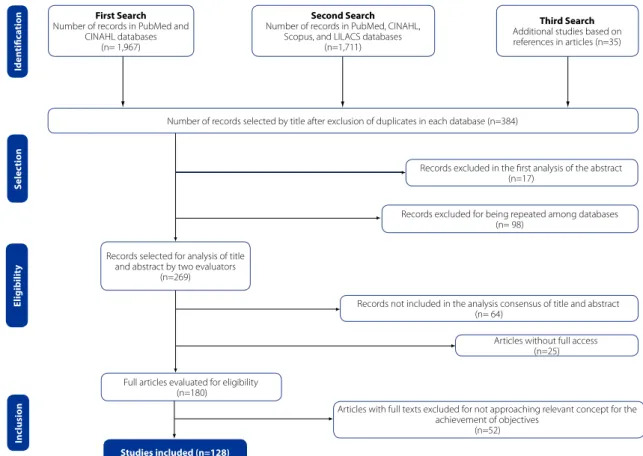
The search strategies enabled recovery of 3,713 recor-ds. The reading with analysis of titles and abstracts by two evaluators resulted in the selection of 180 publications for full reading. After the reading of the full text, 128 publica-tions responded to at least one of the guiding quespublica-tions of the scoping review and characterized the sample of this theoretical search. Figure 1 represents the process of selec-tion of articles based on PRISMA guidelines(19).
First Search
Number of records in PubMed and CINAHL databases
(n= 1,967)
Second Search
Number of records in PubMed, CINAHL, Scopus, and LILACS databases
(n=1,711)
Third Search
Additional studies based on references in articles (n=35)
Number of records selected by title after exclusion of duplicates in each database (n=384)
Records excluded in the first analysis of the abstract (n=17)
Records excluded for being repeated among databases (n= 98)
Records not included in the analysis consensus of title and abstract (n= 64)
Articles without full access (n=25)
Articles with full texts excluded for not approaching relevant concept for the achievement of objectives
(n=52)
Studies included (n=128)
Inclusion
Records selected for analysis of title and abstract by two evaluators
(n=269)
E
ligibilit
y
S
elec
tion
Full articles evaluated for eligibility (n=180)
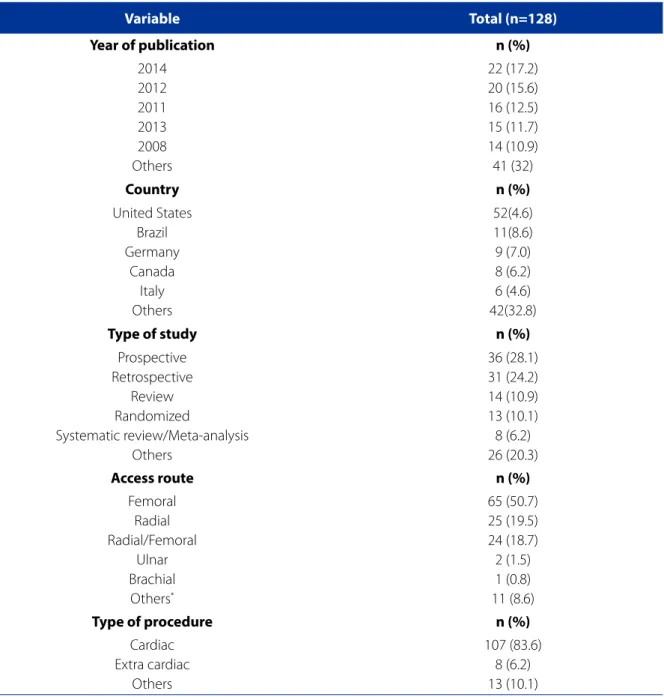
Table 1 - Distribution of the studies included according to year of publication, country, type of study, access route, and type of procedure, search period from 2005 to 2015
Variable Total (n=128)
Year of publication n (%)
2014 2012 2011 2013 2008 Others
22 (17.2) 20 (15.6) 16 (12.5) 15 (11.7) 14 (10.9) 41 (32)
Country n (%)
United States Brazil Germany
Canada Italy Others
52(4.6) 11(8.6) 9 (7.0) 8 (6.2) 6 (4.6) 42(32.8)
Type of study n (%)
Prospective Retrospective
Review Randomized
Systematic review/Meta-analysis Others
36 (28.1) 31 (24.2) 14 (10.9) 13 (10.1) 8 (6.2) 26 (20.3)
Access route n (%)
Femoral Radial Radial/Femoral
Ulnar Brachial
Others*
65 (50.7) 25 (19.5) 24 (18.7) 2 (1.5) 1 (0.8) 11 (8.6)
Type of procedure n (%)
Cardiac Extra cardiac
Others
107 (83.6) 8 (6.2) 13 (10.1)
Source: Research data, 2015.
*Combinations among femoral, radial, ulnar, and brachial access routes.
With regard to the search period, it was observed that the highest number of the studiesselected was concentra-ted in 2014 (17%), 52 (41%) were carried out by researchers from the United States, and the remaining studies by teams from 26 countries. The prospective studies represent about 28% of the sample and, regarding the access route, more than half of the publications included were associated with femoral access. Cardiac procedures (84%) stand out com-pared with other procedures and are mostly represented
by studies associated with coronary diagnostic and thera-peutic procedures. Most publications were developed by the medical area, with a less extensive proportion by the nursing area. Table 1 shows data regarding general charac-teristics of the publications included.
Percutaneous Coronary Intervention
Cardiac Catheterization
Ablation of Atrial Fibrillation
Study of access site vascular complications
Access Radial/femoral access
Brachial access Radial access
Ulnar access
Radial/ulnar access
Femoral/ radial / brachial access
Radial/ulnar/femoral/brachial access
Radial/brachial access
Femoral access
Neurointerventional Procedures Percutaneous Aortic Valve Replacement
Coronary Angiography
Ablation of Ventricular Tachycardia
Interventional Radiology Procedures
Primary Percutaneous Coronary Intervention
Percutaneous Lower Extremity Revascularization
Percutaneous Coronary Intervention
Cardiac Catheterization
Carotid Angioplasty
Percutaneous Procedures Percutaneous Vascular Intervention
Endovascular Procedures
Diagnostic Arteriography Endovascular Interventions Carotid Angioplasty
Coronary Arteriography
Percutaneous Interventions
Percutaneous Cardiovascular Procedures Percutaneous Coronary Intervention
Primary Percutaneous Coronary Intervention
Percutaneous Peripheral Intervention Lower Extremity Endovascular Procedure Cardiac Catheterization
Cardiac Catheterization
Percutaneous Coronary Intervention
Percutaneous Coronary Procedures
Vascular / Cardiology Procedures Diagnostic/Therapeutic Coronary Procedure
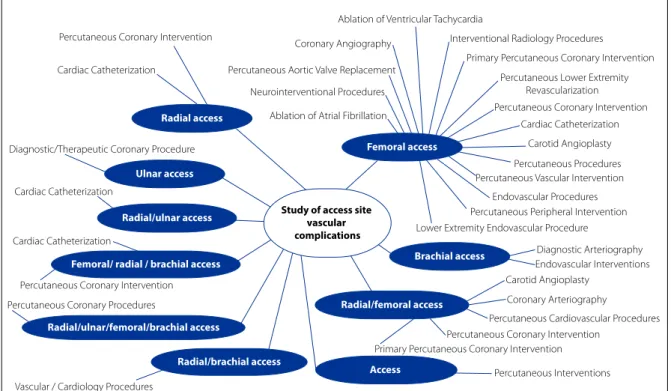
Figure 2 – Evidence map of access sites and types of procedures of the studies included in the scoping review, period from 2005 to 2015
Source: Research data, 2015.
As synthesis of the knowledge on the occurrence of post-procedure access site complications that were evalu-ated in the studies, data regarding the most reported types of complications are presented, with data regarding their frequency according to the access site used (Chart 1).
Analysis of the full text of the 128 publications inclu-ded also made it possible to identify the interest theme of each publication. Themes were organized in three theme categories based on the review’s guiding questions. Each category will be presented separately as follows:
Access site complications Frequency in femoral
access
Frequency in radial access
Frequency in ulnar access
Ecchymosis (35%)(20) to (73%)(21) (52%)(22) to (60%)(21)
-Arteriovenous fistula (<0.1%)(23) to (3.3%)(24) (1.0%)(25)
-Hematoma (0.5%)(23) to (25.7%)(26) (0.6%)(27) to (16.0)(28) (1.0%)(29) to (7.7%)(30)
Retroperitoneal hematoma (0.7%)(31) to (4.0%)(24) -
-Puncture infection (<0.1%)(32) to (1.7%)(33) -
-Arterial occlusion (<0.1%)(34) to (0.9)(35) (0.2%)(36) to (30.5)(25) (0.8%)(37) to (2.0%)(29)
Pseudo-aneurysm (0.1%)(31) to (8.0%)(38) (0.1%)(39) to (4.3%)(35)
-Bleeding (0.1%)(32) to (27%)(40) (0.2%)(36) to (14.0)(22)
-Chart 1- Access site complications and frequency of access route complications in the studies included in the review, period from 2005 to 2015
Category 1. Vascular access complications after percutaneous procedure
This theme category was prevalent with regard to fre-quency, with 97 publications. It consisted of studies that aimed to evaluate vascular access complications after percutaneous procedures in different contexts. This category is reported through three subcategories for a better understanding:
Elements associated with vascular access site complications
Studies of this subcategory report different factors that occur from the development of complications to their impli-cations in later clinical outcomes. Seventy-one publiimpli-cations that evaluated different elements associated with access site complications were selected, such as: puncture strate-gies; result from different access routes in special situations; hemostasis strategies; rest time and early hospital discharge; and use of pre-procedure anticoagulant/fribinolytic agents.
Vascular complications in different access routes
Fifteen studies were included in this subcategory. Most were associated with a comparison between radial and femoral access routes (14 publications) in patients with acute coronary syndrome, end-stage liver disease, advanced age, carotid artery stenting, using anticoagu-lants. Comparison was also between genders in records of patients undergoing PCI and in primary PCI. In addi-tion, a publication compared the ulnar versus radial ap-proaches in cardiac catheterization.
Vascular complications according to hemostatic/ hemostasis methods
The use of different modalities of vascular closure devices has made progress over the years in interventionism. In many of the studies, these modalities were compared with the tra-ditional hemostasis technique, that is, manual compression. Eleven publications were included in this subcategory.
Category 2. Risk factors/predictors of vascular access complications
The 12 studies in this category examined factors associa-ted with the occurrence of access site complications, such as predictors of: complications between genders; compli-cations after sheath removal; risk of retroperitoneal hema-toma; and vascular complications in coronary procedures.
Category 3. Diagnosis and treatment of vascular access complications
Nineteen studies associated with the different access routes in percutaneous procedures were included in this category, with the following themes: identification of rare radial puncture complications and treatment options; tre-atment of pseudo-aneurysm and arteriovenous fistula; and evaluation and management of vascular access complica-tions. There was a prevalence of review studies and case reports in this category.
DISCUSSION
Mapping the literature that deals with vascular com-plications associated with the access site in percutaneous procedures carried out in hemodynamic laboratories made it possible to outline the different contexts of study on this theme with regard to types of procedures, access routes used, and related complications.
The femoral approach stands out as the access route that includes the greatest diversity of diagnostic and therapeutic procedures. It is considered the choice route for different procedures and specialties in hemodynamic laboratories, es-pecially in procedures that require large-caliber introducers, such as transcatheter aortic valve implantation (TAVI), in whi-ch vascular access complications may be frequent. In a study of a Portuguese team that included 140 patients submitted to TAVI, 7.1% presented serious complications and 29.3% presented minor complications, of which a prevalence of in-guinal hemorrhage/hematoma (11.4%), pseudo-aneurysm (7.9%), and closure device failure (5.0%)(1) was found. These
findings reinforce the fact that risks of complications associa-ted with the procedure go beyond a satisfactory result in he-modynamic laboratories, because complications associated with the access site may occur early or late. Therefore, a team attentive to potential complications represents a differential in the post-procedure period.
However, the radial access route stands out in coronary cardiac procedures as a choice when there are appropriate conditions for and benefits to its use. In this respect, in prima-ry PCI, the radial approach must be the main choice for expe-rienced radial hemodynamicists(8). In addition, studies show
that the radial access route is superior to the femoral access route in reducing access site complications and bleeding(3,9).
access route for coronary procedures, and brachial access is used as an alternative access route. Ulnar access proved to be a safe and effective option in case of failure of the ipsilateral radial route(37). A recent meta-analysis reported
that similar results were found when comparing ulnar ac-cess with radial acac-cess, with regard to risk of complications associated with the access(11).
Regarding complications according to access routes, ec-chymosis is characterized as the most frequent complication for both femoral and radial access routes. However, it is worth mentioning that this complication was evaluated in a low number of studies(20-22), and is characterized as a complication
of late presentation and with little impact on clinical evolution. It may present due to another complication, such as hema-toma, or simultaneously with another serious complication.
With regard to complications that are associated with different levels of involvement and impact on clinical ou-tcomes, bleeding, hematoma, and pseudo-aneurysm were the most frequent complications in femoral puncture. When comparing these findings with radial access, lower rates of frequency of these events was observed, which is similar to data from different studies that reported lower rates of com-plications for the radial approach. Publications with a meta--analysis approach are favorable to the use of radial vascular access due to reductions in bleeding and vascular access site complications, as well as better results for patients(3,8-9).
Radial artery occlusion is characterized as the most fre-quent complication (30.5%) in the analysis of studies of the radial approach in the present scoping study. This datum corroborates a recent review that included 66 studies and found an occlusion incidence up to 33%(2).This
complica-tion is often asymptomatic and there is a trend toward re-duction in occlusion rates in evaluations carried out during longer periods of post-procedure follow-up.
Retroperitoneal hematoma, due to its direct association with femoral puncture, is not a complication evaluated in procedures using another access route. Although rare, when it occurs it usually requires blood transfusion, and surgical procedure in some cases. An American study that evaluated factors associated with the development of this complication showed that most cases of retroperitoneal hematoma occurred in the first hours after the procedure. Of these, 92% of patients received blood transfusion and 12% required surgical intervention(31).
Other complications, such as artery laceration(4), artery
perforation(41), granuloma(42), mycotic aneurysm, arterial
dissection, compartment syndrome, and limb ischemia(43)
were reported in the selected publications, but due to their rare presentation they were only mentioned in the defini-tions of the complicadefini-tions evaluated or were reported in review studies as rare occurrences.
Female gender(44-45) and age older than 75years(4,44) were
identified as the main predictors of complications. The following risk factors for complications were also repor-ted: pre-procedure use of anticoagulants; kidney disease; peripheral vascular disease; congestive heart failure; high blood pressure; use of sheaths larger than 6-French (large--caliber sheaths); lower body mass index; lower body wei-ght or lower skin-fold thickness; multiple punctures; use of glycoprotein IIb/IIIa inhibitors; length of time of the proce-dure; and high femoral artery puncture.
Regarding evaluation of the complications, this is ini-tially clinical, through signs and symptoms, and may re-quire imaging examinations(46) for diagnosis confirmation.
Most complications, after identification, may be carried out with clinical monitoring; conservative measures such as manual compression or use of compression devices; com-pression guided by ultrasound; or percutaneous/endovas-cular treatments. When more serious, they may require sur-gical treatment or blood transfusion.
The knowledge of teams on the recognition and clinical management of complications, especially in units that admit patients from hemodynamic laboratories, helps to promote continuity of care, with interventions to minimize or prevent these complications so that better results may be achieved.
Main highlights of this scoping review for clinical practice
· Different factors are associated with the results of patients, such as factors inherent to the each patient, therapy, and questions regarding to the procedure and team.
· Among predictors of vascular complications, female gen-der and advanced age are those more often identified, and healthcare teams must also consider these aspects in post-procedure care.
· There is a trend toward better results with the use of vas-cular closure devices compared with other hemostatic methods but, when complications occur, they must be carefully monitored.
· Early mobilization proved to be a safe practice after PCI when compared with longer standard periods of rest.
· Programs for hospital discharge on the same day after PCI may be feasible for carefully selected patients.
· The use of a specific technique by interventionists as a standard puncture may influence the results if another puncture technique is adopted.
· Lower time of hemostatic compression and hemostasis in radial puncture were associated with lower incidence of radial artery occlusion.
· The radial approach must be prioritized whenever possi-ble, because it enables better results regarding bleeding and vascular access complications.
· The radial approach is recommended as the first choice in acute coronary syndrome and primary PCI, when carried out by experienced radial hemodynamicists.
· Vascular access complications from procedures may be conservatively managed with non-invasive therapies, percutaneous or endovascular treatment; when more se-rious, surgical procedure may be required.
Study limitations
· The delimitation of the search period to 10 years may have failed to consider articles, theses, or dissertations that would contribute to add results to the research questions.
· Analysis of the publications by two evaluators occurred only in the selection stage, by title and abstract, and was not possible in the full reading of the articles.
· In the categorization regarding the type of study, the des-cription found in the article was considered, and not the impression of the evaluator after full content analysis.
CONCLUSION
The total number of publications included in the scoping review shows that the theme has been widely studied. In the context of percutaneous procedures, the femoral access route was identified as the most used ap-proach in hemodynamic laboratory procedures. The most highlighted complications associated with the access site in post-procedures were ecchymosis, arteriovenous fistula, hematoma, retroperitoneal hematoma, puncture infection, arterial occlusion, pseudo-aneurysm, and ble-eding. These complications ranged according to the ac-cess route used.
Vascular access complication diagnoses are based on findings in history and physical examinations, and they may usually be confirmed through imaging. With regard to clinical management, they may be carried out with con-servative measures and care, with constant monitoring, percutaneous/endovascular treatments and, when more serious, with surgical treatment.
Implications for teaching, research, and care
The methodological path taken may be useful for the teaching and development of new studies, because sco-ping reviews are still an incipient methodology in the nur-sing knowledge area. This type of review, although its
me-thod does not anticipate the exclusion of articles according to methodological quality criteria, enables researchers to specify the type of literature that will not be included in its protocol. In clinical practice, this study contributes to the body of knowledge on percutaneous procedure complica-tions, providing substitutes for actions in patient care.
REFERENCES
1. Fonseca P, Almeida J, Bettencourt N, Ferreira N, Carvalho M, Ferreira W, et al. Incidence and predictors of vascular access site complications following trans-femoral transcatheter aortic valve implantation. Rev Port Cardiol. Forthcoming 2016. doi: http://dx.doi.org/10.1016/j.repc.2015.11.009.
2. Rashid M, Kwok CS, Chugh S, Kedev AS, Bernat I, Ratib K, et al. Radial artery oc-clusion after transradial interventions: a systematic review and meta-analysis. J Am Heart Assoc. 2016 Jan;5(1):1-21.
3. Rigattieri S, Sciahbasi A, Ratib K, Alonzo A, Cox N, Chodór P, et al. Comparison between radial approach and femoral approach with vascular closure devices on the occurrence of access-site complications and periprocedural bleeding after percutaneous coronary procedures: a systematic review and meta-analysis. J Invasive Cardiol. 2016 Dec;28(12):473-9.
4. Lo RC, Fokkema MT, Curran T, Darling J, Hamdan AD, Wyers M, et al. Routine use of ultrasound-guided access reduces access site-related complications after lower extremity percutaneous revascularization. J Vasc Surg. 2015 Feb;61(2):405-12. 5. Kolluri R, Fowler B, Nandish S. Vascular access complications: diagnosis and
management. Curr Treat Options Cardiovasc Med. 2013 Apr;15(2):173-87. 6. Merriweather N, Sulzbach-Hoke LM. Managing risk of complications at
femoral vascular access sites in percutaneous coronary intervention. Crit Care Nurse. 2012 Oct;32(5):16-29.
7. Rajebi H, Rajebi MR. Optimizing common femoral artery access. Tech Vasc Interv Radiol. 2015 Jun;18(2):76-81.
8. Karrowni W, Vyas A, Giacomino B, Schweizer M, Blevins A, Girotra S, et al. Ra-dial versus femoral access for primary percutaneous interventions in ST-seg-ment elevation myocardial infarction patients: a meta-analysis of randomized controlled trials. JACC Cardiovasc Interv. 2013 Aug;6(8):814-23.
9. Bavishi C, Panwar SR, Dangas GD, Barman N, Hasan CM, Baber U, et al. Meta-analysis of radial versus femoral access for percutaneous coronary interven-tions in non-ST-segment elevation acute coronary syndrome. Am J Cardiol. 2016 Jan;117(2):172-8.
10. Sattur S, Singh M, Kaluski E. Transulnar access for coronary angiography and percutaneous coronary intervention. J Invasive Cardiol. 2014 Aug;26(8):404-8. 11. Dahal K, Rijal J, Lee J, Korr KS, Azrin M. Transulnar versus transradial access
for coronary angiography or percutaneous coronary intervention: a meta-analysis of randomized controlled trials. Catheter Cardiovasc Interv. 2016 Apr;87(5):857-65.
12. Steve Lee K, Sos TA. Brachial artery access. Tech Vasc Interv Radiol. 2015 Jun;18(2):87-92.
13. Mlekusch W, Mlekusch I, Sabeti-Sandor S. Vascular puncture site complications: diagnosis, therapy, and prognosis. Vasa. 2016;45(6):461-9.
14. Kanei Y, Kwan T, Nakra NC, Liou M, Huang Y, Vales LL, et al. Transradial cardiac catheterization: a review of access site complications. Catheter Cardiovasc In-terv. 2011 Nov 15;78(6):840-6.
16. Reich R. Nível de complicação: acesso vascular—um novo resultado de en-fermagem para avaliação de pacientes pós-procedimentos percutâneos [dis-sertação]. Porto Alegre (RS): Universidade Federal do Rio Grande do Sul; 2016. 17. The Joanna Briggs Institute (AU). Joanna Briggs Institute reviewers’ manual
2015: methodology for JBI scoping reviews [Internet]. Adelaide: The Joanna Briggs Institute; 2015 [cited 2016 Sep 15]. Available from: https://joannabriggs. org/assets/docs/sumari/Reviewers-Manual_Methodology-for-JBI-Scoping-Reviews_2015_v1.pdf.
18. Levac D, Colquhoun H, O’Brien KK. Scoping studies: advancing the methodol-ogy. Implement Sci. 2010 Sep;5:69.
19. Galvão, TF, Pansani, TSA. Principais itens para relatar revisões sistemáticas e meta-análises: a recomendação PRISMA. Epidemiol Serv Saúde. 2015 abr-jun;24(2):335-42.
20. Sabo J, Chlan LL, Savik K. Relationships among patient characteristics, comor-bidities, and vascular complications post-percutaneous coronary intervention. Heart Lung. 2008 May-Jun;37(3):190-5.
21. Cosman TL, Arthur HM, Natarajan MK. Prevalence of bruising at the vascular access site one week after elective cardiac catheterisation or percutaneous coro-nary intervention. J Clin Nurs. 2011 May;20(9-10):1349-56.
22. Cheng KY, Chair SY, Choi KC. Access site complications and puncture site pain following transradial coronary procedures: a correlational study. Int J Nurs Stud. 2013 Oct;50(10):1304-13.
23. Lins S, Guffey D, VanRiper S, Kline-Rogers E. Decreasing vascular complications after percutaneous coronary interventions: partnering to improve outcomes. Crit Care Nurse. 2006 Dec;26(6):38-45; quiz 46.
24. Dumont CJ. Blood pressure and risks of vascular complications after percutane-ous coronary intervention. Dimens Crit Care Nurs. 2007 May-Jun;26(3):121-7. 25. Uhlemann M, Möbius-Winkler S, Mende M, Eitel I, Fuernau G, Sandri M, et al.
The Leipzig prospective vascular ultrasound registry in radial artery catheteriza-tion: impact of sheath size on vascular complications. JACC Cardiovasc In-terv. 2012 Jan;5(1):36-43.
26. Wong HF, Lee CW, Chen YL, Wu YM, Weng HH, Wang YH, et al. Prospective com-parison of angio-seal versus manual compression for hemostasis after neuro-interventional procedures under systemic heparinization. AJNR Am J Neurora-diol. 2013 Feb;34(2):397-401.
27. Bernat I, Horak D, Stasek J, Mates M, Pesek J, Ostadal P, et al. ST-segment el-evation myocardial infarction treated by radial or femoral approach in a multi-center randomized clinical trial: the STEMI-RADIAL trial. J Am Coll Cardiol. 2014 Mar;63(10):964-72.
28. Markovic S, Imhof A, Kunze M, Rottbauer W, Wöhrle J. Standardizes radial ap-proach reduces access site complications: a prospective observational registry. Coron Artery Dis. 2015 Jan;26(1):56-9.
29. Andrade PB, Tebet MA, Andrade MVA, Mattos LA, Labrunie A. Registro prospec-tivo de avaliação da segurança e eficácia da técnica ulnar na realização de pro-cedimentos coronários. Rev Bras Cardiol Invas. 2008;16(3):312-6.
30. Geng W, Fu X, Gu X, Jiang Y, Fan W, Wang Y, et al. Safety and feasibility of tran-sulnar versus transradial artery approach for coronary catheterization in non-selective patients. Chin Med J (Engl). 2014;127(7):1222-8.
31. Tremmel JA, Raissi Shabari F, Aggarwal M, Fearon WF, Ng MK, et al. Risk fac-tors for the development of retroperitoneal hematoma after percutaneous coro-nary intervention in the era of glycoprotein IIb/IIIa inhibitors and vascular clo-sure devices. J Am Coll Cardiol. 2005 Feb;45(3):363-8.
32. Stegemann E, Busch L, Stegemann B, Lauer T, Hoffmann R, Heiss C, et al. Evalu-ation of a structured training program for arterial femoral sheath removal after percutaneous arterial catheter procedures by assistant personnel. Am J Car-diol. 2015 Apr;115(7):879-83.
33. Aziz EF, Pulimi S, Coleman C, Florita C, Musat D, Tormey D, et al. Increased vascular access complications in patients with renal dysfunction undergoing percutaneous coronary procedures using arteriotomy closure devices. J Invasive Cardiol. 2010 Jan;22(1):8-13.
34. Klocker J, Gratl A, Chemelli A, Moes N, Goebel G, Fraedrich G. Influence of use of a vascular closure device on incidence and surgical management of access site complications after percutaneous interventions. Eur J Vasc Endovasc Surg. 2011 Aug;42(2):230-5.
35. Zukowski CN, Wozniak I, Souza Filho NFS, Cordeiro EA, Rell A, Marisa Leal M, et al. Acesso radial vs. acesso femoral em pacientes com idade avançada submetidos à intervenção coronária percutânea. Rev Bras Cardiol Invasiva. 2014;22(2):125-30.
36. Jolly SS, Yusuf S, Cairns J, Niemelä K, Xavier D, Widimsky P, et al. Radial versus femoral access for coronary angiography and intervention in patients with acute coronary syndromes (RIVAL): a randomised, parallel group, multicentre trial. Lancet. 2011 Apr 23;377(9775):1409-20.
37. Andrade PB, Rinaldi FS, Bienert IRC, Nogueira EF, Tebet MA, Esteves VC, et al. Segurança e factibilidade do acesso ulnar após falha do acesso radial ipsilateral. Rev Bras Cardiol Invasiva. 2014;22(1):5-9.
38. Mlekusch W, Minar E, Dick P, Sabeti S, Bartok A, Haumer M, et al. Access site management after peripheral percutaneous transluminal procedures: Nep-tune pad compared with conventional manual compression. Radiology. 2008 Dec;249(3):1058-63.
39. He PY, Yang YJ, Qiao SB, Xu B, Yao M, Wu YJ, et al. A comparison of transradial and transfemoral approaches for percutaneous coronary intervention in elderly pa-tients based on a propensity score analysis. Angiology. 2015 May;66(5):448-55. 40. Cafri C, Zahger D, Merkin M, Weinstein JM, Kobal S, Ilia R. Efficacy of the radial approach for the performance of primary PCI for STEMI. J Invasive Cardiol. 2013 Mar;25(3):150-3.
41. Tatli E, Buturak A, Cakar A, Vatan BM, Degirmencioglu A, Agac TM, et al. Unu-sual vascular complications associated with a transradial coronary procedures among 10,324 patients: case based experience and treatment options. J Interv Cardiol. 2015 Jun;28(3):305-12.
42. Shroff A, Siddiqui S, Burg A, Singla I. Identification and management of compli-cations of transradial procedures. Curr Cardiol Rep. 2013 Apr;15(4):350. 43. Burzotta F, Mariani L, Trani C, Coluccia V, Brancati MF, Porto I, et al.
Manage-ment and timing of access-site vascular complications occurring after trans-radial percutaneous coronary procedures. Int J Cardiol. 2013 Sep;167(5):1973-8. 44. Kerré S, Kustermans L, Vandendriessche T, Bosmans J, Haine SE, Miljoen H, et al. Cost-effectiveness of contemporary vascular closure devices for the prevention of vascular complications after percutaneous coronary interventions in an all-comers PCI population. EuroIntervention. 2014 Jun;10(2):191-7.
45. Holm NR, Sindberg B, Schou M, Maeng M, Kaltoft A, Bøttcher M, et al. Randomised comparison of manual compression and FemoSeal™ vascular closure device for closure after femoral artery access coronary angiography: the CLOSure dEvices Used in everyday Practice (CLOSE-UP) study. EuroIntervention. 2014 Jun;10(2):183-90. 46. Bhatty S, Cooke R, Shetty R, Jovin IS. Femoral vascular access-site complications
in the cardiac catheterization laboratory: diagnosis and management. Interv Cardiol. 2011 Aug;3(4):503-14.
Received: 10.10.2016 Approved: 03.28.2017
Corresponding author: