Major Article
INTRODUCTION
Address to: Dra Tamara Trelha Gauna. Rua Ponte Preta 55, Bairro Santo Amaro, 79112-460 Campo Grande, MS, Brasil.
Phone: 55 67 3345-3119; Cell phone: 55 67 9158-7066; Fax: 55 57 3345-3153 e-mail: [email protected]
Received 17 March 2013 Accepted 10 July 2013
Bloodstream infection in patients with end-stage
renal disease in a teaching hospital in
central-western Brazil
Tamara Trelha Gauna
[1],
Elizete Oshiro
[2],
Yuri Correa Luzio
[2],
Anamaria Mello Miranda Paniago
[2],
Elenir Rose Jardim Cury Pontes
[3]and Marilene Rodrigues Chang
[4][1]. Hospital Universitário Maria Aparecida Pedrossian, Universidade Federal de Mato Groso do Sul, Campo Grande, MS. [2]. Faculdade de Medicina, Universidade Federal de Mato Grosso do Sul, Campo Grande, MS. [3]. Departamento de Tecnologia de Alimentos e Saúde Pública, Universidade Federal de Mato Grosso do Sul, Campo Grande, MS. [4]. Departamento de Farmácia, Universidade Federal de Mato Grosso do Sul, Campo Grande, MS.
ABSTRACT
Introduction: Vascular access in patients undergoing hemodialysis is considered a critical determinant of bloodstream infection (BSI) and is associated with high morbidity and mortality. The purpose of this study was to investigate the occurrence of BSI in patients with end-stage renal disease using central venous catheters for hemodialysis. Methods: A cohort study was conducted in a public teaching hospital in central-western Brazil from April 2010 to December 2011. For every patient, we noted the presence of hyperemia/exudation upon catheter insertion, as well as fever, shivering, and chills during hemodialysis.
Results: Fifty-nine patients were evaluated. Thirty-fi ve (59.3%) patients started dialysis due to urgency, 37 (62.7%) had BSI,
and 12 (20%) died. Hyperemia at the catheter insertion site (64.9%) was a signifi cant clinical manifestation in patients with BSI.
Statistical analysis revealed 1.7 times more cases of BSI in patients with hypoalbuminemia compared with patients with normal
albumin levels. The principal infective agents identifi ed in blood cultures and catheter-tip cultures were Staphylococcus species (24 cases), non-fermentative Gram-negative bacilli (7 cases of Stenotrophomonas maltophilia and 5 cases of Chryseobacterium indologenes), and Candida species (6). Among the Staphylococci identifi ed, 77.7% were methicillin-resistant, coagulase-negative Staphylococci. Of the bacteria isolated, the most resistant were Chryseobacterium indologenes and Acinetobacter baumannii.
Conclusions: Blood culture was demonstrated to be an important diagnostic test and identifi ed over 50% of positive BSI cases.
The high frequency of BSI and the isolation of multiresistant bacteria were disturbing fi ndings. Staphylococcus aureus was the most frequently isolated microorganism, although Gram-negative bacteria predominated overall. These results highlight the importance of infection prevention and control measures in dialysis units.
Keywords: Catheter. Bloodstream infection. Chronic renal patients. Bacteremia. Hemodialysis.
End-stage renal disease (ESRD) is considered a global public health problem1. In Brazil,the number of patients with ESRD undergoing renal replacement therapy increased from 42,695 in 2000 to 92,091 in 2010. As many as 90.6% of patients with ESRD receive hemodialysis, and 13.6% of these patients receive non-tunneled catheters2.The survival and quality of life of these patients depend on the continued good functioning of dialysis access sites3.Bloodstream infection (BSI) is the leading cause of hospitalization and the second most common cause of death among patients receiving regular hemodialysis4,5.
Controlling infection in these patients is a challenge for healthcare staff because hemodialysis is an invasive procedure with an inherent infection risk. Furthermore, catheters are often manipulated during hemodialysis sessions, and patients
receiving hemodialysis are immunodefi cient6.
Primary BSIs are among the most common nosocomial
infections. Data suggest that 60% of hospital-acquired bacteremia
cases are associated with the use of central venous catheters (CVCs)7. Metastatic sites of infection occur frequently and can include endocarditis, vertebral osteomyelitis, spinal epidural abscess, and septic arthritis8. Despite the importance of BSIs, few studies have investigated this issue in patients with ESRD in Brazil. Instead, they have mostly focused on microbiological laboratory surveillance, without association of the results with clinical data9,10.
METHODS
RESULTS The purpose of this study was to describe BSI in patients
with ESRD using CVCs, describe the patients’ characteristics, identify the etiologic agents, and analyze the catheter-related variables considered as risk factors for BSI.
Study design
This paper reports on a prospective cohort study of 59 patients with ESRD receiving hemodialysis by means of a CVC at a Brazilian tertiary care teaching hospital in the State of Mato Grosso do Sul from April 2010 to December 2011. The principal outcome investigated was BSI.
Data collection and BSI surveillance
Included in the study were patients with ESRD using catheters and recently admitted to the hospital’s hemodialysis ward, patients undergoing hemodialysis who lost an arteriovenous
fi stula (AVF) or a catheter, and patients with implanted tunneled
or non-tunneled catheters. The sample included both ESRD inpatients and outpatients. All subjects included in the study were adults and agreed to participate. Individuals in intensive-care units and children were excluded.
Patients were followed up until four months post-catheterization. All CVCs were inserted using aseptic techniques according to the protocol recommended by the Hospital Infection Control Committee.
Data were collected during the hemodialysis sessions. We collected at least two peripheral blood samples from all patients who had signs and symptoms of BSI. Blood was collected in compliance with the criteria of the National Agency of Sanitary Surveillance11. The catheter insertion sites were inspected, and blood and/or catheter-tip cultures were monitored. Nursing staff trained in hemodialysis changed the dressings and manipulated the catheters using rigorous aseptic techniques. At the end of each hemodialysis session, the catheter lumens were aseptically
locked with heparin. The catheters were not fi lled with any other
thrombolytic agent or antimicrobial solution, and the connectors were not part of a closed access system.
For every patient, we checked for the presence of hyperemia at the catheter site, exudation upon catheter insertion, and symptoms such as fever, shivering, and chills during each hemodialysis session. Demographic, clinical, and laboratory data were collected from medical records and from the hospital’s laboratory database.
Empirical systemic antibiotic therapy was initiated whenever the patients developed fever or shivering. Vancomycin and
ceftazidime were the fi rst choices for the initiated antibiotic
regimen. The regimen was adjusted, if necessary, once the results of blood culture tests became available. The catheter was removed if fever or shivering symptoms persisted for more than 48h. In cases suggestive of BSI, according to medical criteria, the catheter tip was removed and subjected to culture. One week after antibiotic therapy initiation, new blood cultures were collected.
Microbiological tests
Blood cultures were performed in the hospital’s microbiology laboratory. The laboratory used a Bactec automated system (Becton Dickinson, Sparks, USA) for blood culture tests and a Vitek2 Compact automated system (BioMérieux, Durham,
NC, USA) for the identifi cation of pathogens and antimicrobial susceptibility profi ling of blood samples. In cases of blood
cultures with the same microorganism for one month or consecutive months, only one agent was considered.
Defi nitions
Bacteremia and candidemia were defi ned as clinical signs or symptoms of infection along with at least two blood cultures that tested positive for bacteria or yeasts of the genus Candida12. Diagnosis of CVC-related BSI was defi ned as at least one blood culture and catheter tip culture with the same agent, with clinical manifestations of infection and no other apparent source of infection13.
Bacteria were considered multidrug-resistant when exhibiting resistance to different classes of antimicrobial medications7.
Hypoalbuminemia was defi ned as serum albumin levels of
less than 3.5g/dL4.
Statistical analysis
To investigate the possible associations between the study variables, chi-square tests, chi-square tests for trends, and Fisher’s exact test were applied, and the relative risks were
calculated with 95% confidence intervals. Cox regression
analysis was used to estimate the adjusted relative risks using
variables with signifi cance levels lower than 20% and those of
clinical and epidemiological relevance. BioEstat 5.0 (Sociedade Mamirauá, Belém, Brazil) and Epi Info (version 3.5.3) were used for the statistical analyses14,15. Statistical signifi cance was
defi ned as p ≤ 0.05.
Ethical considerations
Our study was approved by the Research Ethics Committee of the Federal University of Mato Grosso do Sul (permit 1687/2010). All individuals who agreed to participate in the study signed informed consent forms stating that they were freely participating.
Of the 59 patients with ESRD using CVCs for hemodialysis,
30 (50.8%) developed bacteremia, 7 (11.6%) had mixed bacteremia and fungemia, and 22 (37.3%) had no evidence of BSI. The overall infection rate was 62.8% (95% CI, 50.4-75.1%).
The only patient who used a tunneled catheter developed BSI. Among the other 58 patients who used non-tunneled
catheters, bloodstream infection developed in 62%.
Of the patient group, 54.2% were female and 44% were older
TABLE 1 - Number and percentage of hemodialysis patients according to study variables and occurrence of bloodstream infection.
Bloodstream infection
yes no
(n = 37) (n = 22) RR
Variables n % n % (95% CI) p
Gender
male 20 74.1 7 25.9 1 b0,097
female 17 53.1 15 46.9 1.39 (0.94-2.07)
Age (years)
23-40 7 63.6 4 36.4 1 c0,831
41-60 13 59.1 9 40.9 1.08 (0.61-1.90)
61-85 17 65.4 9 34.6 0.97 (0.57-1.65)
Diabetes
yes 15 57.7 11 42.3 1 b0,479
no 22 66.7 11 33.3 0.87 (0.58-1.30)
Hypoalbuminemia
yes 26 76.5 8 23.5 1 b0,011
no 11 44.0 14 56.0 1.74 (1.08-2.81)
Recent surgery
yes 18 62.1 11 37.9 1 b0,920
no 19 63.3 11 36.7 0.98 (0.66-1.45)
Use of corticosteroids
yes 3 75.0 1 25.0 1 d1,000
no 34 61.8 21 38.2 1.21 (0.66-2.22)
Number of hemodialysis sessions
< 25 11 55.0 9 45.0 1.14 (0.69-1.88)
from 25 to 35 11 73.3 4 26.7 0.85 (0.55-1.32)
> 35 15 62.5 9 37.5 1 c0,641
Note: If p<0.05, differences are statistically signifi cant. RR: relative risk; bChi-square test; cChi-square test for trend; dFisher’s exact test. from 23-85 years (median, 58 years). The inpatients comprised
96.7% of the study population. Twelve (20%) patients died
during the study period.
The demographic and clinical characteristics of the patients are shown in Table 1. Bivariate analysis indicated that the BSI frequency was 1.7 times higher in patients with
hypoalbuminemia (76.5%) compared with patients with normal
albumin levels. The main signs and symptoms observed in
patients with BSI were chills, 35 (94.6%); shivering, 34 (91.9%); and hyperemia at the time of CVC insertion, 24 (64.9%).
In total, 114 CVCs were inserted during the study period,
and 111 (97.4%) of these were non-tunneled devices. The catheters were inserted into the right jugular vein in 45% of the
catheterizations. None of the variables related to CVC use were associated with the development of BSI (Table 2).
With regard to changes in or evolution of vascular access, 31 patients were switched from non-tunneled to arteriovenous catheters, and 16 patients progressed to tunneled catheters.
Thirty-seven patients developed BSI, and 19 (50%) of these
patients were catheterized because they lacked an AVF that
could be used. In the other patients (50%), the need for urgent
hemodialysis required catheterization.
Multivariate analysis revealed no association between BSI in hemodialysis patients and the following variables: hypoalbuminemia (p = 0.220; 95% CI 0.75 < RR < 3.44), gender (p= 0.368; 95% CI 0.69 < RR < 2.69), indication for catheterization (loss, maturation, or awaiting AVF) (p= 0.670;
95% CI 0.58 < RR < 2.35), number of catheter sites (p= 0.690;
95% CI 0.54 < RR < 2.54), length of catheterization (days)
TABLE 2 - Number and percentage of patients undergoing hemodialysis according to catheter use and occurrence of bloodstream infection.
Bloodstream infection
yes no
(n = 37) (n = 22) RR
Catheter n % n % (95% CI) p
Indication
arteriovenous fi stulab 18 75.0 6 25.0 1 c0,106
urgency 19 57.6 16 42.4 1.38 (0.94-2.02)
Diffi culties in catheter insertion
yes 24 66.7 12 33.3 1 c0,432
no 13 56.5 10 43.5 1.18 (0.77-1.81)
Number of sites
three or more 12 80.0 3 20.0 1 d0.078
two 12 63.2 7 36.8 1.27 (0.83-1.94)
one 13 52.0 12 48.0 1.54 (0.98-2.42)
Length of catheterization (days)
< 50 14 60.9 9 39.1 1.19 (0.73-1.95)
51 to 100 15 60.0 10 40.0 1.21 (0.75-1.97)
> 100 8 72.7 3 27.3 1 d0,574
Note: If p<0.05, differences are statistically signifi cant. When present, the category no information was not included in the test calculations. RR: relative risk; bLoss, maturation, or awaiting arteriovenous fi stula; cChi-square test; dChi-square test for trend.
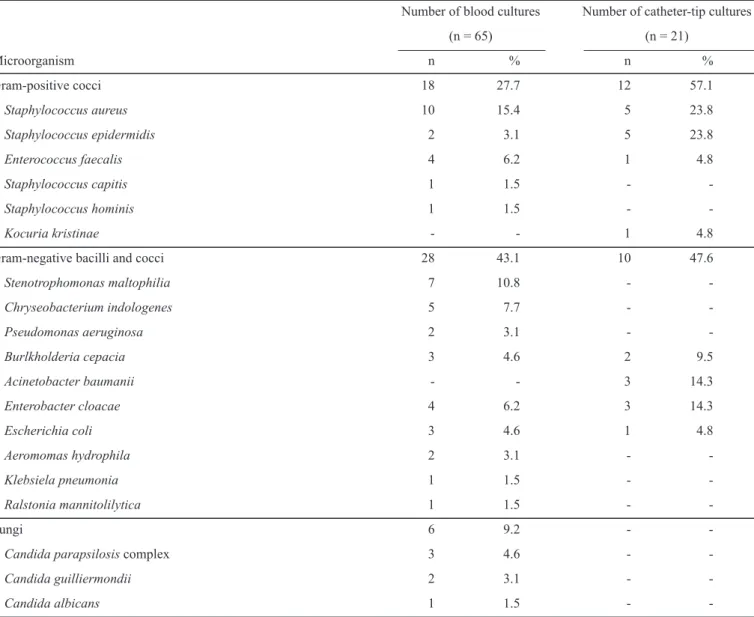
Table 3 lists the microorganisms isolated from blood and
catheter-tip cultures. Of the 124 blood cultures, 65 (52.4%) tested positive. Gram-positive cocci (n = 18; 27.7%) were the
most common microorganism observed, and Staphylococcus aureus accounted for most of the gram-positive infections.
Among the Gram-negative bacteria isolated (n = 28; 43.1%),
Stenotrophomonas maltophilia was the most prevalent. Six
Candida species were isolated, the most prevalent of which were Candida parapsilosis complex species.
In 10 patients, the same type of microorganism was isolated from the blood and catheter-tip cultures. Among these cultures, the most frequently isolated pathogens were S. aureus (6) and the Burkholderia cepacia complex (4). There was no signifi cant
difference between the prior use of antibiotics and multidrug
resistance of microorganisms (p = 0.751; RR = 0.80; 95%
CI, 0.26 to 2.48).
Of the 15 S. aureus isolates observed in the blood and catheter-tip cultures, only one was resistant to methicillin. Seven out of nine coagulase-negative Staphylococcus (CNS) isolates were resistant to this antibiotic. All S. epidermidis
(n = 7) isolates were resistant to methicillin. Of the 14 enterobacteria isolated, none produced beta-lactamase, and one isolate of Enterobacter cloacae was resistant to ertapenem. One of the two Pseudomonas aeruginosa isolates was resistant to
ceftazidime, cefepime, imipenem, meropenem, ciprofl oxacin,
and piperacillin-tazobactam. Acinetobacter baumannii (3) and Chryseobacterium indologenes (5) were among the most resistant Gram-negative bacteria.
DISCUSSION
The prevention and control of bacterial and fungal infections in patients with ESRD receiving hemodialysis via CVCs is a constant concern for health professionals. Although CVCs are an important component in the management of patients with
ESRD, these catheters also signifi cantly contribute to BSIs10.
In the present study, most patients were older than 58 years, a
fi nding that corroborates those of Sesso et al.2 A previous study16
conducted in a teaching hospital in Campo Grande indicated that most patients admitted to medical wards with CVC-related complications were older than 60 years. Patients with advanced age tend to be immunologically impaired, and they often have co-existing chronic diseases, such as systemic hypertension and diabetes. We also observed co-existing chronic disease in our
patients, and our fi ndings corroborate those of other researchers17.
To our knowledge, this is the fi rst study in central-western
Brazil to describe BSIs in patients with ESRD receiving hemodialysis. The prevalence of BSIs in our group of patients
was much higher (62.8%) than that among patients attending a hemodialysis center in Pakistan (25%)18.
A study by Brito et al.19 on nosocomial infection in the
TABLE 3 - Microorganisms responsible for bloodstream infection in hemodialysis patients.
Number of blood cultures Number of catheter-tip cultures
(n = 65) (n = 21)
Microorganism n % n %
Gram-positive cocci 18 27.7 12 57.1
Staphylococcus aureus 10 15.4 5 23.8
Staphylococcus epidermidis 2 3.1 5 23.8
Enterococcus faecalis 4 6.2 1 4.8
Staphylococcus capitis 1 1.5 -
-Staphylococcus hominis 1 1.5 -
-Kocuria kristinae - - 1 4.8
Gram-negative bacilli and cocci 28 43.1 10 47.6
Stenotrophomonas maltophilia 7 10.8 -
-Chryseobacterium indologenes 5 7.7 -
-Pseudomonas aeruginosa 2 3.1 -
-Burlkholderia cepacia 3 4.6 2 9.5
Acinetobacter baumanii - - 3 14.3
Enterobacter cloacae 4 6.2 3 14.3
Escherichia coli 3 4.6 1 4.8
Aeromomas hydrophila 2 3.1 -
-Klebsiela pneumonia 1 1.5 -
-Ralstonia mannitolilytica 1 1.5 -
-Fungi 6 9.2
-Candida parapsilosis complex 3 4.6 -
-Candida guilliermondii 2 3.1 -
-Candida albicans 1 1.5 -
-Even though previous studies9,18 reported that prolonged use
of CVCs increases the risk of BSI, we observed no evidence to support this claim. In the present study, no association was observed between the long-term use of CVCs and the increased
occurrence of BSI. This fi nding is possibly related to the small
number of patients evaluated, methodological difficulties
inherent in prospective studies, and specifi c features of the
cohort (type of patients and restricted sample group).
Bivariate analysis revealed that hypoalbuminemia was a
signifi cant risk factor for BSI in our patient group. It is well
known that hypoalbuminemia is associated with disease severity. Lukowsky et al.4 observed that during the first 90 days of
hemodialysis, one-third of all patient deaths were associated with
albumin levels of less than 3.5g/dL. Thus, the identifi cation and
treatment of hypoalbuminemia may decrease the risk of infection. Our results indicated a higher incidence of chills and shivering in patients who developed BSI, which was expected because these symptoms were criteria for blood culture collection. Hyperemia at the site of catheter insertion was
suggestive of BSI (p < 0.05), corroborating the results of a previous study20.
In the present investigation, non-tunneled catheters were the most frequently used catheters. Our results suggest that these catheters should be avoided in patients with ESRD due to the associated high risk of infection. We recommend that temporary catheters be replaced as soon as possible with AVFs or arteriovenous grafts. A tunneled CVC should be implanted if this is not possible18,21.
In our study, the right jugular vein was the most common
access route for CVC. This fi nding is similarto the fi ndings of
We also observed that a large percentage of our patients (n = 35; 59.3%) began hemodialysis due to an emergency
situation and therefore required CVCs. This fi nding is similar to
the results of other studies24,25. We believe that these emergency cases were related to delayed diagnosis of ESRD.
Although blood culture tests are considered the gold standard in the diagnosis of bacteremia and fungemia, previous studies reported variable sensitivity of these tests in detecting these infections and low sensitivity in identifying patients treated with antimicrobials11,26. The high (52.4%) percentage of positive blood cultures in our study may be a result of the nature of the population investigated. Patients receiving hemodialysis are most often individuals who present with concomitant chronic illnesses, and they are prone to immunodefi ciency.
Similar to the fi ndings of Bevilacqua et al.27, we observed that Gram-negative bacteria were predominant among the isolates. The infections caused by non-fermenting Gram-negative bacilli, such as Acinetobacter baumannii, Pseudomonas aeruginosa,
Chryseobacterium indologenes, and Stenotrophomonas
maltophilia, are difficult to treat because they are highly resistant, can cause outbreaks of nosocomial infection, and are often associated with high mortality rates28,29.
In this study, Staphylococcus aureus was the most frequent pathogen observed in blood cultures. Classically, these pathogens are often associated with BSIs because they are part of the skin microbiota. To date, numerous reports have indicated that BSIs associated with Staphylococcus aureus are serious and can result in severe metastatic infections such as sepsis, endocarditis, and endophthalmitis30,31.
BSIs caused by S. aureus require aggressive treatment, including catheter removal. In addition, if the infection does not resolve within 72h30,transesophageal echocardiography should be performed to rule out other potential sources of infection.
The emergence of multidrug-resistant gram-positive pathogens, including methicillin-resistant Staphylococcus aureus (MRSA), coagulase-negative Staphylococcus (MRSCN), and vancomycin-resistant Enterococcus spp. (VRE), complicates the management of infections caused by these agents32.
The isolation of Kocuria kristinae in the catheter-tip cultures is a rare fi nding. Dunn et al.33, previously described a case of severe intravascular infection complicated by septic pulmonary embolus and thrombosis in a patient with hyperemesis gravidarum as a result of this pathogen and the use of parenteral nutrition by a CVC.
Candida yeasts, which are recognized as opportunistic
pathogens, gain access to the bloodstream due to skin breakdown
and are predominantly found in immunodefi cient patients34. Non-albicans Candida species, such as Candida parapsilosis, have emerged as important infectious agents35. This pathogen
can secrete glycosylated proteins that form biofi lms in solution
and adhere to plastic materials such as intravascular catheters36. Brito et al.37 reported that Candida parapsilosis candidemia is associated with neutropenia, the use of CVCs, and chemotherapy.
Two patients had positive blood cultures for Candida guilliermondii for long periods, namely 6 and 12 months.
Because of the clinical condition of these patients and the
diffi culty of establishing new venous access, nephrologists chose not to remove the catheters. Based on a previous study35,
C. guilliermondii can be considered an emerging candidemia pathogen in central-western Brazil.
We propose that in a hemodialysis unit a multidisciplinary team should conduct surveillance studies to detect BSIs. To this end, the necessary measures to prevent bacteremia and other complications associated with infection in patients with ESRD can be instituted in a timely manner. Since our study was conducted, one of the measures instituted to reduce the rate of BSI in patients with ESRD is the use of connectors in closed access systems and the exchange of these connectors every seven days. Other measures should also be implemented, such as the training of multidisciplinary teams to specifi cally take care of CVCs in patients with ESRD. The use of antibiotic seals and thrombolytic agents is also recommended.
In conclusion, it is important to identify which pathogens cause BSIs among patients in hemodialysis units because this information will guide initial therapy27. Surveillance studies by multidisciplinary teams are necessary so that appropriate measures can be implemented to prevent bacteremia and other complications associated with infection in patients with ESRD. We observed a high prevalence of Gram-negative, bacteria-related BSIs among our patients with ESRD who received hemodialysis via a CVC.
REFERENCES
The authors declare that there is no confl ict of interest.
CONFLICT OF INTEREST
1. Eckardt KU, Bärthlein B, Baid-Agrawal S, Beck A, Busch M, Eitner F, et al. The German Chronic Kidney Disease (GCKD) study: design and methods. Nephrol Dial Transplant2012; 27:1454-1460.
2. Sesso RC, Lopes AA, Thomé FS, Lugon JR, Santos DR. Relatório do censo brasileiro de diálise de 2010. J Bras Nefrol2011; 33:442-447.
3. Xue Hui, Ix JH, Wang W, Brunelli SM, Lazarus M, Hakim R, et al. Hemodialysis Access Usage Patterns in the Incident Dialysis Year and Associated Catheter-Related Complications Am J Kidney Dis 2012; 61:123-130.
4. Lukowsky LR, Kheifets L, Arah OA, Nissenson AR, Kalantar-Zadeh K. Patterns and predictors of early mortality in incident hemodialysis patients: new insights. Am J Nephrol 2012; 35:548-558.
5. Moysés Neto M, Vieira-Neto OM, Figueiredo JFC. Bacterial colonization in a hemodialysis dual lumen temporary catheter. Rev Soc Bras Med Trop 2003; 36:431-432.
6. Labeau SO, Vandijck DM, Rello J, Adam S, Rosa A, Wenisch C, et al. EVIDENCE Study Investigators. Centers for Disease Control and Prevention guidelines for preventing central venous catheter-related infection: results of a knowledge test among 3405 European intensive care nurses. Crit Care Med2009; 37:320-323.
7. Ministério da Saúde. Agência Nacional de Vigilância Sanitária. Orientações para prevenção de infecção primária de corrente sanguínea. Brasília: Ministério da Sáude; 2010.
9. Bicudo D, Batista R, Furtado GH, Sola A, Medeiros EAS. Risk factors for catheter-related bloodstream infection: a prospective multicenter study in Brazilian intensive care units. Braz J Infect Dis2011; 15:328-331.
10. Bonfante GMS, Gomes IC, Andrade ELG, Lima EM, Acurcio FA, Cherchiglia ML. Duration of temporary catheter use for hemodialysis: an observational, prospective, evaluation of renal units in Brazil. BMC Nephrol 2011; 12:1-7.
11. Ministério da Saúde. Agência Nacional de Vigilância Sanitária. Critérios nacionais de diagnósticos de infecções relacionadas a assistência a saúde- Corrente Sanguínea, Brasília: Ministério da Saúde; 2009 [Cited 2013 January 23]. Available at: http://www.anvisa.gov.br/servicosaude/ manuais/index.htm
12. Wang I-Kuan, Chang Yi-Chin, Liang Chih-Chia, Chuang Feng-Rong, Chang Chiz-Tzung, Lin Hsin-Hung, et al. Bacteremia in Hemodialysis and Peritoneal Dialysis Patients. Intern Med 2012; 51:1015-1021.
13. Mermel LA, Allon M, Bouza E, Craven DE, Flynn P, O’ Grady NP, et al. Clinical practice guidelines for the diagnosis and management of intravascular catheter-related infection: 2009 Update by the Infectious Diseases Society of America. Clin Infect Dis 2009; 49:1-45.
14. Ayres M, Ayres Jr M, Ayres DL, Santos AAS. BioEstat [Software]. Aplicações estatísticas das Ciências Bio-médicas [programa de computador]. Versão 5.0. Belém (PA): Sociedade Mamirauá; 2007.
15. Centers for Disease Control and Prevention (CDC). Division of Public Health Surveillance and Informatics. Epi Info [Software], [Cited 2011 February 01] Version 3.5.3, 26 January 2011. Available at http://www. cdc.gov/.
16. Loureiro MDR, Barbosa DA. Risco de infecção hospitalar em pacientes submetidos a cateterização venosa central. In: Universidade Federal do Mato Grosso do Sul, editor. Dimensões do processo de cuidar em enfermagem. Campo Grande: Editora UFMS. 2004, p. 341-353.
17. Barros MB, Francisco PM, Zanchetta LM, César CL. Trends in social and demographic inequalities in the prevalence of chronic diseases in Brazil. PNAD: 2003-2008. Cien Saude Colet 2011; 16:3755-3768.
18. Qureshi AL, Abid K. Frequency of catheter related infections in haemodialysed uraemic patients. J Pak Med Assoc 2010; 60:671-675.
19. Brito DVD, Brito CS, Resende DS, Moreira do Ó J, Abdallah VOS, G Filho PP. Nosocomial infections in a Brazilian neonatal intensive care unit: a 4 year surveillance study. Rev Inst Med Trop S Paulo2010; 43:633-637.
20. Fermi MRV. Diálise para enfermagem: Guia prático. 2nd ed. Rio de Janeiro: Guanabara Koogan; 2010.
21. Vanholder R, Canaud B, Fluck R, Jadoul M, Labriola L, Marti-Monros A, et al. Diagnosis, prevention and treatment of haemodialysis catheter-related bloodstream infections (CRBSI): a position statement of European Renal Best Practice (ERBP). Nephr Dial Trans Plus 2010; 3:234-246.
22. Jones SM, Ravani P, Hemmelgarn BR, Muruve D, Macrae JM. Morphometric
and biological characterization of biofi lm in tunneled hemodialysis catheters.
Am J Kidney Dis 2011; 57:449-455.
23. Grothe C, Belasco AGS, Bittencourt ARC, Vianna LAC, Sesso RCC, Barbosa DA. Incidência de infecção da corrente sanguínea nos pacientes submetidos à hemodiálise por cateter venoso central. Rev Latino-Am Enfermagem2010; 18:8.
24. Souza RA, Oliveira EA, Silva JM, Lima EM. Avaliação do acesso vascular para hemodiálise em crianças e adolescentes: um estudo de coorte retrospectivo de 10 anos. J Bras Nefrol 2011; 33:422-430.
25. Ethier J, Mendelssohn DC, Elder SJ, Hasegawa T, Akizawa T, Akiba T et al. Vascular access use and outcomes: an international perspective from the Dialysis Outcomes and Practice Patterns Study. Nephrol Dial Transplant 2008; 23:3219-3226.
26. Huttunen R, Aittoniemi J. New concepts in the pathogenesis, diagnosis and treatment of bacteremia and sepsis. J Infect2011; 63:407-419. 27. Bevilacqua JL, Gomes JG, Santos VF, Canziani, ME. Comparação
ente citrato trissódico e heparina como solução para selo de cateter em pacientes em hemodiálise. J Bras Nefrol 2011; 33:86-92.
28. Al Mohajer M, Darouiche RO. Sepsis syndrome, bloodstream infections and device-related infections. Med Clin N Am 2012; 96:1203-1223 29. Souza MMRS, Silva CAB, Paschoalin EL, Moura Júnior JAM, Paschoalin
RP, Oliveira EP. Bacteriemia por Chryseobacterium indologenes em diabético em hemodiálise ambulatorial. J Bras Patol Med Lab 2012; 48:29-31.
30. Fitzgibbons LN, Puls DL, Mackay K, Forrest GN. Management of Gram-positive coccal bacteremia and hemodialysis. Am J Kidney Dis 2011; 57:624-640.
31. Troidle L, Finkelstein FO. Catheter-related bacteremia in hemodialysis patients: the role of the central venous catheter in prevention and therapy. Int J Artif Organs 2008; 31:827-833.
32. Ager S, Gould K. Clinical update on linezolid in the treatment of Gram-positive bacterial infection. Infect and drug resistance 2012; 5: 87-102. 33. Dunn R, Bares S, David MZ. Central venous catheter-related bacteremia
caused by Kocuria kristinae: case report and review of the literature. Ann Clin MicrobAntimicrob 2011; 10:2-5.
34. Xavier PCN, Chang MR, Nunes MO, Palhares DB, Silva RA, Bonfi m GF,
Junior NFA. Neonatal candidemia in a public hospital in Mato Grosso do Sul. Rev Soc Bras Med Trop 2008; 41:459-463.
35. Chang MR, Correia FP, Costa LC, Xavier PCN, Palhares DB, Taira DL, et al. Candida Bloodstream infection: data from a teaching hospital in Mato Grosso do Sul, Brazil. Rev Inst Med Trop S Paulo2008; 50:265-268.
36. Colombo AL, Nucci M, Park Bj, Nouér SA, Arthington-Skaggs B, Matta DA, et al. Epidemiology of candidemia in Brazil: a nationwide sentinel surveillance of candidemia in eleven medical centers. J Clin Microbiol 2006; 44:2816-2823.