Ciência Téc. Vitiv. 35(2) 76-106. 2020
76
This is an Open Access article distributed under the terms of the Creative Commons Attribution License
(https://creativecommons.org/licenses/by/4.0), which permits unrestricted use, distribution, and reproduction in any medium, provided the original work is properly cited.
AN OVERVIEW ON BOTRYTIZED WINES
REVISÃO: VINHOS BOTRITIZADOS
Georgios Kallitsounakis1, Sofia Catarino1,2*
1LEAF (Linking Landscape Environment Agriculture and Food) Research Center, Instituto Superior de Agronomia, Universidade de Lisboa, Tapada da Ajuda, 1349-017 Lisboa, Portugal.
2CeFEMA (Centre of Physics and Engineering of Advanced Materials) Research Center, Instituto Superior Técnico, Universidade de Lisboa, Av. Rovisco Pais, 1, 1049-001 Lisboa, Portugal.
* Corresponding author: Tel.: +351 21 3653246, e-mail: [email protected]
(Received 08.06.2020. Accepted 29.08.2020)
SUMMARY
Noble rot wine is a specific type of sweet wine that derives from the infection of grape berries by a fungus called Botrytis cinerea. These wines are produced in specific wine regions around the world, with Sauternes region of France and Tokay region of Hungary being the most famous ones. The purpose of the current article is to provide a systematic review on the different stages of botrytized wines production, including a detailed analysis of the technical aspects involved. Specifically, it describes the process and development of berry infection by B. cinerea, and special emphasis is given to the main stages and operations of winemaking, conservation, aging and stabilization. A complex combination of a number of parameters (e.g., very specific environmental conditions) explains the rarity of noble rot occurrence and highlights the uniqueness of botrytized wines.
RESUMO
Os vinhos botritizados representam uma categoria específica de vinhos doces, sendo obtidos a partir de bagos de uva infectados pelo fungo Botrytis cinerea, através de um processo designado por podridão nobre. Estes vinhos são produzidos em regiões específicas do mundo, sendo Sauternes e Tokay, originários de França e Hungria respectivamente, os exemplos mais conhecidos a nível mundial. No presente trabalho são revistos os principais aspectos relacionados com a produção de vinhos botritizados. É descrito o processo e desenvolvimento da infecção do bago por B. cinerea, e discutidas as principais etapas e operações de vinificação, conservação, envelhecimento e estabilização.A combinação complexa de muitos factores, desde logo a exigência de condições ambientais muito específicas, explica a raridade da ocorrência de podridão nobre e destaca a singularidade deste tipo de vinhos.
Key words: Botrytization, Botrytis cinerea, noble rot, sweet wines.
Palavras-chave: Botritização, Botrytis cinerea, podridão nobre, vinhos doces.
INTRODUCTION
According to the International Organisation of Vine and Wine (OIV), noble rot wines are included in the general category of “Special Wines”. ‘‘Special wines” are wines coming from fresh grapes, from musts or wines that have undergone certain treatments during or after their production and whose characteristics come not only from the grape itself, but also from the production technique used. This category includes flor or film wines, liqueur wines, sparkling wines, carbonated wines, sweet wines with residual sugar derived from grapes and icewine – eiswein (OIV, 2020).
The subcategory of “Sweet wines with residual sugar derived from grapes”, where noble rot wines are included, respects wines with a content of fermentation residual sugars, glucose plus fructose, above or equal to 45 g/L. These wines result exclusively from partial alcoholic fermentation (ALF) of grapes or grape must for which the sugar content was obtained naturally during the grape maturation, or may be obtained from overripe or slightly raisined or suffering from noble rot grapes, by means of raisining, selective sorting of grapes and cryoselection. The actual alcoholic strength by volume of the wine must not be less than 4.5% vol. The potential alcoholic strength of the grapes before
77 fermentation must not be less than 15% vol. (OIV, 2020).
Within the European (EU) legislation, noble rot wine integrates the category of “Wine of overripe grapes”, respecting the following requisites: a) is produced without enrichment; b) has a natural alcoholic strength of more than 15% vol.; and c) has a total alcoholic strength of not less than 15% vol. and an actual alcoholic strength of not less than 12% vol. (EEC, 2013).
Noble rot wines
One of the main techniques to produce a sweet wine is by concentrating the grape juice during noble rot infection. The latter, refers to the development of the fungus Botrytis cinerea on mature grapes under very specific weather conditions (Jackson, 2008). Few rainy days after grapes ripening are vital for B.
cinerea germination and colonization on berries.
Sequential sunny days with foggy mornings and high humidity followed by afternoons with high temperatures are perfect for fungus development, water evaporation and berry’s volume concentration (Keller, 2015). The attack of this fungus via micro-fissures, generates a modification on berry’s chemical
composition and leads to grape epidermis rupture and excess water losses (Carrascosa et al., 2011). The stage where the infection is visible to the naked eye is called pourri plein, while when the grape is at a stage known as pourri rôti, berry is shriveled and the sugar concentration is at maximum level (Figure 1). Due to asynchrony of fungus infection harvest takes place manually with parallel sorting on the vineyard, assuring that only well concentrated berries in the final stage of fungus development will end up in the winery (Thakur, 2018).
History
Many are the theories for the region where accidental production of this type of sweet wine took place for the first time. One possibility is that it happened in Tokaj of Hungary, where the first reports dated back to 1560 (Thakur, 2018). Another possible region, is Schloss Johannisberg of Germany in 1775, in which the winemakers were allowed to harvest only after the permission of the owner who forgot it. As a result, the harvest was very late leading to development of B.
cinerea on grapes (Thakur, 2018). Finally, in 1815
when the two Coalition armies invaded in Paris, late harvest and botrytization occurred (Keller, 2015).
Figure 1.Stages of botrytization in the ‘Semillon’ variety. Healthy stage (A), mild infection (B), pourri plein (C), and pourri rôti (D) (Blanco-Ulate et al., 2015) (Photo courtesy of Château la Varière, Brissac-Quincé, France).
Estádios do processo de botritização na variedade ‘Semillon’. Sem infecção aparente (A), infecção ligeira (B), pourri plein (C) ), e pourri rôti (D) (Blanco-Ulate et al., 2015) (Foto cedida por Château la Varière,
78 Types of noble rot wines
Only in some specific wine regions, mainly in Sauternes, Barsac, Loupiac, Anjou and Alsace in France, Moselle in Germany, and Tokaj in Hungary,
B. cinerea can colonize on mature grapes resulting in
concentration of compounds in berries that increase their qualitative characteristics (Magyar, 2011). The most well-known wines from these regions where botrytization process has positive effects are called ‘Sauternes’, ‘Barsac’ and ‘Côteaux du Layon’ (France), ‘Tokaji Aszú’ (Hungary), ‘Beerenauslese’ and ‘Trockenbeerenauslese’ (Germany and Austria) (Magyar, 2011).
Main grape varieties used for noble rot wine production
Vitis vinifera L. cv. ‘Semillon’, ‘Sauvignon Blanc’,
‘Chenin Blanc’, ‘Furmint’, ‘Riesling’, ‘Picolit’, ‘Pinot Blanc’ and ‘Gewürztraminer’ are the main varieties used according to the region individually or as blend for botrytized wines (Jackson, 2008). Their specific characteristics, such as berry’s skin thickness
(> 150 μm) and oenological parameters, such as potential alcohol, sugar content and acidity, make them dominant varieties for the production of this category of wines (Ribéreau-Gayon et al., 2006a). Table I displays typical analytical characteristics of noble rot wines produced with some of these grape varieties. Even though there is no direct correlation between the clone of each variety and specific qualitative markers that could indicate the quality of botrytization and so the quality of the wine, the clone of each variety seems to play a pivotal role in the relation between host and parasite (Ribéreau-Gayon
et al., 2006a). Clone sensitivity to B. cinerea is
related to berry’s defense mechanism against infection (secreted substances), and clone’s morphological characteristics such as berry’s skin thickness and number of stomata present on berries that due their degeneration over the time will create peristomatic openings facilitating the infection (Thakur, 2018).
Table I
Analytical characteristics of noble rot wines from different French regions (Magyar, 2011) Características analíticas de vinhos botritizados de diferentes regiões Francesas (Magyar, 2011)
Sauternes and Barsac Coteaux du Layon / Coteaux de l’Aubance Alsace Grape variety ‘Semillon’, ‘Sauvignon Blanc’, ‘Muscat Blanc’ ‘Chenin Blanc’ ‘Gewürztraminer’, ‘Pinot Gris’ / ‘Riesling’,
‘Muscat Blanc’
Minimum must sugar content (g/L) 221 294 279 / 256
Typical must sugar content (g/L) 300-350 350-400 250-350
Typical wine sugar content (g/L) 50-150 50-150 50-150
Minimum alcoholic strength (% vol.) 12 11-12/11
Typical alcohol content (% vol.) 13-14 11.5-13 12-13
Typical total acidity (g/L of tartaric acid) 6-8 7-9 7-10
BOTRYTIS CINEREA
Biology of B. cinerea and life cycle
B. cinerea Pers. Fr. teleomorph Botryotinia
fuckeliana (de Bary) Whetzel is an ascomycete necrotrophic pathogen from the Kingdom of Fungi, Phylum Ascomycota, Subphylum Pezizomycotina, Class Leotiomycetes, Order Helotiales, Family
Sclerotiniaceae, and Genus Botryotinia (Williamson
et al., 2007). Its reproductivity is mainly asexually
and very rare sexually. Fungus overwinters on canes as a compact mass of hardened mycelium or sclerotia able to survive in extreme environmental conditions. It has a very short period of germination in optimal conditions (Carrascosa et al., 2011). During spring or summer after the development of conidiophores, conidium can disperse and infect flower caps and pistils during flowering. After a quiescence phase, colonization on the berries just after veraison, with
79 the first visible signs in-between veraison and maturity, leads to early mold known as bunch rot. When the colonization takes place just before maturity and the first visible signs appear on grapes during maturity, the infection is then called noble rot (Carrascosa et al., 2011). Several cycles of infection can happen during the season starting from the period in-between flowering and veraison until late maturation during middle of autumn (Thakur, 2018). Temperature between 15 °C and 25 °C and humidity above 90% for more than four hours are optimal conditions for conidium germination. Berries become more susceptible as they mature and varieties with compact thin-skin clusters are easily infected (Thakur, 2018).
Difference between noble and gray rot
In many cases, during the first stages of botrytization both gray and noble rot can be observed. An infection considered as beneficial in the beginning, is possible to turn to gray mold promoting grape spoilage. This is in accordance to water availability on berry at the first stages of B. cinerea colonization, in which high water activity (aw) close to 0.93 is beneficial for
germination and mycelia development (Rousseau and Donèche, 2001). Extended humidity and heavy precipitations promote bunch rot occurrence and prolonged survival of B. cinerea in the berry under the presence of other microorganisms. When aw is
between 0.96 and 0.99, humidity on berries increases bacterial load, promoting thus the chemical alternation of infected grapes in an unfavorable way. This co-infection leads to sugar degradation below 230 g/L, tartaric and malic acids elimination and secretion of pathogens’ metabolites, making impossible the production of wine without defects. On the contrary, limited humidity during morning dew with hot afternoons, cause fast berry’s water evaporation, berry’s shriveling, concentration of sugar and increase of berry’s osmotic pressure that eventually kills the fungus (Rousseau and Donèche, 2001).
The fact that berries neighbor to infected ones can remain healthy when their skins are intact indicates that skin rupture is a necessary condition for botrytization (Pucheu-Planté and Seguin, 1978). The extent of berry’s skin rupture is a decisive factor on whether the rot will turn to be gray or noble. In noble rot infection, berry’s skin micro-fissures allow only
B. cinerea to enter and germinate inside, leading to
fungus growth in the interior of berry’s skin where glycerol production in the anaerobic environment is supported (Pucheu-Planté and Seguin, 1978). According to Ribéreau-Gayon (1982), the origin of this very small ruptures that are invisible with naked
eye can be skin tensions during berry’s volume growth from veraison to maturity or stomata present on berries. On the other hand, intensive ruptures produced by birds, insects, worms, hail, light detachment of the berry from the pedicel or berry’s skin bursting due to heavy rainfalls, lead to bunch rot. Extreme ruptures, make berries very susceptible to gray rot and lead to fungus growth at the exterior part of the berry, where oxidation of sugars leads to gluconic acid accumulation (Pucheu-Planté and Seguin, 1978).
The dominant Botrytis species (sp.) causing grape mold and ruining harvests is B. cinerea (sensu stricto alias Group II) (Fournier et al., 2013). This species along with B. cinerea Group I, also named as B.
pseudocinerea, are living in sympatry on hosts such
as grapevines (Walker et al., 2011). The latter has an insignificant effect on bunch rot development (Walker et al., 2011), while it is totally absent during noble rot infection (Fournier et al., 2013). Studies conducted in three different regions in France (Loire Valley, Bordeaux and Alsace) on B. cinerea infection, showed that only in Alsace there was a small differentiation of B. cinerea’s genome compared to the other two regions. The fact that Alsace is geographically the most remoted region from the three, could explain this genetic diversity (Fournier et
al., 2013). Concerning a comparison between gray
and noble rot cultures found in the same vine plots, no differentiation of the genome of B. cinerea was found for the two types of infection for each of the three regions separately. This indicated that in each region the same fungus with the same genotype and probably same strains, were responsible for both bunch and noble rot (Fournier et al., 2013). What really changes between the two kinds of rots is the metabolic activity of the fungus in response to different environmental conditions. Microclimate is the most important factor promoting fungal development and secretion of metabolites beneficial or not for noble rot development (Fournier et al., 2013). Another study on cv. ‘Semillon’ grapes infected by noble rot highlighted that only 12% of the expressed genes were similar with those expressed in bunch rot. In other words, different transcription factors were upregulated during noble infection in the berry leading to different enzymatic production and metabolic paths (Blanco-Ulate et al., 2015).
It is well established for gray rot that the fungus uses more than 800 sRNAs during the infection, and 73 out of them are correlated with the defense mRNAs of the host cells (Weiberg et al., 2014). These mRNAs are responsible for the production of proteins, in ribosomes, able to act as shield against the parasite (Weiberg et al., 2014). Fungal sRNAs
80 after penetrating in berry cells silence the defense mRNA by binding to Argonaute 1 (AGO1), a plant protein normally found in cells playing a role of stopping genes’ expression whenever is needed by ceasing mRNAs’ activity. A better understanding of this pattern occurrence during noble rot infection justifies further investigation (Weiberg et al., 2014).
Vitis vinifera L. interaction with B. cinerea
Environmental conditions are crucial for triggering different metabolic pathways during noble and gray rot infection. The up- or down-regulation of specific genes that decrease the power of the virulence factors secreted during noble rot colonization by B. cinerea, and result in a ‘‘milder’’ infection, is responsible for these metabolic differences (Lovato et al., 2019).
Vitis vinifera L. also responses in a ‘‘gentler’’ way
without activating all its defense mechanisms against the fungus as in gray mold case. The host decreases its defenses and produces lower number of phytoalexins responsible for the creation of hostile environment for the necrotrophic pathogen. Intense collision between host and parasite increases secreted compounds for both sides, leading to gray rot and decreasing grape quality (Lovato et al., 2019). The disruption of grape hormones by B. cinerea could explain the up- and down-regulation of specific genes during noble rot infection (Blanco-Ulate et al., 2015).
BOTRYTIZATION PROCESS Infection of the berry
Wax presence around the skin (2 μm) is the first line of berry’s defense against infections, while berry’s skin is the second (Ribéreau-Gayon et al., 2006a). The higher the berry’s skin thickness, the higher the berry’s resistance to microorganisms, and so the better the protection against B. cinerea. For example, ‘Silvaner’ (100 μm) is less susceptible to gray rot than ‘Müller-Thurgau’ (50 μm) (Ribéreau-Gayon et al., 2006a). Varieties used for noble rot wines such as ‘Sauvignon Blanc’ and ‘Riesling’ with approximately 175 μm of skin thickness and ‘Gewürztraminer’ with around 250 μm, are rather resistant to gray mold before ripening. Their thick-skin berries make easier the sorting and picking during harvest (Ribéreau-Gayon et al., 2006a).
Berry’s skin is composed of cuticle, epidermis and hypodermis (König et al., 2017). The infection starts, when conidia from external sources colonize on mature berries via pre-existing micro-ruptures on cuticle not visible on the naked eye (Carrascosa et al., 2011). Under optimal microclimatic conditions their germination can start. B. cinerea uses cutinases
against cuticle but whether or not it is possible to degrade it in order to reach the epidermis is still unknown. Yet, this happens during mycelia growth towards the exterior at pourri plein stage (Kamoen, 1992; Carrascosa et al., 2011; König et al., 2017). As a necrotrophic organism, B. cinerea penetrates directly in the berries intracellular. It enters through berry’s epidermis by producing high range of enzymes that induce cell wall degradation and cell death (Jackson, 2008). One of these enzymes is pectinase, which causes degradation of epidermal cells’ pectic structures, liberating pectins and galacturonic acid later in the must (Pucheu-Planté and Mercier, 1983). Mycelium growth continuous inside the berry until reaches hypodermis level by the expansion of its filaments. Due to chitinases and β-glucanases presence in berry’s pulp cells, enzymes that can break fungus cell wall and are considered as pathogenesis-related (PR) proteins, fungus will remain inside the berry at the skin surface (Pucheu-Planté and Mercier, 1983).
At pourri plein stage of infection, B. cinerea starts its development towards the external part of grape skin. New conidiophores are dispersed by the wind over neighbor clusters in order to ensure new colonization. At this level of infection, oxidation phenomena are inevitable, so berries gain a characteristic brown color (Pucheu-Planté and Mercier, 1983). The results from the skin ruptures produced by the fungus are also related to high water evaporation and sugars concentration that lead to unbalanced change of osmotic pressure of the environment around the fungus that actually kills it. At the pourri rôti stage the withered grapes can be finally picked up (Pucheu-Planté and Mercier, 1983).
Induced botrytization
The specific environmental conditions under which botrytization occurs, along with the effects of global warming in microclimates of wine regions, has aroused questions about a potential future incapacity of producing noble rot wines (Jackson, 2008). Studies were conducted in Italy, where noble rot occurrence is rather rare, regarding induced B. cinerea infection of red cv. ‘Corvina’ and ‘Rondinella’ and white cv. ‘Garganega’ (Fedrizzi et al., 2011; Tosi et al., 2012). Specifically, investigation on the effect of noble rot occurrence on traditionally produced ‘Amarone’ wines during a period of four months post-harvest grape drying, revealed that an artificial or not inoculation of B. cinerea could affect positively their organoleptic characteristics (Fedrizzi et al., 2011; Tosi et al., 2012).
81 straw wines known as ‘passito’, after man-made inoculation during grapes withering, has also been argued by Lorenzini et al. (2012). Moreover, Negri et
al. (2017) have demonstrated that post-harvest
raisining followed by grapes’ maintenance in humid chamber for natural B. cinerea infection have positively influenced the grapes’ character compared to the non-infected ones. A comparison between a ‘‘Protected Designation of Origin’’ (PDO) noble rot wine and a wine produced by pre-harvest artificial botrytization of cv. ‘Chardonnay’ grapes, in terms of their aromatic profile, showed that typical aromas of noble rot wines were present in both wines (Wang et
al., 2017). Odorant compounds naturally present in
noble rot wines such as volatile thiols, lactones and furans were also detected on the artificial botrytized wine (Wang et al., 2017). Yet, whether or not a future pre- or post-harvest induced botrytization will be an acceptable technique to be implemented in PDO wine regions where traditionally noble rot wines are produced is still under discussion.
ENVIRONMENTAL CONDITIONS
Optimum weather conditions for noble rot infection
In general, production of very high-quality wines depends on many factors of equal importance such as microclimate, soil, viticulture and winemaking practices, vintage, among others (Pucheu-Planté and Seguin, 1981). For noble rot wine production, weather conditions are the key factor responsible for the quality of botrytization. Grapes should reach maturity healthy without skin ruptures to avoid bunch rot. The second step towards noble infection is B.
cinerea presence on berries only under very specific
sequential weather conditions (Pucheu-Planté and Seguin, 1981).
Taking Sauternes as an example, a region landmark for noble rot wine production, the average precipitation from January to July ranges from 500 to 600 mm. Ideally, from the end of August to the end of September, the weather should be as dry as possible with maximum average rainfall between 30 to 40 mm. Empirically, the first visual detection of B.
cinerea is 15 to 20 days before berry’s full ripeness,
where the unfavorable environmental conditions make fungus growth very sluggish (Pucheu-Planté and Seguin, 1981). During October, consecutive rainy days of 60 to 70 mm of precipitation increase the level of humidity on berries, promoting germination of conidia and fungus exponential growth in less than ten days, and leading to berry-skin rupture towards the exterior. In a faultless way, after berry-skin
rupture another ten sunny and dry days with humid nights and foggy mornings follow. Harvest start normally at the end of October when water losses and sugar concentration of berries achieve the desirable levels (Pucheu-Planté and Seguin, 1981).
In case that rain continues with insufficient number of sunny days, berries desiccation is impossible, while other undesirable fungus and bacteria develop. In case of insufficient amount of rain and humidity, B.
cinerea development will be suppressed and the final
wine will lose its distinctive character. The climate conditions of these three to five weeks after berry’s ripeness are decisive for the quality of the final product (Pucheu-Planté and Seguin, 1981).
Climate change
Climate change, as one of the main topics discussed around the world, concerns every aspect of nature including human life. As a result, it arouses many queries and uncertainties also in wine industry (Bonnefoy et al., 2010). First and above all, climate change is very important in the viticulture part of wine production. Changes in phenological cycle of plants, changes in microclimate of regions in which terroir plays pivotal role on wine’s organoleptic profile and increase of the possibility of annual severe weather phenomena, are only some of its effects (Bonnefoy et al., 2010). In regions where specific climatic conditions are very important for noble rot development on berries, climate change could disturb their microclimate leading to vintages either drier or more humid, affecting botrytization process (Agenis-Nevers, 2006). This explains why the discussion about artificial induction of B. cinerea, even in regions with tradition in this type of wine production, proceeds (Agenis-Nevers, 2006).
VITICULTURE PRACTICES Soil and rooting depth
Gray rot depends on the abrupt increase of berry’s volume due to intense water accumulation that leads to skin bursting. With extended ruptures, not only B.
cinerea but any other microbial can colonize on
berries, spoiling their qualitative characteristics (Pucheu-Planté and Seguin, 1978). In an area with same varieties, viticulture techniques and rootstocks, the problem of mold is always greater only in specific parcels where the vine roots are superficial and the soil is shallow. This observation, highlights the importance of soil depth and root system localization on potential gray mold infection (Pucheu-Planté and Seguin, 1978).
82 The soil is one of the most important parameters regarding the degree of vine water stress. Considering Sauternes, where irrigation is not allowed, two types of soil exist (Pucheu-Planté and Seguin, 1981). The first type is mainly gravel and sandy, located at the upper part of small hills with a maximum altitude of 50 m. This soil is rather homogenous and deep, with rooting depth up to five meters. The second type of soil consists mainly of clay beneath of a sallow sandy and silt layer of 50 to 60 cm depth that can cause water accumulation and roots asphyxia without a proper drainage system. In the first case, soil properties keep the vines during maturation under controlled water stress, ideal for grapes’ ripening and aromatic enhancement (Pucheu-Planté and Seguin, 1981). Moreover, deep rooting leads to limited number of superficial roots, reducing water absorption and limiting berries’ ruptures in case of intense precipitations during summer. Contradictory, vine’s water uptake from shallow root system is easier due to increased water accumulation of the upper soil layers after heavy rainfalls (Pucheu-Planté and Seguin, 1978).
As the depth of the root system increases the percentage of gray mold decreases, starting from 100 cm with 70% occurrence of bunch rot up to 500 cm with only 5% (Pucheu-Planté and Seguin, 1978). When berries are in the stage of late maturity and botrytization is the objective, the more intense the precipitation the higher the possibility of berry bursting in case of superficial rooting system. Deep soils with good drainage and potential rootstocks able to create deep rooting system are crucial for the production of botrytized wines of high quality (Pucheu-Planté and Seguin, 1978).
Training system
A study conducted over a period of four consecutive vintages on Sainte-Croix-du-Mont, a PDO region in Bordeaux, tried to identify differences between vines trained in two different trellis systems for the production of botrytized grapes and noble rot wines. Vertical shoot position (VSP) and Lyre were under examination, while the differences were based on sugar accumulation and aroma profile on wines (Carbonneau and Casteran, 1986). SP trellis system with 1.6 m vine distance between rows and trunk height at 40 cm, VSP trellis system with 3.2 m vine distance between rows and trunk height at 70 cm, and three types of Lyre training system (open, closed and truncated) with 3.2 m vine distance between rows and trunk height at 70 cm, were examined. Vines with VSP trellis system and narrow distance (1.6 m), due to their sorter trunks height compared to the other cases, were infected and reached pourri plein and
pourri rôti stages first. Vines with VSP trellis system
and wide distance (3.2 m) were the last to be infected. The higher sugar content was detected in open Lyre samples and the lower was found in the sample from the VSP system with wide distance (Carbonneau and Casteran, 1986).
Tasting results on the aroma perception and intensity of the produced wines showed that the wines obtained from vines trained in open Lyre had the most complex and intense aromatic profile with the aromas of fruits, raisin and honey to be dominant (Carbonneau and Casteran, 1986). VSP samples with wide distances were ranked last in the tasting evaluation, having very a limited aromatic intensity and increased herbal aromas. The evaluation order from the best to the worst sample, according to the tasting panel, was: open Lyre, closed Lyre, truncated Lyre, narrow VSP and finally wide VSP (Carbonneau and Casteran, 1986). In total, Lyre system was the training system that produced the most qualitative results. It could be claimed that even if narrow plant density favored the infection at the beginning, at the end it was not an indispensable criterion for must and wine final quality. Although the VSP trellis system with narrow distance between rows and short trunk height produced qualitative wines, the Lyre training systems even with wide distances and long trunks were considered better. Manual harvest is the only option in respect to botrytized grapes both due to PDO regulations and sorting necessities. As a result, Lyre training system, in which mechanical pruning is also not possible, could replace training systems in VSP trellising, since their adaptability to mechanical pruning as one of their major advantages in this case is actually useless (Carbonneau and Casteran, 1986).
METABOLIC DERIVATIVES OF BOTRYTIS
CINEREA
Polysaccharides
The two main polysaccharides secreted by B. cinerea have different solubilities in alcoholic solution (König
et al., 2017). The first is a rather soluble
heteropolysaccharide that consists of mannose 60%, galactose 30%, glucose 5%, rhamnose 5% and a protein part (König et al., 2017). This heteropolysaccharide with molecular weight between 2.104 and 5.104 Da, known as botryticin, is a fungus
antibiotic that acts toxically against plants (Dubourdieu et al., 1981). Concerning winemaking, it constrains yeast development leading to sluggish fermentation, and increased glycerol and acetate
production (Dubourdieu et al., 1981). A
83 limited solubility in alcoholic solution is the second main polysaccharide (König et al., 2017). Specifically, β-glucan with higher molecular weight between 105 and 106 Da consists of β-1,3 glucoses
branched glycosidically (β-1,6) with another glucose molecule (Dubourdieu et al., 1981).
B. cinerea’s cell wall consists of glucans and chitin,
which explains glucans abundance in botrytized grapes. The exterior part of this cell wall’s molecule not only protect the fungus from vine’s responses but also plays a linkage role with berry’s skin at the first stage of fungus colonization (Dubourdieu et al., 1981). Harsh mechanical operations in the wine cellar, such as severe crushing and pumping, can increase the extraction of cinerean in the must, suppressing yeasts development and promoting glyceropyruvic fermentation. Later, in the wine, due to its limited solubility in alcohol, it is in suspension in the medium, producing clogging problems during filtration (Dubourdieu et al., 1981). Botryticin and β-glucans excreted by the fungus are estimated up to 750 mg/L in a ratio of 1:6 (Dubourdieu et al., 1981). Laccase
Laccase is an enzyme that belongs to the polyphenol oxidase (PPO) enzyme group (Dubernet et al., 1977). Its enzymatic activity is optimal at temperatures around 30 to 40 °C and pH 4 (Dubernet et al., 1977). This enzyme is responsible for oxidation of diphenols to semiquinones and subsequently to ο-quinones. Caffeic and caftaric acids mainly, but also catechin and cyanidin, are the most important substrates of laccase (Dubernet et al., 1977). Other PPOs present in berries, such as tyrosinase, oxidize also monophenols, such as p-coumaric acid, or other than caftaric hydroxycinnamoyl tartaric acids, by converting them to ο-diphenols via their cresolase activity. In all the cases, the produced ο-quinones are responsible for the brown-dark color of oxidized white musts (Ribéreau-Gayon et al., 2006a).
Glutathione (GSH) is a tripeptide consisted of glutamic acid (Glu), cysteine (Cys) and glycine (Gly) that accumulates in berries during ripening (König et
al., 2017). It is one of berry’s responses to oxidative
stress as it participates in detoxification pathways and reacts against toxic metals and peroxides (König et
al., 2017). This compound is highly active with the
produced ο-quinones, forming 2-S-glutathionyl caftaric acid known as ‘‘Grape Reaction Product’’ (GRP) (Salgues et al., 1986). The formed compound is actually colorless preventing the enzymatic
browning described above. Laccase is the only enzyme able to oxidize GRP by producing new ο-quinones. These new compounds are combined in complex polymers contributing to the brown color of botrytized wines. GSH in surplus, is able to react with the produced ο-quinones before their polymerization, producing another complex molecule with two GSH in its benzoic ring (alias GRP 2), not susceptible any more to laccase (Salgues et al., 1986). Due to extended phenolic oxidation and existence of laccase especially in botrytized must, addition of GSH for preventing browning is not useful (Salgues et al., 1986). B. cinerea secretes these enzymes as a response to berry’s increased production of phenolic compound, that act as inhibitors of fungus growth (König et al., 2017).
In general, white varieties are less sensitive to laccase activity compared to the red ones (Boulton et al., 1999). Intensified coloring matter degradation, also known as ‘‘oxidasic casse’’, due to laccase severity, explains why noble rot wines are only produced from white varieties (Boulton et al., 1999). In infected berries, enzymatic activity is increased until pourri
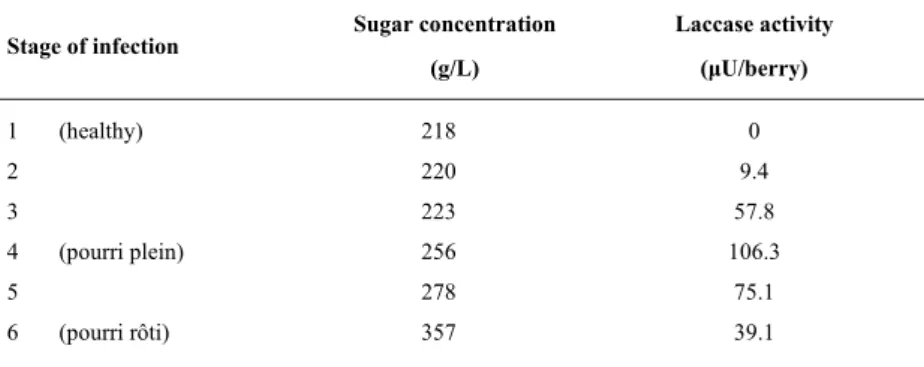
plein stage of infection (Table II). At pourri rôti stage
of infection, B. cinerea’s metabolic activity is gradually eliminated due to sugar concentration and increased osmotic pressure. Production of laccase is also decreased while its enzymatic activity falls below 40 μU (Donèche, 1991). Sugar concentration of approximately 350 g/L reduces oxygen saturation level in musts from 8 mg/L to less than 6 mg/L, while oxygen consumption rate in botrytized musts is the same as in musts produced by healthy grapes (Donèche, 1991). This highlights the decrease of laccase activity in noble rot musts, yet the potential effects of this enzyme both in oxidation phenomena and color change should not be totally ignored during wine making. Therefore, hyperoxygenation technique in botrytized musts is not useful and thus not applicable (Donèche, 1991). Whether must heating treatment, with temperature at around 50 °C for laccase inactivation, is beneficial or not is still a debate. Unfavorable aroma modifications and losses are possible with this technique (König et al., 2017). Induction of selected B. cinerea’s strains that produce lower amount of laccase could be another way to reduce their presence in grapes (König et al., 2017). In must, 125 mg/L of total sulfur dioxide (SO2) is an
adequate dose for laccase deactivation, while in wine total sulfur dioxide higher than 50 mg/L is sufficient (Jackson, 2008).
84
Table II
Laccase activity during botrytization in berries (Donèche, 1991)
Actividade lacase em diferentes estádios da infecção do bago por Botrytis cinerea (Donèche, 1991)
Stage of infection Sugar concentration (g/L) Laccase activity (μU/berry) 1 (healthy) 218 0 2 220 9.4 3 223 57.8 4 (pourri plein) 256 106.3 5 278 75.1 6 (pourri rôti) 357 39.1 Proteases
Nitrogen availability is very important for B. cinerea development on berries, given that it is a vital element for the production of amino acids, peptides and proteins that play fundamental role in metabolic activities of every living cell (Thakur, 2018). B.
cinerea degrades berry’s proteins, assimilates the
nitrogen and produces new ones beneficial for each own survival. This degradation takes place catalytically under the presence of proteolytic enzymes produced by the fungus, increasing finally the levels both of fungal proteins and fungal proteases in the berries (Thakur, 2018). An increase of proteins up to 25%, expressed in g/L of botrytized musts compared to musts from uninfected grapes, depends exclusively on fungal proteins that are concentrated after berry’s dehydration (Ribéreau-Gayon et al., 2006a).
PR proteins, such as thaumatin-like proteins (TLPs) and chitinases, even though are increased during infection are degraded by fungus proteases in berries and must (Girbau et al., 2004). A study conducted on healthy and botrytized berries and the corresponding musts, argued that PR proteins were always reduced during botrytization. According to the study, proteases’ activity rather than berry’s down-regulation of genes for production of specific proteins is responsible for such a reduction (Girbau et al., 2004). As polar molecules, fungus proteolytic enzymes are also present in must, in which, due to their resistance in pH, sulfur dioxide and heating, act against the remaining PR proteins (Marchal et al., 2006). The degradation of these proteins, that are considered the most difficult proteins to eliminate from wine, is beneficial for protein stabilization (Reynolds, 2010).
BERRY’S CHEMICAL COMPOSITION Sugars and acids concentration on berry
During botrytization, berry’s volume can decrease up to five times, intensifying concentration phenomena (Donèche, 1989). B. cinerea metabolizes sugars via
Embden–Meyerhof pathway and hexose
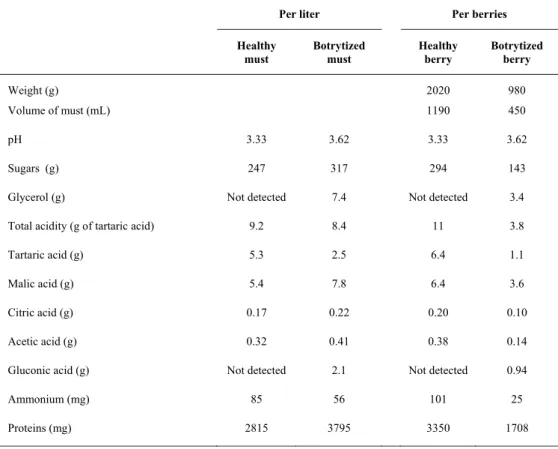
monophosphate shunt pathway (Donèche, 1989). Sugar decrease per berry, is up to 45% for 2.5-fold berry’s volume concentration after desiccation. Yet, this lost is not noticeable as berry’s shriveling results in an average sugar content of 350 g/L of must – Table III (Donèche, 1989).
Reduction of tartaric and malic acid per berry is up to 85% and 45%, respectively, again for 2.5-fold berry’s volume concentration after desiccation (Ribéreau-Gayon, 1982). Tartaric acid decreases in g/L of botrytized must by 55% and malic acid increases by 45%. Thus, total acidity of around 8 g/L expressed as tartaric acid is almost unchangeable, compared to musts derived from healthy grapes - Table III (Ribéreau-Gayon, 1982). Lesser acidity would result in flabby wines with cloying perception. Citric and acetic acid of botrytized must, both increase in g/L by approximately 30% - Table III (Ribéreau-Gayon, 1982).
Finally, mucic acid, as another organic acid present naturally in grapes, can slightly increase after oxidation of galacturonic acid found in the must (Ribéreau-Gayon, 1982). The latter is abundant in botrytized musts after the extended enzymatic activity of pectinases during infection (Ribéreau-Gayon, 1982). Addition of commercial enzymes like polygalacturonases during pressing for better aromas extraction and more efficient settling during clarification is a treatment with limited effects, and therefore not recommended (Ribéreau-Gayon et al.,
85 2006a). The extended degradation of berry’s pectic structure leads to the release of other sugars, such as arabinose, rhamnose, galactose, mannose and xylose, in the medium (Ribéreau-Gayon, 1982). As B.
cinerea consumes mainly glucose, partial reduction of
glucose concentration decreases the ratio between glucose and fructose below one, which can be used as indicator of infection (Garcia-Jares and Médina, 1997).
Gluconic acid
Gluconic acid and 2-keto gluconic acid are produced enzymatically by oxidation of the aldehyde functional group of glucose and the hydroxy functional group of C1 of fructose, respectively, under the presence of B.
cinerea and oxygen (Donèche, 1989). In general,
more than 0.5 g/L of gluconic acid in must can be
caused by bacteria or fungus contamination on berries (Moreno and Peinado, 2012). In berries infected by noble rot, gluconic acid concentration is above 3 g/L and it is not metabolized by yeasts during alcoholic fermentation (Moreno and Peinado, 2012). Finally, it is considered as potential parameter for monitoring the degree of B. cinerea infection on berries (Cuadrado et al., 2005; Rolle et al., 2012; Carbajal-Ida et al., 2016).
Polyalcohols
There are three main polyalcohols responsible for the increased viscosity and the ‘‘body’’ of botrytized wines. Butanediol, glycerol or glycerin and sorbitol are present in infected grapes while the first two are also produced during alcoholic fermentation (Moreno and Peinado, 2012).
Table III
Berry’s chemical composition expressed in per liter of must and per 1000 berries (Ribéreau-Gayon et al., 2006a) Composição química do bago, por volume de mosto (L) e por número de bagos (1000) (Ribéreau-Gayon et al., 2006a)
Per liter Per berries Healthy
must Botrytized must Healthy berry Botrytized berry
Weight (g) 2020 980
Volume of must (mL) 1190 450
pH 3.33 3.62 3.33 3.62
Sugars (g) 247 317 294 143
Glycerol (g) Not detected 7.4 Not detected 3.4
Total acidity (g of tartaric acid) 9.2 8.4 11 3.8
Tartaric acid (g) 5.3 2.5 6.4 1.1
Malic acid (g) 5.4 7.8 6.4 3.6
Citric acid (g) 0.17 0.22 0.20 0.10
Acetic acid (g) 0.32 0.41 0.38 0.14
Gluconic acid (g) Not detected 2.1 Not detected 0.94
Ammonium (mg) 85 56 101 25
Proteins (mg) 2815 3795 3350 1708
Sorbitol concentration in berries does not exceed 600 mg/L, while 2,3-butanediol level is around 1 g/L (Moreno and Peinado, 2012). Glycerol accumulation on berry is maximized at pourri plein stage under the
lack of oxygen. Later it is oxidized to glyceraldehyde and decreases, reaching an average quantity of 5 g/L in berries (Ribéreau-Gayon et al., 2006a). Moreover, it is the third most abundant component after water
86 and ethanol in wines. Given that glycerol is also produced during fermentation, its concentration in botrytized wines can be higher than 20 g/L (Moreno and Peinado, 2012). Glycerol along with gluconic acid are quality markers of B. cinerea infection (Ravji
et al., 1988; Rolle et al., 2012; Tosi et al., 2012). Aroma precursors
Terpenes
Mevalonic acid (C5) is the key chemical compound
for the production of terpenes (Blanco-Ulate et al., 2015). Experiments conducted on botrytized berries showed that it is present in higher quantities compared to health ones (Blanco-Ulate et al., 2015). This means that via the mevalonate pathway (MVP) and the methylerythritol-4-phosphate pathway (MEP), production of the main terpenoid precursors dimethylallyl pyrophosphate (DMAPP) and isopentyl pyrophosphate (IPP) take place. From these precursors a variety of aromatic compounds such as monoterpenoids (C10) and sesquiterpenoids (C15) can
be present in the wine directly. While others, such as C13-norisoprenoids, can be present indirectly after
enzymatic or oxidative cleavage of Carotenoids (C40)
(Blanco-Ulate et al., 2015).
These odorant compounds, which are considered as primary wine aromas and are found in berries in their glycosylated forms, seems to be oxidized after the aglycone part is being liberated catalytically under the presence of B. cinerea’s glycosidases (Ribéreau-Gayon et al., 2006a). The process involves an ω-hydroxylation reaction in which a hydrogen from the terminal methyl of a terpene such as geraniol, is substituted for a hydroxyl group (ω-oxidation), converting geraniol to a less odorant diol while the wine loses its varietal character (Bock et al., 1988). This explains the use of varieties such as ‘Semillon’ or ‘Chenin Blanc’ less depended on their aromatic character during botrytized wine production. ‘Muscat’ grapes, for example, diminished their aromatic profile rather than gain in complexity after botrytization (Jackson, 2008). Addition of glycosidases during or after alcoholic fermentation for enhancing the aromatic profile of botrytized wines is not recommended (Jackson, 2008).
Thiol precursors
Degradation of fatty acids to C6 compounds (alcohols
and aldehydes with six carbons) normally occurs in healthy grapes (Blanco-Ulate et al., 2015). The process during berry ripening starts from breakdown of unsaturated fatty acids within the lipoxygenase (LOX) cycle, which is catalyzed enzymatically and produces hydroperoxides (Blanco-Ulate et al., 2015). These are also enzymatically degraded to C6
compounds such as (E)-2-hexenal known as leaf aldehyde and (Z)-3-hexen-1-ol known as leaf alcohol. GSH, whose the production increases during noble rot infection, is combined by glutathione S-transferases (GSTs) with C6 compounds during detoxification
pathways, creating S-glutathione conjugates that are actually thiol precursors. The expression of the genes responsible for GSTs formation are also upregulated during botrytization (Blanco-Ulate et al., 2015). A sequential conversion of S-glutathione precursors leads to S-cysteinylated precursors by elimination of Glu and Gly from the molecule. A final cleavage from β-lyases during alcoholic fermentation liberates thiols in wine matrix, which is vital for the aroma enhancement (Blanco-Ulate et al., 2015).
Quinones (oxidized polyphenols) are highly reactive with volatile thiols (Quideau et al., 1995). In botrytized wines, polyphenols are almost eliminated by oxidization, polymerization and precipitation phenomena under the enzymatic activity of laccase (Quideau et al., 1995). C6 compounds are considered
pre-fermentative aromas, derived from unsaturated fatty acids (such as linoleic and linolenic acids), being released in the must during maceration, destemming, crushing and pressing. The cleavage of linoleic and linolenic acids during pre-fermentation processes follows the same LOX pathway described above (Ferreira et al., 1995).
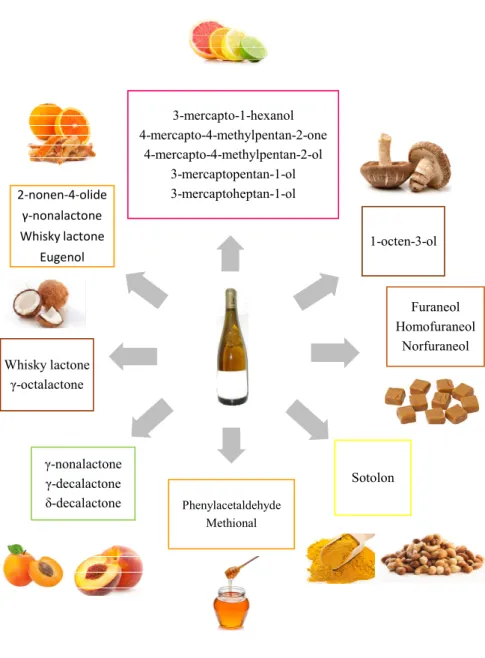
Other higher alcohols present in these wines, such as 1-octen-3-ol (known for its mushroom distinctive aroma), derive from fatty acids degradation, during metabolic pathways of other microorganism such as bacteria present on berries during botrytization (Jackson, 2008).
A study conducted on cv. ‘Semillon’ and ‘Sauvignon Blanc’ grapes at every stage of botrytization process from healthy ripe to late pourri rôti berries, indicated that concentration of cysteinylated precursor of 3-mercapto-1-hexanol (3MH) for both varieties was around 100 times higher than the control until the stage of pourri plein (Thibon et al., 2009). A later decrease of this compound in berries due to oxidation or combustion was not highly noticeable in mg/L due to parallel water evaporation. The same study tried to compare the differences between overripe sound grapes at late harvest and botrytized ones regarding the quantities of the Cys3MH in order to highlight the pivotal role of B. cinerea infection and how it affects directly or not berry’s metabolic pathways (Thibon et
al., 2009). Indeed, an average ten times increase of
this compound for both varieties during botrytization was ascribed to the previous argue. The diastereoisomeric ratio between R/S Cys3MH forms was actually the same between on and off-vine
87 botrytization and overripening and equal to 30:70. This expresses an indirect involvement of B. cinerea in 3MH production (Thibon et al., 2009). Again, as above-mentioned S-glutathione precursors and the enzymes involved in berries seem to be two crucial steps for the release of these very aromatic thiols later in wine (Thibon et al., 2009).
Benzaldehyde
Benzyl alcohol is an aromatic higher alcohol normally absent from healthy grapes and dry wines (Swiegers et al., 2005). It is produced by berries during B. cinerea infection as it is a limiting factor in fungus development (Goetghebeur et al., 1993). B.
cinerea acts against this compound enzymatically, by
producing benzyl alcohol oxidase that converts benzyl alcohol to benzaldehyde (Goetghebeur et al., 1993). The latter is only found in noble rot wines, in which its bitter almond aroma enchases their aromatic profile (Bailly et al., 2006; Fedrizzi et al., 2011; Negri et al., 2017).
Phenylpropanoid pathway
The phenylpropanoid pathway is one of the most important metabolic paths of red grape varieties (Chen et al., 2006). Via this pathway, berry produces many secondary derivatives mainly located in the skin, such as phenolic acids, stilbenes, anthocyanins, flavanols and flavonols (Chen et al., 2006). These compounds are the response of berries to the increased vine stress caused by biotic and abiotic factors, and play a vital role in the organoleptic characteristics of the final product (Chen et al., 2006). Phenylpropanoid metabolic activity is marginal in white grape varieties except when they are infected by B. cinerea (Blanco-Ulate et al., 2015). When infection takes place in white berries, their response derives from the upregulation of specific transcription factors followed by the expression of specific genes for the production of enzymes that will induce, among others, this metabolic path during berries’ maturation (Blanco-Ulate et al., 2015).
Phenolic acids and hydroxycinnamic esters
In the early stages of phenylpropanoid pathway during botrytization, increased production and accumulation of the three main hydroxycinnamic acids, p-coumaric, caffeic and ferulic in berries, is noticeable (Blanco-Ulate et al., 2015). Yet, PPOs such as laccase and tyrosinase oxidize these acids along with their hydroxycinnamic esters such as caftaric and coutaric acids (Dubernet et al., 1977). Accordingly, a study on cv. ‘Chenin Blanc’ from Loire Valley region during botrytization highlighted the oxidation of these esters during infection (Carbajal-Ida et al., 2016).
Stilbenes
Stilbenes are 1.2-diphenylethylene derivatives very important non-flavonoid compounds widespread in nature (Hart, 1981). They act as phytoalexins produced by plants in response to microbial or insect colonization (Hart, 1981). Resveratrol is one of the most well-known and studied stilbenes in wine industry due to its beneficial properties in human health (Frankel et al., 1993). Specifically, trans-resveratrol seems to act as antioxidant, preventing the oxidation of low-density lipoprotein that is correlated with heart diseases (Frankel et al., 1993). It is also considered as cancer-preventative substance that can deter or constrain tumor development (Jang et al., 1997). Production of stilbenes is generally increased in botrytized grapes (Blanco-Ulate et al., 2015).
B. cinerea seems to be very little affected by
resveratrol’s presence in berries. It dimerizes resveratrol oxidatively to inactivate products potentially under the enzymatic activity of laccase (Cichewicz et al., 2000). A study carried out in Sauternes region concerning botrytized grapes highlighted that resveratrol increased as infection expanded in berries from cv. ‘Semillon’, while in ‘Sauvignon Blanc’ the opposite behavior was observed (Landrault et al., 2002). In both varieties the quantity of trans-resveratrol was lower than 0.15 mg/kg of grapes. Other stilbenes found in these grapes, such as trans-astringin, trans-piceid and pallidol, were also present in very limited concentrations. Only ε-viniferin, a resveratrol dimer, was an exception following an increasing trend in both varieties up to 2 mg/kg of grapes before infection reached pourri plein stage, while after was reduced to half (Landrault et al., 2002).
Other phenolic compounds
Numerous phenolic compounds that are highly produced during infection, acting against B. cinerea and as antioxidants, are also relevant from the oenological point of view regarding the enhancement of the unique flavor of this kind of wines (Blanco-Ulate et al., 2015). Flavonols such as quercetin and kaempferol in their glycosylated forms are eliminated from berries at the last stage of infection, while myricetin is identified only in pourri rôti phase (Carbajal-Ida et al., 2016). Flavanols such as catechin, epicatechin and galloyl epicatechin also increase during botrytization, reaching a maximum at the final stage of infection; according to Goetz et al. (1999) they act against fungus’ enzymes, and more specifically against stilbene oxidases.
In total, for the cv. ‘Chenin Blanc’, the phenolic composition decreased up to 40% throughout noble
88 rot infection (Carbajal-Ida et al., 2016). Even though berry activates every possible defense mechanism against B. cinerea, fungus finally prevails by degrading enzymatically most of the produced phenolic compounds (Ribéreau-Gayon et al., 2006b). Phenolic composition, excluding tyrosol, is noticeably lower in botrytized wines compared to dry
ones – Table IV (Ribéreau-Gayon et al., 2006b). Tyrosol as yeasts’ by-product remains in the wine matrix after alcoholic fermentation, constituting 40% of the total phenolic compounds and having a strong honey wax reminiscence that contributes to the honey-like characteristic aromatic category of these wines (Jackson, 2008).
Table IV
Phenolic content of dry and botrytized wine (Ribéreau-Gayon et al., 2006b) Composição fenólica de um vinho branco seco e de um vinho botritizado (Ribéreau-Gayon et al., 2006b)
Dry white wine Noble rot wine Content (mg/L) % Content (mg/L) % Tyrosol 25 22.2 29 40.5 Gallic acid 1.4 1.2 1.0 1.4 Caffeic acid 13.5 12 0.2 0.3 p-Coumaric acid 2.6 2.3 Quercetin 0.2 0.2 Tannins (procyanidins) 70 62.1 41.3 57.7
Total phenolic compounds 112.7 100 71.5 100
Quality markers
The exponential phase of B. cinerea development is carried out in the internal part of berry’s skin, where deprivation of oxygen results to fungus incapacity of glucose assimilation (Donèche, 1989). Nicotinamide adenine dinucleotide (NAD) is a cofactor playing pivotal role in microorganisms’ metabolic activities. Reduction of dihydroxyacetone phosphate (DHAP) to glycerol-3-phosphate is carried out enzymatically by glycerol-3-phosphate dehydrogenase (Donèche, 1989). This process guarantees fungus metabolic activity and survival, and leads to glycerol accumulation in berries (Donèche, 1989). As B.
cinerea begins to grow at the external part of berry’s
skin at the stationary phase of its development, gluconic acid starts accumulating in berries due to glucose oxidation by glucose oxidase (GOx) (Ribéreau-Gayon et al., 2006a). The duration of B.
cinerea presence in internal and external part of grape
skin, determines the concentration of glycerol and gluconic acid, respectively. Optimal environmental conditions lead to rapid berry shriveling, reducing the period of fungus occurrence externally and limiting gluconic acid accumulation on berries (Ribéreau-Gayon et al., 2006a). The ratio between glycerol and gluconic acid is considered as noble rot quality index, the higher the ratio the higher the quality of the
potential wine (Ribéreau-Gayon et al., 2006a).
BERRY’S MICROBIOLOGY Other fungus
During noble rot infection, colonization of other molds on berry skin is always possible under the condition that B. cinerea is the dominant fungus (Pucheu-Planté and Seguin, 1978). Contrary to bunch rot, in noble rot infection populations of other microorganisms on grapes are 10.000 times less compared to B. cinerea (Pucheu-Planté and Seguin, 1978). The most common saprophytes on noble rot berries are Penicillium expansum, Penicillium
crustosum, Aspergillus niger and Alternaria alternata
(Lorenzini et al., 2012). Experimentation on intended co-inoculation of different pairs of these molds with
B. cinerea on grapes showed the different metabolic
pathways of each one and how they affected berry’s composition (Lorenzini et al., 2012). B. cinerea along with Penicillium and Aspergillus spp. affected the level of shriveling due to increased water losses. These fungi promoted the oxidation of glycose to gluconic acid catalyzed by GOx. High amount of gluconic acid reduced the quality of infected grapes (Lorenzini et al., 2012). In general, even if absolute
89 fungus monoculture infection is rather rare, the higher the purity of B. cinerea colonization on grapes the higher the quality of the final product (Lorenzini et
al., 2012). Bacteria
A study conducted in Sauternes revealed that
Gluconobacter spp., and especially Gluconobacter oxydans, are present on berries during botrytization.
Comparison of these bacteria’s CFU with healthy musts highlighted the importance of the infection and its severity in berries’ microbial load (Barbe et al., 2001). Acetic acid bacteria are by far the most dominant bacteria found on berries during noble rot – Table V (Barbe et al., 2001). The three main
compounds responsible for the high sulfur dioxide binding capacity of botrytized musts are gluconic acid, 5-oxofructose and dihydroxyacetone (DHA). According to Barbe et al. (2001), Gluconobacter
oxydans present in botrytized grapes is directly
correlated with the accumulation of these compounds produced by the oxidation of glucose, fructose and glycerol, respectively. Acetobacter aceti and
Acetobacter pasteurianus dominated progressively
noble rot musts during fermentation conducted at 21 °C in wood barrels. Acetobacter aceti is responsible for acetic acid production also during maturation in barrels, especially when pH and temperature are high (Joyeux et al., 1984).
Table V
Presence of acetic acid bacteria in botrytized must for three consecutive vintages (Barbe et al., 2001) Presença de bactérias acéticas em mostos de uvas botritizadas em três vindimas consecutivas (Barbe et al., 2001)
Harvest Samples
Acetic bacteria / Total bacteria
Minimum Average Maximum
1995 24 0% 69% 100%
1996 46 41% 95% 100%
1997 12 62% 94% 100%
FROM GRAPE TO MUST Harvest
Due to high heterogeneity of berries’ shriveling degree during infection, the presence of more than one variety for noble rot wine production is beneficial (Pucheu-Planté and Mercier, 1983). Sorting three to four times each harvest period, selectively hand picking of clusters or part of them at pourri rôti stage, is mandatory to ensure homogeneity and thus typicity of produced wines (Pucheu-Planté and Mercier, 1983). For this reason, the harvest for noble rot wines cannot be done mechanically (Thakur, 2018). The choice of the perfect harvest date is crucial for the production of this type of wines. In addition to berry’s shriveling degree, harvest is based on botrytization process that promotes an intense enzymatic maceration of the grape skin, similar to red skin maceration in vats. The longer and deeper this process is in berries, the greater the release of varietal aromas such as thiols precursors in must (Ribéreau-Gayon et al., 2006a). Compared to botrytized wines, the aromatic profile of straw wines is less complex. While berries are drying under the sun, their varietal
aromas undergo thermal cleavage, reducing the aromatic potentials of the final product (Ribéreau-Gayon et al., 2006a).
Markers for evaluating the infection and proposing harvest date
Standardization of the evaluation of B. cinerea’s infection on berries is crucial for noble rot wine production. The establishment of the optimum harvest date based on objective factors allows reducing human error (Lorenzini et al., 2015; Carbajal-Ida et
al., 2016). Thus far, validation of fungus growth stage
is based on the personal experience of winemakers while human eye is the main verification tool (Lorenzini et al., 2015; Carbajal-Ida et al., 2016). Puncture and compression tests are potential markers found in the literature for evaluating the infection (Carbajal-Ida et al., 2016). Both are based on the principle that the higher the degree of infection the more extended the skin degradation by fungus’s enzymes. In the puncture test, a sensor penetrates on the berry until the skin is ruptured, while in the compression test two parallel plates press the berry until its deformation reaches 70%. Both tests measure the required forces for achieving the targets, the lower
90 the applied force the more advanced the stage of infection (Carbajal-Ida et al., 2016). Berry’s myricetin levels is another proposal for evaluating botrytization as it is a phenolic compound normally absent from grapes (Carbajal-Ida et al., 2016). It has been found only in berries at pourri rôti stage of infection probably produced by berries as response to parasite’s presence (Carbajal-Ida et al., 2016). Finally, the amount of proteins in berries is another evaluation test based on the principle that B. cinerea causes enzymatic degradation of proteins (Lorenzini
et al., 2015). The lower the amount of berries’
proteins the higher the botrytization. Further evaluation of these procedures is required, namely in terms of time consuming, reliability of the results and applicability during the very stressful period of harvest (Lorenzini et al., 2015).
Cryoextraction technique
As harvest takes place manually and botrytization degree is firstly evaluated subjectively by the winemaker and then by the harvesters during hand picking, the method of cryoextraction seems very efficient (Reynolds, 2010). The principle of this technique derives from icewine production and it is based on the high sugar content of infected grapes by
B. cinerea at pourri rôti stage (Reynolds, 2010). The
higher the amount of sugars the lower the freezing temperature of berries. The harvested grapes are transferred in freezing chambers where temperature range from 0°C to -16 °C (Ribéreau-Gayon et al., 2006a). The produced must derives only from grapes highly botrytized with high sugar content and more qualitative and full-bodied juice (Ribéreau-Gayon et
al., 2006a). The extractability of aromatic compounds
from skin increase due to intense skin burns by frost (Ribéreau-Gayon et al., 2006a). This technique can also be applied during harvests of below average vintages, when lack of sunny days do not allow sufficient berry desiccation leading to berry’s water excess and dilution of sugar content (Ribéreau-Gayon
et al., 2006a). Pressing
A sorting table is recommended to be used after harvest for separating part of clusters that are less or not infected or co-infected by other fungus and bacteria (Thakur, 2018). In some cases, crushing without destemming, in which stems facilitate pressing and their extracted tannins facilitate protein stabilization, with subsequent maceration for sugar and aromas extraction in inert gas atmosphere are followed by pressings (Jackson, 2008). Direct pressing without crushing and maceration is another option that can be followed and depends on winemaker decision (Jackson, 2008). In general, the
main principle for this type of wine production is to avoid the release of particles such as glucans in the must (Jackson, 2008). These colloids will produce later clarification problems and will hamper the stabilization processes. Thus, minimization of frictions by using gravity during berries’ transfer and decrease of harshness of every operation, such as pumpings, are vital (Jackson, 2008). Continuous presses increase liberation of undesirable particles in the must, while pneumatic ones provide with inadequate pressing, up to 2 bars maximum (Ribéreau-Gayon et al., 2006a). Both types are not recommended for noble rot grapes. Yet, pneumatic pressing is a sustainable choice for cryoextraction technique (Ribéreau-Gayon et al., 2006a). Moving-head presses are the best option as they can apply pressure on grapes up to 12 bars. The most qualitative juice with the higher sugar content is obtained by the last pressing cycles (Ribéreau-Gayon et al., 2006a). Settling before fermentation
The high sugar concentration and the existence of colloidal particles in the must, make settling rather difficult (Ribéreau-Gayon et al., 2006a). Yet, settling at temperatures lower than 10°C for 28 to 48 hours is beneficial. As lees is a source of fatty acids, sterols, among others, which are important for yeast development, excessive clarification increases the possibility of stuck or sluggish fermentation (Ribéreau-Gayon et al., 2006a). The optimum turbidity, without facing problems of bitter, reductive and herbaceous notes is in-between 500 and 600 NTU (Ribéreau-Gayon et al., 2006a). Addition of lees, saved from settling of previously produced dry white wine, in tank or barrel filled with botrytized must, is a boosting factor for yeasts development during fermentation (Ribéreau-Gayon et al., 2006a).
IONS CONTENT OF BOTRYTIZED MUST Anions
Phosphates and sulfates are the anions with the highest concentrations in must and wine (Moreno and Peinado, 2012). Phosphates are naturally present in grapes, while their normal levels in white wines are between 75 and 500 mg/L. This fluctuation depends on the use or not of diammonium phosphates as source of yeasts’ assimilable nitrogen (Moreno and Peinado, 2012). Origins of sulfates are endogenous since their presence in grapes varies from 0.1 to 0.4 g/L expressed as potassium sulfate or exogenous deriving from viticulture treatments with copper sulfate against downy mildew (Moreno and Peinado, 2012). During winemaking, other possible sources are the addition of yeast nutrients like ammonium sulfate