Carlos Scherr and Jorge Pinto Ribeiro
Instituto do Coração e do Diabetes - ICORD; Universidade Gama Filho; Serviço de Cardiologia do Hospital de Clínicas de Porto Alegre; Medicina da Universidade Federal do Rio Grande do Sul
Mailing address: Carlos Scherr •
Rua Visconde de Pirajá, 595 Sl. 1204 - Ipanema - 22410-003 - Rio de Janeiro, RJ - Brazil
E-mail: [email protected], [email protected]
Manuscript received February 05, 2009; revised manuscript received De-cember 23, 2009; accepted DeDe-cember 30, 2009.
Abstract
Background: For appropriate advising on a meal plan aimed at the prevention of ischemic heart disease, it is necessary
to know the chemical composition of foods.
Objective: To analyze the composition of fats, fatty acids and cholesterol in some Brazilian specimens of edible oils,
butters, margarines, dairy products and eggs, using the limits of a diet to prevent coronary artery disease.
Methods: We analyzed the composition of edible oils, butters, margarines, dairy products and eggs. The findings were
used as recommended by the American Heart Association for a 1,800 calorie diet.
Results: Comparing the edible oils, the canola oil was found to be the best.Among the milks, the skimmed milk is most
advisable one, but no advantages were found over the semi-skimmed milk. For the eggs, no differences were found in the types of milk found in the market. For cheeses, the “minas” cheese had the lowest content of cholesterol and saturated fat. Comparing margarine and butter, the former was found to be better when trans fats do not exceed the recommended levels.
Conclusion: The composition of foods used in Brazil indicates that diets designed to enable primary and secondary
prevention of ischemic heart disease can prioritize the use of semi-skimmed milk, sunflower oil, margarines with low content of trans fats and “minas” cheese. (Arq Bras Cardiol. 2010; [online]. ahead print, PP.0-0)
Key words: Food composition; dairy products; fats; primary prevention, secondary; myocardial ischemia; atherosclerosis.
Five natives were fed for three months with meat and eggs, and after this period, the serum cholesterol level increased by 27.0%3. One of the most striking reports was that of the Seven Countries study, correlating cholesterol and mortality from acute myocardial infarction4. This study revealed that the diet in Finland, champion of deaths, included over 20.0% of total caloric content in saturated fat, with average total cholesterol of 260 mg/dl. These data contrasted with the findings in Japan, with lower mortality from acute myocardial infarction, whose intake is 2.5% of total caloric content in saturated fat and cholesterol averaging 160 mg/dl4.
Randomized clinical trials have also shown that adopting a diet with very little saturated fat reduces cholesterol levels and cardiovascular events. The Oslo Diet-Heart Study found a lower incidence of acute myocardial infarction in individuals who followed a diet with low saturated fat and cholesterol and rich in polyunsaturated fat5. Hinderliter presented the findings of Encore study during the annual meeting of the American College of Cardiology of 2009, showing that the Mediterranean-style diet (DASH) was associated with decreased blood pressure when compared with controls6. Even more striking were the findings of a meta-analysis with 1,574,299 individuals monitored from 3 to 18 years, which revealed a decline in overall mortality, cardiovascular, cancer and lower incidence of Alzheimer’s and Parkinson’s disease,
Introduction
among those with greater adherence to this kind of diet when compared with those with lower adherence7.
For the implementation of a diet targeted at reducing cardiovascular events, it is necessary to know the chemical composition of foods. However, the chemical composition tables of foods available in Brazil are limited to the contents of fat and cholesterol of various foods used in Brazil8-10. We have recently conducted an extensive evaluation of the chemical composition of many foods used in Brazil to build a table of food composition with clinical applicability in our country11-13. In this report, we analyzed the composition of fats, fatty acids and cholesterol in some Brazilian specimens of edible oils, butters, margarines, dairy products and eggs, using the limits of a 1,800 kcal diet, in order to provide a nutritional intervention to prevent coronary artery disease.
Methods
To perform the biochemical analysis of milk, were purchased the following items to prepare the samples: semi-skimmed milk - each sample consisted of one container of three different brands; skimmed milk - each sample consisted of one container of five different brands; full fat milk - each sample consisted of one container of four different brands; and Omega 3 milk - each sample consisted of one container of two different brands found in the market. Six brands of
“minas” cheese and yellow cheese, and 5 brands of butter and margarine were analyzed. Factory-farmed, free-range or light eggs were also analyzed. Each sample consisted of 6 eggs boiled for 10 minutes, homogenized and weighed, after which the yolks were separated.
Finally, for cooking oils, each sample consisted of an oil bottle from 4 different brands. The result of each type of oil (canola, corn, soybean and sunflower) represents the average of 4 different brands. The chemical composition data of these food items were evaluated according to the limits of fat consumption proposed for diets of primary and secondary prevention of coronary artery disease.
The general methodology of analysis of food items was presented earlier13. Briefly, specific methodologies were used to assess the composition of food items in relation to total lipids14,15, cholesterol16,17, fatty acid composition18, determination of sodium chloride content19 and humidity20,21. The uncertainties of analyses are consistent with the criteria established by the ITAL (NBR-ISO 9001) quality system and were not included in the calculation of the findings produced, but are available for consultation. Analyses were performed both for wet and dry basis, but only the wet basis analyses were considered because they represent the food item as it is consumed. According to Decree 27 of January 13, 1998, the Board of Health, under the Ministry of Health, trans fatty acids were added to the calculation of saturated fats.
To simulate dietary prescription, we used the recommendations from the American Heart Association phase I for primary prevention22, from ATPIII23 and the 4th Guideline of the Department of Atherosclerosis of the Brazilian Society of Cardiology24, for secondary prevention, based on a diet of 1,800 kcal. For primary prevention, we considered an intake of up to 70 g of fat per day, with less than 14 g saturated fats,
20 g of polyunsaturated fats and 40 g of monounsaturated fats and total cholesterol of up to 300 mg. For secondary prevention, we considered an intake of 60 g of fats per day, divided into 14 g of saturated fats, 20 g of polyunsaturated fats, 30 g of monounsaturated fats and 200 mg of cholesterol.
Statistical analysis
Statistical analysis was performed by Mann-Whitney test (nonparametric test) to compare the contents of fats, fatty acids and cholesterol in the different types of food items analyzed. The criterion for determining significance was the level of 5.0%.
Results
Table 1 shows the comparison between canola, soybean, sunflower and corn oils. Canola oil compared to soybean, corn and sunflower revealed lower amounts of saturated fat and palmitic acid. Hence, it is more recommended in an increasing order, as compared to sunflower oil and soybean oil. Corn oil was the least recommended one among the three oils. Sunflower oil was also better than that of soybeans and corn, following the same proportion above and on the same topics. Finally, the soybean oil was considered better than corn because it contains more Omega 3. When we analyzed the polyunsaturated fats/saturated fats ratio, sunflower oil revealed a significantly higher ratio as compared to the other three. As for Omega 3/6, this ratio is much better in canola oils, followed by soybean oil Therefore, based on this data, the oil with the most suitable composition for consumption in low-fat diets is the canola oil, followed by sunflower, soybean and corn.
Table 2 shows the findings of the comparisons between butters and margarines. The data revealed the presence of cholesterol in butters and absence in the margarines analyzed. A significant difference indicates higher content of saturated fat: myristic and palmitic acid in butters, while margarines had more polyunsaturated fats, linoleic acid and Omega 3. The omega 3/6 ratio favored the butters, but, considering the limits of diets for primary and secondary prevention, margarines should be recommended provided that the levels of trans fats in margarines do not exceed the recommended levels, which did not occur in the margarines analyzed in this study.
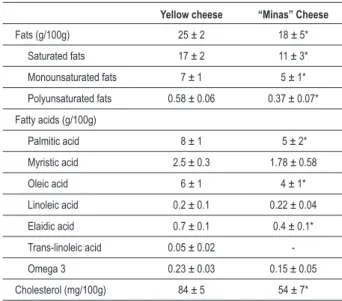
Table 3 presents comparisons between the yellow and
Table 2 - Content of fats, fatty acids and cholesterol in butters and margarines
Butter with and
without salt and without saltMargarine with
Fats (g/100g) 83 ± 2 59 ± 18*
Saturated fats 55 ± 2 19 ± 8*
Monounsaturated fats 21 ± 1 16 ± 7 Polyunsaturated fats 1.7 ± 0.2 21 ± 4* Fatty acids (g/100g)
Palmitic acid 29 ± 1 7 ± 2*
Myristic acid 9 ± 1 0.3 ± 0.3*
Oleic acid 20 ± 1 16 ± 7
Linoleic acid 0.9 ± 0.2 19 ± 4*
Elaidic acid 2.0 ± 0.1 6 ± 5
Trans-linoleic acid 0.2 ± 0.0 0.9 ± 0.5
Omega 3 0.8 ± 0.0 1.7 ± 0.4*
Cholesterol (mg/100g) 222 ± 2
-Data are presented with average ± standard deviation; * = P < 0.05 as for butter.
Table 3 - Content of fats, fatty acids and cholesterol in cheese
Yellow cheese “Minas” Cheese
Fats (g/100g) 25 ± 2 18 ± 5*
Saturated fats 17 ± 2 11 ± 3*
Monounsaturated fats 7 ± 1 5 ± 1*
Polyunsaturated fats 0.58 ± 0.06 0.37 ± 0.07* Fatty acids (g/100g)
Palmitic acid 8 ± 1 5 ± 2*
Myristic acid 2.5 ± 0.3 1.78 ± 0.58
Oleic acid 6 ± 1 4 ± 1*
Linoleic acid 0.2 ± 0.1 0.22 ± 0.04
Elaidic acid 0.7 ± 0.1 0.4 ± 0.1*
Trans-linoleic acid 0.05 ± 0.02
-Omega 3 0.23 ± 0.03 0.15 ± 0.05
Cholesterol (mg/100g) 84 ± 5 54 ± 7*
* = P < 0.05 for yellow cheese. Table 1 - Content of fats, fatty acids and cholesterol in edible oils
Canola Soybean Sunlower Corn
Fats
Saturated fats (%) 8.4 ± 0.4 17.5 ± 0.5* 10.3 ± 0.3*¶ 16.1 ± 1.1*§
Monounsaturated fats (%) 63.6 ± 3.8 24.0 ± 1.8* 28.2 ± 2.0*¶ 35.6 ± 1.0*¶§
Polyunsaturated fats (%) 28.0 ± 3.5 58.5 ± 1.6* 61.6 ± 1.9* 48.3 ± 0.2*§
Fatty acids
Palmitic acid (%) 5.0 ± 0.3 14.1 ± 0.4* 6.5 ± 0.4*¶ 13.5 ± 0.5 *§
Oleic acid (g/100g) 62.2 ± 3.9 23.4 ± 1.7 28.0 ± 2.0 35.3 ± 1.0
Linoleic acid (g/100g) 21.4 ± 3.1 53.3 ± 1.1* 61.5 ± 1.9*¶ 47.6 ± 1.3*¶§
Omega 3 (%) 6.2 ± 0.8 4.9 ± 0.9 - 0.7 ± 0.2*¶
Cholesterol
-
-
-
-Data are presented with average ± standard deviation; * = P < 0.05 as for canola oil; ¶ = P < 0.05 as for soybean oil; § = P < 0.05 as for sunlower oil.
the international recommendations, which may be excessive for a recommended menu.
In the analysis of eggs (Table 5), there were no differences between the types analyzed. Therefore, it was not possible to make a distinguished recommendation for each of them, except for the limits of daily cholesterol contents, that is, not more than one per day.
Discussion
Despite the progresses found in recent decades in terms of pharmacological management of dyslipidemias, dietary intervention still plays a key role in primary and secondary prevention of ischemic heart disease. The DIRECT clinical trial25, recently published, has rekindled the controversy
about the best composition of diets, demonstrating that an intervention with low contents of carbohydrate can deliver favorable changes in lipid profile, as compared with a low-fat diet or a Mediterranean diet. However, regardless of the diet chosen, knowing the composition of food items used in our country is a prerequisite for a proper dietary prescription, which can enable a greater adherence to a healthier diet for the heart, considering a low level of acceptance to all types of diet in three months26.
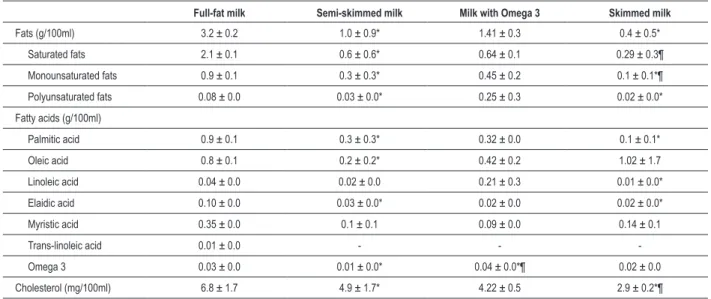
Table 4 - Content of fats, fatty acids and cholesterol in milk
Full-fat milk Semi-skimmed milk Milk with Omega 3 Skimmed milk
Fats (g/100ml) 3.2 ± 0.2 1.0 ± 0.9* 1.41 ± 0.3 0.4 ± 0.5*
Saturated fats 2.1 ± 0.1 0.6 ± 0.6* 0.64 ± 0.1 0.29 ± 0.3¶
Monounsaturated fats 0.9 ± 0.1 0.3 ± 0.3* 0.45 ± 0.2 0.1 ± 0.1*¶
Polyunsaturated fats 0.08 ± 0.0 0.03 ± 0.0* 0.25 ± 0.3 0.02 ± 0.0*
Fatty acids (g/100ml)
Palmitic acid 0.9 ± 0.1 0.3 ± 0.3* 0.32 ± 0.0 0.1 ± 0.1*
Oleic acid 0.8 ± 0.1 0.2 ± 0.2* 0.42 ± 0.2 1.02 ± 1.7
Linoleic acid 0.04 ± 0.0 0.02 ± 0.0 0.21 ± 0.3 0.01 ± 0.0*
Elaidic acid 0.10 ± 0.0 0.03 ± 0.0* 0.02 ± 0.0 0.02 ± 0.0*
Myristic acid 0.35 ± 0.0 0.1 ± 0.1 0.09 ± 0.0 0.14 ± 0.1
Trans-linoleic acid 0.01 ± 0.0 - -
-Omega 3 0.03 ± 0.0 0.01 ± 0.0* 0.04 ± 0.0*¶ 0.02 ± 0.0
Cholesterol (mg/100ml) 6.8 ± 1.7 4.9 ± 1.7* 4.22 ± 0.5 2.9 ± 0.2*¶
* = P < 0.05 for full-fat milk; ¶ = P < 0.05 for semi-skimmed milk; § = P < 0.05 for milk with omega 3.
tables, can be part of the diet, while margarines with low contents of trans fats or, preferably, without these, are most desirable that butters. In relation to eggs, in the literature, we found similar results in an analysis showing no difference in cholesterol contents between common eggs and eggs enriched with omega 3, but no data for comparison, for example, with free-range eggs27.
As for butters, the only evaluation found in literature is concerned with the quality and compliance with laws28. A comprehensive review on databases, such as MedLine and Scielo revealed no comparative studies for different oils,
Table 5 - Content of fats, fatty acids and cholesterol in eggs
Free-range eggs Factory-farmed egg 40% 20%
Fats (g/100g) 8.4 10.2 9.9 9.4
Saturated fats 2.84 3.67 3.34 3.03
Monounsaturated fats 3.47 4.08 3.58 4.05
Polyunsaturated fats 0.61 0.69 1.25 0.73
Fatty acids (g/100g)
Palmitic acid 2.1 2.72 2.24 2.21
EPA 0.02 0.02 0.08 0.05
Oleic acid 3.1 3.73 3.34 3.66
Linoleic acid 0.47 0.6 0.99 0.54
Elaidic acid 0.01 0.01 - 0.02
Myristic acid 0.02 0.04 0.02 0.02
Trans-linoleic acid 0.01 0.01 0 0.02
Omega 3 0.02 0.02 0.14 0.09
Cholesterol (mg/100g) 400 405 390 378
cheeses or margarines.
The need for Brazilian tables is well exemplified from a practical point of view when analyzing milk. Table 6 shows that the content of saturated fats and cholesterol estimated for 200 ml of milk is very different when we apply the analysis of this study, comparing with the composition data derived from UNIFESP Table (an American one).
Table 6 - Differences of content of saturated fats and cholesterol for milks, according to the analysis of this study (analysis) and the one presented in Unifesp’s Table
Full-fat milk Semi-skimmed milk Skimmed milk
Analysis Unifesp Analysis Unifesp Analysis Unifesp
Saturated fats (mg/200ml) 4.2 4.6 1.3§ 2.5 0.6 1.3
Cholesterol (mg/200ml) 14 28 10 16 6 10
to 260 mg. Likewise, the estimated annual consumption of cholesterol in full-fat milk would increase from 2720 to 5600 mg, using these two sources of information.
In conclusion, our data on food produced and consumed in Brazil indicate that no food item should be banned from a healthy diet in relation to cholesterol levels, but in some cases, these food items should be consumed in smaller quantities. Diets targeted at primary and secondary prevention of ischemic heart diseases may also include semi-skimmed milk, sunflower oil, margarines with low content of trans fats and “minas” cheese.
Potential Conflict of Interest
No potential conflict of interest relevant to this article was reported.
Sources of Funding
This study was funded by Instituto Nacional de Metrologia.
Study Association
This article is part of the thesis of doctoral submitted by Carlos Scherr, from Universidade Federal do Rio Grande do Sul.
References
1. Ford ES, Ajani UA, Croft JB, Critchley JA, Labarthe DR, Kottke TE, et al. Explaining the decrease in U.S. deaths from coronary disease, 1980-2000. N Engl J Med. 2007; 356 (23): 2388-9.
2. Ornish D, Brown SE, Sherwitz LW, Billings JH, Armstrong WT, Ports TA, et al. Can lifestyle changes reverse coronary heart disease? The Lifestyle Heart Trial. Lancet. 1990; 336 (8708): 129-33.
3. Jukema JW, Simoons ML. Treatment and prevention of coronary heart disease by lowering serum cholesterol levels; from the pioneer work of C.D. de Langen to the third “Dutch Consensus on Cholesterol”. Acta Cardiol. 1999; 54 (3): 163-8.
4. Steinberg D. Thematic review series: the pathogenesis of atherosclerosis. An interpretive history of the cholesterol controversy: part I. J Lipid Res. 2004; 45 (9): 1583-93.
5. Leren P. The Oslo diet-heart study: eleven-year report. Circulation. 1970; 42 (5): 935-42.
6. Hinderliter AL. The ENCORE Study Examination of Cardiovascular, Metabolic, and Autonomic changes associated with the DASH diet Alone and in Combination with exercise and weight reduction in hypertensive men and women. In> ACC Annual Scientific Session 2009 (on line). [Acess in 2009 dec 10]. Available from: http://www.cardiosource.com/rapidnewssummaries/ summary.asp?SumID=44
7. Sofi F, Cesari F, Abbate R, Gensini GF, Casini A. Adherence to Mediterranean diet and health status: meta-analysis. Br Med J. 2008; 337: a1344. 8. Universidade de São Paulo. USP. Tabela Brasileira de Composição de
Qualidade em informações sobre alimentos brasileiros. Alimentos (on line). [Acesso em 2009 dez 22]. Disponível em: http://www.fcf.usp.br/tabela/ buscar_alim.asp
9. Universidade Federal do Estado de São Paulo. UNIFESP. Departamento de Informática em Saúde. Nutrient Database for Standarc Reference, Release 14. [Acesso em 2009 dez 22]. Disponível em:http://www.unifesp.br/dis/ servicos/nutri/
10. Ribeiro P, Morais TB, Colugnati FAB, Sigulem DM. Tabelas de composição química de alimentos: análise comparativa com resultados laboratoriais. Rev Saúde Pública. 2003; 37: 216-25.
11. Scherr C, Ribeiro JP. Redução do risco cardiovascular. Nova tabela de
composição de colesterol e ácidos graxos em alimentos. Rio de Janeiro: Guanabara Koogan; 2009.
12. Scherr C, Ribeiro JP. What cardiologists should know about trans fats. Arq Bras Cardiol. 2008; 90 (1): 4-6.
13. Scherr C, Ribeiro JP. Cholesterol and fats in Brazilian foods: implications for prevention of atherosclerosis. Arq Bras Cardiol. 2009; 92 (3): 180-5. 14. Folch J, Lees M, Stanley GHS. A simple method for the isolation and perification
of total lipíds from animal tissues. J Bioll Chem. 1957; 226: 497-509.
15. Gerber A, Van Gullik D. Instituto Adolfo Lutz – Normas Analíticas do Instituto Adolfo Lutz. 3ª ed. São Paulo; 1985.
16. Bragagnolo N, Rodriguez-Amaya DB. Avaliação comparativa de três métodos para determinação de colesterol em gema de ovo. Arq Biol Tecnol. 1993; 36: 237-51.
17. Schmarr H, Gross HB, Shibamoto T. Analysis of polar cholesterol oxidation products: evaluation of a new method involving transesterification, solid phase extraction, and gás chromatography. J Agric Food Chem. 1996; 44: 512-7.
18. Firestone D. Official methods and recommended practices of the American Oil Chemists Society, AOACS. 5th ed. Champaign: AOACS; 1998.
19. Helrich K. Official methods of analisys of the Association of Official Analytical Chemists. 15th ed. Arlington (USA): AOAC; 1990. Baird Analytical Instruments Division. ICP 2000 Spectrometer User´s Guide. Bedford, Massachusetts, Dec. 1990.
20. Silva PH, da F Pereira DBC, Oliveira LL, de Costa Jr. LCG. Físico-química do leite e derivados: métodos analíticos. Juiz de Fora: Oficina de Impressão Gráfica e Editora Ltda; 1997. p. 28-9.
21. Cunniff P. Official methods of analysis of the Association of Official Analytical Chemists. 16th ed. Arlington (Virginia): AOAC; 1998.
22. Lichtenstein AH, Appel LJ, Brands M, Carnethon M, Daniels S, Franch HA, et al. Diet and lifestyle recommendations revision 2006. Circulation. 2006; 114 (1): 82-96.
Expert Panel on Detection, Evaluation, and Treatment of High Blood Cholesterol In Adults (Adult Treatment Panel III). JAMA. 2001; 285 (22): 2486-97.
24. Sposito AC, Caramelli B, Fonseca FAH, Bertolami MC, Scherr C, Karla C, et al. / Sociedade Brasileira de Cardiologia. Departamento de Aterosclerose. IV Diretriz brasileira sobre dislipidemias e prevenção da aterosclerose. Arq Bras Cardiol. 2007; 88 (supl 1): 2-19.
25. Shai I, Schwarzfuchs D, Henkin Y, Shahar DR, Witkow S, Greenberg I, et al. Weight loss with a low-carbohydrate, Mediterranean, or low-fat diet. N Engl J Med. 2008; 359 (3): 229-41.
26. Dansinger ML, Gleason JA, GriffithJL, Selker HP, Schaefer EJ. Comparison of the Atkins, Ornish, Weight Watchers, and Zone diets for weight loss and heart disease risk reduction: a randomized trial. JAMA. 2005; 293 (1): 43-53. 27. Mourthé K, Martins RT. Perfil de colesterol de ovos comerciais e ovos
enriquecidos com ácidos graxos polinsaturados ômega-3 Arq bras med vet zootec. 2002; 54 (4): 429-31.