Treatment Challenges of Group A Beta-hemolytic
Streptococcal Pharyngo-Tonsillitis
Itzhak Brook
11Department of Pediatrics / Medicine, Georgetown University, Washington, District of Columbia, United States
Int Arch Otorhinolaryngol 2017;21:286–296.
Address for correspondence Itzhak Brook, MD, Professor, Department of Pediatrics/Medicine, Georgetown University, 4431 Albemarle St. NW, Washington, District of Columbia 20057-0004, United States (e-mail: [email protected]).
Introduction
The frequently reported inability of penicillin to eradicate of Group A β-hemolytic streptococci (GABHS) from patients with pharyngo-tonsillitis (PT) despite its excellent in vitro efficacy is of concern.1Although about half of the patients who harbor GABHS following therapy may be carriers, the rest may still show signs of infection and represent true clinical failure. Studies have shown that the recommended doses of either oral penicillin V or intramuscular (IM) peni-cillin failed to eradicate GABHS in acute-onset pharyngitis in 35% patients treated with oral penicillin V and 37% of those treated with IM penicillin.1
Penicillin failure in eradicating GABHS tonsillitis has sev-eral explanations (►Table 1). These include noncompliance with 10-day course of therapy, carrier state, reinfection from another person or object,2penicillin tolerance,3and the poor penetration of penicillin into the tonsillar tissues as well as into the tonsillar epithelial cells which allows intracellular GABHS to survive.4,5Some postulate that bacterial interac-tions between GABHS and members of the pharyngotonsillar bacterialflora can explain these failures. These include the protection of GABHS by the enzyme β-lactamase that is produced byβ-lactamase-producing bacteria (BLPB), which colonize the pharynx and tonsils.6Other mechanisms are the coaggregation between Moraxella catarrhalis and GABHS, Keywords
►
tonsillitis
►
penicillin
►
cephalosporins
►
clindamycin
►
streptococcus
pyogenes
Abstract
Introduction
Despite its in vitro ef
fi
cacy, penicillin often fails to eradicate Group A
β-hemolytic streptococci (GABHS) from patients with acute and relapsing
pharyngo-tonsillitis (PT).
Objective
This review of the literature details the causes of penicillin failure to
eradicate GABHS PT and the therapeutic modalities to reduce and overcome
antimicro-bial failure.
Data Synthesis
The causes of penicillin failure in eradicating GABHS PT include the
presence of
β
lactamase producing bacteria (BLPB) that
“
protect
”
GABHS from any
penicillin; the absence of bacteria that interfere with the growth of GABHS;
co-aggregation between GABHS and Moraxella catarrhalis; and the poor penetration of
penicillin into the tonsillar tissues and the tonsillo-pharyngeal cells, which allows
intracellular GABHS and Staphylococcus aureus to survive. The inadequate intracellular
penetration of penicillin can allow intracellular GABHS and S. aureus to persist. In the
treatment of acute tonsillitis, the use of cephalosporin can overcome these interactions
by eradicating aerobic BLPB (including M. catarrhalis), while preserving the potentially
interfering organisms and eliminating GABHS.
Conclusion
In treatment of recurrent and chronic PT, the administration of
clinda-mycin, or amoxicillin-clavulanic acid, can eradicate both aerobic and anaerobic BLPB, as
well as GABHS. The superior intracellular penetration of cephalosporin and clindamycin
also enhances their ef
fi
cacy against intracellular GABHS and S. aureus.
received
February 6, 2016
accepted
April 12, 2016
published online
June 3, 2016
DOI https://doi.org/ 10.1055/s-0036-1584294.
ISSN 1809-9777.
Copyright © 2017 by Thieme Revinter Publicações Ltda, Rio de Janeiro, Brazil Systematic Review
which can enhance the colonization by GABHS,7 and the absence of competitive and interfering normalflora bacteria which makes it easier for GABHS to colonize and invade the pharyngo-tonsillar area.8Repeated penicillin administration can induce many of these changes. It can result in a shift in the oral microflora with selection of β-lactamase-producing strains ofS. aureus, Haemophilusspp.,Moraxella catarrhalis, Fusobacterium spp., pigmentedPrevotellaand Porphyromo-nasspp., andBacteroidesspp.9
This review describes the causes and treatments of peni-cillin failure in the eradication of GABHS PT.
Review of Literature and Discussion
Materials and Methods
I conducted a literature search of the Cochrane Library, EMBASE, TRIP, and MEDLINE databases from their inception (1993 for the Cochrane Library, 1980 for EMBASE, 1997 for TRIP, and 1966 for MEDLINE) through June 25, 2015. The search terms used were: pharyngitis, sore throat, tonsillitis, pharyngotonsillitis, Streptococcus pyogenes, Group A β-hemolytic Streptococcus pyogenes, and strepto-coccal pharyngitis. Searches were limited to type of article or document (practice guideline or guideline) with no language restrictions or language limits.
I closely evaluated results of these searches, and excluded articles and documents that were not pertinent or were redundant. This review was focused on causes of penicillin failure and treatment of GABHS tonsillitis.
Clinical failure of antimicrobial therapy is defined as continuation of clinical symptoms andfindings beyondfive
days. Bacteriological failure of antimicrobial therapy is defined as detection of GABHS by culture or detection of bacterial antigen in the tonsils through rapid method of identification beyondfive days.
Causes of Penicillin failure in Eradicating
GABHS PT
Intracellular Survival of GABHS due to the Inadequate Penetration of Penicillin into the Tonsils
In vitro and in vivo studies have demonstrated that GABHS strains can survive within the tonsillar epithelial cells and become “internalized.”4An internalization-associated gene, prtF1/sfbI, has been found more in patients with eradication failure of GABHS than in patients with successful eradication.5 One study found intracellular GABHS and intracellular Staph-ylococcus aureus in 3 (10%) and 13 (45%) of 29 recurrently infected tonsils, respectively.10 Since penicillin penetrate mammalian cells poorly, intracellular survival of GABHS possibly enables the pathogens to survive despite treatment with this antibiotic.11
The intracellular niche may therefore shield GABHS strains from penicillin that does not reach high intracellular concen-tration. This hypothesis is supported by studies that illustrate the ability of GABHS strains to survive for 4–7 days within cultured epithelial cells.12Thus, internalization and intracel-lular survival of GABHS represent a novel explanation for its ability to survive penicillin therapy.
Using an epithelial cell culture model, Marouni et al12 compared the survival of GABHS strains recovered from patients who failed penicillin therapy to those isolated from individuals who responded to penicillin. Strains recov-ered from patients who were “eradication failure” showed significantly increased intracellular survival, compared with the “eradication success” strains. These results illustrated how the intracellular reservoir of GABHS may play a role in the etiology of eradication failure using penicillin.
Kaplan et al1examined the viability of intracellular GABHS in a human laryngeal epithelial cell line (HEp-2epithelial cell) after exposure to several antibiotics (penicillin V, erythromy-cin, azithromyerythromy-cin, cephalothin, and clindamycin) that are frequently used for GABHS PT therapy. They employed three techniques to evaluate the antibiotic killing of ingested GABHS: 1) electron microscopy examination of ultrathin sections of internalized GABHS; 2) qualitative determination of intra–epithelial cell antibiotic; and 3) special stain evalua-tion of intracellular GABHS viability within antibiotic-treated epithelial cells. GABHS survived intracellularly despite expo-sure of the organism-infected epithelial cells to penicillin. In contrast, cephalothin and clindamycin were more effective than penicillin in killing ingested GABHS. However, the macrolides (erythromycin and azithromycin), known to accumulate to high levels within cells, were more effective than cephalothin and clindamycin in killing ingested GABHS. Even though the study was not done in tonsillar cells, these findings suggest that GABHS carrier state may result from its intra-cellular survival, and penicillin’s failure to kill the internalized bacteria.
Table 1 Causes for penicillin failure in the treatment of GABHS pharyngo-tonsillitis
•Bacterial Interactions
–The presence ofβ-lactamase–producing bacteria that “protect”GABHS from penicillin
–Coaggregation between GABHS andM. catarrhalis
–Absence of members of the oral bacterialflora capable of interfering with the growth of GABHS (through production of bacteriocins and/or competition
on nutrients)
•Poor penetration of penicillin into the tonsillar cells and tonsillar surfacefluid (allowing intracellular survival of GABHS)
•Internalization of GABHS (survives within epithelial cells escaping eradication by penicillin)
•Resistance (i.e., erythromycin) or tolerance (i.e., penicillin) to the antibiotic used
•Inappropriate dose, duration of therapy, or choice of antibiotic
•Poor compliance
•Reacquisition of GABHS from a contact or an object (i.e., toothbrush or dental braces)
Penicillin’s failure to eradicate GABHS from pharyngo-tonsillar tissue may be the result of its inability to eradicate intracellular GABHS as well as its failure in maintaining sufficient concentration within the tonsillarfluid.
The inflammatory stage of GABHS PT can determine the concentration of penicillin in tonsillar surfacefluid. Stjernquist-Desatnik et al11investigated the concentration of penicillin in serum, as well as its penetration to tonsillar surfacefluid and saliva. Despite the high serum penicillin concentrations (mean, 2.04 µg/mL), they detected no penetration to tonsillar surface fluid or to saliva in the nine healthy subjects that were studied. Of the nine patients with acute GABHS PT, eight manifested high concentrations of penicillin in tonsillar surfacefluid (mean, 0.34 µg/mL) on thefirst day of treatment, but only two individ-uals had penicillin detected in their saliva. On the tenth day of treatment, penicillin was present in the tonsillar surfacefluid of only one patient and was not present in the saliva of any patient. Orrling et al13demonstrated that cephalosporin (loracarbef) and clindamycin maintained higher concentration in tonsillar sur-facefluid for a longer duration than penicillin.
A delicate microbial balance occurs in the oropharynx, which includes the pharyngo-tonsillar area, between poten-tial pathogens (e.g., GABHS,Haemophilusspp,Moraxellaspp, andStreptococcus pneumoniae) and the normal oropharyn-geal bacterialflora.14
Bacterial Interference
Prevention of upper respiratory tract bacterial infections is partially due to bacterial interference.14The normal oropharyn-geal flora employs several mechanisms that interfere with colonization and subsequent infection by potential pathogens. These include competition for nutrients and the production of antibiotic-like substances that are called“bacteriocins,”which kill other bacteria.14,15The oropharyngealflora of over 85% of otitis media-, sinusitis-, or tonsillitis-prone children contains organisms that are capable of interfering with the in vitro growth of potential bacterial pathogens. In contrast, only 25% to 30% of children who suffer from recurrent upper respiratory tract bacterial infections harbor such interfering bacteria.14,15
Only a third of individuals who suffer from recurrent GABHS PT are colonized by organisms capable of interfering with GABHS.14In contrast, 85% of individuals who are GABHS PT-free harbor those protective organisms. The predominant aerobic protective organisms are gamma- andα-hemolytic streptococci (AHS), and the main anaerobic bacteria are Peptostreptococcus spp. and Prevotella spp. These bacteria play a homeostatic role by colonizing the pharyngo-tonsillar area in large enough numbers to prevent colonization and subsequent infection by GABHS.
A series of studies performed in Göteborg, Sweden, attempted to prevent relapsing GABHS PT through the use of therapeutic colonization of the nasopharynx with interfering AHS.16–18These studies illustrated the efficacy
of this approach in reducing the bacteriological and clinical recurrence rate of GABHS PT in the AHS-treated children as compared with placebo treated ones. However, the thera-peutic use of AHS as a probiotic agent is not yet accepted as a treatment modality and is at present only experimental.
Even though therapeutic reconstitution of the interfering flora may be helpful, preservation of the normal interfering flora is even more desirable. Since administration of antimicro-bials can affect the composition of the nasopharyngealflora, including the reduction of interfering bacteria, judicious use of antimicrobials is essential in the preservation of the normal interferingflora.19 Oropharyngealflora microorganisms with interfering capabilities are generally susceptible to amoxicillin, and include aerobic- and anaerobic-streptococci, as well as penicillin-susceptiblePrevotellaspp. Amoxicillin-clavulanate is also effective against potentially interferingβ -lactamase-pro-ducing Gram-negative bacilli (i.e.,Prevotellaspp.). In contrast, these microorganisms are relatively resistant to the extended spectrum and second- and third-generation cephalosporins.20 Treatment with antibiotics effective against interfering organ-isms can lead to their elimination from theflora.
Brook and Gober19compared the effects of amoxicillin-clavulanate and cefdinir on the nasopharyngeal flora in children with acute otitis media. While both antimicrobials are effective against potential pathogens (S. pneumoniae, H. influenzae, andM. catarrhalis), they have selective activity against members of the normal nasopharyngealflora. Upon conclusion of amoxicillin-clavulanate treatment, the oral flora was more depleted of aerobic and anaerobic organisms with interfering capability than was observed after cefdinir therapy. The differences between the two treatment groups persisted for at least two months and correlated with more rapid reacquisition of potential bacterial pathogens that occurred in those treated with amoxicillin-clavulanate.
The above study19illustrates a potential beneficial effect of utilizing a narrow-spectrum antimicrobial that selectively spares interfering organisms while eliminating pathogenic organisms. The advantage of such treatment is the prevention of reacquisi-tion of pathogenic bacteria in the oropharynx. In contrast, administration of a broad-spectrum antimicrobial is associated with prolonged absence of interfering organisms, and a rapid recolonization of the oropharynx with potential pathogens.
Beta-Lactamase-Producing Bacteria
Treatment with penicillin has resulted in a shift in the oral microbialflora over time by selecting for β -lactamase-pro-ducing strains of Haemophilus spp, Staphylococcus aureus (including methicillin resistantS. aureusor MRSA),M. catar-rhalis,and anaerobic Gram-negative bacilli (e.g., pigmented Prevotella, Porphyromonas) and Fusobacteriumspp.9 These organisms are typically recovered from those who were recently treated withβ-lactam antibiotics.6,9
The inactivation of penicillin by BLPB, protects GABHS and allows it to survive.6Therapy withβ-lactam antibiotics can select for BLPB that in the oropharyngealflora,9and is espe-cially common following repeated courses ofβ-lactam anti-biotics administered therapeutically or prophylactically.21 Antibiotic-treated individuals can also be a source for spread BLPB to other individuals.22
(►Table 2).24–29Freeβ-lactamase enzyme was detected in the core of most of the excised tonsils that harbored BLPB.30 Anti-biotics that are effective against GABHS and are also resistant to the enzymeβ-lactamase achieve higher success rates in eradi-cation of acute and recurrent GABHS PT. These antibiotics included cephalosporins, clindamycin, lincomycin, macrolides, and amoxicillin-clavulanate.31–36
A correlation was noted between the rate of recovery of BLPB in healthy children and the rate of amoxicillin failure to eradicate GABHS. Brook and Gober obtained pharyngo-tonsillar cultures from 228 children with GABHS PT, treated with amoxicillin for 10 days, and 663 healthy children.37Amoxicillin failed to eradi-cate GABHS from 48 of the 228 (21%) children. Amoxicillin failure rate varied from month to month; it was generally higher between October and May (22–32%); and low between June and September (8% to 12%). They recovered BLPB from 226 of 663 (34%) healthy children. The rate of recovery of BLPB in healthy children also varied; it was also generally high between October and May (40–52%) and lowest between June and September (10–12%). Prior to their treatment, the researchers recovered BLPB from 26 of the 48 (54%) children who eventually failed amoxicillin therapy, and from 28 of the 180 (16%) who did not fail (p<0.001). A high failure rate of penicillin in eradication of
GABHS in PT can therefore serve as sensitive indicator for a high prevalence rate of BLPB in the community.
A study of 44 children who had undergone elective tonsil-lectomy reported the isolation of MRSA in the cores of in 7 (16%) of the surgically excised tonsils.38Since most of the MRSA (5 of 7) were also β-lactamase producers, their presence could potentially interfere with the eradication of GABHS by penicillin. MRSA that is also able to produce β-lactamase can survive treatment withβ-lactam antibiotics and continue to“shield”GABHS from penicillin through the production of the enzymeβ-lactamase. Most of theS. aureus isolated from the tonsillar cores of the patients in the study (19 of 26 or 73%) were, however,β-lactamase producers and not MRSA. These organisms are susceptible toβ -lactamase-resistant penicillin as well as most cephalosporins.
Coexistence of Both Bacterial Interference and
β-Lactamase-Producing Bacteria
Studies have found coexistence of BLPB presence with the absence of interfering organisms in children who failed penicillin therapy of acute GABHS PT15or became carriers of GABHS.39
Brook and Gober15 determined the association among bacterial interference andβ-lactamase production and peni-cillin failure in treating streptococcal PT. They evaluated 52 children who had GABHS PT and were treated for 10 days with penicillin. Based on eradication of GABHS, 38 of the patients were in the classification bacteriologic“cure”; and 14 were in the classification bacteriologic“failure”after therapy. In the cured group, before therapy the authors recovered AHS inhibiting their own GABHS in the cultures of 14 children (37%), and detected BLPB in the cultures of two children (5%). After therapy, they recovered inhibiting AHS in 31 cultures (82%), and detected BLPB infive cultures (13%). In contrast, in the failure group, before therapy AHS were isolated in one culture (7%) and BLPB were recovered from nine cultures (64%). After therapy, AHS were recovered in four cultures (29%), and BLPB was recovered in 13 cultures (93%). These data show that the absence of interfering AHS and the presence of BLPB is associated with penicillin failure in the treatment of GABHS PT.
Brook and Gober39compared the frequency of recovery of aerobic and anaerobic organisms with interfering capability against GABHS and BLPB from the tonsils of GABHS carriers and non-carriers. The authors evaluated the presence of aerobic and anaerobic bacteria capable of such interference in vitro in cultures obtained from the tonsils of 20 healthy children who were non-GABHS carriers and 20 who were GABHS carriers. They also assessed 20 children who were asymptomatic after completing a course of penicillin for acute GABHS PT and were non-GABHS carriers and 20 who were GABHS carriers. In healthy children, 32 interfering isolates were recovered from 16 non-GABHS carriers (1.6 per child) and 13 were isolated from 7 GABHS carriers (0.65 per child) (p<0.001).
In children who had suffered acute GABHS PT, they recovered 26 interfering organisms from 15 non-GABHS carriers and isolated 8 from 5 GABHS carriers.39Among the healthy children, they recovered 13 BLPB from 5 non-GABHS carriers and isolated 13 from 6 GABHS carriers. In children who had suffered acute GABHS PT, they recovered 14 BLPB from 5 (25%) non-GABHS carriers and isolated 32 from 17 (85%) GABHS carriers (p<0.05). This study demonstrated that there was a higher
rate of recovery of aerobic and anaerobic organisms capable of interfering with GABHS in non-GABHS carriers than in GABHS carriers. This was observed in all GABHS non-carriers and included healthy children, as well as those recently treated for
Table 2 Prevalence of beta-lactamase–producing bacteria in excised tonsils
Investigators (country, year) No. of Patients %βlactamase producing bacteria
Brook et al24(USA, 1981) 50 74
Reilly et al25(UK, 1981) 41 78
Tuner and Nord26(Sweden, 1982) 167 73
Chagollan et al27(Mexico, 1984) 10 80
Kielmovitch et al28(USA, 1989) 25 100
symptomatic GABHS PT with penicillin that failed to eradicate GABHS. A higher rate of recovery of BLPB was observed only in GABHS carriers who were treated with penicillin for GABHS PT. The presence of bacterial biofilm in tonsillitis may also play a role in bacterial interactions that take place in the tonsils. The milieu of a biofilm can trap microorganisms in close proximity to each other, thus enabling bacterial interactions.40
Coaggregation betweenM. Catarrhalisand GABHS Several studies suggest that tonsillar colonization by GABHS and other aerobic and anaerobic bacteria can contribute to the inflammatory process and the ultimate failure of penicil-lin treatment.41The existence of mutual symbiotic enhance-ment between GABHS and other aerobic and anaerobic bacteria was illustrated in vitro and in an animal model.42 Such a synergistic relationship may also occur in patients with PT. An example of such synergy is the ability of M. catarrhalisto increase GABHS adherence to human epithelial cells through species-specific coaggregation.7
Brook and Gober43investigated whether the isolation of M. catarrhalis,H. influenzae, S. aureus,andS. pneumoniaeis associated with the recovery of GABHS. Among 548 children with acute PT, GABHS was isolated from 112 (20.4%) children. Of the 114H. influenzaeisolates, 32 isolates were associated with GABHS and 82 isolates were recovered without GABHS (p<0.05). Of the 69M. catarrhalisisolates, 25 isolates were
associated with GABHS and 44 isolates were recovered with-out GABHS (p<0.05). In contrast, there was no association
between the isolation of GABHS andS. aureusorS. pneumo-niae. One hundred four isolates of GABHS were recovered from 548 healthy children. Of the 69M. catarrhalisisolates, 24 isolates were associated with GABHS (23% of all patients with GABHS) and 80 isolates were recovered without GABHS (10%) (p<0.05). There was no association between the isolation
of GABHS and the presence of H. influenzae, S. aureus, or S. pneumoniaeamong healthy children. This study illustrates an association between the isolation of GABHS andH. infl u-enzaeandM. catarrhalisfrom patients with PT, and between GABHS andM. catarrhalisfrom healthy children.
The increased recovery ofH. influenzae(in PT only) and M. catarrhalisin association with GABHS may be due to a synergy between these organisms.7,43 The ability of H. influenzae and M. catarrhalis to produce the enzyme β-lactamase, which can inactivate the penicillin in the tonsillar tissues,7may protect these organisms, as well as GABHS from eradication, and contribute to the failure of penicillin treatment.
An indirect support for the clinical importance of the synergistic relationship between GABHS andH. influenzae andM. catarrhalisis the better clinical efficacy in eradicating GABHS, as compared with penicillin, of antimicrobials active against these organisms. These antimicrobials include the second, extended-spectrum, and third-generation cephalo-sporins44,45as well as amoxicillin-clavulanate.33,34The supe-rior efficacy of these antimicrobials compared with penicillin may be due to their activity against GABHS as well as β-lactamase producingH. influenzaeandM. catarrhalis.
Susceptibility of GABHS to Penicillin
Antimicrobial resistance of GABHS to penicillin has rarely been an issue in the management of PT. A clinical isolate of GABHS was never found to be resistant to penicillin. Despite the extensive use of penicillin in the past half century, no resistance has emerged in the treatment of GABHS infections.46,47
Sporadic reports correlated in vitro penicillin tolerance (i.e., significantly decreased bactericidal effect of penicillin) with GABHS eradication failure. However, conflictingfi nd-ings have been reported by various investigators3,48and there is no common consensus about the role of tolerance in penicillin failure.
Treatment of acute and recurrent GABHS PT
Acute Pharyngo-Tonsillitis
Patients with acute streptococcal pharyngitis should receive therapy with an antimicrobial agent in a dose and for a duration that is likely to eradicate the infecting organism from the pharynx. Despite its relatively high clinical and bacteriological failure rate to other antimicrobials, penicillin is still used for the treatment of acute GABHS PT,49,50mostly because of its long track record and low cost. Many antibiotics are available for the treatment of PT caused by GABHS. Most oral antimicrobials should be administered for 10 days to achieve the best eradication rates of GABHS; however, there have been reports of newer agents achieving comparable rates of bacteriologic and clinical cure of GABHS PT when administered for less thanfive days. These include azithro-mycin,51 Clarithromycin,52 cefuroxime,53 cefixime,54 cefti-buten,55cefdinir,56and cefpodoxime.57
The recommended treatment for GABHS infection is peni-cillin administered for 10 days.49,50Oral penicillin-VK is used more often than intramuscular benzathine penicillin-G. However, IM penicillin can be given as initial therapy in those who cannot tolerate oral medication or to ensure compliance. An alternative medication is amoxicillin, which is as active against GABHS, but its absorption is more reliable, blood levels are higher, plasma half-life is longer, and protein binding is lower, giving it theoretical advantages. Further-more, oral amoxicillin has better compliance (better taste). In comparative clinical trials, once-daily amoxicillin (50 mg/kg, to a maximum of 1000 mg) for 10 days has been shown to be effective for GABHS pharyngitis.58Amoxicillin should not be used, however, in patients suspected of infectious mononu-cleosis, where it can produce a skin rash.
Treatment of GABHS PT with a single daily dose of penicillin has been unsuccessful.59Once-daily azithromycin60and once-daily regimens of several cephalosporins (e.g., cefadroxil,61 cefixime,62ceftibuten,63cefpodoxime,64cefprozil,65and cefdi-nir66), were effective in eradicating GABHS PT. However, only azithromycin, cefadroxil, cefixime, and cefdinir are FDA-approved as once-daily therapies for GABHS PT in children.
GABHS PT. The existence of a high probability for the presence of BLPB in the pharyngo-tonsillar area, the absence of inter-fering organisms, the recent failure of penicillin therapy, or a history of relapsing GABHS PT should be considered.
Macrolides are an alternative to penicillin. However, the increased use of macrolides has been associated with increased GABHS resistance to these agents - up to 60% in Italy, Finland, Japan, Spain, and Turkey.67Of particular concern is the recent increase of such resistance in the United States,68,69reaching 48% in specific populations.68Therefore, it is advisable to avoid the routine administration of macrolides for GABHS PT and to save these antimicrobials for patients who are Type I penicillin-allergic.
When treating acute GABHS PT, amoxicillin-clavulanate was not superior to penicillin.70Furthermore, the use of this agent at the earlier stages of the infection can reduce the number of the aerobic- and anaerobic-interfering organisms, which may be counterproductive.71
The high failure rates in the treatment of GABHS PT by penicillin and amoxicillin may be due to their inability to eradicate BLPB (bacteria) and their ability to eradicate the beneficial interfering bacteria. In contrast to cephalosporins, especially those that areβ-lactamase stable, are effective in the treatment of individuals who are likely to fail penicillin therapy as well as those with recurring infection. The efficacy of cephalosporins is explained by their ability to eradicate aerobic BLPB, preserve aerobic and anaerobic interfering organisms, and eliminate GABHS (►Tables 3and4).
When making a choice to select broader spectrum antimi-crobial, it is important to consider the potential of selection of resistant organisms.
Several antimicrobials are not recommended for treatment of GABHS PT. Tetracyclines should not be used as resistance in GABHS patients is common.72Sulfonamides and trimethoprim-sulfamethoxazole resistance is also prevalent and these agents often fail to eradicate GABHS from patients with acute PT.3Older fluoroquinolones (e.g., ciprofloxacin) have limited antibacterial activity against GABHS and are not recommended for the treatment of GABHS PT.49 The newer fluoroquinolones (e.g.,
levofloxacin and moxifloxacin) are effective in vitro against GABHS; however, they are expensive and possess a broad spectrum of activity. They are therefore not recommended for routine treatment of GASBHS PT.49
Penicillin allergic patients can be treated with cephalo-sporins, macrolides, or clindamycin. It is important to note that some penicillin-allergic individuals (up to 10%) are also allergic to cephalosporins, which should not be used in patients with immediate (anaphylactic-type) hypersensitiv-ity to penicillin.73 Clindamycin resistance among GABHS isolates in the United States is1%, and this is a reasonable
agent for treating penicillin-allergic patients.69
Because of the general increase in rates of bacterial resis-tance to antimicrobials, antibiotic therapy should be admin-istered only for proven episodes of GABHS PT.49,50
The length of therapy of acute tonsillitis with medication other than penicillin has not been determined by large comparative controlled studies. However, certain new agents have been administered in shorter courses of 5 or more days. Early initiation of antimicrobial therapy results in faster resolution of signs and symptoms. However, spontaneous disappearance of fever and other symptoms generally occurs within 3 to 4 days, even without antimicrobials. Furthermore, acute rheumatic fever can be prevented even when therapy is postponed up to 9 days.
Prevention of recurrent tonsillitis due to GABHS by pro-phylactic administration of daily oral or monthly benzathine penicillin should be attempted in patients who suffered from rheumatic fever. American Heart Committee guidelines on the prevention of rheumatic fever74should be followed, and if any family members are carrying GABHS, the disease should be eradicated and the carrier state monitored.
Recurrent Pharyngo-Tonsillitis
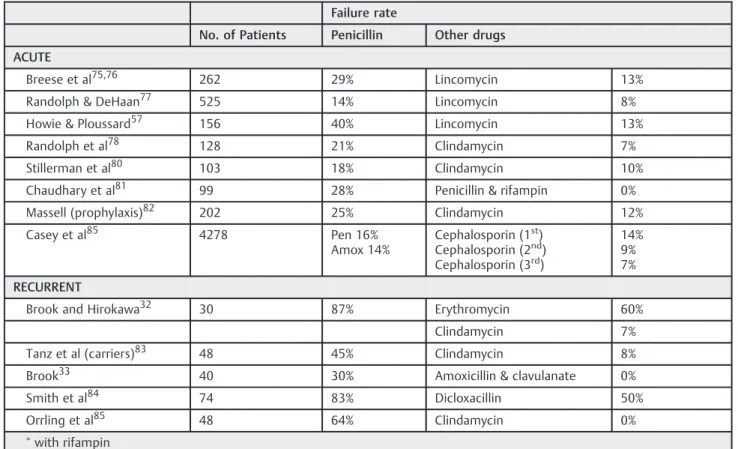
Penicillin failure in treatment of recurrent and chronic ton-sillitis is even higher than the failure of therapy of acute infection. Several clinical studies demonstrated the superior-ity of lincomycin, clindamycin, and amoxicillin-clavulanic acid over penicillin in the treatment of recurrent
Table 3 Antibacterial activity of penicillin compared with cephalosporins in the management of acute GABHS tonsillitis
Antimicrobial Activity Penicillin Cephalosporins
Aerobic betalactamase–producing bacteria No Yes
Interfering organisms Yes No
GABHS Yes Yes
Table 4 Antibacterial activity of cephalosporins against aerobic Beta-Lactamase–Producing Bacteria (BLPB)
BLPB First generation (cephalothin)
Second generation (cefuroxime)
Extended spectrum (cefdinir, cefpodoxime)
Third generation (cefixime, ceftibuten)
S. aureus Yes Yes Yes No
H. influenzae No Yes Yes Yes
PT.32–34,57,75–85Only one of these studies showed reduction
in the need for tonsillectomies following treatment with clindamycin (►Table 5).32 These antimicrobial agents are effective against aerobic, as well as anaerobic BLPB and GABHS, in eradicating recurrent tonsillar infection. However, no studies have shown them to be superior to penicillin in treatment of acute tonsillitis.
A study86of 774 patients with acute recurrent GABHS PT that compared oral clindamycin 300mg BID and oral amoxicil-lin-clavulanate 1 g BID achieved comparable rates of bacterio-logic eradication at 12 days and 3 months and comparable clinical cure rates at three months. Patients who received clindamycin had significantly greater clinical cure rates at 12 days (92.6% versus 85.2%).
Other drugs that may also be effective in the therapy of recurrent or chronic tonsillitis are penicillin plus rifampin and a macrolide (e.g., erythromycin) plus metronidazole (►Table 6). Referral of a patient for tonsillectomy should be considered only after these medical therapeutic modalities have failed.
Amoxicillin-clavulanate and clindamycin, which are also active against the anaerobic component (including the anaer-obic BLPB) of the oropharyngealflora, are appropriate for the treatment of patients with chronic tonsillitis and in those with recurrent PT who had failed treatment and are considered for elective tonsillectomy. Clindamycin has also been found to be effective in eradicating the GABHS carrier state.87This may be due to its ability to eradicate the BLPB present39 in these children as well as penetrate into the tonsillar cells.1
Table 5 Studies of therapy of acute and recurrent group A streptococcal pharyngitis
Failure rate
No. of Patients Penicillin Other drugs
ACUTE
Breese et al75,76 262 29% Lincomycin 13%
Randolph & DeHaan77 525 14% Lincomycin 8%
Howie & Ploussard57 156 40% Lincomycin 13%
Randolph et al78 128 21% Clindamycin 7%
Stillerman et al80 103 18% Clindamycin 10%
Chaudhary et al81 99 28% Penicillin & rifampin 0%
Massell (prophylaxis)82 202 25% Clindamycin 12%
Casey et al85 4278 Pen 16%
Amox 14%
Cephalosporin (1st) Cephalosporin (2nd) Cephalosporin (3rd)
14% 9% 7%
RECURRENT
Brook and Hirokawa32 30 87% Erythromycin 60%
Clindamycin 7%
Tanz et al (carriers)83 48 45% Clindamycin 8%
Brook33 40 30% Amoxicillin & clavulanate 0%
Smith et al84 74 83% Dicloxacillin 50%
Orrling et al85 48 64% Clindamycin 0%
with rifampin
Abbreviations: Amox, amoxicillin; Pen, peniciliin.
Table 6 Oral antimicrobials in treatment of GABHS tonsillitis
Acute Recurrent/Chronic Carrier State
Penicillin (amoxicillin) Clindamycin, amoxicillin-clavulanate Clindamycin
Cephalosporinsb Metronidazole plus macrolide Penicillin plus rifampin
Clindamycin Penicillin plus rifampin –
Amoxicillin-clavulanate – –
Macrolidesa – –
The Carrier State
Antimicrobial therapy is not indicated for most individuals who are chronic streptococcal carriers. However, some cir-cumstances justify the eradication of the organism. These include: (1) during an outbreak of acute rheumatic fever, acute post-streptococcal glomerulonephritis, or invasive GABHS infection in the community; (2) during an outbreak of GABHS PT in a closed community; (3) in those with a personal or family history of acute rheumatic fever; (4) in families with excessive anxiety about GABHS infections; or (5) when GABHS carriage is considered as an indication for tonsillectomy.
Several antimicrobials have been found to be more effec-tive than penicillin or amoxicillin in eliminating chronic streptococcal carriage. These include clindamycin87and the combination of penicillin (IM or PO) and rifampin.83
Final Comment
There have been 13 national guidelines published regarding GABHS PT management since 1999.49,50,74,88–97 These
in-clude six from European countries (France, United Kingdom, Finland, Holland, Scotland, and Belgium), six from the United States, and one from Canada. Recommendations differ substantially with regard to the use of a rapid antigen diagnostic test or throat culture and the indications for antibiotic treatment. The North American, Finnish, and French guidelines recommend performing one timely micro-biologic investigation in suspected cases, and prescribing antibiotics in confirmed cases to prevent suppurative com-plications and acute rheumatic fever. According to the remaining European guidelines, however, acute sore throat is considered a benign, self-limiting disease. Microbiologic tests are not routinely recommended by these latter guide-lines, and antibiotic treatment is reserved for well-selected cases. Without microbiological testing, bacteriological fail-ure of therapy cannot be detected.
Penicillin remains the antibiotic of choice recommended by all national guidelines,49,50,74,88–97 although other
anti-biotics are more effective in the bacteriological eradication and clinical cure of acute and recurrent GABHS PT.33–36
Macrolides and cephalosporins are more effective clinically and bacteriologically than penicillin in acute GABHS PT,44,45 while lincomycin, clindamycin, and amoxicillin-clavulanate are more effective in relapsing GABHS PT.32–34,57,75–85
The goal of the treatment of PT in individuals who failed penicillin therapy is also to eradicate the BLPB that protect GABHS from penicillin, while preserving whatever “ protec-tive”interfering organisms (i.e., AHS) that may be present in the pharyngo-tonsillar area.
Cephalosporins have been successful in eradicating GABHS better, and in some instances even faster than penicillin.44,45 Thirty-five randomized studies showed that all classes of cephalosporins have a higher success rate in eradicating GABHS than penicillin (a third of the failure rate of penicillin,44,45 and 12 studies illustrated equal or better success rate in 5 to 7 days of therapy, compared with 10 days of penicillin.73 The frequency of
symptomatic relapses of GABHS PT following all genera-tions of cephalosporins was significantly lower compared with penicilin98(►Table 5). The explanation for the supe-riority of cephalosporins over penicillin is that even though they are as efficacious in vitro as penicillin in eradicating GABHS, penicillin also eliminates the aerobic- and anaero-bic-interfering bacteria. Penicillin use may therefore deprive the patient of the potential beneficial effects of interfering organisms, which can decrease colonization with GABHS. In contrast, cephalosporins are less inhibitory of aerobic- and anaerobic-interfering organisms; thus, they are more likely to survive the antimicrobial therapy.42The higher the generation of the cephalosporins, the less effec-tive they are against both aerobic- and anaerobic-interfer-ing organisms (►Tables 5and6).
Cephalosporins lesser efficacy against interfering bacteria accounts for their potential advantage. The administration of a cephalosporin has therefore a selective effect: eradicating GABHS while preserving both aerobic- and anaerobic-inter-fering organisms (►Tables 3and4). The sparing effects of the cephalosporins persisted for at least two months after their administration.20
Cephalosporins are generally resistant to β-lactamase and are not hydrolyzed by extracellular β-lactamases produced by BLPB. However, cephalosporinś antibacterial efficacy against BLPB is generation-dependent (►Table 3). First generation cephalosporins (e.g., cephalexin, cefa-droxil) are effective only againstS. aureus; second genera-tion (cefuroxime acetil) and extended-spectrum third generation (cefdinir and cefpodoxime axetil) cephalospor-ins are effective agacephalospor-inst S. aureus,Haemophilus spp., and Moraxellaspp.; and third generation (e.g., cefixime, cefti-buten) cephalosporins are only effective against Haemo-philusspp. andMoraxellaspp.99
The selective activity of cephalosporins has been dem-onstrated in an animal model study of mixed infection,21as well as in patients treated with an extended-spectrum cephalosporin prior to elective tonsillectomy.100 Brook and Foote100compared two treatment modes of recurrent GABHS tonsillitis: one with penicillin and the other with an extended-spectrum cephalosporin (cefdinir). Both antimi-crobials were given for 10 days prior to elective tonsillec-tomy to children who suffered from recurrent GABHS tonsillitis and were scheduled for surgery. Of the two, cefdinir was more effective in eradicating GABHS, reducing the number of BLPB, and preserving AHS capable of inhib-iting GABHS. These results illustrate the ability of an oral extended-spectrum cephalosporin, in comparison to peni-cillin, to eradicate GABHS as well as BLPB, while preserving the interfering AHS.
The data presented suggest that consideration should be given to utilization of antimicrobials other than penicillin for the treatment of GABHS PT, especially in clinical settings where penicillin failure had occurred or is high. Further studies are warranted to demonstrate if this approach would reduce the need for tonsillectomies.
References
1 Kaplan EL, Chhatwal GS, Rohde M. Reduced ability of penicillin to eradicate ingested group A streptococci from epithelial cells: clinical and pathogenetic implications. Clin Infect Dis 2006; 43(11):1398–1406
2 Brook I, Gober AE. Persistence of group A beta-hemolytic strep-tococci in toothbrushes and removable orthodontic appliances following treatment of pharyngotonsillitis. Arch Otolaryngol Head Neck Surg 1998;124(9):993–995
3 Gerber MA. Antibiotic resistance in group A streptococci. Pediatr Clin North Am 1995;42(3):539–551
4 Hagman MM, Dale JB, Stevens DL. Comparison of adherence to and penetration of a human laryngeal epithelial cell line by group A streptococci of various M protein types. FEMS Immunol Med Microbiol 1999;23:195–204
5 Neeman R, Keller N, Barzilai A, Korenman Z, Sela S. Prevalence of internalisation-associated gene, prtF1, among persisting group-A streptococcus strains isolated from asymptomatic carriers. Lan-cet 1998;352(9145):1974–1977
6 Brook I. The role of beta-lactamase-producing bacteria in the persistence of streptococcal tonsillar infection. Rev Infect Dis 1984;6(5):601–607
7 Lafontaine ER, Wall D, Vanlerberg SL, Donabedian H, Sledjeski DD. Moraxella catarrhalis coaggregates with Streptococcus pyogenes and modulates interactions of S. pyogenes with human epithelial cells. Infect Immun 2004;72(11):6689–6693
8 Grahn E, Holm SE. Bacterial interference in the throatflora during a pharyngo- tonsillitis outbreak in an apartment house area. Zentralbl Bakteriol Mikrobiol Hyg A 1983;256:72–79
9 Brook I. Emergence and persistence of beta-lactamase-producing bacteria in the oropharynx following penicillin treatment. Arch Otolaryngol Head Neck Surg 1988;114(6):667–670
10Podbielski A, Beckert S, Schattke R, et al. Epidemiology and virulence gene expression of intracellular group A streptococci in tonsils of recurrently infected adults. Int J Med Microbiol 2003; 293(2–3):179–190
11Stjernquist-Desatnik A, Samuelsson P, Walder M. Penetration of penicillin V to tonsillar surfacefluid in healthy individuals and in patients with acute tonsillitis. J Laryngol Otol 1993;107(4): 309–312
12Marouni MJ, Barzilai A, Keller N, Rubinstein E, Sela S. Intracellular survival of persistent group A streptococci in cultured epithelial cells. Int J Med Microbiol 2004;294(1):27–33
13Orrling A, Kamme C, Stjernquist-Desatnik A. Penicillin V, lora-carbef and clindamycin in tonsillar surfacefluid during acute group A streptococcal pharyngotonsillitis. Scand J Infect Dis 2005;37(6–7):429–435
14Brook I, Gober AE. Interference by aerobic and anaerobic bacteria in children with recurrent group A beta-hemolytic streptococcal tonsillitis. Arch Otolaryngol Head Neck Surg 1999;125(5): 552–554
15Brook I, Gober AE. Role of bacterial interference and beta-lactamase-producing bacteria in the failure of penicillin to eradi-cate group A streptococcal pharyngotonsillitis. Arch Otolaryngol Head Neck Surg 1995;121(12):1405–1409
16Roos K, Holm SE, Grahn E, et al. Alpha-streptococci as supple-mentary treatment of recurrent streptococcal tonsillitis: a ran-domized placebo-controlled study. Scand J Infect Dis 1993; 25:31–35
17Roos K, Holm SE, Grahn-Håkansson E, Lagergren L. Recoloniza-tion with selected alpha-streptococci for prophylaxis of recurrent streptococcal pharyngotonsillitis—a randomized placebo-con-trolled multicentre study. Scand J Infect Dis 1996;28(5):459–462 18Falck G, Grahn-Håkansson E, Holm SE, Roos K, Lagergren L. Tolerance and efficacy of interfering alpha-streptococci in recur-rence of streptococcal pharyngotonsillitis: a placebo-controlled study. Acta Otolaryngol 1999;119(8):944–948
19Brook I, Gober AE. Long-term effects on the nasopharyngealflora of children following antimicrobial therapy of acute otitis media with cefdinir or amoxycillin-clavulanate. J Med Microbiol 2005; 54(Pt 6):553–556
20Brook I, Gilmore JD. Evaluation of bacterial interference and beta-lactamase production in management of experimental infection with group A beta-hemolytic streptococci. Antimicrob Agents Chemother 1993;37(7):1452–1455
21Brook I, Gober AE. Prophylaxis with amoxicillin or sulfisoxazole for otitis media: effect on the recovery of penicillin-resistant bacteria from children. Clin Infect Dis 1996;22(1):143–145 22Brook I, Gober AE. Emergence of beta-lactamase-producing aerobic
and anaerobic bacteria in the oropharynx of children following penicillin chemotherapy. Clin Pediatr (Phila) 1984;23(6):338–341 23Brook I. Role of beta-lactamase-producing bacteria in the failure
of penicillin to eradicate group A streptococci. Pediatr Infect Dis 1985;4:491–495
24Brook I, Yocum P, Friedman EM. Aerobic and anaerobic bacteria in tonsils of children with recurrent tonsillitis. Ann Otol Rhinol Laryngol 1981;90(3 Pt 1):261–263
25Reilly S, Timmis P, Beeden AG, Willis AT. Possible role of the anaerobe in tonsillitis. J Clin Pathol 1981;34(5):542–547 26Tunér K, Nord CE. beta-Lactamase-producing anaerobic bacteria
in recurrent tonsillitis. J Antimicrob Chemother 1982;10(Suppl A):153–156
27Chagollan J, Macias JR, Gil JS. Flora indigena de las amigdales. Invest Med Int 1984;11:36–39
28Kielmovitch IH, Keleti G, Bluestone CD, Wald ER, Gonzalez C. Microbiology of obstructive tonsillar hypertrophy and recurrent tonsillitis. Arch Otolaryngol Head Neck Surg 1989;115(6):721–724 29Brook I, Yocum P, Foote PA Jr. Changes in the core tonsillar bacteriology of recurrent tonsillitis: 1977-1993. Clin Infect Dis 1995;21(1):171–176
30Brook I, Yocum P. Quantitative measurement of beta lactamase in tonsils of children with recurrent tonsillitis. Acta Otolaryngol 1984;98(5–6):556–559
31Brook I. Beta-lactamase-producing bacteria and their role in infection. Rev Med Microbiol 2005;16:91–99
32Brook I, Hirokawa R. Treatment of patients with a history of recurrent tonsillitis due to group A beta-hemolytic streptococci. A prospective randomized study comparing penicillin, erythro-mycin, and clindamycin. Clin Pediatr (Phila) 1985;24(6):331–336 33Brook I. Treatment of patients with acute recurrent tonsillitis due to group A beta-haemolytic streptococci: a prospective random-ized study comparing penicillin and amoxycillin/clavulanate potassium. J Antimicrob Chemother 1989;24(2):227–233 34Kaplan EL, Johnson DR. Eradication of group A streptococci from the
upper respiratory tract by amoxicillin with clavulanate after oral penicillin V treatment failure. J Pediatr 1988;113(2):400–403 35Holm S, Henning C, Grahn E, Lomberg H, Staley H; The Swedish
Study Group. Is penicillin the appropriate treatment for recurrent tonsillopharyngitis? Results from a comparative randomized blind study of cefuroxime axetil and phenoxymethylpenicillin in children. Scand J Infect Dis 1995;27(3):221–228
36Holm SE, Roos K, Strömberg A. A randomized study of treatment of streptococcal pharyngotonsillitis with cefadroxil or phenox-ymethylpenicillin (penicillin V). Pediatr Infect Dis J 1991;10(10, Suppl)S68–S71
37Brook I, Gober AE. Failure to eradicate streptococci and beta-lactamase producing bacteria. Acta Paediatr 2008;97(2):193–195 38Brook I, Foote PA Jr. Isolation of methicillin resistant Staphylococ-cus aureus from the surface and core of tonsils in children. Int J Pediatr Otorhinolaryngol 2006;70(12):2099–2102
40 Woo JH, Kim ST, Kang IG, Lee JH, Cha HE, Kim DY. Comparison of tonsillar biofilms between patients with recurrent tonsillitis and a control group. Acta Otolaryngol 2012;132(10):1115–1120 41 Brook I. The role of anaerobic bacteria in tonsillitis. Int J Pediatr
Otorhinolaryngol 2005;69(1):9–19
42 Brook I, Gillmore JD. Enhancement of growth of group A beta-hemolytic streptococci in mixed infections with aerobic and anaerobic bacteria. Clin Microbiol Infect 1996;1(3):179–182 43 Brook I, Gober AE. Increased recovery of Moraxella catarrhalis
and Haemophilus influenzae in association with group A beta-haemolytic streptococci in healthy children and those with pharyngo-tonsillitis. J Med Microbiol 2006;55(Pt 8):989–992 44 Casey JR, Pichichero ME. The evidence base for cephalosporin
superiority over penicillin in streptococcal pharyngitis. Diagn Microbiol Infect Dis 2007;57(3, Suppl)39S–45S
45 Casey JR, Pichichero ME. Meta-analysis of cephalosporins versus penicillin for treatment of group A streptococcal tonsillophar-yngitis in adults. Clin Infect Dis 2004;38(11):1526–1534 46 Coonan KM, Kaplan EL. In vitro susceptibility of recent North
American group A streptococcal isolates to eleven oral antibi-otics. Pediatr Infect Dis J 1994;13(7):630–635
47 Macris MH, Hartman N, Murray B, et al. Studies of the continuing susceptibility of group A streptococcal strains to penicillin during eight decades. Pediatr Infect Dis J 1998;17(5):377–381 48 van Asselt GJ, Mouton RP, van Boven CP. Penicillin tolerance and
treatment failure in group A streptococcal pharyngotonsillitis. Eur J Clin Microbiol Infect Dis 1996;15(2):107–115
49 Shulman ST, Bisno AL, Clegg HW, et al; Infectious Diseases Society of America. Clinical practice guideline for the diagnosis and management of group A streptococcal pharyngitis: 2012 update by the Infectious Diseases Society of America. Clin Infect Dis 2012;55(10):e86–e102
50 Bisno AL, Gerber MA, Gwaltney JM Jr, Kaplan EL, Schwartz RH; Infectious Diseases Society of America. Practice guidelines for the diagnosis and management of group A streptococcal pharyngitis. Clin Infect Dis 2002;35(2):113–125
51 Still GJ. Management of pediatric patients with group A beta-hemolytic Streptococcus pharyngitis: treatment options. Pediatr Infect Dis J 1995;14(Suppl3A):57–61
52 McCarty J, Hedrick JA, Gooch WM. Clarithromycin suspension vs penicillin V suspension in children with streptococcal pharyngi-tis. Adv Ther 2000;17(1):14–26
53 Mehra S, van Moerkerke M, Welck J, et al. Short course therapy with cefuroxime axetil for group A streptococcal tonsillophar-yngitis in children. Pediatr Infect Dis J 1998;17(6):452–457 54 Adam D, Hostalek U, Tröster K; Cefixime Study Group. [5-day
therapy of bacterial pharyngitis and tonsillitis with cefixime. Comparison with 10 day treatment with penicillin V]. Klin Padiatr 1996;208(5):310–313
55 Boccazzi A, Tonelli P, De’Angelis M, Bellussi L, Passali D, Careddu P. Short course therapy with cefitbuten versus azithromycin in pediatric streptococcal pharyngitis. Pediatr Infect Dis J 2000; 19(10):963–967
56 Tack KJ, Henry DC, Gooch WM, Brink DN, Keyserling CH; Cefdinir Pharyngitis Study Group. Five-day cefdinir treatment for strep-tococcal pharyngitis. Antimicrob Agents Chemother 1998;42(5): 1073–1075
57 Howie VM, Ploussard JH. Treatment of group A streptococcal pharyngitis in children. Comparison of lincomycin and penicillin G given orally and benzathine penicillin G given intramuscularly. Am J Dis Child 1971;121(6):477–480
58 Lennon DR, Farrell E, Martin DR, Stewart JM. Once-daily amoxicillin versus twice-daily penicillin V in group A beta-haemolytic streptococcal pharyngitis. Arch Dis Child 2008; 93(6):474–478
59 Gerber MA, Randolph MF, DeMeo K, Feder HM Jr, Kaplan EL. Failure of once-daily penicillin V therapy for streptococcal phar-yngitis. Am J Dis Child 1989;143(2):153–155
60 Hooton TM. A comparison of azithromycin and penicillin V for the treatment of streptococcal pharyngitis. Am J Med 1991;91 (3A, Suppl3A)23S–26S
61 Pichichero ME, Disney FA, Aronovitz GH, Talpey WB, Green JL, Francis AB. Randomized, single-blind evaluation of cefadroxil and phenoxymethyl penicillin in the treatment of streptococcal pharyngitis. Antimicrob Agents Chemother 1987;31(6):903–906 62 Block SL, Hedrick JA, Tyler RD. Comparative study of the effec-tiveness of cefixime and penicillin V for the treatment of strep-tococcal pharyngitis in children and adolescents. Pediatr Infect Dis J 1992;11(11):919–925
63 Pichichero ME, Mclinn SE, Gooch WM III, Rodriguez W, Goldfarb J, Reidenberg BE; Members of the Ceftibuten Pharyngitis Interna-tional Study Group. Ceftibuten vs. penicillin V in group A beta-hemolytic streptococcal pharyngitis. Pediatr Infect Dis J 1995;14 (7, Suppl)S102–S107
64 Pichichero ME, Gooch WM, Rodriguez W, et al. Effective short-course treatment of acute group A beta-hemolytic streptococcal tonsillopharyngitis. Ten days of penicillin V vs 5 days or 10 days of cefpodoxime therapy in children. Arch Pediatr Adolesc Med 1994;148(10):1053–1060
65 McCarty JM. Comparative efficacy and safety of cefprozil versus penicillin, cefaclor and erythromycin in the treatment of strep-tococcal pharyngitis and tonsillitis. Eur J Clin Microbiol Infect Dis 1994;13(10):846–850
66 Nemeth MA, Gooch WM III, Hedrick J, Slosberg E, Keyserling CH, Tack KJ. Comparison of cefdinir and penicillin for the treatment of pediatric streptococcal pharyngitis. Clin Ther 1999;21(9): 1525–1532
67 Rubio-López V, Valdezate S, Alvarez D, et al. Molecular epidemi-ology, antimicrobial susceptibilities and resistance mechanisms of Streptococcus pyogenes isolates resistant to erythromycin and tetracycline in Spain (1994-2006). BMC Microbiol 2012;12:215 68 Richter SS, Heilmann KP, Beekmann SE, et al. Macrolide-resistant
Streptococcus pyogenes in the United States, 2002-2003. Clin Infect Dis 2005;41(5):599–608
69 Tanz RR, Shulman ST, Shortridge VD, et al; North American Streptococcal Pharyngitis Surveillance Group. Community-based surveillance in the united states of macrolide-resistant pediatric pharyngeal group A streptococci during 3 respiratory disease seasons. Clin Infect Dis 2004;39(12):1794–1801
70 Tanz RR, Shulman ST, Sroka PA, Marubio S, Brook I, Yogev R. Lack of influence of beta-lactamase-producingflora on recovery of group A streptococci after treatment of acute pharyngitis. J Pediatr 1990;117(6):859–863
71 Brook I, Gober AE. Bacterial interference in the nasopharynx following antimicrobial therapy of acute otitis media. J Antimi-crob Chemother 1998;41(4):489–492
72 Jain A, Shukla VK, Tiwari V, Kumar R. Antibiotic resistance pattern of group-a beta-hemolytic streptococci isolated from north Indi-an children. IndiIndi-an J Med Sci 2008;62(10):392–396
73 Casey JR, Pichichero ME. Metaanalysis of short course antibiotic treatment for group a streptococcal tonsillopharyngitis. Pediatr Infect Dis J 2005;24(10):909–917
74 Gerber MA, Baltimore RS, Eaton CB, et al. Prevention of rheumatic fever and diagnosis and treatment of acute Streptococcal phar-yngitis: a scientific statement from the American Heart Associa-tion Rheumatic Fever, Endocarditis, and Kawasaki Disease Committee of the Council on Cardiovascular Disease in the Young, the Interdisciplinary Council on Functional Genomics and Trans-lational Biology, and the Interdisciplinary Council on Quality of Care and Outcomes Research: endorsed by the American Acade-my of Pediatrics. Circulation 2009;119(11):1541–1551 75 Breese BB, Disney FA, Talpey WB. Beta-hemolytic streptococcal
illness. Comparison of lincomycin, ampicillin, and potassium penicillin G in treatment. Am J Dis Child 1966;112(1):21–27 76 Breese BB, Disney FA, Talpey WB, Green J. Beta-hemolytic
treatment of recurrent infections or the carrier state. Am J Dis Child 1969;117(2):147–152
77Randolph MF, DeHaan RM. A comparison of lincomycin and penicillin in the treatment of group A streptococcal infections: speculation on the“L”form as a mechanism of recurrence. Del Med J 1969;41(2):51–62
78Randolph MF, Redys JJ, Hibbard EW. Streptococcal pharyngitis. 3. Streptococcal recurrence rates following therapy with penicillin or with clindamycin(7-chlorolincomycin). Del Med J 1970;42(4):87–92 79Brook I, Leyva F. The treatment of the carrier state of group A beta-hemolytic streptococci with clindamycin. Chemotherapy 1981; 27(5):360–367
80Stillerman M, Isenberg HD, Facklam RR. Streptococcal pharyngitis therapy: comparison of clindamycin palmitate and potassium phenoxymethyl penicillin. Antimicrob Agents Chemother 1973; 4(5):514–520
81Chaudhary S, Bilinsky SA, Hennessy JL, et al. Penicillin V and rifampin for the treatment of group A streptococcal pharyngitis: a random-ized trial of 10 days penicillin vs 10 days penicillin with rifampin during thefinal 4 days of therapy. J Pediatr 1985;106(3):481–486 82Massell BF. Prophylaxis of streptococcal infections and rheumatic
fever: a comparison of orally administered clindamycin and penicillin. JAMA 1979;241(15):1589–1594
83Tanz RR, Shulman ST, Barthel MJ, Willert C, Yogev R. Penicillin plus rifampin eradicates pharyngeal carriage of group A strepto-cocci. J Pediatr 1985;106(6):876–880
84Smith TD, Huskins WC, Kim KS, Kaplan EL. Efficacy of beta-lactamase-resistant penicillin and influence of penicillin toler-ance in eradicating streptococci from the pharynx after failure of penicillin therapy for group A streptococcal pharyngitis. J Pediatr 1987;110(5):777–782
85Casey JR, Kahn R, Gmoser D, et al. Frequency of symptomatic relapses of group A beta-hemolytic streptococcal tonsillophar-yngitis in children from 4 pediatric practices following penicillin, amoxicillin, and cephalosporin antibiotic treatment. Clin Pediatr (Phila) 2008;47(6):549–554
86Mahakit P, Vicente JG, Butt DI, Angeli G, Bansal S, Zambrano D. Oral clindamycin 300 mg BID compared with oral amoxicillin/ clavulanic acid 1 g BID in the outpatient treatment of acute recurrent pharyngotonsillitis caused by group a beta-hemolytic streptococci: an international, multicenter, randomized, investi-gator-blinded, prospective trial in patients between the ages of 12 and 60 years. Clin Ther 2006;28(1):99–109
87Tanz RR, Poncher JR, Corydon KE, Kabat K, Yogev R, Shulman ST. Clindamycin treatment of chronic pharyngeal carriage of group A streptococci. J Pediatr 1991;119(1 Pt 1):123–128
88American Academy of Pediatrics, Committee on Infectious Dis-eases Red Book. Report of the Committee on Infectious DisDis-eases.
30th ed. 2015Elk Grove Village: Ill American Academy of Pediatrics
89de Jongh E, Opstelten W; Werkgroep NHG-Standaard Acute keelpijn. [Revision of the Dutch College of General Practitioners practice guideline‘Acute sore throat’]. Ned Tijdschr Geneeskd 2015;159:A9456
90Snow V, Mottur-Pilson C, Cooper JR; American Academy of Family Physicians; American College of Physicians-American Society of Internal Medicine; Centers for Disease Control. Principles of appropriate antibiotic use pharyngitis in adults. Ann Intern Med 2001;134:506–508
91Stelter K. Tonsillitis and sore throat in children. GMS Curr Top Otorhinolaryngol Head Neck Surg 2014;13:Doc07 10.3205/ cto000110
92Agence Française de Sécurité Sanitaire des Produits de Santé. Systemic antibiotic treatment in upper and lower respiratory tract infections: official French guidelines. Clin Microbiol Infect 2003;9(12):1162–1178
93Motta G, Motta S, Cassano P, et al. Effects of guidelines on adeno-tonsillar surgery on the clinical behaviour of otorhinolaryngolo-gists in Italy. BMC Ear Nose Throat Disord 2013;13:1
94Piñeiro Pérez R, Hijano Bandera F, Alvez González F, et al. [Consensus document on the diagnosis and treatment of acute tonsillopharyngitis]. An Pediatr (Barc) 2011;75(5):342. e1–342.e13
95Chiappini E, Regoli M, Bonsignori F, et al. Analysis of different recommendations from international guidelines for the manage-ment of acute pharyngitis in adults and children. Clin Ther 2011; 33(1):48–58
96Starreveld JS, Zwart S, Boukes FS, Wiersma T, Goudswaard AN. [Summary of the practice guideline‘Sore throat’(second revi-sion) from the Dutch College of General Practitioners]. Ned Tijdschr Geneeskd 2008;152(8):431–435
97Matthys J, De Meyere M, van Driel ML, De Sutter A. Differences among international pharyngitis guidelines: not just academic. Ann Fam Med 2007;5(5):436–443
98Casey JR, Kahn R, Gmoser D, et al. Frequency of symptomatic relapses of group A beta-hemolytic streptococcal tonsillophar-yngitis in children from 4 pediatric practices following penicillin, amoxicillin, and cephalosporin antibiotic treatment. Clin Pediatr (Phila) 2008;47(6):549–554
99Brook I, Gober AE. Rate of eradication of group A beta-hemo-lytic streptococci in children with pharyngo-tonsillitis by amoxicillin and cefdinir. Int J Pediatr Otorhinolaryngol 2009; 73(5):757–759