BGD
12, 18541–18570, 2015
Ocean acidification challenges copepod
reproductive plasticity
A. Vehmaa et al.
Title Page
Abstract Introduction
Conclusions References
Tables Figures
◭ ◮
◭ ◮
Back Close
Full Screen / Esc
Printer-friendly Version Interactive Discussion
Discussion
P
a
per
|
Discussion
P
a
per
|
Discussion
P
a
per
|
Discussion
P
a
per
|
Biogeosciences Discuss., 12, 18541–18570, 2015 www.biogeosciences-discuss.net/12/18541/2015/ doi:10.5194/bgd-12-18541-2015
© Author(s) 2015. CC Attribution 3.0 License.
This discussion paper is/has been under review for the journal Biogeosciences (BG). Please refer to the corresponding final paper in BG if available.
Ocean acidification challenges copepod
reproductive plasticity
A. Vehmaa1,2, A.-K. Almén2,3, A. Brutemark1,2,a, A. Paul4, U. Riebesell4, S. Furuhagen5, and J. Engström-Öst2,3
1
Tvärminne Zoological Station, University of Helsinki, J.A. Palménin tie 260, 10900 Hanko, Finland
2
Aronia Research and Development Institute, Novia University of Applied Sciences and Åbo Akademi University, Raseborgsväg 9, 10600 Ekenäs, Finland
3
Environmental and Marine Biology, Faculty of Science and Engineering, Åbo Akademi University, Tykistökatu 6, 20500 Turku, Finland
4
GEOMAR Helmholtz Centre for Ocean Research Kiel, Düsternbrooker Weg 20, 24105 Kiel, Germany
5
Department of Environmental Science and Analytical Chemistry, Stockholm University, Svante Arrhenius väg 8, 11418, Stockholm, Sweden
a
now at: Calluna AB, Torsgatan 30, 11321 Stockholm, Sweden
Received: 4 November 2015 – Accepted: 6 November 2015 – Published: 17 November 2015
Correspondence to: A. Vehmaa ([email protected])
BGD
12, 18541–18570, 2015
Ocean acidification challenges copepod
reproductive plasticity
A. Vehmaa et al.
Title Page
Abstract Introduction
Conclusions References
Tables Figures
◭ ◮
◭ ◮
Back Close
Full Screen / Esc
Printer-friendly Version Interactive Discussion
Discussion
P
a
per
|
Discussion
P
a
per
|
Discussion
P
a
per
|
Discussion
P
a
per
|
Abstract
Ocean acidification is challenging phenotypic plasticity of individuals and populations. Calanoid copepods (zooplankton) are shown to be fairly plastic against altered pH con-ditions, and laboratory studies indicate that transgenerational effects are one mech-anism behind this plasticity. We studied phenotypic plasticity of the copepod
Acar-5
tia bifilosa in the course of a pelagic, large-volume mesocosm study that was con-ducted to investigate ecosystem and biogeochemical responses to ocean acidifica-tion. We measured copepod egg production rate, egg hatching success, adult fe-male size and adult fefe-male antioxidant capacity (ORAC) as a function of acidification (fCO2 ∼365−1231 µatm), and as a function of quantity and quality of their diet. We
10
used an egg transplant experiment to reveal if transgenerational effects can allevi-ate the possible negative effects of ocean acidification on offspring development. We found significant negative effects of ocean acidification on adult female copepod size and egg hatching success. In addition, we found a threshold of fCO2 concentration (∼1000 µatm), above which adaptive maternal effects cannot alleviate the negative
15
effects of acidification on egg hatching and nauplii development. We did not find sup-port for the hypothesis that insufficient food quantity (total particulate carbon<55 µm) or quality (C : N) weakens the transgenerational effects. However, females with high ORAC produced eggs with high hatching success. Overall, these results indicate that
A. bifilosacould be affected by projected near future CO2levels.
20
1 Introduction
Increased concentrations of carbon dioxide (CO2) in the atmosphere is changing the carbon chemistry of the world’s oceans. CO2 dissolves in seawater thereby decreas-ing ocean pH. Ocean acidity is increasdecreas-ing fast and pH is expected to decrease by a further 0.14–0.43 pH units during the coming century (IPCC, 2007). Acidification can
25
BGD
12, 18541–18570, 2015
Ocean acidification challenges copepod
reproductive plasticity
A. Vehmaa et al.
Title Page
Abstract Introduction
Conclusions References
Tables Figures
◭ ◮
◭ ◮
Back Close
Full Screen / Esc
Printer-friendly Version Interactive Discussion
Discussion
P
a
per
|
Discussion
P
a
per
|
Discussion
P
a
per
|
Discussion
P
a
per
|
In addition to affecting calcification of calcareous organisms, maintenance of acid-base equilibrium of body fluids may become more difficult and have consequences for ex-ample on protein synthesis, metabolism and volume control (Whiteley, 2011).
In a changing environment, populations can respond in three main ways: through plastic responses of individuals, through genetic changes across generations, or
5
through escaping in space or in time by phenology modifications. Under a rapid change, phenotypic plasticity, i.e., the ability of an individual or a population to alter its physi-ological state, appearance or behaviour in response to the environment is of major importance (West-Eberhard, 2003). Theory predicts that higher plasticity evolves in extreme environments, and that spatial heterogeneity and dispersal select for higher
10
plasticity (Chevin et al., 2013). One could therefore hypothesise that organisms inhab-iting a variable environment have to cope with both seasonal and sudden changes in pH (Brutemark et al., 2011; Almén et al., 2014) could be fairly plastic in their response to ocean acidification.
Proteomic studies suggest that oxidative stress is a common co-stress of
tempera-15
ture and acidification stress (Tomanek, 2014). Increased production of reactive oxygen species (ROS) may result in increased antioxidant and/or repair costs and further in re-duced investment in reproduction or other functions, such as immune defence. Further, increased production of ROS may lead to accumulation of oxidative damage and fur-ther to acceleration of senescence (Monaghan et al., 2009). There can also be a
con-20
nection between maternal oxidative balance and offspring quality. In birds, for example, females allocate diverse antioxidants to the eggs that protect the embryo from oxidative stress. This maternal effect has a positive effect on offspring development and growth (Rubolini et al., 2006).
Copepods (zooplankton) are indispensable to the functioning of the whole pelagic
25
BGD
12, 18541–18570, 2015
Ocean acidification challenges copepod
reproductive plasticity
A. Vehmaa et al.
Title Page
Abstract Introduction
Conclusions References
Tables Figures
◭ ◮
◭ ◮
Back Close
Full Screen / Esc
Printer-friendly Version Interactive Discussion
Discussion
P
a
per
|
Discussion
P
a
per
|
Discussion
P
a
per
|
Discussion
P
a
per
|
and thus participate in controlling harmful algal blooms in the coastal areas suffering from anthropogenic eutrophication (Smayda, 2008).
Previous results suggest that calanoid copepods have high buffering capacity against projected ocean acidification for the year 2100 and beyond (Kurihara and Ishimatsu, 2008; Weydmann et al., 2012; McConville et al., 2013; Vehmaa et al., 2013),
mean-5
ing that they are able to survive, grow, develop and reproduce in lower pH (Reusch, 2014). However, most of the studies have tested only one life-stage, adult females, and have therefore possibly underestimated the effects of ocean acidification on cope-pods (Cripps et al., 2014a). There are indications that transgenerational effects are one mechanism responsible for the high plasticity of copepod reproduction against altered
10
pH conditions (Vehmaa et al., 2012). This maternal effect is most likely dependent on the condition of the mother and the availability of food and quality of her diet (Vehmaa et al., 2012; Pedersen et al., 2014a). Paternal effects can also influence offspring traits. Exposure of both parents to CO2leads to fewer adverse effects on egg production and hatching than exposure of only gravid copepod females (Cripps et al., 2014b). Thor and
15
Dupont (2015) also highlight the importance of testing transgenerational effects. They found significantly lower copepod egg production after two generations when exposed to 900 and 1500 µatm compared to 400 µatm, but transgenerational effects alleviated the negative CO2response in 1500 µatm .
We tested direct and indirect effects of ocean acidification (i.e., via food quantity and
20
quality) on the copepodAcartia bifilosa egg production (EPR), egg hatching success (EH), body size (measured as prosome length (PL)), as well as antioxidant capacity (ORAC). Total particulate carbon (TPC <55 µm) was used as the measure of food quantity. Food quality was indicated by carbon to nitrogen ratio of the same size fraction of seston (C : N<55 µm) (Sterner and Hessen, 1994). In addition, in order to separate
25
BGD
12, 18541–18570, 2015
Ocean acidification challenges copepod
reproductive plasticity
A. Vehmaa et al.
Title Page
Abstract Introduction
Conclusions References
Tables Figures
◭ ◮
◭ ◮
Back Close
Full Screen / Esc
Printer-friendly Version Interactive Discussion
Discussion
P
a
per
|
Discussion
P
a
per
|
Discussion
P
a
per
|
Discussion
P
a
per
|
We hypothesised that copepod eggs hatch and develop better in the same environ-ment in which they are produced, because the females can adjust their reproduction to prevailing conditions. Our second hypothesis stated that low food quantity (TPC) and poor quality (high C : N) will weaken the maternal effect by deteriorating the condition of the mother. Finally, we tested if mothers with higher antioxidant capacity (ORAC)
pro-5
duce better quality offspring (EH) by calculating correlation coefficients between the two variables.
2 Materials and Methods
This study was conducted in association with the KOSMOS (Kiel Off-Shore Mesocosms for Ocean Simulations) project in the Baltic Sea (Paul et al., 2015). The study was
10
performed in summer 2012 in the vicinity of Tvärminne Zoological Station on the south-western coast of Finland. Large mesocosms were moored on site in the beginning of June. Four mesocosm bags were treated with carbon dioxide enriched seawater to reachfCO2concentrations of 600–1650 µatm (Paul et al., 2015). Two untreated bags were used as controls.
15
2.1 Sampling
The sampling took place once a week, five times (days 3, 10, 17, 24 and 45) during the experiment. Mesozooplankton were sampled by taking two hauls with a 300 µm net (17 cm diameter) from 17 m depth and from all the 6 mesocosms. The samples were rinsed into containers with 4 L of seawater from respective mesocosm taken from 9 m
20
depth with a water sampler (Limnos, Hydrobios). On the same day, integrated water samples (0–17 m) were collected from all the mesocosms and the Baltic Sea directly into 1.2 L Duran bottles that were closed without head space. Water samples were kept in cool bags and zooplankton samples were protected from light until transported to a temperature and light controlled room at Tvärminne Zoological Station within 4 h.
BGD
12, 18541–18570, 2015
Ocean acidification challenges copepod
reproductive plasticity
A. Vehmaa et al.
Title Page
Abstract Introduction
Conclusions References
Tables Figures
◭ ◮
◭ ◮
Back Close
Full Screen / Esc
Printer-friendly Version Interactive Discussion
Discussion
P
a
per
|
Discussion
P
a
per
|
Discussion
P
a
per
|
Discussion
P
a
per
|
The light : dark cycle in the room was 16 : 8 h and light intensity was 7 µmol photons m−2s−1(LI-COR LI-1000). Temperature followed the in situ temperature (9◦C (day 3), 11◦C (day 10), 15◦C (day 17), 16◦C (days 24 and 45)).
2.2 Measurements of egg production, egg hatching success and prosome length
5
Twenty adultAcartia bifilosa(17 females and 3 males) were picked with pipettes from every sample using stereomicroscopes, and gently placed in pre-filled glass bottles with respective mesocosm water. The bottles were closed without head-space, to pre-vent CO2-outgassing during the incubation. The bottles were incubated in the temper-ature and light controlled room in conditions described above (Materials and
Meth-10
ods 2.1), and mixed three times a day and their place on the shelf was changed randomly. After the incubation (24.3±2.3 h, average ± SD), the copepods and pro-duced eggs were filtered using 250 and 30 µm sieves, respectively. The copepods were counted and their viability checked before preserving them in RNAlater(Sigma). Pro-some length of the preserved copepods was measured using a s tereomicroscope
15
(Leica MZ12) and ocular micrometer (total magnification 100×).
In the egg transplant experiment, the collected eggs were divided for hatching into two 50 mL petri-dishes with different conditions; one dish was filled with respective mesocosm water and the other filled with Baltic water (common garden). The eggs were counted before the petri dishes were completely filled and sealed without
head-20
space using Parafilm. Egg hatching was followed by counting the number of remaining eggs on the dish through the lid using a stereomicroscope twice a day. When the num-ber of eggs had remained the same on two consecutive counting times the dishes were opened and the water containing the remaining eggs and hatched nauplii was preserved with acid Lugol’s solution. Therefore the hatching incubation time varied
25
BGD
12, 18541–18570, 2015
Ocean acidification challenges copepod
reproductive plasticity
A. Vehmaa et al.
Title Page
Abstract Introduction
Conclusions References
Tables Figures
◭ ◮
◭ ◮
Back Close
Full Screen / Esc
Printer-friendly Version Interactive Discussion
Discussion
P
a
per
|
Discussion
P
a
per
|
Discussion
P
a
per
|
Discussion
P
a
per
|
As some adults, copepodites, nauplii or eggs could have ended up in the incuba-tion bottles or petri dishes with the unfiltered incubaincuba-tion water, the egg producincuba-tion rate (EPR, eggs copepod−1d−1) was calculated using only the number of eggs and adultA.
bifilosafemales found in the incubation bottles after the 24 h incubation. When estimat-ing the egg hatchestimat-ing success (EH, %), the total number of hatchedAcartiasp. nauplii
5
and remaining eggs at the end of the hatching incubation was compared with the num-ber of eggs counted before the hatching incubation. If the total numnum-ber exceeded the egg number prior to hatching, the most developed nauplii (>N4) were considered to be carry-over individuals, and were therefore not considered in the estimation of EH. For estimation of nauplii development, rate the development index (DI) was calculated
10
(Knuckey et al., 2005) accordingly,
DI=
3
P
i=0
(Ni×ni)
3
P
i=0
ni
(1)
whereNi is the assigned stage value (0 for eggs, 1 for N1, 2 forN2 and 3 forN3 and N4) andni the number of individuals at that stage. All theAcartiasp. adults and nauplii were considered to be species A. bifilosa because the other Acartia species in the
15
area,A. tonsadoes not usually exist in the area in early June (Katajisto et al., 1998).
2.3 Antioxidant capacity
For antioxidant capacity (ORAC) samples∼25 live femaleA. bifilosawere picked from every zooplankton sample onto a piece of plankton net in the temperature and light controlled room on days 3, 10, 17 and 31. The net containing the copepods was folded
20
2-BGD
12, 18541–18570, 2015
Ocean acidification challenges copepod
reproductive plasticity
A. Vehmaa et al.
Title Page
Abstract Introduction
Conclusions References
Tables Figures
◭ ◮
◭ ◮
Back Close
Full Screen / Esc
Printer-friendly Version Interactive Discussion
Discussion
P
a
per
|
Discussion
P
a
per
|
Discussion
P
a
per
|
Discussion
P
a
per
|
azobis (2-amidinopropane) dihydrochloride (AAPH) (152.66 mM) and fluorescein was used as a fluorescent probe (106 nM). We used trolox (218 µM, Sigma-Aldrich) as a standard and the assay was performed on a 96-well microplate and to each well, 20 µL sample, 30 µL AAPH and 150 µL fluorescein was added. ORAC values were nor-malized to protein and expressed as mg Trolox eq. mg protein−1. Protein concentration
5
was measured with NanoOrange®(Life Technologies).
2.4 C : N and TPC
Samples for TPC and C : N were collected onto GF/F filters (Whatman, nominal pore size 0.7 µm) using gentle vacuum filtration (<200 mbar) and then stored in glass petri dishes at−20◦C. GF/F filters and petri dishes were combusted at 450◦C for 6 h before
10
use. Gauze pre-filters were used to separate the size fraction<55 µm. Filters were not acidified to remove inorganic carbon, therefore total particulate carbon is used. C and N concentrations were determined on an elemental analyser (EuroEA) following Sharp (1974), coupled by a Conflo II to a Finnigan DeltaPlus mass spectrometer and were used to calculate C : N ratios in mol : mol. For further details on sampling and analyses,
15
please refer to Paul et al. (2015).
2.5 Statistics
The effect of acidification and food quantity and quality on A. bifilosa egg production (EPR), prosome length (PL), antioxidant capacity (ORAC) and nauplii development in-dex (DI) was tested using linear mixed effect models (LMM) from the nlme-package
20
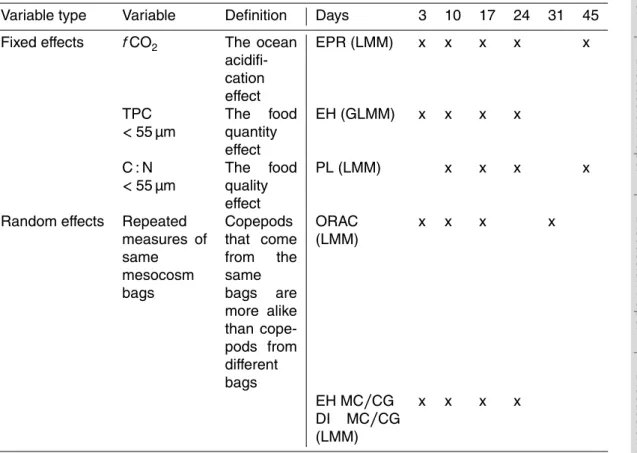
(Pinheiro et al., 2014), where EPR, PL or ORAC were used as response variables, fCO2, TPC (<55 µm) and C : N as fixed explanatory variables and repeated measure of the mesocosms over time as a random factor (Table 1). The effect of fCO2, TPC (<55 µm) and C : N on egg hatching success (EH) was tested with generalized linear mixed model (GLMM) from the lme4-package (Bates et al., 2014), due to the binomial
25
measure-BGD
12, 18541–18570, 2015
Ocean acidification challenges copepod
reproductive plasticity
A. Vehmaa et al.
Title Page
Abstract Introduction
Conclusions References
Tables Figures
◭ ◮
◭ ◮
Back Close
Full Screen / Esc
Printer-friendly Version Interactive Discussion
Discussion
P
a
per
|
Discussion
P
a
per
|
Discussion
P
a
per
|
Discussion
P
a
per
|
ments from each mesocosm within three days before the zooplankton sampling were used as explanatory variables for EPR, ORAC and EH, because 2–3 days are consid-ered to be an appropriate acclimatisation period forA. bifilosa(Yoon et al., 1998; Koski and Kuosa, 1999). For PL, the average of all fCO2, TPC (<55 µm) and C : N mea-surements from the start of the mesocosm experiment were used since PL reflects the
5
environmental conditions of the whole lifespan of the animal. In addition, Day 3 was excluded in the LMM testing the PL (Table 1), since three days is too short period to be able to detect differences in copepod size. Egg −adult generation time for A. bifilosa
at 17◦C is approximately 16 days of which∼7.5 d taken by nauplii stages and∼8.5 d by copepodite stages (Yoon et al., 1998). Collinearity between all explanatory variables
10
was checked. Temperature was not considered in the models, because it changed sim-ilarly in all the bags (Paul et al., 2015). The model simplifications were done manually in backward stepwise manner by removing the non-significant effects and by using Akaike’s information criterion (AIC). We report t or z statistics (EH) of the retained fixed effects. To separate the effect of hatching environment from maternal
environ-15
ment, EH and DI were divided with the corresponding values measured in the common garden conditions (Baltic Sea water). The ratio of Mesocosm EH (or DI)/Common gar-den EH (or DI)>1 means that eggs hatch or develop better in the maternal conditions (Mesocosm water), whereas the ratio<1 means that eggs hatch or develop better in the common garden conditions (Baltic Sea water). The effect of maternal environment
20
(fCO2, TPC (<55 µm) and C : N) on the ratio was tested with LMM, where the ratio of Mesocosm EH/Common garden EH and Mesocosm DI/Common garden DI were used as response variables;fCO2, TPC (<55 µm) and C : N as fixed explanatory vari-ables; and repeated measure of the mesocosms over time as a random factor. The model simplifications were made as above.
25
BGD
12, 18541–18570, 2015
Ocean acidification challenges copepod
reproductive plasticity
A. Vehmaa et al.
Title Page
Abstract Introduction
Conclusions References
Tables Figures
◭ ◮
◭ ◮
Back Close
Full Screen / Esc
Printer-friendly Version Interactive Discussion
Discussion
P
a
per
|
Discussion
P
a
per
|
Discussion
P
a
per
|
Discussion
P
a
per
|
when both ORAC and EH were measured. All the statistical analyses were performed using software R 3.0.2 (R Core Team, 2013).
3 Results
3.1 Egg production, prosome length, antioxidant capacity and egg hatching success
5
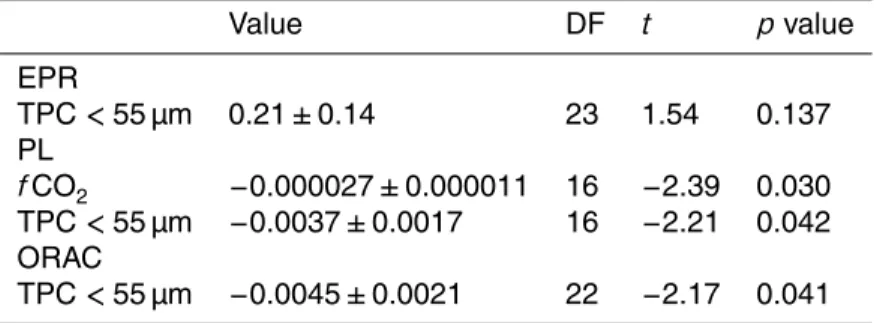
A. bifilosaegg production (EPR) increased in all mesocosm bags between Day 3 and Day 10, but decreased after that reaching very low rates (1–2 eggs copepod−1d−1) on Days 24 and 45 (Fig. 1a). Neither food quantity (TPC, <55 µm), food quality (C : N, <55 µm), nor ocean acidification (fCO2) affected copepod egg production significantly (Table 2), even though they differed between the mesocoms (Table 3).
10
Prosome length (PL) ofA. bifilosaincreased during the first week of the study, how-ever there seemed to be differences between the mesocosms already at the start (Day 3, Fig. 1b). From Day 10 onwards, the smallest A. bifilosa adults were found in the mesocosm with the highestfCO2concentration.fCO2, but also TPC (<55 µm) corre-lated negatively with copepod body size (Table 2).
15
The overall egg hatching success (EH) was high throughout the study; over 80 % of theA. bifilosaeggs hatched. As seen for EPR, PL, and ORAC, EH also increased from Day 3 to Day 10 in all mesocosms (Fig. 1c). Variance in the EH between the four samplings was highest in the mesocosms with highestfCO2, whereas EH varied the least and remained>90 % in both control mesocosms (MC1, MC5). BothfCO2 and
20
TPC (<55 µm) had significant negative effects on EH (Table 4).
Antioxidant capacity (ORAC) of the female copepods increased from Day 3 to Day 10 in all mesocosms (Fig. 1d). Interestingly, on Day 3 ORAC was highest in the three mesocosms with highestfCO2 treatment, whereas on Day 31 the situation was op-posite and ORAC was lowest on the three mesocosms with highestfCO2 (Fig. 1d).
BGD
12, 18541–18570, 2015
Ocean acidification challenges copepod
reproductive plasticity
A. Vehmaa et al.
Title Page
Abstract Introduction
Conclusions References
Tables Figures
◭ ◮
◭ ◮
Back Close
Full Screen / Esc
Printer-friendly Version Interactive Discussion
Discussion
P
a
per
|
Discussion
P
a
per
|
Discussion
P
a
per
|
Discussion
P
a
per
|
Despite this, only TPC (<55 µm) explained variation in ORAC significantly; ORAC de-creases with increasing TPC (Table 2).
3.2 Egg hatching and nauplii development in mesocosm vs. common garden conditions
Neither the maternal food quantity (TPC) nor the quality (C : N) affected the offspring
5
quality (EH and DI) significantly in the egg transplant experiment (Table 5). ThefCO2 was the only detected variable in the maternal environment that influenced the ratio of EH and DI between mesocosm and common garden conditions.
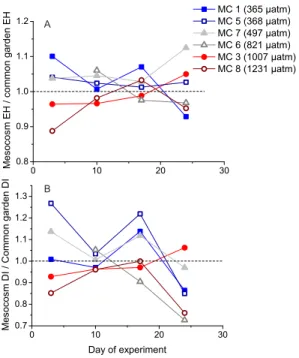
Egg hatching success for eggs hatching in the mesocosm water differed from eggs hatching in the common garden environment. On Days 3 and 10, hatching success was
10
higher in the mesocosm water for the control (MC1, MC5) and for lowfCO2-treatment bags (MC7, MC6), whereas eggs produced in highfCO2-treatment bags (MC3, MC8) showed higher hatching in the common garden conditions (Fig. 2a). Thus, there seems to be a threshold forfCO2 between 821–1007 uatm, above which adaptive maternal effects cannot compensate the negative effects of the environment on offspring
devel-15
opment. However, on Days 17 and 24 thefCO2 treatment did not have a clear effect on hatching success. Nevertheless,fCO2had a significant negative effect on the ratio of EH MC/CG, meaning that egg hatching was higher in the maternal environment than in the Baltic water when the maternal environment had a lowfCO2 (Table 5). How-ever, when maternal environment had highfCO2 the situation is vice versa.The level
20
offCO2had also a significant negative effect on the DI MC/CG ratio (Fig. 2b).
3.3 Correlations between antioxidant capacity and offspring quality
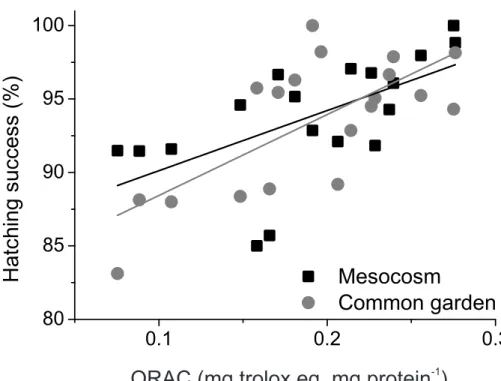
Copepod antioxidant capacity (ORAC) was found to correlate significantly with cope-pod egg hatching success. The relationship between the two variables is positive and stronger for eggs developing in mesocosm water (ρ=0.75, p <0.001) than for eggs
25
BGD
12, 18541–18570, 2015
Ocean acidification challenges copepod
reproductive plasticity
A. Vehmaa et al.
Title Page
Abstract Introduction
Conclusions References
Tables Figures
◭ ◮
◭ ◮
Back Close
Full Screen / Esc
Printer-friendly Version Interactive Discussion
Discussion
P
a
per
|
Discussion
P
a
per
|
Discussion
P
a
per
|
Discussion
P
a
per
|
4 Discussion
In this study, conducted in semi-natural mesocosm environment, reproduction of the copepods Acartia bifilosa copepod showed high phenotypic buffering against acidi-fication, i.e., the species was able to maintain similar egg production rate and also fairly high egg hatching success in allfCO2conditions. Nevertheless, we found
signif-5
icant negative effect of ocean acidification on egg hatching success and adult female size. Even more interestingly, there seems to be a threshold of fCO2 concentration (∼1000 µatm) for offspring development, above which adaptive maternal effects can-not alleviate the negative effects of acidification on egg hatching and nauplii develop-ment (Fig. 2). However, we did not find support for the second hypothesis that poor
10
food quantity (lower TPC) and quality (higher C : N) would weaken the maternal ef-fect by deteriorating the condition of the mother. Conversely, higher food quantity (TPC <55 µm) correlated negatively with egg hatching success, adult female size and antiox-idant capacity, whereas C : N ratio did not correlate with any of the measured variables significantly. Copepods were possibly food limited in all the mesocosms, especially
af-15
ter Day 17 due to a sharp decline in Chlaconcentrations (Paul et al., 2015), and that may have masked the food quality effect. Also, after Day 17 egg production rate was so low that it was practically impossible to find differences in egg production between the mesocosms. Finally, we found a positive correlation between maternal antioxidant ca-pacity and egg hatching success, suggesting that the female antioxidant defence might
20
also protect the embryo from oxidative stress.
The fact thatA. bifilosaegg production was unaffected by highfCO2but that devel-opment was slower in nauplii at high CO2 supports the importance of looking beyond egg production and egg hatching, which is also pointed out by Pedersen et al. (2014b). Longer developmental times in high CO2/low pH have been observed in crustaceans,
25
BGD
12, 18541–18570, 2015
Ocean acidification challenges copepod
reproductive plasticity
A. Vehmaa et al.
Title Page
Abstract Introduction
Conclusions References
Tables Figures
◭ ◮
◭ ◮
Back Close
Full Screen / Esc
Printer-friendly Version Interactive Discussion
Discussion
P
a
per
|
Discussion
P
a
per
|
Discussion
P
a
per
|
Discussion
P
a
per
|
We expected maternal effects to be most obvious in a high stress situation (high fCO2 treatments), as seen for three-spined sticklebacks in a study testing the effects of global warming (Shama et al., 2014). Instead, egg hatching was higher and nauplii development faster in the maternal environment than in the Baltic water, when the maternal environment had a lowfCO2 (low stress). In highfCO2maternal environment
5
the opposite response was observed, thus indicating that maternal effects are in fact weak and cannot compensate for the higherfCO2levels that correspond to near-future levels or that the eggs are damaged by the highfCO2. This suggests thatA. bifilosa
and its reproduction are after all fairly sensitive to ocean acidification. However, the effects were not as clear over the following weeks as in the beginning of the study,
10
which may be due to an overall low egg number and large variation in hatching after Day 17, or due to acclimation of the copepods to the treatment conditions. In addition, the maternal effects seemed to weaken over time. This could be due to weakening condition of the mothers. In the absence of fish predators, zooplankton density, and especiallyBosmina water fleas increased strongly in the mesocosms (Lischka et al.,
15
2015). Senescence and food limitation were thus plausible problems for copepods, and a likely cause of weakening maternal provisioning. Also, conditions in the Baltic Sea changed after Day 17 due to an upwelling event, which caused an increase infCO2 and decrease in pH (Paul et al., 2015). This might have made the common garden conditions less favourable for copepod egg development and even out the differences
20
between highfCO2mesocosms and the common garden conditions.
A few studies have highlighted the importance of testing for transgenerational effects to avoid overestimation of the effects of ocean acidification on copepods. Similar to our results, Thor and Dupont (2015) found reduced egg hatching forPseudocalanus acus-peswith increasingpCO2. In addition, transgenerational effects alleviated the negative
25
BGD
12, 18541–18570, 2015
Ocean acidification challenges copepod
reproductive plasticity
A. Vehmaa et al.
Title Page
Abstract Introduction
Conclusions References
Tables Figures
◭ ◮
◭ ◮
Back Close
Full Screen / Esc
Printer-friendly Version Interactive Discussion
Discussion
P
a
per
|
Discussion
P
a
per
|
Discussion
P
a
per
|
Discussion
P
a
per
|
the CO2environment on egg hatching or development of pre-feeding nauplii stages N1 and N2 in their multigenerational study usingC. finmarchicus. However, the develop-ment time of larger nauplii and copepodite stages was increased bypCO2, although the development delay was not detected anymore in the next generation (Pedersen et al., 2014a). Vehmaa et al. (2012) studied combined effects of ocean acidification
5
and warming, and found indications that negative effects on A. bifilosa reproductive success can be partly combated with maternal effects. However, the used pH treat-ments (−0.4 from ambient) were on the same level with the low fCO2-treatments in this study (MC6, MC7), which makes the results of the two studies consistent.
A preferable practice in oxidative stress studies is to measure several of the four
10
components consisting of free radical production, antioxidant defences, oxidative dam-age, and repair mechanisms (Monaghan et al., 2009). In the current study we only have the estimate for the defences, antioxidant capacity (ORAC) measurements, which makes our conclusions slightly more uncertain. However, an earlier study with the same species has indicated that at intermediate stress levels an upregulation of the
antiox-15
idant system enhances protection against oxidative damage, but at higher stress, the pro-oxidants may exceed the capacity of the antioxidant system and lead to oxidative damage (Vehmaa et al., 2013). In this study, upregulated antioxidant defence seemed to have a positive effect on offspring quality, as indicated by the positive correlation between female ORAC and egg hatching success. The slightly higher correlation in the
20
mesocosms environment compared to the common garden conditions indicates that the female can provision her eggs to match the prevailing conditions. Higher ORAC in the two highestfCO2mesocosms in the beginning of the study could be a sign of an upregulated antioxidant system in a sudden stressful situation, whereas the lowest ORAC in the highfCO2treatments at day 31 (Fig. 1d) could be caused by prolonged
25
BGD
12, 18541–18570, 2015
Ocean acidification challenges copepod
reproductive plasticity
A. Vehmaa et al.
Title Page
Abstract Introduction
Conclusions References
Tables Figures
◭ ◮
◭ ◮
Back Close
Full Screen / Esc
Printer-friendly Version Interactive Discussion
Discussion
P
a
per
|
Discussion
P
a
per
|
Discussion
P
a
per
|
Discussion
P
a
per
|
Ismar et al. (2008) showed thatAcartiaspp. development can be either slow or al-tered by certain algal groups causing death before the first copepodite or reproductive stage. A non-optimal diet could explain the observed contradictory effects of TPC. It is hard to explain why higher food quantity would otherwise cause smaller adult size, lower egg hatching success or lower antioxidant capacity, unless it is nutritionally
unbal-5
anced or difficult to catch or assimilate. Since we did not study what the copepods were consuming we can only speculate on diet quantity and quality. Satiated food conditions can strengthen the maternal or transgenerational effects. The transgenerational effects were of minor importance for hatching success in C. finmarchicus when exposed to long term high CO2 and food limited conditions (Pedersen et al., 2014a). Long term
10
stress and food limitation could thus also be the reason for weakening maternal effects in the current study.
We found body size (prosome length) to be negatively affected by high CO2. The result seems to be mostly driven by the mesocosm with the highest fCO2 (MC 8), where the adultA. bifilosacopepods were smallest on all the four sampling times that
15
were included in the analysis (Days 10, 17, 24 and 45) (Fig. 1b). Since it takes∼8.5 days for a sixth stage nauplius of A. bifilosa to develop through the five copepodite stages and reach adulthood at 17◦C (Yoon et al., 1998), it is plausible that at 9
−11◦C the copepods could have also developed through several stages causing the diff er-ences in prosome length between the treatments on Day 10. Lowered pH may have
20
increased copepods’energy requirements and if energy is reallocated towards main-taining homeostasis, their somatic growth can be reduced. Pedersen et al. (2014a) foundC. finmarchicusbody size to be inversely related topCO2. They also found higher
respiration rate under more acidified conditions, and claimed that increased energy ex-penditure via rising respiration and consecutive decreasing growth and reproduction
25
BGD
12, 18541–18570, 2015
Ocean acidification challenges copepod
reproductive plasticity
A. Vehmaa et al.
Title Page
Abstract Introduction
Conclusions References
Tables Figures
◭ ◮
◭ ◮
Back Close
Full Screen / Esc
Printer-friendly Version Interactive Discussion
Discussion
P
a
per
|
Discussion
P
a
per
|
Discussion
P
a
per
|
Discussion
P
a
per
|
and quality can affect the copepod body size (Hart and Bychek, 2011); however, the expected effect would be positive, contrary to our results. It is therefore possible that the used food quantity (TPC<55 µm) and quality estimates (C : N<55 µm) do not fully describe the diet thatA. bifilosawas consuming in the mesocosm bags.
Adult copepods have in general shown robustness against acidification (Mayor et al.,
5
2012; McConville et al., 2013), whereas eggs and nauplii appear to be more sensitive (Cripps et al., 2014b; Fitzer et al., 2012). In addition, there seems to be notable diff er-ences in sensitivity between species. Nauplii production, adult female fatty acid content and antioxidant capacity (ORAC) ofEurytemora affiniswere not affected byfCO2in the current mesocosm campaign (Almén et al., 2015). Similarly, Lewis et al. (2013) found
10
differences in ocean acidification sensitivity between the species Oithona similis and
Calanus glacialis. They argued thatO. similisis less adapted thanC. glacialisto a nar-rower range of pH, because of less pronounced vertical migration patterns (Lewis et al., 2013). The same applies toA. bifilosaandE. affinisin our study area. AlthoughA. bi-filosais exposed to natural variability in pH environment due to daily variations as well
15
as staying at greater depths during the day (low pH in deep water), it does not reside as deep down asE. affinis(Almén et al., 2014) and may therefore show higher sensitivity thanE. affinisduring the current mesocosm campaign (Almén et al., 2015).
The results obtained for A. bifilosa reproduction in the current study seem to con-tradict the results obtained for theA. bifilosaabundance determined in the mesocosm
20
bags. Although our results indicate that A. bifilosa reproduction is in fact sensitive to ocean acidification, nofCO2 effect was found for the abundance of this species (Lis-chka et al., 2015). It is possible that 45 days was not long enough to detect small negative effects of CO2on copepod size, egg hatching and nauplii development, to be reflected in copepod abundance. On a longer time scale, however, these could
trans-25
BGD
12, 18541–18570, 2015
Ocean acidification challenges copepod
reproductive plasticity
A. Vehmaa et al.
Title Page
Abstract Introduction
Conclusions References
Tables Figures
◭ ◮
◭ ◮
Back Close
Full Screen / Esc
Printer-friendly Version Interactive Discussion
Discussion
P
a
per
|
Discussion
P
a
per
|
Discussion
P
a
per
|
Discussion
P
a
per
|
5 Conclusions
Our results support the idea that it is important to look beyond egg production as hatch-ing and development can be more sensitive endpoints in the response to ocean acidifi-cation. Parental effects will likely be important in mediating some of the negative effects of ocean acidification. ForA. bifilosa, the transgenerational (maternal) effects may
alle-5
viate negative impacts of ocean acidification but only under exposure to medium levels of CO2. We did not find support for the hypothesis suggesting that poorer food quan-tity and quality would weaken the maternal effect by deteriorating the condition of the mother, which could be due to the overall food limitation especially during the latter half of the study. Nevertheless, maternal antioxidant defence seems to correlate positively
10
with offspring egg hatching success. Overall, these results indicate thatA. bifilosacould in fact be affected by CO2 levels predicted for the year 2100 (IPCC, 2007). However, it is important to remember that this study shows how today’s copepods would react to tomorrow’s world; thus these results do not take into account the possible effects of evolutionary adaptation. Transgenerational effects can buffer short-term detrimental
ef-15
fects of ocean acidification and thus give time for genetic adaptation and consequently assist persistence of populations under climate change.
Author contributions. A. Vehmaa planned the experiment; A. Vehmaa, A.-K. Almén, J. Engström-Öst, A. Brutemark conducted the laboratory experiment; A. Vehmaa performed the statistical analyses; A. Paul analysed TPC and C : N; S. Furuhagen analysed ORAC; U.
Riebe-20
sell coordinated the whole project; A. Vehmaa and A.-K. Almén shared responsibility of writing the manuscript with contributions from all co-authors.
Acknowledgements. We thank the KOSMOS team and all of the participants in the mesocosm campaign for their support during the experiment and the Tvärminne Zoological Station for their warm hospitality, support and use of facilities for this experiment. In particular, we would like
25
collab-BGD
12, 18541–18570, 2015
Ocean acidification challenges copepod
reproductive plasticity
A. Vehmaa et al.
Title Page
Abstract Introduction
Conclusions References
Tables Figures
◭ ◮
◭ ◮
Back Close
Full Screen / Esc
Printer-friendly Version Interactive Discussion
Discussion
P
a
per
|
Discussion
P
a
per
|
Discussion
P
a
per
|
Discussion
P
a
per
|
orative project was funded by BMBF projects BIOACID II (FKZ 03F06550), SOPRAN Phase II (FKZ 03F0611), and MESOAQUA (grant agreement number 228224), Cluster of Excellence “The Future Ocean” (Project CP1141), and Academy of Finland (project nr. 276947).
References
Alheit, J. and M., Niquen: Regime shifts in the Humboldt current ecosystem, Prog. Oceanogr.,
5
60, 201–222, doi:10.1016/j.pocean.2004.02.006, 2004.
Almén, A.-K., Vehmaa, A., Brutemark, A., and Engström-Öst, J.: Coping with climate change? Copepods experience drastic variations in their physicochemical environment on a diurnal basis, J. Exp. Mar. Biol. Ecol., 460, 120–128, doi:10.1016/j.jembe.2014.07.001, 2014. Almén, A.-K., Vehmaa, A., Brutemark, A., Bach, L., Lischka, S., Stuhr, A., Furuhagen, S.,
10
Paul, A., Bermúdez, R., Riebesell, U., and Engström-Öst, J.: Negligible effects of ocean acid-ification onEurytemora affinis(Copepoda) offspring production, Biogeosciences, 12, 17093– 17123, doi:10.5194/bgd-12-17093-2015, 2015.
Bates, D., Maechler, M., Bolker, B., and Walker, S.: lme4: linear mixed-effects models using Eigen and S4, R package version 1.1-7, available at: http://CRAN.R-project.org/package=
15
lme4, last access: 11 November 2014.
Beaugrand, G., Brander, K. M., Lindley, J. A., Souissi, S., and Reid, P.: Plankton effect on cod recruitment in the North Sea, Nature, 426, 661–663, doi:10.1038/nature02164, 2003. Bron, J. E., Frisch, D., Goetze, E., Johnson, S. C., Lee, C. E., and Wyngaard, G. A.: Observing
copepods through a genomic lens, Front. Zool., 8, 22, doi:10.1186/1742-9994-8-22, 2011.
20
Brutemark, A., Engström-Öst, J., and Vehmaa, A.: Long-term monitoring data reveal pH dy-namics, trends and variability in the western Gulf of Finland, Oceanol. Hydrobiol. St., 40, 91–94, doi:10.2478/s13545-011-0034-3, 2011.
Chevin, L.-M., Collins, S., and Lefévre, F.: Phenotypic plasticity and evolutionary demographic responses to climate change: taking theory out to the field, Funct. Ecol., 27, 966–979,
25
doi:10.1111/j.1365-2435.2012.02043.x, 2013.
BGD
12, 18541–18570, 2015
Ocean acidification challenges copepod
reproductive plasticity
A. Vehmaa et al.
Title Page
Abstract Introduction
Conclusions References
Tables Figures
◭ ◮
◭ ◮
Back Close
Full Screen / Esc
Printer-friendly Version Interactive Discussion
Discussion
P
a
per
|
Discussion
P
a
per
|
Discussion
P
a
per
|
Discussion
P
a
per
|
Cripps, G., Lindeque, P., and Flynn, K. J.: Parental exposure to elevated pCO2
in-fluences the reproductive success of copepods, J. Plankton Res., 36, 1165–1174, doi:10.1093/plankt/fbu052, 2014b.
Fitzer, S. C., Caldwell, G. S., Close, A. J., Clare, A. S., Upstill-Goddard, R. C., and Bent-ley, M. G.: Ocean acidification induces multi-generational decline in copepod naupliar
pro-5
duction with possible conflict for reproductive resource allocation, J. Exp. Mar. Biol. Ecol., 418–419, 30–36, doi:10.1016/j.jembe.2012.03.009, 2012.
Foster, J., Hirst, A. G., and Atkinson, D.: How do organisms change size with changing tem-perature? The importance of reproductive method and ontogenic timing, Funct. Ecol., 25, 1024–1031, doi:10.1111/j.1365-2435.2011.01852.x, 2011.
10
Hart, R. C. and E. A., Bychek: Body size in freshwater planktonic crustaceans: an overview of extrinsic determinants and modifying influences of biotic interactions, Hydrobiologia, 668, 61–108, doi:10.1007/s10750-010-0400-y, 2011.
IPCC (Intergovermental Panel on Climate Change): Climate Change 2007: Synthesis Report, Fourth assessment report, available at: http://www.ipcc.ch (last access: 27 July 2015), 2007.
15
Ismar, S. M. H., Hansen, T., and Sommer, U.: Effect of food concentration and type of diet on Acartiasurvival and naupliar development, Mar. Biol., 154, 335–343, doi:10.1007/s00227-008-0928-9, 2008.
Katajisto, T., Viitasalo, M., and Koski, M.: Seasonal occurrence and hatching of calanoid eggs in sediments of the northern Baltic Sea, Mar. Ecol.-Prog. Ser., 163, 133–143, 1998.
20
Knuckey, R. M., Semmens, G. L., Mayer, R. J., and Rimmer, M. A.: Development of an op-timal microalgal diet for the culture of the calanoid copepodAcartia sinjiensis: effect of al-gal species and feed concentration on copepod development, Aquaculture, 249, 339–51, doi:10.1016/j.aquaculture.2005.02.053, 2005.
Koski, M. and Kuosa, H.: The effect of temperature, food concentration and female size on the
25
egg production of the planktonic copepodAcartia bifilosa, J. Plankton Res., 21, 1779–1789, 1999.
Kurihara, H. and Ishimatsu, A.: Effects of high CO2seawater on the copepod (Acartia
tsuen-sis) through all life stages and subsequent generations, Mar. Pollut. Bull., 56, 1086–1090, doi:10.1016/j.marpolbul.2008.03.023, 2008.
30
win-BGD
12, 18541–18570, 2015
Ocean acidification challenges copepod
reproductive plasticity
A. Vehmaa et al.
Title Page
Abstract Introduction
Conclusions References
Tables Figures
◭ ◮
◭ ◮
Back Close
Full Screen / Esc
Printer-friendly Version Interactive Discussion
Discussion
P
a
per
|
Discussion
P
a
per
|
Discussion
P
a
per
|
Discussion
P
a
per
|
ter sea ice, Proc. Natl. Acad. Sci. USA, 110, E4960–E4967, doi:10.1073/pnas.1315162110, 2013.
Lischka, S., Bach, L.T., Schulz, K.-G., and Riebesell, U.: Micro- and mesozooplankton com-munity response to increasing levels offCO2in the Baltic Sea: insights from a large-scale
mesocosm experiment, Biogeosciences, this issue, 2015.
5
Mayor, D. J., Everett, N. R., and Cook, K. B.: End of century ocean warming and acidification effects on reproductive success in a temperate marine copepod, J. Plankton Res., 34, 258– 262, doi:10.1093/plankt/fbr107, 2012.
McConville, K., Halsband, C., Fileman, E. S., Somerfield, P. J., Findlay, H. S., and Spicer, J. I.: Effects of elevated CO2on the reproduction of two calanoid copepods, Mar. Pollut. Bull., 73,
10
428–434, doi:10.1016/j.marpolbul.2013.02.010, 2013.
Monaghan, P., Metcalfe, N. B., and Torres, R.: Oxidative stress as a mediator of life his-tory trade-offs: mechanisms, measurements and interpretation, Ecol. Lett., 12, 75–92, doi:10.1111/j.1461-0248.2008.01258.x, 2009.
Ou, B. X., Hampsch-Woodill, M., and Prior, M.: Development and validation of an improved
15
oxygen radical absorbance capacity assay using fluorescein as the fluorescent probe, J. Agr. Food. Chem., 49, 4619–4626, 2001.
Paul, A. J., Bach, L. T., Schulz, K.-G., Boxhammer, T., Czerny, J., Achterberg, E. P., Helle-mann, D., Trense, Y., Nausch, M., Sswat, M., and Riebesell, U.: Effect of elevated CO2 on
organic matter pools and fluxes in a summer, post spring-bloom Baltic Sea plankton
commu-20
nity, Biogeosciences, 12, 6863–6927, doi:10.5194/bgd-12-6863-2015, 2015.
Pedersen, S. A., Håkedal, O. L., Salaberria, I., Tagliati, A., Gustavson, L. M., Jenssen, B. M., Olsen, A. J., and Altin, D.: Multigenerational exposure to ocean acidification during food limitation reveals consequences for copepod scope for growth and vital rates, Environ. Sci. Technol., 48, 12275–12284, doi:10.1021/es501581j, 2014a.
25
Pedersen, S. A., Våge, V. V., Olsen, A. J., Hammer, K. M., and Altin, D.: Effects of elevated carbon dioxide (CO2) concentrations on early developmental stages of the marine copepod
Calanus finmarchicusGunnerus (Copepoda: Calanoidae), J. Toxicol. Env. Heal. A, 77, 535– 549, doi:10.1080/15287394.2014.887421, 2014b.
Pinheiro, J., Bates, D., DebRoy, S., Sarkar, D., and R Core Team: nlme: linear and Nonlinear
30
BGD
12, 18541–18570, 2015
Ocean acidification challenges copepod
reproductive plasticity
A. Vehmaa et al.
Title Page
Abstract Introduction
Conclusions References
Tables Figures
◭ ◮
◭ ◮
Back Close
Full Screen / Esc
Printer-friendly Version Interactive Discussion
Discussion
P
a
per
|
Discussion
P
a
per
|
Discussion
P
a
per
|
Discussion
P
a
per
|
R Core Team, R: A language and environment for statistical computing, R Foundation for Sta-tistical Computing, Vienna, Austria, available at: http://www.R-project.org/ (last access: 27 March 2014), 2013.
Reusch, T. B.: Climate change in the oceans: evolutionary vs. phenotypically plastic responses of marine animals and plants, Evol. Appl., 7, 104–122, doi:10.1111/eva.12109, 2014.
5
Rubolini, D., Romano, M., Bonisoli Alquati, A., and Saino, N.: Early maternal, genetic and environmental components of antioxidant protection, morphology and immunity of yellow-legged gull (Larus michahellis) chicks, J. Evol. Biol., 19, 1571–1584, doi:10.1111/j.1420-9101.2006.01121.x, 2006.
Shama, L. N. S., Strobel, A., Mark, F. C., and Wegner, K.: Transgenerational plasticity in marine
10
sticklebacks: maternal effects mediate impacts of a warming ocean, Funct. Ecol., 28, 1482– 1493, doi:10.1111/1365-2435.12280, 2014.
Smayda, T. J.: Complexity in the eutrophication-harmful algal bloom relationship, with comment on the importance of grazing, Harmful Algae, 8, 140–151, doi:10.1016/j.hal.2008.08.018, 2008.
15
Sterner, R. W. and Hessen, D. O.: Algal nutrient limitation and the nutrition of aquatic herbivores, Annu. Rev. Ecol. Syst., 25, 1–29, 1994.
Thor, P. and Dupont, S.: Transgenerational effects alleviate severe fecundity loss during ocean acidification in a ubiquitous planktonic copepod, Glob. Change Biol., 21, 2261–2271, doi:10.1111/gcb.12815, 2015.
20
Tomanek, L.: Proteomics to study adaptations in marine organisms to environmental stress, J. Proteomics, 105, 92–106, doi:10.1016/j.jprot.2014.04.009, 2014.
Vehmaa, A., Brutemark, A., and Engström-Öst, J.: Maternal effects may act as an adapta-tion mechanism for copepods facing pH and temperature changes, PLoS ONE, 7, e48538, doi:10.1371/journal.pone.0048538, 2012.
25
Vehmaa, A., Hogfors, H., Gorokhova, E., Brutemark, A., Holmborn, T., and Engström-Öst, J.: Projected marine climate change: effects on copepod oxidative status and reproduction, Ecol. Evol., 13, 4548–4557, doi:10.1002/ece3.839, 2013.
West-Eberhard, M. J.: Developmental Plasticity and Evolution, Oxford University Press, New York, 2003.
30
Weydmann, A., Søreide, J. E., Kwasniewski, S., and Widdicombe, S.; Influence of CO2-induced
BGD
12, 18541–18570, 2015
Ocean acidification challenges copepod
reproductive plasticity
A. Vehmaa et al.
Title Page
Abstract Introduction
Conclusions References
Tables Figures
◭ ◮
◭ ◮
Back Close
Full Screen / Esc
Printer-friendly Version Interactive Discussion
Discussion
P
a
per
|
Discussion
P
a
per
|
Discussion
P
a
per
|
Discussion
P
a
per
|
Whiteley, N. M.: Physiological and ecological responses of crustaceans to ocean acidification, Mar. Ecol.-Prog. Ser., 430, 257–271, doi:10.3354/meps09185, 2011.
BGD
12, 18541–18570, 2015
Ocean acidification challenges copepod
reproductive plasticity
A. Vehmaa et al.
Title Page
Abstract Introduction
Conclusions References
Tables Figures
◭ ◮
◭ ◮
Back Close
Full Screen / Esc
Printer-friendly Version Interactive Discussion
Discussion
P
a
per
|
Discussion
P
a
per
|
Discussion
P
a
per
|
Discussion
P
a
per
|
Table 1.Variables that were used in the full LMM or GLMM models, their definitions and the sampling days that were included in the models.
Variable type Variable Definition Days 3 10 17 24 31 45
Fixed effects fCO2 The ocean
acidifi-cation effect
EPR (LMM) x x x x x
TPC <55 µm
The food quantity effect
EH (GLMM) x x x x
C : N <55 µm
The food quality effect
PL (LMM) x x x x
Random effects Repeated measures of same mesocosm bags
Copepods that come from the same bags are more alike than cope-pods from different bags
ORAC (LMM)
x x x x
EH MC/CG
DI MC/CG
(LMM)
BGD
12, 18541–18570, 2015
Ocean acidification challenges copepod
reproductive plasticity
A. Vehmaa et al.
Title Page
Abstract Introduction
Conclusions References
Tables Figures
◭ ◮
◭ ◮
Back Close
Full Screen / Esc
Printer-friendly Version Interactive Discussion
Discussion
P
a
per
|
Discussion
P
a
per
|
Discussion
P
a
per
|
Discussion
P
a
per
|
Table 2.T statistics of the retained fixed effects in the LMMs.
Value DF t pvalue
EPR
TPC<55 µm 0.21±0.14 23 1.54 0.137
PL
fCO2 −0.000027±0.000011 16 −2.39 0.030
TPC<55 µm −0.0037±0.0017 16 −2.21 0.042
ORAC
BGD
12, 18541–18570, 2015
Ocean acidification challenges copepod
reproductive plasticity
A. Vehmaa et al.
Title Page
Abstract Introduction
Conclusions References
Tables Figures
◭ ◮
◭ ◮
Back Close
Full Screen / Esc
Printer-friendly Version Interactive Discussion
Discussion
P
a
per
|
Discussion
P
a
per
|
Discussion
P
a
per
|
Discussion
P
a
per
|
Table 3.Ranges offCO2, TPC<55 µm, and C : N<55 µm that were used as explanatory
vari-ables in the full LMM and GLMM models. 3-day averages were used in testing the effects of the explanatory variables on copepod egg production (EPR), antioxidant capacity (ORAC), and egg hatching success (EH), whereas average of all measurements from the start of the experiments were used when testing the effects of the explanatory variables on copepod size (PL).
fCO2(µatm) TPC<55 µm C : N<55 µm
3-d average since start 3-d average since start 3-d average since start
MC 1 267−477 267−365 15.1−31.6 21.4−31.6 5.51−8.43 7.26−8.03
MC 3 745−1201 884−1121 17.4−29.7 20.4−29.7 6.94−8.36 7.79−8.20
MC 5 275−481 274−368 15.8−24.5 19.2−24.8 7.24−8.57 7.24−7.59
MC 6 663−991 683−896 16.5−34.3 21.0−34.3 7.14−8.25 7.60−7.81
MC 7 390−565 390−497 17.5−30.0 21.4−29.9 6.92−8.25 7.43−7.74
BGD
12, 18541–18570, 2015
Ocean acidification challenges copepod
reproductive plasticity
A. Vehmaa et al.
Title Page
Abstract Introduction
Conclusions References
Tables Figures
◭ ◮
◭ ◮
Back Close
Full Screen / Esc
Printer-friendly Version Interactive Discussion
Discussion
P
a
per
|
Discussion
P
a
per
|
Discussion
P
a
per
|
Discussion
P
a
per
|
Table 4.Z statistics of the retained fixed effects in the GLMM testing egg hatching success (EH).
Value z pvalue
EH
fCO2 −0.00062±0.00032 1.94 0.052
BGD
12, 18541–18570, 2015
Ocean acidification challenges copepod
reproductive plasticity
A. Vehmaa et al.
Title Page
Abstract Introduction
Conclusions References
Tables Figures
◭ ◮
◭ ◮
Back Close
Full Screen / Esc
Printer-friendly Version Interactive Discussion
Discussion
P
a
per
|
Discussion
P
a
per
|
Discussion
P
a
per
|
Discussion
P
a
per
|
Table 5. T statistics of the retained fixed effects in the LMMs testing the ratio of egg hatching success (EH) mesocosm/EH common garden and nauplii development index (DI) mesocosm/DI common garden. Ratio>1: higher EH or DI in the mesocosm water (maternal environment) than in the Baltic Sea water (common garden environment), ratio<1: lower EH or DI in the mesocosm water (maternal environment) than in the Baltic Sea water (common garden environment).
Value DF t pvalue
EH mesocosm/EH common garden
fCO2 −0.000061±0.000028 16 −2.203 0.043
DI mesocosm/DI common garden
BGD
12, 18541–18570, 2015
Ocean acidification challenges copepod
reproductive plasticity
A. Vehmaa et al.
Title Page
Abstract Introduction
Conclusions References
Tables Figures
◭ ◮
◭ ◮
Back Close
Full Screen / Esc
Printer-friendly Version Interactive Discussion
Discussion
P
a
per
|
Discussion
P
a
per
|
Discussion
P
a
per
|
Discussion
P
a
per
|
A
D B
C
-1
ORAC (mg trolox eq. mg protein
)
BGD
12, 18541–18570, 2015
Ocean acidification challenges copepod
reproductive plasticity
A. Vehmaa et al.
Title Page
Abstract Introduction
Conclusions References
Tables Figures
◭ ◮
◭ ◮
Back Close
Full Screen / Esc
Printer-friendly Version Interactive Discussion
Discussion
P
a
per
|
Discussion
P
a
per
|
Discussion
P
a
per
|
Discussion
P
a
per
|
A
B
BGD
12, 18541–18570, 2015
Ocean acidification challenges copepod
reproductive plasticity
A. Vehmaa et al.
Title Page
Abstract Introduction
Conclusions References
Tables Figures
◭ ◮
◭ ◮
Back Close
Full Screen / Esc
Printer-friendly Version Interactive Discussion
Discussion
P
a
per
|
Discussion
P
a
per
|
Discussion
P
a
per
|
Discussion
P
a
per
|
-1