
DEGRADATION OF BENZO [A] PYRENE BY A NOVEL STRAIN Bacillus subtilis BMT4i (MTCC 9447)
Madhuri Kaushish Lily1, Ashutosh Bahuguna1, Koushalya Dangwal1*, Veena Garg2
1
Department of Biotechnology, Modern Institute of Technology (MIT), Dhalwala, Rishikesh-249201, Uttarakhand, India;
2
Department of Bioscience and Biotechnology, Banasthali University, Rajasthan, India.
Submitted: October 01, 2008; Returned to authors for corrections: November 04, 2008; Approved: May 15, 2009.
ABSTRACT
Benzo [a] Pyrene (BaP) is a highly recalcitrant, polycyclic aromatic hydrocarbon (PAH) with high
genotoxicity and carcinogenicity. It is formed and released into the environment due to incomplete
combustion of fossil fuel and various anthropogenic activities including cigarette smoke and automobile
exhausts. The aim of present study is to isolate bacteria which candegrade BaP as a sole source of carbon
and energy. We have isolated a novel strain BMT4i (MTCC 9447) of Bacillus subtilis from automobile
contaminated soil using BaP (50 g /ml) as the sole source of carbon and energy in basal salt mineral
(BSM) medium. The growth kinetics of BMT4i was studied using CFU method which revealed that
BMT4i is able to survive in BaP-BSM medium up to 40 days attaining its peak growth (1029 fold increase in cell number) on 7 days of incubation. The BaP degradation kinetics of BMT4i was studied using High
Performance Liquid Chromatography (HPLC) analysis of BaP biodegradation products. BMT4i started
degrading BaP after 24 hours and continued up to 28 days achieving maximum degradation of
approximately 84.66 %. The above findings inferred that BMT4i is a very efficient degrader of BaP. To
our best of knowledge, this is the first report showing utilization of BaP as a sole source of carbon and
energy by bacteria. In addition, BMT4i can degrade a wide range of PAHs including naphthalene,
anthracene, and dibenzothiophene therefore, it could serve as a better candidate for bioremediation of
PAHs contaminated sites.
Key words: Benzo [a] Pyrene (BaP), polycyclic aromatic hydrocarbon (PAH), Bacillus subtilis BMT4i, colony forming units/ml (CFU/ml), high performance liquid chromatography (HPLC)
INTRODUCTION
High molecular weight (HMW) polycyclic aromatic
hydrocarbons (PAHs) are considered environmentally
significant because of their potential toxicity to the higher
organisms and resistance to microbial attack (5). Usually, an
increase in the number of fused rings increases the chemical
stability and hydrophobicity of PAH molecules, making them
more amenable to biodegradation. In mammals, PAHs are
shown to possess high mutagenic, teratogenic or carcinogenic
properties (9, 14, 24) therefore, many PAHs including
phenanthrene, acenaphthene, acenaphthylene, fluoranthene,
pyrene, benzo[a] pyrene (BaP) and benzo[a] anthracene are
listed in the priority pollutant list of the United States
Environmental Protection Agency (20, 26).
Benzo [a] Pyrene (BaP), a potent carcinogen is a
pentacyclic high molecular weight PAH with high
recalcitrant nature (4, 5, 24, 27). The natural sources of BaP
are forest fires, volcanic eruptions, peat fires, burning of
crude oil and shale oil, while anthropogenic sources include
the incomplete combustion of fossil fuel, coke oven
emissions, aluminum smelters, coal combustion and
conversion industries, incinerators, vehicle exhausts,
cigarette, cigar and marijuana smoke (2, 3). From
contaminated soil and water, BaP enters into the food chain
and metabolized to its ultimate genotoxic form which then
interacts with nucleic acids and proteins forming highly
reactive macromolecular adducts resulting in BaP induced
toxicity, mutagenesis and carcinogenesis in mammals (8, 12,
23). In contrast to the mammalian system, some algal, fungal
and bacterial species are shown to degrade BaP co
-metabolically, alone or in a co-culture (16, 18, 22). However,
bacteria capable of utilizing BaP as a sole source of carbon
and energy have never been demonstrated.
In view of the above, the present study is focused on the
isolation and characterization of bacterial species capable of
degrading BaP as the sole source of carbon and energy.
MATERIALS AND METHODS
Chemicals and Reagents
The benzo (a) pyrene (BaP) (99.9%), benzo (a) pyrene
cis- 7, 8 dihydrodiol, naphthalene, anthracene and
dibenzothiophene (purity > 98%) were purchased from
Supelco, USA. Tryptone, peptone, beef extracts, bacto-agar,
yeast extracts and staining reagents were obtained from
HiMedia Laboratory Pvt. Ltd. India. The general chemicals
including constituents of basal salt mineral media (BSM) and
solvents of analytical grade were purchased from Glaxo Pvt.
Ltd. India and Merck Pvt. Ltd. India.
Preparation of Media
BSM (pH 7.0) was prepared by dissolving 0.38g
KH2PO4, 0.6g K2HPO4, 0.2g MgSO4.7H2O, 1.0g NH4Cl and
0.05g FeCl3 in one liter doubledistilled water and autoclaved.
Autoclaved nutrient broth contained 5g peptone, 5g NaCl, 3g
beef extracts, 3g yeast extracts per liter double distilled water.
All the solid media contained 1.5% agar along with BSM or
nutrient broth. The stock solution (10 mg/ml) of BaP, benzo
(a) pyrene cis- 7, 8 dihydrodiol, naphthalene, anthracene and
dibenzothiophene were made in dimethylformamide and was
sterilized by Millipore micro syringe filter assembly(0.45µm
pore size).
Isolation of BaP degrading bacteria
The subsurface PAH-contaminated soil sample was
collected from automobile workshop situated in Srinagar
Garhwal, Uttarakhand, India.
The automobile contaminated soil was suspended in
BSM (10% w/v) with vigorous stirring for 10 minutes and
then allowed to settle at room temperature for one hour. The
supernatant was serially diluted up to 10-9. 100 l inoculum of 10-7 diluted soil suspension was spread on BSM- agar plate supplemented with BaP (50 g/ml) as sole source of carbon
and energy and incubated for 1 week at 37oC inside the clear plastic bags to conserve moisture. The bigger size bacterial
colonies which appeared on BSM-BaP plate were aseptically
removed and reselected on BSM-BaP plate to obtain their
pure culture. Single colony of each isolate is then inoculated
in 10 ml nutrient broth and grown for 24 h at 37 0C with constant shaking at 150 rpm (Remi, India, Model no.
CIS-24). The cell suspensions were centrifuged at 8000 rpm for
10 minutes to obtain cell pellets of each soil isolate. The cell
pellets were washed with BSM three times to remove the
trace of nutrient broth and finally suspended in BSM. The
optical densities of cell suspensions were adjusted to 1.0
approximately equal to the 108 cells per ml. The ability of each soil isolate to grow in the presence of BaP waschecked
by inoculating 1 ml of each soil isolates (approx. 108 cells/ml) into the 10 ml of BSM supplemented with BaP (50
g/ml) as the sole source of carbon and energy. The cultures
were incubated at 370C for 1 week with constant shaking at 150 rpm in dark to avoid photolysis of BaP. 100 l each of
grown culture were taken out and diluted serially upto 0- 10
-20
. 100 l of each serially diluted culture were spread over
for 12-24 h at 370C. The colonies were counted and CFU/ml was determined for each culture. In addition, the cultures
were virtually examined for the turbidity at 600 nm using
UV-Vis Spectrophotometer (Systronics, India, model no.
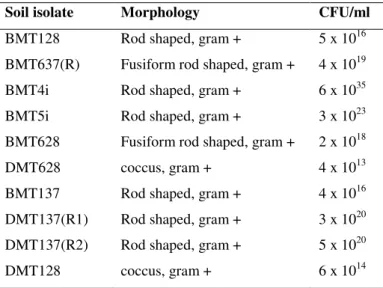
119). The best BaP degrader (BMT4i) was selected on the
basis of its highest growth in BaP-BSM as indicated by
highest CFU/ml (Table 1) and turbidity at A600.
Table 1. Characteristics and Viability of soil bacterial isolates in BaP-BSM after 7 days
Identification and characterization of the BaP degrading bacterium BMT4i
The BMT4i was maintained on BaP supplemented BSM
agar plates. The identification and characterization of the
BMT4i was done on the basis of the cell and colony
morphology, growth characteristics, motility, various staining
reactions and various biochemical tests as given by Bergey’s
Manual of Systematic Bacteriology (6) as mentioned in the
results (Table 2). For molecular characterization, BMT4i
genomic DNA was isolated and approximately 1.5 kb 16S
rDNA gene fragment was amplified by PCR (Biometra,
Germany, model Tpersonal) using the forward primers 5
-ACCACATGCAAGTGCAACG-3 and reverse primer 5 -
ACGGGCGGTGTGTAC-3 . The amplified product was
purified by agarose gel electrophoresis and clone into the
pGEM-T vector (Promega Scientific, Santa Barbara,
California). Both the strands of cloned approximately 1.5 kb
16S rDNA gene fragment were sequenced using sequencing
facility provided by Bangalore Genei, India. The
approximately 1.5 kb region of the 16S rDNA gene was used
for alignment and phylogenetic analysis. The sequenceswere
compared to those in GenBank by using the Blast Alignment
Tool and the software based on “Neighbor Joining Method”
was used to construct phylogenetic tree. The aligned
sequences were deposited to the GenBank, EMBL and DDBJ
libraries. The culture of BMT4i was deposited in Microbial
Type Culture Collection (MTCC), Institute of Microbial
Technology (IMTECH), Chandigarh, India.
Assessment of degradation ability of BMT4i
All the operations were carried out in dim yellow light in
order to avoid photo degradation of BaP. All the experiments
were set up in triplicates. A single colony of BMT4i
maintained in BaP-BSM agar plate was inoculated in 10 ml
nutrient broth and grown at 370C with constant stirring till the A600 reaches to 1.0 (approx. 1x10⁸ cells/ml). The cell
culture was centrifuged at 8000 rpm for 10 minutes and
washed three times with BSM to remove trace of nutrient
broth. The BMT4i cell number was adjusted to 108 cells /ml in BSM. For the time course studies, 1 ml of BMT4i- BSM
suspension was re-inoculated in various flasks (107 cells /ml) containing 10 ml BSM supplemented with 50 g/ml of BaP
as the sole source of carbon and energy and incubated at 37oC in incubator shaker at 120 rpm for various time periods along
with their respective controls devoid of BMT 4i. At various
time points (0, 12 h, 1, 2, 3, 7, 14, 21, 28, 35, 42 days), first
of all, the A600 was recorded and then CFU/ml of BMT4i
was checked by removing 100 µl culture from all the
experimental and control flask, diluting up to 10-40 and plating over BSM-glucose agar plate. After 24 h, the numbers
of colonies were counted and the log10CFU/ml was calculated
to obtain the growth curve. The respective cultures were then
extracted twice with ethyl acetate (1:1 v/v), acidified to pH
4.0 with 0.1 N HCl and re-extracted twice with ethyl acetate
Soil isolate Morphology CFU/ml
BMT128 Rod shaped, gram + 5 x 10¹⁶
BMT637(R) Fusiform rod shaped, gram + 4 x 10¹⁹
BMT4i Rod shaped, gram + 6 x 1035
BMT5i Rod shaped, gram + 3 x 10²³
BMT628 Fusiform rod shaped, gram + 2 x 10¹⁸
DMT628 coccus, gram + 4 x 10¹³
BMT137 Rod shaped, gram + 4 x 10¹⁶
DMT137(R1) Rod shaped, gram + 3 x 10²⁰ DMT137(R2) Rod shaped, gram + 5 x 10²⁰
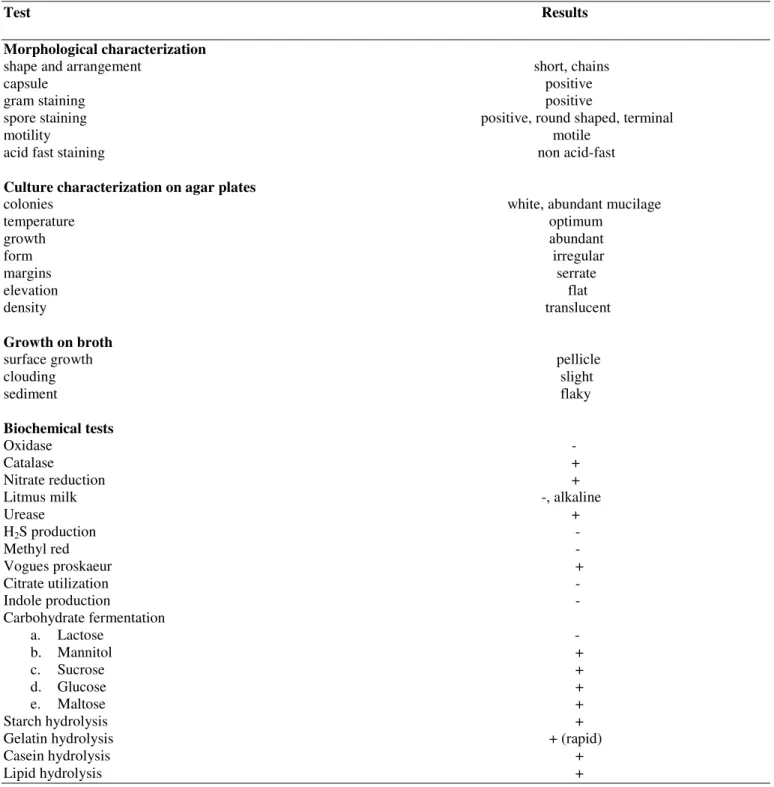
Table 2. Physical and biochemical characteristics of Bacillus subtilis BMT4i (MTCC 9447) Test Results
Morphological characterization
shape and arrangement short, chains capsule positive gram staining positive
spore staining positive, round shaped, terminal motility motile
acid fast staining non acid-fast
Culture characterization on agar plates
colonies white, abundant mucilage temperature optimum
growth abundant form irregular margins serrate elevation flat density translucent
Growth on broth
surface growth pellicle clouding slight sediment flaky
Biochemical tests
Oxidase - Catalase + Nitrate reduction + Litmus milk -, alkaline Urease + H2S production -
Methyl red - Vogues proskaeur + Citrate utilization - Indole production - Carbohydrate fermentation
a. Lactose - b. Mannitol + c. Sucrose + d. Glucose + e. Maltose + Starch hydrolysis + Gelatin hydrolysis + (rapid) Casein hydrolysis + Lipid hydrolysis +
to enhance the recovery of acidic metabolites. The entire
triplicate extracts of respective time period were separately
dried in rotary evaporator (Perfit, Ambala, India, model no.
951) and finally suspended in 1.0 ml of methanol. The
recovery of biodegraded products by ethyl acetate extraction
was found to be more than 96 %. The extent of BaP
biodegradation was checked by quantifying left over BaP in
methanol suspension of biodegraded extracts by HPLC
analysis (13, 21). The reverse phase HPLC was done on
commercial basis from Herbal Research and Development
Institute (HRDI), Selaqui, Dehradun, India (HPLC system:
Array (PDA) detector). For that, 20 l of the methanol
dissolved extracts were injected into an HPLC system fitted
with 5 m particle diameter C18 column. The elution gradient
was programmed as follows (shown as percent [by volume]
of methanol in water, acidified with 0.76 ml of H3PO4 liter -1
): 50% for 2 min, linear gradient to 80% at 5% min-1, holding at 80oC for 16 min. The flow rate was kept at 1ml min-1. Peaks were measured at 254 nm. The percent degradation of BaP was assessed by subtracting left over BaP
in experiments (with BMT4i) from the respective controls
(without BMT4i; recovered products were considered as
100%) at various time intervals (0, 12 h, 1, 2, 3, 7, 14, 21, 28,
35, 42 days).
Viability of BMT4i in the presence of other PAH
To check the viability of BMT4i in the presence of other
PAHs, the overnight grown nutrient broth culture of BMT4i
was washed three times with BSM and spread over BSM
plates containing 500 g/ml each of naphthalene, anthracene
and dibenzothiophene (DBT) as the sole sources of the
carbon and energy. After 24-48 h of incubation at 37oC, the plates were observed for appearance of colonies. The CFU/ml
was determined by inoculating thoroughly washed BMT4i
culture (107cells/ml) inBSM broth containing naphthalene, anthracene and dibenzothiophene (DBT) (500 g/ml) in
separate flasks and CFU/ ml was calculated after 7 day of
incubation at 37oC, 150 rpm.
RESULTS
Isolation and identification of a BaP degrading bacterium The BaP degrading bacterial colonies were isolated from
automobile contaminated soil by standard culture enrichment
techniques with BaP as the sole source of carbon and energy.
Among various BaP degrading bacterial isolates, the BMT4i
was selected as best BaP degrader on the basis of its highest
growth in BaP-BSM as indicated by highest CFU/ml
(Table1) and turbidity at A600 after 7 days of growth.BMT4i
was further characterized on the basis of cell and colony
morphology, various staining and biochemical activities
(Table 2) and 16S rDNA gene analysis. The cellular and
colony morphology, various staining reactions and
biochemical reactions identified BMT4i as a Bacillus subtilis.
Two of its unique biochemical characteristics viz-abundant
mucilage secretion and urease positive reaction indicated
BMT4i as a novel strain of Bacillus subtilis. The sequence
and comparative phylogenetic analysis of PCR amplified 16S
rDNA gene fragment of BMT4i to those in GenBank
confirmed BMT4i as the closest homologue and a novel
strain of Bacillus subtilis (NCBI GenBank Accession No.
DQ911348, MTCC 9447) (Figure 1).
Growth Kinetics of BMT4i in the presence of BaP
The growth kinetics experiment revealed that the BMT4i
possess ability to utilize BaP for its biomass production. As
shown in the plot of log10 of CFU/ml against incubation time,
after 12 h of lag phase, log10 CFU/ml of BMT4i increases
exponentially with increase in incubation duration up to 7th day and there after it declines (Figure 2). At the beginning,
7.46 log10 CFU/ml (~ 2 x 10⁷ CFU/ml) of BMT4i was added
to the BaP-BSM medium, which almost remain constant (7.5
log10 CFU/ml) for 12 h, started increasing linearly after 24 h
(8.4 log10 CFU/ml) attaining maximum 36.77 log10 CFU/ml
(6.0 x 1036) on 7th day of incubation showing approx 4x1029 -fold increase in the cell number. The CFU/ml declined slowly
after 7th day reaching to zero on 42 day. About 4x1029 fold increase in the CFU number is directly correlated with the
ability of Bacillus subtilis BMT4i to utilize BaP as the sole
source of carbon and energy which leads to high increase in
cell number within just 7 days, which starts declining
afterwards possibly due to the exhaustion of BaP.
Figure 2. Counts (log 10 CFU/ml) of Bacillus subtilis BMT4i (MTCC 9447) in BSM with BaP against incubation time (days).
Each point represents the average value obtained with triplicate flasks.
Assessment of BaP degradation
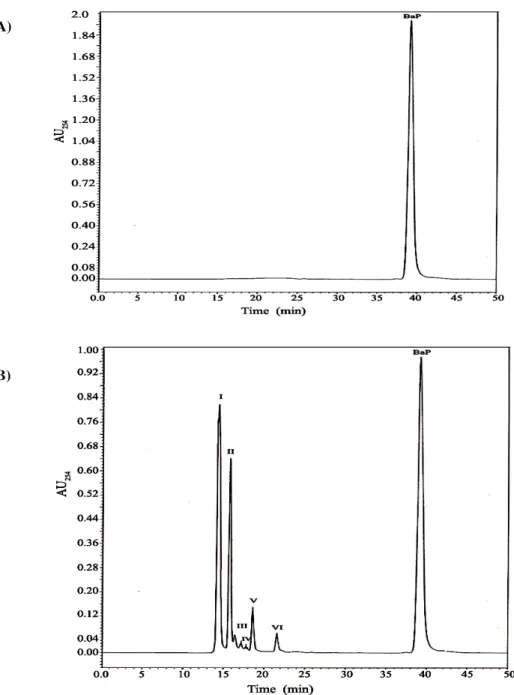
The HPLC profile for BaP and its metabolites after 7
days of growth of BMT4i in BaP medium was compared with
that of negative control (without BMT4i) (Figure 3 A and B
). The chromatogram showed six additional peaks (I, II, III,
IV, V, VI) indicating different metabolites formed during
the degradation of BaP. The analysis of metabolites is under
study. The plot of percent BaP degradation against incubation
time (Figure 4), demonstrated that Bacillus subtilis BMT4i
possess ability to degrade BaP as shown by the linear
increase in BaP degradation with time. BMT4i started
degrading BaP after 24 h and continued up to day 28. On 12
h, no detectable amount of degradation was seen suggesting it
as lag phase of degradation. On day 1, BMT4i mediated BaP
degradation efficiency was about 5.18% that increased
exponentially up to 7 day (about 48.34%), and there after
with slow increase it became static on day 28 (84.66 %).
Further incubation of 35 days and 42 days doesn’t show any
further increase in BaP degradation. Whereas, on day 2, 3, 14
and 21, BMT4i was able to degrade about 12.28%, 21.77%,
60.12% and 73.92% BaP respectively. Although, the number
of viable cells (log10 CFU/ml) decreased considerably after 7
day of growth in BaP medium, the BMT4i continued to
degrade BaP up to 28 days.
0 10 20 30 40
0 10 20 30 40 50
Incubation time (days)
L
o
g10
CF
U
/m
l
o
f
BM
T
4
Figure 3. The HPLC profile for BaP and its metabolites after 7 days of incubation: (A) Without BMT4i (negative control); (B) with BMT4i in BSM- BaP medium
0 20 40 60 80 100
0 10 20 30 40 50
Incubation time (days)
%
B
a
P
b
io
d
e
g
ra
d
a
ti
o
n
(A)
(B)
Figure 4. Percentage (%) degradation of BaP (50 g/ml) by Bacillus subtilis BMT4i (MTCC 9447) with respect to time
(days). Each point represents the average value obtained with
triplicate flasks. The error bars represent the standard
Viability of BMT4i in the presence of other PAH
Bacillus subtilis BMT4i possess the ability to utilize
naphthalene, anthracene and DBT as the sole source of
carbon and energy as indicated by the appearance of
numerous colonies after 48 h of growth over the respective
PAH containing plates. This was further confirmed by
CFU/ml after 7 days of growth in respective PAH containing
broth. The CFU/ml was found to be about 1052 (naphthalene), 1049 (anthracene) and 1056 (DBT).
DISCUSSION
Present study is the first report demonstrating the utilization
of BaP as a sole source of carbon and energy by bacteria. The
novel strain Bacillus subtilis BMT4i (MTCC 9447) showed
1029 fold enhancement in biomass with in 7 days and about 84.66% of BaP degradation after 28 days of growth. The
HPLC profile of 7 days incubation showed six additional
peaks indicating intermediate metabolites. The identification
of metabolites is under study. At present it is not clear
whether the decrease in CFU/ml after 7 days is due to the
accumulation of toxic metabolites or exhaustion of BaP as
carbon and energy source. Our study is different from other
studies in following three aspects. First, all the reported BaP
degradation by bacteria have been shown to occur
co-metabolically i.e., in the presence of additional carbon
sources. Second, none of the bacterial species showed
viability for such a long duration (40 days) in BaP-BSM
medium. Third, this much of high BaP degradation efficiency
has not been reported by earlier studies. Early observation of
BaP biodegradation was made with mutant Beijerinckia sp.
strain B8/36 and Pseudomonas sp. strain NCIB 9816 grown
on succinate plus biphenyl and succinate plus salicylate (1,
7). Mycobacterium vanbaalenii PYR-1 using peptone, yeast
extracts, and soluble starch as the additional carbon sources
was able to degrade 24.7 % of BaP in pure culture where as
in sediment water microcosm experiment it was able to
mineralize 36 % of added BaP after 28 days (10, 11). In
another study, Mycobacterium sp. Strain RJGII-135 showed
25 % co-metabolic mineralization of BaP in soil after 180
days (8). In a different study, Mycobacterium sp. strain
RJGII-135 demonstrated about 40% degradation of BaP after
32 days (25). Co-metabolic degradation (41%) of BaP was
also demonstrated by Burkholderia cepacia strains after 56
days (15). Some of the other studies involved use of bacterial
consortium derived from soil which co-metabolically
mineralizes BaP to greater than 95% in 150 days and 33-65%
with in two weeks when provided with a complex
hydrocarbon co substrate such as crude oil and diesel fuel
separately in soil (17, 19). In a recent study, Bacillus
subtilis-tgr3 isolated from PAH contaminated soil was able to
transform 55% and 65% of BaP with in 48 h and 72 h at 30oC when grown on minimal media supplemented with sodium
citrate (13). However, during incubation, tgr-3 showed only
102 fold enhancement in cell number after 48 hours after that it declined drastically becoming non-viable with in 96 hours.
Bacillus subtilis BMT4i also possess ability to degrade
other PAHs such as naphthalene, anthracene and
dibenzothiophene. Since Bacillus subtilis BMT4i has been
isolated from automobile contaminated soil and is well
adapted to PAHs including BaP contaminated environment,
therefore it could serve as better model for bioremediation of
PAH contaminated site and removal of PAHs including BaP
from the environment.
ACKNOWLEDGEMENTS
This work was supported in part by the Modern Institute
of Technology, Rishikesh, Uttarakhand, India and Uttrakhand
Council of Science and Technology, Uttarakhand, India
(UCOST; grant no. UCS and T/R and D/LS-46/06-07),
thatare gratefully acknowledged. We also thank Prof Aditya
Shastri, Vice Chancellor, Banasthali University, Rajasthan,
India for providing facilities in the Dept. of Bioscience and
REFERENCES
1. Barnsley, E.A. (1975). The bacterial degradation of fluoranthene and benzo [a] pyrene. Can. J. Microbiol. 21 (7), 1004-1008.
2. Blumer, M. (1976). Polycyclic aromatic hydrocarbons in nature. Sci. Am. 234 (3), 35-45.
3. California Environmental Protection Agency (1997). Public health goal for Benzo [a] Pyrene in drinking water. p. 1-42.
4. Cerniglia, C.E. (1992). Biodegradation of polycyclic aromatic hydrocarbons. Biodegradation 3, 351–368.
5. Cerniglia, C.E. (1993). Biodegradation of polycyclic aromatic hydrocarbons. Curr. Opin. Biotechnol. 4, 331-338.
6. Claus, D.; Berkeley, R.C.W. (1986). Genus Bacillus. Sneath, P.H.A.; Mair, N.S.; Sharpe, M.E.; Holt, J.G. (ed.) Bergey’s Manual of Systematic Bacteriology, 1st ed., vol. 2, 1105–1139.
7. Gibson, D.T.; Mahadevan, V.; Jerina, D.M.; Yagi, H.; Yeh, H.J. (1975). Oxidation of the carcinogens Benzo [a] Pyrene and Benzo [a] anthracene to dihydrodiols by a bacterium. Science 189, 295-297. 8. Grosser, R.J.; Warshawsky, D.; Vestal, J.R. (1991). Indigenous and
enhanced mineralization of pyrene, benzo[a] pyrene and carbazole in soils. Appl. Environ. Microbiol. 57: 3462-3469.
9. Harvey, R.A. (1996). Mechanisms of carcinogenesis of polycyclic aromatic hydrocarbons. Polycyclic Aromatic Compounds 9, 1-23. 10. Heitkamp, M.A.; Cerniglia, C.E. (1988). Mineralization of the
polycyclic aromatic hydrocarbons by a bacterium isolated from sediment below an oil field. Appl. Environ. Microbiol. 54, 1612-1614. 11. Heitkamp, M.A.; Cerniglia, C.E. (1989). Polycyclic aromatic
hydrocarbon degradation by a Mycobacterium sp. in microcosms containing sediment and water from a pristine ecosystem. Appl. Environ. Microbiol. 55, 1968-1973
12. Hsu, G.W.; Huang, X.; Luneva, N.P.; Geacintov, N.E.; Beese, L.S. (2005). Structure of a high fidelity DNA polymerase bound to a Benzo [a] pyrene adducts that blocks replication. J. Biol. Chem. 280 (50), 3764-3770.
13. Hunter, R.D.; Ekunwe, S.N.; Dodor, D.E.; Hwang, H.M.; Ekunwe, L. (2005). Bacillus subtilis is a potential degrader of pyrene and benzo [a] pyrene. Int. J. Environ. Res. Public Health 2 (2), 267–271.q
14. International Agency for Research on Cancer. (1990). Monographs on the evaluation of carcinogenic risks to humans. Vol 1, 1972-1979. 15. Juhasz, A.L.; Britz, M.L.; Stanley, G.A. (1997). Degradation of
benzo[a]pyrene, dibenz[a,h]anthracene and coronene by Burkholderia
cepacia. Water Science and Technology 36, 45-51.
16. Juhasz, A.L.; Naidu, R. (2000). Bioremediation of high molecular weight polycyclic aromatic hydrocarbons: a review of the microbial degradation of benzo[a]pyrene. Int. Biodeterior. Biodeg. 45, 57-88. 17. Kanaly, R.; Bartha, R.; Fogel, S.; Findlay, M. (1997). Biodegradation
of [14C] benzo [a] pyrene added in crude oil to uncontaminated soil. Appl. Environ. Microbiol. 63, 4511-4515.
18. Kanaly, R.A.; Harayama, S. (2000). Biodegradation of high molecular weight polycyclic aromatic hydrocarbons by bacteria. J. Bacteriol. 182 (8), 2059–2067.
19. Kanaly, R.A.; Bartha, R.; Watanabe, K.; Harayama, S. (2000). Rapid mineralization of benzo [a] pyrene by a microbial consortium growing on diesel fuel. Appl. Environ. Microbiol. 66, 4205-4211.
20. Keith, L.H.; Telliard, W.A. (1979). Priority pollutants I- a perspective view. Environ. Sci. Technol. 13, 416-423.
21. Moody, J.D.; Freeman, J.P; Fu, P.P; Cerniglia, C.E. (2004). Degradation of Benzo [a] pyrene by Mycobacterium vanbaalenii PYR-1. Appl. Environ. Microbiol. 340-345
22. Muncnerova, D.; Augustin, J. (1994). Fungal Metabolism and Detoxification of Polycyclic Aromatic Hydrocarbons: A Review. Biores. Technol. 48, 97-106.
23. Okona-Mensah, K.B.; Battershill, J.; Boobis, A.; Fielder, R. (2005). An approach to investigating the importance of high potency polycyclic aromatic hydrocarbons (PAHs) in the induction of lung cancer by air pollution. Food Chem. Toxicol. 43 (7), 1103-1116.
24. Phillips, D.H. (1983). Fifty years of benzo[a]pyrene. Nature 303, 468-472.
25. Schneider, J.; Grosser, R.; Jayasimhulu, K.; Xue, W.; Warshawsky, D. (1996). Degradation of pyrene, Benzo[a] anthracene and Benzo[a]pyrene by Mycobacterium sp. strain RJG II -135, isolated from a former coal gasification site. Appl. Environ. Microbiol. 62, 13-19. 26. Smith, J.R.; Nakles, D.V.; Sherman, D.F.; Neuhauser, E.F.; Loehr, R.C.
(1989). The Third International Conference on New Frontiers for Hazardous Waste Management. U.S. Washington, DC: Environmental fate mechanisms influencing biological biodegradation of coal tar derived polynuclear aromatic hydrocarbons in soil systems. Environmental Protection Agency, p. 397-405.


![A common carcinogen benzo[a]pyrene causes neuronal death in mouse via microglial activation.](data:image/gif;base64,R0lGODlhAQABAIAAAP///wAAACH5BAEAAAAALAAAAAABAAEAAAICRAEAOw==)