Effect of cut-type on quality
of minimally processed papaya
A Carla SJ Arga ˜nosa, M Filomena J Raposo, Paula CM Teixeira and
Alcina MMB Morais
∗Escola Superior de Biotecnologia da Universidade Cat ´olica Portuguesa, Rua Dr. Ant ´onio Bernardino de Almeida, 4200-072 Porto, Portugal
BACKGROUND: This research was undertaken to study the effects of different cut-types (cube, parallelepiped, cylinder and sphere) on the quality and shelf-life of papaya cv. Sunrise Solo. Physicochemical analyses were carried out during 10 days of storage at 4◦C to determine colour, firmness, pH, titratable acidity, total soluble solids, weight loss and vitamin C content. Microbiological analysis and sensory evaluation were also performed. RESULTS: Papaya spheres (1.55 cm radius) presented the most favourable physicochemical and microbiological properties (smaller changes in colour parameters L∗, a∗, b∗, chroma and hue angle, firmer texture, lower increase in pH, higher titratable acidity, almost constant total soluble solids, reduced weight loss, high vitamin C content and lower microbial loads) and sensory characteristics on day 10, while papaya cubes (1.4 cm side) proved to be the least acceptable.
CONCLUSION: The results of physicochemical, microbiological and sensory analyses performed on different cut-types of papaya indicated acceptable fresh-cut produce during 10 days of storage at 4◦C. The potential shelf-life at 4◦C is therefore 10 days, provided that no contamination occurs in the postharvest period and during minimal processing operations.
Keywords: papaya; cut-type; firmness; vitamin C; microbiology; sensory analysis
Operations involved in the preparation of fresh-cut products are expected to induce a rapid enzymatic depletion of natural antioxidants as a response to injury.1 For example, retention of ascorbic acid is dependent on tissue integrity.2 Cut tissues have lower barriers to gas diffusion as a result of faster deterioration and increased respiration activity compared with intact commodities.3 Fresh-cut tropical fruits, including papaya, were found to be of unacceptable quality after only 2 days of storage at 4◦C, primarily owing to tissue softening.4,5
The use of fresh-cut papaya in food service institutions is very limited owing to the many technical problems involved in maintaining its quality and microbiological safety during storage.6A recent study by Rivera-Lopez et al.7 determined the effects of cutting shape (cubes or slices) and storage temperature (5, 10 or 20◦C) on the overall quality of fresh-cut papaya. Parameters such as CO2 production, colour, firmness, total soluble solids, weight loss, sensory quality, ascorbic acid content, β-carotene and antioxidant capacity were evaluated during storage. In addition, Teixeira et al.8studied the effects of cutting dimensions (2.5 cm× 2.5 cm vs 2.5 cm × 5.0 cm) and storage temperature (3, 6 or 9◦C) on the atmospheric
modification rate and chemical characteristics of ‘Formosa’ fresh-cut papaya chunks packed in 500 mL plastic cups.
According to Watada,9 cutting of produce results in a large surface area being exposed to the air without any skin for protection against water loss and attack by micro-organisms.10 Different shapes of cut papaya already studied include cubes, slices, cylinders, halves and chunks.4,7,8,11,12 The surface area/volume ratio of a commodity is a relevant factor influencing evaporation.13
Ripening is an important process directly related to papaya quality. Chonhenchob and Singh14 and Karakurt and Huber15 found that papaya is a fruit that shows a rapid decrease in firmness after cutting. This may be due to a wound-induced increase in the activity of enzymes targeting cell walls and membranes contributing to the rapid deterioration of fresh-cut papaya (as compared with intact fruits stored under the same conditions). The rate of softening after processing depends on many factors related to the product and to the processing and storage conditions.16 The stage of maturity of the fruit at cutting is of particular importance, since it affects post-cutting quality and shelf-life. Peleg and Gomez-Brito17suggested that grading of the state of maturity
∗Correspondence to: Alcina MMB Morais, Escola Superior de Biotecnologia, Universidade Catolica Portuguesa, Portugal
E-mail: [email protected] Abstract
of papaya should be based on three parameters, namely total soluble solids, textural strength and internal colour. Paull and Chen5determined the stage of papaya suitable for minimal processing and the effect of processing on the physiology of the halved fruit. They found that papaya fruit with 55 – 80% skin yellowing and less than 50 N flesh firmness was suitable for minimal processing when combined with a low storage temperature (4◦C) to inhibit ethylene production and respiration. Low temperature reduces respiration, inhibits microbial growth and retards metabolic activity, ripening and senescence.18 Minimal processing may increase microbial spoilage of fruits through transfer of skin microflora to the fruit flesh, where micro-organisms can grow rapidly upon exposure to nutrient juices. Recommended tests for assessment of sanitation and manufacturing practices for fruits are enumeration of yeasts and moulds and enumeration of lactic acid bacteria.19 Coliforms are part of the normal microflora of fruits and processing lines.4 Lowering the temperature reduces microbial proliferation in minimal processing of fruits and vegetables. O’Connor-Shaw et al.4 reported that temperatures higher than 4◦C enhance microbial growth in minimally processed honeydew melon, papaya and pineapple.
The main objective of this research was to determine the effects of different cut-types (cube, parallelepiped, cylinder and sphere) on the quality and shelf-life of papaya cv. Sunrise Solo stored at 4◦C. Physicochemical, microbiological and sensory analyses were performed on the different papaya cut-types. Minimal processing of fresh-cut papaya combined with low-temperature storage will hopefully boost the prospective market for this product.
Papayas (cv. Sunrise Solo) grown and harvested in Brazil were imported (air-shipped) by (1) Ercilia M Santos Carneiro and Frias, LDA and (2) Paula & Amaro, LDA located in Mercado Abastecedor do Porto (MAP), Porto, Portugal. Fruit acquisition was based on visual and colour characteristics (70 – 80% skin yellowness, 3/4 ripe). The papayas were stored at 20◦C and 50% relative humidity (RH) overnight before being used in the experiments. Each experiment was performed 5 days after harvest and duplicated after a 1 month interval.
Following transfer to the Plant Biotechnology Lab-oratory of Centro de Biotecnologia e Qu´ımica Fina (CBQF), Escola Superior de Biotecnologia, Univer-sidade Cat ´olica Portuguesa, the fruits were washed first with tap water and then with chlorinated water (0.1 g L−1) for 5 min.20 The excess water remaining on the surface of the fruits was dried off with paper towels. The papayas were peeled, deseeded and cut
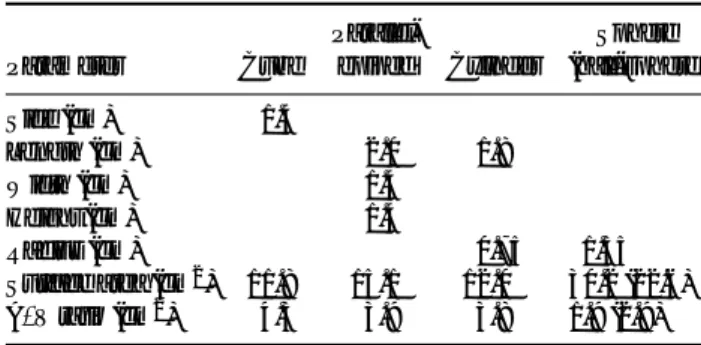
into various shapes (cube, parallelepiped, cylinder and sphere) using a sharp, sterilised knife. Table 1 shows the dimensions of the different papaya cut-types (pre-formed templates were used) and their corresponding surface areas and surface area/volume (A/V ) ratios. The sphere dimensions varied (whole vs half) depend-ing on the size of papaya acquired in MAP. The length of parallelepipeds was adjusted to result in almost the same A/V ratio as that of cylinders. All samples were then placed in rigid plastic containers.
Three replicates per cut-type, per day and per type of analysis were prepared and stored at 4◦C and 60% RH for 10 days.
The fresh-cut papaya cubes, parallelepipeds, cylinders and spheres were examined separately for colour, texture, pH, titratable acidity, total soluble solids, weight loss andL-ascorbic acid content during storage at 4◦C and 60% RH. Microbial and sensory analyses were subsequently performed on days 1, 3, 8 and 10 and days 8 and 10 respectively. Three replicates per cut-type, per day and per type of analysis were performed. Each replicate was in a plastic container covered with a lid but not hermetically sealed in order that the atmosphere inside the container was normal atmosphere.
Sample surface colour was measured using a hand-held Minolta CR-300 tristimulus reflectance colorime-ter (Minolta Corp., Ramsey, NJ, USA) and expressed in terms of the CIE L∗, a∗, b∗ uniform colour space, where L∗ represents lightness, a∗ represents chro-maticity on a green (−) to red (+) axis and b∗ represents chromaticity on a blue (−) to yellow (+) axis.21Chroma (C) was calculated using the formula C= (a∗2+ b∗2)1/2. Hue angle (H) was determined as H = tan−1(b∗/a∗); it ranges from H = 0◦ on the +a∗ axis (red colour) to H= 90◦ on the +b∗ axis (yellow colour).
A total of ten colour measurements were performed on each piece of papaya cut-type. Three pieces were evaluated per replicate.
Texture was measured using an Instron 4501 universal testing instrument (Instron Corp., Canton, OH,
Table 1. Dimensions of fresh-cut papaya pieces and their
corresponding surface area/volume (A/V) ratios
Parameter Cube Parallel-epiped Cylinder Sphere (half-sphere) Side (cm) 1.4 Length (cm) 2.0 1.8 Width (cm) 1.4 Height (cm) 1.4 Radius (cm) 0.75 1.55 Surface area (cm2) 11.8 15.1 12.0 30.2 (22.6) A/V ratio (cm2) 4.3 3.9 3.8 1.9 (2.9) Plant material
Sample preparation and storage conditions
Quality evaluation
Colour assessment
Firmness measurement
USA) with a 5 kg load cell at a crosshead speed of 10 mm min−1. A 2 mm diameter cylindrical probe was employed. Texture was expressed as the resistance (firmness, N) of the fresh-cut papaya flesh to deformation by the probe. Three punctures were performed per replicate.
Each replicate (10 g) was homogenised with deionised water (100 mL) in a 250 mL beaker using an Ultra-Turrax T25 (Janke and Kunkel, IKA-Labortechnik, Breisgau, Germany). The pH of the homogenised solution was measured with a Crison MicropH 2001 potentiometer (Crison Instruments, SA, Barcelona, Spain). The pH electrode had previously been calibrated using standard solutions of pH 4.0 and 7.0.
Each sample (10 g) was homogenised with deionised water (100 mL) in a 250 mL beaker using an Ultra-Turrax T25 (Janke and Kunkel, IKA-Labortechnik). The solution was titrated with 0.05 mol L−1 NaOH solution until a pH value of 8.3 was reached. A combined electrode of pH Ingold U402 57/120 and a Crison MicropH 2001 potentiometer (Crison Instruments, SA) was used. Titratable acidity was expressed as mg citric acid per 100 g fresh papaya.
Papaya samples were crushed manually with a mortar and pestle to extract the juice. Total soluble solids were determined using an Atago ATC1 hand-held refractometer (Atago Co., Ltd, Tokyo, Japan).
Three pieces from each cut-type were taken for L-ascorbic acid determination. Different amounts (cube, 2.0 – 2.5 g; parallelepiped; 4.0 – 4.5 g; cylinder, 3.5 – 4.5 g; sphere, 9 – 10 g) of each sample were weighed in tared glass dishes using a basic balance (Sartorius, G ¨ottingen, Germany). The dishes were placed in an oven (WTB Binder, Tuttlingen, Germany) at 70◦C for 48 h and then weighed again. Moisture content (g kg−1) was calculated as [(initial weight of dish with sample − weight of dish with sample after drying)/initial weight of dish with sample] × 1000. Weight loss (%) was calculated as 100− (100 × DM0/DM), where DM0(g kg−1) is the dry matter content on day 0 and DM (g kg−1) is the dry matter content on subsequent days of analysis.
L
This assay was performed according to the manual included in theL-ascorbic acid (L-AA) determination test kit (Number 409 677 035, Boehringer Mannheim, Mannheim, Germany). In order to ensure that the loss of L-AA was minimal, all procedures were carried out in an ice bath and with aluminium foil covering the goblets and funnel. Three replicates
from each cut-type were analysed. A pulp sample of 2.5 g was homogenised (Ultra-Turrax T25, Janke and Kunkel, IKA-Labortechnik) with a small amount of metaphosphoric acid. The homogenised sample was then made up to a volume of 25 mL with metaphosphoric acid (15 g L−1). The papaya solution was filtered to obtain a clear extract, as a turbid extract would interfere with spectrophotometric measurements. The pH of this extract was adjusted to 3.5 – 4.0 using 10 mol L−1KOH solution and a pH electrode (Crison MicropH 2001, Crison Instruments, SA) previously calibrated with buffer solutions of pH 4.0 and 7.0.
Absorbances were measured at 578 nm using a Shimadzu 1601 UV – visible spectrophotometer (Shimadzu, Kyoto, Japan) with deionised water as blank.
L-AA content was expressed as mgL-AA per 100 g fresh weight and also, by dividing the amount of L -AA (mgL-AA per 100 g papaya) by the DM content (g DM g−1papaya), as mgL-AA per 100 g dry weight.
A 10 g sample of each cut-type was placed in a bag, diluted with 90 mL of sterile NaCl solution and homogenised in a stomacher 400 Circulator (Seward, Thetford, Norfolk, UK) for 30 s. Using a sterilised pipette, the resultant slurry was plated onto plate count agar (Merck, Darmstadt, Germany), de Man – Rogosa – Sharpe agar (Merck), violet red bile agar (Merck) and rose bengal chloramphenicol agar base (Oxoid Ltd, Basingstoke, UK) supplemented with 5 mL of chlortetracycline (Merck). After incu-bation for 24 h (faecal coliforms), 72 h (total micro-organisms and lactic acid bacteria) and 5 days (yeasts and moulds) at 44, 30 and 25◦C respectively, manual plate counts of total micro-organisms,22 yeasts and moulds,23lactic acid bacteria24and faecal coliforms25 were performed and reported as log colony-forming units (CFU) g−1. Microbiological analysis was per-formed only on days 1, 3, 8 and 10 of storage at 4◦C.
Following microbiological analysis, sensory evaluation of fresh-cut papaya was performed according to Rocha et al.26by 12 or 13 trained panellists on samples that had been cut into cubes, parallelepipeds, cylinders and spheres and stored at 4◦C. Sensory analysis was performed only on days 8 and 10 of storage. The parameters evaluated were global appreciation, general appearance, odour, texture and flavour. The following scale was used for scoring these attributes: 1, very bad; 3, neither good nor bad; 5, very good.
Data were analysed using SPSS for Windows Version 11.5.0 (SPSS Inc., Chicago, IL, USA). Treatment differences were tested by one-way analysis of variance (ANOVA) and least square difference (LSD)
pH
Titratable acidity
Total soluble solids
Weight loss
-Ascorbic acid
Microbiology
Sensory analysis
comparison (P < 0.05). All differences mentioned were significant at P < 0.05 unless stated otherwise.
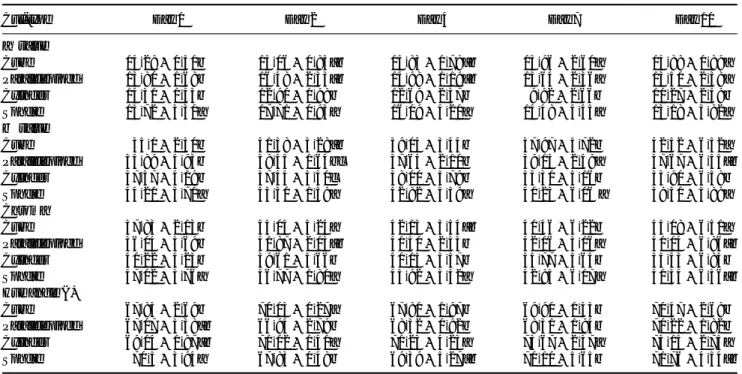
Papaya spheres showed the highest and papaya cylinders the lowest lightness (L∗) values during 10 days of storage at 4◦C (Fig. 1), though the differences were not significant throughout all storage. Papaya spheres also had high chromaticity (a∗ and b∗) values throughout storage, showing the highest a∗ values on days 0, 2 and 4 and the highest b∗ values on days 0, 2, 4 and 7 (Table 2). The lowest a∗ values were observed for papaya cylinders.
Similarly, the chroma (C) values of papaya spheres were highest throughout storage, except on day
10 (Table 2). In addition, papaya spheres exhibited steady decreases in C value with increasing storage time, whereas the other three cut-types showed incon-sistent decreases and/or increases. Papaya cylinders had the lowest C values throughout storage.
Papaya cylinders generally presented the highest and papaya parallelepipeds the lowest hue angle (H) values throughout storage (Table 2). The difference in surface area between these two cut-types (cylinder, 12.0 cm2; parallelepiped, 15.1 cm2) may have con-tributed to the differences in H value. Meanwhile, the H values of papaya cylinders and spheres showed relative increases on days 2, 4 and 7. In connection with this, Chauhan et al.20 reported that the ratio of a∗and b∗ values in pretreated papaya slices stored for 60 days at 6◦C also showed an increasing trend, like L∗, indicating less redness and more yellowness.
48 50 52 54 56 58 60 0 10
Time of storage at 4°C (days)
L* value Cube Parallelepiped Cylinder Sphere 1 2 3 4 5 6 7 8 9
Figure 1. L∗values of different shapes of fresh-cut papaya stored at 4◦C.
Table 2. Colour parameters a∗, b∗, chroma and hue angle of fresh-cut papaya stored at 4◦C
Cut-type Day 0 Day 2 Day 4 Day 7 Day 10
a∗value
Cube 14.29± 1.50b 15.06± 0.85ab 15.83± 1.79ab 13.96± 2.60a 14.88± 1.89a
Parallelepiped 13.80± 1.68b 16.48± 2.33ab 14.98± 1.19ab 15.64± 2.36a 13.50± 2.38a
Cylinder 14.31± 1.43b 12.90± 1.98b 12.69± 2.37b 9.92± 2.66b 10.27± 2.49b
Sphere 15.72± 3.30a 17.71± 0.93a 16.09± 4.20a 14.48± 4.45a 13.18± 3.82a
b∗value
Cube 35.0± 2.30b 41.38± 3.28ab 39.04± 5.44b 37.97± 5.72b 42.52± 6.52a
Parallelepiped 34.89± 4.93b 38.45± 1.64bc 37.64± 2.10b 39.13± 2.49a 37.67± 6.55ab
Cylinder 37.57± 4.19b 37.44± 5.40c 38.00± 5.79b 33.30± 5.16b 33.90± 6.58b
Sphere 44.21± 3.70a 43.30± 1.59a 42.82± 3.59a 40.23± 6.06 a 39.30± 5.89a
Chroma
Cube 37.83± 2.13b 44.04± 3.24a 42.15± 5.54ab 40.46± 6.22b 45.08± 6.51a
Parallelepiped 36.04± 3.69b 41.87± 2.03ab 40.51± 2.33b 42.16± 3.16a 40.04± 6.86ab
Cylinder 40.22± 4.23b 39.61± 5.66b 40.15± 5.57b 34.77± 5.64b 35.45± 6.84b
Sphere 47.02± 3.76a 46.77± 1.80a 45.92± 3.52a 42.95± 6.17a 41.54± 6.36ab
Hue angle (◦)
Cube 67.83± 2.69b 70.03± 1.27a 67.81± 1.97b 69.90± 1.33b 70.47± 2.68b
Parallelepiped 67.07± 3.38ab 66.94± 2.79b 68.32± 0.92b 68.31± 1.94b 70.22± 1.82b
Cylinder 69.14± 1.87ab 71.02± 1.41a 71.23± 4.23a 73.67± 2.37a 73.15± 2.75a
Sphere 70.5± 3.94a 67.83± 0.48b 69.39± 5.27ab 70.10± 5.65b 71.76± 4.54ab
For each parameter, values with different letters in the same column are significantly different (P < 0.05).
Colour
Rivera-Lopez et al.7 reported initial hue angles of 53± 2.5◦, lower than the H values obtained in the present study. Their results showed that fresh-cut papaya cubes and slices retained their natural yellow/red colour during 18 days of storage.
Sphere-shaped papaya tended to show the highest L∗, a∗, b∗and C values. Compared with discolouration events in other crops, such as white blush in carrots and secondary browning in apples,27 the results of the present colour evaluation of all papaya cut-types did not show severe browning. In terms of global appreciation the sensory panellists preferred sphere-shaped papaya on day 8 of storage (see Table 6). Heterogeneity of the whole papaya samples used during the study might have contributed to the variations in colour among samples. Lastly, the colour parameters of all cut-types did not change drastically, so colour was not a relevant factor in assessing the quality of fresh-cut papaya in the present study.
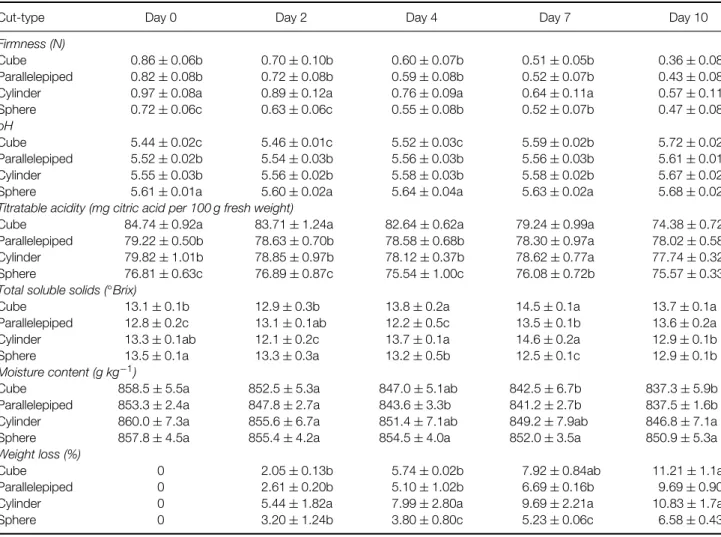
The firmness values of papaya cylinders were highest among all cut-types during 10 days of storage at 4◦C (Table 3). However, this may be due to the fact that the firmness of papaya cylinders was already highest at the beginning (day 0) of storage. Papaya spheres had the lowest firmness values on days 0 and 2, but after
4 days of storage they showed the same firmness as cubes and parallepipeds, and their decrease in firmness was lowest after 10 days. The firmness of papaya spheres decreased significantly by 35%, cylinders by 41%, parallelepipeds by 48% and cubes by 58% after 10 days of storage.
The surface area/volume (A/V ) ratio of a cube is 1.5 – 2 times higher than that of the corresponding sphere, resulting in greater firmness loss of cubes after 10 days of storage. Paull13reported that storage temperature may significantly influence fruit firmness and that firmness loss increases with storage time. According to Karakurt and Huber,15 the firmness of fresh-cut papaya pieces (approximately 7 cm× 5 cm × 3 cm) decreased by about 36% after only 2 days and continued to decline steadily throughout storage at 5◦C. Similar trends were reported by Rivera-Lopez et al.,7 who found that the firmness of papaya slices decreased significantly (P≤ 0.05) by 65% (from 9.8 to 3.2 N) while that of papaya cubes decreased by 57% (from 7.5 to 3.2 N) after 16 days of storage at 5◦C. Differences between the initial firmness values in the present study and those reported in the literature may have been due to the use of different cylindrical probes to evaluate firmness.
Watada and Qi28 showed that water loss in fresh-cut fruits and vegetables is rapid owing to damaged
Table 3. Firmness, pH, titratable acidity, total soluble solids, moisture content and weight loss of fresh-cut papaya stored at 4◦C
Cut-type Day 0 Day 2 Day 4 Day 7 Day 10
Firmness (N)
Cube 0.86± 0.06b 0.70± 0.10b 0.60± 0.07b 0.51± 0.05b 0.36± 0.08c
Parallelepiped 0.82± 0.08b 0.72± 0.08b 0.59± 0.08b 0.52± 0.07b 0.43± 0.08b
Cylinder 0.97± 0.08a 0.89± 0.12a 0.76± 0.09a 0.64± 0.11a 0.57± 0.11a
Sphere 0.72± 0.06c 0.63± 0.06c 0.55± 0.08b 0.52± 0.07b 0.47± 0.08b
pH
Cube 5.44± 0.02c 5.46± 0.01c 5.52± 0.03c 5.59± 0.02b 5.72± 0.02a
Parallelepiped 5.52± 0.02b 5.54± 0.03b 5.56± 0.03b 5.56± 0.03b 5.61± 0.01c
Cylinder 5.55± 0.03b 5.56± 0.02b 5.58± 0.03b 5.58± 0.02b 5.67± 0.02b
Sphere 5.61± 0.01a 5.60± 0.02a 5.64± 0.04a 5.63± 0.02a 5.68± 0.02b
Titratable acidity (mg citric acid per 100 g fresh weight)
Cube 84.74± 0.92a 83.71± 1.24a 82.64± 0.62a 79.24± 0.99a 74.38± 0.72b
Parallelepiped 79.22± 0.50b 78.63± 0.70b 78.58± 0.68b 78.30± 0.97a 78.02± 0.58a
Cylinder 79.82± 1.01b 78.85± 0.97b 78.12± 0.37b 78.62± 0.77a 77.74± 0.32a
Sphere 76.81± 0.63c 76.89± 0.87c 75.54± 1.00c 76.08± 0.72b 75.57± 0.33b
Total soluble solids (◦Brix)
Cube 13.1± 0.1b 12.9± 0.3b 13.8± 0.2a 14.5± 0.1a 13.7± 0.1a
Parallelepiped 12.8± 0.2c 13.1± 0.1ab 12.2± 0.5c 13.5± 0.1b 13.6± 0.2a
Cylinder 13.3± 0.1ab 12.1± 0.2c 13.7± 0.1a 14.6± 0.2a 12.9± 0.1b
Sphere 13.5± 0.1a 13.3± 0.3a 13.2± 0.5b 12.5± 0.1c 12.9± 0.1b
Moisture content (g kg−1)
Cube 858.5± 5.5a 852.5± 5.3a 847.0± 5.1ab 842.5± 6.7b 837.3± 5.9b
Parallelepiped 853.3± 2.4a 847.8± 2.7a 843.6± 3.3b 841.2± 2.7b 837.5± 1.6b
Cylinder 860.0± 7.3a 855.6± 6.7a 851.4± 7.1ab 849.2± 7.9ab 846.8± 7.1a
Sphere 857.8± 4.5a 855.4± 4.2a 854.5± 4.0a 852.0± 3.5a 850.9± 5.3a
Weight loss (%)
Cube 0 2.05± 0.13b 5.74± 0.02b 7.92± 0.84ab 11.21± 1.1a
Parallelepiped 0 2.61± 0.20b 5.10± 1.02b 6.69± 0.16b 9.69± 0.90a
Cylinder 0 5.44± 1.82a 7.99± 2.80a 9.69± 2.21a 10.83± 1.7a
Sphere 0 3.20± 1.24b 3.80± 0.80c 5.23± 0.06c 6.58± 0.43b
For each parameter, values with different letters in the same column are significantly different (P < 0.05).
and exposed cuticular and sub-epidermal layers and a lack of protective skin, leading to greater losses in firmness associated with factors such as temperature and storage time. The higher decrease in firmness of cube-shaped papaya compared with other cut-types may be attributable to its relatively high A/V ratio, which resulted in high weight loss as well (Table 3).
Significant increases in pH value for all papaya cut-types were observed after 10 days of storage at 4◦C (Table 3). The lowest pH increase was 1.3% for spheres and the highest 5.2% for cubes.
Since organic acids (predominantly citric and malic acids in papaya) are the substrates of enzymatic reactions during respiration, an increase in pH is expected during storage.29
Papaya cubes presented the lowest pH among all cut-types on day 0, but subsequent storage equalised it to that of parallelepipeds and cylinders on day 7. However, after 10 days of storage the pH of cubes rose to the highest value (5.72). Meanwhile, similar pH values for parallelepipeds and cylinders were observed on days 0, 2, 4 and 7, lying between the pH values of cubes and spheres. This similarity in pH values may be attributable to their similar A/V ratios (cylinder, 3.8 cm−1; parallelepiped, 3.9 cm−1). Low pH is preferred in fresh-cut fruits because it provides better protection against microbial growth. Although the pH differences among cut-types in the present study were not very large, they were significant.
Papaya cv. Solo fruits commercialised in four establishments located in Brasilia-Distrito Federal were found to have pH values varying from 5.20 to 5.71, with higher values being observed in August and September.30The approximate pH of papaya has been reported as 5.2 – 6.0.31 The initial pH in the present study was around 5.5.
However, Chauhan et al.20 reported lower pH values of 4.5 – 5.0 for papaya pretreated by mild acidification with citric acid. Their study showed that the pH value decreased significantly (P < 0.05) from the original pH 5.7 – 5.8 of cut papaya during 60 days of storage at 6± 1◦C.
Significant decreases in titratable acidity (TA) were observed for all papaya cut-types during 10 days of storage at 4◦C. However, higher TA values are preferred during storage because they correlate with low pH values, thereby preventing the early growth of micro-organisms in fresh-cut fruits.
In agreement with the pH results (Table 3), it was observed that the TA of papaya cubes decreased significantly by 12% after 10 days (Table 3). Parallelepipeds showed the lowest decrease in TA (1.5%) during the same time, followed by spheres (1.6%). Cubes presented the highest TA values on days 0, 2 and 4, while spheres showed the lowest values on days 0, 2, 4 and 7.
The decrease in TA observed was in agreement with the results of Teixeira et al.,8 who reported that ‘Formosa’ papaya chunks (2.5 cm× 5.0 cm) showed higher TA reduction at 6 and 9◦C than at 3◦C.
The acid content of papaya is very low and comes from almost equal amounts of citric and malic acids,32 the concentrations of which are known to decrease during ripening.33
Published TA values for papaya are within the range found in this study. Hernandez et al.34reported a ripe papaya TA value of 72± 8 mg citric acid per 100 g fruit. The papaya used in their study was harvested at the mature green stage and allowed to ripen at 18◦C, with a total soluble solids content of 12.1± 1.1◦Brix, which is very similar to the values obtained in the present study. Meanwhile, Fernandes et al.35reported a fresh papaya TA value of 15± 1 mg citric acid per 100 g fruit.
Significant differences in total soluble solids (TSS) were observed on day 0 among papaya cut-types, with parallelepipeds showing the lowest and spheres the highest TSS value (Table 3). Papaya cubes were found to have the highest TSS values on days 4, 7 and 10, while no specific trend was observed regarding which cut-type had the lowest TSS value after 10 days of storage at 4◦C.
TSS values remained approximately constant throughout storage, but with significant differences among cut-types. The results of the present study are somewhat in contrast with those of Rivera-Lopez et al.,7who found that 3/4 ripe papaya with an initial TSS of 9.5◦Brix showed decreases in TSS in cubes and slices after 18 days of storage at 5, 10 and 20◦C. They explained this finding on the assumption that sugars are the first substrates used during respiration.
No significant differences in moisture content were observed among papaya cut-types during the first 2 days of storage at 4◦C (Table 3). Papaya cubes showed the highest (2.5%) and spheres the lowest (0.8%) decrease in moisture content after 10 days of storage.
Spheres and cylinders had the highest moisture contents on days 4 and 7, while parallelepipeds and cubes had the lowest moisture contents on days 4, 7 and 10.
According to Fernandes et al.,35 the average initial moisture content of fresh papaya before osmotic dehydration was 878.3 g kg−1, while Hernandez et al.34reported a moisture content of ripened papaya of 900± 30 g kg−1. These values are very close to those obtained in the present study. Although the reduction of moisture content to a certain level is one of the main tasks in food preservation,36 moisture retention in fresh-cut fruits is desirable for the preservation of fresh-like quality.
pH
Total soluble solids
Titratable acidity
Papaya cubes showed the highest (11%) and spheres the lowest (7%) weight loss after 10 days of storage at 4◦C (Table 3).
Higher weight loss in cubes would require more force to puncture fresh-cut papaya. The higher decrease in weight of papaya cubes may be attributed to their higher A/V ratio (4.3 cm−1) compared with other cut-types.
Fresh-cut produce has a large surface area without any skin and thus has the potential to lose a substantial amount of weight, particularly at higher temperatures where the vapour pressure deficit is large.37
Weight loss results for spheres were in agreement with firmness results only on day 2: lower weight losses in spheres corresponded to lower decreases in firmness. Higher weight losses in cubes resulted in higher decreases in firmness on days 7 and 10.
Paull13 reported that in many fresh commodity storage studies the deterioration of quality attributes such as appearance and texture was ascribed to water loss.
L
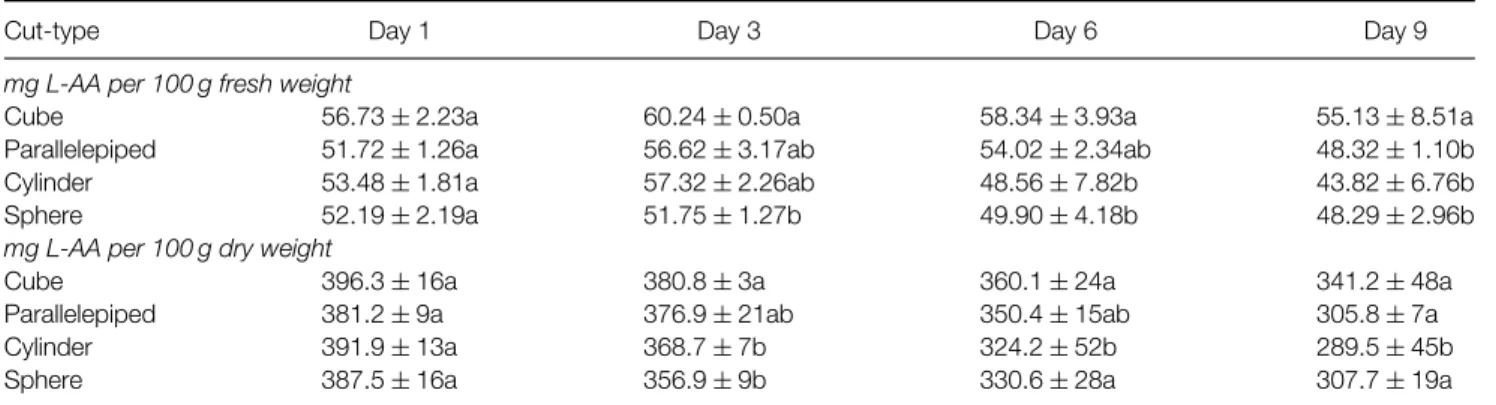
No significant differences inL-AA content on a fresh weight basis among papaya cut-types were observed on day 1 of storage at 4◦C (Table 4).
L-AA contents in the present study were slightly lower than those reported by Rivera-Lopez et al.7for 3/4 ripe papaya cubes and slices, which contained 65.47 mgL-AA per 100 g fresh weight at the beginning of storage. However, Wall38 reported that 1/8 ripe Hawaiian papaya cultivars contained 45 – 55 mgL-AA per 100 g fresh weight. TheL-AA contents of fresh-cut papaya found in the present study were much lower than (less than half) those reported by Hernandez et al.34 for mature green papaya ripened at 18◦C (154± 17 mgL-AA per 100 g fresh weight).
L-AA contents were also calculated on a dry weight basis, because weight losses were very different among samples and thereforeL-AA content on a fresh weight basis did not reflect the real content of L-AA. No significant differences inL-AA content on a dry weight basis were noted among different papaya cut-types on day 1 of storage at 4◦C (Table 4). It was only
on day 3 that significant differences inL-AA contents of papaya cubes versus cylinders and spheres were observed. These differences were not so obvious on a fresh weight basis.
TheL-AA content of papaya cubes on a dry weight basis decreased by 14%, parallelepipeds by 20%, spheres by 21% and cylinders by 26% after 10 days of storage.
Alhough the total surface area of papaya cubes (11.8 cm2) was not very different from that of cylinders (12.0 cm2), the decrease in L-AA content of papaya cylinders was almost double that of cubes after 10 days of storage. Higher losses might be expected in papaya cubes, since their A/V ratio (4.3 cm−1) is somewhat higher than that of cylinders (3.8 cm−1).
Differences in L-AA content between fresh and dry weight bases can be attributed to the moisture content evolution of fresh-cut samples during storage. There was no defined correlation between the decrease in L-AA content and each cut-type surface area or A/V ratio for all geometries, though cylinders and parallelepipeds had similar A/V ratios. Art´es-Hern´andez et al.39 reported that wedges, slices and 1/2 slices of fresh-cut lemon products (‘Lisbon’) were preserved for a 10 day shelf-life period, with good retention of vitamin C, when kept at 0 – 5◦C and protected from water loss by proper packaging with high relative humidity during distribution. In the present study, cube-shaped fresh-cut papaya tended to retain higher L-AA content than other cut-types during the 10 day shelf-life period at 4◦C.
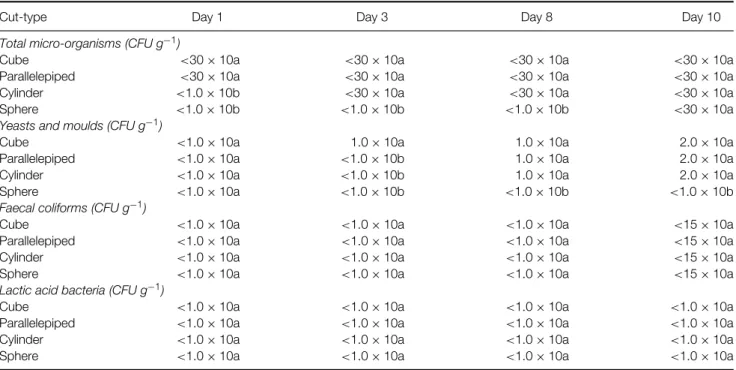
On day 1 of storage at 4◦C, there were significant differences in total counts of micro-organisms on papaya cubes and parallelepipeds compared with those on papaya cylinders and spheres (Table 5). However, there were no differences in total count among all cut-types on day 10 of storage. Total counts on papaya spheres were relatively low up to day 8 but increased during the last 2 days of storage. This might be attributed to the fact that the A/V ratio of papaya spheres (1.9 – 2.9 cm−1) is the lowest among all cut-types. Total counts of micro-organisms on
Table 4.L-Ascorbic acid (L-AA) content of fresh-cut papaya stored at 4◦C
Cut-type Day 1 Day 3 Day 6 Day 9
mg L-AA per 100 g fresh weight
Cube 56.73± 2.23a 60.24± 0.50a 58.34± 3.93a 55.13± 8.51a
Parallelepiped 51.72± 1.26a 56.62± 3.17ab 54.02± 2.34ab 48.32± 1.10b
Cylinder 53.48± 1.81a 57.32± 2.26ab 48.56± 7.82b 43.82± 6.76b
Sphere 52.19± 2.19a 51.75± 1.27b 49.90± 4.18b 48.29± 2.96b
mg L-AA per 100 g dry weight
Cube 396.3± 16a 380.8± 3a 360.1± 24a 341.2± 48a
Parallelepiped 381.2± 9a 376.9± 21ab 350.4± 15ab 305.8± 7a
Cylinder 391.9± 13a 368.7± 7b 324.2± 52b 289.5± 45b
Sphere 387.5± 16a 356.9± 9b 330.6± 28a 307.7± 19a
For each content, values with different letters in the same column are significantly different (P < 0.05).
Weight loss
-Ascorbic acid content
Microbiological analysis
Table 5. Counts of total micro-organisms, yeasts and moulds, faecal coliforms and lactic acid bacteria on fresh-cut papaya stored at 4◦C
Cut-type Day 1 Day 3 Day 8 Day 10
Total micro-organisms (CFU g−1)
Cube <30× 10a <30× 10a <30× 10a <30× 10a
Parallelepiped <30× 10a <30× 10a <30× 10a <30× 10a
Cylinder <1.0× 10b <30× 10a <30× 10a <30× 10a
Sphere <1.0× 10b <1.0× 10b <1.0× 10b <30× 10a
Yeasts and moulds (CFU g−1)
Cube <1.0× 10a 1.0× 10a 1.0× 10a 2.0× 10a
Parallelepiped <1.0× 10a <1.0× 10b 1.0× 10a 2.0× 10a
Cylinder <1.0× 10a <1.0× 10b 1.0× 10a 2.0× 10a
Sphere <1.0× 10a <1.0× 10b <1.0× 10b <1.0× 10b
Faecal coliforms (CFU g−1)
Cube <1.0× 10a <1.0× 10a <1.0× 10a <15× 10a
Parallelepiped <1.0× 10a <1.0× 10a <1.0× 10a <15× 10a
Cylinder <1.0× 10a <1.0× 10a <1.0× 10a <15× 10a
Sphere <1.0× 10a <1.0× 10a <1.0× 10a <15× 10a
Lactic acid bacteria (CFU g−1)
Cube <1.0× 10a <1.0× 10a <1.0× 10a <1.0× 10a
Parallelepiped <1.0× 10a <1.0× 10a <1.0× 10a <1.0× 10a
Cylinder <1.0× 10a <1.0× 10a <1.0× 10a <1.0× 10a
Sphere <1.0× 10a <1.0× 10a <1.0× 10a <1.0× 10a
For each parameter, values with different letters in the same column are significantly different (P < 0.05).
papaya cubes studied by O’Connor-Shaw et al.4were (2.6 – 3.3)× 104CFU g−1on day 4 of storage. Jacxsens et al.40reported that the critical limit of total counts of micro-organisms for vegetables is 108CFU g−1, which is higher than the levels found in the present study.
Significant increases in counts of yeasts and moulds were observed on papaya cubes, parallelepipeds and cylinders from day 1 to day 10 of storage at 4◦C (Table 5). However, there was no effect of papaya cut-type on day 1. Sphere-shaped fresh-cut papaya showed the lowest counts among all cut-types, as no occurrence of yeasts and moulds was observed, in agreement with the results for total counts of micro-organisms on days 1, 3 and 8.
All counts were lower than the critical limit for yeasts (105CFU g−1)41 on all days of storage. Chauhan et al.20reported that pretreated papaya slices stored under various modified atmosphere packaging conditions showed zero counts of yeasts and moulds.
No significant differences in faecal coliform count were observed among cut-types during 10 days of storage at 4◦C (Table 5). Although O’Connor-Shaw et al.4 stated that coliforms are part of the normal microflora of fruits found in the soil, the results of the present study did not reflect this, as careful sample preparation and disinfection were performed. On day 10 of storage, relatively higher counts of faecal coliforms were registered, though still acceptable.41
O’Connor-Shaw et al.4reported Enterobacteriaceae counts of (1.2 – 1.6)× 106CFU g−1 on minimally processed papaya on day 4 of storage at 4◦C, as the authors did not sanitise the fruit prior to processing,
though good manufacturing practices were followed. Meanwhile, Chauhan et al.20found that papaya slices pretreated with antimicrobial additives such as sorbate and benzoate and packed in modified atmosphere registered zero coliform counts up to 60 days.
Papaya cut-type had no effect on the growth of lactic acid bacteria, since zero counts were recorded for all cut-types during 10 days of storage at 4◦C (Table 5). These results agree with the claim by Brackett42that the low pH of most fruits restricts the microflora to acid-tolerant micro-organisms such as fungi and lactic acid bacteria. O’Connor-Shaw et al.4 recorded lactic acid bacteria counts of (1.8 – 3.1)× 103CFU g−1 on papaya cubes after 4 days of storage at 4◦C. According to Jacxsens et al.,40 the critical limit for lactic acid bacteria on vegetables is 107CFU g−1, which is again very high compared with the results of the present study.
Minimally processed products with high pH (>4.6) are considered to be highly perishable when they are not subjected to preservative processes that delay undesirable biological and biochemical changes.43 The results of the microbiological evaluation in the present study, however, indicate that storage at 4◦C, associated with disinfection of whole papaya (pH≈ 5.5), can extend the shelf-life of all cut-types studied to 10 days. In relation to this, Teixeira et al.8 reported that fresh-cut ‘Formosa’ papaya chunks, hygienically prepared during processing, also showed low microbial counts (103CFU g−1) after storage at 9◦C for 7 days.
Yeasts and moulds
Faecal coliforms
Most studies on fresh-cut fruits have been concerned with market quality determined objectively and subjec-tively by colour, sensory and texture measurements as well as by microbiological assays.44The present study included the first microbiological analysis of fresh-cut papaya stored at 4◦C for up to 10 days. Since the results were satisfactory (i.e. counts well below acceptable limits), sensory evaluation was carried out on days 8 and 10 of storage.
Sensory studies have been extensively carried out to evaluate the influence of processing and storage conditions on the quality perception of fresh-cut fruits by either trained or untrained judges.45 Consumers judge the quality of fresh-cut fruits and vegetables on the basis of appearance and freshness at the time of purchase. Sphere-shaped papaya received the highest score for global appreciation on day 8 (Table 6).
The sensory results indicated that the edible shelf-life of all papaya cut-types was 10 days at 4◦C if the limit of acceptability was set at 3.0. Quality scores ranged between 3.3 and 4.1. There were no significant differences among papaya cut-types in terms of global appreciation, general appearance, odour and flavour on day 10. However, on that day, papaya parallelepipeds were regarded by panellists as having the most acceptable texture, while spheres received the lowest score. These results are not in agreement with the firmness results, as papaya cylinders were found to be most firm and cubes least firm on day 10 (Table 3). Differences in sensory panellists’ evaluation could be attributed to the use of different batches of whole papaya. Ergun et al.46reported that ripe papaya slices treated with 1-methylcyclopropene and stored at 5◦C had an edible shelf-life of 6 days as compared with only 2 – 3 days for control samples.
Papaya cv. Maradol cubes and slices stored at 5◦C showed good overall quality (score of 4= good) until day 10 of storage.7 However, O’Connor-Shaw et al.4 evaluated the shelf-life of papaya cubes stored at 4◦C and reported that it was limited to only 2 days owing to unacceptable appearance and bitter flavour.
In addition to maintaining the appearance of produce, low-temperature storage has the benefit of protecting quality attributes such as texture, nutrition, aroma and flavour.13 The results of physicochemical, microbiological and sensory analyses performed on the different papaya cut-types in the present study indicated an acceptable minimally processed product during storage at 4◦C for up to 10 days. Sphere-shaped papaya showed reduced weight loss, lower increase in pH, higher titratable acidity, higher firmness and acceptable microbial and sensory results, making it the best cut-type until day 10 of storage at 4◦C, while cube-shaped papaya was the least acceptable. However, laboratory studies may vary considerably from commercial handling and thereby affect shelf-life. Thus quality improvement at all levels of produce handling and recognition that each step or procedure is significant can have a great impact on the minimal processing of fruits and vegetables.
The effect of different cut-types (cube, parallelepiped, cylinder and sphere) on the quality of papaya cv. Sunrise Solo was determined. The results of physicochemical, microbiological and sensory analyses performed on the different papaya cut-types indicated an acceptable minimally processed product during storage at 4◦C for up to 10 days.
Colour values did not differ significantly among cut-types, though papaya spheres (1.55 cm radius) tended to show higher L∗, a∗ and b∗ values and relatively low decreases in C value compared with other cut-types throughout the storage period.
Papaya spheres showed the lowest losses of texture and weight during 10 days of storage at 4◦C, while cubes (1.4 cm side) presented the highest losses. Papaya cubes also exhibited the highest pH increase after 10 days. Papaya spheres and parallelepipeds showed low TA values, while TSS contents did not show a consistent trend, remaining approximately constant.
Table 6. Sensory evaluation of fresh-cut papaya on days 8 and 10 of storage at 4◦C
Cut-type
Global appreciation
General
appearance Odour Texture Flavour
Day 8
Control (fresh-cut cube) 3.7± 0.6ab 3.4± 0.6b 3.6± 0.9a 3.6± 0.6b 3.7± 0.8a
Cube 3.8± 0.5ab 3.8± 0.4a 3.5± 0.5a 4.1± 0.4a 4.1± 0.4a
Parallelepiped 3.6± 0.9ab 3.5± 0.7ab 3.6± 0.5a 3.7± 0.6ab 3.7± 0.5a
Cylinder 3.3± 0.9b 3.6± 0.7ab 3.5± 0.5a 3.9± 0.5ab 3.7± 0.6a
Sphere 3.9± 0.6a 3.8± 0.8ab 3.6± 0.5a 4.1± 0.4a 3.7± 0.5a
Day 10
Control (fresh-cut cube) 3.9± 0.7a 3.8± 0.7a 3.7± 0.7a 3.6± 0.8ab 4.0± 0.6a
Cube 3.6± 0.6a 3.9± 0.5a 3.3± 0.5a 3.7± 0.6ab 3.8± 0.6a
Parallelepiped 3.9± 0.5a 3.9± 0.6a 3.6± 0.5a 3.9± 0.7a 4.0± 0.7a
Cylinder 3.8± 0.7a 3.9± 0.6a 3.6± 0.6a 3.6± 0.6ab 3.8± 0.6a
Sphere 3.8± 0.5a 3.9± 0.7a 3.4± 0.5a 3.4± 0.5b 3.9± 0.6a
For each day, values with different letters in the same column are significantly different (P < 0.05).
Sensory evaluation
Differences in L-AA content between fresh and dry weight bases could be attributed to the different moisture contents of samples during storage. Cube-shaped fresh-cut papaya retained the highest L-AA content among all cut-types throughout the 10 day shelf-life period.
The results of microbiological evaluation indicated that sphere-shaped fresh-cut papaya exhibited the lowest counts among all cut-types, as no occurrence of yeasts and moulds was observed. Although papaya parallelepipeds (length 2 cm, width 1.4 cm, height 1.4 cm) were considered by the panellists to have the best texture in sensory evaluation, spheres received the highest score for global appreciation on day 8 of storage.
The microbiological evaluation results indicated that disinfection of whole papaya associated with storage at 4◦C allowed a shelf-life of 10 days for all cut-types studied.
It is important to note that laboratory studies may vary consideably from commercial handling and thereby affect shelf-life. Thus quality improvement at all levels of produce handling and recognition that each step or procedure is significant can have a great impact on the minimal processing of fruits and vegetables.
The authors acknowledge financial support from Project SEFOTECH.NUT (Erasmus Mundus Pro-gramme 28027-IC-6-2001-BE-ERASMUS-EPS-1).
1 Laurila E and Ahvenainen R, Minimal processing of fresh fruits and vegetables, in Fruit and Vegetable Processing, ed. by Jongen W. Woodhead Publishing, Cambridge/CRC Press, Boca Raton, FL, pp. 288–306 (2002).
2 Davey MW, Van Montagu M, Inze D, Sanmartin M, Kanellis A and Smirnoff N, PlantL-ascorbic acid: chemistry, function, metabolism, bioavailabilty and effects of processing. J Sci Food Agric 80:825–860 (2000).
3 Yildiz F, Initial preparation, handling, and distribution of minimally processed refrigerated fruits and vegetables, in Minimally Processed Refrigerated Fruits and Vegetables, ed. by Wiley RC. Chapman and Hall, London, pp. 15–65 (1994). 4 O’Connor-Shaw RE, Roberts R, Ford AL and Nottingham SM,
Shelf life of minimally processed honeydew, kiwifruit, papaya, pineapple and cantaloupe. J Food Sci 59:1202–1206 (1994). 5 Paull RE and Chen W, Minimal processing of papaya (Carica
papaya L.) and the physiology of halved fruit. Postharv Biol Technol 12:93–99 (1997).
6 Hong JH and Gross KC, Maintaining quality of fresh-cut tomato slices through modified atmosphere packag-ing and low temperature storage. [Online]. Available: http://www.nal.usda.gov/ttic/tektran/data/000011/08/ 0000110899.html [4 April 2007].
7 Rivera-Lopez J, Vazquez-Ortiz FA, Ayala-Zavala JF, Sotelo-Mundo RR and Gonzalez-Aguilar GA, Cutting shape and storage temperature affect overall quality of fresh-cut papaya cv. ‘Maradol’. J Food Sci 70:S482–S489 (2005).
8 Teixeira GHA, Durigan JF, Mattiuz B and Rossi Jr OD, Fresh cut of ‘Formosa’ papaya. [Online]. Available: http://www.scielo.br/scielo.php?script=sci arttext&pid= S0101-20612001000100011 [29 November 2007].
9 Watada AE, [Online]. Available: http://findarticles.com/ p/articles/mi m3741/is n1 v45/ai 19193499/pg 2 [2 Decem-ber 2007].
10 Stanley D, Cut-ups! Fresh-cut produce. [Online]. Available: http://findarticles.com/p/articles/mi m3741/is n1 v45/ ai 19193499/pg 1 [2 December 2007].
11 Almeida RF, Martins MLL, Resende ED, Vitorazi L, Car-los LA and Pinto LKA, Influence of the refrigerating tem-perature on the chemical characteristics of the papaya fruits cv ‘Golden’. Cienc Tecnol Alim 26:577–581 (2006).
12 Tapia MS, Rojas-Grau MA, Rodriguez FJ, Ramirez J, Car-mona A and Martin-Belloso O, Alginate and gellan based edible films for probiotic coatings on fresh-cut fruits. [Online]. Available: http://lib.bioinfo.pl/auth:Ram%C3%ADrez,J [2 December 2007].
13 Paull RE, Effect of temperature and relative humidity on fresh commodity quality. Postharv Biol Technol 15:263–267 (1999). 14 Chonhenchob V and Singh SP, Packaging performance com-parison for distribution and export of papaya fruit. Packag Technol Sci 18:125–131 (2005).
15 Karakurt Y and Huber DJ, Activities of several membrane and cell-wall hydrolases, ethylene biosynthetic enzymes, and cell wall polyuronide degradation during low-temperature storage of intact and fresh-cut papaya (Carica papaya) fruit. Postharv Biol Technol 28:219–229 (2003).
16 Beaulieu JC and Gorny JR, Fresh-cut fruits, in The Commercial Storage of Fruits, Vegetables, and Florist and Nursery Stocks (USDA Handbook 66), ed. by Gross KC, Saltveit ME and Wang CY. USDA, Washington, DC, pp. 1–49 (2001). 17 Peleg M and Gomez-Brito L, External color as a maturity index
of papaya fruits. J Food Sci 39:701–703 (1974).
18 Wiley RC (ed.), Minimally Processed Refrigerated Fruits and Vegetables. Chapman and Hall, London, pp. 10–11 (1994). 19 Subcommittee on Microbiological Criteria, Committee on Food
Protection, Food and Nutrition Board and National Research Council, An Evaluation of the Role of Microbiological Criteria for Foods and Food Ingredients. National Academy Press, Washington, DC (1985).
20 Chauhan OP, Raju PS, Shylaja R, Dasgupta DK and Bawa AS, Synergistic effects of modified atmosphere and minimal processing on the keeping quality of pre-cut papaya (Carica papaya L.). J Hort Sci Biotechnol 81:903–909 (2006). 21 Francis FJ, Colour quality evaluation of horticultural crops.
HortScience 15:58–59 (1980).
22 ISO, Microbiology of Food and Animal Feeding Stuffs – Horizontal Method for the Enumeration of Microorganisms – Colony-count Technique at 30◦C. ISO 4833 (2003).
23 IPQ, Microbiologia Alimentar. Contagem de Bolores e Leveduras. Parte 1: Incuba¸c ˜ao a 25◦C. NP 3277-1 (1987).
24 ISO, Microbiology of Food and Animal Feeding Stuffs – Horizontal Method for the Enumeration of Mesophilic Lactic Acid Bacteria – Colony-count Technique at 30 degrees C. ISO 15214 (1998).
25 IPQ, Microbiologia Alimentar. Regras Gerais para Pesquisa de Escherichia coli. NP 2308 (1986).
26 Rocha AMCN, Ferreira JFFC, Silva AMM, Almeida GN and Morais AMMB, Quality of grated carrot (var. Nantes) packed under vacuum. J Sci Food Agric 87:447–451 (2007). 27 Toivonen PMA and Brummel DA, Biochemical bases of
appearance and texture changes in fresh-cut fruit and vegetables. Postharv Biol Technol 9:4–18 (2007).
28 Watada AE and Qi L, Quality of fresh-cut produce. Postharv Biol Technol 15:201–205 (1999).
29 Yaman O and Bayoindirli L, Effects of an edible coating and cold storage on shelf-life and quality of cherries. Lebensm Wiss Technol 35:146–150 (2002).
30 Fagundes GR and Yamanishi OK, Physical and chemical characteristics of fruits of papaya tree from ‘Solo’ group commercialized in 4 establishments in Brasilia-DF. Rev Bras Frutic 23:541–545 (2001).
Acknowledgement
31 US Food and Drug Administration Center for Food Safety and Applied Nutrition, Approximate pH of foods and food prod-ucts. [Online]. Available: http://www.cfsan.fda.gov/∼comm/ lacf-phs.html [2 December 2007].
32 Lancashire RJ, Papaya – pawpaw. [Online]. Available: http:// wwwchem.uwimona.edu.jm:1104/lectures/papaya.html [1 December 2007].
33 Medlicott AP, Reynolds JB and Thompson AK, Effects of temperature on the ripening of mango fruit (Mangifera indica L. var. ‘Tommy Atkins’). J Sci Food Agric 37:469–474 (1986). 34 Hernandez Y, Lobo MG and Gonzalez M, Determination of vitamin C in tropical fruits: a comparative evaluation of methods. Food Chem 96:654–664 (2006).
35 Fernandes FAN, Rodrigues S, Gaspareto OCP and Oliviera EL, Optimization of osmotic dehydration of papaya followed by air-drying. Food Res Int 39:492–498 (2006).
36 Lenart A, Osmo-convective drying of fruits and vegetables: technology and application. Drying Technol 14:391–413 (1996).
37 Watada AE, Ko NP and Minott DA, Factors affecting quality of fresh-cut horticultural products. Postharv Biol Technol
9:115–125 (1996).
38 Wall M, Ascorbic acid, vitamin A, and mineral composition of banana (Musa sp.) and papaya (Carica papaya) cultivars grown in Hawaii. J Food Compos Anal 19:434–445 (2006). 39 Art´es-Hern´andez F, Rivera-Cabrera F and Kader AA, Quality
retention and potential shelf-life of fresh-cut lemons as
affected by cut-type and temperature. Postharv Biol Technol
43:245–254 (2007).
40 Jacxsens L, Devlieghere F and Debevere J, Predictive modeling for packaging design: equilibrium modified atmosphere packages of fresh-cut vegetables subjected to a simulated distribution chain. Int J Food Microbiol 73:331–341 (2002). 41 Jacxsens L, Devlieghere F, Ragaert P, Vanneste E and
Debe-vere J, Relation between microbiological quality, metabolite production and sensory quality of equilibrium modified atmo-sphere packaged fresh-cut produce. Int J Food Microbiol
83:263–280 (2003).
42 Brackett RE, Microbiological consequences of minimally pro-cessed fruits and vegetables. J Food Qual 10:195–206 (1987). 43 Wiley RC, Preservation methods for minimally processed refrigerated foods and vegetables, in Minimally Processed Refrigerated Fruits and Vegetables, ed. by Wiley RC. Chapman and Hall, New York, NY, pp. 66–134 (1997).
44 Ahvenainen R, New approaches in improving the shelf life of minimally processed fruit and vegetables. Trends Food Sci Technol 7:179–186 (1996).
45 Soliva-Fortuny RC and Martin-Belloso O, New advances in extending the shelf life of fresh-cut fruits: a review. Trends Food Sci Technol 14:341–353 (2003).
46 Ergun M, Huber DJ, Jeong J and Bartz JA, Extended shelf life and quality of fresh-cut papaya derived from ripe fruit treated with the ethylene 1-methylcyclopropene. J Am Soc Hort Sci