JOÃO PAULO DE OLIVEIRA CORRÊA
IN VITRO PHOTOAUTOTROPHIC POTENTIAL,
PHOTOSYNTHETIC CAPACITY AND 20E ACCUMULATION OF
DIPLOID AND SYNTHETIC POLYPLOID ACCESSIONS OF
Pfaffia glomerata (SPRENG.) PEDERSEN (AMARANTHACEAE)
Dissertação apresentada à Universidade Federal de Viçosa, como parte das exigências do Programa de Pós-Graduação em Botânica, para obtenção do título de Magister Scientiae.
VIÇOSA
Ficha catalográfica preparada pela Biblioteca Central da Universidade Federal de Viçosa - Câmpus Viçosa
T
Corrêa, João Paulo de Oliveira, 1987-C824i
2014
In vitro photoautotrophic potential, photosynthetic capacity and 20E accumulation of diploid and synthetic polyploid
accessions of Pfaffia glomerata (SPRENG.) Pedersen
(Amaranthaceae) / João Paulo de Oliveira Corrêa. – Viçosa, MG, 2014.
vi, 52f. : il. (algumas color.) ; 29 cm.
Orientador: Wagner Campos Otoni.
Dissertação (mestrado) - Universidade Federal de Viçosa. Inclui bibliografia.
1. Pfaffia glomerata. 2. Ginseng brasileiro.
3. Fitoecdisteróides. 4. Poliploidia. I. Universidade Federal de Viçosa. Departamento de Biologia Vegetal. Programa de Pós-graduação em Botânica. II. Título.
i
JOÃO PAULO DE OLIVEIRA CORRÊA
IN VITRO PHOTOAUTOTROPHIC POTENTIAL,
PHOTOSYNTHETIC CAPACITY AND 20E ACCUMULATION OF
DIPLOID AND SYNTHETIC POLYPLOID ACCESSIONS OF
Pfaffia glomerata (SPRENG.) PEDERSEN (AMARANTHACEAE)
Dissertação apresentada à Universidade Federal de Viçosa, como parte das exigências do Programa de Pós-Graduação em Botânica, para obtenção do título de Magister Scientiae.
APROVADA: 14 de março de 2014.
____________________________ ___________________________ João Paulo Viana Leite Cleber Witt Saldanha
(Coorientador)
______________________________ Wagner Campos Otoni
ii AGRADECIMENTOS
Agradeço aos meus pais, João Batista Lúcio Corrêa e Magda Carvalho de
Oliveira Corrêa, por todo amor, confiança e apoio incondicional durante toda minha vida. Por me mostrarem que é possível se adaptar e se tornar maior diante das grandes
mudanças que a vida nos apresenta.
À minha irmã Marina pelo amor e companheirismo sempre.
Aos meus grandes amigos que cultivei durante esses anos em Viçosa, por tudo que representam para mim e por terem sempre sido essenciais ao meu crescimento pessoal.
Ao Professor Wagner Campos Otoni, pela amizade, pela confiança depositada em mim, por todos os ensinamentos passados e por ter sempre se empenhado para que meus trabalhos fossem realizados da melhor forma possível.
Aos amigos e companheiros de trabalho Ana Cláudia, Marcos, Diego e Camilo, que foram essenciais na realização desse trabalho.
Às bolsistas de iniciação científica Jéssica, Débora e Maíra, por sempre me ajudarem com responsabilidade e boa vontade durante a execução dos trabalhos.
À Marcela, Joseila, Cléber, Léo, Ana, Andrea, Perácio, Itaina e todos que já passaram pelo grupo da fáfia, com quem tive a oportunidade de aprender muito.
A todos os meus amigos do LCTII que, além de sempre terem me auxiliado em meus trabalhos, tornam o laboratório um ambiente de muito aprendizado, companheirismo e descontração, onde se ri nos bons e maus momentos. Com uma turma dessas nossas longas horas de trabalho se tornam imensamente mais prazerosas.
Ao Dr. Cleber Witt Saldanha e ao Prof. João Paulo Viana Leite por terem aceito
participar da banca e por todos os conhecimentos passados.
À Universidade Federal de Viçosa, onde concluí o ensino médio, a graduação e estou concluindo o mestrado, por ter me proporcionado tantas oportunidades, tanto pessoais quanto acadêmicas. Acabou se tornando minha segunda casa ao longo desses 10 anos de tantas mudanças.
Ao Departamento de Biologia Vegetal e ao Programa de Pós-Graduação em Botânica pela oportunidade de realização do curso de mestrado.
iii SUMÁRIO
RESUMO ... v
ABSTRACT ... vi
INTRODUCTION ... 1
REFERENCES ... 4
CHAPTER 1 ... 7
Abstract ... 7
Introduction ... 8
Materials and Methods ... 10
Plant material and treatments ... 10
Growth parameters ... 11
Stomatal density calculation ... 12
Total chlorophyll concentration estimation ... 12
High Performance Liquid Chromatography (HPLC) determination of 20E concentration 12 Experimental design and statistical analysis ... 13
Results ... 14
Photoautotrophic potential in in vitro cultured P. glomerata accessions is genotype-dependent ... 14
Genotypes with higher in vitro photoautotrophic potential also displayed better photosynthetic performance and growth ex vitro ... 15
20E production varied among accessions both in vitro and ex vitro ... 21
Discussion ... 23
References ... 27
CHAPTER 2 ... 30
Abstract ... 30
Introduction ... 31
Materials and Methods ... 33
Plant material and treatments ... 33
Growth parameters ... 34
Total chlorophyll content ... 34
High Performance Liquid Chromatography (HPLC) determination of 20E content ... 34
Stomatal density calculation ... 35
Leaf gas exchange and chlorophyll a fluorescence ... 35
Experimental design and statistical analysis ... 36
Results ... 37
iv Synthetic polyploids showed higher biomass accumulation ex vitro, but photosynthesis did
not increase ... 38
Synthetic polyploidization increased 20E production ex vitro ... 44
Discussion ... 46
References ... 49
v RESUMO
CORRÊA, João Paulo de Oliveira, M. Sc., Universidade Federal de Viçosa, Março, 2014. Potencial fotoautotrófico in vitro, capacidade fotossintética e produção de 20E em acessos diploides e poliploides de Pfaffia glomerata (Spreng.) Pedersen (Amaranthaceae). Orientador: Wagner Campos Otoni.
Conhecida popularmente como ginseng brasileiro , Pfaffia glomerata (Amaranthaceae) é uma espécie medicinal nativa do Brasil, e produz o phytoecdysteroid 20 hydroxyecdisone (20E) como seu principal ingrediente ativo. Este estudo teve como objetivo investigar se o potencial fotoautotrófico in vitro e a produção de 20E de 6 acessos de P. glomerata estão relacionados com o desempenho fotossintético e acúmulo de biomassa sob condições de cultivo ex vitro e estudar como estes parâmetros são afetados pela poliploidização artificial. Acessos de P. glomerata demonstraram capacidades fotossintéticas significativamente diferentes, resultando em variações no acúmulo de biomassa tanto in vitro quanto ex vitro. Conforme hipotetizado, os acessos com maior potencial fotoautotrófico in vitro também apresentaram maiores desempenhos fotossintéticos e acúmulo de biomassa ex vitro. Esses mesmos acessos também apresentaram a maior massa de 20E por planta ex vitro. A produção de 20E in
vitro também variou entre os acessos, com a maior massa total observada nos acessos 4
e 43, que também estão entre os melhores produtores ex vitro. A poliploidização sintética mostrou-se eficiente na produção de indivíduos tetraplóides com maior potencial fotoautotrófico in vitro e acúmulo de biomassa ex vitro, embora as taxas de fotossíntese por área foliar não variaram entre diplóides e tetraplóides. Entre os 5 tetraploides gerados independentemente (P28 , P60, P68 , P75 e P75), apenas P28 apresentou um aumento efetivo no crescimento, com maior acúmulo de biomassa em relação às plantas diplóides, tanto in vitro quanto ex vitro. A poliploidização não aumentou as taxas de fotossíntese por área foliar, mas aumentou a área foliar em P28, o que pode ter resultado em um aumento da fotossíntese líquida por planta. O acúmulo de 20E in vitro foi maior em plantas diplóides que em tetraplóides. A concentração de 20E ex vitro no P28 tetraploid foi 31% maior do que em diplóides. Em comparação com
vi ABSTRACT
CORRÊA, João Paulo de Oliveira, M. Sc., Universidade Federal de Viçosa, March, 2014. In vitro photoautotrophic potential, photosynthetic capacity and 20E accumulation of diploid and synthetic polyploid accessions of Pfaffia glomerata (Spreng.) Pedersen (Amaranthaceae). Adviser: Wagner Campos Otoni.
Popularly known as Brazilian ginseng, Pfaffia glomerata (Amaranthaceae) is a medicinal species native to Brazil that produces the phytoecdysteroid 20-hydroxyecdisone (20E) as its main active ingredient. This study aimed to shed light if the in vitro photoautotrophic potential and 20E production of 6 P. glomerata accessions could be related to photosynthetic performance and biomass accumulation under ex vitro conditions and study how these parameters are affected by induced polyploidy. P.
glomerata accessions have significantly different photosynthetic capacities, resulting in
differential biomass accumulation both in vitro and ex vitro. As hypothesized, the accessions with the highest photoautotrophic potential also showed greater photosynthetic performances and biomass accumulation ex vitro. The same accessions also showed the highest 20E mass per plant ex vitro. 20E production in vitro also varied among accessions, with the highest total mass achieved by accessions 4 and 43, which
are also among the best producers ex vitro. Synthetic polyploidization was efficient in producing tetraploid individuals with increased in vitro photoautotrophic potential and ex vitro biomass accumulation, although photosynthetic rates per leaf area did not vary
1 INTRODUCTION
The genus Pfaffia (Amaranthaceae) comprises approximately 90 species that occur throughout South America, and 27 were described in Brazil. Among them, P. glomerata, P. paniculata and P. iresinoides are medicinal species popularly known as
Brazilian ginseng as various properties in common to the Korean ginseng (Panax ginseng) are attributed to the them, such as adaptogen and aphrodisiac properties, also
having effects over physical and mental stress relief (Vigo et al., 2003; Lorenzi and Matos, 2002). Pfaffia glomerata, a species of wide occurrence throughout Brazil, is effectively traded in the pharmaceutical market (Vigo et al., 2004). The economic interest for the species is mainly associated to its popularity as a medicinal plant in
Brazil and its potential uses as herbal drugs (Nascimento et al., 2007).
P. glomerata produces a wide variety of saponins (about 11% of the root dry
weight), including its main active ingredient: the phytoecdysteroid 20-hydroxyecdysone (20E and also known as -ecdysone). Phytoecdysteroids are plant secondary metabolites that mimic insect hormones responsible for the regulation of the molting process. Weight loss, premature molt, metabolic disorders and death may be observed in insects that feed from phytoecdysteroid producing plants (Festucc-Buselli, 2008; Dinan 2001).
20E is used in many commercial anabolic preparations for athletes and receives a remarkable attention from the phytoterapic and pharmaceutical industries (Lafont and Dinan, 2003; Vigo et al., 2004). P. glomerata trade is destined to both Brazilian and international markets (mainly United States and Japan), and the low production of raw material constitutes a factor that limits P. glomerata exports (Nascimento et al., 2007). As part of this raw material is obtained by extractivism (Figueiredo et al., 2004), the material harvested generally have low quality and high heterogeneity. Furthermore, the overexploitation and unsustainable harvest constitute a threat to the genetic diversity of the species (Sarasan et al., 2011). A better understanding of the propagation, cultivation and genetic diversity of the species are essential in order to achieve an improved production, with the quality and quantity needed to fulfill the pharmaceutical industry
demand (Magalhães, 2000), also reducing the genetic erosion caused by the extractivism. P. glomerata already showed a remarkable potential for micropropagation in
photoautotrophic systems (Iarema et al., 2012; Saldanha et al., 2012; Saldanha et al.,
2 increased CO2 concentrations provide by forced ventilation systems, it is, under conditions that provided higher CO2 input. Furthermore, 20E contents in vitro were higher when cultures were not supplemented with sucrose in the culture medium
(Iarema et al., 2012). Considering this, photoautotrophic micropropagation is a promising issue concerning research on P. glomerata production and propagation aiming an improved agricultural production for industrial purposes. Understanding the response of different P. glomerata genotypes to optimized in vitro culture conditions such as photoautotrophic systems and its relations with ex vitro plant growth is needed to achieve a really optimized and uniform production of high yield selected genotypes. Previous studies already showed that 20E accumulation pattern varies among P. glomerata accessions ex vitro. (Kamada, 2006; Festucci-Buselli, 2008)
Synthetic polyploidization has also been shown as a promising tool to obtain highly productive plants in terms of secondary metabolite accumulation and biomass production, and previous studies already achieved similar results with medicinal plants (Gao et al., 1996; Jesus-Gonzalez and Weathers, 2003; Kim et al., 2004; Dehgan et al., 2012, Xu et al., 2014). Gomes et al. (2014) produced 5 polyploid plants generated from P. glomerata accession 22 on independent polyploidization events and one of them
showed a 50% higher 20E content in the roots in comparison to diploid plants, although the other 4 polyploids were not characterized. Nevertheless, phenotypic variations among the independently generated polyploids may be expected, as previous studies reported different DNA methylation patters among polyploids of independent origins in
other species (Mecchia et al. 2006).
In this context, the goal of the present study was to use six P. glomerata
accessions (Chapter I) and the diploid accession 22 jointly with the 5 tetraploids generated independently from this accession (Chapter II) in order to test the following hypothesis:
P. glomerata photoautotrophic potential in vitro is genotype dependent and
accessions grow differently under this propagation system.
Genotypes with higher photoautotrophic potentials in vitro also show higher biomass accumulation and photosynthetic rates ex vitro.
20E accumulation in vitro varies among accessions.
Synthetic polyploidization increases P. glomerata photoautotrophic potential in
3 Synthetic polyploidization increases P. glomerata biomass accumulation and
photosynthetic rates ex vitro.
4 REFERENCES
Dehghan E., Hakkinen S.T., Oksman-Caldentey K.M. (2012) Production of tropane alkaloids in diploid and tetraploid plants and in vitro hairy root cultures of Egyptian henbane (Hyoscyamus muticus L.). Plant Cell, Tissue and Organ Culture 110: 35-44
Dinan, L. (2001) Phytoecdisteroids: biological aspects. Phytochemistry. 57: 323-339
Festucci-Buselli R.A., Contim L.A.S., Barbosa L.C.A., Stuart J.J., Vieira R.F., Otoni W.C. (2008) Level and distribution of 20-hydroxyecdysone during Pfaffia glomerata development. Brazilian Journal of Plant Physiology, 20: 305-311.
Figueiredo L.S., Teixeira S.L., Freitas S.P., Vieira I.J.C., Martins E.R. (2004) Comportamento de acessos de Pfaffia glomerata (Spreng.) Pedersen (Amaranthaceae) nas condições de Campos dos Goytacazes - RJ. Revista Brasileira de Plantas Medicinais, 7: 67-72.
Gao S.L., Zhu D.N., Cai Z.H., Xu D.R. (1996) Autotetraploid plants from colchicine treated bud culture of Salvia miltiorrhiza Bge. Plant Cell, Tissue and Organ Culture 47:73-77.
Gomes S.S.L., Saldanha C.W., Neves C.S., Trevizani M., Raposo N.R.B., Notini M.M., Santos M.O., Campos J.M.S., Otoni W.C., Viccini L.F. (2014) Karyotype, genome size, and in vitro chromosome doubling of Pfaffia glomerata (Spreng.) Pedersen. Plant Cell, Tissue and Organ Culture (In press).
Iarema L., Cruz A.C.F., Saldanha C.W., Dias L.L.C., Vieira R.F., Oliveira E.J., Otoni W.C. (2012) Photoautotrophic propagation of Brazilian ginseng [Pfaffia glomerata (Spreng.) Pedersen]. Plant Cell, Tissue and Organ Culture, 110: 227–238
Jesus-Gonzalez L., Weathers P.J. (2003) Tetraploid Artemisia annua hairy roots produce more artemisinin than diploids. Plant Cell Reports 21: 809-813
Kamada T. (2006). Avaliação da diversidade genética de populações de fáfia (Pfaffia glomerata (Spreng.) Pedersen) por RAPD, caracteres morfológicos e teor de beta-ecdisona.PhD Thesis. Federal University of Viçosa. 106 p.
Kamada T., Picoli, E.A.T., Vieira R.F., Barbosa L.C.A., Cruz C.D., Otoni W.C. (2009) Variação de caracteres morfológicos e fisiológicos de populações naturais de Pfaffia glomerata (Spreng.) Pedersen e correlação com a produção de -ecdisona. Revista Brasileira de Plantas Medicinais, 11: 247-256
5 Lafont R., Dinan, L. (2003) Practical uses for ecdysteroids in mammals including humans: an update. Journal of Insect Science, 3: 1-30.
Lorenzi H., Matos F.J.A. (2002) Plantas Medicinais do Brasil: Nativas e exóticas cultivadas. Nova Odessa, SP. Instituto Plantarum.
Mecchia M.A., Ochogavia A., Selva J.P., Laspina N., Felitti S., Martelotto L.G., Spangenberg G., Echenique V., Pessino S.C. (2007) Genome polymorphisms and gene differential expression in a ‘back-and-forth’ ploidy altered series of weeping lovegrass (Eragrostis curvula). Journal of Plant Physiology 164: 1051-1061
Nascimento E.X., Mota J.H., Vieira M.C., Zárate N.A.H. (2007) Produção de biomassa de Pfaffia glomerata (Spreng.) Pedersen e Plantago major L. em cultivo solteiro e consorciado. Ciência e Agrotecnologia, 31: 724-730.
Saldanha C.W., Otoni C.G., Azevedo J.L.F., Dias L.L.C., Rêgo M.M., Otoni W.C. (2012) A low-cost alternative membrane system that promotes growth in nodal cultures of Brazilian ginseng [Pfaffia glomerata (Spreng.) Pedersen]. Plant Cell, Tissue and Organ Culture, 110: 413–422
Saldanha C.W., Otoni C.G., Notini M.M., Kuki K.N., Cruz A.C.F., Neto A.R., Dias L.L.C., Otoni W.C. (2013) A CO2-enriched atmosphere improves in vitro growth of Brazilian ginseng [Pfaffia glomerata (Spreng.) Pedersen]. In Vitro Cellular and Developmental Biology –Plant, 49: 433–444
Saldanha C.W., Otoni C.G., Rocha D.I., Cavatte P.C., Detmann K.S.C., Tanaka F.A.O., Dias L.L.C., DaMatta F.M., Otoni W.C. (2014) CO2-enriched atmosphere and
supporting material impact the growth, morphophysiology and ultrastructure of in vitro Brazilian-ginseng [Pfaffia glomerata (Spreng.) Pedersen] plantlets. Plant Cell, Tissue and Organ Culture (In press)
Sarasan V., Kite G.C., Sileshi G.W., Stevenson P.C. (2011) Applications of phytochemical and in vitro techniques for reducing overharvesting of medicinal and pesticidal plants and generating income for the rural poor. Plant Cell Reports, 30:1163– 1172
Vigo C.L.S., Narita E., Marques LC. 2003. Validação da metodologia de quantificação espectrofotométrica das saponinas de Pfaffia glomerata (Spreng.) Pedersen (Amaranthaceae). Revista Brasileira de Farmacognosia, 13: 46-49
7 CHAPTER 1
In vitro photoautotrophic potential and ex vitro photosynthetic competence of
Pfaffia glomerata (Spreng.) Pedersen accessions
Abstract
Pfaffia glomerata is an endangered medicinal species native to Brazil, and its main
active compound is the phytoecdisteroid 20-hydroxiecdysone (20E). It has been demonstrated in previous studies that this species displays higher photosynthetic rates and 20E production when propagated under in vitro photoautotrophic conditions. Although a germplasm collection has been assembled there are still no reports on the screening for genotypes that may respond better to in vitro photoautotrophic conditions and their relations to ex vitro growth performance. This study aimed to investigate whether the in vitro photoautotrophic potential and 20E production of six P. glomerata
accessions could be related to photosynthetic performance and biomass accumulation under ex vitro conditions in a greenhouse environment. Our results indicated that P. glomerata accessions displayed varying photosynthetic rates which might have resulted
in differential biomass accumulation both in vitro and ex vitro. Accessions 4, 13 and 43 showed the highest dry weight under in vitro photoautotrophic conditions, coinciding with the higher CO2 assimilation rates of the same accessions in greenhouse. They also showed the highest 20E mass per plant ex vitro. 20E production in vitro also varied among accessions, with the highest total mass achieved by accessions 4 and 43. Besides having the potential of optimizing propagation by reducing the duration of in vitro culture stage and lessening death rate during the acclimatization, the use of these genotypes with higher in vitro photoautothrophic potential can guarantee highly productive plants ex vitro, as the biomass accumulation pattern observed in vitro matched that under greenhouse conditions.
8 Introduction
The genus Pfaffia (Amaranthaceae) comprises species known for their medicinal properties, and much of them are used by the medical and food industries (Corrêa-Júnior et al., 2006). Among these species, Pfaffia glomerata is widely distributed throughout Brazil and effectively traded in the pharmaceutical market (Vigo et al., 2004). The economic interest for the species has mainly been associated with its popularity as a medicinal plant in Brazil and its potential use as a phytotherapic
(Nascimento et al., 2007).
The species, also called as ‘fáfia’ or Brazilian ginseng, produces a wide variety of triterpenic saponins, including the phytoecdysteroid 20-hydroxyecdysone (20E and also known as -ecdysone), considered its main active ingredient (Vigo et al., 2004). This compound is also used in many commercial anabolic preparations for athletes (Lafont and Dinan, 2003). In the popular medicine various properties in common to the Korean ginseng (Panax ginseng) are attributed to the Brazilian ginseng, such as adaptogen, aphrodisiac, and effects over physical and mental stress relief (Vigo et al., 2003; Lorenzi and Matos, 2002).
The Brazilian exports of the species are mainly destined to the American and Japanese markets, and the low production of raw material constitutes a bottleneck to the P. glomerata trade (Nascimento et al., 2007). Furthermore, this raw material is mainly
obtained by extractivism (Figueiredo et al., 2004), what brings up two main consequences: low quality and high heterogeneity of the material harvested; and overexploitation and unsustainable harvest, threatening natural populations and leading to the genetic erosion of the species (Sarasan et al., 2011). Therefore, studies aiming at better understanding the genetic variability, propagation and cultivation methods are essential to the achievement of an improved and homogeneous production of P. glomerata, in addition to reducing the harvesting pressure over the species in its natural
ecosystems. Previous studies of our research team focused on the optimization of P. glomerata in vitro growth conditions and demonstrated that the species has a
9 CO2 concentrations through a forced ventilation system. Furthermore, P. glomerata shows higher 20E contents in vitro when grown in the absence of sucrose (Iarema et al., 2012). These findings suggest that photoautotrophic micropropagation is a promising
issue concerning research on P. glomerata production and propagation.
A P. glomerata germplasm in vitro collection of nearly 71 accessions was previously assembled (Kamada, 2006; Kamada et al., 2009). Recently, a karyotype analysis and DNA content of our Pfaffia germplasm bank has been assessed by flow cytometry (Gomes et al., 2014). The metaphases showed a constant chromosome number (2n = 34) and the DNA content (2C) observed for all accessions varied from 2.37 to 2.60 pg (average = 2.41 pg). Despite this genetic uniformity, screening for genotypes that may respond better to in vitro photoautotrophic conditions remains to be accomplished. In this regard, testing the hypothesis whether P. glomerata accessions grow differently under photoautotrophic conditions would be an insightful beginning. The confirmation of a possible genotype-dependent response to an in vitro photoautotrophic reality would bring another question: how does the in vitro response to photoautotrophic conditions relate to the actual ex vitro growth and photosynthetic performance of each accession?
Understanding the response of different P. glomerata genotypes to optimized in vitro culture conditions and their relations with ex vitro plant growth is needed to
achieve a really optimized and uniform production of high yield selected genotypes. In this context, the goal of the present study was to use six P. glomerata accessions to: (1)
verify whether accessions respond differently to in vitro photoautotrophic culture conditions; (2) test whether in vitro photoautotrophic growth is related to ex vitro
10 Materials and Methods
Plant material and treatments
Two experiments were carried out using six Pfaffia glomerata accessions:.Experiment I aimed at evaluating the in vitro photoautotrophic growth and 20E production, whereas Experiment II aimed at assessing the ex vitro growth, leaf gas exchange, chlorophyll a fluorescence and 20E production. On both experiments, the same six accessions (which constituted the single source of variation) were used.
P. glomerata plants used in the experiments were taken from the Plant Tissue
Culture Laboratory (LCT, BIOAGRO, UFV) germplasm bank, where 71 accessions are maintained in vitro by means of monthly subcultures using either apical or single-node in MS semi-solid medium plus vitamins (Murashige and Skoog, 1962), supplemented with 3% (w/v) sucrose and myo-inositol (100 mg L-1) (Sigma-Aldrich Co, St Louis,
MO, USA) and solidified with 7 g L-1 of granulated agar (Merck®, Germany). For both experiments, plants (accessions 4, 13, 22, 43, 57 and 58) were subcultured for 30 days in the same conditions already described for the germplasm bank plants. These accessions were chosen because they already showed varying biomass accumulation patterns when grown under field conditions (Kamada et al., 2009)
Nodal segments without leaves excised from these subcultured plants were then used as explants in experiment I. Four explants were inoculated in 750 mL-flasks containing 100 mL of liquid basal MS medium with myo-inositol (100 mg L-1), without sucrose and in place of gelling agents, a mixture of vermiculite and ground cellulose pulp 2:1 (w/w) developed in our lab was used as supporting material. The 750 mL-flasks were obtained by using couplers (Sigma Chemical Company, EUA) to join two Magenta®vessels (Figure 1). Two 10 mm-diameter holes were made in the top of the flasks and covered with a fluoropore hydrophobic membranes (PFTE; MilliSeal® Air Vent, Tokyo, Japan) in order to provide gas exchange between the flask and the outside environments. The cultures were incubated for 40 days in growth room with 25 ± 2 ºC air temperature and s photon irradiance of 60 μmol m-2 s-1 provided by two tubular fluorescent lamps (cool white) with a 16-h day-1 photoperiod.
11 Florestal Vida Verde, Mogi-Mirim, SP, Brazil), made of pinus bark, vermiculite, charcoal, calcium nitrate and coconut fiber, and kept in greenhouse conditions for 90 days.
Growth parameters
The plant height (cm), number of nodal segments and dry weight (grams per experimental unit) were assessed. Plant tissues were separated into root, stem and leaves
and then oven-dried at 45 C for 48 h, after which their dry weights were determined.
Based on these data, leaf mass ratios (leaf mass per total mass), stem mass ratios (stem mass per total mass) and root mass ratios (root mass per total mass) were obtained.
Leaf gas exchange and chlorophyll a fluorescence
The net CO2 assimilation rate (A), stomatal conductance to water vapor (gs) and internal-to-ambient CO2 concentration ratio (Ci/Ca) were determined simultaneously with measurements of chlorophyll a fluorescence using the open gas exchange system Li-6400XT (Li-Cor, Lincoln, NE, USA) equipped with an integrated fluorescence chamber head (Li-6400-40, Li-Cor). Measurements were taken between 0800 h and 1300 h at 25ºC ambient temperature, 55 to 65% humidity and approximately 39 Pa CO2 partial pressure under artificial photosynthetically active radiation of 1,000 μmol photons m–2 s–1 .
Previously dark-adapted (8 h) leaf tissues were illuminated with weak modulated
measuring beams (0.03 mol m-2 s-1) to obtain the initial fluorescence (F0). Saturating
white light pulses of 8000 mol photons m-2 s-1 were applied for 0.8 s to ensure for maximum fluorescence emissions (Fm), from which the variable-to-maximum chlorophyll fluorescence ratio, Fv/Fm = [(Fm – F0)/Fm)], was calculated. This ratio expresses the maximum photosystem II photochemical efficiency. In light-adapted
leaves, the steady-state fluorescence yield (Fs) was measured following a saturating
white light pulse (8,000 mol m-2 s-1; 0.8 s) that was applied to achieve the
12 (qP) was calculated as qP = (Fm’ – Fs)/(Fm’ – F0’), while that for non-photochemical quenching (NPQ) was calculated as NPQ = (Fm/Fm’) – 1. The actual quantum yield of PSII electron transport (PSII) was computed as PSII = (Fm’ – Fs)/Fm’, from which the apparent electron transport rate (ETR) was calculated as ETR = PSII*PPFD*f*α, where f is a factor that accounts for the partitioning of energy between PSII and PSI and is assumed to be 0.5, which indicates that the excitation energy is distributed equally between the two photosystems, and α is the leaf absorptance by the photosynthetic tissues and is assumed to be 0.84 (Maxwell and Johnson, 2000).
Stomatal density calculation
Whole leaves (second and third fully expanded leaves from the shoot tip) were processed by diaphanization with 10% (w/v) sodium hydroxide, bleached with 10% (v/v) sodium hypochlorite, stained with 0.001% (w/v) basic alcoholic fuchsin, and mounted in glycerinated gelatin. Slides were sealed with colorless nail polish. Images of the abaxial epidermis of each leaf were captured with an Olympus AX70TRF microscope (Olympus Optical, Tokyo, Japan) with a U-Photo Camera System (Spot Insight Color 3.2.0, Diagnostic Instruments Inc., USA). Stomatal density was calculated by using the software ANATI QUANTI (Aguiar et al., 2007).
Total chlorophyll concentration estimation
Total chlorophyll was estimated using a SPAD chlorophyll meter (SPAD-502, Minolta, Osaka, Japan). Measurements were taken from the second and third fully expanded leaves from the shoot tip.
High Performance Liquid Chromatography (HPLC) determination of 20E concentration
Methanolic extracts were prepared in 15 mL Falcon tubes with 100 mg of powdered dried plant material in 10 mL of methanol, and incubated at room temperature under
13 coupled to a SPD-10AI detector and a Bomdesil C18 (5.0 µm x 4.6 mm x 250 mm) column. The HPLC detection was performed at 245 nm and the mobile phase used was a water/methanol 1:1 (v/v) mixture, in a 0.7 mL min-1 flow rate. The line equation
regarding the calibration curve was obtained by adding the 20E standard (Sigma-Aldrich) to methanol at 10, 20, 40, 60 and 80 mg L-1 and performing a linear regression. 20E data were expressed both in concentration (percentage by mass) and in total mass per plant/organ.
Experimental design and statistical analysis
Two experiments were assembled separately. Experiment I, which consisted in an in vitro experiment aiming at assessing the in vitro photoautotrophic potential of the
accessions, was assembled with 9 replicates per treatment, each represented by one flask containing 4 plants. Experiment II was assembled in greenhouse conditions and each of its 6 replicates consisted on a pot containing one plant. The experiments were arranged in a completely randomized design, and the accession was the only source of variation on both. Each of the 6 accessions represented a treatment. All variables were examined by ANOVA and means were compared using the Tukey’s test at 5% probability. Prior to ANOVA, data were tested for normality and homogeneity of variances. Data on 20E content were analyzed after adopting a square root transformation procedure. The Pearson linear correlation technique was used for examining the relationships among variables.
14 Results
Photoautotrophic potential in in vitro cultured P. glomerata accessions is genotype-dependent
The growth parameters from the various accessions of in vitro plants grown photoautotrophically differed significantly (p< 0.05) (Figures 1 and 2). Accessions 4, 13 and 43 accumulated more biomass (0.39 g on average) followed by accession 57 (0.27 g) and accessions 22 and 58 (approximately 0.16 g) (Figure 2D). This tendency was also observed for the other growth parameters (Figure 2), with the exception of the number of internodal segments (Figure 2B). The relatively low values for biomass accumulation in accession 22 (Figure 1) were likely a result of the low explant survival rate, which ultimately led to low dry weight values per replicate.
15 Figure 2. Growth parameters of Pfaffia glomerata plantlets of different accessions propagated in vitro under photoautotrophic conditions (after 40 days of culture). A: Plant height (cm). B: Number of internodal segments per plant. C: Dry weight (g) per replicate. Means followed by a same letter do not differ significantly from each other (P > 0.05, Tukey’s test).
Genotypes with higher in vitro photoautotrophic potential also displayed better photosynthetic performance and growth ex vitro
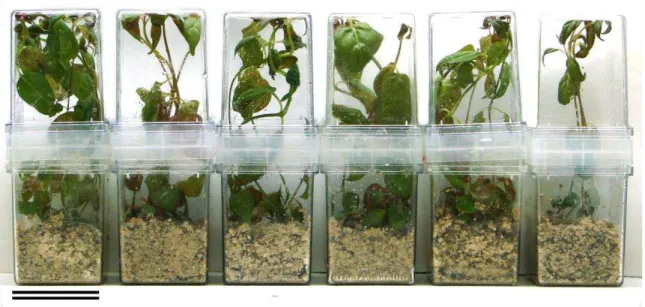
After 90 days under greenhouse conditions (Figure 3), gas exchange, chlorophyll a
16 concentration ratio (Ci/Ca), differed significantly among accessions (Figure 4). The highest A values were found in accession 4, followed by accessions 43, 13 and 57 (Figure 4A), whereas their counterparts 22 and 58 showed the lowest A values. A
similar pattern was found for gs, with the highest value observed in accession 4 and the lowest one in accession 22 (Figure 4B). Both A and gs were positively correlated to one another (r = 0.922, Figure XX), and these traits in turn did not correlate significantly with Ci/Ca (data not shown).
All of the chlorophyll a fluorescence parameters varied significantly among accessions (Figure 5). In the case of the PSII maximum quantum yield (evaluated through Fv/Fm), the differences among accessions, despite significant, were quite narrow
and, most importantly; the Fv/Fm values were maintained at 0.82 and above (Figure 5A),
indicating that no type of photoinhibition took place (Maxwell and Johnson, 2000). Overall, both the apparent electron transport rate (ETR) and the coefficient for photochemical quenching (qp) displayed a quite similar pattern of variation, with the
highest values found in accessions 4, 13 and 43, and the lowest ones displayed by the accessions 13, 43 and 22 (Figure 5B and D). Indeed both qP and ETR were strongly related to one another (r = 0.966, n = 6, P <0.001). The higher values for the non-photochemical quenching (NPQ) were observed in accessions 13, 43 and 22 (Figure 4C), whereas the accessions 4, 57 and 58 showed lower values for NPQ.
Total chlorophyll concentration in vitro differed significantly among the accessions, and the higher concentrations were observed in the accessions that
accumulated more biomass, namely 4, 13, 43 and 57 (Figure 5E). Similarly, the highest stomatal densities (Figure 5 F) were also observed on the accessions with higher
18 Figure 4. Gas exchange parameters from 90-day-old P. glomerata plants of different accessions grown under greenhouse conditions. A: CO2assimilation rate (A). B: Stomatal conductance to
water vapor (gs). C: internal/external CO2 concentration ratio (Ci/Ca). Means followed by
19 Figure 4. Chlorophyll fluorescence parameters, from 90-day-old Pfaffia glomerata plants of different accessions grown under greenhouse conditions (A to D). A: PSII maximum quantum yield (Fv/Fm). B: electron transport rate (ETR). C: Non-photochemical quenching (NPQ). D: Coefficient of photochemical quenching (qp). E and F: Total chlorophyll content (E) and stomatal density (F) of both in vitro and ex vitroP. glomerata plants grown for 40 and 90 days respectively. Lower case letters denote differences among accessions and upper case letters denote differences between in vitro and ex vitro conditions (P < 0.05, Tukey’s test).ΦPSII
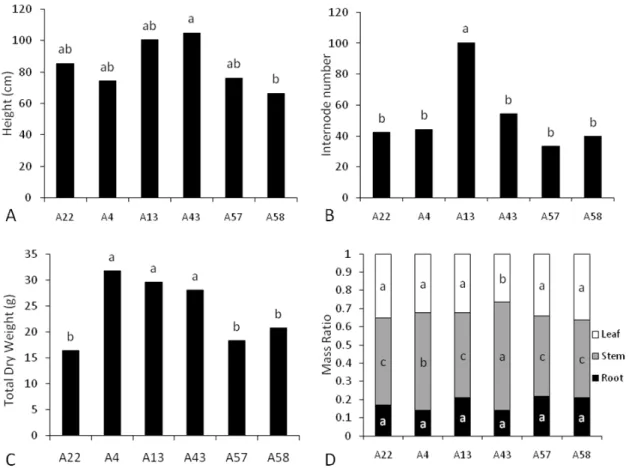
20 producing, on average, 60% more biomass than their 22, 57 and 58 counterparts, similarly to what took place under in vitro conditions (cf. Fig. 2C). Most importantly, changes in biomass were significantly correlated with photosynthetic traits (P ≤ 0.05), as denoted by the positive correlations between biomass with A (r = 0.793), qP (r = 0.937), ETR (r = 0.902) and chlorophyll concentration (r = 0.716) (Figure XX). Furthermore, within each accession, biomass was always positively and significantly correlated with A (data not shown). Overall, biomass was preferentially allocated into stems, followed by leaves and roots (Figure 6D). The root mass ratio did not differ significantly regardless of the plant material, whereas the leaf mass ratio was significantly lower in accession 43 than in the other accessions which did not differ from each other. The stem mass ratio was higher in accession 43 followed by accession 4 compared with the other accessions (Figure 6D).
Figure 6. Growth parameters from 90-day-old Pfaffia glomerata plants of different accessions grown under greenhouse conditions. A: Plant height (cm). B: Number of internodal segments per plant. C: Dry weight per plant (g). D: Mass ratio per plant organ. Different letters denote
statistical differences calculated with Tukey’s test at 5% probability. Uppercase letters compare
21 20E production varied among accessions both in vitro and ex vitro
Both total 20E mass produced per replicate (mg) and 20E concentration (% m/m) varied significantly (p< 0.05) among accessions in vitro (Figures 7E-F). Vitroplants from accessions 4, 13 and 57 accumulated the highest 20E percentages. Accession 57 showed a relatively high 20E concentration, but due to its relatively low biomass production, the final 20E mass obtained per plant is not as high as the amount produced by accessions 4 and 43 (Figure 7C). In contrast, accession 13, which is among the three greater biomass
producers, accumulated a low percentage of 20E, also resulting in a low final weight of this metabolite accumulated per plant in vitro.
Values of 20E concentrations per whole plants varied significantly among accessions, ranging from 0.24% to 0.59% (in accessions 22 and 43, respectively) in vitroplants and from 0.29 to 0.42% (in accessions 58 and 43, respectively) in plants grown ex vitro. Ninety-day-old plants grown in green house accumulated more 20E in roots and leaves in comparison with stems (Figure 7B). Accession 43 was the genotype that showed the higher 20E concentrations both in vitro and ex vitro, and the ex vitro concentrations in roots, stems and leaves were 0.59, 0.26 and 0.7% respectively (Figure 7B).
23 Discussion
Previous studies have focused on photoautotrophic propagation as an optimization of in vitro cultivation in many species and its impacts over ex vitro acclimatization (Aldeberg
et al., 1999; Kirdmanee et al., 2005; Valero-Aracama et al, 2006; Valero-Aracama et al., 2008) and P. glomerata also showed a three-fold increase on photosynthetic rates in an in vitro photoautotrophic system in comparison to plants grown in a photomixotrophic
system (Iarema et al., 2012). Nevertheless, to the best of the authors’ knowledge, the present study is the first report of the genotype-dependent variation in the in vitro photoautotrophic potential and its relations with P. glomerata growth ex vitro.
Evaluation of photosynthetic efficiency is critical for studies on plant responses to environmental conditions as well as for genotype selection. It was previously verified that in vitro photoautotrophic growth capacity is highly variable among P. glomerata accessions, and the low biomass produced per replicate by accession 22 was due mainly to the high explant loss. The high death rate observed in this accession when explants were cultivated in a photoautotrophic system is probably a consequence of the low in vitro photoautotrophic growth capacity. Valero-Aracama et al. (2006) examined the
photosynthetic rates and the carbohydrate status of two Uniola paniculata genotypes with different acclimatization capacities and found a correlation between the high death rate in the difficult-to-acclimatize genotype and its lower photosynthetic capacity during the transference to acclimatization stage. As the plants used in this present study were previously cultured in a photomixotrophic system, the change imposed by the transference of the explants to a photoautotrophic system is analogue to a mild acclimatization stage, and the high death rate observed in accession 22 may also be related to an intrinsic photosynthetic capacity that was not high enough to overcome the environmental changes imposed by the photoautotrophic system.
The observation that genotypes with higher in vitro photoautotrophic growth
also showed better growth and photosynthetic performance ex vitro suggests that the accessions have different intrinsic photosynthetic capacities related to their genetic
24 possible reason why the growth of plants of different accessions ex vitro were proportional to their growth in vitro.
Even though in vitro photoautotrophic cultivation may not increase the plant
photosynthetic capacity ex vitro for a long period after acclimatization (Aldeberg et al., 1999; Van Huylenbroeck and Debergh, 1996), our data suggest that it is possible to use the simple assessment of 40-day-old in vitro photoautotrophic cultures of P. glomerata as a parameter to infer which genotypes show the highest growth rates in greenhouse conditions and select the most productive ones. Our data additionally indicate that differences in biomass accumulation ex vitro among the P. glomerata accessions were to a large extent explained by differences in photosynthetic rates per unit leaf area, as could be deduced by the significant correlations between A and biomass while the leaf mass ratio was indistinguishable among accessions with varying biomass accumulation patterns. The close association between both qP (a measure of the trapped energy that is used in photochemical events such as carbon fixation) and ETR with A means that some selected chlorophyll a fluorescence traits may be used as a surrogate for photosynthetic rates, at least under the conditions of this experiment. Taking all of the above information together, it follows that growth of P. glomerata accessions under given conditions might be easily estimated by measuring those fluorescence parameters, highlighting the importance of chlorophyll a fluorescence as a good practical tool that can be used to perform a screening in the whole germplasm bank for accessions with improved growth under specific conditions.
Variations in A were highly correlated with gs, suggesting at a first glance that stomatal limitations might play a role in constraining A. However, the lack of significant
25 Kamada et al. (2009) studied the genetic diversity of populations that constitute our P. glomerata germplasm bank. Except by accession 4, all of the accessions included in the present study were characterized after 271 days of growth in field conditions. In
agreement with Kamada et al. (2009), accessions 13 and 43 accumulated much more biomass in the stems and roots than accessions 58 and 57. Nevertheless, accession 22 showed to be a high biomass accumulator in the study cited. This divergence is probably due to the response of the accessions to different growth conditions (field and greenhouse), and may also be related to the differential growth dynamics of this accession, as the data of the present trial was collected after 90 days.
This is also the first report on the variation of 20E production among accessions in vitro. Considering that the initial steps of the main research programs for the production of secondary metabolites from plant cell cultures include the collection of a large genetic pool of the species followed by the screening of hyper producing genotypes that present the most valuable secondary metabolites (Borgaud et al., 2001), the observation of this in vitro genotype-dependent variation in 20E production is an interesting finding to consider when planning future research aiming to produce secondary metabolites from P. glomerata cell cultures or any other in vitro system. Screening the whole germplasm bank for the most productive accessions in terms of 20E and biomass in vitro would be an interesting start for the establishment of in vitro cultures for secondary metabolites mass production.
Iarema et al. (2012) had already showed that P. glomeratain vitro 20E
production is higher under photoautotrophic conditions, and the present study found that the concentrations of this metabolite on 40-day-old photoautotrophically-grown
vitroplants were comparable to the percentages found in 90-day-old plants grown in greenhouse, suggesting an enormous potential for the in vitro commercial production of 20E from P. glomerata plants.
26 study showed the leaves as the organs that accumulate the higher portion of total 20E mass, but this pattern would probably change had the plants grew for a longer time before being assessed.
Our results show that P. glomerata accessions have different photosynthetic capacities, which are expressed even when plants are grown in vitro under photoautotrophic conditions. Therefore, in addition to the recent findings concerning the key role of photoautotrophic micropropagation on the optimization of P. glomerata in vitro under natural (Iarema et al., 2012; Saldanha et al., 2012) or forced ventilation
(Saldanha et al., 2013; Saldanha et al., 2014), the growth performance under in vitro photoautotrophic conditions may be used as a trait to select highly productive accessions from the 71-accession germplasm collection, increasing even more the efficiency of this powerful propagation system. In addition to reducing the duration in vitro culture stage and the death rate during the acclimatization, the use of these selected
27 References
Adelberg J., Fujiwara K., KirdmaneeC., Kozai T. (1999) Photoautotrophic shoot and root development for triploid melon. Plant Cell, Tissue and Organ Culture, 57: 95-104.
Aguiar T. V., Sant'anna-Santos B.F., Azevedo A.A.; Santos, R.F. (2007) Anati Quanti: Software de análises quantitativas para estudos em Anatomia Vegetal. PlantaDaninha. 25: 649-659
Baker N. R. (2008) Chlorophyll Fluorescence: A probe of photosynthesis in vivo. Annual Review of Plant Biology, 59: 89-113.
Björkman O., Demmig B. (1987) Photon yield of O2 evolution and chlorophyll fluorescence characteristics at 77 K among vascular plants of diverse origins. Planta,170: 489-504.
Bolhàr-Nordenkampf H. R., Long S.P., Baker N.R. (1989) Chlorophyll fluorescence as probe of the photosynthetic competence of leaves in the field: a review of current instrument. Functional Ecology, 3: 497-514.
Borgaud F., Gravot A., Milesi S., GontierE. (2001) Production of plant secondary metabolites: a historical perspective. Plant Science,161: 839-851
Corrêa-Júnior C., Cortez D.A.G., Ming L.C., Soares W. (2006) Fáfia - O ginseng brasileiro (Pfaffia glomerata (Sprengel) Pedersen): aspectos agronômicos e fitoquímicos. Clichetec, Curitiba
Demmig-Adams B., Adams III W.W., Logan B.A., Verhoeven A.S. (1995) Xanthophyll-cycle-dependent energy dissipation and flexible photosystem II efficiency in plants acclimated to light stress. Australian Journal of Plant Physiology, 22: 249-260.
Ferreira, D.F. Sisvar 5.0.2003. Available online:
<hoot://www.dex.ufla.br/~danielff/softwares.htm>.
Festucci-Buselli R.A., Contim L.A.S.. Barbosa L.C.A., Stuart J.J., Vieira R.F., Otoni W.C. (2008) Level and distribution of 20-hydroxyecdysone during Pfaffia glomerata development. Brazilian Journal of Plant Physiology, 20: 305-311
Figueiredo L.S., Teixeira S.L., Freitas S.P., Vieira I.J.C., Martins E.R. (2004) Comportamento de acessos de Pfaffia glomerata (Spreng.) Pedersen (Amaranthaceae) nas condições de Campos dos Goytacazes - RJ. Revista Brasileira de Plantas Medicinais,7: 67-72.
28 Gomes S.S.L., Saldanha C.W., Neves C.S., Trevizani M., Raposo N.R.B., Notini M.M., Santos M.O., Campos J.M.S., Otoni W.C., Viccini L.F. (2014) Karyotype, genome size, and in vitro chromosome doubling of Pfaffia glomerata (Spreng.) Pedersen. Plant Cell, Tissue and Organ Culture (In press).
Iarema L., Cruz A.C.F., Saldanha C.W., Dias L.L.C., Vieira R.F., Oliveira E.J., Otoni W.C. (2012) Photoautotrophic propagation of Brazilian ginseng [Pfaffia glomerata (Spreng.) Pedersen]. Plant Cell, Tissue and Organ Culture,110: 227–238
Kamada T. (2006). Avaliação da diversidade genética de populações de fáfia [Pfaffia glomerata (Spreng.) Pederse] por RAPD, caracteres morfológicos e teor de beta-ecdisona.PhD Thesis. Federal University of Viçosa. 106 p.
Kamada T., Picoli, E.A.T., Vieira R.F., Barbosa L.C.A., Cruz C.D., Otoni W.C. (2009) Variação de caracteres morfológicos e fisiológicos de populações naturais de Pfaffia glomerata (Spreng.) Pedersen e correlação com a produção de -ecdisona. Revista Brasileira de Plantas Medicinais,11: 247-256
Kirdmanee C., Kitaya Y., Kozai T. (1995)Effects of CO2 enrichment and supporting material in vitro on photoautotrophic growth of Eucalyptus plantlets in vitro and ex vitro. In Vitro Cellular and Developmental Biology – Plant,31: 144-149
Kozai T. (2001) Photoautotrophic micropropagation.In Vitro Cellular and Developmental Biology, 27: 47-51.
Krause G. H., Weis E. (1991) Chlorophyll fluorescence and photosynthesis: the basics. Annual Review Plant Physiology and Plant Molecular Biology,42: 313–349.
Lafont R., Dinan L. (2003) Practical uses for ecdysteroids in mammals including humans: an update. Journal of Insect Science, 3: 1-30.
Lorenzi H., Matos F.J.A. (2002) Plantas Medicinais do Brasil: Nativas e exóticas cultivadas. Nova Odessa, SP. InstitutoPlantarum.
Maxwell K. and Johnson G. N. (2000) Chlorophyll fluorescence: a practical guide. Journal of Experimental Botany,51: 345, 659-668.
Murashige T. and Skoog F. (1962) A revised medium for rapid growth and bio-assays with tobacco tissue cultures. Physiologia Plantarum, 15, 473-497.
Nascimento E.X., Mota J.H., Vieira M.C., Zárate N.A.H. (2007) Produção de biomassa de Pfaffia glomerata (Spreng.) Pedersen e Plantago major L. em cultivo solteiro e consorciado. Ciência e Agrotecnologia,31: 724-730.
29 Saldanha C.W., Otoni C.G., Notini M.M., Kuki K.N., Cruz A.C.F., Neto A.R., Dias L.L.C., Otoni W.C. (2013) A CO2-enriched atmosphere improves in vitro growth of Brazilian ginseng [Pfaffia glomerata (Spreng.) Pedersen]. In Vitro Cellular and Developmental Biology –Plant,49: 433–444
Saldanha C.W., Otoni C.G., Rocha D.I., Cavatte P.C., Detmann K.S.C., Tanaka F.A.O., Dias L.L.C., DaMatta F.M., Otoni W.C. (2014) CO2-enriched atmosphere and
supporting material impact the growth, morphophysiology and ultrastructure of in vitro Brazilian-ginseng [Pfaffia glomerata (Spreng.) Pedersen] plantlets. Plant Cell, Tissue and Organ Culture (In press)
Sarasan V., Kite G.C., Sileshi G.W., Stevenson P.C. (2011) Applications of phytochemical and in vitro techniques for reducing overharvesting of medicinal and pesticidal plants and generating income for the rural poor. Plant Cell Reports30:1163-1172
Snel J. F. H., Van Kooten O. (1990) The use of chlorophyll fluorescence and other noninvasive spectroscopic techniques in plant stress physiology. Photosynthesis Research, 25, 146–332.
Valero-Aracama C., Kane M.E., Wilson S.B., Vu J.C., Anderson J., Philman N.L. (2006) Photosynthetic and carbohydrate status of easy and difficult-to-acclimatize sea oats (UniolapaniculataL.) genotypes during in vitro culture and ex vitro acclimatization. In Vitro Cellular and Developmental Biology –Plant,42:572-583
Valero-Aracama C., Kane M.E., Wilson S.B., Philman N.L. (2008) Comparative growth, morphology, and anatomy of easy- and difficult-to-acclimatize sea oats (Uniolapaniculata) genotypes during in vitro culture and ex vitro acclimatization. Journal of the American Society of Horticultural Sciences,133: 830-843.
Van Huylenbroeck J., Debergh P.C. (1996) Impact of sugar concentration in vitro on photosynthesis and carbon metabolism during ex vitro acclimatization of Spathiphyllumplantlets. Physiologia Plantarum, 96: 298-304
Vigo C.L.S., Narita E., Milaneze-Gutierre M.A., Marques L.C. (2004) Caracterização farmacognóstica comparativa de Pfaffia glomerata (Spreng.) Pedersen Hebanthe paniculata Martius – Amaranthaceae. Revista Brasileira de Plantas Medicinais,6: 7-19 Vigo C.L.S., Narita E., Marques LC. (2003). Validação da metodologia de quantificação espectrofotométrica das saponinas de Pfaffia glomerata (Spreng.) Pedersen (Amaranthaceae). RevistaBrasileira de Farmacognosia,13: 46-49
30 CHAPTER 2
Induced polyploidization increases in vitro photoautotrophic growth and ex vitro biomass and β-ecdysone accumulation in Pfaffia glomerata (Spreng.) Pedersen
Abstract
P. glomerata tetraploid plants were previously obtained from five independent
polyploidization events induced with colchicine treatment. The present study verified the impacts of induced polyploidization over P. glomerata in vitro photoautotrophic potential, ex vitro biomass accumulation and photosynthetic rates and 20E production both in vitro and under greenhouse conditions. Synthetic polyploidization was efficient in producing individuals with increased in vitro photoautotrophic potential and ex vitro biomass accumulation, although photosynthetic rates per leaf area did not vary between diploids and tetraploids. Among the five tetraploids tested (P28, P60, P68, P75 and P75), P28 was the one that showed effectively increased growth performance both in vitro and ex vitro when compared to diploid plants, whereas the other tetraploids did not
differ significantly from the diploids concerning biomass accumulation. Although photosynthetic rates per leaf area unit remained constant among all the plants tested, P28 showed a significantly greater total leaf area, what may have resulted in an increased net photosynthesis per plant. 20E accumulation in vitro did not follow the same pattern of variation observed among the plants ex vitro, being higher in diploid
plants. The 20E content of the tetraploid P28 was 31% higher than the 20E contents of diploid plants in greenhouse conditions. The final 20E mass per plant produced by P28 ex vitro was approximately twice as much as the amount produced by diploid plants.
The induction of polyploidy in P. glomerata showed to be a valid strategy to produce plants with higher biomass accumulation and 20E production ex vitro, besides higher in vitro photoautotrophic potential.
31 Introduction
Induced polyploidy in medicinal plants is generally a successful strategy aiming to obtain highly productive plants (Dhawan and Lavania, 1996) and, although the impacts of polyploidy over biomass accumulation and secondary metabolite production is variable, ploidy level manipulation in many species has been suggested as an interesting strategy for increasing plant biomass accumulation and the production of high-value secondary metabolites (Lavania, 2005; Xu et al., 2014). Increases in ploidy
level often lead to structural changes such as leaf size, stomatal density, cell size and number of chloroplasts per cell (Dhawan and Lavania, 1996), which may affect physiological and biochemical activities such as net photosynthesis (Warner and Edwards, 1989).
Pfaffia glomerata (Amaranthaceae), also known as Brazilian ginseng, is a
medicinal species native to South America that produces a wide variety of triterpenic saponins, including the phytoecdysteroid 20-hydroxyecdysone (20E and also known as -ecdysone), considered its main active compound (Vigo et al., 2004). This compound is also used in many commercial anabolic preparations for athletes (Lafont and Dinan 2003), and various properties in common to the Korean ginseng (Panax ginseng) are attributed to the Brazilian ginseng, such as adaptogen, aphrodisiac, and effects over physical and mental stress relief (Vigo et al., 2003; Lorenzi and Matos, 2002). The species is effectively traded in both Brazilian and international markets (Nascimento et al., 2007). P. glomerata tetraploids were previously obtained from nodal bud thin-layer sections treated with colchicine. Five tetraploids were regenerated from independent polyploidization events, and the characterization of one of these polyploids (P68) showed that 90-day-old plants, although had reduced root and stem biomass in comparison to diploids, showed a 50% increase in the root 20E content (Gomes et al., 2014). Nevertheless, the other 4 P. glomerata tetraploids obtained by our research group
remain uncharacterized.
Previous findings showed that photoautotrophic micropropagation is a very
32 Considering that polyploidization may increase the plant net photosynthesis, it may also have positive impacts over the photoautotrophic potential of the species.
In this context, the goals of the present study were using the diploid accession 22
33 Materials and Methods
Plant material and treatments
Two experiments were assembled, being the ploidy/polyploidization event the only source of variation on both. The plants used were diploid plants from Pfaffia glomerata accession 22 and five synthetic polyploids (tetraploids) originated from this
accession through independent events (named P28, P60, P68, P74 and P75). Experiment I aimed at evaluating the influence of ploidy level and polyploidization event over in vitro photoautotrophic growth and 20E production in P. glomerata, whereas experiment
II aimed at assessing the effects of chromosome doubling over ex vitro growth, leaf gas exchange, chlorophyll a fluorescence and 20E production.
P. glomerata plants used in the experiments were taken from the Plant Tissue Culture Laboratory (LCT – BIOAGRO - UFV) germplasm bank, where 71 diploid accessions and five synthetic polyploids originated independently from accession 22 are maintained in vitro by means of monthly subcultures using either apical or single-node in MS semi-solid medium plus vitamins (Murashige and Skoog, 1962), supplemented with 3% (w/v) sucrose and myo-inositol (100 mg L-1) (Sigma-Aldrich Co, St Louis, MO) and solidified with 7 g L-1 of granulated agar (Merck®, Germany). For both experiments plants (diploid accession 22 and the tetraploids P28, P60, P68, P74 and P75) were subcultured for 30 days in the same conditions already described for the germplasm bank plants.
34 Subcultured plants were acclimatized by using hydroponics with macronutrient solution [101,10 mg L-1 KNO3 , 27,11 mg L-1 MgSO47.H2O, 188,93 mg L-1 Ca(NO3)2.4H2O and 42,56 mg L-1 NH4H2PO4 ] for 15 days in order to assemble
experiment II. Plants were then transferred to 5 L-pots containing substrate (Tropstrato Florestal Vida Verde, Mogi-Mirim, SP), made of pinus bark, vermiculite, charcoal, calcium nitrate and coconut fiber, and kept in greenhouse conditions for 160 days.
Growth parameters
It was assessed plant height (cm), number of nodal segments, and fresh and dry
weight (grams per experimental unit). Fresh weight was not assessed in experiment 2, and dry weight was measured separately for root, stem and leaves. Additionally, it was assessed leaf area (cm2), stem diameter (mm) and root volume (mL). Leaf area was assessed with Area Meter, model Li-Cor 3100 (LI-COR Biosciences, Inc Lincoln, Nebraska).
Total chlorophyll content
Total chlorophyll was calculated with a SPAD chlorophyll meter (SPAD-502, Minolta, Osaka, Japan). Measurements were taken from the second and third fully expanded leaves from the shoot tip.
High Performance Liquid Chromatography (HPLC) determination of 20E content
35 a water/methanol 1:1 (v/v) mixture, in a 0.7 mL min-1 flow rate. The line equation regarding the calibration curve was obtained by adding the 20E standard (Sigma-Aldrich) to methanol at 10, 20, 40, 60 and 80 mg L-1 and performing a linear regression.
20E data were expressed both in concentration (percentage by mass) and in total mass per plant/organ.
.
Stomatal density calculation
Whole leaves (second and third fully expanded leaves from the shoot tip) were processed by diaphanization with 10% w/v sodium hydroxide, bleached with 10% v/v sodium hypochlorite, stained with 0.001% w/v basic alcoholic fuchsin, and mounted in glycerinated gelatin. Slides were sealed with colorless nail polish. Images of both abaxial and adaxial epidermis of each leaf were captured with an Olympus AX70TRF microscope (Olympus Optical, Tokyo, Japan) with a U-Photo Camera System (Spot Insight Color 3.2.0, Diagnostic Instruments Inc., USA). Stomatal density was calculated by using the software ANATI QUANTI (Aguiar, 2007).
Leaf gas exchange and chlorophyll a fluorescence
Gas exchange was assessed by using a infra red gas analyzer (IRGA; LI-6400xt, LI-COR Biosciences Inc., Lincoln, Nebraska, USA), and the parameters were net CO2 assimilation rate (A), stomatal conductance to water vapor (gs), internal/external CO2 concentration ratio (Ci/Ca) and transpiration rate (E). Measurements were taken from
fully expanded leaves from the shoot tip, from 8 am to 13 pm in greenhouse, with constant PAR of 1,000 μmol photons m–2 s–1, ~390 μmol mol-1 atmospheric CO2 concentration, 25 ºC atmospheric temperature and 55 to 65% humidity.
Chlorophyll a fluorescence parameters were also assessed by using the IRGA. Leaves of previously dark-adapted plants were illuminated with weak measuring beams in order to obtain the minimal fluorescence (F0). A saturating white light pulse were applied in order to measure maximum fluorescence (Fm), from which the photosystem II maximum quantum yield was calculated: Fv/Fm = (Fm – F0)/Fm). In light-adapted
36 saturating white light pulse that in order to measure the light adapted maximum fluorescence (Fm′). Far-red illumination was applied to measure the light-adapted initial
fluorescence (F0′). The coefficient for non-photochemical quenching (NPQ) was calculated as NPQ = (Fm/Fm′) – 1. The actual quantum yield of PSII photochemistry
(ΦPSII) was computed as ΦPSII = (Fm′ – Fs)/Fm′, from which the electron transport rate
(ETR) was calculated as ETR = ΦPSII × PPFD × f × α, where f, assumed to be 0.5, accounts for the partitioning of energy between PSII and PSI, and α is the leaf absorbance by the photosynthetic tissues and is assumed to be 0.84.
Experimental design and statistical analysis
37 Results
Synthetic polyploidization increased in vitro photoautotrophic potential
In vitro photoautotrophic growth varied significantly both among polyploid
plants and between diploids and polyploids (Figure 2). The highest in vitro dry weight was shown by the polyploid P28 (472 mg per replicate) but, as P75 showed the lowest value for this parameter (255 mg), high biomass accumulation was not a predominating characteristic among polyploid plants. P28 dry weight in vitro was 32% higher than accession 22, and the other polyploids (P60, P78 and P74), jointly with the diploid 22, showed intermediate biomass accumulation (Figure 2C and D). So, the only artificial polyploid that really showed higher dry weight in comparison to the diploid was P28. The number of internodes per plant did not vary significantly among different ploidies or polyploidization event (Figure 2B).
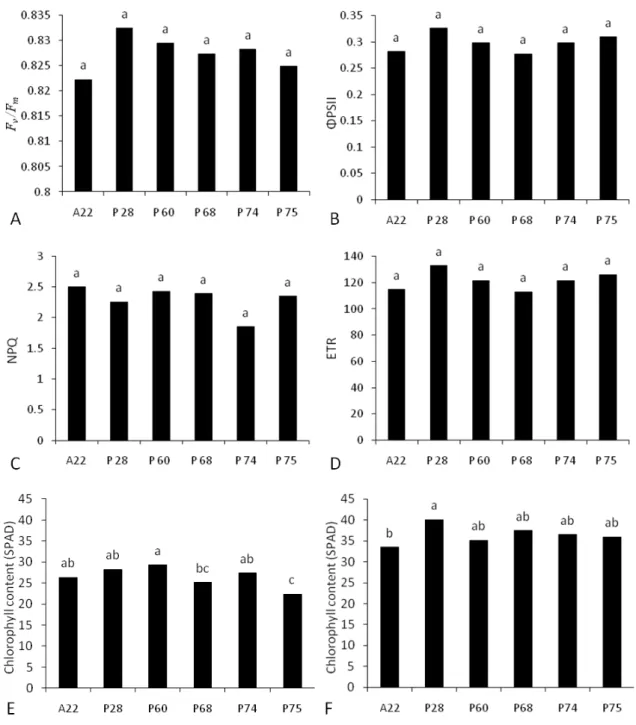
Total chlorophyll also varied significantly among different plants in vitro, ranging from 22.5 to 29 SPAD (in P75 and P60, respectively), and accession 22 showed an intermediate content (26.3 SPAD) (Figure 5).