www.biogeosciences.net/14/341/2017/ doi:10.5194/bg-14-341-2017
© Author(s) 2017. CC Attribution 3.0 License.
Vertical profiles of sediment methanogenic potential and
communities in two plateau freshwater lakes
Yuyin Yang1, Ningning Li1, Wei Wang1, Bingxin Li1, Shuguang Xie1, and Yong Liu2
1State Key Joint Laboratory of Environmental Simulation and Pollution Control, College of Environmental Sciences and Engineering, Peking University, Beijing 100871, China
2Key Laboratory of Water and Sediment Sciences (Ministry of Education), College of Environmental Sciences and Engineering, Peking University, Beijing 100871, China
Correspondence to:Shuguang Xie ([email protected]) and Yong Liu ([email protected]) Received: 29 July 2016 – Published in Biogeosciences Discuss.: 9 August 2016
Revised: 25 October 2016 – Accepted: 4 January 2017 – Published: 24 January 2017
Abstract. Microbial methanogenesis in sediment plays a crucial role in CH4 emission from freshwater lake ecosystems. However, knowledge of the layer-depth-related changes of methanogen community structure and activities in freshwater lake sediment is still limited. The present study was conducted to characterize the methanogenesis potential in different sediment-layer depths and the vertical distribu-tion of microbial communities in two freshwater lakes of dif-ferent trophic status on the Yunnan Plateau (China). Incu-bation experiments and inhibitor studies were carried out to determine the methanogenesis potential and pathways. 16S rRNA and mcrA genes were used to investigate the abun-dance and structure of methanogen and archaeal commu-nities, respectively. Hydrogenotrophic methanogenesis was mainly responsible for methane production in sediments of both freshwater lakes. The layer-depth-related changes of methanogenesis potential and the abundance and commu-nity structure of methanogens were observed in both Di-anchi Lake and Erhai Lake. Archaeal 16S rRNA and mcrA genes displayed a similar abundance change pattern in both lakes, and the relative abundance of methanogens decreased with increasing sediment-layer depth. Archaeal communi-ties differed considerably in Dianchi Lake and Erhai Lake, but methanogen communities showed a slight difference be-tween these two lakes. However, methanogen communities illustrated a remarkable layer-depth-related change. Order Methanomicrobiales was the dominant methanogen group in all sediments, while Methanobacterialesshowed a high proportion only in upper layer sediments. The trophic sta-tus of the lake might have a notable influence on the
depth-related change pattern of methanogenesis activity, while the methanogen community structure was mainly influenced by sediment depth.
1 Introduction
(ace-toclastic pathways : hydrogenotrophic pathways) when car-bohydrates or other similar forms of organic matter are de-graded (Conrad, 1999), hydrogenotrophic pathways can ac-count for a considerable proportion of methane production in freshwater lake sediment (Borrel et al., 2011). However, the relative significance of hydrogenotrophic pathways remains unclear, because it can vary considerably by lake (Conrad, 1999). To identify the methanogens involved in methano-genesis, both the archaeal 16S rRNA gene and functional mcrA gene have been used (Conrad et al., 2007; Luton et al., 2002; Orphan et al., 2008). The dominance of Metha-nomicrobialesandMethanosarcinaleshas been reported in a variety of freshwater lakes (Biderre-Petit et al., 2011; Con-rad et al., 2007; Youngblut et al., 2014). In freshwater lakes, both methanogenesis pathways and methanogenic commu-nity structure can change with sediment-layer depth (Chan et al., 2005; Liu et al., 2016; Lofton et al., 2015).
Many previous studies have investigated methanogenesis in humic lakes (Youngblut et al., 2014), oligotrophic lakes (Lofton et al., 2015), and meromictic lakes (Biderre-Petit et al., 2011; Gies et al., 2014), while shallow mesotrophic and eutrophic lakes have attracted poor attention. Substrate plays an important role in methanogenesis, and has a con-siderable effect on pathway preference (Liu et al., 2016; Nozhevnikova et al., 2007). Methanogenesis in mesotrophic and eutrophic lakes that have abundant substrate might be different from that in other previously studied lakes. There-fore, for sediments of mesotrophic and eutrophic lakes, the following questions have attracted our attention: (1) how do the methanogenesis activity and contribution of different pathways change with the increasing sediment-layer depth? (2) How do methanogen community structure and the dom-inant methanogens change along the sediment-layer depth? (3) Are these changing patterns similar in lakes at different trophic status?
2 Materials and methods 2.1 Sampling sites and samples
Dianchi Lake (with an area of 309 km2and an average water depth of 4.4 m) and Erhai Lake (with an area of 250 km2and an average water depth of 10 m) are the first- and second-largest freshwater lakes on Yunnan Plateau, China, and are of eutrophic and mesotrophic status, respectively (Wang et al., 2015). The characteristics and trophic status of these two lakes have been overviewed in detail by Wang et al. (2015), and some key features are listed in the Table 1.
In this study, five replicate sediment cores (0–20 cm) were collected at the profundal areas of both Dianchi Lake and Erhai Lake with a columnar sediment sampler in Decem-ber 2015. The water depths at the sampling sites were 6.4 and 11 m in Dianchi Lake and Erhai Lake, respectively. The in situ sediment temperature were 16.4◦C in Dianchi Lake and
14.8◦C in Erhai Lake. Meanwhile, a total of 500 mL bottom water at each sampling site was collected for the subsequent incubation experiments.
The five replicate sediment cores were sliced into layers (sample D1 or E1: 0–5 cm, sample D2 or E2: 5–8 cm, sam-ple D3 or E3: 8–11 cm, samsam-ple D4 or E4: 11–14 cm, and sample D5 or E5: 14–17 cm, sample D6 or E6: 17–20 cm). Samples D1–D6 and E1–E6 were from Dianchi Lake and Erhai Lake, respectively. Replicate sediment samples from the same layer depth in a given lake were mixed and then subsampled for physicochemical and molecular analyses and incubation experiments. Sediment samples for physicochem-ical and molecular analyses were stored at −20◦C, while those for incubation experiments were kept in gas-tight bot-tles under anoxic condition at 4◦C. The sediment sam-ples were transported to a laboratory within 1 week, which would have no considerable effect on methanogenic activity (Nüsslein et al., 2001).
2.2 Methane production potential measurement The incubation experiments for methane production mea-surement were performed with reference to the standard pro-cedure described in the literature (Conrad et al., 2010). Up-permost sediment (0–5 cm) was centrifuged at 4000 rpm for 5 min to obtain similar water content to the samples from other layers. For each sediment layer, a total of six sedi-ment samples (1.5 g) and 8 mL bottom water were transferred into a 50 mL sterile serum bottle, flushed with N2, and then closed with a butyl rubber stopper. After incubation at 16◦C overnight, the bottles were flushed with N2again, and half of them were added with CH3F (1 mL) to inhibit the aceto-clastic methanogenesis. Incubation was carried out at 16◦C at 100 rpm for 28 days. At the end of incubation, gas samples were taken from the headspace using a gas-tight syringe, and were then analyzed using GC126 gas chromatography (IN-ESA instrument, Shanghai) with a flame ionization detector.
2.3 Molecular analysis
Table 1.Characteristics and trophic status of Dianchi Lake and Erhai Lake. sTOC, sTN, sTP and wTOC, wTN, wTP refer to average levels of total organic carbon (TOC), total nitrogen (TN), and total phosphorus (TP) of sediment and water, respectively. The locations of sampling sites were as illustrated in the literature (Yang et al., 2016).
Lake Location sTOC sTN sTP wTOC wTN wTP Trophic
(g kg−1) (mg kg−1) (mg kg−1) (mg L−1) (mg L−1) (mg L−1) status
Dianchi 102◦42′E, 24◦51′N 0.13 1027.44 320.44 4.4 1.65 0.114 eutrophic
Erhai 100◦11′E, 25◦45′N 0.10 818.15 183.79 6.4 0.56 0.018 mesotrophic
(Casamayor et al., 2002; Luton et al., 2002). Standard curves ranging from 103 to 107 gene copies µL−1 were generated using serial dilutions of linearized plasmids (pGEM-T, Promega) containing cloned target gene amplified from environmental DNA. The coefficients (r2)for the archaeal 16S rRNA gene andmcrAgene were 0.9995 and 0.9998, re-spectively. Significance was tested using one-way analysis of variance (ANOVA), followed by Student–Newman–Keul’s post hoc analysis (when the variances were homogenous) or Dunnett’s post hoc analysis (when the variances were not homogenous).
For Illumina MiSeq sequencing, the archaeal 16S rRNA gene was amplified using primer set Arch519f (5′-CAGCCGCCGCGGTAA-3′)/Arch915R (5′-GTGCTCCCCCGCCAATTCCT-3′) (He et al., 2016; Herfort et al., 2009; Long et al., 2016). The PCR products from triplicate samples were mixed in equal amounts and were subjected to Illumina MiSeq sequencing. Raw reads were merged and the quality filtering was carried out using Trimmomatic (Bolger et al., 2014) and FLASH (Magoc and Salzberg, 2011). The obtained raw reads were deposited in the NCBI SRA (short-read archive) under accession SRP076837. After subsampling to the lowest number of sequences, sequences from each sediment sample were checked for chimeras and grouped into OTUs (op-erational taxonomic units) using USEARCH (version 7.1, http://drive5.com/uparse/) at 97 % similarity. Diversity analysis was carried out using the MOTHUR program (version v.1.30.1) (Schloss et al., 2011). The taxonomic identities of representative sequences for each OTU were assigned according to the SILVA 16S rRNA database (Quast et al., 2013). For mcrA gene clone library analysis, the primer set mcrF/mcrR was used, and the PCR conditions were as previously described (Luton et al., 2002). The obtained mcrA sequences were deposited in the GenBank database under accession numbers KU997795-KU997842, KX196972-KX197020, and KX093502-KX093920. The mcrAgene sequences were grouped into OTUs at the similar-ity level of 89 % (Webster et al., 2014) using the MOTHUR program. OTU-based diversity was also calculated using the MOTHUR program (Schloss et al., 2009). Phylogenetic analysis of the mcrA gene sequences was carried out with the MEGA 6.0 software (Tamura et al., 2013). Weighted UniFrac distance between samples was calculated using
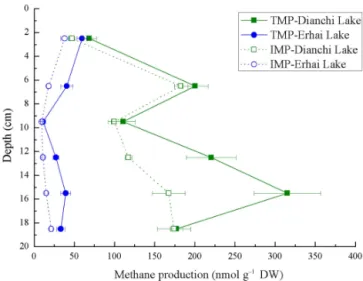
Figure 1. Uninhibited (TMP) and 2 % CH3F inhibited (IMP) methane production potential at different depths. Error bars repre-sent standard deviation of mean (n=3).
R library GUniFrac, and cluster analyses were conducted based on Weighted UniFrac distance using R (version i386, 3.3.0).
3 Results
3.1 Total methane production
In this study, total methane production (TMP) varied remark-ably with both lake and sediment depth except for the upper-most sediments layers, which were remarkably similar be-tween Dianchi Lake and Erhai Lake (Fig. 1). The change pattern of TMP differed in the two lakes. In Dianchi Lake, the TMP generally increased with increasing depth, varying from 68.9 to 315.3 nmol gDW−1 in a 5–20 cm layer (DW stands for dry weight, which was determined gravimetri-cally), while in Erhai Lake, the MPP decreased from 59.6 to 11.2 nmol gDW−1. The sediment samples from Dianchi Lake showed a significantly higher TMP than those from Er-hai Lake (P <0.05).
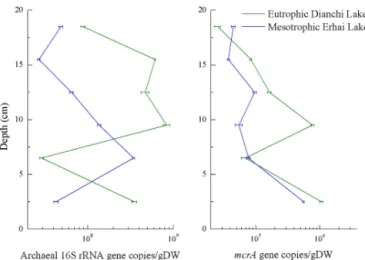
Figure 2. Abundance of archaeal 16S rRNA and mcrAgenes at different depths. Error bars represent standard deviation of mean (n=3).
studied. With increasing depth, IMP generally increased in Dianchi Lake but tended to decrease in Erhai Lake. Di-anchi Lake had the IMP of 47.0–182.8 nmol gDW−1, but Er-hai Lake had a much lower IMP (9.5–38.1 nmol gDW−1). Besides, uninhibited methane production (mainly produced through acetoclastic pathways) varied greatly in differ-ent layers (2.0–84.0 nmol gDW−1 in Dianchi Lake, 1.7– 13.7 nmol gDW−1in Erhai Lake), and showed a notable dif-ference between these two freshwater lakes.
3.2 Community abundance of Archaea and methanogen
The depth-related change pattern of either archaeal 16S rRNA or mcrA gene differed in Dianchi Lake and Er-hai Lake (Fig. 2). The density of the archaeal 16S rRNA gene fluctuated between 2.9±0.1×10⁷ and 8.4±0.8×
108 copies gDW−1in Dianchi Lake. In Erhai Lake, the ar-chaeal community abundance ranged from 2.7±0.1×10⁷to 3.4±0.1×10⁸copies gDW−1, and showed an increase with depth followed by a significant decrease (P <0.05), with the peak value in the 5–8 cm layer.
As for the mcrA gene, its highest density was ob-served at the uppermost layer (0–5 cm) in both Dianchi Lake (1.06±0.06×10⁶ copies gDW−1) and Erhai Lake (5.6±0.2×10⁵ copies gDW−1), while the lowest one oc-curred in Dianchi Lake sample D6 (17–20 cm, 2.5±0.3×
104 copies gDW−1) or Erhai Lake sample E5 (14–17 cm, 3.7±0.1×10⁴copies gDW−1). The gene abundance gener-ally decreased with increasing depth. In addition, both Ar-chaeaor methanogens showed greater abundance in Dianchi Lake than in Erhai Lake.
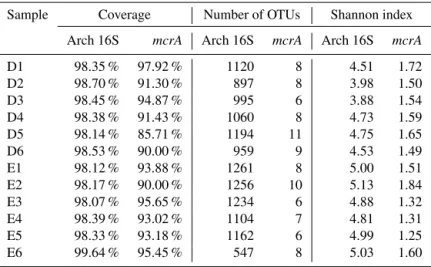
3.3 Diversity of archaeal and methanogen communities In this study, after subsampling, a total of 16 028 archaeal sequences were retrieved from each sediment sample. The number of OTUs in each library ranged between 547 and 1194, and library coverage was 98.07–99.64 % (Table 2). Ar-chaeal community diversity of most sediment samples varied slightly (Shannon index=4.51–5.13), whereas samples D2 and D3 had much lower Shannon diversity (3.98 or 3.88). The samples from Erhai Lake showed higher archaeal diver-sity (Shannon index=4.81–5.13) than those from Dianchi Lake (Shannon index=3.88–4.75).
A total of 516mcrAgene sequences were retrieved from themcrAclone library, and could be assigned into 30 OTUs (at 89 % similarity). For each sample, the number of se-quences ranged from 35 to 49, while the number of OTUs varied between 6 and 11. The coverage for each clone library was no less than 85.7 %, indicating that themcrAOTUs of each sample had been well captured. The Shannon indices were 1.49–1.72 for Dianchi Lake and 1.25–1.84 for Erhai Lake, respectively. In Dianchi Lake, sample D1 had the high-estmcrAgene diversity, but sample D6 had the lowest diver-sity. In Erhai Lake, sample E2 had the highestmcrA gene diversity followed by sample E1, but E5 showed the lowest diversity.
3.4 The 16S rRNA-based community composition
Bathyarchaeota(formally known asMiscellaneous Crenar-chaeotic_Group, MCG) and Euryarchaeota dominated the archaeal communities in both Dianchi Lake and Erhai Lake (Fig. 3). In the uppermost sediment layer in both lakes, Bath-yarchaeotaaccounted for nearly 20 % of the total archaeal community. However, in Dianchi Lake, with increasing layer depth, the proportion ofBathyarchaeotashowed a remark-able decrease followed by a rise.Bathyarchaeotaorganisms showed a high proportion (44–55 %) in Dianchi Lake sam-ples D4–D6 and Erhai Lake samsam-ples E2–E6. In contrast, Eu-ryarchaeotaillustrated an opposite change trend. In Dianchi Lake, the proportion ofEuryarchaeotaorganisms was higher in samples D2 and D3 (63 or 67 %) than in sample D1 (47 %), but displayed a notable decrease in deeper layers (26–27 %). In Erhai Lake, theEuryarchaeota proportion in sample E1 was 32.5 % but became lower in samples E2–E6 (9–23 %). In addition,Woesearchaeotashowed a greater abundance in Di-anchi Lake (8–13 %) than in Erhai Lake (4–9 %), while Cre-narchaeotawas mainly distributed in Erhai Lake (3–29 %).
Table 2.Diversity and library coverage of archaeal 16S rRNA andmcrAgenes. Samples D1–D6 and E1–E6 were retrieved from Dianchi Lake and Erhai Lake, respectively. Digits “1”–“6” refer to sediment depth 0–5, 5–8, 8–11, 11–14, 14–17, and 17–20 cm, respectively.
Sample Coverage Number of OTUs Shannon index
Arch 16S mcrA Arch 16S mcrA Arch 16S mcrA
D1 98.35 % 97.92 % 1120 8 4.51 1.72
D2 98.70 % 91.30 % 897 8 3.98 1.50
D3 98.45 % 94.87 % 995 6 3.88 1.54
D4 98.38 % 91.43 % 1060 8 4.73 1.59
D5 98.14 % 85.71 % 1194 11 4.75 1.65
D6 98.53 % 90.00 % 959 9 4.53 1.49
E1 98.12 % 93.88 % 1261 8 5.00 1.51
E2 98.17 % 90.00 % 1256 10 5.13 1.84
E3 98.07 % 95.65 % 1234 6 4.88 1.32
E4 98.39 % 93.02 % 1104 7 4.81 1.31
E5 98.33 % 93.18 % 1162 6 4.99 1.25
E6 99.64 % 95.45 % 547 8 5.03 1.60
Figure 3.Compositions of archaeal communities at phylum level based on 16S rRNA gene. Samples D1–D6 and E1–E6 were re-trieved from Dianchi Lake and Erhai Lake, respectively. Digits “1”– “6” refer to sediment depth 0–5, 5–8, 8–11, 11–14, 14–17, and 17– 20 cm, respectively.
group in the lower-layer sediments (Dianchi Lake samples D2–D6 and Erhai Lake samples E2–E6). Methanocellales andMethanosarcinalescould also be detected in all sediment samples, but their proportions were less than 2 %. At genus level, Methanobacterium (within Methanobacteriales) had the greatest proportion, followed by Methanosaeta (within Methanosarcinales) andMethanoregula(within Methanomi-crobiales), and the proportion of each archaeal genus de-creased with increasing layer depth in either lake (data not shown).
3.5 ThemcrA-based community composition
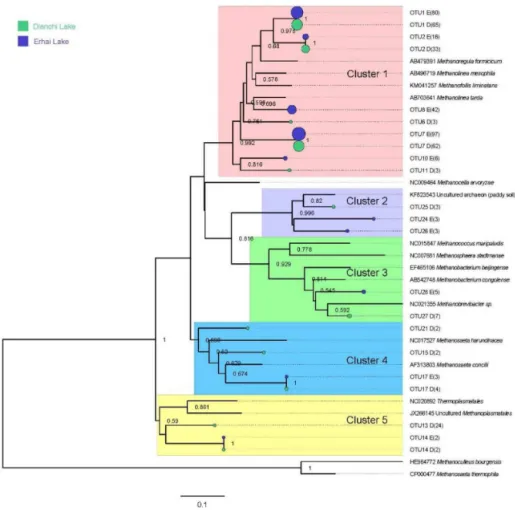
In the present study, the 516mcrAsequences from all sed-iment samples fell into 30 OTUs, 12 of which had only 1
sequence. The representative sequences from the OTUs with at least two sequence members were further used to construct the phylogenic tree with their closemcrAsequences reported in the NCBI database (Fig. 4). All of the sequences were grouped into five clusters (clusters 1–5). Cluster 1 contained most of the obtainedmcrAsequences (440), and could be af-filiated with themcrAsequences fromMethanomicrobiales. Cluster 2 consisted of 29 mcrA sequences related to those fromThermoplasmatalesandMethanoplasmatales. Cluster 3 (with 13 sequence members) and cluster 5 (with 12 se-quence members) were related to Methanobacteriales and Methanosarcinales, respectively. Cluster 4 was the smallest group and only contained 9 sequences. The sequences in this cluster were not related to themcrAsequences from known methanogens, but showed a close relation to an uncultured sequence from paddy soil. In addition, the sequences affili-ated to cluster 1 could be further divided into 3 clades. OTU7 was grouped together with the sequences from two Metha-nomicrobiaceaestrains. OTU8 showed a close relation to a Methanolinea-like mcrA sequence, and OTU1, OTU2, and OTU6 were closely related toMethanoregula-likemcrA se-quence.
Figure 4.Phylogenetic tree of representative archaealmcrAsequences and reference sequences from GenBank. The sequences beginning with “D1”–“D6” and “E1”–“E6” were referred to the sequences retrieved from samples D1–D6 and E1–E6, respectively. The number in parentheses, as well as the size of circle, represents the numbers of the total sequences in the libraries of a certain lake. Numbers at the nodes indicate the levels of bootstrap support based on neighbor-joining analysis of 1000 resampled datasets. The values less than 0.5 are not listed. The bar represents 5 % sequence divergence.
other genotypes ofmcrAgene sequences comprised less than 22 % of the total sequences in each sample.
3.6 Comparison of archaeal and methanogen communities
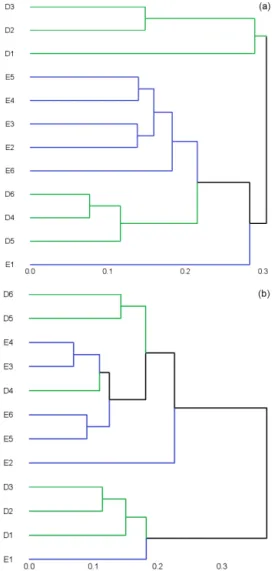
The difference among archaeal assemblages was discrimi-nated using weighted-UniFrac distance-based cluster analy-sis (Fig. 5a). In either Dianchi Lake or Erhai Lake, the sample from the uppermost layer (sample D1 or E1) was separated from the samples in other sediment layers. In Dianchi Lake, samples D2 and D3 were also grouped into one clade, and the other three samples fell into another one. However, in Erhai Lake, samples E2, E3, E4, E5, and E6 were grouped together, and the samples from neighboring layers tended to have a relatively similar archaeal community structure.
For methanogen communities, the studied 12 sediment samples fell into two groups (Fig. 5b). Samples D1, D2, D3, and E1 were clustered together. For other samples, sam-ples at similar layer depth tended to have relatively similar
methanogen community structure. Moreover, the sediment samples from two lakes were not clearly separated.
4 Discussion
4.1 Methane production potential in freshwater lake sediment
The TMP in Erhai Lake decreased with increasing sediment depth, which was in accordance with the literature (Chan et al., 2005 (top 20 cm sliced at 3–5 cm intervals); Liu et al., 2016 (top 50 cm depth sliced at 5 cm intervals); Lofton et al., 2015 (top 5 cm sliced at 1 cm intervals)). Lofton et al. (2015) also documented a slight TMP shift followed by a sharp de-crease in vertical sediment layers. However, to the authors’ knowledge, Dianchi Lake was the first lake that illustrated the increase of TMP with increasing sediment-layer depth.
Figure 5. Environment clusters for archaeal 16S rRNA gene(a)
and mcrA gene(b) assemblages based on UniFrac distance. The scale represents UniFrac distance. Samples D1–D6 and E1–E6 were retrieved from Dianchi Lake and Erhai Lake, respectively. Digits “1”–“6” refer to sediment depth 0–5, 5–8, 8–11, 11–14, 14–17, and 17–20 cm, respectively.
could differ drastically between the two geomorphologically similar oligotrophic lakes, and the quantity and quality of water-dissolved organic carbon (DOC) might be an influen-tial factor (Lofton et al., 2015). Other environmental factors, including geological constitution (e.g., calcareous or not), geographical regions (Rinta et al., 2015), as well as water type (e.g., black water, clear water, or something else) (Con-rad et al., 2014) were also found to have considerable in-fluence on the methane production rate in freshwater lake sediment. Moreover, lake characteristics could influence the methane production rate both directly and indirectly (Borrel et al., 2011). In this study, the methanogenesis potential in Dianchi Lake was found to be much higher than that in Er-hai Lake. Dianchi Lake had a larger amount of nutrients than Erhai Lake, and a high level of organic matter could exist in
lower sediment layers (Fig. S3). TMP was found to be re-lated to the availability of organic matter (Liu et al., 2016; Lofton et al., 2015; Nozhevnikova et al., 2007), so the abun-dant substrate in Dianchi Lake could favor higher TMP. In addition, although methanogen communities in Dianchi Lake and Erhai Lake had similar structure, both archaeal or bacte-rial communities differed greatly in these two lakes (Dai et al., 2016; Yang et al., 2016). Bacterial and non-methanogen archaeal communities played important roles in decompos-ing organic matter, and thus influenced the availability of substrate.
In the current study, IMP accounted for only 24.2 % of TMP, so it could be inferred that hydrogenotrophic pathways might play a major role in Dianchi Lake. The result was con-sistent with previous studies (Conrad et al., 2010; Liu et al., 2013, 2016). However, in Erhai Lake, IMP was comparable to uninhibited methane production. In this study, the layer-depth-related difference in the relative contribution of two methanogenic pathways was not clear, though acetoclastic methanogenesis’s relative contribution was found to decrease with increasing lake sediment depth in several studies (Chan et al., 2005; Liu et al., 2016). The depth-related change of acetoclastic methanogenesis’s relative contribution might be attributed to the decreasing availability of organic matter (Liu et al., 2016). However, in eutrophic Dianchi Lake, organic matter could be at a high level even at the depth of 20 cm. As a result, acetoclastic methanogenesis might not decrease considerably with increasing depth.
4.2 Abundance of Archaea and methanogen in freshwater lake sediment
In the current study, the density of the archaeal 16S rRNA gene tended to decrease with increasing depth in Erhai Lake but fluctuated considerably in Dianchi Lake. According to the previous studies, the abundance of the archaeal 16S rRNA gene generally decreased with increasing depth in stratified lake sediments (Chan et al., 2005; Zhu et al., 2012 (top 21 cm at 3 cm intervals)). But in shallow and eutrophic lakes, both archaeal 16S rRNA gene andmcrA gene abun-dance could fluctuate along the sediment-depth gradient (Ye et al., 2009 (top 30 cm at 5 cm intervals); Zhu et al., 2012). The water depth, as well as trophic status, might have an in-fluence on the depth-related change.
The abundance of methanogens could be assessed us-ing either order-specific archaeal 16S rRNA gene primers ormcrAgene primers. Methanogen abundance was usually found to rise at first, followed by a decrease with the increas-ing depth in top 50 cm, and its peak occurred at the surface layer or 5–10 cm beneath the sediment surface (Borrel et al., 2012; Milferstedt et al., 2010; Zhu et al., 2012), which are consistent with the results found in this study.
et al., 2012; Zhu et al., 2012). However, for each sample, the mcrA/16S ratio was less than 3 % according to the results of qPCR, while the sequences affiliated with methanogen-like organisms accounted for 3–17 % of total 16S rRNA se-quences. The result suggested either the bias of amplification of themcrAgene or the difference between the two archaeal 16S rRNA primer sets used in the current study.
4.3 Diversity of archaeal and methanogen communities in freshwater lake sediment
The diversity of archaeal communities displayed a slight fluctuation along the sediment-layer depth gradient, which was in agreement with literature considering different sam-pling depth, e.g., top 14 cm sliced at 2–3 cm intervals (Koizumi et al., 2004), top 180 cm sliced at 20 cm intervals (Lim et al., 2011), and top 60 cm sliced at 3–9 cm intervals (Nam et al., 2008). To date, the diversity of themcrA gene was unclear, partly due to the usage of order-specific primers of methanogens in the previous studies (Borrel et al., 2012; Zhu et al., 2012). Moreover, information on the diversity of the methanogen 16S rRNA gene was lacking. In this study, relatively higher diversity of themcrAgene was observed in the samples from upper layers (sample D1 in Dianchi Lake and sample E2 in Erhai Lake), butmcrAgene diversity did not show a clear change pattern. In addition, both commu-nity diversity and evenness of methanogens could vary with lake (Milferstedt et al., 2010; Youngblut et al., 2014). In this current study, the sediment samples from Erhai Lake had slightly lowermcrAgene diversity than those from Dianchi Lake (Table 2).
4.4 Composition of methanogen community in
freshwater lake sediment based on 16S rRNA gene In the present study, hydrogenotrophicMethanomicrobiales had a high proportion in sediment from each layer depth, which agreed with previous studies (Biderre-Petit et al., 2011; Youngblut et al., 2014). It had been detected in a vari-ety of environments, and was the most frequently observed archaeal order in freshwater lake sediment. Methanobac-teriales was mainly distributed in Dianchi Lake samples D1, D2, and D3 and Erhai Lake sample E1. Abundance of Methanobacteriales has also been observed in hypereu-trophic Priest Pot (Earl et al., 2003) and euhypereu-trophic Taihu Lake (Ye et al., 2009). The distribution of Methanobacteri-ales indicated that it might have a preference to high lev-els of nutrients.Methanosarcinalesshowed a lower propor-tion in Dianchi Lake and Erhai Lake than in other previous reported freshwater lakes (Biderre-Petit et al., 2011; Borrel et al., 2012; Zhu et al., 2012). Methanogens from the or-der Methanosarcinales mainly participated in reducing ac-etate and methyl compounds (Borrel et al., 2011), so their low proportion might partly account for the small contribu-tion of hydrogenotrophic pathways.
In this study, the result of a UniFrac-based cluster analy-sis (Fig. 5a) indicated that archaeal community structure dif-fered evidently in Dianchi Lake and Erhai Lake. In either Di-anchi Lake or Erhai Lake, layer depth was found to be a key determinant in archaeal community structure. However, the abrupt shift in archaeal community structure occurred at dif-ferent layer depths in these two lakes. In Dianchi Lake, the structures of archaeal communities at layer depth 0–11 cm (including samples D1, D2, and D3) were much different from those at layer depth 11–20 cm (including samples D4, D5, and D6). However, in Erhai Lake, a remarkable differ-ence lay between the sample from uppermost layer (D1) and those from other five layers. So far, only Ye et al. (2009) doc-umented the layer-depth-related change of archaeal commu-nity structure in Taihu Lake, while its change pattern was not clear.
4.5 Composition of methanogen community in freshwater lake sediment based on themcrAgene Based onmcrAgene clone library analysis, Methanomicro-bialeswas found to be the dominant methanogen group in both lakes, which agreed with other studies (Biderre-Petit et al., 2011; Youngblut et al., 2014). In the current study, the proportion ofMethanoregula-likemcrAsequences tended to decrease with increasing sediment-layer depth, while the pro-portion ofMethanolinea-likemcrAsequences did not show a clear change pattern.MethanoregulaandMethanolinea, af-filiated withMethanomicrobiales, were among the most fre-quently detected archaeal genera in freshwater lakes (Bor-rel et al., 2011). So far, the change pattern of methanogen community at genus level along the layer-depth gradient has not been addressed. In this study,Methanoplasmatales-like methanogens were detected in both Dianchi Lake and Erhai Lake, but the distribution pattern along sediment-layer depth in these two lakes was different.Methanoplasmatales-like methanogens were related to Thermoplasmatales Archaea. It was usually present in termite guts and high-salinity envi-ronments (e.g., marine sediment), and was the latest found order of methanogens (Paul et al., 2012). Only a few previ-ous studies reported their existence in freshwater lake sedi-ment (Conrad et al., 2014; Liu et al., 2013; Webster et al., 2014).MethanosarcinalesandMethanobacterialeswere also detected in different sediment layers in both lakes. How-ever, their change patterns were not clear because of their low relative abundance. In addition, compared with other freshwater lake sediments (Borrel et al., 2012; Zhu et al., 2012), sediments in Dianchi Lake and Erhai Lake showed a much higher Methanomicrobiales proportion but lower Methanosarcinalesproportion.
showed a very low proportion in themcrAclone library (less than 3 % in 11 out of 12 samples).Methanobacterialeswas abundant in uppermost layer sediments based on 16S rRNA sequencing, but it was a minor group in the mcrAclone li-brary. Since the phylogeny of themcrAgene was congruent with that of the 16S rRNA gene (Luton et al., 2002; Springer et al., 1995), the difference between the results based on the two molecular approaches might be attributed to PCR bias.
UniFrac-based cluster analysis indicated that methanogen communities in sediments of Dianchi Lake and Erhai Lake were not phylogenetically separated. Sediment depth could shape methanogen community structure, although methanogen communities in surface sediment were usually found to be lake-dependent (Milferstedt et al., 2010; Young-blut et al., 2014).
5 Conclusions
The MPP and abundance of sediment methanogens differed greatly in Dianchi Lake and Erhai Lake, while these two lakes had a similar methanogen community structure, with a dominance ofMethanomicrobialesandMethanobacteriales. Hydrogenotrophic methanogenesis was the major methane production pathway in sediments of both lakes. The layer depth-related changes of methanogenesis potential and the abundance and community structure of methanogens were observed in both Dianchi Lake and Erhai Lake. Sediment methanogen community and activity might be influenced by lake trophic status.
6 Data availability
The mcrA sequences were deposited in the Gen-Bank database under accession numbers KU997795-KU997842,KX196972-KX197020, and KX093502-KX093920, while the raw archaeal 16S rRNA gene reads were deposited in the NCBI SRA (short-read archive) under accession SRP076837.
The Supplement related to this article is available online at doi:10.5194/bg-14-341-2017-supplement.
Competing interests. The authors declare that they have no conflict of interest.
Acknowledgements. This work was financially supported by the National Natural Science Foundation of China (no. 41571444), Na-tional Basic Research Program of China (2015CB458900), and the special fund of State Key Joint Laboratory of Environment Simula-tion and PolluSimula-tion Control (15L02ESPC).
Edited by: T. J. Battin
Reviewed by: A. Bagnoud and one anonymous referee
References
Bastviken, D., Cole, J., Pace, M., and Tranvik, L.: Methane emis-sions from lakes: Dependence of lake characteristics, two re-gional assessments, and a global estimate, Global Biogeochem. Cy., 18, GB4009, doi:10.1029/2004GB002238, 2004.
Bastviken, D., Cole, J. J., Pace, M. L., and Van de Bogert, M. C.: Fates of methane from different lake habitats: Connecting whole-lake budgets and CH4emissions, J. Geophys. Res., 113, G02024, doi:10.1029/2007JG000608, 2008.
Biderre-Petit, C., Jézéquel, D., Dugat-Bony, E., Lopes, F., Kuever, J., Borrel, G., Viollier, E., Fonty, G., and Peyret, P.: Identifica-tion of microbial communities involved in the methane cycle of a freshwater meromictic lake, FEMS Microbiol. Ecol., 77, 533– 545, 2011.
Bolger, A. M., Lohse, M., and Usadel, B.: Trimmomatic: a flexible trimmer for Illumina sequence data, Bioinformatics, 30, 2114– 2120, 2014.
Borrel, G., Jezequel, D., Biderre-Petit, C., Morel-Desrosiers, N., Morel, J. P., Peyret, P., Fonty, G., and Lehours, A. C.: Produc-tion and consumpProduc-tion of methane in freshwater lake ecosystems, Res. Microbiol., 162, 832–847, 2011.
Borrel, G., Lehours, A.-C., Crouzet, O., Jéquel, D., and Rockne, K.: Stratification of Archaea in the Deep Sediments of a Freshwater Meromictic Lake: Vertical Shift from Methanogenic to Uncultured Archaeal Lineages, PLoS ONE, 7, e3346, doi:10.1371/journal.pone.0043346, 2012.
Casamayor, E., Massana, R., Benlloch, S., Øvreås, L., Díez, B., Goddard, V., Gasol, J., Joint, I., Rodríguez-Valera, F., and Pedrós-Alió, C.: Changes in archaeal, bacterial and eukaryal as-semblages along a salinity gradient by comparison of genetic fin-gerprinting methods in a multipond solar saltern, Environ. Micro-biol., 4, 338–348, 2002.
Chan, O. C., Claus, P., Casper, P., Ulrich, A., Lueders, T., and Conrad, R.: Vertical distribution of structure and function of the methanogenic archaeal community in Lake Dagow sediment, Environ. Microbiol., 7, 1139–1149, 2005.
Conrad, R.: Contribution of hydrogen to methane production and control of hydrogen concentrations in methanogenic soils and sediments, FEMS Microbiol. Ecol., 28, 193–202, 1999. Conrad, R.: Quantification of methanogenic pathways using
sta-ble carbon isotopic signatures: a review and a proposal, Org. Geochem., 36, 739–752, 2005.
Conrad, R., Chan, O.-C., Claus, P., and Casper, P.: Characterization of methanogenic Archaea and stable isotope fractionation during methane production in the profundal sediment of an oligotrophic lake (Lake Stechlin, Germany), Limnol. Oceanogr., 53, 1393– 1406, 2007.
Conrad, R., Klose, M., Claus, P., and Enrich-Prast, A.: Methanogenic pathway, C-13 isotope fractionation, and archaeal community composition in the sediment of two clear-water lakes of Amazonia, Limnol. Oceanogr., 55, 689–702, 2010.
Amazonian oxbow lake sediments to desiccation stress, Environ. Microbiol., 16, 1682–1694, 2014.
Dai, Y., Yang, Y., Wu, Z., Feng, Q., Xie, S., and Liu, Y.: Spatiotem-poral variation of planktonic and sediment bacterial assemblages in two plateau freshwater lakes at different trophic status, Appl. Microbiol. Biot., 100, 4161–4175, 2016.
Earl, J., Hall, G., Pickup, R., Ritchie, D., and Edwards, C.: Analy-sis of methanogen diversity in a hypereutrophic lake using PCR-RFLP analysis ofmcrsequences, Microbiol. Ecol., 46, 270–278, 2003.
Garcia, J. L.: Taxonomy and ecology of methanogens, FEMS Mi-crobiol. Rev., 87, 297–308, 1990.
Gies, E. A., Konwar, K. M., Beatty, J. T., and Hallam, S. J.: Illu-minating Microbial Dark Matter in Meromictic Sakinaw Lake, Appl. Environ. Microbiol., 80, 6807–6818, 2014.
Gruca-Rokosz, R. and Tomaszek, J. A.: Methane and Carbon Diox-ide in the Sediment of a Eutrophic Reservoir: Production Path-ways and Diffusion Fluxes at the Sediment–Water Interface, Water Air Soil Poll., 226, 16, doi:10.1007/s11270-014-2268-3, 2015.
He, T., Guan, W., Luan, Z., and Xie, S.: Spatiotemporal variation of bacterial and archaeal communities in a pilot-scale constructed wetland for surface water treatment, Appl. Microbiol. Biot., 100, 1479–1488, 2016.
Herfort, L., Kim, J. H., Coolen, M. J. L., Abbas, B., Schouten, S., Herndl, G. J., and Damste, J. S. S.: Diversity ofArchaeaand detection of crenarchaeotalamoAgenes in the rivers, Rhine and Tet, Aquat. Microbiol. Ecol., 55, 189–201, 2009.
Koizumi, Y., Takii, S., and Fukui, M.: Depth-related change in ar-chaeal community structure in a freshwater lake sediment as de-termined with denaturing gradient gel electrophoresis of ampli-fied 16S rRNA genes and reversely transcribed rRNA fragments, FEMS Microbiol. Ecol., 48, 285–292, 2004.
Lim, J., Woodward, J., Tulaczyk, S., Christoffersen, P., and Cum-mings, S. P.: Analysis of the microbial community and geochem-istry of a sediment core from Great Slave Lake, Canada, Anton. Leeuw., 99, 423–430, 2011.
Liu, Y., Yao, T., Gleixner, G., Claus, P., and Conrad, R.: Methanogenic pathways,13C isotope fractionation, and archaeal community composition in lake sediments and wetland soils on the Tibetan Plateau, J. Geophys. Res.-Biogeo., 118, 650–664, 2013.
Liu, Y., Conrad, R., Yao, T., Gleixner, G., and Claus, P.: Change of methane production pathway with sediment depth in a lake on the Tibetan plateau, Paleogeogr. Paleocl., doi:10.1016/j.palaeo.2016.06.021, online first, 2016.
Lofton, D. D., Whalen, S. C., and Hershey, A. E.: Vertical sedi-ment distribution of methanogenic pathways in two shallow Arc-tic Alaskan lakes, Polar Biol., 38, 815–827, 2015.
Long, Y., Zhang, Z., Pan, X., Li, B., Xie, S., and Guo, Q.: Substrate influence on archaeal and bacterial assemblages in constructed wetland microcosm, Ecol. Eng., 94, 437–442, 2016.
Luton, P. E., Wayne, J. M., Sharp, R. J., and Riley, P. W.: ThemcrA gene as an alternative to 16S rRNA in the phylogenetic analysis of methanogen populations in landfill, Microbiology, 148, 3521– 3530, 2002.
Magoc, T. and Salzberg, S.: FLASH Fast Length Adjustment of Short Reads to Improve Genome, Bioinformatics, 27, 2957– 2963, 2011.
Milferstedt, K., Youngblut, N. D., and Whitaker, R. J.: Spatial struc-ture and persistence of methanogen populations in humic bog lakes, ISME J., 4, 764–776, 2010.
Nam, Y. D., Sung, Y., Chang, H. W., Roh, S. W., Kim, K. H., Rhee, S. K., Kim, J. C., Kim, J. Y., Yoon, J. H., and Bae, J. W.: Char-acterization of the depth-related changes in the microbial com-munities in Lake Hovsgol sediment by 16S rRNA gene-based approaches, J. Microbiol., 46, 125–136, 2008.
Nozhevnikova, A. N., Nekrasova, V., Ammann, A., Zehnder, A. J. B., Wehrli, B., and Holliger, C.: Influence of temperature and high acetate concentrations on methanogenensis in lake sediment slurries, FEMS Microbiol. Ecol., 62, 336–344, 2007.
Nüsslein, B., Chin, K.-J., Eckert, W., and Conrad, R.: Evidence for anaerobic syntrophic acetate oxidation during methane produc-tion in the profundal sediment of subtropical Lake Kinneret (Is-rael), Environ. Microbiol., 3, 460–470, 2001.
Orphan, V. J., Jahnke, L. L., Embaye, T., Turk, K. A., Pernthaler, A., Summons, R. E., and Des Marais, D. J.: Characterization and spatial distribution of methanogens and methanogenic biosigna-tures in hypersaline microbial mats of Baja California, Geobiol-ogy, 6, 376–393, 2008.
Paul, K., Nonoh, J. O., Mikulski, L., and Brune, A.: “ Methanoplas-matales”,Thermoplasmatales-related archaea in termite guts and other environments, are the seventh order of methanogens, Appl. Environ. Microbiol., 78, 8245–8253, 2012.
Quast, C., Pruesse, E., Yilmaz, P., Gerken, J., Schweer, T., Yarza, P., Peplies, J., and Glockner, F. O.: The SILVA ribosomal RNA gene database project: improved data processing and web-based tools, Nucleic Acids Res., 41, 590–596, 2013.
Rinta, P., Bastviken, D., van Hardenbroek, M., Kankaala, P., Leuenberger, M., Schilder, J., Stötter, T., and Heiri, O.: An inter-regional assessment of concentrations andδ13C values of methane and dissolved inorganic carbon in small European lakes, Aquat. Sci., 77, 667–680, 2015.
Sakai, S., Imachi, H., Hanada, S., Ohashi, A., Harada, H., and Kamagata, Y.: Methanocella paludicola gen. nov., sp. nov., a methane-producing archaeon, the first isolate of the lin-eage “Rice Cluster I”, and proposal of the new archaeal order Methanocellalesord. nov, Int. J. Evol. Syst. Micr., 58, 929–936, 2008.
Schloss, P. D., Westcott, S. L., Ryabin, T., Hall, J. R., Hartmann, M., Hollister, E. B., Lesniewski, R. A., Oakley, B. B., Parks, D. H., Robinson, C. J., Sahl, J. W., Stres, B., Thallinger, G. G., Van Horn, D. J., and Weber, C. F.: Introducing mothur, open-source, platform-independent, community-supported software for de-scribing and comparing microbial communities, Appl. Environ. Microbiol., 75, 7537–7541, 2009.
Schloss, P. D., Gevers, D., and Westcott, S. L.: Reducing the Effects of PCR Amplification and Sequencing Arti-facts on 16S rRNA-Based Studies, PLoS ONE, 6, e27310, doi:10.1371/journal.pone.0027310, 2011.
Springer, E., Sacks, M., Woese, C., and Boone, D.: Partial gene sequences for the a subunit of methyl-coenzyme M reductase (mcrI) as a phylogenetic tool for the familyMethanosarcinaceae, Int. J. Syst. Evol. Micr., 45, 554–559, 1995.
Wang, S., Zheng, B., Chen, C., Dohmann, M., and Kolditz, O.: Thematic issue: water of the Erhai and Dianchi Lakes, Environ. Earth. Sci., 74, 3685–3688, 2015.
Webster, G., O’Sullivan, L. A., Meng, Y., Williams, A. S., Sass, A. M., Watkins, A. J., Parkes, R. J., and Weightman, A. J.: Ar-chaeal community diversity and abundance changes along a nat-ural salinity gradient in estuarine sediments, FEMS Microbiol. Ecol., 91, 1–18, 2014.
Yang, Y., Dai, Y., Wu, Z., Xie, S., and Liu, Y.: Temporal and spatial dynamics of archaeal communities in two freshwa-ter lakes at different trophic status, Front. Microbiol., 7, 451, doi:10.1007/s00248-016-0872-z, 2016.
Ye, W., Liu, X., Lin, S., Tan, J., Pan, J., Li, D., and Yang, H.: The vertical distribution of bacterial and archaeal communities in the water and sediment of Lake Taihu, FEMS Microbiol. Ecol., 70, 107–120, 2009.