Objective: To investigate the presence of central auditory processing disorder symptoms in children with congenital hypothyroidism.
Methods: An exploratory, descriptive, cross‑sectional study of 112 patients with congenital hypothyroidism aged ≥5 years old. An interview was held with the parents/caregivers at the time of the medical consultation. Patients with other medical conditions were excluded. As a research instrument, the structured protocol of anamnesis was used to evaluate the auditory processing routinely used by audiologists. For statistical analysis, the chi‑square test was used.
Results: Sex distribution was similar in both boys and girls (girls: 53.3%). The most prevalent phenotypic form of congenital hypothyroidism was no dysgenesis (88.4%), and 65.3% of the children had an episode of irregular serum thyroid‑stimulating hormone (TSH) levels. Among the manifestations of the most frequent central auditory processing disorder symptoms, problems were reported with regard to cognitive functions, as they related to hearing, such as figure‑background ability (83.0%), auditory attention (75.9%) and auditory memory (33.0%). Complaints related to school performance were reported in 62.3% of the cases.
Conclusions: The data obtained show a high frequency of lag symptoms in cognitive functions related to central auditory processing, particularly with regard to auditory attention, figure‑background ability and auditory memory in patients with congenital hypothyroidism.
Keywords: Central auditory diseases; Neonatal screening; Congenital hypothyroidism; Cognition.
Objetivo: Investigar a manifestação de sintomas do transtorno do processamento auditivo central em crianças com hipotireoidismo congênito.
Métodos: Estudo de caráter exploratório, descritivo e transversal com 112 pacientes com hipotireoidismo congênito com idade ≥5 anos. Realizou‑se entrevista com os pais/cuidadores no momento da espera da consulta médica. Portadores de outras afecções médicas foram excluídos. Como instrumento de pesquisa utilizou‑se o protocolo estruturado de anamnese para avaliação do processamento auditivo rotineiramente empregado por audiologistas. A análise estatística utilizou o teste Qui‑quadrado.
Resultados: A distribuição por sexo foi semelhante (meninas: 53,3%). Os casos não‑disgenesia constituíram a forma fenotípica mais prevalente para o hipotireoidismo congênito (88,4%), e verificou‑se que 65,3% das crianças apresentavam algum episódio de níveis séricos irregulares de hormônio tireoestimulante. Dentre as manifestações mais frequentes dos sintomas do transtorno do processamento auditivo central, as queixas relaciondas às funções cognitivas auditivas, como: figura‑fundo (83,0%), atenção auditiva (75,9%) e memória auditiva (33,0%) foram as mais evidentes. Reclamações relacionadas ao rendimento escolar foram reportadas em 62,3%.
Conclusões: Os dados obtidos evidenciaram altas frequências de sintomas de defasagem nas funções cognitivas relacionadas ao processamento auditivo central, em especial na atenção auditiva, figura‑fundo e memória auditiva nos portadores do hipotireoidismo congênito.
Palavras‑chave: Doenças auditivas centrais, Triagem neonatal, Hipotireoidismo congênito e cognição.
ABSTRACT
RESUMO
*Corresponding author. E‑mail: [email protected] (C.L.O. de Andrade). aUniversidade Federal da Bahia, Salvador, BA, Brazil.
bUnião Metropolitana de Educação e Cultura, Lauro de Freitas, BA, Brazil.
Received on August 21, 2017; approved on December 24, 2017; available online on August 24, 2018.
CONGENITAL HYPOTHYROIDISM AS A
RISK FACTOR FOR CENTRAL HEARING
PROCESS DISORDERS
Hipotireoidismo congênito como fator de risco para
os transtornos do processamento auditivo central
Caio Leônidas Oliveira de Andrade
a* , Aline Cupertino Lemos
a,
Gabriela Carvalho Machado
a, Luciene da Cruz Fernandes
a, Lais Luz Silva
b,
INTRODUCTION
Congenital hypothyroidism (CH) is one of the most common endrocrinopathlogies in childhood, with a worldwide incidence of 1:3000/4000 births.1 It is characterized by the absence or
decrease in thyroid hormones (THs) and may occur in two common clinical forms: dysormonogenesis (10–15%) and dysgenesis (80–85%).2
Studies have shown that 5% of thyroid dysgenesis (TD) cases are associated with mutations in genes responsible for the growth or development of thyroid follicular cells. This occurs due to a large variety of different structural malformations in the thyroid that result in a wide range of different CH phe‑ notypes, (e.g.: NKX2.1 e FOXE1, PAX8 e TSHR), display‑ ing an extremely complex pathogeny.3,4 The dysgenetic group
contains agenesis (or hemigenesis), hypoplasia, and the ecto‑ pic gland. Conversely, dyshormonogenesis occurs when there are autosomal recessive mutations of key molecules regulating thyroid hormone synthesis.5
Irregular or insufficient TH intake in early stages of gesta‑ tion and in early years of life has been related to neural connec‑ tive damages.6 The triiodothyronine (T3) hormone is essential
for the maturation of complex brain function and for somatic growth.7 THs are essential for metabolic development, growth,
homeostasis, and for the morphophysiological maturation of central auditory pathways.8,9
After understanding the role of THs in the auditory sys‑ tem, it is plausible to suppose that a lack of these hormones may cause alterations in the processing of the acoustic signal from the peripheral pathways to the auditory cortex, which are expressed as linguistic, cognitive, school performance, and/or socioemotional problems, thus characterizing central audi‑ tory processing disorders (CAPD) and their manifestations. The Central Auditory Process (CAP) is the physiological mechanism for conducting auditory information from the cochlea, the peripheral sensory organ, to the upper auditory centers.10 In order to enable adequate processing of these phys‑
iological functions, the integrity of these pathways is essential. These pathways allow individuals to use their auditory abilities, such as detecting, discriminating, recognizing and understand‑ ing (all acoustic signal information).11 Furthermore, it enables
them to communicate and organize themselves in the spaces in which they live.
Appropriate treatment of CH at early ages is essential to prevent and/or minimize damage to the pathways responsible for central auditory processing. When children’s disorders are detected, therapeutic measures should be adopted as early as possible in order to minimize deleterious effects.
There is a lack of studies regarding CAPD in CH sub‑ jects because the majority of research projects have prioritized
understanding audiometric thresholds, and to a lesser extent, electroacoustic and electrophysiological hearing processes, rather than investigating the impairment of cognitive functions related to hearing. In view of this, the aim of this study was to investigate the presence of signs and symptoms of auditory processing disorders in children with CH, and to verify the association of this disorder with their clinical and laboratory aspects, with the purpose of demonstrating the relevance of evaluating central auditory processing in children/the popu‑ lation of this age group.
METHOD
We evaluated 112 patients diagnosed with congenital hypo‑ thyroidism aged ≥5 years‑old (range 5–16) of both gen‑ ders, who were treated at the Neonatal Screening Service in the State of Bahia (Northeast Brazil) in the year 2014, with the following exclusion criteria: subjects with syn‑ dromes (Down Syndrome, Pendred Syndrome, Kabuki Syndrome, etc.), neurological diseases or psychiatric dis‑ orders, which were diagnosed by using information col‑ lected directly from medical records; those with a history of middle and/or external ear diseases; those presenting risk factors for hearing loss, or reporting current or past infectious diseases involving the central nervous system (CNS); subjects with other metabolic diseases and any other form of hypothyroidism that was not permanent congenital hypothyroidism.
This is an exploratory, descriptive and cross‑sectional study, with a convenience sample, obtained by evaluating all patients with CH from March to October 2014. The project was approved by the Ethics Committee (Opinion No. 534,704). All of the participants volunteered to participate in the research. A Free and Informed Consent Form was signed by the patients’ par‑ ents or guardians, and the patients signed the Free and Clarified Consent Form, whenever appropriate.
In this analysis, the parents or guardians were the source of information consulted to identify the presence of audi‑ tory symptoms. Three research instruments were used: the first, for a preliminary investigation about the presence of risk factors for hearing loss and anamnesis — a history of other diseases and family history of hearing loss; the sec‑ ond, routinely applied by audiologists12 to collect data
that directed the investigation with regard to the presence of specific symptoms of the CAPD. The second section had 15 open‑ended and closed‑ended (Yes or No) questions, and investigated signs of co‑morbidities associated with CAPD, such as school‑related and social difficulties.
The parents/caregivers were submitted to a formal inter‑ view process. A “face to face” technique was used in which the researcher/interviewer read the items of the questionnaire to the interviewee and, after providing appropriate instructions, did not interfere farther in the process.
The clinical and laboratory data of the patients were extracted from medical records. The severity of CH was clas‑ sified based on serum levels of total T4 (≥ or <2.50 μg/dL) at the time of the diagnostic examination. The individuals who had three or more episodes of serum thyroid‑stimulat‑ ing hormone (TSH) levels <0.5 μUI/mL or >15 μUI/mL were considered to be patients with irregular hormonal serum levels, and were classified as hypertreated and hypotreated patients, respectively, for the purpose of establishing an asso‑ ciation between hormonal control and central auditory pro‑ cessing manifestations.
The etiology of CH was classified according to ultraso‑ nography, and when necessary, by thyroid scintigraphy into: dysgenesis and no dysgenesis. The cases of dysmormonogenis could not be identified by the perchlorate test, which showed evidence of partial iodide organification defects, thus it was difficult to classify cases with topical thyroid glands and the absence of TH as dysmormonogenesis.
For statistical analysis, SPSS software, IBM Corporation, Chicago, USA (version 21.0) was used. The continuous variables were described by mean values, standard devi‑ ation, relative frequencies and strength of association. The bivariate analyses between categorical variables were performed with the chi‑square test, at a significance level of 5% (p<0.05).
RESULTS
The mean age and the time since the diagnosis of the dis‑ ease among the individuals with CH was 8.6 years (±2.9). The sample predominantly consisted of girls (53.3%). Among the etiological factors, the most prevalent phenotypic form (88.4%) was found in the cases of no diysgenesis. In the hor‑ monal follow‑up, 65.3% of the individuals had at least one episode of irregular serum TSH levels. Of these, 48.2% of the subjects had episodes of TSH suppression (≤0.5 μUl/mL) and 17.1% had increased TSH levels (≥15 μUI/mL). Only 14.3% demonstrated regular serum TSH levels through‑ out the treatment.
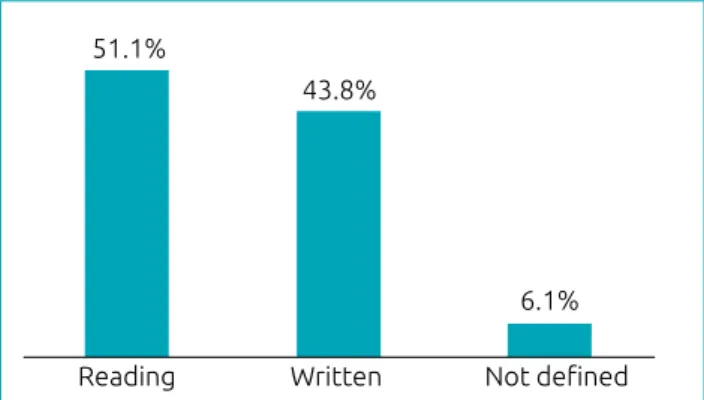
Among the manifestations of CAPD present in the sample, as shown in Figure 1, the cognitive functions of auditory figure‑background ability (83.0%), selective auditory attention (75.9%), and auditory comprehension of complex orders (68.8%) were the symptoms most fre‑ quently mentioned by parents or guardians. There were also reports related to school problems, with 62.3% of the families reporting one or more complaints related to their child’s learning. Among the complaints, difficulties in reading (51.1%) and writing (43.8%) were the most frequent (Figure 2).
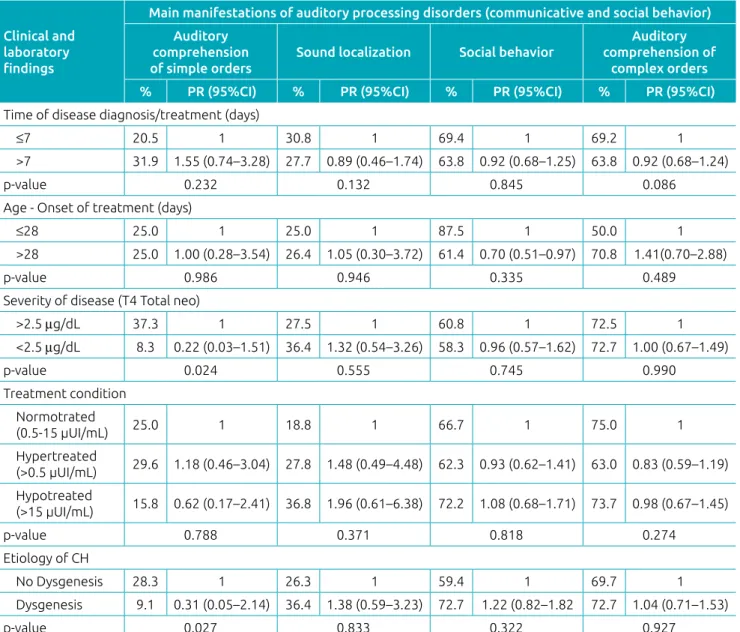
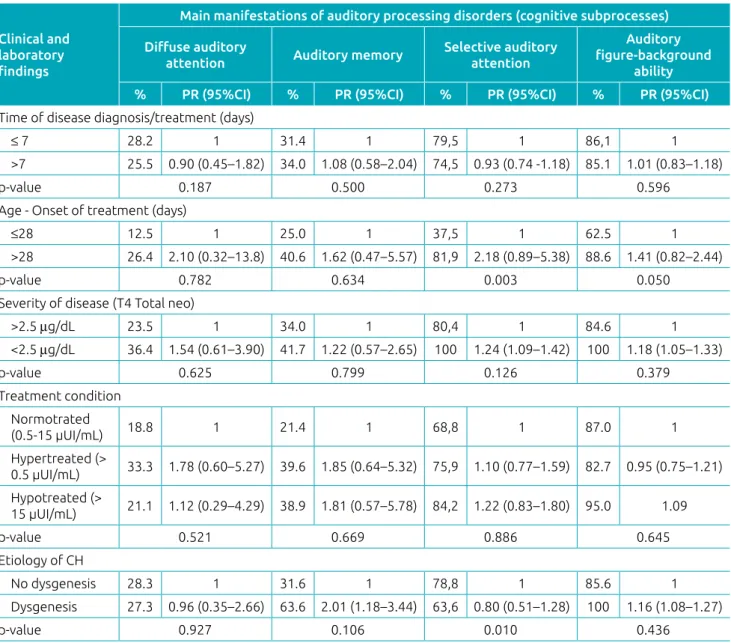
Tables 1 and 2 show the manifestations of CAPD in indi‑ viduals with CH, and the strength of associations with clin‑ ical, phenotypic and laboratory variables. It was possible to verify that the patient’s age at the onset of treatment, disease
Figure 1 Distribution of the relative frequency of auditory processing disorder symptoms in the different hearing‑related cognitive functions in individuals affected by congenital hypothyroidism (n=112).
Auditory comprehension (simple) Auditory Memory Social behavior Auditory comprehension (complex) Selective auditory attention Auditory figure‑background
ability
Sound localization Diffuse auditory attention
25.9% 26.7% 27.7% 33.0%
58.0% 68.8%
75.9% 83.0%
Figure 2 Relative frequency of difficulties at school in
individuals affected by congenital hypothyroidism (n=112).
Reading 51.1%
43.8%
6.1%
Written Not defined
severity, and etiology of the CH were identified as having sig‑ nificant associations, with reports of difficulty in understand‑ ing simple orders, selective auditory attention and auditory figure‑background ability.
Tables 1 and 2 show that the highest prevalence of symptoms reported were also centered on the cognitive abilities of selec‑ tive auditory attention and auditory figure‑background ability, the latter having a strong association with all of the clinical, phenotypic, and laboratory variables analyzed. Although there was a strong association between the irregular treatment of CH with almost all of the CAPD‑related symptoms reported, it is worth mentioning that hypotreatment was the most evident among the associations.
DISCUSSION
The present study investigated the presence of CAPD mani‑ festations in individuals with HC by collecting quantitative information on signs and symptoms that showed impairments in auditory‑related cognitive functions. These were more rel‑ evant in children whose clinical and laboratory variables were in disagreement and who had a good prognosis of the treat‑ ment of the disease.
Although it has been extensively discussed in the litera‑ ture, the pathogenesis of CAPD is not yet well‑elucidated. Nevertheless, the symptoms and mechanisms of CAPD are well‑known and well‑described, and one or more alterations in hearing‑related cognitive functions have been shown to suggest
Table 1 Strength of association between clinical‑laboratory variables and the main symptoms of auditory processing disorders (communicative and social behavior) in the participants of the study (n=112).
Clinical and laboratory
findings
Main manifestations of auditory processing disorders (communicative and social behavior)
Auditory comprehension of simple orders
Sound localization Social behavior
Auditory comprehension of
complex orders
% PR (95%CI) % PR (95%CI) % PR (95%CI) % PR (95%CI) Time of disease diagnosis/treatment (days)
≤7 20.5 1 30.8 1 69.4 1 69.2 1
>7 31.9 1.55 (0.74–3.28) 27.7 0.89 (0.46–1.74) 63.8 0.92 (0.68–1.25) 63.8 0.92 (0.68–1.24)
p‑value 0.232 0.132 0.845 0.086
Age ‑ Onset of treatment (days)
≤28 25.0 1 25.0 1 87.5 1 50.0 1
>28 25.0 1.00 (0.28–3.54) 26.4 1.05 (0.30–3.72) 61.4 0.70 (0.51–0.97) 70.8 1.41(0.70–2.88)
p‑value 0.986 0.946 0.335 0.489
Severity of disease (T4 Total neo)
>2.5 μg/dL 37.3 1 27.5 1 60.8 1 72.5 1
<2.5 μg/dL 8.3 0.22 (0.03–1.51) 36.4 1.32 (0.54–3.26) 58.3 0.96 (0.57–1.62) 72.7 1.00 (0.67–1.49)
p‑value 0.024 0.555 0.745 0.990
Treatment condition Normotrated
(0.5‑15 µUI/mL) 25.0 1 18.8 1 66.7 1 75.0 1
Hypertreated
(>0.5 µUI/mL) 29.6 1.18 (0.46–3.04) 27.8 1.48 (0.49–4.48) 62.3 0.93 (0.62–1.41) 63.0 0.83 (0.59–1.19) Hypotreated
(>15 µUI/mL) 15.8 0.62 (0.17–2.41) 36.8 1.96 (0.61–6.38) 72.2 1.08 (0.68–1.71) 73.7 0.98 (0.67–1.45)
p‑value 0.788 0.371 0.818 0.274
Etiology of CH
No Dysgenesis 28.3 1 26.3 1 59.4 1 69.7 1
Dysgenesis 9.1 0.31 (0.05–2.14) 36.4 1.38 (0.59–3.23) 72.7 1.22 (0.82–1.82 72.7 1.04 (0.71–1.53)
p‑value 0.027 0.833 0.322 0.927
this disorder.13 When these alterations occur at an early age,
even if they are subtle, they may compromise the development of language and learning.14,15
In this study, the magnitude of the prevalence of symp‑ toms associated with CAPD in CH was associated with factors such as: age over 28 days at the onset of treatment, severity of hormone deficiency, disease etiology, treatment condition during hormonal follow‑up, and to a lesser extent, the time since diagnosis of the disease, and time of the disease treat‑ ment, which was different from some studies.16,17 This differ‑
ence may be related to the mean age of the sample, which was lower than that in most of the other similar studies. In the literature, these factors are related to the severity of changes
in the overall development of this population,17,18 especially
when the onset of treatment is delayed, and/or hormone defi‑ ciency is more severe, causing deleterious effects on cognitive and motor functions.16,17
In addition, the etiology of CH and the conditions of treatment have a direct influence on language alterations19,20
and hearing.21 Particularly, regarding the etiological factor, a
higher prevalence of no dysgenesis was observed. These were probably cases of dysormonogenesis. In the literature, most cases of CH (85%) are related to dysgenesis.2 This differ‑
ence could be related to the fact that it was not possible to identify the cases of dysormonogenesis using the perchlorate test, since the institution where the research was conducted
Table 2 Association between clinical‑laboratory variables and the main symptoms of auditory processing disorders (cognitive subprocesses) in the participants of the study (n=112).
Clinical and laboratory
findings
Main manifestations of auditory processing disorders (cognitive subprocesses)
Diffuse auditory
attention Auditory memory
Selective auditory attention
Auditory
figure‑background
ability
% PR (95%CI) % PR (95%CI) % PR (95%CI) % PR (95%CI)
Time of disease diagnosis/treatment (days)
≤ 7 28.2 1 31.4 1 79,5 1 86,1 1
>7 25.5 0.90 (0.45–1.82) 34.0 1.08 (0.58–2.04) 74,5 0.93 (0.74 ‑1.18) 85.1 1.01 (0.83–1.18)
p‑value 0.187 0.500 0.273 0.596
Age ‑ Onset of treatment (days)
≤28 12.5 1 25.0 1 37,5 1 62.5 1
>28 26.4 2.10 (0.32–13.8) 40.6 1.62 (0.47–5.57) 81,9 2.18 (0.89–5.38) 88.6 1.41 (0.82–2.44)
p‑value 0.782 0.634 0.003 0.050
Severity of disease (T4 Total neo)
>2.5 μg/dL 23.5 1 34.0 1 80,4 1 84.6 1
<2.5 μg/dL 36.4 1.54 (0.61–3.90) 41.7 1.22 (0.57–2.65) 100 1.24 (1.09–1.42) 100 1.18 (1.05–1.33)
p‑value 0.625 0.799 0.126 0.379
Treatment condition Normotrated
(0.5‑15 µUI/mL) 18.8 1 21.4 1 68,8 1 87.0 1
Hypertreated (>
0.5 µUI/mL) 33.3 1.78 (0.60–5.27) 39.6 1.85 (0.64–5.32) 75,9 1.10 (0.77–1.59) 82.7 0.95 (0.75–1.21) Hypotreated (>
15 µUI/mL) 21.1 1.12 (0.29–4.29) 38.9 1.81 (0.57–5.78) 84,2 1.22 (0.83–1.80) 95.0 1.09
p‑value 0.521 0.669 0.886 0.645
Etiology of CH
No dysgenesis 28.3 1 31.6 1 78,8 1 85.6 1
Dysgenesis 27.3 0.96 (0.35–2.66) 63.6 2.01 (1.18–3.44) 63,6 0.80 (0.51–1.28) 100 1.16 (1.08–1.27)
p‑value 0.927 0.106 0.010 0.436
does not perform this procedure. However, in the last two decades, studies22 have shown an increased frequency of
CH diagnosis with the thyroid gland in situ, probably due to the earlier detection and onset of treatment. This is asso‑ ciated with a higher dose of levothyroxine sodium (T‑L4), resulting in the early normalization of serum levels of TH in screening programs. Thus, there is evidence that dysor‑ monogenesis (no dysgenesis), a less severe form of the dis‑ ease, is associated with a higher risk and severity of hearing loss,21,23 but thyroid agenesis is more directly related to lan‑
guage disorders24, probably because it has more significant
influence on the cognitive functions of central auditory pro‑ cessing, such as auditory memory abilities, sound localiza‑ tion, auditory figure‑background ability, and auditory com‑ prehension of complex orders, according to the prevalence of symptoms found and associated with this clinical aspect in the present study.
The aforementioned alterations are dependent on the tim‑ ing of TH deficiency in the brain areas responsive to percep‑ tual processes, and may be primary to CAPD, such as audi‑ tory dysfunctions, or secondary to CAPD, such as language and cognitive alterations. These findings are in agreement with symptom associations related to cognitive function defi‑ cits involved in central auditory processing, with risk factors in CH, and with a higher frequency of symptoms related to cognitive figure‑background ability, selective auditory atten‑ tion, and auditory memory in the individuals that are the most exposed.
There were also significant records of signs and symptoms related to social and communicative behavioral aspects, with a positive association between the prevalence of those exposed to risk factors for CH, compared to non‑exposed individu‑ als, especially in patients with frequent episodes of hypotreat‑ ment. This finding is particularly important as it signals that the time periods when the TSH is below the cut‑off point during treatment is cause for concern, because it is harmful to CNS. This is different than transient hyperthyroxinemia, which is usually common during treatment.25 Thus, it is
imperative for all health professionals involved in the treat‑ ment of CH to be aware of and pay attention to hypotreat‑ ment in their patients.
As a result of the significantly high frequency of symp‑ toms of cognitive function changes in the present study, complaints related to children’s academic performance were moderately prevalent in the sample, demonstrating that the CAPDs are related to the learning disorders14 that are com‑
mon in children with CH.20 These findings suggested a delay
in the maturation of the cognitive functions related to hear‑ ing in CH, and the school difficulties secondary to the lags in
auditory processing ‑ more specifically, the functions regard‑ ing figure‑background ability, selective attention and auditory memory ‑ were leading to problems in learning, especially in reading and writing.26
Some studies have reported an association between CH and attention and memory problems, contributing to spe‑ cific learning disorders.17,20 Because attention is a multi‑
modal process, it is important for school performance,27 and
it is impaired when a child has difficulties concentrating on a target stimulus for a given period. In central auditory pro‑ cessing disorders, children show a change in directed atten‑ tion, are easily distracted, and have difficulties understanding speech when there is noise in the background. Therefore, they often have low academic performances.28 Likewise, memory
mechanism deficits interfere with academic performance. This type of cognitive function is essential in all learning pro‑ cesses, given its role in the storage of acquired information.29
The lack of or the decrease in TH has a negative influence on hippocampus functions and may be associated with changes in memory, since working memory is one of the most com‑ promised functions.30,31
Furthermore, according to the results of the present study, damage to communicative aspects was shown in CH, as a consequence of the symptoms related to hearing difficulties and difficulties in comprehending complex orders. The lit‑ erature reports that a change in hearing‑related cognitive functions may lead to difficulty in understanding speech, because it interferes with the ability to decode phonemic aspects of speech.32 The communicative performance of indi‑
viduals with CH is often altered,18,24 with a predominance
of a delay in oral language acquisition, difficulties in under‑ standing speech, phonetic and phonological deviations, the morphosyntactic structure, and lags in naming and acquir‑ ing vocabulary.18,19,29,33.
This study showed that CAPD may be present in children with CH, with a strong association between the presence of CAPD symptoms and clinical and laboratory indicators of variables related to a non‑optimal prognosis of the disease. Thus, the study verified the relevance of evaluating and moni‑ toring central auditory processing in this population.
according to their symptoms, in order to determine the relevance of evaluating hearing‑related cognitive functions in this population. The results of the research may be used to encourage further investigation on the subject of decodification of acoustic messages in patients with thyroid hypofunction. There is a need for new studies in the area that use standard verbal and non‑verbal stimuli to evaluate hearing‑related cognitive functions, and event‑related cortical auditory evoked potentials (P300), which provide more support in differential diagnoses.
In conclusion, the results suggested that CH could be a risk factor for the development of CAPD considering the high frequency of lag symptoms in cognitive functions
related to central auditory processing, especially in auditory attention, figure‑background ability and auditory memory. Furthermore, according to the findings, the communicative, behavioral and school aspects may be impaired in individuals with CH, and the degree of severity of the lags was strongly associated with clinical and laboratory factors related to hor‑ monal follow‑up.
Funding
This study did not receive funding.
Conflict of interests
The authors declare no conflict of interests.
REFERENCES
1. American Academy of Pediatrics (AAP); American Thyroid Association (ATA); Lawson Wilkins Pediatric Endocrine Society (LWPES). Update of newborn screening and therapy for congenital hypothyroidism. Pediatrics. 2006;117:2290‑303.
2. Jain V, Argawal R, Deorari AK, Paul VK. Congenital hypothyroidism. Indian J Pediatr. 2008;75:363‑7.
3. Ramos HE, Nesi‑Franca S, Maciel RM. New aspects of genetics and molecular mechanisms on thyroid morphogenesis for the understanding of thyroid dysgenesia. Arq Bras Endocrinol Metabol. 2008;52:1403‑15.
4. C h i a m o l e r a M I , W o n d i s f o r d F E . M i n i r e v i e w : Thyrotropin‑releasing hormone and the thyroid hormone feedback mechanism. Endocrinology. 2009;150:1091‑6.
5. Rastogi MV, LaFranchi SH. Congenital hypothyroidism. Orphanet J Rare Dis. 2010;5:17.
6. Rovet JF. Congenital hypothyroidism: long‑term outcome. Thyroid. 1999;9:741‑8.
7. Krude H, Kühnen P, Biebermann H. Treatment of congenital thyroid dysfunction: Achievements and challenges. Best Pract Res Clin Endocrinol Metab. 2015;29:399‑413.
8. Dow‑Edwards, Crane AM, Rosloff B, Kennedy C, Sokoloff L. Local cerebral glucose utilization in the adult cretinous rat. Brain Res. 1986;373:139‑45.
9. Friauf E, Wenz M, Oberhofer M, Nothwang HG, Balakrishnan V, Knipper M, et al. Hypothyroidism impairs chloride homeostasis and onset of inhibitory neurotransmission in developing auditory brainstem and hippocampal neurons. Eur J Neurosci. 2008;28:2371‑80.
10. Machado SF. Processamento auditivo. In: Machado SF, editor. Processamento auditivo: uma nova abordagem. São Paulo: Ed Plexus; 2003. p.79‑120.
11. Erber NP. Auditory training. In: Washington DC. Alexander Graham Bell Association for the Deaf. Florida; 1982. p. 22‑5.
12. Pereira LD. Processamento auditivo central: abordagem passo a passo. In: Pereira LD, Schochat E. Processamento
auditivo central: manual de avaliação. São Paulo: Lovise; 1997. p. 49‑60.
13. Cox CL, McCoy SL, Tun PA, Wingfield A. Monotic auditory processing disorder tests in the older adult population. J Am Acad Audiol. 2008;19:293‑308.
14. Ferreira MI, Mello AM. Comorbidade entre transtorno de déficit de atenção e hiperatividade e distúrbio do processamento auditivo. Rev Fonoaudiol Brasil. 2006;4:1‑3.
15. Quintas VG, Attoni TM, Keske‑Soares M, Mezzomo CL. Auditory processing and phonological awareness in children with normal and deviant speech development. Pró‑Fono. 2010;22:497‑502.
16. Rovet JF. Children with congenital hypothyroidism and their siblings: do they really differ? Pediatrics. 2005; 115:e52‑7.
17. Bongers‑Schokking JJ, Keizer‑Schrama SM. Influence of timing and dose of thyroid hormone replacement on mental, psychomotor, and behavioral development in children with congenital hypothyroidism. J Pediatr. 2005;147:768‑74.
18. Bargagna S, Astrea G, Perelli V, Rafanelii V. Neurophychiatric outcome in patients with congenital hypothyroidism precautiously treated: risk factors analysis in a group of patients from Tuscany. Minerva Pediatr. 2006; 58:279‑87.
19. Gejão MG, Lamônica DA. Development skills in children with congenital hypothyroidism: focus on communication. Pró‑Fono R Atual Cient. 2008;20:25‑30.
20. Gejão MG, Ferreira AT, Silva GK, Anastácio‑Pessan FL, Lamônica DA. Communicative and psycholinguistic abilities in children with phenylketonuria and congenital hypothyroidism. J. Appl Oral Sci. 2009;17:69‑75.
22. Deladoëy J, Ruel J, Giguère Y, Van Vliet G. Is the incidence of congenital hypothyroidism really increasing? A 20‑year retrospective population‑based study in Quebec. J Clin Endocrinol Metab. 2011;96:2422‑29.
23. Hashemipour M, Hovsepian S, Hashemi M, Amini M, Kelishadi R, Sadeghi S. Hearing impairment in congenitally hypothyroid patients. Iran J Pediatr. 2012;22:92‑6.
24. Bargagna S, Canepa G, Costagli C, Dinetti D, Marcheschi M, Millepiedi S, et al. Neuropsychological follow‑up in early‑treated congenital hypothyroidism: a problem‑oriented approach. Thyroid. 2000;10:243‑9.
25. Nascimento ML. Current situation of neonatal screening for congenital hypothyroidism: criticisms and perspectives. Arq Bras Endocrinol Meta. 2011;55:528‑33.
26. American Speech and Hearing Association ‑ ASHA [homepage on the Internet]. Central auditory processing disorders. Technical report; 2005 [cited 2014 Mar 11]. Available from: https://www.asha.org/policy/TR2005‑00043/
27. Gomes H, Molholm S, Christodoulou C, Ritter W, Cowan N. The development of auditory attention in children. Front Biosci. 2000;1:108‑20.
28. Simon LF, Rossi AG. Auditory processing screening in school children from 8 to 10 years old. Psicol Esc Educ. 2006;10:293‑304.
29. Rotta NT, Guardiola A. Distúrbios de aprendizagem. In: Diament A, Cypel S. Neurologia infantil. 3rd ed. São Paulo: Atheneu; 1996. p.1062‑74.
30. Wheeler SM, Willoughby KA, McAndrews MP, Rovet JF. Hippocampal size and memory functioning in children and adolescents with congenital hypothyroidism. J Clin Endocrinol Metab. 2011;96:E1427‑34.
31. Wheeler SM, McAndrews MP, Sheard ED, Rovet J. Visuospatial associative memory and hippocampal functioning in congenital hypothyroidism. J Int Neuropsychol Soc. 2012;18:49‑56.
32. Bellis TJ. Assessment and management of central auditory processing disorders: from science to practice. San Diego: Singular Publishing Group; 1996.
33. Lamônica DA, Gejão MG, Silva GK. Linguagem receptiva e vocabulário de crianças com hipotireoidismo congênito. Proceedings of the XIV Congresso Brasileiro de Fonoaudiologia, Salvador–BA; 2006. p. 257.