Míriam dos Anjos SantosI Bruno Esteves TávoraII Sergio KoideIII
Eloisa Dutra CaldasIV
I Programa de Pós-Graduação em Ciências da Saúde. Faculdade de Ciências da Saúde. Universidade de Brasília. Brasília, DF, Brasil II Programa de Pós-Graduação em
Tecnologia Ambiental e Recursos Hídricos. Universidade de Brasília. Brasília, DF, Brasil III Departamento de Engenharia Civil e
Ambiental. Universidade de Brasília. Brasília, DF, Brasil
IV Faculdade de Ciências da Saúde. Universidade de Brasília. Brasília, DF, Brasil Correspondence:
Eloisa Dutra Caldas
Laboratório de Toxicologia. Curso de Ciências Farmacêuticas. Faculdade de Ciências da Saúde. Universidade de Brasília. Campus Universitário Darci Ribeiro.
70910-900 Brasília, DF, Brasil E-mail: [email protected] Received: 5/24/2012 Approved: 9/9/2012
Article available from: www.scielo.br/rsp
Human risk assessment of
benzene after a gasoline station
fuel leak
Avaliação de risco humano a benzeno
após vazamento de combustível em
posto de gasolina
ABSTRACT
OBJECTIVE: To assess the health risk of exposure to benzene for a community
affected by a fuel leak.
METHODS: Data regarding the fuel leak accident with, which occurred in
the Brasilia, Federal District, were obtained from the Fuel Distributor reports provided to the environmental authority. Information about the affected population (22 individuals) was obtained from focal groups of eight individuals. Length of exposure and water benzene concentration were estimated through
a groundwater fl ow model associated with a benzene propagation model. The
risk assessment was conducted according to the Agency for Toxic Substances and Disease Registry methodology.
RESULTS: A high risk perception related to the health consequences of the
accident was evident in the affected community (22 individuals), probably due to the lack of assistance and a poor risk communication from government authorities and the polluting agent. The community had been exposed to
unsafe levels of benzene (> 5 μg/L) since December 2001, fi ve months before
they reported the leak. The mean benzene level in drinking water (72.2 μg/L)
was higher than that obtained by the Fuel Distributer using the Risk Based
Corrective Action methodology (17.2 μg/L).The estimated benzene intake from
the consumption of water and food reached a maximum of 0.0091 μg/kg bw/
day (5 x 10⁻⁷ cancer risk per 106 individuals). The level of benzene in water
vapor while showering reached 7.5 μg/m3 for children (1 per 104 cancer risk).
Total cancer risk ranged from 110 to 200 per 106 individuals.
CONCLUSIONS: The population affected by the fuel leak was exposed to
benzene levels that might have represented a health risk. Local government authorities need to develop better strategies to respond rapidly to these types of accidents to protect the health of the affected population and the environment.
DESCRIPTORS: Benzene, toxicity. Gasoline, adverse effects. Chemical
The most signifi cant sources of environmental conta-mination by hydrocarbons in urban areas are fuel
leaks and/or spills at gasoline stations.4,13 Fuel leaks
occur mainly due to the lack of tightness in the fuel storage system, corrosion in the metal structures of the tanks and pipes, and inadequate operational
proce-dures.9 Hydrocarbons are the most frequently group
of compounds found in contaminated areas, mainly
benzene and toluene.17 Benzene is a well known human
carcinogen, with its action spreading throughout the entire hematologic system, causing depression of the bone marrow and pancitopenia, and has been frequently
detected in occupationally exposed workers.a
RESUMO
OBJETIVO: Avaliar os riscos à saúde da exposição ao benzeno de comunidade
afetada por acidente de vazamento de combustível.
MÉTODOS: Dados de acidente de vazamento de combustível ocorrido em
Brasília, DF, em 2002, foram obtidos dos relatórios produzidos pelo distribuidor de combustível e submetidos a autoridade ambiental. Informação sobre a população afetada foi obtida em grupos focais com oito participantes. Foram estimados o tempo de exposição e concentração de benzeno na água usando
modelo de fl uxo subterrâneo acoplado a outro de transporte. A avaliação de
risco foi conduzida de acordo com a metodologia da Agência de Registro de
Substâncias Tóxicas e Doenças (Agency for Toxic Substances and Disease
Registry).
RESULTADOS: Alta percepção de risco à saúde relacionada ao acidente foi
observada na população afetada (22 indivíduos), provavelmente devido à falta
de assistência e à comunicação de risco defi ciente do governo e agente poluidor.
A comunidade esteve exposta a níveis inseguros de benzeno na água (> 5 μg/L)
a partir de dezembro de 2001, cinco meses antes de ser reportado o vazamento.
A concentração média de benzeno na água consumida (72,2 μg/L) foi maior
que aquela estimada pelo distribuidor usando a metodologia Ação Corretiva
Baseada em Risco (Risk Based Corrective Action) (17,2 μg/L). A ingestão
estimada de benzeno pelo consumo de água e frutas alcançou 0,0091 μg/kg pc/
dia (risco de 5 x 10⁻⁷ câncer per 106 indivíduos). O nível de benzeno no vapor
d´água durante o banho atingiu 7,5 μg/m3 para crianças (risco de câncer de
até 1 per 104). O risco carcinogênico total foi de 110 a 200 per 106 indivíduos.
CONCLUSÕES: A população afetada pelo vazamento de combustível esteve
exposta a concentração de benzeno que pode ter representado risco à saúde. Autoridades governamentais necessitam desenvolver estratégias mais efetivas para rapidamente responder a esses acidentes e proteger a saúde da população afetada e do meio ambiente.
DESCRITORES: Benzeno, toxicidade. Gasolina, efeitos adversos.
Vazamento de Resíduos Químicos. Acidentes Químicos. Exposição Ambiental. Poluição da Água. Medição de Risco.
INTRODUCTION
The use of ethanol as a fuel or added to other fuels has proven to be a global trend. The addition of ethanol to gasoline has been subject to successive governmental regulation in Brazil, ranging from 18 to 25% (Law 12490/2011). In the event of a gasoline leak, the presence of ethanol increases the transfer of hydrocarbons to the liquid phase, increasing the concentration of contaminants in the groundwater.
This process, known as cosolvency,6 affects the
transfer of the plume, reducing the natural biode-gradation of the contaminants, and increasing their
persistence in the groundwater.15,19
Methods of evaluating the risk of the presence of contaminants in the environment have been developed
by the US Environmental Protection Agency,b by the
Agency for Toxic Substances and Disease Registry
(ATSDR)c and by the American Society for Testing
and Materials that developed the Risk Based Corrective
Action (RBCA) method.d
The RBCA method has been used in some Brazilian
studies,e while the Ministry of Health, has
recom-mended using the ATSDR methodology.f The lack or
absence of environmental and health data has hampered the assessment of human health risks in contaminated areas. Studies on environmental contamination and human exposure have been conducted for 2.7% of the Brazilian areas reported to have contaminated or
poten-tially contaminated soil,g mostly restricted to confi
r-ming the contamination of the groundwater9,18 with no
quantitative assessment of the exposure and risk.
This study aimed to assess the health risk to a commu-nity affected by a fuel leak reported in 2002 in the Federal District, Brazil
METHODS
Environmental data used to characterize the residen-tial area affected by the fuel leak in the Brasilia, DF, 2002, and data on benzene levels in soil, groundwater and food grown in the area were obtained from nine reports produced by the Fuel Distributor (June 2002 to January 2003; not published) submitted to the Federal District’s environmental agency, and from the gasoline station’s licensing documentation. Soil samples were collected at 1-2 m deep and are not relevant to this study. Groundwater samples were collected between July
and October 2002 from shallow well 1 (fi ve samples),
shallow well 2 (fi ve samples) and shallow well 3 (four
samples) (Figure 1), and analyzed according to the U.S.EPA Method 8260, using gas chromatography coupled to a mass spectrometer (GC/MS), with a limit
of detection (LOD) of 1 μg/L. Benzene was analyzed
in green mango and pitanga samples, collected in
the residential area in November 2002, by GC/MS
(U.S.EPA Method 5021; LOD of 1.0 μg/kg). Results of
routine blood biochemical exams performed on several occasions between May 2002 and September 2004 were obtained from the affected community. A suspicion protocol considered individuals in a critical situation when biochemical alterations were observed in at least
two consecutive exams over a period of 60 days.f
Two focal group sessions, with four individuals each, were conducted in 2007 to assess the concerns of the population of the affected community about the fuel leak. The individuals responded to a 20-item questio-nnaire, with questions on social and economic issues. The sessions were guided by the questions: How
did you fi nd out about the fuel leak?; What were the
concerns and doubts you had during the leakage event?; How were these concerns and doubts addressed by the government and by the polluter?; What health problems did you associate with exposure?; What type of health care was provided?; What are your current doubts and concerns? The statements were recorded, transcribed
without editing and grouped by specifi c theme
accor-ding to the criteria of Rabiee.16
This part of the study was approved by the Ethics Committee of the “Faculdade de Ciências da Saúde da Universidade de Brasilia” (Process nº 037/2007).
The collection of water samples from the shallow wells for analysis began in July 2002, two months after the accident was reported. The period of expo-sure and the benzene concentration in water were estimated using a time-space evolution of the
conta-minant plume by a tridimensional groundwater fl ow
model coupled to a contaminant transport model. The
modeling process used the Visual Modfl ow v 4.3.h
The hydraulic parameters of the aquifer (hydraulic conductivity, specific storage and recharge) used for the flow model were obtained from the Fuel Distributor reports. An automatic calibration of the
hydraulic parameters was performed for the best fi tting
of a time series of piezometric head values observed at the 29 installed monitoring wells (some shown in
Figure 1). Calibration of the model was confi rmed
by comparing the response of the calibrated model with values observed at the 16 wells not used in the stage prior to calibration. The gradient that allowed
b United Sates Environmental Protection Agency. Exposure Factors Handbook: 2011 edition. Washington (DC); 2011 [cited 2013 May 16]. Available from: http://www.epa.gov/ncea/efh/pdfs/efh-complete.pdf
c United States Department of Health and Human Services Public Health Service. Agency for Toxic Substances and Disease Registry. Public health assessment guidance manual (2005 Update). Atlanta; 2005 [cited 2013 May 16]. Available from: http://www.atsdr.cdc.gov/hac/ phamanualindex.html
d American Society for Testing and Materials. Standard guide for risk-based corrective action applied at petroleum release sites. ASTM E-1739-95. Philadelphia; 2010. Available from http://enterprise.astm.org/fi ltrexx40.cgi?+REDLINE_PAGES/E1739.htm
e Michels C, Schneider MR, Coelho JIE, Corseuil HX. Avaliação de risco à saúde humana em terminais de armazenamento de petróleo e derivados: estudos de casos. In: Anais do XIII Congresso Brasileiro de Águas Subterrâneas, Cuiabá, BR. Cuiabá: Associação Brasileira de Águas Subterrâneas; 2004. v.1, p.1-12.
f Ministério da Saúde. Diretrizes para Elaboração de Estudo de Avaliação de Risco à Saúde Humana por Exposição a Contaminantes Químicos. Brasília (DF); 2006. Available from http://portal.saude.gov.br/portal/arquivos/pdf/diretrizes_avalicao_risco.pdf
g Bueno PC. Sistema de Informação de Vigilância em Saúde de Populações Expostas a Solo Contaminado (SISSOLO): análise dos dados de 2004 a 2008. Brasília (DF): Universidade de Brasília; 2008.
a source of contamination, a release mechanism, an exposure route (oral, dermal or inhalation), an
expo-sure point, and a potentially exposed population.c
The data available allowed the identifi cation of four
complete exposure pathways: water dermal contact, water consumption, fruit consumption and inhalation of water vapor during shower. In all cases, the source of contamination was the fuel station, the exposure point was the affected residential area and the potentially exposed population the residents of the affected area. The release mechanism to water and food was the fate and transport of environmental contamination.
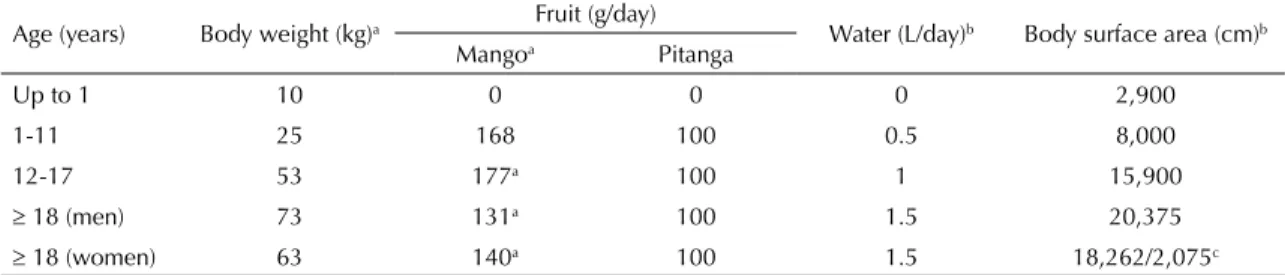
The daily benzene exposure doses from the consump-tion of water and food and from dermal absorpconsump-tion by contact with the water were estimated using
the standard equations in the ATSDR method.f To
estimate the intake from consumption of water and food, a frequency of seven days/week and a time of exposure estimated by the model (water) wwere considered and during October 2002 for the fruits (beginning of the harvest period), for a exposure over an entire lifetime (70 years). Consumption data for mangoes were obtained from the Brazilian Personal
Food Consumption data (consumers-only)i and one
the migration of the light non-aqueous phase liquid (LNAPL) was determined month to month. LNAPL, such as gasoline and fuel oil, do not mix well with
water and are less dense than water.14 The geometry of
the plume extracted from the Fuel Distributor reports was used to determine the mathematical contour conditions. The initial time for the transport model was determined through the inverse calculation based on the plume shapes for June 2002. The development of the benzene dissolved phase plume was simulated using the MT3DMS transport model present in the
Visual Modfl ow interface. The shape of the LNAPL
was used as mathematical boundary condition for the transport model. The contaminant transport model was calibrated in the inverse modeling using the benzene concentration found in shallow well 1 water
samples collected at fi ve sampling times in 2002
(July: 220 μg/L; August 09: 510 μg/L; September
24: 860 μg/L; October 30: 880 μg/L and November
05:1100 μg/L). The equilibrium concentration at the
interface between the LNAPL and the dissolved phase
was determined according to Corseuil and Fernandes.5
Five components of a complete exposure pathway need
to be identifi ed, according to the ASTDR methodology:
Figure 1. Water sampling points in the residential area affected by the fuel leak. Federal District, Brazil, 2002.
LEGEND
RESIDENTIAL AREA
GAS STATION
Storage
room
Supply area Highw
ay - BR 020 Shallow well Monitoring well House
House
House
House
House S40
S35 S5 S4
S17
S42
S41
3 2
1
daily serving of 100 g of pitanga was assumed for all
individuals ≥ 1 year (Table 1). The water and food
consumption by children < 1 year was considered to be zero, as nutrition needs relied only on breastfeeding. In the estimation of the exposure to benzene through water dermal contact, a 12-minute-exposure when bathing was considered, twice a day for children < 12 years, and once a day for adolescents and adults. An additional daily water exposure of two hours was considered for adult women for the contact of the hands and forearms during domestic work and handling of livestock and pets. Water permeability constant (25ºC) was 0.18 cm/
hour.a Body weight, water consumption and surface
data used in the estimates are also shown in Table 1.
The average concentration of benzene in the air while
showering was estimated according to López et al13
considering a 12-minute-shower, shower cubicle
volume of 2,000 L, water temperature of 35oC, shower
fl ow rate of 2.8 L/min, ventilation rate of 167 L/min and
benzene Henry constant of 0.191. The mean concen-tration of benzene in the water was estimated by the inverse model.
This study was approved by the Ethics Committee of the “Faculdade de Ciências da Saúde da Universidade de Brasilia” (Process 037/2007).
RESULTS AND DISCUSSION
Residents of an area in the vicinity of a gasoline station about 30 km from Brasilia, DF, reported the existence of a strong odor in the water collected in shallow well 1, located approximately 73 meters from the gasoline station supply area (Figure 1) to the local environmental agency and media in May 2002.The Fuel Distributor
(polluter) identifi ed a leak in one of the diesel pipes of
the underground fuel storage system. Volatile organic compounds, including BTEX (benzene, toluene, ethyl-benzene and xylenes), were detected in the soil of the diesel discharge area (14,000 mg/kg), next to the gasoline pump (6,720 mg/kg) and in the area behind the gasoline
station that received untreated effl uents (300 mg/kg).
Benzene and other contaminants were detected in shallow well 1 and in the monitoring wells S4, S5 and S35 (Figure 1). Remediation actions were taken at the gasoline station to restrain the LNAPL in June 2002, and the community stopped drinking water from the shallow wells. Another spill occurred in September 2002 and the population was removed from the area in October 2002, when the remediation actions taken at the residential area were terminated, with the removal of 1,361 liters of gasoline and 50 liters of diesel. Remediation actions
of the LNAPL at the gasoline station were fi nalized in
December of the same year, with the removal of 1,575 liters of gasoline and 68 liters of diesel. The remediation of the dissolved phase in the groundwater was concluded in the residential area in January 2007, and has remained active at the gasoline station area up until the conclusion of this study.
The affected residential area covered nearly 2 ha and,
at the time of the leak,25 there were four brick houses,
fruit trees, vegetable gardens, and chickens for local consumption. The water used for various purposes came from three shallow wells (Figure 1). Sewage was collected through a septic tank system, and solid waste was collected by the urban collection service. It was reported during the focal groups that the commu-nity in the residential area comprised 22 non-smoking
individuals, 14 adults (≥ 18 years), fi ve adolescents
(12 to 17 years), two children (one to 11 years) and a male baby < 1 year. Half of the individuals were female
and had college degrees, fi ve held jobs and three were
students. The predominant family income for this group was > 20 minimum monthly wage (MMW ~ US$ 146.00) and one person had private health insurance.
The initial concerns regarding the leak presented by the participants of focal groups referred to losses related to life style in a rural setting:
“(...) our dream is over”; “(...) we built this house... we began to realize we were going to lose it... where would we go with a bunch of small children.”
Table 1. Body weight, mean consumption of fruit and water, and body surface area for estimating exposure. Federal District, Brazil.
Age (years) Body weight (kg)a Fruit (g/day) Water (L/day)b Body surface area (cm)b Mangoa Pitanga
Up to 1 10 0 0 0 2,900
1-11 25 168 100 0.5 8,000
12-17 53 177a 100 1 15,900
18 (men) 73 131a 100 1.5 20,375
18 (women) 63 140a 100 1.5 18,262/2,075c
a Instituto Brasileiro de Geografi a e Estatística. Pesquisa de Orçamento Familiar 2008/2009. Brasília (DF); 2011. Available from: http://www.ibge.gov.br/home/estatistica/populacao/condicaodevida/pof/2008_2009/POFpublicacao.pdf
b United States Environmental Protection Agency. Exposure Factors Handbook: 2011 Edition. Washington (DC); 2011 [cited 2013 May 16]. (EPA/600/R-090/052F). Available from: http://www.epa.gov/ncea/efh/pdfs/efh-complete.pdf
An uneasiness that was later confi rmed “(...) I had to leave my house.”
Participants also manifested concerns associated with changes in health during the event:
“(...) itching... prostration... headaches... dizziness... nausea...wanting to vomit all the time... feeling bad... laziness (...) hypothyroidism... my period lasted almost 180 days... all the women gained weight (...) it was a
total mental mess”.
For one participant, exposure to benzene would cause
“death or leukemia after 20 years of exposure”.
The following statement refl ects the sense of frustration
of the group: “(...) I didn’t ask for this, I don’t want this. I didn’t give anyone the right to do this to me.” It became clear among the participants that there was “disregard” of the polluting agent and “lack of prepa-ration” of the government authorities in addressing the problem, generating feelings of “indignation,
helpless-ness, and abandonment”.
The participants reported changes in health, both during the occurrence of the leak and afterwards, mainly headaches, nausea, weight gain, emotional
changes, menstrual fl ow increase and prostration. It
is possible that some of these symptoms were psycho-somatic manifestations related to the emotional state and stress they were submitted to during the event. One mother stated that her baby, who was < 1 year at the time of the event, had lost weight and later had dental alterations.
Levels of benzene in five groundwater samples collected in shallow well 1 (Figure 1) ranged from
220 to 1,100 μg/L, 44 to 220 times the Brazilian
inter-vention and maximum levels of 5 μg/L (CETESB;j
Regulation 518/2004, Ministry of Health). Shallow well 1 was the only water source used by the indi-viduals from the residential area. Benzene was not detected in samples from shallow wells 2 and 3. The benzene concentration in groundwater found in this
study were higher than those reported by Forte et al9
in a residential shallow well affected by a fuel tank
leak in the Northern Brazil (34 μg/L).
Benzene was detected in one sample of pitanga
(254.4 μg/kg)1and in one green mango sample (3.0 μg/
kg) collected in the residential area. The Fuel Distributor reports do not contain information on the total number of fruit samples analyzed. These levels are higher than those reported in fresh fruit from non-contaminated areas
(background level) (< 0.5 μg/kg),20 and are most likely
due to soil contamination by the fuel tank leak.
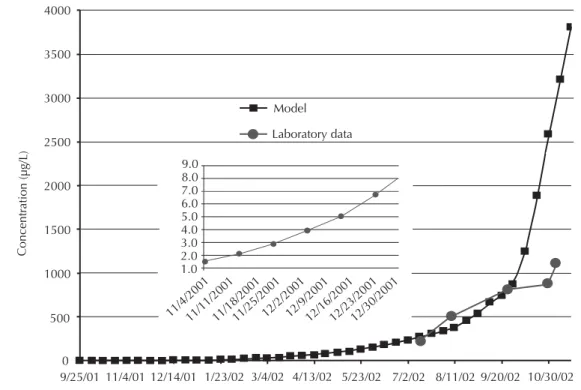
The exposure to unsafe levels of benzene in the water (>
5 μg/L; Regulation 518/2004, Ministry of Health)
esti-mated by the inverse model started on December 14 2001 (Figure 2). As the community stopped drinking the water in June 2002 and was removed from the area in October 2002, the community was exposed to benzene from water consumption for 195 days and from water dermal contact and water vapor inhalation for 315 days. The mean concentration of benzene in the water estimated by the model during the oral exposure period (range of
5.1 to 235.5 μg/) was 72.6 μg/L (95%CI 40.9;104.2).
During the dermal and inhalation exposure period
(ranging from 5.1 to 2,592 μg/L), the mean benzene
concentration was 358.8 μg/L (95%CI 155.5;562.0).
The 95th upper level confi dence intervals (95th UCL)
of the mean concentrations were used in the estimation
of the exposure to contaminated water: 104.2 μg/L
for consumption and 562 μg/L for dermal contact and
inhalation. The mean benzene concentration in the air while showering, estimated according to López et
al,13 was 7.5 μg/m3 for children (< 12 years) and 3.7
μg/m3 for adolescents and adults. Lindstrom et al12
found that benzene levels measured in the air from a gasoline-contaminated groundwater home containing
300 μg/L ranged from 758 to 1,670 μg/m3 while
showe-ring, indicating that the López et al13 equation may
underestimate concentrations in air while showering.
Total oral exposure (TEoral) ranged from 0.0076 to
0.009 μg/kg bw/day, mostly due to water consumption
(OEw) (> 98% for all age groups), representing 0.19 to
0.23 % of the benzene chronic reference dose (RfD) of
4 μg/kg bw (non-cancer risk) (Table 2). The
carcino-genic risks were estimated by multiplying the TEoral by
the upper limit of the risk interval per 1 million people
from the oral exposure to benzene (oral slope factor)
of 5.5 x 10⁻⁵/μg/kg bw day.k Cancer risk ranged from
4.2 x 10⁻⁷ to 5.0 x 10⁻⁷ (Table 2). The specifi c cancer
risk from the consumption of contaminated water was
estimated by comparing the 95th UCL of the mean
benzene concentration estimated by the inverse model
during the oral exposure period (104.2 μg/L) with the
specifi ed risk levels established by the USEPA. The
exposure represents the risk of 1 cancer per 104
inha-bitants (within the range of 100 to 1000 μg/L).k
Benzene doses from dermal exposure (DEw) ranged
from 0.0056 to 0.0130 μg/kg bw day (Table 2), higher
for children and adult women due to the longer time
j Companhia de Tecnologia de Saneamento Ambienta (BR). Decisão de Diretoria nº 195-2005- E, de 23 de novembro de 2005. Dispõe sobre a aprovação dos Valores Orientadores para Solos e Águas Subterrâneas no Estado de São Paulo – 2005, em substituição aos Valores Orientadores de 2001, e dá outras providências. Diario Ofi cial Uniao. 23 dez 2005 [cited 2013 May 16]. Available from: http://www.cetesb. sp.gov.br/Solo/relatorios/tabela_valores_2005.pdf
Figure 2. Benzene in water from shallow well 1- data obtained in the laboratory and estimated by the MODFLOW inverse model. Federal District, Brazil.
Model
Laboratory data
9/25/01
11/4/200111/11/2001 11/25/200111/18/200112/2/200112/9/200112/16/200112/23/200112/30/2001
11/4/01 12/14/01 1/23/02 3/4/02 4/13/02 5/23/02 7/2/02 8/11/02 9/20/02 10/30/02 4000
3500
3000
2500
2000
1500
1000
500
0
9.0 8.0 7.0 6.0 5.0 4.0 3.0 2.0 1.0 Concentr
ation (µg/L)
Table 2. Benzene exposure through different pathways and associated non-cancer and cancer risks as a consequence of the fuel leak. Federal District, Brazil.
Estimate Age group (years)
< 1 1 a 11 12 a 17 18 M 18 W Oral exposure - Slope factor: 5.5 x 10⁻⁵per µg/kg bw/day; RfD: 4 µg/kg bw dayb
OEwa, µg/kg bw/day 0 0.0080 0.0076 0.0080 0.0090
OEf, µg/kg bw/day 0 0.0002 0.0001 0.0001 0.0001
TEoral, µg/kg bw/day 0 0.0082 0.0077 0.0081 0.0091
% RfD 0 0.20 0.19 0.20 0.23
Cancer risk, per 106 inhab. 0 4.4 x 10⁻⁷ 4.2 x 10⁻⁷ 4.5 x 10⁻⁷ 5.0 x 10⁻⁷ Drinking water risk levela,b 0 1 per 104 1 per 104 1 per 104 1 per 104 Dermal exposure
DEw, µg/kg bw/day 0.0117 0.0130 0.0061 0.0056 0.0125 1% absorbed, µg/kg bw/day 1.2 x 10⁻⁴ 1.3 x 10⁻⁴ 6.1 x 10⁻⁵ 5.6 x 10⁻⁵ 1.2 x 10⁻⁴
% RfD 0.0029 0.0032 0.0015 0.0014 0.0031
Cancer risk, per 106 inhab. 1.6 x 10⁻⁷ 1.8 x 10⁻⁷ 8.3 x 10⁻⁸ 7.7 x 10⁻⁸ 1.7 x 10⁻⁷ Inhalation exposure - Unit risk: 7.8 x 10⁻⁶µg/m3; RfC: 30 µg/m3b
Cair, µg/m3 7.5 7.5 3.7 3.7 3.7
% RfC 25 25 12.3 12.3 12.3
Cancer risk, per 106 inhab. 1.8 1.8 1.8 1.8 1.8 Air risk levelb 1 per 105 to 1 per 104 1 per 105 1 per 105 1 per 105
Total cancer risk, per 106 110-200 110 110 110
OEw: dose of exposure from water consumption; OEf: dose of exposure from food consumption; TEoral: total oral dose of exposure; Cair: average concentration of benzene in air while showering, RfD: benzene chronic reference dose; RfC: benzene chronic reference concentration; DEw: dermal dose of exposure; M: men; W: women
a At 104.2 µg/L
they remained in contact with contaminated water. There is no reference dose or a quantitative estimate of carcinogenic risk for dermal exposure to benzene. As dermal absorption of benzene is about 1% of the
applied dose,j the non-cancer and cancer risks from
dermal exposure to benzene were estimated conside-ring that 1% of the DEw was absorbed. The dermal exposure represented a maximum of 0.0032% of the
oral RfD, with a maximum cancer risk of 1.8 x 10⁻⁷per
106 inhabitants (Table 2).
The mean benzene concentrations in the air while
showering (3.7 to 7.5 μg/m3) represented a maximum
of 25% of its chronic inhalation reference concentration
(RfC: 30 μg/m3) (Table 2). The cancer risk ranged from
1 per 105 to 1 per 104 inhabitants for children > 11 years
(air benzene concentration between 1.3 to 4.5 μg/m3
represents a risk level of 1 per 105 inhabitants).j
The total cancer risk from benzene from all expo-sure pathways ranged from 110 (adolescents and
adults) to 200 (children under 12) per 106, mainly
due to the consumption of water and inhalation while showering (Table 2). Cancer risks from dermal water contact and fruit consumption were negligible. These
levels are higher than those found by López et al13
(< 2.9 x 10⁻¹⁰ per 106 for children) for a Spanish
popula-tion living near an area where an oil leak occurred, with dermal exposure contributing to < 0.1% of the total risk.
The Fuel Distributer assessed the risk of the affected community from exposure to BTEX using the RBCA
Tier 2 Reverse Mode. The site-specifi c target level for
benzene in the ground water, above which there is a risk to human health (ASTM-1739/95), was estimated
to be 9.9 μg/L. The Reverse Model estimated that the
water consumed by the community had benzene level at
17.2 μg/L, lower than the level estimated in this study.
The indoor and outdoor benzene levels in the air were
estimated to be 1.8 and 640 μg/m3, respectively. Only
inhalation of water vapor during shower was considered in the present study, as it is the main source of indoor air
exposure.12 Outdoor air benzene concentration was not
estimated by the inverse model. The outdoor exposure to benzene through inhalation can be estimated using the outdoor benzene level estimated by the Distributer,
the ATSDR methodologyf and the exposure factors
recently estimated by the USEPA (inhalation rates and
maximum exposure times).b The exposure levels ranged
from 0.9 to 2.0 μg/kg bw/day (for children < 12), higher
than the TEoral, potentially increasing the total cancer
risk estimated previously.
The mathematical contour conditions of the RBCA methodology used by the fuel distributer to estimate the benzene concentration in water assumes constant
concentration and permanent fl ow, with transport by
advection and dispersion. The model used in this study adds cosolvency effect to the transport and decay and
retardation of the contaminant, considering a
hetero-geneous, anisotropic and transient fl ow aquifer. The
velocity distribution of groundwater fl ow was shown to
be a major factor infl uencing the shape and migration
velocity of the contaminant due to a system of
geolo-gical faults identifi ed and incorporated into the model.
Biochemical blood exams were performed on the affected community on several occasions between May, 2002 and September, 2004, with an average
of fi ve exams per person. Out of the 31 parameters
investigated in each exam, seven showed alterations: four related to the red blood cells (mycrocytosis, macrocytosis, decrease and increase of the mean corpuscular hemoglobin – MCH), one related to white blood cells (lymphocytopenia) and two related to the liver function (increased levels of alanine and aspartate aminotransferases). Lower MCH and lymphocytopenia were the most prevalent alterations. Six individuals
fi t the suspicion protocol (alterations in at least two
consecutive tests over 60 days): fi ve adult women (up
to six alterations), and the 6-month-old male baby
(fi ve alterations). Women have signifi cantly higher
risk for effects of benzene exposure than men due to
factors such as blood/air partition coeffi cient, higher
metabolism rate and body fat.2 Children have greater
body surface by weight (nearly three times more than adults), greater respiratory frequency per minute (65 times more than adults), and greater water and food consumption by body weight (more than two times that
of adults),a being also a population that should be given
special consideration in exposure studies.
The biochemical blood alterations in the affected community have been observed in individuals
chro-nically exposed to benzene in occupational settings.10
Duarte-Davidson et al,8 however, concluded, based
on human studies, that risk of leukemia or any other adverse health effect in the general population, infants and children at concentrations of exposure of 3.7-42
μg/m3 is likely to be small and probably not detectable
with current methods.
This study has many limitations, mainly related to the contaminant data used in the estimation of the doses of exposure through the different pathways. The risk asses-sment models used contain numerous uncertainties that are typically compensated for by conservative
assump-tions that lead to an overestimation of the risks.11 The
models used health parameters (RfD and cancer risk) for a chronic lifetime exposure, while the community evalu-ated in this study was exposed to benzene for < 7 months. Although urine analysis for biomarker of exposure to
benzene (trans-trans muconic acid) was conducted in
the affected population in September 2002, they were considered unreliable as they all gave negative results.
Background levels of trans-trans muconic acid in the
creatinine,7 similar to what has been reported for
non--smokers elsewhere.1,3 The residential area is confi ned
with a highway (Figure 1), and at least the benzene
exposure deriving from traffi c should have been detected.
CONCLUSIONS
The exposure to benzene after a gasoline station fuel leak may have caused adverse health effects in the population who used and consumed contaminated water. A high risk perception was evident within the community, probably due to the lack of assistance from government authorities and the polluting agent, which generated insecurity and mistrust.
Assessments of health effects due to environmental exposure to hydrocarbons and other contaminants are
still incipient in Brazil, mainly due to the lack of appro-priate data and trained personal. It is essential that local Brazilian authorities develop better strategies to rapidly respond to fuel leaks in order to protect the health of the affected population and the environment. Both health and environmental authorities need to establish a strong inter-institutional collaboration interface for conducting sound risk assessment studies.
ACKNOWLEDGMENTS
The authors declare that there are no confl icts of interest. 1. Aprea C, Sciarra G, Bozzi N, Pagliantini M, Perico
A, Bavazzano P, et al. Reference values of urinary trans, trans-muconic acid: Italian Multicentric Study. Arch Environ Contam Toxicol. 2008;55(2):329-40. DOI: http://dx.doi.org/10.1007/s00244-007-9119-9 2. Brown EA, Shelley ML, Fisher JW. A
pharmacokinetic study of occupational, and environmental benzene exposure with regard to gender. Risk Anal. 1998;18(2):205-13. DOI: http://dx.doi.org/10.1111/j.1539-6924.1998.tb00932.x
3. Chakroun R, Faidi F, Hedhili A, Kolsi M, Fehri S, Nouaigui H. Determination of urinary trans, trans-muconic acid reference values in general Tunisian population. Ann Biol Clin (Paris). 2009;67(2):163-9.
4. Chen Z, Huang GH, Chakma A. Risk assessment of a petroleum-contaminated site through a multi-phase and multi-component modeling approach. J Petrol Sci Eng. 2000;26(1-4):273-81. DOI: http://dx.doi.org/10.1016/S0920-4105(00)00041-3
5. Corseuil HX, Fernandes M. Effect of ethanol in increasing the solubility of aromatic compounds present in Brazilian gasoline. Rev Bras Eng San Amb. 1999;4:71-5.
6. Corseuil HX, Kaipper BIA, Fernandes M. Cosolvency effect in subsurface systems contaminated with petroleum hydrocarbons and ethanol. Water Res. 2004;38(6):1449-56. DOI: http://dx.doi.org/10.1016/j.watres.2003.12.015
7. de Paula FC, Silveira JN, Junqueira RG, Leite EM. Assessment of urinary trans, trans-muconic acid as a biomarker of exposure to benzene. Rev Saude Publica. 2003;37(6):780-5. DOI:
http://dx.doi.org/10.1590/S0034-89102003000600014
8. Duarte-Davidson R, Courage C, Rushton L, Levy L. Benzene in the environment: an assessment of the potential risks to the health of the
population. OccupEnviron Med. 2001;58(1):2-13. DOI:http://dx.doi.org/10.1136/oem.58.1.2
9. Forte EJ, Azevedo MS, Oliveira RC, Almeida R. Hydrocarbon contamination in groundwater: the case of Tupi Village, Porto Velho-RO. Quim Nova. 2007;30(7):1539-44. DOI:
http://dx.doi.org/10.1590/S0100-40422007000700008
10. Galbraith D, Gross SA, Paustenbach D. Benzene and human health: a historical review and appraisal of associations with various diseases. Crit Rev Toxicol. 2010;40(Suppl 2):1-46.
REFERENCES
11. Jamall IS, Willhite CC. Is benzene exposure from gasoline carcinogenic? J Environ Monit. 2008;10(2):176-87. DOI:http://dx.doi.org/10.1039/b712987d
12. Lindstrom AB, Highsmith VR, Buckley TJ, Pate WJ, Michael LC. Gasoline-contaminated ground water as a source of residential benzene exposure: a case study. J Expo Anal Environ Epidemiol. 1994;4(2):183-95.
13. López E, Schuhmacher M, Domingo JL. Human health risk of petroleum-contaminated groundwater. Environ Sci Pollut Res Int. 2008;15(3):278-88. DOI:http://dx.doi.org/10.1065/espr2007.02.390
14. National Research Council. Alternatives for ground water cleanup: Washington (DC): National Academies Press; 1994
15. Powers SE, Hunt CS, Heermann SE, Corseuil HX, Rice D, Alvarez PJJ. The transport and fate of ethanol, and BTEX in ground water contaminated by gasohol. Critical Rev Environ Sci Technol. 2001;31(1):79-123. DOI:http://dx.doi.org/10.1080/20016491089181
16. Rabiee F. Focus-group interview and data analysis. Proc Nutr Soc. 2004;63(4):655-60. DOI:http://dx.doi.org/10.1079/PNS2004399
17. Rego ECP, Pereira Netto AD. PAHs, and BTEX in ground water of gasoline stations from Rio de Janeiro city, Brazil. Bull Environ Contam Toxicol. 2007:79(6):660-4. DOI: http://dx.doi.org/10.1007/s00128-007-9300-x
18. Silva RL, Barra CM, Monteiro TCN, Brilhante OM. Estudo da contaminação de poços rasos por combustíveis orgânicos e possíveis consequências para a saúde pública no Município de Itaguaí, Rio de Janeiro, Brasil. Cad Saude Publica.
2002;18(6):1599-607. DOI: http://dx.doi.org/10.1590/ S0102-311X2002000600014
19. Tiburtius ERL, Zamora PP, Leal ES. Contaminação de águas por BTXs e processos utilizados na remediação de sítios contaminados. Quim Nova. 2004;27(3):441-6. DOI:
http://dx.doi.org/10.1590/S0100-40422004000300014 20. Vinci RM, Jacxsens L, Loco J, Matsiko E, Lachat C,