www.spsp.org.br
REVISTA PAULISTA
DE PEDIATRIA
1984-0462/$ - see front matter © 2014 Sociedade de Pediatria de São Paulo. Published by Elsevier Editora Ltda. All rights reserved. KEYWORDS
Waist circumference Waist-to-height ratio Neck circumference Children
Body fat Central obesity
Abstract
Objective: To analyze studies that assessed the anthropometric parameters waist
circumference (WC), waist-to-height ratio (WHR) and neck circumference (NC) as indicators of central obesity in children.
Data sources: We searched PubMed and SciELO databases using the combined descriptors:
“Waist circumference”, “Waist-to-height ratio”, “Neck circumference”, “Children” and “Abdominal fat” in Portuguese, English and Spanish. Inclusion criteria were original articles with information about the WC, WHR and NC in the assessment of central obesity in children. We excluded review articles, short communications, letters and editorials.
Data synthesis: 1,525 abstracts were obtained in the search, and 68 articles were selected
for analysis. Of these, 49 articles were included in the review. The WC was the parameter more used in studies, followed by the WHR. Regarding NC, there are few studies in children. The predictive ability of WC and WHR to indicate central adiposity in children was controversial. The cutoff points suggested for the parameters varied among studies, and some differences may be related to ethnicity and lack of standardization of anatomical site used for measurement.
Conclusions: More studies are needed to evaluate these parameters for determination of central obesity children. Scientific literature about NC is especially scarce, mainly in the pediatric population. There is a need to standardize site measures and establish comparable cutoff points between different populations.
© 2014 Sociedade de Pediatria de São Paulo. Published by Elsevier Editora Ltda. All rights reserved.
REVIEW ARTICLE
Waist circumference, waist/height ratio, and neck circumference
as parameters of central obesity assessment in children
☆Elma Izze da Silva Magalhães*, Luciana Ferreira da Rocha Sant’Ana, Silvia Eloiza Priore,
Sylvia do Carmo Castro Franceschini
Universidade Federal de Viçosa (UFV), Viçosa, MG, Brazil
Received 17 October, 2013; accepted 28 January 2014
DOI refers to: 10.1590/1984-0462201432320
☆Study conducted at Departamento de Nutrição e Saúde, Universidade Federal de Viçosa, Viçosa, MG, Brazil. *Corresponding author.
PALAVRAS-CHAVE Perímetro da cintura Relação cintura/ estatura
Perímetro do pescoço Crianças
Gordura corporal Obesidade central
Perímetro da cintura, relação cintura/estatura e perímetro do pescoço como parâmetros na avaliação da obesidade central em crianças
Resumo
Objetivo: Analisar estudos que avaliaram os parâmetros antropométricos perímetro da
cin-tura (PC), relação cincin-tura/estacin-tura (RCE) e perímetro do pescoço (PP) como indicadores da obesidade central em crianças.
Fontes dos dados: Realizou-se busca nas bases de dados PubMed e SciELO utilizando os
descritores combinados: “Perímetro da cintura”, “Relação cintura/estatura”, “Perímetro do pescoço”, “Crianças” e “Gordura Abdominal” e seus correlatos em inglês e espanhol. Os critérios de inclusão foram: artigos originais sobre o PC, a RCE e o PP na avaliação da obesidade central em crianças, publicados em português, inglês ou espanhol. Excluíram-se artigos de revisão, comunicação breve, cartas e editoriais.
Síntese dos dados: Obtiveram-se 1.525 resumos, sendo selecionados 68 artigos para análise
na íntegra. Destes, 49 fizeram parte da revisão. O PC foi o parâmetro mais utilizado nos estudos, seguido pela RCE. Já o PP ainda é pouco estudado em crianças. Houve controvér-sias quanto à capacidade preditiva da adiposidade central em crianças do PC e da RCE. Os pontos de corte sugeridos para os parâmetros foram diversificados entre os estudos, e essas diferenças podem estar relacionadas à etnia e à falta de padronização do ponto anatômico utilizado na aferição da medida.
Conclusões: Mais estudos são necessários para avaliar esses parâmetros na determinação da obesidade central na infância, especialmente em relação ao PP, para o qual a literatura ainda é escassa, principalmente na população infantil. Há necessidade de padronização do local das medidas para o estabelecimento de pontos de cortes comparáveis entre diversas populações.
© 2014 Sociedade de Pediatria de São Paulo. Publicado por Elsevier Editora Ltda. Todos
os direitos reservados.
Introduction
The prevalence of obesity in children has increased
worldwide1 and is associated with risk factors for car-diovascular and metabolic disorders, which, due to their chronic and insidious nature, require careful monitoring in childhood, aimed at early detection and the establish-ment of interventions to prevent complications in adult-hood.2,3
The body mass index (BMI) is the most commonly used parameter in all age groups to determine overweight and obesity. However, it does not provide accurate informa-tion on body fat distribuinforma-tion.2 Fat distribution is related to future health risks, and central obesity is more strongly associated to several risk factors for cardiovas-cular diseases than overall obesity.4
Body fat distribution can be verified through several anthropometric parameters. In recent years, new indica-tors have been proposed to evaluate central adiposity, such as waist circumference (WC), waist/height ratio (WHR), and neck circumference (NC). NC is a simple technique that can be used in screening children and adolescents, as well as in adults, with good performance as an indicator of central adiposity in both genders.5
WHR has also been proposed as a measure to evaluate central adiposity in childhood and adulthood in several populations.6 NC is a relatively new parameter for the evaluation of children and adolescents, of simple and fast measurement, and is an indicator of subcutaneous fat distribution in the upper body.7
However, despite these studies, there is no work in the literature aiming at a critical analysis of all three param-eters as markers of adiposity in childhood.
In this context, this review aimed to analyze studies that evaluated WC, WHR, NC, and anthropometric parameters as indicators of central obesity in children.
Data source
Electronic search (PubMed and SciELO): 1,525 studies identified
Excluded: 1,457 articles -Did not meet the review
objectives
Excluded: 19 articles Letters (2) -Did not meet the inclusion
criteria (17) 68 abstracts selected for full reading
Included in the review: 49 articles
– WC (26)
– WHR (12) – WC and RCE (6)
– NC (5)
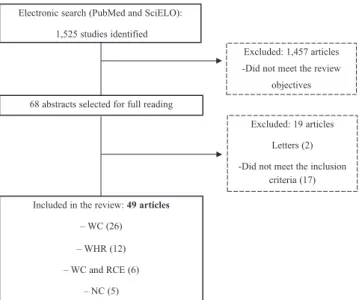
Figure 1 Flow chart of article search and obtained results. WC, waist circumference; WHR, weight-to-height ratio; NC, neck circumference.
Grasa abdominal” e “Crianças/Niños”), to include articles published in national and international journals, in both languages, using as search criteria “All fields” for these descriptors.
Identified studies were selected by reading the abstracts, using, as an inclusion criterion, original articles that had information about the WC, NC, and WHR in the assessment of central obesity in children, in Portuguese, English, or Spanish. The exclusion criteria were: review articles, short communications, letters, and editorials. There was no limi-tation regarding the time of publication, considering that studies on such parameters are relatively recent in this age
group.
Based on selected articles, a file was created for infor-mation extraction, including: names of authors, year of publication, purpose, location and type of study, sample size and characteristics, method of anthropometric mea-surements, statistical analyses performed, main results, and suggested cutoffs.
Data synthesis
The database search retrieved 1,525 studies on the topic. The number of identified articles categorized by database and descriptors used are described in Table 1. Initially, articles were analyzed based on the relevance of titles and abstracts, and 1,457 studies were excluded for not meet-ing the objectives of this review, which focused on the use of anthropometric parameters in the assessment of central obesity in children. Thus, 68 articles were selected for full reading.
However, after reading the articles in full, 19 were excluded for not meeting the inclusion criteria. Thus, 49 articles were part of this review, which were published in the period between 2000 and 2013. Among the selected
studies, most (26 articles) referred to WC,3,5,8-31 12 articles assessed WHR,32-43 six studies assessed both parameters,44-49 and only five assessed NC.2,50-53 Fig. 1 presents the flowchart of the steps performed to select the studies for this review.
Waist Circumference (WC)
WC is the most widely used measure to assess abdominal obesity, and several studies have addressed its capacity to indicate central fat accumulation in children, as well as its positive correlation with BMI,8-10,44 total fat,11 and upper body fat percentage.12 Some authors suggest that
Table 1 Number of identiied articles categorized by database and descriptors used in the search on the use of
anthropometric parameters in the determination of central adiposity in children
Database Descriptors/Search criteria Waist
circumference
Waist-to-height ratio
Neck
circumference PubMed Waist circumference/Waist-to-height ratio/Neck
circumference (All ields) AND children (Title/abstract)
1318 133 27
Waist circumference/Waist-to-height ratio/Neck circumference (All ields) AND children (Title/abstract) AND abdominal fat (All ields)
41 9 2
ScieElo Perímetro da cintura/Relação cintura-estatura/
Perímetro do pescoço (all ields) AND crianças (all ields)
8 2 0
Perímetro da cintura/Relação cintura-estatura/ Perímetro do pescoço (Todos os índices) AND crianças (all ields) AND gordura abdominal (all ields)
8 0 0
Circunferencia de la cintura/Relación cintura-talla/ Circunferencia del cuello (All ields) AND niños (All ields)
51 0 0
Circunferencia de la cintura/Relación cintura-talla/ Circunferencia del cuello (All ields) AND niños (All ields) AND grasa abdominal (All ields)
9 0 0
Totala 1404b 94c 27d
aAll articles that were repeated in the search results were excluded; b31 repeated articles; c50 repeated articles; dTwo repeated
this parameter is more consistent in terms of the balance between sensitivity and specificity to evaluate obese and non-obese children than BMI and WHR,45 and is a good indicator of central adiposity in children.13 Furthermore, it demonstrates a satisfactory performance in predicting total body fat content,11,14 as well as an indicator of upper body fat mass.5,15
However, some studies have not shown favorable results when using this parameter. Reilly et al,16 studying English children aged 9-10 years, compared the capacity of BMI and WC, in percentiles, to diagnose increased fat mass. The authors observed higher specificity of BMI percentile for both genders, using dual energy x-ray absorptiometry (DXA) as the reference method. In turn, in a study of Venezuelan children and adolescents aged 7-17 years using the sub-scapular/triceps skinfold ratio as the reference method in the analysis of ROC (receiver operating characteristic) curve, Perez et al46 observed that WC was not effective to identify fat distribution, not showing satisfactory sensitiv-ity and specificsensitiv-ity.
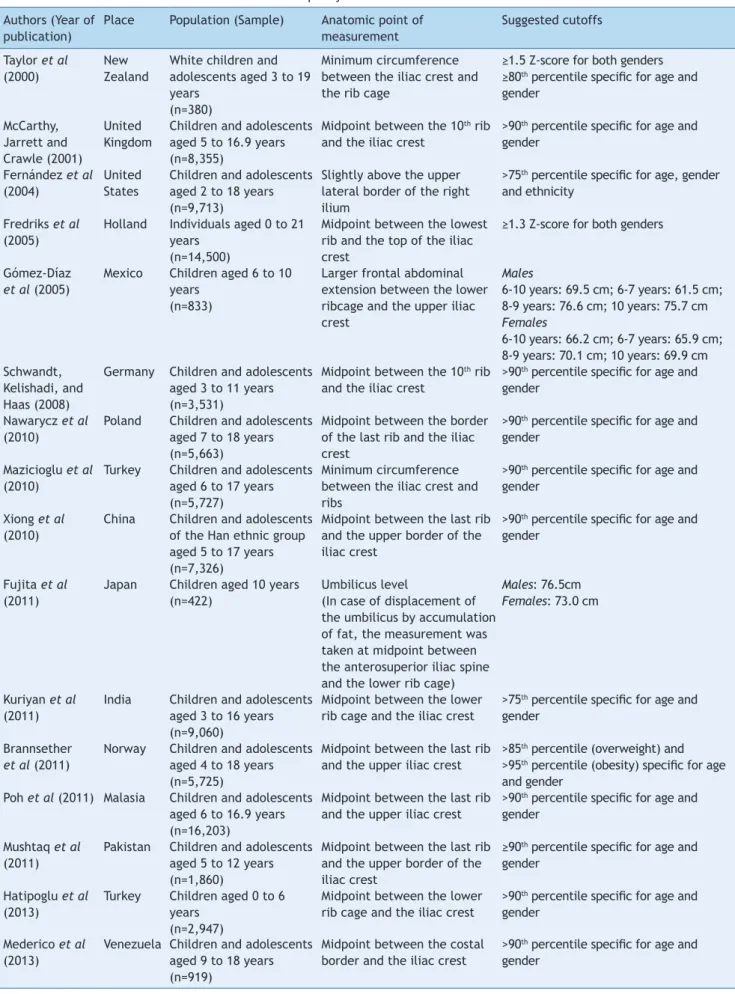
Regarding reference values, studies conducted in dif-ferent parts of the world have established WC cutoffs to determine central adiposity. The values were established using the LMS (L=lambda, asymmetry; M=Mi, median; and S=sigma, coefficient of variation) method, and were shown as percentile values and standard deviations,3,17-24,30,31,47 or were based on the ROC analysis, considering the BMI score as overweight/obesity according to the classification of the International Obesity Task Force (IOTF)25,26,48 or excess upper body fat measured by DXA5,49 as reference methods. In most studies, the 90th percentile of the distribution of WC values was used as the critical value.17-20,22-24,26,47 Although some studies have shown significant differences when the WC measurement is performed at different ana-tomic sites in children,27,28 there was no agreement regard-ing the measurement site. Some studies performed the measure at midpoint between the last rib and the top of the iliac crest;3,17-24,47,48 others measured at “the minimum circumference between the iliac crest and the rib cage,5,26 slightly above the upper lateral border of the right ilium,29 or at the largest frontal extension of the abdomen between the bottom of the rib cage and the top of the iliac crest.25 One study performed the measurement in two places: at navel level and at midpoint between the anterosuperior iliac spine and the bottom of the rib cage.49 Table 2 pres -ents a summary of these studies.
Waist-To-Height Ratio (WHR)
The rationale for the use of WHR is that, for a given height, there is an acceptable degree of fat stored in the upper portion of the body.32 Among the studies evaluating this parameter in children, controversial results were observed. In the study by Sant’Anna et al,32 there was a strong cor-relation between the percentage of body fat and WHR of children aged 6-9 years of both genders, while Majcher
et al33 found no correlation between these parameters
in children. A good correlation with BMI was observed in schoolchildren of both genders in the study performed by Ricardo et al44 in southern Brazil, where it was suggested
that WHR could be used as additional information to BMI/ age to determine total and central adiposity, respectively. When comparing the diagnostic quality of BMI, WC, and WHR in screening for obesity in children, Hubert et al45 con-cluded that WHR was not very effective to classify child-hood obesity. In the study by Perez et al,46 with Venezuelan children and adolescents, the WHR also did not effectively identify fat distribution, as it did not provide adequate sen-sitivity and specificity.
Conversely, the study by Marrodán et al34 demonstrated that WHR was an effective method to predict relative adiposity in children and adolescents aged 6-14 years. Brambilla et al35 observed that, when compared to WC and BMI, WHR was the best predictor of adiposity in children and adolescents, suggesting that this parameter may be a useful substitute for measuring body fat when other mea-sures are not available.
Considering the residual correlation between WHR (waist/height1) and height in children, studies have sought to investigate the dependence of this parameter on height and the influence of specific exponents on its predictive capacity to discriminate between children with different fat distribution.36-38 The value of 0.50 for the WHR has been established as the suitable cutoff for both adults and chil-dren.39,47,48 However, other values, most of them higher than 0.50, have been suggested to determine central obesity.
Regarding the methodological aspects, some studies used the classification of overweight/obesity by BMI according to the IOTF for the ROC curve analysis,34,40,41 while others considered the high percentage of body fat and upper body fat in relation to the study population, measured by bio-electrical impedance,32 DXA,49 and skinfold thickness42 as reference methods. There was also no agreement regarding the anatomical site for WC measurement, which leads to changes in WHR measurements. The cutoffs of these stud-ies are presented in Table 3.
Neck Circumference (NC)
Regarding NC, there have been few studies evaluating this parameter as an indicator of adiposity in children. The retrieved studies demonstrated that this anthropomet-ric measurement had good performance in determining overweight and obesity in children and adolescents.2,50-52 Significant positive correlations could be observed between NC and BMI in both genders, as well as high correlations with other indices, such as those that assess central obe-sity, WC,2,50-52 and arm circumference.50 However, a low cor-relation with the percentage of body fat was observed.50 In the study by Nafiu et al,51 NC appears to correlate better with BMI and WC in males than in females, and a stronger correlation was found between NC and other anthropomet-ric indices in older children than in younger ones.
Table 2 Waist circumference cutoffs for central adiposity assessment in children
Authors (Year of publication)
Place Population (Sample) Anatomic point of measurement
Suggested cutoffs
Taylor et al
(2000)
New Zealand
White children and adolescents aged 3 to 19 years
(n=380)
Minimum circumference between the iliac crest and the rib cage
≥1.5 Z-score for both genders ≥80th percentile speciic for age and gender McCarthy, Jarrett and Crawle (2001) United Kingdom
Children and adolescents aged 5 to 16.9 years (n=8,355)
Midpoint between the 10th rib and the iliac crest
>90th percentile speciic for age and gender
Fernández et al
(2004)
United States
Children and adolescents aged 2 to 18 years (n=9,713)
Slightly above the upper lateral border of the right ilium
>75th percentile speciic for age, gender and ethnicity
Fredriks et al
(2005)
Holland Individuals aged 0 to 21 years
(n=14,500)
Midpoint between the lowest rib and the top of the iliac crest
≥1.3 Z-score for both genders
Gómez-Díaz
et al (2005)
Mexico Children aged 6 to 10 years
(n=833)
Larger frontal abdominal extension between the lower ribcage and the upper iliac crest
Males
6-10 years: 69.5 cm; 6-7 years: 61.5 cm; 8-9 years: 76.6 cm; 10 years: 75.7 cm
Females
6-10 years: 66.2 cm; 6-7 years: 65.9 cm; 8-9 years: 70.1 cm; 10 years: 69.9 cm Schwandt,
Kelishadi, and Haas (2008)
Germany Children and adolescents aged 3 to 11 years (n=3,531)
Midpoint between the 10th rib and the iliac crest
>90th percentile speciic for age and gender
Nawarycz et al
(2010)
Poland Children and adolescents aged 7 to 18 years (n=5,663)
Midpoint between the border of the last rib and the iliac crest
>90th percentile speciic for age and gender
Mazicioglu et al
(2010)
Turkey Children and adolescents aged 6 to 17 years (n=5,727)
Minimum circumference between the iliac crest and ribs
>90th percentile speciic for age and gender
Xiong et al
(2010)
China Children and adolescents of the Han ethnic group aged 5 to 17 years (n=7,326)
Midpoint between the last rib and the upper border of the iliac crest
>90th percentile speciic for age and gender
Fujita et al
(2011)
Japan Children aged 10 years (n=422)
Umbilicus level
(In case of displacement of the umbilicus by accumulation of fat, the measurement was taken at midpoint between the anterosuperior iliac spine and the lower rib cage)
Males: 76.5cm
Females: 73.0 cm
Kuriyan et al
(2011)
India Children and adolescents aged 3 to 16 years (n=9,060)
Midpoint between the lower rib cage and the iliac crest
>75th percentile speciic for age and gender
Brannsether
et al (2011)
Norway Children and adolescents aged 4 to 18 years (n=5,725)
Midpoint between the last rib and the upper iliac crest
>85th percentile (overweight) and >95th percentile (obesity) speciic for age and gender
Poh et al (2011) Malasia Children and adolescents aged 6 to 16.9 years (n=16,203)
Midpoint between the last rib and the upper iliac crest
>90th percentile speciic for age and gender
Mushtaq et al
(2011)
Pakistan Children and adolescents aged 5 to 12 years (n=1,860)
Midpoint between the last rib and the upper border of the iliac crest
≥90th percentile speciic for age and gender
Hatipoglu et al
(2013)
Turkey Children aged 0 to 6 years
(n=2,947)
Midpoint between the lower rib cage and the iliac crest
>90th percentile speciic for age and gender
Mederico et al
(2013)
Venezuela Children and adolescents aged 9 to 18 years (n=919)
Midpoint between the costal border and the iliac crest
all studies, NC was measured at the level of the thyroid cartilage; in contrast, the stratification of overweight/obe-sity by BMI used in the ROC analysis differed between the studies, which followed the classifications of the IOTF,50 the Centers for Disease Control and Prevention,51 and the Chinese Obesity Task Force,52 whereas other researchers2 used a local reference, explaining that references in stat-ure can differ significantly between populations.
Discussion
According to what has been suggested by most studies, WC is an anthropometric measure that provides relevant infor-mation about body fat distribution, reflecting the degree of central adiposity in children. Some controversy could be explained by the study methodology, such as the work of Perez et al,46 which used the subscapular/triceps skin-fold ratio as the reference method for ROC curve analysis. Although skinfold thickness is often used to estimate total
body fat, there is considerable variability between individu-als regarding subcutaneous thickness, tissue compressibility in a given location, and the ratio of several deposits of
adi-pose tissue.54
It is worth mentioning that computed tomography (CT) and magnetic resonance imaging (MRI) are considered the gold standard methods to assess body fat distribution, pro-viding information about the morphological and anatomical location of different deposits (subcutaneous, visceral, and intermuscular adipose tissue). DXA, in turn, measures total fat with high accuracy and relatively low radiation, but does not differentiate between intra-abdominal and subcutane-ous fat.54
Considering the significant differences observed among several studies in which the WC values were com-pared,18,19,22-24,29 it is important to establish reference values for WC in children, stratified by age and gender, that are specific for the population of several countries.
Currently, there is no consensus regarding the anatomi-cal site where the WC should be measured. However, in a
Table 3 Cutoffs for waist/height ratio to identify children with overweight and obesity, as well as elevated body and trunk fat percentage
Authors (Year of publication)
Place Population (Sample) Anatomic point of WC measurementa
Suggested cutoffs
Weili et al (2007) China Children and adolescents of Han and Uygur ethnic groups aged 8 to 18 years
(n=4,187)
Above (2 cm) the umbilicus Males – Overweight: 0.445; Obesity: 0.485
Females – Overweight: 0.445; Obesity: 0.475
Nambiar, Hughes and Davies (2010)
Australia Children and adolescents aged 8 to 16 years (n=4,758)
Midpoint between the last rib and the iliac crest
Boys:
≥85th percentile of %BFb: 0.46; ≥95th percentile of %BF: 0.48
Girls:
≥85th percentile of %BF: 0.45; ≥95th percentile of %BF: 0.47
Sant’Anna et al (2010) Brazil Children aged 6 to 9 years
(n=205)
Midpoint between the last rib and the iliac crest
Males:
6, 7, and 9 years: >0.45; 8 years: >0.43
Females:
6 and 7 years: >0.45; 8 years: >0.44; 9 years: >0.43
Fujita et al (2011) Japan Children aged 10 years
(n=22)
Umbilicus level (in case of umbilicus displacement by accumulation of fat, the measurement was taken at midpoint between the
anterosuperior iliac spine and the lower rib cage)
Males: 0.519 Females: 0.499
Panjikkaran (2012) India Children and adolescents aged 7 to 12 years (n=6,000)
Midpoint between the lower rib cage and the iliac crest
>0.48
Marrodán et al (2013) Spain Children and adolescents aged 6 to 14 years (n=2,319)
Midpoint between the last rib and the iliac crest
Males – Overweight: 0.47-0.48; Obesity: 0.51
Females – Overweight: 0.47-0.48; Obesity: 0.50
study of children aged 6-9 years-old, it was observed that the WC measured at midpoint between the last rib and the iliac crest presented the best correlation with body fat percentage.27 Bosy-Westphal et al28 observed that, in children, WC values differed significantly according to the anatomical site of measurement. The smallest value was found when the measurement was performed below the last rib, and the highest value, above the iliac crest, whereas an intermediate value was found at midpoint between these sites.
In the study by Sant’Anna et al,27 the measurement per-formed on the umbilicus was statistically higher among females. Thus, the interpretation of differences in WC between studies of different populations should be per-formed with caution, considering that the measure may have been performed in different anatomical sites.
WHR is a simpler measure of health risk than other anthropometric indices in children, such as BMI/age, as it requires no adjustment for age and gender,43 having emerged as a central adiposity parameter and significant predictor of risk factors for cardiovascular disease in chil-dren and adolescents. Ashwell and Hsieh6 proposed the use of WHR as a simple screening tool, considering its fast and effective measurement. They suggest that WHR is more sensitive, less expensive, and easier to measure and cal-culate than BMI.
Moreover, a value of 0.5 would indicate an increased risk for males and females of different ethnic groups, being applicable to adults and children. However, in a study of 5,725 Norwegian children and adolescents,48 the recom-mended cutoff of 0.5 showed high sensitivity and specific-ity to detect obesspecific-ity in individuals aged 6-18 years; how-ever, in younger children, this cutoff was not appropriate due to low specificity. The authors also suggest that, for overweight, the cutoffs should be different for children and adolescents aged 6-12 years and 12-18, and should not be defined for the younger age group.48
Due to the residual correlation between WHR and stature in children, the division of WC by height elevated to the power of 1 (waist/height1) may be insufficient to properly adjust the height during growth.36,37 Tybor et al36 evaluated a representative sample of children and adolescents aged 2-18 years of the National Health and Nutrition Examination Survey (NHANES), from 1999-2004, stratified by age and gender, and found a residual correlation between height and WHR between 0.29 and 0.36.
Conversely, the study by Taylor et al37 demonstrated that the simple division of the WC by height correctly discrimi-nates, at least 90% of the time, children and adolescents with high and low levels of total and central fat.
The validity of WHR by the formula waist/height1 was evaluated by Nambiar et al38 in a cohort of 3,597 Australian children aged 5 to 17 years. The authors observed that WHR could be used in the study population, and was more appropriate than BMI due to its capacity to explain body fat distribution and the associated cardiovascular health risks. These findings indicate the need for further researches to investigate the degree of dependence of WHR with height and how this influences the association between central adiposity and risk factors for cardiovascular disease in this age group. Furthermore, it is necessary to evaluate whether the use of an exponent different from 1 can reduce bias and improve measurement accuracy.
Regarding the NC, despite the scarcity of studies in the literature that adopted this measurement, the results those that used it as a parameter to assess central adiposity in children indicate that such measurement may be a useful screening tool to identify overweight or obesity. It may also be useful to diagnose children at risk for high adiposity, an important predictor of cardiovascular health problems, especially when references adjusted for age and gender
are available.2,51 The high correlations between NC and BMI may indicate that NC is a reliable index to determine obesity. Additionally, significant correlations between this parameter and other indicators of central obesity reflect the similarity between them.
The low correlation between the NC and the percentage of body fat, in turn, may mean that NC is a measure of disproportionate accumulation of fat instead of a general measure of obesity.50 A strong point in favor of the use of NC is that it has a good intra- and inter-rater reliability,53 and it is not necessary to perform multiple measurements to attain accuracy and reliability. Additionally, when com-pared to other indicators of upper body fat, NC measure-ment is simpler.
NC is a new parameter that has shown good results in the evaluation of children and can be used both in clinical prac-tice and in epidemiological studies as a marker for central obesity. Special attention should be given to this param-eter in children, as findings in researches conducted with infants have shown an association with cardiometabolic risk factors.7,55 However, further studies to evaluate the
useful-Table 4 Neck circumference cutoffs to identify overweight and obese children
Author (Year of publication) Place Population (Sample) Suggested cutoffs
Hatipoglu et al (2010) Turkey Children and adolescents aged 6 to 18 with overweight and obesity (n=412) and healthy ones (n=555)
Males
Prepubertal: 29.0 cm Pubertal: 32.5 cm
Females
Prepubertal: 28.0 cm Pubertal: 31.0 cm Naiu et al (2010) USA Children and adolescents aged 6-18 years undergoing
elective non-cardiac surgical procedures at a pediatric hospital (n = 1,102)
Males: 28.5 to 39.0 cm
Females: 27.0 to 34.6 cm
Lou et al (2012) China Children and adolescents aged 7 to 12 years of the Han
ethnic group (n = 2,847)
ness of NC as an indicator of adiposity are needed, and it is necessary to establish reference values for children at a younger age range.
It can be concluded that WC was the most often used parameter in studies, and has shown good performance in the assessment of central obesity, although the results of some studies are controversial. WHR has been proposed as a useful parameter to assess fat distribution in children, but some issues are worth investigating, such as a residual correlation with height during growth. NC, although a more recent measure and little studied so far, has proved to be satisfactory as a parameter to assess central adiposity in children.
The differentiated cutoffs for the different studied parameters may be due to ethnic differences, as well as the lack of standardization of the anatomical point used in the assessment of measures such as WC. Thus, new studies are necessary in order to further investigate the useful-ness of these parameters in determining central obesity in childhood, including the standardization of the place where measures are to be taken and the determination of cutoffs that are comparable between different populations.
Conlicts of interest
The authors declare no conflicts of interest.
References
1. Wang Y, Monteiro C, Popkin BM. Trends of obesity and underweight in older children and adolescents in the United States, Brazil, China and Russia. Am J Clin Nutr 2002;75:971-7. 2. Hatipoglu N, Mazicioglu MM, Kurtoglu S, Kendirci M. Neck
circumference: an additional tool of screening overweight and obesity in childhood. Eur J Pediatr 2010;169:733-9.
3. Fredriks AM, van Buuren S, Fekkes M, Verloove-Vanhorick SP, Wit JM. Are age references for waist circumference, hip circumference and waist-hip ratio in Dutch children useful in clinical practice? Eur J Pediatr 2005;164:216-22.
4. Savva SC, Tornaritis M, Savva ME, Kourides Y, Panagi A, Silikiotou N et al. Waist circumference and waist-to-hip ratio are better predictors of cardiovascular disease risk factors in children than body mass index. Int J Obes Relat Metab Disord 2000;24:1453-8.
5. Taylor RW, Jones IE, Williams SM, Goulding A. Evaluation of waist circumference, waist-to-hip ratio, and the conicity index as screening tools for high trunk fat mass, as measured by dual-energy X-ray absorptiometry, in children aged 3–19 y. Am J Clin Nutr 2000;72:490-5.
6. Ashwell M, Hsieh SD. Six reasons why the waist-to-height ratio is a rapid and effective global indicator for health risks of obesity and how its use could simplify the international public health message on obesity. Int J Food Sci Nutr 2005;56:303-7. 7. Guo X, Li Y, Sun G, Yang Y, Zheng L, Zhang X et al. Prehypertension
in children and adolescents: association with body weight and neck circumference. Intern Med 2012;51:23-7.
8. Soar C, Vasconcelos Fde A, Assis MA. Waist-hip ratio and waist circumference associated with body mass index in a study with schoolchildren. Cad Saude Publica 2004;20:1609-16.
9. Sarni RS, de Souza FI, Schoeps Dde O, Catherino P, de Oliveira MC, Pessotti CF et al. Relationship between waist circumference and nutritional status, lipid proile and blood pressure in low
socioeconomic level pre-school children. Arq Bras Cardiol 2006;87:153-8.
10. Damasceno MM, Fragoso LV, Lima AK, Lima AC, Viana PC. Correlation between body mass index and waist circumference in children. Acta Paul Enferm 2010;23:652-7.
11. Barbosa L, Chaves OC, Ribeiro RC. Anthropometric and body composition parameters to predict body fat percentage and lipid proile in schoolchildren. Rev Paul Pediatr 2012;30:520-8. 12. Rodríguez PN, Bermúdez EF, Rodríguez GS, Spina MA, Zeni AS,
Friedman SM et al. Body composition by simple anthropometry, bioimpedance and DXA in preschool children: intererrelationship among methods. Arch Argent Pediatr 2008;106:102-9.
13. Hassan NE, El-Masry AS, El-Sawaf AE. Waist circumference and central fatness of Egyptian primary-school children. East Mediterr Health J 2008;14:916-25.
14. Sarría A, Moreno LA, García-Llop LA, Fleta J, Morellón MP, Bueno M. Body mass index, triceps skinfold and waist circumference in screening for adiposity in male children and adolescents. Acta Paediatr 2001;90:387-92.
15. Taylor RW, Williams SM, Grant AM, Ferguson E, Taylor BJ, Goulding A. Waist circumference as a measure of trunk fat mass in children aged 3 to 5 years. Int J Pediatr Obes 2008;3:226-33.
16. Reilly JJ, Dorosty AR, Ghomizadeh NM, Sherriff A, Wells JC, Ness AR. Comparison of waist circumference percentiles versus body mass index percentiles for diagnosis of obesity in a large cohort of children. Int J Pediatr Obes 2010;5:151-6.
17. McCarthy HD, Jarrett KV, Crawley HF. The development of waist circumference percentiles in British children aged 5.0-16.9y. Eur J Clin Nutr 2001;55:902-7.
18. Schwandt P, Kelishadi R, Haas GM. First reference curves of waist circumference for German children in comparison to international values: the PEP Family Heart Study. World J Pediatr 2008;4:259-66.
19. Nawarycz LO, Krzyzaniak A, Stawinska-Witoszynska B, Krzywinska-Wiewiorowska M, Szilagyi-Pagowska I, Kowalska M
et al. Percentile distributions of waist circumference for
7–19-year-old polish children and adolescentes. Obes Rev 2010;11:281-8.
20. Xiong F, Garnett SP, Cowell CT, Biesheuvel C, Zeng Y, Long CL et al. Waist circumference and waist-to-height ratio in Han
chinese children living in Chongqing, south-west China. Public Health Nutr 2010;14:20-6.
21. Kuriyan R, Thomas T, Lokesh DP, Sheth NR, Mahendra A, Joy R
et al. Waist circumference and waist for height percentiles in
urban South Indian children aged 3-16 years. Indian Pediatr 2011;48:765-71.
22. Poh BK, Jannah AN, Chong LK, Ruzita AT, Ismail MN, Mccarthy D. Waist circumference percentile curves for Malaysian children and adolescents aged 6.0-16.9 years. Int J Pediatr Obes 2011;6:229-35.
23. Hatipoglu N, Mazicioglu MM, Poyrazoglu S, Borlu A, Horoz D, Kurtoglu S. Waist circumference percentiles among Turkish children under the age of 6 years. Eur J Pediatr 2013;172:59-69. 24. Mederico M, Paoli M, Zerpa Y, Briceño Y, Gómez-Pérez R,
Martínez JL et al. Reference values of waist circumference and waist/hip ratio in children and adolescents of Mérida, Venezuela: comparison with international references. Endocrinol Nutr 2013;60:235-42.
25. Gómez-Díaz RA, Martínez-Hernández AJ, Aguilar-Salinas CA, Violante R, Alarcón ML, Villarruel MJ et al. Percentile distribution of the waist circumference among Mexican pre-adolescents of a primary school in Mexico city. Diabetes Obes Metab 2005;7:716-21.
circumference in evaluation of obesity in children aged between 6 and 17 years. J Clin Res Pediatr Endocrinol 2010;2:144-50. 27. Sant’Anna MS, Tinoco AL, Rosado LE, Sant’Ana LF, Mello AC, Brito
IS et al. Body fat assessment by bioelectrical impedance and its correlation with different anatomical sites used in the measurement of waist circumference in children. J Pediatr (Rio J) 2009;85:61-6.
28. Bosy-Westphal A, Booke CA, Blöcker T, Kossel E, Goele K, Later W
et al. Measurement site for waist circumference affects its accuracy as an index of visceral and abdominal subcutaneous fat in a Caucasian population. J Nutr 2010;140:954-61.
29. Fernández JR, Redden DT, Pietrobelli A, Allison DB. Waist circumference percentiles in nationally representative samples of african-american, european-american, and mexican-american children and adolescents. J Pediatr 2004;145:439-44.
30. Eisenmann JC. Waist circumference percentiles for 7-to 15-year-old Australian children. Acta Paediatr 2005;94:1182-85.
31. Galcheva SV, Iotova VM, Yotov YT, Grozdeva KP, Stratev VK, Tzaneva VI. Waist circumference percentile curves for Bulgarian children and adolescents aged 6–18 years. Int J Pediatr Obes 2009;4:381-88. 32. Sant’Anna MS, Tinoco AL, Rosado LE, Sant’Ana LF, Brito IS, Araújo
LF et al. Effectiveness of the conicity index and waist to height ratio to predict the percentage of body fat in children. Nutrire: Rev Soc Bras Alim Nutr 2010;35:67-80.
33. Majcher A, Pyrzak B, Czerwonogrodzka A, Kucharska A. Body fat percentage and anthropometric parameters in children with obesity. Med Wieku Rozwoj 2008;12:493-8.
34. Marrodán MD, Martínez-Álvarez JR, González-Montero De Espinosa M, López-Ejeda N, Cabañas MD, Prado C. Diagnostic accuracy of waist to height ratio in screening of overweight and infant obesity. Med Clin (Barc) 2013;140:296-301.
35. Brambilla P, Bedogni G, Heo M, Pietrobelli A. Waist circumference-to-height ratio predicts adiposity better than body mass index in children and adolescentes. Int J Obes (Lond) 2013;37:943-6. 36. Tybor DJ, Lichtenstein AH, Dallal GE, Must A. Waist-to-height ratio
is correlated with height in US children and adolescents aged 2–18 years. Int J Pediatr Obes 2008;3:148–51.
37. Taylor RW, Williams SM, Grant AM, Taylor BJ, Goulding A. Predictive ability of waist-to-height in relation to adiposity in children is not improved with age and sex-speciic values. Obesity (Silver Spring) 2011;19:1062-8.
38. Nambiar S, Truby H, Abbott RA, Davies PS. Validating the waist-height ratio and developing centiles for use amongst children and adolescents. Acta Paediatr 2009;98:148–52.
39. Mccarthy HD, Cole TJ, Fry T, Jebb SA, Prentice AM. Body fat reference curves for children. Int J Obes (Lond) 2006;30:598-602. 40. Weili Y, He B, Yao H, Dai J, Cui J, Ge D et al. Waist-to-height ratio
is an accurate and easier index for evaluating obesity in children and adolescents. Obesity (Silver Spring) 2007;15:748-52.
41. Panjikkaran ST. Waist to height ratio for recording the risks of overweight in south indian schoolchildren in Kerala. Indian Pediatr 2013;50:493-5.
42. Nambiar S, Hughes I, Davies PS. Developing waist-to-height ratio cut-offs to deine overweight and obesity in children and adolescents. Public Health Nutr 2010;13:1566-74.
43. Goulding A, Taylor RW, Grant AM, Parnell WR, Wilson NC, Williams SM. Waist-to-height ratios in relation to BMI z-scores in three ethnic groups from a representative sample of New Zealand children aged 5-14 years. Int J Obes (Lond) 2010;34:1188-90. 44. Ricardo GD, Gabriel CG, Corso AC. Anthropometric proile and
abdominal adiposity of school children aged between 6 and 10 years in southern Brazil. Rev Bras Cineantropom Desempenho Hum 2012;14:636-46.
45. Hubert H, Guinhouya CB, Allard L, Durocher A. Comparison of the diagnostic quality of body mass index, waist circumference and waist-to-height ratio in screening skinfold-determined obesity among children. J Sci Med Sport 2009;12:449-51. 46. Pérez BM, Landaeta-Jiménez M, Amador J, Vásquez M, Marrodán
MD. Sensibilidad y especiicidad de indicadores antropométricos de adiposidad y distribución de grasa en niños y adolescentes venezolanos. FEB 2009;34:84-90.
47. Mushtaq MU, Gull S, Abdullah HM, Shahid U, Shad MA, Akram J. Waist circumference, waist-hip ratio and waist-height ratio percentiles and central obesity among Pakistani children aged ive to twelve years. BMC Pediatrics 2011;11:105.
48. Brannsether B, Roelants M, Bjerknes R, Júlíusson PB. Waist circumference and waist-to-height ratio in Norwegian children 4–18 years of age: reference values and cut-off levels. Acta Paediatr 2011;100:1576-82.
49. Fujita Y, Kouda K, Nakamura H, Iki M. Cut-off values of body mass index, waist circumference, and waist-to-height ratio to identify excess abdominal fat: population-based screening of Japanese school children. J Epidemiol 2011;21:191-6.
50. Mazicioglu MM, Kurtoglu S, Ozturk A, Hatipoglu N, Cicek B, Ustunbas HB. Percentiles and mean values for neck circumference in Turkish children aged 6–18 years. Acta Pædiatr 2010;99:1847– 53.
51. Naiu OO, Burke C, Lee J, Voepel-Lewis T, Malviya S, Tremper KK. Neck circumference as a screening measure for identifying children with high body mass index. Pediatrics 2010;126:306-10. 52. Lou DH, Yin FZ, Wang R, Ma CM, Liu XL, Lu Q. Neck circumference
is an accurate and simple index for evaluating overweight and obesity in Han children. Ann Hum Biol 2012;39:161-5.
53. LaBerge RC, Vaccani JP, Gow RM, Gaboury I, Hoey L, Katz SL. Inter-and intra-rater reliability of neck circumference measurements in children. Pediatr Pulmonol 2009;44:64-9. 54. Sardinha LB, Teixeira PJ. Measuring adiposity and fat distribution
in relation to health. In: Heymsield SB, Lohman TG, Wang Z, Going SB, editors. Human body composition. 2nd ed. United States of America: Human Kinetics; 2005. p.177-201.