2013 Nov.-Dec.;21(6):1248-57 DOI: 10.1590/0104-1169.3178.2361
www.eerp.usp.br/rlae
Copyright © 2013 Revista Latino-Americana de Enfermagem
This is an Open Access article distributed under the terms of the Creative Commons Attribution Non-Commercial License (CC BY-NC).
This license lets others distribute, remix, tweak, and build upon your work non-commercially, and although their new works must also acknowledge you and be non-commercial, they don’t have to license their derivative works on the same terms.
Corresponding Author: Fernanda Carneiro Mussi
Rua Professor Clementino Fraga, 220, Apto. 1901 Bairro: Ondina
CEP: 40170-050, Salvador, BA, Brasil E-mail: [email protected]
Fernanda Carneiro Mussi
2Mariana de Almeida Moraes Gibaut
3Carla Almeida Damasceno
4Andreia Santos Mendes
3Armênio Costa Guimarães
5Carlos Antonio de Souza Teles Santos
61 Paper extracted from masters thesis “Factors influencing the decision time for men and women with myocardial infarction to the demand for health
services”, presented to Universidade Federal da Bahia, Salvador, BA, Brazil. Supported by Fundação de Amparo à Pesquisa do Estado da Bahia (FAPESB) process # APP0121/2009.
2 PhD, Associate Professor, Escola de Enfermagem, Universidade Federal da Bahia, Salvador, BA, Brazil. 3 Master’s student, Escola de Enfermagem, Universidade Federal da Bahia, Salvador, BA, Brazil. 4 MSc, Assistant Professor, IREP Sociedade de Ensino Superior, Salvador, BA, Brazil.
5 PhD, Full Professor, Faculdade de Medicina, Universidade Federal da Bahia, Salvador, BA, Brazil. Full Professor, Escola Baiana de Medicina e Saúde
Pública, Salvador, BA, Brazil.
6 PhD, Adjunct Professor, Departamento de Ciências Exatas, Universidade Estadual de Feira de Santana, Feira de Santana, BA, Brazil. Researcher,
Instituto de Saúde Coletiva, Universidade Federal da Bahia, Salvador, BA, Brazil.
Objective: this study aimed to analyze the interaction of gender in the association between decision
time for seeking healthcare services and the sociodemographic and clinical variables. Method: this
exploratory, cross-sectional study was performed with 100 individuals interviewed in hospitals in
Salvador, Bahia. The chi-square test or Fisher’s exact test and the robust linear regression model
were used in the analysis. A statistical significance of 5% was adopted. Results: men and women
presented long decision times. The decision time was less for smokers and those with constant
and/or severe pain. There was an interaction between gender and smoking and between gender
and pain radiating to the neck or jaw for the decision time outcome. Conclusion: decision times
were long and were influenced by clinical and gender variables. The study provides support for
nursing care practices focused on the specificity of these factors and of the genders aiming to
reduce the decision time.
Descriptors: Myocardial Infarction; Gender Identity; Nursing Care.
Introduction
Acute coronary syndromes are the leading
worldwide cause of morbidity and mortality. Every year
7.1 million deaths occur due to coronary artery disease
(CAD), with estimates of 11.1 million in 2020(1). It is
estimated that in Brazil, 300 to 400 thousand cases
occur per year, and that death occurs in every 5 to 7
cases(2). In the state of Bahia, in 2010, 4137 deaths
from acute myocardial infarction (AMI) were recorded,
with 773 in the capital(3).
Half of all AMI deaths occur within the irst hour
after the onset of symptoms(4), with survival depending
on early treatment(1). The time elapsed between the
onset of symptoms and the coronary reperfusion is a
determinant factor for the clinical course of the AMI(5),
as the effectiveness of coronary reperfusion therapies
is time-dependent(5-6). The delay in the implementation
of these therapies remains an important obstacle to
achieving their full beneit(7). Thus, one challenge is to identify the factors that contribute to the prehospital
delay (time between the onset of symptoms and arrival
at an emergency department) in patients with AMI(7).
Studies indicate the time taken to make the decision
to seek a healthcare service (DT), i.e., the period
between the onset of symptoms and the decision to
seek a healthcare service, as the main component of
this delay(5-6). However, the studies are inconclusive
regarding the reasons for this delay, especially between
the genders(8). It is important to consider that male and
female social constructions may be involved in people’s
attitudes regarding their own health, inluencing the
course and the mortality of the disease. Therefore,
gender may be a factor that differentiates behavior
when faced with AMI(9).
A number of factors have been highlighted
concerning why individuals delay seeking healthcare,
including socioeconomic (age, marital status, education,
income, gender, etc.) and clinical (type of symptoms,
duration and intensity of pain etc) conditions(5-6).
However, Brazilian literature regarding the inluence
of these factors on the DT is scarce. Knowledge about
these factors will guide health practices to optimize the
early search for care.
Therefore, the general aim of the study was: To
analyze the interaction of gender on the association
between the decision time and the sociodemographic
and clinical variables. The speciic aims were deined
as: 1. to estimate the decision time for men and
women who suffered AMI; 2. to verify the inluence of
sociodemographic and clinical variables on the decision
time.
Methods
This exploratory, cross-sectional study was
conducted in two reference hospitals for the treatment
of AMI, located in Salvador, Bahia.
To calculate the sample size (n), 99/100,000 was
taken as the parameter for the estimated prevalence
of AMI in adults of Salvador-BA(10), and the sample
calculation:
N – total population number assumed during
the data collection period = 1, 000; P – proportion
within the study population = 0.099; n – sample size; α – signiicance level; (1–α)100% – degree of conidence; B – estimated maximum error desired; Zα/2 = 1,96; 1–α = 0,95; B = 0.04 or 4%(11).
According to the calculation, the sample size should
be 99, opting for 100 individuals, using the inclusion
criteria: medical diagnosis of AMI with or without
ST-segment elevation recorded in medical records;
hospitalization for at least 24 hours or a maximum time
of 30 days post-AMI, to avoid recall bias; orientation in
time and space, no medical restrictions for the interview
and consent to take part in the study.
The selection of the subjects for the sample was
performed with the identiication of the individuals with
a medical diagnosis of AMI in the registration book and
conirmed in the patient records. Those that met the
inclusion criteria and did not have any examinations
and/or possible procedures for an hour were selected.
The individuals were approached in the bed and
informed of the aims of the investigation, identifying
those interested in participating in the study through
the signing of the Terms of Free Prior Informed Consent.
The project was approved by the Ethics Committee,
protocol 11/09, and complied with the ethical principles
of Resolution 196/96(12).
The instrument developed for the data collection
consisted of two parts with structured questions. Part I
investigated sociodemographic data and Part II, data on
Rev. Latino-Am. Enfermagem 2013 Nov.-Dec.;21(6):1248-57.
and type of AMI, interpretation of the symptoms and DT.
The instrument was administered through interviews,
conducted between April and November 2009.
The data were compiled in a database using the SPSS,
version 17.0, program for Windows, and were analyzed
as percentages and means. To analyze the association
between the sociodemographic and clinical variables
according to gender, the chi-square test was used, or
Fisher’s exact test with the occurrence of expected values
below 5, in 2x2 tables. In the bivariate and multivariate
analyzes, using the robust linear regression model, the
association between DT and the sociodemographic and
clinical variables was veriied, and the interaction term
between the gender variable and the variables of interest
was tested. For the analyzes, a logarithmic transformation
was performed for the dependent variable DT to account
for the asymmetry of the times. The signiicance level adopted was 5% for the tests (p≤0.05).
Results
Sociodemographic characterization
The sample consisted of 100 individuals, with 29
women (W), aged between 41 and 87 years, and 71
men (M), aged between 27 and 80 years. The mean
age for the W group was 58.97 years ± SD 12.10 and
for the M group 58.70 years ± SD 11.08, with the age
less than 60 years prevailing in the total sample and
in both genders. Regarding the self-declared race/color,
black was the most frequent in the total sample (71.0%)
and in both genders (p=0.440). Considering the marital
status, the majority were married or in a stable union
(75.0%), followed by separated (9.0%), single (9.0%),
and widowed (7.0%). It is noteworthy that, for both
the W and M groups, the prevalent condition was
being married or living with a partner (p=0.099). Low
education was predominant, with 69.0% of the sample
having completed elementary education. This was also
prevalent for the M and W groups (p=0.908). Regarding
the labor situation 67.0% were economically active, i.e.
employed, self-employed or retired with activity, and
33.0% inactive due to being unemployed or retired with
no activity. The gender and employment status variables
were not associated. The predominant family income
was up to three minimum wages for the total sample
(63.0%) and for the genders (p=0.739). The prevalent
number of dependents was up to three (58%), which
was also observed for both genders, without a signiicant
association (p=0.209). The majority of the sample lived
in the company of a partner (69.0%), with children
(63.0%) and grandchildren (23%), with a mean of two
people per household. It was noted that those of the M
group more often lived with a partner compared to the
W group (p=0.017), and that those of the W group more
often lived accompanied by granddaughters (p=0.081).
The majority of the participants were originally from the
city of Salvador (70.0%).
Clinical characterization and the judgment of the pain as a symptom of AMI
A family history of arterial hypertension (66%) and
CAD (50%) were the most reported CVRFs. Regarding
previous cardiovascular events, 52% reported angina
pectoris and 16% AMI. Acute myocardial infarction with
ST-segment elevation prevailed, most frequent in the M
group=51 (71.8%) (p=0.025); (Table 1).
The majority of the sample either did not know the
nature of the symptoms (15%) or had not interpreted
them as being of cardiovascular origin (41%), in this case,
the problem was assigned to the stomach (24.0%), the
spine (9.0 %), brain hemorrhage or arterial hypertension
(4.0%), stress/everyday problems (3.0%), and effect of
medication (1.0%). Of the 44 participants who considered
the symptoms to be of cardiovascular origin, 22.0% judged
that they were suffering an AMI. A greater proportion
of the M group considered themselves victims of AMI
or angina pectoris, although there was no signiicant
association between gender and judgment of the nature
of the symptoms. The symptoms were judged as sever
by the majority of the sample (64.0%), as well as by the
M and W groups. The severity was justiied due to severe
pain and worsening of the symptoms or the association of
the clinical condition with a cardiac problem.
In Table 2, it can be veriied that the prevalent
symptoms were chest pain (81%), sweating (67%),
dyspnea (47%), and pain radiating to the arms (43.0%).
For the W group the most frequent symptoms were
dyspnea, pain radiating to the back and epigastrium,
vomiting, syncope, and pain radiating to the jaw.
Regarding the M group, sweating, pain radiating to
the arms and neck, nausea, dizziness, and palpitations
predominated. The only associations veriied were
between gender and sweating, with a threshold
signiicance (p=0.054), more prevalent in the M group, and between gender and jaw pain, with a signiicantly
higher frequency for the W group (p=0.021).
Constant pain was more frequently reported than
inconstant pain, for the total sample and the genders.
One participant was unable to report this characteristic,
type of pain most often mentioned was a squeezing
pain (45.0%), followed by burning (36.0%), also
predominant for the genders. A higher proportion of the
W group reported stabbing, heavy and tearing types of
pain, and the M group, burning and squeezing types of
pain. There was an association between a heavy type
Table 1 - Judgment of pain as a symptom of myocardial infarction and clinical characterization according to the
sample and the genders. Salvador, BA, Brazil, 2010
Table 2 - Characteristics of the symptoms of acute myocardial infarction according to the sample and the genders.
Salvador, BA, Brazil, 2010
*The P values were obtained using the chi-square test or Fisher’s exact test
of pain and gender, with a higher frequency for the
W group. Severe pain at the onset of symptoms was
reported by 63.0% of the sample, also predominating
for both groups. At the moment of the decision to seek
care, 20 participants moved from the mild or moderate
pain categories to severe.
Variables Sample (N=100) Men (n=71) Women (n=29) p value*
n % n % n %
Report of cardiovascular risk factors
Arterial hypertension 66 66.0 43 60.6 23 79.3 0.186
Family history of coronary artery disease 50 50.0 34 47.9 16 55.2 0.696
Dyslipidemia 31 31.0 19 26.8 12 41.4 0.239
Diabetes mellitus 23 23.0 13 18.3 10 34.5 0.153
Smoker 19 19.0 15 21.1 4 13.8 0.290
Coronary artery disease
Previous angina 52 52.0 35 49.3 17 58.6 0.397
Previous acute myocardial infarction 16 16.0 10 14.1 6 20.7 0.595
Type of acute myocardial infarction
With ST elevation 65 65.0 51 71.8 14 48.3
0.025
Without ST elevation 35 35.0 20 28.2 15 51.7
Judgment of the symptoms
Regarding the nature
Associated with cardiac problem 44 44.0 33 46.5 11 37.9 0,440
Did not associate with cardiac problem 41 41.0 26 36.6 15 51.7 0,760
Did not know what it was 15 15.0 12 16.9 3 10.3 0,309
Regarding the severity
Severe 64 64.0 45 63.4 19 65.5
0,840
Not severe 36 36.0 26 36.6 10 34.5
Variables Sample (N=100) Men (n=71) Women (n=29) P value*
N % N % n %
Acute myocardial infarction symptoms†
Chest pain 81 81.0 57 80.3 24 82.8 0.774
Sweating 67 67.0 52 73.2 15 51.7 0.054
Dyspnea 47 47.0 32 45.1 15 51.7 0.545
Pain radiating to the arms 43 43.0 31 43.7 12 41.4 0.834
Pain radiating to the back 35 35.0 23 32.4 12 41.4 0.393
Nausea 32 32.0 23 32.4 9 31.0 0.895
Vomiting 31 31.0 20 28.2 11 37.9 0.338
Dizziness 20 20.0 17 23.9 3 10.3 0.123
Pain radiating to the neck 17 17.0 13 18.3 4 13.8 0.711
Radiating epigastric pain 18 18.0 11 15.5 7 24.1 0.307
Palpitation 14 14.0 10 14.1 4 13.8 1.000
Syncope 10 10.0 7 9.9 3 10.3 1.000
Headache 6 6.0 3 4.2 3 10.3 0.352
Tremors 2 2.0 2 2.8 - - 1.000
Pain radiating to the jaw 7 7.0 2 2.8 5 17.2 0.021
Rev. Latino-Am. Enfermagem 2013 Nov.-Dec.;21(6):1248-57.
Table 2 - (continuation)
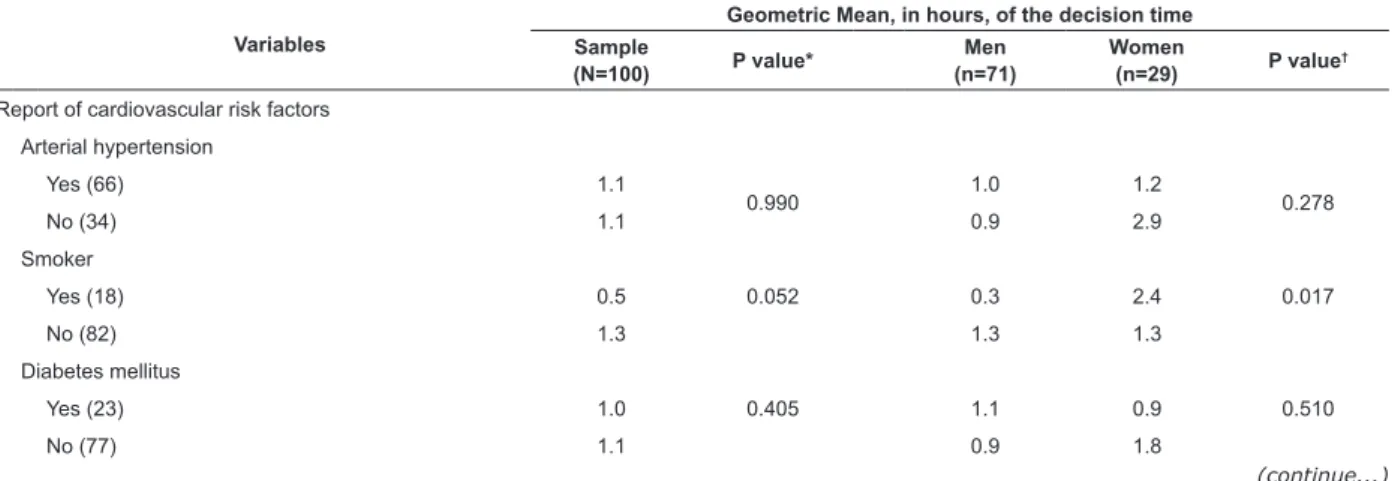
Table 3 - Cardiovascular risk factors, interpretation of the nature of the symptoms and of their severity associated
with the decision time and the gender. Salvador, BA, Brazil, 2010
*The p values were obtained using the chi-square test or Fisher’s exact test. †Each individual reported more than one symptom
Variables Sample (N=100) Men (n=71) Women (n=29) P value*
N % N % n %
Characteristics of the pain
Constancy (n=99)
Constant 66 66.0 49 69.0 17 58.6 0.319
Inconstant 23 23.0 15 21.1 8 27.6 0.326
Type of pain
Squeezing 45 45.0 33 46.5 12 41.4 0.642
Burning 36 36.0 29 40.8 7 24.1 0.114
Cutting 14 14.0 9 12.7 5 17.2 0.540
Stabbing 13 13.0 7 9.9 6 20.7 0.144
Heavy 6 6.0 2 2.8 4 13.8 0.057
Pain intensity at onset of symptoms
Mild 4 4.0 3 4.2 1 3.4 0.578
Moderate 33 33.0 26 36.6 7 24.1
Severe 63 63.0 42 59.2 21 72.4
Pain intensity at the decision for care
Moderate 17 17.0 10 14.1 7 24.1 0.359
Severe 83 83.0 61 85.9 22 75.9
(continue...)
Comparison of the DT according to sociodemographic factors, clinical factors and gender
The geometric mean (GM) and median of the DT
were, respectively, 1.1h and 1.0h. For the W group, the
GM of the DT was 1.4h and the median 1.5h, and for the M
group, the GM was 0.9h and the median 1.0h. The W group
presented longer mean decision times than the M group,
however, the difference was not statistically signiicant. There was no signiicant association between DT
and the sociodemographic variables, and there was no
interaction between gender and these variables for the
DT outcome.
Among the CVRFs there was a signiicant
association between DT and smoking, in which smokers
presented shorter DTs (p=0.052). There was also an
interaction between gender and smoking for the DT
outcome (p=0.017), where the smokers of the W group
presented longer DT (2.4h) than the smokers of the M
group (0.3h) (Table 3).
There was no signiicant association between
DT and the interpretation of the symptoms as
cardiovascular problems, however, the people who had
judged the problems to be cardiovascular presented
shorter DTs. Those who considered the symptoms
severe also presented shorter DTs (p=0.007). There was
no interaction between gender and assigning severity
to the symptoms or interpretation of the nature of the
symptoms as cardiac for the DT outcome (Table 3).
Variables
Geometric Mean, in hours, of the decision time Sample
(N=100) P value*
Men (n=71)
Women
(n=29) P value †
Report of cardiovascular risk factors
Arterial hypertension
Yes (66) 1.1
0.990 1.0 1.2 0.278
No (34) 1.1 0.9 2.9
Smoker
Yes (18) 0.5 0.052 0.3 2.4 0.017
No (82) 1.3 1.3 1.3
Diabetes mellitus
Yes (23) 1.0 0.405 1.1 0.9 0.510
Variables
Geometric Mean, in hours, of the decision time
Sample
(N=100) P value*
Men (n=71)
Women
(n=29) P value †
Judgment of the symptoms
Associated with cardiac problem (44) 0,8 0.289 0.7 1.2 0.764
Not associated with cardiac problem (56) 1,3 1.2 1.5
Severity of the symptoms
Severe (64) 0,8 0.007 0.6 1.1 0.470
Not severe (36) 2,0 1.9 2.1
Table 3 - (continuation)
Table 4 - Clinical manifestations of acute myocardial infarction associated with the decision time and gender. Salvador,
BA, Brazil, 2010
*Shows the difference between the categories of the speciic variables
†Shows the heterogeneity between men and women (the interaction). All p values were obtained using the robust linear regression model
Regarding the type of symptoms, there was a
signiicant association between pain radiating to the
neck or pain radiating to the jaw and DT (p=0.015
and p=0.018, respectively), where the subjects who
experienced these types of pain took longer to decide
to seek a healthcare service than those who did not
feel them. A statistically signiicant interaction was also veriied between gender and pain radiating to the
neck, as well as gender and pain radiating to the jaw,
and the DT outcome. Among the pain characteristics,
regardless of gender, it was found that constant
pain was a signiicant factor in the reduction of the
DT compared to intermittent pain, while mild pain
at onset of symptoms was a signiicant factor in the
increase of the DT compared to moderate intensity pain
(Table 4).
Variables
Geometric Mean of the decision time, in hours Sample
(N=100) P value*
Men
(n=71) Women (n=29) P value †
Type of symptoms
Chest pain
Yes (81) 1.0 0.848 0.9 1.5 0.339
No (19) 1.2 1.3 0.9
Sweating
Yes (66) 0.9 0.286 0.8 1.5 0.366
No (34) 1.4 1.5 1.3
Dyspnea
Yes (47) 1.0 0.580 1.0 0.9 0.179
No (53) 1.2 0.9 2.4
Nausea
Yes (32) 1.0 0.715 0.9 1.1 0.774
No (68) 1.1 1.0 1.6
Dizziness
Yes (20) 1.0 0.929 1.1 0.8 0.600
No (80) 1.1 0.9 1.5
Pain radiating to neck
Yes (17) 2.4 0.015 3.3 0.9 0.011
No (83) 0.9 0.7 1.5
Epigastric pain
Yes (18) 0.9 0.538 0.9 0.8 0.407
No (82) 1.1 0.9 1.7
Palpitations
Yes (14) 1.0 0.964 1.5 0.4 0.154
No (86) 1.1 0.9 1.7
Pain radiating to jaw
Yes (7) 4.2 0.018 26.6 2.0 <0.001
No (93) 1.0 0.9 1.3
Rev. Latino-Am. Enfermagem 2013 Nov.-Dec.;21(6):1248-57.
Table 4 - (continuation)
*Shows the difference between the categories of the speciic variables
†Shows the heterogeneity between men and women (the interaction). All the p values were obtained using the robust linear regression model Variables
Geometric Mean of the decision time, in hours
Sample
(N=100) P value*
Men
(n=71) Women (n=29) P value †
Characteristics of the pain
Constancy
Constant (66) 0.7 0.000 0.6 1.1 0.244
Inconstant (34) 2.7 3.0 2.2
Type of pain
Squeezing
Yes (45) 1.4 0.215 1.1 2.4 0.471
No (55) 0.9 0.8 1.0
Burning
Yes (36) 0.7 0.141 0.7 0.9 0.945
No (64) 1.3 1.2 1.6
Tearing
Yes (14) 1.7 0.348 2.3 0.9 0.127
No (86) 1.0 0.8 1.6
Stabbing
Yes (13) 2.1 0.145 1.7 2.7 0.897
No (87) 1.0 0.9 1.2
Heavy
Yes (6) 0.7 0.499 0.4 1.0 0.653
No (94) 1.1 1.0 1.5
Pain intensity at onset of symptoms
Mild (4) 6.6 0.000 4.5 20.0 0.351
Moderate (35) 2.1 1.7 3.9
Severe (61) 0.6 0.6 0.8
Discussion
In this study, men with AMI were predominant,
corresponding to indings in the literature(5). The women developed AMI earlier, considering the age
limits of 55 years for men and 65 years for women,
taken as the cutoff points for premature myocardial
infarction in relation to gender(13). The sample presented
homogeneous sociodemographic characteristics, as it
was composed of Brazilian Nation Health Service (SUS)
users, primarily originating from the city of Salvador
and its metropolitan area, who declared themselves
mostly of black race/color and lived in conditions of
social inequality evidenced by low education and family
income. These indings conirm the descriptions in the
literature of these characteristics as potentiators for the
risk of cardiovascular disease(14-15).
Both the M group and W group were slow to decide
to seek care, however, the women presented a higher
DT (1.4h vs. 0.9h), which exposed them to an increased
risk of mortality, considering that approximately 50%
of people with AMI die within the irst hour of the
development of a cardiovascular event(2). It must be
considered that after the making the decision they
still spent time getting to a health service prior to the
diagnosis and treatment.
A higher proportion of the M group presented AMI
with ST-segment elevation compared with the W group.
Given the beneits of chemical or mechanical reperfusion,
in this type of AMI, actions that encourage the reduction
of DT are indispensable in order to optimize the beneits
of these therapies, which vary in an inverse ratio to the
time of their application(16).
Although it is believed that the recognition of
cardiovascular symptoms demands critical skills that
may be affected in the group with less education, and
that low income may hinder access to health services, in
this study variations in income and education were not
associated with higher DTs or with gender. Authors have
also found independence between these variables(5-6,16).
Because the sample was composed of SUS users,
income may not have been an obstacle to seeking care,
considering that it is free.
Despite the prevalence of typical clinical
manifestations of AMI, both for the total sample as
reported that it was the irst episode of AMI and were,
therefore, unfamiliar with the symptoms, perhaps
hindering the adoption of appropriate actions in relation
to the cardiovascular event. This fact, associated with
low socioeconomic status, may explain why only 44%
of them associated the pain with a cardiac problem or
did not know what it meant. Although not statistically
signiicant, it should be noted that the interpretation
of the symptoms as a cardiac problem was responsible
for shorter DT, as already stated by other authors(17).
Although there was no interaction with gender, it was
observed that those of the M group that judged the
symptoms as a cardiac problem had lower DTs. The
judgment of the symptoms as a cardiac problem was
more common for the group of men, possibly because
of beliefs that AMI is a disorder pertaining to this gender
or the fact that women do not judge themselves to be
susceptible to cardiovascular events(13).
Considering that 64% attributed severity to the
symptoms and 56% did not associated them with
AMI or did not know about their origin, it is possible
to assume that the recognition of the potential severity
of the clinical condition occurred in the course of the
cardiovascular event, i.e., when the participants began
to realize the symptoms could not be improved using
personal resources or could no longer tolerate the
pain. The interpretation of the severity of the AMI was
determinant for shorter DT, revealing the importance
of the conscientization of the community in general
regarding seeking care early faced with the AMI, even in
the absence of symptoms judged intolerable.
Regarding the DT and its relationship with the
sociodemographic factors, the literature indicates
that women and people over 70 years of age
present a combination of less typical symptoms of
AMI(17-19) and therefore may delay the decision to seek
care. However, in this study, there was no signiicant
association between DT, age and gender, with it being
noted that the majority of the women and men suffered
the infarction prior to 60 years of age and with typical
symptoms of AMI.
In this study, the CVRFs identiied agree with those
described in the literature(13,20-21) as causal factors for CAD
and prevalent in groups in situations of social inequality.
The lack of association between the CVRFs reported and
gender was also observed by other authors(13). There
was no signiicant association between DT and diabetes
mellitus type II, although the literature suggests that
diabetics delay seeking care(22). The justiications for
the prehospital delay in diabetics are not very clear,
but were associated with altered perception of the pain
due to neuropathy, or the presentation of symptoms
nonspeciic for AMI(22).
The smokers presented lower DT (0.5h vs. 1.3h;
p=0.052), indicating that smokers may perceive a
greater risk of becoming ill. This perception seems
to be predominantly related to the male gender,
responsible for the signiicant DT reduction in this group.
Therefore, women smokers especially need to receive
special attention from the programs aimed at reducing
prehospital delay faced with AMI.
The symptoms of AMI described by the participants
were characteristic and corresponded to those found
in the literature(20-21). Regarding the particular type of
pain, increased DT was signiicantly inluenced by pain
radiating to the neck and jaw, with males primarily
responsible. Concerning the intensity of the pain, longer
DTs were also found when it was classiied as mild, in
both genders. Conversely, severe and/or constant pain
was associated with a signiicant decrease in the DT,
with no difference between the genders, suggesting that
sever pain can lead people to seek care faster due to their
intolerance, while atypical symptoms can make them
underestimate the seriousness(9,23). It is likely that the
radiation of pain out of the precordial region and/or its
weak intensity would put into question its interpretation
as a cardiac problem, allowing it to be associated with
musculoskeletal problems, particularly in men.
This study highlights the importance of the need for
basic information about the CVRFs, typical and atypical
symptoms of AMI, and the risk of the delay in seeking
care. The results clariied particularities of each gender
that caused longer or shorter DTs faced with the AMI,
contributing to the identiication of risk groups. The identiication of the clinical and sociodemographic factors
implicated in the delay in seeking a healthcare service,
guide health professionals in educational activities with
the patients, family members and the community aimed
at reducing the DT(16).
Conclusions
The study made contributions regarding the
sociodemographic and clinical factors that affect the DT
faced with the symptoms of AMI and their relationships
with the genders. Long DTs were observed for the
genders, with the women displaying longer times,
however, this difference was not statistically signiicant.
Clinical factors were associated with the DT, with shorter
Rev. Latino-Am. Enfermagem 2013 Nov.-Dec.;21(6):1248-57.
and sever pain. The study also allowed the conclusion
that there was an interaction between gender and
smoking, as well as between gender and pain radiating
to the neck or jaw, for the DT outcome.
These indings guide healthcare actions aimed at
seeking care early. Considering the health education
component of nursing care practices, it is the nurse who
should propose and evaluate effective interventions,
based on speciicities of the genders, which stimulate
and valorize early treatment faced with AMI. The delay
in the decision to seek care indicates the need for
guidance and training to help individuals to recognize
the symptoms of AMI and to valorize the immediate
pursuit of an emergency service. The sample size can
be highlighted as a possible limitation of the study. It
is possible to suggest the hypothesis that with larger
samples other signiicant associations could have
been found.
It should also be considered that the present study
focused on the interaction between the clinical and
sociodemographic variables and gender regarding the
DT outcome, therefore, other variables, such as the
cultural and environmental factors, need to be evaluated
in further studies.
References
1. Timerman S, Marques FBR, Pispico A, Ramires JAF.
Tratamento pré-hospitalar da síndrome isquêmica aguda
com supradesnivelamento do segmento ST: já temos
suficiente. evidência para implantar rotina? Rev Soc
Cardiol Estado São Paulo 2004;14(6):868-83.
2. Sociedade Brasileira de Cardiologia. III Diretriz sobre
tratamento do infarto agudo do miocárdio. Arq Bras
Cardiol. 2004;83(supl. 4):9-86.
3. Ministério da Saúde (BR). Indicadores de Saúde.
Datasus. [Internet]. [acesso 13 mai 2012]. Disponível
em: http://www2.datasus.gov.br/DATASUS/index.php?
area=02.
4. Sociedade Brasileira de Cardiologia. IV Diretriz
sobre o tratamento do Infarto Agudo do Miocárdio
com supradesnível do segmento ST. Arq Bras Cardiol.
2009;93(supl 2):179-264.
5. Gärtner C, Walz L, Bauernschmitt E, Ladwig KH. The
causes of prehospital delay in myocardial infarction.
Dtsch Arztebl Int. 2008;105(15):286–91.
6. Horne R, James D, Petrie K, Weinman J, Vincent R.
Patients’ interpretation of symptoms as a cause of delay
in reaching hospital during acute myocardial infarction.
Heart. 2000;83:388–93.
7. Mussi FC, Ferreira SL, Menezes AA. Experiences of
women in face of pain from acute myocardial infarction.
Rev Esc Enferm USP. 2006;40(2):170-8.
8. Devon HA, Zerwic JJ. Symptoms of acute coronary
syndormes: are there gender differences? A review of
the literature. Heart Lung. 2002;31(4):235-45.
09. Mussi FC, Pereira A. Pain tolerance during myocardium
infarction. Acta Paul Enferm. 2010;23(1):80-7.
10. Lessa I. Epidemiologia das doenças cerebrovasculares
no Brasil. Rev Soc Cardiol Estado São Paulo.
1999;9(4):509-18.
11. Kish L. Survey Sampling. New York: Witley; 1965. p. 59.
12. Ministério da Saúde (BR). Conselho Nacional de
Saúde. Resolução 196, de 10 de Outubro de 1996.
Sobre a pesquisa envolvendo seres humanos. [Internet]
Brasília. [acesso 10 set 2010] Disponível em: http://
conselho.saude.gov.br/comissao/conep/resolucao.html.
13. Conti RAS, Solimene MC, Luz PL, Benjá AM, Neto
PAL, Ramires JAF. Comparison Between Young Males
and Females with Acute Myocardial Infarction. Arq Bras
Cardiol. 2002;79(5):510-7.
14. Ishitani LH, Franco GC, Perpétuo IH, França E.
Socioeconomic inequalities and premature mortality due
to cardiovascular diseases in Brazil. Rev Saúde Pública.
2006;40:684-91.
15. Gama GGG, Mussi FC, Pires CGS, Guimarães AC.
Crenças e comportamentos de pessoas com doença arterial
coronária. Ciênc Saúde Coletiva. 2012;17(12):3371-83.
16. Franco B, Rabelo ER, Goldemeyer S, Souza EN.
Patients with acute myocardial infarction and interfering
factors when seeking emergency care: implications
for health education. Rev. Latino-Am. Enfermagem.
2008;16(3):414-8.
17. Moser DK, Mckinley S, Dracup K, Chung ML.
Gender differences in reasons patients delay in seeking
treatment for acute myocardial infarction synptoms.
Patient Educ Counsel. 2005;56:45-54.
18. Isaksson RM, Holmgrem L, Lundblad D, Brulin C,
Eliasson M. Time trends in symptoms and prehospital
delay time in women vs. men with myocardial infarction
over a 15-year period. The Northern Sweden MONICA
Study. Eur J Cardiovasc Nurs. 2008;7:152-8.
19.Ting HH, Bradley EH, Wang Y, Lichtman JH,
Nallamothu BK, Sullivan MD, et al. Patient Education
to Reduce Prehospital Delay Time in Acute Coronary
Syndrome. Arch Intern Med. 2008;168(9):959- 68.
20. Evangelista PA, Barreto SM, Guerra HL. Hospital
admission and hospital death associated to ischemic
heart diseases at the National Health System (SUS). Arq
21. Santos FLMM, Araújo TL. Having an infarction: the
meanings of the disease from the patient’s perspective.
Rev. Latino-Am. Enfermagem. 2003;11(6):742-8.
22. Goldberg RJ, Steg PG, Sadiq I, Granger CB, Jackson
EA, Budaj A, et al. Extent of, and factors associated with,
delay to hospital presentation in patients with acute
coronary disease (the GRACE registry). Am J Cardiol.
2002;89(7):791-6.
23. Ying W, Ying Z, Yu-Qiu L, Bao-Li H, Cong-Xin H.
Factors associated with the extent of care-seeking delay
for patients with acute myocardial infarction in Beijing.
CMJ. 2004:117(12):1772-7.
Received: Mar. 15th 2013