ABSTRACT
http://dx.doi.org/10.1590/1678-7757201302329
Six-month evaluation of a resin/dentin interface
created by methacrylate and silorane-based
materials
Renata Kirita Doi SAMPAIO1, Linda WANG2 3
de ANDRADE!"5#6$%3
1- DDS, MSc, University North of Paraná, Londrina, PR, Brazil.
2- DDS, MSc, PhD, Associate Professor, Bauru School of Dentistry, University of São Paulo, Bauru, SP, Brazil. 3- DDS, MSc, PhD, University North of Paraná, Londrina, PR, Brazil.
4- DDS, MSc, PhD, University of São Paulo, São Paulo, SP, Brazil.
5- DDS, MSc, PhD, Lutheran University of Brasil, Cachoeira do Sul, RS, Brazil. 6- DDS, MSc, PhD, Associate Professor, University of São Paulo, São Paulo, SP, Brazil.
& ' Sandra Kiss Moura - Universidade Norte do Paraná (UNOPAR) - Curso de Odontologia - Rua Marselha, nº 183 - Jardim Piza - Phone: +55 43 3371 9832 - 86041-140 - Londrina - PR - e-mail: [email protected]
()'&*+*4;*!<(='>?*4;?!((&='>?4*4;?
O
bjectives: This study aimed to compare the micro-tensile bond strength of methacrylate resin systems to a silorane-based restorative system on dentin after 24 hours and six months water storage. Material and Methods: The restorative systems Adper Single ! " #!$ %!& " " ' ( !)*! ) # &!+,0#!#'!**%#13)* to obtain sticks (0.8 mm2) to be tested after 24 hours (24 h) and 6 months (6 m) of waterstorage, in a universal testing machine at 0.5 mm/min. The data was analyzed via two-way Analysis of Variance/Bonferroni post hoc !! = 31 !3**, >!!? @$*&!*!!*))*)#!!%!&!+,C &+,C,D*1'&E&'!*+,F,G standard-deviation in MPa at 24 h and 6 m were: ASB 31.38 (4.53) and 30.06 (1.95), CF 34.26 (3.47) and 32.75 (4.18), ASEP 29.54 (4.14) and 33.47 (2.47), P90 30.27 (2.03) and 31.34 (2.19). Conclusions: The silorane-based system showed a similar performance to methacrylate-based materials on dentin. All systems were stable in terms of bond strength up to 6 month of water storage.
Key words: Dentin. Bonding. Dental adhesives. Composite resins. Longevity
INTRODUCTION
The use of composite resins in restorations has increased over the years because it may be considered a minimally invasive technique6
and also for the continuous development of the material24. Currently, most of the commercially
available composites are a mixture of different methacrylate monomers that polymerize linearly producing about 3% polymerization shrinkage, depending on the volume of material15. Under a clinical scenario18, it can negatively compromise the longevity of resin-based restorations, resulting in unsatisfactory marginal adaptation, micro-leakage,
caries recurrence and micro-cracks in the enamel5, which are important factors related to failures in restorations.
J Appl Oral Sci. 81 polymerization shrinkage is said to be less than 1%9.
Studies have observed good marginal adaptation in enamel and dentin, although low bond strength has been described in dentinal cavities restored with silorane resin23. Others1,10,&*Z leakage at the enamel-silorane interface, but the development of some tension at the Silorane-based composite3,17 was observed. The higher degree of subsurface polymerization of methacrylate-based compared to the silorane-based resin was also described7.
Considering the potential advantages of Silorane-based resins, there are some questions yet to be investigated. Therefore, the aim of this study was to compare the micro-tensile bond strength (μTBS) of methacrylate-based systems to a silorane-based material after 24 hours and 6 months of water storage. The null hypotheses were that there was no difference in the bond strength among the restorative systems and there was no
difference of the durability of the bond strength after six-months of water storage.
MATERIAL AND METHODS
Experimental design
It was an in vitro study involving two factors: restorative systems (in four levels) and time (in two levels). Bond strength was the main response variable to compare the factors. This research was approved by the Ethics Research Committee of the dental school (Protocol 0172/09).
Specimen preparation
Twenty recently extracted third molars were disinfected in 0.5% chloramine solution at 4°C for 7 days and stored in distilled water under refrigeration (4ºC) until the beginning of the experimental phase. The occlusal surfaces were removed with 150 silicon carbide sandpaper under refrigeration to E!!)(#'1
Material (Bach number)
T&= Application
Adper Single Bond 2 (8RL)
Bis-GMA, HEMA, diurethane dimethacrylate, polyalckenoic acid copolimer, camphorquinone, water, ethanol, 1.3 glycerol dimethacrylate, 10%
silica particles (5 nm)
37% H3PO4(15 s); Wash (15 s); Air stream (10 s);
Adhesive (2 coats); Air stream (10 s); Light cure (10 s at 550 mW/cm²); Composite restoration
Primer (00788A) Bond (01146A)
Primer: MDP, HEMA, camphorquinone, hydrophilic dimethacrylates, N, N-diethanol
p-toluidine, ethanol, water. Bond: MDP, bis-GMA, HEMA, aliphatic hydrophobic dimethacrylates camphorquinone,
N, N-diethanol p-toluidine, silica
Apply primer (20 s); Air stream (10 s); Apply adhesive; Air stream (10 s); Light cure (10 s at
550 mW/cm2); Composite restoration
Adper SE PLUS Primer (8BE) Adesivo (8BB)
Primer: water (80%), HEMA (20%), rose bengel, surfactant.
Adhesive: methacrylate resins (UDMA, TEGDMA, TMPTMA, HEMA phosphate, MHP (acidic monomers), zircon and photoiniciators
Apply primer; Adhesive (20 s); Air stream (10 s); 2ª coat of adhesive; Air stream (10 s); Light cure
(10 s at 550 mW/cm²); Composite restoration
P90 Adhesive System Primer (4763P)
Bond (4763B)
Primer: phosphate methacrylates, Vitrebond monopolymer, Bis-GMA, HEMA, ethanol, silica,
stabilizers, camphorquinone. Bond: hydrophobic dimethacrylate, phosphate methacrylates, TEGDMA, silica,
camphorquinone, stabilizers
Apply primer (15 s); Air stream (10 s); Light cure (10 s at 550 mW/cm²); Apply bond; Air stream (10
s); Light cure (10 s at 550 mW/cm²); Composite restoration
Filtek Z350 (N12715)
Bis-GMA, Bis-EMA, UDMA, TEGDMA, zirconia/ sílica, silica, camphoroquinone
2 mm thick increment, light curing (20 s at 550 mW/cm²)
Filtek P90 (N183458)
Siloxane, oxirane, camphoroquinone, iodonium
stabilizers, pigments
2 mm thick increment, light curing (20 s at 550 mW/cm²)
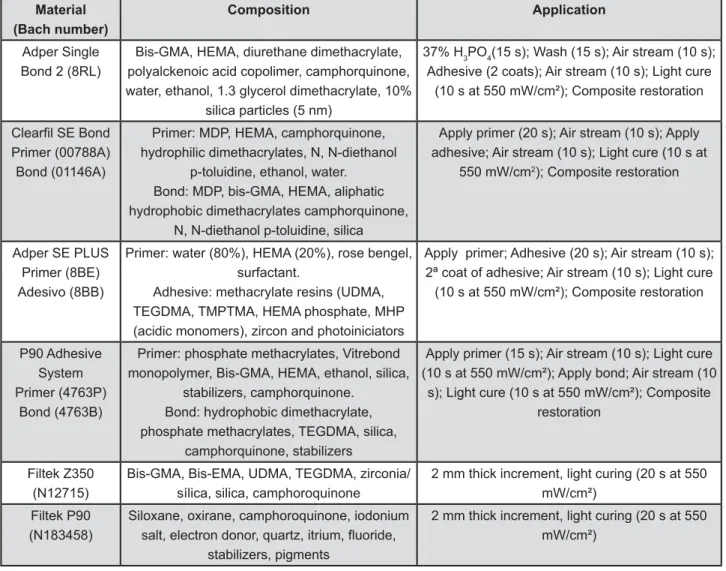
Figure 1- Resin materials; composition and application mode
HEMA (2-hydroxyethylmethacrylate); UDMA (urethane dimethacrylate); TEGDMA (triethyleneglycol dimethacrylate); TMPTMA (trimetylolpropane trimethacrylate); MHP (phosphate methacrylate); Bis-GMA (bisphenol glycidyl methacrylate); MDP (10-methacryloyloxydecyl dihydrogen phosphate); Bis-EMA (bisphenol ethyl methacrylate).
600 silicon carbide sandpaper for 60 seconds to standardize the smear layer. Teeth were randomly $\3!+?'Z!*#ZZ rinse adhesive Adper Single Bond 2 [ASB] (3M ESPE, St. Paul, MN, USA), two two-step self-etch #!$!` {|%G* Inc, Tokyo, Japan) and P90 LS System [P90] (3M ESPE, St. Paul, MN, USA), and a one-step self-etch adhesive Adper SE Plus [ASEP] (3M ESPE, St. Paul, MN, USA). Materials were applied following the manufacturer’s instructions (Figure 1).
Resin blocks were built up over bonded surfaces using the corresponding composite (Filtek Z350 "G,GD$ 1-mm increments using a quartz-halogen unit set at 550 mW/cm² during 20 s (VIP, Bisco, Schaumburg, IL, USA). The restored teeth were stored in distilled water at 37°C for 24 hours.
Bond strength test
After 24 hours, the teeth were individually E'#!*%'E*3&*#!& 1000, Buehler Ltd, Lake Bluff, IL, USA) and serially sectioned with a diamond disc (Extec 12205, Extec ,1#E%*! across the bonded interface to obtain sticks with a cross sectional area of 0.8 mm². Half of the sticks )*##'!E'#*%*%3
(Slo-Zap CA + Zip Kicker, IL, USA) on a micro-tensile device (Odeme Biotechnology, Joaçaba, SC, Brazil) and tested under tension in a universal
testing machine (EMIC, São José dos Pinhais, PR, Brazil) at 0.5 mm/min speed. The other half was stored in distilled water at 37ºC for 6 months and then tested.
The failure modes were observed in a scanning electron microscope (JSM T220A, JEOL, Peabody, MA, USA) and classified into adhesive/mixed, cohesive in resin and cohesive in dentin. The percentage of failure modes was calculated for each group. The bond strength data (MPa)was treated by two-way Analysis of Variance and Bonferroni
post hoc!!=31!3**,
RESULTS
The uniformity of measures relating to the cross-sections (mm²) of the sticks was analyzed by one-way Analysis of Variance. The values ranged from 0.86 to 0.88 mm² and differences among experimental groups were not observed (p>0.05). The absence of differences in mean values of areas suggests that there was no interference of this aspect on the bond strength to the dentin.
Table 1 shows the results of the bond strength (MPa) to the dentin over time. There was no ))*)#!&!+,C# &+,C,D*1'& &'!*#+,F,
Table 2 shows the percentage of failure mode and premature failures in the different experimental conditions. The adhesive/mixed failure was prevalent in all groups. After 6 months, an increase of the cohesive resin and premature failures for all groups was observed.
DISCUSSION
This study aimed at analyzing the bond strength of silorane-based and methacrylate based restorative systems to dentin over 6 months.The results of the present investigation did not show a higher bond strength for the Filtek Silorane restorative system to dentin, comparatively to the methacrylate-based resins, since their bond strength was similar at 24 hours and 6 months. For this reason, the null hyphothesis must be accepted.
Regarding the polymerization of composites,
%[ IM 6 M
ASB 31.38 (4.53) * 30.06 (1.95) *
CF 34.26 (3.47) * 32.75 (4.18) *
ASEP 29.54 (4.14) * 33.47 (3.47) *
P90 30.27 (2.03) * 31.34 (2.19) *
Table 1- Mean (standard deviations) of bond strength of experimental groups. Similar results are shown at *(p> 0.05)
!"#$& Z350; ASEP – Adper SE Plus/Z350; P90 - Adhesive system/P90; IM – immediate; 6m – six months.
%[ [T=B*XY]TC X)YVB*XY]TC B*XY]TC #=B*XY]TC
ASB 7(16.3) / 11 (11.9) 33 (76.7) / 47 (51.1) 0 (0) / 32 (34.8) 3 (7) / 2 (2.2)
CF 4 (7.1) / 11 (16.2) 44 (78.6) / 31 (45.6) 8 (14.3) / 25 (36.8) 0 (0) / 1 (1.4)
ASEP 4 (8.7) / 16 (20.8) 41 (89.1) / 40 (61.5) 1 (2.2) / 14 (21.5) 0 (0) / 0 (0)
P90 0 (0) / 11 (17) 41 (100) / 40 (61.5) 0 (0) / 14 (21.5) 0 (0) / 0 (0)
Table 2- Percentage, n(%), of fracture modes and premature failure of experimental groups
J Appl Oral Sci. 83
the stress polymerization continues to be a concern and studies have pointed out that the *$%*3Z *&%(*# process23. A direct relationship between the C-factor
and shrinkage was described12, which means
that the higher the ratio of bonded to un-bonded surfaces, the greater the shrinkage and its stress. This situation is worse considering the application of composites in cavities that restrict the mobility of the polymers. But in the present study, the 13*'!)&( surface, and this favorable circumstance may have explained the similarity among the bond strength of all groups, since the C-factor is low.
This similar performance observed for all groups may also be influenced by the characteristics of associated dentin bonding systems, since
it was reported that the acidity of the primer should interfere on dentinal demineralization and adhesion11. In the present study, this was not
*&1*!#1!3#'! similar among the groups. The silorane composite is used with a self-etching primer system, with pH 2.725. Adper SE Plus, when mixed reach a pH level
of approximately 1.5 and the pH level of the SE Bond is 214. But the acidities of the materials did
(*#13#! study.
Probably other aspects related to the composition of the materials may explain the similarities22. The stress generated by each component of the restorative systems (Filtek P90, Filtek Z350, Filtek (' *&!! &! #!$! was tested individually13. A higher contraction stress was observed for the adhesive of the Filtek Silorane system compared to the methacrylates. The authors explained the results based on the viscosity of the adhesive, since the Filtek P-90 is '#=)!!*,**3 to the manufacturer, neither the adhesive nor the primer of the Silorane Adhesive system contains silorane in its composition, and this may suggest the same mechanisms of polymerization among the restorative adhesive systems, resulting in a similar bond strength over time. A similar contraction stress was also observed between the silorane-based and the methacrylate-based composites. This subject '! ! *& ** !%21 that had shown no difference in stress behavior between low-shrinkage and methacrylate-based materials.
Another investigation observed the hybrid layer formed by the silorane adhesive system and found similar thicknesses between the silorane and methacrylate-based adhesives19. The adhesion of the Silorane Adhesive system to the dentin is ensured by the presence of hydrophilic monomers into the silorane primer, whereas the bond contains hydrophobic bi-functional monomers that match
the silorane composite. The bond is placed in the cured silorane primer prior to being cured itself, but a Raman spectra showed an intervening zone of 1 micrometer of mixed spectral intensities between the primer and adhesive of the silorane. According to the authors, this area should be explained due to the remaining oxygen inhibition layer on the primer surface and that should be the weak link in the bonding process of the silorane systems. By observing the percentage of premature failures after 6 months and the increase of cohesive fractures, some degradation of the silorane-based resin might have occurred, although it was not detected by the bond strength test. So, long-term studies should be considered in order to evaluate the bonding stability of silorane-resins.
Thinking about the etch-and-rinse approach, it is well known that the discrepancy between the #)&! #&%$**31! beneath the hybrid layer prone to degradation8. #!#* * ! !3 * +,Z, ! ! *3 ! ) !)*% acidic to activate gelatinolytic and collagenolytic activity; however, it is also able to denature the MMP activity4. This can also explain why no differences were observed between 24 h and 6 m for the Adper Single Bond 2.
On the contrary, the pH level of self-etch
#!$!!!)*!%GG!4, thus, it
* 1 3 # & *3 1! by two-step self-etch adhesives were not affected because the majority of them were covered by resin and thus, protected from enzymatic and hydrolytic action. As shown previously20, the use of a more hydrophobic adhesive coat over the primer makes the adhesive more resistant to water sorption.
A long-term clinical study showed that methacrylate-based composite restorations worked well during 56 months on posterior restorations, due to the low failure rate that was related to secondary caries and loss of anatomic structure18. Another one year clinical study (Baracco2, 2012) showed a tendency to degradation of marginal adaptation of silorane-based and methacrylate-based composites, comparatively to the baseline data. The authors stated that although the Filtek Silorane had shown acceptable performance after one-year of ** !$* #% $3! ) using silorane-based over the methacrylate-based composites. So, additional studies are therefore needed to clarify the performance of low-shrinkage composites to dental substrates.
CONCLUSION
Under the limitations of the methodology employed, it may be concluded that the bond
strength of both methacrylate and silorane resin &!'!(*1%CZ&#! of water storage.
REFERENCES
1- Bagis YH, Baltacioglu IH, Kahyaogullari S. Comparing micro-leakage and the layering methods of silorane-based composite resin in wide class II MOD cavities. Oper Dent. 2009;34:578-85. 2- Baracco B, Perdigão J, Cabrera E, Giráldez I, Ceballos L. Clinical evaluation of a slow-shrinkage composite in posterior restorations: one-year results. Oper Dent. 2012;37:117-29.
3- Boaro LC, Goncalves F, Guimaraes TC, Ferracane JL, Versluis A, Braga RR. Polymerization stress, shrinkage and elastic modulus of current low-shrinkage restorative composites. Dent Mater. 2010;26:1144-50.
4- De Munck J, Mine A, Van den Steen PE, Van Landuyt KL, Poitevin A, Opdenakker G, et al. Enzymatic degradation of adhesive-dentin interfaces produced by mild self-etch adhesives. Eur J Oral Sci. 2010;118:494-501.
5- Duarte S Jr, Phark JH, Varjão FM, Sadan A. Nano-leakage, ultra-morphological characteristics, and micro-tensile bond strengths )''Z!#3*&!)*33, Dent Mater. 2009;25:589-600.
6- Fernandez EM, Martin JA, Angel PM, Mjor IA, Gordan VV, Moncada GA. Survival rate of sealed, refurbished and repaired defective restorations: 4-year follow-up. Braz Dent J. 2011;22:134-9. 7- Guiraldo RD, Consani S, Consani RLX, Berger SB, Mendes WB, Sinhoreti MAC, et al. Comparison of silorane and methacrylate-based composite resins on the curing light transmission. Braz Dent J. 2010;21:538-42.
8- Hosaka K, Tagami J, Nishitani Y, Yoshiyama M, Carrilho M, Tay FR, et al. Effect of wet vs. dry testing on the mechanical properties of hydrophilic self-etching primer polymers. Eur J Oral Sci. 2007;115:239-45.
9- Ilie N, Hickel R. Macro-, micro- and nano-mechanical investigations on silorane and metacrylate-based composites. Dent Mater. 2009;25:810-19.
10- Ilie N, Hickel R. Silorane-based dental composite: behavior and abilities. J Dent Mater. 2006;25:445-54.
11- Kenshima S, Francci C, Reis A, Loguercio AD, Filho LE. Conditioning effect on dentin, resin tags and hybrid layer of different acidity self-etch adhesives applied to thick and thin smear layer. J Dent. 2006;34:775-83.
12- Loguercio AD, Reis A, Ballester RY. Polymerization shrinkage: ))*!)*!3*#*&!!!, Dent Mater. 2004;20:236-43.
13- Lopes MB, Valarini N, Moura SK, Guiraldo RD, Gonini-Junior A. Photo-elastic analysis of stress generated by a silorane-based restorative system. Braz Oral Res. 2011;25:302-6.
14- Navarra CO, Cadenaro M, Armstrong SR, Jessop J, Antoniolli F, Sergo V, et al. Degree of conversion of Filtek Silorane Adhesive %!&'###%1#!$%? an in situ Raman analysis. Dent Mater. 2009;25:1178-85. 15- Palin WM, Fleming GJ, Nathwani H, Burke FJ, Randall RC. In $*!(*&*Z3)&E%&! restored with novel low-shrink dental composites. Dent Mater. 2005;21:324-35.
16- Palin WM, Fleming GJP, Burke FJT, Marquis PM, Randall RC. 0#(*)!#&&&'&&!# hydrolitic stability of novel low-shrink dental composites. Dent Mater. 2005;21:852-63.
17- Papadogiannis D, Kakaboura A, Palaghias G, Eliades G. Setting characteristics and cavity adaptation of low-shrinking resin composites. Dent Mater. 2009;25:1509-16.
18- Pazinato FB, Gionordoli R Neto, Wang L, Mondelli J, Mondelli RFL, Navarro MFL. 56-month clinical performance of Class I and Class II resin composite restorations. J Appl Oral Sci. 2012;20:323-8.
19- Santini A, Miletic V. Comparison of the hybrid layer formed by silorane adhesive, one-step self-etch and etch and rinse systems using confocal micro Raman spectroscopy and SEM. J Dent. 2008;36:683-91.
20- Sauro S, Pashley DH, Mannocci F, Tay FR, Pilecki P, Sherriff M, et al. Micro-permeability of current self-etching and etch-and-rinse adhesives bonded to deep dentine: a comparison study using a double-staining/confocal microscopy technique. Eur J Oral Sci. 2008;116:184-93.
21- Schmidt M, Kirkevang LL, Horsted-Bindslev P, Poulsen S. Marginal adaptation of a low-shrinkage silorane-based composite: 1-year randomized clinical trial. Clin Oral Investig. 2011;15:291-5. 22- Silva e Souza MH Jr., Carneiro KG, Lobato MF, Silva e Souza PA, Goes MF. Adhesive systems: important aspects related to their composition and clinical use. J Appl Oral Sci. 2010;18:207-14. 23- Van Ende A, De Munck J, Mine A, Lambrechts P, Van Meerbeek B. Does a low-shrinking composite induce less stress at the adhesive interface? Dent Mater. 2010;26:215-22.
24- Weinmann W, Thalacher C, Guggenberger R. Siloranes in dental composites. Dent Mater. 2005;21:68-78.