www.jcol.org.br
Journal of
Coloproctology
Original article
Relationship between nutritional status and immediate
complications in patients undergoing colorectal surgery
Vanina Cordeiro de Souza
a,*, Keila Fernandes Dourado
b,
Airta Larissa Cerqueira Lima
a, Evane Bernardo
a, Patrícia Caraciollo
aa Hospital Barão de Lucena, Recife, PE, Brazil
b Centro Acadêmico de Vitória de Santo Antão, Núcleo de Nutrição, Universidade Federal de Pernambuco (UFPE), Recife, PE, Brazil
a r t i c l e i n f o
Article history:
Received 23 March 2013 Accepted 15 May 2013
Keywords:
Nutritional status Nutritional assessment Colorectal câncer
Postoperative complications Colorectal surgery
a b s t r a c t
Introduction: several complications may occur during colorectal surgical procedures and
fac-tors, such as nutritional status, substantially contribute to this problem.
Objective: evaluate the relationship between nutritional status (determined by different
tools) and the emergence of early postoperative complications, as well as analyze social parameters, lifestyle, food intake, and time to diet reintroduction.
Methods: case series study conducted in the surgical proctologic ward of the Hospital Barão
de Lucena, Recife, Pernambuco, with individuals of both sexes diagnosed with colorectal cancer who underwent a surgical procedure involving at least one anastomosis. Social, de-mographic and clinical data, life style, dietary intake, nutritional status, and the immediate postsurgical complications were evaluated.
Results: among the 31 patients studied, there was a higher prevalence of females (74.2%),
mean age of 61.9 ± 12.4 years old, and the rectum was the primary site of cancer in 54.8%. Most patients came from the countryside, were retirees, had lower education, consumed too much red meat, processed meats, and fats, with low consumption of fruits and vegeta-bles, and were sedentary. Regarding nutritional status, nutritional risk was found in 58.1%, mean BMI of 25.7 ± 6.8 kg/m2, and 54.8% had signii cant weight loss. Additionally, 38.7% had some of the immediate complications, particularly paralytic ileus and abdominal dis-tension. There was a delay in the onset of renourishment, and there was no association between nutritional status and immediate complications.
Conclusion: colorectal cancer is closely related to eating habits and lifestyle. Patients with
this malignancy have a marked weight loss; however, in this study, we found no association between nutritional status and the incidence of postoperative complications.
© 2013 Elsevier Editora Ltda. All rights reserved.
* Corresponding author.
E-mail: [email protected] (V.C. de Souza)
Palavras-chave:
Estado nutricional Avaliação nutricional Câncer colorretal
Complicações pós-operatórias Cirurgia colorretal
r e s u m o
Relação entre o estado nutricional e as complicações imediatas em pacientes submetidos a cirurgias colorretais
Introdução: intervenções cirúrgicas colorretais estão sujeitas a diversas complicações e vários
fatores, como o estado nutricional, contribuem substancialmente para essa problemática.
Objetivo: avaliar a relação do estado nutricional, determinado por diferentes ferramentas,
com o surgimento de complicações pós-operatórias imediatas, bem como a análise de pa-râmetros sociais, estilo de vida, consumo alimentar e tempo de reintrodução à dieta.
Métodos: estudo de série de casos, conduzido na enfermaria de cirurgia proctológica do
Hos-pital Barão de Lucena, Recife, Pernambuco, com indivíduos de ambos os sexos diagnostica-dos com câncer colorretal e que foram submetidiagnostica-dos a procedimento cirúrgico envolvendo pelo menos uma anastomose. Foram avaliadas as condições sociais, demográi cas, clínicas, o estilo de vida, o consumo alimentar, o estado nutricional e as complicações imediatas pós-cirúrgicas.
Resultados: dos 31 pacientes estudados, houve uma maior prevalência do sexo feminino
(74,2%), média de idade de 61,9 ±12,4 anos e 54,8% apresentaram o reto como localização primária do câncer. A maioria eram procedentes do interior do estado, aposentados, baixa escolaridade e apresentaram demasiada ingestão de carnes vermelhas, embutidos e gor-duras e um menor consumo de frutas e vergor-duras e eram sedentários. Quanto ao estado nutricional, foi encontrado um risco nutricional de 58,1%, IMC médio de 25,7 ±6,8 kg/m2 e 54,8% apresentaram perda ponderal signii cativa. Além disso, 38,7% apresentaram alguma das complicações imediatas, sendo as mais frequentes o íleo paralítico e a distensão ab-dominal. Houve retardo no início da realimentação e não houve associação entre o estado nutricional e as complicações imediatas.
Conclusão: o surgimento do câncer colorretal está bem relacionado com os hábitos
alimen-tares e o estilo de vida. Pacientes com essa neoplasia apresentam uma acentuada perda ponderal, entretanto, nesse estudo, não houve associação entre o estado nutricional e a incidência de complicações pós-operatórias.
© 2013 Elsevier Editora Ltda. Todos os direitos reservados.
Introduction
Colorectal cancer (CRC) is the third most common cancer in the world male population and second in the female popu-lation, with increasing incidence and mortality in different countries.1 In Brazil, the increasing incidence ranks third,
ex-cluding non-melanoma skin cancer.2
The development of several common forms of cancer is a result of the interaction between environmental and endogenous factors. Among the endogenous factors, the most relevant are family history of CRC and genetic predis-position to the development of chronic intestinal diseases.2
Studies have shown that the lifestyle contribution to the emergence of disease is more common, with only 25% of patients reporting a family history. Genetic syndromes are responsible for 5% to 6% of cases.3 As for environmental
fac-tors, the most notable is the diet (INCA, 2002), which plays an important role in the etiology of this cancer.3 Research
has shown that a diet with high consumption of fruits, veg-etables, cereals and i sh, as well as physical activity, are as-sociated with low risk of developing cancer.2 On the other
hand, excessive consumption of red meat, processed meats and alcohol, smoking habit and obesity or overweight favor its ocurrence.4
Surgical complications of colorectal diseases involving resection and anastomosis are common and often serious,5
mainly occurring while the patient is still in hospital.6 They
can be divided into intraoperative and postoperative compli-cations. The main postoperative complications include wound infection, anastomotic dehiscence, paralytic ileus, and bleed-ing.6 Malnutrition is among the preoperative factors favoring
the emergence of anastomotic dehiscence.7 Diabetes mellitus,
chronic alcoholism, obesity, use of drains, and duration of sur-gery are among the risk factors that favor such problems.5
Malnutrition and weight loss are recurrent problems in patients with neoplastic disease, whose intensity is variable, as it depends on the location and type of cancer.8 The
Brazil-ian National Survey on Hospital Malnutrition (IBRANUTRI) re-vealed that almost half (48.1%) of the patients admitted to the public health hospitals showed some degree of malnutrition.9
In two other Spanish studies, the prevalence of in-hospital malnutrition ranged from 23.7% to 46.9%.10,11 In surgical
pa-tients, the reality is similar. Recent studies have shown that the prevalence of malnutrition is between 30% and 50%.12
nutritional status assessment of patients undergoing surgical procedures is of utmost importance because its determina-tion contributes to early nutridetermina-tional intervendetermina-tion, minimizing perioperative complications.13
Accordingly, the aim of this study was to compare the nu-tritional status (EN) diagnosed by different tools with imme-diate complications in patients undergoing colorectal surgery involving at least one anastomosis.
Methods
Prospective, case series study, conducted at Hospital Barão de Lucena, SUS-PE, in the period from June to October 2012, involving 31 patients aged over 19 years old, of both genders, admitted for major colorectal surgery involving at least one anastomosis.
Exclusion criteria were patients unable to provide informa-tion and who were unaccompanied, pregnant women, patients with edema or ascites, amputees, and those with neurological and/or ostomized before the evaluated surgical procedure.
The study was approved by the Human Research Ethics Committee under the register SISNEP 61993.
Data collection was performed up to 48 hours after admis-sion. Patients underwent screening for nutritional risk using the Nutritional Risk Screening (NRS), 2002, and nutritional as-sessment of the following parameters: classical anthropom-etry and adductor pollicis muscle thickness (APMT), subjective global assessment (SGA), and laboratory parameters (serum al-bumin and hemoglobin). An assessment of food consumption, clinical, social, and lifestyle was also performed.
Anthropometric measurements consisted of current and usual weight, height, body mass index (BMI) [weight in kg/ height in square meters], percentage of weight loss (%WL), tri-ceps skinfold (TSF), arm circumference (AC), arm muscle cir-cumference (AMC), and APMT. Measurements of weight and height were made according to the original technique recom-mended by Lohman et al.14 Patients were weighed on a
plat-form scale (FILIZOLA™), with 150 kg capacity and 100 gram accuracy. Height was measured by stadiometer attached to the scale, with 1.90 m capacity and 5 mm variation. BMI was assessed using the classii cation criteria of the World Health Organization15 for adults and according to the Pan American
Health Organization16 classii cation for seniors. For the
evalua-tion of %WL, the patient was considered in the cachectic stage when there was unintentional weight loss ≥ 5% in the last 6 months or BMI < 20 kg/m2 combined with a continued loss of weight ≥ 2% .17-19 AC , TSF, and AMC were registered, calculated,
and interpreted in accordance with the literature and age.14,20-23
For age ≥ 60 years old, we used the 50th percentile for age and
sex of specii c tables.23 APMT was performed in the dominant
hand, according to the technique already described in other studies.12 Arithmetic average of three measurements was
re-corded, and the cut-off point used was > 13.4 mm, representing eutrophic.12
Patients were classii ed by SGA24,25 according to three
crite-ria: well nourished (SGA-A), moderately malnourished (SGA-B), and severely malnourished (SGA-C). However, later, for statisti-cal analysis purpose, patients classii ed as SGA-B and SGA-C were grouped into the malnourished criterion.
Upon admission, serum albumin and hemoglobin were measured. The cut-off points used for serum albumin were > 3.5 g/dL for normal, 3.5 to 2.4 g/dL for mild to moderate deple-tion, and < 2.4 g/dL for severe depletion.26 For hemoglobin, the
normal values according to gender were > 13.0 g/dL for male and > 12 g/dL for female.27
The clinical variables assessed were histopathological grade, tumor location, use of neoadjuvant therapy, type of surgery, and immediate complications. We also recorded the surgery duration (hours), start of liquid diet (hours), beginning of bland diet (days), and hospital stay (days). The social pro-i le was pro-identpro-ipro-i ed by means of the search crpro-iterpro-ia of the 2010 IBGE Census, noting aspects such as age, location, occupation, and education. To determine the practice of regular physical activity, we considered the time of at least thirty minutes a day and minimum of three times per week.28 Alcohol
con-sumption was categorized as never, socially, or daily. Regard-ing smokRegard-ing habit, patients were divided into non-smokers, ex-smokers, and smokers.
Food consumption was identii ed using a food frequency questionnaire (FFQ), adapted from a validated questionnaire for patients with CRC.30 For consumption classii cation, we
used the Food Guide for the Brazilian Population(Guia Alimen-tar para a População Brasileira, 2006).31
Immediate complications were recorded in medical re-cords during hospitalization and up to a maximum of 8 days after surgery, if the patient remained hospitalized. All compli-cations experienced by patients during the established period were recorded.
The database was built using Microsoft Ofi ce Excel 2007®. For statistical analyzes, the Statistical Package for Social Sci-ences® (SPSS) version 13.0 for Windows (USA, 1990) was used. All tests were applied with 95% coni dence. To verify the exis-tence of association, chi-square test and Fisher’s exact test for categorical variables were used.
The results are presented below in tables and in the text, with their respective absolute and relative frequencies.
Results
Thirty-one patients were evaluated, with a prevalence of 74.2% female (n = 23). The average age of the sample was 61.9 ± 12.4 years old (37-85 range).
The qualitative variables related to the origin, social characteristics, lifestyle, and comorbidities are presented in Table 1. In general, the patients were from within the state of Pernambuco (PE), retirees, and had low education. When questioned about the presence of comorbidities, 54.9% of them responded that they had no comorbidities. Regarding lifestyle, less than one third of them reported consuming alcohol socially and smoking at least once a week or daily. Furthermore, when asked about the regu-lar practice of physical activity, 93.5% reported no reguregu-lar physical activity.
In our sample, the mean surgical duration was 3.9 ± 1.3 hours and the mean hospital stay was 11.6 ± 8.6 days. Time to restart the diet after surgery was 39.7 ± 47.3 hours and to achieve consistency bland diet was 6.8 ± 8.4 days.
Independent analysis showed that the variables length of hospital stay (p = 0.005) and time to reach the bland diet (p = 0.001) had a difference statistically signii cant, which was higher in the group of patients who developed some of the complications analyzed. The length of hospital stay and time to start the bland diet for patients with complications were 18.4 ± 10.8 and 10.9 ± 12.8 days, respectively. As for those who had no complications, hospital stay was 7.3 ± 1.6 days and time to start the bland diet was 4.2 ± 0.8 days.
Table 3 shows information on the histopathological grad-ing, site of cancer, use of neoadjuvant therapy, surgery per-formed, presence and type of complication. In the study sample, there was a higher incidence of neoplasms with his-topathological grading moderately differentiated and rectum as the primary site of involvement. Thus, the most common surgical procedures were those involving the rectal portion. Most patients (61.3%) had no complications. Among those who had complications, the most frequent were paralytic il-eus and abdominal distension, with 25% of the individuals for each complication.
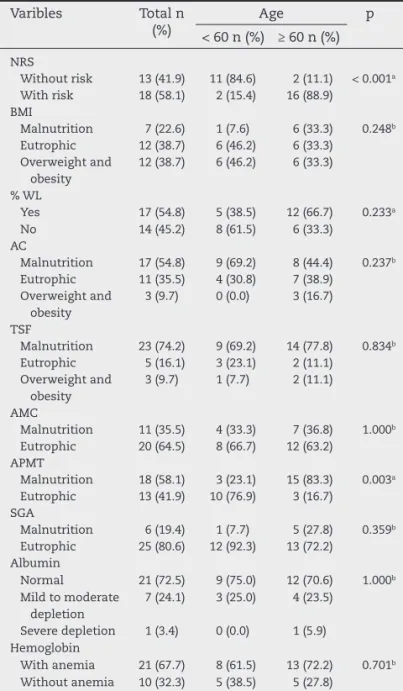
The results of variables related to patient’s nutritional tus and divided by age group are shown in Table 4. After sta-tistical analyzes in both age groups, there was a difference
statistically signii cant only in the variables NRS and APMT, with patients aged over 60 showing higher nutritional risk (p = 0.001) and malnutrition (p = 0.003). The total sample had a higher prevalence of eutrophy and overweight/obesity when classii ed according to BMI, AMC, serum albumin measure-ment, and SGA. However, there was a signii cant incidence of %WL and malnutrition according to the anthropometric mea-surements AC, TSF, and APMT. We also found a high percent-age of anemia in patients evaluated.
Table 5 shows that there was no statistically signii cant as-sociation between the variables used to determine nutritional status and immediate postoperative complications during the hospital stay.
Discussion
In this series, the average age of 61.9 ± 12.4 years old and the highest incidence of CRC in females were comparable to those reported in the literature.8,32-36 However, other studies have
shown a higher percentage of CRC in men.7,32,37 This i nding
in ours study is probably because women are more likely to seek preventative health care. Another plausible explanation
Table 1 – Socio-demographic and clinical characteristics and lifestyle of patients with colorectal cancer treated at the Hospital Barão de Lucena, PE, in the period from June to October 2012.
Variables n %
Origina
Recife 8 27.6
Metropolitan Region of Recife 5 17.2
Countryside 16 55.2
Occupation
Active 11 35.5
Unemployed or housewives 5 16.1
Retired 15 48.4
Education
Illiterate 7 22.6
First degree 17 54.8
High school 6 19.4
Third degree 1 3.2
Comorbidities
DM 1 3.2
HAS 9 29.0
DM e HBP 4 12.9
No comorbidities 17 54.9
Alcohol consumption
Never 24 77.4
Socially 7 22.6
Smoking
Never 16 51.6
Ex-smoker 10 32.3
Smoker 5 16.1
Physical activity
Yes 2 6.5
No 29 93.5
DM, diabetes mellitus; HBP, high blood pressure.
a Statistics conducted with 29 patients.
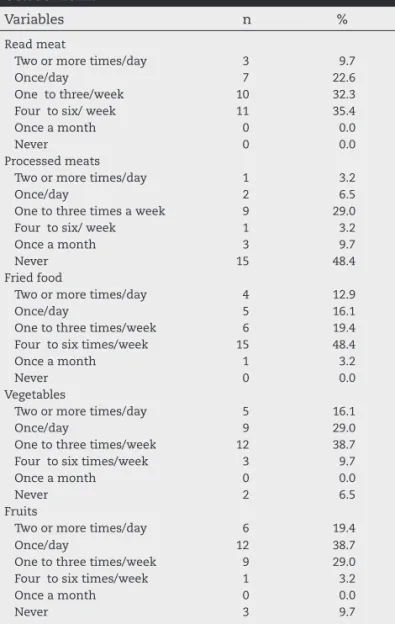
Table 2 – Dietary intake of patients with colorectal cancer treated at Hospital Barão de Lucena from June to October 2012.
Variables n %
Read meat
Two or more times/day 3 9.7
Once/day 7 22.6
One to three/week 10 32.3
Four to six/ week 11 35.4
Once a month 0 0.0
Never 0 0.0
Processed meats
Two or more times/day 1 3.2
Once/day 2 6.5
One to three times a week 9 29.0
Four to six/ week 1 3.2
Once a month 3 9.7
Never 15 48.4
Fried food
Two or more times/day 4 12.9
Once/day 5 16.1
One to three times/week 6 19.4
Four to six times/week 15 48.4
Once a month 1 3.2
Never 0 0.0
Vegetables
Two or more times/day 5 16.1
Once/day 9 29.0
One to three times/week 12 38.7
Four to six times/week 3 9.7
Once a month 0 0.0
Never 2 6.5
Fruits
Two or more times/day 6 19.4
Once/day 12 38.7
One to three times/week 9 29.0
Four to six times/week 1 3.2
Once a month 0 0.0
is the fact that estrogen hormones act as protectors to the on-set of CRC. However, this protection is lost in postmenopausal women not taking hormone replacement therapy.33,38
Most of the study population was derived from the coun-tryside and had a lower educational level. These data were expected because the hospital in which the survey was con-ducted integrates the Brazilian Unii ed Health System (SUS) and is a reference to colorectal surgeries. Additionally, these data corroborate the i ndings in the literature, which indicate in different countries, the presence of chronic morbidity in segments of lower education.39 Regarding the increased
num-ber of retirees, our data are a rel ection of the average age verii ed, as the incidence of this type of disease increases with age, affecting mainly the sixth and seventh decade of life.2
Different studies showed that a high rate of physical inac-tivity, overweight/obesity and/or inadequate diets are relat-ed to the onset of CRC, corroborating the present study,37,38,40
as the example of Arafa et al.37 in a case-control study of 220
patients with CRC who found that 81.8% of patients were sedentary. The regular practice of physical activity has been demonstrated as a measure of primary prevention for this malignancy and probably there is a concomitant effect be-tween physical inactivity, high energy consumption, and obesity with the incident of CRC.40 WCRF and AICR4 found
that an increase of 5 kg/m2 in BMI indicates a 15% risk of de-veloping cancer, particularly CRC.4 This fact occurs because
the accumulation of body fat directly affects the levels of many circulating hormones, such as insulin, and produces pro-inl ammatory factors, circulating tumor necrosis factor (TNF), interleukin (IL-6), C-reactive protein (CRP), and leptin. Thus, this chronic inl ammation may promote the develop-ment of a cancer.4 Rouillier et al.,41 in a case-control study of
dietary patterns and adenoma-carcinoma sequence of CRC, also concluded that a diet rich in energy causes a deleteri-ous effect.
Recent meta-analyzes established strong evidence be-tween diet and development of CRC. Excessive consumption of red and processed meats and/or lower intake of fruits and vegetables are well related to the onset of CRC, which was also found in the present series.4
Table 3 – Characteristics of the sample according to histopathologic grading, site of cancer, use of
neoadjuvant therapy, type of surgery, presence and type of complication occurring in the period from June to October 2012 in the Hospital Barão de Lucena, PE.
Variables n %
Histopathologic grading Degree of differentiation could
not be evaluated
1 3.2
Well differentiated 13 41.9
Moderately differentiated 14 45.2
Poorly differentiated 3 9.7
Site of cancer
Colon 9 29.0
Rectum 17 54.8
Colon and rectum 5 16.1
Use of neoadjuvant therapy
Yes 12 38.7
No 19 61.3
Type of Surgery
Total colectomy 1 3.2
Partial colectomy 9 29.0
Retossigmoidectomy 9 29.0
APR 9 29.0
RAR 3 9.8
Complication
Yes 12 38.7
No 19 61.3
Occurred complications
Intestinal obstruction 1 8.3
Tachycardia 1 8.3
Wound infection 2 16.7
Paralytic ileus 3 25.0
Abdominal distention 3 25.0
Pulmonary 2 16.7
APR, abdominoperineal resection; RAR, rectal anterior resection.
Table 4 – Distribution of nutritional parameters according to age group at the Hospital Barão de Lucena, PE, from June to October 2012.
Varibles Total n (%)
Age p < 60 n (%) ≥ 60 n (%)
NRS
Without risk 13 (41.9) 11 (84.6) 2 (11.1) < 0.001a
With risk 18 (58.1) 2 (15.4) 16 (88.9)
BMI
Malnutrition 7 (22.6) 1 (7.6) 6 (33.3) 0.248b
Eutrophic 12 (38.7) 6 (46.2) 6 (33.3)
Overweight and obesity
12 (38.7) 6 (46.2) 6 (33.3)
% WL
Yes 17 (54.8) 5 (38.5) 12 (66.7) 0.233a
No 14 (45.2) 8 (61.5) 6 (33.3)
AC
Malnutrition 17 (54.8) 9 (69.2) 8 (44.4) 0.237b
Eutrophic 11 (35.5) 4 (30.8) 7 (38.9)
Overweight and obesity
3 (9.7) 0 (0.0) 3 (16.7)
TSF
Malnutrition 23 (74.2) 9 (69.2) 14 (77.8) 0.834b
Eutrophic 5 (16.1) 3 (23.1) 2 (11.1)
Overweight and obesity
3 (9.7) 1 (7.7) 2 (11.1)
AMC
Malnutrition 11 (35.5) 4 (33.3) 7 (36.8) 1.000b
Eutrophic 20 (64.5) 8 (66.7) 12 (63.2)
APMT
Malnutrition 18 (58.1) 3 (23.1) 15 (83.3) 0.003a
Eutrophic 13 (41.9) 10 (76.9) 3 (16.7)
SGA
Malnutrition 6 (19.4) 1 (7.7) 5 (27.8) 0.359b
Eutrophic 25 (80.6) 12 (92.3) 13 (72.2)
Albumin
Normal 21 (72.5) 9 (75.0) 12 (70.6) 1.000b
Mild to moderate depletion
7 (24.1) 3 (25.0) 4 (23.5)
Severe depletion 1 (3.4) 0 (0.0) 1 (5.9)
Hemoglobin
With anemia 21 (67.7) 8 (61.5) 13 (72.2) 0.701b
Without anemia 10 (32.3) 5 (38.5) 5 (27.8)
NRS, nutritional risk screening; BMI, body mass index; WL, percentage weight loss; AC, arm circumference; TSF, triceps skinfold; AMC, arm muscle circumference; APMT, adductor pollicis muscle thickness; SGA , subjective global assessment.
a Chi-square.
WCRF and AICR4 recommend a weekly limit of 500 g of
cooked red meat. Also according to these institutions, the intake of 100 g/day of red meat above the recommended lim-it increases the risk of CRC by 17%.4 According to the same
review, the intake of 100 g/day of processed meat increases the risk of bowel cancer by 36%.4 The potential mechanisms
involved in this process include the formation of carcino-genic products, such as N-nitroso compounds, heterocyclic amines, and polycyclic aromatic hydrocarbons.38 On the
other hand, the various constituents of vegetables and fruits (dietary i ber, carotene, folic acid , selenium, l avonoids, and others) have a protective effect and some are potentially
antioxidants.4 The benei cial effect of i bers on a lower
inci-dence of CRC is associated with a number of mechanisms, which include dilution of substances in the intestinal lumen and, consequently, lower contact with the intestinal wall; modulation of tumor-suppressor gene expression (such as p53); increased satiety and, therefore, lower energy con-sumption; and short-chain fatty acid production, which are the main substrate for colonocytes.38,42
The results presented by the projects Enhanced Recovery After Surgery (ERAS) and Acelerando a Recuperação Total Pós-operatória (ACERTO) discuss new perspectives on early feed-ing of surgical patients, contributfeed-ing to the lower incidence of complications, early hospital discharge, and reduced hos-pital costs.43 During this period, the energy and protein needs
are high due to surgical trauma itself, and fasting negatively contributes to negative nitrogen balance. As an example, ACERTO recommends that in surgeries with gastrointestinal anastomoses, enteroenteric, enterocolic or colorectal, the liquid diet should begin routinely on the i rst postoperative day.44 However, our study found that the average time to
re-nourishment was 39.7 hours. Aguiar-Nascimento et al.45 in
a study of colorectal surgery found an average time of 24 hours, with no increase in postoperative complications. This difference between studies regarding the time to restart the diet has occurred possibly due to the conduct of each surgi-cal team. In our study, we found that the presence of some postoperative complication was not related to the start of liquid diet, but it increased the length of hospital stay, costs, and interfered with the turnover of beds, as well as affected the evolution of diet.
Regarding the histological classii cation of the present study, moderately differentiated adenocarcinoma was the most recurrent in 45.2% of cases, followed by 41.9% of well-differentiated lesions and 9.7% of poorly well-differentiated ad-enocarcinoma. These percentages are similar to those found in the literature.32,36,46 As for tumor location, the most
com-mon location was the rectum, corroborating with the re-search by Pinho et al.47, which found a percentage of 52.5% of
rectal involvement. This i nding corresponds to the fact that most surgeries involved the rectum.
Although there is no universal consensus, neoadjuvant therapy is generally regarded in some circumstances such as staging T3/T4.48 In this study, 61.3% of patients did not
receive neoadjuvant therapy, showing a disagreement be-tween the studies in which Thoresen et al.8 found that 85.7%
of patients with CRC had received chemotherapy, not differ-entiating, however, if surgical procedures were performed or not. However, Mussnich et al.36 found a percentage of 80.5%
of surgeries without the use of neoadjuvant therapy.
The main postoperative complications of CRC were wound infection, anastomotic leakage, paralytic ileus, and bleeding.6 As mentioned in this study, the most frequent
complications were ileus and abdominal distention, which are somewhat related to NS. However, the early introduc-tion of food and l uids in the postoperative period is associ-ated with reduced postoperative complications, particularly paralytic ileus.45,49 A research conducted by Aguiar-Birth &
Goelzer43 coni rmed that oral feeding on the i rst day after
surgery in patients with intestinal anastomoses is safe, not related to anastomotic leakage, and also favors a shorter
pe-Table 5 – Association of nutritional parameters and immediate complications of patients undergoing colorectal surgery in the period from June to October 2012 at the Hospital Barão de Lucena, PE.
Varibles Total n (%)
Complications p Yes
n (%)
No n (%)
NRS
Without risk 13 (41.9) 5 (41.7) 8 (42.1) 1.000a
With risk 18 (58.1) 7 (58.3) 11 (57.9)
BMI
Malnutrition 7 (22.6) 2 (16.6) 5 (26.4) 0.806b
Eutrophic 12 (38.7) 5 (41.7) 7 (36.8)
Overweight and obesity
12 (38.7) 5 (41.7) 7 (36.8)
% WL
Yes 17 (54.8) 7 (58.3) 10 (52.6) 1.000a
No 14 (45.2) 5 (41.7) 9 (47.4)
AC
Malnutrition 17 (54.8) 6 (50.0) 11 (57.9) 0.742b
Eutrophic 11 (35.5) 4 (33.3) 7 (36.8)
Overweight and obesity
3 (9.7) 2 (16.7) 1 (5.3)
TSF
Malnutrition 23 (74.2) 8 (66.6) 15 (78.9) 0.705b
Eutrophic 5 (16.1) 2 (16.7) 3 (15.8)
Overweight and obesity
3 (9.7) 2 (16.7) 1 (5.3)
AMC
Malnutrition 11 (35.5) 4 (33.3) 7 (36.8) 1.000b
Eutrophic 20 (64.5) 8 (66.7) 12 (63.2)
APMT
Malnutrition 18 (58.1) 8 (66.7) 10 (52.6) 0.484b
Eutrophic 13 (41.9) 4 (33.3) 9 (47.4)
SGA
Malnutrition 6 (19.4) 3 (25.0) 3 (15.8) 0.653b
Eutrophic 25 (80.6) 9 (75.0) 16 (84.2)
Albumin
Normal 21 (72.5) 7 (58.4) 14 (82.4) 0.266b
Mild to moderate depletion
7 (24.1) 4 (33.3) 3 (17.6)
Severe depletion 1 (3.4) 1 (8.3) 0 (0.0)
Hemoglobin
With anemia 21 (67.7) 9 (75.0) 12 (63.2) 0.697b
Without anemia 10 (32.3) 3 (25.0) 7 (36.8)
NRS, nutritional risk screening; BMI, body mass index; WL, percentage weight loss; AC, arm circumference; TSF, triceps skinfold; AMC, arm muscle circumference; APMT, adductor pollicis muscle thickness; SGA , subjective global assessment.
a Chi-square.
riod of paralytic ileus. In the series discussed, the mean time for diet restart was higher than the current evidence recom-mend, which may have contributed to the higher incidence of paralytic ileus. However, such delay in renourishment may have been caused by the presence of abdominal disten-sion also seen in patients.
Another frequently reported complication is wound in-fection. Studies suggest an incidence rate of up to 26% in pa-tients undergoing colorectal surgery. In the present study, we found a 16.7% rate of wound infection, demonstrating the inl uence of the several factors involved in the development of this problem— among them, the patient himself and his current pathologies, surgical procedure, and perioperative factors.50 Aguiar-Nascimento et al.45 found a 7.1%
percent-age of infection at the surgical site in 24 patients undergoing colorectal operations.
Despite the wide variety of nutritional measures, so far there is no gold standard method to determine the nutri-tional status of hospitalized patients.51 BMI has been one
of the most commonly used anthropometric indicators for identifying individuals at nutritional risk due to its easy ap-plication and low cost.52 However, because it is an indicator
that provides measurement of all body compartments, its use in hospitalized patients should be limited, especially be-cause it is necessary to experience a signii cant weight loss to change its values .53
In this investigation, we found a higher incidence of overweight and obesity, measured by BMI, and a marked weight loss (% WL) and loss of body fat mass, assessed by the anthropometric measures AC and TSF. However, pa-tients still showed a preserved protein mass, as verii ed by the AMC and albumin dosage, but with decreased labor ac-tivities and rel ecting even the loss of lean body mass as as-sessed by the parameter APMT. These i ndings corroborate the literature. With the use of different tools to evaluate 77 patients with CRC, Thoresen et al.8 found a mean BMI of
26.5 kg/m2, WL% of 54.6% dei ned by EPCRCs and malnutri-tion of 33.7% dei ned by SGA-B and C. In a study conducted by Valadão et al 2010.,32 the authors found that weight loss
(36.7%) and bleeding (32.4%) are among the most prevalent symptoms and signs for the diagnosis of CRC, which also corroborates the current study in which 67.7% had anemia on admission.
The score of NRS and APMT determined a more compro-mised NS in elderly patients, which may be explained by the fact that NRS adds one point for patients aged ≥ 70 years, totaling a maximum score of 7 points. As for APMT, similar to all peripheral skeletal muscle, the adductor muscle of the thumb is also consumed during catabolism and atrophied by inactivity and senescence,54 which may explain the difference
between the age groups shown in the present investigation. The results obtained in this study with the use of differ-ent assessmdiffer-ent tools in a small group of patidiffer-ents revealed a high degree of inconsistency in nutritional classii cation. Therefore, we stress the importance of several methods to complete a nutritional assessment.
We found no association between malnutrition and im-mediate postoperative complications. However, poor nutri-tional status preoperatively has been associated with the de-velopment of postoperative complications.5-7,55,56 Telem et al.,
7 in their case-control study, found a statistical association
between serum albumin levels and risk of anastomotic leak-age, and found that albumin < 3.5 g/dL contributed to the risk of such complications. Makela et al.56 also reported this
association. Moreover, Telem et al.7 related the surgical time
with the risk of dehiscence, showing statistically signii cant association, and coni rmed that the surgical time (≥ 200 min-utes) entails a higher risk of this disorder. However, in our study, the mean surgical time of 234 minutes (3.9 hours) was not associated with increased risk of complications. Possi-bly, the lower complication rate in this series is related to the reduced presence of comorbidities, lower consumption of alcohol, smoking habit, incidence of preoperative malnu-trition, and other factors not related to the patient, such as the fact that the hospital where the study was conducted is a reference for this type of surgical approach.
Regarding the limitations of this study, there are few pa-pers available in the national and international literature evaluating the nutritional status assessed by different tools and postoperative complications in colorectal surgery. An-other no-less important issue, was the small number of ad-missions during the study period, which rel ected the small sample size.
Conclusion
Despite the study limitations, we found that the onset of CRC is possibly related to eating habits and life style and that pa-tients with this malignancy have a marked weight loss. How-ever, postoperative complications were infrequent and not related to nutritional status.
Confl ict of interest
The authors declare no conl icts of interest.
Acknowledgments
We thank the staff and patients of the Proctologic Surgical Clinic of the Hospital Barão de Lucena, Pernambuco, Brazil.
R E F E R E N C E S
1. International Agency for Research on Cancer - IARC. World Cancer Report 2012; [acesso em: 07 de abril de 2012]; Disponível em http://www.iarc.fr/en/publications/pdfs-online/epi/sp160/index.php.
2. Brasil. Ministério da Saúde. Instituto Nacional de Câncer. Estimativa 2012: Incidência de câncer no Brasil. Instituto Nacional de Câncer. – Rio de Janeiro; 2012; [Acesso em: 04 mar. 2012]; Disponível em: <http://www.inca.gov.br/ estimativa/2012/index.asp?ID=5>.
3. Migheli F, Migliore L. Epigenetics of colorectal cancer. Clin Genet, 2012; 81: 312-8.
Prevention of Cancer: a Global Perspective. Washington DC: AICR, 2007.
5. Santos-Junior JM. Post-surgical complications of the colorectal anastomosis. Rev bras Coloproct, 2011;31(1). 6. Kirchhoff P, Clavien PA, Hahnloser D. Complications in
colorectal surgery: risk factors and preventive strategies. Patient Safety in Surgery, 2010;4(5).
7. Telem DA, Chin EH, Nguyen SQ, Divino CD. Risk Factors for Anastomotic Leak Following Colorectal Surgery. A Case-Control Study. Arch Surg, 2010;145(4):371-76.
8. Thoresen L, Frykholm G, Lydersen S, Ulveland H, Baracos F, Prado, CM et al. Nutritional status, cachexia and survival in patients with advanced colorectal carcinoma. Different assessment criteria for nutritional status provide unequal results. Clinical Nutrition, 2012;xxx.
9. Waitzberg DL, Caiaffa WT, Correia MI. Hospital Malnutrition: The Brazilian National Survey (IBRANUTRI): A Study of 4000 Patients. Nutrition. 2001; 17: 573-80.
10. Álvarez-Hernández J, Planas Vila M, León-Sanz M. Prevalence and costs of malnutrition in hospitalized patients. Nutr Hosp, 2012;27(4):1049-59.
11. Olmos GM, Martı´nez Va´zquez MJ, Martı´nez-Puga EL, Campo Pe´rez V. Nutritional status study of inpatients in hospitals of Galicia (Spain). Eur J Clin Nutr. 2005;59:938–46.
12. Bragagnolo R, Caporossi FS, Dock-Nascimento DB,
Nascimento JESA. Adductor pollicis muscle thickness is a fast and reliable technique for nutritional assessment in surgical patients. JPEN, 2009;33:181-243.
13. Dock-Nascimento DB. Triagem e avaliação do estado nutricional do paciente cirúrgico. In Aguilar-Nascimento JE, Caporossi C, Bicudo AS. ACERTO: acelerando a recuperação total pós-operatória. 2 ed. Rio de Janeiro: Rubio; 2011. p.32-46. 14. Lohamn TG, Roche AF, Martorell R. Anthropometric
standardization reference manual. Abridged, 1991. p.90. 15. World Health Organization (WHO). Physical status: The use
and interpretation of anthropometry. WHO Technical Report Series. Geneva; 2000; (856).
16. Organização Pan-Americana (OPAS). XXXVI Reunión del Comitê Asesor de Ivestigaciones en Salud Encuestra Multicêntrica, Salud Beinestar y Envejecimeiento (SABE) en América Latina e el Caribe, 2002.
17. Fearon K, Strasser F, Anker SD, Basaeus I, Bruera E, Fainsinger RF et al. Dei nition and classii cation of cancer cachexia: an international consensus. Lancet Oncol, 2011; 12: 489–95. 18. Radbruch L, Elsner F, Trottenberg P, Strasser F, Fearon K:
Clinical practice guidelines on cancer cachexia in advanced cancer patients. Aachen, Department of Palliative Medicinen/ European Palliative Care Research Collaborative; 2010. 19. Waitzberg D. Consenso Brasileiro de Caquexia / Anorexia em
cuidados paliativos. Revista Brasileira de Cuidados Paliativos, 2011;(3):suplemento 1.
20. Kamimura MA, Baxman A, Sampaio LR, Cuppari L. Avaliação nutricional. In: Cuppari L. Guia de nutrição: nutrição clínica no adulto. 2a ed. São Paulo: Manole; 2006. p.89-128. 21. Blackburn GL, Bistrian BR. Nutritional and metabolic
assessment of the hospitalized. JPEN, 1977;1:11-22.
22. Frisancho AR. Anthropometric standards for the assessment of growth and nutritional status. University of Michigan, 1990. 189p. Apud: Cuppari L, Schor N. Guia de nutrição: nutrição clínica do adulto. 2.ed. Barueri, SP: Manole; 2005. 23. Sampaio LR. Nutritional evaluation and ageing. Revista de
Nutrição, 2004;17(4): 507-514.
24. Detsky AS. What is Subjetive Global assessemt of nutrition status. Journal of Parenteral and Enteral Nutrition, 1987;11(1). 25. Quadros AP, Venturi I. Avaliação nutricional subjetiva global:
sua contribuição no diagnóstico e tratamento nutricional. Revista Prática Hospitalar, 2008;(61):65-68.
26. Bottoni A, Oliveira GC, Ferrini MT, Waitzberg DL. Avaliação nutricional: exames laboratoriais. In: Waitzberg Dl. Nutrição
oral, enteral e parenteral na prática clínica. 3ª ed. São Paulo: Atheneu; 2000.
27. Benoist B, Mclean E, Egli I, Cogswell M. Worldwide
prevalence of anaemia 1993–2005: WHO global database on anaemia, 2008.
28. Sociedade Brasileira De Cardiologia (SBC). IV Diretriz Brasileira Sobre Dislipidemias e Prevenção da Aterosclerose do Departamento de Aterosclerose. Arquivos Brasileiros de Cardiologia, 2007; 88(I):88p.
29. Silva MD, Sousa AM, Schargodsky H. Fatores de Risco para Infarto do Miocárdio no Brasil. Arq. Bras. Cardiol, 1998;71(5):667-75.
30. Lameza MS. Validação de questionário de frequência alimentar para pacientes tratados de câncer colorretal. 2010. 70p (Dissertação) - Fundação Antônio Prudente, São Paulo. 2010.
31. Brasil. Ministério da Saúde. Secretaria de Atenção à Saúde. Guia alimentar para a população brasileira : promovendo a alimentação saudável .Brasília; 2008.
32. Valadão M, Leal RA, Barbosa LC, Carneiro M, Muharre RJ. Peri l dos Pacientes Portadores de Câncer Colorretal Operados em um Hospital Geral: Necessitamos de um Programa de Rastreamento Acessível e Efetivo. Rev Brás Coloproct, 2010;30(2):160-6.
33. Zandoná B, Carvalho LP, Schimedt J, Koppe DC, Koshimizu RT, Mallmann AM. Prevalência de adenomas colorretais em pacientes com história familiar para câncer colorretal. Rev bras Coloproct, 2011; 31(2).
34. Oliveira RG, Faria FF, Lima- Junior AB, Rodrigues FG, Andrade MA, Gomes DM et al. Cirurgia no câncer colorretal – abordagem cirúrgica de 74 pacientes do SUS portadores de câncer colorretal em programa de pós-graduação lato sensu em coloproctologia. Rev bras Coloproct, 2011;31(1). 35. Oliveira TN, Queiroz FL, Lacerda-Filho A, Mansur ES,
Carmona MZ, Resende MS et al. Avaliação da Qualidade de Vida em Pacientes Submetidos à Ressecção Colorretal por Via Laparoscópica ou Aberta em Período Pós-Operatório Inicial. Rev bras Coloproct. 2010; 30(1).
36. Müssnich HG, Moreira FL, Gus P, Pimentel M, Simon T, Santos MB. Fatores Prognósticos e Sobrevida no Adenocarcinoma Primário de Reto. Rev bras Coloproct, 2008; 28(1).
37. Arafa MA, Waly M, Jriesat S, Khafajei A, Sallam S. Dietary and Lifestyle Characteristics of Colorectal Cancer in Jordan: a Case control Study. Asian Pacii c J Cancer Prev, 2011;12:1931-6.
38. Casimiro C. Factores etiopatogénicos en el cáncer colorrectal. Aspectos nutricionales y de estilo de vida (segunda de dos partes). Nutr. Hosp, 2002; XVII (3) 128-38 39. Macintyre S, Der G, Norrie J. Are there socioeconomic
differences in responses to a commonly used self report measure of chronic illness? Int J Epidemiol 2005; 34(6):1284-90.
40. Corrêa Lima MP, Gomes-da-Silva MG. Colorectal cancer: lifestyle and dietary factors Nutr. Hosp, 2005; XX (4):235-41. 41. Rouillier P, Senesse P, Cottet V, Valleau A, Faivre J, Ruault B.
Dietary patters and the adenocarcinoma sequence of colon cancer. Eur J Nutr, 2005.
42. Yikyung P, Hunter DJ, Spiegelman D, Bergkvist L, Berrino F, Brandt P, Buring J et al. Dietary Fiber Intake and Risk of Colorectal Cancer A Pooled Analysis of Prospective Cohort Studies American Medical Association. JAMA, 2005; 294(22). 43. Aguiar-Nascimento JE, Goelzer J. Early feeding after
intestinal anastomoses: risks or benei ts? Rev. Assoc Med Bras. 2002; 48(4):348-52.
45. Aguilar-Nascimento JE, Caporossi C, Bicudo AS. Abordagem multimoldal em cirurgia colorretal sem preparo mecâmico de cólon. Rev Col Bras Cir. 2009; 36(3): 204-9.
46. Priolli DG, Cardinalli IA, Alfredo CH, Spadari AP, Máximo FR, Margarido NF et al. Proporção de Linfonodos Metastáticos como Variável Independente de Prognóstico no Câncer Colorretal. Rev bras Coloproct, 2008;28(4).
47. Pinho ML; Ferreira, LC; Kleinubing JR R. Tratamento Cirúrgico do Câncer Colorretal: Resultados a Longo Prazo e Análise da Qualidade. Rev bras Coloproct, 2006;26(4): 422-9.
48. Sauer RD, Becker MD, Hohenberger WD, Rodel C, Wittekind C, Fietkau R et al. Preoperative versus Postoperative Chemoradiotherapy for Rectal Cancer. N Engl J Med 2004;351:1731-40.
49. Bisanz A, Palmer JL, Suresh R, Cloutier L, Dixon TS, Cohen MZ et al. Characterizing postoperative paralytic ileus as evidence for future research and clinical practice. Gastroenterol Nurs, 2008;31(5):336-44.
50. Mallol M, Sabate A, Kreisler E, Dalmau A, Camprubi LT, Biondo S. Incidencia de la infección de la herida quirúrgica en cirugía
colorrectal electiva y su relación con factores perioperatorios. cirugía española, 2011.
51. Dias MG, Van Aanholt DJ, Catalani LA, Rey JF, Gonzales MC, Cappini L et al.Triagem e avaliação do estado nutricional.In Projeto Diretrizes. Associação Médica Brasileira e Conselho Federal de Medicina. 2011.
52. Sampaio LR, Figueiredo VC. Correlação entre o índice de massa corporal e os indicadores antropométricos de distribuição de gordura corporal em adultos e idosos. Rev Nutr. 2005; 8(1):53-61. 53. Mello ED, Beghetto MG, Teixeira LB, Luft VC. Desnutrição
hospitalar cinco anos após o IBRANUTRI. Rev Bras Nutr Clin. 2003; 18(2): 65-9.
54. Dastur DK, Gagrat BM, Manghani DK. Human muscle in disuse atrophy. Neurophathology Applied Neurobiology, 1979; 5:85-9. 55. Akbarshahi H, Andersson B, Norde´n M, Andersson R.
Perioperative nutrition in elective gastrointestinal surgery– potential for improvement? Dig Surg. 2008; 25(3):165-74. 56. Mäkelä JT, Kiviniemi H, Laitinen S. Risk factors for anastomotic