REVISTA DE
ODONTOLOGIA
DA UNESP
Rev Odontol UNESP. 2013 Nov-Dec; 42(6): 401-407 © 2013 - ISSN 1807-2577
ORIGINAL ARTICLE
Clinical management of caries by public and
private university dental students
Abordagem clínica da doença cárie segundo a formação universitária
Valdinéia Maria TOGNETTI
a, Naiara de Paula FERREIRA-NOBILO
a,
Maria da Luz Rosário de SOUSA
aaFaculdade de Odontologia, UNICAMP – Universidade Estadual de Campinas, Piracicaba, SP, Brasil
Resumo
Objetivo: O objetivo deste estudo foi verificar a abordagem clínica dos formandos de duas instituições de ensino (pública e particular) em relação à doença cárie. Material e método: Utilizou-se um caso clínico (contendo dados, fotos e radiografias), e questionou-se sobre o plano de tratamento, com questões fechadas e uma questão discursiva. As respostas discursivas foram analisadas pela técnica de análise do conteúdo, e, posteriormente dicotomizadas, assim como as fechadas, para análises estatísticas (Qui-quadrado, p≤0,05). Resultado: A taxa de resposta (n=72) foi de 85,71% na faculdade pública e 92,30% na particular. Após a consulta das tomadas radiográficas e considerando a dinâmica de atendimento clínico diferente das faculdades, menos de 10% dos estudantes da faculdade pública realizariam procedimentos conservadores nos dentes decíduos, enquanto pelo menos 30% dos estudantes da faculdade particular optariam por procedimentos conservadores em todos os casos (p<0,001). Quanto aos dentes permanentes, a totalidade dos estudantes da faculdade pública faria tratamento conservador. Conclusão: Tanto na faculdade pública quanto na particular houve semelhança de abordagens curativa (dentes decíduos) e conservadora+preventivista (dentes permanentes).
Descritores: Diagnóstico; educação em odontologia; formação de conceito.
Abstract
Objective: The aim of this study was to verify the clinical approach knowledge of graduate students from two colleges (public and private) concerning dental caries. Material and method: A case report containing patient general data, photos, and radiographs were presented for the students, which responded tests and a discursive question. Discursive answers were analyzed according to content analysis technique, and posteriorly dichotomized for statistical analysis. (Chi-square, p≤0.05). Result: Response rates (n=72) were 85.71% in the public college, and 92.30% in the private college. After x-rays evaluation and considering the diverse dynamics by which both schools perform their patient care management, it was observed that less than 10% of the public college students would perform conservative procedures in primary teeth, while at least 30% of private college students would decide for conservative procedures for all cases (p<0.001). Concerning the permanent dentition, the majority of the public college students would perform “conservative” approach. “Preventative-conservative practice” was similarly observed amongst public and private college students. Conclusion: Both in public and in private college were similar curative e approaches (primary teeth) and preventative +conservative (permanent teeth).
Descriptors: Diagnosis; education, dental; concept formation.
INTRODUCTION
Since the creation of the Uniied Health System, changes in the health sector have required a rethinking of the training for this service. he replacement of the dominant system of health care, based on diseases, hospitals, and super especialization with the new models of care, which value integrity, humanized care, and health promotion, has not yet been achieved. hese new models depend largely on training and professional practice. In general, the integration of actions should be preceded by thinking and teaching about health1.
Nunes, Freire2 asserted that concepts embodied by health
professionals can form the basis of their daily practices. However, current practices interfere with the expression of these concepts. hus, it becomes important to evaluate how professionals are trained to face health problems.
Despite the many advances in oral health in recent decades, dental caries remains a public health problem, far beyond the criteria described by Sinai3. Currently, the phenomenon of
professionals may have direct implications on health, especially with regard to economic issues and quality of care4. In this sense, by
adopting a precautionary approach as the decision treatment plans, we could reduce the restorative procedures in dental service5.
Dental caries is a multifactorial disease. According to Ferreira et al.*, dental caries involves factors necessary for caries formation (e.g., bioilm accumulation), determinants (negative: sugar, according to its type and the frequency of its consumption; and positive: exposure to luorides), and modulators (biological: such as saliva; and social: the individual’s socioeconomic context). Although the presence of cavitated lesions is the most apparent clinical sign of the disease, which shows considerable progress thereof, changes in the development of caries disease due to decreases in the incidence and rate of lesion progression have hindered the detection, determination of the extent, and choice of appropriate treatment plans for caries6,7.
Some authors have proposed using a decision tree to determine treatment for caries disease, especially for active lesions8,9.
According to this proposal, active cavitated lesions do not require “preventative” or operative treatment with luoride compounds, whereas inactive non-cavitated or cavitated lesions do not require any kind of treatment9. hus, by adopting a precautionary approach
in deciding upon treatment plans, the use of restorative dental procedures could be reduced5. In the same sense, Maltz et al.10
reported that the longer, clinical restorative procedure is the only treatment to become part of a set of measures aimed at promoting oral health. he clinical restorative procedure may be used to treat caries disease, depending on the stage of impairment in tooth structure. hus, the choice of appropriate treatment plans depend on the stage of the disease and correct detection of the same6,7. he
evaluation and control of the disease promotes the maintenance of oral health. hus, the diagnosis of lesions in the early stages allows preventative measures to be applied successfully**.
he compartmentalized biological vision of trained professionals encourages taking surgical-restorative action without concern for the socioeconomic context and cultural situation of individuals11. his compartmentalized vision is a
consequence of health curricula, which promote fragmented scientiic perspectives11. Considering this context, it is important
to investigate how dental professionals are trained to approach the treatment of caries. he objective of this study was to investigate the clinical approach adopted by students from two colleges (one public and one private) in São Paulo in combating dental caries.
MATERIAL AND METHOD
his research project was submitted to the Ethics Committee on Research of the FOP/UNICAMP (Piracicaba Dental School,
* Ferreira NP, Sousa MLR, Cury JA. Concepts about dental caries of undergraduate dental students. J Dent Res. 2012; 91(Spec Issue B): abstract #2118 [cited 2012 July 1]. Available from: http://iadr.confex.com/iadr/2012rio/ webprogram/Paper163541.html
** Imparato JCP, Rocha RO, Raggio DP. Realidades e perspectivas na odontopediatria clínica. In: Cardoso RJA, Machado MEL. Odontologia, arte e conhecimento. São Paulo: Artes Médicas; 2003. p. 3-18.
University of Campinas) and was approved under protocol number 125/2011. Following approval, the cross-sectional study began. he study included dental students from two colleges, one public and one private, both in the state of São Paulo.
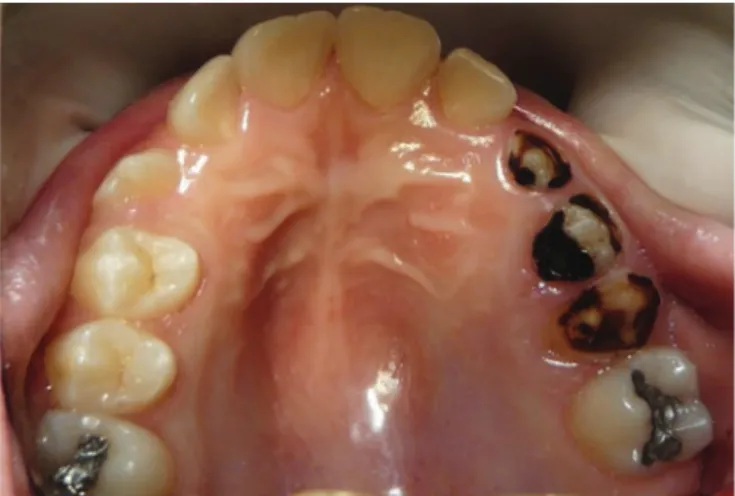
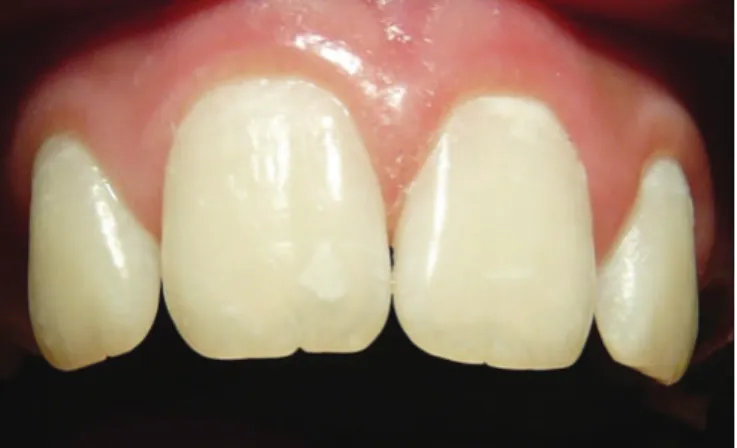
he inclusion criteria for the study were students enrolled in the inal period of the courses at the dentistry colleges investigated. he exclusion criteria were students not enrolled in the inal period at the colleges. In total, 56 public college students and 26 private college students met these criteria. he participation agreement was presented in the classroom. In addition, a case containing photos and radiographs of the dental arches of a 9-year-old patient (mixed dentition) were presented. his presentation consisted of an initial explanation of the purpose of the research and a reading of the clinical case (patient’s age, socioeconomic factors, and clinical information). he respondents from both schools had similar audio-visual resources and lighting in their classrooms. he clinical case presented inactive caries lesions in the following teeth: 63, 64, 65, 83, 84, and 85 (Figures 1, 2, 4, and 5), which had a dark brown to blackish color and a shiny, polished appearance. here were active caries in the following teeth: 11, 12, and 21 (Figure 3), which had white spots and a rugose and opaque appearance.
By means of closed questions, the students were asked which treatment should be adopted for each of the indicated
Figure 1. Occlusal view of maxillary arch.
Rev Odontol UNESP. 2013; 42(6): 401-407 Clinical management of caries… 403
teeth (63, 64, 65, 83, 84, 85, 11, 12, and 21). he students were asked to choose between the following options: extraction; endodontics + pin + crown; endodontics + composite resin restoration; endodontics + amalgam restoration; endodontics + restoration with glass ionomer cement; composite resin restoration; amalgam restoration; restoration with glass ionomer cement; luoride therapy; proservation; or other. Furthermore, the students were asked the following discursive
question: “What is the most appropriate treatment plan for the patient MCEF?”
he possibilities of conduct for each element were dichotomized into dental curative procedures (i.e., extraction; endodontics + pin + crown; endodontics + composite resin restoration; endodontics + amalgam restoration; endodontics + restoration with glass ionomer cement; composite resin restoration; and amalgam restoration) and conservative procedures (i.e., restoration with glass ionomer cement; luoride therapy; and proservation). he data were analyzed to test for possible diferences between students of the two colleges. he restoration of glass ionomer cement was considered a conservative procedure because its proposed aim is to stabilize the oral health condition. he discursive question was analyzed by content analysis, which refers to reading the responses, creating categories of meaning from the responses provided (made by two researchers), classifying the responses in the categories created, and statistical processing of the data12,13***.
he frequencies of the variables were expressed in percentages. Statistical analyses were performed by SPSS 17.0. he chi-square (χ2) test was applied with a signiicance level equal to or less than
5%. he statistical analysis investigated the relationship between conduct to be adopted for each dental element as well as the discursive question ater categorization and classiication of the students’ responses.
RESULT
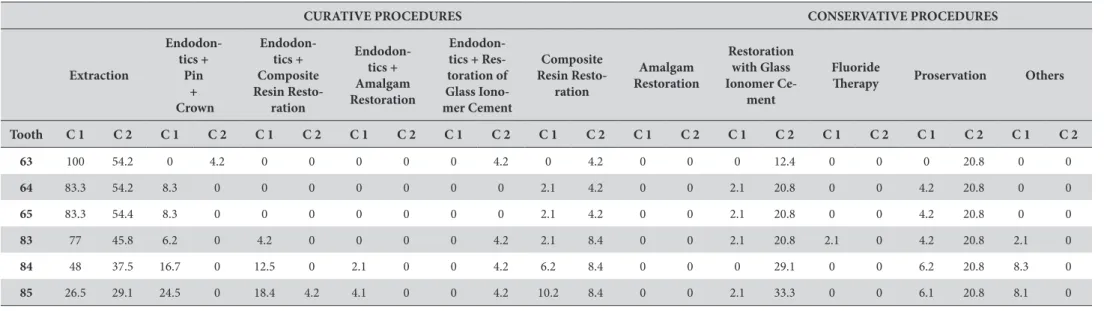
he response rate in the public college was 85.71% (n = 48), and the response rate in the private college was 92.30% (n = 24). Tables 1 and 2 indicate the percentage of students who opted for each of the possible dental procedures for the clinical case. Table 1 shows the results for deciduous teeth, and Table 2 shows the results for permanent teeth.
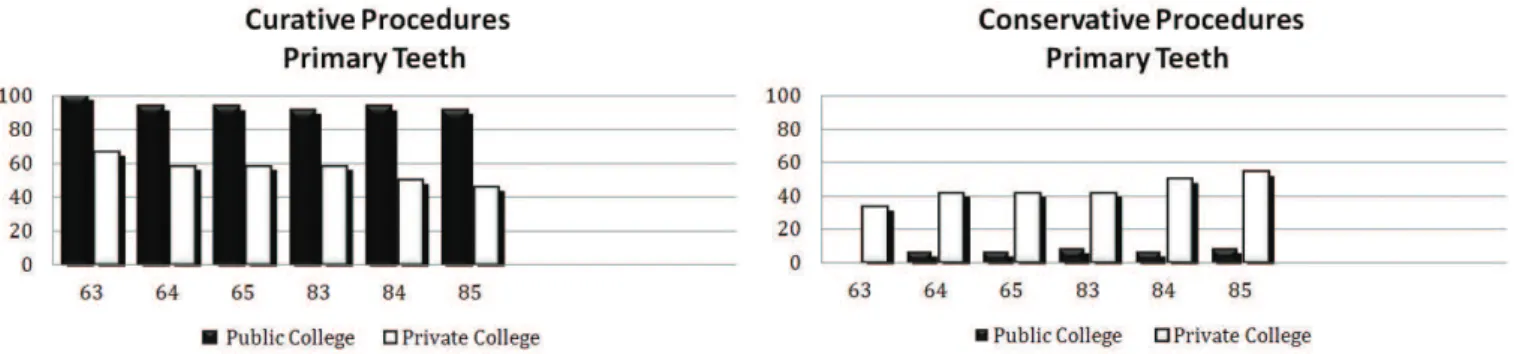
Figure 6 shows the percentage of students who chose conservative or curative procedures to treat the primary teeth ater dichotomization for each tooth. Less than 10% of public college students chose conservative procedures to treat primary teeth, whereas at least 30% of private college students chose conservative procedures (p<0.001). Figure 7 indicates the approaches selected for the permanent teeth ater treatment dichotomy for each tooth. Conservative treatment was chosen by 100% of public college students, whereas 8.3% of private college students chose particular curative procedures.
According to the content analysis for the discursive question, the students’ responses were grouped into three categories: curative practices, conservative practices, and preventative practices (Chart 1).
Ater categorizing the responses, they were classiied into the three categories described. Some respondents proposed more than one category for treatment. he response categories for the most
*** Ferreira NP, Sousa MLR, Cury JA. Concepts about dental caries of undergraduate dental students. J Dent Res. 2012; 91 (Spec Issue B): abstract #2118 [cited 2012 July 1]. Available from: http://iadr.confex.com/iadr/2012rio/ webprogram/Paper163541.html
Figure 3. Aspect of superior lesions (active white spots).
Figure 4. Superior teeth radiographs.
T
og
n
et
ti, F
er
reira-N
o
b
ilo
, S
o
u
sa
R
ev O
do
n
to
l UNES
P. 2013; 42(6): 401-407
Table 1. Percentage of treatment approach for primary teeth of students for each element second dental college (2011)
CURATIVE PROCEDURES CONSERVATIVE PROCEDURES
Extraction
Endodon-tics +
Pin + Crown
Endodon-tics + Composite Resin
Resto-ration
Endodon-tics + Amalgam Restoration
Endodon- tics + Res-toration of Glass Iono-mer Cement
Composite Resin
Resto-ration
Amalgam Restoration
Restoration with Glass Ionomer
Ce-ment
Fluoride
herapy Proservation Others
Tooth C 1 C 2 C 1 C 2 C 1 C 2 C 1 C 2 C 1 C 2 C 1 C 2 C 1 C 2 C 1 C 2 C 1 C 2 C 1 C 2 C 1 C 2
63 100 54.2 0 4.2 0 0 0 0 0 4.2 0 4.2 0 0 0 12.4 0 0 0 20.8 0 0
64 83.3 54.2 8.3 0 0 0 0 0 0 0 2.1 4.2 0 0 2.1 20.8 0 0 4.2 20.8 0 0
65 83.3 54.4 8.3 0 0 0 0 0 0 0 2.1 4.2 0 0 2.1 20.8 0 0 4.2 20.8 0 0
83 77 45.8 6.2 0 4.2 0 0 0 0 4.2 2.1 8.4 0 0 2.1 20.8 2.1 0 4.2 20.8 2.1 0
84 48 37.5 16.7 0 12.5 0 2.1 0 0 4.2 6.2 8.4 0 0 0 29.1 0 0 6.2 20.8 8.3 0
85 26.5 29.1 24.5 0 18.4 4.2 4.1 0 0 4.2 10.2 8.4 0 0 2.1 33.3 0 0 6.1 20.8 8.1 0
Public College – C 1. Private College – C 2.
Table 2. Percentage of treatment approach for permanent teeth of students for each element second dental college (2011)
CURATIVE PROCEDURES CONSERVATIVE PROCEDURES
Extraction
Endodon-tics +
Pin + Crown
Endodon-tics + Composite Resin
Resto-ration
Endodon-tics + Amalgam Restoration
Endodon- tics + Res-toration of Glass Iono-mer Cement
Composite Resin
Resto-ration
Amalgam Restoration
Restoration with Glass Ionomer
Ce-ment
Fluoride
herapy Proservation Others
Tooth C 1 C 2 C 1 C 2 C 1 C 2 C 1 C 2 C 1 C 2 C 1 C 2 C 1 C 2 C 1 C 2 C 1 C 2 C 1 C 2 C 1 C 2
11 0 0 0 0 0 0 0 0 0 0 0 8.4 0 0 0 0 100 87.4 0 4.2 0 0
12 0 0 0 0 0 0 0 0 0 0 0 8.4 0 0 0 0 100 87.4 0 4.2 0 0
21 0 0 0 0 0 0 0 0 0 0 0 8.4 0 0 0 0 100 87.4 0 4.2 0 0
Rev Odontol UNESP. 2013; 42(6): 401-407 Clinical management of caries… 405
appropriate type of treatment for the patient were dichotomized into “curative practice” and “conservative + preventative practice” and the data were analyzed for diferences. he responses to the discursive question were similar between the two colleges (p=0.22) (Table 3). he treatment plans were also similar between the two colleges, and preventative practice was cited by more than 30% of the students from both institutions.
DISCUSSION
he methodology chosen for this study enabled us to identify the clinical conduct of students regarding caries. his approach required general reasoning and consideration of patients, not just their teeth alone. he discursive question allowed the student’s point of view about the treatment plan to be obtained. In the response to the discursive questions, the students had the
opportunity to internalize the same case data and combine these data with their knowledge of the disease to develop their own treatment plans.
Some previous studies have examined caries diagnosis, but they usually involved viewing extracted teeth mounted on mannequins or examining interproximal and periapical radiographs6,7,14. hese studies have received some criticisms
because the treatment decisions are based only on the teeth or radiographs, without taking into account the characteristics of disease development or the social proile of the patient. In an attempt to overcome the limitations of previously published studies, this study sought to improve the methodological aspects by using a case study approach, in which students were given information about the patient’s age, socioeconomic characteristics, and X-rays and photos that provided visual data on the patient’s entire oral cavity, teeth, and bone structures.
Chart 1. Categorization of Responses
RESPONSE
CATEGORY CENTRAL MEANINGS RESPONSES
Curative practices
Extractions, endodontics, crowns, amalgam and/or resin composite, making space maintainer. May or may not be associated with luoride applications.
“Extraction of tooth 63 and 83; pulpectomy of tooth 84 and 85 and the making of pins and crowns; pulpectomy of tooth 64 and 65 and the making of pins and crowns. Fluo-ride therapy can be carried out throughout this treatment.”
Conservatie practices
Prophylaxis, oral hygiene care, restoration of glass ionomer cement, luoride application, oral environment stabilization procedures, preservation.
“For the inactive caries, we can just do the procedure with glass ionomer cement and scrub them. Regarding 11, 12, and 21, treatment should involve luoride application and also proservation.”
Preventative practices Other options that included:
anamnesis, treatment plan, dietary guidance, proservation.
“Guidance about oral hygiene diet. Apply luoride varnish to white active spot lesions for proservation.”
Figure 7. Percentage of students option for curative procedures or conservative for permanent teeth in each dental element second college (2011).
he recommendations of the Ministry of Health15 and
Education16,17 emphasize general education, conservative
practices, and an appreciation for prevention rather than curative welfarism. According to González, Almeida1, training should not
only be technical, but rather, it should provide an understanding of the cultural system. hus, students acquire an understanding that disease is not just a biological event, but part of a life story.
hus, in the context of current discussions on training processes in health, this work reveals that the diferences in the students’ education at public or private colleges led to diferent practices when addressing the same clinical case. However, in response to the discursive question, the students’ opinions matched and emphasized practice preventative.
he two colleges involved in the study have restructured their curriculum to meet the new needs in health. However, some of the students held a simple curative vision, and their treatment plans involved invasive approaches and monitoring sessions luoride terapy. It is probable that the colleges had not fully incorporated the Ministry of Education proposals or were in diferent stages of implementation. On the other hand, the work by Coelho et al.14
indicates that in the face of doubts dentists have a tendency towards invasive restorative treatment decisions regarding caries in dentin. Radiographically, elements 63, 64, 83, and 84 are in the process of resorption, and the advanced successors of elements 63 and 83 are in the active stages of eruption. hese data could lead respondents to think about possible impaction if extraction is not performed.
Another relevant point is that there are diferences in the treatments applied in clinical pediatric dentistry, such as at the public college child works clinic, and in preventive orthodontics. When performing an extraction of a primary tooth before the eruption of a permanent tooth, students can place orthodontic appliances to aid in the maintenance of this space until the permanent tooth is at the correct stage of eruption. In private college, clinical pediatric dentistry is separate from preventive orthodontics, so students receive knowledge, but are unable to apply this knowledge in practice because there are only rare cases requiring the placement of space maintainers.
One should also consider the role of the faculty. he faculty should always perform upgrades and training so that the latest health concepts can be applied in dentistry. Considering the need to overcome the hegemonic paradigm observed inside and outside of educational institutions1, it is essential to train teachers
to teach students well. Moreover, as mentioned by Pereira et al.6,
the length of a professional’s training determines the mode of operation thereof, and shorter training leads to more conservative practices.
he results of the dichotomous chart (curative practices x conservative practices), which were analyzed by qualitative methodology for the two colleges, can be mitigated by the fact that over 30% of students from both institutions considered a preventative practice for patient care. his result points to training in holistic care health. hese indings are consistent with those found by Nunes, Freire2, who concluded that dental students
had an increased awareness regarding the social determinants of the health and disease. However, the students’ visions were not humanized in this study because no student considered the expectations of the patient and/or parents about the proposed treatment plan. It is important to emphasize that there were no inactive lesions requiring treatment with respect to dental caries, but with regard to function and/or aesthetics, it is up to the clinician and patient to decide upon the most appropriate treatment****.
It is notable that both the public college and private college were awarded by the Pro-Health and Pet-Health. his federal government program aims, among other things, to subsidize and support curriculum changes in health courses15. he aim is to
promote, improve, and implement new teaching scenarios, and enable students to have a longer performance in the public health system.
his study applied an innovative methodological approach to examine relevant information about the training of dental students. he results showed the attitudinal patterns that were prevalent in oral health. However, considering the limitation that this study focused only on two colleges, it is important to apply this same methodology in other teaching scenarios and to use longitudinal assessments to identify nuances on this topic.
he processes of curriculum change are constant. herefore, such studies contribute to implementing improvements in general education, with an emphasis on disease prevention, comprehensive care, and humane practice. hese improvements are recommended by laws and guidelines, and aim to improve society.
CONCLUSION
For the permanent dentition, the conservative approach prevailed among students of both public and private colleges. For the primary dentition, there was a diference in the percentage of curative practices due to diferences in radiographic and
**** Imparato JCP, Rocha RO, Raggio DP. Realidades e perspectivas na odontopediatria clínica. In: Cardoso RJA, Machado MEL. Odontologia, arte e conhecimento. São Paulo: Artes Médicas; 2003. p.3-18.
Table 3. Percentage of responses on the treatment approach (2011)
RESPONSE CATEGORY PUBLIC COLLEGE PRIVATIVE COLLEGE
Curative practices 48 (63.2%) 20 (51.3%)
Conservative+preventative practices 28 (36.8%) 19 (48.7%)
Rev Odontol UNESP. 2013; 42(6): 401-407 Clinical management of caries… 407
clinical management. Students from both colleges indicated the possibility of practicing preventative health care when evaluating the discursive question, which proved to be inconsistent with the clinical approach adopted in the case study.
ACKNOWLEDGMENTS
he study was supported by a scholarship to the second author by FAPESP (Process 2009/12370-1; 2011/24042-9).
REFERENCES
1. González AD, Almeida MJ. Integralidade da Saúde – norteando mudanças na graduação dos novos proissionais. Ciênc Saúde Colet. 2010;15:757-62. http://dx.doi.org/10.1590/S1413-81232010000300018
2. Nunes FCS, Freire MCM. Conceitos de saúde entre estudantes de odontologia. Arq Odontol. 2008;44(3):5-12.
3. Chaves MM, organizador. Odontologia social. 3ª ed. São Paulo: Liv. Ed. Artes; 1986.
4. Bader JD, Shugars DA. Understanding dentist’s restorative treatment decisions. J Public Health Dent. 1992;52:102-10. http://dx.doi. org/10.1111/j.1752-7325.1992.tb02251.x
5. Santos LM, Reis JIL, Tenório MDH, Arêdes SO, Neiva AC. Diagnóstico de cárie secundária e substituição de restauração. Odontol Clin-Cientif. 2009;8:141-5.
6. Pereira AC, Meneghim MC, Ambrosano GMB, Mialhe FL, Pardi V, Flório FM. Diagnóstico de cárie e decisão de tratamento entre cirurgiões-dentistas. ROBRAC: Rev Odontol Brasil Central. 2000;9(28):40-4.
7. Mialhe FL, Silva RP, Pereira AC, Ambrosano GMB, Alves WF. Variabilidade na detecção de lesões cariosas e planos de tratamento entre graduados de odontologia. Rev Odontol UNESP. 2008;37:345-50.
8. Pitts NB, Longbottom C. Preventive care advised (PCA) / operative care advised (OCA) – categorising caries by the management option. Community Dent Oral Epidemiol. 1995;23:55-9. http://dx.doi.org/10.1111/j.1600-0528.1995.tb00198.x
9. Nyvad B, Fejerskov O. Assessing the stage of caries lesion activity on the basis of clinical and microbiological examination. Community Dent Oral Epidemiol. 1997;25:69-75. http://dx.doi.org/10.1111/j.1600-0528.1997.tb00901.x
10. Maltz M, Oliveira EF, Fontanella V, Bianchi R. A clinical, microbiologic, and radiographic study of deep caries lesions ater incomplete caries removal. Quintessence Int. 2002;33:151-9.
11. Campos CMS, Soares CB, Trapé CA, Silva BRB, Silva TC. Articulação teoria-prática e processo ensino-aprendizagem em uma disciplina de Enfermagem em Saúde Coletiva. Rev Esc Enferm USP. 2009;43(Esp2 2):1226-31.
12. Vàzquez AS. Filosoia da práxis. Rio de Janeiro: Paz e Terra; 1977.
13. Rocha D, Deusdará B. Análise de conteúdo e análise do discurso: aproximações e afastamentos na (re)construção de uma trajetória. ALEA. 2005;7:305-22. http://dx.doi.org/10.1590/S1517-106X2005000200010
14. Coelho LT, Silveira ADS, Lima KCL, Pinheiro IVA. Cárie Oclusal sem cavitação: divergência na terapêutica. Odontol Clin Cient. 2007;6(1):39-43.
15. Brasil. Ministério da Saúde. Secretaria de Gestão do Trabalho e da Educação na Saúde: Programa Nacional de Reorientação da Formação Proissional em Saúde (Pró – Saúde). 2007 [citado em 2012 Jul 4]. Disponível em: http://www.prosaude.org/not/prosaude-maio2009/ proSaude.pdf
16. Brasil. Presidência da República. Lei 9394/96 de 20 de dezembro de 1996. Institui a Lei de Diretrizes e Bases da Educação Nacional. Brasília; 1996.
17. Brasil. Ministério da Educação. Conselho Nacional de Educação. Câmara de Educação Superior. Diretrizes Curriculares Nacionais para o Curso de Graduação em Odontologia. Diário Oicial da União. Brasília; 2002.
CONFLICTS OF INTEREST
he authors declare no conlicts of interest.
CORRESPONDING AUTHOR
Maria da Luz Rosário de Sousa
Departamento de Odontologia Social, Faculdade de Odontologia de Piracicaba, UNICAMP – Universidade Estadual de Campinas, Av. Limeira, 901, Areião, 13414-018 Piracicaba - SP, Brazil
e-mail: [email protected]