Lipoprotein(a) as a risk factor associated with
ischemic heart disease: Ouro Preto Study
Ana Paula Carlos Cˆandido
a, Silvania Ferreira
a, Ang´elica Alves Lima
b,
Roney Luiz de Carvalho Nicolato
b, S´ılvia Nascimento de Freitas
c, Paulo Brand˜ao
d,
Alexandre Pereira
e, Jos´e Eduardo Krieger
e, Raimundo Marques do Nascimento-Neto
f,
George Luiz Lins Machado-Coelho
a,∗aDepartamento de Farm´acia, Universidade Federal de Ouro Preto, Rua Costa Sena 171, 35400-000 Ouro Preto, Minas Gerais, MG, Brazil bDepartamento de An´alises Cl´ınicas, Universidade Federal de Ouro Preto, Ouro Preto, Minas Gerais, MG, Brazil
cDepartamento de Nutri¸c˜ao Clinica e Social, Universidade Federal de Ouro Preto, Ouro Preto, Minas Gerais, MG, Brazil dCentro de Sa´ude, Universidade Federal de Ouro Preto, Ouro Preto, Minas Gerais, MG, Brazil
eIncor, Universidade de S˜ao Paulo, S˜ao Paulo, SP, Brazil fInstituto de Hipertens˜ao Arterial, Belo Horizonte, Minas Gerais, MG, Brazil
Received 20 June 2005; received in revised form 15 March 2006; accepted 20 April 2006 Available online 14 July 2006
Abstract
Evidences suggest that lipoprotein(a) [Lp(a)] is an important risk factor for cardiovascular disease. However, literature has been controversial in confirming its role as an independent risk factor for cardiovascular disease. The objective of the present study is to evaluate the association between serum levels of Lp(a) and ischemic heart disease as well as other cardiovascular risk factors in a population-based study conducted on a local cohort of the Brazilian population.
Lp(a) serum levels were measured in 400 individuals selected from a larger sample of a populational survey carried out in Ouro Preto, a city in the southeast of Brazil. Lipid profile, fasting blood glucose, anthropometric and clinical parameters were analyzed.
Lp(a) levels were significantly associated with the presence of ischemic heart disease. In relation to other cardiovascular risk factors, it was verified that Lp(a) levels were statistically associated with age, total cholesterol, LDL-cholesterol and percentage of body fat determined by bioelectric impedance. Lp(a) was also highly associated with the Framingham risk score (p= 0.003). In a multivariate analysis two significant interactions were revealed; one involving ischemic heart disease, sex and age and other associating ischemic heart disease, age and total cholesterol.
In summary, in the present analysis Lp(a) serum levels were correlated with the occurrence of ischemic heart disease and other cardiovascular risk factors.
© 2006 Elsevier Ireland Ltd. All rights reserved.
Keywords: Lipoprotein(a); Cardiovascular risk factors; Ischemic heart disease; Obesity
1. Introduction
Cardiovascular diseases (CVD) are a major cause of death in developed countries and certainly a heavy epidemiologic burden. About 17 million people die annually as a
conse-∗Corresponding author. Tel.: +55 31 3559 1638; fax: +55 31 3559 1628. E-mail address:[email protected](G.L.L. Machado-Coelho).
quence of cardiovascular outcomes, particularly heart attacks and stroke[1]. In Brazil, CVD constitute the most important cause of death in both genders in all regions of the country [1]. While various conventional risk factors, such as male gender, advanced age, high blood pressure, diabetes mellitus and obesity have showed to predict CV risk, not all cardio-vascular events can be explained by these conventional risk factors[2]. In this particular context, additional clarification
on the role of emerging risk factors such as hypertriglyc-eridemia, certain subclasses of LDL-c, homocysteine and lipoprotein(a) [Lp(a)] has gained substantial interest in car-diovascular research[3].
In spite that Lp(a) physiologic function has not been completely understood [4], its clinical importance in fib-rinolytic and atherothrombotic processes has already been described elsewhere[5,6]. In fact, the mechanism by which Lp(a) contributes to atherosclerosis is poorly understood, but it appears to be related to its lipoproteic structure that includes a lipid component similar to LDL and two major pro-teins: apolipoprotein (a) [Apo(a)] and apolipoprotein B100 [5]. The LDL-resembled lipid component induces accumula-tion of cholesterol in the atheroma[6], whereas the possible inhibitory effect of Lp(a) on fibrinolysis may be explained by a competitive structural similarity between Apo(a) and plas-minogen, overall contributing as a prothrombotic factor in the activation of atherothrombosis[4–6]. Recent studies have showed that Lp(a) can be oxidized within the arterial walls and induce adhesion molecules upregulation on monocytes, leading to further increment of atheromatous volume[5].
Additionally, Lp(a) has been associated with high blood pressure[7],diabetes mellitus[8,9]and dyslipidemia[10,11]. According to some authors obesity, another important risk factor for CVD, may also be correlated with altered Lp(a) [12–14].
The purpose of the present study is to evaluate whether the serum levels of Lp(a) are associated with ischemic heart disease (IHD) as well as other cardiovascular risk factors in a population-based study conducted on a local cohort of the Brazilian population.
2. Materials and methods
Ouro Preto is a small-sized city located in the metallur-gic zone of Minas Gerais State, southeast of Brazil, and it comprises around 9287 homes and 37,603 inhabitants[15].
In a cross-sectional study, 930 homes were randomly selected out of 33 city districts on a simple sample basis. Proportionality of population density within each district was systematically considered throughout the selection process. On each sampled home, an individual aging 15 years or more whose birthday was nearby the interview date was selected to study inclusion. Participation in the study was voluntary, and a signed informed consent was obtained from all par-ticipants. Blood pressure was measured at home and socio-demographic information as gender, age, ethnicity, education and economical class were obtained upon personal inter-view. Behavior parameters as smoking, ingestion of alcoholic drinks and physical inactivity were also acquired. Subse-quently, agreeable volunteers were encouraged to present themselves at the health service of Federal University of Ouro Preto (UFOP) for collection of blood samples, anthro-pometric measurements and recording of electrocardiograms (ECG).
Two blood pressure measurements were carried out in seated position upon interval of 3 min, using an aneroid manometer. Blood pressure range was classified in accor-dance with the IV Brazilian Guidelines of Arterial Hyperten-sion criteria [16]in normal (<130 mmHg and <85 mmHg); borderline (130–139 mmHg and 85–89 mmHg), mild hyper-tension (140–159 mmHg and 90–99 mmHg), moderate hypertension (160–179 mmHg and 100–109 mmHg) and severe hypertension (≥180 mmHg and≥110 mmHg). Indi-viduals with ECG parameters suggesting myocardial ischemia were additionally referred to a stress testing, aim-ing diagnosis confirmation. Body mass was recorded usaim-ing a TANITA BF542 scale and a wall-attached stadiometer. The body mass index (BMI) was calculated in kg/m2according to the World Health Organization criteria [17]. Waist and hip circumference were measured and classified according to Han et al.[18]. Risk stratification for waist-to-hip ratio followed criteria described elsewhere [19] with abnormal values >0.95 in men and >0.80 in women. Percentage of body fat was assessed by bioelectric impedance using scales TANITA BF542[20]and OMRON BF300[21]. All biochem-istry analyses were conducted using the analyzer AIRONE 200. Total cholesterol, HDL-c, triglyceride and glucose lev-els were dosed by enzymatic-colorimetric assays (In Vitro Diagn´ostica). Lipid levels were classified in accordance to the Adult Treatment Panel III of the National Cholesterol Educa-tion Program[22]. The fasting glucose levels were classified in accordance with the Brazilian Society of Diabetes criteria [23].
Lp(a) values were determined using immunoturbidimetric method (In Vitro Diagn´ostica) in 400 sub samples from the cross-sectional study. Serum aliquots were stored at−80◦C
before assayed.
Analysis of variance test (ANOVA) was used to estimate statistical significance between mean values of logarithmic Lp(a) in each category of the demographic variables (sex and age), anthropometric data and body composition (BMI, per-centage of body fat, waist circumference and waist-to-hip ratio), biochemistries (lipid profile and fasting glucose), plus clinical parameters (blood pressure and ischemic heart dis-ease), using 95% confidence intervals (CI) to guide interpre-tation. Means of log Lp(a) were recalculated into the original scale (mg/dL). Association between Lp(a) and independent variables was assessed using multivariate analysis. Simple linear regression was used to evaluate the correlation between Lp(a) and the Framingham risk score. The analysis was car-ried out using SPSS software.
The study was previously approved by the Ethics Review Board of the Federal University of Ouro Preto.
3. Results
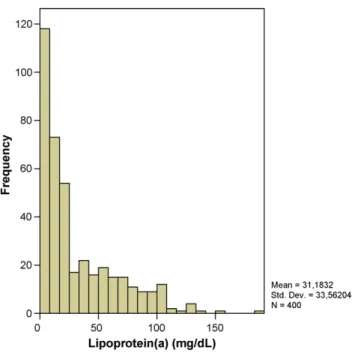
Fig. 1. Distribuition of lipoprotein(a) concentration (mg/dL) in the 400 indi-viduals studied.
in this population. Mean±standard deviation (S.D.) was 31.18±33.56 mg/dL and the median level 18.11 mg/dL. The distribution of log transformed Lp(a) values was normal and used in all subsequent analysis. Thirty-six percent of indi-viduals presented Lp(a) levels above 30 mg/dL, whereas null values of Lp(a) occurred in around 15.5% of studied individ-uals.
Table 1 presents the univariate analysis of Lp(a) levels in comparison to demographic and behavior variables. No significant difference was found between Lp(a) serum lev-els regarding gender. Age was significantly associated with Lp(a) levels; individuals aged 60 years and older presented
Table 1
Lipoprotein(a) level in accordance to demographic and behavior variables
Variables n Mean±S.D. p-Value
Gender 0.893
Female 294 31.29±33.54a
Male 106 30.88±33.79a
Total 400 31.18±33.56a
Age (years) 0.041
15–19 34 27.84±30.25a
20–39 124 28.86±34.52a
40–59 148 30.06±34.22a
≥60 94 37.22±32.10b
Total 400 31.18±33.56
Smoking 0.274
Non-smoker 228 33.17±34.53a Ex-smoker 100 31.10±33.20a
Smoker 68 25.70±31.20a
Total 396 31.37±33.67
Similar superscript characters (a and b) indicate no significant difference within groups.
Table 2
Lipoprotein(a) levels in accordance to biochemistry variables
Variables n Mean±S.D. p-Value
LDL-c (mg/dL) 0.008
≤129 348 28.50±31.81a
130–159 39 47.87±41.72b
≥160 8 53.52±34.94b
Total 395 30.92±33.54
Total cholesterol (mg/dL) 0.003
<200 271 26.29±30.06a
200–239 98 40.16±39.19b
≥240 31 45.52±34.50b
Total 400 31.18±33.56
HDL-c (mg/dL) 0.56
>60 237 33.25±34.65a
40–60 161 28.05±31.87a
<40 2 37.70±29.41a
Total 400 31.18±33.56
Triglycerides (mg/dL) 0.217
>200 308 29.61±33.03a
150–199 46 37.53±37.92a
<150 42 34.20±31.96a
Total 396 31.02±33.55
Fasting glucose (mg/dL) 0.378
<110 328 30.10±33.17a
110–126 37 36.59±34.70a
>126 33 34.57±34.79a
Total 398 31.18±33.56
Similar superscript (a and b) characters indicate no significant difference within groups.
higher Lp(a) levels [37.22 mg/dL (IC 95%, 30.65–43.80)] than individuals between ages 15 and 19 years [27.84 mg/dL (IC 95%, 17.29–38.40)], as well as between ages 20 and 39 years [28.86 mg/dL (IC 95%, 22.73–35.0)]. Individuals aged between 40 and 59 years presented borderline Lp(a) mean levels [30.06 mg/dL (IC 95%, 24.50–35.62)]. There were no significant differences in Lp(a) levels concerning smoking status.
Lp(a) was correlated to biochemical variables as described inTable 2. Univariate analysis of mean Lp(a) levels were similar in individuals with LDL-c classified as moderate [47.87 mg/dL (IC 95%, 32.22–47.49)] and high [53.52 mg/dL (IC 95%, 32.87–58.18)]. Both Lp(a) levels at moderate and high LDL-c were significantly higher than in individuals with normal LDL-c [28.50 mg/dL (IC 95%, 22.62–29.89)]. Correspondingly, in individuals with moderate and high total cholesterol the mean Lp(a) levels [40.16 mg/dL (IC 95%, 32.29–48.02) and 45.52 mg/dL (IC 95%, 32.86–58.17), respectively] were significantly higher in comparison to Lp(a) in individuals within the normal range of total cholesterol [26.29 mg/dL (IC 95%, 22.67–29.88)]. In contrast, no signif-icant associations were found for Lp(a) levels and HDL-c, triglycerides and fasting glucose.
Table 3
Lipoprotein(a) level in accordance to anthropometric variables
Variables n Mean±S.D. p-Value
Body mass index (kg/m2)
<18.5 6 41.85±35.95a 0.686
18.5–24.9 172 29.01±32.49a 25.0–29.9 130 32.23±32.01a
>30.0 92 33.07±37.55a
Total 400 31.18±33.56
Waist circumference (cm)*
Normal 169 29.02±32.84a 0.524
Overweight 85 28.16±29.44a
Obesity 142 34.85±36.24a
Total 396 30.93±33.47
Waist hip ratio**
Without risk 183 27.68±32.05a 0.111 With risk 213 33.72±34.48a
Total 396 30.93±33.47
Body fat by TANITA®***
Low weight 10 26.53±26.62a 0.367
Normal 176 27.85±30.53a
Overweight 98 31.12±33.24a
Obesity 111 36.33±38.34a
Total 395 31.01±33.55
Body fat by OMRON®****
Low weight 29 26.02±30.53a,b 0.017
Normal 100 22.18±26.98a
Overweight 91 30.64±31.58b
Obesity 163 37.35±37.28b
Total 383 30.93±33.48
Similar superscript characters (a and b) indicate no significant difference within groups. The cut off were defined by[18],*[19],**[20],***[21].****
body mass index (p= 0.69), waist circumference (p= 0.52) and waist-to-hip ratio (p= 0.11). Inversely, Lp(a) levels of obese individuals [37.35 mg/dL (IC 95%, 31.56–43.11)] as determined by bioelectric impedance (OMRON) were significantly higher (p= 0.02) than in low and normally weight individuals [26.02 mg/dL (IC 95%, 14.41–37.64) and 22.18 mg/dL (IC 95%, 16.82–27.53), respectively]. Further to these results, although obesity as measured by an alter-native impedance method (TANITA scale) showed no sig-nificant differences in Lp(a) values (p= 0.37), a consistent trend of increasing was observed with this method in obese [36.33 mg/dL (IC 95%, 29.12–43.54) in comparison to low weight individuals [26.53 mg/dL (IC 95%: 7.45–45.57)].
Regarding the clinical variables, Lp(a) levels did not alter significantly as a consequence of changes in the sys-tolic (p= 0.38) and diastolic blood pressure (p= 0.81) as shown inTable 4. On the contrary, significantly higher lev-els of Lp(a) were found in individuals with ischemic heart disease [44.81 mg/dL (IC 95%, 31.61–58.02); p= 0.03] as compared to individuals with no clinical and electrocardio-grafic patterns of myocardial ischemia [29.92 mg/dL (IC 95%, 26.53–33.30)].
Table 4
Lipoprotein(a) level in accordance to clinical variables
Variables n Mean±S.D. p-Value
Systolic blood pressure (mmHg)
<130 169 28.37±32.19a 0.384
130–139 65 29.49±36.79a
140–159 78 30.14±32.53a
160–179 45 35.69±34.66a
>180 34 38.47±32.06a
Total 391 30.63±33.33
Diastolic blood pressure (mmHg)
<85 209 30.52±33.86a 0.814
85–89 25 19.23±22.39a
90–99 72 32.91±32.64a
100–109 55 34.89±37.61a
>110 30 27.62±29.77a
Total 391 30.63±33.33
Ischemic heart disease
No 366 29.92±32.90a 0.033
Yes 34 44.81±37.83b
Total 400 31.18±33.56
Similar superscript characters (a and b) indicate no significant difference within groups.
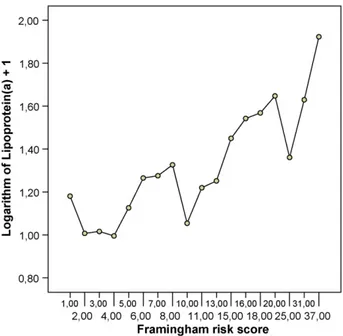
Fig. 2 shows that Lp(a) levels vary as a function of Framingham risk score (p= 0.003). However, Lp(a) was not shown to be an independent factor, because interactions were observed between ischemia and cholesterol and age (p= 0.04) as well as with gender and age (p= 0.03). In non-ischemic subjects as higher are the cholesterol more elevated are the Lp(a) levels regardless of age. In contrast, in ischemic sub-jects over age of 60 years the Lp(a) decreased with the increase of cholesterol levels, whereas the same tendency was not observed in individuals between 40 and 59 years.
Additionally, in non-ischemic participants Lp(a) did not vary significantly with age, although in ischemic males it was higher under 60 years and higher in females between 40 and 59 years.
4. Discussion
In our population cohort Lp(a) mean levels (31.18± 33.56) were similar to that observed in France by Boyeret al.[10]. The distribution of Lp(a) was asymmetrical with a high frequency of null (15.5%) or low values, as observed by other authors[10,13,24]. These low values could be due to differences in methods’ sensibility. Alternatively, low Lp(a) values may also reflect low or absent Lp(a) synthesis by some individuals as a function of Apo(a) non-expression [25].
Our study showed that Lp(a) levels were significantly associated with age, LDL-c, total cholesterol, body fat and IHD. Leinoet al.[24]also observed higher levels of Lp(a) in individuals aged 60 years or older in both sexes as com-pared to younger individuals. Likewise, association with lipid parameters was found by Boyeret al.[10]in a population of 1000 dyslipidemic individuals with mean age of 45 years. Unlike those observed in our study, these authors reported significant correlation between Lp(a) levels with all lipid parameters (total cholesterol, LDL-c, tryglicerides, HDL-c and apoB). The disHDL-crepanHDL-cies between our data and the results of these authors may be due to the low prevalence of hipertrygliceridemia and low HDL-c in our population (data not published).
Some authors suggest that the dosage of Lp(a) can be use-ful to evaluate the risk of coronary artery disease in diabetic patients [8,9]. Gazzaruso et al. [8], for instance, observed that higher levels of Lp(a) may be used as predictors of coronary artery disease (CAD) severity in type 2 diabetic patients. Habib and Aslam [9] concluded that Lp(a) levels were significantly elevated in diabetics as compared to non-diabetic; however, in agreement with our data, no correlation between Lp(a) and fasting glucose was verified. Neverthe-less, we emphasize that only a single glucose determination was accomplished in our study. Hence, relationship between Lp(a) levels and diagnosis of diabetes may not be disregarded [23].
As also referred elsewhere [12–13], our study did not exhibit a significant association between obesity, as defined per body mass index, and Lp(a). Of particular importance in this analysis is the evidence that BMI is not a specific anthro-pometric measurement for determination of body fat content [26], therefore not standing as the ideal index to evaluate the association between Lp(a), obesity and CVD. The location of body fat deposits seems to be especially important to predict alterations in the lipid metabolism[27]and, consequently, on the Lp(a) levels. Different authors have observed associ-ation between obesity and Lp(a) only when parameters that evaluate the percentage and location of body fat content were
used[13,28]. When we measured the proportion of body fat a significant association between Lp(a) and this parameter was observed; occurrence not verified, on the other hand, with other variables that indicate body fat distribution as waist cir-cumference and waist-to-hip ratio. In general, no significant association trend was observed between all obesity-related indices and Lp(a) levels.
In spite of the various influences that the smoking habit may exert on lipid metabolism, a positive association between tobacco use and Lp(a) levels was not verified either in this study or elsewhere[29]. With respect to blood pressure, we have not demonstrated any association between systolic or diastolic components of arterial blood pressure and Lp(a) levels. Similarly, Catalanoet al.[7], examining hypertensive and non-hypertensive individuals, did not observe differences in concentration of Lp(a). However, regardless of their results these authors suggested that high levels of Lp(a) could be the first pathological hint of target-organ damage.
In our cohort levels of Lp(a) were significantly higher in individuals with electrocardigraphic evidence of ischemic heart disease than in those without it. Agewall and Fagerberg [30]in a prospective study of 118 men, aged 56–77 years, observed that subjects with coronary heart disease (previous myocardial infarction, angina, or major electrocardiographic changes) had significantly higher Lp(a) levels than subjects without known coronary heart disease. These authors con-cluded that Lp(a) was an independent predictor of major coronary events.
In spite of the association between Lp(a) and the Fram-ingham risk score as reported in our cohort, our multivariate analysis found that Lp(a) was not considered an independent risk factor for ischemic heart disease. Inversely, recently pub-lished data[31]indicated that elevated Lp(a) increased the risk for myocardial infarction and angina, especially in men with a high LDL-c levels. Paradoxically, results published elsewhere[32]considered Lp(a) as an independent predictor of stroke, death from vascular disease and death from any cause in older men.
In light of our results we conclude that Lp(a) levels varied significantly, as a function of age, with ischemic heart disease as well as with other lipid parameters in the setting examined. Even though our findings support the relevant association of elevated Lp(a) and occurrence of myocardium ischemia, specially in older adults, additional data remain to be acquired on future studies as to clarify more comprehensively whether Lp(a) should play a role as a screening tool in the quotidian clinical practice.
Acknowledgments
grants from UFOP and CAPES, in addition to supplemen-tary funding from UNIMED Inconfidentes, Alcan Alum´ınio do Brasil and Secretaria Municipal de Sa´ude de Ouro Preto.
References
[1] OPAS (Organizaci´on Panamericana de la Salud). Tendencias demogr´aficas y de mortalidad en la regi´on de las Am´ericas, 1980–2000. Bol Epidemiol 2002;23(3):1–4.
[2] Armaganijan D, Batlouni M. Impacto dos fatores de risco tradicionais. Rev Soc Cardiol Estado de S˜ao Paulo 2000;10(6):686–93.
[3] Harjai KJ. Potencial new cardiovascular risk factors: left ventricu-lar hypertrophy, homocysteine, lipoprotein(a), triglycerides, oxidative stress and fibrinogen. Ann Intern Med 1999;131:376–86.
[4] Koschinsky ML, Marcovina SM. Structure–function relationships in apolipoprotein (a): insights into lipoprotein(a) assembly and pathogenicity. Curr Opin Lipidol 2004;15(2):167–74.
[5] Koschinsky ML, Marcovina SM. Evaluation of lipoprotein(a) as a pro-thrombotic factor: progress from bench to bedside. Curr Opin Lipidol 2003;14(4):361–6.
[6] Angl´es-Cano E. Structural basis for the pathophysiology of lipopro-tein (a) in the athero-thrombotic process. Braz J Med Biol Res 1997;30:1271–80.
[7] Catalano M, Perilli E, Carzaniga G, et al. Lp(a) in hypertensive patients. J Hum Hypertens 1998;12:83–9.
[8] Gazzaruso C, Bruno R, Pujia A, et al. Lipoprotein(a), apolipoprotein(a) polymorphism and coronary atherosclerosis severity in type 2 diabetic patients. Int J Cardiol 2006;108(3):354–8.
[9] Habib SS, Aslam M. Lipids and lipoprotein(a) concentrations in Pakistani patients with type 2 diabetes mellitus. Diab Obes Metab 2004;6:338–43.
[10] Boyer H, Gennes JL, Truffert J, et al. Lp(a) levels in different types of dyslipidemia in the French population. Atherosclerosis 1990;85:61– 9.
[11] Wang J, Zhang C, Chen D, Liu X, Feng X. Lipoprotein (a) and its immune complexes in dyslipidemic subjects. Clin Biochem 2004;37:710–3.
[12] Lamon-Fava S, Wilson P, Schaefer EJ. Impact of body mass index on coronary heart disease risk factors in men and women. Arterioscler Thromb Vasc Biol 1996;16:1509–15.
[13] Chien K-L, Lee Y-T, Sung F-C, et al. Lipoprotein (a) level in the population in Taiwan: relationship to sociodemographic and atherosclerotic risk factors. Atherosclerosis 1999;143: 267–73.
[14] Akanji A, Al-Shayji I, Kumar P. Metabolic and anthropometric deter-minants of serum Lp(a) concentrations and apo(a) polymorphism in a healthy Arab population. Int J Obes 1999;23:855–62.
[15] IBGE (Instituto Brasileiro de Geografia e Estat´ıstica). Contagem pop-ulacional; 1996.
[16] Mion J´unior D. (Coord.). IV Diretrizes Brasileiras de Hipertens˜ao Arterial. Sociedade Brasileira de Hipertens˜ao, Sociedade Brasileira
de Cardiologia, Sociedade Brasileira de Nefrologia. http:// publicacoes.cardiol.br/consenso/2004/Diretriz%20HA%20ENG.pdf; September 2002.
[17] World Health Organization. WHO Expert Committee on Physical Sta-tus: the use and interpretation of anthropometry physical status. Geneva: World Health Organization; 1995 [WHO Technical Report Series, vol. 854].
[18] Han TS, Van Leer EM, Seidell JC, Lean MEJ. Waist circumference action levels in the identification of cardiovascular risk factors: preva-lence study in a random sample. BMJ 1995;311:1401–5.
[19] Pereira RA, Sichieri R, Marins VMR. Raz˜ao cintura/quadril como preditor de hipertens˜ao arterial. Cad Sa´ude P´ublica 1999;15(2): 333–44.
[20] Gallagher D, Heymsfield SB, Heo M, et al. Healthy percentage body fat ranges: an approach for developing guidelines based on body mass index. Am J Clin Nutr 2000;72:694–701.
[21] Instruction manual body fat monitor Omron BF 300, available at http://www.omron-healthcare.com/[accessed on 20/03/2003]. [22] National Institutes of Health Third Report of the National
Choles-terol Education Program. Expert Panel on Detection, Evaluation and Treatment of High Blood Cholesterol in Adults (Adult Treatment Panel III). National Cholesterol Education Program. National Heart, Lung, and Blood Institute. National Institutes of Health. Washington DC, US. NHI Publication. 01-3670; 2001. http://www.nhlbi.nih.gov/guidelines/cholesterol/atp3full.pdf (March 25, 2000).
[23] Sociedade Brasileira de Diabetes Consenso Brasileiro de Conceitos e Condutas para o Diabetes Mellitus Recomendac¸˜ao da Sociedade Brasileira de Diabetes para a Pr´atica Cl´ınica. Federac¸˜ao Internacional de Diabetes/Associac¸˜ao para a Am´erica do Sul e Caribe October; 2000. http://www.anad.org.br/consenso.htm(May 12, 2001).
[24] Leino A, Impivaara O, Kaitsaari M, J¨arvisalo J. Serum concentrations of apolipoprotein A-1, Apolipoprotein B and lipoprotein(a) in a population sample. Clin Chem 1995;41:1633–6.
[25] Utermann G. Genetic architecture and evolution of the lipoprotein(a) trait. Curr Opin Lipidol 1999;10:133–41.
[26] Frankenfield DC, Rowe WA, Cooney RN, Smith JS, Becker D. Limits of body mass index to detect obesity and predict body composition. Nutrition 2001;17:26–33.
[27] Despr´es JP. The insulin resistance-dyslipidemic syndrome of visceral obesity: effect on patients’ risk. Obes Res 1998;6:8–17.
[28] Sattar N, Tan C, Han T, et al. Associations of indices of adiposity with atherogenic lipoprotein subfractions. Int J Obes 1998;22:432–9. [29] Sanz EJ, Cazurro AM, Bellido AL, Martin IML. Cigarette consumption
and lipoprotein(a) concentrations. Clin Chem 1996;42:479.
[30] Agewall S, Fagerberg B. Lipoprotein (a) was an independent predictor for major coronary events in treated hypertensive men. Clin Cardiol 2002;25:287–90.
[31] Luc G, Bard JM, Arveiler D, et al. Lipoprotein (a) as a predic-tor of coronary heart disease: the PRIME Study. Atherosclerosis 2002;163:377–84.