RESPONSES OF HIGHER
PLANTS TO BORON
DEFICIENCY
Dissertation presented to obtain the degree of Doctorate in Biochemistry by Instituto de Tecnologia Química e Biológica of Universidade Nova de Lisboa
Marta Alexandra Marques Alves
RESPONSES OF HIGHER PLANTS TO
BORON DEFICIENCY
Marta Alexandra Marques Alves
Dissertation presented to obtain the degree of Doctorate in Biochemistry by
Instituto de Tecnologia Química e Biológica of Universidade Nova de Lisboa
Supervisor: Dr. Cândido Pinto Ricardo
Co- supervisor: Dr. Phillip Jackson
June 2010
The investigation was co- financed by Fundação da Ciência e
Tecnologia ( FCT) POCI 2010 and Fundo Social Europeu ( FSE)
Work performed at:
Plant Biochemistry Laboratory
Instituto de Tecnologia Química e Biológica ITQB- UNL
Av. da República - Estação Agronómica Nacional 2780- 157 Oeiras
Portugal
Supervisor
Cândido Pinto Ricardo
Full Professor of Plant Physiology at Departamento de Botânica e Engenharia Biológica
( Instituto Superior de Agronomia, Universidade Técnica de Lisboa)
Head of the Plant Biochemistry group at Instituto de Tecnologia Química e Biológica
( Universidade Nova de Lisboa)
Co- supervisor Phil Jackson
Head of the Plant Cell Wall group at Instituto de Tecnologia Química e Biológica
To my best friend, husband and father of my child,
“Al t hough nat ur e commences wit h r eason and ends in
exper ience it is necessar y f or us to do t he opposit e t hat is t o
commence wit h exper ience and f r om t his t o pr oceed t o
invest igat e t he r eason.”
Leonar do da Vinci
Primeiro que tudo queria agradecer à minha família! Em primeiro
lugar, quero agradecer à minha Mãe por me ter dado a
oportunidade de fazer as minhas conquistas e pelo seu apoio
incondicional. Foi, em grande parte, graças a ti que cheguei até
aqui! Muito, muito obrigada! Ao Paulo, quero apenas agradecer por
ser quem é, um excelente Amigo, maravilhoso Companheiro e
sempre Pai atento! É um privilégio poder partilhar todos os
momentos da minha vida contigo, incluindo este! Apesar de ser
ainda uma criança quero também agradecer ao Ricardo a constante
alegria com que enche o meu dia a dia! Finalmente, quero
agradecer ao Zé e à Fernanda, pelos pedacinhos de tranquilidade
que proporcionam…
A nível de trabalho quero agradecer principalmente ao Prof. Pinto
Ricardo pela oportunidade que me deu, por me ter aberto as portas
do laboratório, onde desenvolvi todo este trabalho. Aprendi muito
consigo, não só a nível profissional, como também a nível pessoal!
Quero também agradecer ao Phil, pelas suas sugestões científicas e
espírito crítico. Para o Nelson Saibo, tenho um obrigada muito
especial, não só pela ajuda no desenvolvimento do trabalho de
bancada, mas também pelo teu ‘ dom’ da assertividade! Deste- me
conselhos em alturas cruciais da minha carreira que fizeram toda a
trabalho… Apesar de ser trabalho, as pessoas que nos rodeiam
fazem a diferença para que o dia corra melhor. De facto, tenho
que agradecer à Carla Pinheiro, à Inês Chaves, à Catarina
Rodrigues e à Isa Ribeiro por me terem proporcionado bons
momentos, cada uma à sua maneira! Obrigada a todas! Não podia
deixar de agradecer à Carla as pertinentes discussões científicas, e
à Inês o profícuo trabalho que desenvolvemos em conjunto.
Neste meu percurso científico tive oportunidade de me cruzar com
diversas pessoas. Uma muito especial com quem trabalhei na
quantificação de boro foi a Diana Martins. Não podia deixar de
agradecer à Helena Matias pelo apoio dado no NMR, à Paula
Chicau na análise das amostras por HPLC e à Ana Fortunato pelo
apoio dado com o aparelho de RT- qPCR. Outras duas pessoas a
quem quero deixar um obrigada especial são o Jörg Becker, pela
sua paciência e claro, profissionalismo na análise de resultados dos
microarrays, e a Sofia Pereira que me guiou na análise dos
resultados do RT- qPCR.
I would like to thank to two lovely people that I had the opportunity
to meet, Paul Jenö and Suzette Moes, for their excellent work on
protein MS analysis and ready answers for my doubts.
Não me posso esquecer de agradecer a disponibilidade e prontidão
entraves ao trabalho.
Por fim, queria também agradecer ao Bruno Gouveia pelo apoio na
parte gráfica da tese. Obrigada!
Aqui no ITQB, consegui não só desenvolver trabalho com qualidade
científica, mas também grandes Amizades, que tornaram todo este
processo bem mais interessante! Não podia deixar de agradecer à
Rita Francisco pelos bons momentos conversa científica e não só…
MUITO OBRIGADA, Isabel Martins e Sónia Negrão por todo o
vosso apoio, não há palavras que cheguem… As conversas das
montanhadas, são contigo, Cláudia Santos, MUITO OBRIGADA pelo
teu acompanhamento! ... Estas são Amizades que espero guardar
Despite being known for more than 80 years that B is essential for
plant growth, the role of this element in plant metabolism remains
elusive. Until now, B involvement in the plant cell wall structure is
the only well- documented participation of B. However, this
participation can not explain all the symptoms observed in
B-deficient plants nor the requirement of B for early animal
developmental processes.
The aim of this study was to acquire additional data on the
role( s) of B in the growth and development of higher plants. For
that purpose, Lupinus albus, an important crop plant, was used to
study long- term B deficiency responses, characterizing the proteomes
of the leaf apoplast ( Chapter 2) and of the root system ( Chapter
3) . A metabolite analysis was also performed in the different organs
( leaf- blades, petioles, apexes, hypocotyls and roots) of L. albus
plants ( Chapter 4) . Some consistent responses were observed with
these different approaches. The analysis of the metabolite content of
Lupinus albus plants, showed minor changes in the content of
sugars and absence of variation in malate suggests that the central
carbohydrate metabolism is being little affected by B deficiency
( Chapter 4) . The proteome study of the root, revealed the
differentially expression of UDP- glucose pyrophosphorylase and of
seems to be able to continue even under stressful conditions.
Proteins related with the cell wall biosynthesis, namely of
polysaccharide components, were suppressed due to B deficiency
( Chapter 3) , probably as a consequence of the structural cell wall
damage. Some proteins related to protein folding and proteolytic
processes were suppressed while others were de novo expressed
( Chapter 3) , pointing for a shift in the protein metabolism,
probably to allow the plant to partially cope with B deficiency.
Several proteins related with cytoskeleton biosynthesis were also
affected by B deficiency, as for instance, tubulins and actins, that
were de novo expressed ( Chapter 3) . The additional increased
content of the branched- chain amino acids ( Chapter 4) , that could
be related with cytoskeleton biosynthesis, points for some active
involvement of B with cytoskeleton biosynthetic processes.
The long- term effects observed could result from both direct and
indirect stress responses, but the indirect effects could have some
degree of specificity to the stress, as suggested by the leaf
apoplast study ( Chapter 2) , since the majority of the proteins that
were commonly responsive to both B and water- deficit showed
different patterns of expression.
Short- term B deficiency responses were also investigated, performing
was observed, as well as genes related to branched- chain amino
acids. In analogy to what was discussed in the long- term
responses, the increased expression of these genes could be related
with impaired cytoskeleton biosynthesis. Genes related with sulphur
metabolism were also found to be differentially expressed due to B
deficiency. In particular, the expression of the three genes that
encode for 5'- adenylylsulfate reductase, a key enzyme of the
sulphate assimilation pathway, was decreased, what is a response
with similarity to sulphur excess in the plant.
Thus, altered cytoskeleton biosynthesis seems to be a common
response in short and long- term B deficiency studies, suggesting
that a direct interaction of B with cytoskeleton may exist. Such B
participation in plant metabolism is consistent with higher B
requirement in the earlier animal development and reproductive stage
in plants, where cytoskeleton is actively required for cell division
Apesar de ser conhecido há mais de 80 anos que o B é essencial
para o crescimento das plantas, o seu papel no metabolismo das
plantas continua por elucidar. Até agora, o envolvimento na estrutura
da parede celular das plantas é a única e bem documentada
participação do B que, no entanto, não parece ser suficiente para
explicar todos os sintomas observados nas plantas devido à
deficiência de B, nem o requisito de B nos processos iniciais do
desenvolvimento animal.
O objectivo deste estudo foi o de reunir informação adicional sobre
o papel do B no crescimento e desenvolvimento das plantas
superiores. Para isso utilizámos uma importante cultura agrícola, o
Lupinus albus, para os estudos das respostas à deficiência
prolongada de B, caracterizando o proteoma do apoplasto da folha
( Capítulo 2) e do sistema radicular ( Capítulo 3) . Foi também
efectuada uma análise metabólica nos diferentes órgãos desta planta
( folhas, pecíolos, ápices, hipocótilos e raízes) . Estas diferentes
abordagens permitiram obter algumas respostas consistentes.
Observou- se uma pequena variação nos teores de açúcares e a
ausência de variação nos teores de malato, o que sugere que o
metabolismo central dos hidratos de carbono está a ser pouco
afectado pela deficiência ( Capítulo 4) . O estudo do proteoma da
activação de vias metabólicas alternativas para a produção de
energia. A planta consegue, desta forma, manter o fluxo de
carbono apesar das condições de stress.
A biossíntese da parede celular parece ter sido afectada, dada a
supressão de proteínas relacionadas com síntese de polissacáridos
( Capítulo 3) , provavelmente como consequência de danos causados
na estrutura da parede celular. O rearranjo tridimensional das
proteínas e certos processos proteolíticos foram modificados ( capítulo
3) , indicando uma provavel alteração do metabolismo das proteínas
na deficiência de B.
Várias proteínas relacionadas com a biossíntese do citosqueleto
foram também afectadas pela deficiência de B, como por exemplo
tubulinas e actinas ( Capítulo 3) .
O aumento dos níveis de aminoácidos de cadeia ramificada que foi
observado ( Capítulo 4) poderá ser relacionado com o citosqueleto,
o que poderá reforçar a hipótese da participação do B na
biossíntese do citosqueleto.
Os efeitos da deficiência de B a longo prazo podem resultar de
respostas directas ou indirectas ao stress, mas, todavia, mesmo
sendo indirectos podem ter um certo grau de especificidade, como
sugere o estudo do proteoma do apoplasto da folha ( Capítulo 2) .
expressão.
A análise dos transcriptos da planta modelo Arabidopsis thaliana
( Capítulo 5) foi usada para investigar as respostas à deficiência de
B a curto prazo. Verificou- se a alteração da expressão de genes
relacionados com a parede celular, bem como de genes envolvidos
com os aminoácidos de cadeia ramificada. Analogamente com o que
foi discutido na resposta a longo prazo, o aumento da expressão
destes genes poderá estar relacionada com danos na biossíntese do
citosqueleto. Genes relacionados com o metabolismo do enxofre
foram também diferencialmente expressos devido à deficiência de B.
Em particular a expressão dos três genes que codificam para 5’
-adenililsulfato redutase, a enzima chave da via da assimilação do
enxofre, diminuiu, uma resposta que se assemelha a excesso de
enxofre nas plantas.
Assim, os resultados obtidos tanto a longo como a curto prazo
apontam para uma possível relação entre a deficiência de B e o
citosqueleto. Esta sugestão é consistente com o elevado requisito de
B tanto na fase reprodutiva das plantas como na fase inicial do
desenvolvimento animal, nas quais o citosqueleto é activamente
ABBREVIATIONS xxiii
CHAPTER 1 General Introduction 1
Introduction 3
The chemistry of boron 3
Boron in plants 5
Uptake and transport 6
Cell wall 8
Cellular membrane 10
Oxidative damage 11
Photosynthesis 12
Signalling 12
Boron in other living organisms 13
Animals 13
Unicellular Organisms 15
Scope of this Thesis 17
References 18
CHAPTER 2 Analysis of Lupinus albus leaf apoplastic
proteins in response to boron deficiency 27 Summary
Introduction
Materials and Methods Plant material Boron determination
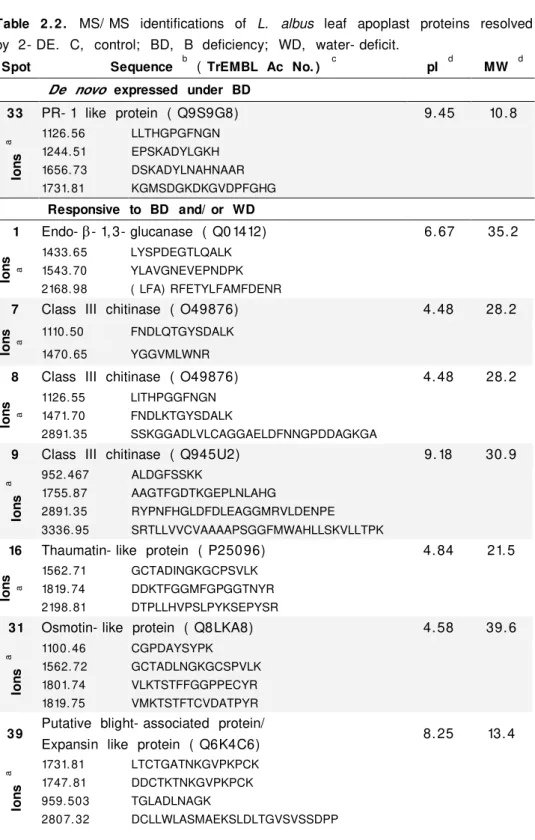
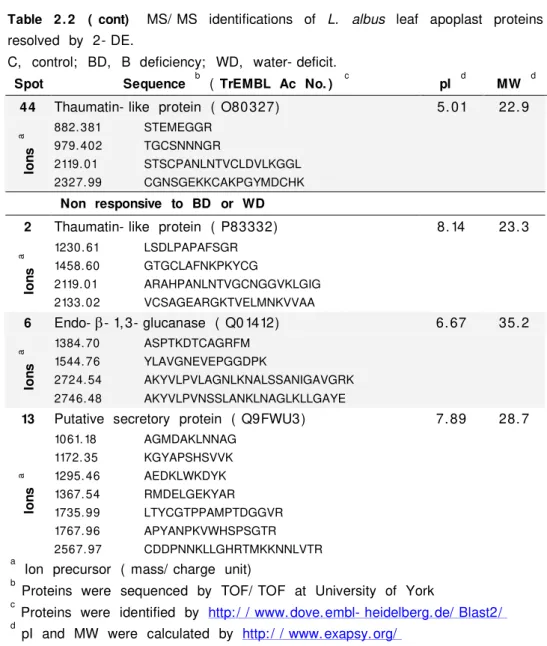
Extraction of soluble apoplastic proteins Two- dimensional gel electrophoresis ( 2- DE) Protein identification by MS/ MS
Results
Determination of suitable B concentration for L. albus growth
Morphological and physiological effects of B deficiency Protein analysis by 2- DE
CHAPTER 3 The analysis of Lupinus albus root proteome revealed cytoskeleton altered features due to
long- term boron deficiency 55
Summary Introduction
Materials and Methods Plant Material
Protein extraction and solubilisation Two- dimensional gel electrophoresis Two- dimensional gel analysis In- gel digestion
MS/ MS analysis Results and Discussion
Morphological effects of B deficiency Quantitative variations of the root proteome Metabolic changes associated with B deficiency Conclusions Acknowledgements References 58 58 59 59 60 60 61 62 62 64 64 65 67 85 85 86
CHAPTER 4 Metabolic analysis revealed altered amino acid
profiles in Lupinus albus organs due to boron
deficiency 93
Summary Introduction
Materials and Methods Plant Material Metabolite analysis Statistical analysis Results and Discussion
Biomass analysis of L. albus plants grown under B deficiency
deficiency in Arabidopsis revealed altered
sulphur metabolism 117
Summary Introduction
Materials and Methods
Plant material and growth conditions Boron quantification
RNA Isolation, Target Synthesis and Hybridization to Affymetrix GeneChips
GeneChip Data Analysis
Reverse transcriptase quantitative real- time PCR ( RT- qPCR) analysis
Gene annotation Results and Discussion
Morphological symptoms of B deficiency Boron levels in the different treatments
Gene expression analysis and functional categorization Conclusions
Acknowledgements References
Supplementary data
120 121 123 123 123 124 125 127 128 129 129 129 129 147 148 148 159
CHAPTER 6 General discussion and Future Perspectives 243
General Discussion
Long- term B deficiency effects Short- term B deficiency effects
A plausible hypothesis for B participation in plant metabolism
ABBREVIATION FULL FORM
pd Water potential at pre- dawn
2- DE Two- dimensional gel electrophoresis
A Apexes
A4SA Aspartate 4- semialdehyde
ABA Abscisic acid
ACT Actin
AI Auto- inducer
APR 5'- Adenylyl sulphate reductase
APS Ammonium persulphate
ATGH9CE Glycosyl hydrolase 9C2
ATMGL Methionine gamma- lyase
ATP Adenosine triphosphate
B Boron
BCAA Branched- chain amino acid
BCAT Branched- chain amino acid aminotransferase
BD Boron deficiency
Ca Calcium
CCR Cinnamoyl- CoA reductase
cDNA Complementary DNA
CHAPS 3- [ 3- Cholamidoproplyl( dimethylammonio) ] - 1-propanesulphonate
CND Chloroplast nucleoid DNA
CoA Coenzyme A
Ct Cycle threshold
DNA Deoxyribonucleic acid
DTT Ditiothreitol
EXP5 Expasin5
FDR False discovery rate
FMO GS- OX Flavin- containing monooxygenases
FW Fresh weight
GABA - Aminobutyric acid
GO Gene ontology
GTP Guanosine triphosphate,
H Hypocotyls
HPLC High liquid performance chromatography
Hsp Heat shock protein
ICP- AES Inductively coupled plasma- atomic emission spectrometry
IEF Isoelectric- focusing
IPG Immobilized pH gradient
IVT In vitro transcription
L Leaf- blades
LSU Low sulphur upregulated
MALDI- TOF- TOF Matrix assisted laser desorption/ ionization- time of flight-time of flight
MCCA 3- Methylcrotonyl- CoA carboxylase
MDH Malate dehydrogenase
MIOX myo- Inositol oxygenase
MIP Major intrinsic protein
MS Mass spectrometry
MS5 Male sterility5
MS/ MS Tandem mass spectrometry
MW Molecular weight
NAC Nascent polypeptide- associated complex
NAD Nicotinamide adenine dinucleotide
NADH Reduced form of NAD
NADP Nicotinamide adenine dinucleotide phosphate
NADPH Reduced form of NADP
NL Non linear
NMR Nuclear magnetic resonance
NS1 Nicotianamine synthase
ODP Ovule development protein
P Petioles
PAGE Polyacrylamide gel electrophoresis
PAR Photosynthetic active radiation
pI Isoelectric point
PME Pectin methylesterase
PMEI Pectin methylesterase inhibitor
PP2A Protein phosphatase 2A subunit A3
PR Pathogenesis Related
PVP Polyvinylpyrrolidone
R Roots
RG- II Rhamnogalacturonan- II
RhaT Rhamnosyltransferase
RT- qPCR Reverse transcriptase quantitative real- time polymerase chain reaction
RuBisCO Ribulose- 1,5- bisphosphate carboxylase- oxygenase
SDR Short- chain dehydrogenase/ reductase
SDS Sodium dodecyl sulphate
ST Sulfotransferase
TAIR The Arabidopsis information resource
TCA Trichloroacetic acid
TF Transcription factor
TRE Trehalase
Tris Tris ( hydroxymethyl) aminomethane
TUB Tubulin
UBC10 Ubiquitin- conjugating enzyme E2
UDP Uridine diphosphate
USP Universal stress protein
CHAPTER 1
INTRODUCTION
The importance of boron ( B) for living organisms is quite puzzling.
The dramatic effect of its deficiency in plants was first noticed
almost one century ago, and current evidence suggests that B might
be necessary for most organisms. Despite this, its precise functions
in the metabolism of plants and other organisms remain to be
elucidated. The study of B roles in metabolism is therefore, a
subject of central interest in biology. In particular, in agriculture, B
deficiency is a widespread problem and large yield losses are
reported to occur annually. In Portugal, Olive ( Olea europaea) ,
Apple ( Malus domestica) and Pear ( Pyrus communis) are the fruit
trees most affected by B deficiency. In the Douro region, grapevine
“ maromba” anomaly was found to be due to B deficiency, while in
the Alentejo pastures this deficiency is known to causes a significant
decrease in growth of legume plants.
THE CHEMISTRY OF BORON
The chemistry of B is unique and, after carbon, B might be the
most intriguing and complex of elements ( Greenwood and Earnshaw
1984) . Along with other light elements, like lithium and berilium, B
originates from the Big Bang nucleosynthesis or galactic cosmic- ray
abundance is extremely low: only about 10–9 times that of hydrogen
and about 10–6 that of carbon. However, in spite of its low
abundance in the Universe, B is widely distributed in the Earth’ s
crust ( from 5mg kg–1 in basalts to 100mg kg–1 in shales) , in the
sea water ( 1- 10mg L–1) and in the rivers ( 3- 30
µ
g L- 1) ( Powerand Woods 1997) . Boron is a small atom with only three valence
electrons that belongs to the semiconductor group of elements with
properties intermediate between metals and non- metals. In the
industry, B is widely used and the main commercial productions and
materials are colemanite, ulexite, borax, borax- pentahydrate, sodium
perborates as well as boric acid. The major usage of B includes
insulators, fire prevention materials, enamel coating, laundry bleach
( sodium perborate) , glass fibers, borosilicate glass, frit, ceramic
glazes, chemical fertilizers ( as a trace element for agriculture) and
herbicides ( WHO 1998) . Tetrahedral borate or boronate complexes
have been shown to be involved in enzyme inhibition. Serine
proteases were proposed to be inhibited by boronic acid compounds
( Yang et al. 2003) and simple borates have been patented as
protease stabilizers in liquid detergent formulations ( Hora and Kivits
1981, Severson 1985) .
At a near- neutral pH found in most biological fluids, B exists
B HO OH HO B HO HO O O C C B O O O O C C C C HO HO C C HO HO C C HO HO C C
Compounds containing cis- hydroxyl groups
Boric acid Diol esters
B
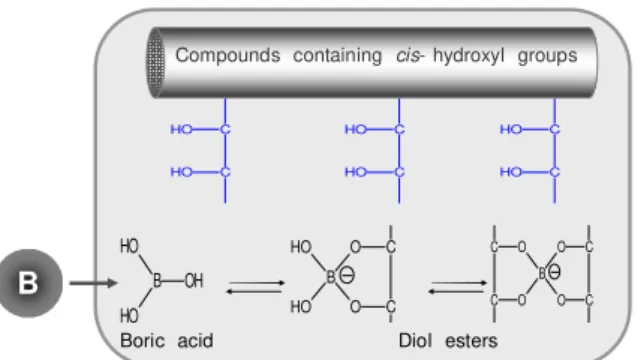
Figure 1. 1. Esterification reactions of boric
acid, B( OH) 3 with compounds containing
cis- hydroxyl groups to form diol esters.
anion, B( OH) 4–
( Woods 1996) . Both
boric acid and borate
readily form complexes
with a wide variety of
sugars and other
compounds containing
cis- hydroxyl groups
( Loomis and Durst 1992) such as phenols, organic acids and
some polymers ( Figure 1.1; Boesekem 1949, Raven 1980) . Except
for complexes with polyols little is known about B binding inside the
cell.
BORON IN PLANTS
Boron was established as an essential micronutrient for all vascular
plants in the early 1920s ( Warington 1923) , but only recent
research findings have improved our understanding of B interaction in
plants for B uptake and transport processes, cell- wall formation and
cellular membrane functions ( Goldbach and Wimmer 2007, Bonilla
et al. 2009) . Boron participation in other processes was also
proposed, including anti- oxidative systems ( Cakmak and Römheld
1997, Koshiba et al. 2009) and signalling ( Redondo- Nieto et al.
Uptake and Transport
In soils, B occurs as borosilicates, which are resistant to weathering
and not readily available to plants. Mobilisation of immobile forms of
rock B occurs by acid- base, oxidation- reduction and
dissolution-precipitation reactions. The dominant species in the soil, when B
from primary silicates goes into solution is boric acid, B( OH) 3. This
form of B is mobile and easily lost by leaching, but in this form it
can be taken up by plants, held by organic matter or temporarily
adsorbed on fine fractions ( Nable et al. 1997) . Depending on B
availability, boric acid uptake by roots can de carried out by several
molecular mechanisms such as passive diffusion across the lipid
bilayers, facilitated transport by major intrinsic protein ( MIP)
channels, and also by energy- dependent high affinity transport
systems. Whereas the first two represent passive uptake systems,
which are constitutively present, the latter is induced by low B
supply ( Figure 1.2; Tanaka et al. 2008, Takano et al. 2008) .
Different proportions of sterols and longer chain fatty acids in the
plasma membrane of root cells significantly altered B uptake in
Arabidopsis thaliana mutants ( Dordas and Brown 2000) . Increased
membrane rigidity, as a response to chilling temperature, results in
a reduction of the membrane fluidity and permeability of root cells,
possibly contributing to the inhibition of B uptake in chilling- sensitive
identified as being up- regulated in B- deficient Arabidopsis plants.
The NIP5; 1 gene was identified in roots ( Takano et al. 2006) and
the NIP6;1 gene in shoots. The boric acid/ borate exporter BOR1 is
responsible for loading B into the xylem under both normal and
B-deficient conditions ( Takano et al. 2002) and its accumulation is
controlled by post- transcriptional mechanisms according to B
availability ( Takano et al. 2005) .
B OH OH HO B OH OH HO HO B OH OH
HO NIP5;1 BOR1 B
OH OH HO HO
Plasma membrane
B OH OH HO B OH OH HO HO B OH OH
HO NIP6;1 B OH
OH HO HO ROOT SHOOT Cytosol
Low B supply
B OH OH HO B OH OH HO HO B OH OH HO BOR1 B OH OH HO HO SHOOT and ROOT
Normal B supply
Plasma membrane
Cytosol
Plasma membrane
Cytosol BOR1 B OH OH HO +H2O
+H
2O
+H2O B OH OH HO B OH OH HO Xylem
+H2O
Figure 1. 2. Model of B transport mechanisms in plants. Under normal B supply,
Two potential BOR1 homologues were already found in a monocot
plant, Oryza sativa ( Nakagawa et al. 2007) and in eucalypt, a
tree ( Domingues et al. 2005) .
Boron moves from the roots with the transpiration stream and
accumulates in growing points of leaves and stems ( Blevins and
Lukaszewski 1998) . Nevertheless, B transport in the phloem
depends on the sugar or polyol molecules used by a particular
plant. Several B transport molecules were isolated and characterized,
such as sorbitol- B- sorbitol complexes from the floral nectar of peach
and mannitol- B- mannitol complexes from phloem sap of celery.
There is also evidence that dulcitol is a B transport molecule in
some species ( Blevins and Lukaszewski 1998) . Although it seems
that the B retranslocation is limited to sugar alcohol- producing
plants, recently it was demonstrated that B is retranslocated from
old tissues to younger tissues in response to short- term B
deficiency in lupin, which does not produce sugar alcohols ( Huang
et al. 2008) .
Cell wall
In the plant cell up to 90% of the cellular B is localized in the cell
wall ( Martini and Thellier 1993) , an important structure for
determining cell size and shape during plant development. The
proposed to have an important contribution to the cell wall
architecture, hence influencing the mechanical properties of growing
cell walls ( Kobayashi et al. 1996, O’ Neill et al. 1996, 2001) .
Boron cross- links through the diol bridges of the
rhamnogalacturonan- II ( RG- II) molecules creating binding sites for
B O
O O
O
X2 + Rhamnogalacturonan- II
Cell wall
Homogalacturonan
Figure 1. 3. Model showing pectin
rhamnogalacturonan- II molecules, of the plant cell wall, cross- linked by B. Through this cross- linking B contributes to the stabilization of the cell wall structure, additionally allowing a metal ion ( X2+) such as Ca, Mg, Pb, Ba or Sr to be bound to the B- RG- II complex ( Ishii and Matsunaga 2001) .
calcium ions
( Figure 1.3) ,
which will
further increase
the strength of
the B- RG- II
complexes
( Kobayashi et
al. 1999) .
Genetic studies employing the Arabidopsis thaliana mur1 mutant and
the haploid Nicotiana plumbaginifolia callus mutant nolac- H18
indicated that B- RG- II cross- linking is essential for normal plant
growth ( O’ Neill et al. 2001, Iwai et al. 2002) . The correct
establishing of an effective symbiosis between legume–Rhizobium is
also dependent on B availability that seems to be an important
component for the maintenance of the nodule cell wall structure
Cellular membrane
A structural role for B in membranes has also been proposed due
to the ability of B for linking or binding to hydroxyl- containing
constituents, such as phosphoinositides, glycoproteins, glycolipids
( Bonilla et al. 1997, Brown et al. 2002) . Thus, B may play a
role in the maintenance of membrane rheology, by modulating the
hydration and fluidity of lipid bilayers ( Verstraeten et al. 2005) ,
and might explain the altered membrane composition observed in
B-deficient plants. So, the lipid composition of membranes determines
the magnitude and direction of B deficiency effects ( Brown et al.
2002) . Other observations that point to a structural role of B in
membrane stabilization are modified permeability for potassium and
sugars, altered membrane- bound calcium levels and damage of the
peribacteroid membrane in nodules detected as a consequence of B
deficiency ( Goldbach and Wimmer 2007) . Indeed, B is described
to be an indispensable element for infection thread development and
nodule invasion ( Bolaños et al. 1996) . In Rhizobium- plant
interactions B seems to act as a modulator between the glycoprotein
matrix of the plant and the bacterial cell surface. In the absence of
B the glycoproteins can attach to the rhizobium cell surface,
preventing the interaction with the plant cell membrane, thereby
Several studies have indicated that B interferes with the functioning
of enzymes and other proteins of the plasma membrane. For
example, B deficiency alters the membrane potential, reduces the
activity of Fe- reductase and proton- pumping ATPase, and thus the
proton gradient across the plasma membrane. The plasma
membrane–bound oxidoreductase activity was also inhibited within
minutes of B deprivation ( Goldbach and Wimmer 2007) .
Despite the several observations for membrane damage upon B
deficiency, there are not yet concluding remarks for a structural role
for B in cellular membranes.
Oxidative damage
The accumulation of oxidative free radicals in cells, which is one of
the indirect consequences of B deficiency in root and leaf cells,
could be responsible for the impairment of membrane functions
( Cakmak and Römheld 1997) . In tobacco BY- 2 cells grown under
B deprivation, the accumulation of reactive oxygen species, higher
lipid peroxidation and decreased cellular ascorbate levels were
observed. The addition of lipophilic antioxidants suppressed the death
of B- deprived cells, suggesting that oxidative damage is the
immediate and major cause of cell death under B deficiency
Photosynthesis
Photosynthesis has been shown to be affected by B deficiency. The
existing evidence has been mostly obtained from in vivo experiments
with plants grown under extended periods of B deficiency ( Kastori
et al. 1995, El- Shintinawy 1999) , which raises the question
whether such effects reflect a requirement for B in photosynthesis,
or are related with the effects of B deficiency on other areas of
plant metabolism. In fact, preliminary experiments with isolated
spinach chloroplasts showed only weak effects, if any, under
B-deficient conditions. It is therefore quite feasible that the effects
observed in chloroplasts are secondary and caused by
growth-inhibition, which could indirectly cause a reduced sink activity and
an oversaturation of the electron acceptors of photosystems. These
possible effects may increase the rate of photo- oxidative damage in
response to further stresses ( Goldbach and Wimmer 2007) .
Signalling
The capacity of root exudates to induce the activity of nodulation
genes is modulated by B nutrition in the host plant. Exudates
derived from B- deficient pea plants led to a low level of nod- gene
expression. Infection thread development was arrested at very early
B- deficient nodules almost empty of bacteria ( Redondo- Nieto et al.
2001) .
González- Fontes et al. ( 2008) had proposed that B can have a
role as a cellular signal through its direct or indirect interaction with
transcription factors ( TFs) . The TF interaction with the target gene
might be modulated by intercellular B levels due to an eventual
direct linkage of B to the TF or to molecules that will then link to
a TF. Recently, the WRKY6 was described to be a TF essential
for the normal develpment of the roots of A. thaliana plants grown
under low- B conditions ( Kasajima et al. 2010) .
BORON IN OTHER LIVING ORGANISMS
Only some 20 years ago it was considered that B was essential for
animal development, including humans ( Nielson 1997) . Nowadays B
is considered of nutritional importance for a broad spectrum of
organisms, not only in plants and animals but also in bacteria and
yeast.
Animals
The identification of a mammalian homolog of the A. thaliana BOR1
transporter, the NaBC1, suggests the need for minimum B levels in
concentrations of borate activate the MAPK pathway and that the
knockdown of NaBC1 halted cell growth and proliferation provide
further evidence for an essential functional role of B in animal
metabolism. Several other reports showed that B was essential for
embryonic development, at least for vertebrates, where B deprivation
resulted in a high percentage of necrotic eggs and abnormal
development of the gut in Xenopus laevis ( Fort et al. 1999) . The
early stage of development is especially sensitive to B deficiency as
described for zebrafish ( Rowe and Eckhert 1999) . It is interesting
that Behrendt and Zoglauer ( 1996) also demonstrated that B was
required during the early phase of somatic embryogenesis in the
plant species, Larix decidua, where suspensor development formation
was blocked without a B supply.
It has been found that physiological concentrations of B reduced the
amount of insulin required to maintain plasma glucose ( Bakken and
Hunt 2003) , but in a number of nutritional studies, the beneficial
effects of B in animals seems to be related with bone metabolism.
For example, B supplementation of a low B diet reduced
gross-bone abnormalities in the vitamin D- deficient chick ( Bai and Hunt
1996) and enhanced the apparent absorption and retention of
calcium and phosphorus, and increased femur magnesium
concentrations in vitamin D- deficient rats ( Hegsted et al. 1991) . In
when B was supplemented to a low- B diet ( Armstrong et al.
2000) . Thus, the effect of B on bone metabolism could be one of
the essential functions of B in animals and humans.
Unicellular Organisms
Boron essentiality has been established for the growth of specific
types of bacteria, such as heterocystous cyanobacteria ( Bonilla et
al. 1990) and actinomycetes of the genus Frankia ( Bolaños et al.
1993) . Both types of microorganisms require B for the stability of
the envelopes that prevent access of nitrogenase- poisoning oxygen
when grown under N2- fixing conditions. Considering their different
chemical composition, the stabilization of these envelopes by B is
quite intriguing. In the heterocysts, B is present in an inner
laminated layer formed of specific glycolipids. In contrast, in Frankia,
B is found in a multilaminate vesicle wall composed of glycolipids
and neutral lipids with a very high proportion of long- chain
polyhydroxy, fatty acids or alcohols ( Berry et al. 1991) .
The discovery of a B- containing bacterial signal molecule, the
auto-inducer AI- 2, revealed a role for B in bacterial quorum sensing
( Chen et al. 2002) . Quorum sensing allows bacterial populations
to monitor cell density, leading to coordinated alteration of gene
expression, as the population increases ( Coulthurst et al. 2002) .
molecule for both, structure and function. The gene encoding the
AI- 2 synthase ( luxS) is widely conserved, raising the possibility
that AI- 2 might serve as a universal bacterial signal for
communication among species ( Chen et al. 2002, Winans 2002) .
This molecule could also serve as a B transporter, in a way that B
can be moved in or out of the cell, depending on growth or
environmental conditions ( Coulthurst et al. 2002) .
Several B containing compounds with antibiotic activity are produced
by several bacteria, such as Sorangium cellulosum and Streptomyces
sp. For instance, the Streptomyces antibioticus is responsible for the
production of boromycin, an antibiotic that inhibits the growth of
Gram- positive bacteria ( Rezanka and Sigler 2008) and the
replication of HIV- 1 ( Kohno et al. 1996) . Boron deficiency
significantly decreases Saccharomyces cerevisae growth rate as well
as population size. By analyzing log- phase mRNA of yeast grown
without B, several genes were seen to be differentially expressed,
namely those with functions in cell growth and maintenance ( Becker
SCOPE OF THIS THESIS
The aim of this thesis is to increase the knowledge on the
functions of B in higher plants. Two different plants, an important
legume crop highly susceptible to B deficiency, Lupinus albus, and
the model plant, Arabidopsis thaliana, were studied and several
approaches were tested.
Since it is known that B participates in the cell wall structure, a
first study consisted in the analysis of the protein profile of the leaf
apoplast of B- deficient L. albus ( Chapter 2) .
Nutrient imbalance in soils is primary sensed by the root system,
the organ responsible for sending signals to the shoot for growth
modulation. Alterations in the protein pattern of L. albus roots due
to B suppression were then analysed ( Chapter 3) .
Mineral stress can cause specific metabolic responses in the different
plant organs. The analysis of metabolites of several organs of L.
albus grown under B deficiency is described in Chapter 4.
To provide the insight into the early plant responses to B
deficiency, a transcriptional analysis of A. thaliana was performed,
as shown in Chapter 5.
The main conclusions of this work and proposed future perspectives
REFERENCES
Armstrong T, Spears J, Crenshaw T, Nielsen F ( 2000) Boron supplementation of a semi purified diet for weanling pigs improves feed efficiency and bone strength characteristics and alters plasma lipid metabolites. J Nutr 130: 2575–2581.
Bai Y, Hunt C ( 1996) Dietary boron enhances efficacy of cholecalciferol in broiler chicks. J Trace Elem Exp Med 9: 117–132.
Bakken N, Hunt C ( 2003) Dietary boron decreases peak pancreatic in situ insulin release in chicks and plasma insulin
concentrations in rats regardless of vitamin D or magnesium status. J Nutr 133: 3577–3583.
Becker K, Bennett A, Eckhert C ( 2000) Identification by gene arrays of boron responsive genes in yeast, pp 1078. In: Trace elements in man and animals 10. Eds: Springer U, Roussel A, Anderson R, Favrier A. Kluwer Academic Publishers, NY.
Berry A, Moreau R, Jones A ( 1991) Bacteriohopanetetrol: abundant lipid in Frankia cells and in nitrogen- fixing nodule tissue.
Plant Physiol 95: 111–115.
Behrendt U, Zoglauer K ( 1996) Boron controls suspensor development in embryogenic cultures of Larix decidua. Physiol
Plant 97: 321–326.
Bennett A, Rowe R, Soch N, Eckhert C ( 1999) B stimulates yeast ( Saccharomyces cerevisiae) growth. J Nutr 129:
Blevins D, Lukaszewski K ( 1998) Boron in plant structure and function. Annu Rev Plant Physiol Plant Mol Biol 49: 481– 500.
Boesekem J ( 1949) The use of boric acid for the determination of the configuration of carbohydrates. Adv Carbohydr Chem 4: 189–210.
Bolaños L, Brevin N, Bonilla I ( 1996) Effects of B on Rhizobium– legume cell- surface interactions and nodule development. Plant Physiol 110: 1249–1256.
Bolaños L, Esteban E, Lorenzo C, Fernández- Pascual M, Felipe M, Gárate A, Bonilla I ( 1994) Essentiality of B for symbiotic dinitrogen fixation in pea ( Pisum sativum) –Rhizobium nodules.
Plant Physiol 104: 85–90.
Bolaños L, Lukaszewski K, Bonilla I, Blevins D ( 2004) Why boron? Plant Physiol Biochem 42: 907- 912.
A review about B chemistry and deficiency symptoms.Bolaños L, Mateo P, Bonilla I ( 1993) Calcium- mediated recovery of B deficient Anabaena sp. PCC 7119 grown under nitrogen
fixing conditions. J Plant Physiol 142: 513–517.
Bonilla I, Blevins D, Bolaños L ( 2009) Boron Functions in Plants: Looking Beyond the Cell Wall. In: Plant Physiology. Eds: Taiz L, Zeiger E. 4th Ed. IOP Publishing physics web.
http:/ / 4e.plantphys.net. Accessed Dec 2009.
A concise review about B deficiency symptoms.Bonilla I, Mergold- Villasenor C, Campos M E, Sánchez N, Pérez H, López L, Castrejon L, Sanchez F ( 1997) The aberrant cell walls of B- deficient bean root nodules have no covalently bound hydroxyproline/ proline rich proteins. Plant Physiol 115: 1329–1340.
Brown P, Bellaloui N, Wimmer M, Bassil E, Ruiz J, Hu H, Pfeffer H, Dannel F, Romheld V ( 2002) Boron in plant biology. Plant Biol 4: 203–223.
An excellent review about B deficiency symptoms.Cakmak I, Römheld V ( 1997) Boron deficiency- induced impairments of cellular functions in plants. Plant Soil 193: 71- 83.
Chen X, Schauder S, Potier N, Van Dorsselaer A, Pelczer I, Bassler B, Hughson F M ( 2002) Structural identification of a bacterial quorum- sensing signal containing B. Nature 415: 545–549.
Coulthurst S, Whitehead N, Welch M, Salmond G ( 2002) Can B get bacteria talking? Trends Biochem Sci 27: 217–219.
Domingues D, Leite S, Farro A, Coscrato V, Mori E, Furtado E, Wilcken C, Velini E, Guerrini I, Maia I, Marino C ( 2005) Boron transport in Eucalyptus. 2. Identification in silico of a
putative boron transporter for xylem loading in eucalypt. Genet Mol Biol 28: 625- 629.
Dordas C, Brown P ( 2000) Permeability of boric acid across lipid bilayers and factors affecting it. J Membrane Biol 175: 95-105.
Fort D, Stover E, Strong P, Murray F, Keen C ( 1999) Chronic feeding of a low B diet adversely affects reproduction and development in Xenopus laevis. J Nut 129: 2055- 2060.
Goldbach H, Wimmer M ( 2007) Boron in plants and animals: Is there a role beyond cell- wall structure? J Plant Nutr Soil Sci 170: 39–48.
González- Fontes A, Rexach J, Navarro- Gochicoa M, Herrera-Rodríguez M, Beato V, Maldonado J, Camacho- Cristóbal J ( 2008) . Is boron involved solely in structural roles in vascular plants? Plant Signal Behav 3: 24–26.
Greenwood N, Earnshaw A ( 1984) Chemistry of the Elements, Pergamon Press, NY.
Hegsted M, Keenan M, Siver F, Wozniak P ( 1991) Effect of boron on vitamin D deficient rats. Biol Trace Elem Res 28: 243– 255.
Hora J, Kivits G ( 1981) Stabilized enzymatic liquid detergent composition containing a polyalkanolamine and a boron compound. US Patent 4261868.
Huang L, Bell R, Dell B ( 2008) Evidence of phloem boron transport in response to interrupted boron supply in white lupin ( Lupinus albus L. cv. Kiev Mutant) at the reproductive
stage. J Exp Bot 59: 575- 583.
Ishii T, Matsunaga T ( 2001) Pectic polysaccharide
rhamnogalacturonan II is covalently linked to
homogalacturonan. Phytochem 57: 969- 974.
Kasajima I, Ide Y, Hirai M, Fujiwara T ( 2010) WRKY6 is involved in the response to boron deficiency in Arabidopsis thaliana. Physiol Plant ( in press) .
Kastori R, Plesnicar M, Pankovic D, Sakac Z ( 1995)
Photosynthesis, chlorophyll fluorescence and soluble carbohydrates in sunflower leaves as affected by boron deficiency. J Plant Nutr 18: 1751- 1763.
Kobayashi M, Matoh T, Azuma J ( 1996) Two chains of rhamnogalacturonan II are cross- linked by borate- diol ester bonds in higher plant cell walls, Plant Physiol 110: 1017– 1020.
Kobayashi M, Nakagawa H, Asaka T, Matoh T ( 1999) Borate rhamnogalacturonan II bonding reinforced by Ca2+ retains pectic polysaccharides in higher plant cell walls. Plant Physiol 119: 199–204.
Kohno J, Kawahata T, Otake T, Morimoto M, Mori H, Ueba N, Nishio M, Kinumaki A, Komatsubara S, Kawashima K ( 1996) Boromycin, an anti- HIV antibiotic. Biosci Biotechnol Biochem 60: 1036- 1037.
Koshiba T, Kobayashi M, Matoh T ( 2009) Boron Nutrition of Tobacco BY- 2 Cells. V. Oxidative Damage is the Major Cause of Cell Death Induced by Boron Deprivation. Plant Cell Physiol 50: 26- 36.
Loomis W, Durst R ( 1992) Chemistry and biology of boron. Biofactors 3: 229–239.
Martini F, Thellier M ( 1993) Boron distribution in parenchyma cells of clover leaves. Plant Physiol Biochem 31: 777- 786.
Nakagawa Y, Hanaoka H, Kobayashi M, Miyoshi K, Miwa K, Fujiwara T ( 2007) Cell- type specificity of the expression of Os BOR1, a rice efflux boron transporter gene, is regulated in response to boron availability for efficient boron uptake and xylem loading. Plant Cell 19: 2624- 2635.
Nielsen F ( 1997) Boron in human and animal nutrition. Plant Soil 193: 199- 208.
O’ Neill M, Eberhard S, Albersheim P, Darvill A ( 2001) Requirement of borate cross- linking of cell wall rhamnogalacturonan II for Arabidopsis growth. Science 294: 846–849.
O’ Neill M, Warrenfeltz D, Kates K, Pellerin P, Doco T, Darvill A, Albersheim P ( 1996) Rhamnogalacturonan- II, a pectic polysaccharide in the walls of growing plant cell, forms a dimer that is covalently cross linked by a borate ester. J Biol Chem 271: 22923–22930.
Park M, Li Q, Shcheynikov N, Muallem S, Zeng W ( 2005) : Borate transport and cell growth and proliferation: not only in plants. Cell Cycle 4: 24–26.
Power P, Woods W ( 1997) The chemistry of boron and its speciation in plants. Plant Soil 193: 1–13.
Prochaska J, Howk J, Wolfe A ( 2003) The elemental abundance pattern in a galaxy at z = 2.626. Nature 423: 57–59.
Raven J ( 1980) Short- distance and long- distance transport of boric acid in plants. New Phytol 84: 231–249.
Redondo- Nieto M, Rivilla R, El- Hamdaoui A, Bonilla I, Bolaños L ( 2001) B deficiency affects early infection events in the pea- Rhizobium symbiotic interaction. Aust J Plant Physiol 28:
Reeves H ( 2001) The origin of the light elements in the early Universe, pp 423–440. In: The Century of Space Science, Kluwer Academic Publishers, Dordrecht.
Rezanka T, Sigler K ( 2008) Biologically active compounds of semi- metals,.Phytochem 69: 585–606.
Rowe R, Eckhert C ( 1999) Boron is required for zebrafish embryogenesis. J Exp Bot 202: 1649–1654.
Severson R ( 1985) Liquid detergents containing boric acid and formate to stabilize enzymes. US Patent 4537707.
Takano J, Miwa K, Fujiwara T ( 2008) Boron transport mechanisms: collaboration of channels and transporters. Trends Plant Sci. 13: 451- 457.
Takano J, Miwa K, Yuan LX, von Wirén N, Fujiwara T ( 2005) . Endocytosis and degradation of BOR1, a boron transporter of
Arabidopsis thaliana, regulated by boron availability. PNAS
102: 12276–12281.
Takano J, Noguchi K, Yasumori M, Kobayashi M, Gajdos Z, Miwa K, Hayashi H, Yoneyama T, Fujiwara T ( 2002) Arabidopsis boron transporter for xylem loading. Nature 420: 337–340.
Takano J, Wada M, Ludewig U, Schaaf G, von Wirén N, Fujiwara T ( 2006) . The Arabidopsis major intrinsic protein NIP5;1 is essential for efficient boron uptake and plant development under boron limitation. Plant Cell 18, 1498–1509.
Verstraeten S, Lanoue L, Keen C, Oteiza P ( 2005) Relevance of lipid polar headgroups on boron- mediated changes in membrane physical properties. Arch Biochem Biophys 438: 103–110.
Warington K ( 1923) The effect of boric acid and borax on the broad bean and certain other plants. Ann Bot 37: 629–672.
WHO ( 1998) Boron. In: International Programme on Chemical Safety ( Environmental Health Criteria 204) . World Health
Organization, Geneva
( http:/ / www.inchem.org/ documents/ ehc/ ehc/ ehc204.htm) .
Winans S ( 2002) Bacterial Esperanto. Nat Struct Biol 9: 83–84.
Woods W ( 1996) A review of possible boron speciation relating to its essentiality. J Tr Elem Exp Med 9: 153- 163.
Yang W, Gao X, Wang B ( 2003) Boronic acid compounds as potential pharmaceutical agents. Med Res Rev 23: 346- 368.
CHAPTER 2
ANALYSIS OF
Lupinus albus
LEAF APOPLASTIC PROTEINS
Analysis of
Lupinus albus
leaf apoplastic proteins in responseto boron deficiency
Alves M1,@, Francisco R1,@, Martins I1,@, Ricardo CP1, *
1
Instituto de Tecnologia Química e Biológica, Universidade Nova de Lisboa,
Av. da República – EAN, 2780- 157, Oeiras, Portugal.
@
These authors contributed equally to this paper
* Corresponding author: [email protected]
Reformatted version of the article in: Plant Soil ( 2006) 279: 1–11.
CONTRIBUTION: The three first authors contributed equally for the
plant growth, harvesting, electrophoresis technique and writing.
KEYWORDS: Apoplast, B deficiency, Lupinus albus, proteomics,
SUMMARY
Boron ( B) is essential for plant development and although its
precise functions are not fully understood there is evidence for its
importance in the extracellular matrix. So we have analysed by
two-dimensional gel electrophoresis the effect of B deficiency in the
soluble apoplast proteins of Lupinus albus leaf. Twenty- three
polypeptide spots varied significantly between the control and the B
deficiency patterns. Of these polypeptides only 9 could be identified
by mass spectrometry techniques: PR- 1 like protein,
-1,3-glucanases, class III chitinases, thaumatin like proteins and an
expansin- like protein, all of them being involved in plant defence
mechanisms. Only PR- 1 like protein was de novo expressed under
B deficiency, while the remaining proteins also responded to water
stress. Although general response mechanisms seem to be triggered
by both B and water stress, the pattern of protein expression was
distinct, suggesting that under B deficiency specific regulatory
mechanisms may be induced.
INTRODUCTION
Boron is an essential micronutrient for vascular plants and some
green algae, but apparently is not required by fungi and bacteria
the least understood of all the mineral nutrients, which is surprising
since on a molar basis its requirement is, at least for dicotyledons,
higher than that of any other micronutrient ( Marschner 1995) .
Boron is mainly localized in the plant cell wall, in fact, more than
90% of the total B in the cell is in that compartment ( Blevins and
Lukaszewski 1998) , where it acts as a cross- linker ( Matoh 1997,
O’ Neill et al. 1996, 2001) . Matoh et al. ( 1993) isolated
B-polysaccharide complexes from radish cell walls revealing that B was
linked to rhamnogalacturonan- II molecules. This specific role of B is
considered to be required for normal leaf expansion, but does not
seem to explain all the observed effects of B deficiency in plant
physiology ( Dell and Huang 1997, Brown et al. 2002) . Indeed,
there is growing evidence showing that B plays essential roles in a
number of membrane features and in the metabolism of
carbohydrates, nucleic acids, indolacetic acid and phenols ( Cakmak
and Römheld 1997, Blevins and Lukaszewski 1998) . It has been
suggested that under B deficiency, phenolics concentrate through the
stimulation of the enzymes phenylalanine- ammonium lyase and
polyphenoloxidase ( Cakmak and Römheld, 1997) . Boron is also
involved in lignification and nodulation processes ( Bolaños et al.
1994) .
The apoplast, that includes the cell wall, the intercellular spaces and
compartment continuously changing during growth and development
( Dietz 1997, Pignocchi and Foyer 2003) . Due to the participation
of B in the cell wall structure, the plant response to B deficiency is
likely to induce changes in the protein profile of the apoplast. Such
apoplastic response was observed in a number of stress conditions,
such as osmotic stress ( Marshall et al. 1999) , heavy metal toxicity
( Fecht- Christoffers et al. 2003, Kataoka et al. 2003) , or cold
stress ( Marents et al. 1993) . To get an insight into the apoplastic
soluble proteins that react to B deficiency in L. albus leaves, we
have analysed them by two- dimensional electrophoresis ( 2- DE)
and mass spectrometry techniques. The identification of these
proteins may give valuable information for understanding the
metabolic processes that may be affected by B deficiency.
MATERIALS AND METHODS
Plant material
Lupin seeds ( Lupinus albus cv. Rio Maior) pre- germinated in
distilled water for 48h were sown in white sand and grown for 28
days under controlled temperature ( 19/ 25ºC, night/ day) ,
photoperiod (12h) and light intensity (250µmol m
- 2 s- 1, PAR) .The plants were watered every other day with a nutrient solution
The water- deficit was induced in 25 day old plants by suppressing
watering for 3 days. The control plants were grown for 28 days
with a suitable B concentration (23.1µM B). The leaf water
potential was measured with a Sholander pressure chamber ( PMS
instrument Co, Corvallis, Oregon, USA) at pre- dawn (
pd) . Atleast 10 plants per experiment were analysed, in two independent
experiments. Dry weight of lupin seeds was determined after oven
drying for 48h at 80ºC.
Boron determination
Boron content in lupin seeds and in several substrates for plant
growth ( white sand, peat, vermiculite and perlite) was analysed by
inductively coupled plasma- atomic emission spectrometry ( ICP- AES)
at RAIZ ( Instituto de Investigação da Floresta e Papel, Eixo,
Portugal) . The seeds were ashed overnight in an oven at 500 ºC
and the ashes dissolved in 3N HCl. The substrates were extracted
with 3N HCl ( 1:1) by shaking for 48h.
Extraction of soluble apoplastic proteins
Expanded leaves from 28 day old plants were used for the
extraction of the soluble apoplastic proteins. This extraction was
made using a vacuum infiltration/ centrifugation technique based on
Ricardo ( 1996) . The leaf pieces were washed with distilled water,
infiltrated in vacuum with 0.025M Tris–HCl pH 8.0 buffer, for 5
periods of 30s each and carefully blotted and centrifuged at 1480xg
for 15min at 4ºC to collect the infiltrate. The protein samples were
concentrated on a speed- vac and stored at - 20ºC before use.
Malate dehydrogenase ( MDH, EC 1.1.1.37) was used as a
cytosolic contamination marker of the apoplastic fluid, according to
López- Millán et al. ( 2000) .
Two- dimensional gel electrophoresis ( 2- DE)
Protein concentration in the extracts was determined according to
Bradford ( 1976) and modified by Ramagli ( 1999) . For isoelectric
focusing ( IEF) electrophoresis, the IPGphor system was used
( Amersham Biosciences) with non linear ( NL) pH gradient gels of
3–10 and 3–5.6 ( IPGstrips, Amersham Biosciences) loaded with 25
µg or 60 µg of protein, respectively. Proteins were solubilized in
8M urea, 2% ( w/ v) CHAPS, 0.04M DTT and 0.5% ( v/ v) IPG
buffer 3–10NL or/ and 3.5–5NL ( Amersham Biosciences) . IEF was
carried out at 30V for 12h, followed by 200V for 1h, 500V for
1.5h, 1000V for 1.5h, and 8000V for 6.5h, at 20ºC. Prior to
SDS- PAGE the IPGstrips were equilibrated for 2x15min in a buffer
solution containing 0.05M Tris–HCl pH 8.8, 6M urea, 30% ( v/ v)
first equilibration step DTT at 1% ( w/ v) was added and to the
second one iodoacetamide at 4% ( w/ v) . The SDS- PAGE was
performed on slab gels ( Laemmli 1970) . The 2- DE gels were
stained with colloidal Coomassie Blue ( Neuhoff et al. 1985) or
silver stained ( Blum et al. 1987) and scanned using the
ImageQuant v3.3 densitometer ( Molecular Dynamics) . After imaging,
the gels were analysed by ImageMaster 2D Platinum software v5.0
( Amersham Biosciences) . This analysis allowed to do spot
detection, spot measurement, background subtraction and spot
matching. The amount of a protein spot was expressed as the
volume of that spot defined as the sum of the intensities of all the
pixels of a spot. In order to correct the variability due to gel
staining and to reflect the quantitative variations of protein spots
intensity, the spot volumes were normalized as a percentage of the
total volume in all of the spots present in the gel. To compare
differences in protein abundance among the different samples, a
one- way ANOVA ( p< 0.05) was performed for each spot, using
the Ludesi software 2- DE interpreter ( http:/ / www.ludesi.com) .
Protein identification by MS/ MS
Spots were excised from colloidal Coomassie Blue stained gels and
analysed by MALDI- TOF- TOF ( matrix assisted laser
Facility, Department of Biology, University of York ( UK) . Database
searching Similarity searching with the obtained partial amino acid
sequences was performed at the EMBL- EBI server
( http:/ / www.dove.embl- heidelberg.de/ Blast2/ ) .
RESULTS
Determination of suitable B concentration for L. albus growth
Since it was intended to induce B deficiency in the lupin plant, it
was necessary to choose an adequate substrate with low B content
to grow the plants. Vermiculite, peat, perlite and white sand were
analysed and their B content ( nmol B/ g dry weight) , were found
to be respectively, 530±30, 30±4, 17±2 and 1.8±0.1. So, white
sand was considered the best substrate. The Arnon ( 1938) nutrient
solution was used in the experiments after checking that its B
concentration (46.1µM) was adequate for
L. albus growth.Considering that lupin seed contained 1.31±0.06µmol
B/ g dryweight, an unavoidable source of B, for seeds with a mean dry
weight of 0.5g, even when grown at 0µM B,
the lupine plant wouldhave at its disposal ca.
0.65µmol B.
Several experiments wereperformed in which B concentration in the nutrient solution was
varied:
0, 0.05, 0.46, 11.5, 23.1 and 46.1µM. The total biomass
( Figure 2.1) . The B concentration in a range of 11.5–
23.1µM was
not limiting L. albus
growth and 46.1µM B was marginally
excessive. So we chose half the B concentration of Arnon’ s solution
(23.1µM B) as a suitable concentration for
L. albus growth.0 5 10 15 20 25 30
0. 0 0 .2 0 .4 0.6
F re sh w ei gh t( g) / pl an t
10 30 50
B concentration in the nutrient solution [M]
( a) 0 0.2 0.4 0.6 0.8 1
0.00 0.05 0. 46 11.50 23.10 46.10
R o ot / S ho ot
B concentration in the nutrient solution [M]
( b)
Figure 2. 1.
Effects of B concentrations in the nutrient solution on L. albus biomass production; ( a) total biomass, ( b) root/ shoot ratio. At least ten plants per experiment were analysed, in two independent experiments and bars indicate standard errors.
Morphological and physiological effects of B deficiency
Morphological differences between the plants grown with 0 and
![Figure 1. 2. Model of B transport mechanisms in plants. Under normal B supply, B is passively transported as boric acid [ B( OH) 3 ] across the plasma membrane](https://thumb-eu.123doks.com/thumbv2/123dok_br/15762301.639815/36.748.96.659.234.803/figure-model-transport-mechanisms-plants-passively-transported-membrane.webp)