Setembro 2017
Pedro Miguel Mendonça Ferreira
Licenciado em Química Aplicada
Photochromic Supramolecular Assemblies
Based on Diarylethenes
Dissertação para obtenção do Grau de Mestre em Química Bioorgânica
Orientador: Dr. A. Jorge Parola, Professor Associado, FCT/UNL
Co-orientador: Dr. Nuno Basílio, Investigador Pos-Doc, FCT/UNL
Júri:
Presidente: Doutora Paula Cristina de Sério Branco, Professor Auxiliar, FCT-UNL Arguente: Doutor Eurico José da Silva Cabrita, Professor Auxiliar com Agregação, FCT-UNL
Vogal: Doutor António Jorge Dias Parola, Professor Associado com Agregação, FCT-UNL
Pedro Miguel Mendonça Ferreira
Licenciado em Química Aplicada
Photochromic Supramolecular Assemblies
Based on Diarylethenes
Dissertação para obtenção do Grau de Mestre em Química Bioorgânica
Orientador: Dr. A. Jorge Parola, Professor Associado, FCT/UNL
Co-orientador: Dr. Nuno Basílio, Investigador Pos-Doc, FCT/UNL
Júri:
Presidente: Doutora Paula Cristina de Sério Branco, Professor Auxiliar, FCT-UNL Arguente: Doutor Eurico José da Silva Cabrita, Professor Auxiliar com Agregação, FCT-UNL
Vogal: Doutor António Jorge Dias Parola, Professor Associado com Agregação, FCT-UNL
Photochromic Supramolecular Assemblies Based on
Diarylethenes
Copyright © PEDRO MIGUEL MENDONÇA FERREIRA, Faculdade de Ciências e Tecnologia, Universidade Nova de Lisboa.
vii
First, I would like to express my gratitude to the Photochemistry Laboratory from the Chemistry Department from FCT-UNL for having me and supporting my master thesis. Special thanks to my supervisors Prof. Dr Jorge Parola and Dr Nuno Basílio, for teaching me, helping me develop the necessary tools to produce the present work and for all responsibility they gave me to grow as a professional and as a person and sometimes believe in me more than myself.
Special thanks to Dr Andrea Barbieri and Dr Barbara Ventura for teaching me and having me during the time I spent in ISOF-CNR Bologna, and all remain group members that I have the opportunity to meet.
I would like to thank Dr José Paulo Silva for ESI-MS spectroscopy, and all my laboratory colleagues, especially Noémi Jordão, João Avó, Artur Moro, Sandra Gago, Andreia Forte, Ana Lúcia and Tiago Moreira for the help, patience for teaching me over this work and fun moments spent in their presence. To all thank you for the support, the advice and especially for the friendship, and to provide a pleasant workplace, and to Paula Nabais for all craziness, breakfast, coffee break times and friendship.
I would also like to thank all my friends. Special thanks to Sofia Santos, Vanessa Fadista and João Macara for being a part of my professional and personal life and the “most important” for all the time spent playing cards, lunches, dinners and moments we passed together for the last years.
Ana Delgado, Catarina Carinhas, Pedro Bichardo, Miguel Picado and Margarida Krauchuk although
they don’t share the scientific interest that I have, they always support me and give me their friendship.
Finally, I want to thank my family, parents, and brother, for the support, the education, the love, the comprehension, the teaching and the money spent in my education over the years. Special thanks to my brother that takes care of my old ones when I am not around, almost all the time.
ix
The design and construction of functional systems from self-assembly and molecular recognition processes are topics of current interest that can lead to new classes of materials, devices, and technologies. Contrary to conventional synthetic strategies where the formation and rupture of covalent bonds often occur under kinetic control, the supramolecular approach is based on thermodynamically controlled noncovalent interactions and dynamic covalent bonds. Systems under thermodynamic equilibrium, such as supramolecular polymers, are highly reversible by their nature, once their components are continuously interconverting between them. Due to these dynamic properties, supramolecular materials are able to adapt to different environments and display special features, such as self-healing, shape-memory, and stimuli-responsiveness. To achieve supramolecular organizations with multiresponsive/multistate properties, the building blocks should combine recognition units with functional groups capable of existing in more than two forms (multistate). The multistate forms can be interconverted into more than one type of external stimulus (multifunctional). This work aims to design, synthesize and study photochromic monomers able to polymerize upon host-guest interactions with suitable receptors in aqueous media.
These supramolecular assemblies based on host-guest interactions in aqueous media with potential applications as photochromic, electrochromic and luminescent devices were developed, using diarylethene as photochromic units and cucurbit[n]urils as host macrocycles. Two compounds 4,2-diyl))bis(1-(naphthalen-2-ylmethyl)pyridin-1-ium) bromide (PF7) and a model compound 4,4'-(cyclopent-1-ene-1,2-diylbis(5-methylthiophene-4,2-diyl))bis(1-methylpyridin-1-ium) iodide (PF20) were synthesized and characterized by NMR spectroscopy, ESI-MS and elemental analysis. Host-Guest studies were performed by UV-Vis absorption spectroscopy, NMR, ITC, ESI-MS, and by steady-state and time-resolved fluorescence spectroscopy. The photochromic properties were studied upon continuous irradiation and the quantum yields determined. Association constants for [11] complexes with CB7 and CB8 were in the order of magnitude of 104 and 107 M-1, respectively, for both compounds, PF7 and PF20, in both opened and
closed forms. Large assemblies of supramolecular polymers were obtained for PF7 with CB8 and detected by UV-Vis and ESI-MS.
Keywords:
Photochromism, Supramolecular Chemistry, Host-Guest interactions, Supramolecularxi
O design e a construção de sistemas funcionais a partir de processos de “self-assembly” e reconhecimento molecular são tópicos de interesse que levam a uma nova classe de materiais, dispositivos e tecnologias. As contrario das vias sintéticas convencionais, onde a formação e a quebra das ligações é (geralmente) controlada cineticamente, a química supramolecular baseia-se no controlo termodinâmico das interações não-covalentes e ligações covalentes dinâmicas. Este tipo de sistemas, como é o caso dos polímeros supramoleculares, são reversíveis devido à natureza dos seus componentes, onde os componentes estão continuamente a converterem-se. Devido a este efeito, estes materiais supramoleculares têm a habilidade de se adaptarem a diferentes ambientes e apresentam determinadas características, tais como “self-healing”, “shape-memory” e “stimuli-responsiveness”. Na medida a obter estes sistemas supramoleculares com propriedades multiresposta/multiestados, as unidades químicas devem conter na sua estruturas grupos de reconhecimento e grupos funcionais que apresentem mais de dois estados. Este trabalho tem como objetivo a síntese e o estudo de monómeros com
propriedades fotocrómicas capazes de polimerizar numa estratégia “host-guest”.
Estes complexos supramoleculares baseados em interações host-guest, com aplicações em dispositivos fotocrómicos, electrocrómicos e luminescentes, foram desenvolvidos, usando como unidade fotocrómica o diarileteno e o cucurbiturilo como unidade recetora. Dois compostos “ 4,4'-(cyclopent-1-ene-1,2-diylbis(5-methylthiophene-4,2-diyl))bis(1-(naphthalen-2-ylmethyl)pyridin-1-ium) bromide” (PF7) e um outro denominado composto modelo “ 4,4'-(cyclopent-1-ene-1,2-diylbis(5-methylthiophene-4,2-diyl))bis(1-methylpyridin-1-ium) iodide” (PF20) foram sintetizados e caraterizados por espectroscopia RMN e análise elementar. As interações host-guest foram estudadas com recurso à espectrosocpia UV-Vis, RMN, ESI-MS, e o estado excitado foi caracterizado por técnicas de fluorescência de estado estacionário e resolvida no tempo. Constantes de asociação na ordem dos 104 e
107 M-1 foram determinadas para CB7 e CB8, respectivamente, para ambos os compostos sintetizados.
Polímeros supramoleculares foram detectados a quando interações entre PF7 e CB8, por espectroscopia UV-Vis e ESI-MS.
xiii vii
Acknowledgments ... vii
Abstract ... ix
Resumo ... xi
Figure Index ...xv
Table Index ... xix
Abbreviations List ... xxi
1 Introduction ...1
1.1 Photochromism: from molecules to Properties ... 1
1.2 Diarylethenes ... 2
1.2.1 Brief structure-property relationships ... 2
1.2.1.1 Bridging Moiety ... 4
1.2.1.2 Hetaryl rings ... 5
1.2.1.3 R1 Substitution ... 5
1.2.1.4 R2 Substitution ... 5
1.3 Supramolecular Chemistry ... 6
1.3.1 Cucurbit[n]urils ... 7
1.3.1.1 Synthesis ... 7
1.3.1.2 Properties ... 7
1.4 Polymers ... 7
1.4.1 Supramolecular polymers ... 9
2 Results and discussion ...13
2.1 Design and Synthetic pathway ... 13
2.1.1 Halogenation Reaction ... 15
2.1.2 Friedel-Craft Acylation ... 16
2.1.3 McMurry Coupling ... 17
2.1.4 Suzuki coupling ... 17
2.2 Determination of Association constants ... 19
2.3 Structure of Supramolecular complexes ... 28
2.4 Photochemical behaviour ... 36
2.4.1 Free and complexation behaviour ... 36
2.4.1.1 Kinetics ... 38
2.4.1.2 Thermal stability ... 39
2.4.1.3 Fluorescence ... 40
4.2 Materials and Reagents ... 48
4.3 Methodologies ... 48
5 References ...51
xv
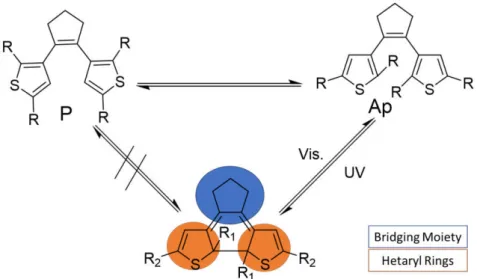
Figure 1.1 Some important classes of organic photochromic compounds: (a) before and (b) after
photoirradiation .4 ... 1
Figure 1.2 Photocyclization reaction of 6π-electron of hexatriene (5), stilbene (6) and diarylethene (7). ... 2
Figure 1.3 Conformations of DAE’s open-isomers, which are called parallel and antiparallel conformations. ... 3
Figure 1.4 (up) Chemical structure of the open- and closed- isomer of (1,2-bis(2,5-dimethyl-3-thienyl)perfluorocyclopentene (bottom) absorption spectra of the open- (black line) and the closed-isomer (red line).4 ... 4
Figure 1.5 Synthesis of CBn by condensation of glycoluril (1) and formaldehyde under acid conditions. 38 ... 7
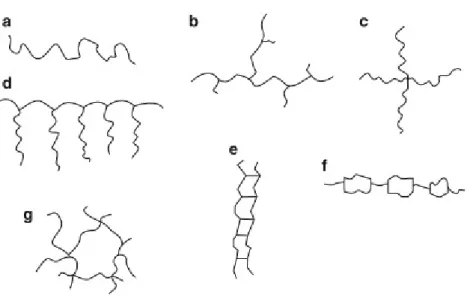
Figure 1.6 Shapes of polymer molecules. A) Linear B) branched C) star-shaped D) comb-shaped E) ladder F) semi-ladder G) network structure. 44... 8
Figure 1.7 (a) Polymer with DAE in the main chain;50 (b) Polymer with DAE in the side chain.51 ... 8
Figure 1.8 (a) Polymer; (b) Supramolecular polymer. ... 9
Figure 1.9 Representation of isodesmic versus cooperative supramolecular polymerization mechanism.55 ... 10
Figure 1.10 Theoretical relationship between the association constant (Ka) and DP. 56 ... 10
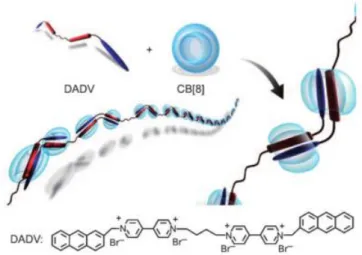
Figure 1.11 Schematic representation of the formation of the supramolecular polymer based on multiple host-stabilized charge-transfer interactions. 57 ... 11
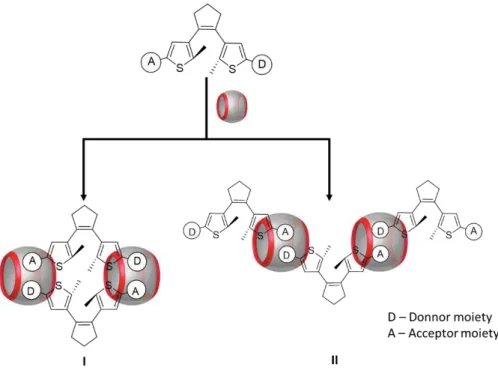
Figure 2.1 Scheme of the first approach for the molecular design of monomers used for supramolecular polymerization. (I) dimer (II) linear supramolecular polymer. ... 13
Figure 2.2 scheme of the second approach for the molecular design of monomers used for supramolecular polymerization. (I) linear supramolecular polymer. ... 14
Figure 2.3 Synthetic pathway of diarylethene derivatives. ... 14
Figure 2.4 (continuation) Synthetic pathway of Diarylethene derivatives. ... 15
Figure 2.5 Mechanism of NCS in acid conditions. ... 16
Figure 2.6 Catalytic cycle of Halogenation reaction. ... 16
Figure 2.7 Intermediate structure for Friedel-Craft Acylation. ... 17
Figure 2.8 McMurry coupling mechanism.62 ... 17
Figure 2.9 General catalytic cycle for Pd-catalyzed C-C cross-coupling reactions, such as Suzuki coupling.67 ... 18
Figure 2.12 (I) Spectrophotometric titration of PF20 with CB8, (II) experimental data (blue) 670 nm; (red) 438 nm, the solid line represents the best least squares fit of data to a 1:1 association
model. Conditions [PF20] = 2x10⁻⁶ M; ... 21
Figure 2.13 (I) ITC of PF20 (Open isomer) with CB8 (II) ITC of PF20 (closed isomer) with CB8. ▪experimental data, (black line) best fitting of the experimental data with a 1:1 binding model.22 Figure 2.14 (I) UV-Vis titration of PF7 with CB7, (black) 0 equiv. CB7; (violet) 2 equiv. CB7;(Blue) 7 equiv. CB7. (II) Plot of experimental data (red points) 377 nm (blue points) 385 nm, (lines) best least squares fit of the data to a 2:1 association model. Conditions: [PF7] = 2.5x10⁻⁵ M; .. 23
Figure 2.15 UV-Vis titration of PF7 with CB8. Narrow represents the progress of the experiment. Conditions: [PF7] = 2.5x10⁻⁵ M ... 24
Figure 2.16 Schematic figure of supramolecular polymerization using PF7 as monomer units. ... 25
Figure 2.17 Plot of experimental data (points), (lines) best least squares fit of the data to an isodesmic polymerization model. Blue – 374 nm; Yellow – 386 nm; Red – 336; Green 273 nm. ... 26
Figure 2.18 Molar fraction of each species in solution. Dark Blue - Guest; [11] – Red; [12] – Green; [21] -Orange; [22] – Light Blue; Dotted line – sum of molar fraction from [22] to [55]. ... 27
Figure 2.19 1H NMR titration spectra of PF20 (open isomer) with CB7 (red 0eq, violet 5eq), [PF20] = 5x10⁻⁴ M in D 2O... 28
Figure 2.20 Propose structure of PF20.CB7 complex. ... 29
Figure 2.21 Full ESI-MS spectra for PF20 with CB7; [PF20] = 50µM ... 29
Figure 2.22 1H NMR titration spectra of PF20 with 0 (red), 0.5 (green) and 1 (blue) eq of CB8, [PF20] = 5x10⁻⁴ M in D 2O... 30
Figure 2.23 Both conformations of PF20 open isomer and the proposed structure of PF20.CB8 complex. ... 31
Figure 2.24 Full ESI-MS of PF20 with CB8. [PF20] = 50µM ... 31
Figure 2.25 Propose structure of 3:2 supramolecular polymer ... 32
Figure 2.26 MS2 of m/z 1219 signal, obtained for PF20 with CB8. ... 32
Figure 2.27 Full ESI-MS spectra of PF7:CB7 1:1 ... 33
Figure 2.28 Full ESI-MS spectra of PF7 with CB7 2:1. ... 34
Figure 2.29 Full ESI-MS spectra of PF7 with CB8 [21] under very soft ionization conditions. ... 34
Figure 2.30 MS2 of m/z 1345 signal, obtained for CB8 with PF7 (2:1). ... 35
Figure 2.31 Propose structure of the major species of the PF7.CB8 polymer in solution. ... 35
Figure 2.32 Photochromic reaction of synthetized DAE’s, with different residual groups. ... 36
xvii
reaction of PF20 (Blue) 655 nm; (red)385 nm. Solid lines represent the best least squares fit equation (5). ... 38 Figure 2.35 Emission spectra of PF (black); PF.CB7 (red); PF.CB8 (blue) for (I) PF20 and (II) PF7
compounds. ... 41 Figure 2.36 Emission spectra made based on lifetime titration data for PF20, (blue) p conformation;
(black) ap conformation. ... 41 Figure 2.37 Molar Fraction versus Equiv. of CB7 for (I) PF20 and (II) PF7, determined by Lifetime
titration. (Black) Guest; (RED) [11]; (Blue) [21]; Conditions: [guest] = 5x10⁻⁶ M; λ
ex 373 nm. 42
Figure 6.1 (I) Spectral variation of PF20.CB7 upon photoirradiation in water; (II) Experimental data for cyclization reaction (Blue) 706 nm; (red) 347 nm; (Orange) 404 nm; (Green) 453 nm. Solid lines represent the best least squares fit to equation (5); conditions: [PF20]= 2x10⁻⁵ M; [CB7]=
5x10⁻³M; T=20ºC; λirr=365 nm. ... 55
Figure 6.2 (I) Spectral variation of PF20.CB8 upon photoirradiation in water; (II) Experimental data for cyclization reaction (Blue) 690 nm; (red) 336 nm; (Yellow) 398 nm; (Green) 452 nm. Solid lines represent the best least squares fit to equation (5).; conditions: [PF20]= 2x10⁻⁵ M; [CB8]=
0.1x10⁻³M; T=20ºC; λirr=365 nm. ... 55
Figure 6.3 (I) Spectral variation of PF20 upon photoirradiation in water; (II) Experimental data for cycloreversion reaction (Blue) 690 nm; (red) 336 nm. Solid lines represent the best least squares fit to equation (5).; conditions: [PF20]= 2x10⁻⁵M; T=20ºC; λirr=550 nm. ... 56
Figure 6.4 (I) Spectral variation of PF7.CB8 upon photoirradiation in water; (II) Experimental data for cyclization reaction (Blue) 686 nm; (red) 338 nm ; (yellow) 375 nm ; (Green) 450 nm. Solid lines represent the best least squares fit to equation (5).; conditions: [PF7]= 2.5x10⁻⁵ M; [CB8]=
0.1x10⁻³M T=20ºC; λirr=365 nm. ... 56
Figure 6.5 Spectral variation of PF7 upon photoirradiation in water. conditions: [PF7]= 2.5x10⁻⁵ M;
T=20ºC; λirr=550 nm. ... 57
Figure 6.6 (I) UV-Vis titration of PF20 (closed form) with CB7. (II) Plot of experimental data (points); (Blue) 671 nm; (Green) 295 nm; (Red) 438 nm. (lines) best least squares fit of the data to a 1:1 association model. Conditions: [PF20] = 2x10⁻⁶ M. ... 57
Figure 6.7 (I) UV-Vis titration of PF20 (open form) with CB8. (II) Plot of experimental data (points); (Blue) 380 nm; (Red) 396 nm; (lines) best least squares fit of the data to a 1:1 association model. Conditions: [PF20]= 2x10⁻⁶ M ... 58
Figure 6.8 Plot of the chemical shift of PF20 (Open isomer) titration with CB7. Solid lines correspond to the best fitting of the experimental data. ... 58 Figure 6.9 Molar fraction of PF20 (open) with CB7. (Black line) PF20; (Red line) [11]; (Blue line)
Figure 6.11 Molar fraction of PF7 (Open): CB7. (Black line) PF7; (Red line) [11]; (Blue line) [21] .. 60
Figure 6.12 ESI-MS-MS spectra of m/z 803 of PF20 with CB7. [PF20] = 50µM; [CB7] = 50µM ... 61
Figure 6.13 ESI-MS-MS spectra of m/z 886 of PF20 with CB8. [PF20] = 50µM; [CB8] = 100µM ... 61
Figure 6.14 ESI-MS-MS spectra of m/z 1550 of PF20 with CB8. [PF20] = 50µM; [CB8] = 100µM . 62 Figure 6.15 ESI-MS-MS spectra of m/z 928 of PF7 with CB7. [PF7] = 50µM; [CB7] = 100µM ... 62
Figure 6.16 ESI-MS-MS spectra of m/z 1511 of PF7 with CB7. [PF7] = 50µM; [CB7] = 25µM ... 63
Figure 6.17 Full ESI-MS spectra of PF7 with CB8. [PF7] = 50µM; [CB8] = 25µM ... 63
Figure 6.18 ESI-MS-MS spectra of m/z 1012 of PF7 with CB8. [PF7] = 50µM; [CB8] = 25µM ... 64
Figure 6.19 ESI-MS spectra under not soft conditions of PF7 with CB8. [PF7] = 50µM; [CB8] = 100µM... 64
Figure 6.20 1H NMR spectra of (1) in CDCl 3 ... 65
Figure 6.21 1H NMR spectra of (2) in CDCl 3 ... 65
Figure 6.22 1H NMR spectra of (3) in CDCl 3 ... 66
Figure 6.23 1H NMR spectra of (4) in CDCl 3 ... 66
Figure 6.24 1H NMR spectra of (PF7) in MeOD. ... 67
Figure 6.25 1H NMR spectra of (6) in CDCl 3 ... 67
Figure 6.26 1H NMR spectra of (PF20) in D 2O ... 68
Figure 6.27 13C NMR spectra of (PF20) in CD 3OD ... 68
Figure 6.28 1H NMR spectra of PF20 (red) open; (green) PSS; (blue) PSS with CB8 irradiated at 365 nm ... 69
Figure 6.29 Job Plot’s od the interaction between PF20 (open isomer) with CB7 (I) and CB8 (II), followed at 381 nm. [total] = 6.3x10⁻⁵. ... 69
Figure 6.30 Job Plot’s od the interaction between PF20 (closed isomer) with CB7 (I) and CB8 (II), followed at 678 nm. [total] = 6.3x10⁻⁵ M ... 70
Figure 6.31 Molar Fraction versus Equiv. of CB7 for (I) PF20 and (II) PF7 determined by Lifetime titration results. (Black) Guest; (RED) [11]; (Blue) [12]; Conditions: [guest] = 5x10⁻⁶ M; λ ex 373 nm. ... 70
Figure 6.32 Mechanism of reaction (II, Friedel-Craft Acylation). ... 71
Figure 6.33 Mechanism of reaction (III, McMurry Cyclization) ... 71
xix
Table 1.1 Energy difference between the open and the closed forms of DAE with a different
heteroatom (structures 7 in figure 1.2).11 ... 3
Table 2.1 Association constants determined by UV-Vis and NMR spectroscopy for PF20 (open and closed form) with CB7. ... 21
Table 2.2 Association constants determined by UV-Vis spectroscopy and ITC for PF20 (open and closed form) with CB8. ... 22
Table 2.3 Association constants determined by UV-Vis spectroscopy for PF7 (open form) with CB7. ... 23
Table 2.4 Association constants determined by UV-Vis spectroscopy for PF7 (open isomer) with CB8. ... 26
Table 2.5 Quantum yield and kinetic constants for ring-closure (cyclization) and ring-opening (cycloreversion) reaction. ... 39
Table 2.6 Maximum wavelength of DAE’s in open and closed isomer. ... 39
Table 2.7 Open and closed isomer in Photostationary state, for the PF20 system. [a] ... 40
xxi
Abs Absorbance
ap Anti-parallel conformer
c Closed Isomer
CBn Cucurbit[n]uril
DAE’s Diarylethenes
DCM Dichloromethane
EDG Electron donating group EWG Electron withdrawing group
ESI-MS Electrospray Ionisation Mass Spectrometry EA Elemental Analysis
EtOAc Ethyl Acetate
λex Excitation wavelength
I Intensity
ITC Isothermal titration calorimetry λmax Maximum wavelength
NMR Nuclear Magnetic Resonance
o Open Isomer
p Parallel conformer
PSS Photostationary state PEG Polyethylene glycol DP Polymerization degree
ɸ Quantum Yield
T Temperature
THF Tetrahydrofuran
t Time
UV-Vis Ultraviolet-Visible spectroscopy
1
1
I
NTRODUCTION
1.1
P
HOTOCHROMISM:
FROM MOLECULES TOP
ROPERTIESPhotochromism, from the Greek words “phos” (light) and “chroma” (colour), and the suffix “-ism” (that
denotes phenomenon), is a process that induces chemical changes in a molecule upon absorption of electromagnetic radiation (UV, visible or infrared).1 The isomer a is transformed into isomer b that
shows different electronic properties, in particular, a different absorption spectrum and consequently a change in colour. The term “photochromism” was firstly introduced by Hirshberg in 1950.2 Organic
photochromic compounds have been extensively studied over the years and led to the appearance of ophthalmic lenses during the 1960s. This required the design of photochromic compounds able to respond in a wide range of wavelength in the visible spectrum.3 Some important classes of organic
photochromic compounds are illustrated in figure 1.1.
Figure 1.1Some important classes of organic photochromic compounds: (a) before and (b) after
photoirradiation .4
The b species can be reverted to form a either thermally or photochemically, defining T-type or P-type photochromism respectively.3 The two upper molecules, azobenzene (1) and spiropyran (2), are T-type
in the dark.5 So, the conversion of the right-isomer (b) to the left-isomer (a) occurs only by a
photochemical process.
These colour changes are ascribed to photoinduced electronic and structural changes of the molecules, left (a) to right (b) isomers, as shown in figure 1.1.5 In azobenzenes (1), the structural change is an
isomerization of a double bond; in spiropyrans (2), the structural change is the opening of the pyran ring induced by the electron pair of the amine nitrogen; in furylfulgides and diarylethenes (3 and 4) the structural changes result from photoinduced electrocyclization reactions that convert the open- into closed-isomers.
A vast number of photochromic compounds have been explored towards several different applications.6
In literature, new molecules and families of photochromic compounds with higher thermal stability (P-type) have been reported.7 The thermal stability is an essential and indispensable property for the
application of photochromic molecules in optical memories, switches and molecular machines.8
In the present work, diarylethene systems DAE’s will be studied so their specific characteristics such as high thermal stability, fatigue resistance, and photochromic properties will be briefly described.
1.2
D
IARYLETHENES1.2.1 Brief structure-property relationships
Photochromic processes of DAE involve a photoinduced conrotatory cyclization and a 6π electron cycloreversion reaction between a 1,3,5-hexatriene (5o, Fig. 1.2) moiety and a 1,3-cyclohexadiene (5c) core, which proceeds according to the Woodward-Hoffmann rules. Diarylethene derivatives (7) are analogues of stilbene (6), where the phenyl groups were replaced by five-membered heterocyclic rings with the lower energy difference between the open- and closed-isomers.5 The difference of energy
between the open and closed forms of different heterocycle- based DAE are listed in table 1.1. A vast number of DAE’s have been reported in literature using a thiophene ring as heterocycle, since it has the smallest energy difference between both isomers, facilitating the photochemical reaction.9
3
In DAE’s the thermal 6π-electron disrotatory cyclization of the hexatriene core has an endergonic
character, which means that the photochemical conrotatory pathway is preferred. Assuming a thermal equilibrium between the two conformers of the open isomer, parallel (p) and antiparallel (ap, the photoactive conformer) where the population is 1:1, only 50% of the molecules will undergo a conrotatory cyclization reaction upon irradiation, leading to a theoretical maximum quantum yield (ɸ) of 0.5.10 This value can change if there is a significantly higher energetic preference for one of the
conformers in the ground state, and consequently, a change in populations (figure 1.3).
Figure 1.3Conformations of DAE’s open-isomers, which are called parallel and antiparallel
conformations.
Table 1.1Energy difference between the open and the closed forms of DAE with a different
heteroatom (structures 7 in figure 1.2).11
Usually, the open isomer of DAE’s is colourless and shows a strong absorption in the UV region of the electromagnetic spectrum. This strong absorption is characterized by the electronic decoupling caused by the cross-conjugated (hetero)aryl moieties. So, UV light can be used to convert the open- into the closed-isomer (coloured) as illustrated in figure 1.4. Consequently, a new absorption band in the visible range appears and is responsible for the colouration of the solution. This new band is explained by the π-electrons delocalized over the entire molecular backbone in the closed isomer.
Heteroatom Energy (kcal/mol)
N 13.8
O 9.1
Figure 1.4 (up) Chemical structure of the open- and closed- isomer of (1,2-bis(2,5-dimethyl-3-thienyl)perfluorocyclopentene (bottom) absorption spectra of the open- (black line) and the closed-isomer (red line).4
As both isomers generally absorb in the UV region, when the open form is irradiated the closed species that forms also starts to absorb at the irradiation wavelength forming back the open form. In this way, a photostationary state (PSS) evolves, which composition is highly dependent on the quantum yields of the direct and inverse photochemical reactions. When visible light is used to irradiate the molecules only the closed form absorbs and a quantitative photochemical conversion is achieved upon excitation of the closed-isomer.12
In the open-isomer, a free rotation between the ethylene moiety and the aryl groups occurs. The consequence of this rotation is the existence of two conformations, as introduced above. One with a non-planar geometry, where the π-system is localized in the two aryl groups (p conformation), and the other where the π-system is delocalized over the full molecular backbone (ap conformation). Different π -systems lead to differences between both conformations, parallel where heterocyclic rings are in mirror symmetry (photo-inactive conformer), or anti-parallel with a C2 symmetry (photo-active conformer).
In the 1980s, Irie and co-workers recognized the potential of 1,2-dihetarylethenes as thermally stable photochromic switches and systematically developed their basic design principles.5 For the past 30
years, plenty of research has been done revealing fundamental structure-property relationships of these compounds.13
Molecular design of these compounds can be divided into different building blocks (see figure 1.3), depending on the desired properties. The building blocks can be divided into bridging moiety, heteroaryl rings, the R1 substituents at the ring-closing carbons (reactive carbon) and the R2 substituents in the
periphery of the DAE’s.14
1.2.1.1 Bridging Moiety
DAE’s usually containing as bridging moieties a cyclic system. The reason behind is to prevent the
5
perflurocyclopentene.15,16,17 The last example is the most popular because the fluorine atoms increase
the photochemical stability of the compounds.
In the last years, Feringa and co-workers developed synthetic pathways leading to DAE’s with a fluorinated cyclopentene as bridging moieties, but still presenting a high stability. The use of non-fluorinated cyclopentenes extends the synthetic pathway flexibility, increasing the electrochemical properties in comparison to the “parent” structure while keeping the same photochemical mechanism.18
Another type of DAE’s recently described in the literature include as bridging moiety a third heteroaryl moiety and are thus called “terarylenes”.19 The aromatic system in these compounds is delocalized over
three heteroaryl moieties and this results in a weaker C-C formed upon photocyclization. This loss of aromaticity also promotes a thermal reversible reaction not observed in traditional DAE’s. Although they present some thermal instability, these derivatives possess an extraordinary large quantum yield for the cyclization reaction.20
1.2.1.2 Hetaryl rings
The use of heteroatoms in aromatic systems lead to heteroaryl (hetaryl) rings. DAE’s with hetaryl rings show a smaller energy difference between both isomers (see table 1.1). A large group of DAE’s found in literature possess thiophene or benzothiophene as hetaryl rings but a variety of other heteroaryl structures can be used for this effect. Structures like furan, thiazole, imidazole or pyrrole as well as their benzannulated analogues have been used.
1.2.1.3 R1 Substitution
Substitution of the reactive carbon is obligatory to avoid oxidation of the closed-isomer to the phenanthrene analogues.21 In most reported DAE’s, reactive carbons are substituted with methyl groups.
The molecular behaviour is modulated by using a variation of substituents, for example, using a bulky substituent increases the photocyclization reaction quantum yield due to the enhancement of the antiparallel conformer in the ground state of the open isomer.22 However, thermal reversibility is induced
as well due to the weakness of the formed C-C bond by increased steric strain.23 The use of electron
donating groups (EDG) on the reactive carbon will stabilize the closed isomer, resulting in a decrease of quantum yield for the cycloreversion reaction.24,25 On the other hand, using electron withdrawing
groups (EWG) have been shown to accelerate the photochemical cycloreversion reaction.26
1.2.1.4 R2 Substitution
1.3
S
UPRAMOLECULARC
HEMISTRYSupramolecular chemistry is the field that studies molecular assemblies and intermolecular bonds between molecules.28 This field was mentioned for the first time by Jean-Marie Lehn in 1988.28 Lehn
also named this field as “the chemistry beyond the molecule” bearing on the organized entities of higher
complexity that result from the association of two or more chemical species held together by intermolecular forces. This field studies not only an isolated molecule but also the assembly of at least two molecules.29 In opposition to conventional synthetic strategies where formation and rupture of
covalent bonds occur under kinetic control, the supramolecular approach is based on thermodynamically controlled noncovalent interactions and dynamic covalent bonds.30 The main targets of supramolecular
research are the molecular assemblies based on weak intermolecular interactions, such as hydrogen bonds (H-bonds), van der Waals interactions and π-π stacking. Properties of these supramolecular systems are greater than the sum of the properties of the contributing parts. A variety of noncovalent interactions can be used to bring the building blocks together to prepare supramolecular structures. These noncovalent interactions are characterized by low energies and poor directionality, with exception of H-bonds.
Molecular recognition and self-assembly are concepts that have to be considered when supramolecular chemistry principles are discussed.29 Molecular recognition is a crucial process in biologic systems. If
pieces of the puzzle are not well designed, these pieces will never fit together, and the puzzle cannot be made. It was pointed out that the selected pieces do not have to be the most stable one, but the energy balance of the whole system must be minimized. 31 The reversibility of bonds formation is essential for
molecular recognition and self-assembly, and in this way, errors can be fixed during the building block. That reversibility makes these materials (supramolecular materials) useful in different areas, such as biologic sensors, drug delivery, cell recognition, and so on. This property can be controlled by the addition of different functional groups.32,33
Molecular recognition principles are from an early 20th century when being introduced two different
terms, “lock and key” and “receptor/substrate”. Principles describe the fit of a rigid substrate to a receptor. Lock and key principles laid the foundation for host-guest chemistry, however, the lock and key principles must be considered in the context of “induced-fit-mechanism”. Stimuli-responsive supramolecular assemblies formed by host-guest interactions has been well established in solution.34
Host-guest chemistry has become a broad discipline witch not only cations or anions, but also neutral guests are investigated. The focus of host-guest chemistry is the selective interactions between host and guest molecules. Generally, hosts are molecules that contain a large cavity volume, to encapsulate guest molecules. There is a vast example reported in the literature using host molecules such as cyclodextrins (CD), cucurbit[n]urils (CB), calixarenes, carcerands, zeolites, among others.35 Guests typically have
7
1.3.1 Cucurbit[n]urils
1.3.1.1 Synthesis
Chemistry of cucurbit[n]urils (CBn) was a rapidly developing field. More recently, the synthesis of functionalized derivatives has been progressed. Synthesis of these compounds is described in figure 1.5. CBn results by condensation of glycoluril (1 in figure 1.4) and formaldehyde in acid conditions.36 Over
the years, different conditions, and methods of synthesis were published. The first synthesis was performed in 1905 by Behrend and coworkers.36 The name of cucurbit[n]uril was denominated by Mock,
due to the similarity of a pumpkin structure, which botanical family name is Cucurbitaceae.37
Figure 1.5Synthesis of CBn by condensation of glycoluril (1) and formaldehyde under acid conditions.
38
1.3.1.2 Properties
CBn presents a highly symmetric structure, with carbonyl portals containing considerable negative charge density and a hydrophobic cavity. When guest compounds are encapsulated in the inner cavity, their physical properties (absorption, fluorescence and NMR spectra) change.39,40, The complexation
induces a spectral shift due to the surrounding electronic and/or magnetic environment of CBn units. Although CBn have a nonpolar inner cavity and are not dipolar, due to symmetric structure, they exhibit a very higher quadrupole moment.41
A variety of uses for CB5 to CB8 have been reported due to their ability to form binary and ternary
host−guest complexes, such as complexes between methyl viologen and azobenzene derivatives, and
therefore impacted a wide variety of scientific applications,.42,43
1.4
P
OLYMERSA polymer is defined as a macromolecule built up from numerous small molecules, repeating units (monomers), connected by a covalent bond. These units can be connected in diverse ways. Monomers may be connected linearly (a in figure 1.6, simplest way) or branched (b). The branched polymers also show different structural ramifications, like star-shaped (c) or comb-shaped (d). There are also polymers call ladder polymers (e) or semi-ladder polymers (f), that shows a double-stranded structure. The most complex structure of branched polymers are the network polymer (g), where the units are connected in a three-dimensional way.44,45
Figure 1.6Shapes of polymer molecules. A) Linear B) branched C) star-shaped D) comb-shaped E) ladder F) semi-ladder G) network structure. 44
Several examples of polymers using DAE’s as structural unity have been published over the years. The
examples come from using the DAE’s as a monomer (main chain) or as a residual group (side chain),
figure 1.7 a and b, respectively.5 The main idea when DAE’s are incorporated in polymers structure is
to give different properties such as photochemical, electrochemical, fluorescence, and so on.46,47 These
photochromic polymers show an increment of cyclization quantum yield.48 Bertarelli and co-worker
prepared polyurethanes and polyesters having DAE’s in the main chain, and observe that the photochromic reactivity, of these formulated polymers, remain similar to the free molecules in solution because of the relatively low glass transition (Tg).49
Figure 1.7(a) Polymer with DAE in the main chain;50 (b) Polymer with DAE in the side chain.51
9
The main difference between polymers and supramolecular polymers is the interaction between monomers. In the first case, monomers are connected by a covalent bond (C-C, C-O, C-N) while monomers of supramolecular polymers are linked by noncovalent bonds, such as π-π stacking and hydrogen bonds. A representation of each polymer can be seen in figure 1.8.
Figure 1.8(a) Polymer; (b) Supramolecular polymer.
1.4.1 Supramolecular polymers
Supramolecular polymer emerged from the combination of supramolecular chemistry and polymer science. These polymers are based on monomeric units held together by directional and reversible noncovalent interactions.52 These supramolecular polymers are defined as polymeric arrays of
monomeric moieties that are linked by reversible and highly directional secondary interactions, as mentioned above. The directionality and strength of the supramolecular bonding are key features of systems that can be regarded as polymers that behave according to well-established theories of polymer physics. The nature of noncovalent interactions, structure and/or properties of the used building blocks employed in these supramolecular systems, determines the responsiveness of the resultant material to surrounding environment. This way a wide range of possibilities can be taken into account during the formulation of supramolecular structures.
Polymerization reactions involving covalent bond formation usually occur under kinetic control, as the potential barrier for the back reaction is generally much larger than the forward reaction. Supramolecular polymers, due to reversibility, have it is growth dependent on thermodynamic parameters, such as concentration, temperature, and pressure.53 Three major growth mechanism can be assigned, namely,
isodesmic, ring-chain, and cooperative.54
a)
Figure 1.9 Representation of isodesmic versus cooperative supramolecular polymerization mechanism.55
Isodesmic polymerization is like to the step polymerization, that is characterized by a high polydispersity, which assumes that the association affinity of the monomers end-groups does not change during the supramolecular polymerization process. The second mechanism (ring-chain) is represented by the reversible polymerization where each linear aggregate is assembly with it cyclic counterpart. The cooperative mechanism is characterized by nonlinear growth, it can be distinguished in two stages, the accumulation of nuclei followed by the start of fibre growth.55 A comparison between Isodesmic and
Cooperative mechanism is represented in figure 1.9. A few examples of supramolecular polymers have been published in the literature, in the last decade. In the reported examples, it is possible to verify the use of more than one non-covalent interactions to link monomers, which increases the stabilization of the formed supramolecular structures.52
Figure 1.10Theoretical relationship between the association constant (Ka) and DP. 56
There is already a well-established relationship between the polymerization degree (DP) and the association constant (Ka). This relation is represented in figure 1.10, where is also able to verify a
concentration dependence for this type of systems, as mentioned and illustrated in figure1.9.
11
Figure 1.11Schematic representation of the formation of the supramolecular polymer based on multiple
host-stabilized charge-transfer interactions. 57
Having in mind all mentioned concepts, during the molecular design profiles of molecules, was possible to design the system using donor and acceptor moieties, naphthalene and pyridinium, respectively. To
increase this π-π interaction between the moieties, cucurbit[n]uril (CBn) will be used as Host
macrocycle. These macrocycles were chosen due to their high-affinity constants, Ka around 106/107 M -1, and due to the examples reported in the literature. This way supramolecular polymers with
13
2
R
ESULTS AND DISCUSSION
2.1
D
ESIGN ANDS
YNTHETIC PATHWAYMolecular design of synthesized molecules was made having in mind the photochemical properties of
DAE’s, donor-acceptor and Host-Guest interactions. The main idea is to form monomers capable of fit
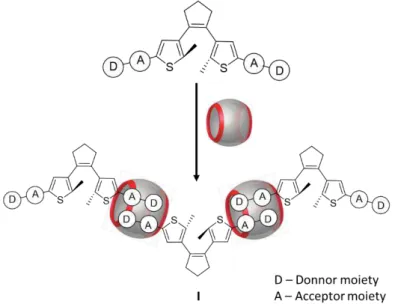
inside CBn molecules and capable of interacting with another monomer to make the polymer growth. A first approach represented in figure 2.1, donor and acceptor moieties were placed on peripheric carbon of thiophene ring, creating this way asymmetric molecules. Using asymmetric DAE’s for supramolecular polymer formation, two possible species could be observed in solution. Both possibilities are represented in figure 2.1, dimer (I) and the desired linear polymer (II).
Figure 2.1 Scheme of the first approach for the molecular design of monomers used for supramolecular polymerization. (I) dimer (II) linear supramolecular polymer.
character, can establish attractive ion-dipole interactions that increase the stability of the resulting complexes.
Figure 2.2 scheme of the second approach for the molecular design of monomers used for
supramolecular polymerization. (I) linear supramolecular polymer.
With the molecular design established, retrosynthesis was performed to decide the synthetic pathway to follow. The pathway followed to prepare DAE’s derivatives were based on the one described in the literature, and it is outlined below (figure 2.3).18 PF20 does not show acceptor-donor moieties, once this
compound served as a model to have a better understanding of host-guest interaction, while PF7 is designed to be used in supramolecular polymerization.
15
All products obtained were purified and characterized by NMR spectroscopy and elemental analysis (EA) was performed for the interest compounds. The synthetic pathway was optimized, always that a reaction was repeated, to increase the reaction yield of each step.
A third compound (8) was designed with PEG units to increase their solubility in water, once it analogue PF7 shows poor solubility. Synthetic pathway of this new compound is illustrated in figure 2.4. (8) derivative from (4), as PF7 and PF20, the difference is that in the donor moiety, a PEG derivative unity was incorporated. Different approaches were performed, with different starting materials, but the successful one is represented in figure 2.4 when the starting material is dimethyl naphthalene (5). Compound (7) was obtained in a mixture of mono- and di-substituted. PEGylation of (6) is an easy reaction, but obtaining di- as major compound seems to be a problem, once desired product is the mono-substituted.
Figure 2.4(continuation) Synthetic pathway of Diarylethene derivatives.
To finalize the synthesis of the new compound (8), an optimization of PEGylation reaction must be performed, in a way to obtain mono- with a considerable yield, and then make the last step that is an SN2 reaction, between (4) and (7).
2.1.1 Halogenation Reaction
Figure 2.5Mechanism of NCS in acid conditions.
Looking for the conditions of the reaction, it is possible to admit a cyclic reaction between the catalyst and the reagent, NCS and methylthiophene respectively. The chloride cation forms a bond with oxygen from acetate, forming this way the acetyl hypochlorite.58 The reaction mechanism is described in figure
2.6. Chlorination is preferential on 2-position of the thiophene ring than in 3-position because the intermediate formed. In the first case, it can be stabilized by charge delocalization more efficiently than in the other case. After the electrophilic attack on the thiophene ring, the acetate formed to remove the proton to restore the aromaticity of the ring by the formation of the conjugated acid. The workup of the first step consists in the neutralization of the formed and remained acid with sodium hydroxide. This product was isolated and obtained with a yield of 67%.
Figure 2.6Catalytic cycle of Halogenation reaction.
2.1.2 Friedel-Craft Acylation
17
Figure 2.7Intermediate structure for Friedel-Craft Acylation.
This suggests an intermolecular rearrangement of the a complex.60 After formation of the acylium ion,
there is an attack on the positive charge by the aromatic ring, formatting a new σ bond. Then occurs the de-protonation leading to the re-aromatization of π-system, HCl gaseous is also formed during the reaction. The neutralization of the acid formed is required, followed by purification of the product with a yield of 15%. The low yield it is due to the losses occurred during the reaction, as well during the purification process.
2.1.3 McMurry Coupling
Also known as McMurry Cyclization (III in figure 2.3), consist on a reductive coupling between two ketones or aldehyde to form an alkene, using a titanium (Ti3+) as a catalyst and as reducing agent. The
reaction was named after McMurry and Fleming described a “new method for the reductive coupling of
carbonyls to olefins”.61
McMurry Coupling mechanism remains unknown.62 However, most mechanistic studies reported
suggest that the mechanism is composed of two steps, without considering the reduction of the titanium species. Firstly, preparation of the valent titanium species, for this purpose it is usually used TiCl4 or
TiCl3 as titanium species, and Zn powder or LiAlH4 as reductive agent (see the mechanism in the
appendix, figure 6.33).63
The first step of the mechanism is the formation of pinacolate intermediates (figure 2.8). followed by the deoxygenation of these pinacolates (figure 2.3.1 2). Two-step mechanism is supported by literature results.62 Pinacol product can be separated if the reaction takes place at low temperatures.64
Figure 2.8McMurry coupling mechanism.62
The product was obtained in 88% yield.
2.1.4 Suzuki coupling
The next reaction is the Suzuki coupling also known as Suzuki-Miyaura reaction, due to the shared publication in 1979, when this reaction was published for the first time.65 The reaction consists on the
The mechanism involves three steps (cyclic mechanism of the realized reaction described in figure 6.34 in the appendix). The first step consists in an oxidative addition of palladium to halide species, forming the organometallic compound. Then a transmetallation process with borate, followed by the reductive elimination. The catalytic cycle is illustrated in figure 2.9.
Figure 2.9 General catalytic cycle for Pd-catalyzed C-C cross-coupling reactions, such as Suzuki
coupling.67
The base has three roles in the mechanism: i). Formation of palladium complex, ii) formation of trialkyl borate and iii) the acceleration of the reductive elimination.68
A few optimizations were made for this step. In the first trial was used few drops of ethylene glycol, them was replaced by PEG 400 because was reported in literature the improvement of the reaction yield, as observed, the yield increase from 48% to 73%.69 The role of PEG is not clear yet, but it is reported in
literature the possibility of the terminal hydroxyl group in PEG is acting as reductant agent.70 The key
role of this reductant species in the palladium-catalyzed couplings is also described in literature.71
The last reaction is an SN2. Diarylethene containing anthracene moiety (PF7) and methyl groups (PF20)
19
2.2
D
ETERMINATION OFA
SSOCIATION CONSTANTSFormation of supramolecular complexes was observed by different methodologies. Structures of supramolecular assemblies were determined (chapter 2.3) and the photochemical behaviour was studied (chapter 2.4). In this chapter, a mathematical model was used to determine association constants of each complex. Due to the small cavity of CB7, the supramolecular polymer is not expected, only the formation of [11] (one host for one guest) and [21] (two host for one guest) host-guest complexes. Studies with these macrocycles (CB7) will give a better understanding of the interactions between CBn and guest molecules. The size of CB8 cavity is larger and can encapsulate two small organic molecules, so the mathematical model used will be different in this case. PF20, unlike PF7, does not have donor acceptor moieties to interact one each other, and supramolecular polymer formation is not expected. PF20.CB7
Spectrophotometric titration of PF20 (open isomer) with CB7 is represented in figure 2.10, where the course of the experiment is defined with the narrow. As the complex is formed the absorbance decreases
and the λmax shift to lower energy region (redshift).
Figure 2.10(I) Spectrophotometric titration of PF20 with CB7, (II) experimental data (blue) 380 nm;
(red) 330 nm, the solid line represents the best least squares fit of data to a 2:1 association model. Conditions [PF20] = 2x10⁻⁶ M;
For this experiment, the range of titrant was from 0 equiv. to 23 equiv. of CB7 (as shown in figure 2.10 II). Association constants of these complexes were determined by fitting the experimental data using best least squares fit with 2:1 binding model (solid lines in figure II 2.10). This model was used instead of 1:1 due to the bivalency of guest used. The same experiment was performed for the closed-isomer (figure 6.6 in the appendix), to verify if the affinity between molecules changes with the structural change of PF20. The determined constants for both isomers are listed in table 2.1. The conditions used were the same for both experiments.
As stated before, the data analysis was performed using a 2:1 binding model. The binding model is explained on section 4 Equation (33 and 34) was used to fit the data and this way, K11 and K21were determined.
I I
Association constants were determined using a different technique to compare and/or confirm the obtained constants. NMR titration was performed, and results were fitted with the 2:1 binding model, as previously. RMN titration of PF20 (open isomer) with CB7 is illustrated in figure 2.11, where the obtained results and the best least squares fit a 2:1 binding model are represented by dots and solid lines, respectively. The blue colour indicates the positive shifts, while red colour is ascribed to negative shifts, of guest protons. The shifts were calculated by the difference between the initial and the shift at each equiv. The positive (blue) shift mean that guest region is encapsulated inside the cavity of CB7, meanwhile negative (red) shifts represent the protons near the portal region of CB7, see spectra fig 2.19.
Figure 2.11Plot of the chemical shift of PF20 (closed isomer) titration with CB7. Solid lines
correspond to the best fitting of the experimental data.
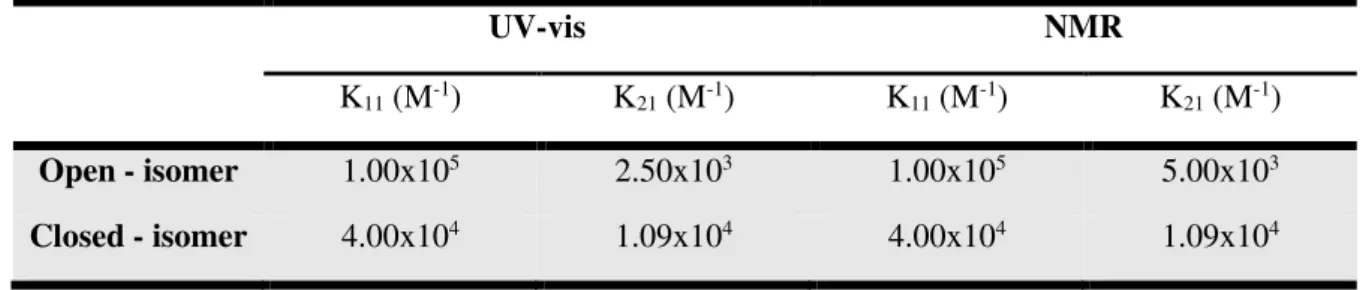
Association constants listed in Table 2.1 were determined by different methods for open- and closed-isomers of PF20. The constants K11 are the same for both isomers, the only difference is related to K21
21
Table 2.1 Association constants determined by UV-Vis and NMR spectroscopy for PF20 (open and closed form) with CB7.[a]
UV-vis NMR
K11 (M-1) K21 (M-1) K11 (M-1) K21 (M-1)
Open - isomer 1.00x10⁵ 2.50x10³ 1.00x10⁵ 5.00x10³
Closed - isomer 4.00x10⁴ 1.09x10⁴ 4.00x10⁴ 1.09x10⁴
[a] error in data is 20% PF20.CB8
Once the system with the CB7 was studied and association constants were determined, CB8 titrations were performed. In figure 2.12 is represented the spectrophotometric titration of PF20c, with CB8, from 0 eq. to 2equiv. The complexation behaviour followed by UV-Vis it very similar with CB7.
Figure 2.12(I) Spectrophotometric titration of PF20 with CB8, (II) experimental data (blue) 670 nm;
(red) 438 nm, the solid line represents the best least squares fit of data to a 1:1 association model. Conditions [PF20] = 2x10⁻⁶ M;
As previously used for CB7 studies, PF20 was studied in both isomers and used another technique to confirm the results obtained by UV-Vis spectroscopy. In the studies with CB8 Isothermal titration calorimetry (ITC) was performed instead of RMN titrations, although NMR was performed to determine the structure of the supramolecular complexes (following chapter). Within ITC technique was possible to determine thermodynamic parameters of the host-guest interactions. Bellow, in figure 2.13, is represented the experimental values obtained for this technique for both isomers. Data were fitted with 1:1 binding model, used Equation (17) for this effect. The mathematical model is represented in section 4. The fitting is represented by a line in figure 2.13 and was used to obtain the thermodynamic and association parameters as well.
Figure 2.13 (I) ITC of PF20 (Open isomer) with CB8 (II) ITC of PF20 (closed isomer) with CB8. ▪experimental data, (black line) best fitting of the experimental data with a 1:1 binding model.
Listed in table 2.2 are the results obtained for both methods, reported above. The association constants are different for both isomers, as in previously complexes (PF20 with CB7). Using CB8 as host macrocycle, it is not visible the formation of [21] complex only [11] complex. This fact is due to the structure of the supramolecular complex PF20.CB8, determined by NMR spectroscopy (see 2.3 topic). The interaction between the host and the guest molecules is localized on the centre of PF20 and is very difficult fit two molecules inside the cavity of CB8 due to steric impediments. [21] complexes would be
possible if CB8 was in the side “arms” of DAE, as CB7. Obtained values change conforming the
technique, but the different conditions, such as different concentration, may explain this effect.
Table 2.2Association constants determined by UV-Vis spectroscopy and ITC for PF20 (open and
closed form) with CB8.[a]
UV-vis ITC
K11 (M-1) K11 (M-1) ∆H (kJ/mol)
Open 8.00x10⁵ 2.868x10⁶ -40.21
Closed 7.00x10⁶ 4.88x10⁶ -40.91
[a] error in data is 20% PF7.CB7
Once PF20 systems were understood, Host-Guest studies were performed for another compound, with donor and acceptor moieties (PF7). Complexation studies were performed in the same order as performed for PF20. CB7 was first made, due to the small cavity it is not possible to include two guests inside the same macrocycle. By UV-Vis titration, it is possible to observe the formation of two complexes, [11] and [21], as in the previously compound. The association constants were determined by best least squares fit of the data to a 2:1 binding model.
23
Figure 2.14(I) UV-Vis titration of PF7 with CB7, (black) 0 equiv. CB7; (violet) 2 equiv. CB7;(Blue)
7 equiv. CB7. (II) Plot of experimental data (red points) 377 nm (blue points) 385 nm, (lines) best least squares fit of the data to a 2:1 association model. Conditions: [PF7] = 2.5x10⁻⁵ M;
Figure 2.14 (I), represents the spectrophotometric titration of PF7o with CB7, in the figure, there is not represented all points to have a better perception of spectral differences. In (II) is represented the best fit for the experimental data, (red) 377 nm (blue) 385 nm. The obtained association constants are listed in table 2.3. Comparing the constants with PF20.CB7 it is possible to verify a similarity, but PF20 system shows a higher K11, while K21 is higher in the discussed system. This means that is more
favourable the formation of [21] complex using PF7 instead of PF20. This fact can be explained, once PF7 has a large π-system, compared with PF20. Association constants for [11] complex between CB7 and bipyridinium and pyridinium naphthalene analogue of 1x10⁷ and 3x10⁷ M-1, respectively, were
reported in the literature.72 This data support the previous that the increase of the π-system increases the
association constant.
Table 2.3Association constants determined by UV-Vis spectroscopy for PF7 (open form) with CB7.[a]
UV-vis
K11 (M-1) K21 (M-1)
Open 7.50x10⁴ 2.50x10⁴
[a] error in data is 20%
The statement above is supported by the molar fraction of each complex in solution versus the equivalent of CB7 (Figure 6.10), where it is possible to verify the presence of at least 50% of these complex ([21]) in solution, using fewer equivalents of CB7.
PF7.CB8
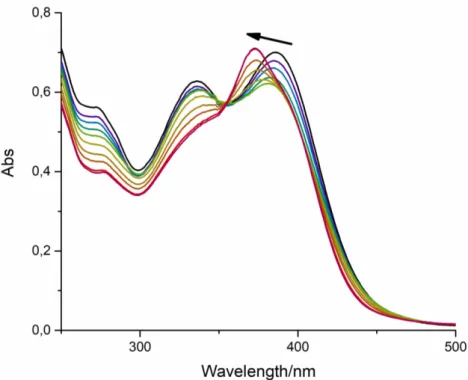
Next has performed the same experiment but with CB8, where supramolecular polymers were expected, due to the donor-acceptor moieties of PF7 and the large cavity of CB8, that can encapsulate two guest compounds. Obtained data for spectrophotometric titration are represented in figure 2.15. The spectral changes are similar for both compounds (PF20 and PF7), the major difference is the shifting of the maximum wavelength, in this case, a blue shift is observed (shift for a high energetic region) and there is a disappear of a band at 340 nm.
Figure 2.15UV-Vis titration of PF7 with CB8. Narrow represents the progress of the experiment. Conditions: [PF7] = 2.5x10⁻⁵ M
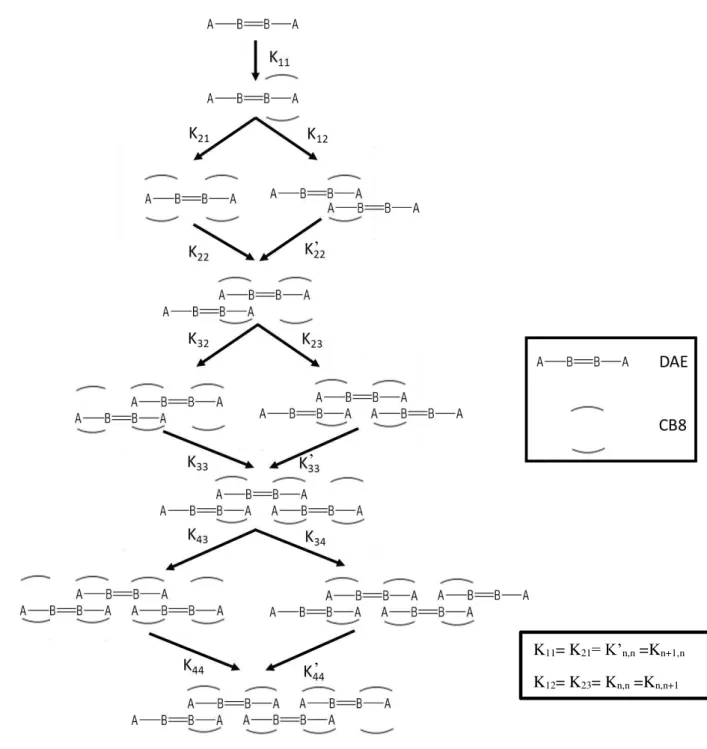
Once supramolecular polymers are expected, the data were fitted using a new model. The new model is the modified isodesmic model. As explained below (chapter 1) isodesmic polymerization is similar the step polymerization where the degree of polymerization (DP) is dependent on the association constant of the linking supramolecular unity. In this model, the reactivity of the end groups does not change during the polymerization process, due to neighbouring group effect. Isodesmic supramolecular polymerization is characterized by a single association constant (K) for each reversible step in the assembly pathway, as represented by following equations and in figure 2.16. M1 represents the monomer
and K molar equilibrium constant.54 The model is also called free association model or multistage open
association model.
𝑀 + 𝑀 ↔ 𝑀 [𝑀 ] = 𝐾[𝑀 ] 𝑀 + 𝑀 ↔ 𝑀 [𝑀 ] = 𝐾 [𝑀 ]
𝑀− + 𝑀 ↔ 𝑀𝑖 [𝑀𝑖] = 𝐾− 𝐾[𝑀𝑖] 𝑖 𝑖 = , , … , ∞
25
Figure 2.16Schematic figure of supramolecular polymerization using PF7 as monomer units.
The obtained data were fitted with the modified isodesmic model and in the figure 2.17 are represented the experimental points of PF7 titration with CB8 for different wavelengths (dots), solid lines represent the best least squares fit of the data with the model introduced above. In this way was possible to determine the association constants for [11], [12] and [21] complexes. The values are listed in table 2.4.
K11= K21= K’n,n =Kn+1,n
K12= K23= Kn,n =Kn,n+1
’
’
Table 2.4Association constants determined by UV-Vis spectroscopy for PF7 (open isomer) with CB8.[a]
K11 (M-1) K12 (M-2) K21 (M-1)
PF7.CB8 5.00x10⁷ 1.00x10⁵ 1.25x10⁷
[a] error in data is 20%
Figure 2.17Plot of experimental data (points), (lines) best least squares fit of the data to an isodesmic
polymerization model. Blue – 374 nm; Yellow – 386 nm; Red – 336; Green 273 nm.
In figure 2.17 is possible to observe two inflexion points, represent the [12] and [21] complexes, respectively. With the increase of CB8 in solution high complexes [12] start to dissociate due to the affinity of PF7 to CB8. K21 is higher than K12, see table 2.4. With the association, constant determined
was possible to determine the molar fraction of each species in solution. In the figure 2.18 are represented the molar fraction of each species in solution, up to [55] complex. Grey dotted line represents the sum of the high complexes in solution ([22], [23], [32], [33], [34]; [43]; [44]; [45]; [54]; [55]). It is reported in the literature and discussed above in the introduction chapter of this thesis (chapter 1) that when guest concentration increases polymerization degree (DP) also increases. In the discussed case the formed polymers show short size due to the poor solubility of PF7 in water. Increasing the solubility of the compound in water will increase the size of the supramolecular polymer formed, that is one of the reasons why a new compound (8) with theoretically high solubility in water is being prepared. Another aspect that may lead to short polymers chain formed is the weak interaction between donor-acceptor moieties of PF7.Replacing these moieties by higher affinity pairs to intensify these interactions could improve the growth of the supramolecular polymer in solution.
27
topic). As NMR spectroscopy was not performed for this compound, the region where π-π stacking take place, and the encapsulation by CB8 is not known. But theoretically π-π interaction take place between the donor and the acceptor moiety (pyridinium and naphthalene), so is to expect the superposition of these two moieties, and the portal region of CB8 should be located near the positive charge of the pyridinium moieties so this way there is a stabilization of the positive charge.
Figure 2.18Molar fraction of each species in solution. Dark Blue - Guest; [11] – Red; [12] – Green;
[21] -Orange; [22] – Light Blue; Dotted line – sum of molar fraction from [22] to [55].
2.3
S
TRUCTURE OFS
UPRAMOLECULAR COMPLEXESTo determine the supramolecular complexes structure NMR spectroscopy was performed to have a better perception, where the interactions between both molecules take place (determine the geometry of the complex). In the figure below (figure 2.19) are represented the NMR spectra for the titration of PF20 with CB7, where is possible to observe that as soon as CB7 was added a significant shift for a shielded region from the pyridinium protons (H2 and H3 in figure 2.20) is observed. The opposite effect was observed for aliphatic and the aromatic protons of the thiophene rings (H4), being the thiophene rings protons the ones that shift the most for the deshielded region, due to the proximity with the portal region of CB7.
PF20.CB7
Figure 2.19 1H NMR titration spectra of PF20 (open isomer) with CB7 (red 0eq, violet 5eq),
[PF20] = 5x10⁻⁴ M in D 2O.
In the literature is reported that when organic moieties are encapsulated by CBn a shift for a shielded region is observed, due to the different magnetic environment inside CBn cavity. A contrary effect is observed when organic molecules are localized near the portal region of these macrocycles, so positive or negative shifts must result from the relative position of the hydrogens with respect to the carbonyl group of the portals of CBn (figure 1.7).38 These processes are observed for this system, and this way
29
Figure 2.20 Propose structure of PF20.CB7 complex.
ESI-MS was performed on both host and guest molecules. Figure 2.21 shows the obtained spectrum for PF20 with CB7. Two major signals at m/z 803 and 571 were observed for the complex [11] and PF20+I -, respectively. Closer analyses of the isotopic distribution indicate a Δm/z = 0.5 charges ion, for the major signal (insets of figure 2.21), indicating a double charge system who confirms the [11] complex.
Figure 2.21Full ESI-MS spectra for PF20 with CB7; [PF20] = 50µM
MS2 was performed for 803m/z signal obtained spectra (appendix figure 6.12) indicates a high
association of host and guest molecules in gas phase, once the complex is whole fragmented upon fragmentation and no other signals are detected.
0
25
50
75
100
250
750
1250
1750
2250
Re
leat
ive
in
te
n
sity
m/z
803.3
571.2
(Δm/z = 0.5)
Isotope pattern of m/z 803
-PF20.CB8
The same technique was performed to determine the structure of PF20.CB8 supramolecular complex. In figure 2.22 are represented the NMR spectra of PF20 with CB8. The acquired spectra show that CB8 is complexed on the photoactive site of the organic molecule (PF20), cause aliphatic protons (H5-H7) shifted to high field, meanwhile the aromatic proton, namely the pyridinium proton, shift to the low field, opposite effect of CB7 complexation. With the experimental data, a proposed structure illustrated in figure 2.23 was formulated.
Figure 2.22 1HNMR titration spectra of PF20 with 0 (red), 0.5 (green) and 1 (blue) eq of CB8,
[PF20] = 5x10⁻⁴ M in D 2O.