Printed version ISSN 0001-3765 / Online version ISSN 1678-2690 http://dx.doi.org/10.1590/0001-3765201720160355
www.scielo.br/aabc
CYP2B6
516 G>T polymorphism and side effects of the central nervous system in
HIV-positive individuals under Efavirenz treatment: Study of a sample from southern Brazil
TALISE E.MÜLLER1,2
, JOEL H.ELLWANGER3
, RAFAEL T.MICHITA3
,
MARIA CRISTINA C.MATTE3
and JANE D.P.RENNER2,4
1
Programa de Pós-Graduação em Ciências Biológicas: Bioquímica Toxicológica, Departamento de Bioquímica e Biologia Molecular, Universidade Federal de Santa Maria/ UFSM, Av. Roraima,
1000, Cidade Universitária, Bairro Camobi, 97105-900 Santa Maria, RS, Brazil 2
Departamento de Biologia e Farmácia, Universidade de Santa Cruz do Sul/ UNISC, Av. Independência, 2293, Bairro Universitário, 96815-900 Santa Cruz do Sul, RS, Brazil 3
Laboratório de Imunogenética, Departamento de Genética, Universidade Federal do Rio Grande do Sul/ UFRGS, Av. Bento Gonçalves, 9500, Prédio 43323M, 91501-970 Porto Alegre, RS, Brazil 4
Programa de Pós-Graduação em Promoção da Saúde, Universidade de Santa Cruz do Sul/ UNISC, Av. Independência, 2293, Bairro Universitário, 96815-900 Santa Cruz do Sul, RS, Brazil
Manuscript received on June 15, 2016; accepted for publication on January 19, 2017
ABSTRACT
This study aimed to identify the 516 G>T polymorphism of the CYP2B6 gene and evaluate its influence on central nervous system (CNS) side effect development in HIV-positive individuals undergoing Efavirenz (EFV) treatment in a population from southern Brazil. Additionally, we performed a survey on the clinical and epidemiological characteristics of our sample. In addition to medical records evaluation, whole blood of 89 individuals was analyzed for viral load, T lymphocyte count (CD4+ and CD8+), and the polymorphism. Considering the side effects of the CNS reported by individuals but without considering the genetic variables, no statistically significant association was noted between the adverse effects and the antiretroviral treatment (including or not EFV). In addition, no statistically significant difference was noted for the influence of genotype on the viral load or the number of T lymphocytes (CD4+ and CD8+) among individuals undergoing EFV treatment. This is the first study that investigated the impact of the 516 G>T polymorphism of the CYP2B6 gene among HIV-positive individuals from southern Brazil. Its clinical significance indicates the need for prospective studies in this population.
Key words: HIV, Efavirenz, antiretroviral therapy, CYP2B6.
INTRODUCTION
Since its introduction in the 90s, highly active
antiretroviral therapy (HAART) has provided
enormous benefits for the quality and life
expectancy of HIV-positive patients. Despite its benefits, HAART triggers numerous side effects
associated with the chronic use of antiretroviral drugs, and particularly effects on the central
nervous system (CNS). In Brazil, Efavirenz (EFV)
is one of the non-nucleoside reverse transcriptase Correspondence to: Jane Dagmar Pollo Renner
E-mail: [email protected]
inhibitors (NNRTI) recommended as part of
the first antiretroviral regimen of choice in HIV treatment (Brasil 2013). The side effects related to the use of EFV include abnormal dreams, anxiety,
depression, dizziness, impaired concentration, lightheadedness, and reduction in sleep quality
(Gaida et al. 2016). Different factors modulate the development of side effects, including the genetic
variability of the patient.
Several drug-metabolizing genes have been described as key factors in drug absorption,
treatment response, and side effects during HAART.
Taking into consideration the development of new antiretroviral drugs and the diversity of responses
related to HAART, individual genetic background has an important impact on the different responses
to pharmacological treatment (Michaud et al. 2012). The knowledge of individual genetic variations on the response to treatment with antiretroviral drugs is essential for individualizing therapy (Pirmohamed and Back 2001). Furthermore, the impact of single
nucleotide polymorphisms on EFV metabolism was observed by different authors (Sánchez Martín
et al. 2013, Cusato et al. 2016).
EFV is principally metabolized by the
cytochrome P450 2B6 (CYP2B6), resulting in 8-hydroxy-efavirenz, its main metabolite, which is associated with neurotoxicity (Apostolova et al. 2015). A transversion of G to T allele in exon 4 (516 G>T, rs3745274) of the CYP2B6 gene
contributes to reduced clearance of EFV and its
increased concentration in plasma, causing side
effects in the CNS and indicating decreased enzyme
function in vivo (Kwara et al. 2008, Gounden et al. 2010, Rakhmanina and van den Anker 2010). In addition, an association is noted between the slow and intermediate metabolizer phenotypes and virological suppression (Frasco et al. 2012).
In this context, this study aimed to investigate the 516 G>T polymorphism of the CYP2B6 gene and evaluate the impact of this genetic variation
on the side effects of the CNS in HIV-positive
patients under EFV treatment or other antiretroviral
drugs in a southern Brazilian population. In addition, we performed a survey on the clinical and epidemiological characteristics of the studied individuals.
MATERIALS AND METHODS
INDIVIDUALS, CLINICAL DATA, AND ETHICAL CONSIDERATIONS
Eighty-nine HIV-positive patients who initiated antiretroviral therapy (with or without EFV
[600 mg once a day]) from 2013 to 2014 at the Municipal Center for Assistance to Serology (Centro Municipal de Atendimento à Sorologia
- CEMAS) in the city of Santa Cruz do Sul (Rio
Grande do Sul - RS, Brazil) were selected for the present study. Whole blood samples were collected
for genetic analyses. Epidemiological and clinical
data were obtained by consulting medical records. Clinical data investigated in this study (viral
load (VL), T CD4+ lymphocyte count, and T
CD8+ lymphocyte count) were evaluated at three time points: (I) baseline (last measurement before treatment); (II) three months after starting treatment; and (III) six months after starting treatment. T CD4+ and T CD8+ lymphocyte
counts were obtained by flow cytometry using the
FACSCount system (Becton Dickinson, San Jose,
CA, USA). HIV-1 viral load was assessed using the NASBA technique (Biomerieux, Marcy l’Etoile, France). All subjects enrolled in the study signed
a consent form. This study was approved by the
Research Ethics Committee of the University of
Santa Cruz do Sul (UNISC, RS, Brazil) under protocol #639490.
CYP2B6 GENE: 516 G>T POLYMORPHISM
GENOTYPING
DNA was obtained with the QIAamp DNA Blood
acid). Genotyping of the 516 G>T polymorphism was performed by real-time PCR (RT-PCR)
using EvaGreen (Solis BioDyne) according to the manufacturer’s instructions. Briefly, 4 µL of 5X HOT FIREPol EvaGreen qPCR Mix Plus (Solis BioDyne), 0.33 µL of each forward and reverse primers (10 pmol/µL), 2.5 µL of DNA (10 ng/µL), and 12.84 µL of MilliQ water were used to obtain a final volume of 20 µL.
The primers used for amplification of the 223-bp
fragment of the CYP2B6 gene were as follows: wild w-5’GACCCCACCTTCCTCTTCTAG3’, variable 5’GACCCCACCTTCCTCTTCTAT3’, and com-mon c-5’GGTCATCCTTTTCTCGTGTG3’, as
de-scribed by Haas et al. (2004). The PCR reactions
were performed in a Step One Plus (Applied Bio-systems). The following temperature and cycling conditions were used: initial denaturation of 95°C for 5 minutes followed by 40 denaturing cycles at 95°C for 15 seconds, annealing at 60°C for 20 seconds, and elongation at 72°C for 20 seconds. In all reactions, negative controls were used, and the reactions were performed in duplicate. For an internal control, each CYP2B6 516 G>T genotype
sample was confirmed by sequencing using ABI
3500 Genetic Analyzer (Applied Biosystems).
STATISTICAL ANALYSIS
Data analysis was performed using the Statistical Package for Social Sciences software (SPSS 17.0). For each analysis, individuals who had missing data for certain characteristics were excluded from the test. Categorical and quantitative variables were analyzed by Chi-square and Mann-Whitney U tests, respectively. Asymmetric continuous distributions are described by the median and the 25th and 75th percentiles. Potential confounders evaluated included age, ethnicity, drug, and alcohol status. Covariates were entered in the logistic regression models if they were associated with the study factor and with the outcome at p<0.20. Logistic regression was performed to evaluate the
strength of association between genetic markers and outcomes using odds ratio (OR) and respective
95% confidence interval (CI). Hardy-Weinberg
equilibrium was calculated for the patient and control groups. For all instances, p-values <0.05
were considered to be significant.
RESULTS
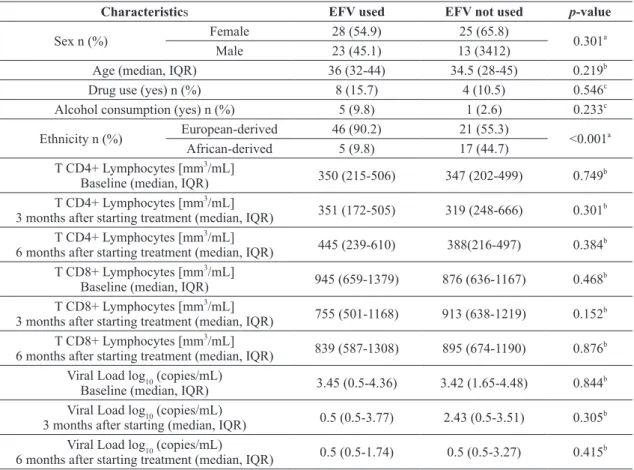
Epidemiological and clinical characteristics of the subjects are presented in Table I. We observed a significant difference between the proportion of European-derived and African-derived individuals
evaluated in our study (p<0.001). This result can be explained by the fact that the Brazilian population is genetically admixed. Additionally, the studied population belongs to a region historically
colonized mainly by European-derived individuals,
explaining the higher rate of individuals with this phenotypic characteristic reported in this study.
Evaluating the clinical characteristics of the individuals, we highlight that the use of EFV has no effect on T CD4+ lymphocyte recovery, and the
viral load was reduced compared with non-users of
EFV (Table I).
Among the subjects who used EFV (n=50),
the frequencies of reported side effects were as
follows: headache (n=15, 30%), dizziness (n=10, 20%), insomnia (n=9, 18%), somnolence (n=4, 8%), and difficulty concentrating (n=3, 6%). The absence of side effects was reported by 18% (n=9) of individuals from this first group. The frequencies of side effects among subjects who did not use EFV (n=37) were as follows: headache (n=11, 29.7%), dizziness (n=10, 27.1%), difficulty concentrating (n=2, 5.4%), insomnia (n=2, 5.4%), and somnolence (n=1, 2.7%). The absence of side effects was reported by 29.7% (n=11) of individuals from this second group. Considering all side effects
of the CNS and without considering the genetic
variables, no significant difference in the presence or absence of these effects was noted regardless of
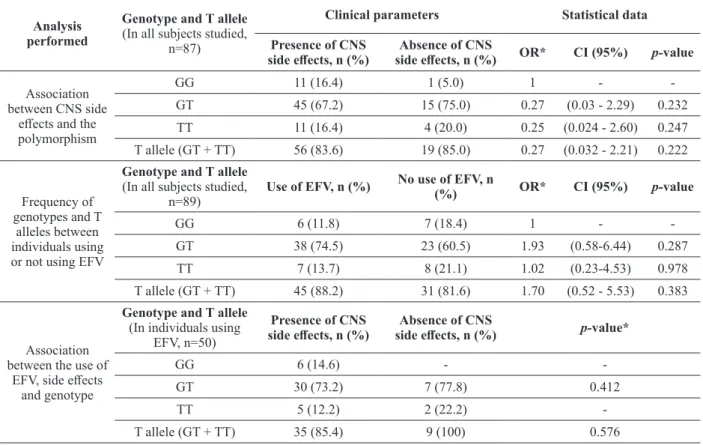
Table II presents the results of the main comparisons between genetic and non-genetic
variables. The influence of the genotype on viral
load, T CD4+ lymphocyte count, and T CD8+ lymphocyte count (baseline, three and six months after treatment) among individuals who was
enrolled in EFV treatment was also evaluated. However, none of these analyses revealed a statistically significant result, even when adjusted
for covariates (p>0.05). In addition, we also grouped T allele carriers (GT+TT) and compared
them with non-carriers of the allele. However, no significant difference was noted regarding the
variables tested (p>0.05).
DISCUSSION
The choice of antiretroviral drugs generally depends on (I) convenience, (II) safety, and (III)
potency (Jiménez-Nácher et al. 2008). Physician’s
preference and patient characteristics also influence this choice (Elzi et al. 2012). Furthermore, the
population characteristics may be taken into
consideration for the prescription of EFV. Non-Caucasian patients may be more prone to
EFV-induced toxicity (Burger et al. 2005). The impact of
the non-adherence to EFV-containing regimens on
virologic failure is stronger in black than in white individuals (Schackman et al. 2007). Moreover,
the results from a cohort of HIV-infected South Africans indicated that EFV is associated with low
bone mineral density in this population (Dave et al. 2015). These cited results could support the use
of EFV in Caucasians, but not in non-Caucasians.
In addition, regional protocols developed to guide
HAART direct the prescription of EFV and other
antiretrovirals for different populations. Among TABLE I
Epidemiological and clinical characteristics of the individuals evaluated in the study.
Characteristics EFV used EFV not used p-value
Sex n (%) Female 28 (54.9) 25 (65.8) 0.301a
Male 23 (45.1) 13 (3412)
Age (median, IQR) 36 (32-44) 34.5 (28-45) 0.219b
Drug use (yes) n (%) 8 (15.7) 4 (10.5) 0.546c
Alcohol consumption (yes) n (%) 5 (9.8) 1 (2.6) 0.233c
Ethnicity n (%) European-derived 46 (90.2) 21 (55.3) <0.001a African-derived 5 (9.8) 17 (44.7)
T CD4+ Lymphocytes [mm3 /mL]
Baseline (median, IQR) 350 (215-506) 347 (202-499) 0.749 b
T CD4+ Lymphocytes [mm3 /mL]
3 months after starting treatment (median, IQR) 351 (172-505) 319 (248-666) 0.301 b
T CD4+ Lymphocytes [mm3 /mL]
6 months after starting treatment (median, IQR) 445 (239-610) 388(216-497) 0.384 b
T CD8+ Lymphocytes [mm3 /mL]
Baseline (median, IQR) 945 (659-1379) 876 (636-1167) 0.468 b
T CD8+ Lymphocytes [mm3 /mL]
3 months after starting treatment (median, IQR) 755 (501-1168) 913 (638-1219) 0.152 b
T CD8+ Lymphocytes [mm3 /mL]
6 months after starting treatment (median, IQR) 839 (587-1308) 895 (674-1190) 0.876 b
Viral Load log10 (copies/mL)
Baseline (median, IQR) 3.45 (0.5-4.36) 3.42 (1.65-4.48) 0.844 b
Viral Load log10 (copies/mL)
3 months after starting (median, IQR) 0.5 (0.5-3.77) 2.43 (0.5-3.51) 0.305 b
Viral Load log10 (copies/mL)
6 months after starting treatment (median, IQR) 0.5 (0.5-1.74) 0.5 (0.5-3.27) 0.415 b
a
Pearson Chi-square test; b
various factors, these protocols take into account the best-performing antiretrovirals for the large portion of the population. Similar to Brazil, the use
of EFV is part of the regimens for initial therapy against HIV in European populations (Brasil 2013, EACS 2014).
The introduction of antiretroviral therapy
associated with the prevention and control of HIV
infection has resulted in important changes in the AIDS epidemic pattern (UNAIDS 2015). In Brazil, the rate of AIDS detection among men remains
higher compared with women (Brasil 2015).In the
present study, our sample was principally composed of women. The collection site was a public health service. In general, women have better health monitoring and knowledge about their health status than men. These factors may help explain the higher number of women involved in our study.
The average age of the studied subjects is consistent with the current Brazilian HIV epidemic, where the
infection rate is higher among individuals aged 25 to 39 years. Although the number of AIDS cases among drug users is decreasing in Brazil (Brasil 2015), drug users accounted for approximately 13% of our sample.
The adherence rate for antiretroviral therapy
in the first six months of treatment is generally low
and has been directly related to individual factors and patient socio-cultural context. Moreover,
the increased time between diagnosis of the HIV
infection and AIDS manifestation in addition to the
side effects caused by the treatment are important
indicators of poor treatment adherence (Silva et al. 2015). These are some of the factors that may explain the minimal difference in the average number of T CD4+ lymphocytes and viral load TABLE II
Influence of CYP2B6 516 G>T genotypes on the presence or absence of CNS side effects in EFV patients.
Analysis
performed
Genotype and T allele
(In all subjects studied, n=87)
Clinical parameters Statistical data Presence of CNS
side effects, n (%) side effects, n (%)Absence of CNS OR* CI (95%) p-value
Association between CNS side
effects and the polymorphism
GG 11 (16.4) 1 (5.0) 1 -
-GT 45 (67.2) 15 (75.0) 0.27 (0.03 - 2.29) 0.232
TT 11 (16.4) 4 (20.0) 0.25 (0.024 - 2.60) 0.247
T allele (GT + TT) 56 (83.6) 19 (85.0) 0.27 (0.032 - 2.21) 0.222
Frequency of genotypes and T
alleles between individuals using or not using EFV
Genotype and T allele
(In all subjects studied,
n=89) Use of EFV, n (%)
No use of EFV, n
(%) OR* CI (95%) p-value
GG 6 (11.8) 7 (18.4) 1 -
-GT 38 (74.5) 23 (60.5) 1.93 (0.58-6.44) 0.287
TT 7 (13.7) 8 (21.1) 1.02 (0.23-4.53) 0.978
T allele (GT + TT) 45 (88.2) 31 (81.6) 1.70 (0.52 - 5.53) 0.383
Association between the use of
EFV, side effects and genotype
Genotype and T allele (In individuals using
EFV, n=50)
Presence of CNS
side effects, n (%) side effects, n (%)Absence of CNS p-value*
GG 6 (14.6) -
-GT 30 (73.2) 7 (77.8) 0.412
TT 5 (12.2) 2 (22.2)
-T allele (G-T + -T-T) 35 (85.4) 9 (100) 0.576
since the start of the treatment (baseline) and after three and six months of treatment in our study.
However, we must note that information about
patient adherence to antiretroviral therapy was not
available in this study. No significant difference
was noted among viral load, number of T CD4+ lymphocytes, and number of T CD8+ lymphocytes
among individuals who used HAART with or without EFV. Our data indicated no difference in the clinical response associated with a specific drug among the subjects studied.
Interestingly, a non-statistically significant association was observed between allele and genotype frequencies compared with CNS side
effects related to HAART. In addition, no differences
were observed in the distribution of genotype and T allele carrier frequencies of individuals who
used EFV compared with those who did not. Furthermore, no association among side effects, use of EFV and specific genetic characteristics
were observed. We note that the sample size of this study was very small, and this limitation may have
influenced these results.
In contrast to our results, it is reported that
the use of EFV is associated with a number of side effects, mainly in the CNS. The use of EFV
may result in increased neurocognitive effects compared with other antiretroviral drugs (Ma et
al. 2016). EFV has a long half-life and is primarily
metabolized by cytochrome P450 (CYP) 2B6. Furthermore, polymorphisms in the CYP2B6 gene
are associated with an increased risk of side effects related to EFV treatment (Gounden et al. 2010,
Sánchez Martín et al. 2013). Moreover, it was
reported that the difference in the expression and
function of the CYP2B6 gene cause great variability
in the response to EFV. The CYP2B6 516 G>T
polymorphism is one of the most important factors responsible for increased plasma concentrations of
the drug and the neuropsychiatric effects associated with EFV (Kwara et al. 2008, Gounden et al. 2010).
The CYP2B6 516 G>T polymorphism is the variant most associated with side effects of the CNS. This allele occurs at frequencies of 15% to
greater than 60% in different populations (Zanger
and Klein 2013). The frequency with which the mutant allele appeared in the individuals studied in this work is similar to that reported in other studies evaluating individuals of various ethnic backgrounds. In contrast to our data, an association between the CYP2B6 TT genotype and increased
plasma exposure to EFV was noted. Additionally,
the CYP2B6 G516T genotype was associated with
side effects of the CNS (in week 1 of a twenty-four-week cohort) (Haas et al. 2004). These
results support the significant impact of CYP2B6
genotypes on the clearance of the EFV.
As previously mentioned, in addition to the
lack of differences among viral load, number of
T CD4+ lymphocytes, and number of T CD8+ lymphocytes among individuals using or not using
EFV, we also did not observe an influence of the
516 G>T genotypes on these three variables among
individuals undergoing EFV treatment. Regarding the clinical response, this result differs from data
presented by Frasco et al. (2012), who observed an association between the slow and intermediate metabolizer phenotypes with virological
suppression. This finding underscores the concept
that individuals with a slow metabolizer phenotype are more likely to achieve undetectable viral loads.
EFV administration is currently recommended at a fixed dose of 600 mg once daily. However,
an improvement in side effects is noted when
the administration of EFV is adjusted according
to the plasma concentration of the drug and the individual’s genotype. This information reinforces the importance of genotyping the CYP2B6 gene in the development of a personalized therapy (Martiny and Miteva 2013).
the originality of this work given that it presents
new data on the pharmacogenetics of EFV in the
studied population. Despite the novelty, our study has a small sample size. This limitation may have contributed to the lack of associations between the CYP2B6 516 G>T polymorphism and CNS side
effects. However, the clinical significance of this
polymorphism indicates the need for prospective studies in the population we evaluated. In addition,
our results justify a new study involving a larger
number of individuals and the investigation of other polymorphisms that influence the plasma
concentration of EFV, aiming to support our results
with more robustness and enable greater clinical
and epidemiological exploitation of the findings
presented here.
ACKNOWLEDGMENTS
We would like to thank Dr. Lia Gonçalves Possuelo,
Dr. Luciana Nunes, Dr. Alexandre Rieger and Elisa
Klinger for their help with the experiments and preliminary analysis.
REFERENCES
APOSTOLOVA N, FUNES HA, BLAS-GARCIA A, GALINDO MJ, ALVAREZ A AND ESPLUGUES JV. 2015. Efavirenz and the CNS: what we already know and questions that need to be answered. J Antimicrob Chemother 70: 2693-2708.
BRASIL. 2013. Ministério da Saúde: Secretaria de Vigilância em Saúde - Departamento de DST, AIDS e Hepatites Virais. Protocolo clínico e diretrizes terapêuticas para manejo da infecção pelo HIV em adultos. Brasília – DF. BRASIL. 2015. Ministério da Saúde: Boletim Epidemiológico
AIDS/DST. Brasília – DF.
BURGER D ET AL. 2005. Interpatient variability in the pharmacokinetics of the HIV non-nucleoside reverse transcriptase inhibitor efavirenz: the effect of gender, race, and CYP2B6 polymorphism. Br J Clin Pharmacol 61: 148-154.
CUSATO J, TOMASELLO C, SIMIELE M, CALCAGNO A, BONORA S, MARINARO L, LEGGIERI A, ALLEGRA S, DI PERRI G AND D’AVOLIO A. 2016. Efavirenz pharmacogenetics in a cohort of Italian patients. Int J Antimicrob Agents 47: 117-123.
DAVE JA, COHEN K, MICKLESFIELD LK, MAARTENS G AND LEVITT NS. 2015. Antiretroviral therapy, especially efavirenz, is associated with low bone mineral density in HIV-infected South Africans. PLoS One 10: e0144286. EACS – European AIDS Clinical Society. 2014. EACS
Guidelines. Version 7.1 November 2014. Available at: http:// www.eacsociety.org/files/guidelines_english_71_141204. pdf. Accessed on 7 November 2016.
ELZI E ET AL. 2012. Choice of initial combination antiret -roviral therapy in individuals with HIV infection: deter -minants and outcomes. Arch Intern Med 172: 1313-1321. FRASCO MA ET AL. 2012. Underlying genetic structure
impacts the association between CYP2B6 polymorphisms and response to efavirenz and nevirapine. AIDS 26: 2097-2106.
GAIDA R, TRUTER I, GROBLER C, KOTZE T AND GODMAN B. 2016. A review of trials investigating efavirenz-induced neuropsychiatric side effects and the implications. Expert Rev Anti Infect Ther 14: 377-388. GOUNDEN V, VAN NIEKERK C, SNYMAN T AND
GEORGE JA. 2010. Presence of the CYP2B6 516G> T
polymorphism, increased plasma Efavirenz concentrations and early neuropsychiatric side effects in South African HIV-infected patients. AIDS Res Ther 7: 32.
HAAS DW, RIBAUDO HJ, KIM RB, TIERNEY C, WILKINSON GR, GULICK RM, CLIFFORD DB, HULGAN T, MARZOLINI C AND ACOSTA EP. 2004. Pharmacogenetics of efavirenz and central nervous system side effects: an Adult AIDS Clinical Trials Group study. AIDS 18: 2391-2400.
JIMÉNEZ-NÁCHER I, GARCÍA B, BARREIRO P, RODRIGUEZ-NOVOA S, MORELLO J, GONZÁLEZ-LAHOZ J, DE MENDOZA C AND SORIANO V. 2008. Trends in the prescription of antiretroviral drugs and impact on plasma HIV-RNA measurements. J Antimicrob Chemother 62: 816-822.
KWARA A, LARTEY M, SAGOE KW, RZEK NL AND COURT MH. 2008. CYP2B6 (c.516G→T) and CYP2A6
(*9B and/or *17) polymorphisms are independent predictors of Efavirenz plasma concentrations in HIV-infected patients. Br J Clin Pharmacol 67: 427-436. MA Q ET AL. 2016. Long-term efavirenz use is associated
with worse neurocognitive functioning in HIV-infected patients. J Neurovirol 22: 170-178.
MARTINY VY AND MITEVA MA. 2013. Advances in molecular modeling of human cytochrome P450 polymorphism. J Mol Biol 425: 3978-3992.
PIRMOHAMED M AND BACK DJ. 2001. The pharmacogenomics of HIV therapy. Pharmacogenomics J 1: 243-253.
RAKHMANINA NY AND VAN DEN ANKER JN. 2010. Efavirenz in the therapy of HIV infection. Expert Opin Drug Metab Toxicol 6: 95-103.
SÁNCHEZ MARTÍN A, CABRERA FIGUEROA S, CRUZ GUERRERO R, HURTADO LP, HURLÉ AD AND CARRACEDO ÁLVAREZ A. 2013. Impact of pharmacogenetics on CNS side effects related to efavirenz. Pharmacogenomics 14: 1167-1178.
SCHACKMAN BR, RIBAUDO HJ, KRAMBRINK A, HUGHES V, KURITZKES DR AND GULICK RM. 2007. Racial differences in virologic failure associated
with adherence and quality of life on efavirenz-containing regimens for initial HIV therapy: results of ACTG A5095. J Acquir Immune Defic Syndr 46: 547-554.
SILVA JAG, DOURADO I, DE BRITO AM, AND DA SILVA CAL. 2015. Fatores associados à não adesão aos antirretrovirais em adultos com AIDS nos seis primeiros meses da terapia em Salvador, Bahia, Brasil. Cad Saúde Pública 31: 1188-1198.
UNAIDS. 2015. Joint United Nations Programme on HIV/ AIDS. AIDS by the numbers 2015. UNAIS: Geneva. ZANGER UM AND KLEIN K. 2013. Pharmacogenetics