Tanmoy Kanti Deb
Graduated in
Chemical Engineering and Polymer Science
Implementation of membrane processes
for improvement of the detection of
food contaminants
Dissertation for obtaining the Master degree in Membrane Engineering
Erasmus Mundus Master in Membrane Engineering
Advisor(s):
Dr. Carla Alexandra Moreira Portugal
Researcher, FCT-UNL, Portugal
Jury:
President : Isabel Coelhoso, Professor, FCT-UNL, Portugal
Examiner(s) : Damien Quemener, Professor, UM- 2, Montpillier, France
Patrice Bacchin, Professor, UPS-3, Toulouse, France
Vlastimil Fíla, Professor, UCT, Prague, Czech Republic
Carla Brazinha, Post Decorate Researcher, FCT-UNL, Portugal.
Tanmoy Kanti Deb
Graduated in
Chemical Engineering and Polymer Science
Implementation of membrane
processes for improvement of
the detection of food
contaminants
Dissertation presented to Faculdade de Ciências e Tecnologia, Universidade Nova de Lisboa for obtaining the master degree in Membrane Engineering
I
TITLE: Implementation of membrane processes for improvement of the detection of food contaminants
The EM3E Master is an Education Programme supported by the European Commission, the European Membrane Society (EMS), the European Membrane House (EMH), and a large
international network of industrial companies, research centres and universities
(http://www.em3e.eu).
Copyright @ Tanmoy, FCT/UNL
A Faculdade de Ciências e Tecnologia e a Universidade Nova de Lisboa têm o direito, perpétuo e sem limites geográficos, de arquivar e publicar esta dissertação através de exemplares impressos reproduzidos em papel ou de forma digital, ou por qualquer outro meio conhecido ou que venha a ser inventado, e de a divulgar através de repositórios científicos e de admitir a sua cópia e distribuição com objectivos educacionais ou de investigação, não comerciais, desde que seja dado crédito ao autor e editor.
Page 1of 91
ACKNOWLEDGMENTS
Above all and everything, the most acknowledged praises and thanks to the GOD, the Almighty, for HIS showers of blessings throughout my research work, protection and ability to do work for completing the research successfully.
First and foremost, I express my earnest thanks to my supervisors Prof. Dr. João Crespo and Dr. Carla Portugal for their most valuable suggestions, timely encouragement, motivation, highly appreciated discussion, kind feedback, professionalism and support throughout the work. I am
highly acknowledged to them for giving me the scope to carry out the Master’s thesis in the
laboratory of Chemistry Department, Faculdade de Ciências e Tecnologia, Universidade Nova de Lisboa, 2829-516 Caparica, Portugal. It was a big learning and experience to work with them and in this laboratory; gaining knowledge as well as direction of key to research.
Apart from the work carried out in the FCT laboratory, I would like convey my sincere gratitude to Dr. Susana Rodrigues and Dr. Wilson Antunez from the Laboratório de Bromatologia e Defesa Biológica, Portugal for collaboration and assistance by the biological tests. Also sincere thanks to Elsa and Sílvia from FCT laboratory for their assistance in the HPLC and fat asssy.
I would like to convey my sincere thanks to Prof. Isabel for her kind support, sincere help and suggestions during the last two semesters of my Masters.
Thanks to Prof. André Ayral, Prof. Patrice Bacchin and Prof. Karel Bouzek altogether with their excellent research and administrative team during the first year of this Masters programs; it was
more than excellent, unforgettable and enjoyable learning session and experience. It’s my more
than satisfaction to have the exposure to these academic environments.
Also, I would like to extend thanks to my lab mates for maintaining an enthusiastic and cooperative work atmosphere.
I would also like to acknowledge to the awesome peoples and friends I meet and came through in last two years; especially during the study, my internship, at the university residences; for being there for the moments of happiness since past two years of life. Pleased about you peoples!! the days was not be better than that you people contributed.
I would like to especially convey my gratitude to Dr. Elena Vallejo, Chargée de Projets, UM2, France for her presence with most cooperative, kind and helpful hand to the students for any issues and circumstances during the last two years of Masters.
It’s my more than pleasure for being in the EM3E programs and greatest thanks to the European
Union and the European Commission for the support.
I am forever indebted to my parents, my brother and sister for their love, continuous encouragement, understanding, moral support and kind considerations; endless gratitude
towards them which can’t be expressed by any words for being stable to me always with the
most fascinated, inspiring face and feelings during all the situations I faced throughout the entire session of my Masters degree.
Page 2of 91
Abstract
Food borne pathogen is a topmost important concern of present era due to deteriorating the food quality, contributing significant loss in the health aspect, global nutritional demand and economy. A rapid, fast and effective analytic system of pathogen identification and enumeration is the vital most important tool towards minimization of both the grasp and effect of pathogen contamination whereas the performance and accuracy of almost all of presently developed respective sensory tools are localized on the molecular recognition and catalytic processes of the sensor that work for the detection and enumeration. The presence of other biological molecules except the targets imparts significant unwanted ligand interaction which deteriorates its true binding efficiency of the specific ligand with exact orientation and frequency; and thus requires the pre-treatments of the sample to minimize such interference. Keeping this on mind, in this work, a membrane process has developed for the purification of the targets (the cells) by
removal of the other unwanted interfering species from the Listeria innocua loaded food (milk)
sample followed by concentration of the sample. Both the type of bacteria and host food were selected due to high demand. The selective concentration of the cells and volume reduction of target cells from the milk sample was accomplished by diafiltration (DF) and tangential flow filtration (TFF) with microfiltration (MF) membrane. The effect of cell loading on the cell purification and concentration by filtration performance of milk was analyzed. Comparative analysis between TFF and DF was done on this aspect and a combined protocol has developed. The analysis of operational parameters (e.g. TMP, CFV, permeate flux behaviour, system configuration, etc.) on the chemical composition of permeate and retentate was studied. A mass-balance based model was developed and used to predict the trend of concentrations of the species along the progress of DF process. The organic load removal from the system was found to be positively correlated with the TMP and CFV involved while the cell recovery was found efficient in an optimum TMP range. The system was found efficient with fastness, effective cell purifying and concentrating capability, high recovery of membrane and easiness to operate with more than 99.7% of viable cell isolation for further use in bio-sensing tool.
Page 3of 91
TABLE OF FIGURES
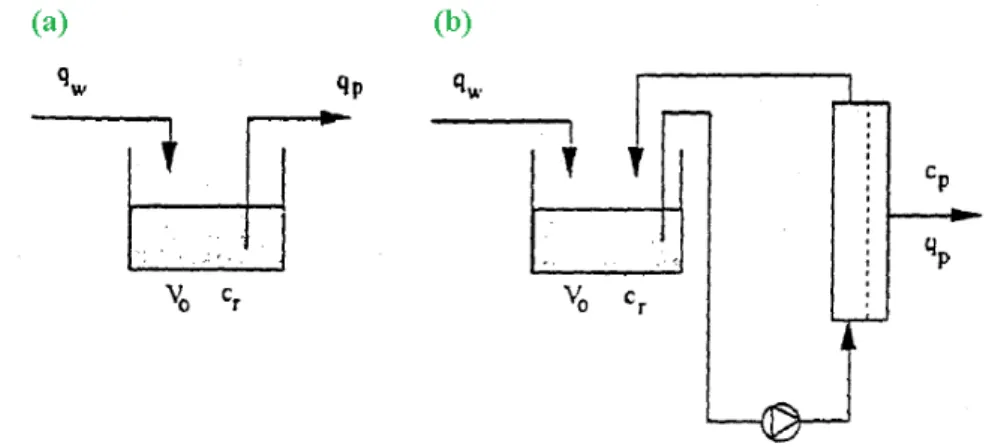
Figure 1: Schematic diagram of (a) a CSTR and (b) a DF system [78]. ... 19
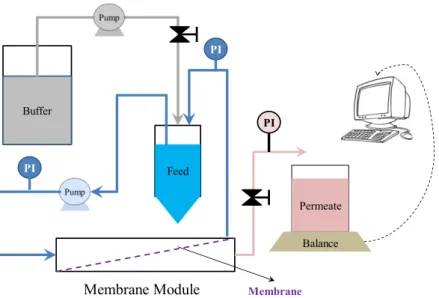
Figure 2: Experimental setup for the DF experiments ( , , represents the buffer flow line, milk circulation line and permeate flow channel respectively; and “PI” stands for the pressure indicator (sensor)) in the respective positions... 27
Figure 3: Experimental setup for the TFFexperiments ( and represents the milk circulation line and permeate flow channel respectively; and PI stands for the pressure indicator (sensor)). ... 28
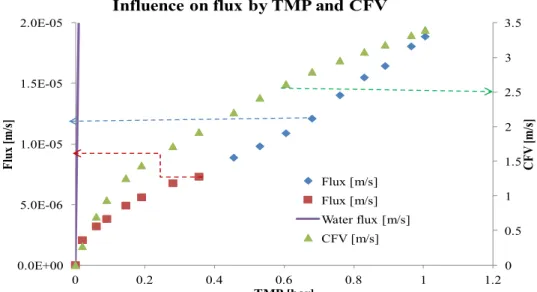
Figure 4: Effect of the applied TMP and CFV on the permeation flux during filtration of milk. ... 32
Figure 5: Observed variation of the permeation flux by the stepwise change in the TMP and CFV. ... 33
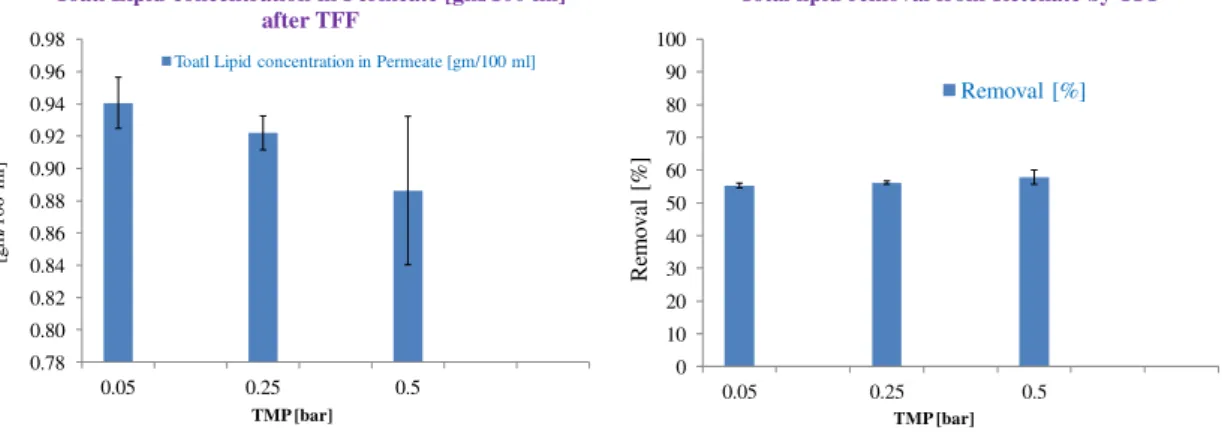
Figure 6: Removal of total lipid during concentration by TFF at different experimental TMP. ... 35
Figure 8: variation of concentration factor along the progress of TFF under different TMP. ... 37
igure 9: Total Protein concentration variation in the feed and permeate side during DF of contaminated milk. ... 43
Figure 10: Total Protein concentration variation in the feed and permeate side during DF of non-contaminated milk. ... 44
Figure 11: Variation of Transmission along the progress of DF: (a) non-contaminated milk and (b) contaminated milk. ... 44
Figure 12: influence of TMP on: (a) the total protein removal at a certain diavolumes (diavolumes = 4.00), (b) influence on ‘m’ and (c) influence on . ... 47
Figure 13: Dependence of “m” and on the TMP in removal of total lipid by DF. ... 50
Figure 14: Removal of total lipid from the retentate side for during DF of non-contaminated milk under different TMP. ... 51
Figure 15: Removal of sugar from the Retentate side at different TMP ... 52
Figure 16: Buffer capacity of the unused milk and the final retentate [final retentate after DF at 0.25 bar, the entire remaining DF showed similar conditions]. ... 56
Figure 17: Viscosity at different stages during the progress of DF process. ... 58
Figure 18: final viscosity after DF at different applied TMP. ... 59
Figure 19: behaviour of the flux with progress of DF of contaminated milk: (a) Diafilatrion at TMP of 0.05 bar, (b) TFF after DF at 0.05 bar; (c) Diafilatrion at TMP of 0.25 bar, (b) TFF after DF at 0.25 bar, (e) DF at TMP of 0.375 bar, (f) TFF after DF at 0.375 bar; (g) DF at TMP of 0.50 bar, (h) TFF after DF at 0.50 bar, (i) DF at TMP of 1.00 bar and (j) TFF after DF at TMP of 1.00 bar. ... 61
Figure 20: Normalized Flux versus Dia volume while DF (non contaminated milk ) ... 62
Figure 21: The variation of: (a) permeate flux , (b) viscosity in the retentate side, (c) protein and (d) fat accumualtion in the membrane along diavolumes for DF at 0.25 bar of TMP. ... 63
Figure 22: Different resistances at different stage while performing DF-TFF of contaminated milk; R_membrane, R_final, R_total, R_reversable, R_irreversable, R_conc.pol. Are the contribution on the resistance by membrane intrinsic property, residual fouling after washing, total resistance after DF, fouling by reversable deposition (removable by water wash), fouling by iereversable deposition (removable by chemical wash), and fouling by concentration polarization respectively (the measurements for the Resistance by concentration polarization is represented by the “green” axis while anothers are represented in the “violet” axis). ... 64
Figure 23:(a) variation of LRV with operational TMP for the DF mode (--) and during concentration mode (--); (b) variation of the % of cell looses during the selective cell enrichment session of the bacteria by DF () and during the concentration mode (). ... 67
-Page 4of 91 -) and % of cell recovered during the entire session of the cell harvesting (--) under this experimental condition. The % of the total cell representative axis for the (--) and (--) are the “blue” colored axis
while “black”colored axis stands for the others. Here, “% of cells” was calculated based on the counting
Page 5of 91
TABLE OF CONTENTS
ACKNOWLEDGMENTS ... 1
Abstract ... 2
1 Introduction ... 7
1.1 Background and motivation ... 7
1.2 Objectives... 18
2 Theory ... 19
2.1 Modelling of DF system ... 19
2.2 Flux, permeability and resistances calculation ... 21
2.3 Quantification of the Bacterial cell concentrations and recovery ... 23
3 Materials and methods ... 25
3.1 Materials ... 25
3.1.1 Milk and contaminated milk ... 25
3.1.2 Bacteria ... 25
3.1.3 Bacteria enriched (contaminated) Milk... 26
3.1.4 Reagents and chemicals ... 26
3.1.5 Membrane ... 26
3.2 Methods ... 26
3.2.1 Experimental methods ... 26
3.2.1.1 Cross flow filtration and DF ... 26
3.2.1.2 Sterilization of the equipments and auxiliaries ... 28
3.2.1.3 Cleaning of membrane ... 28
3.2.2 Analytical Methods ... 29
3.2.2.1 Membrane characterization ... 29
3.2.2.2 Determination of Protein... 29
3.2.2.3 Determination of Sugar ... 29
3.2.2.4 Determination of Fat ... 30
3.2.2.5 Biological assay and quantification ... 30
3.2.2.6 Determination of buffer capacity ... 30
3.2.2.7 Determination of viscosity ... 31
4Results and discussion ... 32
4.1Dependence of flux on TMP and CFV ... 32
4.2Performance of concentration by TFF ... 35
4.2.1 Removal of organic load by TFF... 35
4.2.2 Flow, flux and hydrodynamics ... 36
4.3Peformance of DF coupled with a concentration step ... 40
4.3.1 Filtration configuration for organic load removal and cell concentration ... 40
4.3.2 Removal of organic load by constant volume DF ... 41
4.4Variation of buffering capacity ... 54
4.5Change of viscosity during DF... 56
4. Flow, flux and hydrodynamics ... 59
5Harvesting of bacteria by the DF process ... 66
5.1 Effect of TMP on cell retention during DF and concentration step ... 66
5.2 Cell recovery in DF and TFF ... 70
5.3Overall cell recovery and optimum condition... 71
6Conclusion ... 73
7Recommendations & future work ... 75
Page 6of 91
Abbreviations
EPS Extracellular poly - saccharides
TFF TFF
DF DF
CFV Cross Flow velocity
MF Microfiltration
CVD Constant volume DF
MWCO Molecular weight cut off
Inlet water flow rate [m3/s]
Permeate water flow rate [m3/s]
t Time [second]
Concentration of “i” - th species in the retentate [gm/L] Concentration of “i” - th species in the permeate [gm/L]
Retention coefficient [-]
Initial (t=0) concentration of “i” - th species in the retentate [gm/L] Initial (t=0) concentration of “i” - th species in the permeate [gm/L]
Total permeation at any time [m3]
Number of diavolumes [-]
Initial volume of the retentate
Transmission of the “i” - th species
Permeation flux [m3m-2.s-1]
Total filtration Resistance [m-1]
Trans membrane pressure [bar]
Pressure at the entrance of the module [bar]
Pressure at the exit of the module [bar]
Pressure at the permeate side from the module [bar]
Filtration Resistance by concentration polarization [m-1]
Filtration Resistance by reversible fouling [m-1]
Filtration Resistance by irreversible fouling [m-1]
Intrinsic membrane resistance [m-1]
Log reduction value [-]
Cell concentration in permeate [CFU/ml] Cell concentration in retentate [CFU/ml]
CFU Colony forming unit
M Mass of species [gm]
Mass of species “i” in the permeate [gm]
Mass of species “i” in the retentate [gm]
Page 7of 91
1
Introduction
1.1 Background and motivation
The quality, content and functionality improvement of foods and supplementary diets are one of the most important strand classifying the modern era. Though there are significantly increased awareness and rule-legalization in this aspect, illness brought by the consumption of pathogen contaminated foods still imparting a significant impact on both the economic and public health. They are responsible for foodborne illness, termed and well known as illness triggered by entering of pathogens into a host body via ingestion of contaminated foods and developed by the resulted food poisoning, a major public health concern having significant and broadly reported negative public health impact [1]. Among the victims, dominant fraction in the world suffer from food-borne diseases caused only due to food spoilage by microorganisms [2]. As an estimation, only in the United States, about 46 million foodborne infections occur each year, along with reported 250,000 hospitalizations and 3,000 deaths. Also, each year, about 31 major known pathogens are acquired in the United States causing an estimated 9.4 million incidences of foodborne illness [3], [4] only in US alone. Alarming incidences of recent worldwide food-borne disease outbreaks indicates a poor food safety status in food processing
sector as a major threat to human health [5]–[18]. Among the reported food borne pathogens,
Page 8of 91 codes for the food processing industries and involved responsible; the proper and effective tool for the controlling of food contamination is a vital concern for global socio-economic strand.
Towards this context, in food processing plant, at both the food and on surfaces in contact of food during processing steps, an effective and precise detection and enumeration method of pathogens are the vital concern and point of consideration towards ensuring the proper safety of foods throughout the entire food supply chain. Globally, both authorized government authorities and food companies constantly carry out microbiological analysis of processing foods as a routine work to identify any contamination as well as to get the state of contamination level for taking effective prevention action to oppose possible respective further
emerging risks. Here, it’s the time efficiency of proper pathogen detection and enumeration
method only which can allow a responsible to develop and implement the on site proper action taking plan and preventive actions. In this context, whereas, numerous global and local critical management strategies are developed and generally followed by the food processing sectors, including Hazard Analysis and Critical Control Points (HACCP) system [23], [24] as an example; and have reported to greatly contribute for improving the food safety status, but in order to gain the best effective advantages of such strategy, a highly effective, fast and better methods of analysis are yet required to be developed and employed.
Milk is a fluid secreted by, and unique to, female mammals for the nutrition of their young. Its composition and properties vary widely between species, reflecting the specific nutritional and physiological requirements of the young of that species [25]. Throughout the world, milk is the most common product which is highly consumed regardless of the source.
Among these, cow’s milk is the most reputed and popular to the people all over the world for rich nutritional contexts, and is a greatest industrial and economic platform. However, though, because of the excellent sensory properties, being enriched with all the nutrients which are required for the body for rapid growth, assisting to prevent and reduces the risks of many nutritional deficiency diseases and so on for which milk ranks very high among the foods which are considered as the most suitable food for human from birth to senility [26], [27]; but it could possesses significant negative health impact if not well processed to kill the pathogens possibly
been present there by diverse mode of contamination. It’s because, milk is an
excellent medium for microbial growth [28] and when stored at ambient temperature, bacteria
and other pathogens can grow and proliferate in milk very fast by different manners [29].These
make milk an idol place for the growth and survival place as well as waterfront of broad ranges of microorganisms including severe pathogens [30]. Contamination in milk by microbes depends on the stages and conditions of breeding process, collection and transportation, feeding,
Page 9of 91
milk includes Bacillus cereus, Brucella, Campylobacter jejuni, Coxiella burnetii, E. coli
O157:H7, Listeria monocytogenes and others of the same group, Mycobacterium avium
subspecies paratuberculosis, Mycobacterium tuberculosis, Salmonella, Staphylococcus
aureus, Yersinia enterocolitica etc [31]. It’s also reported that, almost all the diseases
producing pathogens can be found in cow’s milk, and about 99% of all the human cases of
L. monocytogenes infections are reported to be caused by the consumption
of L. monocytogenes contaminated foods, especially ready to eat foods like milk [3]. In this
context, pasteurization of milk is the most widely process that now a days used to destroy pathogenic bacteria and to inactivate some enzymes, extending the shelf-life and to make the milk edible for the consumers. But afterwards, these require a very strong practical demand for the post analysis, testing and possible further purification for most of the cases. The reason behind is highly controversial and is based on the efficiency of the pasteurization process to kill the pathogens as there exist a lot of supportive reasons for suggesting and leading the post analysis of milk and dairy product for pathogenic assay after this step. For instance, (1) outbreaks of disease in humans by contaminated milk have been traced for the consumption of both unpasteurized milk (by survey on dairy producers, farm employees, and their families, neighbors, and raw milk advocates as well as population consuming several types of cheeses manufactured from unpasteurized milk) and pasteurized milk, (2) entrance of the pathogen loaded milk having any level of degree of contamination bears high capacity on them for hosting and undergoing multiplication in the new nutrient rich medium as well developing persistence biofilms on the surfaces of contact, and subsequent contamination in the entire production chain, (3) pasteurization may not destroy all foodborne pathogens in milk as been reported by many researchers, and (4) many cases of inadequate or faulty pasteurization are incapable for incomplete destruction of all the pathogens being carried in the processing food stream [32]. However, under such scenario of food pathogen destruction, pathogens such as
Listeria monocytogenes are of higher concern as they have very strong capability of surviving
and flourishing in the pasteurized milk, their growth after pasteurization is more facilitated by non-competitive growth approach as the bacterial load by other species in pasteurized milk is highly lowered, and thus brings the recontamination of dairy products which in some cases is more faster than initial state.
Considering all these, proper detection and enumerations of pathogens is a vital strand towards minimization and prevention of foodborne disease outbreaks; with consequent high need for effective, rapid, precise, reproducible, easy to operate and accurate detection methods
of pathogens in the food matrix among international – national regulators, food producers and/or
Page 10of 91 destructing the production line up, shut downing the processing unit because of the high multiplication capacity of the bacteria within the food matrix which is rich in nutrient with consequent development of the stable inherent biofilms on equipment surfaces and thus grasping the entire production system. This can lead high socio-economic impact, high loss of profit, increase local demand and thus can hamper the smooth production and distribution
system; requiring fast pathogen detection and quantification approaches to minimize the
Page 11of 91 access of the cells for the bio-sensors to maintain integrity of the food processing system [36] and further proper preventive action planning.
Among diverse food borne pathogenic diseases brought by different pathogens, within few sessions after the first reported case of human listeriosis which is the major impact on
human by Listeria sp. in 1929 by Nyfeldt [37], increased detections was reported during 1980s.
Afterword increased number of listeriosis incidence by the raising concise awareness towards the Listeria sp. in several countries was reported, and the thorough analysis turned it into a
globally recognized foodborne disease [38]. Today, this species is the main causative agent of listeriosis, and is a globally well-known foodborne pathogen having its proven and well reported significance for disease outbreaks and severe impact including dominant fatality. It bears the extreme capability to survive and grow over a wide range of environmental conditions including
wide temperature (1 to 45oC) and pH range (4.1 to 9.6), can endure by competing with other
pathogen in the same host, have capability to grow under refrigeration temperatures, and capable of surviving in freezing and very high salt concentrations [39] etc., all of which offer this pathogen tremendous and distinct capability over other pathogens to overcome the conventional food preservation and safety barriers, and thus possess a high alarming potential risk to human health. Due the natural capability of this bacteria to survive and well adopt with very broad range of condition and environment, many researchers, scientists and industrialist
drawn and pointed special attention towards this species, well mentioning as “a bacteria that knows how to survive” [40]. In addition, while foodborne illnesses caused by most of the
pathogens bears the functionality which is influenced by the geographical impact (e.g. in case of
Campylobactersp. and Salmonella sp.) as well as surroundings which is just in contact with the
cell [41], [42]; but the pathogens in the group of Listeria sp. has the capability of easy
adaptation with the surrounding environment once after transmitted, undergoes growth and full functionality, and can survives in wide range of environmental conditions and medium and cause listeriosis [43], the severe disease associated with widely reported high hospitalization
and fatality rates all over the world [44]–[51], once after getting exposed to the human as the
host. This group of bacterium is reported to usually infect some determined inhabitants,
especially high risk patients such as the elderly, immune suppressed patients and pregnant
women; but, it can also affect people who do not have these risk factors. L. monocytogenes is
widespread in nature being part of the faecal flora of many mammals which makes it a common foodborne source, and is acquired by humans primarily through consumption of contaminated food [52]. The dairy process and product are highly liable for the contamination with
Listeriasp. as the conditions at the dairy production facilities, environment (animals and farms),
and storage temperatures are within the range of the high adapting and optimum conditions for
Page 12of 91 rigorous controls after the proper detection and enumeration is most essential to prevent food contamination [55] before the grasping of the entire facility by this species via the processes discussed earlier and to prevent the entire process shutting down. All these forced us for the
selecting the Listeria sp. bacterial species and milk as the host food matrix for our analysis to
get the more demand efficient and realistic analysis approach.
The fast, effective and precise tool for detection and easy quantification of such pathogenic bacteria in the food are the main key towards prevention and control of problems related to health and safety in the milk processing and manufacturing environments. Effective destruction of such microbial species is very crucial in food processing since a single trace of pathogenic contamination bears the high potentiality for putting the entire manufacture process in a big risk by the fast growing nature of the bacteria in the milk matrix. Consequently, the manufacturer requires to precisely detect the instant bacterial contamination, undergo the fast enumeration process and then plan for the action to inactivate all microorganisms present in the food, and to take the necessary corrective actions to prevent or retard the new growth of microbial populations, and destruction of the existing growth of present fractions [56]. In addition, the local and global rules and legislations in this aspect are highly tough, where failure to detect an infection at proper time may have terrible ultimate consequences in the local and
broad view. Against the pre-mentionedhigh need for obtaining analytical results in the shortest
time possible times, traditional and standard bacterial detection methods may take up to 7 or 8 days to yield only an answer [57] whereas, the effective quantification is the another more tough task yet to do and even in most of the cases, the proper quantification is impossible because of significant alteration in the analytes during this big experimental sessions. These are forcing the respective fellows to draw more and high concentration towards the development of rapid detection and quantification approaches for the pathogen analysis. Most of the presently developed biosensor for the detection of pathogen (e.g. micro fluidic based pathogen sensor [58], Amperometric [59]-[60], piezoelectric [61], impedimetric [62], fluorescent labeling based pathogen sensor for food [63], optical biosensors for foodborne pathogen [64] and so on) detection and counting, both the laboratory based and industrial, functions by real-time detection affinity towards the legends/markers which are not able to completely differentiate between the specific binding of analytes to the immobilized bio-recognition elements and the non-specific response due to the deposition of non-targeted molecules or other entities (protein, fat, particles, organic molecules etc.) on the sensor surface. This non-specific sensor response poses the main governing and critical problem; most particularly for affinity biosensors in case
of detecting pathogens in complex biological media [33], especiallyfor widely reported cases of
Page 13of 91 amplifies specific target nucleic acids (DNA, rRNA, mRNA) in bacteria using PCR (polymerase chain reaction) or NASBA (nucleic acid sequence based amplification) [67] or by any other means, which is further processed for the quantifications. But the functionally and accuracy is depended on the purity of the bacteriological samples, because of the sensory inhibition by interference of other species (lipids, fats, nucleic acids, polysaccharides) present, making these techniques highly efficient for the laboratory scale with simplified food sample but diminishing the functionality while bringing in contact with the real food sample at any processing location, e.g. at industry, because of the complex nature of the food consisting broad range of components having affinity for the same antibody probes used in the sensing element and thus
deteriorating the result and hence the functionality. But it’s very important to get the
enumeration at shortest possible time and near the functional unit, because of the continuously changing bacterial number in the nutrient rich host by cell growth and multiplication; and thus a proper quantification deviates away as the analyzing time increases while using such processes. All these puts the facility for fast detection and enumeration of the foodborne pathogen questionable, makes of high challenge and is a vital most concerning issue for ensuring food and environmental safety [68]. The situation can be solved with the presently developed biosensor only when the pathogens residing in the analytes can be purified from other contaminants and purified pathogen sample is concentrated to a significant level for detection.
So, against the demand of natural, nutritionally better, free from chemical preservatives and microbiologically safe with extended shelf-life dairy products by the consumers [69], the most important steps to improve the manufacturing system is to develop a process that assist the fast and reliable quantification of viable cells residing in the food sample by offering the production of purified and concentrated pathogens from the test sample . Such an approach will also allow the manufacturer to minimize the exposure time of milk to high temperature (to minimize the bacterial growth) where this exposure at high temperature bears the potentiality to lower the nutritional quality of foods as many nutrients are heat labile, and thus may deteriorate the nutritional quality of food. In addition, since the recent decades, energy optimization and heat recovery is the key focal point for all the industrial processes and the lowering of energy consumption by a better food processing technologies integrated with lowered heating requirement (offered by better control over pathogen by fast reporting) will offer additional opportunities to reduce energy consumption, and can improve sustainability of food production scenario in dairy industries [70]. Such approach is incorporated with the Enterprise Risk and Enterprise Risk Management (ERM) which have attracted a great covenant of attention in this sector, especially in recent years [71]. Also, from the broad studies, research report and case
Page 14of 91 pathogens [72], and thus requires to minimize such use which can be only done if the growth of pathogen in processing can brought to the minimum which is governed by the fast pathogen detection and enumeration process in dairy samples. In addition all the presently used techniques for microbial food safety and quality maintaining are related to a significant compromise of the nutritional, functional and sensory characteristics of foods [73], and any alternative innovative process for food preservation and assistance to do so is the key to oppose such alternation of the desired property of the food and are of increasing interest of present time.
In addition to all these, it’s nothing overflow of hypothesis to say that, because of significant
unavailability of economic, easy to adopt, efficient method in this context; there are still constant high needs for enhancement of technological approaches to be used for the efficient detection of pathogenic substances in complex food matrix (e.g. milk), for effective control of quality, optimization of production and processing in food plants; and development of any approach for fast pathogen detection and enumeration in food sample, which can be hybridizable by incorporation with others process will surely contribute towards the efficiency improvement over the processes developed earlier.
Page 15of 91 towards bacteriological assay for rapidly determination of the safety for drinking water supplies in 1945 [76]. Such a well-defined pathogen-isolation system can be considered to have applicability over diverse food matrices and food type. It should be able to offer fast isolation, should well adopt with the reference control by undergoing minimized cell loss or deterioration, must should have high sensitivity and specificity for the isolation of the target cells by most effective separation of the other constituents from the food matrix, have to be easy to operate and to interpret the results, should offer the feasibility to count or detect the lost/damaged/adsorbed/newly developed cells, as well as effective for the further qualitative and quantitative enumeration and cost efficiency while treating the harvested cells with the bio-sensor. In this context, a properly selected MF process can be of high efficiency for cell harvesting because of the high flux at considerably lowered operational TMP than that for other membrane process and can make the process faster. The RO, and other low pore sized membrane system can be used for higher retention of the bacteria from the host solution (or the dissolved molecules), but is of no facility for the isolation of the cells from the complex food matrix consists of proteins, lipid etc (as in milk, blood etc) because of their bigger sizes. In addition, the MF process offers the lowered stress exerted on the processing fluid by offering lowered operational shear and TMP which works for minimized damage of the cell during the filtration process than that for UF and NF systems, thus assists in maintaining the cell intigrity. This higher cell integrity can be considered as very important criteria in this context, when the enumeration of the isolated cells is the main target. Moreover the higher pore sizes of MF membrane allows higher broad sized particle removal from food matrix, and reduced the need for multiple staged filtration and consequent losses of the target cell at different inter stages involved. But, though the microfiltration process is assisted by the low pressure operation, comparative high permeation flux, and by highly response of flux on cross flow velocity, available in convenient flat or cylindrical geometries of membrane module, but the process efficiency harnesses by the deposition and intrusion of macromolecules, colloids and particles onto and into the microporous membrane [77] and thus need to optimize for the specific applications.
Page 16of 91 suspension is most widely reported to be used for such aspect for cell concentration without any
lengthy culturing and enrichment steps [79]–[81], [82]–[86]. Most conventionally it’s done by
passing the host sample through a flat-sheet MF membrane by a syringe pump, having an attached MF membrane piece holder. But, in any of such cases, requirement of the subsequent steps for recovering the microbial cells from the surface of the used membrane is troublesome, and bears the chances of losing the bacteria and wasting of time before using the captured bacteria for quantification in a suitable microfluidic biosensor platform. In addition, presence of the steps like removal of the membrane from the filtration system, recovery of the attached bacteria as well as dealing with very small volume of the bacteria involved after filtration; are
added obstacles to make the process simpler and faster. Importantly, such approach can’t be
used without any pretreatment or dilution for the real biological fluid, because of high degree of fouling development within shortest possible filtration time, which is imparted from the nature of complex food matrix (e.g. milk). The resulted high degree of deposition on membrane is brought by wide range of constituents having broad range of physico-chemical property (e.g. fats, oils, particles, vitamins and proteins etc) being present on the test sample. Also, while processing with bacteria loaded biological fluid, e.g. milk, presence of membrane pores having sizes higher than the minimum dimension of the viable cells causes the cells to be permeated under application of drag force of the permeation stream once after attachment with the membrane surface. Also, EPS from bacteria can be released due to the action of high shear stress imparted by such filtration [87] which may cause increment of filtration resistance [88], can interact with the deposited proteins on the membrane to make the cake to be more severe for filtration [89], possible enhanced cell attachment on the membrane at the concentration stage of the dead end filtration because of increased cell concentration [90], increased biofouling on the membrane because of the high cell concentration at the membrane at the early stage [91] and is considered as one of the main obstacles of MF membrane [92] and causes the membrane to be less usable for the recovery and reuse. In addition, while filtration of the cell suspension with the intended purpose of cell isolation, especially when dead end filtration approach is followed, because of such fouling, increased differential pressure faced by a cell after once get immobilized into the membrane can cause it to deform elastically [93], penetrated into the membrane matrix, and bears capability to further capture the internal structures of the membrane by growth [93] and release of associated products. Considering all these, a TFF system can be an excellent alternative for the efforts to isolate cells by membrane filtration. This mode of widely used and broadly accepted in the biotechnology industry and laboratory analysis
[93]–[96] which offers the lowered and controllable deposition by cross flow velocity and thus
Page 17of 91 processing of large quantity of pathogen loaded sample [97] with comparatively lower filtration performance alteration. In addition, because of the minimized shear force experienced by the bacteria as well as less interaction with membrane, TFF systems are reported to be highly in efficient terms of performance (filtration rate) and cell viability [98] which are of topmost importance when the system is employed for harvesting of viable cells to be used for quantification. However, when the TFF is bought in the mode of constant volume DF (DF), the gradual lowering of the bulk concentration of the species further assist more decline of deposition on membrane and thus maintain the smoother operation. Also, such process bears additional advantage of higher cell integrity while processing of bacteria rich sample and when viable pure cells with structural integrity are main concerned target. More details of these systems are discussed in the later section of the report.
Considering all these backdrop and demands, as in deliberately, applicability of a membrane technology has demonstrated in this work for assisting the current technologies of food borne pathogen detection by overcoming sensory inhibition of non-target species, for improving the pathogen sensor workability and working range; and is of high effectiveness for making the traditional viable cell enumeration methods be of better efficiency by incorporating effective pre-filtration, isolation and concentration of the target cells. In addition, it will improve and positively contribute in the field of new biosensor innovation and engineering and assist faster, reliable and more precise assays to improve the present scenario of the food contamination prevention, control, making the dairy production processes smoother and of better inherent safety as well as will contribute for the development of the global heath and food safety. The work is aimed for development of a microfiltration based DF-TFF integrated process for ease harvesting and concentration of the viable cell present in a complex food matrix of milk. Based on the aforementioned discussion of the high and proven need of such process for the dairy
sectors, and being Listeria. sp. as the most alarming dairy pathogen which requires very fast
detection and enumeration for effective control among the pathogens this field, we selected milk and Listeria sp. as our host complex food – pathogen system for the evaluation of this testing
process. Among the Listeria species, the non pathogenic Listeria innocua was selected because
of its exceptional similarity with the pathogenic species of Listeria group, the Listeria
monocytogenes. Along the experimental session, individual efficiency of TFF and DF process
Page 18of 91 at significant level and developed method was found efficient for concentrated viable cell isolation. A well fitted mathematic modeling for predicting the trend of organic load elimination from the testing milk sample were developed and implemented. The optimum condition for the isolation of bacterial cell from the sample without deteriorating their functionality and integrity was derived and tested.
1.2 Objectives
Based on the aforementioned backdrops and present high demand of biosensor implementation in rapid, precise, easy and reliable pathogen detection and enumeration techniques for carrying out simultaneous improvement of the quality of food, awareness and
better following up of legalizations in the fast growing sector of food industries; it’s of high
concern to make the cell harvesting and concentration process to be faster, precise, reproducible, simple and hygienic. But, these requirements can be fulfilled only when a good, highly efficient, precise and reproducible method of bacteria isolation and concentration from the alalysing complex food matrix is developed. Keeping on mind about the possible potential broad applicability of membrane in this aspect, the goals of this project are:
Selection of a membrane process for performing selective concentration of a high
demanding bacteria (Listeria sp.) residing at the complex food matrix (the milk).
Determination of a process flow design of experiment which allows minimized
pre-treatment and keeps the process simple, isolated, hygienic and smooth to operate.
Determination of the influence of operating condition on the organic load removal
performance and to derive optimum.
Development of a suitable model for the system to predict and define the removal
profile of organic species from the analyzing sample along the progress of cell isolation process.
Analysis of the cell retention and concentration efficiency by the process.
Deriving an optimum process condition for the technique to adapt in real scale.
Identification and analysis of parameters, situations and their influences on any
Page 19of 91
2
Theory
2.1 Modelling of DF system
In case of DF, continuous removal of a species (solute) from the retentate occurs along time which is comparable with a continuous stirred tank reactor (CSTR), but been incorporated with a membrane at outlet stream [99] imparting the selective exit of respective species through the exit stream. This implies that, the equations governing the elimination of a species from DF system would be rather similar with those used for CSTR, but the difference will be introducing a rejection defining parameter in case of DF based on system performance characteristics.
Figure 1 shows a schematic drawing of a continuous stirred tank reactor (CSTR) and of a DF
system with the flow characteristic parameters. This rejection defining parameter (rejection
coefficient ) on a feed solution consists of broad range of molecular weight species possesses
different values for different solute species based on the size, shape, hydrodynamics, physico-chemical characteristics and different interactions. For instance, some species of very small size
(e.g. Salt) can have a negligible rejection coefficient (R 0), while the others may have values
higher than zero, magnitude of which is the function of aforementioned properties of the species.
Figure 1: Schematic diagram of (a) a CSTR and (b) a DF system [99].
In both the cases, the permeation nature of a species generally possesses expression in the form of generalized exponential decline which in case of ideal DF is a function of time
along the progress of DF, keeping other rate influencing parameters (e.g. ) of expression to
be constant. But in our case, continuous variation of permeation flux along the progress of DF was observed which causes the variation of such permeation influencing parameter (imposed to the permeation defining equations) values along progress of DF, been arisen from the feed
(retentate) side. Consequently an empirical equation [Equation 1], similar to that of the ideal
exponential interpretation, having demonstrated high correlation (R2 > 0.99) with the observed
Page 20of 91 Defining the permeation natures by the selection of such empirical equation imparts simplicity on the development model with offering easy assessing scope of continuous variation of the rate
influencing parameters (e.g. ).
Such equation can be written as:
Equation 1
Where,
Equation 2
and is the dimensionless rate constant representing the exponential accumulation rate of the
permeating species (i) in the permeate stream. Higher values of stands for faster and easier
permeation of respective species (i) through the membrane during DF process. Here,
is the predicted instantaneous concentration of the respective species at permeate
just at the beginning (N, t = 0) of the DF.
The membrane rejection coefficient of a species (i) can be expressed as,
Equation 3
Here, represents the membrane retention coefficient of the respective species at that
instance. The reason for selection of an empirical equation for defining the permeation rate of a species and further development of the modeling equations based on that equation is the observed time depended variation of flux, which in term can influence different performance
factors, e.g. continuous influence on “ ” and values along the progress of DF. Approaching and developing formulations in this demonstrated way offers the simplicity of the model as well as eliminates the possible complexity which can be imposed while incorporation
of time depended such “ ” and values along the filtration time, and interprets the system
better. The time depended transmission values of a species (i) along the DF ( ) were
determined by the Equation 4.
Equation 4
The mass balances for solvent (and replacement buffer) of the system can be written as:
Equation 5
Page 21of 91
or,
Equation 6
Here, the represents the rate of change of the respective mass.
Cumulative amount of species “i” permeated is:
Equation 7
And consequently, amount of a permeating species accumulated on the membrane is:
Equation 8
The residual concentration of the species (i) in the retentate at any instance is:
Equation 9
The boundary conditions for the intigration are:
These equations were solved numerically altogether with the experimental data’s by Matlab
[100] and Microsoft Excel [101] to quantify the respective parameters and comparison.
2.2 Flux, permeability and resistances calculation
In cases of DF and concentration experiments, complete recycling of the retentate stream to
feed tank was done and the permeate flux (J) [m3m-2s-1] was determined from timed collection log of
Page 22of 91
Equation 10
Here, Ais the total active membrane area in m2, P(t)is the cumulative permeate volume
in m3 obtained after filtration time, t (in second). The duplication of the experiments showed
reproducibility with a maximum of ± 5 %error.
The hydraulic permeability of the membrane was tested by sterile distilled water
permeation and calculated from the slope of Darcy’s law [Equation 11].
Equation 11
TMP was calculated by using Equation 12; where, , and Pp are the
pressures at the entrance of module, at the exit of module and at the permeate side respectively.
Equation 12
The permeability (P) of the membrane is the slope of the plot obtained from Equation
11 and represented by Equation 13.
Equation 13
Among the many models describing the increment of membrane resistance (i.e. decline in permeate flux by fouling and deposition on the membrane surface during filtration), the resistance-in-series model [102], [103] is used to subdivide the net resistance into all the
individual resistances as given by Equation 14.
Equation 14
The intrinsic resistance of membrane [ ] is mainly characterized by pore shape, size,
tortuosity, membrane material, membrane thickness, and so on which can be controlled only by the proper controlling of these parameters during the manufacturing stage of respective membrane. All other resistances are depended on the operation mode and system involved. The
resistance on the membrane by adsorption [ ] stands for permeation resistance imparted by
thermodynamically unavoidable adsorption of the constituents from the feed material which is thus recoverable by proper water wash (or rinsing). Generally, the contribution on the total
resistance by this resistance is small [104] comparing to the relative magnitude of the other
resistance contributors. Filtration resistance by concentration polarization [ ] is imparted by
the accumulation of the material adjacent to the membrane surface which is recoverable by
Page 23of 91
[105]. Irreversible resistance on the membrane [ ] is imparted by the irreversible
accumulation of the solutes in the membrane matrix and membrane surface.
The intrinsic and the fouling layer resistance were calculated usingEquation 14, Equation 15,
Equation 16 and Equation 17; where, J0 is the distilled water flux obtained for the un-used
membrane [106] and the measurement of was based on flux
obtained during filtration of milk.
Equation 15 and
Equation 16
During the concentration of the retentate sample by TFF, the concentration factor of the sample was calculated as:
Equation 17
2.3 Quantification of the Bacterial cell concentrations and recovery
Concentration of the cells was expressed in the form of CFU/ml. Log reduction value (LRV) was used for demonstrating the relative permeation of the bacteria from the retentate sample. The LRV was defined as the ratio of number of CFU of the bacteria in the retentate at
any time to that in permeate at that instance Equation 18.
Equation 18
Where, stands for the bacterial cell concentration [CFU/ml] in the retentate
and the permeate side respectively.
Cell concentration factor and the recovery efficiency were calculated according to the following equations:
Equation 19
Cell recovery by the individual process [%] =
Equation 20
The total recovery [%] of bacteria by the process was defined as the percentage of total bacteria gained after the dual step of filtration (DF and concentration), and was calculated by
Page 24of 91 Total cell recovery [%] =
Page 25of 91
3
Materials and methods
3.1 Materials
3.1.1
Milk and contaminated milk
Commercially available semi skimmed milk, “leite Agros meio gordo”, was used to test
this filtration performance (as received in the final dispensable form) without any modification.
The constituents of this milk and their respective proportions are tabulated in Table 1. For the
preparation of the contaminated milk, the same milk was contaminated with the selected bacteria up to a specific level of contamination.
Table 1: Constituents and their proportions in the used semi skimmed milk.
Constituent(s) Amount(s) [gm per 100 ml]
Lipids 1.60
Sugars 5.10
Proteins 3.40
Salt 0.10
Vitamins and minerals:
Vitamin B12 0.3710E-6
Potassium 0.16
Calcium 0.12
Phosphorous 0.093
Iodine 20×10E-6
Riboflavin (vitamin B2 ) 0.17×10E-3
3.1.2
Bacteria
Listeria innocua, the non-pathogenic species among the six species belonging to the
group Listeriasp., was selected as the model bacteria for this experiment. It is a rod shaped
gram positive bacteria having longest dimension of 1-2 µm and the smallest dimension of
0.45-0.55 µm. The species bears the high similarity with the Listeria monocytogenes except the
capability of the pathogenic property on the host and most widely used as the model bacteria for
Page 26of 91
3.1.3
Bacteria enriched (contaminated) Milk
The culture of L. innocua was prepared in BHI (agar), grown for 18 hours at 30 ºC, and
then this culture was used for loading of bacteria in milk. A 199 ml of milk (specified in section
3.1.1) was inoculated with 1 ml of diluted 10-2 (~107 CFU/ml) L. innocua culture. So, the
resultant milk solutions had L. innocua concentration of 105 CFU/ml. The bacteria loaded
milk sample was preserved in the cold storage (near 4oC of temperature) and was used for the
further experimentation within shortest possible time in order to minimize the effect of bacterial growth (before using in the experiment) on the filtration performance. This section was done with appreciated collaboration of Dr. Susana Rodrigues and Dr. Wilson Antunez from the Laboratório de Bromatologia e Defesa Biológica, Portugal.
3.1.4
Reagents and chemicals
The Analysis of total protein was done by Folin-Ciocalteu's reagent (Merck). All other chemicals used in this experiment were of analytical grade, received from Sigma, Merck and Pierce and were used without any form of additional purification.
3.1.5
Membrane
The microfiltration membrane used for the experiment was made of regenerated cellulose having average pore size of 0.45 µm [Model: HY18606 from Sartorius (Germany)].
3.2 Methods
3.2.1
Experimental methods
3.2.1.1 Cross flow filtration and DF
The experimental setup for the DF experiment is schematically shown in Figure 2. The
suitable sized piece of membrane was placed on the membrane support made of mesoporous steel within the module (locally designed, made of stainless steel; and equipped with the feed/ retentate channel, permeation compartment, feed inlet channel and retentate outlet channel, permeate collection channels and rubber sealing to oppose the leakage) and screwed well for making the system to be air tight. All the used tubing and valves were made of sterilizable
silicon rubber and Teflon respectively. The flow circuit of the system [Figure 2] was equipped
Page 27of 91 stepwise increment of the TMP up to a level above the analyzing TMP. Each of these steps was continued until a stable permeation flux was established under respective TMP. Afterward, the clean water permeability of the membrane was determined prior to start of each experiment. For the DF experiment, a fixed amount of the sample was taken in the feed reservoir and constant volume was maintained by addition of buffer at rates equal to that of permeates by using buffer feeding pump and tubing. All the experiments were done in the laminar flow chamber under sterile condition and at room temperature. After completion of DF step, transformation to the concentration step was done by immediate turning off the buffer addition pump and closing of the buffer addition valve.
PI Feed
Balance Permeate Buffer
Membrane Module
PI
PI
Membrane
Figure 2:Experimental setup for the DF experiments ( , , represents the buffer flow line, milk circulation line and permeate flow channel respectively; and “PI” stands for the pressure
indicator (sensor)) in the respective positions.
For the experimentation in concentration in TFF mode, the experimental setup was of
same configuration and equipments except the elimination of the buffer addition section [Figure
Page 28of 91
PI Feed
Balance Permeate
Membrane Module
PI
PI
Figure 3: Experimental setup for the TFF experiments ( and represents the milk circulation
line and permeate flow channel respectively; and PI stands for the pressure indicator (sensor)).
3.2.1.2 Sterilization of the equipments and auxiliaries
The entire filtration system, components, cleaning solution and rinsing distilled waters
were sterilized by autoclaving at 121oC under 20 bar of pressure for 20 minutes prior using for
the filtration experiments. For the sterilization of the membrane module and pump heads, 70% ethanol was used and later rinsed with sterile distilled water to remove the ethanol prior starting of experimentation. The surfaces of laminar flow chamber was washed with 70% ethanol prior using and further sterilized with UV radiation altogether with all the equipments and auxiliaries. For the sampling and quantifications of the parameters; sterile pipette, sterile pipette filler, sterile micro syringe and needles were used, and proper care was taken for handling of samples, preservations and during assay in order to minimize any external contamination. All personal protective cares based on the lab rules were taken while experimentation with contaminated milk samples. After use, discarding of the waste from the biologically contaminated samples was done only after autoclaving to kill bacteria and subsequent to additional rinsing with 70% ethanol.
3.2.1.3 Cleaning of membrane
Page 29of 91
membrane was done at low TMP ( 0.02 bar) for 10-15 minutes unless the turbidity of the
washing solution turns to undetectable and the sterile distilled water permeability of the membrane was measured; and from that, reversible fouling was quantified. Afterwards, the
membrane was rinsed with 0.20 N NaOH solution of 40-50oC in non-permeation state (rinsing
the membrane surface) at low TMP ( 0.05 bar) for 20-30 minutes depending on the existence
of the detectable suspended particle in the washing solution. During this session, the cleaning solution was changed multiple times based on until how long the elimination of the substances from the membrane surface was detectable. After obtaining stable condition with no more observed removal of substances to the washing agent, the system was turned on the filtration
mode at low TMP ( 0.07 bar); and was continued for 5-10 minutes. After that, the system was
operated in filtration mode with distilled water (of room temperature with continuous changing of water) until the water pH in the both side of the TFF system comes to normal water pH, and the water permeability was measured again. This measurement was used for the determination
of the irreversible fouling by comparing with initial membrane permeability’s. This process was
continued unless maximum possible recovery of the membrane permeability was achieved.
3.2.2
Analytical Methods
3.2.2.1
Membrane characterization
The characterization results altogether with the reference methods are incorporated in the result and discussion section.
3.2.2.2
Determination of Protein
For the determination of total protein in samples, spectrophotometric Lowery method [107] was used with some modification as been developed and reported by [108]. To a brief,
the UV absorbance intensity at 750 nm of wavelength showed by copper - protein - Folin
Ciocalteu reagent complex was measured by a spectrophotometer for different standard protein
solutions. These data’s were used for the preparation of calibration curve and was further used
for protein quantification of unknown samples. The milk solution, as received, was diluted with
phosphate buffer for the preparation of standard solutions. The linear region of the calibration
plot was considered for the assay and all the testing samples were diluted to that range by
dilution with buffer prior to total protein quantification (in order to get the correlation factor, R2
0.99).
3.2.2.3 Determination of Sugar
Page 30of 91 column. The standard solution of lactose, glucose and galactose (the main sugar constituents of the milk) were prepared by dissolving the respective quantities in distilled water and peak areas obtained for with different standard sugar solution concentrations at corresponding elution time
(using 0.10 N H2SO4 as mobile phase) were used for the construction of calibration curve which
were further used for the quantification of sugars in the test samples (prepared by filtration through 0.45 µm filter). The peak areas at the respective elution times were compared with the calibration curve to get the respective concentrations.
3.2.2.4
Determination of Fat
The fat assay was done after extraction of the fatty component from lyophilized milk samples by hexane. The sample-hexane mixer was centrifuged to physically separate the fat rich extract phase followed by complete drying for fat quantification as previously developed in the lab and reported by [109]. At least, three replications were done and the average value was used for the total lipid content estimation.
3.2.2.5
Biological assay and quantification
Quantification of the Listeria innocua in milk sample was done by plating with
selective Palcam culture as developed and reported by [110]. It is a selective differential
medium for the isolation and detection of Listeria innocua, Listeria monocytogenes and other
Listeria sp. from foods and clinical specimens which is widely used for the isolation and
enumeration of this species and recommended by APHA, AFNOR and the International Dairy
Federation for the detection of Listeria sp. in milk and milk products [111]–[114]. Further
details of the procedure are reported elsewhere [114]. This section was done with kind collaboration of Dr. Susana Rodrigues and Dr. Wilson Antunez from the Laboratório de Bromatologia e Defesa Biológica, Portugal.
3.2.2.6
Determination of buffer capacity
The buffering capacity of the milk can be considered as the indicator of the elimination/replacement of the buffering components of the milk, as it is contributed by the presence of acid-base compounds in the milk matrix, depends on several compositional factors including small constituents (e.g. inorganic phosphate, citrate, organic acids) and milk proteins (caseins and whey proteins) [115] residing in the its milk matrix. The total buffer capacity is induced by the individual buffering capacity of all the components present in milk, any natural or induced impacts on the milk, and consequently variations in the composition of milk
significantly alter the buffering capacity [115]–[120]. Consequently, the buffer capacity