Herberto Dhanis Pedro de Barros Camacho
Licenciado em Ciências da Engenharia Biomédica
Spatio-Temporal Brain Dynamics of the
Feeling of a Presence
Dissertação para obtenção do Grau de Mestre em Engenharia Biomédica
Orientador:
Fosco Bernasconi, Doutor,
Laboratory of Cognitive Neurosciences,
Center of Neuroprosthetics,
École Polytechnique Fédérale de Lausanne
Co-Orientador: Professor Olaf Blanke, Doutor,
Laboratory of Cognitive Neurosciences,
Center of Neuroprosthetics,
École Polytechnique Fédérale de Lausanne
Doutora Célia Maria Reis Henriques
Doutor Ricardo Nuno Pereira Verga e Afonso Vigário Doutora Carla Maria Quintão Pereira
Presidente: Arguente: Vogal:
Herberto Dhanis Pedro de Barros Camacho
Licenciado em Ciências da Engenharia Biomédica
Spatio-Temporal Brain Dynamics of the
Feeling of a Presence
Dissertação para obtenção do Grau de Mestre em Engenharia Biomédica
Orientador:
Fosco Bernasconi, Doutor,
Laboratory of Cognitive Neurosciences,
Center of Neuroprosthetics,
École Polytechnique Fédérale de Lausanne
Co-Orientador: Professor Olaf Blanke, Doutor,
Laboratory of Cognitive Neurosciences,
Center of Neuroprosthetics,
École Polytechnique Fédérale de Lausanne
Doutora Célia Maria Reis Henriques
Doutor Ricardo Nuno Pereira Verga e Afonso Vigário Doutora Carla Maria Quintão Pereira
Presidente: Arguente: Vogal:
Spatio-Temporal Brain Dynamics of the Feeling of a Presence
Copyright © Herberto Dhanis Pedro de Barros Camacho, Faculdade de Ciências e
Tecnologia, Universidade Nova de Lisboa, 2017
Acknowledgments
First off, I would like to express my sincere gratitude to my supervisor Fosco Bernasconi. This thesis would not have been possible without the skills and knowledge you have passed on to me, nor without the help and guidance you showed me throughout these eight months. I am very happy to have had you as my supervisor and I have no doubt you will be a reference in my life. Thank you so much!
I am also thankful to Professor Olaf Blanke, director of the LNCO and CNP, for having accepted me as a research intern and giving me the opportunity to work in one of the world’s best neuroscience laboratory. I extend my gratitude to the École Polytechnique Fédérale de Lausanne which was my host university in Switzerland.
I would like to thank Professors André Klarsfeld and Pierre-Paul Vidal, coordinators of the BIN master from Paris-Descartes for having showed me the world of neuroscience.
To all the professors from the FCT-UNL, I express my honest gratitude for the scientific knowledge I learned from you, that certainly played a big part in the development of this thesis. In particular, I want to thank the professors directly linked to biomedical engineering, instrumentation and signal analysis.
To the people I have worked with, in the LNCO, thank you for receiving me so well and for making it an awesome place to work. Also to Nathan Faivre and Peter Grivaz for the opportunity to work in different projects.
À mes amis suisses, Angela Gianini, Camille Destors, David Burkhard, Enzo Poggio, Max Giro, Sara Verduci et tous les autres St. Bonifaciens, merci de m’avoir fait me sentir à la maison, et pas comme dans un pays étranger, lors de mon séjour à Genève. Vouz avez beaucoup compté pour moi.
Aos meus grandes amigos da faculdade que já são como família, Ana Pepe, Manuel Eliseu, Manuel Vicente, Mariana Ferreira, Miguel Carvalho e Susana Caixado, que tornaram este período de cinco anos na FCT um dos melhores da minha vida. Obrigado por todos os bons momentos que passámos.
Abstract
The Feeling of a Presence (FoP) is the strange sensation of perceiving someone close by, when no one is actually there. Although it is not perceived in any of the usual senses it is described as a strong feeling. The random nature and short duration of this psychotic hallucination, that mostly affects neurological patients, has made it quite difficult to study it in controlled conditions.
In 2014, a paper published by Olaf Blanke described the first experiment inducing the FoP in healthy individuals, achieved through sensorimotor mismatches generated by an illusory self-touch paradigm. Setting out to continue this investigation, we used the same robotic setup from 2014 that allows participants to stimulate themselves on the back, adding several protocols of synchronicity to study the temporal dynamics of the FoP. To address the neural correlates of the FoP, we used Electroencephalography (EEG) and a new strategy of data analysis, in the field of EEG, by applying a General Linear Model to our data.
Our results show that the subjective experience of the Feeling of a Presence, grows in a sigmoidal fashion with increasing delays, doubling its appearance from 100 msec to 400 msec of delay. The applied model, revealed significant effects of, the experimental conditions of synchronicity and from the interaction of these and the subjective experience of the FoP. When analyzing the brain sources, our data shows that both Secondary Somatosensory Cortex and Inferior Parietal Lobule are less activated when experiencing the FoP (compared when not experiencing the FoP), at respective latencies that match the components P100 and N140.
The presented data helps advance the knowledge of this psychotic trait. Studying the development of the FoP on healthy individuals, might lead to a better understanding of what happens in patients with positive symptoms of psychosis.
Resumo
A Sensação de Presença (SdP) pode ser descrita com a estranha sensação de que alguém está perto de nós, quando na verdade, ninguém se encontra por perto. Esta sensação, apesar de não ser experienciada pelos sentidos comuns, apresenta-se com grande certeza no indivíduo. A natureza aleatória e a curta duração desta alucinação psicótica que afeta principalmente pacientes neurológicos, torna muito difícil o seu estudo em ambientes controlados.
Em 2014, um artigo publicado por Olaf Blanke descreveu a primeira experiência capaz de induzir a SdP em indivíduos saudáveis, através de assíncronias em estímulos motoro-sensoriais, geradas por um paradigma que permite a ilusão de auto-toque. Com o objetivo de continuar esta investigação, utilizámos o mesmo sistema robótico de 2014 que permite aos participantes estimularem-se nas costas, adicionando vários protocolos de sincronia para estudar a dinâmica temporal da SdP. Para estudar as fontes cerebrais responsáveis pela SdP, utilizámos Eletroencefalografia (EEG) e uma nova estratégia de análise de dados de EEG que consiste na aplicação de um modelo geral lineal.
Os nosso resultados mostram que a experiência subjetiva da SdP, cresce de forma sigmoidal com o aumento da assíncronia temporal na estimulação, crescendo a sua percepção para o dobro ao passar de 100 milissegundos para 400 milissegundos. O modelo aplicado, revelou efeitos significativos para, o efeito das condições experimentais de assíncronia e para o efeito da interação entre os estas condições e a experiência subjetiva da SdP. Ao analisarmos as fontes cerebrais, percebemos que o Córtex Somatosensorial Secundário e o Lóbulo Inferior Parietal apresentam-se menos ativos na condição em que a SdP não é experienciada (comparando contra a situação em que há SdP). As regiões descritas aparecem temporalmente relacionadas com os componentes P100 e N140, respetivamente.
Os dados apresentados, ajudam a evoluir o conhecimento sobre este traço psicótico. Estudando em indivíduos saudáveis, o processo de evolução da SdP, esperamos melhorar a compreensão do que se passa em indivíduos com traços positivos de sintomas psicóticos.
Table of Contents
Acknowledgments ... vii
Abstract ... ix
Resumo ... xi
Table of Contents ... xiii
Table of Figures ... xv
Table of Tables ... xvii
Acronyms ... xix
1 INTRODUCTION ... 1
1.1 OBJECTIVES AND MOTIVATION ... 1
1.2 OVERVIEW ... 2
2 BACKGROUND IN NEUROSCIENCE ... 5
2.1 THE FEELING OF A PRESENCE ... 5
2.2 BODILY SELF-CONSCIOUSNESS ... 7
2.2.1 SELF-IDENTIFICATION ... 9
2.3 SENSORIMOTOR INTEGRATION AND SELF-TOUCH ... 13
2.3.1 CONSIDERATIONS ON SELF-TOUCH ... 15
2.3.2 THE PREDICTIVE BRAIN ... 16
2.4 PSYCHOSIS AND PSYCHOTIC STATES ... 19
2.4.1 PREDICTION DEFICITS IN SCHIZOPHRENIA ... 20
2.4.2 PROPOSED MECHANISM FOR THE FOP ... 21
3 STATE OF THE ART ... 23
3.1 ROBOTICALLY-INDUCED PSYCHOTIC-LIKE STATE ... 23
4 BACKGROUND IN ELECTROENCEPHALOGRAPHY ... 27
4.1 EEG AND NEUROPHYSICS ... 28
5 GENERAL METHODS ... 29
5.1 ROBOTIC SYSTEM ... 29
5.2 PARTICIPANTS AND ETHICAL STATEMENT ... 30
5.3.1 EXPERIMENT 1 ... 31
5.3.2 EXPERIMENT 2 ... 33
6 TEMPORAL DYNAMICS OF THE FEELING OF A PRESENCE ... 35
6.1 BEHAVIORAL DATA ANALYSIS ... 35
6.1.1 QUESTIONNAIRES ... 35
6.1.2 PSYCHOMETRIC CURVE ... 35
6.2 BEHAVIORAL RESULTS ... 36
6.2.1 EXPERIMENT 1 ... 36
6.2.2 EXPERIMENT 2 ... 36
6.3 BEHAVIORAL DISCUSSION ... 38
7 NEURAL CORRELATES OF THE FEELING OF A PRESENCE ... 41
7.1 METHODS ... 41
7.1.1 EEG ACQUISITION SYSTEM AND PROCESSING ... 41
7.2 EEGDATA ANALYSIS ... 44
7.2.1 GENERAL LINEAR MODEL ... 44
7.2.2 CLUSTER PERMUTATION TESTS ... 49
7.2.3 SOURCE LOCALIZATION METHODS ... 50
7.3 EEGRESULTS ... 52
7.3.1 GENERAL LINEAR MODEL ANALYSIS ... 53
7.3.2 SOURCE LOCALISATION ... 59
7.3.3 ACTIVITY ANALYSIS ... 62
7.4 DISCUSSION ... 64
7.4.1 SOMATOSENSORY EVOKED POTENTIALS ... 64
7.4.2 SENSORIMOTOR MISMATCHES AND THE EFFECT OF DELAY ... 64
7.4.3 SENSORIMOTOR MISMATCHES AND THE FEELING OF A PRESENCE ... 65
8 GENERAL CONCLUSIONS ... 69
8.1 LIMITATIONS ... 72
8.2 FUTURE DIRECTIONS ... 73
Table of Figures
Figure 2.1 Feeling of a Presence 6
Figure 2.2 Depictions of the Rubber Hand Illusion 10
Figure 2.3 Depictions of the Full-Body Illusion 11
Figure 2.4 Depiction of the Somatic Rubber Hand Illusion 14
Figure 2.5 Depictions of the Matching Force Task 16
Figure 2.6 Internal Model for Motor Control 17
Figure 2.7 Matching Force Task with Healthy Participants and Schizophrenic Patients 21
Figure 3.1 Setup Design for the FoP 23
Figure 3.2 Questionnaire Results from Blanke et al. 2014 24
Figure 3.3 Lesion Overlap Analysis for FoP Patients 25
Figure 4.1 Electroencephalography Apparatus 27
Figure 4.2 Depictions of Pyramidal Neurons 28
Figure 5.1 Illustrative Examples of the Master-Slave Robotic System 30
Figure 5.2 Experimental Design - General Representation for One Trial 32
Figure 6.1 Results from the Questionnaires from the First Session of Experiments 1 and 2 37
Figure 6.2 Behavioral Performance from the Second Session of Both Experiments 38
Figure 7.1 Examples of SASICA's Interface 42
Figure 7.2 Application example for the ICA in the case of EEG Recordings 43
Figure 7.3 Design Matrix for an Arbitrary Participant 45
Figure 7.4 Example of a Normal Probability Plot for a Normal Distribution 48
Figure 7.5 Example SEP for the Touch on the Back from the average of All Conditions and Participants 52
Figure 7.6 Parameters with Significant Effects 54
Figure 7.7 Representative Analysis of Real and Adjusted SEPs 55
Figure 7.8 Normality Assessment for Two Arbitrary Participants 57
Figure 7.9 Results from the Anderson-Darling Normality Test 57
Figure 7.10 Results from the Akaike Information Criterion 58
Figure 7.11 Post-Hoc Analysis of the FoP Parameter for the Significant Period of the Interaction 60
Figure 7.12 Brain Regions With Significant Differences in Activation for FoP Versus No FoP When
Experiencing 400 and 500 msec of Delay 61
Figure 7.13 Activity in the Center of the Primary Somatosensory Cortex for Interval 1 62
Table of Tables
Acronyms
FoP Feeling of a Presence
BSC Bodily Self-Consciousness
EEG Electroencephalography
GLM General Linear Model
RHI Rubber Hand Illusion
SRHI Somatic Rubber Hand Illusion
FBI Full Body Illusion
TPJ Temporo-Parietal Junction
SI Primary Somatosensory Cortex
SII Secondary Somatosensory Cortex
SEP Sensorimotor Evoked Potentials
POI Period of Interest
msec Millisecond(s)
AP Autoscopic Phenomena
OBE Out-of-Body Experience
fMRI functional Magnetic Resonance Imaging
ICA Independent Component Analysis
1
1
Introduction
The Feeling of a Presence (FoP) is the strange sensation that someone is nearby, when actually no one is there. This sensed presence is an hallucination, which has been described in neurological and psychiatric patients, that as most likely made its way in the past, into stories or legends of divinity and obscure natures [1].
The FoP is considered a specific symptom of certain psychotic states. Despite its numerous descriptions both in neurological and psychiatric patients, little is known about this sensation which is the only kind of Autoscopic Phenomena to be part of psychotic states [2]. Mostly, this lack of knowledge, is due to the difficulty in reproducing this symptom in laboratories, as it is very unpredictable and usually of short duration.
According to a study in the United Kingdom, surveying around 15.000 people, functional psychosis prevails on 0.45% of the population, however a much larger number of people (~7%) has experienced some sort of psychotic or psychotic-like state during their life [3]. There are no statistics showing how many people with psychosis are affected by the Feeling of a Presence, however, it is widely reported in conditions affecting sensory or motor systems [4].
1.1
Objectives and Motivation
Three years ago, in 2014, the Feeling of a Presence was induced for the first time in healthy people, in very controlled experimental conditions, without resorting to any drugs or brain stimulation [1]. Through means of a robotic master-slave system, the task at hand, put participants touching their own back, with specific protocols that introduced sensorimotor mismatches to achieve the FoP [1]. Arriving to this milestone opened the door to study the neural bases of the FoP. This master thesis is, consequently, part of a much larger study started by the Laboratory of Cognitive Neurosciences from the Center of Neuroprosthetics of the École Polytechnique Fedèrale de Lausanne, to understand the hallucination of the FoP in patients with psychosis or sensory/sensorimotor conditions.
findings, will be of great interest to understand and explain the neural mechanisms of hallucinations in patients with neurological or psychiatric disorders.
The approach chosen to study the FoP, is to target the bodily-self by inducing multisensory conflicts on the participants that take part on our experiments, in a similar way to what was done before [1].
1.2
Overview
The structure of this dissertation is presented here, for all the remainder chapters.
Background in Neuroscience
The concept of the Feeling of a Presence is presented. An effort is made to guide the reader through a logical path, starting with basic notions of the bodily-self and what manipulations can and have been made to study it. It is followed by a description of how the brain identifies self-touch and how sensorimotor integration is performed for self and other touch. Psychotic states are put in perspective, in order to present a possible mechanism for the FoP.
State of the Art
The article published in 2014 [1], where the FoP was induced for the first time in healthy participants is presented and its results are put into perspective with regards to the objectives of the present work.
Background in Electroencephalography
Concepts from electrophysiology, neurophysiology and technical details of imaging with electroencephalography are presented to the reader.
General Methods
This section describes all the steps of the data acquisition. Equipment that were used for every experiment is presented here, as well as the setup and paradigm of both experiments.
Temporal Dynamics of the FoP
Overview
Neural Correlates of the FoP
All the specific methodology for EEG analysis is presented in the beginning. The imaging results are presented here, starting with SEP analysis and ending with the brain sources of the FoP. A discussion follows, linking our results to relevant literature.
General Conclusions
5
2
Background in Neuroscience
The Feeling of a Presence (FoP) is usually a bizarre concept to incognizant individuals. Here, we will clarify what this symptom is, by introducing the correct definition for the FoP and essential concepts believed to be underlining it. Normal functioning of the self, self-identifying mechanisms and psychotic states are put in perspective as to explain the proposed flow leading to the FoP.
2.1
The Feeling of a Presence
The Felling of a Presence can be defined as being aware of a presence nearby, when actually no one is there [1]. The first accurate description of the FoP [4] might be the one of psychologist William James in 1902, “It often happens that an hallucination is imperfectly developed: the person affected will feel a ‘presence’ in the room, definitely localized, (…), and yet neither seen, heard, touched, nor cognized in any of the usual ‘sensible’ ways” [5].Psychiatrist and philosopher Karl Jaspers later described it in patients, “There are patients who have a certain feeling (in the mental sense) or awareness that someone is close by, behind them or above them, someone that they can in no way perceive with the external senses, yet whose actual/concrete presence is clearly experienced” [6].
This sensed presence is, indeed, mostly a specific symptom of a psychotic state happening to an individual suffering from a neurological disorder. However, as we can see from this extract, “(…) that the party of explorers, at the extremity of their strength, had the constant delusion that there was one more member than could actually be counted” [7], the FoP can also be experienced by healthy individuals facing extreme circumstances, ranging from situations with very poor stimuli, as darkness, isolation or even barren landscapes, to situations where an individual is pushed to the limit, like dehydration, extreme fatigue, sleep deprivation and injuries [7].
To clarify the phenomenology of the FoP we will address two case-studies, reporting this hallucination.
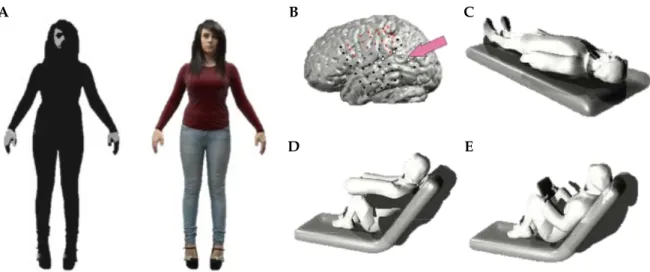
as the one of a shadow). In these situations of complete human figure, she could describe the shadow as a woman, always 20 to 30 cm to her right side, not touching her and with her exact same size (figure 2.1 A). She would only have this sensation while standing or walking and the presence would mimic her movements at the same pace. This was never accompanied by other hallucinations [8].
Case 2: A 22 years old woman, undergoing pre-surgical evaluation regarding epilepsy, demonstrated to have the FoP when focal electrical stimulation was applied over the temporo-parietal junction (TPJ, figure 2.1 B). Following these observations and before the surgery took place, she volunteered herself for electrical stimulation on this exact spot as part of an experiment to study the Feeling of a Presence. As reported by her, the induced presence was of undistinguishable gender and stood very close behind her, even in positions where it should not be physically possible for anyone to be there. For example, when she was laying down (figure 2.1 C-E). She knew ‘it’ was of young age. Describing this presence as “a shadow”, she said it mimicked her positions and even seemed to try and interfere with her execution of required tasks, such as reading paragraphs [9]. This negative connotation given to the presence, goes in line with observations done in 52 Parkinsonian patients also suffering from the FoP, where almost 40% of the patients described the presence as “unpleasant” [4].
Similar descriptions of this presence, are frequently observed among patients with neurological or psychiatric disorders [1, 10, 11]. The phenomenology of the FoP in these patients has the common traces seen before, with a lateralization or posterior position of the presence and mostly an undistinguishable appearance [11]. A description of the FoP in a schizophrenic patient’s autobiography shows how vivid and sometimes threatening this sensation can be: “it was odd that he should push ‘his’ chair back every time I moved mine (…) I often
C
A B
D E
Figure 2.1 Feeling of a Presence
Bodily Self-Consciousness
felt as if someone were standing behind my chair. Then I would strike out backwards with my dagger, imagining that I was fighting an enemy” [12].
Looking at the subjective reports of this presence, from both case studies and from the psychiatric patient’s autobiography, we can try to understand the origin of this sensation by analyzing specific traits. This presence is near the individual, in his/her extra-personal space and mimics the person’s movements. If we consider that the TPJ, which is the area affected in both case studies, has been associated with self-other distinction and multisensory integration at different levels [9], such phenomenology could suggest that the person affected by it, is in fact experiencing a disturbance of the experienced self [9], that leads to a paroxysmal disorder of body image.
To continue to possible mechanisms of the FoP and to link it with psychosis, it is necessary to present the reader with essential concepts that most likely underline this hallucinative process.
2.2
Bodily Self-Consciousness
In the previous chapter, we claimed that the Feeling of a Presence might be caused, due to a poor representation of the experienced self. Here, we will explain what we refer to as ‘self’, some of its characteristics and how researchers have been manipulating it.
Self-consciousness is an impressive phenomenon that allows us to identify with an ‘I’, different from the outside world, distinct from the community, that bounds the subjective experiences one lives to a unitary self [13]. The mechanisms of self-consciousness are of extreme complexity, comprising both multisensory integration at different levels and higher cognitive processes, such as understanding one’s identity over time [14]. As a clarification note, we refer to multisensory integration as the confluency of information from different sensory systems that leads to an understanding that would not be possible by just relying on one of the systems [13]. Pressing a button and hearing a sound is a simple example where the integration of signals from two different sensory systems leads to the understanding that the button and the sound are most likely associated.
throughout our lives [25].One of the arguments for this approach is that the bases of the self, should rely essentially on representations of the body [23], as indeed, most of our objective or subjective experiences have our body as an active part of that task even if we don’t think about it: “When I decide to write, I do not need to look for my hand in the same way that I have to look for a pen or a piece of paper, for the simple reason that my hand is always there” [26].
In general, BSC should be considered as a process that allows global identification with one’s own body, generating a singular body ‘entity’ and is crucial in distinguish the body from the outside world [13, 23].
Even if considered a simpler approach, BSC is still dependent on a complex multisensory integration process. This integration of information relies essentially on proprioceptive, vestibular and body related visual inputs [22]. At the same time, BSC is constrained by the same proprioceptive system in which it depends, body-related visual stimuli, time and space. The proprioceptive system in the sense of one’s body position for example, body-related visual stimuli such as the visual observation of being touched on the right hand (visuo-tactile stimuli). Space and time produce the same constraint, generating a stronger integration, the closer different stimuli are, in space and/or time [22]. More complex constraints exist, especially regarding space, however, addressing them would greatly exceed the purpose of this introduction.
With a broader view on BSC we can focus on some of its essential aspects. Three main characteristics have been identified and associated with the normal functioning of this process [13, 15, 16]:
¨ Self-Identification - knowing that this body belongs to “me” and identifying “myself” with it;
¨ Self-Location - knowing where “I” am;
¨ First-Person Perspective - being aware of the perspective from where “I” perceive the world.
It is noteworthy that self-location and first-person perspective are usually entangled. Nevertheless, there are extremely specific situations where they can be separated [15].
Bodily Self-Consciousness
experimentally. Nonetheless, there are known situations where the former changes without affecting the latter such as Out-of-Body Experiences [2, 14].
It’s mainly by manipulating one of these three aspects that researchers investigate BSC [13, 14, 22,23]. These easily understood definitions are difficult to take a hold of in terms of experimentation [13]. When these topics started to be investigated, most of the early experiments showed curious results, even if limited by what they could manipulate at the time. Participants seemed to present changes in some aspects of BSC such as self-location, in simple experiments that used mirrors to change the visual feedback of arm movements [13, 29]. Recent technological developments came as an enormous aid to these studies, especially, computational developments that allow the precise delivery of stimuli, and Virtual Reality [13]. Curiously one of the experiments that gave a good contribution to understanding BSC did not need any kind of technology. The Rubber Hand Illusion (RHI), although operating in a smaller scale, gave researchers a window through which they could gaze into some of the fundamental aspects of whole body consciousness [23]. Eventually, more complex illusions appeared to study whole-body manipulations of the self, such as the Full Body Illusion (FBI) [13, 23]. These two illusions will be introduced with more detail in the following sub-chapters. For the specific case of the Feeling of a Presence we will only focus on Self-Identification, as its dysfunctions seem to be more pertinent for this symptom.
2.2.1
Self-Identification
Self-Identification is having a sense of ownership over your own body and its individual parts, even in situations, such as amputation, where the perception of one or more limbs is altered [13]. It remains quite unclear how the brain goes from individual body parts ownership to the feeling of having a human body. For now, it is believed that the mechanism through which the brain does this, is by transitioning from multiple attribution of single limbs to a concept of a whole body [17].
Researchers can study the bodily-self by manipulating the multisensory integration in which BSC relies [13, 16, 30]. For example, by manipulating visual and tactile stimuli it is possible to induce illusory states of BSC. It is said that a person is in an illusory state of bodily self-consciousness if one or more of the three aspects mentioned before, changes to something that is not true (e.g. for self-location, believing you are in a physical position that is not your actual position) [13]. This does not necessarily have to include whole body changes, it can be specific to smaller parts of the body, such as a hand [21, 30].
2.2.1.1 Rubber Hand Illusion
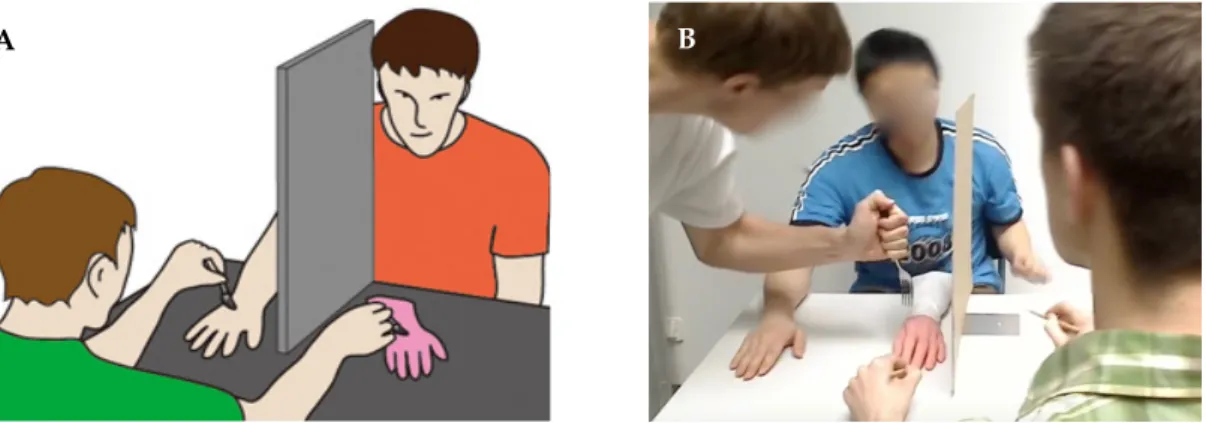
placing a rubber hand in a location consistent with the position of the real limb (figure 2.2 A) [13, 18, 30]. With this experimental setup researchers were able to demonstrate that applying visuotactile stimuli to the rubber hand with synchronous tactile stimuli applied to the occluded real hand, can induce the belief of ownership of the rubber hand mainly because it tricks the participant into thinking that he/she is indeed feeling the stimuli applied to the fake hand [13, 30]. This is true, as long as the fake limb, is presented in a position that is congruent with the anatomy of the arm, is in fact something resembling a human hand and the stimuli is applied to both hands (rubber and real) in a synchronous way [13]. The RHI is in fact so strong, that participants react very quickly and in a defensive manner when the rubber hand is threatened by an external attacker (figure 2.2 B), considering a previous exposure to this illusion of at least a few minutes [31].
Experiments with this paradigm have given great contributions for the study of BSC. Even if they operate in a limb scale, they are an open door to understand important features of BSC such has body ownership [13, 18, 23]. Moreover, the results of illusory self-attribution of the fake hand and mislocalization have been compared to the illusory perceptions that some neurological patients have regarding their whole body [18].
2.2.1.2 Full Body Illusion
In a Full Body Illusion (FBI), researchers put participants in conditions where the harmony of specific visuotactile stimuli is capable of changing aspects of the participant’s BSC, making him identify his body as something else (should be similar to a human figure), rather than his actual body [13, 14, 17, 19, 20, 22]. In contrast with our previous example (RHI), this illusion is capable of inducing whole-body changes.
A B
Figure 2.2 Depictions of the Rubber Hand Illusion
Bodily Self-Consciousness
Early studies with the FBI tried to acquire knowledge about BSC but lacked the controlled experimental conditions that new technologies can provide. An example of these older studies [29] used mirrors to make the participant see himself/herself in a different position than the one in which he/she was (figure 2.3 A). By making movements, the participant would see his/her reflection moving as well, but in a completely different position. After a few minutes, he/she started to report identification with the reflection and its different position. Nowadays, a common setup to generate this type of self-identification illusion, makes use of a head mounted display (HMD), conveniently placed on the participant’s head, showing in real time the footage of a camera placed behind him/her, in such a way that the participant is seeing himself/herself from behind. Stroking movements are then applied to the participants back with a stick (figure 2.3 B). The HMD is displaying in such a way that either the participant sees everything in synchrony or in asynchrony if a small delay (typically 500 msec) is added to the camera’s transmission. In the synchronous condition, participants report self-identification with the body they see in front of them, which after all is just an image of their body, not their real body (or even a real body for that matter) [13, 19]. The reason why this distinction is important lies with the difference between self-awareness and self-identification. For example, when an individual observes himself/herself in a mirror, he/she is engaging in the activity of self-recognition (through self-observation), which is an essential part of awareness. However, this individual would not report identification with this mirrored image in the sense of the described characteristic of self-identification (knowing that ‘this’ body belongs to ‘me’) as he/she knows it is just a mirrored image and not his/her real body [33].
A B C
Figure 2.3 Depictions of the Full-Body Illusion
A different approach to the FBI is capable of making participants ‘believe’ they have swapped bodies with someone else (figure 2.3 C). The setup for this illusion puts the participant in front of the experimenter, with the former wearing a HMD and the latter equipped with two CCTV cameras presenting the experimenter’s point of view. This disposition allows the participant to see his/her physical body from the knees to the shoulders. Participant and experimenter would then squeeze each other’s hand repeatedly for two minutes in a synchronous manner and then for another two minutes but with the experimenter being random in her squeezes. Participants reported a vivid sensation of owning the arm of the experimenter and the sensation of feeling their body behind it. Moreover, they reported to feel as if the sensations from the squeezes were clearly originating from the experimenter’s hand. Researchers also performed skin conductance analysis during random threating attacks to both hands in the two conditions, which revealed that in the synchronous condition, threaths to the experimenter’s hand would enlicit stronger skin conductance responses, which indicates a change in the participant’s arousal, confirming that ownership of the experimenter’s hand was achieved [34].
The FBI has been used for a multitude of purposes related to the study of BSC [13], existing multiple setups and paradigms to do it, including one to partially simulate an Out-of-Boby Experience [20]. Coupled with imaging techniques it has given a direct insight on the brain regions that might be responsible for processes of self-identification and body ownership [13, 17, 28].
2.2.1.3 Putting Body-Limb Ownership Together
The contributions of both the RHI and the FBI studies have been immense towards the understanding of the essential aspects of BSC. How the body goes from having a sense of ownership of different body parts to the whole-body is an interesting question that appeared after observing the results of the RHI and similar setups. Having seen how both limb and body ownership can be manipulated, we will give a brief overview on the mentioned subject. Trunk-related multisensory processing as become the focus of recent research, as seen with the FBI. Such focus allows the exploration of a system that potentially represents more the body than an individual body-part [13]. Trunk-related processing has been showed to also be involved in important aspects of BSC that regard ownership of other body-parts, something that does not happen the other way around [22]. Corroborating this effect, a study with the FBI performed with an artificial human shaped body showed that besides integration of the body parts affected by the touches in the FBI, a secondary process unifies the parts into the percept of a whole body, thus propagating the local effect to regions of the body that were not directly subjected to the FBI [17, 22].
Sensorimotor Integration and Self-Touch
fMRI have pointed out that the premotor cortex and the cerebellum play important roles in the matter of body ownership, more specifically in the self-attribution of the involved body-parts [18, 21]. Furthermore, for the consciousness of a whole body, one would also expect an area responsible for joining together the inputs from different sensory modalities from single mobile body parts, such as hands or the head, to the torso-centered reference frame. The brain region responsible for this has been pointed out as the Post Parietal Cortex [22].
The role of vision in the multisensory integration of BSC has been suggested to be more peripheral, mostly by studies performing variations of the RHI where participants are blindfolded. Serino et al. 2015 [22], debates a role for visual stimuli that goes in line with the constraints to BSC presented in the beginning of this chapter. He purposes that the role of vision should be such of top-down processing, conscious affecting unconscious processes, for example, helping to distinguish “between objects that can and cannot be attributed to one’s body as a function of their visual appearance and anatomical coherence with the physical body” [22].
With the conclusion of this chapter, three essential messages should be kept in mind. First, the three essential characteristics of BSC, self-identification, self-location and first-person perspective. Second, the proprioceptive system and tactile stimuli holding a major role in the construction of the bodily-self (and consequently, a major role in manipulating it). Finally, the existence of constraints to BSC, mainly proximity in time. From this, we move on to introduce the mechanisms of a process that also contributes to the bodily-self and is essential for our project.
2.3
Sensorimotor Integration and Self-Touch
In the previous chapter, essential concepts on the bodily-self were presented alongside with common experimental paradigms to manipulate bodily self-consciousness and study the bodily-self. However, we did not enter in detail on how the mechanisms behind the bases of self-identification work. In the present chapter, we will present one mechanism believed to influence self-identification and therefore able to alter the state of BSC [25, 35, 36]. This mechanism relies on self-touch and its comprehension is essential to understand the experiments designed in this master thesis project.
tactile and visuotactile stimuli, to the real and fake hands respectively. However, Ehrsson demonstrated that this illusion can be induced without the component of vision being involved [18]. In 2005 they managed to induce the RHI in blindfolded individuals, through a paradigm that relies on self-touch, or better said, illusory self-touch [18]. In this setup called the Somatic Rubber Hand Illusion (SRHI, figure 2.4), the blindfolded participant has his/her right index finger being guided by the experimenter, so that he/she touches the rubber hand, at the same time as the researcher touches the participant’s real left hand. This experiment not only showed that the RHI can be induced, but it also demonstrated that changes in self-identification and self-location towards the fake limb can be aroused just by tactile stimuli, if both the action of touching and the feeling of being touched, fulfill the necessary requirements to identify self-touch, or in other words, as long as these two sensations are in synchrony [18]. Compelling evidence on how self-touch affects BSC has also been gathered with neurological patients. A woman aged 60 years-old suffered a large hemorrhagic stroke which damaged her right parietal and frontal lobes. Thus, she ended up suffering from recursive somatoparaphrenia (denying that a limb is part of your body) of her left arm, misoplegia of the left arm (negative feelings and/or physical violence, towards the affected limb) and hemianaesthesia on the left side (loss of sensation on one side of the body). The latter, made it impossible for her to perceive any somatosensory input acting on the left side of her body. However, when she was the one touching her contralesional hand (with her right hand), she would have a sense of touch. Interestingly, shortly after the stroke episode she reported that ‘stroking’ the affected limb improved her feeling that the arm was after all, a part of herself.
Figure 2.4 Depiction of the Somatic Rubber Hand Illusion
Sensorimotor Integration and Self-Touch
This lead to a series of experiments showing that touch would, not only generate self-identification/ownership towards the affected limb but even work if a rubber arm was used instead. Plus, researchers reported striking changes in attitude towards the arm being touched, going from feelings as strong as disgust in the beginning, to gentle and warm caresses in the end. In this case study, not only does self-touch appear as a strong mediator of BSC but it is also seen reinforcing body representations [35].
Knowing that self-touch can modulate BSC we must further investigate the mechanisms underlining self-touch and address important brain features of these specific mechanisms, such as predictions.
2.3.1
Considerations on Self-Touch
Even if most of us are ticklish, we cannot tickle ourselves. This is a fact that most of us have noticed at some point of our lives, even if we haven’t exactly thought about it. An experiment carried out in 1971 [38] tried to better understand why this happens. For this purpose, researchers designed three tickling conditions - one where the experimenter tickles the participant, a second one performed by the participant on himself/herself and a third where the participant’s arm is controlled by the experimenter and used to tickle the participant passively. As expected, researchers observed that the most ticklish condition was the one where the tickling had an external source (performed by the experimenter) and that it was impossible to arise a tickling sensation in the second condition, where the tickles were self-administered. For researchers, this difference in experienced sensation had to be explained by the extra knowledge participants have in self-administered tickling. In this condition, participants are aware of both the motor command used to produce the tickling and the sensory feedback coming from the arm producing the tickles. None of this knowledge is present in an externally produced tickle, and only one, the sensory feedback from the arm, is present in a passively produced tickle, like in the third condition [38]. These observations start to show us the path to the distinction between self and other touch.
is that self-generated forces are perceived as weaker than externally produced ones, suggesting a possible sensory attenuation for self-touch: “This could arise from a predictive process in which the sensory consequences of a movement are anticipated and used to attenuate the percepts related to these sensations” [39].
For now, the conclusion we should retain from these experiments is that some sort prediction mechanism is being activated for every movement we make. The objective of such predictions is likely to be the one of attenuating the sensory sensations that will be aroused by the movement. Other purposes might underline this mechanism. However, these are the only conclusions we can take for now, based on these studies.
2.3.2
The Predictive Brain
The concept of a ‘predictive brain’ has been growing in cognitive neurosciences as one of the most important features of the brain. It mainly refers to the importance of anticipation and expectation in cognitive processes. As we have just seen in the preceding chapter, there is evidence supporting that the brain tries to predict the outcome of its actions. If we try to think about the reasons for why the brain would do this, we should consider that every action we take starts with a more or less concrete goal and that online predictions during such actions
A
B
C
Figure 2.5 Depictions of the Matching Force Task
Sensorimotor Integration and Self-Touch
are a good way to control how the desired action is evolving [40]. In fact, it goes even further, as it can be used for distinguishing self-other actions [40].
The sensorimotor integration system provides a mechanism to address the prediction aspects of self-touch discussed in the previous chapter. According to Wolpert, the sensorimotor system should be viewed as an observer that constantly has the objective of estimating both its state and the state of the environment surrounding it [41].
Daniel Wolpert has in fact given several contributions to a possible internal model for sensorimotor integration [37, 41- 43]. He hypothesizes that this model should mimic the casual flow of a process, therefore, like a forward model. This model would consider the two knowledges described in the previous chapter, the motor command and the feedback information coming from the proprioceptive system [37]. As example, lets imagine an arm movement. Given a certain motor command and an initial state, the brain runs a copy of the motor command (efference copy) through a forward model of the arm’s dynamics as a way to assess the next state of the arm. Following this process, the next state of the arm is used to determine the expected sensory feedback of this new arm position, thanks to a sensory output model. When both the sensory prediction and the real sensory feedback are available, they are compared and a difference between the sensations is obtained (figure 2.6) [37, 41, 42]. It is believed that this assessment has various purposes, alongside with the self-monitoring (through online predictions) mentioned before. When only small differences are detected, these sensory predictions are used to attenuate the incoming sensory feedback, as it is considered irrelevant (after all it came for the person’s own actions) [42, 44, 45]. In the same
Figure 2.6 Internal Model for Motor Control
situation, such small differences can also be used to improve the forward dynamic model [37]. Larger differences, mean that the predictions did not match the sensory input. In this scenario, no attenuation occurs and the stimuli is considered salient and possibly externally generated [40].
By constantly making predictions, the brain tries to continuously assess how its actions are performing and more importantly it is deciding which stimuli will be processed more extensively by analyzing the difference between the input and the prediction. It has been shown that expectations shorten perception time, speed recognition, interpretation of events, and allow the brain to prepare adequate reactions [40]. Moreover, in the case of a match between sensory feedback and sensory prediction, the brain does not need to devote time to an input if it is considered a non-salient stimulus. Mismatches on the other hand, require more focus from the brain to understand what went wrong or if an external action as acted upon one of the sensory systems. Furthermore, depending on the size of the discrepancy, it can be communicated to a higher level, making the person aware of something being ‘wrong’ [40]. In the specific case of self-touch, differences should always be of a very small order.
Finally, according to the present model, we hypothesize that timing is one of the most important considerations. These processes are constantly running for every simple movement a person does. They do not ‘wait’ for sensory feedback to be available beyond a reasonable time window, therefore, being delayed or the absence of incoming sensory feedback would be considered a mismatch [46, 47] and as consequence a salient stimulus to which the individual would become aware of [35, 40]. It is noteworthy that looking at illusions presented in previous chapters, both the RHI and the FBI work when the stimuli involved are presented in synchronous conditions.
Psychosis and Psychotic States
2.4
Psychosis and Psychotic States
In the preceding chapters, we have made several mentions to psychotic states and even stated that the FoP is related to psychosis. Studying the mechanisms of psychotic states, can therefore be helpful to understand the process that underlines the FoP.
Psychotic states are the main consequence of conditions that distort both thinking and perception [48]. Two known examples of such conditions are schizophrenia and bipolar disorder. A psychotic-like state, is the occurrence of a symptom associated with a psychotic state, on an otherwise healthy individual. This can happen for a multitude of reasons ranging from substance abuse to conditions where the body is pushed to the limit (such as minimal survival conditions)[49].
Psychotic symptoms are divided in positive symptoms and negative symptoms. The prior refers to psychopathologies of delusions, hallucinations, thought disorders, paranoia, among others that are the result of a diminished self-affection creating an exaggeration of otherwise normal human characteristics (e.g. inner speech perceived as external voices) [49, 50]. The latter refers to apathy, catatonic withdrawal, lack of communication and such other symptoms that can also be associated to depression [49]. Negative symptoms should not be associated with diminishment on affect or thinking, but rather with perplexity (hyper-reflexivity, de-automatization of movement) making patients always conscious of every tiny aspect of the actions they do (e.g. movements), which a normal person would naturally fail to report [50].
Attributing one’s own actions to an external agent is also the case for several hallucinations in schizophrenic patients. Blakemore, proposes that hallucinations of alien control are in fact a consequence coming from poor timing of the brain’s predictions, which ultimately result in perceiving the consequences of a movement before being aware of initiating it [10]. “My fingers pick up the pen, but I don’t control them. What they do has nothing to do with me” [51].
Another reason to why we associate the FoP with psychotic states can be viewed in the light of the previously seen model for sensorimotor integration, presented in psychotic patients, as we will see in the next sub-chapter.
2.4.1
Prediction Deficits in Schizophrenia
The experiment discussed in chapter ‘2.3.1 – Considerations on Self-Touch’, regarding matching an externally applied force had several follow-up studies. A Brief Report shed light in the functioning of sensorimotor integration processes in patients with Schizophrenia [52]. The matching force experiment was repeated in the same way, but this time healthy participants and patients with schizophrenia were recruited. Again, participants were presented with an external force applied by the lever sitting on top of their left index finger. They had to match this force in one of two ways, over several trials. Either they pressed directly the lever with their right index finger, making pressure on their left index finger, or they controlled with the right index finger, a joystick that moved the lever and therefore applied force on their left index finger.
Psychosis and Psychotic States
2.4.2
Proposed Mechanism for the FoP
The mechanisms of bodily self-consciousness do not work as they are supposed to for everyone. Malfunctions at the level of sensorimotor integration are likely to generate problems such as a poor sense of self, poor agency and due to that, some of the positive symptoms seen in psychotic states [52-54].
The causes for the FoP are still quite debated, however, if we consider, that the phenomenology of the FoP points to bodily-self disturbances [4, 9, 32], the sensorimotor integration problems associated with psychosis in schizophrenia [52, 54] and the fact that the FoP has been induced with sensorimotor mismatches [1] (chapter 3 ‘State of the Art’), it seems feasible to say that the FoP is mostly a problem of misattributing one’s own bodily signals, considering them as external ones coming from current daily life, i.e. self-touch from external touches. With this in mind, we advance the hypothesis that the FoP might be derived from a misinterpretation of one’s own actions, with a cause that might be similar to the impairment of the sensory predictions of the sensorimotor integration model in schizophrenic patients [1, 9]. We also purpose in advance a general and hypothetical flow of events that leads to the FoP, in accordance to the literature on psychotic symptoms and the observed phenomenology.
Figure 2.7 Matching Force Task with Healthy Participants and Schizophrenic Patients
We suppose that the FoP starts with deficits in sensory predictions of self-generated actions, which then leads to the misinterpretation of one’s own actions. This misinterpretation causes a poor sense of self, which is in general responsible for the attribution of one’s action to external parties, thus generating the FoP.
23
3
State of the Art
The Feeling of a Presence is a quite new topic to be addressed by Neuroscience in such an experimental way. Although its descriptions date from more than one century ago, it has never been experimentally self-induced in a controlled environment, mainly due to its unpredictable nature and short duration. This was achieved for the first time in healthy subjects, two years ago here in the Laboratory of Cognitive Neurosciences from the Center of Neuroprosthetics of the EPFL, with resort to a robotic system. The idea for the experiment we are about to address came after five spontaneous reports from different participants saying they had a feeling of a strange presence close to them when performing a variant of the Full-Body Illusion that was supposed to be self-induced.
Considering this is quite recent and that several articles are currently in preparation, the state of the art on the induction of the Feeling of a Presence on healthy subjects is quite limited.
3.1
Robotically-Induced Psychotic-Like State
A recent study from Olaf Blanke [1] managed to induce for the first time in healthy individuals, a specific symptom of some psychotic-states, the Feeling of a Presence. This was achieved through sensorimotor mismatches.
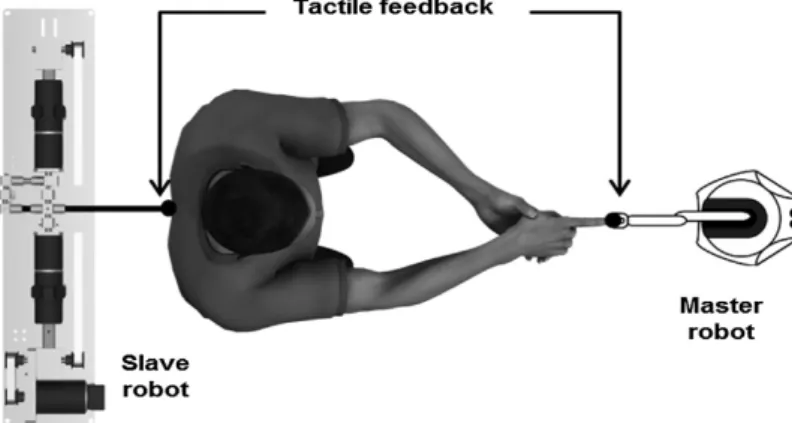
This study made use of a master-slave robotic system, controlled by the participants, in order to induce the FoP. Participants (blindfolded and noise isolated) had to perform tapping
Figure 3.1 Setup Design for the FoP
movements in the space in front of them with the master robot attached to their index finger. By doing so, the slave robot reproduced each movement behind the participant, touching their back (figure 3.1).
This was performed with different protocols: synchrony vs. asynchrony, where asynchrony comprehends a 500 millisecond temporal mismatch between the participant’s movement and the touch on the back, combined with presence of force feedback on the index finger when a touch on the back happened versus the absence of such feedback. The FoP occurred clearly in the scenario that generated more sensorimotor conflicts, which was asynchronous stimulation without force feedback (figure 3.2 A).
Researchers also performed a numerosity judgment task, to assess if it was possible that the Feeling of a Presence was an effect of suggestion due to the questionnaires. When entering the room participants (new participants) would see four other people and be informed that at any given time during the experiment one or more of these people could approach the area of the experiment. During the sessions, researchers would ask the blindfolded and noise isolated participants to report how many people they felt were close to them. Participants significantly judge that more people were close, when experiencing the asynchronous condition (figure 3.2 B). No one actually approached the participants at any time, which assures that the only difference between conditions was truly the synchrony protocol being used.
It is also a conclusion from this study, that the FoP in psychotic patients is most likely caused by sensory impairment due to lesion or misinterpretation of the biological input signals [1] (in healthy people could be caused for example by extreme conditions [7]), meaning that by misinterpreting your own actions (in this case poking yourself on the back) you attribute them to something or someone else in the environment. It is evident for example in cases of schizophrenia that some stimuli (eg. proprioceptive stimuli) are not correctly assessed
A B
Figure 3.2 Questionnaire Results from Blanke et al. 2014
Adapted from Blanke et al., 2014 [1] (A) Results from the questionnaire applied to assess Self-touch and FoP during part of the study from Blanke et al. 2014. Participants rated the FoP significantly higher in asynchronous condition (as well as touched by other). Self-touch followed the opposite trend. (B)
Numerosity task (regarding the question: How many people do you feel close to you?), reveals that subjects significantly report more people being close to them under the asynchronous condition. Note that, there was never anyone close to the participants.
Robotically-Induced Psychotic-Like State
by the brain as belonging to the person. As they are still inputs coming to the brain they need to be interpreted even if wrongly, which eventually might lead to the attribution of certain self-produced stimuli to an external agent [1, 7, 52, 54]. In the case of the Feeling of a Presence this is mostly associated with lesions occurring on the insular, frontoparietal and temporoparietal cortexes [1] (figure 3.3).
All of these brain regions have important roles in Bodily-Self Consciousness aspects. The Insula has for a long time been suspected of being related to the awareness of one’s own body inputs and therefore directly connected to Bodily Self-Consciousness [55]. It is also connected to some addictive behaviours and sudden realizations of logical realities [56]. Regarding the Frontoparietal cortex it is essential for somatosensory associations and it’s debated its importance in controlling essential aspects of spatial attention [57]. In its turn the Temporoparietal Junction is related to the interpretation of human thoughts and cognition, especially as in the presence of another person [58]. The study we are addressing also compared psychotic FoP-patients against control psychotic patients. By performing lesion analysis and crossing the two groups, the study points out the main responsible for the Feeling of a Presence seems to be more specifically the frontoparietal brain regions [1].
Figure 3.3 Lesion Overlap Analysis for FoP Patients
27
4
Background in Electroencephalography
Electroencephalography (EEG) is a technique used to record the electrical fields of the brain. To do so, it makes use of electrodes placed on a person’s head, alongside with one or two electrodes that serve as references for the rest (figure 4.1 A-B) [59]. Its applications are mostly related to academic research in the field of cognitive neurosciences, such as the topic being approached on this thesis. However, EEG is also used by clinicians in specific situations ranging from epilepsy diagnosis to the identification of sleep disorders [60]. More recently, EEG has become an essential part of brain computer interfaces, allowing people to control computer programs or some pieces of hardware by performing certain mental tasks [61].
The reason why EEG is vastly used in cognitive neuroscience lies with the anatomy of behaviour and cognitive processes, and with the time resolution it provides. Starting with the former, these processes are not specific to small groups of neurons but rather to brain regions and to the interaction between different brain areas. Considering the size of the brain regions involved, an assessment at a larger scale, such as the one EEG provides, is fortunate. A modern EEG equipment can be specific enough to record 10 million neurons at a 1 cm scale. Even if the tendency in EEG is to reduce this number, as to improve spatial resolution, it is definitely considered a large-scale measurement when comparing with microarrays and intracranial recordings. This type of scale allows researchers to run analysis for activity, coherence, interconnectivity between regions, or other types of analysis [60]. A more simple analysis of an electroencephalogram could even be performed by a naïve user. When seeing the EEG of a person with eyes open or closed one can clearly notice the increased activity of alpha waves
Figure 4.1 Electroencephalography Apparatus
(A) Head Model using a 64-biosemi EEG. On the right side the battery and amplifier are in view. (B)
10/20 Layout for the 64 channels EEG depicted on (A), with the references identified as CMS and DRL. B
in the latter case. Finally, considering timing, EEG provides a millisecond resolution appropriate for accompanying the development of most cognitive processes.
4.1
EEG and Neurophysics
The EEG is not sensible to a single neuron’s activity nor to action potentials. As we have seen before, a reasonable goal for an EEG detects around 10 million neurons in the 1 cm scale. In fact, a single electrode placed on the head would report feedback from around half a billion neurons [60].
The electrical fields detected by the EEG are generated by large groups of neurons located on the human brain cortex, the pyramidal neurons [62]. These neurons are arranged in palisade-like structures, resulting in aligned main dendritic trees all perpendicular to the cortical surface (figure 4.2 A). When activated synchronously by post-synaptic activity, the resulting electrical field can be detected at a distance from the source [63]. Interestingly the EEG is not sensitive to this post-synaptic occurrences, at least directly. What the EEG detects are the extracellular currents generated by post-synaptic activity [60, 63].
Synaptic activity is most of the times the main source of extracellular current flow. Both dendrites and soma of a neuron form a tree-like structure where thousands of synaptic-sites are located. Excitatory currents for example are responsible for the influx of cations to the intracellular mean, while a return current balances the extracellular medium with a flux of the opposite charge (negative). A dipole (or higher order) is now formed (figure 4.2 B) and can be picked up by an electrode up to a certain distance [64]. On the contrary, action potentials on a neuron’s axon are a very small contributor to the extracellular medium in a global perspective, mainly due to the lack of synchrony between neurons when such events occur and to their small duration (< 2 msec) [64].
A B
Figure 4.2 Depictions of Pyramidal Neurons
29
5
General Methods
To induce the Feeling of a Presence as described previously in the state of the art and within the bases of self-induction, our paradigm follows a similar approach to the one used in Blanke et al., 2014 [1]. In this study, healthy participants manipulated a robotic system that allows them to stimulate their own back. Such manipulation was previously done either synchronously or asynchronously, with only one protocol of temporal mismatch. As there is compelling evidence pointing in the direction that the temporal mismatch between the manipulation performed by the participant and the actual touch on the back is one of the main factor making this sensation arise [1, 37], we wanted to investigate the temporal dynamics of the FoP.To do so, we used a wider range of temporal mismatches that includes the two used in the previous study and every 100 msec step between them. Ultimately, this means, 0 msec, 100 msec, 200 msec, 300 msec, 400 msec and 500 msec of delay.
Two experiments were performed to test this hypothesis. Experiment 1, a behavioral experiment aimed at understanding the temporal dynamics of the FoP and Experiment 2, an EEG imaging study focused on identifying the brain regions responsible for the different subjective experiences of the FoP. The results of Experiment 2 allow the same behavioral analysis done in Experiment 1. In this chapter, we present the methodology, setup and paradigm for both experiments.
5.1
Robotic System
The robotic system is composed by two robots in a master-slave fashion and an interface controlling the interaction protocols between the two. These protocols are the temporal mismatches (delays) used between the movement on front executed by the participants and the touch on the back performed by the slave robot. Force feedback on the finger was always present.
degree-of-freedom slave-robot which exact specifications should be consulted in the supplemental information from the 2014 paper [1a]. Regarding the amplitude of movements, it is 200mm in the x direction, 250 in the y direction and 200mm in the z direction. The interface controlling this system is programmed in Visual C++ with a sampling rate of 1kHz. The standard delay between the master robot and the slave counterpart is the time required to map the master’s movements and establishing the slave’s movements, which is close to 1 msec.
5.2
Participants and Ethical Statement
For Experiment 1, 12 healthy participants were recruited (5 males, mean age 26 [SD ± 5.2] years, all right-handed) and successfully took part in the experiment.
For Experiment 2, 21 participants were recruited. Ultimately, 19 subjects (8 males, mean age 25 [SD ± 4.7] years old and all right-handed) took part in the experiment successfully. None of the subjects reported a history of neurological or mental disorders, or brain injuries. As rejection criteria, we had decided that any participant not experiencing the FoP or having it at very residual levels in the second sessions of the experiments, would have to be excluded from the analysis as there would be no conditions of interest to compare.
A
B
D
C
Figure 5.1 Illustrative Examples of the Master-Slave Robotic System
(A) Realistic depiction of master robot being pivoted at the level of the wrist, with arm movement, by a blindfolded participant. The surface on which the robot rests can be adjusted for the height of the subjects. (B)
Experimental Design
Both experimental protocols were approved by the Cantonal Ethical Commission of Genève (GE 15-273). Standard protocols laid down in the Declaration of Helsinki were also followed. All subjects received a compensation of 20.- CHF/hour for their commitment to the experiment.
5.3
Experimental Design
Experiment 1 is composed by two sessions, whereas Experiment 2 is composed by three sessions, being the first two, the same ones as in Experiment 1. The two experiments take place in a sound attenuated room with dimmed lighting. Participants are blindfolded and listening to white noise via headphones throughout the sessions. All the experiments are designed in MATLAB (The MathWorks, Inc.) and stimuli are controlled and presented to the participants using the Psychophysics Toolbox [65] for increased accuracy.
5.3.1
Experiment 1
The first experiment, has the sole purpose of behaviorally assessing the temporal dynamics of the FoP, before starting an imaging study. This is done with two sessions, the first one to replicate some of the results from Blanke et al., 2014 [1], and the second session to address our new objective.
5.3.1.1 Session 1 – Familiarization
T

![Figure 2.4 Depiction of the Somatic Rubber Hand Illusion Adapted from Ehrsson, 2005 [18]](https://thumb-eu.123doks.com/thumbv2/123dok_br/16542320.736791/34.892.243.663.106.414/figure-depiction-somatic-rubber-hand-illusion-adapted-ehrsson.webp)