high-cost drugs in São Leopoldo, Rio Grande do Sul State,
Brazil, 2014*
Correspondence:
Vera Maria Vieira Paniz – Universidade do Vale do Rio dos Sinos, Programa de Pós-Graduação em Saúde Coletiva, Av. Unisinos, No. 950, Cristo Rei, São Leopoldo-RS, Brasil CEP: 93022-000
E-mail: [email protected] Mariani Sopelsa1
Fabiane Raquel Motter1 Nêmora Tregnago Barcellos1 Heloísa Marquardt Leite1 Vera Maria Vieira Paniz1
1Universidade do Vale do Rio dos Sinos, Programa de Pós-Graduação em Saúde Coletiva, São Leopoldo-RS, Brasil
Abstract
Objective: to describe the pharmacotherapeutic profile of users of the Specialized Program for Pharmaceutical Assistance, and to measure the expenditure on the most prevalent and the most expensive medications. Methods: descriptive study conducted in São Leopoldo-RS, Brazil, with secondary data regarding information about requests accepted in 2014, through administrative proceedings; delivery notes of the State Health Department/RS were used to assess the costs. Results: 1,528 users were included in the study, mostly women (56.7%), and the average age was 52 years (standard deviation=17.9); the most frequent diagnoses were allergic asthma (17.1%), chronic kidney disease (11.5%) and rheumatoid arthritis (8.4%); the most prevalent drug was budesonide+formoterol fumarate (18.3%); among the most prevalent drugs, the highest total monthly expense was with epoetin alfa (BRL37,922.34) and among the most expensive drugs, infliximab (BRL72,503.28).
Conclusion: the data show the importance of the Specialized Program for Pharmaceutical Assistance in the high-cost treatment of highly prevalent.
Keywords: Drug Utilization; Drug Costs; Chronic Disease; Pharmaceutical Services; Epidemiology, Descriptive.
doi: 10.5123/S1679-49742017000400008
Introduction
In Brazil, the National Health Policy (NHP) establishes the conditions for the promotion, protection and recovery of health, as well as the organization and management of services, based on the principles of universality, equity and comprehensiveness of health care in the Brazilian National Health System (SUS). The National Medicines Policy was approved in 1998, as an essential part of the NHP. It aimed at ensuring safety, efficacy and quality of medicines, promote their rational use and the population access to those medicines considered essential. The adoption of the National List of Essential Drugs (Rename) and the realignment of Pharmaceutical Assistance (FA) are among the main guidelines of this policy.1
The current Rename comprises the set of medicines provided by SUS through funding programs by FA. The expanded concept of essentiality aims at guaranteeing a comprehensive medical treatment. The realignment of FA aims at implementing activities to promote access to essential drugs, based on a decentralized management, promotion of rational use, and optimization and efficacy of the distribution system in the public sector.1
Also in accordance with health policies, the National Policy on Pharmaceutical Assistance approved in 2004 is a guide for public policy for the development of sector policies, considering medicines essential inputs, and aiming at access and their rational use, as well as at the decentralization of actions.2 Nowadays, FA funding is divided as follows: Primary Component of Pharmaceutical Assistance, comprising medicines used in primary health care; Strategic Component of Pharmaceutical Assistance, for financing medicines for communicable diseases and/or diseases of high impact on health, such as AIDS and tuberculosis, among others; and Specialized Component of Pharmaceutical Assistance,3 object of this study.
The Specialized Component of Pharmaceutical Assistance is an important strategy which aims at ensuring access to medicines at SUS for the treatment of diseases,
both rare and of high prevalence, since there was a prescription for the use of high-cost-per-unit drugs or those whose cost becomes overly expensive due to a chronic treatment. The major challenge of the policy of access to medicines when it comes to this Component, which has a growing number of users each year, is the high financial impact.3-5 In 2003, the expenditures with its drugs were approximately BRL516 million; in 2014, these expenses reached BRL4.9 billion, a 9.5 times growth.6
However, many of these expenditures could be avoided with a full monitoring of individuals, since they are assisted at primary health care.7,8 Hence, the identification of the most frequent diseases within the Specialized Component among users may not only help the guidance of actions with emphasis on pharmaceutical assistance and pharmacotherapeutic monitoring, but also subsidize actions aiming at modifying the historical profile of these diseases. Studies on this subject can contribute to a more effective FA planning, providing elements to the decision-makers in the planning of actions and in the supply of high-cost drugs.
The objective of this study was to describe the pharmacotherapeutic profile of users of the Specialized Component drugs in the municipality of São Leopoldo, Rio Grande do Sul State, Brazil, and to measure expenditures on the most prevalent drugs and those with major financial impact.
Methods
This is a descriptive study conducted in the municipality of São Leopoldo-RS, with secondary data from the Medicines Management System (AME®) provided by Rio Grande do Sul State Health Department (SES/RS).
São Leopoldo-RS, a municipality located in the Brazilian South region, had 214,087 inhabitants in 2010, a population density of 2,083.82 inhabitants/km2 and a human development index (HDI) of 0.739.9 At the time of this study, the municipality had 19 primary health care units (PHU), of which nine covered the Family Health Strategy (FHS), and there was one Central Municipal Pharmacy, dispenser of Specialized Component drugs.
Data from all users of Specialized Component drugs with a request granted through administrative proceedings from January/2014 to December/2014 were included. Considering that the users received those medicines every month, we used the information about their last dispensing.
The National Policy on Pharmaceutical
Assistance approved in 2004 is a guide
for public policy for the development
of sector policies, considering
The study variables were defined based on data provided by the AME® system:
- sex (male, female);
- age (based on birth date and organized in age groups, in years: 0-19; 20-39; 40-59; 60 or more);
- place of household (neighborhood, identified from the address and classified according to the presence of PHU with or without FHS);
- morbidities (according to the International Statistical Classification of Diseases and Related Health Problems – 10th Revision [ICD-10],10 subsequently grouped into chapters); and
- medicines (classified according to the active ingredient, dosage and dosage form).
The statistical program Stata 11.0 (Stata Corp., College Station, United States of America) was used for the analysis. Morbidities, according to ICD-10 and its chapters, were stratified by sex, age group and place of household, with or without FHS. Prevalence was presented with its respective 95% confidence intervals (95%CI) and analyzed by the chi-squared test, for heterogeneity of proportions and linear trend, adopting a statistical significance level of 5%.
The drugs costs were obtained from SES/RS delivery notes, updated for the year 2015, up to April. These costs were determined for both the most prevalent and the most expensive drugs. In order to determine the most expensive drugs, those with the highest financial impact were selected in the literature, considering the cost of the pharmacological treatment per individual per month.11 Each user monthly expenses were determined for each drug, then summed, and this result divided by the number of users, obtaining the average monthly expenses per individual. The total monthly expense was obtained by summing the users’ monthly expenses for each drug.
This research project was approved by the Ethics Research Committee of Vale do Rio dos Sinos University (UNISINOS): Resolution No. 143 dated October 14th, 2014. Rio Grande do Sul State Health Department allowed the use of data; the ethical issues of confidentiality for the users' names and the commitment in the publication of results were also observed.
Results
A total of 1,528 users of Specialized Component drugs were included, mostly women (56.7%), the
average age was 52 years (standard deviation = 17.9), and almost half of users (44.1%) were residents in neighborhoods with PHU/FHS.
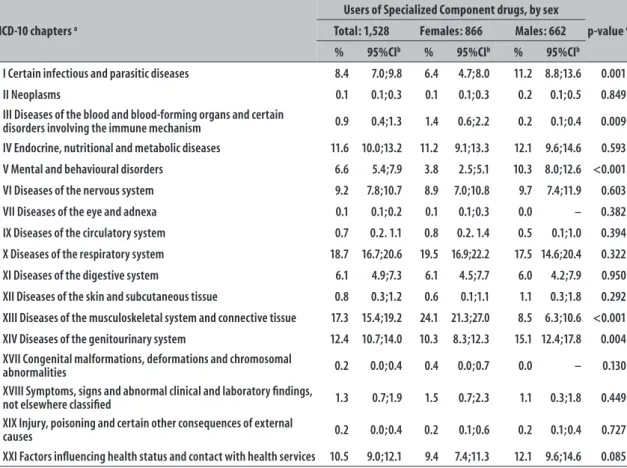
The most prevalent diagnoses are grouped in the chapters on diseases of the respiratory system (18.7%) and diseases of the musculoskeletal and connective tissue (17.3%). There was a higher prevalence of diseases of the musculoskeletal system and connective tissue, and diseases of the blood and blood-forming organs in women compared to men. For men, mental and behavioral disorders were more prevalent (Table 1).
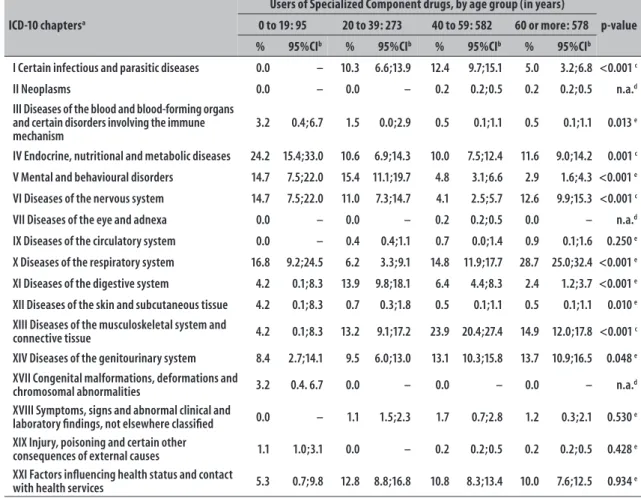
Diseases of the respiratory system and genitourinary system were more prevalent among the elderly, whilst diseases of the musculoskeletal system and connective tissue and certain infectious and parasitic diseases were more frequent in the age group from 40 to 59 years. Diseases of the digestive system and mental disorders were more prevalent between 20 and 39 years, and endocrine, nutritional and metabolic diseases, diseases of blood and blood-forming organs and diseases of the nervous system were more frequent in those aged 0 to 19 years (Table 2).
Diseases of the genitourinary system were more prevalent in FHS neighborhoods than in neighborhoods without the presence of these teams (14.7% versus 10.5%). In the non-FHS neighborhoods, higher prevalence of mental and behavioral disorders were observed in comparison with FHS neighborhoods (8.4% vs. 4.3%); the same occurred among diseases of the nervous system (10.5% vs. 7.7%) (data not presented in the table).
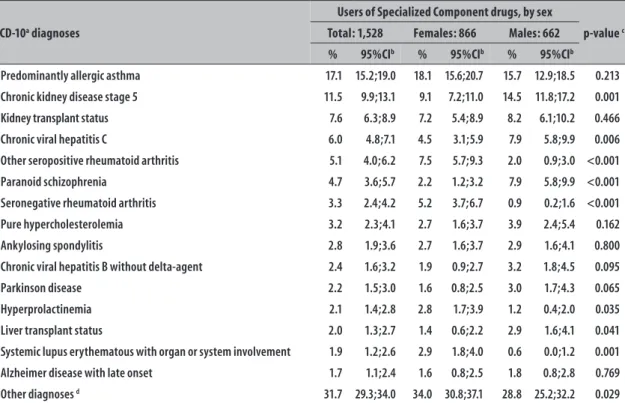
Out of the 146 reported morbidities, 15 (10.3%) represented the most frequent diagnoses. Among users, 95.0% had one and 4.5% had two morbidities. The most prevalent diagnoses were predominantly allergic asthma (17.1%), chronic kidney disease stage 5 (11.5%), kidney transplanted status (7.6%) and chronic viral hepatitis C (6.0%). Women presented higher proportions – compared to men – of other seropositive rheumatoid arthritis, seronegative rheumatoid arthritis, hyperprolactinemia and lupus erythematous. Chronic kidney disease stage 5, viral hepatitis C and paranoid schizophrenia were predominant in men (Table 3).
Table 1 – Classification of users of the Specialized Component of Pharmaceutical Assistance drugs (N=1,528),
total and stratified by sex, according to ICD-10a chapters, in the municipality of São Leopoldo-RS, 2014
ICD-10 chapters a
Users of Specialized Component drugs, by sex
p-value c
Total: 1,528 Females: 866 Males: 662
% 95%CIb % 95%CIb % 95%CIb
I Certain infectious and parasitic diseases 8.4 7.0;9.8 6.4 4.7;8.0 11.2 8.8;13.6 0.001
II Neoplasms 0.1 0.1;0.3 0.1 0.1;0.3 0.2 0.1;0.5 0.849
III Diseases of the blood and blood-forming organs and certain
disorders involving the immune mechanism 0.9 0.4;1.3 1.4 0.6;2.2 0.2 0.1;0.4 0.009
IV Endocrine, nutritional and metabolic diseases 11.6 10.0;13.2 11.2 9.1;13.3 12.1 9.6;14.6 0.593
V Mental and behavioural disorders 6.6 5.4;7.9 3.8 2.5;5.1 10.3 8.0;12.6 <0.001
VI Diseases of the nervous system 9.2 7.8;10.7 8.9 7.0;10.8 9.7 7.4;11.9 0.603
VII Diseases of the eye and adnexa 0.1 0.1;0.2 0.1 0.1;0.3 0.0 – 0.382
IX Diseases of the circulatory system 0.7 0.2. 1.1 0.8 0.2. 1.4 0.5 0.1;1.0 0.394
X Diseases of the respiratory system 18.7 16.7;20.6 19.5 16.9;22.2 17.5 14.6;20.4 0.322
XI Diseases of the digestive system 6.1 4.9;7.3 6.1 4.5;7.7 6.0 4.2;7.9 0.950
XII Diseases of the skin and subcutaneous tissue 0.8 0.3;1.2 0.6 0.1;1.1 1.1 0.3;1.8 0.292
XIII Diseases of the musculoskeletal system and connective tissue 17.3 15.4;19.2 24.1 21.3;27.0 8.5 6.3;10.6 <0.001
XIV Diseases of the genitourinary system 12.4 10.7;14.0 10.3 8.3;12.3 15.1 12.4;17.8 0.004
XVII Congenital malformations, deformations and chromosomal
abnormalities 0.2 0.0;0.4 0.4 0.0;0.7 0.0 – 0.130
XVIII Symptoms, signs and abnormal clinical and laboratory findings,
not elsewhere classified 1.3 0.7;1.9 1.5 0.7;2.3 1.1 0.3;1.8 0.449
XIX Injury, poisoning and certain other consequences of external
causes 0.2 0.0;0.4 0.2 0.1;0.6 0.2 0.1;0.4 0.727
XXI Factors influencing health status and contact with health services 10.5 9.0;12.1 9.4 7.4;11.3 12.1 9.6;14.6 0.085
a) ICD-10: International Statistical Classification of Diseases and Related Health Problems – 10th Revision. b) 95%CI: 95% confidence interval.
c) p-value from a chi-squared test for heterogeneity of proportions.
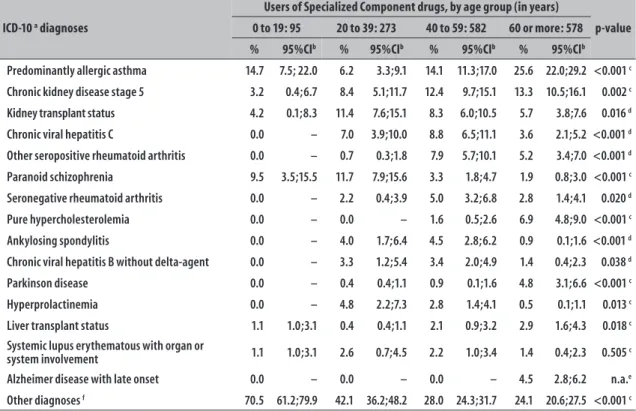
paranoid schizophrenia were more frequent in the age group from 20 to 39 years, whilst chronic viral hepatitis C, among individuals aged 40 to 59 years (Table 4).
There was a higher prevalence of chronic kidney disease stage 5, in FHS neighborhoods when compared to non-FHS neighborhoods (13.4% vs. 9.9%). Higher prevalence of Alzheimer’s disease with late-onset and paranoid schizophrenia was found in non-FHS neighborhoods, compared to neighborhoods with FHS (2.5% vs. 0.7% and 5.8% vs. 3.4%, respectively) (Data not presented in the table).
A total of 2,431 drugs were collected by 1,528 users, distributed in 96 different active ingredients, and 147 forms. The most prevalent drug was budesonide+formoterol fumarate (18.3%), followed by epoetin alfa (11.5%); iron hydroxide saccharate (8.5%); azathioprine (6.6%), tacrolimus
(6.0%); ribavirin (5.8%), calcitriol (5.6%); sodium mycophenolatee (5.2%); leflunomide (4.8%); and methotrexate (3.9%) (Table 5).
Among the ten most prevalent drugs, four had higher average monthly expense per individual: sodium mycophenolate, tacrolimus, epoetin alfa and calcitriol. Among the most prevalent drugs, epoetin alfa had the highest total monthly expense; and the total monthly expense resulted from the ten most prevalent drugs reached BRL144,693.63 (Table 5).
Table 2 – Classification of users of the Specialized Component of Pharmaceutical Assistance drugs (N=1,528),
stratified by age group (in years), according to ICD-10a chapters, in the municipality of São
Leopoldo-RS, 2014
ICD-10 chaptersa
Users of Specialized Component drugs, by age group (in years)
p-value
0 to 19: 95 20 to 39: 273 40 to 59: 582 60 or more: 578
% 95%CIb % 95%CIb % 95%CIb % 95%CIb
I Certain infectious and parasitic diseases 0.0 – 10.3 6.6;13.9 12.4 9.7;15.1 5.0 3.2;6.8 <0.001 c
II Neoplasms 0.0 – 0.0 – 0.2 0.2;0.5 0.2 0.2;0.5 n.a.d
III Diseases of the blood and blood-forming organs and certain disorders involving the immune mechanism
3.2 0.4;6.7 1.5 0.0;2.9 0.5 0.1;1.1 0.5 0.1;1.1 0.013 e
IV Endocrine, nutritional and metabolic diseases 24.2 15.4;33.0 10.6 6.9;14.3 10.0 7.5;12.4 11.6 9.0;14.2 0.001 c
V Mental and behavioural disorders 14.7 7.5;22.0 15.4 11.1;19.7 4.8 3.1;6.6 2.9 1.6;4.3 <0.001 e
VI Diseases of the nervous system 14.7 7.5;22.0 11.0 7.3;14.7 4.1 2.5;5.7 12.6 9.9;15.3 <0.001 c
VII Diseases of the eye and adnexa 0.0 – 0.0 – 0.2 0.2;0.5 0.0 – n.a.d
IX Diseases of the circulatory system 0.0 – 0.4 0.4;1.1 0.7 0.0;1.4 0.9 0.1;1.6 0.250 e
X Diseases of the respiratory system 16.8 9.2;24.5 6.2 3.3;9.1 14.8 11.9;17.7 28.7 25.0;32.4 <0.001 e
XI Diseases of the digestive system 4.2 0.1;8.3 13.9 9.8;18.1 6.4 4.4;8.3 2.4 1.2;3.7 <0.001 e
XII Diseases of the skin and subcutaneous tissue 4.2 0.1;8.3 0.7 0.3;1.8 0.5 0.1;1.1 0.5 0.1;1.1 0.010 e
XIII Diseases of the musculoskeletal system and
connective tissue 4.2 0.1;8.3 13.2 9.1;17.2 23.9 20.4;27.4 14.9 12.0;17.8 <0.001
c
XIV Diseases of the genitourinary system 8.4 2.7;14.1 9.5 6.0;13.0 13.1 10.3;15.8 13.7 10.9;16.5 0.048 e
XVII Congenital malformations, deformations and
chromosomal abnormalities 3.2 0.4. 6.7 0.0 – 0.0 – 0.0 – n.a.d
XVIII Symptoms, signs and abnormal clinical and
laboratory findings, not elsewhere classified 0.0 – 1.1 1.5;2.3 1.7 0.7;2.8 1.2 0.3;2.1 0.530 e
XIX Injury, poisoning and certain other
consequences of external causes 1.1 1.0;3.1 0.0 – 0.2 0.2;0.5 0.2 0.2;0.5 0.428 e
XXI Factors influencing health status and contact
with health services 5.3 0.7;9.8 12.8 8.8;16.8 10.8 8.3;13.4 10.0 7.6;12.5 0.934 e
a) ICD-10: International Statistical Classification of Diseases and Related Health Problems – 10th Revision.
b) 95%CI: 95% confidence interval.
c) p-value from a chi-squared test for heterogeneity of proportions. d) n.p.: p-value not possible.
e) p-value from a chi-squared test for linear trend.
Discussion
This study showed that, in 2014, Specialized Component drugs users presented higher prevalence of diagnoses grouped in the chapters on diseases of the respiratory system, diseases of the musculoskeletal and connective tissue, and diseases of the genitourinary system, such as predominantly allergic asthma, rheumatoid arthritis and chronic renal disease stage 5, respectively. The most prevalent drug was budesonide+formoterol fumarate, which, despite the wide frequency of use, did not represent the highest expense of the system. The highest total monthly expense among the most prevalent drugs was with epoetin alfa. Among the most
expensive drugs, infliximab was the most expensive per month, accounting for almost twice the total monthly expense of epoetin alfa.
The high prevalence of women who use Specialized Component drugs corroborates with the literature, which shows even higher proportions – ranging from 63.5% in a national-based historical cohort (2000-2004) to 72% in Paraná State (2010).12,13 Women report considerably more morbidities than men and, therefore, are the most frequent users of health services, thus a similar profile is expected for this Component.14
Table 3 – Classification of users of the Specialized Component of Pharmaceutical Assistance (N=1,528), total and
stratified by sex, according to ICD-10a diagnoses, in the municipality of São Leopoldo-RS, 2014
ICD-10a diagnoses
Users of Specialized Component drugs, by sex
p-value c
Total: 1,528 Females: 866 Males: 662
% 95%CIb % 95%CIb % 95%CIb
Predominantly allergic asthma 17.1 15.2;19.0 18.1 15.6;20.7 15.7 12.9;18.5 0.213
Chronic kidney disease stage 5 11.5 9.9;13.1 9.1 7.2;11.0 14.5 11.8;17.2 0.001
Kidney transplant status 7.6 6.3;8.9 7.2 5.4;8.9 8.2 6.1;10.2 0.466
Chronic viral hepatitis C 6.0 4.8;7.1 4.5 3.1;5.9 7.9 5.8;9.9 0.006
Other seropositive rheumatoid arthritis 5.1 4.0;6.2 7.5 5.7;9.3 2.0 0.9;3.0 <0.001
Paranoid schizophrenia 4.7 3.6;5.7 2.2 1.2;3.2 7.9 5.8;9.9 <0.001
Seronegative rheumatoid arthritis 3.3 2.4;4.2 5.2 3.7;6.7 0.9 0.2;1.6 <0.001
Pure hypercholesterolemia 3.2 2.3;4.1 2.7 1.6;3.7 3.9 2.4;5.4 0.162
Ankylosing spondylitis 2.8 1.9;3.6 2.7 1.6;3.7 2.9 1.6;4.1 0.800
Chronic viral hepatitis B without delta-agent 2.4 1.6;3.2 1.9 0.9;2.7 3.2 1.8;4.5 0.095
Parkinson disease 2.2 1.5;3.0 1.6 0.8;2.5 3.0 1.7;4.3 0.065
Hyperprolactinemia 2.1 1.4;2.8 2.8 1.7;3.9 1.2 0.4;2.0 0.035
Liver transplant status 2.0 1.3;2.7 1.4 0.6;2.2 2.9 1.6;4.1 0.041
Systemic lupus erythematous with organ or system involvement 1.9 1.2;2.6 2.9 1.8;4.0 0.6 0.0;1.2 0.001
Alzheimer disease with late onset 1.7 1.1;2.4 1.6 0.8;2.5 1.8 0.8;2.8 0.769
Other diagnoses d 31.7 29.3;34.0 34.0 30.8;37.1 28.8 25.2;32.2 0.029
a) ICD-10: International Statistical Classification of Diseases and Related Health Problems – 10th Revision.
b) 95%CI: 95% confidence interval.
c) p-value from a chi-squared test for heterogeneity of proportions. d) Other diagnoses include morbidities with prevalence lower than 1.7%.
shows that older ages are related to the increase in the prevalence of chronic diseases and, therefore, associated with higher use of health services and medicines.14
With regard to the ICD-10 chapters, specifically the chapter on diseases of the respiratory system, the most frequent was allergic asthma. This finding did not stand out in the national-based study aforementioned (2000-2004).12 However, in this study, the high prevalence of these diseases may be associated with the climatic characteristics of the Brazilian South region, which has four well defined seasons and a humid climate, extremely cold, in the winter. Some studies with children point to climate change as the main trigger for asthmatic crises.15,16 Asthma did not differ regarding sex and age, according to another study.17
The most frequent morbidities of diseases of the musculoskeletal system are in accordance with the national study;12 however, this confirmation was not verified for the most prevalent. In this study, the chapter is represented by rheumatoid arthritis, and in the national study cited, by osteoporosis. This difference
may be explained by the fact that osteoporosis did not have a pharmacological treatment available by the Primary Component of Pharmaceutical Assistance, at that moment. Rheumatoid arthritis affected more women and adults aged over 40 years old, according to recent studies conducted in the South (2010) and Southeast (2002-2005) regions of the country.13,18 Still without a known cause, its incidence is underestimated in Brazil: according to a study conducted in 2009, only half of Brazilians with this morbidity are diagnosed, and of those, only 50% are treated.19 In most of these cases, the medical treatment is initiated with the drugs methotrexate, leflunomide or azathioprine, being the first considered the drug of initial choice,13,18 and all are among the most prevalent drugs according to this study. In addition, the advances in drug therapy also have some biological agents, such as infliximab and rituximab,20,21 both stood out in this study among the most expensive drugs.
Table 4 – Classification of users of the Specialized Component of Pharmaceutical Assistance (N=1,528),
stratified by age group, according to ICD-10a diagnoses, in the municipality of São Leopoldo-RS, 2014
ICD-10 a diagnoses
Users of Specialized Component drugs, by age group (in years)
p-value
0 to 19: 95 20 to 39: 273 40 to 59: 582 60 or more: 578
% 95%CIb % 95%CIb % 95%CIb % 95%CIb
Predominantly allergic asthma 14.7 7.5; 22.0 6.2 3.3;9.1 14.1 11.3;17.0 25.6 22.0;29.2 <0.001 c
Chronic kidney disease stage 5 3.2 0.4;6.7 8.4 5.1;11.7 12.4 9.7;15.1 13.3 10.5;16.1 0.002 c
Kidney transplant status 4.2 0.1;8.3 11.4 7.6;15.1 8.3 6.0;10.5 5.7 3.8;7.6 0.016 d
Chronic viral hepatitis C 0.0 – 7.0 3.9;10.0 8.8 6.5;11.1 3.6 2.1;5.2 <0.001 d
Other seropositive rheumatoid arthritis 0.0 – 0.7 0.3;1.8 7.9 5.7;10.1 5.2 3.4;7.0 <0.001 d
Paranoid schizophrenia 9.5 3.5;15.5 11.7 7.9;15.6 3.3 1.8;4.7 1.9 0.8;3.0 <0.001 c
Seronegative rheumatoid arthritis 0.0 – 2.2 0.4;3.9 5.0 3.2;6.8 2.8 1.4;4.1 0.020 d
Pure hypercholesterolemia 0.0 – 0.0 – 1.6 0.5;2.6 6.9 4.8;9.0 <0.001 c
Ankylosing spondylitis 0.0 – 4.0 1.7;6.4 4.5 2.8;6.2 0.9 0.1;1.6 <0.001 d
Chronic viral hepatitis B without delta-agent 0.0 – 3.3 1.2;5.4 3.4 2.0;4.9 1.4 0.4;2.3 0.038 d
Parkinson disease 0.0 – 0.4 0.4;1.1 0.9 0.1;1.6 4.8 3.1;6.6 <0.001 c
Hyperprolactinemia 0.0 – 4.8 2.2;7.3 2.8 1.4;4.1 0.5 0.1;1.1 0.013 c
Liver transplant status 1.1 1.0;3.1 0.4 0.4;1.1 2.1 0.9;3.2 2.9 1.6;4.3 0.018 c
Systemic lupus erythematous with organ or
system involvement 1.1 1.0;3.1 2.6 0.7;4.5 2.2 1.0;3.4 1.4 0.4;2.3 0.505 c
Alzheimer disease with late onset 0.0 – 0.0 – 0.0 – 4.5 2.8;6.2 n.a.e
Other diagnoses f 70.5 61.2;79.9 42.1 36.2;48.2 28.0 24.3;31.7 24.1 20.6;27.5 <0.001 c
a) ICD-10: International Statistical Classification of Diseases and Related Health Problems – 10th Revision.
b) 95%CI: 95% confidence interval. c) p-value from a chi-squared test for linear trend. d) p-value from a chi-squared test for heterogeneity. e) n.p.: p-value not possible.
f) Other diagnoses include morbidities with prevalence lower than 1.7%.
with the national study.12 Corroborating the results of this study, kidney disease affects more men and older individuals.7,8,12 The main risk factors for kidney disease are hypertension and diabetes, which have a growing prevalence, contributing to the increased incidence of this morbidity which affects the kidneys.7,8 Kidney disease could be avoided in many cases, considering that there are medicines available for free, both in primary health care and in pharmacies accredited in the Brazilian Popular Drugstore Program, for its main risk factors, hypertension and diabetes. Hence, if individuals who had risk factors were effectively monitored, this could prevent the disease progression and the worsening of the health status, besides the suffering and, certainly, expenses with high-cost drugs.
Kidney disease is among those that represent the highest expenses with high-cost drugs, according to a national study on total expenditures of the Ministry of Health from 2000 to 2007.22 In this present study, among the ten most
prevalent drugs, three were for kidney disease: epoetin alfa, iron hydroxide saccharate and calcitriol; the first one had the highest total monthly expense.
In this study, the prevalence of the diagnosis of kidney transplanted status is higher than what was found in the national research between 2000 and 2004.12 Another nationwide study about the Ministry of Health's spending history from 2000 to 200722 showed that the drugs for transplant patients were among those with the highest financial impact. In this study, azathioprine, tacrolimus and sodium mycophenolate are among the ten most prevalent drugs, and they are used by transplant patients – including kidney –, and the latter two had the highest average monthly expense per user. In the absence of more recent studies, comparisons were made with data from the latest national studies and those data point to the same direction.
Table 5 – Drug expense among users of the Specialized Component of Pharmaceutical Assistance, with the ten most prevalent and the ten most expensive drugs, in the municipality of São Leopoldo-RS, 2014
Drugs N
Average monthly expense per person
Total monthly expense
(BRL) (BRL)
The most prevalent drugs
1 Budesonide+formoterol fumarate 12 / 400 mcg CAP INHA 280 44.33 12,411.77
2 Epoetin alfa 4,000 IU INJ 175 216.70 37,922.34
3 Iron hydroxide saccharate 100 mg INJ 129 15.60 2,012.40
4 Azathioprine 50 mg TAB 100 12.78 1,278.00
5 Tacrolimus 1 mg CAP 91 368.98 33,576.90
6 Ribavirin 250 mg TAB 88 18.09 1,591.52
7 Calcitriol 1 mcg INJ 85 168.96 14,361.48
8 Sodium mycophenolate 360 mg TAB 80 384.20 30,735.90
9 Leflunomide 20 mg TAB 73 138.60 10,117.80
10 Methotrexate 2.5 mg TAB 59 11.61 685.52
Total monthly expense with the ten most prevalent drugs 144.693,63
The most expensive drugs
1 Infliximab 10 mg/ml INJ 14 5,178.81 72,503.28
2 Human immunoglobulin 5 g INJ 3 4,923.96 14,771.88
3 Octreotide Acetate LAR 30 mg/ml INJ 2 4,075.76 8,151.52
4 Octreotide Acetate LAR 20 mg/ml INJ 3 3,019.09 9,057.27
5 Dornase alpha 2.5 mg INHA SOL 8 2,607.90 20,863.20
6 Rituximab 500 mg INJ 10 2,461.81 24,618.10
7 Interferon beta-1b 9,600,000 IU (300 mcg) INJ 2 2,061.90 4,123.80
8 Interferon beta-1a 12,000 IU (44 mcg) INJ 8 1,977.48 15,819.84
9 Interferon beta-1a 6,000 IU (30 mcg) INJ 4 1,856.08 7,424.32
10 Glatiramer acetate 20 mg INJ 7 1,790.00 12,530.00
Total monthly expense with the ten most expensive drugs 189.863,21
Note: An expensive medicine is that with higher financial impact, according to the monthly treatment cost per individual.
complex, as the implementation of the Family Health Strategy may be seen as recent.23 Higher prevalence of users taking Specialized Component drugs for chronic kidney diseases in neighborhoods with FHS may indicate higher access of those users to health services for diagnosis and effective referral to other levels of care that require the use of these drugs. In the long term, a different reality would be expected, due to the full care provided to these users by FHS teams, in order to prevent chronic health problems through effective pharmacological treatment,24 reducing the need for Specialized Component drugs. This hypothesis is corroborated by a study carried out with individuals with risk factors for kidney disease, such as hypertensive
and diabetics people, or both, which demonstrated the following finding: before the implementation of the FHS teams, 26.5% individuals had no access to any health care service.25
CAPS, and the existing ones are located in the central area, which impairs the access. Hence, in the absence of such care, the medicalization of those with mental and behavioral disorders may represent the only therapeutic choice available. In addition, it is possible that the small amount of active CAPS increases the costs of medications, since multi-professional monitoring may contribute to the reduction of medicines used as treatment progresses.
Despite the availability of studies to evaluate the cost of Specialized Component drugs, their comparison should be made with caution regarding the costs considered, since methodologies, time horizon and morbidities investigated differ.
In the assessment of the pharmacotherapeutic costs estimated in this study, the total monthly expenses with the most prevalent and the most expensive drugs were not very different, since the most expensive drugs were used by a smaller number of users, representing only 2.5% of Specialized Component total expenditures.
The drug budesonide+formoterol fumarate, used in the asthma treatment, although being the most prevalent, represents a small impact on total monthly expense, as the average monthly cost per user is relatively low when compared to other drugs. In the case of immunosuppressive drugs, tacrolimus and sodium mycophenolate, the first is one of immunosuppressive therapeutic innovations,26 whilst the latter results from the improvement of an immunosuppressive, developed in an attempt to reduce the unwanted symptoms caused by the drug in the gastrointestinal system,27 justifying their high-costs.
Among the most prevalent drugs, epoetin alfa had the highest total monthly expense and is indicated for the treatment of anemia associated with several morbidities, mainly kidney disease. The high prevalence of kidney disease, its wide use and its high-cost justify the values invested in the acquisition of this drug. A study conducted in Santa Catarina State (1999-2004) identified epoetin alfa as the most demanded drug.28 With regard to its high-cost, efforts have been made since 2006 for epoetin alfa to be produced in Brazil, since between 2000 and 2004, it was the drug which had the highest cost to SUS for kidney disease treatment.8
When it comes to the most expensive drug, infliximab, a similar result was observed in a national study (2000-2004)11 as this drug had the second largest expense. In the comparison between this study and an
economic evaluation research carried out in Paraná in 2008, individual costs have been increasing over the years, although a different methodology was used to calculate expenditure.29
Biological agents, such as infliximab, have been revolutionizing the treatment of rheumatoid arthritis, especially in refractory cases to classical therapies. The use of these drugs has a great impact in the improvement of users’ quality of life, by the reduction of the disease symptoms, but with a significant increase of costs for the health system. On the other hand, there is a compensation of these costs: the reduction of disability and morbidity associated with this disease, with a favorable impact for the entire society.29,30
Although more than a decade has elapsed since a national study (2004)11, which identified the ten most expensive drugs in terms of average monthly expense per individual, this study highlighted eight of the ten drugs in that study, showing that higher spending trends per individual are following the same direction. The same occurs with the drugs interferon beta and octreotide, mentioned with the program’s higher cost per individual in another study developed in the Brazilian South region.29
Some limitations of this study should be highlighted. Only the cost of each medicine was considered, not the cost of the therapeutic scheme or other costs that may arise from the therapeutic choice. In addition, this study sample is composed of users of Specialized Component drugs with a request granted through administrative proceedings in 2014, allowing the generalization of results for the local population. However, similar results may be identified in other national scenarios.
In this context, in the case of high added-value drugs, the Pharmaceutical Assistance organization should be seen as one of the essential elements, focusing from the planning of medicines to their rational use, subsidizing an efficient allocation of resources. Drugs with high total cost due to high consumption, such as epoetin alfa, should be the subject of specific planning and acquisition strategies at the lowest possible cost, avoiding the waste of public resources.11 The results of this study may support subsequent assessments of pharmacological treatments and the development of health actions, aimed at the prevention and management of future potential users of the Specialized Component of Pharmaceutical Assistance.
Authors' Contributions
Sopelsa M reviewed the literature, developed this project, organized the database, and worked on the analysis and interpretation of data and on writing this manuscript. Motter FR contributed to the database organization and analyses. Barcellos NT and Leite HM contributed to the critical review and writing of this manuscript. Paniz VMV participated in all stages of this project, from the analysis and interpretation of data to its final writing. All authors reviewed and approved the final version of this manuscript and declared to be responsible for all aspects of this study, ensuring its accuracy and integrity.
1. Ministério da Saúde (BR). Secretaria de Políticas de Saúde. Departamento de Atenção Básica. Política nacional de medicamentos [Internet]. Brasília: Ministério da Saúde; 2000 [citado 2017 jun19]. 40 p. Disponível em: http://bvsms.saude.gov.br/bvs/ publicacoes/politica_medicamentos.pdf
2. Brasil. Ministério da Saúde. Conselho Nacional de Saúde. Resolução nº 338, de 06 de maio de 2004. Aprova a política nacional de assistência farmacêutica. Diário Oficial da República Federativa do Brasil, Brasília (DF), 2004 maio 07; Seção 1.
3. Ministério da Saúde (BR). Secretaria de Ciência, Tecnologia e Insumos Estratégicos. Departamento de Assistência Farmacêutica e Insumos Estratégicos. Da excepcionalidade às linhas de cuidado: o componente especializado da assistência farmacêutica [Internet]. Brasília (DF): Ministério da Saúde, 2010 [citado 2017 jun 19]. 262 p. Disponível em: http://bvsms. saude.gov.br/bvs/publicacoes/excepcionalidade_ linhas_cuidado_ceaf.pdf
4. Brasil. Ministério da Saúde. Portaria GM/MS nº 2.577, de 27 de outubro de 2006. Aprova o componente de medicamentos de dispensação excepcional. Diário Oficial da República Federativa do Brasil, Brasília (DF), 2006 out 30; Seção I.
5. Brasil. Ministério da Saúde. Portaria GM/MS nº 1.554, de 30 de julho de 2013. Dispõe sobre as regras de financiamento e execução do componente especializado da assistência farmacêutica no âmbito do Sistema Único de Saúde (SUS). Diário Oficial da República Federativa do Brasil, Brasília (DF), 2013 jul 31; Seção I.
6. Ministério da Saúde (BR). Secretaria de Ciência, Tecnologia e Insumos Estratégicos. Departamento
de Assistência Farmacêutica e Insumos Estratégicos. Componente especializado da assistência
farmacêutica: inovação para a garantia do acesso a medicamentos no SUS [Internet]. Brasília (DF): Ministério da Saúde; 2014 [citado 2017 jun 19]. 164 p. Disponível em: http://portalarquivos.saude.gov.br/ images/pdf/2015/janeiro/06/Livro-2-completo-para-site-com-ISBN.pdf
7. Sesso R, Lopes AA, Thomé FS, Bevilacqua JL, Romão Junior JE, Lugon J. Relatório do censo brasileiro de diálise crônica 2008. J Bras Nefrol. 2008 out-dez; 30(4):233-8.
8. Silva GD, Acúrcio FA, Cherchiglia ML, Guerra Júnior AA, Andrade EIG. Medicamentos excepcionais para doença renal crônica: gastos e perfil de utilização em Minas Gerais, Brasil. Cad Saúde Pública. 2011 fev;27(2):357-68.
9. Fundação Instituto Brasileiro de Geografia e Estatística. [Internet]. Censo Demográfico 2010 [Internet]. – 2010 [citado 2017 mar 30]. Disponível em: http://censo2010.ibge.gov.br/.
10. Centro Brasileiro de Classificação de Doenças. Classificação estatística internacional de doenças e problemas relacionados à saúde
(CID-10) [Internet]. – 2015 [citado 2015 abr 6]. Disponível em: http://www.datasus.gov.br/cid10/ V2008/cid10.htm.
11. Brandão CMR, Guerra Júnior AA, Cherchiglia ML, Andrade EIG, Almeida AM, Dias da Silva G, et al. Gastos do Ministério da Saúde do Brasil com medicamentos de alto custo: uma análise centrada no paciente. Value Health. 2011 Jul-Aug; 14(5) Suppl:S71-7.
Received on 28/11/2016 Approved on 05/06/2017
12. Acurcio FA, Brandão CMR, Guerra Júnior AA, Cherchiglia ML, Andrade IG, Almeida AM, et al. Perfil demográfico e epidemiológico dos usuários de medicamentos de alto custo no Sistema Único de Saúde. Rev Bras Estud Popul. 2009 dez;26(2):263-82.
13. Wiens A, Grochocki MC, Pontarolli DRS, Venson R, Correr CJ, Pontarolo R. Perfil dos usuários de anticitocinas disponibilizadas pelo Sistema Único de Saúde no estado do Paraná para o tratamento da artrite reumatoide. Rev Bras Reumatol. 2012 mar-abr;52(2):208-13.
14. Instituto Brasileiro de Geografia e Estatística. Pesquisa nacional por amostra de domicílios [Internet]. – 2008 [citado 2017 jun 19]. Disponível em: http:// www.ibge.gov.br/home/estatistica/populacao/ trabalhoerendimento/pnad2008/default.shtm
15. Pastorino AC, Accioly AP, Lanzellotti R, Camargo MCD, Jacob CMA, Grumach AS. Asma - aspectos clínico-epidemiológicos de 237 pacientes de um ambulatório pediátrico especializado. J Pediatr. 1998 jan-fev;74(1):49-58.
16. Moraes LSL, Barros MD, Takano OA, Assami NMC. Fatores de risco, aspectos clínicos e laboratoriais da asma em crianças. J Pediatr. 2001 nov-dez;77(6):447-54.
17. Morais-Almeida M, Pité H, Pereira AM, Nunes C, Fonseca J. Asma e rinite no idoso: estudo epidemiológico nacional. Rev Port Imunoalergologia. 2014 mar; 22(1):33-42.
18. Louzada-Junior P, Souza BDB, Toledo RA, Ciconelli RM. Análise descritiva das características demográficas e clínicas de pacientes com artrite reumatóide no estado de São Paulo, Brasil. Rev Bras Reumatol. 2007 mar-abr;47(2):84-90.
19. Ferraz MB, Soarez PC, Riera R, Ciconelli RM. Conduta no diagnóstico e tratamento dos pacientes com artrite reumatóide no Brasil - respostas dos médicos a um questionário de avaliação. Acta Reum Port. 2009 jan-mar;34(1):44-51.
20. Blumenauer BTBB, Judd M, Wells GA, Burls A, Cranney A, Hochberg MC, et al. Infliximab for the treatment of rheumatoid arthritis. Cochrane Database Syst Rev. 2002 Jul;(3):CD003785.
21. Emery P, Fleischmann R, Filipowicz-Sosnowska A, Schechtman J, Szczepanski L, Kavanaugh A, et al. The efficacy and safety of rituximab in patients with active rheumatoid arthritis despite methotrexate treatment: results of a phase IIB randomized, double-blind, placebo-controlled, dose-ranging trial. Arthritis
Rheum. 2006 May;54(5):1390-400.
22. Carias CM, Vieira FS, Giordano CV, Zucchi P. Medicamentos de dispensação excepcional: histórico e gastos do Ministério da Saúde do Brasil. Rev Saúde Pública. 2011 abr;45(2):233-40.
23. Ministério da Saúde (BR). Secretaria de Atenção à Saúde. Departamento de Ações Programáticas Estratégicas. Saúde mental no SUS: os centros de atenção psicossocial [Internet]. Brasília (DF): Ministério da Saúde; 2004 [citado 2017 jun 19]. 86 p. Disponível em: http://www.ccs.saude.gov.br/ saude_mental/pdf/sm_sus.pdf
24. Santana ML, Carmagnani MI. Programa saúde da família no Brasil: um enfoque sobre seus pressupostos básicos, operacionalização e vantagens. Saúde Soc. 2001 jul;10(1):33-53.
25. Paiva DCP, Bersusa AAS, Escuder MML. Avaliação da assistência ao paciente com diabetes e/ou hipertensão pelo Programa Saúde da Família do Município de Francisco Morato, São Paulo, Brasil. Cad Saúde Pública. 2006 fev;22(2):377-85.
26. Guerra Junior AA, Acúrcio FA, Andrade EIG, Cherchiglia ML, Cesar CC, Queiroz OV, et al. Ciclosporina versus tacrolimus no transplante renal no Brasil: uma comparação de custos. Cad Saúde Pública. 2010 jan;26(1):163-74.
27. Abbud-Filho M, Baptista MASF, Carvalho DBM, Figueiro JMG, Garcia VD, Gonçalves LFS, et al. Conversão para micofenolato de sódio em pacientes receptores de transplante renal em manutenção: análise multicêntrica retrospectiva. J Bras Transpl. 2007 out-dez;10(4):817-21.
28. Blatt CR, Farías MR. Diagnóstico do Programa de Medicamentos Excepcionais do Estado de Santa Catarina - Brasil. Lat Am J Pharm. 2007;26(5):776-83.
29. Venson R, Wiens A, Correr CJ, Otuki MF, Grochocki MC, Pontarolli DRS, et al. Avaliação econômica das anticitocinas adalimumabe, etanercepte e infliximabe no tratamento da artrite reumatoide no Estado do Paraná. Physis. 2011;21(2):359-76.