Animal Model
Jae-kyung Kim1,2, Seung Hoon Lee1,2, Seon-Young Lee1,2, Eun-Kyung Kim1,2, Jeong-Eun Kwon1,2, Hyeon-Beom Seo1,2, Han Hee Lee3, Bo-In Lee3, Sung-Hwan Park1,4, Mi-La Cho1,2*
1The Rheumatism Research Center, Catholic Research Institute of Medical Science, The Catholic University of Korea, 222 Banpo-daero, Seocho-gu, Seoul, 137–701, South Korea,2Laboratory of Immune
Network, Catholic Research Institute of Medical Science, The Catholic University of Korea, 222 Banpo-daero, Seocho-gu, Seoul, 137–701, South Korea,3Division of Gastroenterlogy, Department of Internal
Medicine, College of Medicine, The Catholic University of Korea, Seoul, Republic of Korea,4Division of Rheumatology, Department of Internal Medicine, The Catholic University of Korea, Seoul, 137–040, South
Korea
Abstract
DSS induced colitis is a chronic inflammatory disease characterized by inflammation in the gastrointestinal tract, which destabilizes the gut and induces an uncontrolled immune response. Although DSS induced colitis is generally thought to develop as a result of an abnormally active intestinal immune system, its pathogenesis remains unclear. Gene asso-ciated with retinoid interferon induced mortality (Grim) 19 is an endogenous specific inhibitor of STAT3, which regulates the expression of proinflammatory cytokines. In this study, we investigated the influence of GRIM19 in a DSS induced colitis mouse model. We hypothe-sized that Grim19 would ameliorate DSS induced colitis by altering STAT3 activity and intestinal inflammation. Grim19 ameliorated DSS induced colitis severity and protected intestinal tissue. The expression of STAT3 and proinflammatory cytokines such as IL-1β
and TNF-αin colon and lymph nodes was decreased significantly by Grim19. Moreover, DSS induced colitis progression in a Grim19 transgenic mouse line was inhibited in associa-tion with a reducassocia-tion in STAT3 and IL-17 expression. These results suggest that Grim19 attenuates DSS induced colitis by suppressing the excessive inflammatory response medi-ated by STAT3 activation.
Introduction
DSS induced colitis is a chronic inflammatory disease characterized by dysregulated immune responses in the gastrointestinal tract. DSS induced colitis is an autoimmune disease character-ized by chronic and relapsing inflammatory responses in the gastrointestinal tract. As the gas-trointestinal tract plays an essential role in the modulation of the immune response to
pathogens, unintended weight loss and rectal bleeding [1] make DSS induced colitis a severe
inflammatory disorder. To treat DSS induced colitis, downregulation of proinflammatory
cyto-kines, including interleukin (IL)-17, is an important approach [2,3].
a11111
OPEN ACCESS
Citation:Kim J-k, Lee SH, Lee S-Y, Kim E-K, Kwon J-E, Seo H-B, et al. (2016) Grim19 Attenuates DSS Induced Colitis in an Animal Model. PLoS ONE 11(6): e0155853. doi:10.1371/journal.pone.0155853
Editor:Ivan J Fuss, National Institutes of Health, UNITED STATES
Received:February 20, 2016
Accepted:May 5, 2016
Published:June 3, 2016
Copyright:© 2016 Kim et al. This is an open access article distributed under the terms of theCreative Commons Attribution License, which permits unrestricted use, distribution, and reproduction in any medium, provided the original author and source are credited.
Data Availability Statement:All relevant data are within the paper.
Signal transducer and activator of transcription (STAT) 3, a DNA-binding transcription factor, plays a key role in inflammation by controlling the expression of several cytokines.
Indeed, the activation of STAT3 increases IL-17 production [4,5]. The dysregulated
inflamma-tion involved in the pathogenesis of autoimmune diseases is associated with inducinflamma-tion of a chronic inflammatory response by STAT3. Autoimmune diseases involve the upregulation of
several proinflammatory cytokines, such as IL-17 [6]. Moreover, STAT3 is critical in
autoim-mune disease—any mutation that induces excessive STAT3 activation initiates several
autoim-muned is orders [7]. STAT3 is also involved in the pathogenesis of DSS induced colitis. It has
been suggested that haplotype complied by risk alleles of STAT3 polymorphism is significantly
related to Crohn’s disease and ulcerative colitis, clinical phenotypes of DSS induced colitis [8].
Indeed, the STAT3 rs744166‘A’allele is a significant risk factor for Crohn’s disease and
ulcera-tive colitis [9]. Furthermore, mucosal T-cells activated by STAT3 contribute to the progression
and perpetuation of DSS induced colitis [10]. Thus, STAT3 is an important target in DSS
induced colitis therapy. STAT3 inhibition was reported recently to attenuate DSS induced
coli-tis development by suppressing IL-17 production [11].
Gene associated with Retinoid-Interferon-induced Mortality (Grim) 19, generally identified
as a nuclear protein, is involved in apoptosis [12]. However, Grim19 is also related to the
inflammatory response. Grim19 inhibits nuclear translocation of STAT3 [13] and attenuates
experimental autoimmune arthritis by decreasing STAT3 and IL-17 levels [14]. Additionally,
overexpression of Grim19 has a therapeutic effect on cancer by reducing STAT3 signaling; in contrast, Grim19 deficiency accelerates tumor development by increasing the expression levels
of STAT3-responsive genes [15,16]. Grim19 production was reduced significantly in the
inflamed mucosa of ulcerative colitis [17].
Here, we hypothesized that Grim19 improves DSS induced colitis by ameliorating inflam-mation. This study aimed to determine whether GRIM19 reduces the expression of STAT3 and proinflammatory cytokines during the colonic inflammatory response in DSS induced colitis, and to explain the underlying mechanism. Thus, we evaluated the therapeutic activity of
Grim19in vivoin a mouse model of DSS induced colitis.
Materials and Methods
Animals
C57BL/6 mice (Orient, Korea), 8 weeks of age, were maintained under specific pathogen-free conditions at the Institute of Medical Science at the Catholic University of Korea, and were
provided standard mouse chow (Ralston Purina, St. Louis, MO, USA) and waterad libitum. All
experimental procedures were approved by the Animal Research Ethics Committee of the Catholic University of Korea (permit number: CUMC-2015-0185-01), which conforms to all National Institutes of Health of the USA guidelines. To generate GRIM19 transgenic mice, a pcDNA3.1+ (Invitrogen) vector was constructed containing CMV promoter. The GRIM19 fragment was synthesized by GenScript Corporation (NJ, USA), with codon optimization for expression in mammalian cells. The origin of open reading frame is mice. GRIM19 transgenic mice overexpresssing Grim19 were generated on a C57BL/6 background and maintained in facilities at (Macrogen Inc., Seoul, Korea) by microinjection of a transgene. GRIM19 transgenic mice founder transgenic mice were mated to C57BL/6 J mice. The presence of the transgene in the founders was confirmed by polymerase chain reaction (PCR), using genomic DNA extracted from the tail. Mice were euthanized at the end of a study for the purpose of sample collection and histologic examination by CO2 chamber. There are no mice without euthanasia. Mice were monitored daily during experimental term. All surgeries were performed under iso-flurane anesthesia with all efforts to minimize suffering. The mice were euthanized for Competing Interests:The authors have declared
histologic scoring of colon inflammation at pre-determined time points or it they reached the
humane endpoints of rectal prolapse, loss of>20% body weight, or signs of pain and distress
including poor grooming, decreased activity, and hunched posture. In total, 30 mice were used in this study. Mice were divided into three groups.
DSS induced colitis induction and injection of Grim19
Colitis was induced exclusively in C57BL/6 mice by oral ingestion of 2.5% dextran sulfate sodium
(DSS, MP Biomedicals) for 4 days. To generate a GRIM19 overexpression vector, aGrim19
frag-ment was synthesized by TOP gene Technologies (Quebec, Canada) with codon optimization for
expression in mammalian cells and sub cloned into theBamHI andXhoI sites of pcDNA3.1(+)
(Invitrogen). Mice were intravenously injected with Grim19 overexpression vector (100μg/mouse)
in 1ml of saline over a 10 speriod, 0 days (100μg/mice) after DSS induced colitis induction. After 4
and 8 days, the mice received intravenous injection of GRIM-19 overexpression vector. Grim19 Tg mice received 2.5% dextran sulfate sodium (DSS; MP Biomedicals) orally for 4 days. During the periods of DSS and vector injections, animals were inspected daily for body weight.
Assessment of inflammation
During the experimental period, the severity of colitis was assessed daily by measuring the per-centage body weight change and disease activity index (DAI). DAI was calculated as described
previously by summarizing the score for body weight loss (0 points,<5% weight loss; 1 point,
5–10% weight loss; 2 points, 10–15% weight loss; 3 points, 15–20% weight loss; and 4 points,
>20% weight loss), stool consistency (0 points formed pellets; 2 points, pasty/ semi formed
stool; and 4 points, liquid stool) and rectal bleeding (0 points, no rectal bleeding; 2 points, hemoccult-positive; and 4 points, visible gross bleeding).
Histopathological analysis and immunohistochemistry
Formalin-fixed colon sections were paraffin-embedded and 4μm sections were stained with hematoxylin and eosin (H&E). Assessment included noting of edema, extent of injury, leukocyte infiltration, crypt abscesses, and loss of goblet cells. In this grading system, inflammation severity
was scored using a scale of 0–3 (0, no inflammation; 1, slight inflammation; 2, moderate
inflam-mation; and 3, severe inflammation), as the extent of injury (0, no injury; 1, mucosal injury; 2, mucosal and submucosal injury; and 3, transmural injury). Crypt damage was scored using a
scale of 0–4 (0, no damage; 1, basal third was damaged; 2, basal two-thirds was damaged; 3, only
the surface epithelium was intact; and 4, loss of entire crypt and epithelium). Each value was
mul-tiplied by an extent index, ranging from 1–4, that reflected the amount of involvement for each
section (1, 0–25%; 2, 26–50%; 3, 51–75%; and 4, 76–100%). Colon tissue were fixed in 4%
para-formaldehyde and embedded in paraffin. Then 4μm sections were prepared. Sections were depar-affinized using xylene and dehydrated in a gradient of alcohol solutions. At least four sections from each colon were analyzed. The sections were treated using 1x citrate buffer for antigen retrieval and washed using 1x phosphate buffer saline (PBS, pH7.5). Endogenous peroxidase
activity was quenched with methanol and 3% H2O2, and then blocked with normal goat serum
for 30min. Immunohistochemistry (IHC) was performed using the Vecta stain ABC kit (Vector
Laboratories, Burlingame, CA). The tissues were first incubated with primary anti-TNF-α,
anti-IL-1β, anti-IL-8, anti-IL-17, anti-STAT3, anti-Grim19 (all from Santa Cruz Biotechnology, Santa
Cruz, CA, USA), and anti-IL-6 (Abcam) antibodies overnight at 4°C; followed by a biotinylated
secondary linking Ab and a streptavidin–peroxidase complex for 1h. The final color product was
developed using 3,3-diaminobenzidine, (DAKO, Carpinteria, CA). The sections were
independent blinded observers. Images were captured using a DP71 digital camera (Olympus, Center Valley, PA) attached to an Olympus BX41 microscope. We counted cell number using Panoramic MIDI and panoramic and viewer (3DHISTECH Ltd, Hungary).
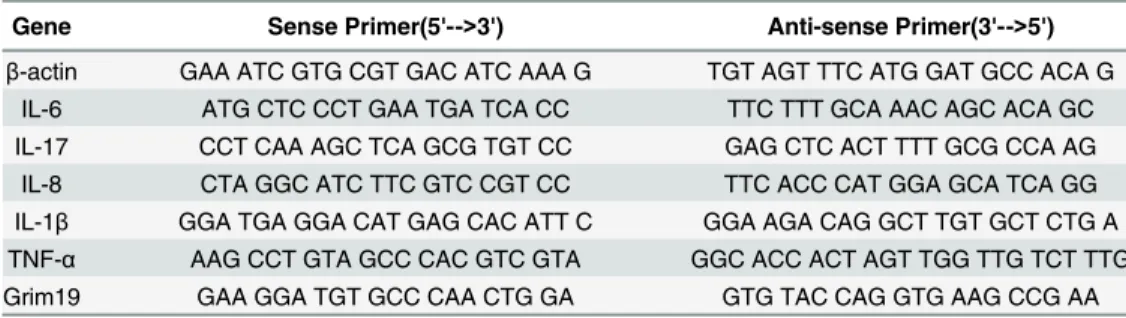
Table 1. PCR primers used in this study.
Gene Sense Primer(5'-->3') Anti-sense Primer(3'-->5')
β-actin GAA ATC GTG CGT GAC ATC AAA G TGT AGT TTC ATG GAT GCC ACA G IL-6 ATG CTC CCT GAA TGA TCA CC TTC TTT GCA AAC AGC ACA GC IL-17 CCT CAA AGC TCA GCG TGT CC GAG CTC ACT TTT GCG CCA AG IL-8 CTA GGC ATC TTC GTC CGT CC TTC ACC CAT GGA GCA TCA GG IL-1β GGA TGA GGA CAT GAG CAC ATT C GGA AGA CAG GCT TGT GCT CTG A TNF-α AAG CCT GTA GCC CAC GTC GTA GGC ACC ACT AGT TGG TTG TCT TTG Grim19 GAA GGA TGT GCC CAA CTG GA GTG TAC CAG GTG AAG CCG AA
doi:10.1371/journal.pone.0155853.t001
Fig 1. Grim19 prevented induction of DSS induced colitis.(A) Mock or GRIM19 overexpression vectors were administered to HEK293 cell and GRIM19 transgenic mice overexpresssing Grim19 were generated on a C57BL/6 background. Lystes of Mock vector or GRIM19 vector
transfected HEK293 cells were analyzed for GRIM19 protein expression using western blotting with and anti-GRIM19 antibody. Transgene expression were detected by PCR products. (B) Change in body weight during the disease process. The DAI score in mice with DSS induced colitis decreased significantly. (n = 5) (C) Colon length. (n = 5) (D) Histopathological changes in the colon. Sections were stained with hematoxylin and eosin (H&E). Scale bar = 100um Values are means±SD of three independent experiments.(n = 5)**P<0.01,***P<0.001.
Confocal microscopy
For immunostaining, 5μm tissue sections of the colon or mesenteric lymph node were stained using fluorescein is othiocyanate (FITC)-conjugated anti-CD4, phycoerythrin (PE)-conjugated
anti-IL-17, PE-conjugated anti-p-STAT3 Y705, PE-conjugated anti-p-STAT3 S727, and
anti-Grim19 (SantaCruz) antibodies overnight at 4°C. Tissue sections were washed with PBS and incubated with fluorescence-conjugated secondary goat anti-rabbit IgG. Stained sections were visualizedusing a Zeiss microscope (LSM 510 Meta; Carl Zeiss, Oberkochen, Germany).
Quantitative polymerase chain reaction (qPCR) analysis of gene
expression
Total RNA was extracted using TRIzol reagent (Molecular Research Center. Cincinnati, OH, USA). The RNA concentration in each sample was measured using a NanoDrop ND-1000
(Thermo Fisher Scientific, MA, USA). Total RNA (2μg) was reverse transcribed into cDNA
using the Transcriptor First-Strand cDNA Synthesis Kit (Roche Applied Science). mRNA levels were estimated using qPCR assays with FastStart SYBR Green Master Mix (Roche Applied
Sci-ence) using StepOnePlus (Applied Biosystems) according to the manufacturer’s instructions.
Rel-ative mRNA levels were normalized to that ofβ-actin. Primer sequences are listed inTable 1.
Western blot analysis
HEK293 cells isolated from control or GRIM19 treated mice were washed with cold saline, and total proteins extracted with lysis buffer [1% Nonidet P-40, phenyl methane sulfonyl fluoride (PMSF), 2mM sodium vanadate, 0.1% sodium deoxycholate, and a protease inhibitor mixture; Roche Applied Science, Mannheim, Germany]. Harvested lysates were centrifuged (15min, 4°C to pellet cellular debris. Proteins were loaded onto 10% polyacrylamide gels and subjected to sodium dodecyl sulfate polyacrylamide gel electrophoresis, and then transferred to nitrocel-lulose membranes (Invitrogen Life Technologies, Carlsbad, CA, USA). Membranes were blocked with 5% (w/v) non-fat milk in Tris-buffered saline with 0.1% Tween-20 (TBST) for 1h
at room temper-ature and incubated with antibodies against GRIM19 andβ-actin overnight at
4°C. Membranes were then incubated with goat anti-mouse horseradish peroxidase-conjugated antibodies. Immunoreactivity was determined using enhanced chemiluminescence reagents (Amersham Biosciences, Piscataway, JN, USA).
Statistical analysis
All data are means ± standard deviation (SD). One-way ANOVA with Bonferroni'spost hoc
test for multiple comparisons were used for statistical analysis using Graphpad Prism v.5.01.P
-values less than 0.05 were considered to indicate statistical significance.
Results
Grim19 improved DSS induced colitis
As Grim19 attenuates autoimmune disease [14], we determined whether Grim19 exerted a
therapeutic effect in DSS induced colitis. Mock or GRIM19 overexpression vectors were Fig 2. GRIM19 controls the expression of proinflammatory cytokines in the DSS induced colitis colon.(A) H&E and immunohistochemical staining of IL-8, IL-1β, TNF-α, IL-6 and IL-17 in colon tissue of mice with DSS induced colitis and mice with DSS induced colitis that received GRIM19 injection. Scale bar = 100um (n = 5) (B) Expression of IL-17, IL-6, IL-8, IL-1βand TNF-αgenes in the colon was measured by real-time polymerase chain reaction (n = 5). Values are means±SD
of three independent experiments.**P<0.01,***P<0.001.
administered to HEK293 cells. GRIM19 transgenic mice overexpresssing Grim19 were gener-ated on a C57BL/6 background. We found that GRIM19 overexpression vectors results in
upre-gulation of GRIM19 level and transgene expression in C57BL/6. (Fig 1A). Grim19 treatment
improved DSS induced colitis in mice in terms of reducing DAI scores, body weight (Fig 1B)
and colon length (Fig 1C). Moreover, Grim19 treatment suppressed colon inflammation in
DSS induced colitis mice (Fig 1D).
Grim19 decreases the expression of proinflammatory cytokines in the
DSS induced colitis colon
To assess the therapeutic effect of Grim19 on colonic inflammation, we performed
immuno-histochemical staining of proinflammatory cytokines. The IL-1β, -6, -8, -17 and TNF-αprotein
levels were downregulated significantly in DSS induced colitis mice treated with Grim19
com-pared with control mice (Fig 2A). Further, relative TNF-α, IL-17, IL-6, IL-8 and IL-1βmRNA
levels in colon tissue were decreased significantly by Grim19 treatment (Fig 2B).
Grim19 decreases STAT3 expression in the DSS induced colitis colon
Grim19 expression was increased significantly, whereas STAT3 production was reducedsignifi-cantly, in DSS induced colitis mice treated with Grim19 compared with control mice (Fig 3A).
Moreover, Grim19 expression was significantly induced in DSS induced colitis mice treated with
Grim19 compared with control mice (Fig 3A and 3B). However, p-STAT3705and727expression
was decreased significantly in DSS induced colitis mice treated with Grim19 compared with con-trol mice (Fig 3D).
Grim19 decreases STAT3 expression in the lymph node in DSS induced
colitis
As the mesenteric lymph node is important in DSS induced colitis progression [18], we
deter-mined Grim19, STAT3 and IL-17 expression in the mesenteric lymph nodes of mice with DSS induced colitis. Grim19 production was increased significantly, whereas STAT3 expression was decreased significantly, in DSS induced colitis mice treated with Grim19 compared with
control mice (Fig 4A). Confocal microscopy showed that IL-17, p-STAT3705and727
expression-was reduced significantly in DSS induced colitis mice treated with Grim19 compared with con-trol mice (Fig 4B).
Improvement of DSS induced colitis in GRIM19 transgenic mice
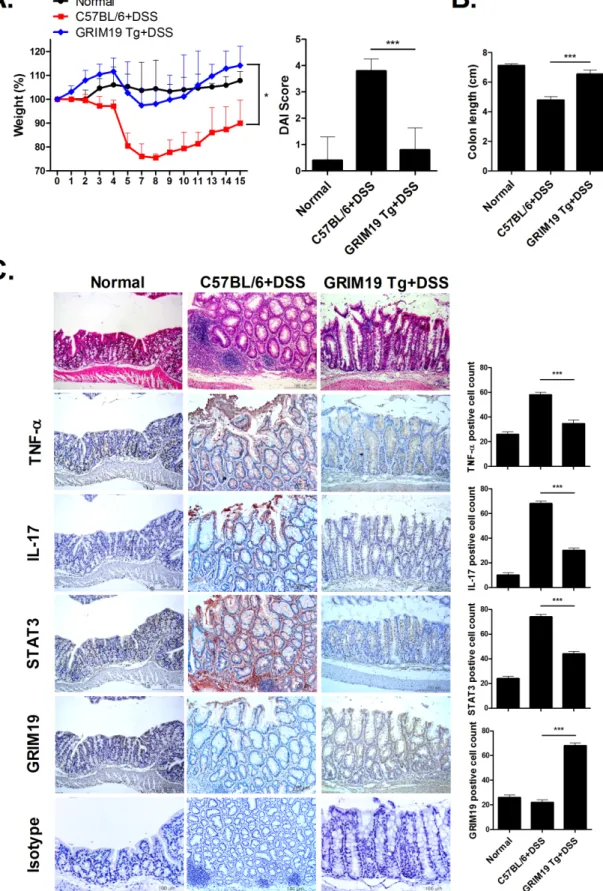
To confirm the therapeutic effect of Grim19, we induced DSS induced colitis in WT and Grim19 Tg mice. Weight loss and DAI scores were significantly decreased in Grim19 Tg micecompared with control mice (Fig 5A). However, colon length was maintained in Grim19 Tg
mice (Fig 5B). Grim19 Tg mice also exhibited protection of colon tissue against DSS induced
colitis associated degradation and decreased proinflammatory cytokine protein levels in colon
tissue, but increased Grim19 expression (Fig 5C).
Fig 3. Grim19 suppresses inflammation and p-STAT3 expression.(A) Immunohistochemical staining of Grim19 and STAT3 in colon tissue. (n = 3) (B) Immunofluorescence staining of Grim19 colon tissue. (n = 3) (C) Grim19 expression was determined by real-time polymerase chain reaction. (n = 5) (D) Colons of Grim19-injected mice with DSS induced colitis and mice with DSS induced colitis (controls) were subjected to immunostaining for pSTAT3727and pSTAT3705(n = 3). Scale bar = 100um, 20um Values are means±SD of three independent experiments.*P<0.05,***P<0.001.
Discussion
Grim19 has been primarily investigated in apoptosis and cancer because it diminishes STAT3
activation [15,19]. However, Grim19 is also associated with inflammatory diseases. Grim19
exerted an anti-arthritic effect by reducing the activation of STAT3 [14]. Moreover, Grim19
expression was reduced in inflamed mucosa of patients with intestinal inflammatory disease
[17]. However, there is little evidence of its therapeutic function with respect to the
inflamma-tory response in DSS induced colitis. Although Grim19 regulates the responses of intestinal
epithelial cell to microbes [17], no report of the therapeutic activity of Grim19 through
inhibi-tion of p-STAT3 has been published. To our knowledge, this is the first study to report the therapeutic effect of Grim19 in DSS induced colitis. We report that Grim19 reduces DSS induced colitis development, which will facilitate DSS induced colitis therapy.
The therapeutic function of Grim19 in DSS induced colitis is a novel finding. The therapeu-tic activity of Grim19 resulted in inhibition of p-STAT3 expression. STAT3 plays an important role in the pathogenesis of DSS induced colitis. p-STAT3 promoted the expression of
proin-flammatory cytokines, including TNF-αand IL-1β, in patients with intestinal inflammatory
disease [20,21]. The transcriptional activity of STAT3 has been suggested to induce TNF-α
production and plays a role in the pathogenesis of DSS induced colitis [22]. Thus, inhibition of
STAT3 attenuates DSS induced colitis severity by reducing proinflammatory cytokine levels
during inflammation of the colon [11]. Moreover, the IL-6/STAT3 pathway is an important
target in DSS induced colitis therapy [10]. Transgenic mice overexpressing Grim19 exhibited
improvement of DSS induced colitis progression due to downregulation of p-STAT3 and proinflammatory cytokines in the colon. Our results suggest that Grim19 inhibits proinflam-matory cytokine and p-STAT3 expression to suppress inflammation, which suggests a novel therapeutic strategy for DSS induced colitis.
At present, several immunosuppressive drugs for DSS induced colitis have been developed. For example, azathioprine, 6-mercaptopurine, methotrexate, cyclosporine and tacrolimus can
be used in DSS induced colitis as immunosuppressives [23]. However, cyclosporine has several
side effects, such as renal dysfunction, hypertension, vomiting, diarrhea and peptic ulcer [24].
Azathioprine and 6-mercaptopurine are ineffective in 33% of patients with intestinal inflam-matory disease; moreover, up to 20% of these patients cease taking these drugs due to adverse
effects [23]. Moreover, many DSS induced colitis drugs, including TNF-αblockers, are
associ-ated with opportunistic infections, malignancies and autoimmunity [23]. Thus, novel drugs for
DSS induced colitis that lack side effects are needed.
A Janus kinase inhibitor has been used in DSS induced colitis. Tofacitinib, an oral JAK
inhibitor, was used in DSS induced colitis therapy and showed promising efficacy [25]. Since
STAT3 is inhibited by oral JAK inhibitors [26], STAT3 inhibitors may also be useful for DSS
induced colitis treatment. Indeed, metformin exhibited a therapeutic effect by decreasing
STAT3 activation in mice with DSS induced colitis [11]. Grim19 is a STAT3 inhibitor and
ther-apeutic for autoimmune arthritis [14,15]. Therefore, Grim19 maybe a good candidate agent
for DSS induced colitis treatment.
STAT3 is essential transcription factor in normal state whereas, in inflammatory condition,
STAT3 can be a severe pathogenic transcription factor [11,14]. In this study, we hypothesized
that STAT3 inhibition can reduce colitis severity because colitis is chronic inflammatory dis-ease and observed that STAT3 inhibition mediated by Grim19 improved acute colitis. But, Fig 4. Grim19 suppresses inflammation and p-STAT3 expression.(A) Immunohistochemical staining of Grim19 and STAT3 in lymph node tissue (n = 3). (B) Immunofluorescence staining of lymph node tissues (n = 3). Scale bar = 100um, 10um Values are means±SD of three independent experiments.***P<0.001.
STAT3 reveals an opposing function such as double edge sword in colitis. There are several evi-dences that STAT3 deletion can induce severe colitis progress and DSS-induced intestinal
injury [27–29]. We cannot exclude the possible adverse effects of STAT3 inhibition in long
term because this investigation is confined to in vivo tests during short term. However, this
study is the first to report the function of Grim19 in the inflammatory response of colitis.In
vivoanimal research are required to further validate our hypothesis prior to the clinical trial of
Grim19 in intestinal inflammation.
Conclusion
Our results suggest a therapeutic effect of Grim19 in intestinal inflammation. The therapeutic activity of Grim19 and its ability to inhibit STAT3 activation have been reported previously
[14]. In this study, Grim19 inhibited DSS induced colitis progression and weight loss in mice
by downregulating the production of STAT3 and proinflammatory cytokines, including
TNF-αand IL-6, in colonic inflammation. These results suggest that Grim19 can ameliorate DSS
induced colitis by inhibiting STAT3. Therefore, Grim19 may be a good candidate agent DSS induced colitis treatment.
Author Contributions
Conceived and designed the experiments: JKK MLC. Performed the experiments: JKK EKK HBS. Analyzed the data: JKK SYL EKK JEK HHL BIL SHP. Contributed reagents/materials/ analysis tools: MLC. Wrote the paper: JKK SHL.
References
1. Baumgart DC, Sandborn WJ. Inflammatory bowel disease: clinical aspects and established and evolv-ing therapies. Lancet. 2007; 369:1641–1657. PMID:17499606
2. Fitzpatrick LR. Inhibition of IL-17 as a pharmacological approach for IBD. Int Rev Immunol. 2013; 32:544–555. doi:10.3109/08830185.2013.821118PMID:23886112
3. Strober W, Fuss IJ. Proinflammatory cytokines in the pathogenesis of inflammatory bowel diseases. Gastroenterology. 2011; 140:1756–1767. doi:10.1053/j.gastro.2011.02.016PMID:21530742 4. Cho ML, Kang JW, Moon YM, Nam HJ, Jhun JY, Heo SB, et al. STAT3 and NF-kappaB signal pathway
is required for IL-23-mediated IL-17 production in spontaneous arthritis animal model IL-1 receptor antagonist-deficient mice. Open J Immunol. 2006; 176:5652–5661.
5. Mathur AN, Chang HC, Zisoulis DG, Stritesky GL, Yu Q, O'Malley JT, et al. Stat3 and Stat4 direct devel-opment of IL-17-secreting Th cells. Open J Immunol. 2007; 178:4901–4907.
6. Yan JW, Wang YJ, Peng WJ, Tao JH, Wan YN, Li BZ, et al. Therapeutic potential of interleukin-17 in inflammation and autoimmune diseases. Expert Opin Ther Targets. 2014; 18:29–41. doi:10.1517/ 14728222.2013.843669PMID:24147601
7. Flanagan SE, Haapaniemi E, Russell MA, Caswell R, Lango Allen H, De Franco E, et al. Activating germline mutations in STAT3 cause early-onset multi-organ autoimmune disease. Nat Genet. 2014; 46:812–814. doi:10.1038/ng.3040PMID:25038750
8. Cenit MC, Alcina A, Marquez A, Mendoza JL, Diaz-Rubio M, de las Heras V, et al. STAT3 locus in inflammatory bowel disease and multiple sclerosis susceptibility. Genes Immun. 2010; 11:264–268.
doi:10.1038/gene.2010.10PMID:20200543
9. Zhang J, Wu J, Peng X, Song J, Wang J, Dong W. Associations between STAT3 rs744166 polymor-phisms and susceptibility to ulcerative colitis and Crohn's disease: a meta-analysis. PLoS One. 2014; 9:e109625. doi:10.1371/journal.pone.0109625PMID:25286337
colitis (n = 5). (B) Colon length (n = 5). (C) H&E and immunohistochemical staining of TNF-α, IL-17, STAT3 and GRIM19 in colon tissue of mice with DSS induced colitis and GRIM19-Tg mice with DSS induced colitis (n = 3). Scale bar = 100um Values are means±SD of three independent experiments.*P<0.05,***P<0.001.
10. Mitsuyama K, Matsumoto S, Masuda J, Yamasakii H, Kuwaki K, Takedatsu H, et al. Therapeutic strate-gies for targeting the IL-6/STAT3 cytokine signaling pathway in inflammatory bowel disease. Anticancer Res. 2007; 27:3749–3756. PMID:17970038
11. Lee SY, Lee SH, Yang EJ, Kim EK, Kim JK, Shin DY, et al. Metformin Ameliorates Inflammatory Bowel Disease by Suppression of the STAT3 Signaling Pathway and Regulation of the between Th17/Treg Balance. PLoS One. 2015; 10:e0135858. doi:10.1371/journal.pone.0135858PMID:26360050 12. Angell JE, Lindner DJ, Shapiro PS, Hofmann ER, Kalvakolanu DV. Identification of GRIM-19, a novel
cell death-regulatory gene induced by the interferon-beta and retinoic acid combination, using a genetic approach. J Biol Chem. 2000; 275:33416–33426. PMID:10924506
13. Zhang J, Yang J, Roy SK, Tininini S, Hu J, Bromberg JF, et al. The cell death regulator GRIM-19 is an inhibitor of signal transducer and activator of transcription 3. Proc Nati Acad Sci U S A. 2003; 100:9342–9347.
14. Moon YM, Lee J, Lee SY, Her YM, Ryu JG, Kim EK, et al. Gene associated with retinoid-interferon-induced mortality 19 attenuates murine autoimmune arthritis by regulation of th17 and treg cells. Arthri-tis Rheumatol. 2014; 66:569–578. doi:10.1002/art.38267PMID:24574216
15. Okamoto T, Inozume T, Mitsui H, Kanzaki M, Harada K, Shibagaki N, et al. Overexpression of GRIM-19 in cancer cells suppresses STAT3-mediated signal transduction and cancer growth. Mol Cancer Ther. 2010; 9:2333–2343. doi:10.1158/1535-7163.MCT-09-1147PMID:20682646
16. Kalakonda S, Nallar SC, Jaber S, Keay SK, Rorke E, Munivenkatappa R, et al. Monoallelic loss of tumor suppressor GRIM-19 promotes tumorigenesis in mice. Proc Nati Acad Sci U S A. 2013; 110: E4213–4222.
17. Barnich N, Hisamatsu T, Aguirre JE, Xavier R, Reinecker HC, Podolsky DK. GRIM-19 interacts with nucleotide oligomerization domain 2 and serves as downstream effector of anti-bacterial function in intestinal epithelial cells. J Biol Chem. 2005; 280:19021–19026. PMID:15753091
18. Dalmasso G, Cottrez F, Imbert V, Lagadec P, Peyron JF, Rampal P, et al. Saccharomyces boulardii inhibits inflammatory bowel disease by trapping T cells in mesenteric lymph nodes. Gastroenterology. 2006; 131:1812–1825. PMID:17087945
19. Ekchariyawat P, Thitithanyanont A, Sirisinha S, Utaisincharoen P. Involvement of GRIM-19 in apopto-sis induced in H5N1 virus-infected human macrophages. Innate immunity. 2013; 19:655–662. doi:10. 1177/1753425913479149PMID:23529854
20. Yu H, Pardoll D, Jove R. STATs in cancer inflammation and immunity: a leading role for STAT3. Nat Rev Cancer. 2009; 9:798–809. doi:10.1038/nrc2734PMID:19851315
21. Reinecker HC, Steffen M, Witthoeft T, Pflueger I, Schreiber S, MacDermott RP, et al. Enhanced secre-tion of tumour necrosis factor-alpha, IL-6, and IL-1 beta by isolated lamina propria mononuclear cells from patients with ulcerative colitis and Crohn's disease. Clin Exp Immunol. 1993; 94:174–181. PMID: 8403503
22. Sugimoto K. Role of STAT3 in inflammatory bowel disease. World J Gastroenterol. 2008; 14:5110–
5114. PMID:18777586
23. Triantafillidis JK, Merikas E, Georgopoulos F. Current and emerging drugs for the treatment of inflam-matory bowel disease. Drug Des Devel Ther. 2011; 5:185–210. doi:10.2147/DDDT.S11290PMID: 21552489
24. Rogler G. Gastrointestinal and liver adverse effects of drugs used for treating IBD. Best Pract Res Clin Gastroenterol. 2010; 24:157–165. doi:10.1016/j.bpg.2009.10.011PMID:20227029
25. Vuitton L, Koch S, Peyrin-Biroulet L. Janus kinase inhibition with tofacitinib: changing the face of inflam-matory bowel disease treatment. Curr Drug Targets. 2013; 14:1385–1391. PMID:23627915
26. Yan S, Li Z, Thiele CJ. Inhibition of STAT3 with orally active JAK inhibitor, AZD1480, decreases tumor growth in Neuroblastoma and Pediatric Sarcomas In vitro and In vivo. Oncotarget. 2013; 4:433–445.
PMID:23531921
27. Takeda K, Clausen BE, Kaisho T, Tsujimura T, Terada N, Forster I, et al. Enhanced Th1 activity and development of chronic enterocolitis in mice devoid of Stat3 in macrophages and neutrophils. Immunity. 1999; 10:39–49. PMID:10023769
28. Alonzi T, Newton IP, Bryce PJ, Di Carlo E, Lattanzio G, Tripodi M, et al. Induced somatic inactivation of STAT3 in mice triggers the development of a fulminant form of enterocolitis. Cytokine. 2004; 26:45–56.
PMID:15050604