EFFECT OF THE ESTUFAGEM PROCESS ON THE
CHEMICAL CONSTITUENTS OF MADEIRA WINES
Vanda Nulita Gomes Pereira
Tese submetida à Universidade da Madeira
com vista à obtenção do grau de Doutor em Química
na Especialidade de Química Analítica
Trabalho realizado sob a Orientação de:
Professor Doutor José Carlos Antunes Marques
Professor Doutor Juan Cacho Palomar
Funchal
–
Portugal
A
CKNOWLEDGEMENTS
I would like to express my sincere gratitude to several persons and institutions, without whom, this thesis would not have been possible. To them, I would like to manifest my gratefulness.
Firstly, I would like to express my gratitude to my principal supervisor, Prof. José Carlos Marques, for the opportunity to work under his guidance at Universidade da Madeira (UMa). I wish to thank for his constant support and assistance. His encouragement has contributed to my professional development and I look forward to continue our projects as well as our friendship.
I would like to extent my gratitude to my co-supervisor, Prof. Juan Cacho Palomar, for his valuable advices and scientific support. I really appreciated our helpful discussions. I am also so grateful for his hospitality during the stay in his lab in Zaragoza. Special thanks to Prof. Ana Escudero for her guidance and instructions in my first contact with the GC-O technique.
Thank you to Doctor Maria Cristina Clímaco forher supervision in GC-O analysis during the stay in Instituto Nacional de Recursos Biológicos (INRB) - Estação Vitivinícola Nacional
(EVN), Dois Portos. Thanks for sharing your knowledge with me. I also want to express my thankfulness to the sensory team at EVN for the help, participating in the sensory tests, and for their support. A special thanks to Doutor Jorge Cunha for having kindly provided the vine pictures.
I wish to thank all my past and present lab colleagues: Marisela Pontes, Neuza Paixão, Sónia Silva, Catarina Álvares and Catarina Coelho. It was a great pleasure to work with you during the PhD-time. Thanks for listening, helping or just having fun with me. A special thanks to my dear friend Cristina (PhD student), for her support, precious help, especially with the statistical data and for sharing so many good moments as well.
I am very thankful to the members of Centro Química da Madeira who have directly or indirectly contributed for this thesis.
I would also like to acknowledge the others PhD students: Sandra Gouveia, Carla Alves, Tatiana Sousa, João Figueira, Manuel Jardim, Pedro Branco and the recently graduated PhD José Luís Santos. Your friendship brought relief on stressful moments.
I would also like to express thanks to Ana Paula Vieira and Ana Paula Andrade from
Centro de Ciências Exactas e da Engenharia of UMa for their helpful assistance and friendship.
I also wish to acknowledge Fundação para a Ciência e Tecnologia (FCT) for the financial
I am also very grateful to Madeira Wine Company for providing me the wine samples. In particular, I want to express my deeply-thank to Eng. Francisco Albuquerque and to my dear friend Dr. Marisela for the friendship and assistance whenever required.
A special thanks to Dr. Manuela Rodrigues for the English revision.
Last but not least, I wish to demonstrate my gratefulness to the most important persons in my life, to whom this thesis is also dedicated.
I wish to thank my Mum, Dad, and sisters, for their unconditional love, support and encouragement. Without them my life would be nothing.
R
ESUMO
O vinho Madeira é um produto de reputação bem estabelecida, cujo aroma e sabor característico resulta de combinações únicas. Particularmente, a sua maturação pode incluir estufagem, processo no qual o vinho é normalmente aquecido a 45 °C durante três meses. Durante este período, várias alterações químicas podem acontecer, por isso torna-se essencial avaliar o seu impacto sobre o vinho. Neste sentido, o principal objectivo da tese foi avaliar o efeito da estufagem sobre os principais constituintes químicos do vinho Madeira, especificamente sobre as moléculas potencialmente importantes no desenvolvimento das suas características típicas.
Primeiramente, desenvolveram-se metodologias analíticas capazes de determinar os compostos-alvo, combinando precisão e reprodutibilidade à eficácia de execução. Depois, vários vinhos Madeira monovarietais foram analisados durante a estufagem em condições padrão e de sobreaquecimento de modo a avaliar o seu efeito. Os seguintes compostos foram avaliados: furanos, aminoácidos, aminas biogénicas, polifenóis, ácidos orgânicos e compostos voláteis. Além disso, também foi avaliada a composição polifenólica total e o potencial antioxidante destes vinhos, assim como a cor.
Os resultados mostram que a maior parte dos constituintes sofrem alterações devido ao processo de aquecimento. Particularmente, o aquecimento promove o desenvolvimento de 5-hidroximetilfurfural (HMF) em vinhos doces submetidos a temperaturas de estufagem mais elevadas. Por outro lado, a estufagem propicia o decréscimo da maior parte dos aminoácidos, sugerindo o seu envolvimento na formação do bouquet destes vinhos. No que diz respeito ao teor total de polifenóis e ao potencial antioxidante destes vinhos a estufagem não parece afectar grandemente, no entanto a maioria dos polifenóis monoméricos decrescem durante este processo. O processamento térmico dos vinhos proporciona o desenvolvimento da composição volátil, especialmente de voláteis considerados típicos do aroma do vinho Madeira. Finalmente, foi demonstrado que a degradação térmica dos açúcares, nomeadamente da fructose, promove o aparecimento de compostos voláteis previamente identificados em vinhos estufados.
S
UMMARY
Madeira wine is a product of well-established reputation, whose aroma and flavour is the result of unique combinations. Particularly, its maturation may include estufagem, wherein wine is usually heated at 45 °C for three months. During this period, several chemical changes may occur, so it is essential to assess its impact on the wine. In this sense, the main objective of the thesis was to evaluate the effect estufagem on the chemical constituents of Madeira wine, specifically on those molecules potentially important in the development of its typical features.
Firstly, analytical methodologies capable of determining the target compounds, combining precision and reproducibility to execution effectiveness, were developed. Then various monovarietal Madeira wines were analysed during estufagem under standard and overheating conditions in order to assess its effect. The following compounds were evaluated: furans, amino acids, biogenic amines, polyphenols, organic acids and volatile compounds. In addition, the total polyphenolic composition, the antioxidant potential and the colour of these wines were also evaluated.
The results show that most constituents change due to the heating process. Particularly, the heating promotes the development of 5-hydroxymethylfurfural (HMF) in sweet wines submitted to estufagem at higher temperatures. Moreover, estufagem provides the decrease of most amino acids, suggesting their involvement in the formation of the bouquet of these wines. Regarding the total polyphenol content and antioxidant potential of these wines they do not seem to be greatly affected by the heating step, however most monomeric polyphenols decrease during this process. The thermal processing of Madeira wines favours the development of the volatile composition, especially of volatiles usually reported as typical aromas of Madeira wines. Finally, it was demonstrated that the thermal degradation of sugars, especially of fructose, promotes the emergence of volatile compounds identified in baked wines.
C
ONTENTS
Acknowledgements ... i
Resumo ... iii
Summary ... v
Contents... vii
List of Figures ... ix
List of Tables ... xiii
List of Abbreviations ... xvii
Short Curriculum Vitae ... xxiii
List of Publications ... xxv
PART 1:General introduction ... 1
Chapter 1:Madeira wine ... 3
Chapter 1A:A brief introduction ... 5
Chapter 1B:Scientific overview ... 17
Chapter 2:Brief introduction to some wine chemical constituents ... 25
Chapter 2A:Nitrogen-containing compounds ... 27
Chapter 2B:Polyphenols ... 37
Chapter 2C:Organic acids ... 49
Chapter 2D:Carbohydrates ... 57
Chapter 2E:Volatile compounds ... 65
PART 2: Developed methodologies ... 77
Chapter 3:Simultaneous analysis of free amino acids and biogenic amines ... 79
Chapter 4:Analysis of organic acids, furans and polyphenols ... 95
Chapter 5: Evolution of 5-hydroxymethylfurfural and furfural in Madeira wines
submitted to estufagem ... 115
Chapter 6: Trend of amino acids and biogenic amines during the Madeira wine heating ... 131
Chapter 7: Evolution of the polyphenolic composition, antioxidant potential and colour of Madeira wines during estufagem ... 145
Chapter 8: The effect of estufagem on the volatile profile and organic acids of Madeira wines ... 167
Chapter 9: Volatile degradation products of sugars in model systems simulating the Madeira wine heating ... 197
PART 4:Conclusions and perspectives ... 213
Chapter 10:Conclusions ... 215
L
IST OF
F
IGURES
C
HAPTER1
FIGURE 1A.1 – Main viticultural regions of Madeira Island ……….. 6
FIGURE 1A.2 –Latada system ……… 7
FIGURE 1A.3 –Espaldeira system ……… 7
FIGURE 1A.4 –TNM grape variety ……….. 8
FIGURE 1A.5 –Malvasia grape variety ……… 8
FIGURE 1A.6 –Boal grape variety ……….. 9
FIGURE 1A.7 –Verdelho grape variety ……….……….. 9
FIGURE 1A.8 –Sercial grape variety ………. 9
FIGURE 1A.9 –Colours of Madeira wines ………..… 13
C
HAPTER2
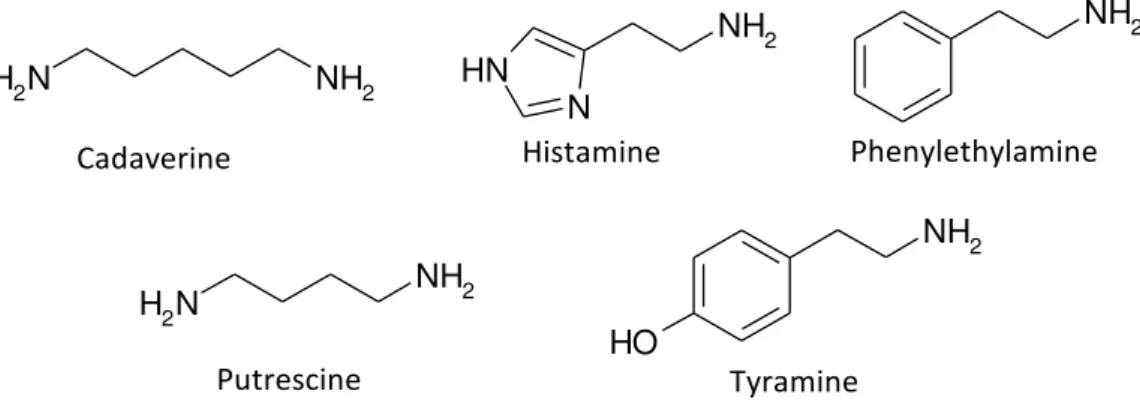
FIGURE 2A.1 – Main amino acids found in wines ………. 29FIGURE 2A.2 – Most common biogenic amines present in wines ……….…… 32
FIGURE 2B.1 – Basic structure of hydroxybenzoic acids and the most common examples in wines ………. 39
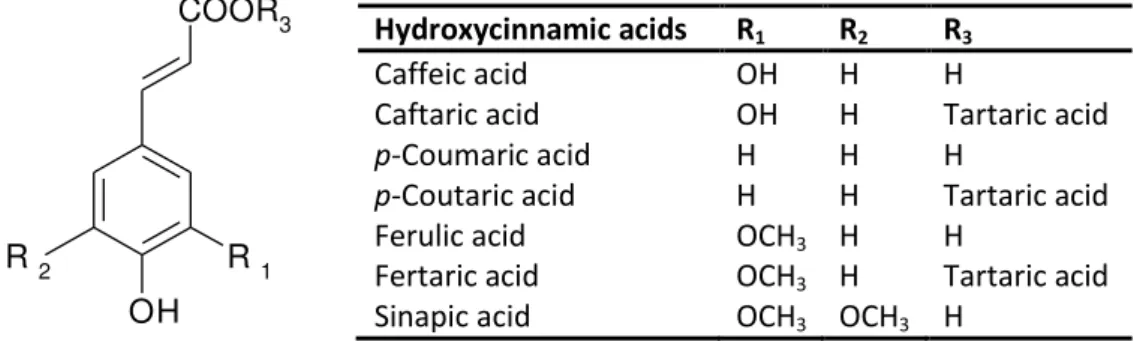
FIGURE 2B.2 – Chemical structures of hydroxycinnamic acids most common in wines …..……. 39
FIGURE 2B.3 – Most common volatile phenols in wines ……….……… 40
FIGURE 2B.4 – Structure of coumarins in wines ………. 41
FIGURE 2B.5– Chemical structures of resveratrol and its glycosides present in wines …………. 42
FIGURE 2B.6– Chemical structures of flavonoids in wines ………..…………. 43
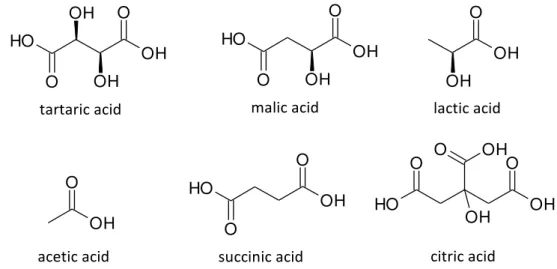
FIGURE 2C.1– Chemical structure of the main wine organic acids ……….…………. 51
FIGURE 2D.2– General scheme of Maillard reaction in foods ……… 60
FIGURE 2E.1– Most common monoterpenes found in wines ………. 66
FIGURE 2E.2– Most relevant methoxipyrazine found in wines ………..……… 66
FIGURE 2E.3– Important C13-norisoprenoids in wines ………..……….. 66
FIGURE 2E.4– Most relevant example of wine thiols ……….……….. 67
FIGURE 2E.5– Higher alcohols formation through amino acids via Ehrlich mechanism ……….. 67
FIGURE 2E.6– Predominant higher alcohols in wines ……… 68
FIGURE 2E.7– Predominant esters in wines ………..……. 69
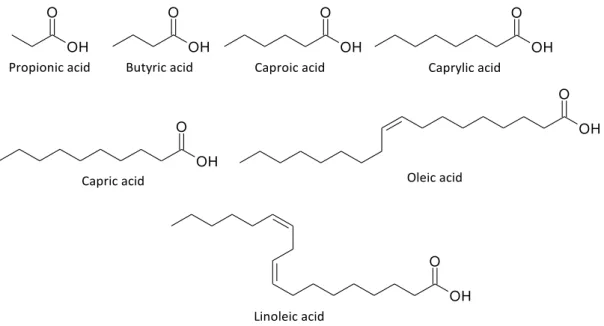
FIGURE 2E.8– Chemical structures of some acids commonly found in wines ………. 69
FIGURE 2E.9– Aldehydes frequently identified in wines ……….………… 70
FIGURE 2E.10– Ketones frequently found in wines ……….……….………. 71
FIGURE 2E.11– Relevant lactones in wines ……….……….…… 71
FIGURE 2.12– Most common volatile phenols found in wines ……….. 72
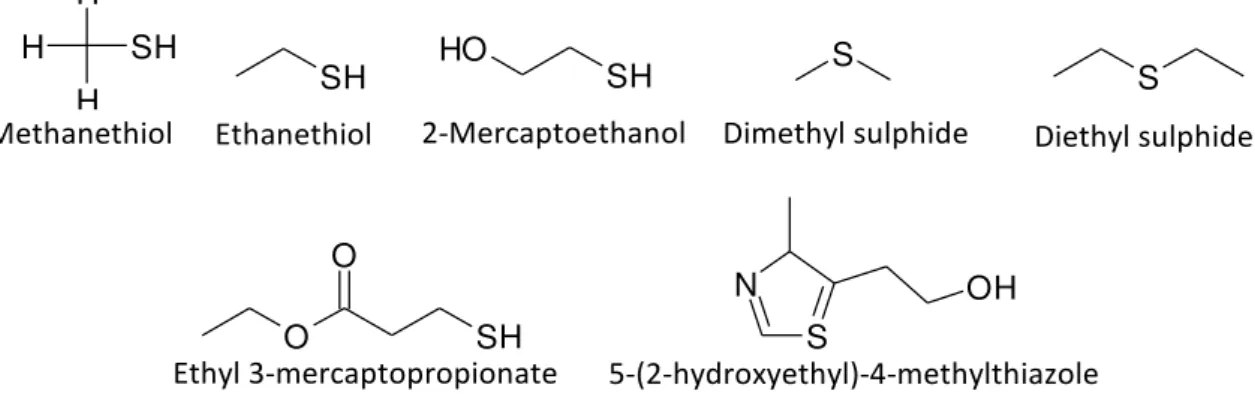
FIGURE 2E.13– Some examples of sulphur-containing compounds encountered in wines ….. 72
FIGURE 2E.14– The two isomers of oak-lactone ……….……. 73
C
HAPTER3
FIGURE 3.1– Primary amino compounds derivatization with OPA/MCE reagent …..……….. 83C
HAPTER4
FIGURE 4.1 – Representative chromatograms obtained with the proposed method for the
determination of organic acids at 210 nm, when applied to the standard solution and a wine sample. See Table 4.2 for peak identification ……….………. 103
FIGURE 4.2 – Representative chromatograms obtained with the proposed method for the determination of polyphenols and furans at the selected detection wavelengths: 210, 254, 280, 315 and 360 nm, when applied to a standard solution and a wine sample. See Table 4.2 for peak identification ……… 104
C
HAPTER5
FIGURE 5.1– HMF formation pathway by sugar acid-catalysed dehydration ………..…. 118
FIGURE 5.2– Laboratory estufas used for heating the current Madeira wines ……… 121
C
HAPTER6
FIGURE 6.1 – Scheme of the conducted experience ……….………...………. 134
FIGURE 6.2 – Carboxymethylation of cysteine by reaction with iodoacetic acid (IDA) and
subsequent reaction with OPA/MCE reagent ……….. 135
FIGURE 6.3 – Biplot of the first two PC relative to the amino acids profile of the studied Madeira wines submitted to estufagem ……….. 142
C
HAPTER7
FIGURE 7.1– Glories parameters, %Ye, %Re and %Bl of Madeira wines during the heating at 45 °C (3 months) and 70 °C (1 month) ……….………. 160
FIGURE 7.2 – 3D representation of the CIELab chromatic coordinates a*, b* and L* of the
Madeira wines submitted to heating at 45 °C (3 months) and 70 °C (1 month) ……….. 162
FIGURE 7.3– Colour evolution of Madeira wines submitted to heating at 45 °C. TS0m – initial
months of heating; TD3m – TNM dry after 3 months of heating; M3m – Malvasia after 3 months of heating ……….……….. 163
C
HAPTER8
FIGURE 8.1 – Typical chromatograms of the dichloromethane extracts of TNM sweet wine before (A) and after (B) the heating process at 70 °C for 1 month ………..………. 172
C
HAPTER9
FIGURE 9.1 – Typical gas chromatogram of the FruArg ethyl acetate extract. Peak identification: 1 - ethyl pyruvate; 2 – hydroxyacetone; 3 – methyl 3-hydroxybutanoate; 4 –
ethyl L(-)-lactate; 5 – octan-3-ol (IS); 6 – ethyl glycolate; 7 – acetic acid; 8 – furfural; 9 –
acetylfuran; 10 – propanoic acid; 11 – 5-methylfurfural; 12 – 2-cyclopentene-1,4-dione; 13 –
ethyl 3-hydroxybutanoate; 14 – ethyl levulinate; 15 – furfuryl alcohol; 16 – 2(5H)-furanone; 17 – 2-hydroxy-2-cyclopenten-1-one; 18 – 5-ethoxymethylfurfural; 19 – 2,5-furandicarboxaldehyde; 20 – methyl 2-furoate; 21 – dihydroxyacetone; 22 – 5-acetoxymethyl-2-furaldehyde; 23 – 2,3-dihydro-3,5-dihydroxy-6-methyl-4H-pyran-4-one; 24 – 3,5-dihydroxy-2-methyl-4H-pyran-4-one; 25 – diethyl tartrate; 26 – ethyl hydrogen succinate; 27 – 5-hydroxymethylfurfural ……….. 203
FIGURE 9.2 – Evolution of the chemical families during the heating of the FruArg model system …………..……… 205
FIGURE 9.3– Formation of organic acids by sugar degradation ……….. 207
FIGURE 9.4 – Evolution of the total amount, relative to internal standard, of the volatile compounds formed in all MS, during the heating step …….………. 208
FIGURE 9.5 – UV spectra recorded between 240 – 600 nm of A: GluArg, GluCys, GluGABA,
GluAsp; B: FruArg, FruCys, FruGABA, FruAspac; C: GluFru(4aa), Glu, Fru, GluFru; D: FruArg(×2), FruCys(×2), FruGABA(×2), FruAspac(×2) ………... 208
L
IST OF
T
ABLES
C
HAPTER1
TABLE 1A.1 – Recommended and authorized grape varieties for production of Madeira wines 8
TABLE 1A.2– Madeira wine designations in terms of richness degree ………. 13
C
HAPTER3
TABLE 3.1 – Gradient program employed for the separation of amino acids and biogenic
amines ………..……….. 84
TABLE 3.2 – Samples analysed by the developed HPLC method ……… 85
TABLE 3.3 – Retention times, calibration curves (y = ax + b), correlation coefficient (r2), limits of detection (LOD) in mg/L, repeatability (RSD %) and recovery (Rec %) of amino acids and biogenic amines ………..………. 87
TABLE 3.4 – Levels (mg/L) of free amino acids in studied honey and wine samples with the
respective standard deviation of the mean value (n = 3 for each data point) ………. 89
TABLE 3.5– Relative abundance (%) of each amino acid in honeys and wines under study …. 91
C
HAPTER4
TABLE 4.1– HPLC-DAD methods reported in the literature for the analysis of polyphenols and
organic acids in wines and/or similar matrices ……….………. 98
TABLE 4.2 – Retention times, peak identification, spectral bands (λmax, in bold), detection
wavelength (λdetection) and linearity parameters of organic acids, furans and polyphenols
obtained using the proposed methodology ……… 103
TABLE 4.3– Repeatability (intra-day) and reproducibility (inter-day) of the developed method,
expressed in terms of the variation (RSD%) of retention times (tR) and areas ………..…….. 105
C
HAPTER5
TABLE 5.1 – Characteristics of the studied wines submitted to the baking step at 30, 45 and
55 °C ……….………. 121
TABLE 5.2– Analytical parameters of the working method ………..………. 123
TABLE 5.3– HMF and F concentrations (mg/L) found in the studied wines submitted to heating at 30, 45 and 55 °C ……….………. 125
TABLE 5.4– HMF and F contents (mg/L) found in commercial Madeira wines …..………. 127
C
HAPTER6
TABLE 6.1– Summary of the linearity parameters obtained from the applied method for the
determination of the individual amino acids and biogenic amines in Madeira wines submitted
to estufagem……….……….. 136
TABLE 6.2 – Basic oenological parameters of the selected sample set of Madeira wines submitted to estufagem………..……… 137
TABLE 6.3.A – Content of primary amino acids and amines found in TNM sweet wines at different stages: initial (0 m), after 1, 2 and 3 months of baking at 45 °C and after 1 month at 70 °C. The percentage of each compound in samples relative to the total value is also presented (%) ………..……… 138
TABLE 6.3.B– Content of primary amino acids and amines found in TNM dry wines at different stages: initial (0 m), after 1, 2 and 3 months of baking at 45 °C and after 1 month at 70 °C. The percentage of each compound in samples relative to the total value is also presented (%)
……….………..………..………. 139
TABLE 6.3.C– Content of primary amino acids and amines found in Malvasia wines at different stages: initial (0 m), after 1, 2 and 3 months of baking at 45 °C and after 1 month at 70 °C. The percentage of each compound in samples relative to the total value is also presented (%)
……….……….……. 139
C
HAPTER7
TABLE 7.1– Polyphenols gradient program. Mobile phase solvents: A – 10 mM of phosphate
TABLE 7.2– Total polyphenols (TP), total flavonoids (TF) and total monomeric anthocyanins (TMA) of Madeira wines at the initial stage and at the end of each month of heating at 45 °C (3 months) and 70 °C (1 month) ……… 154
TABLE 7.3.A– Individual polyphenols (mg/L) of TNM sweet wines during the heating at 45 °C (3 months) and 70 °C (1 month) ……….………. 156
TABLE 7.3.B– Individual polyphenols (mg/L) of TNM dry wines during the heating at 45 °C (3 months) and 70 °C (1 month) ……….. 157
TABLE 7.3.C– Individual polyphenols (mg/L) of Malvasia wines during the heating at 45 °C and 70 °C ……….. 158
TABLE 7.4– Antioxidant potential of Madeira wines during the heating at 45 °C (3 months) and
70 °C (1 month) expressed in terms of ABTS, DPPH and FRAP assays ……….……… 159
TABLE 7.5– Glories chromatic parameters: intensity (CI), tonality (To) and absorbance readings at 420, 520 and 620 nm of the Madeira wines submitted to heating at 45 °C (3 months) and 70 °C (1 month) ………. 161
TABLE 7.6– CIELab chromatic parameters: chromaticity (C*), hue (H*) and saturation (S*) of
the Madeira wines submitted to heating at 45 °C (3 months) and 70 °C (1 month) …….……… 162
C
HAPTER8
TABLE 8.1– Organic acids gradient. Mobile phase solvents: A – 10 mM of phosphate solution
buffered at pH 2.70; B – acetonitrile; C – methanol ………. 173
TABLE 8.2 – Concentrations of volatiles in Malvasia, TNM sweet and dry wines before and
after the heating at 45 °C (3 months) and 70 °C (1 month) ……….…………. 175-181
TABLE 8.3– Concentrations of organic acids in Malvasia, TNM sweet and dry wines during the heating at 45 °C (3 months) and 70 °C (1 month) ………..……… 190
C
HAPTER9
TABLE 9.1– Composition of the 16 model systems ………. 201
TABLE 9.2– Relative areas of the compounds identified in the MS at the end of the heating
step, according to the applied methodology ………. 204
TABLE 9.3– Normalized amounts (%) of chemical families found in FruArg during its heating
L
IST OF
A
BBREVIATIONS
ABTS –2,2’-Azino-bis-(3-ethylbenzothiazoline-6-sulfonic acid.
AEDA – Aroma extract dilution analysis.
ANOVA – Analysis of variance.
AP – Antioxidant potential.
ATP – Adenosine-5'-triphosphate.
AU – Absorbance units.
%Bl – Blue percentage.
°C - Degree Celsius.
°C/min – Degree Celsius per minute.
CaCO3– Calcium carbonate.
CE – Capillary electroforesis.
CI – Colour intensy.
cL – Centilitre.
CO2– Carbon dioxide.
CQM –Centro de Química da Madeira.
CRA-Cl – Carbazole-9-yl-acetyl chloride.
CV – Coefficient of variation.
Cyd-3-glu – Cyanidin-3-glycoside.
D65 – Daylight source.
Da – Dalton.
DDMP – 2,3-Dihydro-3,5-dihydroxy-6-methyl-4H-pyran-4-one.
DMP – 3,5-Dihydroxy-2-methyl-4H-pyran-4-one.
DPPH – 2,2-Diphenyl-1-picrylhydrazyl.
EMF – 5-Ethoxymethylfurfural.
eV – Electron volt.
EVN –Estação Vitivinícola Nacional.
F – Furfural.
FCT –Fundação para a Ciência e Tecnologia.
Fe3+– Ferric iron.
FMOC-Cl – 9-fluorenylmethyl chloroformate.
FMOC-OSu – N-(9-fluorenylmethoxycarbonyloxy)succinimide.
FRAP – Ferric reducing/antioxidant power.
GAE – Gallic acid equivalent.
g/cm3– Gram per cubic centimetre.
g/L – Gram per litre.
GC×GC-ToFMS – Comprehensive two-dimensional gas chromatography with time-of-flight mass spectrometry.
GC-MS – Gas chromatography – mass spectrometry.
GC-O – Gas chromatography – olfactometry.
GHP – GH Polypro.
ha – Hectare.
hL – Hectolitre.
IARC – International Agency for Research on Cancer.
INRB –Instituto Nacional de Recursos Biológicos.
IVBAM –Instituto do Vinho, do Bordado e do Artesanato da Madeira.
HMF – 5-Hydroxymethylfurfural.
HS-SPME – Headspace solid-phase micro-extraction.
H2S – Hydrogen sulphide.
kg – Kilogram.
KHCO3– Potassium bicarbonate.
KI – Kovats índex.
km2– Square kilometre.
kNN - k-Nearest neighbour.
IDA – Iodoacetic acid.
L – Litres.
LAB – Lactic acid bacteria.
LDA – Linear discriminant analysis.
LC–MS/MS – Liquid chromatography coupled with tandem mass spectrometry.
LOD – Limit of detection.
LOQ – Limit of quantification.
m – Metre.
MCE – 2-Mercaptoethanol.
MECC – Micellar electrokinetic capillary chromatography.
MIBP – 2-Methoxy-3-isobutyl pyrazine.
mg/L – Milligram per litre.
min – Minutes.
MLC – Micellar liquid chromatography.
MLF – Malolactic fermentation.
4-MMP – 4-Mercapto-4-methyl-pentan-2-one.
MR – Maillard reaction.
MS – Model systems.
m/z – Mass-to-charge ratio.
ng/L – Nanogram per litre.
NIST – National Institute of Standards and Technology.
NH3– Ammonia.
nm – Nanometres.
NP – Portuguese Official Standards.
OIV – International Office of Vine and Wine or Organisation Internationale de la Vigne et du Vin in French.
OPA –ortho-phthaldialdeyde.
PBS – Phosphate buffered saline.
PCA – Principal component analysis.
PITC - Phenyl isothiocyanate.
PhD – Doctor of Philosophy or philosophiae doctor in Latin.
PLS-DA – Partial least squares-discriminant analysis.
PTFE – Polytetrafluoroethylene.
QE – Quercetin equivalents.
%Re – Red percentage.
RP-HLPC-DAD – Reversed phase – high performance liquid chromatography – diode array detection.
RSD – Residual standard deviation.
SBSE – Stir bar sorptive extraction.
SIM – Single ion monitoring.
SD – Standard deviation.
SPE – Solid phase extraction.
SO2– Sulphur dioxide.
SRARN –Secretaria Regional do Ambiente e Recursos Naturais.
TDN – 1,1,6-Trimethyl-1,2-dihydronaphthalene.
TF – Total flavonoids.
TMA – Total monomeric anthocyanins.
TNM –Tinta Negra Mole.
To – Tonality.
TP – Total polyphenols.
TPB – 1-(2,3,6-Trimethylphenyl)buta-1,3-diene.
Unk – Unknown.
UV – Ultraviolet.
Vis – Visible.
VLQPRD –Vinho Licoroso de Qualidade Produzido em Região Determinada.
VTP – Vitispirane.
v/v - Volume to volume.
%Ye – Yellow percentage.
S
HORT
C
URRICULUM
V
ITAE
Vanda Nulita Gomes Pereira was born in 1981, in Ribeira Brava, Portugal. She is graduated in Chemistry (2005) by the University of Madeira. In 2006, she was awarded with a PhD grant from the Fundação para a Ciência e Tecnologia (FCT) and, since then, she is a PhD student at the University of Madeira, developing her experimental work integrated in the Natural Products Research Group at Madeira Chemistry Research Centre (CQM - Centro de Química da Madeira), Center of Exact Sciences and Engineering, University of Madeira. Her PhD work was done under the supervision of Prof. José Carlos Marques (University of Madeira) and co-supervision of Prof. Juan Cacho Palomar (University of Zaragoza).
During the PhD-time, she participated in 12 Advanced Courses/Conferences covering diverse topics related with the theme of her PhD thesis. As a result of her research efforts, she is author or co-author of 9 publications in international peer-reviewed journals (5 published and 4 submitted for publication). Her work also resulted in 3 oral presentations and 25 poster presentations mostly in international scientific meetings. She has also contributed for several research projects and activities developed at CQM that are described in more detail below.
P
ROFESSIONAL FORMATION2010 – EFFoST Annual Meeting - Food and Health (Dublin, Irland).
2009 – VI Encontro Nacional de Cromatografia (Funchal, Portugal).
2009– Pedagogical Training Course for Trainers (96 hours, Funchal, Portugal).
2009 – VI In Vino Analytica Scientia (Angers, France).
2008 – 12as Jornadas de Análisis Instrumental – JAI (Barcelona, Espanha).
2007 – V Encontro Nacional de Cromatografia (Aveiro, Portugal).
2007 – TrainMIC Course (Monte da Caparica, Lisbon).
2007 – II Encontro Nacional de Metrologia (Funchal, Portugal).
2007– ExTech®2007 Ninth International Symposium on Advances in Extraction Technologies (Ålesund, Norway).
2007 – Jornadas do Projecto ANTIVINMAC (Funchal, Portugal).
2006 – XXIX World Congress of Vine and Wine (Logroño, Spain).
C
OLLABORATION IN PROJECTSVALIMED –Estudo e validação do cálculo de incertezas de medição associadas a calibrações e
ensaios. Funding through FEDER - Intervir+, QREN (Project MDFDR-01-0224-FEDER-000006).
Collaboration since 2010.
Chemical Characterization and Hierarchization (by Chemometry) of the Ageing Aromas of Fortified Wines (PhD project of Ana Cristina Pereira). Collaboration since 2007.
ANTIVINMAC – Determination of Antioxidant Potential, Amino Acids and Biogenic Amines in Wines from Canárias, Azores and Madeira. Funding through Interreg IIIB (Project 05/MAC/2.3/M28). Collaboration since 2006.
IMPACT – Impact of Processing Technologies in the Quality of Madeira Wine. Funding through ADI, POCTI, action 2.3. Collaboration since 2005.
CARVINMAC – Characterization of wines produced from traditional grapes in Madeira, Açores and Canárias. Funding through FEDER - INTERREG III (Project MAC/2.3/M51). Collaboration since 2005.
O
THER ACTIVITIESCollaboration in the 6th Conference on Inorganic Chemistry, Funchal, Portugal, March 31 – April
2, 2005. Event organized by the Portuguese Society of Chemistry (SPQ–Sociedade Portuguesa de Química).
Collaboration in A Química é Divertida (Chemistry is Fun): one week of experimental
demonstrations to promote science among young people – A project regularly organized by Madeira Chemistry Research Centre (CQM).
Collaboration in practical lessons (laboratory works) of the disciplines Analytical Chemistry and Experimental Chemistry (Degree in Chemistry/Biochemistry, University of Madeira).
L
IST OF
P
UBLICATIONS
R
EFEREED JOURNAL ARTICLES:
Pereira, V., Albuquerque, F. M., Ferreira, A. C., Cacho, J., & Marques, J. C. (2011). Evolution of 5-hydroxymethylfurfural (HMF) and furfural (F) in fortified wines submitted to overheating conditions. Food Research International, 44(1), 71-76 – 2009 Journal Impact Factor: 2.414.
Pereira, V., Câmara, J. S., Cacho, J., & Marques, J. C. (2010). HPLC-DAD methodology for the
quantification of organic acids, furans and polyphenols by direct injection of wine samples.
Journal of Separation Science, 33(9), 1204-1215 – 2009 Journal Impact Factor: 2.551; 3
citations.
Rudnitskaya, A., Rocha, S. M., Legin, A., Pereira, V., & Marques, J. C. (2010). Evaluation of the feasibility of the electronic tongue as a rapid analytical tool for wine age prediction and quantification of the organic acids and phenolic compounds. The case-study of Madeira wine.
Analytica Chimica Acta, 662(1), 82-89 – 2009 Journal Impact Factor: 3.757; 2 citations.
Paixão, N., Pereira, V., Marques, J. C., & Câmara, J. S. (2008). Quantification of polyphenols with potential antioxidant properties in wines using reverse phase HPLC. Journal of Separation Science, 31(12), 2189-2198 – 2009 Journal Impact Factor: 2.551; 7 citations.
Pereira, V., Pontes, M., Câmara, J. S., & Marques, J. C. (2008). Simultaneous analysis of free
amino acids and biogenic amines in honey and wine samples using in loop orthophthalaldeyde derivatization procedure. Journal of Chromatography A, 1189(1-2), 435-443 – 2009 Journal
Impact Factor: 4.101; 16 citations.
Pereira, V., Pereira, A. C., Cacho, J., & Marques, J. C.Determination of primary amino acids and biogenic amines in young Madeira wines and their evolution during the traditional heating process. (Submitted)
Pereira, V., Cacho, J., & Marques, J. C. Evolution of the polyphenolic composition, antioxidant
potential and colour of Madeira wines during the traditional thermal processing. (Submitted)
Pereira, V., Cacho, J., & Marques, J. C. Evolution of the volatile profile of Madeira wines submitted to the traditional thermal processing. (Submitted)
Pereira, V., Cacho, J., & Marques, J. C. Volatile degradation products of sugars obtained in model systems under the same conditions of thermally processed wines. (Submitted)
C
ONFERENCE PROCEEDINGS:
conditions. Paper presented at the OENO 2007, 8th International Enology Symposium, Bordeaux, France.
Pereira, V., Pontes, M., Paixão, N., Câmara, J. S., Marques, J.C. (2007, March). Efeito da
estufagem na composição do vinho Madeira. Paper presented at the 8º Encontro de Química
dos Alimentos, Beja, Portugal.
Paixão, N., Perestrelo, R., Pereira, V., Marques, J.C., Conde, J.E., Câmara, J.S. (2007, March)
Relationship between antioxidant capacity and phenolic content of Madeira table wines. Paper
presented at the 8º Encontro de Química dos Alimentos, Beja, Portugal, 4 – 7 Março, 2007.
Perestrelo, R., Pereira, V., Marques, J.C., Câmara, J.S. (2006, September). Characterization of
flavour composition and evaluation profile of TNM red wines by SPME-GC/MS. Paper presented
at the 13th World Congress of Food Science & Technology, Nantes, France.
Pereira, V., Albuquerque, F., Câmara, J.S., Perez, J., Marques, J.C. (2006, June). Levels of 5-hydroxymethylfurfural (HMF) and furfural (F) in Madeira wines. Paper presented at the XXIX World Congress of Vine and Wine, Logroño, Spain.
Perestrelo, R., Pereira, V., Marques, J.C., Câmara, J.S. (2006, June). Evolution of higher alcohols
and ethyl esters during the heating process of Tinta Negra Mole red wines. Paper presented at
the XXIX World Congress of Vine and Wine, Logroño, Spain.
Pereira, V., Perestrelo, R., Câmara, J. S., Ferreira, A. C., Perez, J. P., Marques, J. C. (2006, May).
Effect of the heating step in the volatile composition of Madeira wines. Paper presented at the
3rd Central European Congress on Food, Sofia, Bulgaria.
O
RAL COMMUNICATIONS:
Pereira, V., Pontes, M., Paixão, N., Câmara, J. S., Marques, J. C. (2007, June). Typical volatiles
obtained from model systems simulating the Madeira wines heating. Presented at the
ExTech®2007 Ninth International Symposium on Advances in Extraction Technologies, Ålesund, Norway.
Pereira, V., Câmara, J. S., Marques, J. C. (2007, February). Análise e cinética do
5-hidroximetilfurfural nos Vinhos Madeira. Presented at the Jornadas do Projecto ANTIVINMAC,
Funchal, Portugal.
P
OSTER COMMUNICATIONS:
Pereira, V., Albuquerque, F., Marques, J. C. (2010, November). Impact of the traditional heating procedure on the antioxidant potential of Madeira wines. Presented at the 2010 EFFoST Annual Meeting - Food and Health, Dublin, Ireland.
Pereira, V., Albuquerque, F., Marques, J. C. (2010, November). Polyphenols evolution during
the thermal procedure common in Madeira wine winemaking. Presented at the 2010 EFFoST
Annual Meeting - Food and Health, Dublin, Ireland.
Pereira, V., Pereira, A. C., Marques, J. C. (2009, December). Amino acids profile of sweet and
dry Tinta Negra Mole Madeira wines submitted to estufagem. Presented at the VI Encontro
Nacional de Cromatografia, Funchal, Portugal.
Pereira, V., Pereira, A. C., Marques, J.C. (2009, December). Influence of the heating process in
the organic acids present in Madeira wines produced from Tinta Negra Mole grapes. Presented
at the VI Encontro Nacional de Cromatografia, Funchal, Portugal.
Pereira, V., Silva, S., Pereira, A. C., Marques, J.C. (2009, July). Influence of the heating step in the colour and chemical composition of Madeira fortified wines. Presented at the VI In Vino
Analytica Scientia, Angers, France.
Pereira, V., Silva, S., Silva, D., Câmara, J.S., Marques, J.C. (2008, October). Simple HPLC-DAD
method for the determination of organic acids and phenolic compounds in wines. Presented at
the 12as Jornadas de Análisis Instrumental (JAI), Barcelona, Spain.
Pereira, V., Silva, S., Silva, D., Pereira, J., Gonçalves, J., Câmara, J. S., Marques, J.C. (2008,
October). Evaluation of the phenolic content, antioxidant capacity and browning of different Madeira wines varieties. Presented at the 12as Jornadas de Análisis Instrumental (JAI),
Barcelona, Spain.
Silva, S., Pereira, V., Silva, D., Trujillo, J.P., Conde, J.E., Pérez-Pont, M.L., Marques, J.C., Câmara, J.S. (2008, October). Phenolic characterization of red, white and liquor wines from Madeira, Azores and Canary islands by HPLC-DAD. Presented at the 1st Portuguese Young Chemists
Meeting, Lisbon, Portugal.
Pereira, V., Pontes, M., Câmara, J.S., Marques, J.C. (2007, December). Validation of an HPLC method for the simultaneous determination of amino acids and biogenic amines. Application to wines and honey samples. Presented at the V Encontro Nacional de Cromatografia, Aveiro, Portugal.
Pereira, A.C., Pereira, V., Saraiva, P.M., Câmara, J.S., Reis, M.S., Marques, J.C. (2007,
September). Differentiation of liqueur wines based on the aromatic profiles. Presented at the XIV EUROanalysis, Antwerp, Belgium.
Pereira, A.C., Pereira, V., Saraiva, P.M., Câmara, J.S., Reis, M.S., Marques, J.C. (2007, September). Use statistical analysis in the differentiation of wines from Madeira and Canary
Pontes, M., Pereira, V., Albuquerque, F., Câmara, J.S., Ferreira, A.C.S., Marques, J.C. (2007, June). Evolution of free amino acids in young Madeira wines submitted to controlled heating conditions. Presented at the OENO 2007, 8th International Enology Symposium, Bordeaux,
France.
Pereira, V., Pontes, M., Câmara, J.S., Marques, J.C. (2007, June). Amino acids and biogenic amines in Madeira wines submitted to estufagem. Presented at the 31st International Symposium on High Performance Liquid Phase Separations and Related Techniques, Ghent, Belgium.
Paixão, N., Pereira, V., Marques, J.C., Câmara, J.S. (2007, June). Comparative evaluation of phenolic composition in red, white and rosé wines by RP-HPLC-DAD. Presented at the 31st
International Symposium on High Performance Liquid Phase Separations and Related Techniques, Ghent, Belgium.
Paixão, N., Pereira, V., Marques, J.C., Câmara, J.S. (2007, June). Determination of (-)-epicatechin and trans-resveratrol in Madeira table wines using HPLC-DAD. Presented at the 31st International Symposium on High Performance Liquid Phase Separations and Related
Techniques, Ghent, Belgium.
Pontes, M., Pereira, V., Marques, J.C., Câmara, J.S. (2007, June). Evaluation of amino acids and biogenic amines content in Portuguese honeys by RP-HPLC with fluorescence detection.
Presented at the 31st International Symposium on High Performance Liquid Phase Separations and Related Techniques, Ghent, Belgium
Paixão, N., Pereira, V., Perez, J.P., Marques, J.C., Elías, J., Câmara, J.S. (2007, June).
Determination of polyphenols content in Madeira table wines by RP-HPLC with diode array
detection. Presented at the ExTech®2007 Ninth International Symposium on Advances in
Extraction Technologies, Ålesund, Norway.
Pereira, V., Pontes, M., Paixão, N., Câmara, J.S., Marques, J.C. (2007, March). Efeito da estufagem na composição do vinho Madeira. Presented at the 8º Encontro de Química dos Alimentos, Beja, Portugal.
Paixão, N., Perestrelo, R., Pereira, V., Marques, J.C., Conde, J.E., Câmara, J.S. (2007, March).
Relationship between antioxidant capacity and phenolic content of Madeira table wines.
Presented at the 8º Encontro de Química dos Alimentos, Beja, Portugal.
Rosenberger, M., Pereira, V., Câmara, J.S., Marques, J.C. (2007, March). Optimisation of the
extraction procedure used for the determination of ethyl carbamate in Madeira wines.
Presented at the 8º Encontro de Química dos Alimentos, Beja, Portugal.
Paixão, N., Pereira, V., Perestrelo, R., Marques, J.C., Elías, J., Câmara, J.S. (2006, September).
Phenolic composition of Madeira table wines. Presented at the 13th World Congress of Food
Science & Technology, Nantes, France.
wines. Presented at the 29th International Symposium on Capillary Chromatography, Riva del Garda, Italy.
Pereira, V., Perestrelo, R., Câmara, J.S., Ferreira, A.C., Perez, J., Marques, J.C. (2006, May).
Effect of the heating step in the volatile composition of Madeira wines. Presented at the 3rd
Central European Congress on Food, Sofia, Bulgaria.
Perestrelo, R., Pereira, V., Marques, J.C., Câmara, J.S. (2006, May). Comparison of different solid-phase microextraction sorbent stationary phases for analyzing the major volatile
components in TNM red wines. Presented at the 3rd Central European Congress on Food, Sofia,
Bulgaria.
P
ART
1
C
HAPTER
1
C
HAPTER
1A
A brief introduction
1A.1 Introduction
For centuries, wine produced in Madeira Island (Portugal) has been internationally recognized. Certainly that the discovery of America by Christopher Columbus, at the end of the 15th century, encouraged the Madeira wine exportation and consequently marked the History
of these wines (Liddell, 1998a). Nowadays, is well-known, along with others, such as Porto in Portugal mainland, Sherry in Spain and Marsala in Sicily. The island is located in the Atlantic Ocean at about 970 km southwest of the Portuguese capital and at 600 km from the North African coast and is part, together with the islands of Porto Santo, Desertas and Selvagens, of the Madeira archipelago. The wine, considered one of the hallmark images of Madeira Island, is traditionally named as Madeira wine and classified as fortified. This classification is usually attributed to wines with high alcohol content, since at some production stage natural grape spirit is added. In the case of Madeira wine, it holds an alcoholic content between 17 and 22% v/v (Decreto Regulamentar Regional n. º 20/85/M, de 30 de Agosto).
The history of the island and its wine has been minutely studied by several authors, namely Vieira (Vieira, 1993, 2003b) and Liddell (Liddell, 1998b). Briefly, it seems that the fortification step was only introduced by the middle of the 18th century (Liddell, 1998a) to
prevent the wine from spoiling, given that the earliest unfortified examples usually decayed at sea, when ships were heading to the New World or East Indies, during the Age of Exploration. Soon, the wine producers have discovered that the long sea expeditions improved the wine quality, due to its exposition to excessive heat, typical of the tropical climates, transforming their flavour. Currently, Madeira winemaking process can involve the wine baking up to temperatures of 50 °C for 3 months, the so-called estufagem procedure, which meant to reproduce the wine ageing during those long sea voyages. The first known estufa was
introduced by Pantaleão Fernandes in 1794 (Vieira, 2003a).
Madeira wine is characterized by marked and intense flavour, and therefore is rarely consumed with meals, but usually served as an aperitif or dessert wine. This wine is so robust that even after opening its quality is still maintained. Nevertheless, Madeira wine bottles need to be conveniently stored for being enjoyed at its best. Therefore, they are usually stored upright in temperatures between 18 to 20 °C (Elliott, 2010b).
CHAPTER 1A
Kingdom (9.3%) constituting the greatest consumers (Elliott, 2010a). The domestic market, representing 13.6%, is also an important consumer of Madeira wine, mainly the tourists visiting the island. Outside Europe, the main markets are the United States of America and Japan.
1A.2 Wine-growing region
Madeira wine distinctive features are influenced by the characteristics of the island as well, namely by the soil (mainly basalt because of its volcanic origin), the proximity to the sea and also by the moderated climatic conditions: hot humid summers and mild winters, with annual temperatures of about 17.5 °C along the coast (Elliott, 2010d). The rainfall is usually abundant in the autumn and winter, about 75%, while in spring are attained the 20%. The soils are in general clayey, acids and abundant in organic matter, magnesium and iron, poor in potassium and sufficient in phosphorous (Liddell, 1998d).
In 2010, the wine-growing region of Madeira wine is about 5 km2 whilst the total area
of the island is approximately 735 km2 (Elliott, 2010d). Despite of the vine cultivation being spread all over the archipelago, in south coast the viticulture is very common in Câmara de Lobos (about 188 ha), while on the north coast, São Vicente (about 142 ha) and Santana (around 70 ha) are the main producing areas (see Figure 1A.1).
FIGURE 1A.1 – Main viticultural regions of Madeira Island (adapted from Elliott (2010d)).
A brief introduction
cultivation. The densities of the plantations vary between 2500 and 4000 plants/ha and their irrigation is done through canals that bring water from the upper points of the island, the so-called levadas. The explorations have in average 0.3 ha, divided 1into more than one plot
where the production cannot exceed the 80 hL/ha (Elliott, 2010d; IVBAM, 2009). The mechanisation is almost impossible because the vines are planted in these small terraces, thus the whole cultivation cycle is usually made by man hand, increasing the costs of the entire process.
Indeed, the island orography has imposed many difficulties in Madeira wine production, even nowadays the harvesting is still manually made, which
constitutes an arduous assignment. Alternatively, in lands with milder slopes the vines cultivation through Espaldeira or espalier method (Figure 1A.3) has been recurrent in the latest years. Here the vines grow vertically in rows on wires.
1A.3 Grape varieties
All varieties used in Madeira wine production are Vitis Vinifera L. species (IVBAM, 2009). Actually, European Community imposed the use of V. Vinifera species rather than others, in defence of European varieties. Therefore, Vitis Labrusca species commonly produced in Madeira Island for internal consumption are also interdicted to the winemaking of these fortified wines. These species were introduced in Madeira Island in the second half of the 19th century due to the phylloxera vastatrix attack to the V. Vinifera roots (Liddell, 1998d). Moreover, V. Labrusca grapes are usually considered inappropriate to making quality wines due to the unpleasant aroma and low alcohol content achieved during fermentation. V. Vinifera mostly contains anthocyanin monoglucosides while others, particularly V. Labrusca, have mainly anthocyanin diglucosides, especially malvidin-3,5-diglucoside (Wang, Race, & Shrikhande, 2003), thus this anthocyanin has been used to discriminate the occurrence of this grape species in the production of European wines.
There are recommended and authorized V. Vinifera varieties for the Madeira wine production (Table 1A.1), but the white varieties Sercial, Verdelho, Boal and Malvasia and the
red TintaNegra Mole are the most common (also known as the traditional varieties), with the
latest representing at least 80% of the production (IVBAM, 2009). Tinta Negra Mole can also be designated as Tinta Negra, namely to prevent confusion with the variant produced in Algarve.
1 Picture kindly supplied by Secretaria Regional do Ambiente e Recursos Naturais (SRARN). FIGURE 1A.2 –Latada system 1.
CHAPTER 1A
TABLE 1A.1 – Recommended and authorized grape varieties for production of Madeira wines (adapted from Decreto Regulamentar Regional n. º 20/85/M, de 30 de Agosto).
Recommended Authorized
Red varieties Bastardo
Tinta da Madeira Malvasia Cândida Roxa Verdelho Tinto
Tinta Negra Mole
Tinto Negro Complexa Deliciosa Triunfo
White varieties Boal (Malvasia Fina) Malvasia Cândida Sercial
Verdelho Terrantez
Carão de Moça Moscatel de Málaga Malvasia Babosa Malvasia de S. Jorge Rio Grande
Valveirinho Listrão Caracol
Another important variety is Terrantez but its cultivation is extremely rare nowadays. The finest wines are produced almost exclusively from the previously described white grapes while the inexpensive ones are commonly prepared from Tinta Negra Mole, although recently it has been attained excellent wines from this variety.
2
Tinta Negra Mole (TNM) was firstly introduced in Madeira viticulture in the 18th century, and since then it has been essentially
cultivated in Estreito de Câmara de Lobos, Câmara de Lobos and São Vicente (Elliott, 2010d; IVBAM, 2009). TNM variety corresponds to the
Molar variety produced in Portugal mainland (Eiras-Dias, Paulos,
Mestre, Martins, & Goulart, 2006) and is known to be more robust than white ones, whereat adapted easily to the specific conditions of the island. It is indeed quite resistant to some pests. Dry, medium-dry, medium-sweet and sweet wines can be produced from this variety. In addition to its versatility, grapes are elliptic-globose, black with light
pulp, vary from small to medium-size and are characterized for having fine and soft skins (Figure 1A.4). Its musts can achieve an alcoholic potential of 9 – 12%. This variety accounts for 80 to 85% of the total production.
The most appreciated Madeira wines are from Malvasia
Cândida grape variety. Indeed, some of them have reached
astronomical prices (IVBAM, 2009). This grape variety traditionally produces sweet rich wines (residual sugars can range from 3.5 to 6.5° Baumé) and is considered the richest and smoothest variety of Madeira wines. Its wines usually detain high acidity well balanced with sweetness (Elliott, 2010c). Malvasia wines are also characterized by
FIGURE 1A.4 –TNM grape variety 2.
FIGURE 1A.5 –Malvasia
A brief introduction
their dark colour with caramel, honey and raisin aromas, and usually accompany desserts (Elliott, 2010b). Malvasia, also known as Malmsey or Malvazia, was the first to be planted in the island and is usually planted at 150 to 200 m height above sea level. It is a fastidious fruit requiring sheltered, sunny locations and perfect conditions for ripening (IVBAM, 2009). Therefore, grows well in Câmara de Lobos, Estreito de Câmara de Lobos, Campanário, São Jorge, Arco de São Jorge and Santana (Elliott, 2010d). Malvasia bunches are medium-large and conical (Figure 1A.5), while berries are big, elliptic or globe-elliptic and greenish-yellowish to golden in colour (IVBAM, 2009). Their musts commonly attained up to 13% of alcoholic potential (Elliott, 2010d).
3
Boal (or Bual) is also known as Malvasia Fina (Lopes et al., 1999). From this white variety are usually produced rich and bodied medium-sweet wines (2.5 to 3.5° Baumé), fruity with a splendid bouquet, in which acidity and sweetness are well balanced. These wines are also characterized by their dark colour and raisin aromas. It is said that this white variety came from Portugal mainland and its cultivation is frequently made at altitudes of 100 to 300 m, yielding medium-large and dense bunches with berries of resistant skin, usually elliptic, greenish-yellowish or golden when riped (Figure 1A.6) (IVBAM, 2009). It is frequently found in the south, namely in Estreito
da Calheta, Calheta, Arco da Calheta, Campanário, Estreito de Câmara de Lobos and Câmara de Lobos (Elliott, 2010d). Their musts normally hold up a potential alcohol between 11 to 13%.
From Verdelho grapes are prepared medium-dry wines with residual sugars between 1.5 to 2.5° Baumé. These aromatic wines are less acidic and more bodied than wines made from Sercial grapes and are frequently served as aperitif (Elliott, 2010b; IVBAM, 2009). Nutty and caramel nuances are evident. Even nowadays there are some doubts about its origin, but seems to be similar to the variety found in Azores (Lopes et al, 1999). This variety is usually cultivated at latitudes of about 400 m and are characterised by small to medium-sized bunches and golden oblong grapes with resistant skin (Figure 1A.7). Furthermore,
Verdelho is very difficult to reproduce. Verdelho produces musts with a
potential alcohol of 10 – 12%.
Finally, Sercial is known to produce excellent dry wines with very little residual sugar, varying from 0.5 to 1.5° Baumé. The resulting wines are characterized with golden to very pale colours, almond aromas as well as a notable astringency and acidity. Generally, require large periods of ageing to be conveniently appreciated. Sercial is the same variety encountered in the Portugal mainland, known as Esgana Cão (Lopes et al, 1999). Sercial cultivation is often made on the north of the island at altitudes up to 200 m and in the south up to 600 m (IVBAM, 2009).
3 Picture kindly supplied by Doctor Jorge Cunha (EVN).
FIGURE 1A.6 –Boal grape variety 3.
FIGURE 1A.7 –Verdelho
grape variety 3.
FIGURE 1A.8 –Sercial
CHAPTER 1A
Therefore, is abundantly found in Seixal, Porto Moniz, Ponta Delgada, São Vicente, Arco de São Jorge and Jardim da Serra (Elliott, 2010d). The vines are very resistant (namely to mildew and
oidium) and produce medium-small, compact and pinecone shape bunches, with very acidic
greenish-yellow grapes (Figure 1A.8) (IVBAM, 2009; Liddell, 1998d). Sercial is frequently the last variety to be harvested, producing musts with alcoholic potentials up to 11% (Elliott, 2010d).
Occasionally are produced wines from Terrantez and Bastardo varieties, although these are now increasingly rare especially due to phylloxera epidemic that hit the island in the past (Liddell, 1998d).
1A.4 Winemaking
4Madeira wine is characterized by a unique winemaking process, mainly by using a baking step so-called estufagem. Briefly, the fermentation extension is defined according to
the sugar content of the grape variety involved (dry, medium-dry, medium-sweet and sweet wines may be produced) and is blocked by the addition of natural grape spirit (containing 95% v/v of ethanol) when the desired sweetness is attained, typically from 0 to 130 g/L. Then, a baking step can be followed, where the fortified wine is usually heated at about 45 °C for 3 months. After this, the wine is allowed to undergo a normal maturation process in oak casks (usually used casks) for a minimum period of 3 years. With the heating step introduction a premature ageing takes place, being originated the typical colour and bouquet of these wines, besides contributing to their exceptional longevity. This baking step also contributes for the distinction among others fortified wines. The main steps for the Madeira wine production are briefly discussed below.
Harvesting – Usually begins in mid-August and ends in October and at this period,
grapes are at their maturity peak, with the desirable sugar content and acidity. At this point, the grapes must have a minimum potential alcohol of 9%. Once grapes are picked, after the official order, they are taken in containers with capacity of about 25 kg to the wine cellars, to be processed as soon as possible. At wine cellars, grapes are triaged in order to assess their fitosanitary condition. Then, they are weighed and the probable degree of alcohol is verified using a refractometer. Finally, the grape selection is made in accordance with the type of wine to obtain.
Subsequently, the stems are removed and the grapes are crushed to squeeze out the so-called free-run juice with the help of a mechanical crusher/de-stemmer. The resultant is guided to pressing/fermentation through a mass pump. At this stage, sulphite is usually added to inhibit the growth of the natural microbial flora (bacteria), through the addition of an aqueous solution with 5% of potassium metabisulphite (K2S2O5). Some wine producers also add
A brief introduction
pectolytic enzymes for helping extract more aroma and colour to musts. This addition can also increase the rate of must clarification.
Pressing –This step is the act of applying pressure to grapes in order to separate juice
from the skins, seeds and pulp, usually named as the pomace, and in Madeira wine winemaking can be performed through two fermentative processes: bica aberta or curtimenta. In the first one pressing occur as soon as grapes are crushed and before fermentation, while in the second the must is only pressed after alcoholic fermentation being conducted with the grape solids.
Fermentation – This process starts when yeasts begin to digest the sugars present in
the grape juice, producing ethanol and carbon dioxide as by-products. The amount of sugar corresponding to each Baumé degree (about 17 g/L) is transformed into about 1% of alcohol. The volume of carbon dioxide gas released during fermentation is equivalent to the amount of ethanol produced.
Despite of be common in wine industry the inoculation of a selected pure yeast culture for the fermentation process accomplishment, in Madeira winemaking, fermentation starts spontaneously, due to the naturally present yeasts derived from grapes surface or picked up from cellar equipment and tanks. Generally, as the fermentation progresses the activity of metabolizing yeasts increases the temperature through heat production. The raise of the fermentation temperature affects not only the speed of the fermentation but also the quality of the final wine. It is recognized that low temperatures and consequently slower fermentations avoid the loss of volatile aromas, thus these conditions are the required to improve the wine quality. The Madeira wine fermentation is industrially elaborated usually in stainless steel tanks of the local wine-producing cellars, with temperature normally controlled bellow 25 °C. The fermentation is carried out according to the sugar content of the grape variety involved and the type of wine being produced (extra-dry, dry, dry, medium-sweet and medium-sweet). Sweet wines are submitted to a soft fermentation with the purpose of maintaining the high content of residual sugars. Usually this process takes no longer than 5 days. In contrast, dry wines are thoroughly fermented obtaining low sugar levels. This can take up to eight days.
Fortification - Once the required level of sweetness is attained, usually below 130 g/L, the fermentation is stopped by the addition of natural grape spirit (containing 95% (v/v) of ethanol) raising the alcohol content up to 17 to 22% (v/v). This ethanol concentration usually promote multiple effects on taste and mouth-feel: can enhance sweetness (through ethanol sweet taste) and influence the perception of acidity, making these wines (usually acidic) appear less sour and more balanced (Jackson, 2000). Besides halting the alcoholic fermentation, fortification can also prevent the metabolism of lactic acid bacteria, which could produce too much acetic acid.
CHAPTER 1A
Clarification and stabilization – After fortification, yeast cells (lees) and other
materials gradually settle to the bottom of the storage vessel by the force of gravity and so, the wine can be decanted into a new tank (racking process). Eventually, racking can be repeated until most of the lees, bacteria, tartrates, proteins and other insoluble matters have been separated from the wine, but the use of fining agents can speed up the process at lower the cost. Therefore, clarification is generally achieved with bentonite clays and/or gelatines. These ingredients are added to wine to combine with the suspended particles, making them larger molecules that can gradually precipitate. Unlike filtration, fining not only removes dead yeast cells and grape fragments, but also removes soluble substances such as tannins, phenols and proteins (gelatines). Finally, the wines are racked/filtered into new tanks or casks, free of any sludge. At this stage some corrections can be done, especially the alcohol addition.
Ageing – This step can be achieved following one of the two ageing processes:
estufagem or canteiro. In canteiro system, wines are aged in casks for at least 2 years, in the lofts of the wine cellars where the temperature is higher. Indeed wines are warmed exclusively from the natural temperatures of Madeira sub-tropical climate. Generally, the casks are made of oak, but eventually, chestnut, satinwood and mahogany are also used. Moreover, wines are deliberately exposed to air with a certain amount at casks top. This oxidative ageing makes wine develop intense and complex aromas. This kind of maturation promotes wine losses, often 4 to 5% per year, due to wine evaporation. Passed few years, wines are usually placed in cooler lodges, on the ground floor, where they continue their slow maturation before being bottled. Usually, these wines are commercialised only after 3 years of ageing.
Most wines are aged through the artificial heating, estufagem. Presently, the
estufagem system consists in putting the wine in stainless steel vats usually fitted with stainless steel serpentines. These coils allow hot water circulate inside the container gradually releasing heat throughout the wine, up to 55 °C at least during 3 months. Estufas are sealed and never filled to full capacity, ensuring that there is room for wine expansion and promoting oxidation. This kind of ageing accelerates the wine maturation and tends to suppress the secondary fermentation given that, in fact, consists in a soft pasteurization. Once this process is completed, wine is cooled, frequently for 3 or 4 weeks, before being clarified again. Then, rests, usually in oak casks, for at least 90 days, as regulated by the Madeira wine, Embroidery and Handicraft Institute, locally designated by IVBAM. At this moment, the oenologist can evaluate the wine characteristics and decide if the wine is ready to be bottled or continues to age until the required features are achieved. This decision is also dependent on the market law. The resulting wines can only be sold later than October 31 of the 2nd year following the harvest date, to ensure the quality guarantee.
Another accelerated ageing method exposes wine to heat, usually up to 55 °C for 6
months, in large wooden casks stored in wharehouses outfitted with steam producing tanks that heat the room, resembling a sauna. This ageing process is named as Armazém de Calor
(Warehouse of Heat) but currently is rarely used.
A brief introduction
which consists in submitting wine (especially 3 and 5 years old wines) at low temperatures, to remove some remaining materials, preventing wine to become cloudy and gassy; fining, to eliminate the remaining brown sediments produced during the baking process and/or wood-ageing; decolourization, if necessary, using charcoal – the opposite is achieved by using concentrated must; and finally the addition of natural grape spirit up to 17-22%, frequently performed to compensate the alcohol lost during the ageing process. Additionally, small amounts of sulphite may be added.Young wines may also be filtered prior to bottling. Then, wines can be bottled, generally in 75, 50 or 37.5 cL dark green, brown or black bottles to decrease the detrimental effects on quality commonly triggered by light. At this time, wine must have the adequate qualities and fulfil the analytical characteristics applied to liqueur wines and the legally established for wines in general. These requirements are controlled by the IVBAM, issuing the wines certificates after performing the analytic and organoleptic tests.
1A.5 Styles
Madeira wine presentation can vary from extra-dry to sweet (or rich) wines according to their proportion of residual sugars (see Table 1A.2) and range between very pale (typical of extra-dry wines) to dark brown (sweet wines) colours, passing through golden tones (see Figure 1A.9).
TABLE 1A.2 – Madeira wine designations in terms of richness degree (adapted from Portaria Regional n. º 40/82, de 2 de Fevereiro).
Wine type Baumé scale
Extra-dry < 0.5° Dry < 1.5° Medium-dry 1.0° - 2.5° Medium-sweet 2.5°- 3.5° Sweet > 3.5°