Interdisciplinary Therapy for
patients with dementia
Maysa Luchesi Cera1, Daniela Cristina Carvalho de Abreu2, Rosângela de Abreu Venancio Tamanini3,
Amanda Carla Arnaut4, Patrícia Pupin Mandrá5, Carla da Silva Santana6
ABSTRACT. Patients with dementia require rehabilitation involving several health professionals, where interdisciplinary care can further enhance the routine of patients and their families. Objective: To compare the functional performance of elderly with dementia before and after an interdisciplinary intervention program provided by a healthcare service of medium complexity. Methods: Three cases with clinically-confirmed dementia enrolled on an interdisciplinary rehabilitation program were reported. The following instruments were applied: Mini Mental-State Exam, Clinical Dementia Rating, Geriatric Depression Scale, Lawton & Brody Index, and the Functional Independence Measure for adults (FIM). The therapeutic strategies were individualized and designed based on patient performance on the FIM, according to the criteria of the Classification of Functionality, Disability and Health, implemented at the house of therapy of the Center for Integrated Rehabilitation together with provision of guidance. Results: A reduction in functional dependence was observed after intervention, evidenced by less supervision needed to carry out Activities of Daily Living. Conclusion: The three patients benefited from the interdisciplinary intervention.
Key words: dementia, patient care team, interdisciplinary communication, therapy.
TERAPIA INTERDISCIPLINAR PARA PACIENTES COM DEMÊNCIA
RESUMO. Pacientes com demência necessitam de reabilitação com vários profissionais da saúde e a atenção interdisciplinar pode favorecer ainda mais a rotina do paciente e sua família. Objetivo: Comparar o desempenho funcional de idosos com demência antes e após um programa de estimulação interdisciplinar de um serviço de atenção à saúde de média complexidade. Métodos: Relato de três casos com diagnóstico médico de demência usuários de um programa de reabilitação interdisciplinar. Foram aplicados os instrumentos: Mini Exame do Estado Mental, Clinical Dementia Rating, Geriatric Depression Scale, Índice de Lawton & Brody e Medida de Independência Funcional para adultos (MIF). As estratégias terapêuticas foram individualizadas, delineadas a partir do desempenho na MIF, com base, nos domínios da Classificação Internacional de Funcionalidade, Incapacidade e Saúde, exercidas em uma casa terapêutica e associadas a orientações. Resultados: Após a intervenção, houve redução da dependência funcional, que evidencia diminuição da supervisão necessária para a realização das Atividades de Vida Diária. Conclusão: Os três pacientes se beneficiaram da intervenção interdisciplinar.
Palavras-chave: demência, equipe de assistência ao paciente, comunicação interdisciplinar, terapia.
INTRODUCTION
T
he growth in the elderly population has contributed to a greater prevalence of de-mentia. In 2005, an estimated 24 million peo-ple had dementia, a igure set to double every 20 years.1 Autopsies on dementia patientshave revealed a 42% prevalence of Alzheim-er’s disease dementia (ADD), 23.5% vascular
dementia, 21.5% mixed dementia (vascular and ADD) and 13% for other dementia types.2
Studies employing molecular biomarkers are exploring new diagnostic criteria and more advanced treatments,3 but current
manage-ment of ADD is based on the use of anticho-linesterases and memantine, according to systematic reviews.4-7 Utilization of
interdisci-Center for Integrated Rehabilitation of the State Hospital of Ribeirão Preto (CIRHER), Ribeirão Preto, SP, Brazil. 1Speech Therapist at the CIRHER, Masters in Human
Communication Disorders at the Federal University of São Paulo.2Professor of Physiotherapy at the School of Medicine of Ribeirão Preto of the University of São
Paulo (FMRP/USP).3Occupational Therapist at the CIRHER. Masters of Science at the FMRP/USP. 4Physiotherapist at the CIRHER. 5Professor of Speech Therapy at
the FMRP/USP.6Professor of Occupational Therapy at the FMRP/USP.
Maysa Luchesi Cera. Avenida Independência 4750 – 14026-160 Ribeirão Preto SP - Brazil. E-mail: [email protected] Disclosure: The authors report no conflicts of interest.
plinary medical treatment has been described in recent years,8-9 as well as multidisciplinary non-medicamentous
interventions, such as individualized longitudinal cogni-tive rehabilitation which augmented the efect of anti-cholinesterases in mild AD10 and programs promoting
the practice of regular physical activity with a dual task allowing maintenance and improvement of cognitive and motor functions of elderly with ADD.11,12
In order to maintain and increase independence for performing Activities of Daily Living (ADLs), ADD pa-tients require rehabilitation that involves several health professionals while interdisciplinary care can further enhance the routine of patients and their families. he efects of the disease go beyond cognitive impairments of the individual, impacting the family dynamic along with emotional and inancial aspects of the family, making it diicult to provide the care needed to keep up ADLs, often leading to the caregivers discontinuing rehabilitation.
he Center for Integrated Rehabilitation of the State Hospital of Ribeirão Preto (CIRHER) handles cases of medium complexity from 26 municipal districts of the region and boasts gerontology that comprises physio-therapists, speech physio-therapists, occupational physio-therapists, a psychologist, a social worker, nursing assistant and an otolaryngologist (ENT specialist). Based on multidisci-plinary rehabilitation of dementia patients, the CIRHER team has developed an individualized interdisciplinary therapy program drawing on the expertise of three areas of rehabilitation of this service (physiotherapy, speech therapy and occupational therapy) with the purpose of promoting the performance of ADLs. herefore, the objective of this study was to compare the functional performance of elderly with dementia before and after an interdisciplinary intervention program provided by a secondary healthcare service.
METHODS
his descriptive observational case report study was ap-proved by the Research Ethics Committee of the School of Medicine of Ribeirão Preto of the University of São Paulo under protocol 1132/2008.
he three patients were referred to the CIRHER by physicians of a primary healthcare service, with diag-noses of probable ADD, according to the clinical crite-ria proposed by the Scientiic Department of Cognitive Neurology and Aging of the Brazilian Academy of Neu-rology.13 he Clinical Dementia Rating (CDR) indicated
diferent dementia stages among patients, including mild, moderate and severe dementia.
Prior to the intervention, all dementia patients
un-derwent an initial 90-minute assessment performed during the irst session by a member of the interdisci-plinary team entailing the application of the follow-ing instruments: Mini-Mental State Examination – MMSE,14,15 for cognitive screening; CDR,16,17 for rating
dementia severity; Geriatric Depression Scale (GDS),18
for detecting depressive symptoms; the Lawton & Bro-dy Index (IADL),19 for assessing instrumental activities
of daily living; and the Functional Independence Mea-sure (FIM) for adults,20 to assess functional capacity,
deine the therapy program and follow-up patient evo-lution. he FIM provides a quantitative assessment of the burden of care required by an individual to perform a series of motor and cognitive activities of daily living.20
he FIM comprises 18 activities as depicted in Figure 1, each of which is scored from one to seven, where one point indicates full assistance and seven denotes full dependence. he MMSE, CDR, GDS, IADL and FIM in-struments were reapplied post intervention and before the last session of therapy.
he aim of the individualized interdisciplinary pro-gram was to improve functionality with the least su-pervision possible and greatest safety and was tailored according to each user’s individual needs, based on their pre-intervention performance on the FIM. herapeutic strategies were devised based on the criteria of the Clas-siication of Functionality, Disability and Health. he length of the treatment varied according to the func-tional needs of each patient.
he 90-minutes sessions were held at the house of therapy of the CIRHE, a venue which replicates the do-mestic setting, and were given twice weekly to patients with mild or moderate dementia and once weekly to pa-tients with severe dementia. A physiotherapist, speech therapist and an occupational therapist were present during all sessions but only one was the reference pro-fessional for the patient and responsible for giving com-mands and receiving instructions from the other thera-pists on the speciics of each area during activities.
Family were strategically involved in some sessions to ensure guidance was conveyed in a robust manner, with the exception of severe dementia patients, who were accompanied by caregivers at all times given their greater functional dependence. Based on the individual-ized stimulation, a Guidance Manual was produced and daily activities were suggested for family members and caregivers, who were concomitantly assisted by the ser-vice care (psychology and social serser-vice) team in a sup-port group.
Figure 1. Results on Functional Independence Measure (FIM), pre and post-intervention, for the three clinical cases assessed.
Eating
Grooming Bathing Dressing
Upper body
Dressing
Lower body
Toileting Bladder
Management Bed transfer
Toilet transfer Shower transfer 7 6 5 4 3 2 1 0 Puntuaction Functional activity
FIM - mild dementia
y 7 6 5 4 3 2 1 0 Puntuaction Functional activity
FIM - moderate dementia
T y 7 6 5 4 3 2 1 0 Puntuaction Functional activity
FIM - severe dementia
Pre-intervention Post-intervention Bower Management Walk Stairs Comprehension Expression
Social interation Problem solving
Memory
Eating
Grooming Bathing Dressing
Upper body
Dressing
Lower body
Toileting Bladder
Management Bed transfer Toilet transfer
Shower transfer Bower Management Walk Stairs Comprehension Expression
Social interation Problem solving
Memory
Eating
Grooming Bathing Dressing
Upper body
Dressing
Lower body
Toileting Bladder
Management Bed transfer Toilet transfer
Shower transfer Bower Management Walk Stairs Comprehension Expression
Social interation Problem solving
Memory
RESULTS
Patients were female, right-handed, widows with pre-served gait, living with a son or daughter, and in regular use of anticholinesterases. he one patient with severe dementia had two caregivers and was also in use of Memantine. Table 2 shows the sociodemographics and clinical data of the patients. he number of therapy ses-sions shown in Table 2 excludes the evaluation sesses-sions. he patient with mild dementia missed some therapy sessions due to a medical examination. he other pa-tients had absences because the caregiver had problems convincing them to leave home or because the caregiver was unable to accompany them.
Figure 1 depicts the FIM results at pre and post-in-tervention for the three clinical cases treated.
Upon conclusion of the proposed intervention, all of the patients were discharged from the medium com-plexity healthcare service.
DISCUSSION
he results of the FIM (Table 2 and Figure 1) reveal the beneits of the interdisciplinary intervention for the three patients followed, evidenced by the improve-ment on 17 items and maintenance on 31 items, out of the 54 functional abilities assessed by the instrument. he reduction in functional dependence demonstrated that the interdisciplinary therapy reduced the burden of supervision needed to carry out ADLs. Akin to a pre-vious multiprofessional cognitive and functional reha-bilitation program involving 24 sessions given over six months,24 the results of the present study showed
sta-bilization and slight improvements in cognitive perfor-mance and ADLs. In a previous study, after 12 months of psychosocial intervention, three patients diagnosed with ADD demonstrated cognitive enhancement, func-tional stabilization and improvement of behavioral problems, but the beneits were not sustained through-out the second year of intervention.25 In our study, the
mild dementia patient showed functional improvement within eight weeks and also a better score on cognitive screening, results indicating that the goals in this pro-gram can be attained within a relatively short interven-tion timeframe.
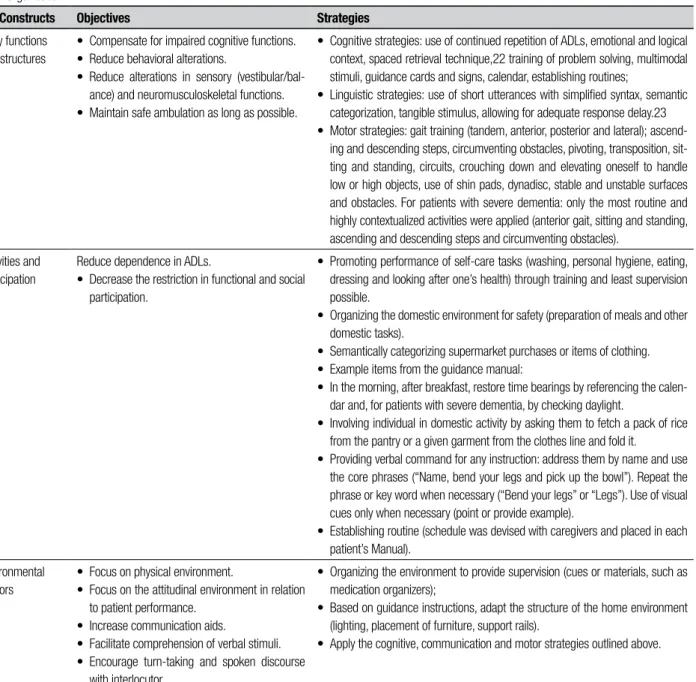
Table 1. Description of Intervention Objectives and Strategies according to the International Classification of Functionality, Disability and Health of the World Health Organization*.
ICF Constructs Objectives Strategies
Body functions and structures
• Compensate for impaired cognitive functions. • Reduce behavioral alterations.
• Reduce alterations in sensory (vestibular/bal-ance) and neuromusculoskeletal functions. • Maintain safe ambulation as long as possible.
• Cognitive strategies: use of continued repetition of ADLs, emotional and logical context, spaced retrieval technique,22 training of problem solving, multimodal stimuli, guidance cards and signs, calendar, establishing routines;
• Linguistic strategies: use of short utterances with simplified syntax, semantic categorization, tangible stimulus, allowing for adequate response delay.23 • Motor strategies: gait training (tandem, anterior, posterior and lateral);
ascend-ing and descendascend-ing steps, circumventascend-ing obstacles, pivotascend-ing, transposition, sit-ting and standing, circuits, crouching down and elevasit-ting oneself to handle low or high objects, use of shin pads, dynadisc, stable and unstable surfaces and obstacles. For patients with severe dementia: only the most routine and highly contextualized activities were applied (anterior gait, sitting and standing, ascending and descending steps and circumventing obstacles).
Activities and participation
Reduce dependence in ADLs.
• Decrease the restriction in functional and social participation.
• Promoting performance of self-care tasks (washing, personal hygiene, eating, dressing and looking after one’s health) through training and least supervision possible.
• Organizing the domestic environment for safety (preparation of meals and other domestic tasks).
• Semantically categorizing supermarket purchases or items of clothing. • Example items from the guidance manual:
• In the morning, after breakfast, restore time bearings by referencing the calen-dar and, for patients with severe dementia, by checking daylight.
• Involving individual in domestic activity by asking them to fetch a pack of rice from the pantry or a given garment from the clothes line and fold it.
• Providing verbal command for any instruction: address them by name and use the core phrases (“Name, bend your legs and pick up the bowl”). Repeat the phrase or key word when necessary (“Bend your legs” or “Legs”). Use of visual cues only when necessary (point or provide example).
• Establishing routine (schedule was devised with caregivers and placed in each patient’s Manual).
Environmental Factors
• Focus on physical environment.
• Focus on the attitudinal environment in relation to patient performance.
• Increase communication aids.
• Facilitate comprehension of verbal stimuli. • Encourage turn-taking and spoken discourse
with interlocutor.
• Organizing the environment to provide supervision (cues or materials, such as medication organizers);
• Based on guidance instructions, adapt the structure of the home environment (lighting, placement of furniture, support rails).
• Apply the cognitive, communication and motor strategies outlined above.
*International Classification of Functioning, Disability and Health of the World Health Organization (2003).21
high cognitive demand and was consistent with the de-cline observed on cognitive screening (Table 2). Robust changes in cognition are unlikely to occur as a conse-quence of cognitive training in patients with ADD,26 and
the main goal of rehabilitation is therefore to deine the most efective supervision strategies to enable individu-als to maximize the use of their functionality potential. In the absence of rehabilitation, the patient may have exhibited even worse decline. Given that the objectives set were achieved in eight weeks, it follows that func-tional reassessment should be carried out between the
8th and 12th weeks to deine future conduct:
continua-tion of the therapy or discharge with follow-up in pri-mary healthcare.
For the severe dementia case, the supervision strat-egies were devised to ofer greater physical safety and reduce fall risk. Results showed worsening on only two items (Figure 1). Although studies report beneits of rehabilitation in mild and moderate dementia,10,25,26
Table 2. Sociodemographics and clinical characteristics of patients before and after intervention.
Variables Patient 1 Patient 2 Patient 3
Age (years) 73 82 81
Schooling (years) 5 8 12
Onset of symptoms 2008 2007 2008
Diagnosis 2009 2012 2011
Start of therapy June 2013 October 2012 March 2013
CDR* before 1 2 3
CDR* after 1 2 3
MMSE+ before 23 15 NA**
MMSE+ after 26 11 NA**
GDS§ before 4 2 NA**
GDS§ after 4 3 NA**
IADL** before 13 17 27
IADL** after 13 18 27
FIM¶ before 111 89 34
FIM¶ after 123 97 39
Duration of therapy (weeks) 8 19 13
Therapy sessions received 15 of 18 19 of 26 9 of 13
Conduct Discharge Discharge Discharge
*CDR: Clinical Dementia Rating, 1 indicates mild , 2 moderate and 3 severe dementia. +MMSE: Mini-Mental State Examination, possible range: 0-30, higher
scores indicating better performance; in individuals with 5 years or more of schooling, scores under 26 indicate impairment, according to Brucki et al. (2003).15§GDS: Geriatric Depression Scale, possible range: 0-15, higher scores indicating worse performance, five points suggest alteration; **IADL: Lawton
& Brody Index, possible range: 0-27, higher scores indicating worse performance and two points suggests alteration. ¶FIM: Functional Independence
Mea-sure, possible range: 18-126, higher scores indicating better performance; score of 18-36 indicates high level of dependence, 37-90 moderate dependence and 91-126 independence. **NA: not applicable.
Intervention results observed in FIM scores were not evident on the IADL. FIM was more sensitive for detecting therapeutic responses probably because it speciies the basic activities of daily life. By contrast, the IADL speciies dependence on an instrumental activity that involves complex tasks. he IADL scores indicate the beneit of intervention in maintaining the skills of the subjects in performing complex tasks.
From the language strategies applied, it was evi-dent that the communication approach adopted with patients was essential in allowing the most efective su-pervision to be applied by both professionals and care-givers. According to FIM scores, patients’ communica-tion performance was maintained and enhanced.
Mirroring the observations by Lang et al.,8 we found
that interdisciplinary treatment promoted adequate and efective communication among team members and consequent selection of the optimal treatment strategy. Sharing the load with other disciplines allows each to bring its background, experience, and expertise to bear on the needs of the patient and to facilitate
op-timal long-term outcomes.27 In addition,
interdisciplin-ary rehabilitation requires lower investment in terms of time spent per week when compared to multidisci-plinary approaches and consequently reduces overload on the family routine and aids in maintaining the pa-tient’s wake state. Moreover, the functional interdisci-plinary activities were conducive for the participation of caregivers who received more robust guidance for the speciic ADLs and not according to the therapeutic spe-cialty (physiotherapy, occupational therapy or speech therapy). hus, the therapy applied during the sessions was more easily integrated into the patient’s routine, thereby improving the functionality of the intervention despite its inherently shorter duration and length of pa-tient stay in the service.
Interdisciplinary team members have areas of prac-tice that overlap so team leadership is enhanced when the members understand each other’s contributions and expertise.27 Our program was found to facilitate the
involved, in as far as the strategies adopted by one spe-cialist were subsequently taken up by the others, includ-ing application to other patients with similar needs. It is important to emphasize that further studies involving a larger number of patients are needed to measure the ef-fect of treatment and also to allow comparison between multidisciplinary and interdisciplinary programs.
Changes in the functionality of patients with demen-tia could be evaluated qualitatively and quantitatively through the instruments selected. However, changes in functionality status of the patient also have an impact on work and perception by the caregiver. It is thus
sug-gested that instruments for assessing burden can also be included with those used in this study.
herefore, the interdisciplinary intervention yielded functional beneits for patients with ADD and promot-ed professional growth among the rehabilitation team involved.
Acknowledgements. he authors would like to thank the
patients, their caregivers and the rehabilitation team for the learning experience and also the organization and management of the CIRHER for approving the study.
REFERENCES
1. Ferri CP, Prince M, Brayne C, et al. Global prevalence of dementia: a Delphi consensus study. Lancet Neurol 2005;366:2112-2117. 2. Brunnström H, Gustafson L, Passant U, et al. Prevalence of dementia
subtypes: a 30-year retrospective survey of neuropathological reports. Arch Gerontol Geriatr 2009;49:146-149.
3. Herrup K, Carrillo MC, Schenk D, et al. Beyond amyloid: getting real about nonamyloid targets in Alzheimer’s disease. Alzheimers Dement 2013;9:452-458.
4. Birks J, Havey RJ. Donepezil for dementia due to Alzheimer’s disease. Cochrane Database Syst Rev 2006;1.CD001190.
5. Birks J, Evans G, Iakovidov V, et al. Rivastigmine for Alzheimer’s dis-ease. Cochrane Database Syst Rev 2009;2.CD001191.
6. Loy C, Schneider L. Galantamine for Alzheimer’s disease and mild cog-nitive impairment. Cochrane Database Syst Rev 2009;CD001747. 7. McShane R, Sastre AA, Minakaran N. Memantine for dementia.
Co-chrane Database Syst Rev 2006;19(2).CD003154.
8. Lang PO, Vogt-Ferrier N, Hasso Y, et al. Interdisciplinary geriatric and psychiatric care reduces potentially inappropriate prescribing in the hospital: interventional study in 150 acutely II elderly patients with mental and somatic comorbid. J Am Med Dir Assoc 2012;13:406. e1-406.e7.
9. Trojanowski JQ, Arnold SE, Karlawish JH, et al., A model for improving the treatment and care of Alzheimer’s disease patients through interdis-ciplinary research. Alzheimer Dement 2012;8:564-573.
10. Eleni T, Dimitris, E. Implications of a longitudinal cognitive intervention program in mild Alzheimer’s disease. Arch Psychiatr Nurs. In Press. doi: 10.1016/j.apnu.2013.12.004.
11. Andrade LP, Gobbi LT, Coelho FG, et al. Benefits of multimodal exer-cise intervention for postural control and frontal cognitive functions in individuals with Alzheimer’s disease: a controlled trial. Am Geriatri Soc 2013;61:1919-1926.
12. Pedroso RV, Coelho FG, Santos-Galduróz RF, et al. Balance, executive functions and falls in elderly with Alzheimer’s disease (AD): a longitudinal study. Arch Gerontol Geriatr 2012;54:348-351.
13. Frota NAF, Nitrini R, Damasceno BP, et al. Critérios para o diagnóstico de doença de Alzheimer. Dement Neuropsychol 2011;5:5-10. 14. Folstein MF, Folstein ME, McHugh PR. Mini-mental state: a practical
method for grading the cognitive state of patients for the clinician. J Psychiatr Res 1975;12:189-198.
15. Brucki SMD, Nitrini R, Caramelli P, et al. Sugestões para o uso do mini-exame do estado mental no Brasil. Arq Neuropsiquiatr 2003;61:777-781. 16. Morris JC. The Clinical Dementia Rating (CDR): current version and
scoring rules. Neurology 1993;43:2412-2414.
17. Montaño MBM, Ramos LR. Validade da Versão em português da Clini-cal Dementia Rating. Rev Saude Publica 2005;39:912-917.
18. Yesavage JA, Brink TL, Rose TL, et al. Development and validation of a geriatric depression screening scale: a preliminary report. J Psychiatr Res 1983;17:37-49.
19. Lawton MP, Brody EM. Assessment of older people: selfmaintaining and instrumental activities of daily living. Gerontologist 1969;9:179-186. 20. Riberto M, Miyazaki MH, Jucá SSH, et al. Validação da versão brasileira da Medida de Independência Funcional. Acta Fisiatr 2004;11:72-76. 21. CIF: Classificação Internacional de Funcionalidade, Incapacidade
e Saúde / [Centro Colaborador da Organização Mundial da Saúde para a Família de Classificações Internacionais, org.; coordenação da tradução Cassia Maria Buchalla]. São Paulo: Editora da Universidade de São Paulo; 2003: 328p.
22. Bourgeois MS, Camp C, Rose M, et al. A comparison of training strate-gies to enhance use of external aids by persons with dementia. J Com-mun Disord 2003;36:361-378.
23. Ortiz KZ, Lira JO. Plano terapêutico fonoaudiológico para Demência: Intervenção em Aspectos Cognitivos. In: Pró-Fono (Eds), Planos Ter-apêuticos Fonoaudiológicos. Barueri/SP: Pró-Fono, 2012: 273-278. 24. Machado F, Nunes PV, Viola LF, et al., Quality of life and Alzheimer’s
disease: the influence of partipation in a rehabilitation Center. Dementia Neuropsychologia 2009;3:241.
25. Abrisqueta-Gomez J, Canali F, Vieira VLD et al. A longitudinal study of a neuropsychological rehabilitation program in Alzheimer’s disease. Arq Neuropsiquiatr 2004;62:778-783.
26. Viola LF, Nunes PV, Yassuda MS, et al. Effects of a multidisiplinar cogni-tive rehabilitation program for patients with mild Alzheimer’s disease. Clinics 2011;66:1395-1400.