approaches
Luís Claudio de Souza Mota 1, Lucas Nicolau de Oliveira 2, Eugenio Silva 3, Rodrigo Siqueira-Baista 4
Abstract
Taking decisions in the face of moral problems in clinical pracice has become a very important aspect for all professionals involved in health care. This study considers this context of uncertainty, in which there are discussions regarding the real beneits and access to new technologies in health, and assumes that any res -oluion in clinical (bio)ethics results from the principle that respect for the human being is indispensable for correct acions. This aricle aims to 1) idenify in literature some of the aspects that cause anguish in health care professionals and/or researchers in clinical pracice, and 2) briely present the relecions or correlated approaches used in the decision-making process in clinical (bio)ethics of ideniied cases. This study’s process refers to a review of scieniic literature with a deined search strategy.
Keywords: Bioethics. Clinical ethics. Decision-making.
Resumo
Tomada de decisão em (bio)éica clínica: abordagens contemporâneas
Tomar decisões diante de problema moral na práica clínica tornou-se aspecto de suma importância para todos os proissionais envolvidos no cuidado da saúde. Este estudo considera esse contexto de incertezas, em que se discutem reais beneícios e acesso às novas tecnologias em saúde, e parte do pressuposto que qualquer deliberação em (bio)éica clínica resulta do princípio de que respeito pelo ser humano é indispen -sável para o agir correto. Este arigo tem como proposta 1) ideniicar na literatura alguns dos aspectos que transpassam e angusiam os proissionais de saúde e/ou pesquisadores na práica clínica, e 2) apresentar sucintamente relexões ou abordagens correlacionadas ao processo decisório em (bio)éica clínica em relação aos casos ideniicados. O caminho percorrido neste estudo diz respeito a revisão da literatura cieníica com estratégia de busca deinida.
Palavras-chave: Bioéica. Éica clínica. Tomada de decisão.
Resumen
Toma de decisiones en (bio)éica clínica: enfoques contemporáneos
Tomar decisiones frente a un problema moral en la prácica clínica se ha tornado un aspecto de suma impor -tancia para todos los profesionales involucrados en la atención de la salud. El presente estudio considera este contexto de inceridumbre en el que se discuten los beneicios reales y el acceso a las nuevas tecnologías en materia de salud, y parte del supuesto de que cualquier deliberación en (bio)éica clínica se desprende del principio de que el respeto por el ser humano es indispensable para actuar correctamente. Este arículo se propone: 1) ideniicar en la literatura algunos de los aspectos que atraviesan y generan angusia a profesio -nales de la salud y/o invesigadores en la prácica clínica, y 2) presentar brevemente las relexiones o enfoques relacionados al proceso decisorio en (bio)éica clínica en relación a los casos ideniicados. El camino recorrido en este estudio da cuenta de una revisión de la literatura cieníica con una estrategia de búsqueda deinida.
Palabras clave: Bioéica. Éica clínica. Toma de decisiones.
1. Doutorando[email protected] – Universidade Federal do Rio de Janeiro (UFRJ), Rio de Janeiro/RJ 2. Graduandolucasnicolau1@ hotmail.com – Centro Universitário Serra dos Órgãos (UNIFESO), Teresópolis/RJ 3. Doutor[email protected] – Centro Universitário Estadual da Zona Oeste (Uezo), Rio de Janeiro/RJ 4. Doutor[email protected] – UFRJ, Rio de Janeiro/RJ, Brasil.
Correspondência
Luís Claudio de Souza Mota – Centro Universitário Serra dos Órgãos (Unifeso), Curso de Graduação em Medicina e Curso de Graduação em Fisioterapia. Av. Alberto Torres, 111, Alto CEP 25964-004. Teresópolis/RJ, Brasil.
Declaram não haver conlito de interesses.
R
esear
In the face of the changes that took place during the twenieth century and of the scieniic and biotechnological advances - especially in research involving human beings - (bio)ethics emerged as an atempt to provide answers to arising challenges and transformaions. Its origin explained the desire for ethics that is not limited to deontological con-cepts and moral relaions of “good relaionship”, but that would allow relecion and debate regarding health and life sciences, restoring respect, care and protecion not only of human beings themselves but of all living beings 1.
In the mid-1970s, by recognizing that not everything that is scieniically possible is morally correct, the American oncologist and professor Van Rensselaer Poter coined the term “bioethics”, con -ceiving it in one of his works as a “bridge” between the life sciences and the humaniies 2,3. As ime went
by, (bio)ethics became fundamental for dialogue be -tween diferent knowledge, disseminaing concepts of ethics, morality, religion, law, science, technics and decision-making, seeking to appreciate, de -scribe and propose means capable of protecing everyone involved.
In general, decision-making sets/conigures an extremely diverse area, as the decision-making process can be invesigated at diferent levels of complexity, from neurosciences to applied social sciences, inding diferent concepts, many of which come from management sciences 4. Signiicantly,
and with speciic relevance, are the iniial contri -buions of Bethlem 5, which iniially characterized
the decision-making process in a generic model consising of four stages: 1) the decision to decide; 2) the deiniion regarding what one is going to de -cide; 3) the formulaion of alternaives; and 4) the deiniion of the alternaive considered most ap -propriate. The characterizaion made by Idalberto Chiavenato, which considered decision-making as the process of analysis and choice between sever-al available sever-alternaives to determine the course of acion that a person should follow 6, is also consid
-ered relevant.
From a health science perspective, – es -pecially neuroscience and neuroethics 7 –, it is
known that the basis of human neurobiolog -ical decision-making involves complex neural processes and biochemical events, which have been contemporaneously investigated in order to identify areas and cortical circuits responsible for all activities involved in the decision-mak -ing process 8,9. Significantly, studies published
in international scientific literature point to the
prefrontal cortex as an important link in deci -sion-making, given its importance in realizing projections and connections to different cortical areas of the central nervous system, also being in -fluenced by them 10-12, and intrinsically correlating
with the process of evaluation and filtering emo -tional and social afferents, which form the basis of the decision-making process 13,14.
Making decisions in the face of moral dilem -mas in clinical pracice has become an important issue for all professionals involved in health care, once it shows the ability - or lack of it - to recog -nize an ethical problem and to then make use of (bio)ethical tools appropriate to each situaion at any health care level - primary, secondary, teriary and quaternary.
In a context marked by significant uncertain -ty – in which the real benefits and access to new technologies in health are being discussed – and assuming that any decision on clinical (bio)eth -ics implies respect for human beings, this article aims to 1) identify in literature situations afflict -ing healthcare professionals and/or researchers in clinical practice; and 2) briefly present thoughts or approaches correlating to the decision-making process in clinical (bio)ethics regarding the iden -tified situations.
Method
The path taken in this study includes a review of scieniic literature with a deined search strategy. Iniially the appropriate terms were ideniied in the Descritores em Ciências da Saúde - DeCS – (Health Sciences Descriptors) of the Biblioteca Virtual em Saúde - VHL (Health Virtual Library). The second phase included the compleion of a search under -taken in the PubMed, Literatura Laino-Americana e do Caribe em Ciências da Saúde – LILACS (Liter -ature in the Health Sciences in Lain America and the Caribbean) and Scieniic Electronic Library Online – SciELO - databases using the descriptors in a combined form, as shown in Table 1. Consid -ering the publicaion of aricles in three languages (Portuguese, English and Spanish), the selected de -scriptors were: 1) “bioéica” (bioethics; bioéica); 2) “temas bioéicos” (bioethical issues; discusiones bioéicas); 3) “técnicas de apoio para a decisão” (de -cision support techniques; técnicas de apoyo para la decisión); 4) “teoria da decisão” (decision theory; teoría de las decisiones); 5) “éica clínica” (ethics, clinical; éica clínica).
R
esear
The aricles that compose the sample of this study contemplated the following inclusion cri -teria: scieniic aricles published in the last ten years, with the end date deined as 31st Decem
-ber 2014; publicaions in indexed journals; and availability of (free) access to the content in full for download. Aricles presented only in summa -ry/abstract format and publicaions that required access to content dependent on Programa de Comutação Bibliográica – Comut - (Bibliograph -ical Switching Program) were excluded at the discreion of the authors.
The third and inal stage involved the selecion of texts for inclusion in the review. Aricles were cho -sen by the systemaic reading of itles and abstracts,
having as criteria the presence in the text of an ap -proach focused on ethics/(bio)ethical pracice. Ater analysing the obtained publicaions, fourteen ari -cles were chosen, complemented by references and textbooks on related topics.
Results
Aricles were subjected to a classiicaion of analyical nature, from which a demonstraive chart (Table 2) was drated. The chart, in which itles were arranged in ascending order by year of publicaion, includes the level of knowledge regarding the dis -cussions on the subject of study.
Table 1. Descriptors used, search strategies and number of citaions obtained
Descriptors and search strategies
Databases consulted
PubMed Lilacs SciELO
Bioethics + decision support techniques 3 102 0
Bioethics + decision theory 12 0 0
Bioethics + ethics, clinical 2 27 0
Bioethical issues + decision support techniques 1 0 0
Bioethical issues + decision theory 0 0 0
Bioethical issues + ethics, clinical 4 1 0
Total 152 publicaions
SOURCE: Bibliographic research
Table 2. Distribuion of itles, authors, year of publicaion, methods, conlicts and consideraions regarding
clinical (bio)ethics ideniied in selected aricles
Title Method(s) Major conlicts / consideraion on clinical (bio)ethics Éica na decisão terapêuica
em condições de prema
-turidade extrema [Ethics in therapeuic decisions in extreme prematurity condi
-ions] 15
• Qualitaive study, criical review
of literature • Uncertain prognosis of infants born extremely pre
-mature and ethical consideraions regarding auto
-nomy and therapeuic decisions
• The increasing technological advancement in health care and the need for humane intervenion - as a (bio) ethics imperaive – in the rouine of neonatal units • Ariicial maintenance of vital funcions in the con
-text of lack of reasonable recovery expectaions Implantação de comitês de
bioéica em hospitais univer
-sitários brasileiros: diiculda
-des e viabilida-des [Bioethics commitees deployment in Brazilian university hospitals: problems and viabiliies] 16
• Qualitaive study, case report • Scenario: hospital complex of a Brazilian public university
• Contextualisaion of the development and proposal of bioethics commitees in Brazil
• Litle understanding by health professionals regar
-ding the basic (bio)ethical knowledge and ability to deal with moral issues in clinical and care environ -ments
R
esear
Title Method(s) Major conlicts / consideraion on clinical (bio)ethics Modelos de tomada de de
-cisão em bioéica clínica:
apontamentos para
abor-dagem computacional [De -cision-making models in cli-nical bioethics: notes for a
computaional approach] 17
• Qualitaive study, literature
review • Rise of the applicability of computer systems in cli
-nical pracice
• Presentaion of ariicial neural networks as compu
-ter support to decision-making in clinical (bio)ethics
Tomada de decisão em bioé
-ica clín-ica: casuís-ica e de
-liberação moral [Decision --making in clinical bioethics:
casuistry and moral delibera
-ion] 18
• Qualitaive study, update aricle • Presentaion and discussion of two procedures for decision-making in clinical (bio)ethics: casuistry and moral deliberaion by Diego Gracia
Conlitos éicos na comuni
-cação de más noícias em oncologia [Ethical conlicts in the communicaion of bad news in oncology] 19
• Qualitaive and exploratory stu
-dy with semi-structured intervie
-ws
• Paricipants: 15 clinical oncolo
-gists and surgeons
• Scenario: Municipality of Rio de Janeiro
• Diiculies experienced by oncologists in the pro
-cess of communicaing bad news
• Ethical problems arising from tensions between pa
-ternalism and respect for paient autonomy
Cuidados paliaivos em pa
-cientes com HIV: princípios da bioéica adotados por enfermeiros [Palliaive care of paients with HIV: bioe
-thical principles adopted by nurses] 20
• Qualitaive and exploratory study • Paricipants: 12 nurses
• Applicaion of structured form and themaic categorical analysis (Bardin)
• Scenario: Infecious diseases
clinic and specialised medical
service from a public hospital in the city of João Pessoa / State of Paraiba
• Appreciaion of the principles of respect for auto
-nomy, beneicence, non-maleicence and jusice in the pracice of palliaive care for paients with HIV • Physicians’ diiculty to safely decide when to ofer palliaive care and the perpetuaion of a long process of dysthanasia of paients with HIV
Bioéica clínica e sua prái
-ca [Clini-cal bioethics and its pracice] 21
• Qualitaive study, update aricle • Debate on methodological tools that aid in clinical pracice and beter decision-making
• Presentaion of methods for decision-making in cli
-nical (bio)ethics based on the proposals of Diego Gra
-cia, Albert Jonsen and James Drane Acerca da bioéica da beira
do leito [About bedside bioe
-thics] 22
• Qualitaive study
• Scenario: university hospital in the municipality of São Paulo
• Doctor-paient relaionships and the ethics of inte
-racion at the bedside as challenges
• (Bio)ethics at the bedside as a comparaive exami
-naion of muliple consequences of assistance and success in the reconciliaion and sharing of clinical
decisions
Bioéica e nutrição em cui
-dados paliaivos oncológicos em adultos [Bioethics and nutriion in cancer palliaive care for adults] 23
• Qualitaive study, literature
review • The importance of nutriional treatment in the palliaive care of cancer paients -• Describes the (bio)ethical dilemma between pallia
-ive care and nutriion in cancer paients
The principle of respect for
autonomy: concordant with the experience of oncology physicians and molecular bi
-ologist in their daily work? 24
• Qualitaive, empirical study • Phenomenological hermeneuic approach with methods of moral philosophy, through semi-struc
-tured interviews
• Paricipants: 12 Danish oncolo
-gists and molecular biolo-gists
• (Bio)ethical relecion of a principlist character • Vulnerability and external constraint of circumstan
-ces experienced as factors that inluence paients to consent to any form of treatment
• Circumstances in which the principle of respect for autonomy is not respected and oncologists and mo
-lecular biologists decide to include or not paients in
treatment
R
esear
Title Method(s) Major conlicts / consideraion on clinical (bio)ethics Bioéica clínica: contribui
-ções para a tomada de deci
-sões em unidades de terapia intensiva neonatais [Clinical bioethics: contribuions to
decision-making in neonatal
intensive care units] 25
Qualitaive study, update aricle • Decision-making for neonatal ICU admission based on the principle of distribuive jusice
• Dilemma of NICUs professionals in relaion to deci
-sion-making regarding who and how should be bene
-it w-ith available public resources
O médico frente ao diagnós
-ico e prognós-ico do câncer avançado [The physician in the
face of the diagnosis and
prog-nosis of advanced cancer] 26
• Quanitaive, empirical, study using a muliple-choice quesion -naire
• Paricipants: 38 medical specia
-lists working with oncology • Scenario: Hospital de Base do Distrito Federal [Brasilia Base Hospital]
• Not providing informaion of the diagnosis of severe terminal illness as a form of medical paternalism. • (Bio)ethical conlicts involving beneicence and res
-pect for the autonomy of the paient experienced in medical pracice
From cure to palliaion: con
-cept, decision and accep
-tance 27
• Qualitaive empirical, study, with a quesionnaire
• Paricipants: Swedish 1,672 medical professionals and nurses from 10 diferent specialies, cho -sen at random
• Diferent percepions of professionals regarding transiion concepts between curaive treatments and palliaive care, and the respecive inluence of these disincions in care strategies
• Disagreements between professionals on the team
regarding the decision-making concerning the
inter-rupion of curaive treatment and the start of pallia
-ive care
• Ethical relecion and analysis on the principles of virtue ethics, professional deontology, consequenia
-lism and casuistry Informed consent and refu
-sal of treatment: challenges
for emergency physicians 28
• Qualitaive study, update aricle • Informed consent as a legal right and morally re
-commended process that enabled paients to be able to paricipate in the decision process regarding their
care
• (Bio)ethics and the four skills cited as fundamental
to sharing the medical decision-making process
SOURCE: Bibliographic research
Discussion
Considering the fourteen selected aricles, the results demonstrate that the main discussions regarding (bio)ethical issues 29,30 experienced in
diferent health care seings or clinical research are diverse and relate to the debate regarding the autonomy of the subjects involved; the is -sues referring to beneicence, non-maleicence and jusice – concepts prima facie of the princi-plist school of thought –; the diiculty of access to health goods and services; the vulnerability of the subjects regarding health care; the conlict to share or not clinical diagnoses and bad news directly with paients and/or their families; the obstacles in the doctor-paient or paient- health professional relaionship; the issue of informed consent; the dilemma of end of life and mainte -nance or interrupion of the technologies used in
criically ill or terminal paients admited in ICU; the decision-making process not being shared among health teams; and referenial from the bioethics of protecion vs. the bioethics of intervenion.
In the examinaion of the aricles selected and presented in Table 2, it was possible to list some of the aspects glimpsed as relaing to decision-making in clinical (bio)ethics, discussed below.
Percepions regarding conlicts in the diversity of everyday health care pracices
The NICUs are health care structures recognized in contemporary socieies, especially in Brazil, as es -senial to the care of new-borns (NB), since they are conigured as a space for the care of infants with im -mediate or potenial threat to life 31. Without proper
strategic planning in this sector, NICUs professionals are faced with a (bio)ethical dilemma: how to decide
R
esear
on the choice of which NB should beneit - and how - from the resources available for neonatal care 25?
Although the decline in mortality of live births in extreme prematurity is evident, prolonged ime in the very stressful environment of the NICU, the various moments of manipulaion and even the re -suscitaion intervenions expose the premature NB to unwanted simuli that later will be expressed in abnormal brain and sensory development, hearing and vision loss, and language disorders 15.
It is recognized that ariicial life support with -out reasonable recovery expectaions - in cases of severely compromised new-borns - sets (bio)ethical dilemma in clinical pracice of NICU professionals, given the possibility of prolonging the sufering of the sick individual and also of their families, puing into quesion the very protecion of human dignity of new-borns in intensive care 15, 32.
Given the above, in the case of neonatology, respect for autonomy appears as a bridge to the consideraion of shared decision. Although these paients are unable to decide about their lives, the protecion of their dignity involves sharing the deci -sions of the health team with the paient’s parents, who are legally authorized to give consent for per -forming certain type of treatments 25, 32. Ribeiro and
Rego 25 in this case also include in their thinking bio
-ethics of protecion and the capabiliies approach of Nussbaum 33 as a State responsibility to meet fairly
the needs of vulnerable people in their care.
• (Bio)ethical conlicts end of life
In the examinaion of the elements of the se -lected aricles, it was possible to detect strains in mulidisciplinary teams providing care to paients with advanced and / or terminal diseases 34, espe
-cially in the context of palliaive care. According to the World Health Organizaion, palliaive care cor -responds to the acive and total care of paients whose pathogenesis is no longer responsive to curaive treatment alternaives. The approach of care is diferent because it proposes to improve the quality of life for paients as well as of their families or guardians 35, 36.
By proposing improved quality of life, nutriion per se is also perinent to palliaive care, which is necessary in diferent therapeuic approaches, in -cluding feeding through catheter or ostomy. Besides, it has important prevenive signiicance, providing means and routes to feed, reducing adverse efects caused by chemo-toxic treatments and slowing an -orexia-cachexia syndrome 23.
Benarroz et al. 23 depict speciically the (bio)
ethical concerns and conlicts with which nutriion professionals deal in the daily oncological palliaive care of adults. It is clear that food will not always promote comfort and well-being. On the contrary, undesirable efects of nutriional techniques - in par -icular, the ariicial – are someimes exacerbaing, damaging the primary goal of palliaive care. In the referenced aricle, (bio)ethics paricipaion in nutri -ionist clinical pracice included the principlist aspect, which ofered (bio)ethical arguments for dialogue between health staf, paients and family members 23.
Palliaive care was also addressed in the care of paients with HIV in a recent study 20 aimed to invesi
-gate which principles of (bio)ethics were considered by nurses in their pracice. From the analysis of the empirical material emerged two main categories, which refer to principlist bioethical relecions: 1) re -spect for the autonomy of paients with HIV under palliaive care, allowing them to exercise their right to paricipate in decisions; and 2) appreciaion of the principles of beneicence, non-maleicence and jusice in the pracice of palliaive care for paients with HIV, providing humane conduct to paients and protecing them from possible harm during hospitalizaion 20.
In research conducted with twelve Danish physicians and molecular biologists specialised in oncology, there was also reference to Beauchamp’s and Childress’ principlism. Interesingly, though par -icipants airmed that respect for the autonomy of cancer paients should always be based on the de -sires and knowledge of the paient regarding their illness, the behaviour that was usually adopted was to decide without consuling paients or fami -ly members when they were considered to lack the necessary competence to make decisions 24 .
In another study 27 it was noted that the deci
-sions regarding treatment opions were not always shared between the team and the paient and family, even lacking discussion between the par -ies involved. At other imes, such decisions were characterized as the role of physicians themselves. Moreover, when the teams did not clarify the dis -ease process to the paients and family members, the stress related to acceping the disease was ev -ident. In the study, four (bio)ethics theories were used for the analysis of conlicts and improvement of decision-making: 1) the ethics of virtues; 2) deon -tology; 3) consequenialism; and inally, 4) casuistry as a strategy for comparison of moral cases and con -clusion of events.
Moskop 28 studied, in US emergency depart
-ments, the use of informed consent as a legal right
R
esear
and morally recommended process that enabled paients to be able to paricipate in making deci -sions regarding the care they would receive. From an ethical point of view, four funcional skills were ideniied as fundamental in sharing the medical process of decision-making in clinical emergencies and imminent risk of death situaions: 1) the pa -ient’s ability to understand informaion relevant to the decision of his/her treatment; 2) the ability of those involved to appreciate the signiicance of each informaion for each situaion faced; 3) the ability of health professionals to use reason to contribute to the logical process of treatment opions; and 4) the paient’s ability to express his/her choice 28, 36,37.
• (Bio)ethical conlicts and communicaion of bad
news in oncology
One of the ideniied studies, conducted in the Federal District with physicians who provided care to paients with malignant neoplasm 26, highlight
-ed that informing paients and their families of the diagnosis has been recognized as one of the pillars of the doctor-paient relaionship, promoing as -surance and providing paients with the possibility of exercising autonomy. In the cases of restricted diagnosic informaion – prohibited by the Code of Medical Ethics, except when informaion is like -ly to bring more harm to the paient - the authors stressed situaions related to physicians’ “paternal -isic” behaviour (to protect paients from sufering), minimizing the occurrence of distress in hopeless contexts (non-maleicence).
Using semi-structured interviews, Geovanini and Braz 19 conducted a study with oncologists fo
-cusing on ethical conlicts in the communicaion of bad news in oncology. The main conlicts were relat -ed to fair moral propriety regarding the use of truth in the communicaion and management of medical relaionships with paients’ families. The most ob -vious diiculty faced by respondents related to the unpredictability of the consequences of decisions taken and therefore the behaviour of some in not communicaing properly with those involved, culmi -naing in paternalisic aitudes that interfere with the full exercise of paient autonomy 19.
The role of hospital (bio)ethics commitees and commissions
Diferently from hospital ethics commitees and commissions – that are always composed ex -clusively of members of one corporaion - bioethics commitees are necessarily muliprofessional and mulidisciplinary, because they propose to deal with
more speciic references: those of bioethics itself. Although they iniially emerged in the United States in the period from 1960 to 1970, since 2005 these commitees are now recommended by UNESCO, as stated in Aricle 19 of the Universal Declaraion on Bioethics and Human Rights 38. In fact, they allow for
more extended discussion of more diicult clinical cases from the point of view of decision-making in situaions of moral conlict. Through them, forums that involve not only health professionals, but also professionals from other ields and representaives of users and community, were created.
The proposal of the commitees is to become an open space focused on dialogue, valuing all indi -viduals involved in the search for conlict resoluion in the context of health insituions and improving the care provided to paients. These forums enable cases that require ethical evaluaion to be ad -dressed, allowing the opportunity to search for the role of paients and their representaives, as well as ofering a greater repertoire of (bio)ethical acions to health professionals and managers 16. Howev
-er, these commitees and commissions are not intended to eliminate the responsibility of health professionals - or clinical teams – regarding the de -cisions to be taken in each case 39.
Interesingly, despite the importance of such commitees and commissions, the study considered in this aricle points to the diiculies sill encoun -tered in the implementaion of such forums assising clinical (bio)ethics decisions. Marinho et al. 16
re-counts the experience with the implementaion of these commitees in four health units in Brazilian public universiies: they were created through a botom-up iniiaive, this means, an iniiaive start -ing with the professionals involved with medical educaion in the hospital, but without efecive par -icipaion of the unit’s managers, litle involvement and paricipaion of students from other areas of health, and the absence of some professionals 16.
Computer support to decision-making in clinical (bio)ethics
The computaional approach has become valuable tool to aid decision-making, with applica -ions in the ields of industry, various engineering, inance, commerce, agriculture, health and scienif -ic research itself 17.
Ater World War II, ariicial intelligence (AI) developed signiicantly 17,40,41, seeking to systemaize
and replicate human intellectual tasks. In this process, the applicaions of connecionist AI focused on the
R
esear
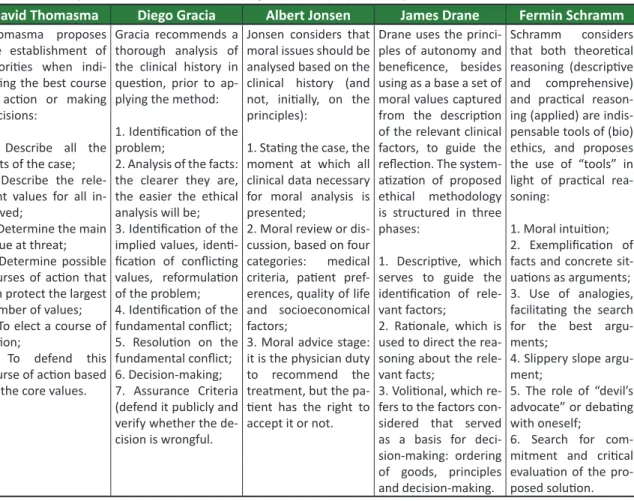
Table 3. Auxiliary methods for decision-making in clinical (bio)ethics by the author
David Thomasma Diego Gracia Albert Jonsen James Drane Fermin Schramm
Thomasma proposes the establishment of
prioriies when indi
-caing the best course of acion or making
decisions:
1. Describe all the facts of the case; 2. Describe the rele
-vant values for all in
-volved;
3. Determine the main value at threat; 4. Determine possible courses of acion that
can protect the largest
number of values; 5. To elect a course of acion;
6. To defend this course of acion based on the core values.
Gracia recommends a thorough analysis of the clinical history in quesion, prior to ap
-plying the method:
1. Ideniicaion of the problem;
2. Analysis of the facts: the clearer they are,
the easier the ethical
analysis will be; 3. Ideniicaion of the implied values, ideni
-icaion of conlicing values, reformulaion of the problem; 4. Ideniicaion of the fundamental conlict; 5. Resoluion on the fundamental conlict; 6. Decision-making; 7. Assurance Criteria (defend it publicly and verify whether the de
-cision is wrongful.
Jonsen considers that moral issues should be analysed based on the clinical history (and not, iniially, on the principles):
1. Staing the case, the moment at which all clinical data necessary for moral analysis is presented;
2. Moral review or dis
-cussion, based on four
categories: medical
criteria, paient pref
-erences, quality of life
and socioeconomical
factors;
3. Moral advice stage: it is the physician duty
to recommend the
treatment, but the pa
-ient has the right to accept it or not.
Drane uses the princi
-ples of autonomy and beneicence, besides using as a base a set of moral values captured from the descripion of the relevant clinical factors, to guide the relecion. The system
-aizaion of proposed ethical methodology is structured in three
phases:
1. Descripive, which serves to guide the ideniicaion of rele
-vant factors;
2. Raionale, which is used to direct the rea
-soning about the rele
-vant facts;
3. Voliional, which re -fers to the factors
con-sidered that served
as a basis for deci-sion-making: ordering
of goods, principles and decision-making.
Schramm considers that both theoreical reasoning (descripive and comprehensive) and pracical reason
-ing (applied) are indis
-pensable tools of (bio) ethics, and proposes the use of “tools” in light of pracical rea -soning:
1. Moral intuiion; 2. Exempliicaion of
facts and concrete
sit-uaions as arguments; 3. Use of analogies, facilitaing the search for the best argu
-ments;
4. Slippery slope argu
-ment;
5. The role of “devil’s advocate” or debaing with oneself;
6. Search for com
-mitment and criical evaluaion of the pro
-posed soluion.
Fonte: adaptado de Zoboli 18, Figueiredo 21, Gracia 49 eSchramm 50. methods they use 1) ariicial neural networks, which arose more speciically at the end of the 1980s 42-45;
and 2) expert systems (1970), computer systems characterized by the symbol AI, which considers that global intelligent behaviour can be simulated. These systems perform funcions considered “similar” to those rouinely performed by human experts 42,46,47.
From this perspecive, a recent study has pro -posed the use of machine learning algorithms for the development of computer systems to support decision-making in clinical (bio)ethics, incorporat -ing aspects related to the decision-mak-ing process, the iniial prototype, Bio-Oracle (Bio from “bioinfor -maics” and Oracle from “Organizer of the Raional Approach in Computaional Learning Ethics”), is un -der development 17.
Decision-making in clinical (bio)ethics: the methods The relaionship between doctor and paient is oten uneven: the irst has knowledge concerning the problem alicing the last. The professional is re -sponsible for the diagnosis, prognosis and treatment
opions. On the other hand, the paient only has the ability to decide based on a clear and true communi -caion performed by the doctor. Thus, the aitudes of health professionals become criical to the posi -ioning of their paients: who can either be treated as a subject of his/her own life or as an object of therapeuic intervenions 22,48.
In this context, the proposal of clinical (bio)eth -ics covers all situaions that require decision-making in the everyday life of the various health professions or in paricular situaions in ethics commitees. Indeed, Table 3 presents methods developed by diferent authors with the objecive of guiding the analysis of conlicts and moral dilemmas that arise in clinical pracice, and of assising the decision-making process.
In addiion to the methods presented, other procedures for decision-making in clinical (bio)eth -ics, which are also recognized in the literature, are proposed: 1) casuistry and 2) moral deliberaion. Casuistry is considered by Albert Jonsen and Ste -phen Toulmin 51 as a valid tool for discussing (bio)
ethical problems in clinical pracice. Speciically
R
esear
in clinical area, it begins with the ethical analysis and the assessment of cases of medical indicaions, followed by the paient’s preferences, quality of life and ending with the circumstanial aspects. All these issues allow for the drating of the (bio) ethical facts relevant to the case and to obtain -ing a pracical soluion from the decision-mak-ing process 18,50,51.
The procedure of moral deliberation regard -ing (bio)ethical problems considers the values and duties involved in concrete facts, seeking to manage the moral conflict in a reasonable and prudent manner, through meticulous discussions. Proposed by one of its experts, Diego Gracia, the method should be systematized and contextual -ized to find concrete solutions, through judicious alternatives; that is, it refers to expressing the ability to appreciate what is involved in the case, always from the perspective of reaching reason -able decisions 18,51-53.
Final consideraions
In line with the studies presented, this ari -cle reviews some of the key issues regarding the decision-making process in clinical (bio)ethics, making use of bibliographic research with a de -ined search strategy. Based on the texts obta-ined, it was observed that decision-making in clinical (bio)ethics consitutes an extremely diicult pro -cess for health professionals.
The quesions that unsetle these profession -als are diverse, permeaing situaions of conlict and tension regarding the decision more suited to situaions relaing to the beginning and end of life. In addiion, communicaion of bad news to paients and/or to their family members, installaion of pal -liaive care, respect for the paient’s autonomy and dignity of life, and recogniion of the search for con -cepts and pracices beyond technical experise and professional ethics, are also factors that entail dii -culies for health teams.
Based on the observaions made by the authors while wriing this essay, and on the recog -niion of the importance of moral pluralism, this study proposes a criicism of the plethora of prin -ciplism - adopted in most studies - as the approach to decision-making in clinical (bio)ethics. The au -thors propose that the discussion and relecion be expanded, using other streams of (bio)ethics. Un -doubtedly, one should consider the need to develop new theoreical models - and related methods - for the expansion of “the (bio)ethical toolbox” for deci -sion-making in clinical (bio)ethics.
Based on the above, the development of new strategies to support decision-making is rec -ommended. These new strategies should consider, among them 1) consultaion to (bio)ethical commis -sions; 2) applicaion of a computaional approach; and 3) procedures that allow the pragmaic ap -proach of the relaionship between means, ends and the people involved, enabling the decision-making process to include values and preference systems that are reasonable and prudent.
The authors are grateful to the Conselho Nacional de Desenvolvimento Cieníico e Tecnológico - CNPq (Naio-nal Council for Scieniic and Technological Development) for the inancial support provided for this research.
Referências
1. Mota LCS, Vidal SV, Siqueira-Baista R. Bioéica: ainal o que é isto? Rev Bras Clin Med. 2012;10(5):431-9.
2. Neves MCP. Bioéica, biopolíica e a sociedade contemporânea. In: Porto D, Schlemper Jr. B, Marins GZ, Cunha T, Hellmann F, organizadores. Bioéica: saúde, pesquisa, educação. Brasília: CFM/SBB; 2014. v. 2. p. 143-67.
3. Organização das Nações Unidas para a Educação, Ciência e Cultura. Programa de base de estudos sobre bioéica: parte 1. Montevidéu: Unesco; 2015. p. 16-7.
4. Moritz GO, Pereira MF. Processo decisório. Florianópolis: UFSC; 2006. p. 29-34. 5. Bethlem AS. Modelos de processo decisório. Rev Adm. 1987;22(3):27-39.
6. Chiavenato I. Introdução à teoria geral da administração. 3ª ed. São Paulo: Elsevier-Campos; 2004. p. 165.
7. Corina A. Neuroéica: las bases cerebrales de uma éica universal com relevancia poliica? Isegoría. 2010;(42):129-48.
8. Boorman ED, Rushworth MF, Behrens TE. Ventromedial prefrontal and anterior cingulate cortex adopt choice and default reference frames during sequenial muli-alternaive choice. J Neurosci. 2013;33(6):2242-53.
R
esear
9. Paine TA, Asinof SK, Diehl GW, Frackman A, Leler J. Medial prefrontal cortex lesions impair decision-making on a rodent gambling task: reversal by D1 receptor antagonist administraion. Behav Brain Res. 2013;243:247-54.
10. Esperidião-Antonio V, Majeski-Colombo M, Toledo-Monteverde D, Moraes-Marins G, Fernandes JJ, Assis MB et al. Neurobiologia das emoções. Rev Psiq Clín. 2008;35(2):55-65.
11. Lent R. Cem bilhões de neurônios. 2ª Ed. São Paulo: Atheneu; 2010. p. 612-42.
12. Siqueira-Baista R, Schramm FR. Bioéica e neurociências: os desígnios da Moîra. Tempo Brasileiro. 2013;195:5-26.
13. Esperidião-Antonio V. Neurociências: diálogos e intersecções. Rio de Janeiro: Rubio; 2012. 14. Rogers RD. The roles of dopamine and serotonin in decision-making: evidence from
pharmacological experiments in humans. Neuropsychopharmacology. 2011;36(1):114-32. 15. Bezerra AL, Moreno GMM, Clemenino ACCR, Chagas APC, Moura IS, Silva J. Éica na decisão
terapêuica em condições de prematuridade extrema. Rev. bioét. (Impr.). 2014;22(3):569-74. 16. Marinho S, Costa A, Palácios M, Rego S. Implementação de comitês de bioéica em hospitais
universitários brasileiros: diiculdades e viabilidades. Rev. bioét. (Impr.). 2014;22(1):105-15. 17. Siqueira-Baista R, Gomes AP, Maia PM, Costa IT, Paiva AO, Cerqueira FR. Modelos de tomada de
decisão em bioéica clínica: apontamentos para a abordagem computacional. Rev. bioét. (Impr.). 2014;22(3):456-61.
18. Zoboli E. Tomada de decisão em bioéica clínica: casuísica e deliberação moral. Rev. bioét. (Impr.). 2013;21(3):389-96.
19. Geovanini F, Braz M. Conlitos éicos na comunicação de más noícias em oncologia. Rev. bioét. (Impr.). 2013;21(3):455-62.
20. Vasconcelos MF, Costa SFG, Lopes MEL, Abrão FMS, Baista PSS, Oliveira RC. Cuidados paliaivos em pacientes com HIV/aids: princípios da bioéica adotados por enfermeiros. Ciênc Saúde Coleiva. 2013;18(9):2559-566.
21. Figueiredo AM. Bioéica clínica e sua práica. Rev. bioét. (Impr.). 2011;19(2):343-58. 22. Grinberg M. Acerca da bioéica da beira do leito. Rev Assoc Med Bras. 2010;56(6):615-37. 23. Benarroz MO, Faillace GBD, Barbosa LA. Bioéica e nutrição em cuidados paliaivos oncológicos
em adultos. Cad Saúde Pública. 2009;25(9):1875-82.
24. Ebbesen M, Pedersen BD. The principle of respect for autonomy: Concordant with the experience of oncology physicians and molecular biologist in their daily work? BMC Med Ethics. 2008;9(5):1-12. 25. Ribeiro CDM, Rego S. Bioéica clínica: contribuições para a tomada de decisões em unidades de
terapia intensiva neonatais. Ciênc Saúde Coleiva. 2008;13(2 Suppl):2239-46.
26. Trindade ES, Azambuja LEO, Andrade JP, Garrafa V. O médico frente ao diagnósico e prognósico do câncer avançado. Rev Assoc Med Bras. 2007;53(1):68-74.
27. Löfmark R, Nilstun T, Bolmsjö IA. From cure to palliaion: concept, decision and acceptance. J Med Ethics. 2007;33(12):685-8.
28. Moskop JC. Informed consent and refusal of treatment: challenges for emergency physicians. Emerg Med Clin North Am. 2006;24(3):605-18.
29. Leopold A. Sand County almanac and sketches here and there. New York: Oxford; 1989. 30. Jonas H. O princípio responsabilidade: ensaio de uma éica para a civilização tecnológica. Rio de
Janeiro: Contraponto; 2006.
31. Society of Criical Care Medicine. Deiniions. [Internet]. SCCM; 1999 [acesso 5 nov 2014]. Disponível: htp://www.sccm.org/accm/guidelines/guide_body_deiniions.htm
32. Jiménez CAZ, Chirino-Barceló Y, González HAB, Bustamante MMA. Bioéica en iempo real: el límite de la viabilidad en los recién nacidos. Médicas UIS. 2013;26(3):23-31.
33. Nussbaum MC. In defense of universal values. In: Nussbaum MC, editor. Women and human development: the capabiliies approach. Cambridge: Cambridge University Press; 2000. p. 34-110.
34. World Health Organizaion. Prevening chronic diseases: a vital investment. Geneva: WHO; 2005. 35. World Health Organizaion. Naional cancer control programmes: polices and managerial
guidelines. 2ª ed. Geneva: WHO; 2002.
36. Nicola C. Bioéica em cuidados paliaivos. In: Urban CA. Bioéica clínica. Rio de Janeiro: Revinter; 2003. p. 495-550.
37. Caro MMM, Laviano A, Pichard C. Nutriional intervenion and quality of life in adult oncology paients. Clin Nutr. 2007;26(3):289-301.
38. Organização das Nações Unidas para Educação, Ciência e Cultura. Declaração universal sobre bioéica e direitos humanos. Paris: Unesco; 2005.
39. Rego S, Palácios M, Siqueira-Baista R. Bioéica para proissionais da saúde. Rio de Janeiro: Fiocruz; 2009. p. 128-41.
40. Nunes WV. Redes neurais ariiciais: aspectos introdutórios. In: Espiridião-Antônio V. Neurociências: diálogos e intersecções. Rio de Janeiro: Rubio; 2012. p. 529-36.
41. Russell S, Norvig P. Inteligência ariicial. 2ª ed. Rio de Janeiro: Campus; 2004.
42. Braga AP, Carvalho APLF, Ludemir TB. Redes neurais ariiciais: teoria e aplicações. 2ª ed. Rio de Janeiro: LTC; 2007. p. 3-19.
43. Afshar S, Abdolrahmani F, Tanha FV, Seif MZ, Taheri K. Recogniion and predicion of leukemia with Ariicial Neural Network (ANN). MJIRI. 2011;25(1):35-9.
R
esear
44. Amato F, López A, Pena-Méndez EM, Vanhara P, Hampl A, Havel J. Ariicial neural networks in medical diagnosis. J Appl Biomed. 2013;11(2):47-58.
45. Suebnukarn S, Haddawy P. A Bayesian approach to generaing tutorial hints in a collaboraive medical problem-based learning system. Arif Intell Med. 2006;38(1):5-24.
46. Linares KSC. Sistema especialista nebuloso para diagnósico médico [dissertação]. Florianópolis: Universidade Federal de Santa Catarina; 1997.
47. Al-Shayea QK. Ariicial Neural Networks in medical diagnosis. Int J Comput Sci Issues. 2011;8(2):150-4.
48. Menezes RA. Entre normas e práicas: tomada de decisões no processo saúde/doença. Physis. 2011;21(4):1429-49.
49. Gracia D. Moral deliberaion: the role of methodologies in clinical ethics. Med Health Care Philos. 2001;4(2):223-32.
50. Schramm FR. Acerca de los métodos de la bioéica para el análisis y la solución de los dilemas morales. In: Bergel SD, Minyersky N, coordenadores. Bioéica y derecho. Buenos Aires: Rubinzal Culzoni; 2003.
51. Jonsen AT, Toulmin SE. The abuse of casuistry: a history of moral reasoning. Berkeley: University of California Press; 1988.
52. Jonsen AR, Siegler M, Wislade WJ. Éica clínica. 4ª ed. Lisboa: MCGraw-Hill; 1999.
53. Zoboli ELCP. Deliberação: leque de possibilidades para compreender os conlitos de valores na práica clínica da atenção básica [tese]. São Paulo: Universidade de São Paulo; 2010.
Paricipaion of the authors
Luis Claudio de Souza Mota designed and coordinated the wriing of the manuscript, in addiion to guiding Lucas Nicolau de Oliveira in the collecion of bibliographic data, summaries of the selected aricles, and preparaion of the drat aricle. Eugenio Silva and Rodrigo Siqueira-Baista – supervisors of the doctoral thesis to which the aricle is linked - paricipated in the drating of the text outline and performed the criical review of the inal manuscript.
Recebido: 17.12.2015 Revisado: 23. 5.2016 Aprovado: 25. 5.2016